



Canadians considering rhinoplasty often face a difficult comparison: local private-clinic pricing in Toronto, Vancouver, or Montreal, long specialist pathways for functional nasal concerns, and the need to protect both appearance and breathing. This guide explains how rhinoplasty works, how open, closed, preservation, ultrasonic, and septorhinoplasty techniques differ, and why Canadian patients travel to Istanbul for Dr. Göknil Gültekin’s ENT-led facial plastic approach. We focus on the questions that matter before booking from Canada: safety, cost, recovery, surgeon credentials, and fit-to-fly timing.
Table of Contents
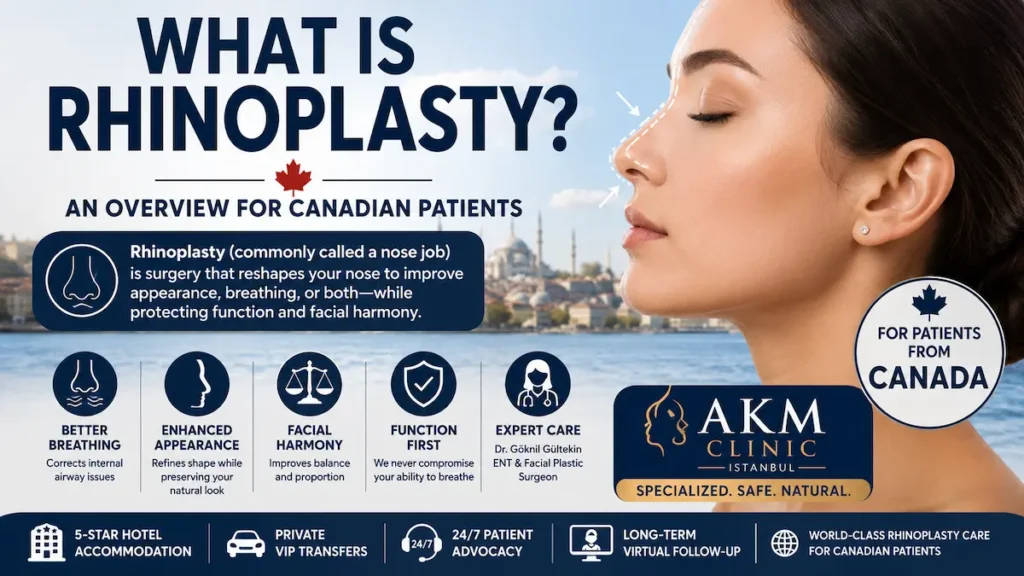
What Is Rhinoplasty? An Overview for Canadian Patients
Rhinoplasty, commonly called a nose job, is a surgical procedure that reshapes the nose for aesthetic refinement, functional breathing improvement, or both. At AKM Clinic in Istanbul, Dr. Göknil Gültekin combines ENT board certification with facial plastic specialty training, helping Canadian patients protect nasal function while refining facial harmony.
The nose sits at the centre of the face. Even a small change to the bridge, tip, nostrils, or nasal angle can alter how the eyes, lips, cheeks, and jawline are perceived. That is why our approach is measured rather than aggressive.
For Canadian patients, rhinoplasty is rarely only about “making the nose smaller.” Many people come to us after years of nasal obstruction, a deviated septum, an old sports injury, or dissatisfaction with a previous nose surgery. We assess both the external appearance and the internal airway before recommending a tailored clinical protocol.
The medical definition of rhinoplasty
Rhinoplasty is the medical term for surgical reshaping of the nose. The rhinoplasty meaning includes changes to bone, cartilage, skin, nostril width, nasal tip projection, bridge height, or internal nasal support. Aesthetic rhinoplasty focuses on appearance; functional rhinoplasty focuses on airflow.
In practice, these goals often overlap. A patient may want a smoother profile and better breathing. Another may want the tip refined while preserving the family traits that make their face recognizable.
At our Istanbul clinic, we evaluate the full nasal structure before surgery:
- the nasal bones and bridge height;
- the septum and internal airway;
- tip projection, rotation, and definition;
- nostril width and symmetry;
- skin thickness and healing behaviour;
- facial balance from the front, side, and three-quarter views.
This detailed assessment helps us avoid a one-shape-fits-all result. The goal is a nose that looks like it belongs to your face.
Functional vs aesthetic rhinoplasty
Functional rhinoplasty addresses breathing problems. These may come from a deviated septum, weak nasal valves, trauma, enlarged turbinates, or structural collapse after a previous surgery. Aesthetic rhinoplasty refines the visible shape of the nose.
Some Canadian patients initially search for cosmetic rhinoplasty, then discover during consultation that their breathing symptoms also need attention. Others begin with a functional concern and choose to refine the external nose at the same time. That combined approach is called septorhinoplasty.
This is where Dr. Gültekin’s dual background matters. As an otolaryngologist and facial plastic surgeon, she evaluates both airway mechanics and facial proportion. That combination is particularly important for revision cases, thick-skin noses, and patients who worry about losing ethnic or family identity.
We do not view function as optional. A refined nose that does not breathe well is not a successful result.
Why Canadian patients research rhinoplasty in Turkey
Canadian patients often compare three factors before choosing rhinoplasty in Turkey: access, cost, and surgeon specialization. Private rhinoplasty in Toronto, Vancouver, or Montreal can involve high out-of-pocket fees, separate anesthesia and facility charges, and limited surgeon availability for complex functional-aesthetic cases.
Istanbul offers a different model. At AKM Clinic, Canadian patients receive a structured international surgical programme that includes pre-operative planning, surgery, 5-star hotel accommodation, private VIP transfers, 24/7 patient advocacy, and long-term virtual follow-up.
That structure matters when you are travelling from Canada. A nose job is not a casual beauty treatment. It is facial surgery that requires technical judgement, sterile hospital standards, and a clear plan for your return flight.
For patients comparing rhinoplasty Turkey options, we encourage careful due diligence. Review surgeon credentials. Ask how breathing is assessed. Confirm whether the surgeon personally handles the surgical plan. Look for natural, varied before-and-after results rather than identical noses on every face.
Benefits of Rhinoplasty — Aesthetic and Functional
Rhinoplasty can improve facial balance, nasal breathing, or both, depending on the patient’s anatomy. The best results are not obvious. They make the face look more balanced while allowing the patient to still look like themselves.
At AKM Clinic, our Natural-First philosophy is simple: rejuvenation, not alteration. For rhinoplasty, this means refining what distracts from the face without erasing identity. Canadian patients often describe this as wanting a quieter, more harmonious profile rather than a dramatic change.
Because the nose affects both appearance and airflow, the benefits must be evaluated from two angles. A technically sound result should respect the bridge, tip, septum, nasal valves, and long-term tissue support.
Aesthetic refinement and facial harmony
Aesthetic rhinoplasty can address a dorsal hump, wide bridge, bulbous tip, drooping nasal tip, nostril asymmetry, crooked nasal bones, or disproportionate projection. The aim is not to create a fashionable nose. The aim is proportion.
For some patients, a small bridge refinement creates a softer side profile. For others, tip support and definition make the nose appear lighter from the front. In male rhinoplasty, preserving strength and structure is often essential to avoid over-feminizing the face.
We plan rhinoplasty by looking at the full face, not the nose in isolation. Chin projection, cheek volume, forehead slope, lip position, and skin thickness all affect the final visual balance.
Functional breathing improvement
Functional rhinoplasty may improve airflow by correcting a deviated septum, reinforcing weak nasal valves, or adjusting internal structures that narrow the airway. Patients may notice chronic congestion, mouth breathing, sleep disruption, or reduced exercise tolerance before surgery.
Not every breathing problem is solved with rhinoplasty. Allergies, sinus disease, and turbinate enlargement may require separate treatment. That is why proper ENT assessment is essential before deciding on surgery.
When functional correction is appropriate, combining it with aesthetic refinement can reduce the need for two separate procedures. It also allows the surgeon to balance airway support with external shape.
Identity-preserving results
Many Canadian patients worry that rhinoplasty will make them look “done” or unlike themselves. That concern is valid. Over-resection, excessive tip rotation, or narrowing the bridge too much can create an operated-on appearance.
Our Natural-First approach avoids aggressive templates. In ethnic rhinoplasty, for example, we refine the nasal structure while respecting cultural and family features. In preservation rhinoplasty, we aim to maintain key support structures when anatomy allows.
The outcome should feel integrated. Friends may notice that you look fresher or more balanced, but they should not immediately identify surgery unless you choose to tell them.
One operation for function and appearance
Rhinoplasty can be especially valuable when functional and aesthetic goals are planned together. A patient with a deviated septum and a visible nasal deviation may benefit from septorhinoplasty rather than separate procedures.
This combined planning can reduce total recovery time, avoid duplicate anesthesia exposure, and provide a more coherent structural result. It also allows us to align the internal airway correction with the external shape.
For Canadians travelling to Istanbul, this efficiency matters. One well-planned surgery, one recovery period, and one fit-to-fly timeline can be more practical than staged care across multiple locations.
Am I a Good Candidate for Rhinoplasty?
A good rhinoplasty candidate is physically healthy, emotionally prepared, and realistic about what nose surgery can and cannot change. The best candidates usually have a specific concern: a dorsal hump, a drooping tip, asymmetry, breathing obstruction, trauma-related deformity, or a previous result that needs revision.
At AKM Clinic, we assess candidacy through photos, medical history, breathing symptoms, skin thickness, facial proportions, and surgical goals. We also consider your travel readiness. For Canadian patients, rhinoplasty is not only a surgical decision; it is also a planning decision that includes flights, recovery time, follow-up, and support once you return home.
Not every patient should have surgery right away. Sometimes the safest recommendation is to wait, treat allergies first, stop smoking, stabilize health conditions, or adjust expectations before proceeding.
Skeletal maturity and age considerations
Rhinoplasty should be performed only after nasal growth is complete. This is typically around age 16 or older for women and 17 or older for men, although individual development varies. For younger patients, parental involvement and careful psychological screening are essential.
Adults of many ages can be candidates. A patient in their 20s may want long-standing profile refinement. A patient in their 40s or 50s may seek correction after trauma, breathing changes, or a previous surgery that did not age well.
Age alone does not determine candidacy. Health, healing capacity, anatomy, and motivation matter more. We evaluate whether the nose structure can safely support the requested change.
Health prerequisites before nose surgery
Rhinoplasty is usually well tolerated, but it is still surgery. Candidates should be in stable general health, with controlled blood pressure, no active infection, and no untreated bleeding disorder. Smoking and nicotine use must stop before surgery because they can impair circulation and healing.
We also review medication use. Blood thinners, certain supplements, and some anti-inflammatory medications may increase bruising or bleeding risk. Patients with chronic sinus problems, severe allergies, or sleep apnea need additional evaluation before the surgical plan is finalized.
For Canadian patients, we recommend collecting relevant medical records before travelling. This may include previous operative notes, CT imaging if available, allergy history, and documentation from an ENT specialist or family physician.
Realistic expectation alignment
Rhinoplasty can refine the nose, but it cannot create a completely different face. A nose that looks balanced on one person may not suit another. Skin thickness, cartilage strength, bone shape, and facial proportions all limit what is safe and natural.
During consultation, we look for clear, realistic goals. “I want a smoother bridge” is more useful than “I want a perfect nose.” “I want better tip definition without losing my ethnic features” is a strong planning goal.
We also screen for warning signs. If a patient is seeking surgery to fix every photograph, please someone else, or chase a heavily filtered image, surgery may not be appropriate at that time.
Functional rhinoplasty candidacy
Functional rhinoplasty may be appropriate if you have chronic nasal obstruction caused by structural problems. Common signs include difficulty breathing through one side, mouth breathing at night, poor exercise airflow, whistling, nasal collapse during inhalation, or symptoms after nasal trauma.
Some breathing concerns come from the septum. Others come from the nasal valves, turbinate size, allergies, or scar tissue after previous surgery. A proper assessment separates these causes before surgery.
When both breathing and appearance are concerns, septorhinoplasty may be the better option. This allows Dr. Gültekin to correct internal support while refining the external nose in one surgical plan.
Male rhinoplasty candidate considerations
Rhinoplasty before and after male results should preserve facial strength. Over-narrowing the bridge, rotating the tip too much, or removing too much structure can make a male face appear less balanced. This is one of the most common concerns male patients raise during consultation.
For men, we often focus on straightening the bridge, improving nasal symmetry, reducing a hump without flattening the profile, and supporting the tip without over-refining it. A masculine result can still be subtle.
We evaluate the chin, brow, jawline, and overall profile before planning male rhinoplasty. The nose should fit the face, not dominate it.
Canadian-specific planning with your family physician
Before travelling from Canada, we encourage patients to speak with their family physician or relevant specialist. This is especially important if you have asthma, sleep apnea, blood pressure issues, autoimmune disease, previous nasal surgery, or a history of excessive bleeding.
Your Canadian physician does not need to “approve” cosmetic surgery abroad, but they can help confirm whether you are medically stable for travel and anesthesia. They may also document your baseline breathing symptoms if functional correction is part of your goal.
We provide English-language documentation after surgery so your Canadian provider can understand what was performed, when splint removal occurred, what medications were prescribed, and what follow-up milestones matter.
When rhinoplasty is not recommended
Rhinoplasty may not be recommended if you have active sinus infection, uncontrolled medical conditions, ongoing nicotine use, unstable weight from illness, untreated severe allergies, or unrealistic expectations. Surgery may also be delayed if you recently had nasal trauma and swelling has not settled.
Revision rhinoplasty requires additional caution. Scar tissue, weakened cartilage, poor skin elasticity, and limited graft material can make a second or third surgery more complex. Some patients need rib or ear cartilage support.
Our role is to recommend what is safe, not what is most requested. If surgery is unlikely to meet your goals safely, we will say so before you travel.
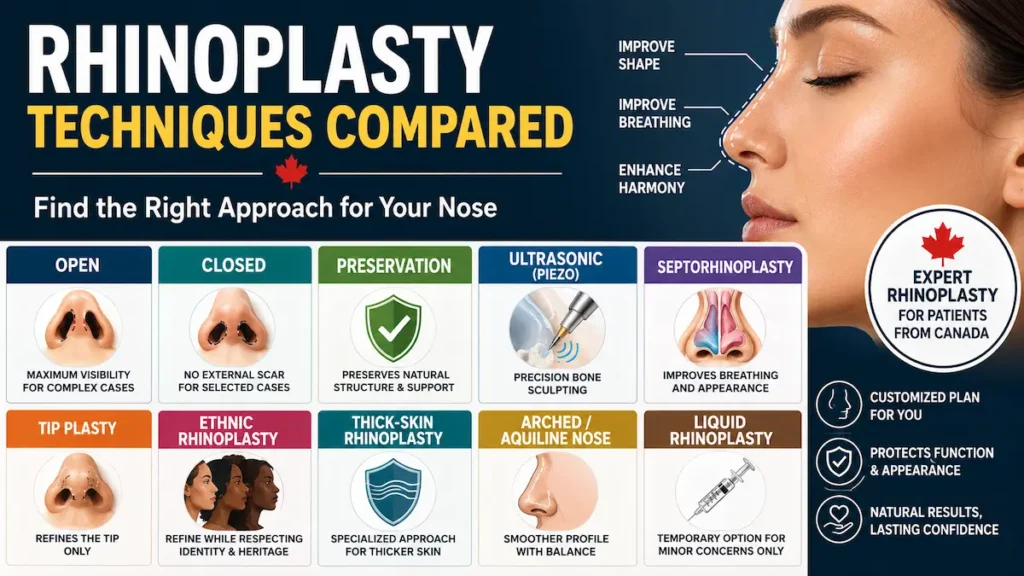
Rhinoplasty Techniques Compared: Open vs Closed vs Preservation vs Ultrasonic
Rhinoplasty is not one fixed operation. The right technique depends on your nasal bones, cartilage strength, skin thickness, breathing function, previous surgery history, and aesthetic goals. This is why two patients asking for a “nose job” may need very different surgical plans.
At AKM Clinic, we use the consultation to decide which technique protects both appearance and airway support. Dr. Göknil Gültekin’s ENT and facial plastic background is central to this decision. She assesses the nose as a visible facial feature and as a breathing structure.
Canadian patients can also use this section as a comparison framework before speaking with any surgeon. The Canadian Society of Plastic Surgeons provides a useful baseline for understanding why surgeon training and procedure-specific planning matter in aesthetic surgery.
Open rhinoplasty
Open rhinoplasty uses a small external incision across the columella, the strip of tissue between the nostrils. This allows full visibility of the nasal framework. It is often preferred when the surgeon needs precise access to the bridge, tip, septum, or cartilage support.
This approach is especially useful for complex primary rhinoplasty, revision surgery, crooked noses, significant tip reshaping, and cases where breathing support must be reconstructed. The trade-off is a small external scar, usually placed where it becomes difficult to notice after healing.
Closed rhinoplasty
Closed rhinoplasty places all incisions inside the nostrils. There is no external columellar incision. This can be appropriate for selected patients who need bridge refinement, mild tip work, or smaller structural changes.
The main advantage is reduced external scarring. The limitation is visibility. Closed rhinoplasty may not give enough access for complex tip support, major asymmetry, severe deviation, or revision cases.
Preservation rhinoplasty
Preservation rhinoplasty aims to refine the nose while maintaining key structural ligaments, cartilage relationships, and the natural bridge whenever possible. Instead of removing and rebuilding aggressively, the surgeon works with the existing architecture.
This technique can be valuable for patients who want a softer profile but do not want an obviously operated-on bridge. It may also help preserve stability when the nasal anatomy is favourable.
Ultrasonic / Piezo rhinoplasty
Ultrasonic rhinoplasty, also called Piezo rhinoplasty, uses sound-wave energy to sculpt nasal bone with high precision. The goal is to reshape bone while reducing unnecessary trauma to nearby soft tissue.
This can be helpful for dorsal hump reduction, bridge narrowing, and controlled bone refinement. It is not a magic tool. The surgeon’s judgement still determines whether Piezo technology is appropriate for your anatomy.
Septorhinoplasty
Septorhinoplasty combines cosmetic reshaping with functional correction of the septum. It may be recommended when a deviated septum, internal collapse, or structural obstruction affects breathing and appearance together.
This is one of the strongest reasons to choose an ENT-led rhinoplasty team. The surgeon must improve airflow without weakening the visible structure of the nose.
For functional rhinoplasty patients, our septorhinoplasty guide explains how breathing correction and aesthetic refinement can be planned in one operation.
Tip plasty
Tip plasty focuses only on the nasal tip. It may refine bulbosity, projection, rotation, asymmetry, or lack of definition without changing the bridge in a major way.
This can be appropriate when the upper two-thirds of the nose already fit the face. It is not enough for patients with a dorsal hump, crooked bridge, or significant breathing obstruction.
For patients considering limited-scope surgery, our Tip Plasty in Turkey guide explains when tip-only refinement is realistic.
Ethnic rhinoplasty
Ethnic rhinoplasty refines the nose while respecting the patient’s cultural, family, and facial identity. This approach is especially important in Canada, where patients come from highly diverse backgrounds, including Middle Eastern, South Asian, East Asian, Black, Mediterranean, and mixed-heritage communities.
The goal is not to erase identity. It is to improve balance while preserving the features that make the face authentic. This may involve bridge support, tip definition, nostril refinement, or better symmetry without forcing the nose into a narrow template.
For patients who want identity-preserving refinement, our Ethnic Rhinoplasty in Turkey guide explains how surgical planning changes across different nasal structures.
Thick-skin rhinoplasty
Thick nasal skin affects how much tip definition can show after surgery. Patients with thick skin may need stronger cartilage support, careful debulking where safe, and a more patient recovery timeline. Swelling can also last longer.
This does not mean thick-skin patients cannot achieve improvement. It means the surgical plan must be realistic. A very tiny, sharply defined tip may not be anatomically possible, but better projection, support, and balance often are.
Canadian patients with thick skin can read our Thick Skin Rhinoplasty guide for a deeper explanation of the technique adaptations Dr. Gültekin uses during planning.
Arched or aquiline nose correction
An arched or aquiline nose usually refers to a prominent dorsal hump or curved bridge. Some patients want the hump reduced. Others want a smoother profile while keeping a strong family or ethnic character.
The safest plan depends on bone height, cartilage support, skin thickness, and the angle between the nose and forehead. Over-flattening the bridge can create an unnatural result, especially on faces where a stronger profile is part of the overall balance.
For hump-focused surgery, our Arched Nose Surgery in Turkey guide explains dorsal modification in more detail.
Liquid and non-surgical rhinoplasty
Non-surgical rhinoplasty, often called liquid rhinoplasty, uses injectable filler to temporarily camouflage small contour concerns. It may soften the appearance of a minor bridge dip or improve the illusion of straightness in carefully selected cases.
It does not make the nose smaller. It cannot correct breathing. It cannot reduce a dorsal hump, narrow nasal bones, or repair a deviated septum. It also carries vascular risks when performed near the nose, so it should never be treated as a casual alternative.
For patients who need structural change, surgical rhinoplasty remains the more appropriate option. Liquid rhinoplasty can be useful only when the concern is minor, temporary, and filler-safe.
Open vs closed rhinoplasty decision framework
Open vs closed rhinoplasty is not a competition where one method is always better. It is a technical decision. Open rhinoplasty provides more visibility. Closed rhinoplasty limits external incision placement.
We generally prefer open access for revision cases, major tip work, significant asymmetry, structural grafting, and functional-aesthetic septorhinoplasty. Closed access may suit smaller refinements in patients with favourable anatomy.
The right question is not, “Which technique sounds less invasive?” The better question is, “Which technique gives the surgeon enough control to create a safe, stable, natural result?”
Septoplasty vs rhinoplasty
Septoplasty corrects the septum inside the nose. Rhinoplasty reshapes the outer nose. Septorhinoplasty combines both. Many patients confuse these terms because the symptoms and visible concerns often overlap.
If you breathe poorly but like the appearance of your nose, septoplasty alone may be enough. If you want visible reshaping but breathe well, cosmetic rhinoplasty may be appropriate. If you have both obstruction and shape concerns, septorhinoplasty may be the better fit.
This is one reason ENT assessment matters. Dr. Gültekin evaluates the airway before choosing a cosmetic plan, because a beautiful nose still needs to function.
Rhinoplasty technique comparison table
| Technique | Best for | Key advantage | Starting price |
|---|---|---|---|
| Open rhinoplasty | Complex reshaping, revision, tip support | Maximum visibility and control | CAD $4,100 |
| Closed rhinoplasty | Selected bridge or minor tip refinements | No external incision | CAD $4,800 |
| Preservation rhinoplasty | Natural bridge refinement | Maintains more native support where possible | CAD $4,800 |
| Ultrasonic / Piezo rhinoplasty | Controlled bone sculpting | Precise bridge and bone work | CAD $4,800 |
| Septorhinoplasty | Breathing correction + visible refinement | Combines function and aesthetics | CAD $5,050 |
| Tip plasty | Tip-only refinement | Limited-scope surgery | CAD $2,750 |
| Ethnic rhinoplasty | Identity-preserving refinement | Balances improvement with cultural features | CAD $6,150 |
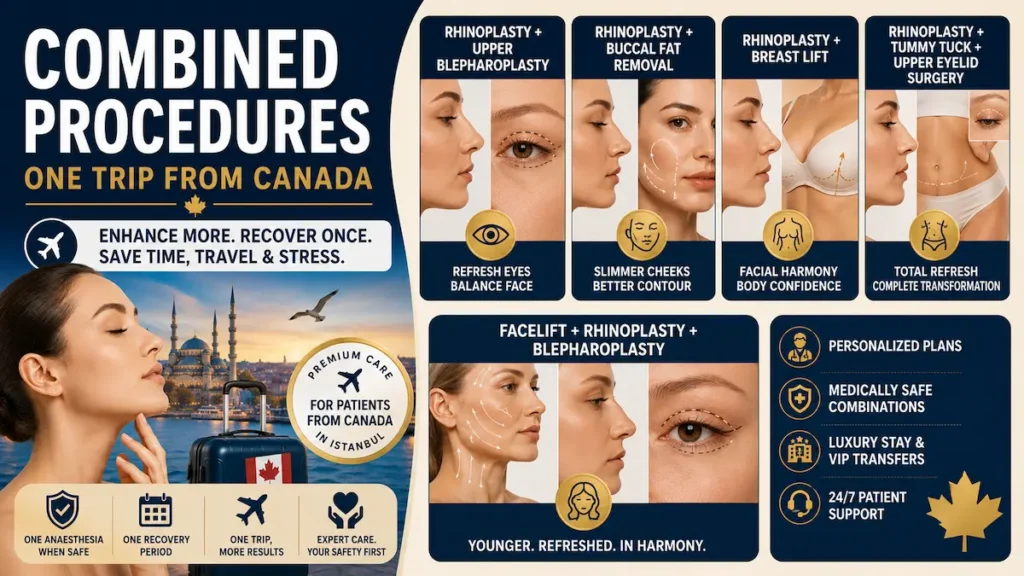
Combined Procedures — One Trip from Canada
Some Canadian patients choose rhinoplasty alone. Others use the same trip to address related facial or body concerns, especially when the procedures share a recovery window. Combined surgery can reduce duplicate anesthesia exposure, repeat travel, and separate time away from work or family.
We only recommend combined procedures when the plan is medically appropriate. A longer operation is not automatically better. Your health profile, anatomy, recovery capacity, and fit-to-fly timing must all support the combined approach.
At AKM Clinic, combined planning is done carefully. The goal is facial harmony and practical recovery, not adding procedures simply because you are already in Istanbul.
Rhinoplasty + upper blepharoplasty
Rhinoplasty and upper blepharoplasty can be paired when the nose and upper eyelids both affect facial balance. This combination may suit patients with a prominent nasal bridge and heavy upper eyelid skin that makes the eyes look tired.
Upper eyelid surgery is usually a lighter recovery than rhinoplasty. When paired properly, it can refine the central and upper face without creating an over-operated look.
Patients considering eye-area refinement can review our blepharoplasty in Turkey guide before deciding whether the combination is appropriate.
Rhinoplasty + buccal fat removal
Rhinoplasty changes the centre of the face. Buccal fat removal affects lower-cheek fullness. In selected patients, combining the two can improve profile balance and facial definition.
This is not for everyone. Removing buccal fat from a naturally slim face can age the cheeks over time. We use conservative planning and reject the procedure when long-term facial hollowing is likely.
For patients with true lower-cheek fullness, the rhinoplasty + buccal fat removal package is priced at CAD $7,250 with a 6-night stay.
Rhinoplasty + breast lift
Some patients combine rhinoplasty with breast lift when they want both facial refinement and body restoration in one international surgical programme. This is more common among patients travelling from Canada who want to avoid a second long-haul trip.
A breast lift has a different recovery profile than rhinoplasty. It requires support garments, upper-body movement limits, and scar care. We review these details before approving the combined plan.
The breast lift + rhinoplasty package is priced at CAD $9,400 and includes a 6-night stay.
Rhinoplasty + tummy tuck + upper eyelid surgery
This combination is more extensive. It may suit patients who want nasal refinement, abdominal contouring, and eyelid refresh in one trip. It requires stronger health screening and a more serious recovery plan.
Because tummy tuck recovery affects walking posture, core strength, and flight comfort, we assess whether a combined plan is safer than staged surgery. For some Canadian patients, staging is the better choice.
When appropriate, the tummy tuck + rhinoplasty + upper eyelid package is priced at CAD $10,850 with a 6-night stay.
Facelift + rhinoplasty + blepharoplasty
For patients seeking broader facial refinement, rhinoplasty may be combined with facelift and blepharoplasty. This is usually considered when ageing changes and nasal structure both affect facial balance.
This plan requires a more detailed facial analysis. A nose that fits a younger face may appear different after the lower face and eyelids are refreshed. We plan the face as a whole.
The facelift + rhinoplasty + blepharoplasty package is priced at CAD $11,600 with a 6-night stay. Patients considering lower-face ageing can also review our facelift in Turkey guide.
Anesthesia for Rhinoplasty
Rhinoplasty is usually performed under general anesthesia because the airway, nose, and surgical field are closely connected. Airway control is especially important when the surgeon is correcting the septum, reshaping bone, or performing complex tip support.
At AKM Clinic, anesthesia planning begins before you travel. We review your health history, medications, allergies, breathing symptoms, and previous anesthesia experiences. This is especially important for Canadian patients flying long distance after surgery.
Our goal is controlled surgery, stable monitoring, and a smooth recovery. The anesthesia plan must support both surgical precision and patient safety.
General anesthesia for full rhinoplasty
General anesthesia is the standard for open rhinoplasty, most closed rhinoplasty, septorhinoplasty, revision rhinoplasty, and ultrasonic rhinoplasty. It allows the surgical team to protect the airway and maintain a controlled operating environment.
This matters because nasal surgery can involve bleeding, swelling, airway manipulation, and internal correction. Stable anesthesia helps the surgeon work precisely without patient movement.
Before surgery, our team confirms fasting instructions, medication adjustments, and monitoring requirements. After surgery, you are observed until you are safe to return to your hotel with support.
Local anesthesia with IV sedation for limited refinement
Local anesthesia with IV sedation may be considered for minor tip plasty or selected limited refinements. It is not appropriate for most full rhinoplasty cases.
The decision depends on the scope of surgery, patient anxiety level, airway safety, and whether bone or septum work is needed. If the procedure requires deeper structural correction, general anesthesia is safer and more predictable.
We explain this clearly during consultation. A lighter anesthesia plan should never compromise surgical control.
Why we do not position full rhinoplasty as an awake procedure
Full rhinoplasty is different from awake facial procedures such as selected facelift or eyelid surgery. The nose is part of the airway. When bone, cartilage, septum, or internal nasal support is being changed, airway protection becomes central to safety.
For this reason, we do not market full rhinoplasty as an awake procedure. This is a clinical boundary, not a limitation. The safest anesthesia model is the one that fits the anatomy and procedure.
Canadian patients sometimes ask about avoiding general anesthesia. We will discuss this honestly, but we will not recommend an awake approach when airway safety requires deeper control.
Canadian patient pre-flight anesthesia assessment
Before travelling from Canada, tell us about asthma, sleep apnea, heart conditions, blood pressure medication, previous anesthesia nausea, clotting issues, and allergies. These details help us plan safely.
You may also speak with your family physician before departure. The Canadian Anesthesiologists’ Society offers patient-facing context on anesthesia safety standards in Canada, which can help you prepare better questions.
After surgery, we provide English-language discharge details so your Canadian provider understands the anesthesia used, medications prescribed, and recovery milestones to monitor.
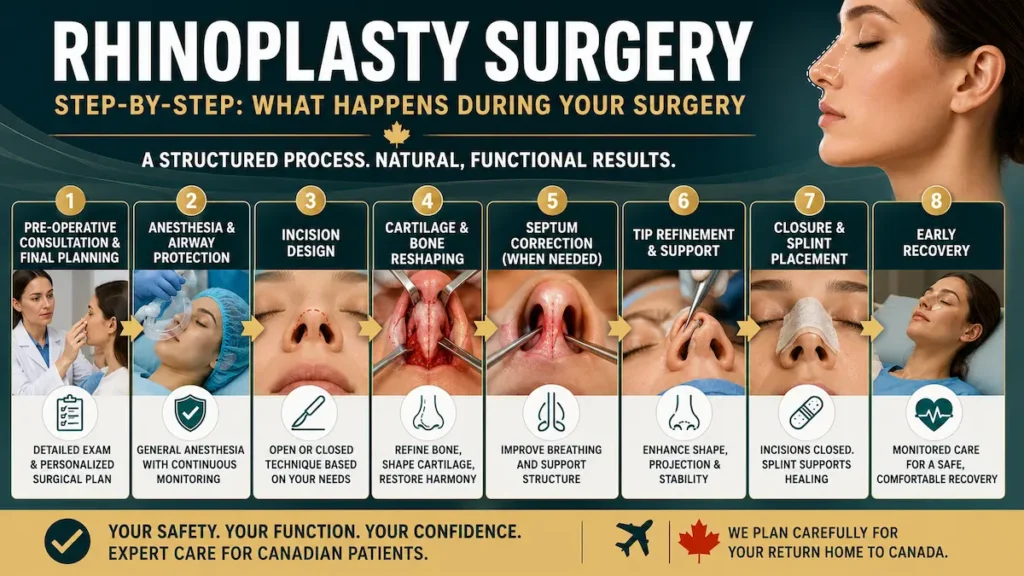
Step-by-Step: What Happens During Rhinoplasty Surgery?
Rhinoplasty planning begins before the operating room. By the time surgery starts, we have already reviewed your photos, health history, nasal concerns, breathing symptoms, and desired degree of change. The procedure itself follows a structured sequence designed to protect both appearance and airway function.
For Canadian patients, this step-by-step understanding reduces uncertainty. You know what happens on surgery day, why each stage matters, and how the plan connects to your recovery and return flight.
Every case is tailored. A tip plasty does not follow the same surgical path as revision septorhinoplasty. Still, the core stages below explain the typical rhinoplasty surgery flow at AKM Clinic.
Pre-operative consultation and final planning
Before surgery, you meet the surgical team in person. We review the plan again, compare your goals with your anatomy, and confirm whether the priority is aesthetic refinement, breathing correction, or both.
Dr. Gültekin examines the nasal bridge, tip, nostrils, septum, airway, and facial proportions. If the plan includes preservation rhinoplasty, ultrasonic bone refinement, septorhinoplasty, or revision correction, she explains what will be changed and what must be preserved.
We also confirm medical details: medication timing, allergies, fasting status, blood tests, previous surgery history, and anesthesia plan. This final review protects safety and avoids last-minute uncertainty.
Anesthesia and airway protection
For most rhinoplasty procedures, general anesthesia is administered before surgery begins. This allows the anesthesia team to protect the airway and maintain stable monitoring while the nose is being reshaped.
Airway control is especially important for septorhinoplasty and revision rhinoplasty, where internal nasal structures may be corrected. We monitor oxygen levels, blood pressure, heart rhythm, and recovery status throughout the procedure.
After anesthesia begins, the nose is prepared under sterile conditions. The surgical field is cleaned, draped, and positioned for precise access.
Incision design
The incision pattern depends on the technique. In open rhinoplasty, a small incision is made across the columella and connected to incisions inside the nostrils. This allows the nasal skin to be lifted so the surgeon can see the cartilage and bone directly.
In closed rhinoplasty, the incisions remain inside the nostrils. This avoids an external incision but gives less visibility. It is best for selected cases with less complex reshaping.
The incision choice is not made for marketing reasons. It is made based on control, visibility, scarring, and the structural work required.
Cartilage and bone reshaping
Once the nasal framework is exposed, the surgeon reshapes cartilage and bone according to the plan. This may include reducing a dorsal hump, straightening a crooked bridge, narrowing nasal bones, refining the tip, or improving support.
When ultrasonic rhinoplasty is appropriate, Piezo technology can be used for precise bone sculpting. This may reduce unnecessary trauma to surrounding soft tissue compared with older bone-shaping tools.
Cartilage work requires restraint. Removing too much cartilage can weaken support, distort the tip, or cause breathing problems later. We prioritize structure first, shape second.
Septum correction when needed
If the septum is deviated or contributes to breathing obstruction, Dr. Gültekin may correct it during septorhinoplasty. The goal is to improve airflow while maintaining or rebuilding support.
Septal cartilage may also be used as graft material in selected cases. Grafts can reinforce the tip, support the nasal valve, or correct collapse from previous surgery.
This is where ENT training becomes especially important. The septum is not simply an internal wall. It is part of the breathing system and part of the nose’s support architecture.
Tip refinement and support
The nasal tip is shaped through cartilage suturing, conservative trimming, grafting, or repositioning. Tip work can change definition, projection, rotation, and symmetry.
A stable tip is more important than an overly small tip. If the tip is weakened to create short-term definition, it may drop, pinch, or obstruct breathing over time.
We plan tip refinement according to skin thickness, cartilage strength, gender, ethnic features, and the patient’s preferred level of change. Subtle improvement is often the most durable result.
Closure, splint placement, and early recovery
After reshaping is complete, the incisions are closed and a nasal splint is placed to support the new structure during early healing. Internal splints or packing may be used when septum work is performed.
You then move to the recovery area. Our team monitors you as anesthesia wears off, manages discomfort, and confirms that you are stable before discharge to your hotel or hospital room, depending on your procedure scope.
Most rhinoplasty patients feel pressure rather than sharp pain. Bruising and swelling usually peak in the first several days. The day-7 splint removal is often the first major visible milestone.
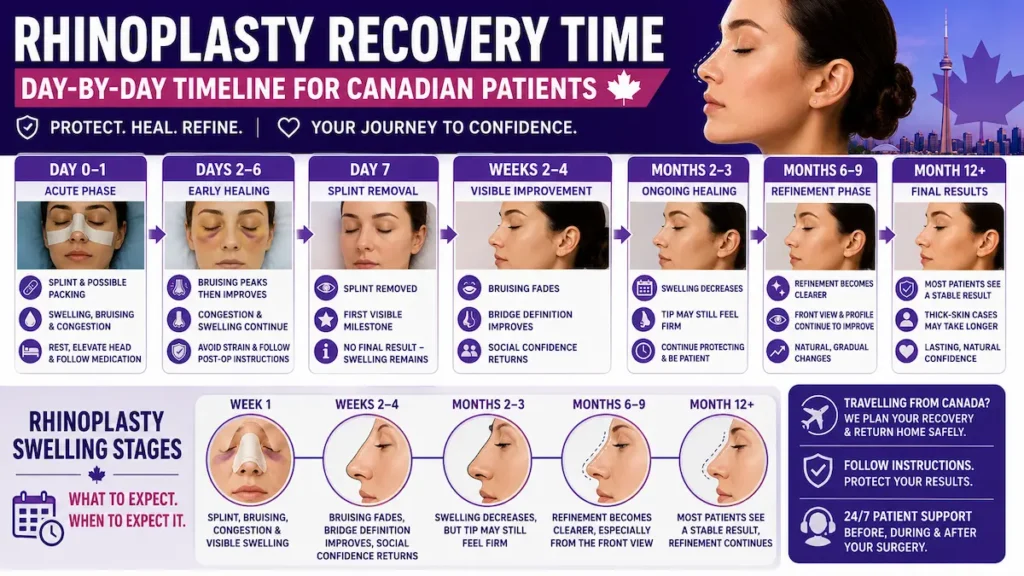
Rhinoplasty Recovery Time: Day-by-Day Timeline for Canadian Patients
Rhinoplasty recovery happens in stages. The first week is about swelling, splint protection, bruising control, and rest. The following months are about gradual definition, especially around the nasal tip.
For Canadian patients, the recovery plan must also account for travel. You are not only healing from nose surgery; you are preparing for a long-haul return flight, cabin pressure, dry air, and the need for follow-up once you are back home.
Most patients look socially presentable within 10 to 14 days. Final refinement takes longer. The bridge may settle earlier, but tip swelling can continue improving for 12 months or more.
Day 0–1: The acute phase with splint and packing
Immediately after rhinoplasty surgery, you will have an external nasal splint. Internal splints or packing may be used if septum work was performed. Your nose may feel blocked, heavy, or congested.
Discomfort is usually manageable. Patients often describe pressure more than sharp pain. Bruising under the eyes, mild bleeding, swelling, and difficulty breathing through the nose are expected in the first 24 hours.
You should rest with your head elevated, avoid bending forward, and follow the medication schedule provided by our team. Cold compresses may be used around the cheeks and eyes, but not directly on the nose unless instructed.
Days 2–6: Bruising, congestion, and early swelling
During days 2 to 6, swelling and bruising may become more visible before they improve. This is normal. The splint protects the nasal structure while the early inflammatory phase settles.
You should avoid nose blowing, heavy chewing, alcohol, smoking, strenuous walking, and anything that raises blood pressure. Sneezing should be done with the mouth open to reduce pressure inside the nose.
Our patient hosts remain available during this period. If you notice heavy bleeding, sudden worsening pain, fever, or one-sided severe swelling, you should contact the team immediately.
Day 7: Splint removal and the first visible milestone
Day 7 is one of the most important rhinoplasty recovery milestones. The external splint is usually removed around this point, depending on your surgical plan and healing status.
This is not the final result. The nose will still be swollen, and the tip may look lifted, firm, or wider than expected. Many patients feel excited and uncertain at the same time, which is normal.
We explain what is temporary and what is structural during the splint-removal appointment. This helps Canadian patients avoid judging the result too early.
Our HBOT/LLLT Recovery Protocol
We use Hyperbaric Oxygen Therapy and Low-Level Laser Therapy as part of our recovery-focused approach for international patients. HBOT increases oxygen delivery to healing tissues, while LLLT uses controlled light energy to support cellular repair.
For rhinoplasty, the goal is to reduce inflammation, support bruising resolution, and help tissues recover before the return flight. HBOT may be especially useful for Canadian patients because the 10-to-12-hour flight home can place additional stress on healing tissues.
Our technology and recovery standards explain how we use HBOT and LLLT within a broader safety protocol. These therapies do not replace careful surgery. They support healing after it.
Rhinoplasty swelling stages: week 1 to month 12
Rhinoplasty swelling stages are not linear. The bridge may improve quickly, while the tip can stay swollen for months. Patients with thick skin often need more patience.
- Week 1: splint, bruising, congestion, and visible swelling.
- Weeks 2–4: bruising fades, bridge definition improves, and social confidence returns.
- Months 2–3: swelling decreases, but the tip may still feel firm.
- Months 6–9: refinement becomes clearer, especially from the front view.
- Month 12: most patients see a stable result, though thick-skin cases may continue refining longer.
Rhinoplasty recovery photos day by day can be helpful, but they can also create unrealistic comparisons. Your swelling pattern depends on skin thickness, technique, bone work, revision status, and aftercare discipline.
Why final results take 12 months
The nose heals slowly because skin must contract around a reshaped cartilage and bone framework. The tip is especially slow because it has thicker soft tissue and more swelling retention.
A nose job recovery time of 10 to 14 days usually refers to social recovery, not final results. You may look well enough for video calls or office work before the nose has fully refined.
This is why we schedule long-term virtual follow-ups at 1, 3, 6, and 12 months. We want to monitor the healing curve, not just the first week.
Fit-to-fly clearance and return timing
Most Canadian rhinoplasty patients should plan to remain in Istanbul until after splint removal. The all-inclusive rhinoplasty pathway includes a 6-night stay because the day-7 appointment is clinically important.
Return flight timing is individualized. Many patients are cleared to fly around day 7 to day 10, depending on swelling, bleeding risk, septum work, and surgeon assessment. You should not book an overly tight return schedule.
During the flight, keep your head supported, hydrate well, avoid alcohol, and follow any nasal care instructions. If you had septorhinoplasty, we may give additional guidance about cabin pressure and congestion management before you leave Istanbul.
Safety & Risks — An Honest Discussion
Rhinoplasty is one of the most technically demanding facial surgeries because small structural changes can affect both appearance and breathing. A safe result depends on surgeon training, airway assessment, sterile technique, conservative tissue handling, and realistic planning. It also depends on patient selection.
At AKM Clinic, we discuss risk directly because Canadian patients expect transparency. We do not describe rhinoplasty as simple or risk-free. We explain what is common, what is rare, and how we reduce preventable problems before surgery begins.
Most patients heal without major complications. Still, understanding the risk profile helps you make a more informed decision.
Common short-term effects
Common short-term effects include swelling, bruising under the eyes, congestion, mild bleeding, temporary numbness, splint discomfort, and pressure around the bridge or tip. These effects are expected in the first week.
Bruising is usually most visible during the first several days. Congestion may feel frustrating because you may need to breathe through your mouth at night. The nasal tip can feel firm for weeks or months.
These symptoms should gradually improve. We give clear instructions on medication, sleeping position, activity limits, nasal care, and signs that require urgent contact with our team.
Rare but serious complications
Rare complications can include infection, septal perforation, persistent breathing obstruction, asymmetry, visible irregularity, excessive scar tissue, prolonged swelling, altered smell, or the need for revision surgery. Some risks are higher in revision rhinoplasty because scar tissue and weakened cartilage make the operation more complex.
Bleeding is also possible. Heavy bleeding, fever, severe one-sided swelling, intense pain, or sudden breathing difficulty should be reported immediately. We give patients direct contact pathways before they leave the clinic.
No ethical surgeon can promise a perfect result. The safer standard is to plan carefully, operate conservatively, and monitor healing over time.
Why “botched nose job” outcomes happen
Unsatisfactory rhinoplasty outcomes usually come from one or more causes: poor patient selection, over-resection of cartilage, inadequate septum assessment, excessive bridge lowering, weak tip support, or a surgeon applying the same nose shape to every face.
Some problems also appear months later. A nose may look acceptable early on but lose support as swelling settles. This is why structural planning matters more than short-term sharpness.
We avoid aggressive reduction when it would weaken the airway or create an unnatural profile. A slightly more conservative change is often safer, more stable, and more natural over the long term.
How Dr. Gültekin’s dual-specialty background reduces risk
Dr. Göknil Gültekin is an otolaryngologist and facial plastic surgeon with EAFPS Fellowship and EBE ORL-HNS board certification. That dual-specialty background is especially valuable in rhinoplasty because the procedure affects the visible nose and the internal airway.
Her ENT training helps guide septum evaluation, nasal valve support, and breathing preservation. Her facial plastic training helps refine tip shape, bridge contour, and facial harmony. This combination is particularly important in preservation rhinoplasty, septorhinoplasty, and revision cases.
Our risk-reduction process includes pre-operative screening, anatomy-specific planning, sterile hospital protocols, controlled anesthesia, careful graft selection, and structured follow-up after you return to Canada.
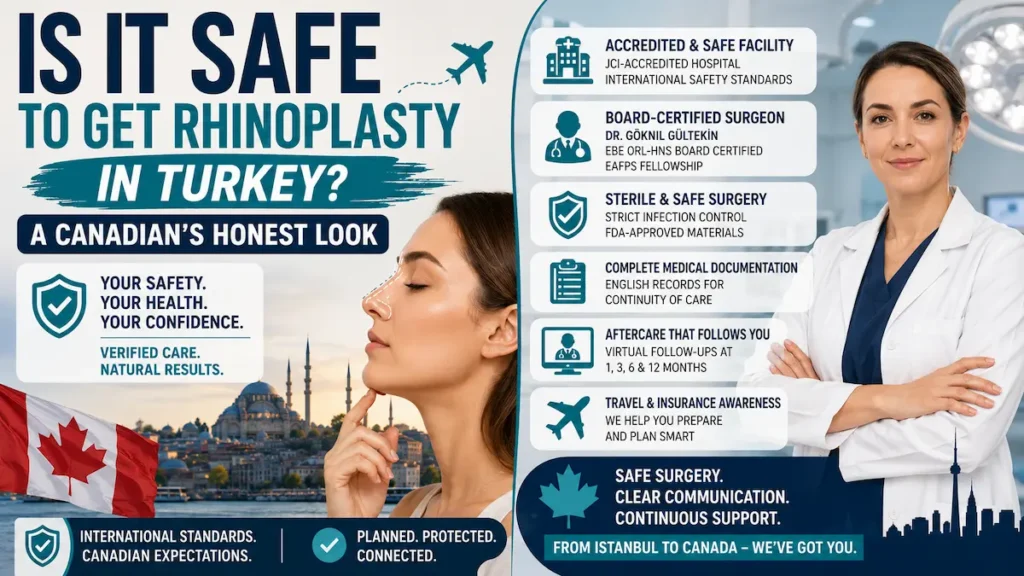
Is It Safe to Get Rhinoplasty in Turkey? A Canadian’s Honest Look
Rhinoplasty in Turkey can be safe when it is performed by a properly trained surgeon in a regulated, accredited clinical environment. It can also be unsafe when patients choose based only on price, social media images, or unrealistic promises. The difference is verification.
Canadian patients are right to ask more questions before travelling abroad. They are used to provincial health care oversight, RCPSC-recognized specialist pathways, and clear medical records. We build our process around those expectations.
Our recommendation is straightforward: do not evaluate international rhinoplasty by country alone. Evaluate the surgeon, facility, anesthesia protocol, documentation, aftercare, and what happens if you need help after returning home.
How AKM Clinic meets Canadian safety expectations
AKM Clinic performs surgery in a JCI-accredited facility and follows structured sterilization, pre-operative testing, and recovery protocols. For rhinoplasty, we use FDA-approved sutures and grafting materials where applicable, and we document the surgical plan in English for continuity of care.
Dr. Gültekin’s EBE ORL-HNS board certification and EAFPS Fellowship provide a strong international credential framework. For Canadian patients, this matters because rhinoplasty requires both airway knowledge and aesthetic judgement.
Patients comparing surgeon credentials can also review our AKM Clinic clinical leadership profile and our Istanbul clinic standards before making a decision.
Government of Canada travel-health concerns
The Government of Canada advises travellers to understand the risks of receiving medical care outside Canada, including infection risk, follow-up challenges, documentation gaps, and insurance limitations. We take those concerns seriously.
We address them with pre-operative screening, English-language medical records, sterilization protocols, patient advocacy, and scheduled virtual follow-up. We also encourage patients to speak with their Canadian family physician before travelling.
You should review the official Government of Canada guidance on medical care outside Canada before booking any elective surgery abroad.
Infection prevention and sterile nasal surgery protocol
Nasal surgery requires careful infection control because the nose naturally contains bacteria. Sterile technique, proper instrument processing, antibiotic planning when indicated, and post-operative wound care all matter.
Our clinical protocols follow international hospital standards. Instruments are processed through controlled sterilization systems, and the operative field is managed to reduce contamination risk. Patients also receive clear instructions for nasal hygiene after surgery.
You can review our technology and standards page for more detail on sterilization, JCI-level facility expectations, HBOT, LLLT, and recovery support.
Coordinating follow-up with your Canadian family physician
Rhinoplasty follow-up does not end when you leave Istanbul. Before departure, we confirm splint removal, early healing status, medication instructions, and fit-to-fly readiness. After you return home, we continue virtual check-ins at 1, 3, 6, and 12 months.
If your Canadian family physician needs information, we can provide English documentation covering the procedure performed, anesthesia used, splint timing, medication list, and warning signs to monitor.
This helps close the geographic gap. You remain connected to our surgical team while still having local medical support if an urgent concern appears in Canada.
Medical records portability
Medical records should be clear, portable, and useful. Canadian patients should not return home with vague notes or missing details. We provide documentation that supports continuity of care.
For rhinoplasty, this may include the operative summary, whether septum work was performed, grafting notes where relevant, splint timing, medication instructions, and follow-up schedule. These details help your local provider understand the procedure if they need to examine you.
We recommend keeping a digital copy on your phone and a printed copy in your travel folder. This is especially useful during airport travel or if you need urgent care after landing.
Travel insurance and elective-surgery limitations
Canadian travel insurance may not cover complications related to elective cosmetic surgery. Policies vary, and exclusions can be strict. You should read your policy before booking and ask direct questions about elective surgery abroad.
This does not mean you should travel uninsured. It means you should understand what is covered, what is excluded, and whether supplementary coverage is available. Our coordinators can help you prepare the right questions for your insurer.
Safety planning is not only about the operating room. It includes the return flight, medical records, local follow-up options, and a clear communication channel with our team after you are back in Canada.
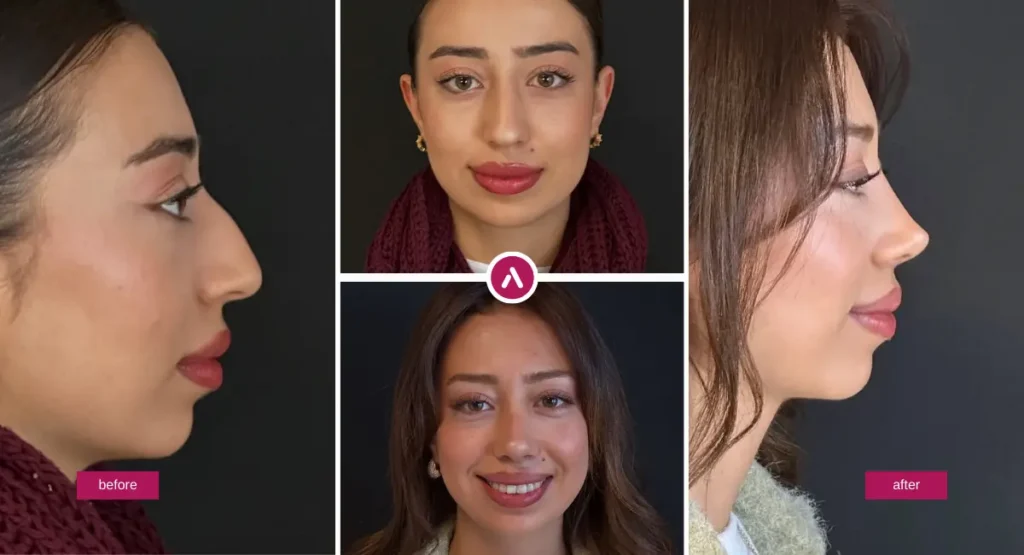
Rhinoplasty Before and After — Our Natural-First Rhinoplasty Philosophy
Rhinoplasty should improve balance, not erase identity. At AKM Clinic, our Natural-First philosophy means we refine the nose in relation to the entire face, rather than forcing every patient into the same narrow bridge or lifted tip.
Realistic expectations are essential. The best rhinoplasty before and after results usually look calm, proportional, and believable. They do not make the nose the centre of attention.
Canadian patients often tell us they want to look more balanced in photos, breathe better, or feel less distracted by one nasal feature. Those are reasonable goals when the anatomy supports them.
Facial harmony over one-shape-fits-all noses
A natural rhinoplasty result depends on facial proportion. The bridge, tip, nostrils, chin, lips, cheeks, and forehead all influence how the nose is perceived.
A small nose is not always the right nose. A very narrow bridge may look artificial on a strong face. An overly lifted tip may not suit a male patient, a mature face, or someone with specific ethnic features.
We plan for harmony. This may mean reducing a hump, improving symmetry, supporting the tip, or refining nostril shape while keeping the patient’s original character intact.
Preservation rhinoplasty and natural bridge retention
Preservation rhinoplasty can be valuable when the patient’s anatomy allows refinement without aggressive structural removal. The aim is to keep more of the natural bridge and support system while improving the visible contour.
This does not mean preservation is right for every patient. A crooked nose, revision case, severe hump, or weak internal structure may require a different approach. The technique must follow the anatomy.
Dr. Göknil Gültekin’s ENT and facial plastic training supports this decision. She assesses both airway function and visible shape before choosing whether preservation, open, closed, ultrasonic, or septorhinoplasty techniques are best suited.
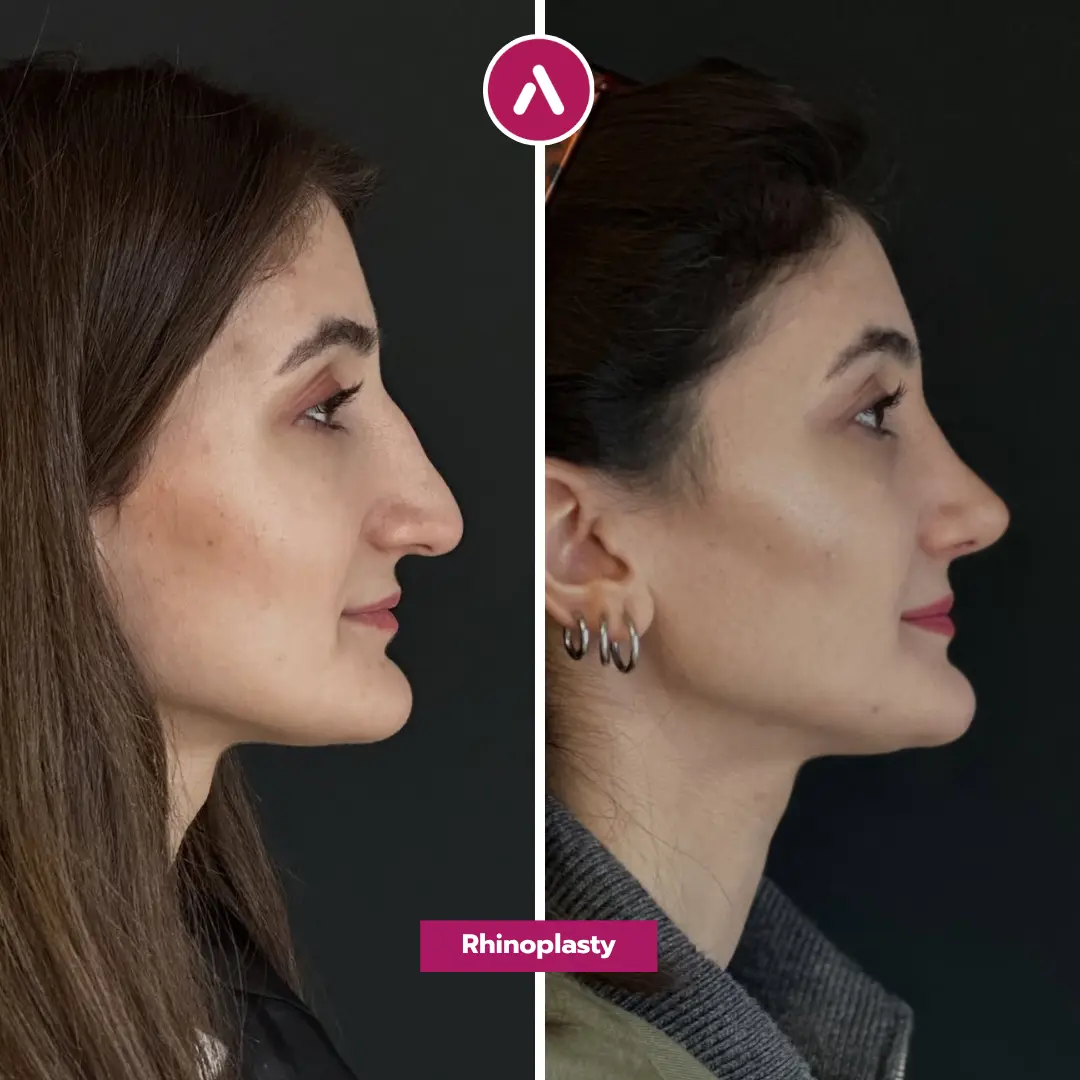
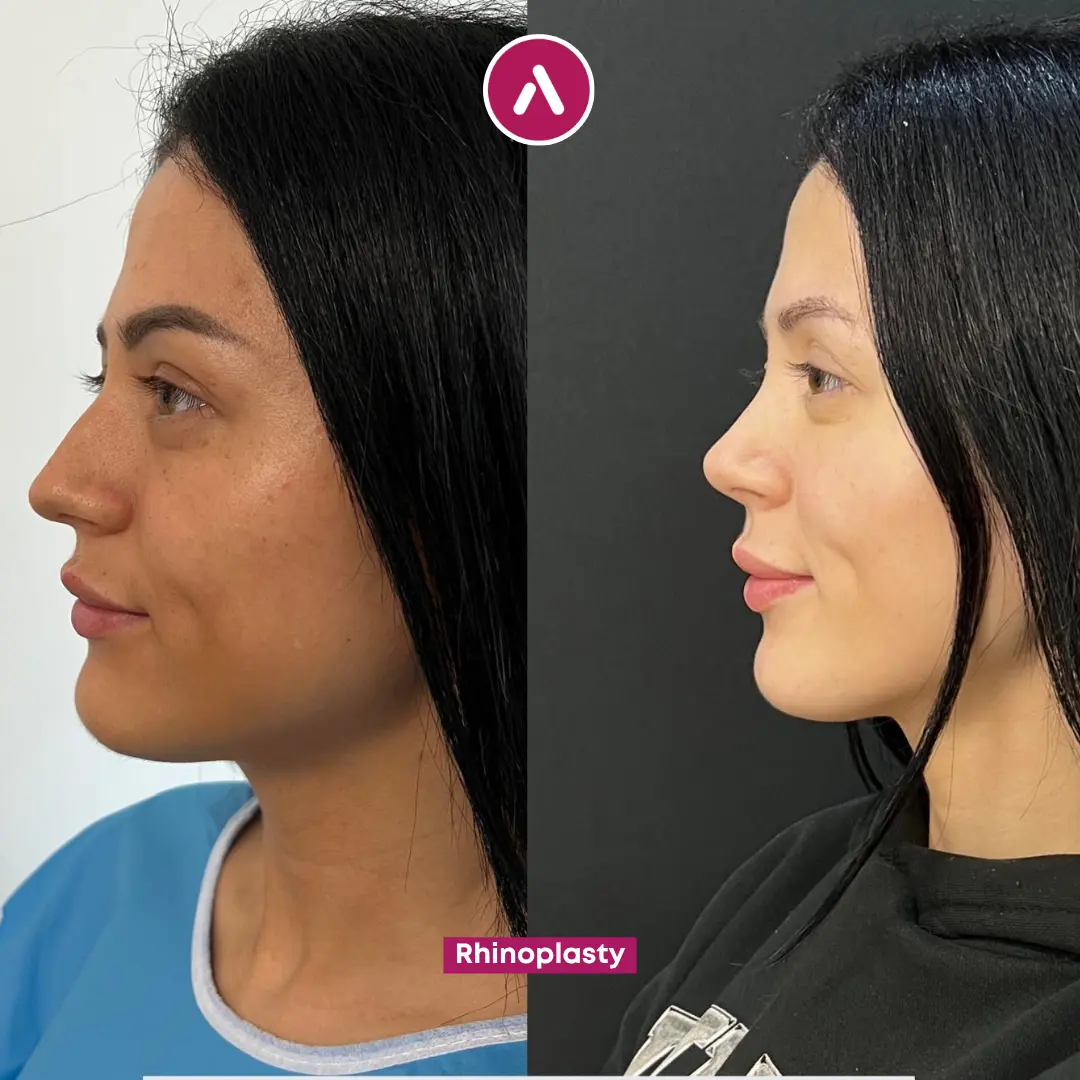
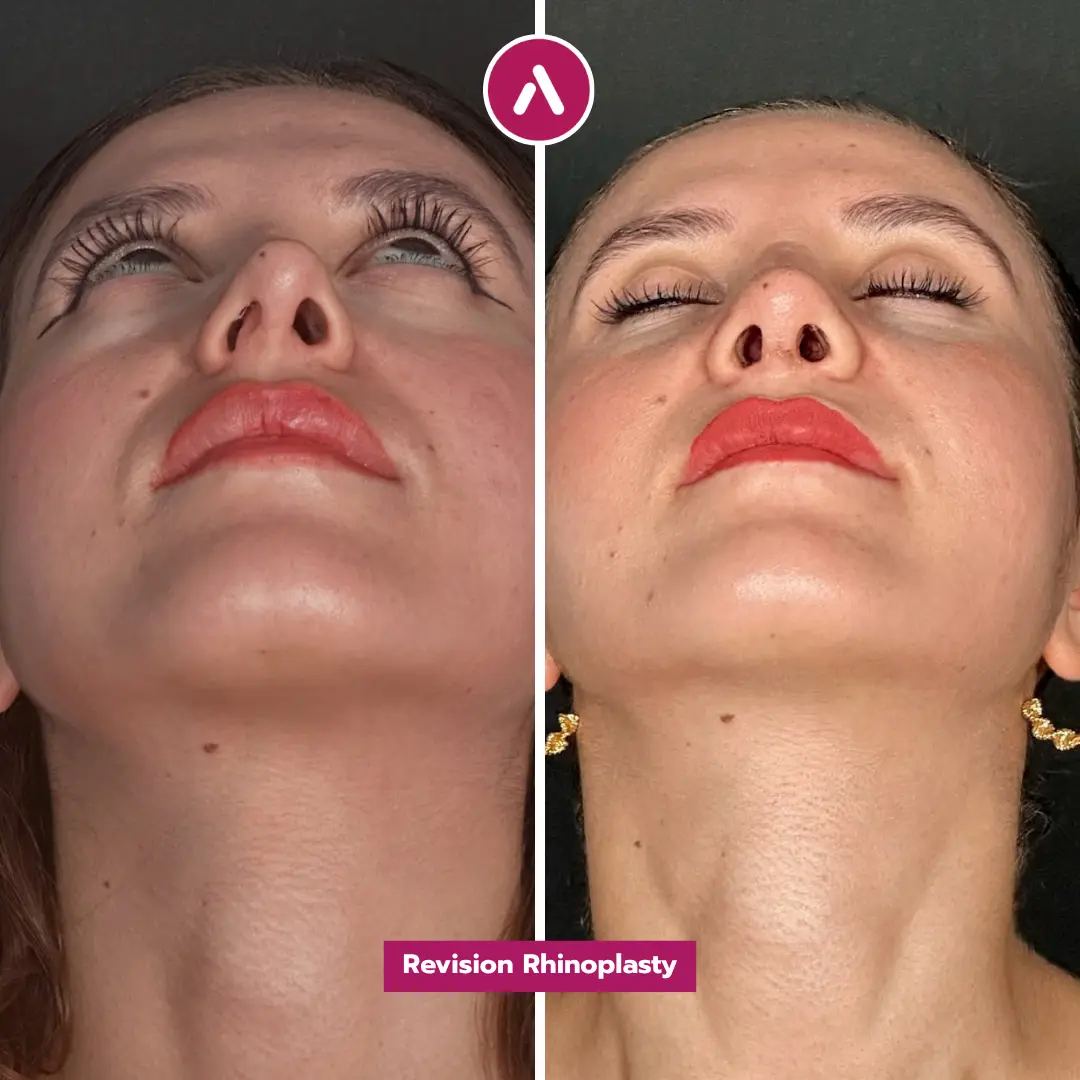
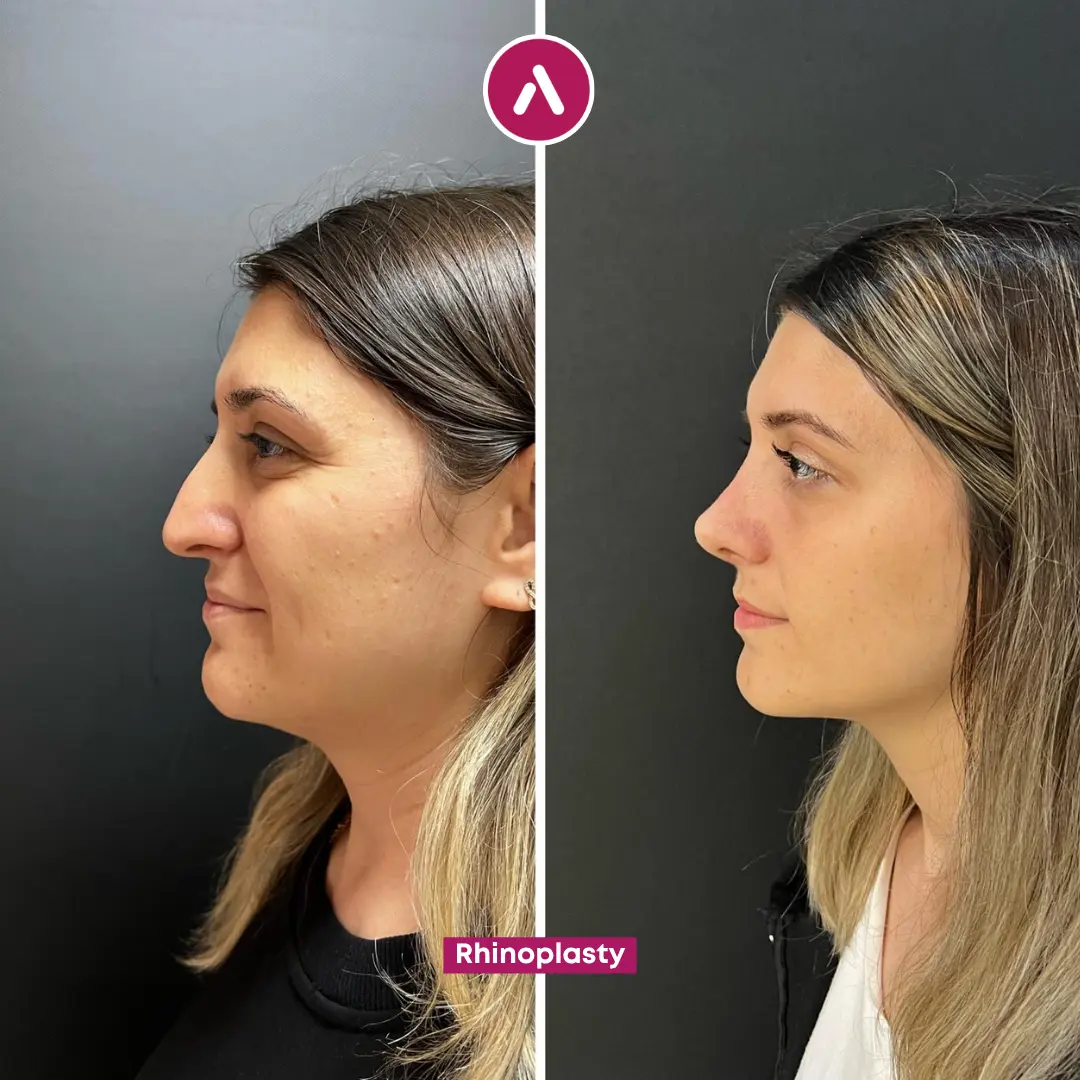
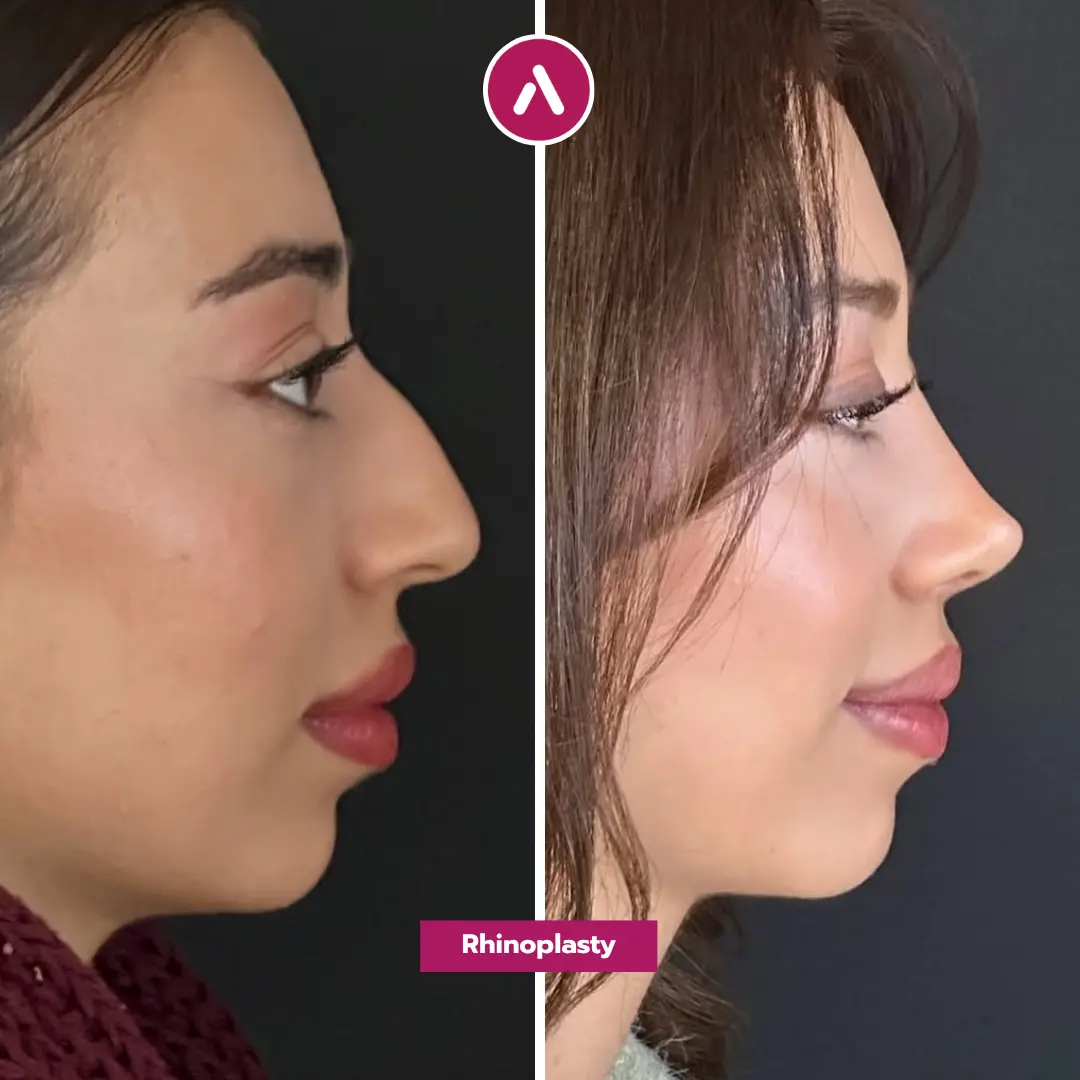
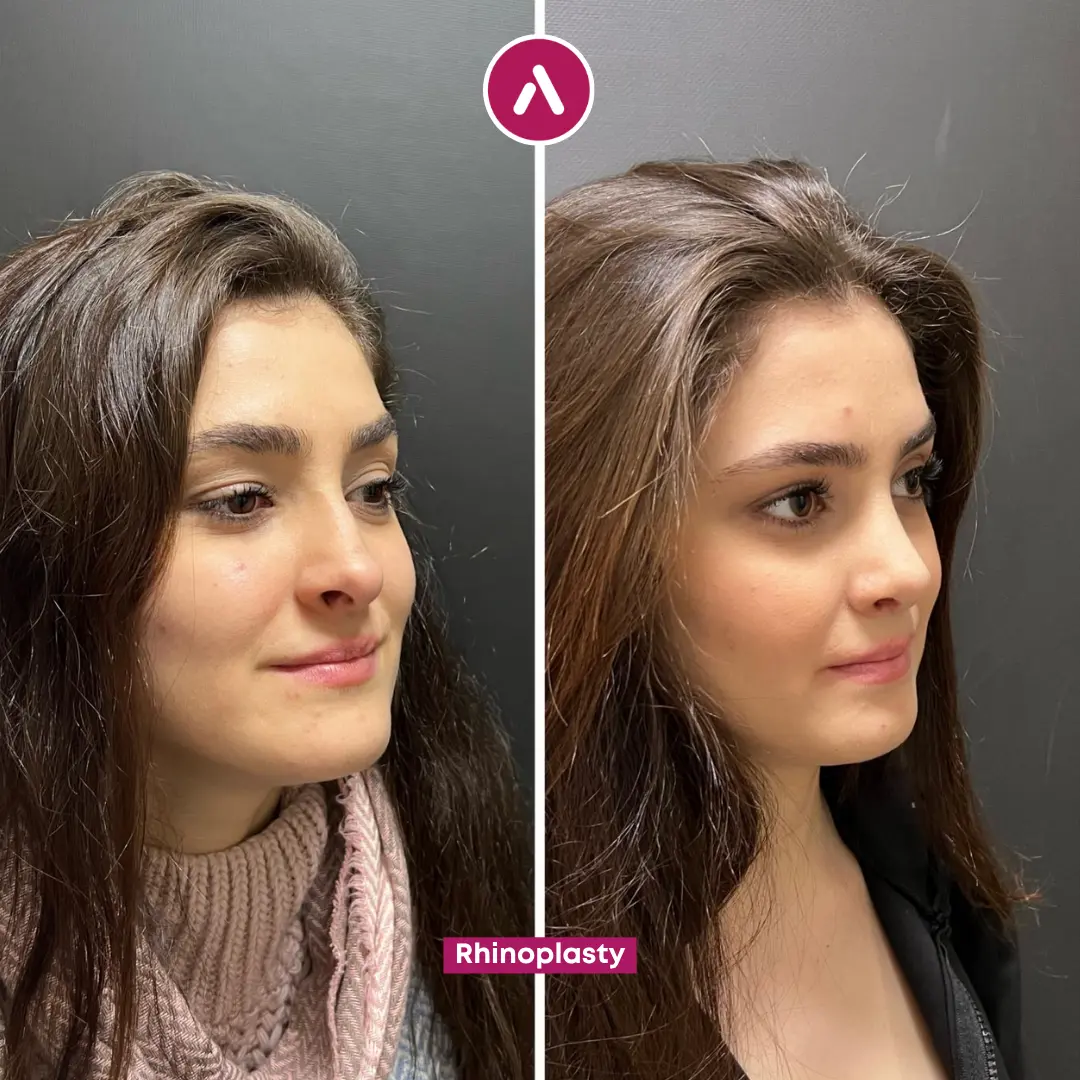
Understanding rhinoplasty before and after photos
Rhinoplasty before and after photos are useful, but they must be interpreted carefully. Lighting, facial angle, swelling stage, skin thickness, and camera distance can all change how the nose appears.
When reviewing nose job before and after results, look for consistency across many patient types. Strong galleries should show different faces, different ethnic backgrounds, different degrees of change, and natural variation.
You can review our rhinoplasty before and after gallery to understand the type of balanced, identity-preserving outcomes we aim for. For broader patient experience context, our professional plastic surgery reviews page shows how patients describe their care journey.
Why 12-month patience matters
Before and after rhinoplasty comparisons are most accurate after swelling has settled. Early photos can be encouraging, but they are not final.
The bridge may look refined within weeks. The tip usually takes longer. Patients with thick skin, revision surgery, or major tip work may see ongoing refinement beyond 12 months.
We guide patients through this timeline with scheduled virtual follow-ups at 1, 3, 6, and 12 months. This helps you understand what is normal and when an issue needs review.
Rhinoplasty Cost 2026: Turkey vs Canada
Canadian patients searching how much is a nose job in Canada or rhinoplasty cost Canada consistently find that private clinic quotes in Toronto, Vancouver, or Montreal sit several times above the comparable all-inclusive programme in Istanbul. The difference reflects regional operating costs and currency context, not a reduction in surgical planning, hospital standards, or surgeon credentialing.
Our rhinoplasty pricing starts at CAD $4,100 for open rhinoplasty, CAD $4,800 for closed, preservation, or ultrasonic Piezo rhinoplasty, and CAD $5,050 for septorhinoplasty. Revision rhinoplasty is priced at CAD $6,150 because it requires more complex structural planning. By comparison, rhinoplasty cost Toronto private clinic quotes often sit around CAD $12,000–$18,000 for the surgical fee alone, with anesthesia, facility, splint removal, and follow-up billed separately.
For the full Canadian dollar cost breakdown, including hidden-fee comparisons that Canadian patients often miss, see our detailed rhinoplasty cost guide for Canadian patients.
Many patients asking how much is a nose job in Turkey choose our all-inclusive rhinoplasty package at CAD $4,800. It includes a 6-night stay, which supports the day-7 splint-removal milestone before return travel to Canada.

How to Find the Best Rhinoplasty Surgeon in Turkey: A Canadian Patient’s Checklist
Many Canadian patients begin their research by searching for the best rhinoplasty surgeon in Canada, then compare Toronto, Vancouver, Montreal, Calgary, and Ottawa private clinics. After reviewing cost, availability, and surgeon specialization, some patients expand their search to rhinoplasty in Turkey.
The decision should never be based on price alone. Rhinoplasty requires surgeon-specific judgement. You are choosing the person who will reshape the most visible feature of your face and, in many cases, protect or improve your breathing.
For Canadian patients, the best rhinoplasty surgeon in Turkey should be evaluated through credentials, case variety, airway knowledge, revision experience, hospital standards, communication, and aftercare.
Look for ENT and facial plastic training
Rhinoplasty is both aesthetic and functional. A surgeon who understands only external shape may miss airway problems. A surgeon who focuses only on the septum may not fully account for facial harmony.
Dr. Göknil Gültekin’s dual-specialty background is central to our rhinoplasty programme. She is a European Board Certified Otolaryngologist, a Fellow of the European Academy of Facial Plastic Surgery, and trained as a fellow medical student at Harvard Medical School.
Canadian patients can compare this kind of training against the specialist pathways described by the Royal College of Physicians and Surgeons of Canada. The systems are different, but the verification mindset is the same: training, board structure, clinical focus, and continuing education matter.
Ask how breathing will be assessed
A rhinoplasty consultation should include questions about airflow. Do you breathe worse on one side? Did you have nasal trauma? Do you mouth-breathe at night? Do you have allergies, sinus symptoms, or previous surgery?
If a clinic discusses only profile photos and never asks about breathing, that is a warning sign. The septum, nasal valves, turbinates, and cartilage support system all affect long-term function.
Patients with functional symptoms may benefit from septorhinoplasty rather than cosmetic rhinoplasty alone. You can also review the Canadian Society of Otolaryngology — Head and Neck Surgery for context on why ENT training is relevant to nasal function.
Review revision rhinoplasty experience
Revision rhinoplasty is more complex than primary rhinoplasty. Scar tissue, weakened cartilage, asymmetry, graft shortages, and airway compromise can all make correction more difficult.
A surgeon who regularly handles revision cases usually has a deeper understanding of structural support. That experience also improves decision-making in primary cases, because the surgeon knows which aggressive choices can create problems later.
At AKM Clinic, revision rhinoplasty is evaluated carefully before approval. Some patients need cartilage grafting. Others may need a staged plan. We explain these realities before you travel.
Verify case variety, not just perfect photos
A strong rhinoplasty portfolio should not show the same nose on every face. It should include different skin thicknesses, ethnic backgrounds, genders, profiles, and degrees of change.
Look for front-view results, not only side profiles. The side profile can look impressive while the front view still shows asymmetry, pinching, or poor tip definition.
Before booking, ask to see cases that resemble your anatomy. A thick-skin nose, crooked bridge, or male rhinoplasty goal should be compared with similar cases, not a completely different facial structure.
Watch for red flags
Be cautious if a clinic promises a perfect result, offers one standard nose shape, avoids discussing breathing, cannot name the operating surgeon clearly, or encourages booking before reviewing your medical history.
Very low pricing should also be questioned. Safe rhinoplasty requires surgeon time, anesthesia, hospital standards, sterile instruments, follow-up, and proper planning. If the fee seems unusually low, ask what is missing.
Our About AKM Clinic page outlines our clinical leadership and Natural-First philosophy. We encourage patients to verify before they commit.
Your Rhinoplasty Journey from Canada: From YYZ to Istanbul, Step by Step
Travelling from Canada for rhinoplasty requires planning, but the process should feel structured. Our role is to coordinate the clinical and logistical pathway so you can focus on preparation and recovery.
Rhinoplasty patients usually need a longer stay than some other facial procedures because splint removal is a key milestone. Our all-inclusive rhinoplasty pathway includes a 6-night stay to support this timing.
From your first virtual consultation to your 12-month follow-up, we keep the process organized around safety, clarity, and realistic recovery.
Step 1: Virtual consultation from Canada
Your process begins with photos, medical history, breathing concerns, and a virtual consultation. We review your goals and determine whether rhinoplasty, septorhinoplasty, tip plasty, or revision assessment is most appropriate.
You should share previous operative notes, nasal trauma history, allergy information, and any ENT assessments if available. These details help us understand both appearance and function.
After review, we provide a tailored clinical protocol and transparent pricing. You can also use our Canadian patient journey guide to understand the full planning process.
Step 2: Flights from Canada to Istanbul
Canadian patients commonly travel from Toronto Pearson (YYZ), Vancouver (YVR), Montreal (YUL), Calgary (YYC), Ottawa (YOW), or Edmonton (YEG) to Istanbul Airport (IST). Routes and schedules change, so check current airline availability before booking.
Toronto and Montreal often provide the most direct routing options. Patients from Western Canada may require a connection. We recommend choosing flights with enough flexibility to avoid rushing your post-operative appointments.
Do not book a return flight before discussing your expected splint-removal and fit-to-fly timing with our team.
Step 3: Visa-free entry and arrival support
Canadian citizens can typically enter Türkiye visa-free for short stays, but passport and entry rules can change. Confirm current requirements before departure, especially if you hold dual citizenship or are travelling with a non-Canadian passport.
When you arrive in Istanbul, our private VIP transfer team meets you at the airport and takes you to the hotel. This avoids the stress of navigating a new city immediately before surgery.
Your accommodation is arranged at our 5-star partner hotel, The Point Barbaros, in the Levent district. You can review accommodation and transfer details on our hotel and VIP transfer page.
Step 4: In-person consultation and pre-operative testing
Before surgery, you attend an in-person consultation at our clinic in Levent. Dr. Gültekin reviews your anatomy again, confirms the surgical plan, and answers final questions.
Pre-operative medical testing is completed before the procedure. This may include blood work, anesthesia assessment, and final medication review.
This step is not a formality. It is the final safety checkpoint before surgery.
Step 5: Surgery day and early recovery
On surgery day, you are taken to the JCI-accredited facility. The anesthesia team prepares you, and Dr. Gültekin performs the rhinoplasty according to the agreed plan.
After surgery, you recover under observation before returning to your hotel or hospital room, depending on the scope of the operation. Our patient advocates remain available for medication instructions, comfort questions, and early recovery concerns.
You should expect swelling, congestion, a splint, and limited activity. This is normal in the first week.
Step 6: Splint removal and return flight planning
The day-7 splint removal appointment is one of the main reasons rhinoplasty patients stay longer in Istanbul. We assess early healing, clean the area as needed, and explain what swelling changes to expect next.
Return travel is usually considered after splint removal and surgeon clearance. Many Canadian patients fly home around day 7 to day 10, depending on healing, bleeding risk, septum work, and comfort.
Before departure, we provide English-language records and follow-up instructions. After you return to Canada, your virtual follow-up programme continues at 1, 3, 6, and 12 months.
Frequently Asked Questions
Canadian patients usually have practical questions before travelling for rhinoplasty. Cost, safety, recovery, provincial coverage, surgeon credentials, and follow-up care all matter. The answers below address the questions we hear most often during virtual consultations.
Does OHIP, MSP, RAMQ, or AHCIP cover rhinoplasty?
Provincial health plans do not cover cosmetic rhinoplasty. Coverage may be considered only when the procedure is medically necessary, such as severe functional obstruction related to septal deviation or trauma.
Even then, coverage rules vary by province and usually require assessment by a Canadian physician or ENT specialist. If your goal is primarily aesthetic refinement, you should expect rhinoplasty to be private-pay.
Can my Canadian family doctor refer me for septorhinoplasty first?
Yes. If you have breathing symptoms, chronic obstruction, nasal trauma, or suspected septal deviation, your Canadian family physician may refer you to an ENT specialist for assessment.
This can help clarify whether your issue is functional, cosmetic, or both. Some patients choose to explore the Canadian pathway first, then compare private and international options after understanding their diagnosis.
How do I arrange follow-up care after returning to Canada?
We provide English-language medical documentation before you leave Istanbul. This can include the procedure summary, anesthesia details, medication instructions, splint timing, and warning signs to monitor.
Our clinical follow-up continues virtually at 1, 3, 6, and 12 months. If you need local assessment in Canada, your family physician or urgent care provider can review the documentation we provide.
Are AKM’s surgeon credentials recognized by Canadian boards?
International credentials are not identical to Canadian licensing systems, so patients should compare training pathways rather than assume they are the same. Dr. Göknil Gültekin’s EBE ORL-HNS board certification, EAFPS Fellowship, ENT background, and Harvard Medical School fellow training provide a strong international credential profile.
For Canadian patients, the key question is whether the surgeon has rhinoplasty-specific training, airway knowledge, revision experience, and a verifiable surgical portfolio.
What if I have complications after returning home?
If you notice fever, heavy bleeding, sudden severe swelling, worsening pain, breathing difficulty, or signs of infection, you should seek local medical care in Canada immediately. You should also contact our patient support team as soon as possible.
We remain available through the follow-up programme and can review photos, symptoms, and local medical notes. Urgent in-person care must always be handled locally if immediate assessment is needed.
How long is rhinoplasty recovery?
Most patients need 7 to 10 days before travelling home, depending on splint removal and surgeon clearance. Social recovery often takes 10 to 14 days.
Final results take much longer. The bridge may refine within weeks, but tip swelling can continue improving for 12 months or more, especially in thick-skin or revision cases.
Will my rhinoplasty look natural?
Our goal is a natural, balanced result that fits your face. We do not use one standard nose shape for every patient.
Natural rhinoplasty depends on proportion, skin thickness, cartilage strength, ethnic features, gender, and the patient’s desired level of change. We aim for refinement without the pulled, pinched, or operated-on look.
When do final results show?
Most patients see a major improvement once the splint is removed and bruising fades. That is still an early result.
By 3 months, the nose is usually more refined. By 6 months, the shape is clearer. Around 12 months, most patients see a stable result, although thick-skin and revision cases may continue settling longer.
Can I combine rhinoplasty with other procedures?
Yes, when medically appropriate. Common combinations include rhinoplasty with upper blepharoplasty, buccal fat removal, breast lift, tummy tuck, or facelift.
Combination surgery must be planned carefully. We consider anesthesia time, recovery burden, fit-to-fly timing, and whether the procedures support one coherent aesthetic plan.
Open vs closed rhinoplasty: which is better?
Neither technique is automatically better. Open rhinoplasty gives the surgeon more visibility and is often preferred for complex tip work, revision cases, asymmetry, or functional correction.
Closed rhinoplasty keeps incisions inside the nose and may suit selected patients with less complex anatomy. The right technique depends on what your nose needs structurally.
Septoplasty vs rhinoplasty: which do I need?
Septoplasty corrects the internal septum to improve breathing. Rhinoplasty changes the external shape of the nose. Septorhinoplasty combines both.
If you have breathing obstruction and visible nasal concerns, septorhinoplasty may be the most complete option. Dr. Gültekin evaluates both airway and appearance before recommending a plan.
Is non-surgical rhinoplasty a real alternative?
Non-surgical rhinoplasty can temporarily camouflage minor contour issues with filler. It cannot make the nose smaller, correct a deviated septum, improve breathing, reduce a hump, or rebuild support.
It also carries vascular risk when performed around the nose. For structural or functional concerns, surgical rhinoplasty is usually the more appropriate option.
Can I fly with the splint still in place?
We generally prefer Canadian patients to remain in Istanbul until the splint-removal appointment. This is why our rhinoplasty pathway includes a 6-night stay.
Flying too early can create unnecessary stress, and you may miss an important healing checkpoint. Final fit-to-fly clearance depends on your swelling, bleeding risk, septum work, and surgeon assessment.
How do I start the process from Canada?
You can begin with a virtual consultation. We review your photos, breathing symptoms, health history, previous surgery history, and aesthetic goals before recommending a tailored clinical protocol.
Our coordinators then help organize your surgical date, hotel stay, VIP transfers, and pre-operative instructions. The clinical decision always comes before travel planning.
Medical disclaimer: This page is for educational purposes only and does not replace medical advice from a qualified physician. Surgical results, risks, recovery timelines, and candidacy vary by patient. Final recommendations require a direct medical assessment.