



For many Canadians, a tummy tuck becomes part of the conversation after pregnancy, major weight loss, or years of abdominal changes that do not respond to exercise alone. The decision is rarely impulsive. Patients often compare private clinic quotes in Toronto, Vancouver, Calgary, or Montreal, review provincial coverage rules, and ask whether travelling to Istanbul can be done safely. This guide explains tummy tuck surgery from a Canadian patient’s perspective, including candidacy, technique options, recovery, cost, surgeon credentials, and the logistics of returning home after abdominal surgery.
Table of Contents
What Is a Tummy Tuck?
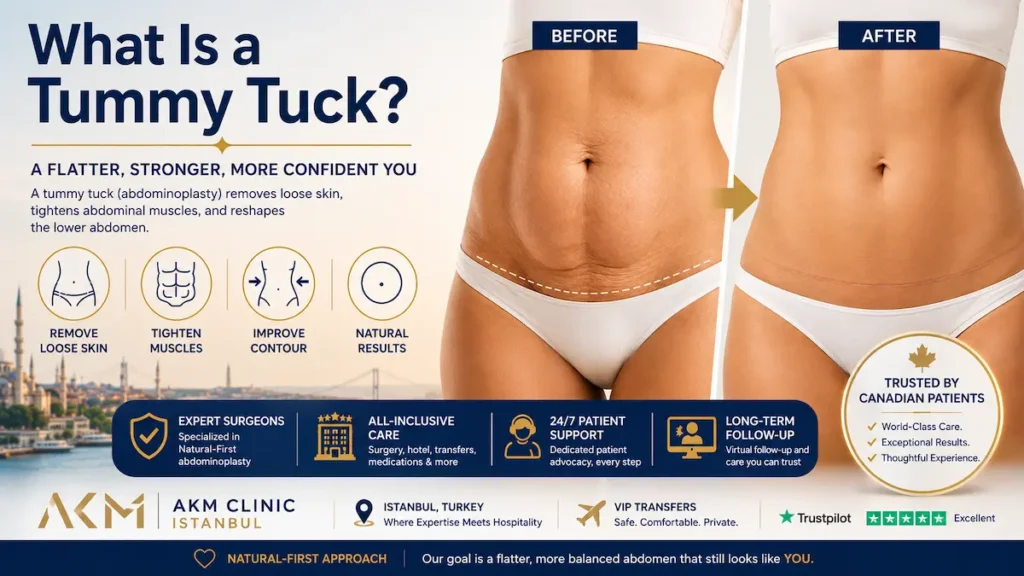
A tummy tuck is a surgical body contouring procedure that removes loose abdominal skin, tightens the abdominal wall, and reshapes the lower abdomen. It is also called abdominoplasty. Many Canadian patients consider it after pregnancy, C-section delivery, significant weight loss, or long-term skin laxity. At AKM Clinic in Istanbul, we use a Natural-First approach: the goal is a flatter, more balanced abdomen that still looks proportionate to your body.
The medical definition of abdominoplasty
A tummy tuck, medically known as abdominoplasty, removes excess skin and fat from the abdomen while tightening weakened connective tissue and separated abdominal muscles when needed. The procedure usually focuses on the area between the lower rib cage and the pubic line, with the most visible skin removal occurring below the belly button.
In a full tummy tuck, our surgeons create a low horizontal incision designed to sit within the bikini or underwear line. The abdominal skin is lifted, the rectus muscles are assessed, and any diastasis recti or muscle separation is repaired with internal sutures. The remaining skin is then redraped downward, excess tissue is removed, and the belly button is repositioned through a new opening.
This is why a tummy tuck is different from simple fat removal. Liposuction removes fat, but it does not remove loose skin or repair separated abdominal muscles. A tummy tuck addresses structure, skin, and contour in one procedure.
How a tummy tuck differs from weight loss
A tummy tuck is not a weight-loss operation. It is a contouring procedure for patients who are already close to a stable weight but still have loose skin, lower abdominal bulging, or abdominal wall weakness. Canadian patients often reach this point after months or years of fitness efforts that improve strength but cannot tighten stretched skin.
Weight loss can reduce fat volume, but it cannot reliably reverse skin laxity after pregnancy, C-section stretching, or major weight changes. It also cannot close rectus muscle separation once the fascia has widened. In these cases, the abdomen may continue to appear rounded even when the patient is fit.
That distinction matters for expectations. A tummy tuck can create a smoother abdominal contour, remove redundant skin, improve the waist-to-hip transition, and flatten the lower abdomen. It will not replace nutrition, exercise, or long-term weight maintenance.
Why Canadian patients research tummy tuck in Turkey
Canadian patients usually arrive at the idea of tummy tuck in Turkey after comparing three realities: private domestic pricing, elective surgery coverage limitations, and availability. Provincial health plans such as OHIP, MSP, RAMQ, and AHCIP generally do not cover cosmetic abdominoplasty. Coverage may only be considered in narrow reconstructive or medically necessary situations, such as severe pannus-related skin disease, and even then approval is not guaranteed.
Private tummy tuck quotes in Ontario, British Columbia, Alberta, and Quebec can be difficult to compare because surgeon fees, anesthesia, facility fees, garments, follow-up, and revision policies may be billed separately. Our all-inclusive clinical pathway is designed to remove that uncertainty for international patients.
At AKM Clinic, Canadian patients receive a structured programme that includes surgery, anesthesia, hospital facility fees, pre-operative testing, 5-star hotel accommodation, VIP transfers, medications, support garments, 24/7 patient advocacy, and long-term virtual follow-up. The decision should still be careful. It should also be fully informed.
Benefits of a Tummy Tuck for Canadian Patients
The benefits of tummy tuck surgery are both physical and practical. For many patients, the procedure addresses abdominal changes that are anatomical rather than lifestyle-related. A well-planned abdominoplasty can improve contour, strengthen the abdominal wall, and remove skin that folds over the lower abdomen. The best results look balanced, not over-tightened.
Removing loose abdominal skin after pregnancy or weight loss
Loose abdominal skin is one of the most common reasons Canadian patients inquire about tummy tuck surgery. Pregnancy stretches the skin, fascia, and lower abdominal tissues. Weight loss can leave similar laxity, especially when the skin has been stretched for years or when a patient has lost a large amount of weight.
This loose skin often gathers below the navel, over a C-section scar, or along the lower abdomen. Exercise can strengthen the underlying muscles, but it cannot remove redundant skin. Skin quality is influenced by genetics, age, pregnancy history, sun exposure, weight fluctuation, and collagen elasticity.
During a tummy tuck, our surgeons remove the excess skin and redrape the remaining tissue to create a smoother abdominal line. The incision is placed low whenever anatomy allows, so the scar can usually be hidden beneath underwear or swimwear. This is a trade-off: skin removal requires a scar. The goal is to make that scar predictable, low, and carefully managed during healing.
Repairing diastasis recti and rectus muscle separation
Diastasis recti is the separation of the rectus abdominal muscles along the midline. It is common after pregnancy, but it can also occur after significant weight gain, weight loss, or repeated abdominal strain. Many patients notice a central bulge that persists despite core training.
During a full tummy tuck, our surgeons assess the abdominal wall and repair the separation with internal sutures when medically appropriate. This muscle repair brings the abdominal wall closer to its original position. It can improve the appearance of lower abdominal fullness and may support better core stability.
This is one of the main reasons a tummy tuck can create a result that liposuction alone cannot. Liposuction removes fat from the surface layer. It does not tighten the internal abdominal wall.
For patients who want a deeper explanation of muscle separation, our diastasis recti repair surgery guide explains when abdominal muscle repair becomes more than a cosmetic concern.
Improving C-section scar and lower abdominal contour
Many Canadian mothers ask whether a tummy tuck can improve the area around a C-section scar. In suitable cases, the lower abdominal incision can remove or reposition old scar tissue while tightening the skin above it. This may reduce the shelf-like fold that sometimes forms over a C-section line.
The exact result depends on scar position, skin quality, and how much loose tissue is present below the navel. A high C-section scar may not be fully removable. A low scar often sits within the area removed during a full tummy tuck.
Our surgical planning focuses on scar placement before the operation begins. We aim to position the tummy tuck scar low enough for practical clothing coverage, while preserving safe blood flow to the abdominal skin. Scar quality continues to mature for 12 months or longer.
Restoring proportion without an over-tightened look
Our tummy tuck philosophy follows the same principle we use across AKM Clinic: rejuvenation, not alteration. For body contouring, this means creating a flatter, smoother abdomen that still fits the patient’s natural frame. We do not pursue an exaggerated or over-tightened appearance.
A natural tummy tuck result should improve the waistline, lower abdomen, and belly button shape without making the body look surgically forced. The abdomen should look more balanced in clothing and more comfortable in movement. The best result is usually noticeable to the patient, but not obvious to everyone else.
This matters for Canadian patients who often prefer understated aesthetic change. Many want to feel confident in jeans, swimwear, professional clothing, or activewear without looking like they had dramatic body surgery. That is the standard we plan toward.
Am I a Good Candidate for a Tummy Tuck?
A good tummy tuck candidate has loose abdominal skin, stable weight, realistic expectations, and enough overall health to travel safely for surgery. The strongest candidates are usually post-pregnancy patients, post-weight-loss patients, or people with lower abdominal laxity that will not respond to fitness alone. Candidacy is medical, not just aesthetic. During consultation, we assess skin quality, muscle separation, BMI, smoking status, chronic conditions, medication use, and return-flight safety.
Post-pregnancy candidates
Pregnancy can stretch the abdominal skin, widen the rectus muscles, and change the lower belly contour in ways that do not fully reverse. A tummy tuck may be appropriate once the patient has recovered from childbirth, finished breastfeeding, and reached a stable weight. We usually recommend waiting until the family is complete, because future pregnancy can stretch the repair again.
For Canadian mothers, timing is also practical. Recovery requires help with childcare, household tasks, school drop-offs, and lifting restrictions. Young children often need to be picked up, carried, or assisted in ways that are not safe during early recovery.
Before travelling, patients should plan at least two weeks of strong home support after returning to Canada. Six weeks is more realistic for heavy lifting and full parenting activity. This planning is not optional; it protects the surgical repair.
Post-weight-loss candidates
Patients who have lost a significant amount of weight often have loose abdominal skin that cannot shrink back. This can happen after lifestyle-based weight loss, bariatric surgery, or long-term weight cycling. The abdomen may fold over the waistband, create irritation, or hide the patient’s true body shape.
A tummy tuck can remove this redundant tissue and tighten the lower abdominal contour. In some post-weight-loss patients, the looseness extends around the hips or across the upper abdomen. These cases may require an extended tummy tuck or Fleur-de-Lis tummy tuck rather than a standard approach.
Weight stability matters. We usually recommend that patients maintain a stable weight for at least six months before surgery. Ongoing weight loss after abdominoplasty can create new laxity, while weight gain can stretch the repair.
BMI, smoking, diabetes, and cardiovascular screening
Tummy tuck surgery places demands on wound healing, circulation, and mobility. For that reason, candidacy includes more than the appearance of the abdomen. Our team reviews BMI, smoking status, blood sugar control, cardiovascular history, previous abdominal surgery, medications, and clotting risk.
Smoking is a major concern because nicotine reduces blood flow to healing skin. This increases the risk of delayed healing, wound separation, infection, and skin necrosis. Patients who smoke must stop well before surgery and remain nicotine-free during recovery.
Diabetes must also be well controlled. Poor glucose control can slow healing and increase infection risk. Patients with a history of blood clots, heart disease, or significant anemia may need additional medical clearance before we approve surgery travel.
When a tummy tuck is not recommended
A tummy tuck is not appropriate for every patient. We may recommend delaying surgery if you are actively losing weight, planning another pregnancy, smoking, or managing an uncontrolled medical condition. Safety comes before scheduling.
Patients with unrealistic expectations may also need more counselling before surgery. A tummy tuck can flatten and tighten the abdomen, but it cannot create a completely scarless result. It also cannot replace weight management, strength training, or long-term lifestyle maintenance.
Some patients are better suited for liposuction, a mini tummy tuck, or staged body contouring. The right recommendation depends on skin quality, fat distribution, muscle separation, and scar tolerance. During your virtual consultation, our surgeons explain which option fits your anatomy rather than offering one fixed procedure to everyone.
Tummy Tuck Techniques Compared: Standard vs Mini vs Extended vs Fleur-de-Lis vs Drainless
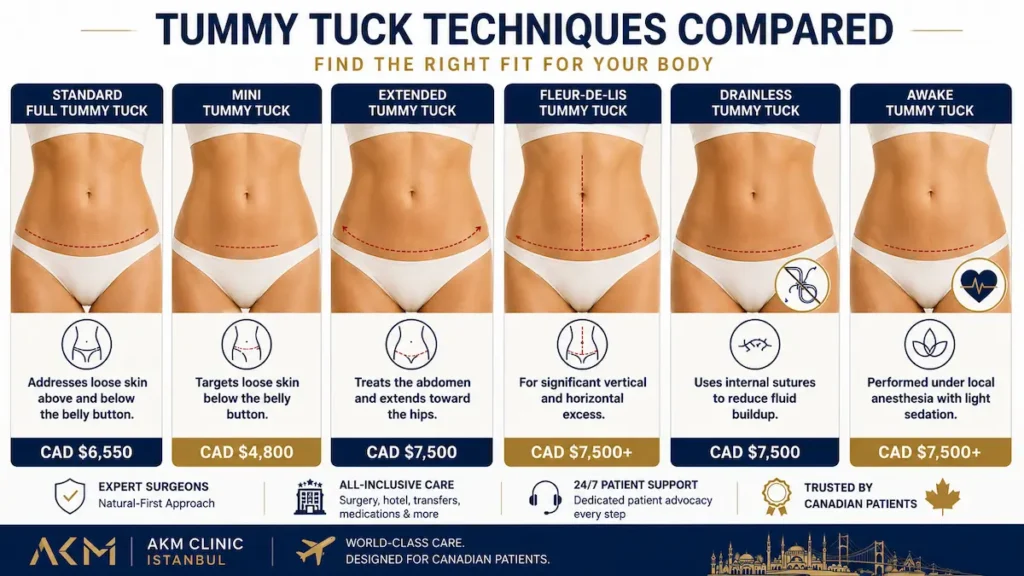
Modern tummy tuck surgery is not a single technique. The right approach depends on how much loose skin you have, whether your abdominal muscles are separated, where your scars sit, and whether laxity extends toward the hips or upper abdomen. Canadian patients often arrive with a specific request, such as mini tummy tuck or drainless tummy tuck, but the safest plan comes from matching the technique to anatomy.
Standard full tummy tuck
A standard full tummy tuck is the most common option for patients with loose skin above and below the belly button, lower abdominal fullness, and possible diastasis recti. It includes a low horizontal incision, abdominal skin tightening, belly button repositioning, and muscle repair when needed.
This option is often appropriate for post-pregnancy patients and moderate post-weight-loss patients. It gives the surgeon access to the full abdominal wall, which is important when muscle repair is part of the plan.
Mini tummy tuck
A mini tummy tuck treats a smaller area below the belly button. It may be suitable when the skin laxity is limited to the lower abdomen and the belly button does not need to be moved. The incision is usually shorter than a full tummy tuck scar.
If you have loose skin above the navel, significant diastasis recti, or belly button distortion, a mini tummy tuck may under-correct the problem. For a detailed decision framework, our mini vs full tummy tuck guide explains how surgeons choose between the two.
Extended tummy tuck
An extended tummy tuck treats the front abdomen and continues farther toward the hips. It is often considered when loose skin extends beyond the central lower abdomen, especially after major weight loss or repeated pregnancies. The scar is longer than a standard tummy tuck scar, but it can address laxity that a standard approach would leave behind.
This technique can improve the lower abdomen, waist transition, and flank-area skin redundancy. It is not the same as a lower body lift, which extends further around the back. If your loose skin wraps significantly around the torso, our surgeons will explain whether an extended tummy tuck is enough or whether a different body contouring plan is safer.
Fleur-de-Lis tummy tuck
A Fleur-de-Lis tummy tuck is designed for patients with significant vertical and horizontal skin excess. It uses both a low horizontal incision and a vertical midline incision. This allows the surgeon to tighten the abdomen in two directions.
This option is most common after major weight loss, especially when the upper abdomen remains loose even after the lower skin is pulled downward. It can create a stronger contour change than a standard tummy tuck, but it also creates a visible vertical scar.
Drainless tummy tuck
A drainless tummy tuck uses internal progressive tension sutures to reduce empty space under the abdominal skin. This can lower the need for external drains in selected patients. Some patients prefer this option because drains can be inconvenient during hotel recovery and return travel.
Drainless surgery is not appropriate for every anatomy. Patients with larger tissue removal, high fluid risk, or more extensive dissection may still be safer with drains. We do not remove drains from the plan simply for comfort if they are medically useful.
The drainless tummy tuck at AKM Clinic is priced at CAD $7,500. For a focused explanation of this technique, our tube tummy tuck guide explains how recovery without drains works and who may qualify.
Lipoabdominoplasty
Lipoabdominoplasty combines liposuction with tummy tuck surgery. The goal is to improve both skin laxity and fat distribution. This can be helpful when a patient has loose skin in the front abdomen plus stubborn fat around the waist, flanks, or lower back.
The benefit is contour balance. A tummy tuck alone can flatten the front, but it may not refine the waist. Liposuction alone can reduce fat, but it cannot remove loose skin or repair diastasis recti. In suitable patients, combining both creates a smoother transition from abdomen to waist.
Safety depends on how aggressively liposuction is performed and how blood supply to the abdominal skin is preserved. We plan liposuction conservatively around the elevated skin flap, with the goal of contour improvement rather than maximum fat removal.
Awake tummy tuck
Awake tummy tuck is performed under local anesthesia with light IV sedation instead of full general anesthesia. It may appeal to patients who want faster cognitive recovery, reduced post-anesthesia grogginess, and a different safety profile.
The candidate pool is narrower than standard tummy tuck because the patient must be calm, medically suitable, and anatomically appropriate for the awake protocol.
This page focuses on standard tummy tuck surgery. For the anesthesia-specific pathway, see our dedicated awake tummy tuck in Turkey page.
Mini vs full tummy tuck decision framework
The mini vs full tummy tuck decision depends on anatomy, not preference alone. A mini tummy tuck is best for limited lower-abdominal laxity below the navel. A full tummy tuck is better when the skin is loose above and below the belly button, or when diastasis recti repair is needed.
| Factor | Mini Tummy Tuck | Full Tummy Tuck |
|---|---|---|
| Loose skin location | Below belly button only | Above and below belly button |
| Belly button repositioning | Usually not required | Usually required |
| Muscle repair | Limited or not needed | Common when diastasis recti exists |
| Scar length | Shorter | Longer, but more comprehensive |
| Best for | Small lower-belly pouch | Post-pregnancy or wider laxity |
Patients sometimes request a mini tummy tuck to avoid a longer scar. That can be reasonable, but only when the anatomy matches. Choosing a smaller procedure for a larger problem often leads to under-correction.
Tummy tuck vs liposuction
Tummy tuck vs liposuction is one of the most important body contouring decisions. Liposuction removes fat through small cannula incisions. It does not remove loose skin, reposition the belly button, or repair rectus muscle separation.
A tummy tuck removes skin and can repair the abdominal wall. It is better for patients with skin folds, stretch-related laxity, C-section shelfing, or diastasis recti. Some patients need both procedures for the best contour.
During consultation, we look at skin elasticity first. If your skin can contract after fat removal, liposuction may be enough. If your skin already hangs or folds, liposuction alone may make the looseness more visible. Our tummy tuck vs liposuction decision tree explains this difference in more detail.
Panniculectomy vs tummy tuck
Panniculectomy and tummy tuck are often confused, especially by Canadian patients researching provincial coverage. A panniculectomy removes a hanging lower abdominal apron, or pannus. It is more functional than aesthetic and may be considered when excess skin causes chronic rashes, hygiene problems, infection, or mobility issues.
A tummy tuck is more comprehensive. It removes excess skin, tightens the abdominal contour, may repair diastasis recti, and usually repositions the belly button. It is generally considered cosmetic when performed for contour improvement.
In Canada, provincial health plans may consider panniculectomy coverage only when strict medical criteria are met. Cosmetic tummy tuck surgery is usually not covered. If you are unsure whether your concern is functional or cosmetic, discuss it with your Canadian family physician before committing to international surgery.
Canadian patients can also review the Canadian Society of Plastic Surgeons’ guidance on choosing a surgeon, which provides a useful benchmark for evaluating procedure information before comparing domestic and international options.
Technique comparison table
| Technique | Scar Profile | Drains | AKM Price |
|---|---|---|---|
| Mini Tummy Tuck | Lower-abdominal laxity only | Short low scar | Sometimes |
| Standard Full Tummy Tuck | Post-pregnancy or moderate laxity | Low horizontal scar | Common |
| Extended Tummy Tuck | Loose skin reaching hips/flanks | Longer horizontal scar | Common |
| Fleur-de-Lis | Major weight loss with vertical laxity | Horizontal + vertical scar | Common |
| Drainless Tummy Tuck | Selected lower-fluid-risk patients | Low horizontal scar | Usually no external drains |
| Awake Tummy Tuck | Calm, medically suitable patients | Depends on technique | Case-dependent |
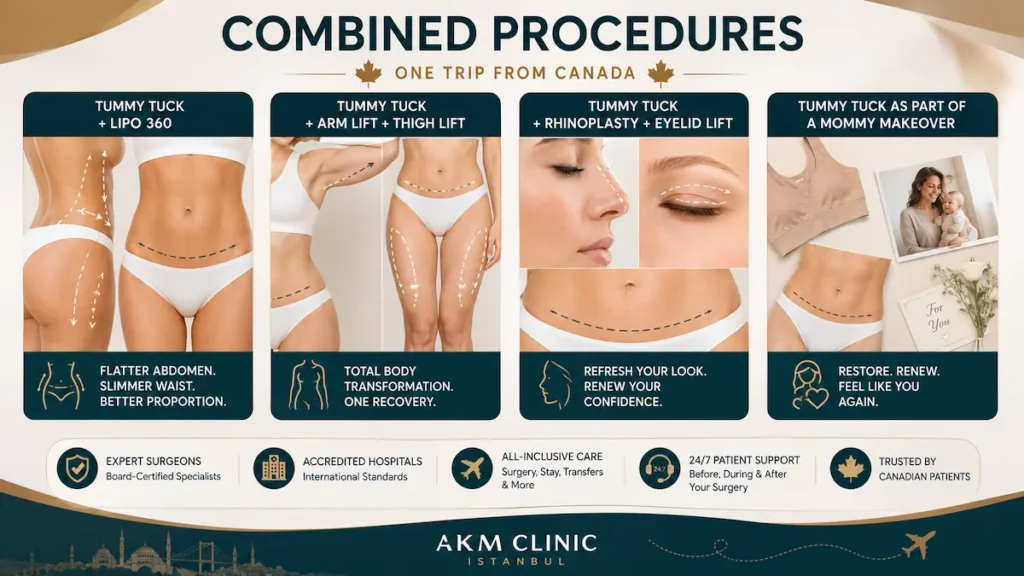
Combined Procedures — One Trip from Canada
Many Canadian patients consider combining tummy tuck surgery with related procedures because it can reduce total anesthesia exposure, travel time, and recovery blocks. The safest combination is not always the longest list of procedures. It depends on surgical time, blood loss, BMI, mobility after surgery, and your ability to recover safely before the flight home.
Tummy tuck + Lipo 360
Tummy tuck and Lipo 360 can work well together when the abdomen has loose skin and the waist has stubborn fat. The tummy tuck tightens the front abdominal skin and repairs muscle separation when needed. Lipo 360 refines the flanks, waist, and lower back.
This combination can create a smoother waist-to-abdomen transition than tummy tuck alone. It is especially helpful for patients who feel their front abdomen and side waist do not match after pregnancy or weight loss.
Safety depends on balance. We avoid excessive liposuction around areas where skin blood supply must remain strong for healing. Patients considering this combination can review our tummy tuck + Lipo 360 package for the combined clinical pathway.
Tummy tuck + arm lift + thigh lift
After major weight loss, loose skin often affects more than the abdomen. Some patients have laxity on the upper arms, inner thighs, and lower belly at the same time. A combined body contouring plan may reduce the number of separate surgeries needed.
The tummy tuck + arm lift + thigh lift combination is a larger surgical plan. It requires careful screening because mobility after surgery is more restricted. We review blood count, clotting risk, BMI, nutrition, and home support before approving a multi-zone procedure.
For patients who qualify, the tummy tuck, arm lift, and thigh lift package offers one coordinated recovery period instead of three separate trips.
Tummy tuck + rhinoplasty + upper blepharoplasty
Some Canadian patients combine body contouring with facial refinement when they are already planning international surgery. Tummy tuck + rhinoplasty + upper blepharoplasty is one example. It addresses the abdomen, nose, and upper eyelids during the same travel window.
This type of combination is not for everyone. It requires longer surgical planning, more recovery awareness, and a clear priority list. We never recommend adding procedures simply because the patient is travelling.
When clinically appropriate, the tummy tuck, rhinoplasty, and upper eyelid package allows patients to coordinate multiple goals within one all-inclusive pathway.
Tummy tuck as a Mommy Makeover component
Tummy tuck is often the central procedure in a Mommy Makeover. It addresses the abdominal changes that breast surgery and liposuction cannot correct. For many post-pregnancy patients, the abdomen is the area most affected by skin stretching and diastasis recti.
A Mommy Makeover may combine tummy tuck, breast lift, breast augmentation, Lipo 360, or other procedures depending on anatomy and goals. It is not a fixed package. It is a tailored clinical protocol.
Canadian mothers who want a broader post-pregnancy restoration plan can read our Mommy Makeover in Turkey guide before deciding whether tummy tuck alone is enough.
Anesthesia for Tummy Tuck Surgery
Anesthesia planning is central to tummy tuck safety. Full abdominoplasty usually requires general anesthesia because the surgery involves abdominal wall repair, wide tissue movement, and careful pain control. Some selected cases may qualify for awake tummy tuck. Our recommendation depends on procedure scope, patient anxiety profile, medical history, and flight-readiness planning.
General anesthesia for full tummy tuck
General anesthesia is the standard approach for full tummy tuck, extended tummy tuck, and Fleur-de-Lis tummy tuck. It allows the surgical team to repair the abdominal wall, remove excess skin, reposition the belly button, and close the incision with the patient fully comfortable and still.
Before surgery, we review medications, allergies, previous anesthesia reactions, clotting history, and chronic conditions. Canadian patients should also tell us about sleep apnea, blood pressure medication, diabetes medication, and hormone therapy.
General anesthesia requires structured early mobility after surgery. Walking soon after surgery, compression garments, and clot-prevention measures are part of the safety plan for international patients.
Awake tummy tuck option
Awake tummy tuck is available for selected patients who meet strict medical and psychological criteria. It uses local anesthesia with light IV sedation rather than full general anesthesia. The appeal is faster cognitive recovery and less post-anesthesia grogginess.
This option is not appropriate for every tummy tuck candidate. Patients with significant anxiety, extensive skin removal needs, complex muscle repair, or a longer combined procedure may be safer under general anesthesia. We assess awake eligibility during consultation rather than presenting it as a universal upgrade.
Canadian patients who are specifically comparing anesthesia models should review our awake tummy tuck clinical pathway. That page explains candidacy, pain control, same-day mobility, and the differences from standard abdominoplasty.
Why anesthesia planning matters for Canadian travellers
Canadian patients must think beyond the operating room. A tummy tuck requires early walking, safe pain control, hydration, and clot-prevention planning before a long-haul flight. Anesthesia choice affects the first 24 hours of mobility, nausea, and fatigue.
Our team plans surgery around the full travel timeline. We consider the return flight to Toronto, Vancouver, Montreal, Calgary, or Ottawa when determining whether the patient is ready to fly. Fit-to-fly clearance is based on mobility, drain status, swelling, pain control, and overall recovery.
Patients should not schedule a tight return. Extra recovery time in Istanbul may be safer than rushing onto a 10-hour flight too early. We will advise you clearly if your body needs more time before travel.
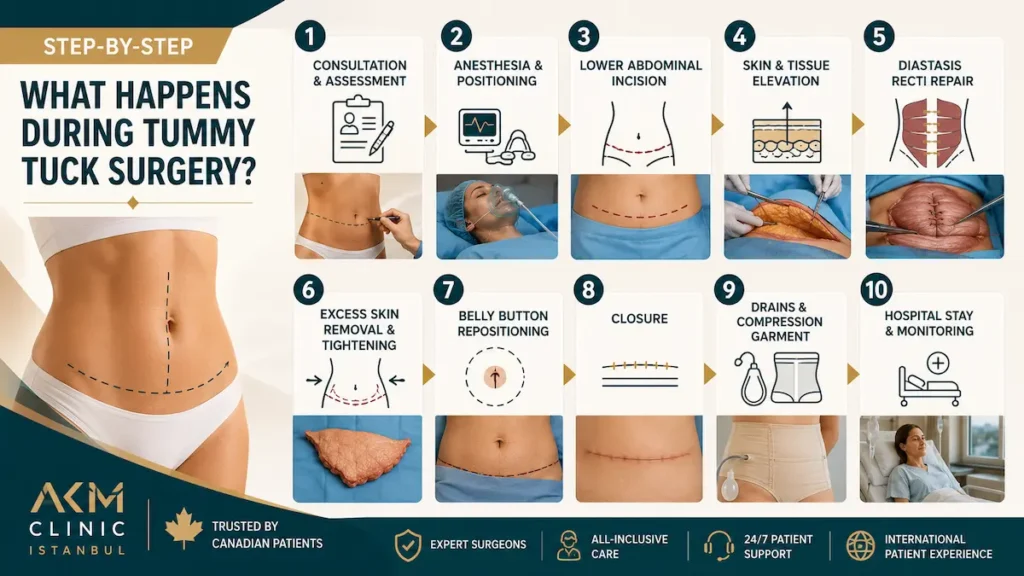
Step-by-Step: What Happens During Tummy Tuck Surgery?
Understanding the surgical sequence helps Canadian patients compare techniques more intelligently. A tummy tuck procedure is not simply a skin pull. It involves incision planning, tissue elevation, abdominal wall assessment, possible muscle repair, skin removal, belly button shaping, and layered closure. Each step affects scar placement, contour, and recovery.
Pre-operative consultation and abdominal assessment
Your surgical plan begins before you enter the operating theatre. During virtual consultation, we review photos, pregnancy history, weight changes, prior C-section scars, bariatric surgery history, and previous abdominal procedures. We also ask about medical conditions that affect healing or travel safety.
When you arrive in Istanbul, the in-person assessment confirms the plan. Our surgeons examine skin quality, fat distribution, belly button position, scar location, and the degree of diastasis recti. The abdomen is marked while standing so the tissue position is accurate under gravity.
This step is where patients often learn whether they need a mini, full, extended, drainless, or Fleur-de-Lis technique. We explain the scar pattern before surgery so there are no surprises afterward.
Anesthesia and positioning
For a full tummy tuck, anesthesia is administered by the medical team before the incision begins. Monitoring continues throughout the operation. Heart rate, oxygenation, blood pressure, temperature, and fluid balance are tracked carefully.
The patient lies on their back with the abdomen prepared as a sterile field. Compression and clot-prevention measures may be used according to risk profile. For international patients, DVT prevention is part of the surgical plan, not an afterthought.
Once anesthesia is stable, the surgeon rechecks the markings and confirms the incision line. The goal is to keep the scar low while still removing enough skin to create meaningful improvement.
Lower abdominal incision
The incision is usually placed low across the lower abdomen, often within the bikini or underwear line. Its length depends on how much skin must be removed. A mini tummy tuck has a shorter incision, while extended and Fleur-de-Lis techniques require more visible scar trade-offs.
Scar placement is discussed before surgery. We consider your underwear style, natural fold, C-section scar location, and how much laxity must be corrected. A scar that is too short may leave dog ears or under-treated skin at the sides.
Precision matters here. A well-planned incision balances scar concealment with enough access to reshape the abdomen safely.
Skin and subcutaneous tissue elevation
After the lower incision is made, the abdominal skin and subcutaneous tissue are carefully lifted from the underlying abdominal wall. This creates access for muscle repair and allows the surgeon to redrape the skin downward. The amount of elevation depends on the chosen technique.
In a full tummy tuck, the tissue is usually elevated toward the upper abdomen. In a mini tummy tuck, the dissection is more limited. In lipoabdominoplasty, tissue handling must be even more precise because blood supply must be protected while contouring fat.
This step directly affects swelling, drain need, and healing. Gentle tissue handling helps reduce trauma, but all tummy tuck patients should expect tightness and limited upright posture during the first days.
Diastasis recti repair
If rectus muscle separation is present, the surgeon repairs the abdominal wall with internal sutures. This is often called muscle repair. It brings the separated muscle edges closer together along the midline and strengthens the abdominal contour.
For many post-pregnancy patients, this is the step that changes the abdomen from rounded to flatter. The skin removal improves the surface. The muscle repair improves the internal support.
Muscle repair also affects recovery. Patients may feel more tightness, especially when standing, coughing, laughing, or getting out of bed. We teach safe movement patterns so the repair is protected during early healing.
Excess skin removal and tightening
Once the abdominal wall is repaired, the upper abdominal skin is pulled downward. The surgeon removes excess skin from the lower abdomen and checks the tension before closure. Too little removal can leave folds. Too much tension can compromise healing or widen the scar.
Our goal is controlled tightening. A natural result does not require the abdomen to look stretched or artificial. The skin should sit smoothly, with enough comfort for breathing, walking, and gradual mobility.
This is also when the surgeon checks side contours. If extra skin remains at the edges, dog ears can form. Careful planning reduces that risk, although minor revisions may occasionally be needed in any body contouring surgery.
Belly button repositioning
In a full tummy tuck, the belly button stays attached to its original stalk, but the surrounding skin is moved. The surgeon creates a new opening in the tightened skin and brings the belly button through it. This is why tummy tuck belly button design matters.
A natural-looking belly button should not appear overly round, stretched, or obviously surgical. We aim for a shape and position that matches the patient’s abdominal proportions. Small details make a large difference.
Mini tummy tuck often does not require belly button repositioning. Extended and Fleur-de-Lis techniques usually do. We explain this before surgery so patients understand why technique choice affects the final navel appearance.
Closure, drains, and hospital stay
After skin removal and belly button shaping, the incision is closed in layers. Internal sutures support the deeper tissues, while the skin closure is designed to reduce tension along the scar. A compression garment is placed to support the abdomen.
Drains may be placed to remove fluid from the surgical area. Not every patient needs the same drain plan. Drainless tummy tuck uses internal suturing to reduce fluid space, but selected patients are still safer with drains.
Most full tummy tuck patients stay one night under medical observation. This allows our team to monitor pain control, mobility, bleeding risk, and early recovery before you return to the hotel.
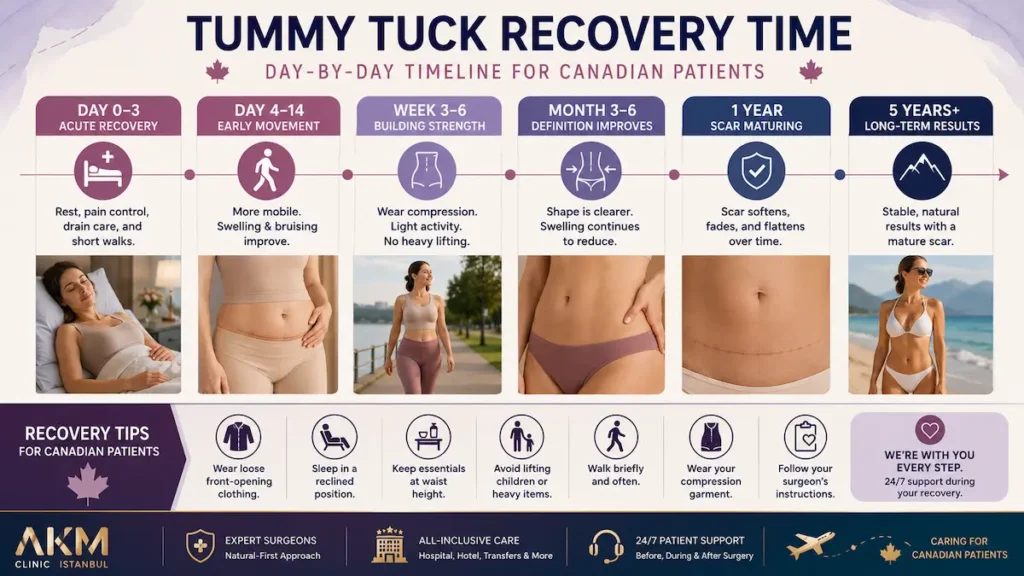
Tummy Tuck Recovery Time: Day-by-Day Timeline for Canadian Patients
Tummy tuck recovery is a staged process. The first week is about safe mobility, drain management, pain control, and swelling. Weeks three to six focus on posture, compression, and gradual return to normal routines. For Canadian patients, recovery planning must also include the long flight home and the support needed once you return to children, work, stairs, snow, or commuting.
Day 0–3: Acute recovery at the 5-star hotel
The first three days are the most restricted part of tummy tuck recovery. You will feel tight across the abdomen, and you may naturally walk slightly bent forward. This posture reduces tension on the incision and muscle repair.
Swelling, bruising, numbness, and pulling sensations are expected. If drains are used, our team will teach you how they are monitored and when they may be removed. Pain is managed with prescribed medication, but patients should still expect pressure and soreness when changing position.
Early walking is important. Short, assisted walks reduce stiffness and support circulation. For Canadian patients preparing for a long return flight, this early mobility is also part of DVT prevention.
Day 4–14: Early movement and visual milestones
Between day 4 and day 14, most patients become more mobile, though they still need to protect the abdomen. Standing fully upright may take time. Swelling can fluctuate from morning to evening, especially after walking or sitting for longer periods.
Some patients search for 3 weeks after tummy tuck pictures and expect their own result to look similar. Be careful with photo comparisons. At three weeks, the abdomen may still look swollen, the scar may look red or raised, and the belly button may still be settling.
Drain removal, if required, usually depends on fluid output rather than a fixed day. We clear each patient individually. The return-to-Canada plan is based on healing, mobility, pain control, and clot-risk assessment.
Our HBOT/LLLT Recovery Protocol
We use recovery technologies to support healing after tummy tuck surgery. Hyperbaric Oxygen Therapy, or HBOT, increases oxygen delivery to tissues under pressure. This can help reduce inflammation, support tissue repair, and improve recovery readiness for international patients.
Low-Level Laser Therapy, or LLLT, uses 424 medical-grade semiconductor laser diodes at 650 nm to stimulate cellular ATP production. In practical terms, this supports cellular repair, bruising reduction, and scar maturation. It is not a replacement for surgical technique. It is a recovery support tool.
For tummy tuck patients, recovery technology matters because the incision is long and the abdominal tissues are under tension. It also matters because Canadians must return home on a long-haul flight. Our technology and recovery standards page explains how HBOT and LLLT fit within our broader safety protocol.
Tummy tuck scar care
A tummy tuck scar is permanent, but it should mature over time. Early scars are usually pink, red, firm, or slightly raised. Over 12 to 18 months, the scar typically softens, flattens, and fades, although final scar quality varies by genetics, skin tone, tension, and aftercare.
Scar care begins with tension control. Avoiding heavy lifting, sudden stretching, and early exercise protects the incision. Once the wound is closed and your surgeon approves, silicone-based scar therapy may be recommended.
Patients with darker skin tones or a history of thick scars should tell us before surgery. We can adjust scar-prevention planning and follow-up. For a detailed scar-care protocol, our tummy tuck scar treatment guide covers silicone, massage timing, laser support, and long-term scar behaviour.
Week 3–6: Compression garment and mobility
Weeks three to six are usually when patients begin feeling more independent. Swelling is still present, but daily movement becomes easier. The compression garment remains important because it supports the tissues and helps control fluid accumulation.
You should still avoid heavy lifting, abdominal workouts, high-impact exercise, and carrying young children. This is often the hardest part for Canadian parents returning home. You may feel capable before the repair is ready.
Desk work may resume earlier than physical work, depending on comfort and fatigue. Patients with long commutes, stairs, winter conditions, or physically demanding jobs may need extra planning. We individualize return-to-work guidance during follow-up.
Month 3–6: Abdominal definition and swelling reduction
By month three, most patients see a clearer abdominal shape. Swelling is reduced, posture is more natural, and clothing often fits differently. The scar may still look pink or firm, especially near the centre or at the ends.
At month six, the contour is more stable, but final scar maturation is still underway. The abdomen may continue to soften as internal tightness resolves. Patients who had muscle repair may notice gradual improvement in core comfort as they rebuild strength safely.
Exercise should return in stages. Walking comes first. Light cardio and gentle strengthening follow only when cleared. Direct abdominal training should wait until the repair is strong enough.
Tummy tuck scars after 5 years
Tummy tuck scars after 5 years are usually much lighter than they were in the first year, but they do not disappear. A mature scar may be pale, flat, and easy to cover with underwear or swimwear. Some patients still have darker or wider areas depending on skin type and healing history.
Long-term scar quality depends on incision tension, genetics, aftercare, sun protection, and whether the patient had complications during healing. Scar therapy can improve many scars, but no ethical surgeon should promise an invisible line.
Patients should think of the scar as the trade-off for removing loose skin. For many people, that trade-off is acceptable because the excess tissue was more bothersome than the scar. We discuss this openly before surgery.
Recovery tips for Canadian patients
Plan your recovery before you travel. Arrange help for groceries, stairs, children, pets, snow removal, laundry, and driving. These practical details matter as much as the surgery itself.
- Prepare loose clothing that opens in front.
- Set up a reclined sleeping area before leaving Canada.
- Keep frequently used items at waist height.
- Avoid lifting children, luggage, or heavy bags during early recovery.
- Walk briefly and often, as directed by your surgical team.
- Wear your compression garment exactly as instructed.
For more practical planning, our tummy tuck recovery tips guide covers mobility, garments, sleep position, drain care, and home setup in more detail.
Safety & Risks — An Honest Discussion
Tummy tuck surgery is common, but it is still major surgery. Canadian patients should understand both routine recovery effects and rare complications before making a decision. A safe experience depends on careful patient selection, accredited surgical facilities, surgeon training, anesthesia planning, and a recovery protocol that accounts for long-haul travel.
Common short-term effects
Most tummy tuck patients experience swelling, bruising, numbness, tightness, and limited mobility. Drain discomfort may occur when drains are used. The lower abdomen may feel firm or numb for weeks to months.
Temporary changes in posture are also common. Patients often walk slightly bent during the first days because standing fully upright can pull on the incision. This usually improves gradually.
These effects are expected, but they still need monitoring. Increasing pain, one-sided swelling, fever, foul drainage, sudden shortness of breath, or calf pain should be treated as urgent warning signs.
Rare but serious risks
Rare risks include hematoma, seroma, infection, delayed wound healing, skin necrosis, asymmetry, poor scarring, deep vein thrombosis, and pulmonary embolism. These risks are uncommon, but they are the reason tummy tuck surgery should not be treated casually.
DVT is especially important for Canadian patients because the flight home is long. Surgery temporarily increases clot risk, and immobility can add to that risk. Our protocol emphasizes early walking, hydration, compression, and individualized fit-to-fly clearance.
Patients with a history of blood clots, clotting disorders, smoking, obesity, hormone therapy, or long periods of immobility require closer assessment. Some patients may not be approved for international surgery if the travel risk is too high.
Why “tummy tuck gone wrong” outcomes happen
Poor tummy tuck outcomes usually come from a combination of weak patient selection, excessive skin tension, inadequate surgical planning, or insufficient post-operative monitoring. A scar placed too high, a belly button shaped poorly, or an under-treated flank area can make the result look less natural.
Medical complications can also occur when a patient is approved despite unsafe risk factors. Smoking, uncontrolled diabetes, high BMI, anemia, clotting history, or poor nutrition can all affect healing. A responsible clinic must be willing to delay or decline surgery when risk is too high.
We also see problems when patients are promised unrealistic results. A tummy tuck can improve contour, but it cannot create a scarless abdomen or replace long-term weight stability. Honest expectation-setting is part of safety.
DVT prevention for Canadian long-haul flights
Deep vein thrombosis is one of the main safety topics for Canadians travelling home after surgery. A flight from Istanbul to Toronto, Montreal, Vancouver, Calgary, or Ottawa can involve long periods of sitting. After abdominal surgery, that matters.
Our fit-to-fly planning considers walking ability, swelling, pain control, hydration, and risk factors such as previous clotting events or hormone therapy. We encourage short walks as soon as safe, frequent movement during the travel window, and compression use when recommended.
Canadian patients can also review general travel clot-prevention information from the Public Health Agency of Canada. General guidance is helpful, but your surgical team’s clearance should guide your personal timing.
How AKM Clinic mitigates risk
We reduce tummy tuck risk through structured screening, careful technique selection, accredited surgical facilities, and close early recovery monitoring. Surgery is performed in a JCI-accredited hospital partner, with anesthesia and facility standards designed for major procedures.
Before surgery, we review medical history, medications, smoking status, BMI, previous abdominal operations, bloodwork, and clotting risk. During surgery, our team uses layered closure, controlled tissue handling, and drain planning based on the patient’s anatomy rather than routine preference.
After surgery, we monitor mobility, pain, fluid output, swelling, and wound appearance. Our 24/7 patient advocates remain available while you recover in Istanbul, and our virtual follow-up programme continues after you return to Canada.
Is It Safe to Get a Tummy Tuck in Turkey? A Canadian’s Honest Look
Turkey can be a safe destination for tummy tuck surgery when the procedure is performed by qualified surgeons in an accredited facility with clear follow-up protocols. It is not safe to choose a clinic based only on price, social media, or vague package claims. Canadian patients should evaluate surgeon credentials, facility accreditation, medical records, infection control, and post-operative support before booking.
Canadian safety-standard comparison
Canadian patients are used to a regulated health care environment. That is why we explain international credentials in Canadian terms. European Board certification and advanced international surgical training are not identical to RCPSC certification, but they reflect structured specialty pathways that Canadian patients can understand and verify.
Our hospital partner is JCI-accredited, which signals international facility standards for patient safety, infection control, surgical systems, and quality management. We also use FDA-approved materials where applicable, with Health Canada-equivalent expectations considered when counselling Canadian patients.
For credential comparison, patients can review how Canadian specialist certification is structured through the Royal College of Physicians and Surgeons of Canada’s eligibility and exams framework. We encourage patients to ask direct questions during consultation rather than relying on broad marketing claims.
What Government of Canada says about elective surgery abroad
The Government of Canada advises travellers to understand the risks of receiving medical care outside Canada, including infection risk, limited legal recourse, differences in medical records, and challenges arranging follow-up after returning home. These concerns are valid.
We address them directly. Our patients receive English-language documentation, structured post-operative instructions, and a long-term follow-up programme with check-ins at 1, 3, 6, and 12 months. We also encourage patients to speak with their Canadian family physician before travelling.
You can review the Government of Canada’s medical care abroad guidance through Travel.gc.ca. We want patients to make a calm, evidence-based decision.
Antibiotic-resistant infection prevention
Infection prevention is one of the strongest reasons to verify the facility before travelling for surgery. A tummy tuck involves a long incision and a large healing surface under the abdominal skin. Sterile technique, instrument processing, antibiotic planning, and wound-care education all matter.
Our surgical environment follows strict sterilization protocols, including autoclave processing for surgical instruments and a controlled operating field. We also provide post-operative medication instructions and clear warning signs in English so patients know what is normal and what requires urgent review.
Patients should never ignore increasing redness, fever, foul drainage, worsening pain, or spreading warmth around the incision. If symptoms appear after returning to Canada, contact our team and seek local medical assessment promptly.
Follow-up with your Canadian family physician
We encourage Canadian patients to involve their family physician before travelling when possible. Your doctor does not need to approve the aesthetic decision, but they can help identify health concerns that may affect travel or healing. This is especially useful if you take prescription medication or have a chronic condition.
After you return home, your family physician may help assess wound healing, swelling, general symptoms, or concerns that arise between virtual follow-ups. They may also coordinate local care if you need lab work, imaging, or urgent assessment.
We provide post-operative instructions and medical details in English. This helps your Canadian provider understand what was performed, what materials were used, and what timeline was expected.
English-language medical records
Medical record portability is essential for international surgery. Canadian patients should not return home with vague discharge papers or unclear procedure notes. Your local provider needs enough information to understand the surgery if follow-up is required.
Our documentation can include procedure details, anesthesia notes, medication instructions, drain timing, suture information, and follow-up recommendations. These records help bridge the distance between Istanbul and Canada.
Keep your documents accessible during your return flight. Save digital copies and keep printed copies in your carry-on bag. Do not pack important medical documents in checked luggage.
Travel insurance and complications
Canadian travel insurance often excludes elective cosmetic surgery and complications related to planned procedures abroad. This is important. Patients should not assume that a standard travel policy will cover post-operative concerns from tummy tuck surgery.
Before travelling, review your policy wording carefully and ask the insurer direct questions about elective surgery exclusions. If coverage is not available, plan financially and logistically for the possibility of local care after returning home.
Our role is to reduce risk through screening, surgical planning, accredited facilities, and structured follow-up. No clinic can honestly claim that surgery is risk-free. A safe decision starts with clear expectations.
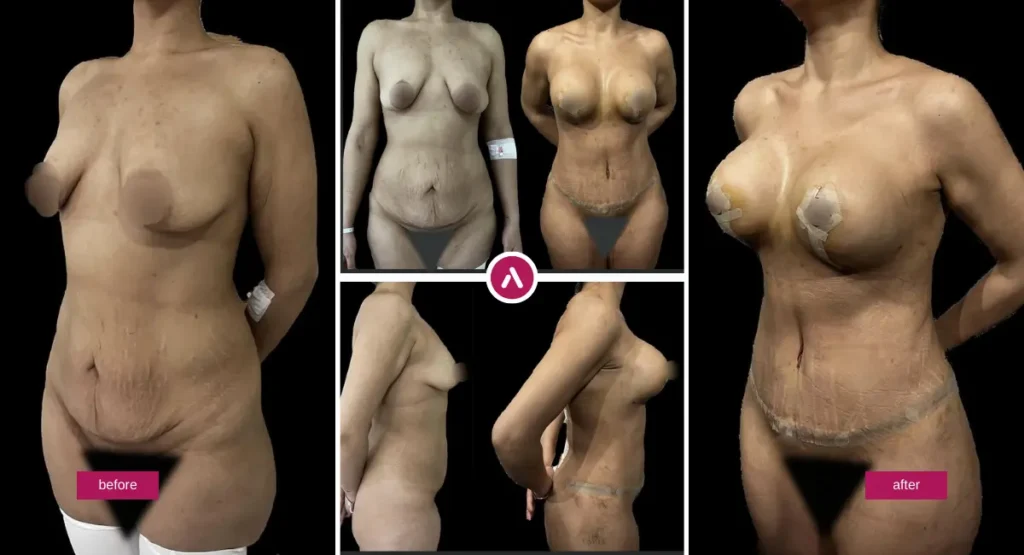
Tummy Tuck Before and After — Our Natural-First Tummy Tuck Philosophy
A tummy tuck can create a flatter abdomen, remove loose skin, improve lower-belly contour, and repair muscle separation when needed. It also creates a scar, requires recovery time, and depends on long-term weight stability. Our Natural-First approach means we plan for proportion, comfort, and realistic body contouring rather than an over-tightened or artificial look.
What natural-first means for body contouring
For tummy tuck surgery, natural-first means the abdomen should look flatter and smoother while still matching the patient’s frame. We do not aim for an unnaturally tight abdomen that restricts movement or makes the skin look pulled. Balance matters.
Some patients want the flattest possible result. We understand that desire, especially after years of loose skin or post-pregnancy changes. Still, safe tightening has limits. Skin blood supply, scar tension, and muscle comfort all influence how much correction is appropriate.
Our philosophy is rejuvenation, not alteration. The result should help you feel more comfortable in your body without making the abdomen look surgically forced.
Bikini-line scar reality
Every tummy tuck creates a scar. The goal is not to pretend otherwise. The goal is to place the scar low, close it carefully, reduce tension, and support scar maturation with proper aftercare.
Most full tummy tuck scars run horizontally across the lower abdomen. Extended tummy tuck scars continue farther toward the hips. Fleur-de-Lis tummy tuck adds a vertical scar. These scar differences are why technique selection must be honest before surgery.
Early scars often look red, raised, or firm. This does not mean the final scar will look that way. Scar maturation is slow, and many scars continue changing for 12 to 18 months.
Before and after expectations
Tummy tuck before and after photos can help you understand what is possible, but they should be interpreted carefully. Look for patients with similar body type, skin laxity, weight history, and scar pattern. A mini tummy tuck before and after result will not predict a full abdominoplasty result.
The strongest results usually show smoother lower-abdominal skin, improved waist definition, a flatter profile, and better belly button proportion. The scar should be visible in early photos. If every photo hides the scar, the gallery is not giving you the full picture.
We encourage patients to review real case examples through our tummy tuck before and after gallery. Visual evidence should support your decision, not replace a medical consultation.
Why year-1 photos differ from early results
Early swelling can make the abdomen look thicker than expected. This is normal. The body has undergone tissue lifting, skin removal, muscle repair, and internal healing. It needs time.
By three months, most patients see a clearer contour. By six months, swelling is much improved. By one year, the scar and abdomen are closer to their mature appearance, though some scar changes may continue beyond that.
This timeline is why we advise patience. A tummy tuck is not judged fairly at two weeks. The early phase is about safety, mobility, and incision care. The aesthetic result settles gradually.
Tummy Tuck Cost 2026: Turkey vs Canada
Canadian patients researching tummy tuck cost Canada, how much is a tummy tuck in Canada, or how much is a tummy tuck in Ontario often find that private clinic quotes in Toronto, Vancouver, Montreal, and Calgary are much higher than all-inclusive surgical programmes in Istanbul. The difference is usually not due to lower medical standards. It reflects different operating costs, private-sector billing structures, and the comprehensive nature of international care planning.
Canada’s broader wait-time environment is also relevant for patients comparing private and international options; the Fraser Institute’s national wait-times report provides health care access context many Canadian patients use.
Our all-inclusive tummy tuck programme starts at CAD $6,550, covering surgery, 5-star hotel accommodation, VIP transfers, post-operative medications, support garments, and 24/7 patient advocacy. Mini tummy tuck begins at CAD $4,800, while extended, drainless, Fleur-de-Lis, and awake tummy tuck options begin at CAD $7,500. By comparison, tummy tuck Toronto and Ontario private clinic quotes commonly range from CAD $15,000–$22,000 for surgical fees alone, with anesthesia, facility fees, garments, and follow-up often billed separately.
For the full Canadian dollar cost breakdown, including hidden-fee comparison and technique-by-technique pricing, see our detailed tummy tuck cost guide for Canadian patients.
Our most requested option is the all-inclusive tummy tuck package at CAD $6,550, including a 4-night clinical stay pathway.
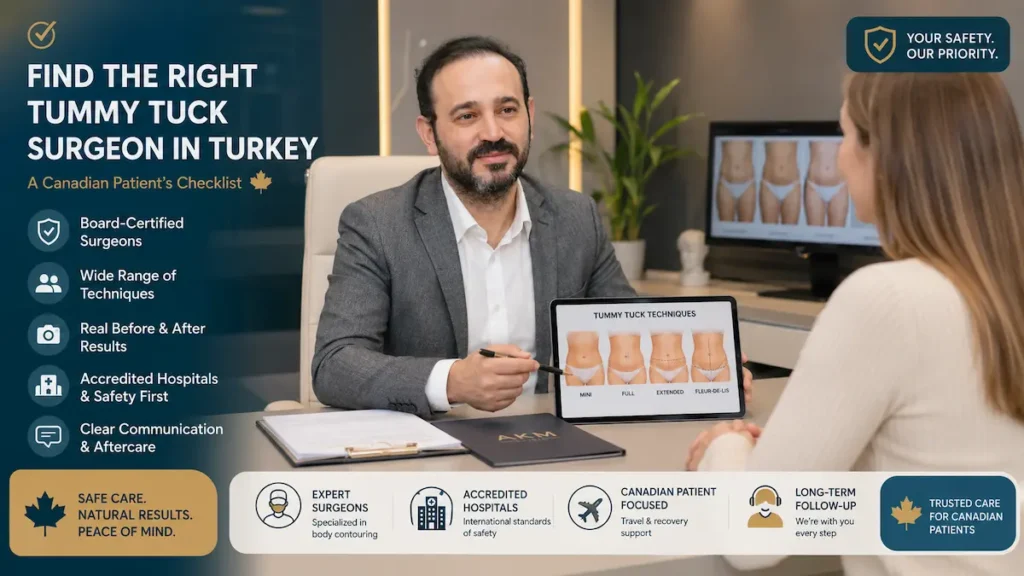
How to Find the Best Tummy Tuck Surgeon in Turkey: A Canadian Patient’s Checklist
Finding the right tummy tuck surgeon in Turkey requires more than comparing photos or prices. Canadian patients should verify credentials, hospital standards, technique range, safety protocols, and follow-up systems. A good surgeon should be able to explain why your abdomen needs a specific technique, where your scar will sit, whether muscle repair is required, and how your return to Canada will be managed safely.
EBOPRAS and RCPSC equivalency
Canadian patients often compare international credentials with the Royal College of Physicians and Surgeons of Canada. EBOPRAS and related European board pathways are not the same organization as the RCPSC, but they reflect structured specialist training and examination standards. The key is transparency.
Ask your clinic which surgeon is responsible for your procedure, what board credentials they hold, and where the surgery will take place. Vague answers are a warning sign. So is any clinic that refuses to identify the surgeon of record before payment.
Our team explains credentials in a Canadian framework so patients can make an informed comparison. You should feel comfortable asking direct questions before booking, not after arrival.
Technique range matters
The best tummy tuck surgeon in Turkey should offer more than one version of abdominoplasty. A clinic that offers only one standard technique may fit every patient into the same plan, even when anatomy requires something different.
Technique range matters because a mini tummy tuck, full tummy tuck, extended tummy tuck, Fleur-de-Lis tummy tuck, drainless tummy tuck, lipoabdominoplasty, and awake tummy tuck solve different problems. A post-pregnancy patient with diastasis recti needs a different plan than a post-weight-loss patient with vertical skin excess.
During consultation, ask why the recommended technique fits your abdomen. A strong answer should include skin laxity, belly button position, scar pattern, muscle repair, fat distribution, and recovery timeline.
Body contouring volume and case portfolio
Before choosing a surgeon, review body contouring cases rather than relying only on facial surgery or general plastic surgery photos. Tummy tuck surgery requires specific judgement about scar placement, abdominal tension, belly button shaping, and lower-body proportion.
Look for before and after photos that show the scar, not just flattering angles. Ask whether the photos include patients with your body type, pregnancy history, weight-loss pattern, or skin quality. Similar anatomy is more useful than dramatic transformation.
We encourage patients to review procedure-specific galleries and patient reviews as part of their decision. Our professional plastic surgery reviews page can also help Canadian patients understand the broader AKM Clinic care experience.
What to ask during virtual consultation
Your virtual consultation should feel structured. It should not feel like a sales call. Prepare your questions before the appointment and take notes.
- Do I need a mini, full, extended, or Fleur-de-Lis tummy tuck?
- Do I have signs of diastasis recti?
- Where will my scar sit?
- Will my belly button be repositioned?
- Will I need drains?
- What is the DVT prevention plan for my return flight?
- How long should I stay in Istanbul before flying home?
- What medical records will I receive for my Canadian physician?
A careful clinic will answer these questions clearly and explain uncertainty when photos are not enough. Final surgical planning should be confirmed in person before surgery.
Red flags Canadian patients should watch for
Be cautious if a clinic promises a scarless tummy tuck, guaranteed results, extreme tightening, or a fixed technique before reviewing your anatomy. These claims are not medically responsible.
Other red flags include no surgeon name, no hospital accreditation details, unclear anesthesia arrangements, no DVT protocol, no English-language medical records, and no follow-up plan after you return to Canada. Price-only marketing is also a concern.
A safe tummy tuck plan should be specific, measured, and documented. You should know what is included, what is not included, who performs the surgery, and how complications are handled.
Your Tummy Tuck Journey from Canada: From YYZ to Istanbul, Step by Step
Travelling for tummy tuck surgery requires planning around health, comfort, mobility, and follow-up. Our role is to make the clinical pathway clear before you leave Canada. You arrange your international flight; we coordinate the Istanbul side of the experience, including airport transfers, hotel accommodation, clinic appointments, surgery scheduling, and post-operative support.
Flights from YYZ, YVR, YUL, YYC, and YOW
Canadian patients commonly travel from Toronto Pearson (YYZ), Vancouver (YVR), Montreal-Trudeau (YUL), Calgary (YYC), or Ottawa (YOW) to Istanbul Airport (IST). Some routes may be direct, while others may require one connection depending on the city, season, airline, and schedule.
We recommend choosing flights that allow recovery flexibility. Avoid tight return windows, long layovers, or routes that require rushing between terminals. A smoother itinerary is safer after abdominal surgery.
Flight schedules change. Before booking, confirm current routes, baggage rules, and mobility assistance options directly with your airline. You may also review our broader Canadian patient journey guide for travel planning details.
90-day visa-free entry for Canadian citizens
Canadian passport holders can generally enter Türkiye for short stays without a tourist visa, up to 90 days within the permitted period. This makes surgical travel simpler than destinations requiring advance visa approval.
Your passport should remain valid well beyond your travel dates. Airlines may apply their own boarding requirements, so confirm passport validity rules before departure. If you hold a Canadian permanent resident card but not a Canadian passport, your entry rules may differ.
Patients with dual citizenship, name mismatches, or complex travel history should verify requirements before booking flights. Administrative issues at departure can disrupt surgery timing.
VIP transfer and hotel stay
Once you arrive in Istanbul, our team coordinates private VIP transfers between the airport, hotel, clinic, and hospital. You should not need to navigate taxis, translation, or unfamiliar transport while preparing for surgery.
Our 5-star hotel pathway is designed for recovery privacy. The Point Barbaros in Levent is one of our key hotel partners, selected for comfort, location, and experience hosting international surgical patients. Breakfast is included in the all-inclusive clinical pathway.
For patients who want more detail on facility setting, our Istanbul clinic overview explains the Levent location, while our hotel and VIP transfer guide covers the practical logistics.
Pre-flight health verification
Before you leave Canada, collect important medical information. This includes current medications, allergies, previous surgery details, chronic conditions, and any relevant bloodwork or specialist notes. If you have a family physician, tell them you are considering elective abdominal surgery abroad.
This conversation is especially important if you take blood thinners, diabetes medication, hormone therapy, blood pressure medication, or medication that affects clotting. Do not stop or change medication without medical advice.
Our team reviews your medical profile before confirming candidacy. In Istanbul, pre-operative tests are repeated or completed before surgery. Surgery only proceeds if the medical team clears you.
Surgery day and 1-night hospital protocol
On surgery day, you are transferred to the JCI-accredited hospital partner. The team confirms your surgical markings, anesthesia plan, medical checks, and consent. You will meet the clinical team before entering the operating theatre.
Most full tummy tuck patients stay one night under observation. This allows our team to monitor pain, bleeding, mobility, nausea, drain output, and early wound status. The first night is a medical safety window, not a hotel-recovery substitute.
Once you are stable, you return to the hotel with instructions, medications, garment guidance, and contact access to your patient advocate. You are never expected to interpret symptoms alone.
Drain logistics and return flight
Some tummy tuck patients return to Canada after drains are removed. Others may need extra time in Istanbul if fluid output remains higher than expected. We do not base drain removal on convenience. We base it on safety.
If you still have drains, your return plan must be reviewed carefully. Flying with drains can be possible in selected cases, but it requires clear instructions, supplies, hygiene planning, and confidence managing the drain system. Many patients prefer to stay until drains are removed.
Fit-to-fly clearance also includes walking ability, pain control, swelling, hydration, and DVT risk. For a long-haul return, choose an aisle seat when possible, avoid heavy carry-on luggage, and arrange help at the Canadian airport.
Returning home to Ontario, BC, Alberta, or Quebec
Recovery continues after you land. Patients returning to Ontario, British Columbia, Alberta, Quebec, or other provinces should plan the first week home carefully. You may feel better than you are allowed to act.
Arrange transportation from the airport, help with stairs, childcare, groceries, and laundry. Avoid snow shovelling, lifting suitcases, carrying children, and returning immediately to a physically demanding job. These actions can strain the incision or muscle repair.
Our virtual follow-up programme continues at 1, 3, 6, and 12 months. Your patient advocate remains available for questions, and we encourage local assessment if symptoms require hands-on care.
To review our clinic philosophy, surgical standards, and team structure before booking, visit our About AKM Clinic page.
Frequently Asked Questions
Canadian patients usually ask practical questions before committing to tummy tuck surgery abroad. These questions often involve provincial coverage, drains, scars, flights, family physician follow-up, and recovery with children. The answers below are general guidance. Your final recommendation depends on your anatomy, medical history, and surgical plan.
Does OHIP, MSP, RAMQ, or AHCIP cover tummy tuck surgery?
Provincial health plans generally do not cover cosmetic tummy tuck surgery. OHIP, MSP, RAMQ, AHCIP, and other provincial plans may consider coverage only in limited medically necessary situations, such as severe functional skin problems related to a pannus. Aesthetic abdominal tightening is usually private-pay.
What is the difference between tummy tuck and panniculectomy in Canada?
A panniculectomy removes a hanging lower abdominal apron of skin. It is usually functional. A tummy tuck reshapes the abdomen, may repair diastasis recti, tightens skin, and often repositions the belly button. In Canada, panniculectomy may sometimes be reviewed for medical coverage; cosmetic tummy tuck usually is not.
How much is a tummy tuck in Ontario compared with Turkey?
Ontario private clinic quotes often range from CAD $15,000–$22,000 for surgical fees alone, depending on surgeon, facility, and complexity. Our all-inclusive tummy tuck pathway starts at CAD $6,550, including surgery, hotel, transfers, medications, garments, and patient advocacy.
Can I fly back to Canada with drains after a tummy tuck?
Some patients can fly with drains, but we prefer to remove drains before return travel when clinically appropriate. If drains remain, you need clear instructions, supplies, and confidence managing fluid output. Fit-to-fly clearance depends on drain status, mobility, pain control, swelling, and clot-risk assessment.
Do I need to tell my Canadian family physician before surgery?
We encourage it. Your family physician can help review medical conditions, medications, clotting risk, diabetes control, and travel fitness. After you return, they may also help assess healing concerns between virtual follow-ups.
What is the difference between mini and full tummy tuck?
A mini tummy tuck treats limited loose skin below the belly button. A full tummy tuck treats skin above and below the navel, usually includes belly button repositioning, and can repair diastasis recti. The right choice depends on anatomy, not scar preference alone.
Can a tummy tuck repair diastasis recti?
Yes, a full tummy tuck can repair diastasis recti when muscle separation is present and the patient is a suitable candidate. The surgeon uses internal sutures to bring the separated rectus muscles closer together. This can improve abdominal wall support and reduce central bulging.
Is tummy tuck better than liposuction?
Neither procedure is universally better. Liposuction is better for fat removal when skin elasticity is good. Tummy tuck is better when loose skin, belly button distortion, or muscle separation is present. Many patients need both for the best contour.
How long is tummy tuck recovery?
Most patients need two weeks for early recovery, four to six weeks before heavier activity, and several months for swelling to settle. Scar maturation can take 12 to 18 months. Patients with muscle repair or combined procedures may need a longer recovery timeline.
Why is the bikini-line scar permanent?
A tummy tuck removes loose skin through an incision, and every incision heals with a scar. We place the scar low when anatomy allows, close it carefully, and support scar maturation with aftercare. The scar usually fades with time, but it does not disappear completely.
Can I combine tummy tuck with Mommy Makeover?
Yes. Tummy tuck is often the central component of a Mommy Makeover. It may be combined with breast lift, breast augmentation, Lipo 360, or other procedures when medically appropriate. The final plan depends on safety, surgical time, and recovery capacity.
Is awake tummy tuck available?
Yes, awake tummy tuck is available for selected patients. It uses local anesthesia with light IV sedation instead of general anesthesia. It is not suitable for everyone, especially patients with significant anxiety, extensive skin removal needs, or complex combined procedures.
What if I have complications after returning to Canada?
Contact our team immediately and seek local medical care if symptoms are urgent. We provide virtual follow-up and English-language medical records to support continuity of care. Warning signs include fever, increasing redness, foul drainage, calf pain, chest pain, shortness of breath, or sudden worsening swelling.
How do I start the consultation process?
You can begin with a virtual assessment from Canada. Our team reviews your photos, medical history, prior abdominal surgeries, pregnancy history, weight stability, and goals. After that, we provide a tailored clinical recommendation and transparent CAD-first pricing based on the confirmed technique.