
Mini vs Full Tummy Tuck: Am I a Candidate?
AI Summary
- Mini vs full tummy tuck compares candidacy, scar length, belly button changes, and abdominal muscle repair.
- Mini tummy tuck candidates usually have lower-abdominal loose skin, minimal diastasis, and good upper-abdominal skin tone.
- Full tummy tuck suits widespread skin laxity, stronger muscle repair needs, and more complete contour correction.
- Safer, better-value results depend on proper consultation, transparent pricing, recovery planning, and choosing the right procedure.
AI-generated summary, fact-checked by our medical experts.
For many women comparing mini vs full tummy tuck, the real question is not simply which procedure is smaller, but which one actually matches their anatomy. A mini tummy tuck can be an excellent option for the right patient, particularly when loose skin is limited to the lower abdomen. A full tummy tuck, by contrast, is designed for more extensive skin laxity, muscle separation and contour concerns that affect the whole abdominal wall.
If you have been searching for terms such as full tummy tuck vs mini tummy tuck, mini tummy tuck vs full tummy tuck, difference between mini and full tummy tuck, or even which tummy tuck do I need, you are already asking the right questions. The safest decision is never based on price alone or on the hope of choosing the shortest scar possible. It should be based on a proper clinical assessment of skin quality, muscle laxity, the position of excess tissue and the result you want to see in the mirror six to twelve months later.
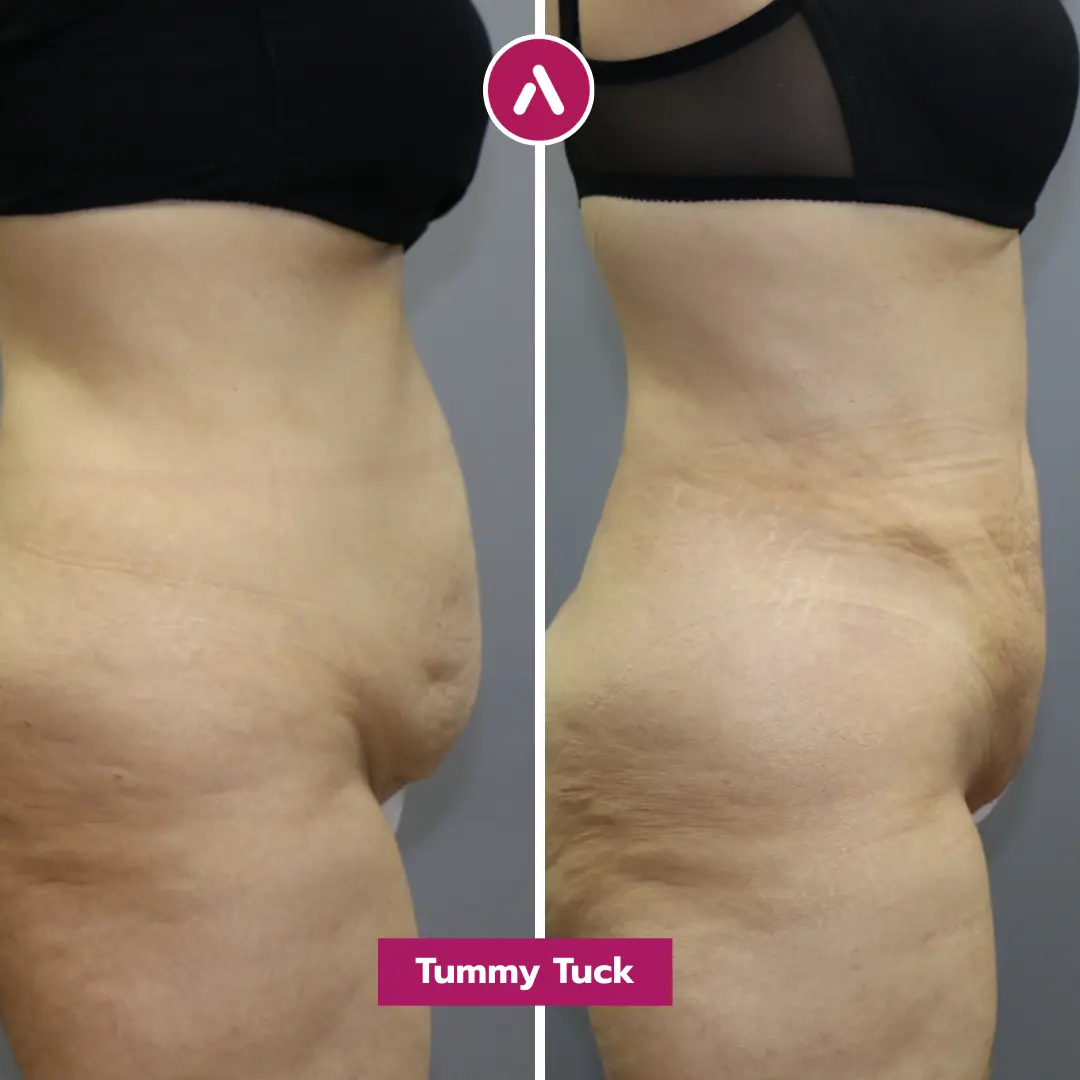
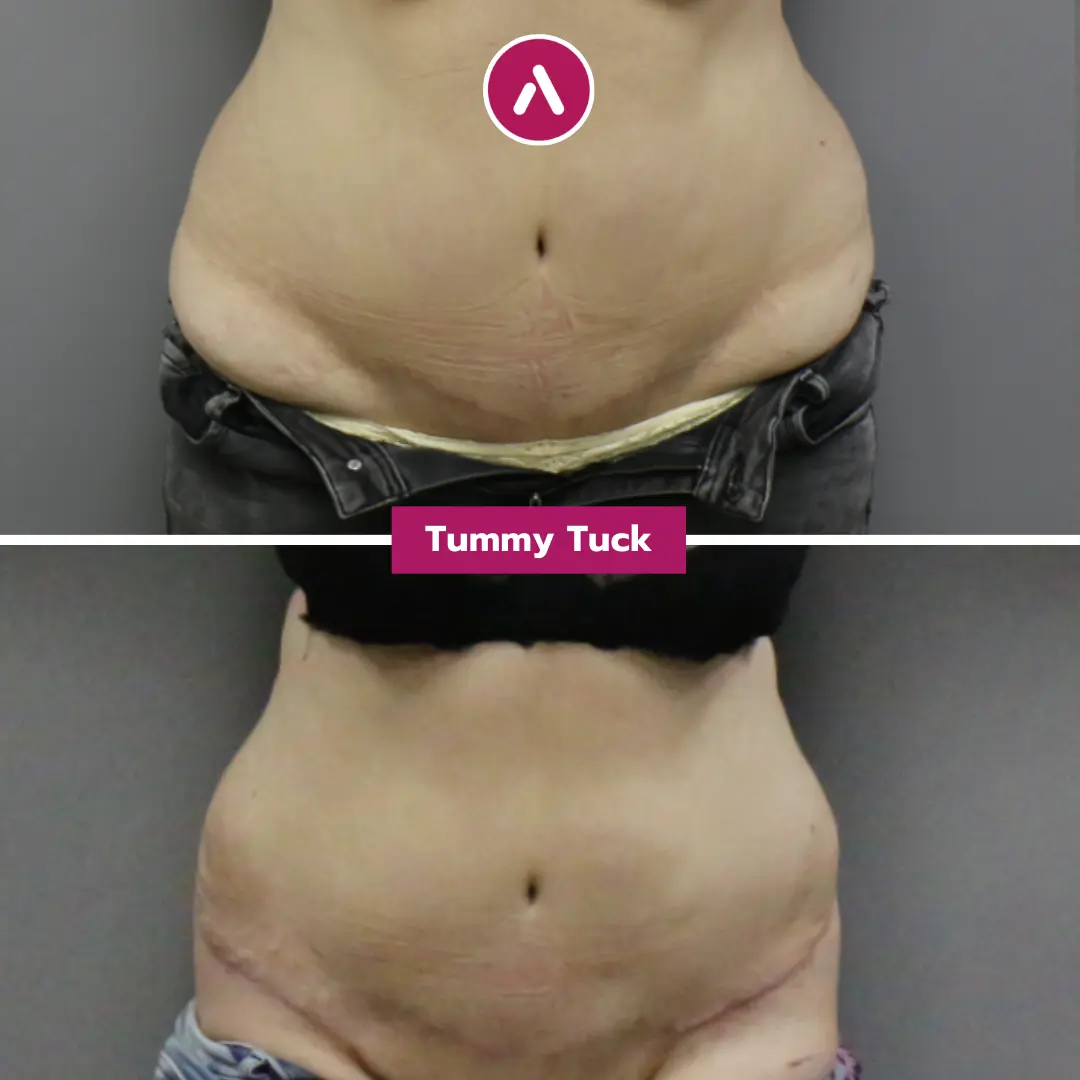
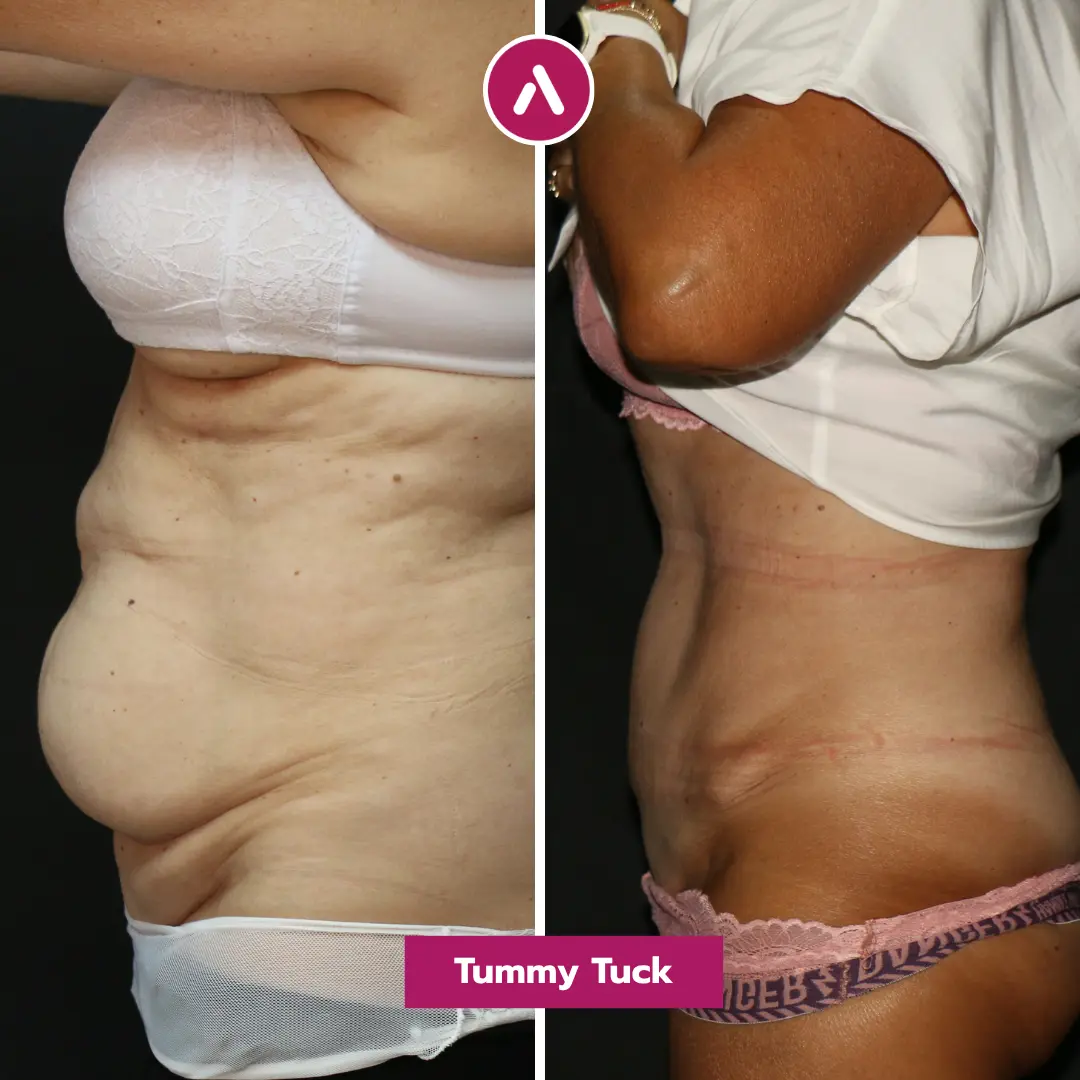
For UK patients, this decision often carries an additional layer of concern. Many want a smoother abdomen after pregnancy or weight loss, but they do not want an over-treated result, an unnecessarily long scar, or the disappointment of choosing a smaller procedure that cannot fully correct the problem. That is why evidence-based planning matters. In modern medical science, procedure selection is about matching the operation to the pattern of deformity, not forcing every patient into the same treatment label.
Clinical principle: The best tummy tuck is not the smallest operation. It is the operation that treats the anatomy you actually have, while keeping scars, recovery and long-term balance in proper proportion.
Table of Contents
What Is the Difference Between a Mini and a Full Tummy Tuck?
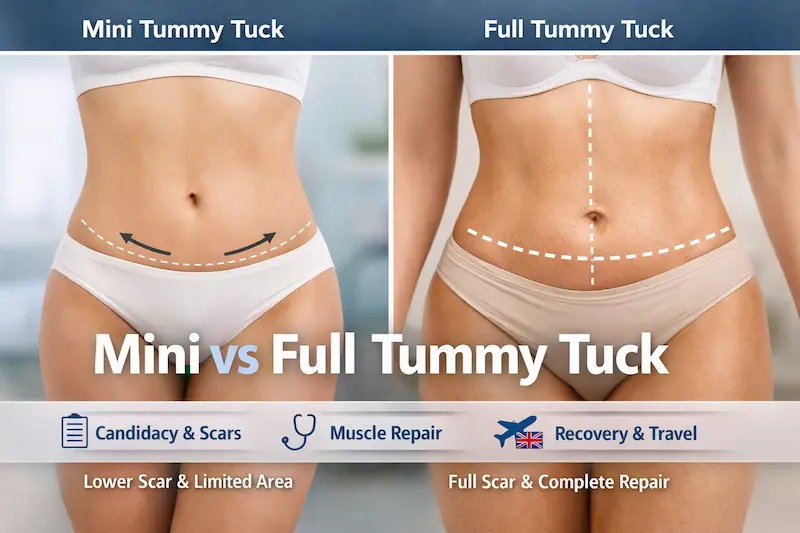
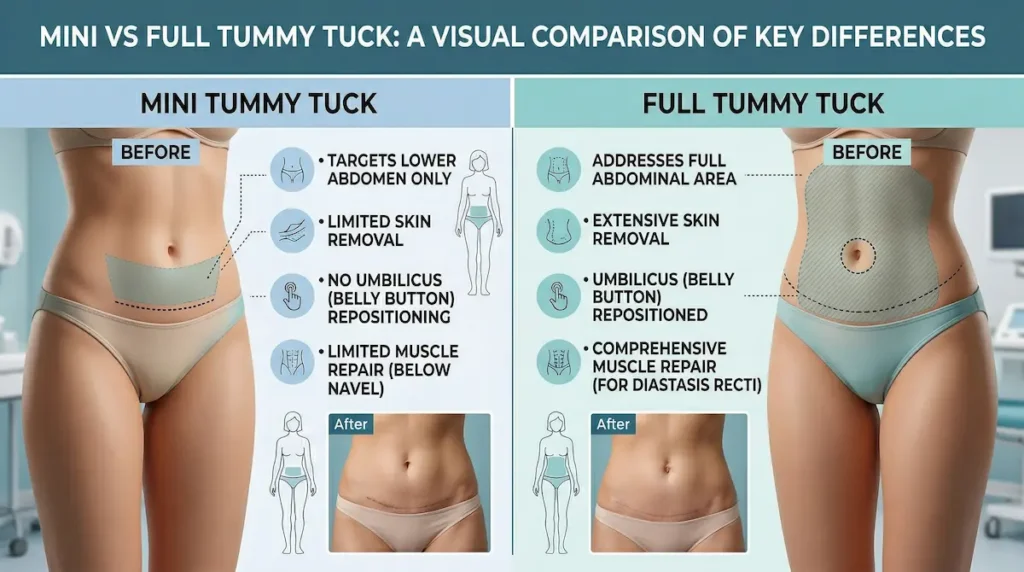
The difference between mini and full tummy tuck procedures comes down to four core factors: how much loose skin is present, whether the laxity extends above the belly button, whether the abdominal muscles need repair, and whether the belly button itself needs to be repositioned. This is why the debate around mini abdominoplasty vs full abdominoplasty should always start with anatomy rather than marketing language.
A mini tummy tuck is a more targeted procedure designed for the lower abdomen, making it most suitable for patients whose skin laxity is limited to the area below the belly button and whose upper abdomen still retains relatively good tone. A full tummy tuck, on the other hand, addresses the entire abdominal area from the upper stomach down to the pubic line and is generally the better option when pregnancy or significant weight changes have caused more extensive loose skin and muscle separation. In some cases, patients may also hear about a drainless tummy tuck, sometimes called a tube tummy tuck: a variation of full abdominoplasty performed without surgical drains and designed to support a smoother recovery.
How much skin and fat can each procedure remove?
A mini tummy tuck removes a modest amount of loose skin and, where appropriate, some localised fat from the lower abdomen. It is best thought of as a targeted correction rather than a full reshaping procedure. Patients who mainly dislike a small lower “pooch”, mild skin looseness or a lower abdominal fold often ask whether a mini procedure is enough. In selected cases, it can be.
A full tummy tuck, however, removes significantly more loose skin and can produce a much broader tightening effect. It is typically used when there is redundant skin both above and below the belly button, often after pregnancy, Caesarean section, or large weight loss. If you have wrinkling, laxity or a hanging apron that extends beyond the lower abdomen alone, a mini procedure may under-correct the issue.
This is particularly relevant for women searching online for solutions after childbirth. What appears to be a “small lower tummy issue” may actually be part of a larger pattern of laxity involving the whole abdominal wall. In those situations, choosing a mini tummy tuck because it sounds simpler can lead to a result that still leaves upper abdominal looseness or persistent fullness.
Where is the scar placed and how long is it likely to be?
Scar length is one of the biggest deciding factors for UK patients, and understandably so. When people compare mini vs full tummy tuck scar length, they are really weighing two things at once: how much scar they are prepared to accept, and how much correction they genuinely need.
With a mini tummy tuck, the scar is usually shorter and sits low on the bikini line, often similar in height to a longer C-section scar but usually extending further. The exact length depends on how much skin must be removed and on your body shape. Although the scar is generally shorter than in a full tummy tuck, it still needs to be long enough for the surgeon to remove tissue properly and close the wound without excessive tension.
With a full tummy tuck, the lower scar is longer because more tissue is being removed across the whole lower abdomen. In addition, there is usually a scar around the belly button because the skin is redraped and the umbilicus is brought through a new opening. This is why patients searching for tummy tuck belly button scar should know that a mini tummy tuck often avoids a new scar around the navel, whereas a full tummy tuck commonly includes one.
That does not automatically mean the mini scar is “better”. A slightly longer, well-placed scar that gives a balanced abdomen may be preferable to a shorter scar that leaves residual loose skin, upper abdominal bunching or an unfinished look in fitted clothing.
| Feature | Mini Tummy Tuck | Full Tummy Tuck |
|---|---|---|
| Primary treatment area | Lower abdomen only | Upper and lower abdomen |
| Skin removal | Limited | More extensive |
| Muscle repair | Possible in selected lower cases | Commonly included when needed |
| Belly button repositioning | Usually not required | Usually required |
| Belly button scar | Often avoided | Usually present around the navel |
| Lower scar length | Shorter | Longer |
| Best for | Mild lower abdominal laxity | Pregnancy changes, weight loss, broader laxity |
Does either option include muscle repair for diastasis recti?
Yes, but not to the same extent. A mini tummy tuck may allow limited repair of muscle separation in selected patients, particularly when the laxity is mild and mostly below the belly button. However, it is not the ideal operation for significant diastasis recti that affects the whole abdominal wall.
A full tummy tuck is much more suitable when the abdominal muscles have separated after pregnancy. This is one of the most important distinctions in the full tummy tuck vs mini tummy tuck debate. If the issue is not only skin, but also internal laxity of the abdominal wall, a full procedure gives the surgeon wider access to restore the core more comprehensively.
From the perspective of scientific research and sound surgical planning, this matters because abdominal contour is not created by skin removal alone. It depends on the relationship between skin, subcutaneous fat and the fascial support of the abdominal wall. If muscle separation is ignored, patients may still look rounded or “mummy-tummy” in profile even after surgery.
Who Is a Good Candidate for a Mini Tummy Tuck?
If you have been asking who is a candidate for a mini tummy tuck, the answer depends less on body weight and more on the pattern of laxity. A mini tummy tuck is not a “lighter” tummy tuck for everyone. It is a specific operation for a specific group of patients. In the right candidate, it can produce a very elegant result with a lower scar, less dissection and a relatively simpler recovery. In the wrong candidate, it can leave visible under-correction.
For some patients, the discussion may also include a drainless variation of full abdominoplasty designed to reduce fluid build-up and support a more comfortable recovery. However, even this technique is not a substitute for proper candidacy assessment. The key question remains the same: whether your concerns are limited to the lower abdomen or involve more extensive skin laxity and muscle separation.
Many UK patients considering a lower abdominal procedure are trying to solve concerns such as a mild post-pregnancy pouch, lower skin looseness, or a fold above an old Caesarean scar. It is also common to see searches such as c section overhang removal UK. In some of these cases, a mini tummy tuck may indeed be the right answer. In others, the overhang is only the most obvious sign of a broader abdominal problem that really needs a full correction.
Patients with loose skin limited to the area below the belly button
The ideal mini tummy tuck candidate usually has loose or crepey skin mainly below the belly button, with relatively good skin tone above it. There may be a small lower bulge, mild fat accumulation, or a soft fold that does not respond to exercise. These patients are often close to a stable weight and have realistic expectations about the amount of improvement a mini procedure can deliver.
This group often includes women after one pregnancy, patients with mild lower abdominal laxity after weight change, or those with a lower skin excess that sits just above an old C-section scar. If the upper abdomen still looks firm and the navel position is already acceptable, a mini tummy tuck may offer enough tightening without the extra scar around the belly button that is common in a full procedure.
When a smaller scar and shorter recovery are the priority
For some patients, the main appeal of a mini tummy tuck is proportionate treatment. They do not want a major operation if a smaller one will genuinely solve the problem. This is a reasonable goal. A mini procedure generally involves less dissection, a shorter lower scar and, in selected cases, a somewhat smoother early recovery.
That said, a smaller scar should never be the only reason to choose a mini tummy tuck. One of the most common mistakes in body contouring is selecting the smallest possible operation to avoid scar length, even when the abdomen clearly needs a fuller correction. A shorter scar is only an advantage if it comes with a result that looks balanced in swimwear, underwear and fitted dresses.
- Mild loose skin below the belly button
- Little or no excess skin above the navel
- Minimal muscle separation
- Stable weight and realistic expectations
- A strong preference for a lower, shorter scar when anatomically appropriate
Why a mini tummy tuck is not ideal for significant skin laxity or muscle separation
A mini tummy tuck is usually not the best choice if you have loose skin across the whole abdomen, a high-riding upper abdominal fold, marked post-pregnancy muscle separation, or a belly button that sits within a field of stretched skin. In these cases, the operation may improve the lower abdomen while leaving the upper abdomen looking unchanged, which can make the final contour feel incomplete.
This is especially important for patients who have had multiple pregnancies or major weight loss. If the abdomen looks deflated above the belly button, or if the whole abdominal wall protrudes due to diastasis recti, a mini tummy tuck may simply not go far enough. The result may be “better”, but not truly transformative.
Important: A mini tummy tuck is a precise solution for a limited problem. It should not be used as a compromise operation when a full tummy tuck is clearly required for a harmonious result.
In practice, the best way to answer the question which tummy tuck do I need is through a proper consultation with photographs, physical assessment and a discussion about trade-offs. Scar length matters. Recovery matters. Budget matters. But anatomy matters most.
Who Usually Needs a Full Tummy Tuck Instead?
While a mini tummy tuck suits a very specific group of patients, a full tummy tuck is more often the correct answer when the abdomen has changed in a broader way. This is particularly common after multiple pregnancies, major weight loss, or long-term skin stretching that affects both the upper and lower abdomen. For patients comparing full tummy tuck vs mini tummy tuck, the key question is whether the concern is truly localised below the belly button, or whether the whole abdominal wall has been altered.
A full abdominoplasty is intended for patients with more extensive skin laxity, a greater degree of abdominal contour irregularity, and muscle separation that can leave the midsection looking persistently rounded. In this context, the decision between mini abdominoplasty vs full abdominoplasty is usually a choice between a more limited improvement and a more comprehensive restoration of the abdomen.
Loose skin above and below the belly button after pregnancy or weight loss
If you have loose skin both above and below the navel, a full tummy tuck is usually the more appropriate procedure. This is especially true when the skin folds, wrinkles or hangs in a way that affects the entire front of the abdomen rather than one lower segment. A mini tummy tuck cannot effectively redrape upper abdominal skin, so patients with widespread laxity often remain disappointed if they choose the smaller option.
After pregnancy, the abdomen may not simply look “full”; it may look stretched from the ribcage downwards, with poor skin recoil, lower abdominal fullness and a changed belly button shape. After weight loss, the skin may appear deflated and creased across the whole midsection. In both situations, a full tummy tuck is more likely to deliver a smoother, more proportional result.
This also matters for women searching for c section overhang removal UK. Sometimes the overhang is a local issue that can be improved with a mini tummy tuck. But quite often, the overhang is only one part of wider post-pregnancy laxity. In that case, treating only the lower fold may leave the upper abdomen untreated and the overall silhouette still imbalanced.
When abdominal muscle repair is needed for a true “mummy tummy”
One of the clearest reasons to choose a full tummy tuck is the presence of significant diastasis recti. This is the separation of the abdominal muscles that frequently follows pregnancy and may leave the stomach looking rounded or projecting even when body fat is low. Patients often describe this as a stubborn “mummy tummy” that diet and exercise do not fully correct.
A full tummy tuck allows the surgeon to address this more comprehensively. By tightening the abdominal wall internally as well as removing excess skin externally, the procedure can improve not only the appearance of the abdomen but also its structure. This is why a patient may look better in profile after a full tummy tuck even before all swelling has settled.
From the perspective of science and operative planning, this is important because abdominal contour depends on support as much as surface. If the fascia remains lax, the result may still appear rounded despite skin removal. That is why patients asking which tummy tuck do I need should think beyond the visible fold and consider whether the problem is also deeper than the skin.
Why a full abdominoplasty often gives the more balanced long-term result
Some patients worry that choosing a full tummy tuck automatically means choosing the most aggressive option. In reality, it often means choosing the most accurate one. A full abdominoplasty is not “better” because it is bigger; it is better when the anatomy genuinely requires a full correction.
In many cases, the longer scar and the scar around the belly button are worthwhile trade-offs because they allow the abdomen to be reshaped more evenly. A shorter scar may sound attractive at consultation stage, but an under-corrected abdomen can become far more frustrating over time than a well-healed scar placed low within the underwear or bikini line.
| Patient Pattern | Mini Tummy Tuck | Full Tummy Tuck |
|---|---|---|
| Loose skin only below the navel | Often suitable | Sometimes unnecessary |
| Loose skin above and below the navel | Usually insufficient | Usually more appropriate |
| Significant diastasis recti | Limited help | More comprehensive repair |
| Changed belly button shape or position | Limited correction | Usually better correction |
| Desire for the most complete abdominal reshaping | Only in mild cases | Often preferred |
Mini vs Full Tummy Tuck: Recovery, Scarring and Daily Life
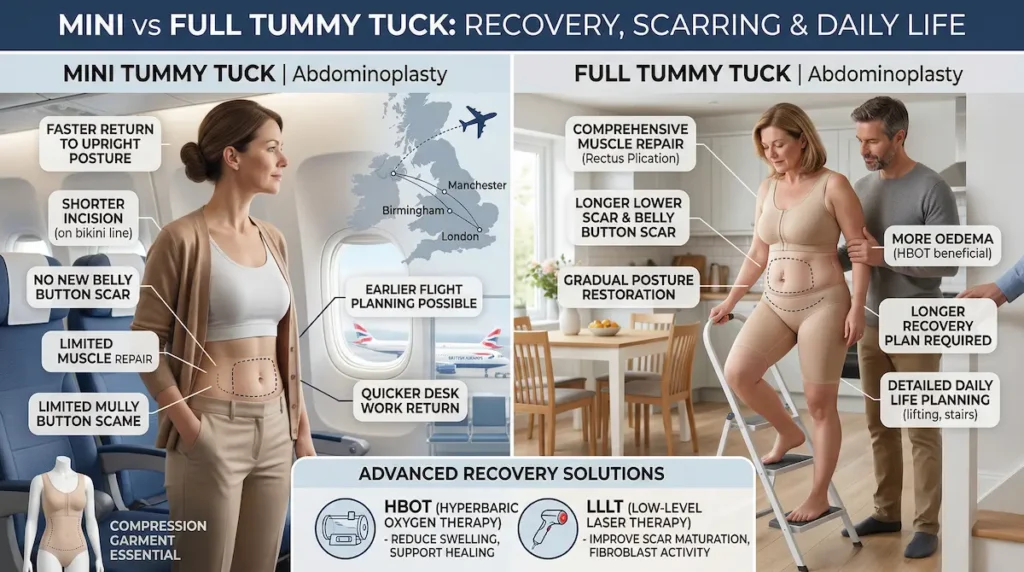
Recovery is often where online comparisons become oversimplified. A mini tummy tuck usually involves less tissue undermining and a shorter incision, so early recovery may be somewhat easier in the right patient. However, recovery is not determined by the procedure name alone. It also depends on whether muscle repair was performed, how much skin was removed, your baseline health, and how closely aftercare instructions are followed.
For UK patients, practical questions matter just as much as surgical ones. How uncomfortable will I feel when standing upright? When can I manage stairs? When can I return to desk work? How soon is it safe to fly home? These are the real-life details that shape whether the procedure feels manageable, particularly for women with children, work commitments or long travel plans.
For some patients, recovery discussions may also involve a drainless approach to full abdominoplasty. While this can be a useful option in selected cases, it does not automatically make recovery identical for every patient. The extent of correction, muscle repair and individual healing response still play a major role in how quickly daily life begins to feel normal again.
How long you may need before walking upright comfortably
Most patients, whether they have a mini or a full tummy tuck, should expect some tightness in the early recovery period. A mini tummy tuck often allows a quicker return to a more upright posture, especially if muscle repair is limited or absent. A full tummy tuck, particularly when combined with rectus muscle repair, usually creates more tightness across the abdomen at first.
That does not mean recovery is necessarily difficult or unmanageable; it means it must be planned properly. Early walking is encouraged to support circulation, but full comfort takes time. The first days are usually about controlled movement, good hydration, compression garment use, and not expecting too much too soon.
For mothers and busy professionals alike, the most realistic approach is to plan for support. Even when pain is manageable, restricted movement can affect lifting, driving, sleeping position and everyday tasks. A patient who prepares well usually recovers more calmly than a patient who expects to “bounce back” immediately.
What UK patients should know about returning home and flight planning
For British patients travelling for surgery, recovery also includes logistics. It is not enough to ask whether the scar is shorter or the operation is smaller; you also need to ask whether the timing of travel is sensible. A mini tummy tuck may allow an easier return journey than a full tummy tuck in some cases, but both operations still require proper flight planning, hydration, walking breaks and a surgeon-approved timeline.
This is where internationally minded aftercare matters. Patients travelling from London, Manchester, Birmingham or elsewhere in the UK need a plan that fits both the procedure and the journey home. That includes guidance on compression garments, mobility, medications, wound care and the safest point at which return travel becomes reasonable.
For many patients, reassurance comes not only from the surgery itself, but from knowing that recovery has been organised with travel in mind rather than treated as an afterthought. This is one reason why UK patients often look for clinics that understand the full journey, not simply the day of surgery.
How HBOT and LLLT may support oedema control and scar healing
Modern recovery support can make a meaningful difference, particularly for patients concerned about swelling, bruising and scar quality. At AKM Clinic, recovery protocols may include HBOT and LLLT, two technologies that are especially relevant for patients who want a smoother return to normal life.
HBOT (Hyperbaric Oxygen Therapy) is used to support healing, reduce post-operative oedema and help the body recover more efficiently. LLLT (Low-Level Laser Therapy) is used to encourage fibroblast activity and support improved scar maturation. In practical terms, these measures are designed to support stronger healing and better scar quality rather than leaving recovery entirely to chance.
For patients worried about tummy tuck belly button scar or lower abdominal scar visibility, this matters. Scar quality depends on many factors, including skin type, tension, wound care and healing support. No ethical surgeon can promise an invisible scar, but evidence-led aftercare can help the scar settle more favourably over time.
Recovery truth: The easier operation is not always the operation with the best long-term outcome. A well-planned recovery after the right surgery is usually better than a faster recovery after the wrong one.
Mini vs Full Tummy Tuck Cost: Is the Lower Price Always Better Value?
Cost matters, particularly for UK patients comparing private surgery options against overseas treatment. But the lower initial price is not always the better investment. When patients search mini tummy tuck vs full tummy tuck, they are often also asking whether the smaller procedure will save money without compromising the result. Sometimes it will. Sometimes it will not.
The key is to separate lower cost from better value. Value means paying for the operation that will solve the concern properly the first time, with appropriate aftercare, transparent planning and no hidden compromises. This is especially relevant for patients who want Harley Street-level decision-making but with more accessible overall pricing.
Why mini tummy tuck pricing can look appealing at first
A mini tummy tuck is usually less extensive than a full tummy tuck, so patients naturally expect it to cost less. That can make it very attractive on paper. A shorter scar, shorter operating time and a simpler-sounding procedure may seem like the most efficient choice, especially for patients who believe their concern is only minor.
For some women, that instinct is correct. If the laxity is genuinely limited and the muscles are not significantly separated, choosing a mini tummy tuck can be both anatomically sensible and financially efficient. In those cases, paying for a full procedure may offer little additional benefit.
When choosing the cheaper procedure can lead to under-correction
The problem arises when patients choose a mini tummy tuck purely because the price is lower, despite having anatomy that really needs a full correction. In that situation, the operation can become a false economy. The lower fee may come with a result that still leaves loose skin, an unresolved bulge, or ongoing dissatisfaction in fitted clothing.
This is one of the most important parts of the difference between mini and full tummy tuck discussion. A smaller operation is not automatically more cost-effective if it cannot deliver the outcome you actually need. In some cases, trying to avoid the longer scar or the higher fee at the start may increase the likelihood of disappointment later.
Comparing Harley Street-style private pricing with Istanbul package value in GBP
For an expert patient, the real comparison is not “cheap abroad” versus “expensive UK surgery”. It is whether she can access safe, consultant-led planning, transparent communication and premium-quality care at a more accessible overall investment. That is why many British patients compare Harley Street-style private treatment with Istanbul clinics that offer organised medical travel and clear package structures in GBP.
What matters here is transparency. Patients want to know what is included, what aftercare looks like, how communication works after they return home, and whether the recommendation is based on their anatomy rather than on selling the smaller procedure. A clinic that offers honest advice about when a mini tummy tuck is not enough is often demonstrating more integrity, not less.
| Cost Question | What to Ask | Why It Matters |
|---|---|---|
| Procedure fee | Does the quote reflect mini or full correction appropriately? | A cheaper quote may reflect under-treatment |
| Package transparency | Are accommodation, transfers and aftercare included? | True value depends on the whole journey |
| Scar trade-off | Am I accepting a shorter scar at the expense of correction? | Shorter is not always better |
| Revision risk | Will the chosen procedure likely solve the issue fully? | The wrong operation can cost more emotionally and financially |
| Currency clarity | Is the price explained clearly in GBP? | UK patients value transparent budgeting |
How to Decide Safely Between a Mini and a Full Tummy Tuck?
By this stage, most patients realise that the real decision is not about choosing the smallest operation possible. It is about choosing the procedure that correctly matches the anatomy, the scar trade-off and the long-term result you want. If you are still wondering which tummy tuck do I need, the safest answer comes from a proper consultation rather than from online photographs alone.
When comparing full tummy tuck vs mini tummy tuck, it helps to think in terms of outcome, not label. A mini tummy tuck can be excellent for the right patient. A full tummy tuck can be the more conservative choice in another patient, simply because it avoids under-correction. Good surgical judgement is not about recommending the biggest operation; it is about recommending the most accurate one.
For some patients, the consultation may also cover a drainless form of full abdominoplasty. This can be especially relevant when a patient needs more than a mini tummy tuck but is also concerned about post-operative comfort, swelling and the practical realities of returning to normal daily life as smoothly as possible.
Questions to ask during your consultation before booking surgery abroad
A thoughtful consultation should explain not only what can be done, but why one procedure is more appropriate than another. This is especially important for UK patients travelling abroad, because the decision must take into account scar placement, recovery planning, muscle repair, aftercare and travel timing.
Useful questions include whether your looseness is confined to the lower abdomen, whether there is significant diastasis recti, whether your belly button position will change, and whether the surgeon believes a mini procedure would leave visible under-correction. You should also ask to see healed results in patients with a similar body pattern, rather than relying only on immediate after-surgery photographs.
| Consultation Topic | Why It Matters | What a Good Answer Should Clarify |
|---|---|---|
| Skin laxity pattern | Determines whether a mini procedure is enough | Whether looseness sits only below or also above the navel |
| Muscle separation | Affects abdominal contour and core support | Whether rectus repair is needed and to what extent |
| Scar planning | Sets realistic expectations early | Expected lower scar length and whether a navel scar is likely |
| Recovery timeline | Essential for work, childcare and travel | Walking, compression, return to normal activity and flight timing |
| Aftercare pathway | Important for overseas patients | Who supports you once you are back in the UK |
| Outcome limits | Protects against disappointment | What the chosen operation can and cannot realistically achieve |
Why surgeon judgement matters more than choosing the smallest operation
One of the most common patient instincts is to ask for the shortest scar and the quickest recovery. That is understandable, but it is not always the right starting point. The question should not be “Can I get away with a mini?” but rather “Will a mini tummy tuck genuinely solve the problem I see every day?”
This is where surgical judgement matters. The best surgeons do not simply agree with the smallest request. They assess whether the visible concern is localised or part of a wider abdominal change. In practical terms, the difference between mini and full tummy tuck decisions often comes down to honesty: an ethical recommendation may involve telling a patient that the cheaper or smaller procedure is not likely to deliver the result she wants.
From a medical science perspective, this is sound practice. Under-treatment can be just as disappointing as over-treatment. The aim is a balanced, proportionate abdomen with a scar burden that makes sense for the amount of correction achieved.
What subtle, natural-looking results mean for UK patients
UK patients often prefer a result that looks restored rather than obviously “done”. In tummy tuck surgery, that means a flatter, firmer abdomen that still looks natural in motion and in clothing. It does not mean chasing an unrealistic airbrushed result or expecting the scar to vanish completely.
Subtle does not mean small. In some patients, the most natural-looking outcome comes from a full tummy tuck because it creates an even contour from upper abdomen to lower abdomen. In others, a mini tummy tuck is enough precisely because the issue is small and localised. Either way, the goal is harmony, not simply minimising every visible sign of surgery at the expense of the final shape.
Surgeon-led principle: The right operation should make your abdomen look proportionate, not partially corrected. A shorter scar is valuable only when it still allows a complete and balanced result.
Why UK Patients Consider AKM Clinic for Tummy Tuck Surgery
For British patients, the decision does not end with choosing between mini and full abdominoplasty. They also need confidence in the clinic, the planning process and the aftercare once they return home. This is particularly important in a field where media stories about poor overseas outcomes have made many patients understandably cautious.
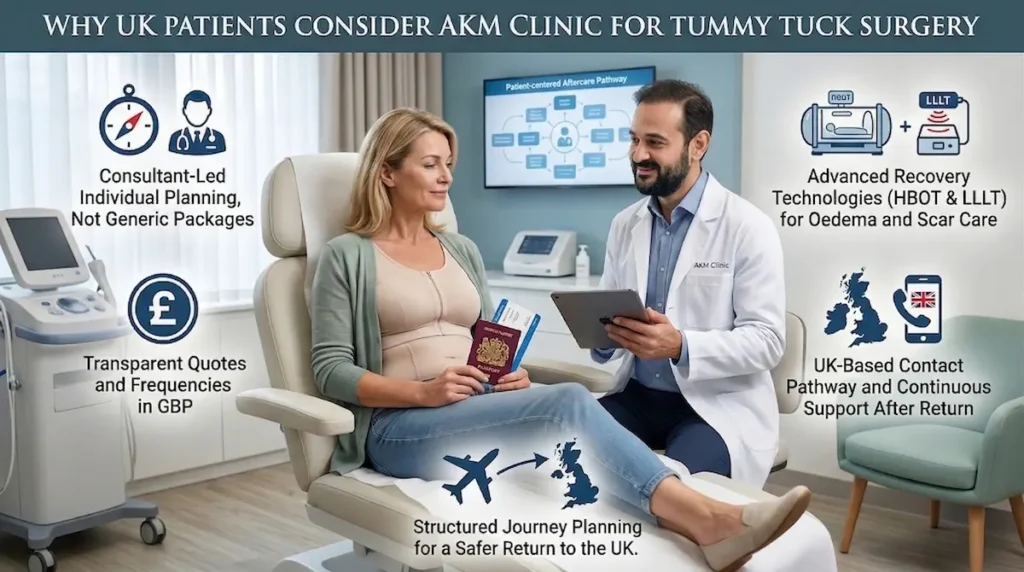
What usually reassures UK patients is not marketing language, but a combination of consultant-led judgement, clear communication, organised recovery support and transparent pricing in GBP. In other words, they want to feel that the recommendation is based on anatomy and safety rather than on selling a package.
Consultant-led planning instead of one-size-fits-all package decisions
A tummy tuck should never be chosen as though it were a standard menu option. A patient asking about mini abdominoplasty vs full abdominoplasty needs an individual assessment of skin quality, muscle integrity, scar trade-offs and recovery expectations. Consultant-led planning matters because it reduces the risk of being channelled into the wrong operation for convenience or price.
For patients who have had pregnancy-related changes, mild weight fluctuation or a previous Caesarean section, these distinctions are especially important. Two abdomens can look similar in clothes and behave very differently in surgery. That is why personalised planning is more valuable than generic promises about “minimal scarring” or “quick fixes”.
What reassures British patients: clear GBP pricing, contact after surgery and aftercare
UK patients often feel more comfortable when the process includes familiar trust signals. Transparent quotes in GBP, clear explanations of what is included, and straightforward answers about scar length, recovery and travel planning can make decision-making much easier. So can knowing how follow-up works once you are home, through remote check-ins with the Istanbul team and a patient coordinator you can contact, rather than feeling that all support disappears once the flight home begins.
For many British patients, reassurance also comes from knowing there is ongoing communication after surgery through a direct support line and structured follow-up. The psychological comfort of having an accessible support route after returning home can matter just as much as the procedure itself.
That kind of continuity is highly relevant for abdominal surgery, where questions about swelling, compression garments, scar care and normal healing often arise during the first weeks.
Recovery support technologies and a safer return-to-UK pathway
Another reason UK patients may consider AKM Clinic is the emphasis on recovery support rather than surgery in isolation. For tummy tuck patients, post-operative swelling and scar maturation are not minor details; they are a major part of how the experience feels in real life. Supportive technologies such as HBOT for oedema management and LLLT for scar support can be useful additions within a structured aftercare plan.
This approach matters not only for comfort, but for travel readiness. British patients often want to know when they may safely fly home, how to manage the journey, and what support remains available once they are back in the UK. A clinic that plans for the full patient journey, rather than treating travel as a separate issue, is often more aligned with what the UK “expert patient” is looking for.
Frequently Asked Questions (FAQ): Mini vs Full Tummy Tuck
Below are some of the most common questions patients ask when comparing mini tummy tuck vs full tummy tuck. The answers are intentionally concise, but each one should still be interpreted in the context of a proper consultation and physical assessment.
Can a mini tummy tuck fix diastasis recti?
Is a full tummy tuck always better after pregnancy?
Which procedure leaves the shorter scar?
Is the belly button moved in a mini tummy tuck?
How do I know if I have too much loose skin for a mini tummy tuck?
How soon can I fly back to the UK after tummy tuck surgery?
Is a mini tummy tuck cheaper because it is always easier?
If you would like to explore related topics beyond this guide, you can also learn more about Diastasis Recti Repair Surgery, Mummy Makeover Recovery with Children, Tummy Tuck Scar Treatment, Tummy Tuck Revision, our all-inclusive tummy tuck package, Finance for Plastic Surgery in Turkey, Surgery Companion Turkey, and Questions to Ask Plastic Surgeon. These resources can help you better understand muscle repair, recovery planning, scar care, revision options, package details, payment routes, travel support, and the key questions worth discussing during your consultation.
Medical Disclaimer: This page is provided for general educational purposes only and does not replace a face-to-face medical consultation, diagnosis, or personalised treatment plan. All surgery carries risks and outcomes vary between individuals. Suitability for a tummy tuck surgery, procedure selection, and anaesthesia choice can only be determined after a full clinical assessment by a qualified surgeon. Always follow your clinician’s instructions and seek urgent medical attention if you develop concerning symptoms during recovery.
Related Treatments




Ready to Begin Your Own Transformation Journey?
Join the 2,000+ patients who have trusted Dr Akif Mehmetoğlu and the AKM Clinic team. Your journey to a more confident, naturally restored you begins with a simple, no-obligation conversation. Contact us today from the UK for your free virtual consultation.
#1: Get Your Free Personalised Quote
Start with a free, no-obligation online consultation. Share your photos, and our surgical team will provide a fully personalised treatment plan and a transparent, all-inclusive price package. There are no hidden fees.
#2: Secure Your Date & VIP Booking
Once you are ready, our dedicated patient coordinators will help you secure your procedure date. We will handle all your bookings, including your 5-star hotel accommodation and private VIP airport transfers.
#3: Arrive in Istanbul & Meet Your Surgeon
Arrive at Istanbul Airport (IST) and be greeted by your private driver. Settle into your hotel and prepare for your in-person consultation, where you will meet your specialist surgeon to finalise the details for your "natural, subtle, and restored" new look.