
Mini vs Full Tummy Tuck: Am I a Candidate?

AI Summary
- Mini vs full tummy tuck candidacy depends on skin laxity location and diastasis recti muscle separation.
- Scar and belly button differences matter: mini is smaller; full often includes navel reshaping and stronger repair.
- Recovery and travel planning require realistic timelines, surgeon clearance for flying, and structured post-op follow-up.
- Cost clarity and safety come from transparent packages, complication protocols, and AKM Clinic recovery support (HBOT/LLLT).
Summary generated by AI, fact-checked by our medical experts
If you’re torn between a mini vs full tummy tuck, you’re not alone. Most “expert patients” are trying to answer one practical question: Which option will actually fix my specific concerns—without unnecessary scars, downtime, or cost? In this guide, we’ll break down mini tummy tuck vs full tummy tuck using surgeon-style decision criteria (skin laxity location, muscle separation, belly button changes, and realistic outcomes). We’ll also touch on what medical science and scientific research show about factors that influence healing and scar quality—because the right choice isn’t just aesthetic, it’s also about safety and predictability.
Table of Contents
Mini vs Full Tummy Tuck at a Glance (Fast Comparison)
Before you get lost in the details, here’s the high-level reality: a mini tummy tuck is mainly for the area below the belly button, while a full tummy tuck addresses the entire abdomen (often including muscle repair and belly button reshaping). This section gives you a quick framework so you can decide whether you should keep reading toward “mini” or “full.”
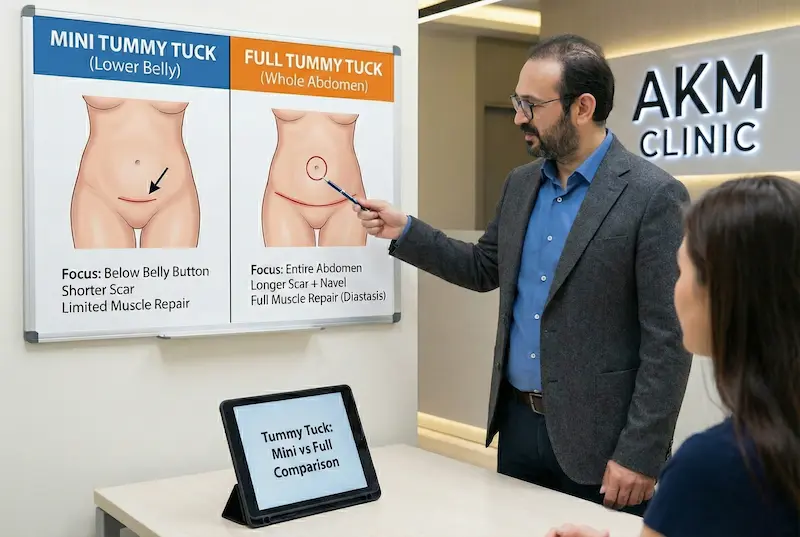
What each surgery actually fixes (lower belly vs whole abdomen)
- Mini tummy tuck: targets mild-to-moderate loose skin and a small “pooch” below the belly button. It is best when the upper abdomen looks relatively smooth.
- Full tummy tuck: treats loose skin and contour issues across the upper and lower abdomen, typically after significant weight loss or pregnancy-related laxity.
- Key decision point: If your main concern is “my upper belly still bulges or looks crepey,” you’re more often in full vs mini tummy tuck territory.
Scar length, belly button changes, and muscle repair differences
- Mini vs full tummy tuck scar: Mini usually involves a shorter bikini-line incision; full typically requires a longer incision (still planned low) and often an additional incision around the belly button.
- Belly button: Mini usually does not reposition the belly button. Full commonly reshapes/repositions it for natural proportions.
- Muscle repair: Full tummy tuck more reliably addresses diastasis recti (muscle separation). Mini may include limited repair in select cases, but it’s not designed for major separation.
Who typically gets better results with mini vs full (realistic expectations)
Think of tummy tuck mini vs full as a “zone” decision rather than a “size” decision. Patients happiest with mini usually have:
- Loose skin mainly below the belly button
- Minimal upper-abdominal laxity
- Stable weight and realistic expectations about “tightness”
Patients happiest with a full tummy tuck usually have:
- Loose skin above and below the belly button
- Noticeable abdominal wall weakness/diastasis after pregnancy or weight changes
- Stretch marks that extend higher on the abdomen (often removed/reduced with full)
| Feature | Mini Tummy Tuck | Full Tummy Tuck |
|---|---|---|
| Main target area | Below belly button | Upper + lower abdomen |
| Belly button incision | Usually no | Often yes |
| Muscle repair | Limited/select cases | Common and more comprehensive |
| Typical scar | Shorter bikini-line | Longer bikini-line + navel |
| Best for | Mild lower-belly laxity | Moderate–significant laxity |
Key takeaway: The best way to choose mini tummy tuck vs full is to map your concerns: where is the loose skin, and is there muscle separation?
What Is a Mini Tummy Tuck?
A mini tummy tuck is a focused lower-abdominal procedure. It can be an excellent option when your issue is localized—often after pregnancy, mild weight changes, or aging-related skin laxity—yet you don’t need (or don’t want) the larger scope of a full abdominoplasty. Done for the right candidate, mini can create a smoother lower abdomen with a smaller surgical footprint.
Procedure basics: incision, skin tightening, and when muscle repair is possible
In a mini tummy tuck, the incision is typically placed low in the bikini line. The surgeon tightens and re-drapes lower-abdominal skin; in some cases, a limited muscle tightening may be performed if the separation is mild and localized. The goal is not maximal transformation—it’s targeted improvement.
Pros and cons (including what it cannot correct)
- Pros: shorter scar (in many cases), narrower surgical area, often faster early mobility, and focused correction of the lower “pooch.”
- Cons: won’t reliably fix upper-abdominal laxity, may not address significant diastasis, and won’t reshape/reposition the belly button like a full procedure can.
- Important: Choosing mini when you really need full is a common path to disappointment—and sometimes revision surgery.
The "more involved early recovery" listed in full-tummy-tuck cons has a specific name: surgical drains. Drains aren't optional in classical full abdominoplasty—they manage fluid collection, prevent seromas, and require daily emptying for 1-3 weeks. But progressive tension suturing (PTS) and tube-tummy-tuck variants offer a drainless path for selected patients, changing both the at-home logistics and the early-recovery footprint significantly.
The drainless technique mechanics, candidacy filters, and how it changes recovery versus traditional drains are detailed in our drainless abdominoplasty primer.
Ideal candidate profile (the “below-the-belly-button” problem)
You may be a strong mini candidate if:
- Your looseness and bulge are mainly below the belly button
- Your upper abdomen looks relatively smooth when standing
- You are at a stable weight (major changes can stretch results)
- You are done with planned pregnancies (future pregnancy can reverse tightening)
When patients search mini vs full tummy tuck pictures, the best comparisons are those that match body type and skin quality—not just dramatic “after” shots. Your anatomy determines what’s realistic.
What Is a Full Tummy Tuck (Abdominoplasty)?
A full tummy tuck is a comprehensive reshaping of the abdomen. It addresses loose skin across the full abdominal surface and frequently includes repairing muscle separation (diastasis recti). Because it often requires belly button reshaping, it can create a more harmonious “natural” look—when executed with careful planning and technique.
Step-by-step overview: skin removal, muscle repair, and belly button repositioning
In a full tummy tuck, the surgeon typically removes excess skin, tightens the abdominal wall (when needed), and repositions the belly button so it looks proportionate after the skin is re-draped. This approach is why full vs mini tummy tuck outcomes can look more dramatic—especially when there is significant laxity above the belly button.
One detail this overview leaves out: anesthesia choice changes the operative sequence and the early-recovery experience meaningfully. For carefully selected full-tummy-tuck candidates—particularly those with cardiac sensitivities, anesthesia anxiety, or strict travel-time constraints—awake tummy tuck protocols using tumescent anesthesia and twilight sedation are an option. The technique sequence is similar; the perioperative experience is quite different.
The full awake-protocol mechanics, candidacy filters, and how the recovery curve compares to general anesthesia are detailed in our awake protocol breakdown.
Variations: full vs extended tummy tuck (when “full” isn’t enough)
Some patients need a broader contour correction around the flanks/hips. In those cases, surgeons may recommend an extended version. This isn’t about “bigger is better”—it’s about matching the surgical plan to where the tissue excess lives.
Pros and cons (scar trade-off vs transformation potential)
- Pros: more complete correction of skin laxity, better solution for diastasis recti, improved overall contour, and the ability to address upper-abdominal stretch marks (depending on location).
- Cons: typically longer incision, belly button incision, and a more involved early recovery.
Reality check: Many “mini vs full tummy tuck before and after” galleries look impressive, but the safest plan is the one that matches your anatomy—not the one with the smallest scar.
From a scientific research standpoint, factors like smoking status, uncontrolled diabetes, and poor nutrition are repeatedly associated with poorer wound healing and scar quality—so candidacy is medical, not just cosmetic. This matters as much as the choice between mini and full.
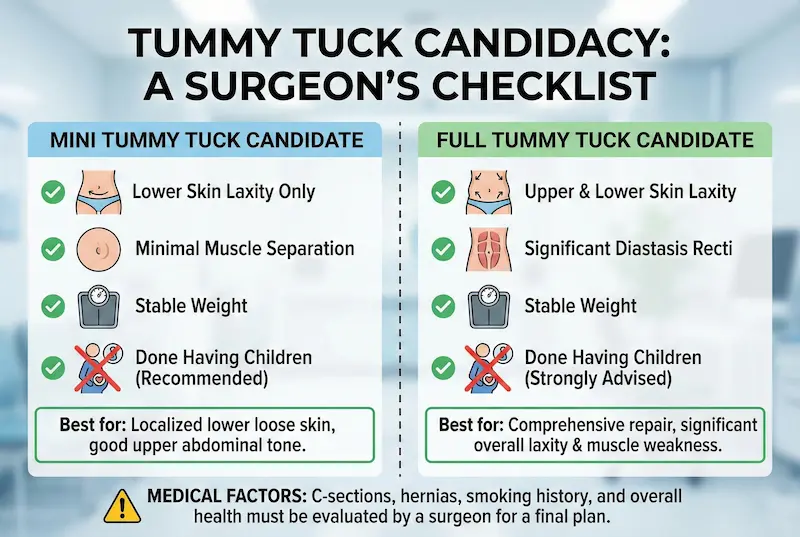
Am I a Candidate? A Surgeon’s Checklist
This is the part most people wish they had before booking a consultation. Instead of guessing based on mini vs full tummy tuck pictures, use a surgeon-style checklist. The decision between mini tummy tuck vs full tummy tuck is mainly determined by where the excess skin sits, whether your abdominal muscles need repair, and how your tissues are likely to heal. If you want the most predictable outcome, treat this like a medical decision—not a branding choice.
"Surgeon-style decision criteria" works only if your surgeon actually does the assessment. The checklist below is what an experienced abdominoplasty surgeon should walk through with you—but in practice, the most common gap isn't patient knowledge, it's surgeon time. A 15-minute consultation that skips skin-laxity mapping, abdominal-wall palpation, and weight-history review will produce mini-versus-full decisions based on incomplete data, regardless of how good the questionnaire was.
The full surgeon-vetting framework—including the questions that surface gaps in evaluation depth before booking, not after—is in our surgeon evaluation guide.
Skin laxity location (upper vs lower abdomen) and stretch marks
Stand relaxed in front of a mirror, then gently lift the skin of your lower abdomen (below the belly button). If most of the looseness is below the belly button and the upper abdomen stays relatively smooth, you may lean toward a mini. If the upper abdomen also looks loose, crepey, or “pools” when you bend forward, full vs mini tummy tuck often points to a full procedure.
- Mini candidates: looseness mostly below the navel; minimal upper-abdominal skin redundancy.
- Full candidates: looseness above and below; significant overall laxity after pregnancy or weight loss.
- Stretch marks: marks below the belly button are more likely to be removed or improved by either approach; marks higher up typically require a full tuck for meaningful improvement (depending on how much skin is removed).
Diastasis recti (muscle separation): how to tell if you need full repair
Muscle separation is one of the biggest reasons people choose full. In many cases, the “still looks pregnant” profile is less about fat and more about a weakened abdominal wall. A classic at-home clue: lying down, doing a small crunch, and noticing a ridge or bulge along the midline. That said, true diagnosis is done clinically—sometimes supported by imaging.
- Mini tummy tuck vs full: mini is not designed for extensive muscle tightening across the full abdomen.
- Full tummy tuck: more consistently allows comprehensive repair from upper to lower abdomen when needed.
The "ridge during a small crunch" is one signal. It's not the whole picture. True diastasis grading combines width, length, tissue quality, and whether there's an associated umbilical hernia hiding under what feels like "just muscle separation." That distinction matters because the answer changes the surgical plan—sometimes from a tummy tuck plus repair to a hernia-and-diastasis combined operation, with stricter recovery protocols.
The full diastasis assessment framework, grading criteria, and how it intersects with mini-versus-full decision-making are in our muscle separation repair primer.
Practical rule: If your core feels weak, you have a persistent midline bulge, or your upper abdomen protrudes even at a healthy weight, the “mini” option is often not enough.
Weight stability, BMI considerations, and future pregnancy plans
For both procedures, your best “before and after” is achieved when your weight is stable. Major weight loss after surgery can reintroduce laxity; weight gain can stretch repairs. Future pregnancy can also undo tightening—especially muscle repair—so many surgeons advise waiting until you’re done having children when possible.
- Stable weight matters: it improves predictability for mini vs full tummy tuck before and after outcomes.
- Medical safety matters: your overall health profile influences complication risk more than most people realize.
"Done having children" sounds like a clean line. In practice, it rarely is. Postpartum patients often weigh tummy tuck timing against breast volume changes, future pregnancy considerations, and recovery windows that fit around childcare. For many, the more accurate question isn't "mini or full?"—it's "which combination of procedures, sequenced how, fits my actual life over the next 12-24 months?"
The combined-procedure sequencing logic—how breast and abdominal procedures coordinate, what staging means for recovery, and which pairings are safer than others—is detailed in our combined-procedure planning reference.
Previous C-section scars, hernias, and medical factors that change the plan
Prior C-section scars do not automatically exclude you from a tummy tuck, but they influence planning: scar position, tissue quality, and how the skin will re-drape. Hernias or abdominal wall defects may change the surgical approach and must be evaluated carefully. From a medical science perspective, conditions that impair blood flow and healing (for example, smoking or uncontrolled diabetes) can raise the risk of wound issues and scar problems—so candidacy is not purely cosmetic.
- C-section: common; can often be incorporated into a low bikini-line plan depending on anatomy.
- Hernia/abdominal wall weakness: needs a surgeon-led assessment; it can shift you toward full treatment.
- Smoking: increases risk of wound-healing problems; a safe plan typically requires strict pre-op cessation.
"Smoking increases risk of wound-healing problems" is the rule. The unspoken corollary: not every facility is equipped to manage the wound complication when it happens.
For abdominoplasty specifically, the facility infrastructure that matters includes hyperbaric oxygen access for compromised flaps, on-site general-surgery backup if a hernia is discovered intraoperatively, post-op fluid management for combined procedures, and an aftercare protocol that handles seroma drainage without requiring patient travel back. International patients add another layer: the facility's continuity-of-care plan once you fly home.
The facility-grade benchmarks specific to abdominal-wall surgery—including the infrastructure markers that separate cosmetic-grade clinics from genuine surgical facilities—are in our facility evaluation guide.
Results You Can Expect (and What “Natural” Looks Like)
The most common disappointment in mini tummy tuck vs full tummy tuck comparisons happens when people expect the mini to deliver a full transformation. “Natural” results are not just about being flatter—they’re about proportions, a well-positioned scar, and a belly button that looks unoperated (when a full tummy tuck is performed). Your anatomy sets the ceiling for what’s possible, and the surgical plan determines how close you get to that ceiling.
Contour goals: flat vs athletic vs hourglass—matching expectations to anatomy
If your goal is a smoother lower belly in clothing and swimwear, mini can be a great fit. If your goal is a more complete reshaping of the entire midsection—including upper abdominal tightness and a firmer core—full is more often required. When you review mini vs full tummy tuck pictures, look for patients with a similar starting point (skin quality, waist width, and muscle tone), not just dramatic “after” shots.
- Mini outcomes: best for subtle-to-moderate lower-abdominal refinement.
- Full outcomes: best for comprehensive tightening and “core restoration” appearance (when muscle repair is done).
Patient-reported outcome data is what separates "this looked dramatic" from "this actually worked for the patient." A 2025 retrospective cohort study published in Plastic Surgery (Oakville)—the Canadian Society of Plastic Surgeons' official journal—evaluated mini-abdominoplasty outcomes for post-pregnancy mild skin laxity and diastasis using the BODY-Q questionnaire, the gold-standard validated tool for body-contouring patient-reported outcomes. The findings frame what mini-scope procedures realistically deliver in well-selected post-gravidic patients—useful when you want a published evidence anchor, not just before-after photos.
The full patient-reported abdominoplasty outcomes paper is the most directly relevant cohort comparison if you want validated PROM evidence for the mini-scope decision—worth reading alongside, not instead of, your surgeon's anatomical assessment.
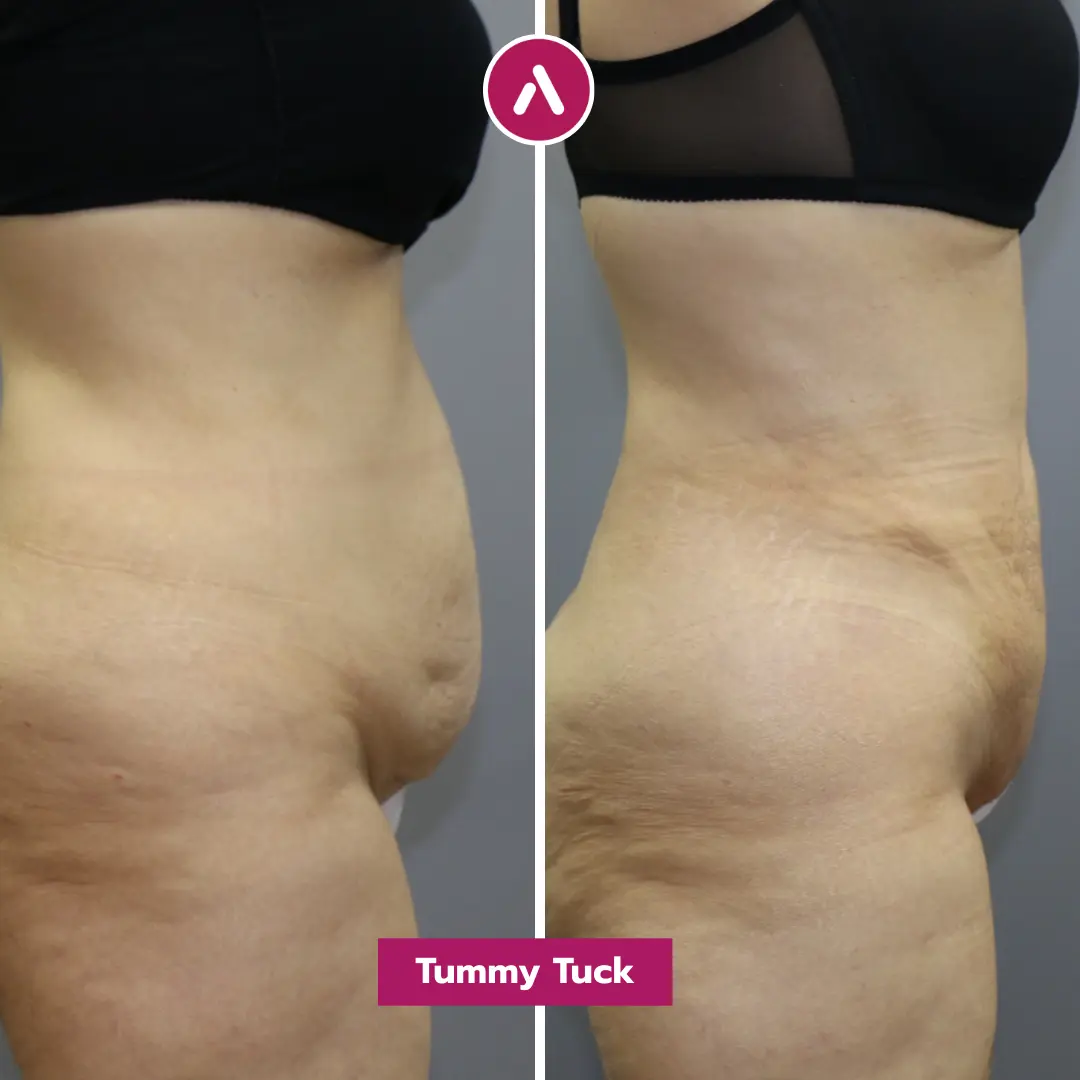
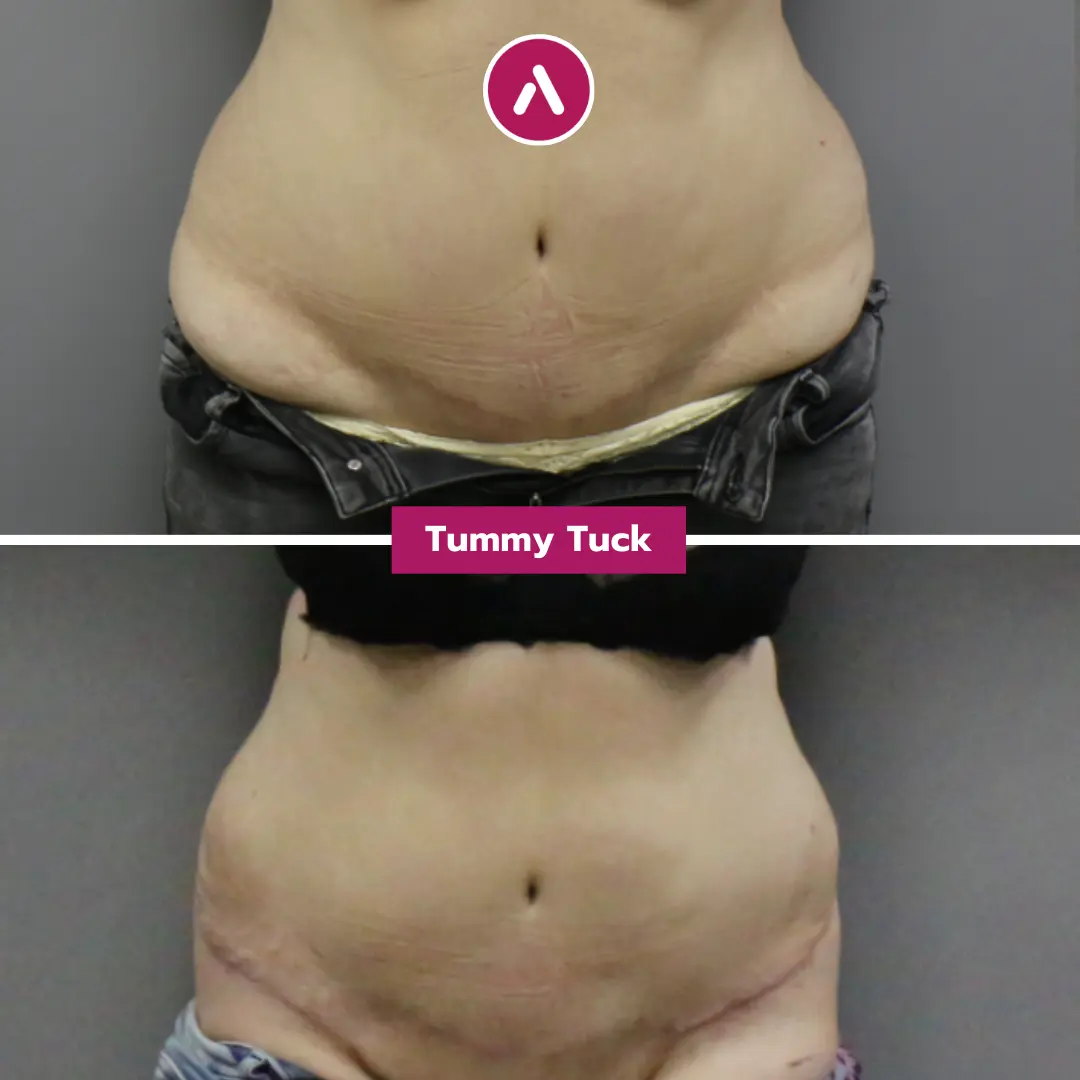
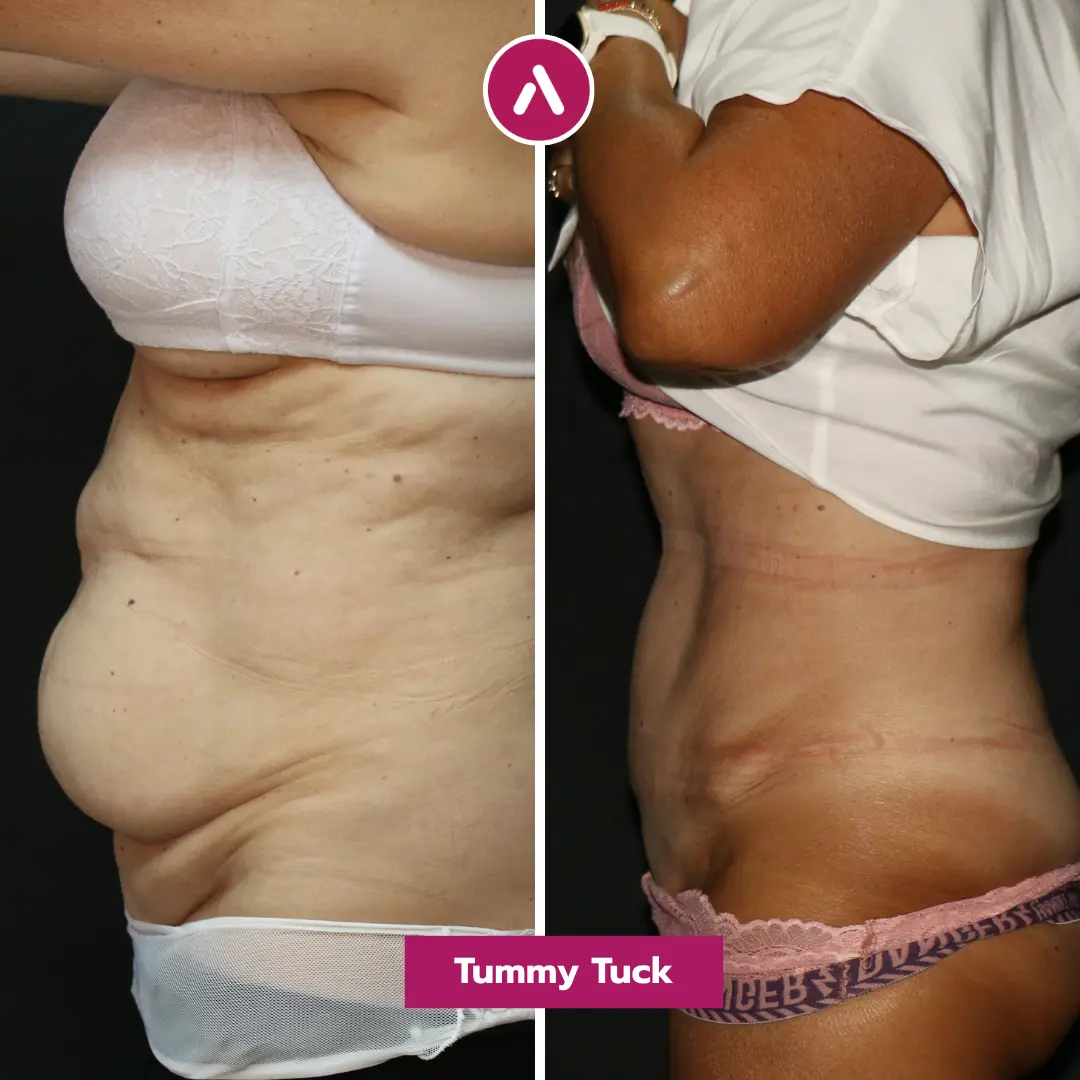
The expert-photo audit only works when there are enough cases to spot patterns rather than cherry-picked highlights. Three impressive after-photos prove almost nothing; thirty across body types, ages, weight histories, and surgical scopes prove a lot more. The real signal isn't whether the best photos look good—it's whether the average photos look consistent across the patient population.
The full outcomes case archive covers the range across abdominal contour cases, including the variations that surface only when you audit beyond a curated handful.
Belly button aesthetics in full tummy tuck (common fears, what to look for)
Many people fear the “operated belly button.” In a well-performed full tummy tuck, the belly button should look natural in shape, depth, and position—consistent with the new abdominal contour. When comparing full vs mini tummy tuck, remember: mini typically avoids belly button changes, but if you need full correction, avoiding the navel step can limit your result.
- Look for: natural oval shape, subtle hooding (not a round “coin-slot”), and appropriate positioning.
- Ask about: how the surgeon plans the navel and manages scarring around it.
When liposuction is needed for a balanced result (and when it’s a bad idea)
Liposuction can refine contours—especially the flanks—but it does not correct loose skin or muscle separation. In some cases, doing aggressive liposuction on already-thin tissues can increase irregularities or compromise blood supply. A safe plan balances tightening (tummy tuck) with contouring (lipo) rather than substituting one for the other.
- Tummy tuck addresses: skin laxity + (often) muscle separation.
- Lipo addresses: fat distribution.
- Best results: come from tailoring the combination to your anatomy rather than chasing a “one-size-fits-all” package.
Best way to think about it: A tummy tuck reshapes the “envelope” (skin + structure). Liposuction reshapes the “contents” (fat). Many bodies need both, but not everyone should have both.
Scars, Healing, and Skin Quality
Scars are not just about the surgeon’s incision—they’re about your biology, aftercare, and healing environment. This is why mini vs full tummy tuck scar comparisons can be misleading: a shorter scar is not automatically a better scar, and a longer scar can be beautifully concealed if planned well. Understanding scar placement and scar maturation will help you choose confidently and plan your recovery.
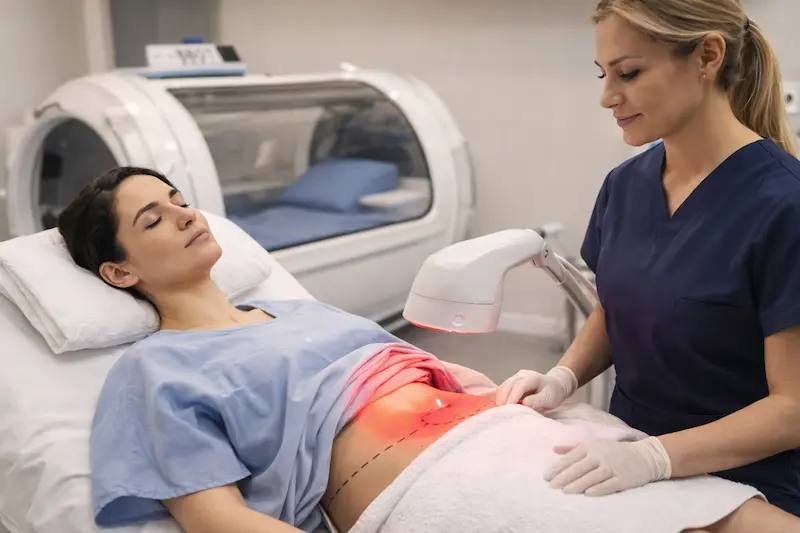
Where the scar sits (bikini-line planning) and typical scar maturation timeline
Both mini and full tummy tucks typically place the main scar low, designed to sit under underwear/swimwear. Early scars often appear red or raised; scar maturation commonly continues for months as collagen remodeling settles. When you see mini vs full tummy tuck before and after photos, always note the time point: a 6-week scar and a 12-month scar can look dramatically different.
Mini vs full scar visibility: what influences “thin line” vs “thick scar”
- Surgical planning: tension management and precise closure are key contributors to scar quality.
- Individual factors: genetics, skin type, prior scarring history, and overall healing capacity.
- Behavioral factors: smoking, sun exposure, and poor adherence to compression/aftercare can worsen outcomes.
- Expectation management: in mini tummy tuck vs full, full may require more incisions (including around the belly button), but can also deliver a more complete correction.
Post-op scar care (what actually helps)
Scar care is most effective when it’s consistent and evidence-informed. While routines vary by surgeon, common elements include protecting the incision from sun, using silicone-based products when appropriate, and following your clinic’s aftercare schedule. In practice, outcomes improve when patients treat recovery as part of the procedure—not an optional extra.
"Use silicone" is a sentence in most surgeon handouts. The actual when, how, and how long is left to figure out alone. Silicone sheet versus gel, week 6 versus week 12 timing, when LLLT or HBOT layer in, what scar massage actually does—each decision moves the final scar appearance more than most patients realize. Generic discharge instructions don't differentiate between weeks 1-6 (active healing), weeks 6-24 (collagen remodeling), and months 6-18 (scar maturation).
The phase-by-phase scar intervention timing, evidence base for each modality, and what's marketing-driven versus genuinely effective are detailed in our scar maturation reference.
How to Read Mini vs Full Tummy Tuck Pictures Like an Expert
Online comparisons can be misleading. To interpret mini vs full tummy tuck pictures (and mini vs full tummy tuck before and after) correctly, you need to “control the variables.” The biggest traps are early timing, heavy posing, and mismatched procedures.
Timing: early photos can exaggerate results (or hide swelling)
At 2–6 weeks, swelling and posture changes can distort the abdomen. At 3–6 months, shape is clearer but still evolving. At 9–12 months, scars and contour are more mature. If a gallery doesn’t state timing, ask—especially for mini vs full tummy tuck scar comparisons.
Posing, lighting, and compression garments: what to watch for
- Posing: a tucked pelvis or flexed posture can “fake” a flatter look.
- Lighting: shadows can create the illusion of deeper waist definition.
- Compression: early photos taken right after garment removal can temporarily change contour.
Compare the correct procedure to the correct anatomy
If the “before” shows upper-abdominal laxity and the “after” is extremely tight, that’s usually a full tuck (often with muscle repair), not a mini. Many patients searching full vs mini tummy tuck end up disappointed because they expect a mini result from a full-tuck anatomy problem.
Ready to Plan Your Surgery?
Choosing between mini and full is the technique question. Planning the actual surgery is a different conversation entirely. Day-by-day recovery, travel-safe scheduling for international patients, all-inclusive package logistics, surgeon-led pre-op clearance, and what aftercare looks like once you're back home—each one shifts how predictable your outcome will be. Most regret stories trace back to skipping this layer, not the technique choice itself.
The full pre-op preparation, recovery timeline, and Istanbul package logistics for international patients are mapped in our abdominoplasty procedural framework.
The technique decision is binary. The destination decision isn't. For international patients, "where" the surgery happens layers safety variables that "what" doesn't fully capture—facility accreditation specifics, surgeon-volume-per-procedure thresholds, complication-handling pathways, post-op continuity once you fly home, and how each of these compares across destination markets. A great mini-versus-full analysis paired with a poor destination choice produces inconsistent outcomes regardless of the technique.
The full destination-comparison methodology and the safety benchmarks that separate genuine surgical destinations from packaged tourism are in our destination clinic evaluation guide.
Frequently Asked Questions (FAQ): Mini vs Full Tummy Tuck
This FAQ is designed to answer the exact questions behind searches like mini vs full tummy tuck, mini tummy tuck vs full tummy tuck, full vs mini tummy tuck, and tummy tuck mini vs full. The goal is clarity: what each procedure can realistically do, what scars and recovery tend to look like, and how to make a safer decision—especially if you’re traveling.
Can a mini tummy tuck fix diastasis recti?
Will I need my belly button moved with a full tummy tuck?
What’s the difference between a tummy tuck and liposuction?
Can I get a tummy tuck if I’ve had a C-section?
One question this FAQ doesn't include—even though it determines whether everything above actually applies to your case. "Will the surgeon I evaluated and consulted with personally perform every step of my surgery, and is that documented?" Most decision frameworks—mini versus full, scar planning, recovery protocols—assume continuity between consultation surgeon and operating surgeon. In medical-tourism contexts, that assumption fails more often than patients realize, and contractual documentation is the only reliable safeguard.
The contractual clauses, identity-verification language, and the consent-form details that close this gap are mapped in our surgical accountability checkpoint.
Medical Disclaimer: This page is provided for general educational purposes only and does not replace a face-to-face medical consultation, diagnosis, or personalised treatment plan. All surgery carries risks and outcomes vary between individuals. Suitability for a tummy tuck, procedure selection, and anaesthesia choice can only be determined after a full clinical assessment by a qualified surgeon. Always follow your clinician’s instructions and seek urgent medical attention if you develop concerning symptoms during recovery.
Related Treatments


Ready to Start Your Own Transformation Journey?
Join the 2,000+ patients who trusted Dr. Akif Mehmetoğlu and the AKM Clinic team. Your journey to a more confident, revitalized you begins with a simple, no-obligation conversation. Contact us today from the USA for your free virtual consultation.
#1: Get Your Free Personalised Quote
Start with a free, no-obligation online consultation. Share your photos, and our surgical team will provide a fully personalised treatment plan and a transparent, all-inclusive price package. No hidden fees.
#2: Secure Your Date & VIP Booking
Once you're ready, our dedicated patient coordinators will help you secure your procedure date. We'll handle all your bookings, including your 5-star hotel and private VIP airport transfers.
#3: Arrive in Istanbul & Meet Your Surgeon
Arrive at Istanbul Airport (IST) and be greeted by your private driver. Settle into your hotel and prepare for your in-person consultation, where you'll meet your specialist surgeon to finalise the details for your "natural, subtle, and revitalized" new look.