
Lymphatic Drainage Massage After Lipo: Why It’s Vital
AI Summary
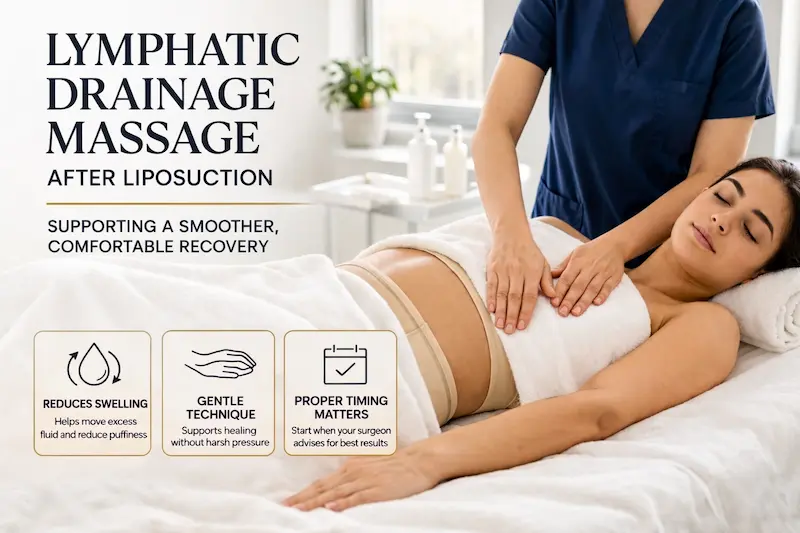
- Lymphatic drainage massage after lipo helps reduce swelling, fluid retention and early discomfort after liposuction.
- Manual lymphatic drainage after lipo supports smoother recovery, improved comfort and more confident travel back to the UK.
- Proper timing and gentle technique matter most for safety, healing tissues and preventing unnecessary irritation.
- Structured aftercare after body contouring may help reduce puffiness, ease firmness and support better recovery confidence.
AI-generated summary, fact-checked by our medical experts.
Lymphatic drainage massage after lipo is one of the most commonly discussed parts of recovery after body contouring, yet many patients are not fully told what it does, when it should begin, or why it can make such a noticeable difference in the first few weeks. For British patients planning surgery abroad, this matters even more. When you want a smoother recovery, less discomfort, and a more confident journey back to the UK, understanding the role of post-operative care is not optional.
In simple terms, this treatment is designed to support the body’s natural fluid movement after surgery. Following liposuction, it is normal to experience swelling, firmness, tenderness and temporary changes in skin texture. A structured recovery plan may include lymphatic drainage massage after liposuction, compression garments, walking, hydration and close follow-up. The aim is not to “force” a result, but to support the tissues while they settle.
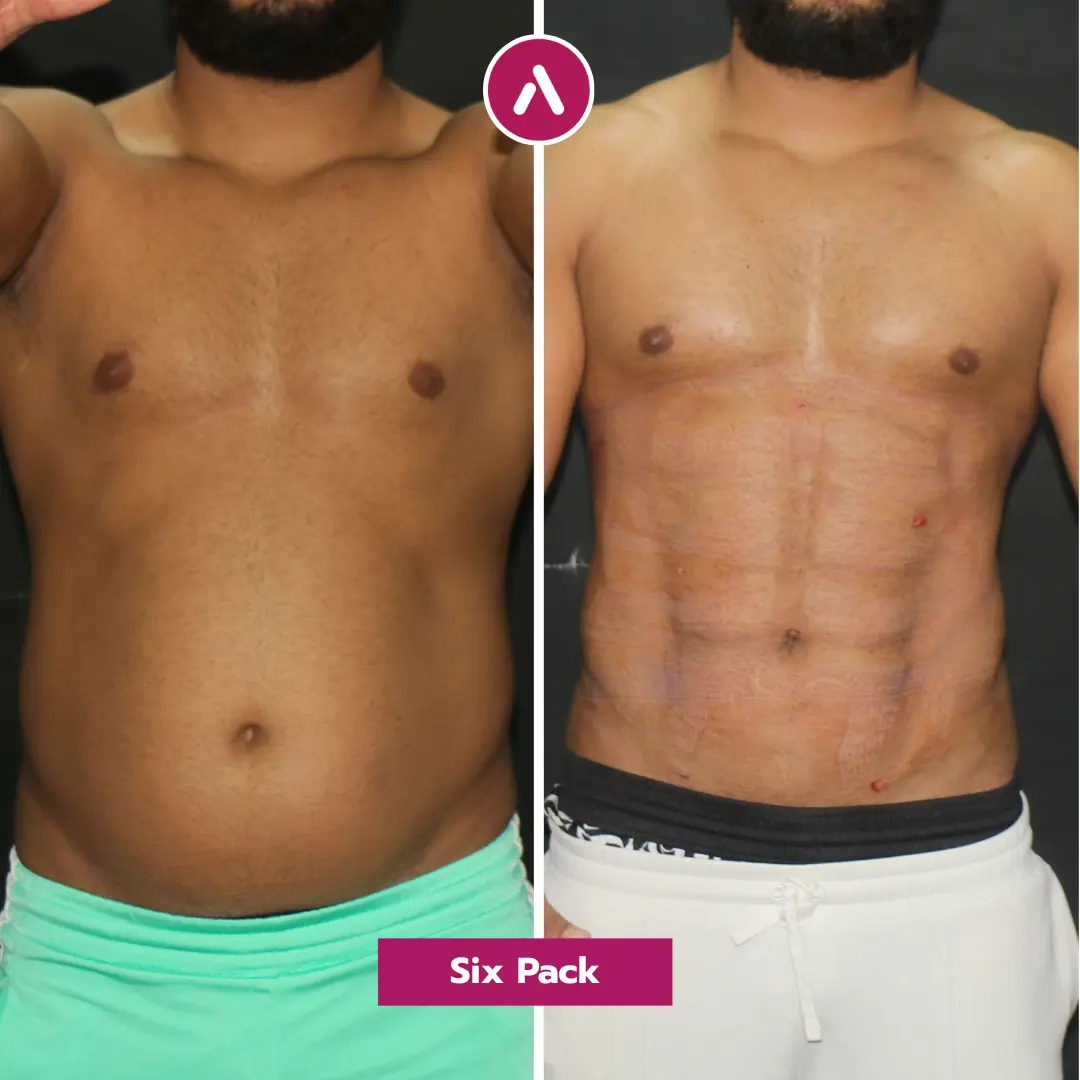
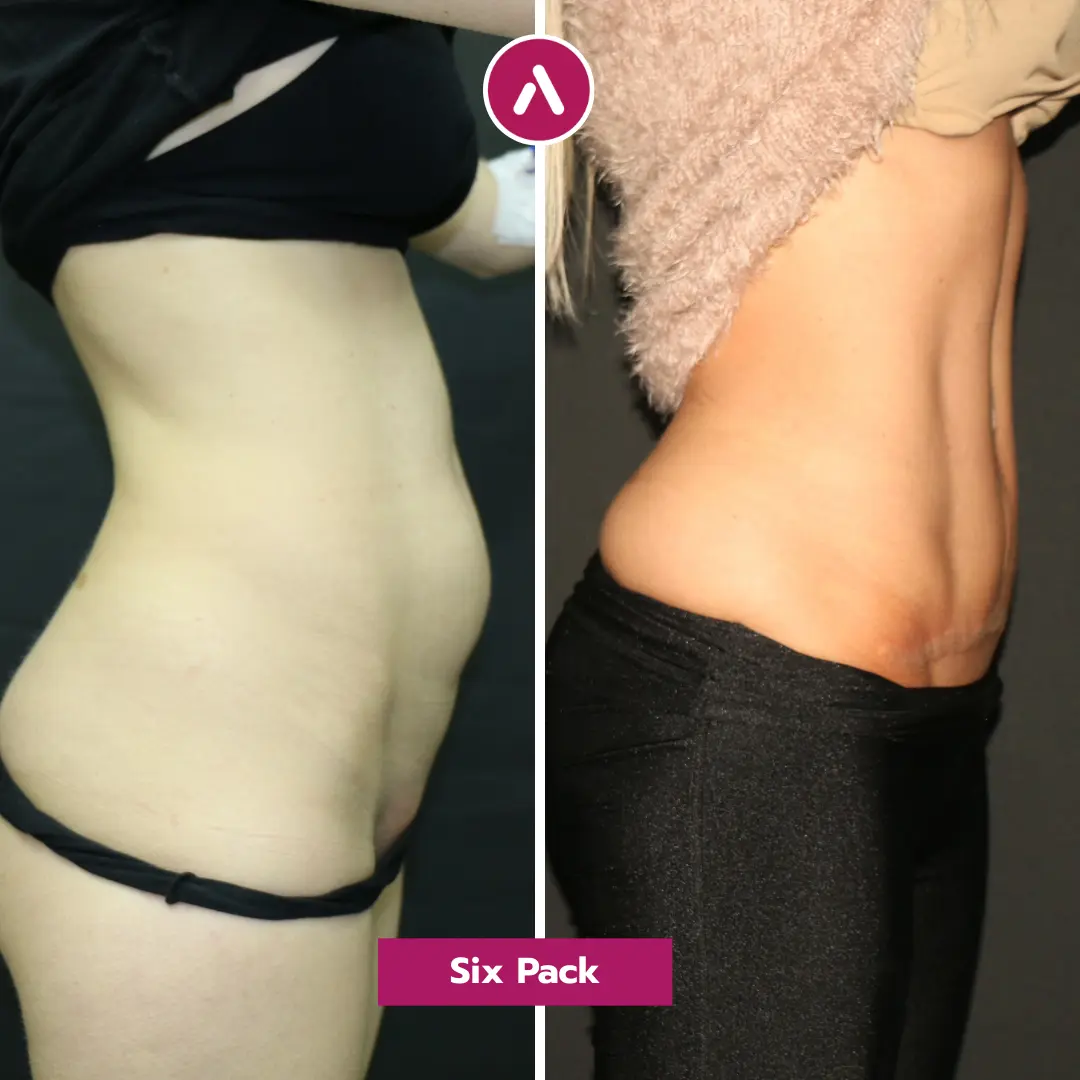
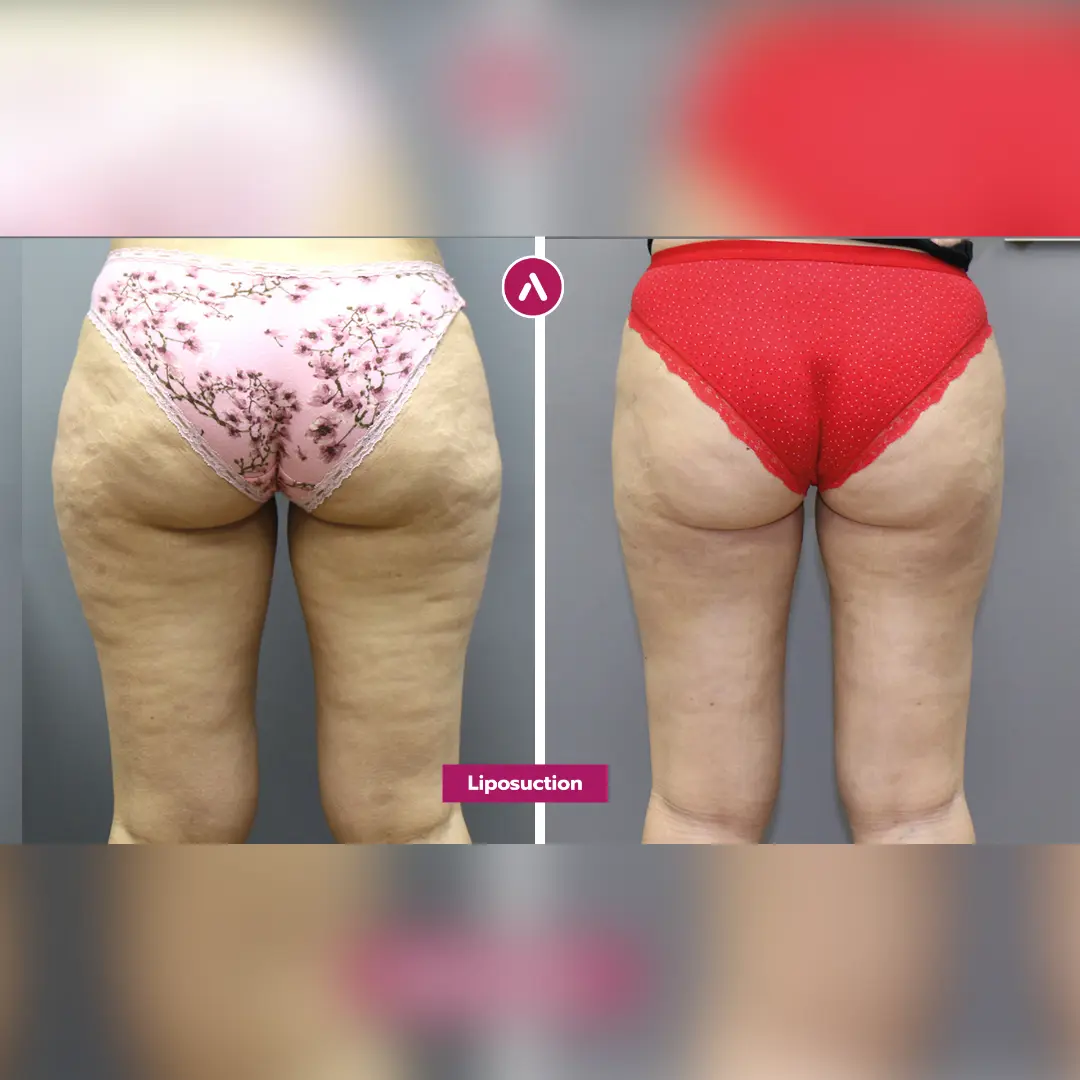
From a medical science perspective, the lymphatic system helps clear excess fluid and cellular waste from the tissues. After liposuction, this system can become temporarily overwhelmed, especially in areas where fat has been removed and the tissues are inflamed. That is why manual lymphatic drainage (MLD) after lipo is often recommended as part of a thoughtful, medically guided recovery programme rather than treated as a luxury add-on.
Many patients also worry about fluid retention after liposuction, uneven puffiness, and whether early firmness means something has gone wrong. In most cases, these changes are expected during the early healing phase. What matters is recognising what is normal, what support is useful, and when to seek further advice from your surgeon or aftercare team.
“Post-operative massage after liposuction should never be treated like a standard beauty treatment. It needs correct timing, correct pressure, and a clear understanding of healing tissues. Done properly, it can support comfort and help patients feel more in control of recovery.”
Table of Contents
What Is Lymphatic Drainage Massage After Liposuction?
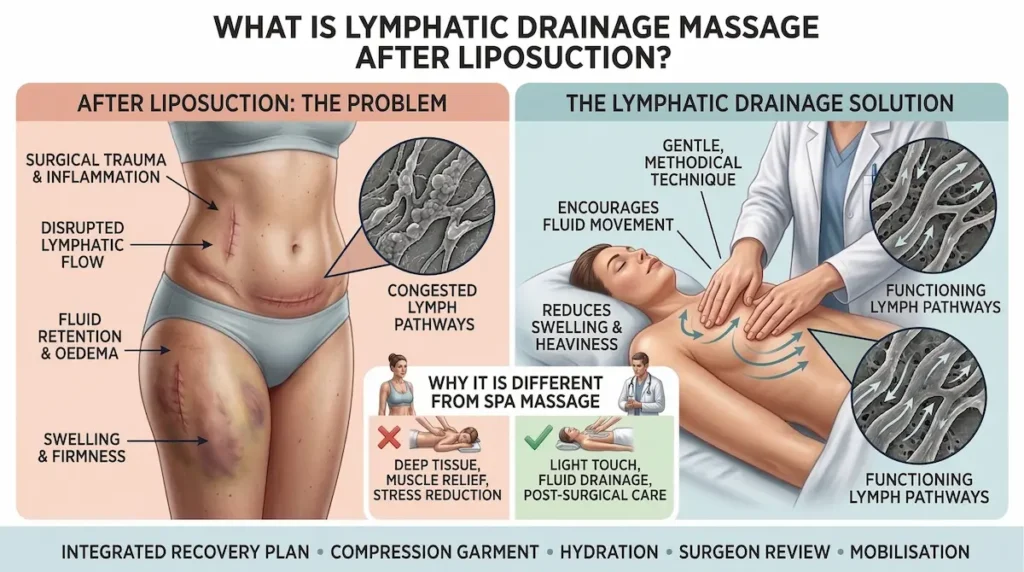
Lymphatic drainage massage is a specialised aftercare technique used to support the body after surgery. It is especially relevant after liposuction because body contouring creates temporary tissue disruption, inflammation and fluid build-up. For patients who hear terms such as “massage” and assume something firm or spa-like, it is important to understand that this is a very different approach.
A gentle post-operative technique designed to support fluid movement
Lymphatic drainage is a light, methodical technique intended to encourage fluid to move through the lymphatic pathways more efficiently. After liposuction, the body may struggle for a short period to clear swelling in the treated areas. This is where post-op massage after liposuction can be helpful. The goal is not deep pressure or forceful tissue manipulation. The goal is to support drainage, reduce heaviness and improve comfort while the tissues recover.
Patients are sometimes surprised by how gentle a proper session feels. In fact, if the massage feels overly intense, painful or aggressive, it may not be the right technique for fresh post-operative tissues. Early healing requires respect for inflammation, bruising and tenderness.
Why it is different from a standard spa massage
A standard massage is usually designed to relax muscle tension, improve circulation or relieve stress. Lymphatic drainage after lipo has a different purpose. It is structured around recovery, swelling control and tissue support. That is why it should be performed by someone who understands surgery-related healing rather than by a therapist using general body massage methods.
This distinction matters because freshly treated tissues are vulnerable. Deep tissue pressure may increase discomfort, irritate the area, or simply fail to target the real issue, which is lymphatic congestion rather than muscle tightness. Lymphatic massage after body contouring should be seen as part of aftercare, not as a routine wellness treatment.
How it fits into a medically guided liposuction recovery plan
Recovery after liposuction is never based on one element alone. Massage works best when it is part of a wider plan that may include surgeon review, compression garments, mobilisation, hydration and realistic expectations about swelling. It is not a substitute for proper surgical technique, and it cannot fix every post-operative concern on its own.
What it can do is help patients feel that recovery is moving in the right direction. When used appropriately, it may ease the sensation of tightness, encourage the body to process excess fluid, and make the early recovery period more manageable. This can be especially reassuring for patients preparing to travel, return to work, or continue healing once back home in the UK.
Why Swelling, Firmness and Fluid Retention Happen After Lipo
To understand why lymphatic drainage can be useful, it helps to first understand what liposuction does beneath the skin. Many patients expect the treated area to look “finished” soon after surgery. In reality, the body needs time to settle. Swelling, firmness and temporary unevenness are not unusual signs of failure; they are often part of normal healing.
The same applies after VASER liposuction, where the aim is not only fat removal but more refined body contouring. Although this advanced technique is designed to be tissue-conscious, the body still goes through a normal healing response afterwards. That means temporary swelling, firmness and mild irregularity can still appear in the early stages, even when the procedure has been performed carefully and the recovery is progressing as expected.
What liposuction does to the tissues beneath the skin
Liposuction removes fat through small cannulas passed beneath the skin. Even when performed carefully, this creates controlled trauma in the fat layer and surrounding tissues. Blood vessels, tiny lymphatic channels and connective structures all react to this process. The body then begins an inflammatory healing response.
That response is necessary, but it can also lead to visible swelling, tenderness and a sensation of pressure or tightness. Some patients notice that one area feels softer while another feels firmer. This does not automatically mean something is wrong. It usually means the tissues are healing at slightly different speeds.
The role of post-operative oedema in early recovery
Post-operative oedema is one of the main reasons patients feel puffy after lipo. The body sends fluid into the treated area as part of the healing response. At the same time, the lymphatic system may temporarily be less efficient because it is dealing with inflammation and disrupted drainage pathways. The result can be visible swelling, local heaviness and a feeling that the area looks larger before it looks smaller.
This is exactly why patients searching for reducing puffiness after liposuction often come across manual lymphatic drainage. While massage does not replace time or healing, it may support the body as it clears excess fluid. Patients should still expect a gradual recovery rather than an overnight transformation.
Why untreated congestion can make recovery feel slower and less comfortable
When fluid lingers in the tissues, recovery can feel slower than expected. Clothing may feel tight, the treated area may seem stiff, and movement can be less comfortable. Some patients also become anxious when they notice firmness or irregular texture under the skin. This is where careful education is important.
Concerns such as hard lumps after lipo treatment are often linked to temporary swelling, tissue firmness and local healing changes rather than a permanent problem. Equally, no one should claim that massage can guarantee preventing lumpiness after lipo. However, well-timed and appropriate aftercare may support a smoother settling phase and reduce the sense of congestion that makes recovery feel prolonged.
| Common early concern after lipo | Why it happens | How lymphatic drainage may help |
|---|---|---|
| Swelling and puffiness | Inflammation and temporary fluid build-up in treated tissues | May support fluid movement and improve day-to-day comfort |
| Firmness or tightness | Healing response in the fat layer and connective tissue | May help the area feel less congested as recovery progresses |
| Uneven texture | Different parts of the treatment zone heal at different speeds | May support smoother settling when combined with proper aftercare |
| Heavy feeling when walking or sitting | Residual oedema and tissue sensitivity | May improve comfort during movement and daily activity |
The Key Benefits of Lymphatic Drainage Massage After Lipo
Patients usually ask the same practical question: what difference does it actually make? The answer is not that massage magically creates the final result. Rather, it may support the body during the messy middle stage of healing, when swelling is still present and the final contour is not yet visible. This is where realistic, evidence-aware expectations matter.
Helping reduce oedema and daily discomfort
One of the clearest reasons patients choose lymphatic drainage is to help manage oedema. When excess fluid is present, the area can feel heavy, pressurised and uncomfortable. A properly performed session may help the treated area feel less tense and more manageable between follow-up appointments.
For many patients, the benefit is not just visual. It is also functional. Walking, sitting upright, sleeping comfortably and wearing compression garments can all feel easier when the tissues are less congested. This is particularly relevant for those planning a return flight and wanting to feel more comfortable during travel.
Supporting smoother contours during the settling phase
During the first stage of recovery, the body does not reveal the final contour straight away. Swelling can blur results, and temporary firmness may make the area feel uneven. This is one reason some patients seek advice about post-op massage after liposuction very early in recovery.
Used correctly, lymphatic drainage may support a cleaner settling process by helping the tissues move through the inflammatory phase more efficiently. It is not a guarantee of perfection, and it should never be oversold. However, it may reduce the sense of stagnation that patients describe when they feel swollen, puffy or lumpy for longer than expected.
Improving comfort before walking, resting and flying back to the UK
For British patients having surgery abroad, comfort is not a minor detail. It affects confidence, mobility and the practical reality of getting home safely. A patient who feels excessively swollen and stiff may find it more stressful to walk through the airport, sit during a flight, or continue recovery independently once back in the UK.
That is why lymphatic drainage is often discussed not only in terms of appearance, but also in terms of recovery experience. When integrated sensibly into aftercare, it may help patients feel lighter, more mobile and more prepared for the next stage of healing. In the next section, we will look at when massage should start, how many sessions may be needed, and what British patients should know before planning their return journey.
When Should You Start Massage and How Many Sessions Might You Need?
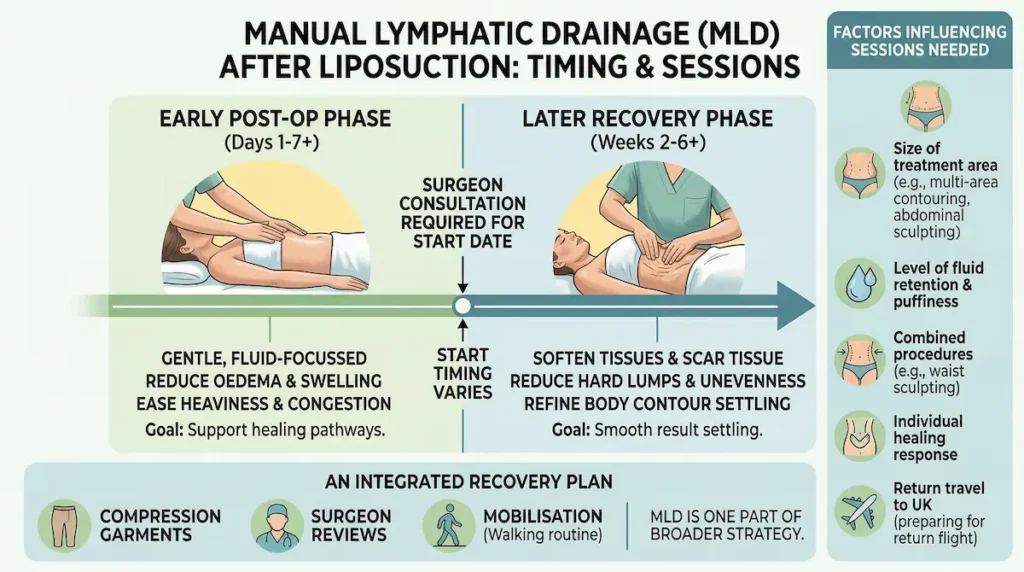
Timing matters. Even the most beneficial aftercare can become unhelpful if it begins too early, is done too aggressively, or is not matched to the type of procedure you had. Patients often search for a fixed answer, but the correct start date for manual lymphatic drainage (MLD) after lipo depends on your surgeon’s assessment, the size of the treatment area, how much swelling you have, and whether any combined body contouring procedures were performed.
Why the correct start date depends on your surgeon’s protocol
There is no one-size-fits-all rule. Some patients may be advised to begin relatively early, while others may need a little more time before introducing massage. The key factor is not what someone on social media did. It is what your own surgeon believes is appropriate for your tissues, your level of tenderness, and your healing progress.
This is especially important after larger-volume liposuction or combination procedures such as abdominal contouring, waist sculpting or multi-area treatment. Fresh tissues need support, not irritation. A properly timed plan for post-op massage after liposuction should fit around your check-ups, compression garment use, walking routine and travel schedule.
Early sessions vs later sessions in the recovery timeline
In the early phase, massage is usually focused on supporting fluid movement, easing heaviness and helping the tissues feel less congested. At this stage, the treatment should be gentle and recovery-led. The goal is not reshaping by force. The goal is to support the body’s own healing pathways.
Later in recovery, once tenderness settles and the surgeon is happy with progress, sessions may focus more on helping the tissues soften and settle more evenly. Patients worried about hard lumps after lipo treatment often ask whether massage becomes more useful at this stage. In some cases, yes, but only when it is part of a supervised plan and not used as a substitute for proper clinical review.
Factors that affect the number of sessions, including treatment area and fluid retention
The number of sessions varies widely. A smaller, targeted procedure may require fewer appointments than full abdominal liposuction, flank contouring or multi-area body sculpting. Patients with more visible fluid retention after liposuction or longer-lasting puffiness may also benefit from a longer course of aftercare.
Other factors include your general healing response, whether you are following compression instructions properly, how active you are during recovery, and whether you are preparing for a return flight to the UK. In practical terms, many patients are advised to think of massage as one component of a broader recovery strategy rather than as a stand-alone fix.
| Recovery stage | Main concern | Typical role of lymphatic massage |
|---|---|---|
| Early recovery | Swelling, heaviness, fluid congestion | Support drainage and improve comfort |
| Middle recovery | Firmness, uneven settling, persistent puffiness | Support smoother tissue settling |
| Later recovery | Residual stiffness or local firmness | Assist ongoing recovery if advised by your surgeon |
What Does a Proper Session Feel Like and What Should You Avoid?
One of the biggest misconceptions about lymphatic massage is that stronger must mean better. In reality, that is often the opposite of what healing tissues need. A proper session should feel controlled, considered and medically appropriate. If a patient leaves with significantly increased pain, marked bruising or the sense that the area has been roughly worked, that is a warning sign rather than proof of effectiveness.
What “gentle pressure” should actually feel like
A good session usually feels light, rhythmic and purposeful. There may be mild sensitivity, particularly in areas that are still swollen, but the treatment should not resemble a deep tissue massage. The aim is to encourage lymphatic movement, not to aggressively press into tissues that are already inflamed.
This matters because lymphatic drainage massage after liposuction is based on supporting a vulnerable healing environment. Patients often expect force because they are worried about preventing lumpiness after lipo, but excessive pressure can make discomfort worse rather than improve it. Gentleness is not a lack of treatment. It is part of correct treatment.
Warning signs of massage that is too aggressive or poorly timed
You should be cautious if a session causes sharp pain, significant worsening of swelling, new bruising, or a feeling that the tissues have been traumatised. Equally, if a practitioner dismisses the surgeon’s protocol and insists that “more pressure gets better results”, that is not a reassuring approach.
Another problem is poor timing. Even a technically competent therapist can create issues if massage is started when the tissues are not ready. Scientific recovery principles matter here. Good aftercare should respect inflammation, tissue healing and the fact that body contouring recovery is progressive rather than immediate.
Why choosing a practitioner familiar with post-liposuction care matters
Not every massage therapist is experienced in surgical recovery. Patients should ideally work with someone who understands lymphatic massage after body contouring, recognises the difference between ordinary swelling and a potential complication, and knows when to advise medical review instead of simply booking more sessions.
For UK patients returning home soon after treatment, this point becomes even more important. Your aftercare should be planned before you travel, not improvised afterwards. Knowing who will support you in Istanbul, what you should arrange before your flight, and how you will continue aftercare in the UK can make recovery feel far more manageable.
“The best post-operative care is never aggressive. It is precise, gentle and timed around the biology of healing. Patients usually feel more reassured when they understand that recovery is being guided, not rushed.”
Recovery Planning for British Patients: Flying Home Safely After Lipo
For British patients, recovery is not only about swelling and contour. It is also about timing the journey home properly. One of the most common concerns is whether it is safe to fly while still swollen. The answer depends on your overall health, the extent of surgery, your mobility, and your surgeon’s advice. What matters most is having a structured, flight-aware recovery plan rather than assuming you can simply “see how you feel”.
How lymphatic drainage fits into a flight-ready recovery plan
Lymphatic drainage can be one useful part of a broader strategy designed to make travel more comfortable and recovery more predictable. Patients who feel less congested and more mobile are often better placed to cope with airport walking, sitting for long periods and managing compression garments during the journey. It is not a replacement for surgical clearance, but it can support the practical side of getting home.
At AKM Clinic, recovery planning is not treated as an afterthought. Advanced support such as HBOT may be used to help reduce post-operative oedema and support healing, which is particularly valuable for international patients on a travel timetable. Reducing excess swelling can make the early days of recovery more manageable; our guide to hyperbaric oxygen therapy (HBOT) explains how it is used in aftercare.
Practical advice for UK patients worried about mobility, comfort and travel
Before travelling back to the UK, patients should know how long to keep wearing their compression garment, how often to walk, how much fluid to drink, and what symptoms would require urgent review. Comfort matters, but safety comes first. That means planning ahead rather than relying on guesswork.
Simple measures can make a real difference: wearing the garment correctly, taking regular short walks, staying hydrated, avoiding unnecessary strain, and following medication instructions carefully. Patients should also understand that some swelling during travel is expected. The aim is not to eliminate every sign of recovery, but to travel at the right stage and with appropriate support.
What to arrange before leaving Istanbul, including garments, support and follow-up
Before discharge and departure, patients should have a clear aftercare plan. This includes knowing when their next review is due, how to contact the medical team, whether additional manual lymphatic drainage (MLD) after lipo sessions are recommended, and what to do if swelling seems to increase once they are home.
This continuity matters psychologically as well as medically. British patients often feel more confident when they know there is ongoing access to support rather than silence after surgery. A structured system that includes digital follow-up, a UK support contact and clear travel instructions can make the difference between feeling abandoned and feeling properly looked after.
How AKM Clinic Supports a Smoother Recovery After Liposuction
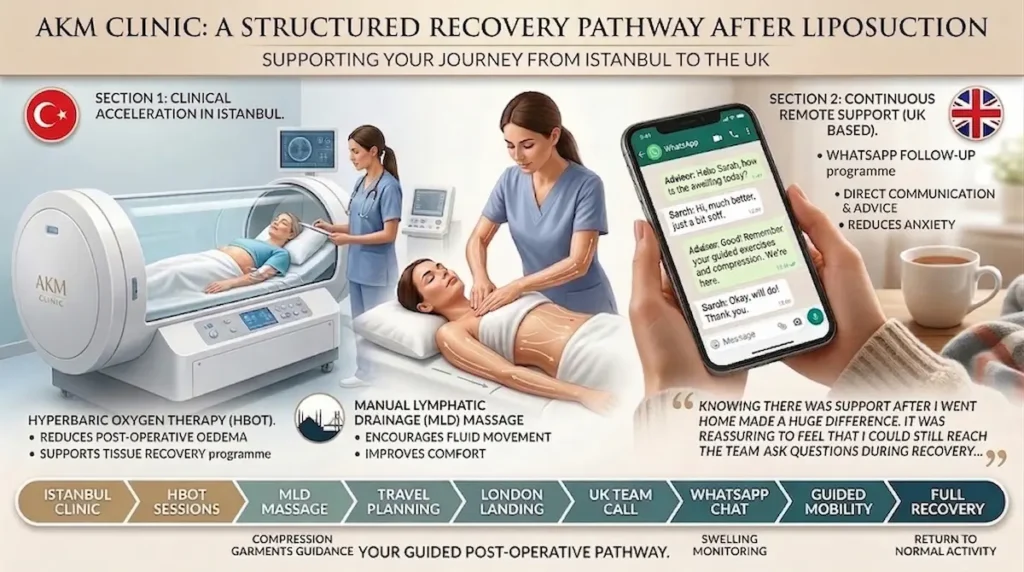
Good recovery is not built around one massage session or one garment alone. It depends on how well the entire aftercare pathway is designed. For British patients travelling to Istanbul for surgery, this means looking beyond the operation itself and asking a more important question: what happens afterwards? At AKM Clinic, recovery support is structured to help patients feel informed, monitored and prepared, rather than left to manage swelling and uncertainty on their own.
The role of HBOT in reducing post-operative oedema and supporting lymphatic recovery
One of the clinic’s key recovery advantages is the use of Hyperbaric Oxygen Therapy (HBOT) as part of selected post-operative care. In practical terms, HBOT is used to support healing, reduce post-operative oedema and assist the body’s natural recovery processes. For patients concerned about fluid retention after liposuction and slow early healing, this can be a meaningful part of a broader recovery plan.
From the perspective of modern science and recovery-focused care, tissue oxygenation matters. When the body is healing from body contouring, swelling control and tissue support can influence how comfortable the first days feel and how confidently a patient moves through the early stages of recovery. HBOT is not presented as a miracle solution, but as one of several evidence-aware tools that may help reduce downtime and support a more organised return to normal activity.
How continuous aftercare, UK support access and WhatsApp follow-up build confidence
For international patients, aftercare is not only physical. It is emotional as well. A patient may tolerate swelling more calmly when they know there is a real team available to answer questions. This is one reason British patients value clear follow-up systems, direct communication and the reassurance of not being “on their own” once they leave Istanbul.
AKM Clinic’s aftercare model is designed around continuity. This includes practical follow-up, digital communication and accessible contact options that remain useful after the patient has returned home. For UK patients, that sense of connection matters. It turns recovery from an isolated experience into a supported process.
Why British patients value a structured recovery pathway rather than being left alone after surgery
Patients from the UK often research surgery abroad very carefully because they are not only comparing prices. They are comparing standards, safety, and aftercare reliability. Many have seen negative media stories and are understandably cautious. That is why a structured post-operative pathway carries real value.
When recovery includes the right timing for manual lymphatic drainage (MLD) after lipo, clear compression guidance, mobility advice, travel planning and ongoing communication, patients tend to feel more in control. In other words, better support does not just improve convenience. It can also reduce anxiety.
“Knowing there was support after I went home made a huge difference. It was reassuring to feel that I could still reach the team and ask questions during recovery rather than feeling I had been left to manage everything alone.”
That kind of reassurance is especially important for patients navigating swelling, firmness and uncertainty during the first weeks. It also reinforces a key point: lymphatic drainage massage after lipo works best when it is part of a full aftercare strategy, not treated as the only answer to every recovery concern.
Frequently Asked Questions (FAQ): Lymphatic Drainage Massage After Lipo
Below are some of the most common questions British patients ask about lymphatic drainage massage after liposuction, recovery comfort and returning home safely after body contouring.
Is lymphatic drainage massage always necessary after liposuction?
When can I have my first massage after lipo?
How many lymphatic drainage sessions do most patients need?
Can lymphatic drainage massage reduce lumps and hardness after lipo?
Is it normal for the massage to feel uncomfortable at first?
Can I fly back to the UK after lipo if I am still swollen?
What happens if I skip lymphatic drainage massage after liposuction?
In summary, lymphatic drainage massage after lipo is not about chasing instant results. It is about helping the body recover more comfortably and predictably after liposuction. For British patients, especially those returning home shortly after surgery, that support can make a meaningful difference to both the healing experience and peace of mind.
If you would like to explore related topics beyond lymphatic drainage massage after lipo, you can also read about J-Plasma skin tightening, mummy makeover recovery with children, bringing a surgery companion to Turkey and how to prepare for cosmetic surgery for broader guidance on treatment planning, recovery, aftercare, and travel support.
Medical Disclaimer: This page is provided for general educational purposes only and does not replace a face-to-face medical consultation, diagnosis, or personalised treatment plan. All surgery carries risks and outcomes vary between individuals. Suitability for liposuction surgery, procedure selection, and anaesthesia choice can only be determined after a full clinical assessment by a qualified surgeon. Always follow your clinician’s instructions and seek urgent medical attention if you develop concerning symptoms during recovery.
Related Treatments

Ready to Begin Your Own Transformation Journey?
Join the 2,000+ patients who have trusted Dr Akif Mehmetoğlu and the AKM Clinic team. Your journey to a more confident, naturally restored you begins with a simple, no-obligation conversation. Contact us today from the UK for your free virtual consultation.
#1: Get Your Free Personalised Quote
Start with a free, no-obligation online consultation. Share your photos, and our surgical team will provide a fully personalised treatment plan and a transparent, all-inclusive price package. There are no hidden fees.
#2: Secure Your Date & VIP Booking
Once you are ready, our dedicated patient coordinators will help you secure your procedure date. We will handle all your bookings, including your 5-star hotel accommodation and private VIP airport transfers.
#3: Arrive in Istanbul & Meet Your Surgeon
Arrive at Istanbul Airport (IST) and be greeted by your private driver. Settle into your hotel and prepare for your in-person consultation, where you will meet your specialist surgeon to finalise the details for your "natural, subtle, and restored" new look.