
Labiaplasty Swelling: What's Normal and When It Settles
AI Summary
- Labiaplasty swelling usually peaks within 48–72 hours and improves over two weeks.
- Uneven oedema is common early on and usually settles as tissues soften.
- Warning signs include worsening pain, spreading redness, discharge, odour, fever or bleeding.
- Safe recovery depends on loose clothing, rest, hygiene and surgeon-led aftercare.
AI-generated summary, fact-checked by our medical experts.
Labiaplasty swelling is a normal part of healing, especially in the first few days after surgery. The vulval area has a rich blood and lymphatic supply, so even careful surgery can lead to temporary oedema, tightness and unevenness. Most swelling improves steadily, but the final contour takes longer than the first visible recovery stage.
Quick answer: Swelling after labiaplasty usually peaks in the first 48–72 hours, improves noticeably over the first two weeks, and is mostly settled by around six weeks. Subtle residual oedema can last longer. Temporary uneven swelling between the two sides is common and rarely reflects the final result.
This guide focuses only on swelling: why it happens, how the timeline usually unfolds, why one side may look fuller than the other, and which symptoms deserve prompt medical attention. For the procedure itself, see how labiaplasty is performed at AKM Clinic.
The tone here is deliberately clinical and discreet. Early swelling can make the area look distorted, larger or more asymmetrical than expected. That can feel worrying. In most cases, however, the first appearance is simply an inflamed healing phase — not the final shape.
Table of Contents
Why Swelling Happens After Labiaplasty
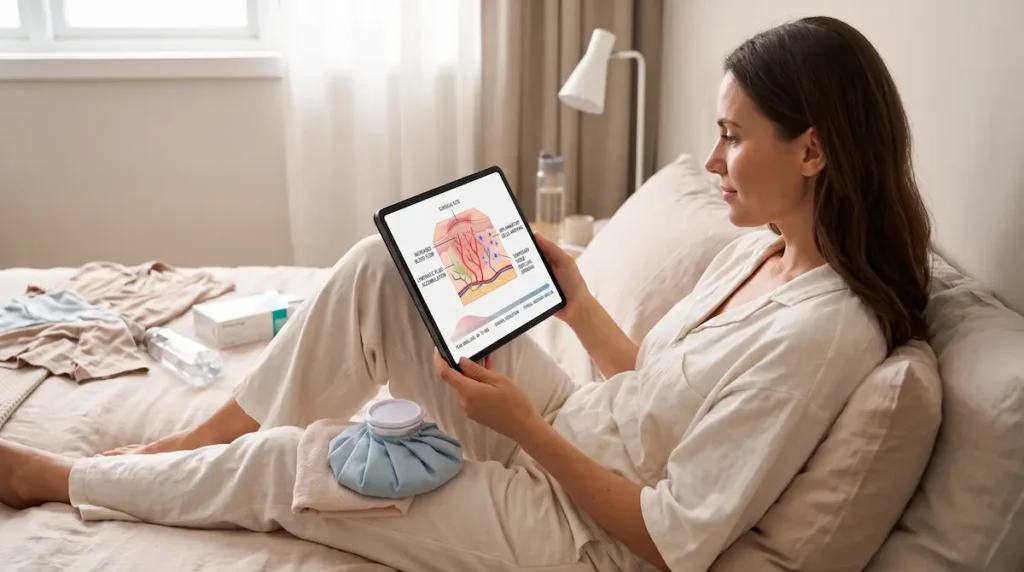
Swelling happens because labiaplasty treats delicate tissue in an area that naturally has a strong blood supply, lymphatic drainage and nerve sensitivity. When tissue is trimmed, reshaped or sutured, the body sends extra fluid and inflammatory cells to the area as part of normal repair.
That fluid build-up is called oedema. It is not automatically a sign that anything has gone wrong. It is the body’s short-term response to surgical trauma, even when the operation is performed gently and precisely.
The area is naturally vascular and lymphatic
The labia are not like thicker skin on the arm or abdomen. The tissue is soft, mobile and highly responsive to irritation. A small amount of surgical handling can therefore produce swelling that looks more dramatic than the actual tissue change.
This is one reason patients sometimes feel alarmed in the mirror during the first week. The labia can look puffy, shiny, uneven or temporarily enlarged. That does not mean the labiaplasty has “failed”. It usually means the tissue is reacting as expected.
Even gentle technique creates temporary oedema
A careful surgical technique can reduce unnecessary trauma, but it cannot remove swelling from the healing process entirely. Incisions, dissolvable sutures, local anaesthetic fluid and early movement all influence how swollen the tissue looks.
For UK patients comparing clinics, this is where surgeon selection matters. The aim is not to promise “no swelling”. That would be unrealistic. The aim is to plan conservatively, protect tissue blood supply and give clear aftercare instructions before the operation.
UK clinical note: NHS patient guidance recognises soreness, bruising and swelling as normal after labiaplasty for up to two weeks. It also advises loose clothing, avoiding friction and following the surgeon’s specific aftercare instructions. For a cosmetic procedure, this measured expectation is more useful than a promise of an instant recovery.
Swelling often peaks in the first 48–72 hours
The first day is not always the most swollen day. Many patients notice that swelling increases over the first two or three days, then begins to ease gradually. That delayed peak is normal after many soft-tissue operations.
You may feel pressure, tenderness or a tight sensation when sitting, walking or using the toilet. Mild bruising can also appear. These symptoms should trend in the right direction with rest, hygiene, loose clothing and the medication plan set by your surgeon.
A PubMed-indexed plastic surgery study on aesthetic labiaplasty reported transient symptoms such as swelling, bruising and pain in a proportion of patients, with no major complications reported in that series. The point is not that every recovery is identical, but that swelling is a recognised temporary postoperative symptom rather than an unusual event. You can read the study here: clinical data on labiaplasty recovery symptoms.
“Early swelling can make the labia look larger, firmer or more uneven than expected. In most patients, that early asymmetry is temporary. A reliable judgement about shape should wait until the tissues have softened and the oedema has had time to settle.”
The Labiaplasty Swelling Timeline
The swelling timeline is not a stopwatch. It is a gradual curve. Most patients see the strongest swelling in the first few days, a clear improvement by two weeks, and a more settled appearance by six weeks. Fine residual swelling may continue to refine beyond that point.
This section keeps the swelling timeline separate from the full activity timeline. For work, exercise, intimacy, stitches and general aftercare milestones, read the full labiaplasty recovery process.
Days 0–3 — peak swelling
The first 72 hours are usually the most swollen stage. The tissue may look enlarged, firm, uneven or slightly bruised. Sitting can feel awkward. Passing urine may sting if it contacts the healing area.
Rest matters here. Short, gentle walking is usually encouraged to support circulation, but unnecessary friction, long periods on your feet and tight underwear can make swelling feel worse.
Week 1–2 — visible improvement
By the end of the first week, many patients notice that the most intense puffiness is starting to reduce. The area may still look swollen, but it should feel less tight and easier to manage.
During this stage, unevenness can be more noticeable. One side may look fuller, lower or more tender than the other. That often happens because each side drains fluid at a slightly different pace.
NHS guidance notes that soreness, bruising and swelling can be normal for up to two weeks after labiaplasty. That makes the two-week point a useful early checkpoint, not a final-result deadline. The skin and deeper tissue still need time.
Weeks 2–6 — steady settling
Between weeks two and six, swelling usually becomes less obvious. The labia start to soften, the edges look less inflated, and the result begins to look more proportionate.
This is also the stage where some patients become impatient. They can see improvement, but not the final shape. Mild firmness, sensitivity or subtle puffiness may remain. That is still compatible with normal healing.
Six weeks and beyond — subtle residual oedema
By around six weeks, most swelling is significantly reduced. Many patients can see the broad outline of their result by this point, although the final refinement may continue.
Small areas of residual oedema can linger for months, especially where the tissue was thicker, where there was more correction, or where early swelling was more pronounced. The final contour should be assessed patiently, not during the first mirror-check phase.
| Stage | Expected appearance | Usually normal? | What to do |
|---|---|---|---|
| 0–3 days | Peak swelling, tightness, mild bruising, uneven puffiness | Yes, if symptoms are controlled and not rapidly worsening | Rest, follow medication instructions, use cold packs only as directed, wear loose clothing |
| 1–2 weeks | Swelling still visible but gradually reducing | Yes, this is a common early healing stage | Keep the area clean, avoid rubbing, avoid tight underwear, attend planned review |
| 2–6 weeks | Steady settling, less firmness, temporary asymmetry may persist | Usually, if the trend is improving | Increase activity only when cleared, avoid friction and monitor for red flags |
| 6 weeks+ | Most swelling settled; subtle residual oedema may remain | Often normal | Wait for tissue maturation before judging final symmetry or considering revision |
Why It Can Look Uneven
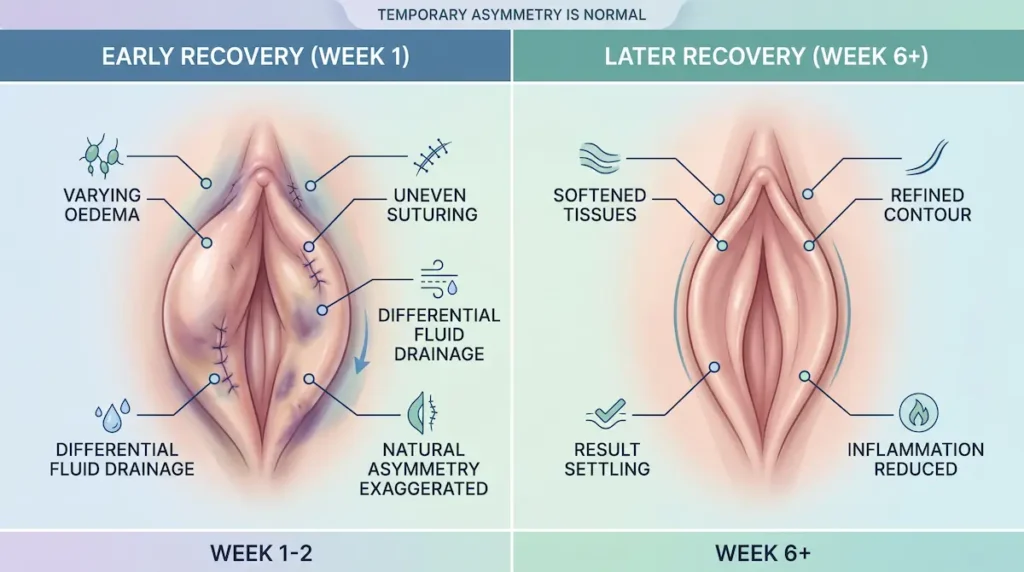
Uneven swelling is one of the most common reasons patients worry early after labiaplasty. The area may look balanced in the operating theatre, then appear asymmetrical once oedema, bruising and tissue tension develop over the next few days.
That early unevenness is usually not a verdict on the result. It is a sign that each side is healing at its own pace. The more useful question is whether the swelling is gradually improving, not whether both sides look identical in week one.
Temporary asymmetry is common
The labia are naturally asymmetrical in many people even before surgery. After labiaplasty, that baseline asymmetry can be exaggerated by swelling, stitches and small differences in tissue thickness.
One side may look more projected. One edge may feel firmer. One area may appear to sit lower. These changes can look dramatic in a close mirror check, especially when the tissue is swollen and the patient is understandably anxious.
In most cases, the best response is measured observation. Photographing the area every day can increase anxiety because small lighting and angle changes can make swelling look worse. Planned clinical review is more useful than repeated self-checking.
Each side may drain fluid differently
Lymphatic drainage is not perfectly symmetrical. A slightly more bruised side can hold fluid longer. A side that had more tissue removed, more suture tension or more early friction may also swell more.
This is why “one side is more swollen after labiaplasty” is not automatically a red flag. It becomes more concerning when the fuller side is getting worse, becoming increasingly painful, looking very red or producing discharge.
Think of swelling as a trend. Improving swelling, even if uneven, is usually reassuring. Worsening swelling with new pain or systemic symptoms deserves prompt review.
The early appearance is not the final result
Final labiaplasty results should not be judged during the peak oedema phase. The labia need time to soften, settle and lose the inflated look created by inflammation.
Patients often feel better once they understand this timing. The first week can look untidy. The second week usually looks calmer. By six weeks, the outline is much easier to read, although fine refinement can continue after that.
A large PubMed-indexed series of labiaplasty outcomes reported postoperative sequelae and complication patterns across a high number of cases, which reinforces why swelling must be assessed within a broader clinical recovery picture rather than in isolation. For readers who want the medical literature, see published data on labiaplasty outcomes and postoperative sequelae.
How to Reduce Swelling Safely
Safe swelling control is about reducing friction, supporting circulation and respecting the tissue while it heals. It is not about forcing the swelling down quickly. Aggressive massage, direct ice or returning to activity too early can irritate the area and prolong inflammation.
Your surgeon’s instructions should always come first, because aftercare can vary depending on technique, suture choice and your own medical history. The steps below are general principles, not a replacement for personalised care.
Cold packs, elevation and rest
Cold packs may be recommended in the early phase, but they must be used carefully. They should usually be wrapped, applied for short periods and never placed directly against delicate tissue. Direct freezing can damage skin.
Rest also reduces unnecessary swelling. That does not mean lying still for days. It means avoiding long walks, squatting, cycling, gym activity and tight clothing while the tissue is most reactive.
Some patients find that lying with the pelvis slightly elevated, or simply avoiding long periods of sitting, reduces pressure. Gentle walking around the room is usually better than complete immobility, but prolonged standing can worsen throbbing in the first few days.
Loose clothing and friction control
Friction is one of the biggest swelling triggers after labiaplasty. Tight knickers, leggings, jeans, seams and synthetic fabrics can rub the healing area and increase tenderness.
Loose cotton underwear and soft clothing are usually more comfortable. Many patients prefer a skirt, loose trousers or pyjama-style bottoms in the first week. Simple changes can make the swelling feel much less intrusive.
Sanitary pads may be needed for light spotting, but bulky or scented products can irritate some patients. Use only what your clinic recommends, and keep the area clean and dry without over-washing.
What to avoid early on
Avoid anything that creates pressure, heat, moisture or stretching at the incision line. That includes strenuous exercise, cycling, horse riding, swimming, baths, saunas and sexual activity until you have been cleared.
Do not apply creams, antiseptics or herbal products unless your surgeon has specifically approved them. The vulval area is sensitive, and “natural” products can still cause irritation.
Also avoid trying to separate, pull or inspect the healing edges too aggressively. It is understandable to want reassurance, but too much handling can increase swelling.
Your surgeon’s aftercare instructions come first
Aftercare is part of the operation, not an optional extra. A responsible plan should explain hygiene, clothing, medication, review timing, red flags and who to contact if symptoms change.
For UK patients travelling abroad, this should be discussed before booking surgery. GMC guidance on cosmetic interventions stresses that patients should be given clear information about risks, recovery, follow-up and what will happen if complications arise. The same standard of informed consent should apply when surgery is planned internationally.
UK consultation prompt: Before labiaplasty, ask who will review your swelling, how postoperative photos are assessed, what symptoms require urgent contact, and how follow-up works once you are back in the UK. A credible answer should be specific, not vague.
AKM’s care pathway includes preoperative planning, surgery in Istanbul and long-term virtual follow-up at 1, 3, 6 and 12 months.
When Swelling Is a Warning Sign
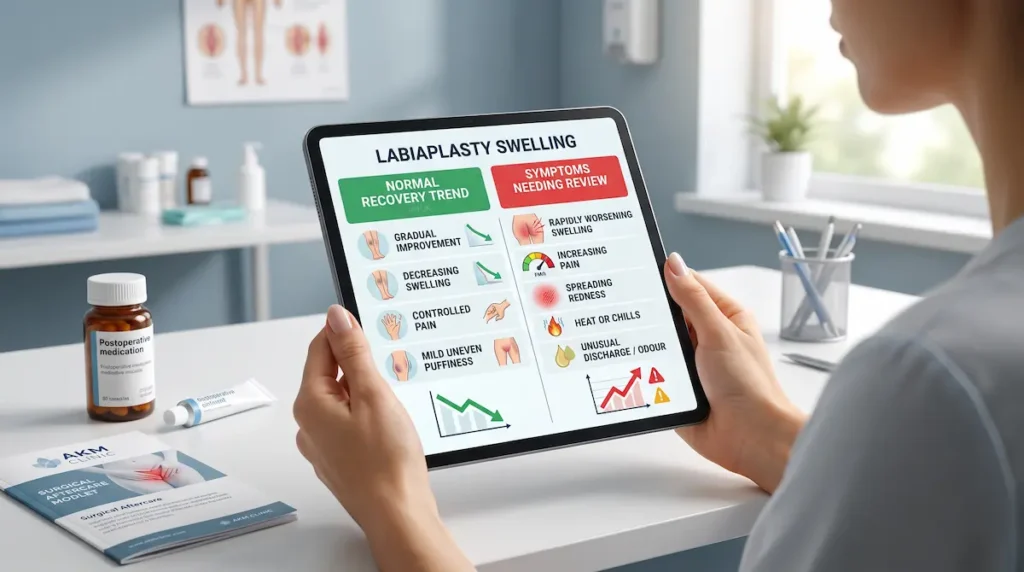
Most labiaplasty swelling is normal. Some swelling is not. The difference lies in the pattern: swelling that is gradually improving is usually expected; swelling that is rapidly worsening, increasingly painful or accompanied by discharge, fever or spreading redness needs medical review.
This section is intentionally direct. Reassurance is only useful when it is honest. If something feels wrong, you should not wait for an internet article to give permission to contact your surgeon.
Normal swelling versus concerning symptoms
Normal swelling may look puffy, uneven, bruised or mildly firm. It should become easier to manage over time. Discomfort should generally be controlled by the postoperative medication plan.
Concerning swelling behaves differently. It may become increasingly tense, hot, painful, red or one-sided. It may come with pus-like discharge, a bad smell, fever, chills, wound opening or bleeding that does not settle.
| Symptom | More likely normal? | What it may mean | Action |
|---|---|---|---|
| Mild uneven puffiness in week one | Often normal | Temporary oedema and different drainage rates | Monitor the trend and follow planned review |
| Swelling that improves week by week | Usually normal | Expected tissue settling | Continue aftercare as instructed |
| Rapidly worsening one-sided swelling | Not something to ignore | Bleeding, haematoma or infection may need assessment | Contact your surgeon promptly |
| Spreading redness, heat, pus, bad smell or fever | No | Possible infection or wound complication | Seek urgent medical advice |
| Persistent shape concern after swelling has settled | Needs timed assessment | Could be residual asymmetry, scar tightness or result concern | Wait for tissue maturation unless your surgeon advises otherwise |
Worsening pain, spreading redness, discharge or fever
Pain should not escalate sharply after the first few days. If swelling becomes more painful rather than less, that change deserves attention. The same applies if redness spreads outwards, the area feels hot, or there is unusual discharge.
A small amount of spotting or clear fluid can occur early. Thick discharge, a strong smell, fever or feeling generally unwell is different. Those symptoms should be raised with your surgical team or urgent medical services.
This swelling guide stays focused on oedema, but other symptoms often overlap with it in real recovery, so mention them too when you contact your surgical team.
When to contact the clinic
Contact your clinic if swelling is suddenly worse, if pain is not controlled, if you notice bleeding that continues, if stitches seem to have opened, or if you feel feverish. Do not worry about being “overcautious”. Good postoperative care expects questions.
If you are in the UK after surgery abroad and cannot reach your surgical team quickly, seek local medical advice. For severe symptoms, urgent care or A&E may be appropriate. Online reassurance is not a substitute for clinical assessment.
If your concern is about shape rather than acute symptoms, your clinic may ask for clear photos under standard lighting. This helps compare the trend over time without overreacting to daily mirror changes.
Persistent asymmetry and revision timing
Persistent asymmetry should not be judged during early swelling. A labium that looks larger at two weeks may look much closer to the other side at six weeks. Tissue softening can continue beyond that.
Revision decisions are usually delayed until swelling has settled and scars have matured, unless there is a true medical complication that needs earlier attention. Acting too early can create more trauma and more swelling.
If you are worried that swelling is hiding a poor result, the right next step is a structured review, not panic.
Cost questions also belong outside this swelling guide. If you are comparing treatment planning and inclusions, use the cost of labiaplasty page rather than trying to estimate pricing from recovery symptoms.
Considering labiaplasty and worried about swelling? Ask AKM what a normal labiaplasty swelling timeline would look like for your anatomy, technique and travel plan during a private consultation.
Frequently Asked Questions: Labiaplasty Swelling
These questions reflect the concerns patients most often have when swelling changes the early appearance of the labia. The answers are general, because your own timeline depends on anatomy, surgical technique, aftercare and how your body heals.
How long does labiaplasty swelling last?
That does not mean every trace of oedema has disappeared. Subtle swelling, firmness or sensitivity can continue to refine for several months, especially around the incision line.
Why is one side more swollen after labiaplasty?
Uneven swelling is more reassuring when it is slowly improving. It needs prompt review if one side suddenly becomes more painful, tense, red, hot or starts producing unusual discharge.
When does swelling go down after labiaplasty?
By around six weeks, most swelling has settled enough for a more realistic early assessment. Final refinement can take longer.
Is uneven swelling normal after labiaplasty?
However, “normal” should not be used to dismiss worsening symptoms. If uneven swelling is accompanied by increasing pain, spreading redness, fever, bleeding or discharge, contact your surgeon.
When will I see my final results?
For this reason, revision discussions are usually delayed until healing is mature, unless there is a medical issue that needs earlier treatment.
Can I reduce swelling faster?
Do not use direct ice, unapproved creams, massage or strong antiseptics unless your surgeon has told you to. The area is delicate and irritation can make swelling last longer.
When should I call my surgeon about swelling?
For severe symptoms, or if you cannot reach your surgical team quickly, seek local medical help. In the UK, urgent care or A&E may be appropriate depending on severity.
Is swelling different after trim and wedge labiaplasty?
This article does not compare techniques in detail. The key point is that your surgeon should explain the expected swelling pattern for the specific plan used in your case.
Medical Disclaimer: This article is for general educational purposes only and is not a substitute for medical advice, diagnosis or treatment. Labiaplasty recovery varies from patient to patient. Always follow the instructions provided by your own surgeon or clinical team.
If you have worsening pain, spreading redness, fever, discharge, heavy bleeding, wound opening or symptoms that feel unusual for you, seek medical advice promptly. In an urgent situation, contact local emergency services or attend A&E.
Related Treatments




Ready to Begin Your Own Transformation Journey?
Join the 2,000+ patients who have trusted Dr Akif Mehmetoğlu and the AKM Clinic team. Your journey to a more confident, naturally restored you begins with a simple, no-obligation conversation. Contact us today from the UK for your free virtual consultation.
#1: Get Your Free Personalised Quote
Start with a free, no-obligation online consultation. Share your photos, and our surgical team will provide a fully personalised treatment plan and a transparent, all-inclusive price package. There are no hidden fees.
#2: Secure Your Date & VIP Booking
Once you are ready, our dedicated patient coordinators will help you secure your procedure date. We will handle all your bookings, including your 5-star hotel accommodation and private VIP airport transfers.
#3: Arrive in Istanbul & Meet Your Surgeon
Arrive at Istanbul Airport (IST) and be greeted by your private driver. Settle into your hotel and prepare for your in-person consultation, where you will meet your specialist surgeon to finalise the details for your "natural, subtle, and restored" new look.