
Buccal Fat Removal and Your Smile: Avoiding an Overdone Look
AI Summary
- Buccal fat removal smile planning protects cheek softness while improving facial contour.
- Conservative partial reduction lowers hollow-cheek, gauntness and overcorrection risks.
- Best candidates have excess lower-cheek fullness, realistic goals and stable facial volume.
- Surgeon-led assessment reviews smile movement, ageing risk, aftercare and recovery expectations.
AI-generated summary, fact-checked by our medical experts.
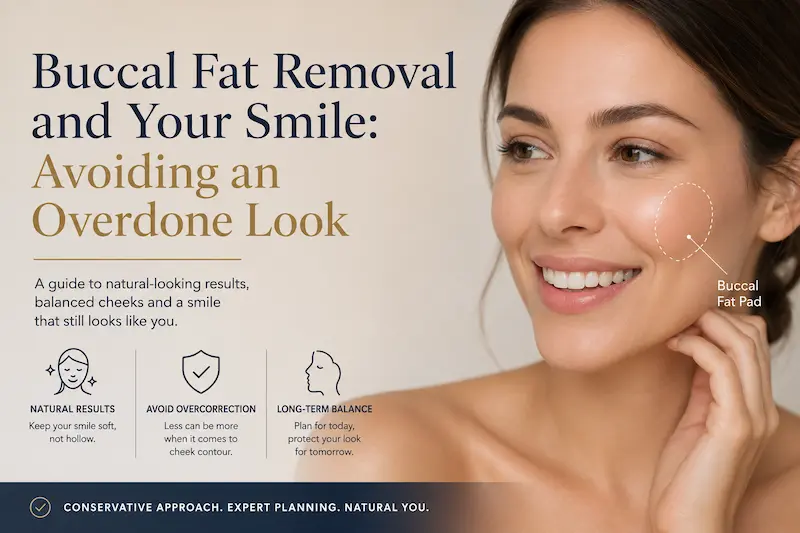
When buccal fat removal changes your smile, the change is usually about proportion, not the smile muscle itself. When the right amount is reduced, the cheeks can look more defined. When too much is removed, the face may look hollow, sharp, or “overdone” when smiling. A conservative plan matters.
Buccal fat removal is not simply a “slimmer cheek” procedure. The buccal fat pad sits in a moving part of the face, close to the smile area, and it helps soften the transition between the cheek, mouth corner, and lower face. That is why AKM’s buccal fat removal approach is planned around facial balance rather than maximum fat removal.
For UK patients, the concern is rarely just “Will my cheeks look smaller?” It is usually more specific: “Will I still look like myself when I smile?” That is the right question. A result can look sculpted in a still photo but too hollow, tight, or aged in natural expression.
This guide focuses on one narrow issue: how buccal fat removal can affect the smile area, how overcorrection happens, and what a cautious patient should ask before deciding. It does not replace a surgical consultation, but it will help you understand what makes a result look natural rather than overdone.
Table of Contents
How Buccal Fat Shapes Your Smile
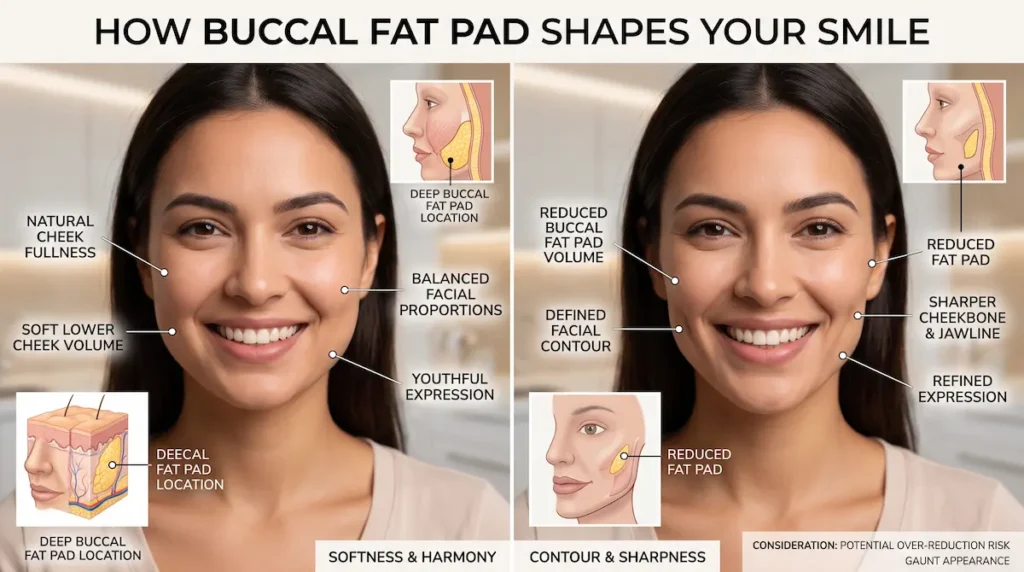
The buccal fat pad contributes to the soft fullness of the lower cheek, especially around the area between the cheekbone and the mouth corner. It is not the only structure that affects your smile, but it does influence how the cheek looks when the face moves. This section explains the anatomy in plain language before we discuss the risks.
Where the buccal fat pad sits
The buccal fat pad is a deep pocket of facial fat inside the cheek. It sits below the cheekbone, behind the smile area, and near important facial structures such as small salivary ducts and facial nerve branches. It is not the same as superficial “baby fat” under the skin.
That matters because removing it is not like trimming a small surface bulge. The fat pad supports a three-dimensional area of the cheek. If too much volume is reduced, the change can show more clearly when you talk, smile, laugh, or turn your head.
A natural-looking result usually comes from reduction, not aggressive emptying. The aim is to soften excessive lower-cheek fullness while keeping enough support for facial expression.
Why your smile can look different after removal
Your smile pulls the cheek tissues upwards and outwards. If the lower cheek has a healthy amount of volume, that movement tends to look soft and balanced. If the cheek has been over-reduced, the same movement can reveal a deeper hollow under the cheekbone.
This is why some patients do not notice the problem in neutral selfies. The concern appears when the face moves. A hollow that looks subtle at rest may look more obvious with a wide smile.
The key point is simple. Buccal fat removal should not make the smile look stretched, skeletal, or older. If the surgical plan risks that outcome, doing less — or not doing the procedure — may be the safer choice.
Full cheeks versus hollow cheeks
Full cheeks are not automatically a problem. Some people have soft lower-cheek fullness because of genetics, age, weight distribution, or facial shape. Others have roundness that suits their face and will naturally reduce with age.
Hollow cheeks are different. They create shadow below the cheekbone and can make the face look sharper, more tired, or older. On the right face, a small amount of contour can look refined. On the wrong face, the same removal can look gaunt.
This is the main reason conservative surgeons assess the whole face before recommending buccal fat removal. Cheekbones, jawline, chin projection, skin thickness, age, and natural facial width all matter.
What “Overdone” Looks Like
An overdone buccal fat removal result is not just “too slim”. It is a mismatch between cheek volume, facial movement, and long-term ageing. This section explains the warning signs so you can judge the goal more carefully before surgery.
The gaunt or sunken-cheek effect
The most common overdone look is a deep hollow beneath the cheekbone. In photos, it may appear as a strong diagonal shadow from the cheekbone towards the mouth. In real life, it can make the midface look tired or drawn.
This is not the same as elegant contour. Good contour still has softness. It frames the cheekbone without making the lower face look empty.
Over-removal can also make the face look less harmonious. The cheekbones may seem too prominent, the mouth area may look heavier by comparison, and the smile can appear less supported.
Why it can show more when smiling
A smile changes the surface of the cheek. The soft tissues move, the mouth corners lift, and the cheek compresses. If enough volume remains, that movement looks natural. If too much buccal fat has been removed, the hollow can deepen with expression.
This is why dynamic assessment matters. A surgeon should not only look at your face from the front at rest. They should also assess your smile, three-quarter view, cheekbone height, lower-face width, and whether the fullness you dislike is truly buccal fat or another feature.
Patients who want a very sharp “model cheek” result are often the ones who need the most caution. A still-image trend may not translate well to a moving face.
Why the result can look worse over time
The face naturally loses volume with age. This happens in the cheeks, temples, under-eyes, and around the mouth. If buccal fat is reduced too aggressively in a younger patient, the face may have less reserve as ageing continues.
That does not mean every buccal fat removal patient will look older later. It means the plan needs to account for the next decade, not just the next three months. A result that looks “snatched” early can become too hollow as natural facial volume decreases.
If your main concern is how the cheeks may change years later, read our guide to how aggressive removal ages the face. This article stays focused on the smile and overcorrection risk.
With buccal fat, restraint is not a compromise. It is often the difference between a defined cheek and a smile that looks hollow, tired, or surgically overdone.
How Much Removal Is Safe?
There is no universal “safe amount” of buccal fat removal that suits every face. The safer question is whether any removal is appropriate for your anatomy, and if so, how little reduction is needed to improve contour without weakening the smile area. This section explains why a conservative plan is usually the safer aesthetic plan.
Conservative reduction versus aggressive removal
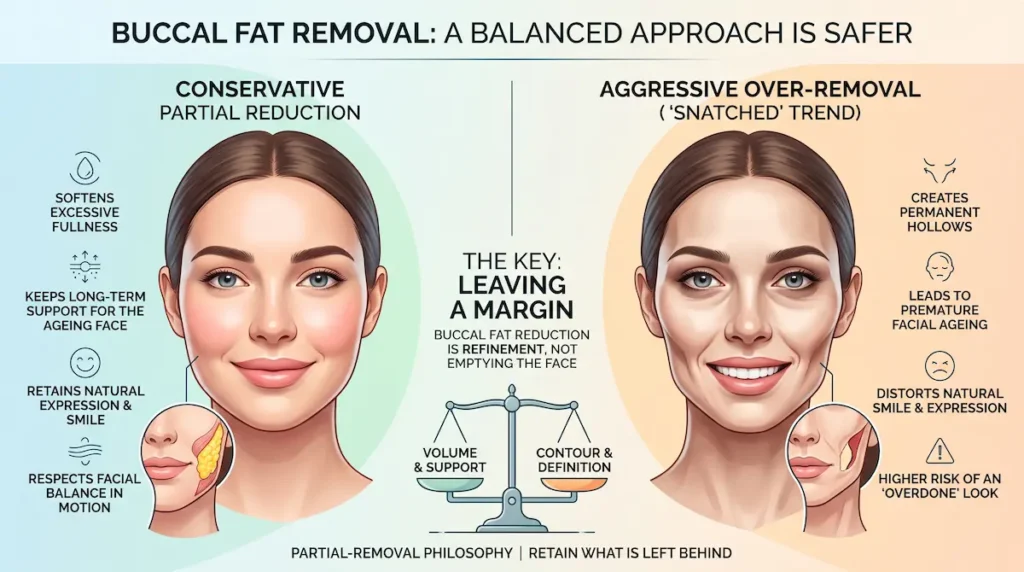
Conservative buccal fat removal means reducing selected fullness while keeping enough soft-tissue support in the cheek. Aggressive removal means taking a large amount of the pad, or treating the fat pad as something to empty rather than refine.
The difference can be subtle in the operating theatre, but obvious in the final result. A small reduction may create a cleaner cheek curve. Too much removal can create a hollow under the cheekbone, especially when smiling.
This is why responsible surgeons often speak about buccal fat reduction, not complete removal. The aim is not to chase the sharpest cheek possible. It is to keep the face balanced in motion, under normal lighting, and as it ages.
Why surgeons leave a margin
Leaving a margin means deliberately preserving some buccal fat instead of removing everything that can be accessed. That margin matters because facial fat naturally reduces with age. It also matters because the cheek needs softness around the mouth to keep expression looking natural.
UK patients should be especially wary of any plan that promises a very dramatic “snatched” cheek. A cautious plan may sound less exciting, but it is often more sophisticated. It respects the fact that the smile is dynamic, not a fixed photograph.
BAPRAS has urged caution around the cheek-fat removal trend, warning that the pursuit of hollow cheeks may create long-term gauntness or harm structures under the skin. That does not mean the procedure is always wrong. It means patient selection and restraint are central.
Partial removal philosophy
A partial-removal philosophy starts with the face you already have. It asks whether the lower cheek is genuinely overfull, whether the cheekbone has enough support, and whether the jawline goal can be reached without excessive hollowing.
For some patients, partial reduction may be enough. For others, the safest answer is no buccal fat removal at all. That can be frustrating to hear, but it is often the advice that prevents regret.
A good consultation should include a discussion of what will be left behind, not only what will be removed. With buccal fat, preservation is part of the result.
| Resection approach | Likely effect on smile and cheek | Long-term risk |
|---|---|---|
| No removal | Keeps natural cheek support and expression; may leave lower-cheek fullness unchanged. | Lowest hollowing risk, but may not meet contour goals. |
| Conservative partial reduction | Softens excessive lower-cheek fullness while keeping the smile area supported. | Lower risk when the patient is well selected and expectations are realistic. |
| Aggressive removal | May create a sharp cheek hollow that looks dramatic at rest and harsher when smiling. | Higher risk of gauntness, premature ageing, and an overdone look. |
| Removal in a naturally lean face | Can exaggerate shadows and make the mouth area look less supported. | High risk, even if only a moderate amount is removed. |
Who’s at Higher Risk of Overcorrection?
Not every patient carries the same risk. Overcorrection is more likely when facial anatomy, age, or goals already point towards future hollowing. This section helps you recognise the situations where caution should outweigh trend-driven contouring.
Already slim or narrow faces
If your face is already slim, narrow, or angular, buccal fat removal can remove volume you may actually need. A narrow face often has less margin for error. Even a small change can look more severe than expected.
This is especially true if you already have visible cheek hollows in certain lighting. In a face like this, the line between “fashionable contour” and “tired-looking hollow” is thin, and once too much support has gone, it is hard to restore.
A useful self-check is to look at your face when smiling, speaking, and turning three-quarters to the camera. If the cheek already creates a shadow below the cheekbone, removing more volume may not be wise.
Older patients or anyone with early volume loss
Facial volume changes with age. The cheeks, temples, under-eye area, and area around the mouth gradually lose fullness. Buccal fat removal in a face that is already losing volume can make that process more visible.
This does not mean age alone rules you out. It means the surgeon must assess whether the fullness you dislike is truly excess buccal fat or part of a changing facial structure.
If your concern is long-term ageing rather than immediate smile change, the related guide on how aggressive removal ages the face goes deeper into that timeline.
Patients chasing a very sharp cheek goal
A very sharp cheek goal can be risky because it often comes from filtered images, celebrity angles, or still photographs taken in controlled lighting. Real faces move. They smile, laugh, swell, relax, and age.
If the desired result depends on looking hollow under the cheekbone, the plan may already be too aggressive. A natural result should look good during conversation, not only in a posed selfie.
During consultation, ask the surgeon what they would avoid in your case. A surgeon who can explain the limit is often safer than one who simply agrees to the most dramatic version of your request.
Men seeking a stronger jawline
Men sometimes request buccal fat removal to make the jawline look stronger. The problem is that cheek hollowing and jawline definition are not the same thing. Removing cheek volume does not build the jaw.
In male faces, the best result is usually angular rather than hollow. Too much removal can make the face look drawn instead of masculine. The balance between cheek, chin, and jaw matters more than the amount of fat removed.
For a male-specific breakdown, read our guide to conservative resection in men.
Patients with limited aftercare plans
Overcorrection is not only about the surgical act. It is also about planning, review, and honest aftercare. If you are travelling for surgery, you should know who checks your healing, how swelling is assessed, and what happens if your result feels too hollow as it settles.
For UK patients, this is part of the wider “surgery abroad” decision. The issue is not whether treatment is local or international. The issue is whether your care pathway is clear before you commit.
A safer plan includes pre-operative assessment, a realistic discussion of limits, written aftercare guidance, and follow-up once swelling changes.
Protecting Your Result
A natural result is protected before surgery, not after the hollowing has already happened. This final planning section explains how to reduce the risk of an overdone look, what to ask in consultation, and why your surgeon’s willingness to say “less” or “not for you” can be a positive sign.
Choose a conservative surgeon, not just a confident one
Confidence is not enough. With buccal fat removal, you want a surgeon who can explain why they would remove a small amount, leave a margin, or advise against the procedure altogether.
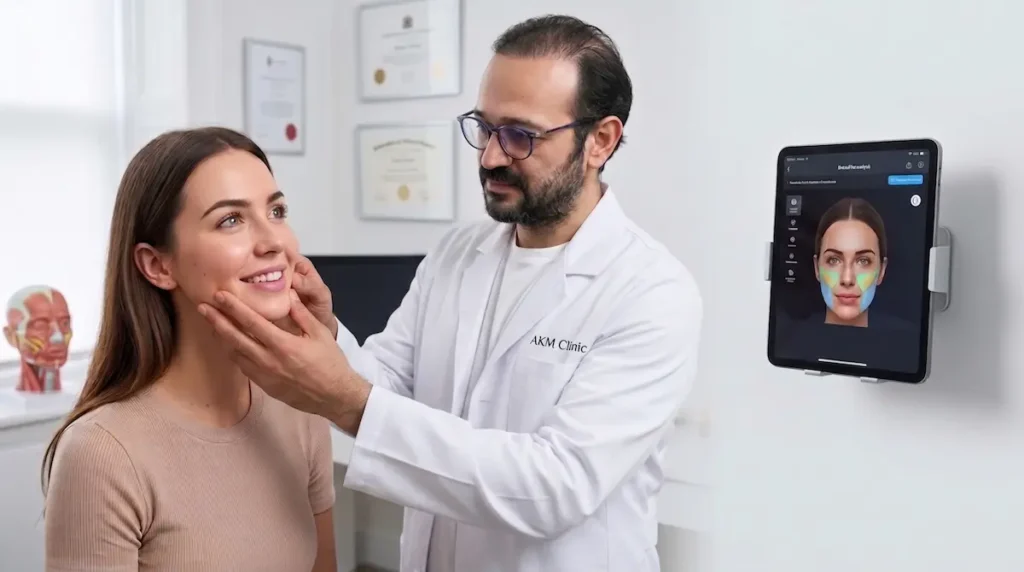
Ask how they assess the cheek during expression. Ask whether they look at your smile, lower-face width, skin quality, cheekbone projection, and age-related volume pattern. A face should not be assessed like a flat image.
For UK patients, this is also where safety standards matter. BAPRAS has urged caution around cheek fat removal, particularly because the procedure can affect deep structures and may contribute to a gaunt look as the face ages.
Ask what happens if the answer is “no”
One of the strongest signs of a responsible consultation is a surgeon who can explain why buccal fat removal may not suit you. If your face is already slim, if your cheek hollows are visible at rest, or if your goal is extreme sharpness, the safer plan may be to avoid surgery.
This does not mean your concern is being dismissed. It means the surgeon is protecting facial harmony. A good plan weighs the result you want now against the way your face is likely to look later.
ASPS also warns against being too aggressive with buccal fat removal, because facial fat plays an important role in how the face ages.
Know what recovery can and cannot tell you
Early swelling can hide the final contour. In the first weeks, cheeks may look puffy, uneven, or firmer than expected. That does not necessarily mean too little or too much has been removed.
At the same time, recovery should not be used as an excuse to ignore genuine concerns. You should know when follow-up happens, what changes are expected, and when to raise questions about asymmetry, excessive hollowing, or discomfort.
For the healing sequence itself, see the recovery timeline on our buccal fat removal page. This article stays focused on smile balance and overcorrection.
Think about the whole smile area
The smile is shaped by more than the cheeks. Lip length, dental show, mouth corners, cheekbone support, skin quality, and facial proportions all play a role. Buccal fat removal should not be used as a shortcut for every lower-face concern.
If your concern sits closer to the upper lip or mouth shape, a different procedure may be more relevant. For example, our lip lift scar guide covers a separate issue: how visible the scar is after a lip lift and how it heals.
Keeping these topics separate prevents over-treatment. The best result is often the one that uses the smallest appropriate intervention.
Ask these questions before committing
Bring clear questions to consultation. A cautious patient is not being difficult; they are helping the surgeon understand the boundary between definition and overcorrection.
- Am I a good candidate for buccal fat removal, or is my face already too lean?
- How do my cheeks look when I smile, not just at rest?
- Would you recommend partial reduction rather than aggressive removal?
- How much cheek support would you deliberately preserve?
- Could this make me look hollow as I age?
- What follow-up is included after I travel home?
If cost is part of your decision, keep it separate from the safety decision. The right question is not simply what you pay, but what is included in assessment, theatre standards, aftercare, and follow-up. You can review the cost of buccal fat removal without turning this into a price-led choice.
If you are worried about looking hollow or losing softness when you smile, ask AKM how conservative buccal resection would be planned for your facial structure in a free virtual consultation.
Frequently Asked Questions: Buccal Fat Removal Smile
These questions focus on smile changes, overcorrection, and the “too hollow” look. They are not a substitute for a personal assessment, but they can help you prepare for a more useful consultation.
Can buccal fat removal ruin your smile?
Why does buccal fat removal sometimes look overdone?
How much buccal fat removal is too much?
Can overcorrected buccal fat removal be reversed?
Will I look gaunt later?
Am I a high-risk candidate for an overdone result?
Does buccal fat removal make the jawline stronger?
How do I avoid an overdone buccal fat removal look?
Medical disclaimer: This article is for general educational purposes only and is not medical advice. Buccal fat removal suitability, risks, recovery, and results vary from person to person. Always consult a qualified surgeon who can assess your anatomy, medical history, expectations, and aftercare needs before making a decision.
Related Treatments
Ready to Begin Your Own Transformation Journey?
Join the 2,000+ patients who have trusted Dr Akif Mehmetoğlu and the AKM Clinic team. Your journey to a more confident, naturally restored you begins with a simple, no-obligation conversation. Contact us today from the UK for your free virtual consultation.
#1: Get Your Free Personalised Quote
Start with a free, no-obligation online consultation. Share your photos, and our surgical team will provide a fully personalised treatment plan and a transparent, all-inclusive price package. There are no hidden fees.
#2: Secure Your Date & VIP Booking
Once you are ready, our dedicated patient coordinators will help you secure your procedure date. We will handle all your bookings, including your 5-star hotel accommodation and private VIP airport transfers.
#3: Arrive in Istanbul & Meet Your Surgeon
Arrive at Istanbul Airport (IST) and be greeted by your private driver. Settle into your hotel and prepare for your in-person consultation, where you will meet your specialist surgeon to finalise the details for your "natural, subtle, and restored" new look.