
Breast Reduction Before and After for Black Women: Tailored Techniques

AI Summary
- Breast reduction before and after black women requires bespoke planning for balanced shape, natural-looking results, and culturally sensitive goals.
- Scar management and healing need careful follow-up, realistic expectations, and scar-conscious support for darker skin tones.
- Tailored reduction techniques improve projection, nipple position, comfort, and long-term proportions rather than simply reducing size.
- UK patients should prioritise safety through recognised standards, transparent GBP pricing, and organised aftercare when choosing a clinic.
AI-generated summary, fact-checked by our medical experts.
For many women, breast reduction is not only about aesthetics. It is about comfort, proportion, confidence, and feeling more at ease in clothes, movement, and everyday life. When patients search for breast reduction before and after black women, they are often looking for more than photographs. They want reassurance that their skin tone, scar healing pattern, breast shape, and body proportions will be understood properly rather than treated with a generic surgical plan.
This is exactly why breast reduction for black women should never be approached as a one-size-fits-all procedure. The consultation, the operative design, the scar placement strategy, and the recovery plan should all be tailored to the individual. For many UK patients, this is especially important because they are not simply comparing prices. They are comparing safety, aftercare, surgeon judgement, and the likelihood of achieving a natural-looking result that suits their figure and skin characteristics.
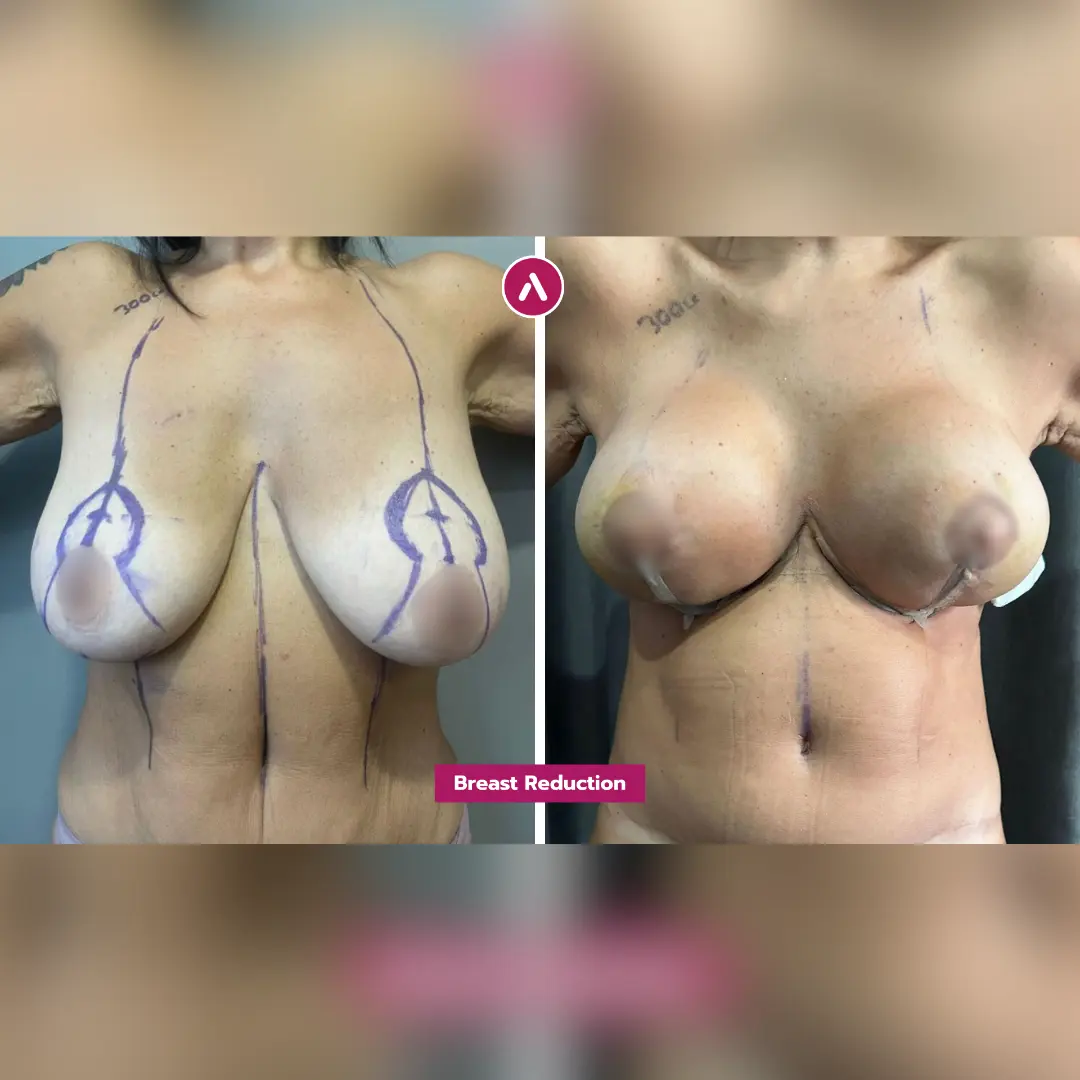
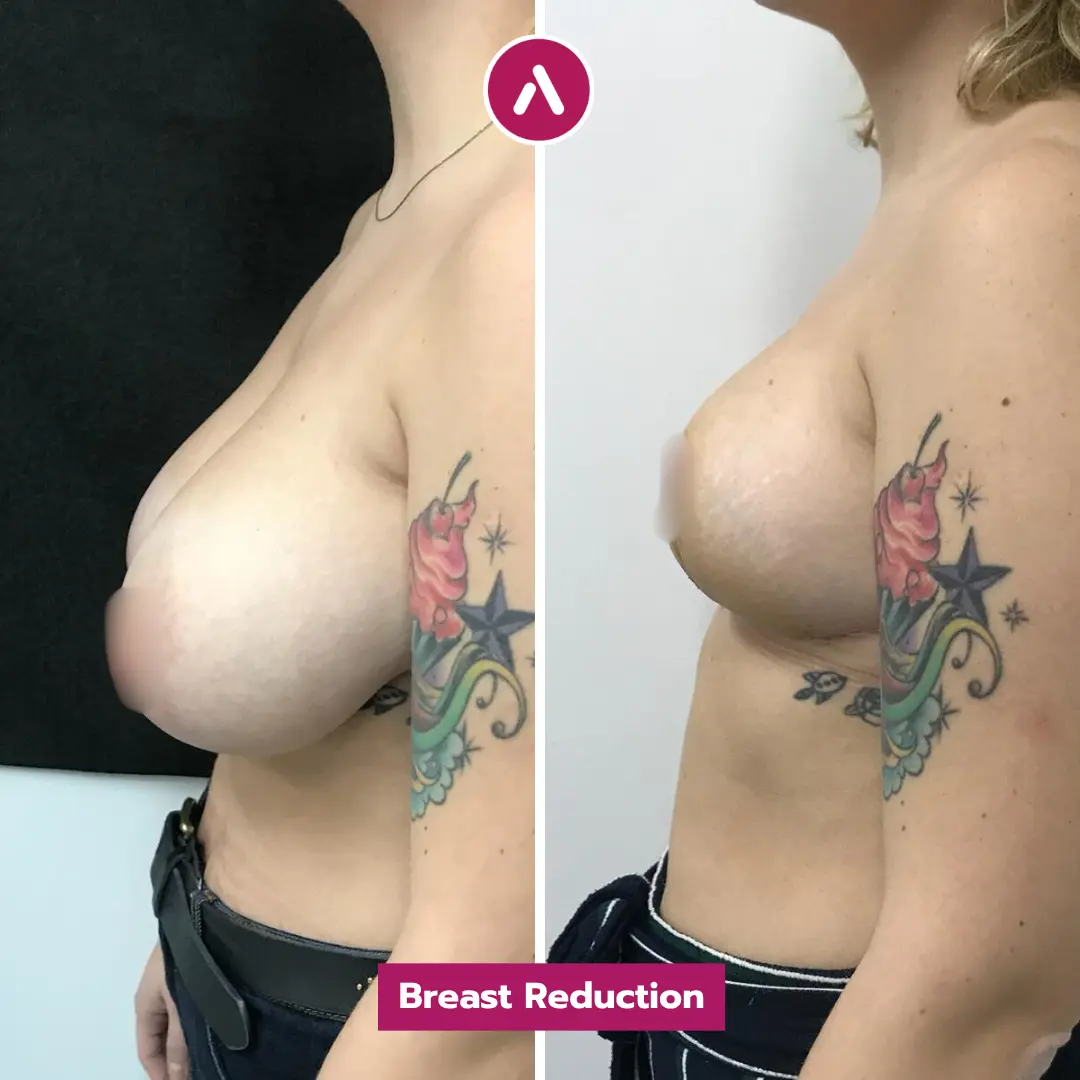
When reviewing black women breast reduction before and after photographs, it is important to look beyond the headline result. A well-executed outcome should show lighter, more proportionate breasts, improved nipple position, and better body balance, while also respecting how breast reduction results on darker skin may evolve during healing. Early images can look promising, but the more meaningful question is whether the result still appears elegant, balanced, and soft once swelling settles and scars mature.
In this guide, we will look at why personalised planning matters, how surgeons assess shape and skin before surgery, what tailored breast reduction techniques can achieve, and how to interpret breast reduction results in black women in a realistic and informed way. The focus is not on exaggerated promises, but on thoughtful surgical design, safer healing, and subtle, proportionate outcomes for patients who want expert-led care.
Table of Contents

Why Breast Reduction in Black Women Requires a Bespoke Surgical Approach
Breast reduction is never just about removing weight. In well-planned surgery, the goal is to reduce heaviness while preserving harmony, projection, symmetry, and a shape that suits the patient’s frame. For this reason, bespoke breast reduction for black women is not a marketing phrase. It is a practical surgical principle. Patients with darker skin tones may have individual concerns around scar visibility, post-inflammatory pigmentation changes, and the way healing presents across the breast crease, areola, and vertical scar lines. A careful surgeon takes these factors into account from the very beginning rather than after the operation has already taken place.
Differences in skin behaviour, pigmentation, and scar visibility
Not every patient with dark skin heals in the same way, and it would be inaccurate to suggest otherwise. However, some women may be more prone to visible pigmentation changes or raised scarring during the healing phase. That does not mean breast reduction is unsuitable. It means planning must be more considered. Scar placement, wound closure technique, post-operative support, and follow-up advice all matter. When people search for breast reduction before and after dark skin, they are often trying to understand whether clinics genuinely appreciate these nuances.
A realistic conversation about scars is essential. Good surgeons do not pretend scars will be invisible. Instead, they explain where scars are likely to sit, how they usually mature, and what can be done to support better healing. For many women, reassurance comes not from being told there will be “no scar”, but from being shown how scars can become softer, flatter, and less noticeable over time when the operation is planned properly.
Why “one-size-fits-all” reduction planning can lead to disappointing results
A generic approach may reduce volume, but it does not always deliver an elegant final shape. If tissue removal is too aggressive, the breasts may look flat or overly wide. If nipple-areola positioning is poorly judged, the chest can look unbalanced. If scar strategy is not considered carefully, the result may heal in a way that feels more noticeable than necessary. This is why tailored reduction mammoplasty is so important.
In practice, bespoke planning means the surgeon evaluates far more than cup size. They assess breast footprint, skin quality, existing asymmetry, the amount of ptosis, and how much internal support the tissues will need after reduction. The goal is not simply to make the breasts smaller, but to make them lighter, more balanced, and more proportionate to the shoulders, waist, and hips.
Balancing breast size reduction with natural body proportions and shape
One of the most common concerns among patients is ending up either “still too large” or “too small for my frame”. This is where artistry and proportion matter. An attractive breast reduction result should fit the whole silhouette. For some women, that means reducing enough volume to relieve neck, back, and shoulder strain. For others, it means keeping a degree of fullness so the chest remains in proportion with the hips and torso.
When reviewing black women breast reduction outcomes, the best results usually look balanced rather than dramatic. Clothes sit better, posture often improves, and the chest appears lifted without looking artificial. Patients frequently say they want to feel lighter and more comfortable, but still feminine. That balance is rarely achieved through standardised planning. It is achieved through thoughtful measurement, careful tissue handling, and realistic expectation setting.
The importance of culturally sensitive aesthetic goals and patient expectations
A surgeon should never assume that every patient wants the same breast shape, upper-pole fullness, or final size. Cultural preferences, body identity, and personal taste all influence what feels like a successful outcome. Some women want a distinctly smaller chest for physical comfort and easier exercise. Others want reduction without losing softness and natural cleavage. Listening matters just as much as surgical skill.
This is especially relevant for patients comparing clinics from the UK. Many are not looking for an over-operated appearance. They want a refined result that feels right for their body and lifestyle. For that reason, the consultation should include a detailed discussion about proportions, scar trade-offs, bra expectations, and what can realistically be achieved through breast reduction for black women with long-term shape in mind.
“The best breast reduction outcomes do not look generic. They look proportionate, comfortable, and appropriate to the individual woman’s skin, anatomy, and aesthetic priorities.”
What to Assess Before Surgery: Skin Quality, Breast Weight, and Body Proportion
Before surgery is even scheduled, a high-quality assessment should establish whether the planned reduction is both safe and aesthetically suitable. This stage is not a formality. It shapes the entire operative plan. Accurate pre-operative analysis helps determine how much tissue can be removed, which incision pattern is likely to suit the anatomy, how nipple position should be redesigned, and what kind of scar management support may be sensible during recovery. For black women researching breast reduction results, the quality of the assessment often predicts the quality of the result.
How surgeons evaluate breast volume, ptosis, and asymmetry
The consultation usually starts with the fundamentals: breast size, weight, skin stretch, degree of droop, and side-to-side differences. Many patients assume both breasts are identical until they see clinical photographs or measurements. In reality, asymmetry is common, and a good plan accounts for it rather than ignoring it. One side may sit lower, have a different nipple position, or carry more tissue. Even a technically good reduction can feel disappointing if these details are not addressed carefully.
The surgeon also assesses ptosis, meaning how far the breast tissue and nipple have descended. This matters because the operation is not just about volume reduction. It is also about reshaping the breast mound and repositioning the nipple-areola complex in a way that looks natural on the chest. These decisions influence scar pattern, final projection, and the likelihood of achieving a balanced result in fitted clothing and bras.
Considering shoulder, neck, and back discomfort alongside cosmetic goals
Many women pursue surgery because of physical discomfort as much as appearance. Deep bra-strap grooves, upper back pain, neck tension, skin irritation beneath the breast fold, and difficulty with exercise are all relevant. A thoughtful consultation should discuss these symptoms openly. Reducing breast weight can improve daily comfort considerably, but the plan must still preserve enough shape to avoid a deflated or boxy appearance.
This dual purpose is what makes reduction surgery unique. It is functional and aesthetic at the same time. Patients are often happiest when the surgeon understands both sides of that equation. A breast that is lighter but poorly shaped may not feel like a complete success. Likewise, a visually pretty result that does not relieve physical strain may fall short of the patient’s expectations.
| Assessment Area | Why It Matters | What It Can Influence |
|---|---|---|
| Breast volume and weight | Helps define how much tissue may be removed safely | Comfort, size change, final balance |
| Degree of ptosis | Shows how much lifting and reshaping is required | Nipple position, scar pattern, breast contour |
| Skin quality and elasticity | Indicates how the breast envelope may respond after reduction | Shape retention, tension on scars, healing quality |
| Asymmetry | Very common and often overlooked by patients | Balanced result, bra fit, visual harmony |
| Body frame and proportions | Prevents an over-reduced or under-reduced appearance | Natural-looking outcome and silhouette |
Nipple position, areola size, and the overall chest frame
In breast reduction, the nipple-areola complex plays a major role in the final appearance. If the nipple is too low, the breasts can still look heavy even after tissue removal. If it is set too high, the result can appear unnatural. The areola size may also need adjustment for overall balance. These are not minor details. They are central to creating a lifted yet believable outcome.
The chest wall itself also matters. Two women may have the same bra size but completely different rib cage widths, shoulder lines, and torso lengths. That is why simply asking for a certain cup size is not enough. A more reliable approach is to discuss goals in terms of comfort, silhouette, bra fit, and how the breasts should relate to the rest of the body after surgery.
How body shape influences the most flattering reduction plan
Breast reduction should support the whole figure, not compete with it. On a curvier frame, preserving some lower-pole softness may create a more natural result. On a smaller frame, a more moderate shape may suit the torso better and help relieve physical discomfort more effectively. The ideal outcome is individual, which is precisely why tailored breast reduction techniques matter so much.
For UK patients travelling abroad, this level of planning is particularly important because they want confidence before booking surgery and flights. They want to know that the surgeon has thought carefully about shape, healing, and aftercare rather than offering a generic reduction package. In that sense, detailed assessment is not merely a clinical step. It is part of trust-building, especially for women researching breast reduction in Turkey from the UK and comparing clinics on both safety and aesthetic judgement.
Tailored Breast Reduction Techniques for Natural-Looking Results
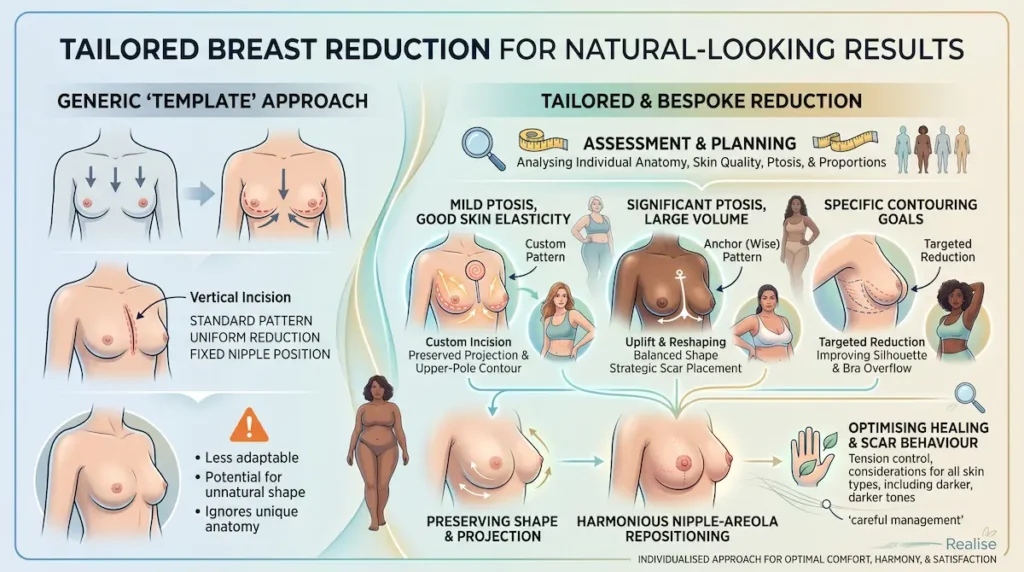
There is no single “best” breast reduction method for every patient. The most suitable plan depends on breast weight, skin quality, degree of ptosis, nipple position, and the kind of shape the patient hopes to achieve after healing. This is why tailored breast reduction techniques are so important. In practice, a thoughtful surgeon does not simply choose a standard template and remove tissue. Instead, they design the operation around the individual woman’s anatomy, proportions, and healing priorities, particularly when planning breast reduction for black women with close attention to shape, tension, and scar behaviour.
Choosing the right incision pattern for breast size and skin characteristics
Different incision patterns serve different needs. Some women may be suitable for a vertical scar technique, while others require an anchor or Wise-pattern approach because of larger volume, more significant ptosis, or the need for stronger reshaping. The decision should be based on what will create a stable result and support good healing, not on what sounds simplest in theory.
For patients with darker skin tones, incision planning also matters because scar position, tension, and wound healing quality can affect how visible the final scars become over time. A realistic surgical discussion should explain that the aim is not merely to create the fewest scars possible, but to create the most balanced, durable, and proportionate breast shape with scars that are placed thoughtfully and managed carefully during recovery.
Preserving shape, projection, and upper-pole balance after reduction
A common misunderstanding is that breast reduction is only about going smaller. In reality, excellent surgery is about reshaping as much as reducing. If too much tissue is removed without proper internal support, the breasts may heal flatter than desired or lose attractive contour in the upper and central breast. Good technique aims to reduce heaviness while preserving a soft, lifted, natural-looking profile.
This is especially relevant when patients review breast reduction results in black women. The most appealing outcomes tend to show a balanced breast that suits the body rather than an aggressively reduced chest. Projection, breast base width, and upper-pole transition all contribute to whether the result appears elegant in clothing and natural without clothing. A reduction should feel lighter, but it should still look like the patient’s body, only more comfortable and better proportioned.
How nipple-areola repositioning is planned for harmony, not just size reduction
Nipple position is one of the most important details in reduction mammoplasty. If the nipple remains too low, the breast may continue to look heavy even if substantial tissue has been removed. If the nipple is moved too high or resized without care, the result can look artificial or out of proportion to the breast mound. This is why the best surgeons plan nipple-areola position in relation to the full chest, not in isolation.
A well-planned repositioning strategy helps create the impression of lift, symmetry, and youthfulness without making the breasts look over-operated. For many women, this subtle balance is what separates an acceptable result from a genuinely refined one. It is also one of the reasons why tailored reduction mammoplasty consistently outperforms generic volume-reduction approaches in both aesthetics and patient satisfaction.
Why tailored tissue removal matters more than simply “going smaller”
Patients often arrive with a target cup size in mind, but cup sizes are not standardised in a reliable way across brands and bra manufacturers. A more useful conversation focuses on silhouette, comfort, posture, exercise, clothing fit, and how the patient wants her body to look in proportion. Skilled reduction surgery therefore involves selective tissue removal rather than uniform reduction from all areas of the breast.
For example, one patient may benefit from reducing more lower-pole bulk to improve uplift, while another may need better side-breast contouring to reduce width and bra overflow. Another may require more precise balancing between the two breasts because asymmetry is contributing to discomfort and dissatisfaction. These distinctions are exactly what make bespoke breast reduction for black women clinically meaningful rather than merely descriptive.
| Surgical Priority | Why It Matters | Effect on Final Result |
|---|---|---|
| Incision selection | Must match breast size, skin quality, and ptosis | Influences scar placement and shape stability |
| Tissue reshaping | Prevents a flat or boxy outcome | Supports a softer, more natural contour |
| Nipple-areola repositioning | Creates a lifted, balanced appearance | Improves proportion and visual harmony |
| Tension control in closure | Important for healing and scar behaviour | May reduce risk of more noticeable scarring |
| Individual volume reduction | Avoids over-reduction or under-reduction | Better comfort and better body proportion |
Before and After Results: What Black Women Often Want to See in Outcome Photos
When patients search for black women breast reduction before and after, they are not only looking for dramatic change. Most are looking for evidence of judgement, balance, and relevance. They want to see results in women with similar skin tone, breast weight, body shape, and scar-healing concerns. They also want to know whether the outcome looks natural after swelling settles, rather than relying on photographs taken too early in recovery.
Signs of a successful result: lifted, proportionate, and balanced breasts
The best before-and-after results usually do not appear extreme. Instead, they show breasts that look lighter, more symmetrical, better supported, and more proportionate to the patient’s torso. The nipples sit in a more appropriate position, the breast fold appears less burdened, and the chest often looks more comfortable in posture and balance. A strong result should make the whole frame look more harmonious, not just smaller.
For patients reviewing breast reduction results in black women, it is worth asking whether the result preserves femininity while improving comfort. A breast reduction should not create a harsh or flattened silhouette unless that is explicitly what the patient requested. Most women want a chest that feels easier to live with, but still looks soft, natural, and aesthetically coherent with the rest of the body.
How to assess scar placement realistically in before and after cases
Scars should always be assessed honestly. A before-and-after gallery that avoids scar visibility completely may not be very informative. Instead, it is helpful to look at where the scars sit, whether they appear symmetrical, whether tension looks well controlled, and whether healing seems to be progressing in a normal way. The question is not whether there is a scar, but whether the scar pattern looks well planned and likely to mature acceptably over time.
This is particularly important in searches related to breast reduction before and after dark skin. Patients often worry that all scars will remain dark or raised indefinitely. In reality, scar maturation is individual. Some scars settle very well, while others require more time and more active scar support. Good photographic evaluation should therefore include both early and later healing stages whenever possible, so patients understand what is normal and what is still evolving.
What “natural” means in breast reduction for different body types
Natural does not mean the same thing for every woman. On one patient, it may mean a moderate reduction with preserved upper fullness. On another, it may mean a more athletic and lighter silhouette with less side fullness and less lower-pole weight. The right result depends on the person’s frame, preferences, and lifestyle rather than a universal template.
This is one reason generic internet galleries can be misleading. A result that appears ideal on one body shape may feel too small, too projected, or too wide on another. For that reason, black women breast reduction photography should be interpreted through the lens of proportion, not copied as a rigid blueprint. The best use of before-and-after images is to understand quality of judgement, not to request an identical body outcome.
Why long-term shape matters more than early post-operative photos
Early photographs can be useful, but they are only part of the story. Immediately after surgery, the breasts may sit higher, appear firmer, and show visible swelling. This does not mean the final result has already arrived. Over the following weeks and months, tissues soften, scars begin to mature, swelling reduces, and the breasts settle into a more natural position. Long-term images are therefore often far more meaningful than very early post-operative photos.
Patients comparing breast reduction results on darker skin should ideally look for evidence of both short-term and later healing. This gives a more realistic impression of scar colour changes, contour settling, and overall breast shape. A trustworthy clinic should encourage realistic expectations by explaining that a polished result is a process, not an overnight transformation.
“Before-and-after photos should reassure you that the surgeon understands proportion, scar planning, and long-term breast shape — not simply that tissue was removed.”
Scar Management, Healing, and Hyperpigmentation Concerns
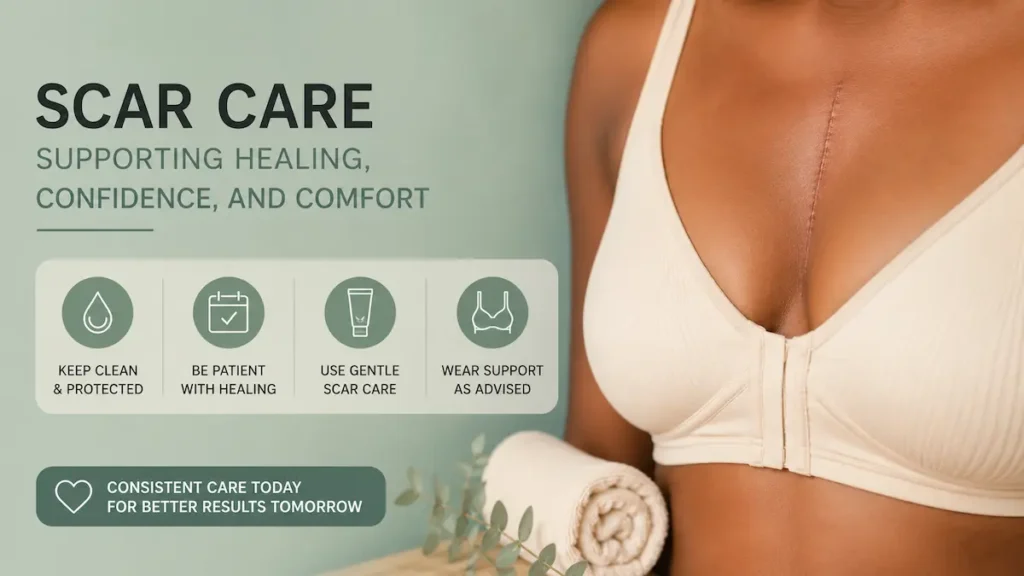
For many patients, the question is not simply “Will I have scars?” but “How will my scars heal on my skin tone?” This is a sensible concern, particularly when looking at breast reduction before-and-after photos of patients with darker skin or comparing results online. Breast reduction always involves scars, but the way those scars settle can vary significantly from one person to another. Skin tone, healing tendencies, scar tension, aftercare habits, and the quality of the closure all play a role. This is why scar planning should be part of the consultation from the outset, not an afterthought once surgery is over.
Why some darker skin tones may be more prone to visible scarring
Some women with darker skin tones may be more likely to notice prolonged pigmentation changes or more visible scar activity during healing. That may include areas looking darker than the surrounding skin for a period of time, or scars appearing more noticeable in the early and middle phases of recovery. This does not mean the final result will be poor. It means healing should be monitored with patience and realistic expectations.
When patients search for black women breast reduction results, they often want reassurance that these concerns are understood rather than dismissed. A high-quality consultation should explain that scar behaviour is individual. Not every patient will experience the same pattern, and no responsible surgeon should promise completely invisible scars. A more honest and helpful approach is to discuss likely scar placement, expected maturation, and how to support the best possible healing over time.
Early healing stages: swelling, colour change, and scar maturation timeline
In the first phase of recovery, the breasts often look firmer, more swollen, and less settled than patients expect. The scars may appear pink, brown, deepened in colour, or simply more obvious than they will be later on. This can be unsettling if a patient is comparing herself with polished internet photographs. However, this early appearance does not represent the final outcome. Scar maturation is gradual, and breast shape also changes as swelling reduces and tissues soften.
For patients reviewing breast reduction results in black women, it is important to understand that a more mature result takes time. Early post-operative images can be useful, but they should not be mistaken for the endpoint. In many cases, the breast shape refines, scar colour begins to soften, and the overall result looks more balanced as healing continues. This is why long-term follow-up matters so much when interpreting before-and-after outcomes.
Practical scar care strategies to support smoother healing
Scar care should always follow the operating surgeon’s instructions, because timing and product suitability vary from patient to patient. In general, sensible scar care may include protecting the area from unnecessary tension, wearing the recommended surgical bra, keeping the incisions clean and dry in the early phase, and avoiding premature friction from clothing or activity. Once the wounds are adequately healed, some patients may also be advised on scar-support measures to encourage a flatter and softer appearance over time.
The most important principle is consistency. Good scar healing after breast reduction is rarely about one miracle product. It is about careful wound care, sensible movement, close observation, and timely communication with the clinic if anything looks unusual. For UK patients travelling for surgery, this is one of the reasons aftercare access matters so much. Reassurance and advice are far more valuable when they are available promptly rather than only at the time of discharge.
When patients should worry about raised scars, prolonged darkness, or delayed healing
Most scar concerns during recovery are part of normal healing, but some situations deserve closer review. If an area becomes increasingly raised, remains very reactive, opens, or shows delayed improvement over time, patients should not rely on guesswork. They should contact their clinic for guidance. The same is true if one breast appears to be healing quite differently from the other, or if scar pigmentation changes seem unusually persistent and distressing.
A safe and well-run aftercare pathway helps patients know when to be patient and when to seek support. This is particularly important for UK patients having breast reduction in Turkey, where emotional reassurance can be just as valuable as clinical instruction once the patient is back home. Knowing whom to contact and how follow-up works can reduce anxiety significantly during the scar maturation phase.
| Healing Concern | What Patients Often Notice | Why Follow-Up Matters |
|---|---|---|
| Swelling | Breasts look firmer, higher, or less even early on | Helps distinguish normal settling from unusual changes |
| Pigmentation change | Scars may appear darker or more visible for a period | Supports realistic expectations and monitoring |
| Raised scar activity | Scar feels thicker or more prominent | Allows timely advice and scar management review |
| Delayed healing | Areas appear slow to close or calm down | Ensures the clinic can assess next steps promptly |
| Anxiety about appearance | Concern that early healing means a poor result | Provides reassurance during normal scar maturation |
Recovery Timeline and Travelling Back to the UK
Recovery after breast reduction is not only about wound healing. It is also about comfort, energy, mobility, sleep, support garments, and knowing when it is sensible to resume everyday activities. For British patients, there is an additional layer of planning: when it is appropriate to travel home and how aftercare will continue once they are back in the UK. This is why any discussion of breast reduction in Turkey for UK patients should include practical recovery logistics, not just surgical technique or before-and-after photographs.
What the first 48 hours after breast reduction usually feel like
In the first couple of days, patients commonly feel tightness, heaviness, fatigue, and a sense of restricted movement through the chest and upper body. Even when discomfort is manageable, the body has still undergone significant surgery and needs rest. The breasts may feel swollen and supportive garments can feel unfamiliar at first. Many women find that the early phase is more about stiffness and pressure than dramatic pain, although everyone experiences recovery differently.
This is also the stage when reassurance is particularly valuable. Patients often look at themselves too early, worry that swelling means something is wrong, or feel uncertain about normal day-to-day sensations. A calm explanation of what to expect can make the first 48 hours much easier. For this reason, detailed post-operative instructions and responsive communication matter just as much as the surgery itself.
Week 1 to Week 6: support bras, movement, sleep, and returning to routine
Over the following weeks, most patients gradually feel more mobile and more comfortable, but recovery is still ongoing. Support bras are usually an important part of the process, as they help reduce unnecessary movement and support the healing breast shape. Patients may also need to adjust how they sleep, how much they lift, and how quickly they return to work, exercise, and social activities. The temptation to do too much too soon is common, especially once the heaviest early swelling begins to settle.
This middle phase is often where expectations need to remain realistic. The breasts may still change from week to week. Shape settles, scars evolve, and one side may progress a little differently from the other before things become more balanced. Patients comparing themselves with final-stage photographs at this point can become unnecessarily anxious. A better approach is to focus on steady improvement and regular follow-up rather than expecting a polished final result too early.
When it may be appropriate to fly back and how aftercare should be organised
Travel planning should always be individualised. The right time to fly depends on the extent of surgery, the patient’s mobility, how early healing is progressing, and the surgeon’s assessment. Rather than relying on general online timelines, patients should follow the advice given specifically for their case. What matters most is that travel is planned responsibly and that the patient is medically comfortable before returning home.
For UK patients, aftercare planning should be discussed before surgery, not after discharge. Patients should know how they will receive guidance once back home, how to share progress photographs if required, and how quickly they can get answers if they are worried about swelling, scar appearance, or healing. Strong post-operative communication can make a major difference to peace of mind, especially for women comparing Turkey with expensive UK private clinics and looking beyond the operation itself.
Why follow-up access and remote support matter for UK patients
One of the biggest concerns among British patients is not just the surgery abroad, but what happens afterwards. They want to know that support will not disappear once they board the plane home. This is a sensible expectation, and high-quality international care should include a clear aftercare pathway. Patients feel more secure when they know they can stay in touch, ask questions, and receive guidance during the recovery period rather than being left to navigate healing alone.
When women research breast reduction for black women, they are often already doing a high level of due diligence. They want evidence of judgement, transparency, and support. In that context, aftercare is not a small operational detail. It is part of the clinical offering itself. The strongest patient journeys are those in which the operation, scar guidance, recovery monitoring, and communication all work together as one continuous standard of care.
“For UK patients, the real test of a clinic is not only the operation day, but how confident and supported you feel once recovery begins.”

Choosing a Clinic Safely: What UK Patients Should Look For
For many British patients, the biggest question is not whether breast reduction can produce an excellent result, but whether the clinic can deliver that result safely, responsibly, and with proper aftercare. When comparing providers, it is easy to be distracted by low prices or polished social media images. However, UK women researching breast reduction in Turkey usually want more than a marketing promise. They want evidence of clinical standards, sensible planning, transparent communication, and a realistic pathway for recovery once they return home.
Surgeon credentials, hospital standards, and careful photographic assessment
A safe decision starts with the quality of the medical team and the setting in which surgery is performed. UK patients tend to be particularly alert to credentials, surgical judgement, and whether the clinic operates to standards that feel comparable to a high-quality private environment. Clear pre-operative assessment, careful review of photographs, and an honest discussion of scar trade-offs are all signs that the clinic is taking the decision seriously rather than treating it as a routine transaction.
For British patients, trust is strengthened when the clinic demonstrates recognised expertise, international standards, and a surgeon-led philosophy rather than a sales-led approach. This is especially important in body contouring procedures, where shape, wound tension, symmetry, and aftercare planning all influence the final outcome. A patient should feel that her anatomy and goals have been properly assessed, not simply fitted into a package.
Why aftercare planning matters as much as the operation itself
Even an expertly performed operation still requires well-organised recovery support. This is why aftercare should be discussed before surgery, not left vague until the patient is ready to travel home. Women considering bespoke breast reduction for black women are often highly attentive to scar maturation, pigmentation concerns, swelling patterns, and the reassurance of knowing whom to contact if they feel uncertain during healing.
For UK patients, aftercare is a major part of safety. Knowing that there is structured follow-up, remote guidance, and accessible communication after returning home can make a significant difference to confidence. A clinic that communicates clearly about recovery, scar support, and ongoing contact is often far more trustworthy than one that focuses only on the day of surgery.
The value of transparent communication, realistic expectations, and GBP clarity
Transparent communication is one of the strongest trust signals for a UK audience. Patients want to know what is included, what the likely recovery stages will be, and what can realistically be achieved for their anatomy. They also appreciate clear pricing in pounds sterling, because uncertainty around total cost can create doubt long before surgery is booked.
Many British patients are not looking for the cheapest quote. They are looking for value, predictability, and clinical reasoning. A clinic that explains the procedure honestly, communicates in clear UK-facing language, and provides transparent GBP pricing is often better positioned to earn trust than one that relies on vague promises or over-edited result photos. This matters especially for patients who compare Istanbul with expensive Harley Street fees but do not want to compromise on standards.
Red flags to avoid when comparing Turkey with high-cost UK private clinics
Patients should be cautious if a clinic avoids discussing scars, dismisses concerns about healing on dark skin, guarantees a specific cup size without proper assessment, or rushes the consultation process. Equally concerning are providers who cannot explain their aftercare pathway clearly or who focus almost entirely on price rather than outcomes, safety, and recovery support.
A more reliable comparison is not “cheap versus expensive”, but “generic versus properly planned”. Some women may find excellent value abroad, but only when the clinic demonstrates clinical seriousness, realistic communication, and a thoughtful patient journey. For black women researching breast reduction before-and-after results, the most trustworthy clinic is usually the one that explains both benefits and limitations clearly, while showing consistent judgement in shape, scar planning, and patient support.
“The safest clinic is rarely the one making the boldest promise. It is the one that explains the operation, the scars, the recovery, and the aftercare with calm precision.”
Frequently Asked Questions (FAQ): Breast Reduction Before and After Black Women
Below are some of the most common questions patients ask when researching breast reduction before and after black women, scar healing, and travelling from the UK for surgery. These answers are intentionally concise and practical.
Do breast reduction scars look more visible on black skin?
Can hyperpigmentation after breast reduction be prevented completely?
Which breast reduction technique is usually best for black women?
How long does it take before before-and-after results look more final?
Is breast reduction in Turkey safe for UK patients?
When can I fly back to the UK after breast reduction surgery?
How do I compare breast reduction results fairly between clinics?
Medical Disclaimer: This page is provided for general educational purposes only and does not replace a face-to-face medical consultation, diagnosis, or personalised treatment plan. All surgery carries risks and outcomes vary between individuals. Suitability for a breast reduction surgery, procedure selection, and anaesthesia choice can only be determined after a full clinical assessment by a qualified surgeon. Always follow your clinician’s instructions and seek urgent medical attention if you develop concerning symptoms during recovery.
Related Treatments



Ready to Begin Your Own Transformation Journey?
Join the 2,000+ patients who have trusted Dr Akif Mehmetoğlu and the AKM Clinic team. Your journey to a more confident, naturally restored you begins with a simple, no-obligation conversation. Contact us today from the UK for your free virtual consultation.
#1: Get Your Free Personalised Quote
Start with a free, no-obligation online consultation. Share your photos, and our surgical team will provide a fully personalised treatment plan and a transparent, all-inclusive price package. There are no hidden fees.
#2: Secure Your Date & VIP Booking
Once you are ready, our dedicated patient coordinators will help you secure your procedure date. We will handle all your bookings, including your 5-star hotel accommodation and private VIP airport transfers.
#3: Arrive in Istanbul & Meet Your Surgeon
Arrive at Istanbul Airport (IST) and be greeted by your private driver. Settle into your hotel and prepare for your in-person consultation, where you will meet your specialist surgeon to finalise the details for your "natural, subtle, and restored" new look.