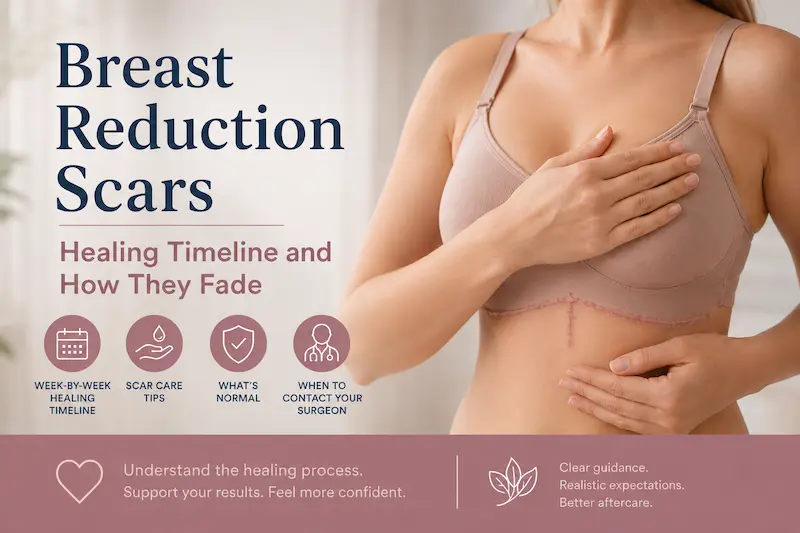
Breast reduction scars usually look pink, firm, raised or slightly angry in the first weeks, often becoming most noticeable around weeks 4 to 8 before gradually flattening and fading over 12 months or more. They rarely disappear completely, but with careful incision planning, tension control, silicone therapy, sun protection and realistic aftercare, most scars settle into much paler, softer lines.
If you are considering AKM’s breast reduction surgery, it is natural to think about relief from neck pain, shoulder grooves or unwanted breast weight first. Then the second thought arrives: “What will the scars look like?” That question deserves a clear, non-sugar-coated answer.
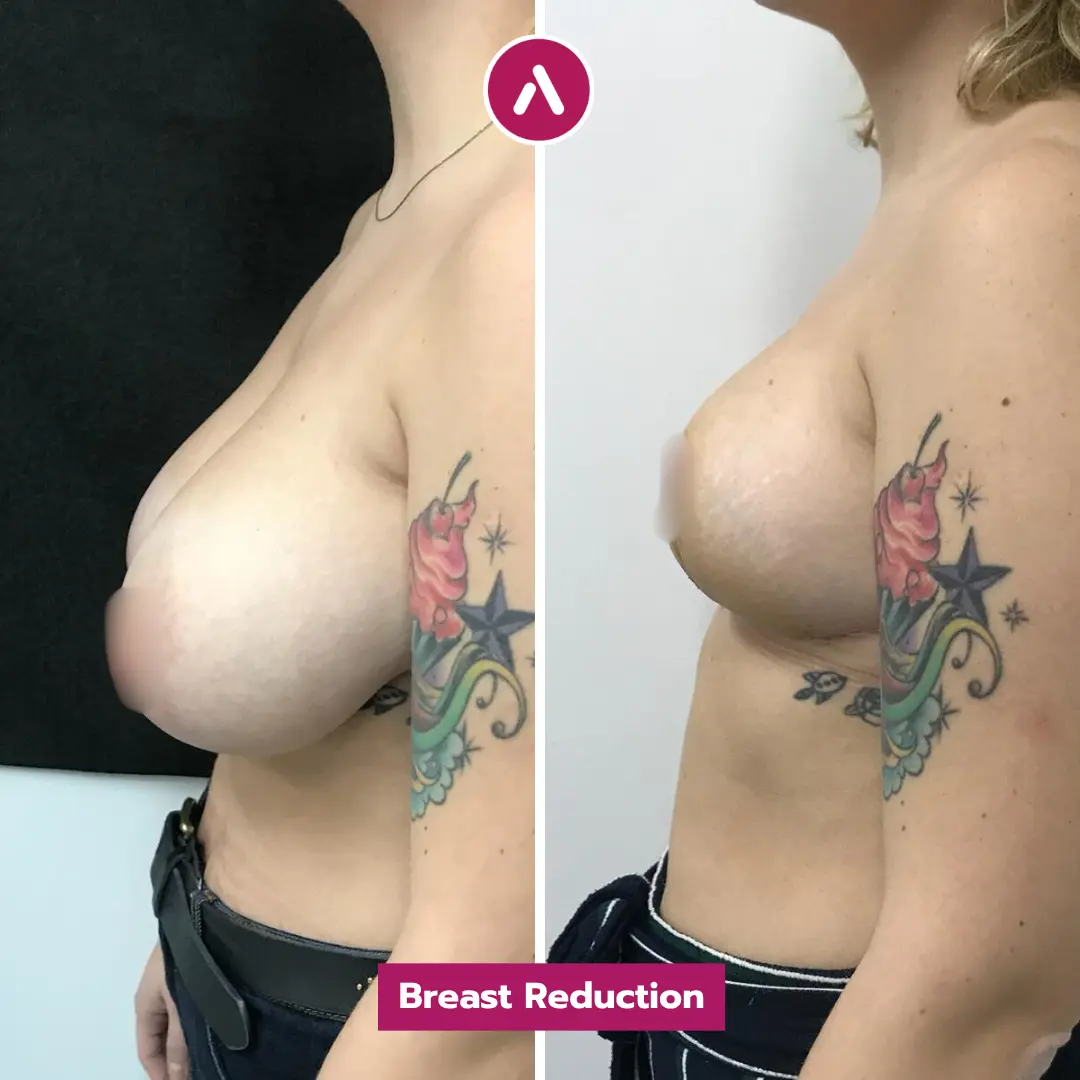
Breast reduction scars are permanent surgical marks. They are also predictable. Where they sit depends on the incision pattern your surgeon uses, how much tissue needs to be removed, your skin quality, your healing biology and how well the wounds are protected during recovery.
This guide focuses only on the scar-healing timeline: where breast reduction scars sit, what they usually look like week by week, what is normal, and which signs should be raised with your surgeon. It does not cover breast size planning, pricing or result galleries in detail; those belong on their own dedicated pages.
Table of Contents
Where Breast Reduction Scars Actually Sit
Before you can judge whether a scar is healing well, you need to know where it is expected to be. Breast reduction incisions are not random. They follow specific lines that allow the surgeon to remove excess tissue, reshape the breast and reposition the nipple-areola complex while keeping blood supply as safe as possible.
For UK patients comparing options at home and abroad, this is one of the most important consultation points. The scar pattern is decided before surgery, not after it. Ask your surgeon to draw it, explain why that pattern suits your anatomy and describe which parts are usually most visible once healed.
Anchor, lollipop and rare free-nipple patterns
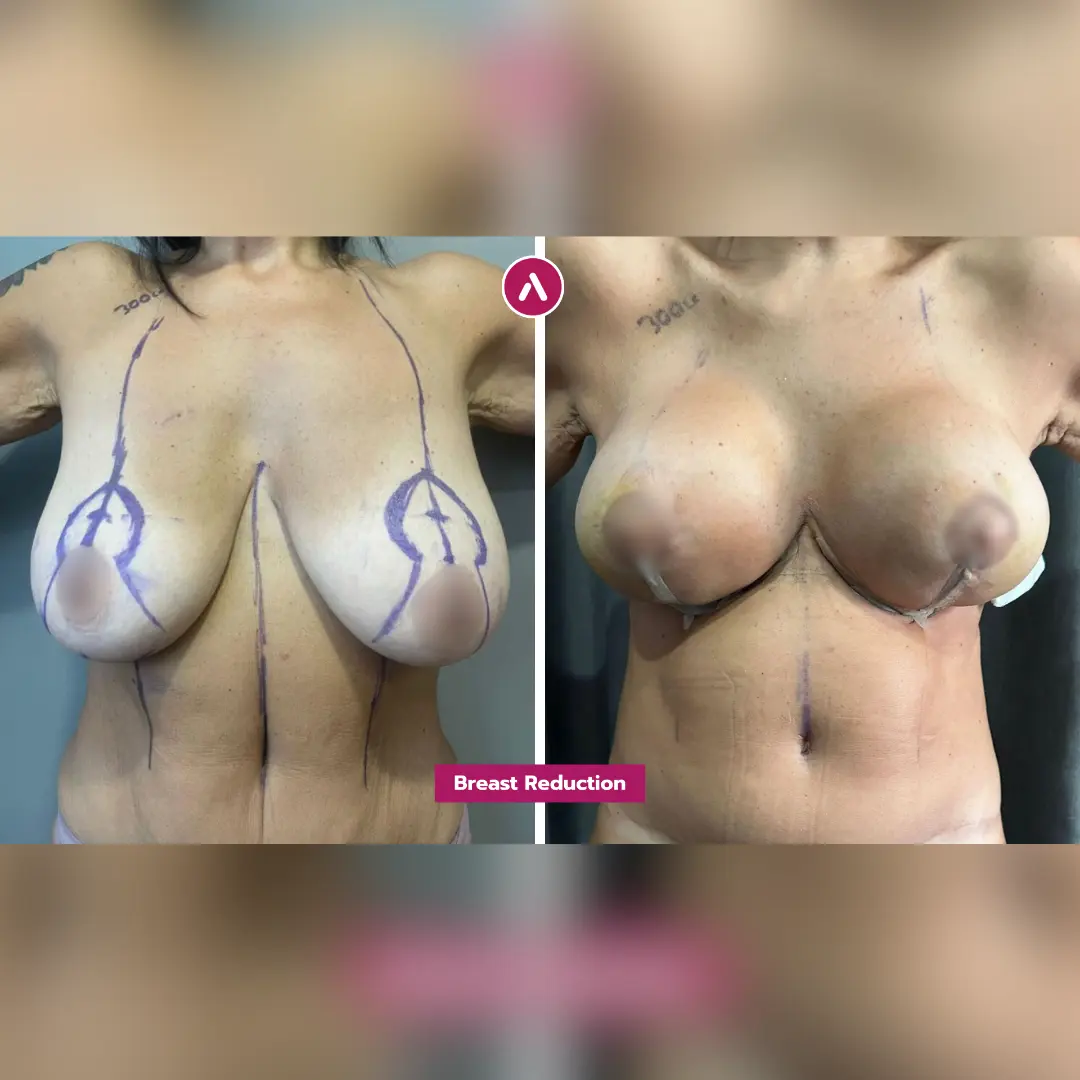
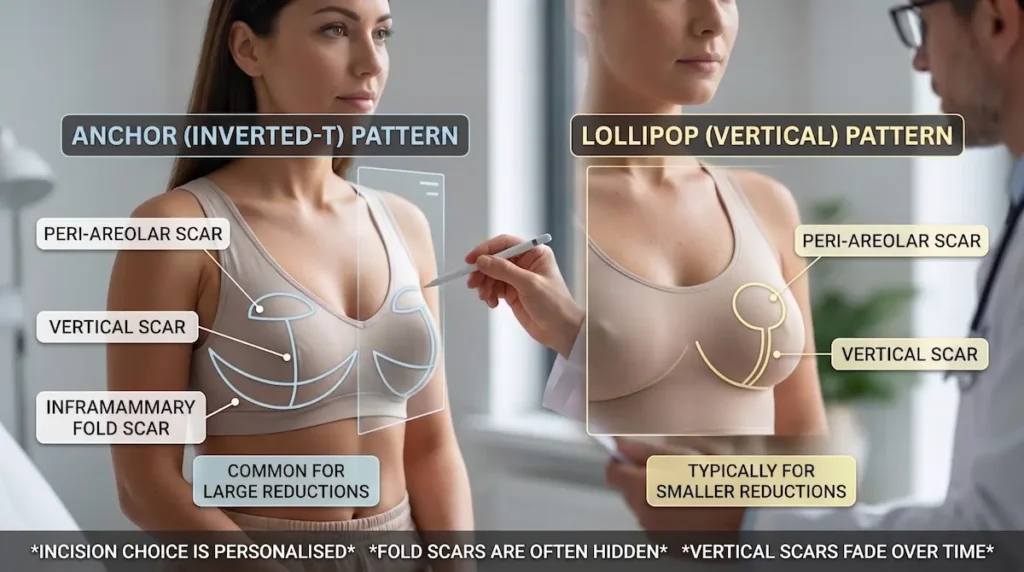
The most common breast reduction scar pattern is the anchor scar, also called an inverted-T scar. It usually has three parts: a circle around the areola, a vertical line from the areola to the breast fold, and a horizontal line hidden along the crease beneath the breast.
The second common pattern is the lollipop scar, sometimes called a vertical scar. This includes a scar around the areola and a vertical line down to the lower breast, but little or no horizontal scar in the fold. It is typically used when less skin needs to be removed.
A free-nipple graft pattern is much less common and usually reserved for very large reductions where nipple blood supply cannot be safely preserved on a tissue pedicle. It can create different healing and pigmentation expectations around the areola. Your surgeon should explain this clearly if it applies to you.
Breast reduction scars can look similar to uplift scars at first glance, but the operations are not the same. A reduction removes breast tissue as well as skin, while an uplift mainly reshapes and raises the existing breast. For that distinction, see how breast uplift scars differ.
Why incision choice drives scar length
Scar length is driven by the amount of reshaping required. A small reduction with good skin elasticity may need a shorter vertical pattern. A heavier breast, significant droop, wide breast base or large skin excess often needs the extra control of an anchor incision.
This does not automatically mean an anchor scar is “bad”. In many patients, the longer incision gives the surgeon better control over shape, symmetry and lower-pole tightening. A shorter scar is only an advantage if it still allows a safe, well-shaped result.
The horizontal part of an anchor scar is usually placed in the inframammary fold, where the breast naturally meets the chest wall. In bras and many swimsuits, this line is often covered. The vertical scar is usually the most visible early on because it sits on the lower breast surface.
What the scars look like in the first days
In the first few days, the incisions usually look like fine surgical lines covered with dressings, tapes or glue. There may be bruising, swelling and mild puckering around the stitches. The breast itself may sit high, feel tight and look slightly boxy or swollen. That is not the final shape.
The areola edges may look crinkled or uneven at first because the skin is swollen and the tissues are under tension. The vertical scar can look firm or ridged. The fold scar may feel tender because it sits where a bra band later rests.
At this stage, the priority is wound closure, not cosmetic fading. Your surgeon’s instructions on dressings, support bras, showering and arm movement matter more than any scar cream. Do not start silicone, massage or active scar treatment until the incisions are fully closed and your surgical team has cleared it.
The Week-by-Week Healing Timeline
Breast reduction scars do not fade in a straight line. They often look tidy in the first two weeks, then become redder, firmer or more raised as collagen production increases. This can worry patients because the scar seems to be getting worse just when they expected it to improve.
That “worse before better” phase is common. Scar tissue is living tissue. It thickens, remodels, softens and pales over time.
| Stage | Typical scar appearance | Usually normal? | Supportive action |
|---|---|---|---|
| Weeks 1–3 | Fresh lines, tapes or glue, swelling, mild bruising, tightness | Yes, if there is no spreading redness, pus or wound opening | Follow dressing instructions, wear support garments, avoid tension |
| Weeks 4–8 | Pink, red, raised, itchy or firmer scars | Often yes; this is a common collagen-building phase | Start silicone only once cleared, protect from friction and sun |
| Months 3–6 | Scars begin to flatten, soften and lose some redness | Yes, gradual improvement is expected | Continue silicone, gentle massage if advised, avoid UV exposure |
| Months 9–12+ | Paler, flatter, softer lines; some colour may remain | Yes, scar maturation may continue beyond one year | Review persistent thick, painful or dark scars with your surgeon |
Weeks 1–3: fresh, taped and swollen
During the first three weeks, the scars are still early wounds. They may be hidden beneath surgical tape, glue or dressings, so you might not see the full incision line immediately. Swelling can make the skin look shiny, tight or slightly uneven.
Mild redness directly along the incision, light bruising, tenderness and itch can be normal. The breast fold may feel sore because the lower scar sits in a high-movement area. A supportive surgical bra helps reduce pulling and friction while the wounds seal.
Avoid inspecting the scars too often. It is easy to panic over small day-to-day changes when the tissue is still settling. Instead, take photos only if your clinical team asks for them, and follow your dressing schedule exactly.
Weeks 4–8: the “looks worse” raised and pink phase
This is the phase that surprises many patients. Around one to two months after surgery, breast reduction scars may look redder, thicker or more raised than they did at week two. They can also feel itchy or firm under the fingertips.
This does not automatically mean poor healing. Your body is laying down collagen to strengthen the wound. Early scar tissue is often more active, more coloured and more textured before it matures.
That said, “normal active healing” is not the same as ignoring warning signs. Increasing pain, heat, spreading redness, discharge, wound separation, fever or a sudden change in one area should be raised with your surgeon rather than watched passively.
Months 3–6: flattening and softening
By three to six months, many patients start to see the scars calm down. The vertical line may feel less rope-like. The areola scar may blend better with the surrounding skin. The fold scar can still be firm because that area experiences bra pressure and movement.
This is often when silicone gel or sheets become most useful, provided the wounds are fully closed and your surgeon has approved them. Consistency matters. A few days of silicone will not transform a scar, but regular use over weeks and months can support a softer, flatter result.
It is also common for different parts of the same breast to heal at different speeds. The right and left breast may not match perfectly during this stage. One vertical scar may be redder, while the other may already be fading.
Months 9–12+: final fade and maturation
At nine to twelve months, scars are usually much less active. They often become flatter, smoother and paler, although the final colour depends on your skin tone, genetics, scar tendency and sun exposure. Some patients continue to see improvement into the second year.
The goal is not invisible skin. The realistic goal is a mature scar that is soft, stable and as discreet as your biology allows. For many patients, the scars become a trade-off they accept because the physical relief from breast reduction is significant.
If a scar remains raised, painful, very itchy, thick, stretched or darker than expected after a year, it is worth discussing scar management with your surgeon. Options may include longer silicone use, steroid treatment, laser, camouflage or, rarely, scar revision once the tissue has fully matured.
What’s Normal vs Worth Flagging
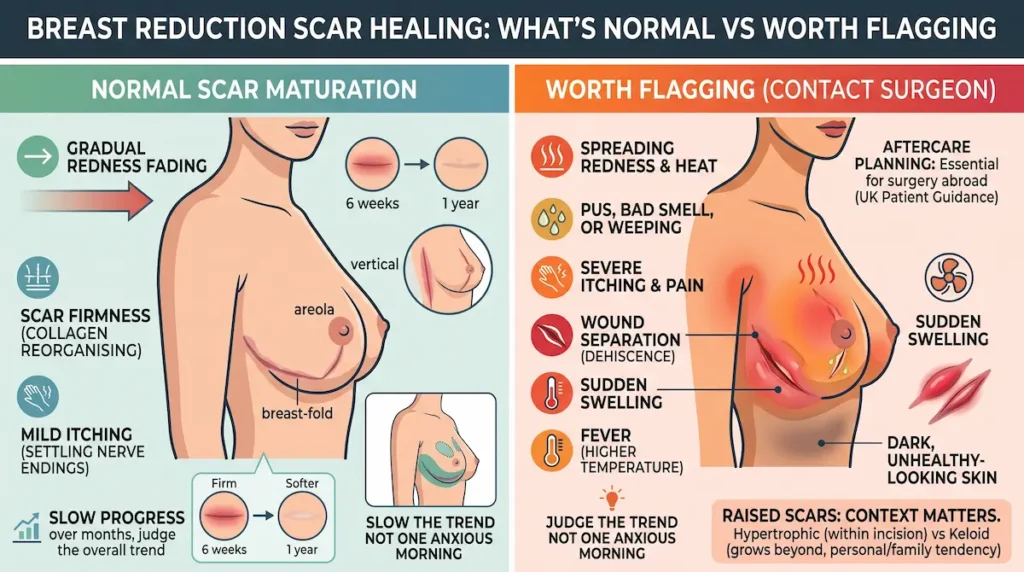
Scar healing can feel confusing because “normal” does not always look neat. A breast reduction scar can be red, raised, itchy, firm or slightly uneven while it is still maturing. Those changes are often part of healing, especially in the first few months.
The key is pattern. A scar that is gradually becoming softer, flatter and less angry is usually moving in the right direction. A scar that suddenly becomes hotter, more painful, open, weeping or increasingly swollen deserves a prompt review.
Normal redness, firmness and itch
Redness along the incision line is common in the early phase. So is firmness. Scar tissue is made from collagen, and early collagen can feel thick or tight before it reorganises into a softer line.
Itching can also be normal, particularly once the wound is closed and the nerve endings begin to settle. It should be mild and manageable, not severe enough to disturb sleep or make you want to scratch the skin open.
You may also notice small differences between the areola scar, the vertical scar and the breast-fold scar. This is expected. These areas have different skin thickness, tension and friction, so they rarely mature at exactly the same speed.
Scar maturation is slow by design. The scar you see at six weeks is not your final scar; it is active healing tissue. Judge the trend over months, not the mirror image on one anxious morning.
Signs to raise with your surgeon
Some scar changes should not be dismissed as “just healing”. Contact your surgical team if you notice spreading redness, increasing heat, pus, a bad smell, wound separation, fever, sudden swelling, worsening one-sided pain or a dark area of skin that looks unhealthy.
Raised scars also need context. A firm, red scar that stays within the incision line may be hypertrophic. A scar that grows beyond the original incision may suggest keloid-type scarring. Both should be assessed, especially if you have a personal or family tendency to form raised scars.
For UK patients: BAAPS patient guidance separates ordinary scar maturation from more problematic hypertrophic and keloid patterns. For a patient travelling for surgery, the practical question is simple: who reviews the scar if it becomes raised, itchy, painful or wider than expected once you are back in the UK?
This is where aftercare planning matters. Before booking surgery abroad, ask how wound photos are reviewed, how quickly your surgeon responds, and when you would be advised to see a local clinician.
How body area and skin tone affect appearance
The lower breast is a high-movement area. Bras, arm movement, sleeping position and swelling can all place small amounts of tension on the healing skin. More tension can mean a wider or more noticeable scar, particularly along the vertical line or breast fold.
Skin tone also affects how scars look. On lighter skin, early scars may look pink or red before fading. On deeper skin tones, scars may look darker, browner or more pigmented, and some patients are more prone to hypertrophic or keloid-type scarring.
This does not mean darker skin cannot heal well. It means expectations and prevention should be more precise. If you have previously developed raised scars after piercings, caesarean section, burns or acne, tell your surgeon before your breast reduction.
Hormones, smoking, diabetes, nutrition, previous radiation, infection and wound tension can also affect scar quality. A good scar plan is not only about what you apply to the skin. It starts with safe surgery, clean wound healing and low-tension closure.
Supporting Scar Maturation
You cannot force a breast reduction scar to disappear, but you can create better conditions for it to mature. The essentials are straightforward: protect the incision while it is closing, reduce tension, avoid unnecessary friction, use scar therapies only when the skin is ready, and be patient enough to let collagen remodel.
UK patient guidance on scars commonly includes silicone products, massage creams and camouflage options once the wound has healed. The NHS overview of scar care and scar treatments is a useful baseline, but your own surgeon’s instructions should come first after breast reduction.
Silicone sheets or gel and timing
Silicone is one of the most commonly used non-invasive scar treatments. It comes as sheets or gel, and it is usually introduced only after the incision is fully closed, dry and free from scabs or open areas.
The aim is not instant fading. Silicone may help some scars become flatter, softer and less symptomatic over time. Evidence is not perfect, but silicone remains widely used because it is simple, low-risk for many patients and supported by a long history of scar-management practice.
The Cochrane review on silicone scar therapy notes that the research quality is limited, so it is better to think of silicone as supportive care rather than a guaranteed fix. It works best when used consistently and correctly.
Do not apply silicone over broken skin, scabs, oozing areas or irritated wounds. If a product causes rash, sweating, maceration or discomfort, stop and ask your surgical team before continuing.
Sun protection and why it matters
Fresh scars are more vulnerable to pigment changes. UV exposure can make a healing scar darker and more noticeable, especially in the first year. Breast scars may not be exposed day to day, but holidays, swimwear and sunbeds can still be a problem.
Once your incisions are fully closed and your surgeon allows normal skin care, keep scars covered or protected with a suitable broad-spectrum SPF. Do not use sunbeds while scars are maturing. They add risk without benefit.
This is particularly important for areola scars and any part of the vertical scar that may be exposed in low-cut swimwear. If you are travelling after surgery, plan clothing that protects the chest without rubbing the incision lines.
Massage, taping and patience
Scar massage may be recommended once the wounds are fully closed. It can help some patients with tightness, sensitivity and scar mobility, but timing matters. Massaging too early can irritate healing tissue or place tension on the incision.
Taping may also be used by some surgeons to reduce tension across the scar. If your surgeon recommends it, follow their exact schedule. Tape that is applied too aggressively or removed roughly can damage fragile skin.
Patience is part of scar care. That sounds unsatisfying, but it is true. Most breast reduction scars need many months to lose their active redness and firmness, and some continue improving into the second year.
Good aftercare is not about doing ten things at once. It is about doing the right few things at the right time: support, clean healing, low tension, silicone when appropriate, sun protection and early review if a scar starts behaving abnormally.

Realistic Long-Term Appearance
By the time breast reduction scars are mature, they should feel much calmer than they did in the early months. They are usually flatter, softer and less colourful, but they are still scars. A good result means the scars sit in planned positions, heal without major thickening and become discreet enough that they no longer dominate how you feel about the result.
This is also the stage where expectations matter. A patient who expects every mark to vanish may feel disappointed even with normal healing. A patient who understands the trade-off often sees the scars differently: visible at close range, but acceptable compared with the physical relief and improved proportion that breast reduction can bring.
How faded scars typically look at 1–2 years
At one year, many breast reduction scars have faded from bright pink or red to a paler shade. On lighter skin, they may look white, silvery or faintly pink. On deeper skin, they may settle as a slightly darker or lighter line than the surrounding skin.
The areola scar often blends better over time because it sits at the border between two natural colour zones. The vertical scar may remain the most noticeable because it is on the visible lower breast. The fold scar is usually easier to hide in the crease, although it can sometimes become wider if there was more tension in that area.
Some patients continue improving between 12 and 24 months. That is why many surgeons avoid scar revision too early unless there is a clear medical reason. Revising a scar before it has matured can create another active scar and restart the same healing cycle.
Camouflage, tattooing and revision as last resorts
If a mature scar remains noticeable, there are options, but they should be considered in the right order. Silicone, sun protection and time usually come first. If the scar is raised, itchy or thick, your surgeon may discuss steroid treatment, laser or other medical scar therapies.
Skin camouflage can help some patients cover colour mismatch, particularly for special occasions or swimwear. Areola tattooing may be considered when pigment change around the areola is the main concern, but it should only be done once healing is stable and with a practitioner experienced in medical tattooing.
Scar revision is usually a last resort. It may improve a widened or poorly placed scar, but it cannot remove the fact that your skin forms scars. The goal is a better scar, not scar-free skin.
If you want to understand the financial side without turning this scar guide into a price article, use the dedicated page on breast reduction costs compared with the UK. For visual expectations, review the healed-scar results gallery rather than relying on early post-op photos.
Setting expectations before surgery
The best time to think about scars is before surgery, not after the dressings come off. Ask where each incision will sit, which scar is likely to be most visible, whether your skin history increases your risk, and how aftercare is handled once you return to the UK.
For travelling patients, this conversation should be practical. How are wound photos reviewed? Who decides whether a scar is normal or needs treatment? What happens if you need local assessment? A polished consultation that avoids these details is not enough.
For UK patients: If you are comparing Turkey with a Harley Street consultation, use the same standard of questioning. Ask about surgeon credentials, scar placement, wound-closure technique, aftercare access and complication protocol. The same questions apply to AKM, and our guide on how to verify a plastic surgeon’s credentials in Turkey shows how to check them.
Scar planning is not only technical. It is emotional too. You should know what you are accepting: permanent scars that usually fade, placed where they can be hidden as much as anatomy allows, in exchange for a smaller, lighter and more proportionate breast shape.
If scarring is one of your main worries, ask AKM to assess your breast shape, likely incision pattern and aftercare plan in a virtual consultation before you make a decision.
Frequently Asked Questions: Breast Reduction Scars
These are the questions patients most often ask once they understand that breast reduction scars are permanent but usually improve with time. The answers below are general education only; your own scar risk depends on your anatomy, skin history, incision pattern and wound healing.
How long do breast reduction scars take to fade?
Fading does not mean disappearing. A mature scar is usually flatter, softer and paler than an early scar, but it may still be visible close up.
Why do my scars look worse after a month?
What matters is whether the scar is following a gradual healing trend. If it becomes hot, painful, open, weepy or increasingly swollen, contact your surgeon rather than assuming it is normal scar activity.
Do silicone sheets really work?
Only start silicone when your surgeon says the skin is ready. Using it over scabs, broken skin or irritated wounds can make healing worse instead of better.
Will the scars ever fully disappear?
The realistic aim is a discreet mature scar: one that is stable, comfortable, well placed and much less noticeable than it was during early healing.
Are anchor scars worse than lollipop scars?
If you need more tissue and skin removed, an anchor pattern may give better shape control. The best scar pattern is the one that safely matches your breast size, skin excess and reshaping needs.
Can darker skin tones expect different scarring?
It means your surgeon should take your skin history seriously. Previous raised scars after piercings, acne, burns, caesarean section or other surgery should be discussed before your breast reduction.
When should I worry about a breast reduction scar?
Early review is not overreacting. It is how small wound or scar problems are managed before they become harder to treat.
Can I prevent breast reduction scars completely?
The aim is controlled, well-placed, well-managed scarring rather than scar-free surgery.
Is scar revision worth it?
Revision creates a new wound, so it is not a simple eraser. A good surgeon will explain what can realistically improve and what cannot.
Medical disclaimer: This article is for general information only and does not replace personalised medical advice. Healing, scarring and results vary from patient to patient. Always follow your own surgeon’s instructions and seek qualified medical review if you are worried about wound healing, infection or abnormal scarring.