
Upturned Nose: Causes, Correction and Realistic Limits
AI Summary
- An upturned nose has a tip that points upward. It describes appearance and does not on its own mean you need treatment.
- Rhinoplasty can often lower or lengthen an upturned tip, but how far depends on your anatomy, earlier surgery and breathing. Filler only adds volume and carries vessel-injection risks.
- Risks include bleeding, infection, breathing difficulty, an unsatisfactory appearance and possible revision surgery. Results vary individually.
- AKM Clinic plans the trip through a Patient Host, includes a final in-person check-up before you fly, and schedules virtual follow-ups at 1, 3, 6 and 12 months.
Summary generated by AI, fact-checked by our medical experts
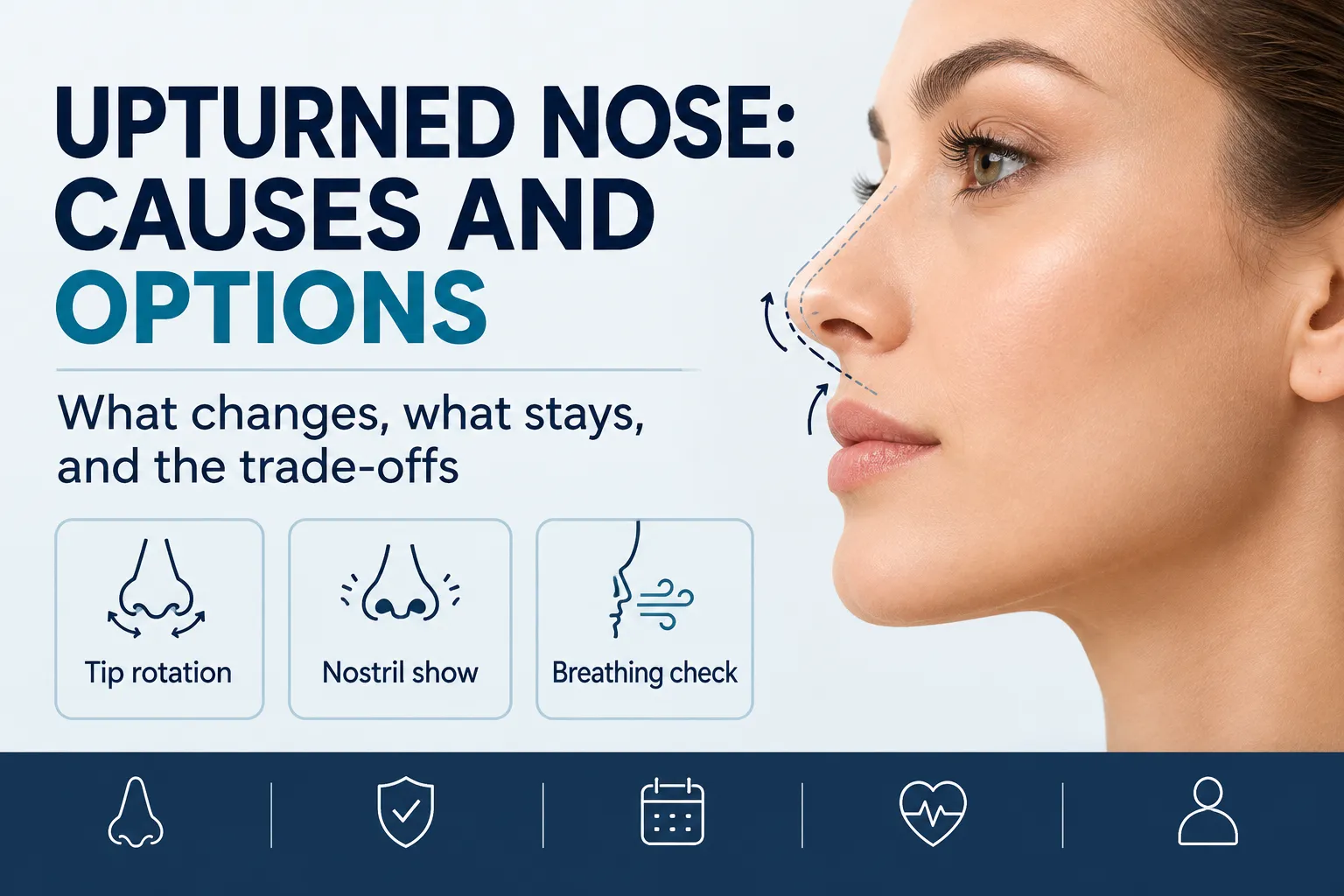
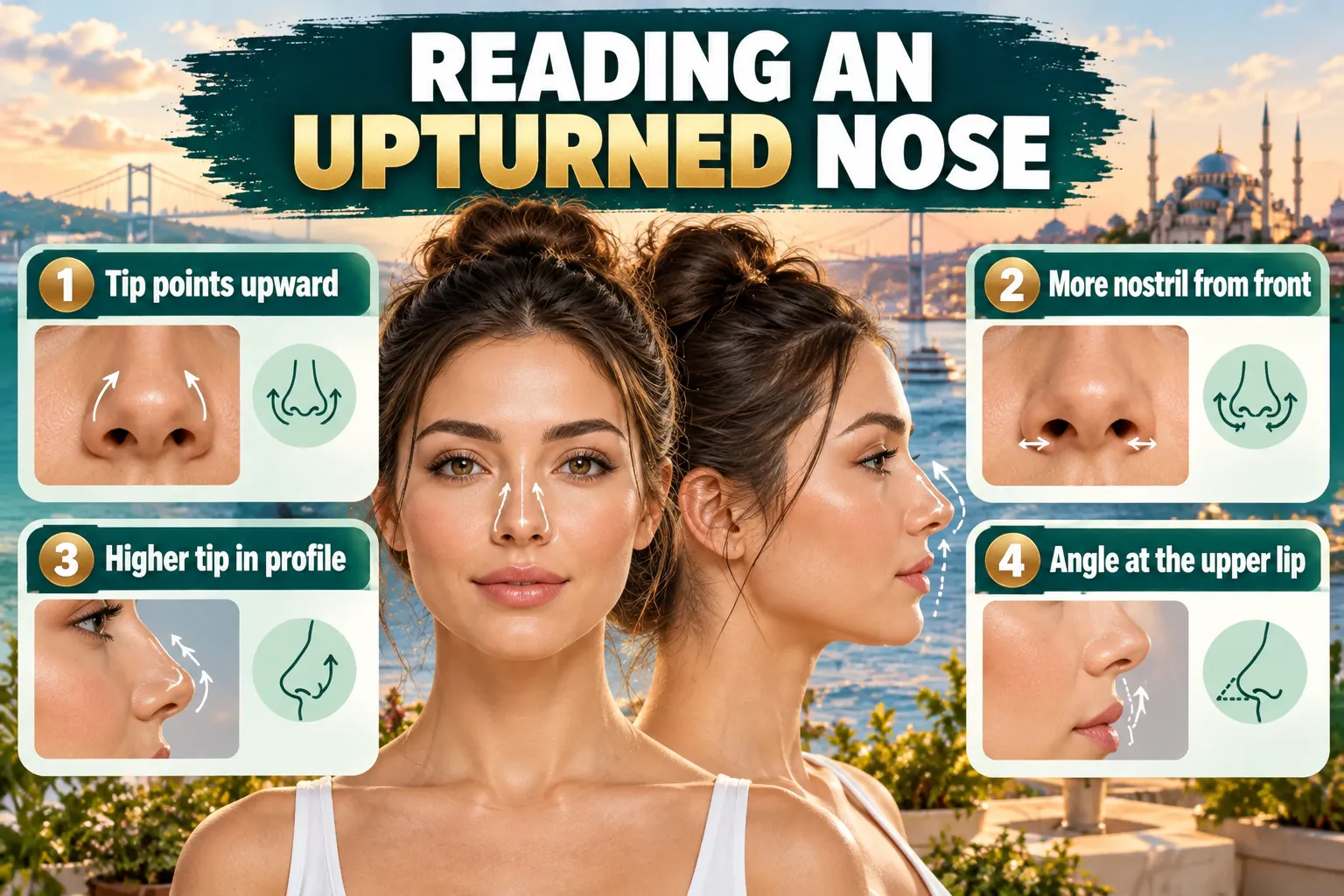
An upturned nose is a nose whose tip points upward, showing more of the nostrils from the front and a higher tip in profile. It is a normal variation, not a medical problem. If it bothers you, rhinoplasty can change tip position, but how far depends on your anatomy, your breathing and your goals.
Start with what bothers you. Some people want less visible nostrils from the front. Others want a softer side profile, or simply want to hear that leaving the nose alone is a reasonable choice. Our rhinoplasty in Turkey guide covers the procedure in full, so this article stays with the upward-pointing tip and the decisions around changing it.
You don't need to pick a technique before you ask. Bring photos, any records of earlier nasal surgery and a plain description of the change you have in mind. That is enough to begin.
Table of Contents
What does an upturned nose actually mean?
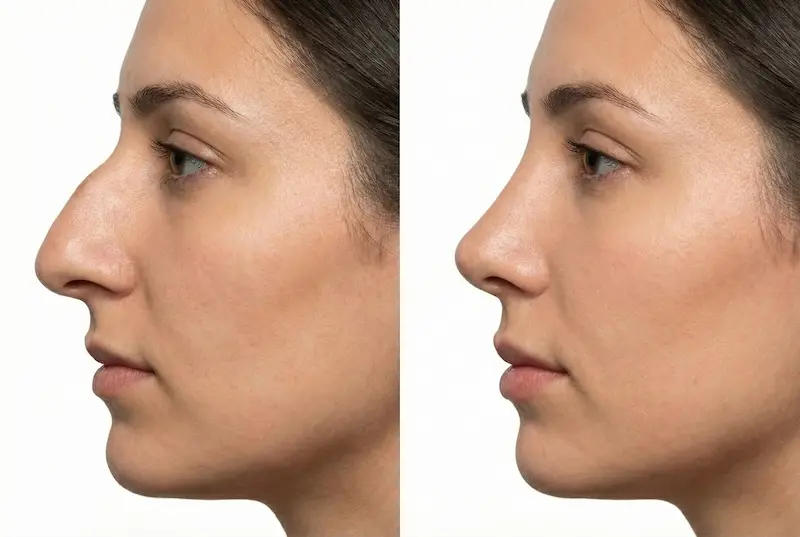
The term describes direction, not a disorder. Surgeons talk about tip rotation, meaning how far the tip of the nose turns up or down. You may also see it called a celestial, retroussé, button or snub nose. All of these are labels for appearance.
What does a slightly upturned nose look like?
A slightly upturned nose has a gentle lift at the tip rather than a strong tilt. Many people notice it mainly in side profile. From the front, the usual sign is a little more nostril on show.
Is it attractive? That is a matter of taste, and plenty of people like the look. Our clinic works on a Natural First principle, rejuvenation rather than alteration, because the most successful aesthetic surgery is the kind nobody notices. If your nose already suits your face, that belongs in the decision.
Be precise about what bothers you. Less nostril show, a lower tip and a different profile are separate requests. Telling the surgeon which one matters gives a clearer starting point than the word "upturned" alone.
Why do the front view and side profile look different?
Each view shows different features. From the front, the surgeon looks at the nostril openings, the rims and the symmetry of the tip. In profile, the focus moves to the tip's position against the bridge and the upper lip, including the nasolabial angle, where the base of the nose meets the lip.
Our surgical team weighs both views together. One photo is never the whole assessment. If you like your profile but dislike the front view, say so early.
Does an upturned nose need treatment?
Not on appearance alone. As Mayo Clinic's overview of rhinoplasty explains, the surgery can change how the nose looks, how you breathe, or both. Treat those as two separate questions. Changing the shape won't automatically fix a breathing complaint.
Sort your concerns before you book anything:
- Do you want a change in appearance, or mainly an explanation of your nose shape?
- Do you have breathing symptoms you want checked?
- Which features would you rather keep exactly as they are?
A consultation commits you to nothing. The honest answer can be to leave your nose alone.
Why is my nose upturned naturally or after rhinoplasty?
Start with the timeline. Has your tip always pointed up, or did you notice a change after an injury or an operation? That history shapes the whole consultation, and you don't have to work out the cause yourself.
Has your nasal tip always pointed upward?
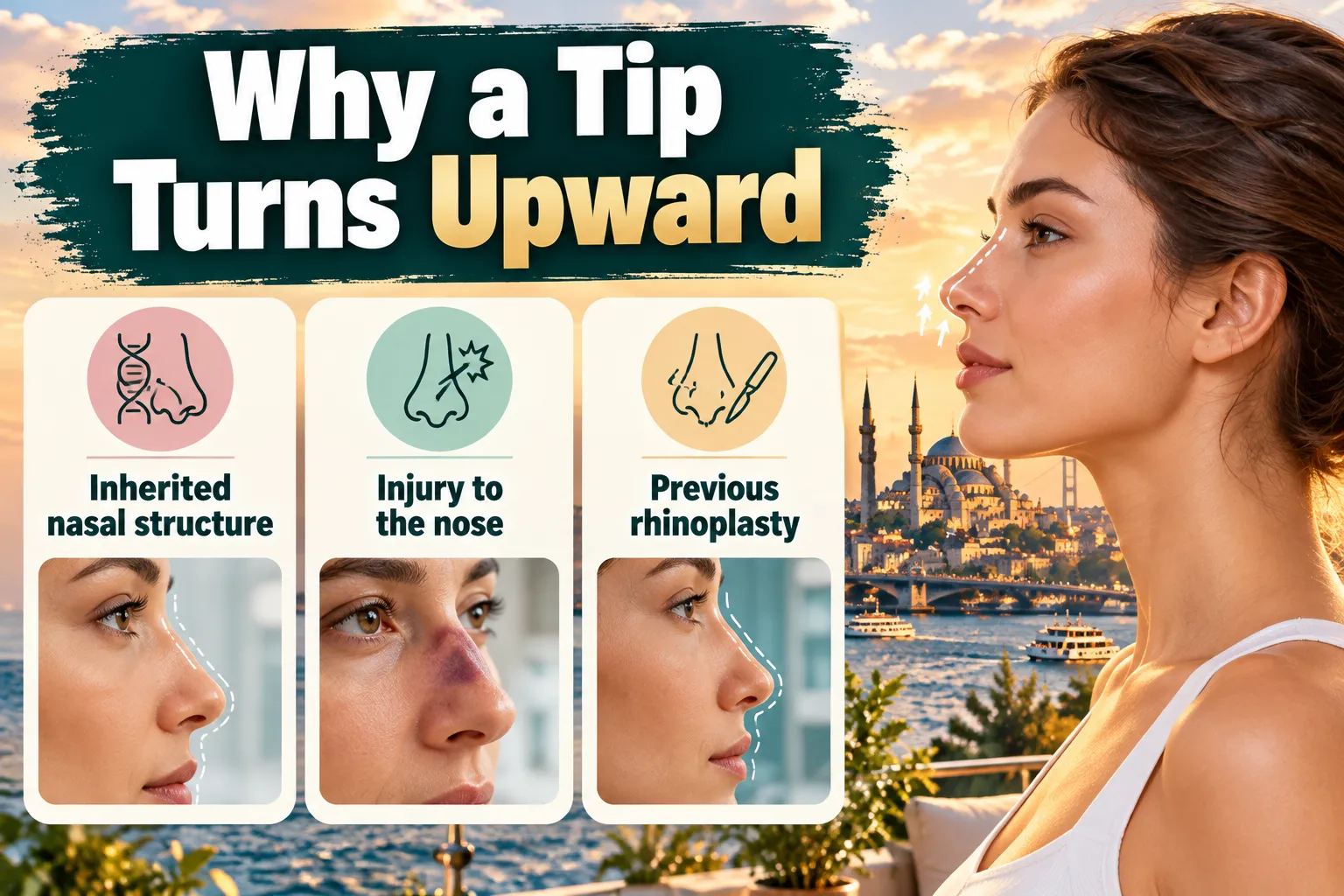
A tip that has always turned up may reflect the cartilage and bone structure you inherited. Family resemblance is useful background. It is not a diagnosis.
Older photos help here. Bring ordinary pictures taken before the concern began, not only close-ups chosen to show the problem. Then tell the team what, if anything, looks different now.
Did the change follow an injury or previous surgery?
An injury can change the shape of the nose, including the tip. Describe what happened and any treatment you had. Mention whether your breathing changed too.
A previous rhinoplasty can leave the tip of the nose looking different from what was intended. That is one possibility, not your diagnosis. Explain what the first operation set out to do and which part of the result bothers you now.
Ask for reasoning, not just a label. Which examination findings point to overrotation? Is the issue the tip's position, its structural support, or both?
What history helps explain the change?
Write a short timeline before the consultation. Include:
- Earlier photos showing your nose before the concern arose.
- Previous nasal procedures and their dates.
- Operative reports, if you can get them.
- Injuries and any treatment that followed.
- Breathing symptoms and when you first noticed them.
- The specific change you want the surgeon to assess.
Gaps in your records are common. Tell the team what you know, what you only half remember and what is missing. Keep breathing notes separate from appearance notes so neither gets lost in the discussion.
For a bump along the bridge rather than a lifted tip, see our guide to arched nose surgery and hump correction.
Can rhinoplasty correct an upturned nose?
Often it can, within limits. Rhinoplasty reshapes or repositions cartilage and, where needed, bone to change the shape of the nose, including the tip. How much is possible depends on your anatomy, any earlier surgery and your breathing. Ask what surgery would change and what it would leave alone.
What would surgery need to change?
Name the goal clearly. Do you want the tip to point less upward, the nose to look longer, or less nostril on show from the front? Those requests guide the plan far better than a photo of someone else's nose.
Ask our surgical team whether the plan concerns tip position, apparent length, structural support or a mix. Ask for the answer in everyday language. You should understand why each change is proposed before anyone discusses technique.
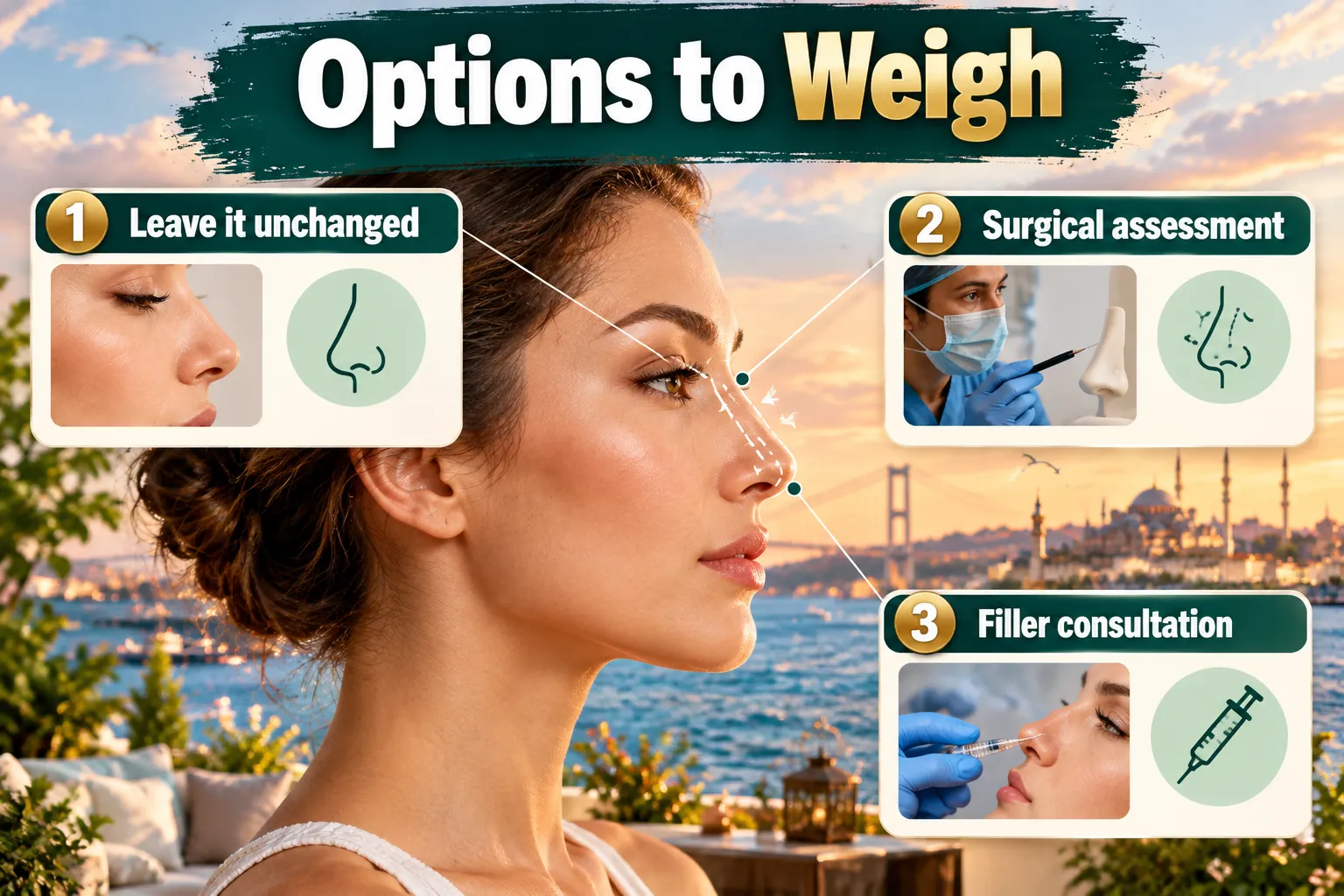
Doing nothing is still an option. Use this table to organize the decision, not to choose a treatment before an examination.
| Option | What it aims to do | Main limitation | Question to ask |
|---|---|---|---|
| Leave your nose unchanged | Avoid an elective operation | Your appearance concern stays as it is | Would I rather live with this than accept the trade-offs? |
| Surgical assessment | Plan a structural change to the tip | An assessment is not a promise of a particular result | What could change, and what would stay the same? |
| Filler consultation | Add volume in a chosen spot | Volume only, with serious risks if injected into a vessel | Why would filler suit my specific goal? |
Keep expectations specific but flexible. No surgeon can promise perfect symmetry or rule out a further operation. Results vary individually.
Can filler lower an upturned nasal tip?
Don't assume it can. Dermal fillers add volume; they don't rebuild cartilage. The FDA's information on dermal fillers warns that accidental injection into a blood vessel can cause tissue death, vision problems including blindness, or stroke.
Ask what the injection would actually achieve for your goal. Ask whether the product is approved for that area. A nonsurgical label does not make the risk disappear.
Keep the two conversations apart. A volume change and a structural change are different things, and one consultation should not quietly replace the other.
What can before-and-after photos actually tell you?
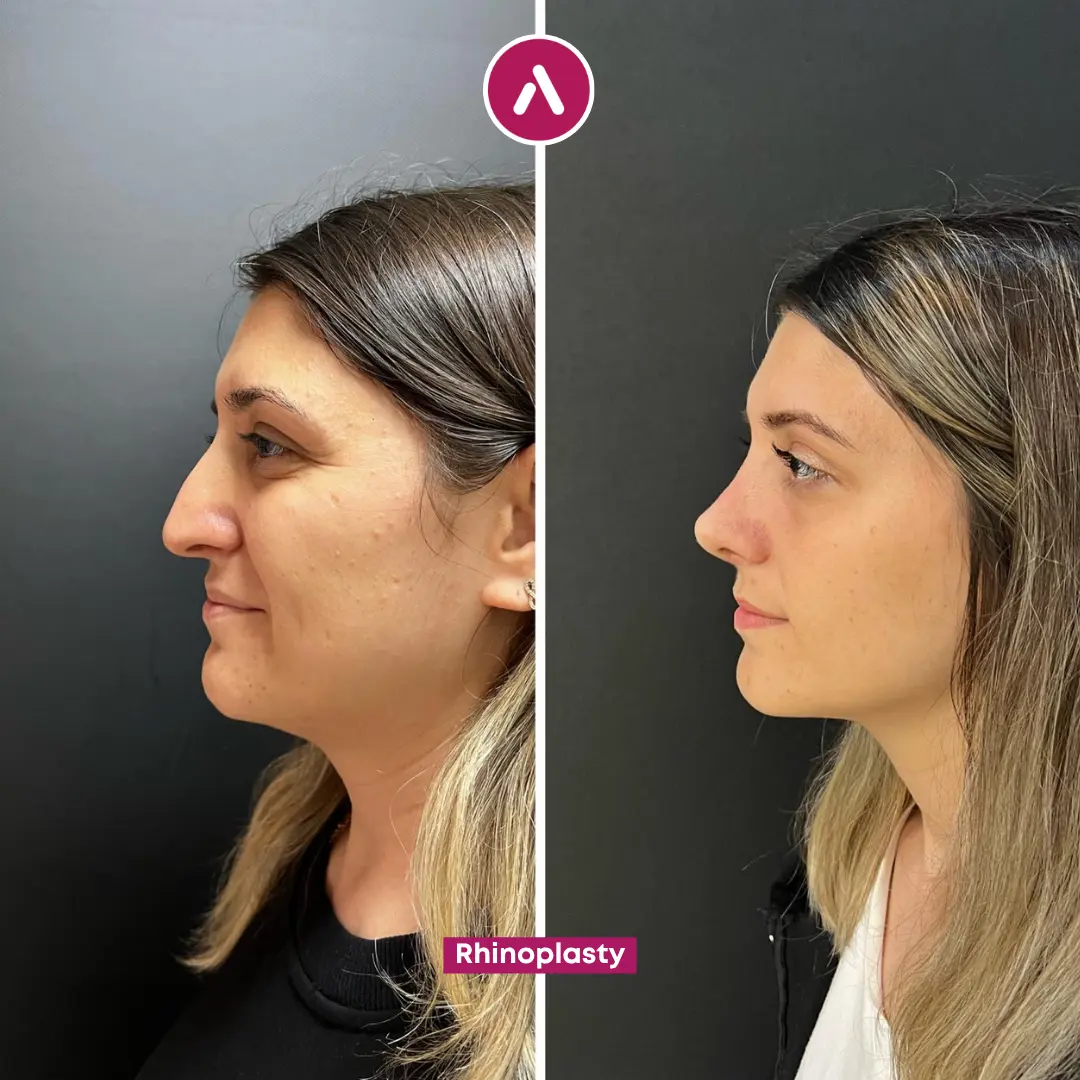
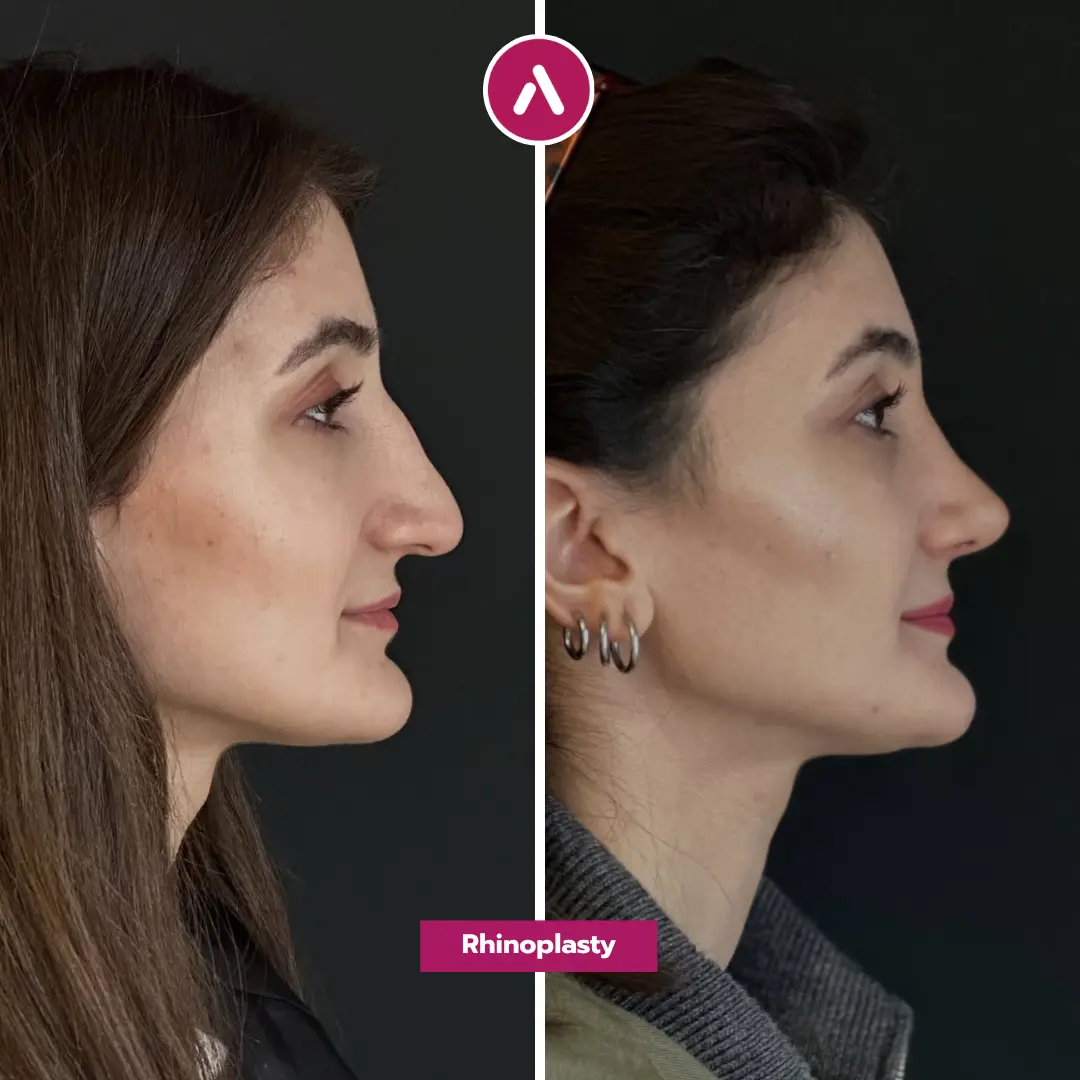
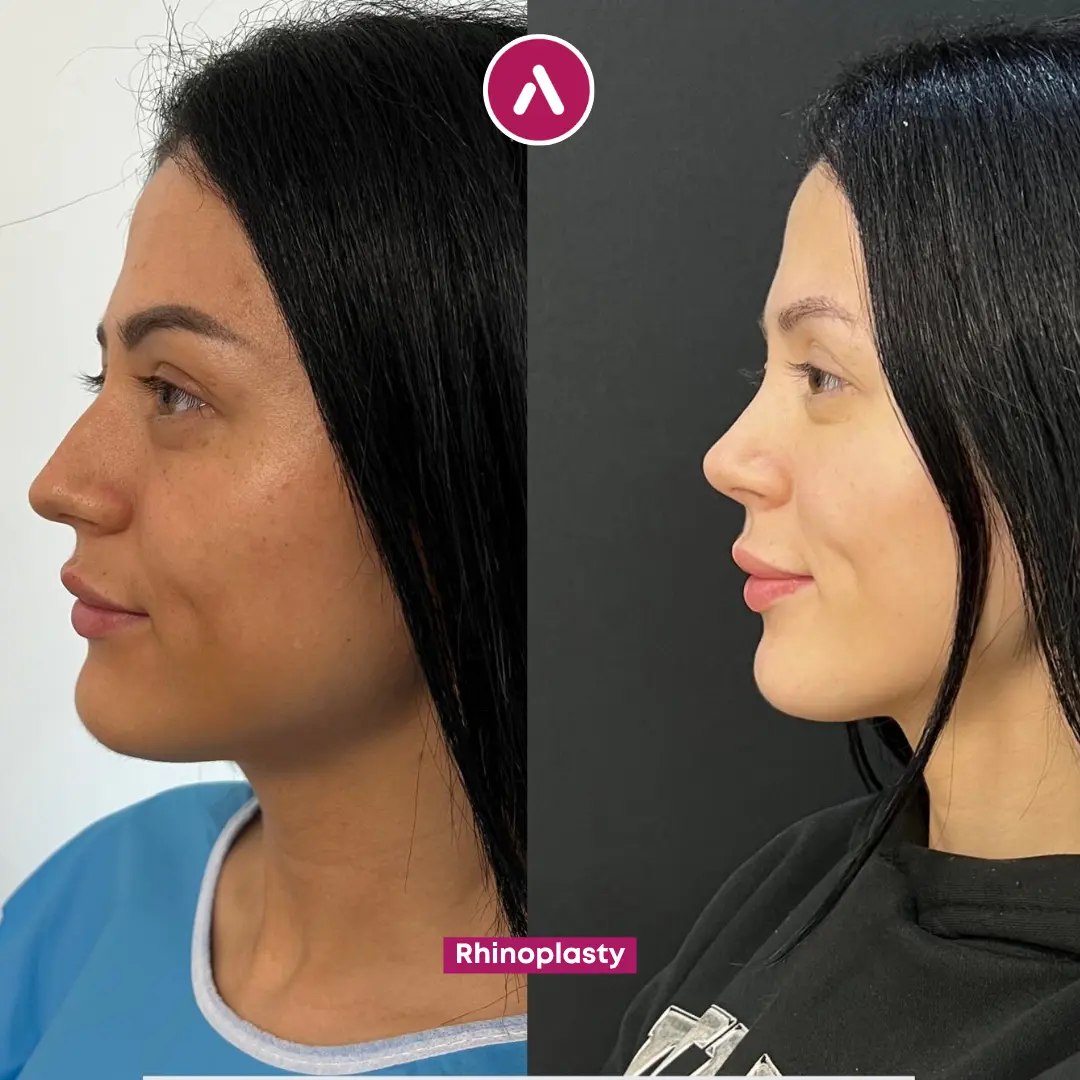
Photos are good for questions. When you look through the rhinoplasty before-and-after gallery, ask which cases started with anatomy like yours and when each follow-up photo was taken. Another person's result is not your forecast.
Reference images can help you explain a preference. Point to the feature you like, then ask whether that change fits your face. The useful answer is a clear account of possibilities and limits, not a promise that your nose will match the picture.
Who is a candidate for upturned nose rhinoplasty?
Candidacy involves more than how your tip looks. Photos start the conversation, but they don't replace an examination. A full assessment covers your medical history, the structure of your nose inside and out, your breathing and your expectations.
What should an in-person nasal examination assess?
Tell the surgeon exactly what bothers you. Is it visible nostrils, the profile, or a change since an earlier procedure? Then ask what the examination shows that the photos could not.
Bring a complete history, including:
- Medical conditions and any previous problems with anesthesia.
- Prescription medicines, over-the-counter products and supplements.
- Tobacco, vaping and other nicotine use.
- Previous nasal procedures and any operative records.
- Breathing symptoms and how they affect daily life.
Don't leave out symptoms because your main goal is cosmetic. Be just as clear about changes you don't want. That sets a practical boundary for the plan.
When should surgery be postponed or declined?
A consultation is not a booking. If your history is incomplete, records are missing or a health concern is unresolved, ask what needs clearing up before you consider a date. Talk about nicotine use openly.
Expectations need the same scrutiny. If only an exact copy of a reference photo would satisfy you, or you can't accept some uncertainty about the result, you may not be a good candidate right now. Ask the surgeon which goals are realistic for your nose and which are not.
Test your readiness with these questions:
- What specific concern would the surgery address?
- Which features would stay unchanged?
- What breathing trade-offs need discussing?
- Is leaving my nose alone still a reasonable choice?
You can decline or take more time. If the online discussion and the in-person findings differ, ask for the open questions in writing before you finalize travel.
Who assesses rhinoplasty at AKM Clinic?
Rhinoplasty is led by Dr. Göknil Gültekin, an otolaryngologist and facial plastic surgeon. She holds European Board of Otorhinolaryngology-Head and Neck Surgery credentials and is a Fellow of the European Academy of Facial Plastic Surgery. Her focus is primary, revision and preservation rhinoplasty.
The clinic has carried out more than 2,000 facial surgeries since 2013. You can read who we are and how the clinic works before you talk to us. Ask who will assess you, who will operate and when the final decision on suitability is made.
What are the risks of lowering an upturned nasal tip?
Appearance is only part of the decision. Before agreeing to lower your tip, ask what trade-offs the change involves. Your consent discussion should cover breathing, healing and the chance of revision surgery, meaning a second operation to fix a concern.
Could appearance or breathing become worse?
Yes, both are possible. The ASPS page on rhinoplasty safety lists risks that include:
- Bleeding.
- Infection.
- Risks linked to anesthesia.
- Numbness or changed sensation.
- Difficulty breathing through the nose.
- An unsatisfactory nasal appearance.
- The possible need for revision surgery.
Make the discussion specific to a lifted tip. Ask about overcorrection, where the change goes further than intended, and undercorrection, where it falls short. Ask about any asymmetry that might remain.
More change is not automatically better. Ask the surgeon where they would stop, and which change they would advise against for your face.
What happens if healing or the result is not as expected?
Report it rather than diagnosing it yourself. Contact your Patient Host and ask for the surgical team's assessment. Describe what changed, when you noticed it and any other symptoms, and send the photos the team asks for.
Have an emergency plan before you travel. Shortness of breath, chest pain or an irregular heartbeat need local emergency care right away. WhatsApp is for questions, not emergencies.
Get responsibilities in writing before surgery. Ask:
- Who assesses a concern while you are in Istanbul, and after you get home?
- Where would you be examined or treated if needed?
- What happens if you need another procedure or a longer stay?
- Which extra costs would be yours?
Don't assume a revision is included. The written agreement should spell it out, so you are not guessing from a package description.
Can recovery technology remove surgical risk?
No device does that. The clinic offers hyperbaric oxygen therapy (HBOT) and a low-level laser therapy (LLLT) system with 424 medical-grade laser diodes at 650 nm for skin healing. Think of them as part of aftercare, not as part of the consent decision.
Ask whether either has a role in your plan and whether it is included. Ask what benefit the surgeon expects for your procedure specifically. Device availability is never a reason to skip questions about complications.
How does an upturned nose change during rhinoplasty recovery?
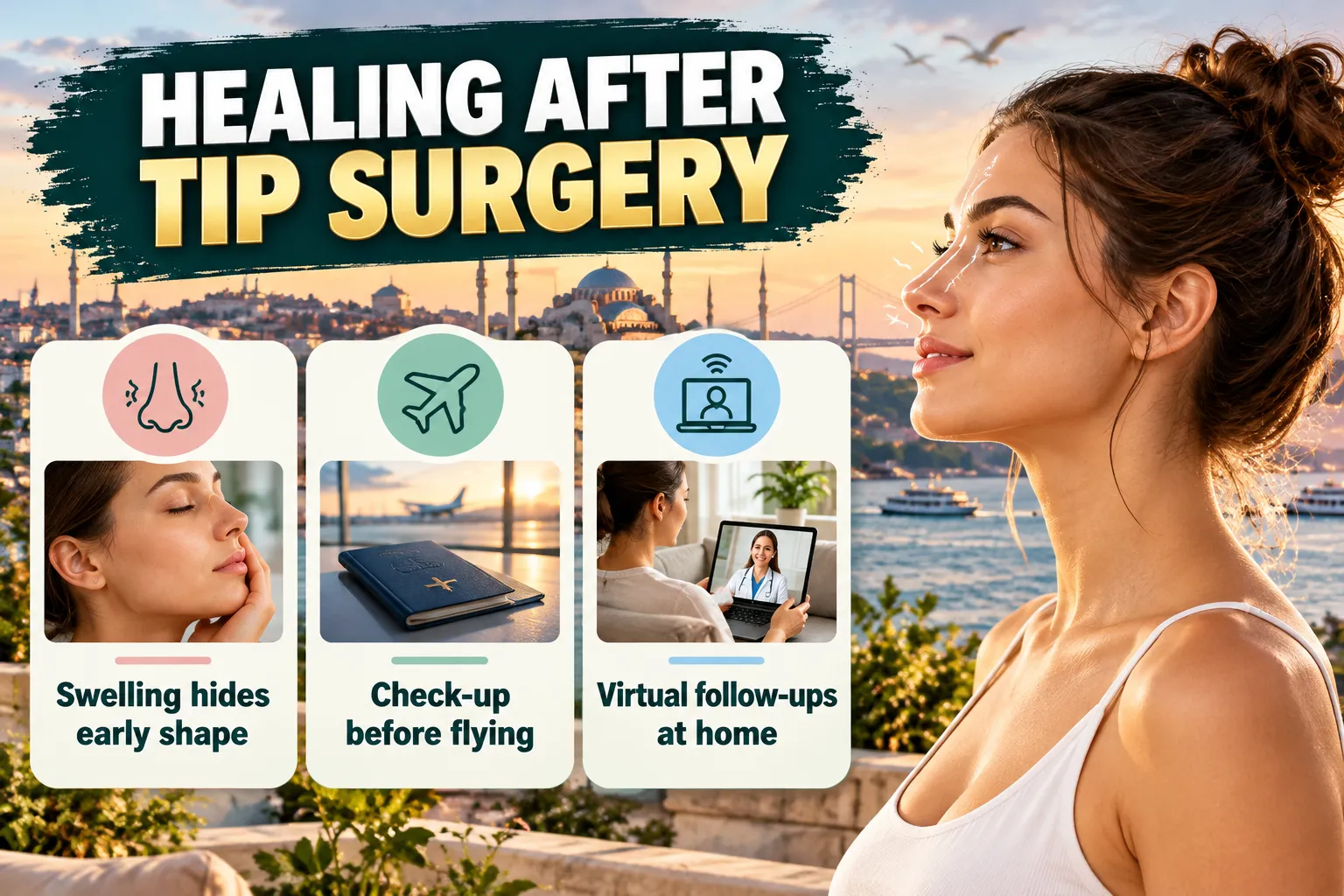
Early looks are not the final result. So an early view of your nose needs context, not a verdict.
Why should you avoid judging the tip immediately?
An early photo is not a forecast. Ask your surgeon what they see at your stage of healing and what is still uncertain. Comparing your tip with strangers' recovery pictures rarely helps.
Don't assume the tip will drop. Don't decide you need another operation either, at least not without an examination and a proper talk about healing.
Use each review for different questions:
- Early checks in Istanbul: is healing on track, and are your care instructions clear?
- Ongoing healing: discuss changes you notice in appearance or breathing, with photos the team requests.
- Later review: compare the result with your original goals and raise any remaining concern.
What should you monitor while healing?
Be specific. Instead of "my nose looks too high," say what changed, when, and whether it involves appearance, discomfort or breathing.
For a nonurgent question about appearance, ask how to photograph your nose the same way each time. Don't start massage, taping or someone else's recovery routine unless your surgical team tells you to.
After surgery, our medical team monitors you closely. You receive medication and written care instructions, and your Patient Host is on WhatsApp around the clock. Severe pain or unexpected symptoms should be raised at once, not saved for the next appointment.
How should recovery affect your flight home?
Plan the return around medical review. A long-haul flight soon after surgery can raise the risk of blood clots. Ask about your own itinerary, including any connections.
Before flying home, every patient has a final in-person check-up with the doctor. Use it to ask what to do if a concern comes up during travel. Another patient's departure date is not a guide to yours.
Logistics sit beside clinical care, not in place of it. A private driver meets you at Istanbul Airport (IST) or Sabiha Gökçen (SAW), and you recover at a selected five-star hotel such as the Point Barbaros Hotel. Our page on recovery hotels and private transfers explains the arrangements.
How do I plan an upturned nose consultation in Istanbul?
Begin with the free online consultation. Send photos and describe what concerns you about your tip. Your dedicated Patient Host then arranges a personal treatment plan and quote, and coordinates the date, hotel and transfers.
What should you send for the online consultation?
Lead with your concern, not a technique. Say what you notice about your tip and what you want to keep.
Prepare the following for the team:
- Clear photos, taken the way the team asks.
- Details of earlier nasal surgery, injections or injuries.
- Your medical history and current medicines.
- Any breathing concerns you want checked.
- A plain description of the change you would like to explore.
If you have records from earlier procedures, ask how to send them. Tell your Patient Host where your history is uncertain instead of guessing dates or procedure names. Treat the online stage as preparation, not a commitment.
What must your written treatment plan make clear?
The plan should be specific to your nose. It names the proposed rhinoplasty, the concern it addresses and any decisions still open for the in-person exam.
Check the scope before booking flights:
- What the quote includes and excludes.
- Which appointments you must attend in Istanbul.
- How post-op questions and follow-up are handled.
- Whom to contact if you need extra care, and on what terms.
Our all-inclusive package covers the surgeon's and anesthesia fees, pre-op tests, post-op check-ups, a five-star hotel with breakfast, private airport and clinic transfers, and a patient coordinator with translation around the clock. Packages for other procedures, such as the facelift, neck lift and upper eyelid package, are planned separately and do not stand in for a rhinoplasty plan.
Ask about anything vague. In particular, ask who pays for additional treatment. Don't read a revision policy into the phrase "all-inclusive."
How does follow-up continue after you return home?
Care continues once you land. Your Patient Host books virtual follow-ups so the doctor can check healing and answer questions.
| Virtual follow-up | What to bring to the call |
|---|---|
| 1 month | Photos as instructed, breathing notes, questions about daily activities |
| 3 months | Changes you have noticed in the tip and nostrils |
| 6 months | Any concern that has persisted since the last call |
| 12 months | A review of the result against your original goals |
Between calls, ask what to send and which concerns need an in-person exam. If something is urgent at home, see a local doctor rather than waiting for a virtual appointment. The step-by-step patient journey shows how consultation, surgery and follow-up fit together.
This article is general education, not an individual medical assessment.
Frequently Asked Questions: Upturned Nose
Is an upturned nose rare?
There is no reliable figure for how common it is, so calling it rare would overstate the evidence. Nose shapes vary widely, and slight upward rotation is a familiar look. How common it is matters less than whether the shape bothers you.
Can an upturned nose tell you someone's ethnicity?
Treat it as a description of one person's anatomy, not of their ancestry. In a consultation, talk about the features you value and want to keep. A good plan works with your own face rather than toward a stereotype or someone else's nose.
Is an upturned nose treated differently in men?
Planning is individual, not based on a gender template. There is no single male nose shape or required tip angle. Ask how the proposed change fits your proportions and keeps the features you like.
What does a downturned nose mean?
It describes a tip that points downward rather than up. Like an upturned nose, it is an appearance description, not a diagnosis. If you consider treatment, say whether the concern is the tip at rest, when you smile, or both.
Can makeup make an upturned nose look less noticeable?
Subtle contouring can soften how the tip reads in photos and daylight. Test it in ordinary light, not through filters. It changes the look, not the structure. After surgery, ask your team before applying makeup near healing skin.
When can I wear glasses after surgery for an upturned nose?
Ask your surgeon before surgery, especially if you rely on prescription glasses. Frames rest on the bridge, so your surgeon will tell you when that is safe and what to do in the meantime. Don't pick the date yourself.
Do I need to remove my nose piercing before rhinoplasty?
List every nasal piercing in your pre-op information and follow your surgical team's instructions. Ask when removal is needed, whether a retainer is acceptable and when you may put jewelry back in. Get the guidance in writing before you travel.
Will US health insurance cover correction of an upturned nose?
Insurance rarely covers cosmetic rhinoplasty. Surgery for a documented breathing problem may qualify, but medical necessity decides, and treatment abroad adds another question. Ask your insurer directly and get any answer in writing before you book.
Related Treatments

Ready to Start Your Own Transformation Journey?
Join the 2,000+ patients who trusted Dr. Akif Mehmetoğlu and the AKM Clinic team. Your journey to a more confident, revitalized you begins with a simple, no-obligation conversation. Contact us today from the USA for your free virtual consultation.
#1: Get Your Free Personalised Quote
Start with a free, no-obligation online consultation. Share your photos, and our surgical team will provide a fully personalised treatment plan and a transparent, all-inclusive price package. No hidden fees.
#2: Secure Your Date & VIP Booking
Once you're ready, our dedicated patient coordinators will help you secure your procedure date. We'll handle all your bookings, including your 5-star hotel and private VIP airport transfers.
#3: Arrive in Istanbul & Meet Your Surgeon
Arrive at Istanbul Airport (IST) and be greeted by your private driver. Settle into your hotel and prepare for your in-person consultation, where you'll meet your specialist surgeon to finalise the details for your "natural, subtle, and revitalized" new look.