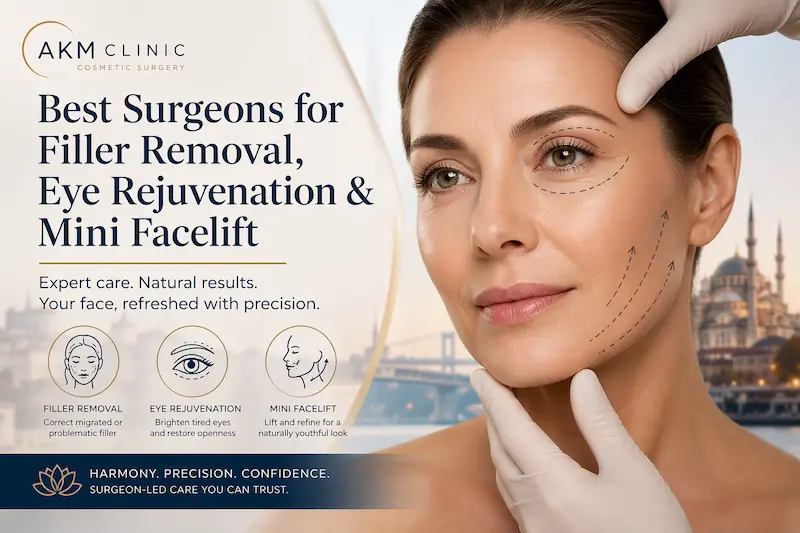
For many UK patients, searching for the best surgeons for filler removal is not really about finding somebody who can simply dissolve product. It is about finding a facial specialist who understands why the filler was placed in the first place, why it has gone wrong, and what the face needs next. In real life, concerns rarely arrive one at a time. A patient may have migrated cheek or tear trough filler, tired-looking eyes, early jowling, and a softening jawline all at once. That is why the most effective care is rarely a single tweakment. It is a surgeon-led plan designed to restore balance.
This is especially true for British patients comparing London clinics with Istanbul. The query best surgeons for filler removal eye rejuvenation mini facelift reflects a more informed type of patient: someone who has often already spent money on injectables, feels disappointed by the result, and now wants a solution grounded in anatomy, judgement, and long-term facial harmony. They do not want to look artificial. They want to look fresher, lighter, and more like themselves.
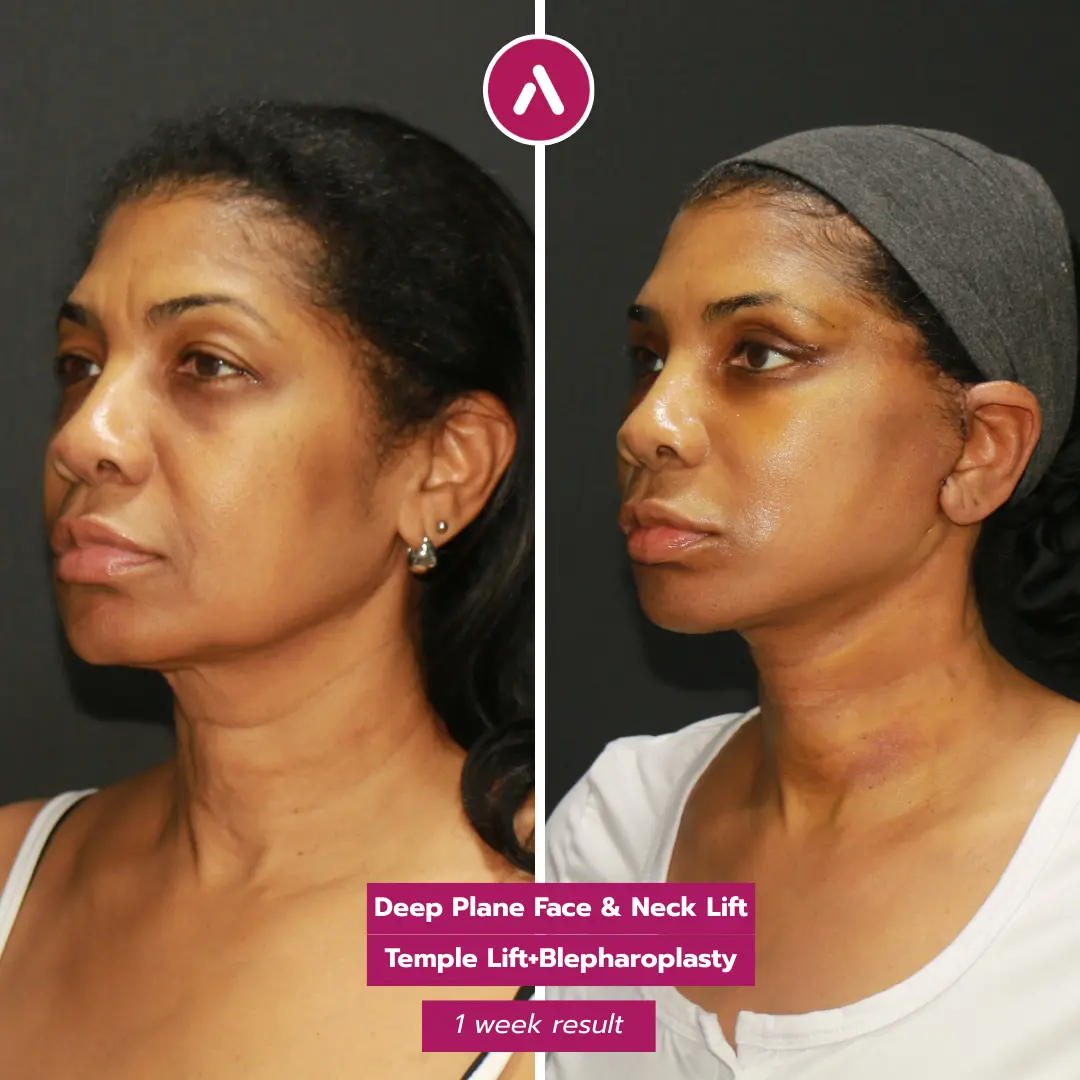
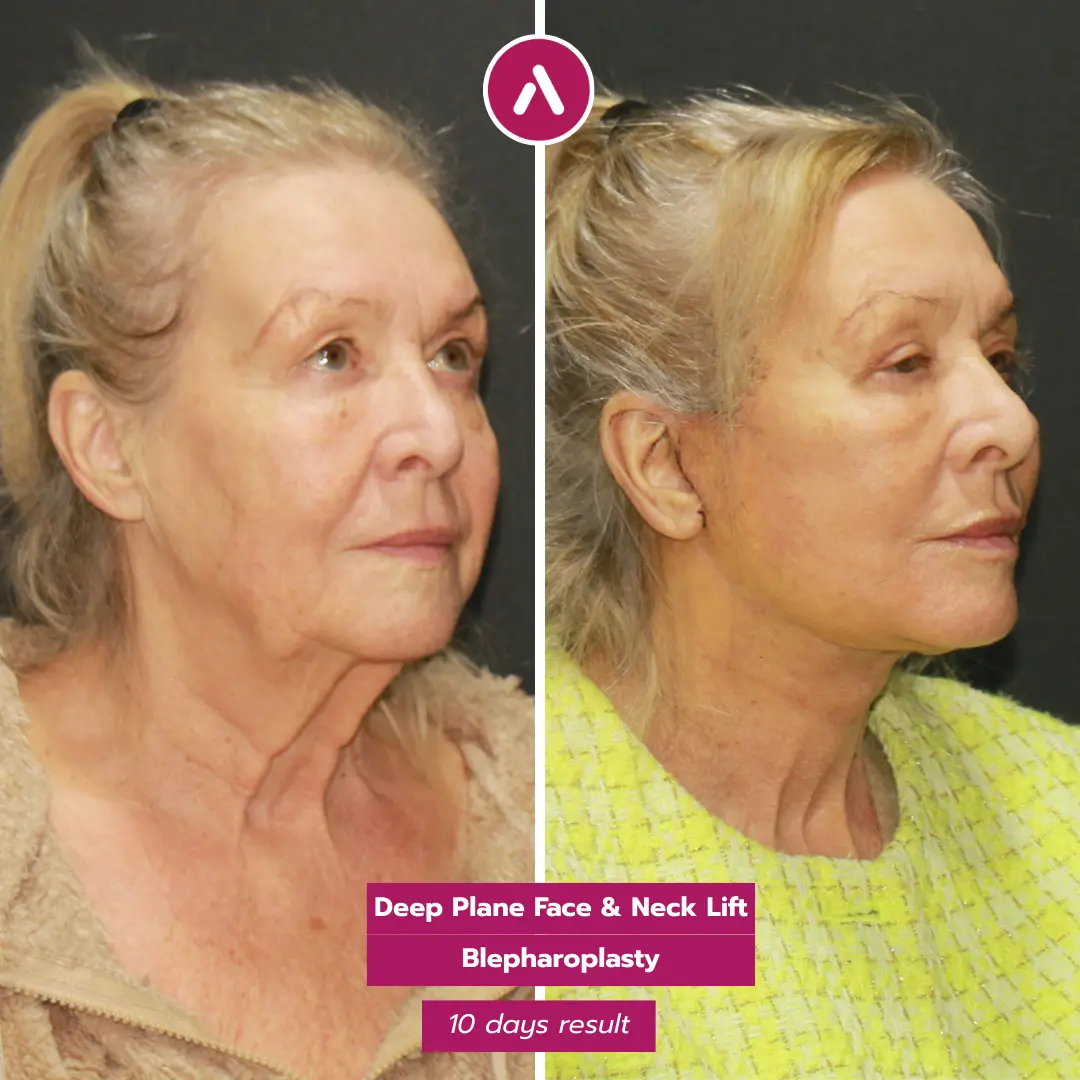
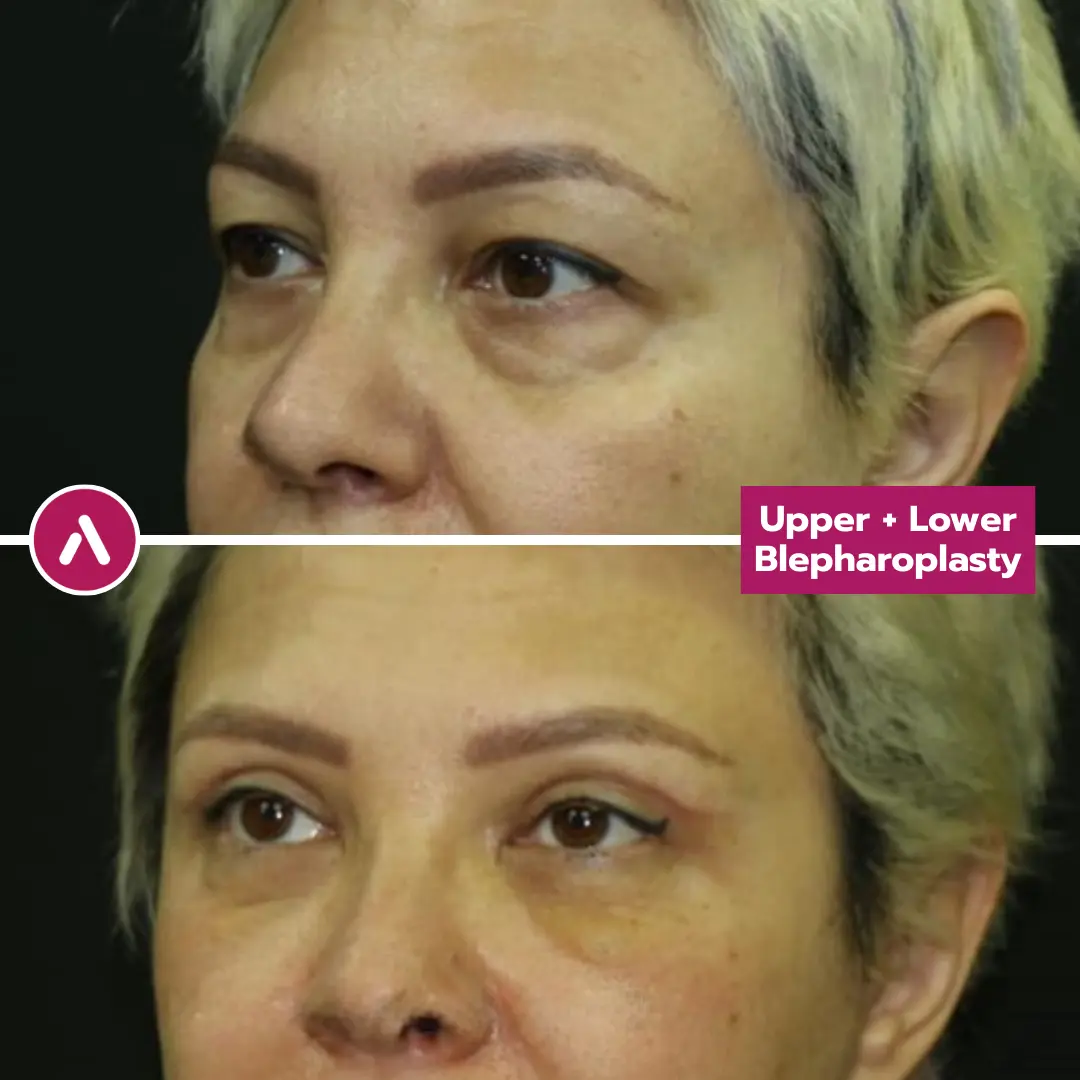
Modern facial rejuvenation is not guesswork. It is built on medical science, precise anatomical knowledge, and the ability to manage risk as well as aesthetics. Whether a patient is looking for a filler removal surgeon in Turkey, comparing the best filler removal surgeons in Turkey, or seeking an eye rejuvenation surgeon in Turkey they can trust, the real differentiator is clinical judgement. A good surgeon does not just ask, “What can I remove?” A good surgeon asks, “What has happened to the tissues, and what will create the most natural result for this face?”
At AKM Clinic, this conversation matters because many UK patients come to us after years of filler, conflicting advice, or frustration with looking tired despite repeated non-surgical treatments. For these patients, the goal is not more volume. It is clarity, subtlety, and a bespoke plan that may include filler removal, eyelid correction, or a mini facelift depending on what the face actually needs.
Table of Contents
Why Choosing the Right Surgeon Matters for Filler Removal and Facial Rejuvenation
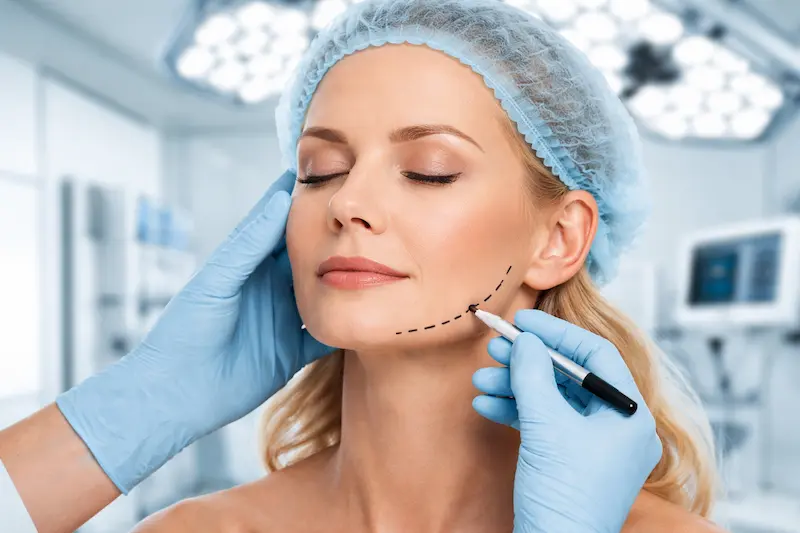
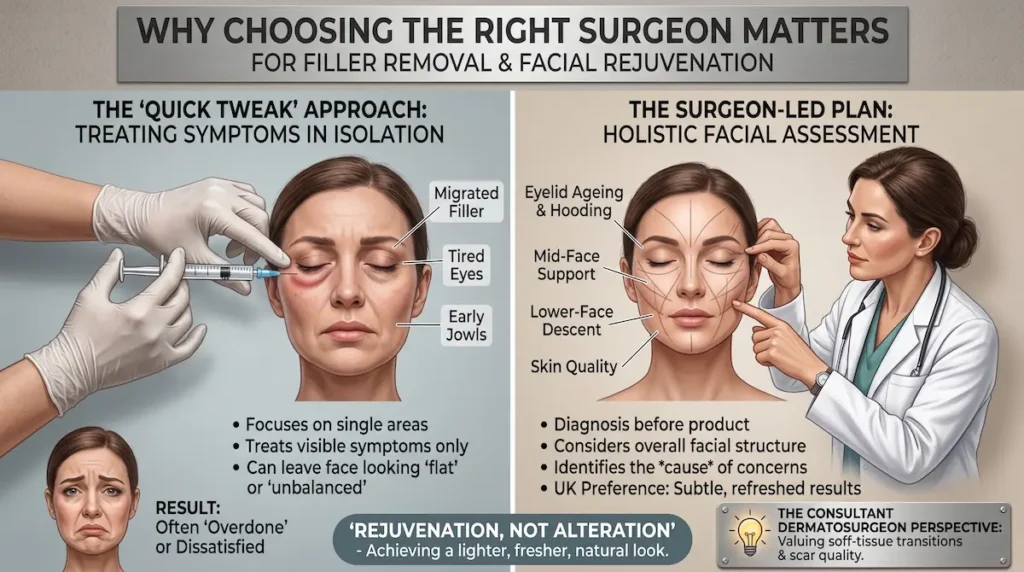
Choosing the right surgeon matters because filler problems are rarely isolated. A face that looks heavy, swollen, tired, or overfilled often reflects a combination of issues rather than one simple mistake. The wrong practitioner may treat only the visible symptom. The right surgeon looks at the whole facial structure, including skin quality, eyelid ageing, mid-face support, and lower-face descent, before recommending any intervention.
Why migrated filler, tired eyes, and early jowls should be assessed together
A patient may initially believe they only need dissolving. However, what appears to be “too much filler” is often part of a wider pattern. Mid-face filler can migrate or flatten natural contours over time. Tear trough filler can create puffiness or an unnatural transition beneath the eyes. At the same time, early jowls may make the lower face look heavier, causing patients to chase correction with even more volume. When these concerns are assessed together, the treatment plan becomes much more accurate.
This is why a migrated filler removal specialist should not assess the filler in isolation. In facial rejuvenation, the upper face, eyelids, mid-face, and jawline are visually connected. If the eyes still look hooded and the jawline remains blurred, dissolving alone may leave a patient looking flatter rather than fresher. A surgeon who understands this will discuss whether the apparent filler problem is actually a structural problem involving eyelid skin, descended cheek fat, or lower-face laxity.
The difference between a quick tweakment and a surgeon-led treatment plan
A quick tweakment usually focuses on one area, one syringe, or one appointment. A surgeon-led treatment plan is broader and more disciplined. It begins with diagnosis, not product. Instead of asking where to add or remove volume immediately, a specialist considers why the face has become unbalanced and how to correct that imbalance with the least amount of intervention necessary.
For UK patients, this difference is significant. Many are no longer impressed by repeated injectable top-ups. They want a plan with logic behind it. They want to know whether they need dissolving, whether the eyelids are making them look more fatigued than the filler itself, or whether a small lift would achieve a better result than years of camouflage. In delicate facial work, a consultant dermatosurgeon perspective is valuable because skin behaviour, soft-tissue transitions, incision placement, and scar quality all influence whether the final result looks seamless or obviously treated.
“Rejuvenation, not alteration” is the right philosophy for patients who want to look fresher without looking done.
Why UK patients prioritise subtle results over an “overdone” appearance
British patients are often very clear about what they do not want. They do not want a puffy mid-face, an obvious tear trough, a wind-swept lift, or a face that looks as though it has been altered to follow a trend. They usually describe their ideal result with words such as refreshed, less tired, lighter, and natural. That preference changes how an expert surgeon approaches filler removal and facial rejuvenation.
A subtle result requires restraint. It also requires confidence to say no to unnecessary procedures. Sometimes the most ethical advice is to remove old filler gradually, allow tissues to settle, and then reassess. Sometimes the right decision is to explain that the eyes, not the cheeks, are driving the tired look. In other cases, the most elegant answer is not more dissolving but a small lift that repositions tissue instead of endlessly adding volume. For patients comparing Harley Street expectations with treatment in Istanbul, that commitment to subtlety is often what creates trust.
| Approach | Main Focus | Common Limitation | Best Outcome Goal |
|---|---|---|---|
| Injectable-only correction | Adding or dissolving product in one area | May miss eyelid ageing or tissue descent | Short-term adjustment |
| Surgeon-led facial assessment | Whole-face analysis and treatment planning | Requires deeper expertise and honest case selection | Natural, balanced rejuvenation |
| Combination rejuvenation plan | Filler removal plus eye or lower-face correction | Needs careful sequencing | Longer-lasting harmony |
What Makes the Best Surgeons for Filler Removal?
The best surgeons for filler removal are not simply those who perform the most dissolving. They are the ones who can diagnose accurately, manage complications safely, and explain when dissolving is only one part of the answer. This is particularly important for patients who are searching terms such as revision filler removal surgeon, facial filler complications surgeon, or bad filler removal correction, because those searches usually reflect a history of disappointment, not a first-time cosmetic treatment.
Advanced knowledge of facial anatomy and complication management
Filler behaves differently depending on the product used, the depth of placement, the area treated, and the length of time it has been present. The tear trough, for example, is far less forgiving than broader areas of the face. A patient looking for an under eye filler removal specialist is usually not just worried about appearance. They are worried about persistent puffiness, bluish shadowing, lumpiness, water retention, or an unnatural contour that photographs badly and is difficult to conceal.
This is why advanced anatomy matters. A specialist must understand ligament support, vascular anatomy, tissue thickness, and how filler can migrate across planes. In some cases, ultrasound guided dermal filler dissolving can support more precise decision-making, particularly in complex or previously treated areas. However, the real skill lies not in the tool alone, but in knowing when dissolving is appropriate, how much to dissolve, and how to avoid creating hollowness or asymmetry through overcorrection.
A genuine expert in dissolving filler complications also prepares for the wider picture. If the patient’s complaint is not just filler but poor facial balance, skin laxity, or a tired upper face, then removing product without a broader plan may not solve the problem. The surgeon must therefore combine aesthetic judgement with risk management, especially when handling revision cases.
Why UK patients look for recognised training and European credentials
UK patients are often highly sceptical for good reason. They are used to checking credentials, comparing standards, and asking whether a clinic abroad can realistically offer a level of care comparable to private practice in Britain. That is why surgeon credentials matter so much. At AKM Clinic, this reassurance comes through the combination of surgeon-led care, international standards, and expertise aligned with what British patients expect from a private cosmetic clinic.
Our surgeons focus on subtle facial rejuvenation, and some bring European Board certification and fellowship-level facial plastic surgery credentials, which are especially meaningful to UK patients seeking a credible alternative to a GMC-registered pathway while still prioritising recognised training and disciplined surgical standards. For a patient comparing Harley Street quality with treatment abroad, this level of transparency is not a marketing extra. It is a clinical necessity.
What matters here is not just the title on a website, but what those credentials represent: a structured background in anatomy, operative decision-making, and complication management. A patient searching for the best filler removal surgeon in Turkey should therefore look beyond social media before-and-afters and ask a harder question: who has the training to manage the difficult cases as well as the straightforward ones?
The importance of surgeon-led consultations instead of sales-led recommendations
One of the clearest signs of quality is who actually evaluates the patient. In a sales-led model, treatment is often shaped around packages, trends, or what can be booked quickly. In a surgeon-led consultation, the discussion begins with diagnosis. The patient is told what is causing the problem, what can realistically be improved, what should be left alone, and what sequence of treatment will produce the safest and most natural outcome.
That distinction becomes crucial in revision work. A patient who needs a revision filler removal surgeon may already feel nervous, embarrassed, or mistrustful after previous treatment elsewhere. They need clarity, not persuasion. They need to hear whether the priority is staged dissolving, eye rejuvenation, or structural support in the lower face. They also need to understand whether surgery would solve the underlying problem more effectively than repeated injectable corrections. This is where clinical honesty becomes part of the treatment itself.
| What to ask in consultation | Why it matters |
|---|---|
| Who will assess my face and explain the plan? | Ensures the strategy is surgeon-led rather than sales-led |
| Is my issue really filler, or is it ageing around the eyes or jawline? | Prevents the wrong treatment from being repeated |
| What happens if dissolving alone does not create a good result? | Shows whether the surgeon can manage revision pathways |
| How do you avoid an overdone look? | Confirms whether subtlety is part of the clinic’s philosophy |
Filler Removal: When Dissolving Is Helpful and When It Is Not Enough
Dissolving can be extremely helpful, but it is not a universal answer. Some patients clearly benefit from staged removal of misplaced or migrated hyaluronic acid filler. Others discover that filler was only masking a deeper structural issue, such as eyelid ageing, cheek descent, or lower-face laxity. The best outcome comes from understanding not only what should be removed, but what the face needs afterwards.
How to recognise migrated, overfilled, or poorly placed filler
Patients often describe migrated filler in practical terms: “My face looks swollen,” “my cheeks feel too full,” “my under-eyes look puffy in certain light,” or “I look tired but strangely overfilled at the same time.” Those descriptions matter. In the clinic, they often point towards product that has spread beyond the intended point of placement, retained water, or created a contour that no longer matches the rest of the face.
This is especially common in the under-eye area. A true under eye filler removal specialist understands that the tear trough can look worse, not better, when repeatedly filled over time. The skin is thin, the anatomy is unforgiving, and even small irregularities can cast shadows. In such cases, a patient may think they need more filler when the better answer is careful removal followed by a proper assessment of whether eyelid skin, herniated fat, or mid-face descent is the real source of the tired look.
Hyaluronidase vs surgical correction: what determines the right approach
If the product is hyaluronic acid-based, hyaluronidase may be used to dissolve it. This can be very effective in the right patient. Yet it is not always enough, and it is not always the full story. A patient seeking help for dissolving filler complications may have had several rounds of filler over years, sometimes in multiple clinics, sometimes with incomplete records of what was used and where. In revision work, caution matters more than speed.
There are also cases where ultrasound guided dermal filler dissolving is part of a careful strategy, particularly when the anatomy is complex or the patient has had repeated prior treatment. Even then, dissolving is only one decision within a wider plan. If upper eyelid hooding, tired eyes, or early jowls remain after the filler is removed, surgery may provide a more elegant and longer-lasting correction than endlessly chasing a non-surgical fix.
Why removing filler without a wider rejuvenation plan can leave the face looking unbalanced
This is where many revision cases go wrong. A patient finally removes the filler that has been bothering them, only to feel disappointed because the original concern remains. The cheeks may look flatter, but the eyes still look tired. The tear trough may be less puffy, but the lower face still looks heavy. This is not a failure of dissolving. It is a failure of planning.
A thoughtful surgeon will therefore discuss what comes next. Sometimes bad filler removal correction is not about replacing volume at all. It is about restoring anatomy more naturally. For one patient, that may mean conservative upper or lower eyelid surgery. For another, it may mean combining filler removal with treatment from an eye rejuvenation surgeon in Turkey they can trust. For others with early jowls and jawline softening, the better answer may be a mini facelift rather than a lifetime of camouflage injections.
In other words, the best result does not come from asking how to remove filler as quickly as possible. It comes from asking what combination of filler removal, eye rejuvenation, and lift will make the face look lighter, cleaner, and genuinely harmonious again.
A common revision insight is simple: once old filler is removed, the real anatomy becomes visible again — and that is often when the right treatment plan can finally begin.
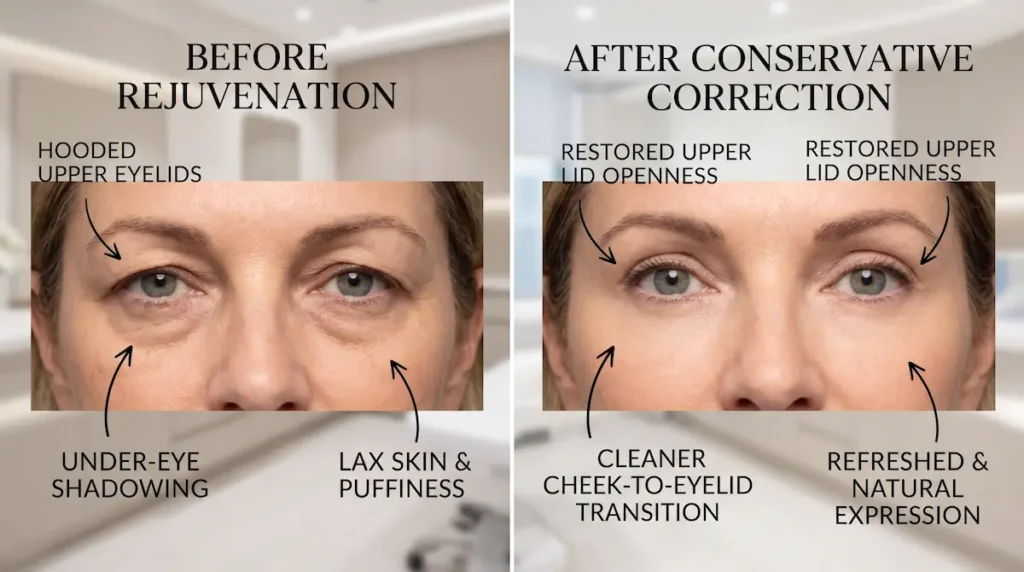
Eye Rejuvenation for a Fresher, More Natural Look
The eyes are often the first area to make a patient look tired, even when the rest of the face still appears relatively youthful. For this reason, eye rejuvenation is frequently a more powerful intervention than adding further filler. A carefully planned approach can soften heaviness, reduce a fatigued appearance, and restore a cleaner transition between the upper cheek and lower eyelid without making the face look altered.
Treating hooded upper eyelids and the “tired eyes” appearance
Many patients believe they need more filler when the real issue is excess upper eyelid skin, early brow heaviness, or changes in the lower eyelid-cheek junction. Hooded eyelids can make the face look permanently exhausted, even when the patient is well rested. In these cases, a surgeon-led assessment matters because the visible problem is not a lack of volume but an issue of tissue position, skin redundancy, or both.
A skilled eye rejuvenation surgeon in Turkey will distinguish between shadow, puffiness, skin laxity, and volume loss. This distinction is essential. Treating the wrong problem creates frustration and often leads to repeated filler in an area that already looks heavy. By contrast, correcting the eyelid area properly can make the whole face look brighter and more awake with a surprisingly subtle change.
There is also a simple reason for this approach: in facial ageing, the eye area acts as a visual centre of attention. Even minor improvements in upper eyelid hooding or lower eyelid transition can produce a disproportionately natural and refreshing effect compared with repeatedly adding product elsewhere in the face.
How eyelid correction can complement filler removal for a cleaner result
Filler removal and eye rejuvenation often work best together because one reveals the real anatomy and the other refines it. A patient who has had tear trough filler for years may feel puffy beneath the eyes yet hollow in photographs. Once the filler is carefully removed, the true contour of the lower eyelid becomes easier to assess. That is often the moment when a proper surgical plan becomes possible.
This is why a facial filler complications surgeon should also understand facial rejuvenation beyond injectables. If the patient has persistent under-eye puffiness, eyelid laxity, or a hooded upper lid, dissolving alone may not create a satisfying result. In these cases, conservative eyelid correction can restore a lighter, more elegant appearance without the overfilled look that so many British patients wish to avoid.
For revision work, the sequence is crucial. First, the old product must be assessed properly. Then the surgeon can determine whether the patient needs time for tissues to settle, whether the under-eye area will improve with dissolving alone, or whether structural correction would produce a cleaner and longer-lasting outcome. This type of planning separates meaningful rejuvenation from temporary adjustment.
Why conservative eye rejuvenation matters for British patients seeking natural-looking outcomes
British patients rarely ask to look dramatically different. More often, they say they want to look less tired, less heavy, or more like themselves from ten years ago. That preference makes conservative eye rejuvenation especially appealing. The goal is not to create an obvious post-surgical look. It is to restore openness and softness while preserving the patient’s natural expression.
This is also where the consultant dermatosurgeon advantage becomes meaningful. In delicate facial work, subtle success depends not only on the procedure itself but on skin behaviour, incision placement, scar quality, and how well each transition blends with the surrounding tissues. A consultant dermatosurgeon approach is particularly valuable for patients who want refinement rather than exaggeration, because even a technically successful operation can look unnatural if the skin and soft tissues are not respected properly.
For UK patients comparing options in London and Istanbul, this matters as much as price. A good result in the eye area should not announce itself. Friends may notice that the patient looks brighter or better rested, but not obviously “done”. That is the standard most discerning British patients are actually seeking.
| Concern around the eyes | Common non-surgical response | Why that may fall short | More appropriate surgical thinking |
|---|---|---|---|
| Hooded upper eyelids | More brow or temple filler | Does not remove excess skin | Upper eyelid assessment and conservative correction |
| Puffy tear troughs | Repeated under-eye filler adjustment | Can worsen water retention and heaviness | Careful filler removal and structural review |
| Tired lower eyelid-cheek transition | Camouflage with more filler | May create an overfilled appearance | Eye rejuvenation with a whole-face plan |
When a Mini Facelift Is Better Than More Filler
One of the most important conversations in modern facial rejuvenation is knowing when to stop chasing correction with filler and when to move towards a lift. This is particularly relevant for patients in their forties, fifties, and beyond who have early jowls, lower-face heaviness, or softening along the jawline. In such cases, more volume can make the face look larger rather than younger.
Early jowls, lower face heaviness, and loss of jawline definition
When facial tissues begin to descend, the problem is positional rather than volumetric. The cheeks sit lower, the jawline becomes less crisp, and the lower face can appear heavier even in relatively slim patients. If filler is used repeatedly to camouflage these changes, it often creates more bulk without improving the underlying structure.
This is why many patients who begin their search with best surgeons for filler removal eye rejuvenation mini facelift are already sensing that they need a more structural answer. They may not want a major operation, but they are aware that their face no longer responds well to injectable correction alone. A mini facelift can address this shift more elegantly by repositioning tissue instead of adding to it.
Mini facelift vs deep plane facelift: understanding the difference
A mini facelift is typically considered for patients with earlier signs of lower-face ageing who need refinement rather than full rejuvenation. It can improve jowling, support the jawline, and create a fresher lower-face contour in carefully selected cases. A deep plane facelift, by contrast, addresses deeper tissue descent more comprehensively and is often more appropriate when ageing changes are more advanced or extend more significantly into the mid-face.
What matters most is not the label but the match between procedure and anatomy. A surgeon with strong facial judgement will not push every patient towards the most extensive option. Nor will they continue a cycle of filler when the tissues clearly need lifting. Instead, they will explain whether the patient is an appropriate mini facelift candidate or whether a more comprehensive lift would create a better and more stable result.
For UK patients, this decision is often linked to naturalness. The right lift should restore shape and definition without creating a tight, pulled, or wind-swept appearance. That is why technique and surgeon selection matter so much more than procedure names on their own.
Why lifting tissue often creates a more elegant result than repeatedly adding volume
Repeated filler can blur natural shadows, widen the mid-face, and leave the lower face looking heavy. By contrast, lifting repositions what has descended. This often creates a lighter and more refined result, especially when the patient’s main complaint is not hollowing but sagging. It is a fundamentally different philosophy of rejuvenation.
From a medical science perspective, ageing is not simply about losing volume. It also involves ligament laxity, soft tissue descent, and changes in skin quality. This is why a mini facelift may be a more elegant choice than more filler in patients with early jowls or lower-face laxity. Rather than disguising the changes, it addresses them anatomically.
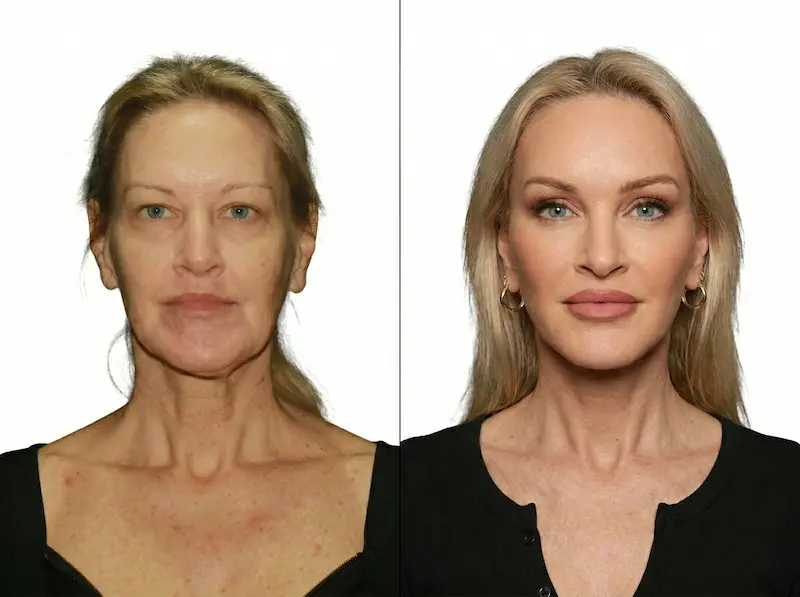
For patients who have already had disappointing injectable treatments, this can be a relief. They stop trying to “fix” a structural issue with more product. Instead, they move towards a plan that restores contour. In the right hands, this approach does not make the face look operated on. It simply makes it look cleaner, fresher, and less burdened by heaviness.
| Option | Best for | Main benefit | Main limitation |
|---|---|---|---|
| More filler | True volume deficiency in selected areas | Non-surgical and quick | Can worsen heaviness when tissues are descending |
| Mini facelift | Early jowls and mild to moderate lower-face descent | Restores contour by repositioning tissue | Requires careful patient selection |
| Deep plane facelift | More advanced tissue descent | Comprehensive structural rejuvenation | Not necessary for every patient |
How AKM Clinic Approaches Facial Rejuvenation for UK Patients
At AKM Clinic, facial rejuvenation for UK patients is approached as a diagnostic process first and a treatment process second. That means looking beyond the isolated complaint and designing a plan around anatomy, tissue behaviour, patient priorities, and recovery expectations. For British patients, trust is built not only through results but through transparency, credentials, and aftercare structure.
A private cosmetic clinic in Istanbul with British standards
British patients travelling abroad usually ask the same underlying question: can I achieve the standard I would expect from a respected private clinic at home? AKM Clinic aims to answer that question through surgeon-led care, international hygiene standards, and a philosophy centred on subtle outcomes rather than dramatic transformation. This is why the clinic speaks directly to patients looking for a private cosmetic clinic in Istanbul with British standards.
For facial procedures, this matters especially because small differences define the final result. The patient is not simply buying an operation. They are choosing a surgical team, a treatment philosophy, and a recovery pathway. At AKM Clinic, sterile operating theatre standards, structured patient care, and a whole-face approach help reassure UK patients who want safety and refinement, not shortcuts.
Harley Street quality expectations, without Harley Street pricing
Many UK patients compare facial surgery abroad with private quotes from London, particularly Harley Street. Their concern is understandable: they want value, but they do not want to compromise on quality. The right comparison is therefore not “cheap versus expensive”, but “what standard of expertise, planning, and aftercare am I receiving for my investment?”
Patients seeking the best filler removal surgeon in Turkey or an eye rejuvenation surgeon in Turkey are often also looking for Harley Street-level judgement without Harley Street-level fees. Transparent GBP planning, bespoke treatment design, and a surgeon-led consultation model help frame Istanbul not as a cut-price shortcut but as a credible alternative for discerning patients.
One UK patient, Sarah, described choosing Istanbul after comparing the quality of care with expensive Harley Street options and felt confident that Turkey offered the more sensible choice for subtle facial rejuvenation.
That type of feedback matters because it reflects the real decision British patients are making. They are not merely comparing destinations. They are comparing whether the outcome, professionalism, and support feel worthy of trust.
UK-focused trust signals: London correspondence support, WhatsApp contact, and transparent GBP planning
For the sceptical patient, good surgery is only part of the decision. The practical framework around the surgery matters as well. UK patients often want reassurance that communication will remain easy, that post-operative questions will be answered promptly, and that there is a recognisable support structure once they return home. AKM Clinic responds to this by emphasising a UK-oriented patient journey.
This includes transparent planning in GBP, direct WhatsApp communication through a UK-focused contact route, and the reassurance of a London correspondence address for patient support. For many British patients, those details reduce the emotional barrier to travelling because they create a sense of continuity rather than distance. They also reinforce that aftercare is not treated as an afterthought.
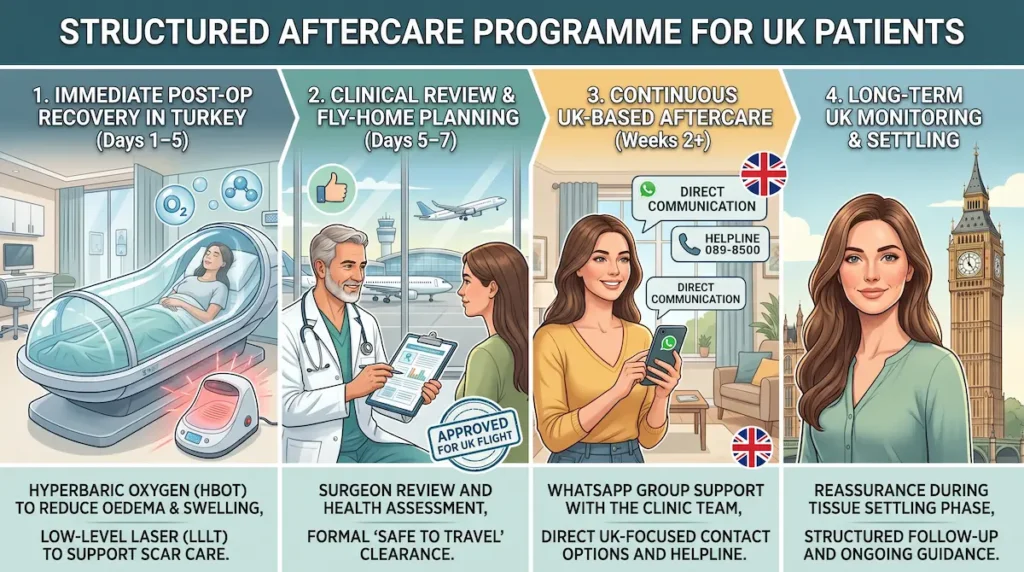
Recovery, Aftercare, and Returning to the UK
Recovery is one of the main reasons British patients search so carefully before choosing a surgeon. It is not enough for the procedure itself to be technically successful. Patients also want to know how much swelling to expect, when they may feel presentable again, and what support will be available once they have returned home. For filler removal, eye rejuvenation, and mini facelift planning, aftercare is part of the treatment, not an optional extra.
What to expect with swelling, bruising, and early healing
The early recovery experience depends on the exact treatment plan. Filler dissolving may involve only mild short-term swelling, while eyelid surgery or a mini facelift can involve more visible bruising and oedema during the first days. The important point is that these changes are temporary and should be anticipated properly rather than treated as a surprise.
Patients seeking a revision filler removal surgeon or a facial filler complications surgeon are often especially anxious because they have already been disappointed once. Honest recovery guidance therefore matters. The face may look uneven before it looks refined. Swelling may peak before it settles. The under-eye area, in particular, can take time to reveal its final contour after complex under-eye filler removal or conservative eyelid correction.
Good recovery care is based on preparation. Patients should understand what is normal, what requires review, and when the result can be judged fairly. In most cases, the most important message is simple: early healing is not the final outcome.
| Recovery stage | What patients often notice | What usually matters most |
|---|---|---|
| First 24–48 hours | Mild to moderate swelling, tightness, tenderness | Rest, cold compresses when advised, following medication guidance |
| Days 3–5 | Bruising or oedema may look more obvious before improving | Patience, hydration, careful observation |
| Days 5–7 | Face begins to look more settled, though still not final | Clinical review and fly-home planning if approved |
| Weeks 2+ | Sharper definition and more natural blending | Allowing tissues to soften and settle fully |
How HBOT and LLLT support quicker recovery and scar care
For UK patients, one of the strongest advantages of a structured surgical pathway is access to recovery-support technology rather than a simple “wait and see” approach. At AKM Clinic, this includes Hyperbaric Oxygen Therapy (HBOT) and Low-Level Laser Therapy (LLLT) as part of a broader healing strategy. These technologies are used to support recovery in a practical, patient-focused way.
HBOT is particularly helpful for reducing post-operative oedema, supporting tissue oxygenation, and helping patients feel more comfortable in the early healing phase. LLLT is used to support scar quality and encourage smoother healing, which is especially important in delicate facial procedures where even very small incision lines must mature as discreetly as possible. For patients weighing a filler removal surgeon in Turkey against UK private care, this type of recovery planning can be a meaningful differentiator.
The value of these technologies is not cosmetic gimmickry. It is rooted in applied scientific research and practical post-operative care. Patients want to look socially presentable sooner, feel comfortable enough to travel safely when cleared, and recover with confidence rather than uncertainty. That is why recovery technology matters so much to informed British patients.
Why structured aftercare matters for British patients travelling home after surgery
Travelling home after facial treatment can feel reassuring when patients know there is a clear follow-up system in place. This is one of the major concerns for British patients who have read negative stories about treatment abroad. They do not simply want a procedure. They want to know who they will contact afterwards, how quickly questions will be answered, and whether someone will still be available once they are back in the UK.
At AKM Clinic, aftercare is designed with that concern in mind. Patients are supported with direct communication pathways, UK-focused contact options, and structured guidance about healing milestones. This includes practical support via WhatsApp and continued communication after the patient has returned home, which can be especially reassuring in revision or combination cases.
One UK patient, Mehtap, described post-operative support as a lifeline after returning home, highlighting how reassuring it felt to have direct contact and a UK-based patient support pathway during recovery.
For British patients, this continuity changes the entire experience. It replaces the fear of being “sent home and forgotten” with the confidence of having an ongoing relationship with the clinic and medical team.
Why This Combination Appeals to the Sceptical British Patient
The combination of filler removal, eye rejuvenation, and mini facelift planning appeals strongly to the sceptical British patient because it reflects judgement rather than sales pressure. Instead of recommending more filler by default, it asks what the face actually needs. For patients who are careful, analytical, and worried about being overtreated, that difference is crucial.
Correcting filler problems instead of masking them
Many patients reach this stage after years of trying to improve their appearance with incremental injectable treatments. At some point, they sense that the strategy is no longer working. Their face may look fuller, but not fresher. Their eyes may still look tired. Their jawline may still feel soft. That is why terms such as migrated filler removal specialist, bad filler removal correction, and dissolving filler complications are so often searched by patients who want genuine correction rather than another temporary adjustment.
For this patient group, trust comes from hearing a clinician say that the old plan should stop. Sometimes that means staged dissolving. Sometimes it means surgical rejuvenation. Sometimes it means doing less, but doing it better. The attraction lies in moving away from camouflage and towards clarity.
Avoiding general anaesthesia where appropriate with a comfort-led approach
Another reason this approach resonates with UK patients is the desire to avoid unnecessary physiological stress. Not every patient is suitable for the same anaesthetic pathway, but where clinically appropriate, facial procedures may be planned with local anaesthesia and light intravenous sedation rather than full general anaesthesia. For the informed patient, this can feel more controlled, more transparent, and less intimidating.
This is particularly relevant to patients who have already researched facial surgery in depth and are looking for a surgeon who values comfort as well as outcome. A careful eye rejuvenation surgeon in Turkey, or a surgeon planning a mini facelift in a conservative way, should be able to explain clearly why a particular anaesthetic approach is being recommended and what the patient can realistically expect from it.
Choosing refinement, harmony, and long-term facial balance over temporary fixes
Ultimately, the sceptical British patient is not searching for drama. They are searching for reassurance that the treatment plan is proportionate, anatomically sound, and designed to age well. They want to look refreshed in daylight, in photographs, and in normal social life. They do not want an obvious “procedure face”.
This is where a surgeon-led combination plan becomes so powerful. Filler removal can clear the noise. Eye rejuvenation can restore brightness. A mini facelift can refine the lower face when tissue descent, rather than volume loss, is the true problem. Together, these choices support long-term harmony rather than a cycle of endless short-term fixes.
| Patient concern | What they fear | What they are really looking for |
|---|---|---|
| Old filler no longer looks good | Looking worse after dissolving | A surgeon who can plan what comes next |
| Tired eyes | Looking hollow or over-operated | Conservative, natural eye rejuvenation |
| Early jowls | A pulled or artificial facelift look | Refined lifting that restores contour subtly |
| Treatment abroad | Poor aftercare and no support at home | Clear UK-facing communication and follow-up |
Frequently Asked Questions (FAQ): Best Surgeons for Filler Removal
Patients considering facial revision and rejuvenation usually have very practical questions. Below are concise answers to the most common concerns raised by UK patients comparing filler removal, eye surgery, and mini facelift options in Turkey.
Who is the best type of surgeon for filler removal?
Can filler removal and eyelid surgery be done together?
Is a mini facelift better than more dermal filler?
Will I look unnatural after eye rejuvenation or a mini facelift?
How long should I stay in Istanbul before flying back to the UK?
What support do I receive after I return home?
How do I compare Harley Street options with surgery in Istanbul?
Medical Disclaimer: This page is provided for general educational purposes only and does not replace a face-to-face medical consultation, diagnosis, or personalised treatment plan. All surgery carries risks and outcomes vary between individuals. Suitability for a filler removal, eye rejuvenation or mini facelift surgery, procedure selection, and anaesthesia choice can only be determined after a full clinical assessment by a qualified surgeon. Always follow your clinician’s instructions and seek urgent medical attention if you develop concerning symptoms during recovery.