

Quick answer: Breast reduction scars usually look pink, firm, or slightly raised in the early weeks, often become more noticeable around weeks 4–8, then gradually flatten and fade over 12 months or longer. They do not disappear completely, but with careful incision planning, silicone support, sun protection, and time, most scars soften into a much less visible line.
Breast reduction scars are one of the biggest questions patients have before surgery. That concern is reasonable. A breast reduction can relieve neck pain, shoulder grooves, skin irritation, and the emotional weight of feeling out of proportion — but it also creates surgical incisions that need time to mature.
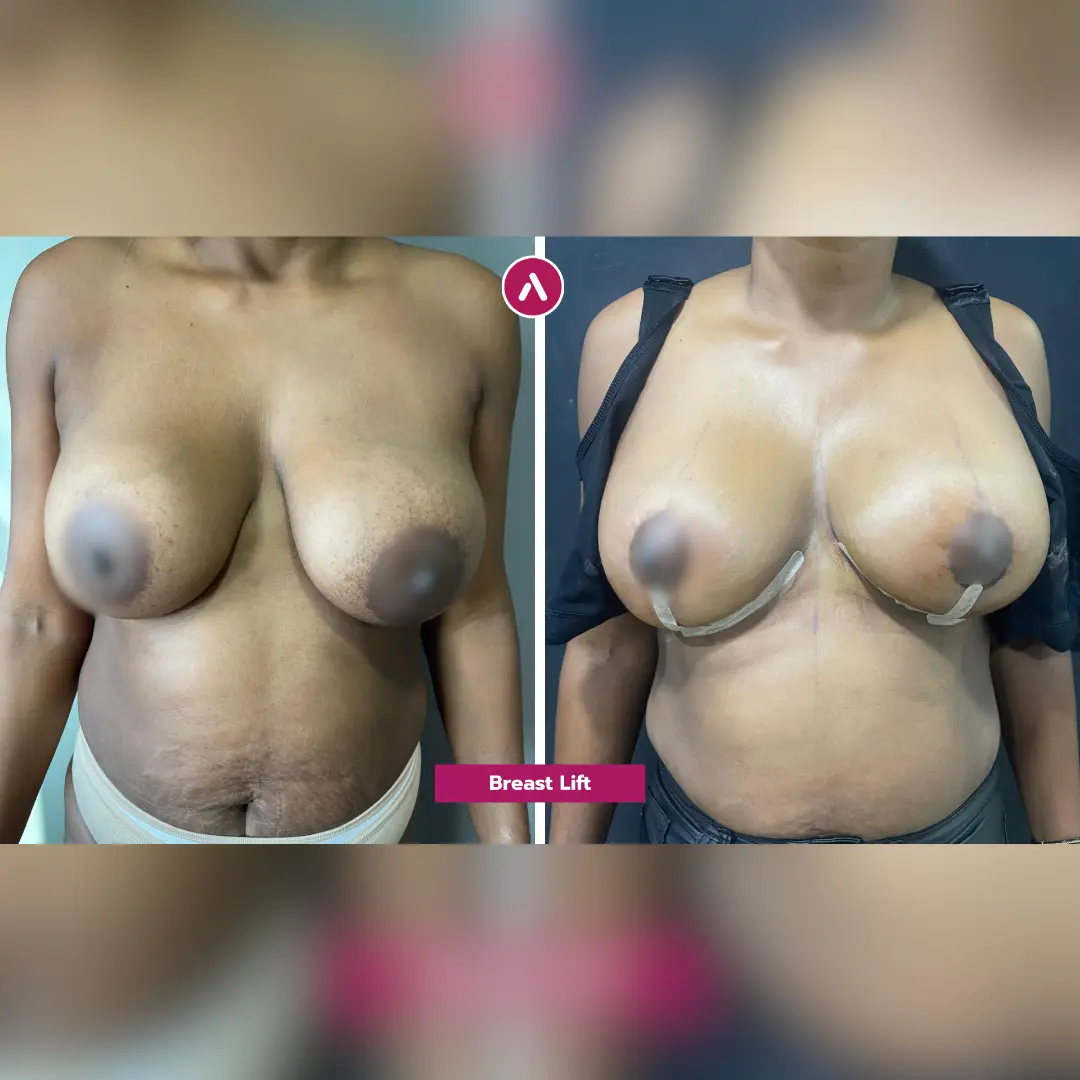
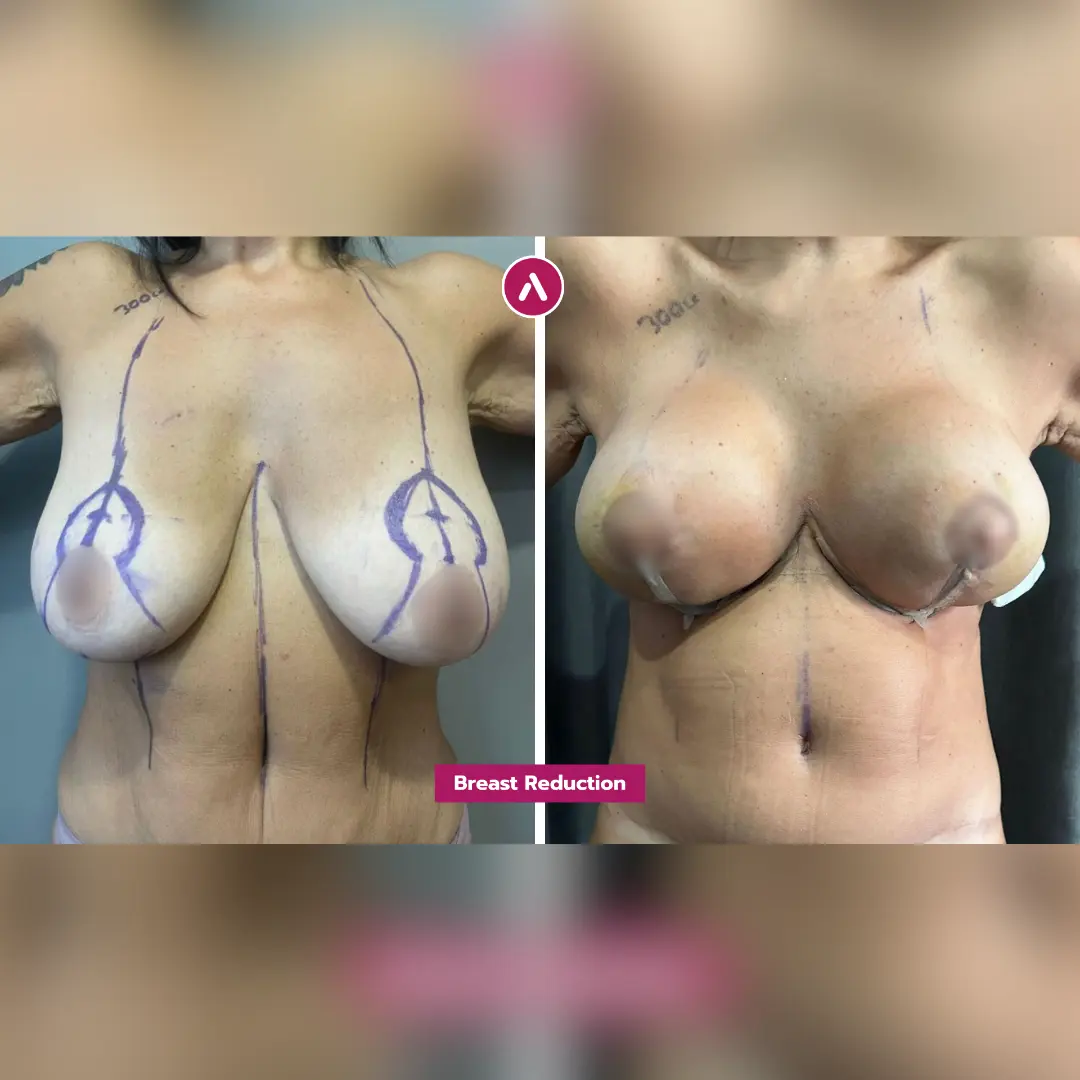
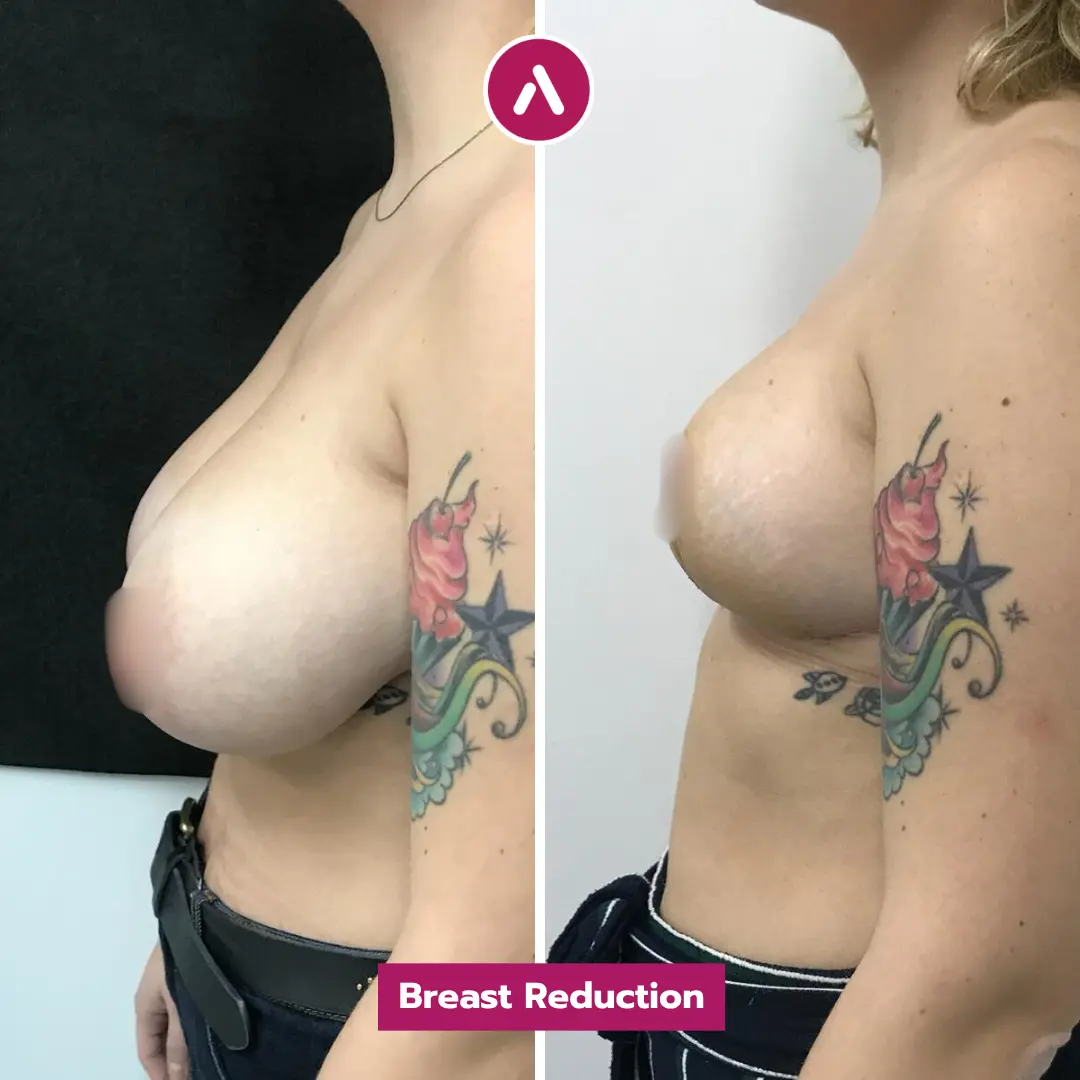
At AKM Clinic, the goal of AKM's breast reduction technique is not only to reduce breast volume, but also to plan incisions thoughtfully so the final scars sit in predictable, concealable areas. Still, scars are part of the trade-off. A good consultation should make that clear before you ever book surgery.
This guide focuses only on scar healing: where the scars sit, how they change week by week, why they can look worse before they look better, and what helps them fade. It does not cover breast reduction cost, cup-size planning, or before-and-after galleries in detail; those are separate decisions that deserve their own space.
Table of Contents
Where Breast Reduction Scars Actually Sit
Breast reduction scars depend on the incision pattern your surgeon uses. The pattern is chosen based on breast size, nipple position, skin excess, tissue weight, and how much reshaping is needed. In simple terms: the more skin and tissue that must be removed, the more incision length is usually required.
Most scars sit around the areola, down the lower breast, and sometimes along the breast crease. That may sound like a lot on paper. In real life, these lines are usually placed where bras, bikini tops, and natural breast contours can hide them once they mature.
Anchor, inverted-T, lollipop, and the rare free-nipple pattern
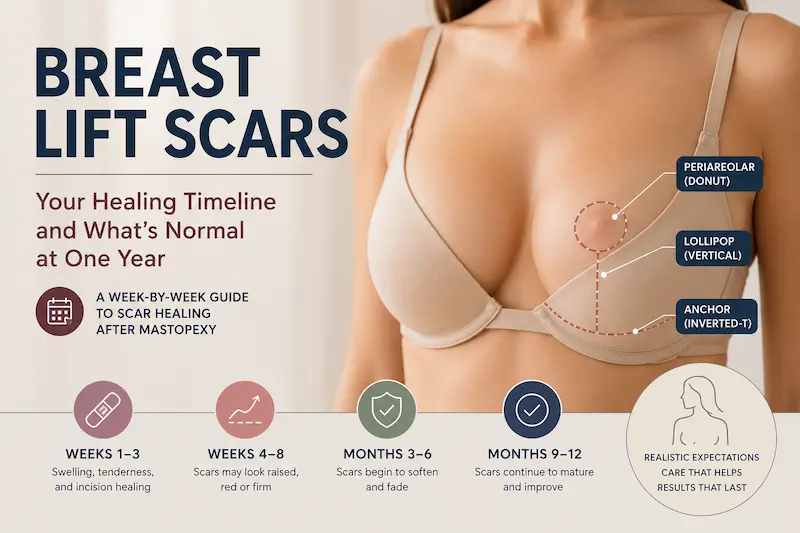
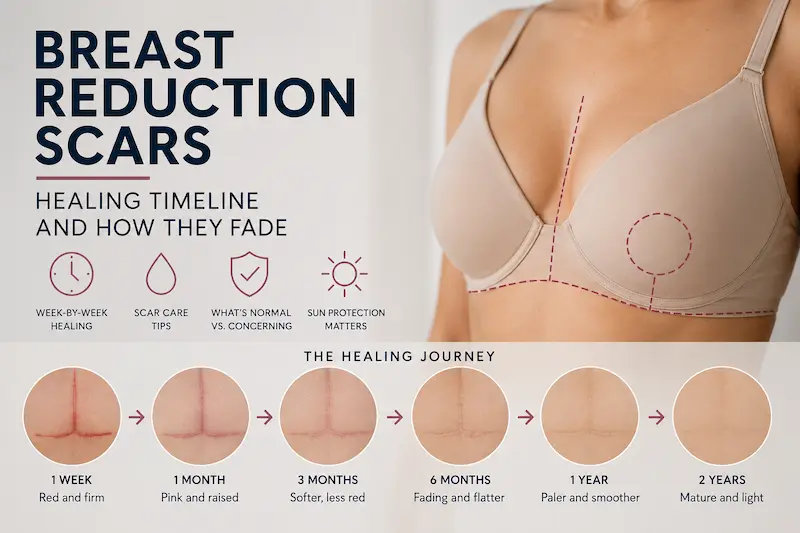
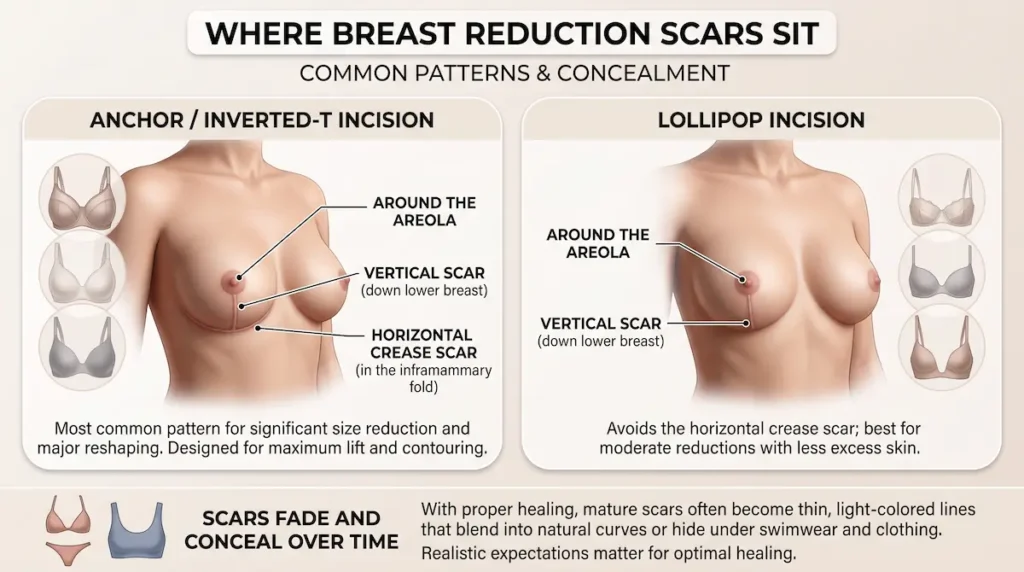
The most common breast reduction scar patterns are anchor, inverted-T, and lollipop. You may see “anchor” and “inverted-T” used almost interchangeably because they describe the same basic shape: a scar around the areola, a vertical scar down to the breast crease, and a horizontal scar along the fold under the breast.
The lollipop pattern is smaller. It includes a scar around the areola and a vertical line down the lower breast, but usually avoids the horizontal crease scar. It may be an option for patients who need a moderate reduction and have less lower-pole skin excess.
A free-nipple graft pattern is much less common. It may be considered in very large reductions, when keeping the nipple attached to its original blood supply may not be safe. This approach can change nipple sensation and breastfeeding potential, so it is not chosen lightly.
- Anchor or inverted-T scar: around the areola, vertically down the breast, and horizontally along the breast fold.
- Lollipop scar: around the areola and vertically down the lower breast.
- Free-nipple graft scar pattern: used only in selected large reductions where nipple safety is the main concern.
Why incision choice drives scar length
Scar length is not just a cosmetic choice. It is tied to the amount of skin that needs to be removed and how much reshaping the breast requires. A patient with heavy breasts, stretched skin, and a low nipple position may need an anchor pattern to create a stable shape. Trying to force a shorter scar in that situation can lead to poor contour, excess skin, or tension on the incision.
This is where expectations matter. A shorter scar is not always a better scar. A well-placed longer scar under low tension can heal more quietly than a shorter incision that is pulled tight. Tension is one of the reasons some scars become wider, raised, or darker over time.
Breast lift scars can look similar because both surgeries may use lollipop or anchor incisions. The difference is the goal: a reduction removes breast tissue to decrease size and weight, while a lift mainly reshapes and repositions the breast. For a direct comparison, see how breast lift scars compare.
What the scars look like in the first days
In the first few days, the incision lines usually look thin, fresh, and covered by surgical tape, dressings, or skin adhesive. You may see mild redness at the edges. Swelling can make the breast shape look high, tight, or uneven, and that can make the scars look more dramatic than they will later.
Some bruising around the lower breast or side of the chest is also common. The color may shift from purple or red to yellow-green before fading. This is part of early healing, not the final scar appearance.
Most patients do not see the full incision clearly right away because tape and dressings protect the wound while the outer skin seals. That is a good thing. The first priority is safe closure. Scar fading comes later.
The Week-by-Week Healing Timeline
Scar healing is not linear. A breast reduction scar can look calm one week, then pinker or firmer the next. That does not automatically mean something is wrong. Scars are living tissue; they remodel as collagen forms, strengthens, and reorganizes under the skin.
The timeline below gives a realistic overview. Your exact pace can vary based on incision pattern, genetics, skin tone, tension, smoking history, aftercare, and whether any wound-healing issues occur.
| Stage | Typical Scar Appearance | What Is Usually Normal | Supportive Action |
|---|---|---|---|
| Weeks 1–3 | Fresh, taped, swollen, mildly red | Tightness, bruising, light itching, protected incision lines | Follow dressing instructions, avoid strain, keep follow-up visits |
| Weeks 4–8 | Pink, firmer, slightly raised, sometimes more noticeable | The “looks worse before better” phase as collagen builds | Ask when silicone can begin; protect from sun; avoid rubbing open areas |
| Months 3–6 | Flatter, softer, less angry in color | Gradual fading with occasional firmness or itch | Continue silicone if advised; consider gentle scar massage once cleared |
| Months 9–12+ | Paler, smoother, more blended with nearby skin | Slow maturation; some pigment difference may remain | Maintain sun protection and discuss persistent raised scars with your surgeon |
Weeks 1–3 — fresh, taped, swollen
During the first three weeks, the scar is still an incision. The skin is closing, the deeper tissues are settling, and swelling can distort the breast shape. This is not the stage to judge your final result.
The scars may be hidden under tape or dressings. When visible, they may look red or dark pink. The surrounding breast may feel tight, heavy, or sensitive. Mild itch can happen as nerves wake up and the outer skin seals.
Your job during this stage is simple: protect the incisions. Avoid lifting, stretching, sleeping on your stomach, or pulling your arms in ways that create tension across the breast. Tension can widen scars before they have a chance to strengthen.
Weeks 4–8 — the “looks worse” raised/pink phase
This is the phase that surprises many patients. Around weeks 4–8, breast reduction scars may look brighter, thicker, firmer, or more raised than they did earlier. That can feel discouraging, especially if you expected them to fade quickly once the tape came off.
In many cases, this is normal scar biology. Collagen production increases as the body strengthens the healing line. The scar can look active before it settles. Think of it as construction, not the finished wall.
This is also the stage when your surgeon may clear you for scar-support measures such as silicone gel or silicone sheets, depending on whether the skin is fully closed. Do not start products on open, scabbed, or irritated areas unless your surgical team has approved it.
Months 3–6 — flattening and softening
By months 3–6, the scar often begins to calm down. The color may shift from bright pink or red toward a softer pink, tan, or light brown depending on your natural skin tone. The line may feel less rope-like under your fingers.
This is still not the final scar. Some areas, especially the vertical line or the spot where the vertical and horizontal scars meet, can remain firmer for longer. Those points often carry more tension and may take extra time to soften.
Patients with darker skin tones may notice lingering pigmentation even after the scar becomes flat. That does not always mean the scar is “bad.” It may simply mean the color change is taking longer to blend.
Months 9–12+ — final fade and maturation
Most scar maturation happens over the first year, but some scars keep improving after 12 months. By this stage, the lines are usually flatter, paler, and easier to conceal. The breast shape also looks more settled, which can make the scars feel less visually dominant.
Some patients still see a fine line around the areola, a vertical line under the nipple, or a faint crease scar. That is expected. Breast reduction scars are permanent, but mature scars are usually much less noticeable than early scars.
If a scar remains thick, itchy, raised, painful, or widening after several months, it is worth discussing with your surgeon. Early treatment can sometimes help hypertrophic scars before they become more stubborn.
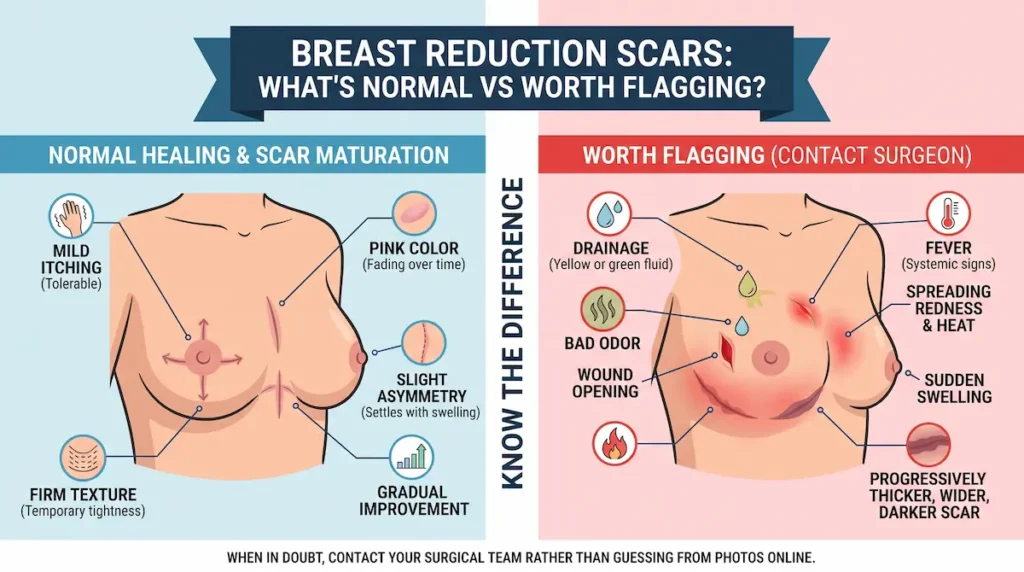
What’s Normal vs Worth Flagging?
Not every red, itchy, or firm scar is a problem. Breast reduction scars go through an active remodeling phase, and that phase can feel emotionally confusing because the scar may look more visible while it is actually strengthening. The key is knowing the difference between normal scar maturation and signs that deserve a surgeon’s review.
Normal healing usually changes slowly. Concerning healing often changes quickly, spreads, smells, opens, drains, or becomes increasingly painful. When in doubt, contact your surgical team rather than guessing from photos online.
Normal redness, firmness, and itch
Mild redness is common in the early stages, especially along the vertical scar and the breast crease. The scar may also feel firm, slightly raised, or tender. This does not automatically mean it will stay that way.
Itching is also common once the skin surface has closed. It can come from nerve recovery, dryness, tape irritation, or collagen remodeling. The feeling should be tolerable and should not come with spreading heat, increasing swelling, pus, or fever.
Firmness under the incision can last for months. This is especially true where incision lines meet, such as the lower point of an anchor scar. Those areas often carry more tension and may remodel more slowly.
- Usually normal: mild itch, pink color, firm texture, temporary tightness, slight asymmetry while swelling settles.
- Worth watching: scars that become progressively thicker, wider, darker, or more painful after they seemed to be improving.
- Worth calling about: drainage, bad odor, wound opening, fever, spreading redness, or sudden breast swelling.
Signs to raise with your surgeon
You should raise any scar concern that feels persistent, painful, or different from the rest of your healing. A small area of delayed healing can often be managed early, but ignoring it may lead to a wider scar or more noticeable texture change.
Contact your surgeon promptly if a section of the incision opens, drains yellow or green fluid, develops a foul smell, or becomes increasingly red and hot. These are not “scar fading” issues. They may point to wound separation, infection, fluid collection, or another healing problem that needs direct medical advice.
Also ask for a review if a scar becomes raised, itchy, and thick beyond the incision line. Some patients are prone to hypertrophic scars or keloid-like overgrowth. Early intervention may include silicone, pressure, steroid injections, laser, or other scar treatments depending on the scar and your medical history.
How body area and skin tone affect appearance
The breast is a high-movement area. Arm motion, sleeping position, bra pressure, swelling, and gravity all affect scar tension. That is one reason breast reduction scars can mature at different speeds along the same incision.
The areola border often blends more easily because the color transition can hide part of the scar. The vertical scar may be more visible early because it sits on the front of the breast. The horizontal scar under the breast is usually easier to conceal, but it can feel firmer where the bra band rests.
Skin tone also matters. Patients with more melanin may be more prone to post-inflammatory hyperpigmentation, meaning a scar can stay darker even after it becomes flat. Very fair skin may show pinkness for longer. Neither pattern is automatically abnormal, but both require sun protection and patience.
Scar maturity is measured in months, not days. A breast reduction scar that looks pink and firm at six weeks may still become soft, flat, and much less visible by the one-year mark.
Supporting Scar Maturation
Scar care works best when it supports the body’s normal healing rather than trying to rush it. The basics are not dramatic: minimize tension, use scar products only after the skin is closed, protect the scar from sun, and follow your surgeon’s timing. Small habits matter because scars remodel slowly.
ASPS scar-care guidance highlights several practical themes: reduce strain on healing incisions, use silicone gel or sheets when appropriate, massage only when cleared, and protect immature scars from UV exposure. These steps do not erase scars, but they can help a scar heal flatter, softer, and less inflamed.
Silicone sheets, silicone gel, and timing
Silicone is one of the most commonly recommended scar-support options after plastic surgery. It may come as a gel, tape, or sheet. The right choice depends on the incision location, your skin sensitivity, your surgeon’s preference, and whether the wound is fully closed.
Timing is important. Do not apply silicone over an open incision, scabbed area, drainage, or irritated skin unless your surgical team specifically tells you to. Once the surface has sealed, silicone can help hydrate the scar environment and may reduce redness, firmness, and raised texture in some patients.
The evidence is supportive but not magical. The Cochrane review on silicone gel sheeting for scars found that available studies are limited and often low-certainty, but silicone remains widely used because it is low-risk for many patients and can be helpful as part of a broader scar-care plan.
Consistency matters more than buying the most expensive product. If your surgeon recommends silicone, ask how many hours per day to use it, how long to continue, and what to do if your skin becomes itchy or irritated.
Sun protection and why it matters
Fresh scars are more reactive to UV exposure. Sun can darken a scar, prolong redness, or create uneven pigment that is harder to fade later. This is especially important during the first year, when the scar is still remodeling.
Breast reduction scars are usually covered by clothing, but not always. Swimsuits, low-cut tops, and tanning can expose parts of the areola or upper vertical scar. If a scar might see sunlight, cover it with clothing or use a broad-spectrum sunscreen once the skin is fully healed and your surgeon allows it.
ASPS emphasizes sun avoidance during early scar healing because immature scar tissue is more likely to develop pigment changes. You can read the full guidance here: ASPS's surgical scar-care guidance.
Massage, taping, and patience
Scar massage may help some mature scars soften, but it should not begin too early. Rubbing an incision before it has healed can irritate the tissue or create stress on the closure. Wait until your surgeon confirms that the skin is sealed and ready.
When approved, massage is usually gentle. The goal is not to “break up” the scar aggressively. It is to support softening and mobility over time. If massage causes pain, bleeding, drainage, or worsening redness, stop and ask your surgical team.
Taping can also reduce tension across a scar in selected patients. Some surgeons use paper tape, silicone tape, or supportive dressings during the early months. Your incision pattern and skin sensitivity will determine what is appropriate.
Patience is part of the treatment. A scar that is still changing should not be judged too early. Most patients see meaningful improvement between months 3 and 12, and some continue to fade beyond the first year.
US patient note: Before traveling for breast reduction, ask your surgeon how the incision pattern will be chosen, how scar care will be handled after you return home, and what photos or symptoms should trigger a virtual follow-up. A board-certified plastic surgery team should be able to explain both the scar plan and the aftercare plan clearly.
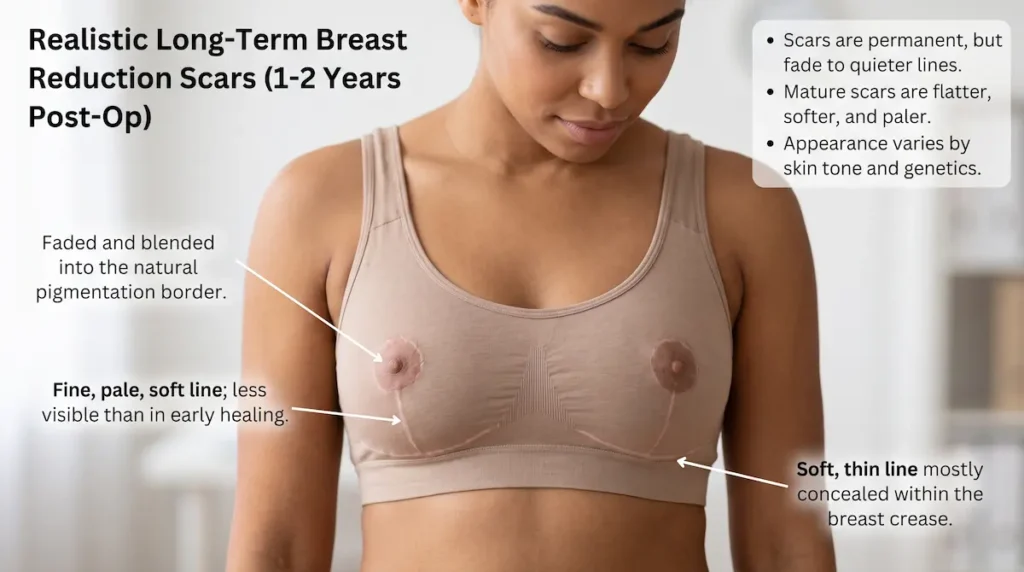
Realistic Long-Term Appearance
Long-term scar appearance is about maturation, not disappearance. Breast reduction scars are permanent lines in the skin, but permanent does not mean highly visible forever. A mature scar is usually flatter, softer, paler, and easier to hide than the scar you see in the first few months.
This is the stage where realistic expectations protect you from unnecessary worry. If you expect the scars to vanish, you may feel disappointed. If you expect them to fade gradually into quieter lines, the process feels much easier to understand.
How faded scars typically look at 1–2 years
At 1–2 years, many breast reduction scars look like fine pale lines, soft pink lines, or slightly darker lines depending on your skin tone. Around the areola, the scar may blend into the natural color change between areola and breast skin. The vertical scar may remain visible in certain lighting but is often much softer than it was at 2–3 months.
The horizontal scar under the breast is usually the easiest to conceal because it sits in the breast fold. It may still be felt as a thin line when you touch the area, even if it is not obvious in a bra or swimsuit.
Some patients have small sections that mature differently. One part of the scar may flatten quickly, while another stays pink or firm longer. That variation is common, especially near the lower junction of an anchor scar.
Camouflage, tattooing, and revision as last resorts
If a mature scar remains visible after a full year or longer, options may exist. These can include laser treatment, microneedling, steroid injections for raised scars, medical tattooing for color mismatch, or surgical scar revision. The right option depends on the scar type.
These are not first-line steps in early healing. A scar that is only three months old is still changing. Treating too aggressively too early can irritate the tissue or create new problems.
Medical tattooing may help selected areola-border scars or color differences, but it should be performed only after the scar has fully matured. Scar revision is also a last resort. It replaces one scar with another, so the goal is improvement, not erasure.
If you want to compare how healed scars can look in real patients, review real healed-scar results. Use photos as a reference, not a guarantee. Skin tone, incision pattern, genetics, and aftercare all change the final scar.
Setting expectations before surgery
The best time to talk about scars is before surgery. Ask where each incision will sit, whether you are likely to need an anchor or lollipop pattern, and which parts of the scar may be most visible on your body. A good answer should be specific to your anatomy.
You should also ask about follow-up. International patients need a clear plan for virtual scar checks, photo updates, and what symptoms require urgent local care after returning home. At AKM Clinic, breast reduction surgery is performed in Istanbul, with long-term virtual follow-up at 1, 3, 6, and 12 months.
Cost should not be evaluated inside a scar article, because price depends on the surgical plan, technique, anesthesia, hospital needs, and package details. For a separate breakdown, see what a breast reduction costs in Turkey.
Considering breast reduction from the US? AKM Clinic’s US Patient Support & Mailing team can help you start with a virtual consultation and photo review. All surgery is performed at AKM Clinic’s facility in Istanbul.
See how AKM plans incisions to minimize scarring in a consultation.
Frequently Asked Questions: Breast Reduction Scars
These answers focus on scar healing only. If your question is about breast size, surgical technique, price, or general recovery, use the related resources linked throughout this guide so each topic stays clear.
How long do breast reduction scars take to fade?
Why do my scars look worse after a month?
Do silicone sheets really work?
Will breast reduction scars ever fully disappear?
Are anchor scars worse than lollipop scars?
Can darker skin tones expect different scarring?
What can I do to make breast reduction scars fade better?
When should I worry about a breast reduction scar?
Medical disclaimer: This article is for educational purposes only and is not a substitute for medical advice, diagnosis, or treatment. Breast reduction scar healing varies by anatomy, skin type, incision pattern, surgical plan, and aftercare. Always follow your own surgeon’s instructions and seek urgent medical help for concerning symptoms.