

When patients search for BBL implants vs fat transfer, they are rarely asking a cosmetic question alone. In most cases, they are asking a safety question: which method carries the lower risk, which feels more natural, and what happens if they are slim and have not enough fat for BBL? For British patients researching bottom augmentation in Turkey, this is often the point where glossy marketing stops being useful and careful surgical judgement starts to matter.
In practical terms, the debate around buttock implants vs fat grafting is not simply about choosing the biggest result. It is about matching the right procedure to the right anatomy, skin quality, donor fat availability, recovery tolerance, and long-term expectations. That is why searches such as BBL for skinny patients, low BMI Brazilian butt lift, and skinny BBL alternatives all lead back to the same conclusion: safety must come before projection.
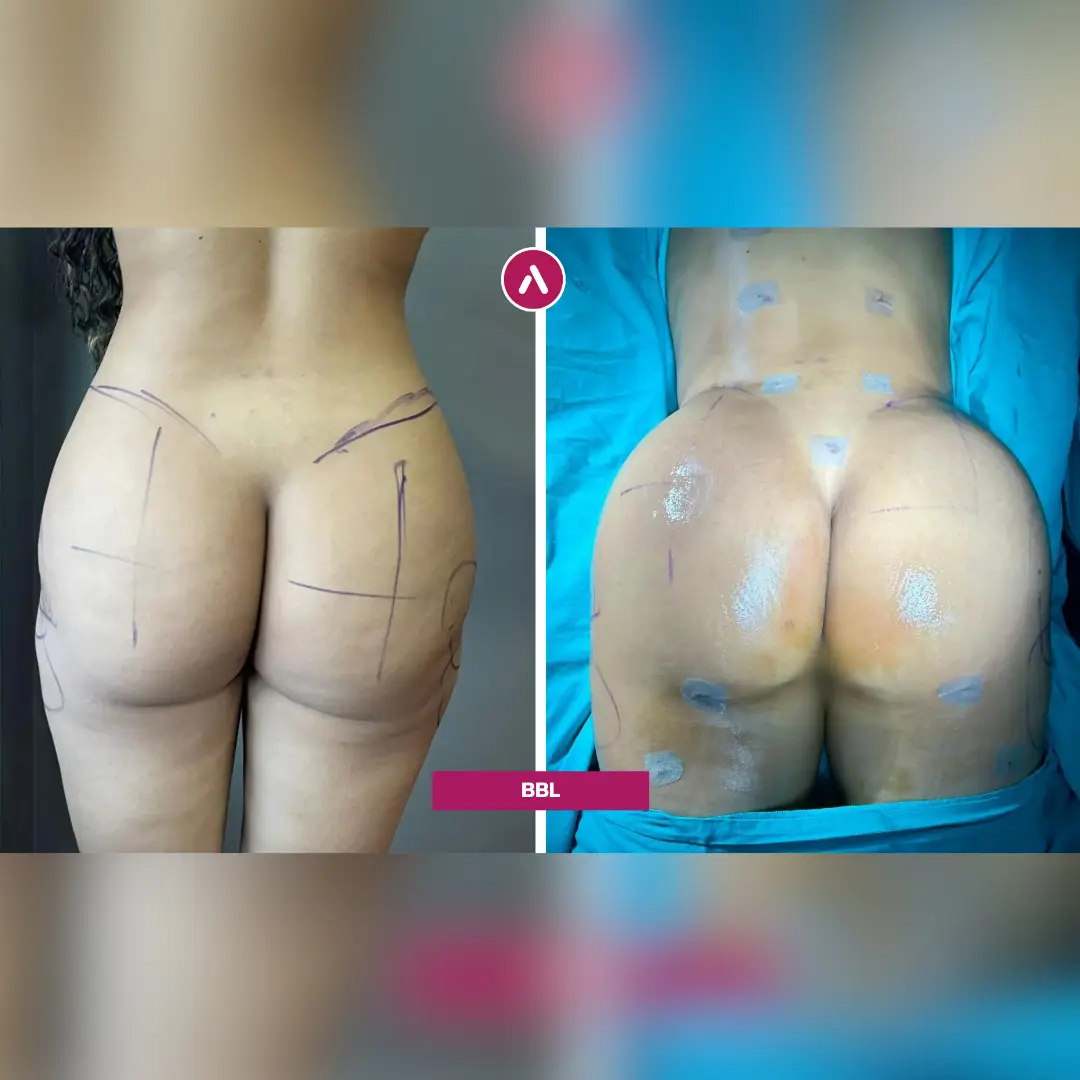
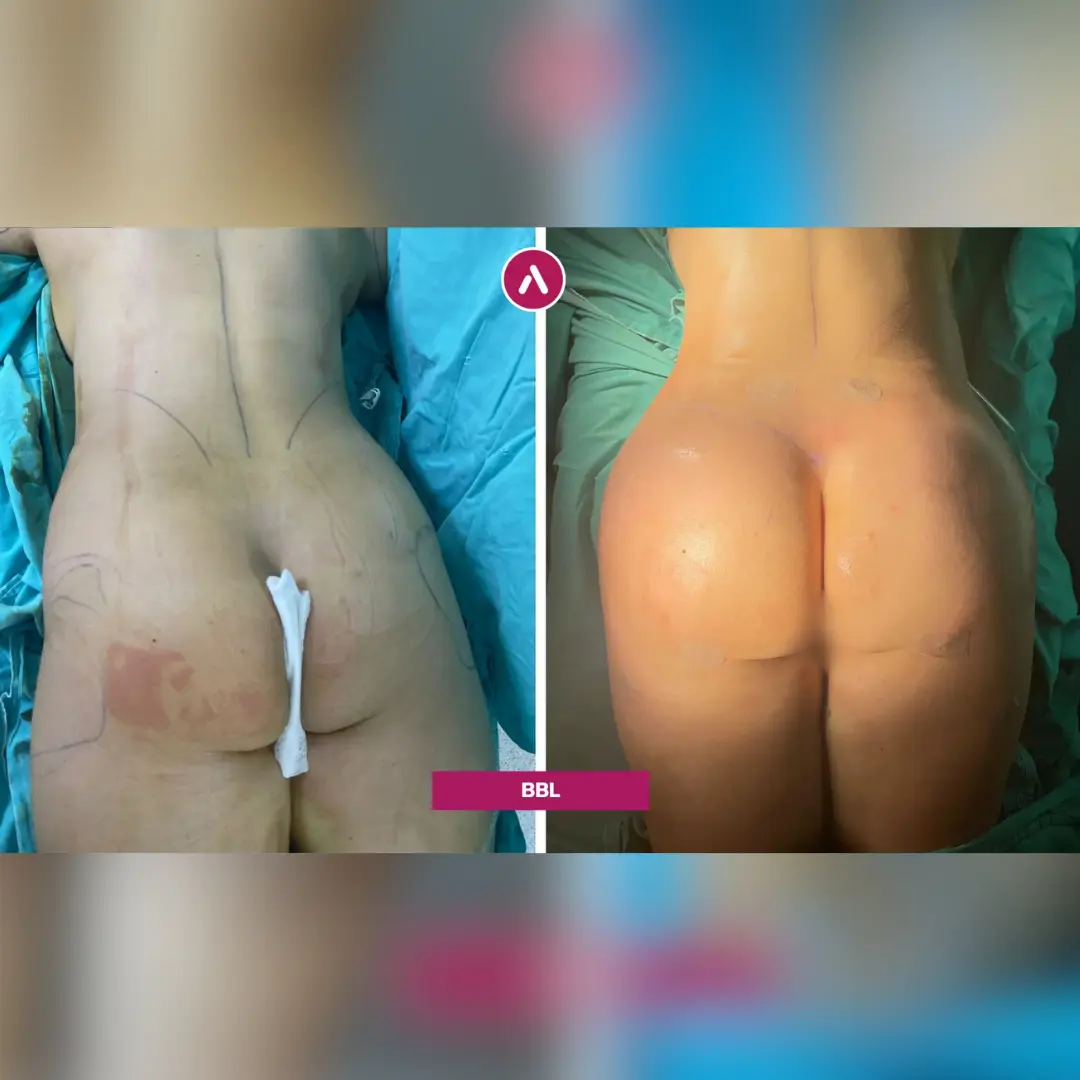
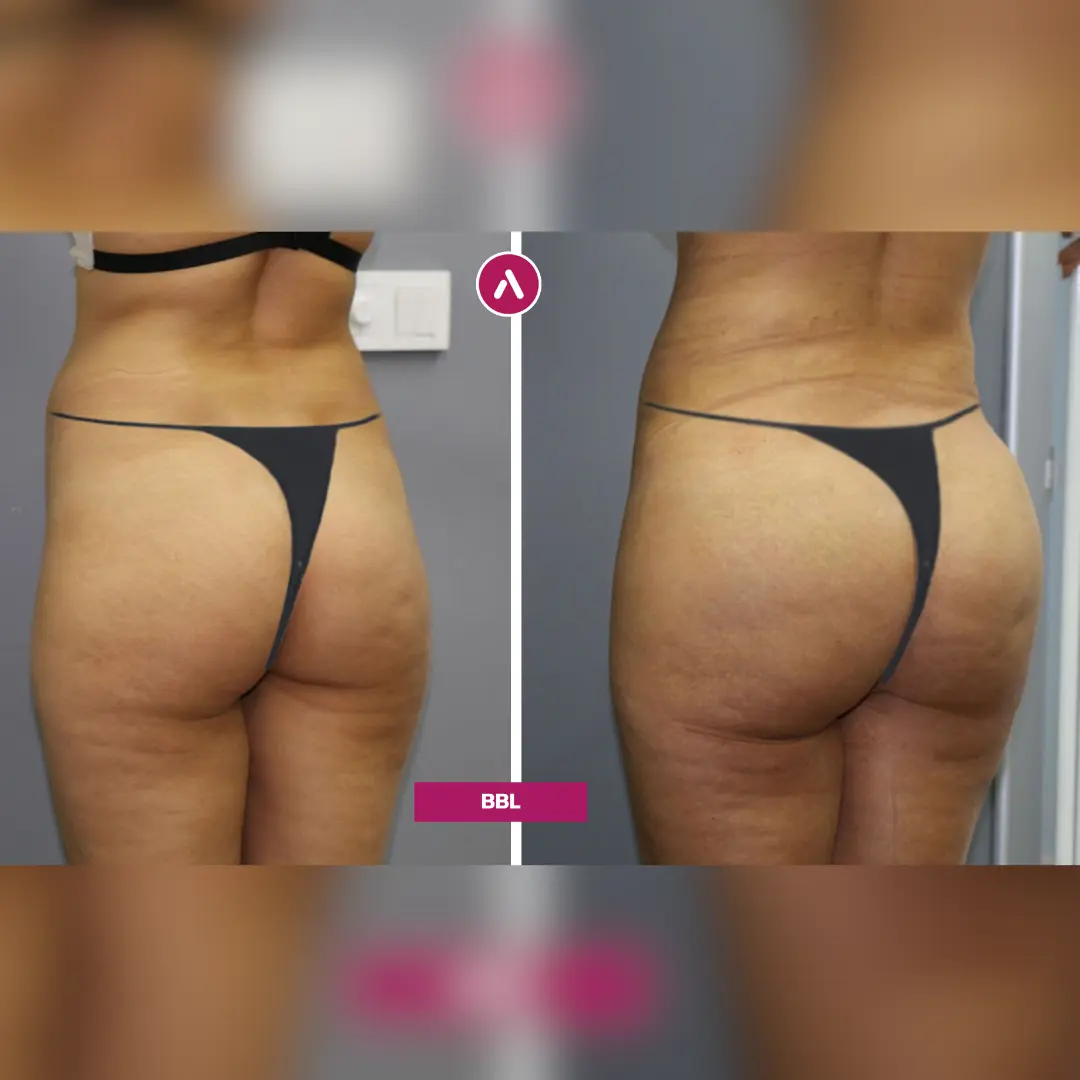
The current science, supported by ongoing scientific research and day-to-day clinical experience, suggests that neither option is automatically safer in every situation. Fat transfer can deliver a softer and more natural outcome, but only when it is performed with disciplined technique and honest patient selection. Implants can help when a patient does not have enough donor fat, but they introduce a different risk profile that may include wound problems, infection, implant movement, and the possibility of revision surgery. A meaningful BBL safety comparison therefore has to look beyond social media trends and focus on risk management.
| Key Point | Fat Transfer BBL | Buttock Implants |
|---|---|---|
| What is used for volume? | Your own fat, usually taken from the waist, abdomen, flanks, or back | A solid silicone implant placed through a surgical pocket |
| Who may suit it best? | Patients with enough donor fat who want a softer, more natural contour | Patients with limited donor fat who want more projection than fat alone can usually provide |
| Main safety concern | Unsafe injection technique and poor judgement around volume goals | Wound healing issues, infection, implant displacement, and possible revision |
| Natural feel | Usually more natural when well planned | Can create shape and projection, but may feel firmer or look less subtle in some body types |
| Important question to ask | How is fat placed, and is safety prioritised over volume? | Why is an implant necessary, and what is the plan if healing is not straightforward? |
Table of Contents
What Is the Difference Between BBL Implants and Fat Transfer?
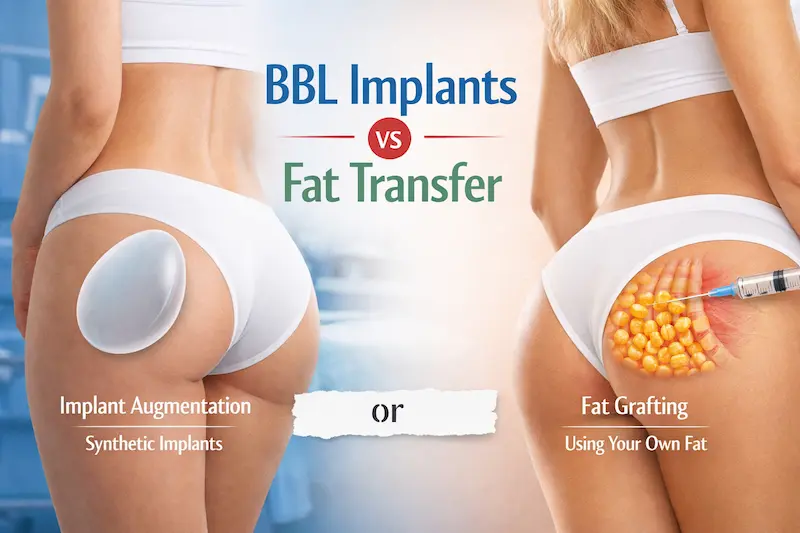
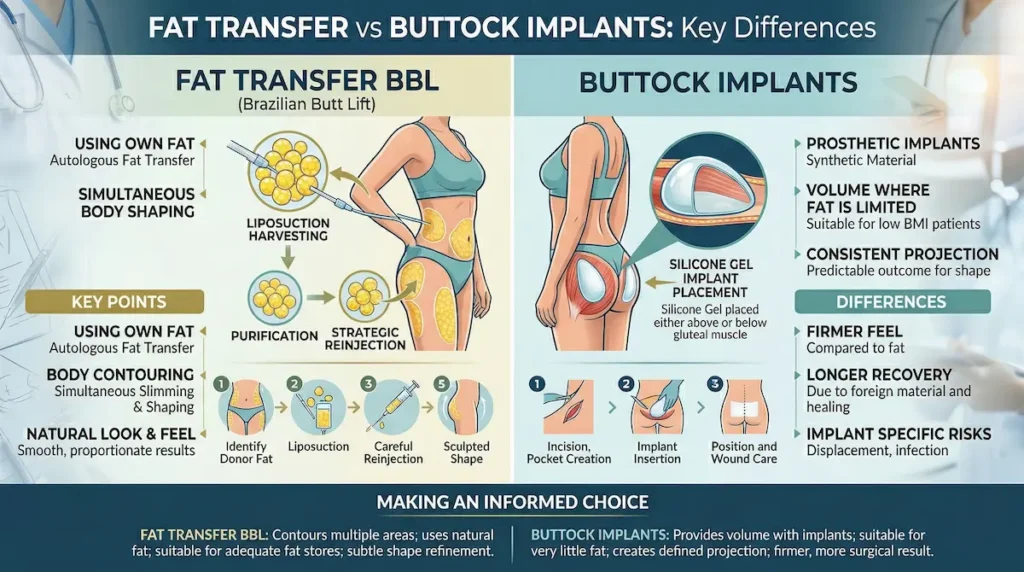
Before weighing up gluteal implants pros and cons, it helps to understand that these are fundamentally different operations. One uses your own fat to reshape the buttocks and surrounding silhouette. The other uses a prosthetic implant to create volume where donor fat is limited. So when patients compare fat transfer to buttocks vs implants, they are not comparing two identical routes to the same result; they are comparing two separate philosophies of body contouring.
Another important distinction is that fat transfer usually begins with body contouring, often using VASER liposuction, to harvest and refine viable fat before it is injected into the buttocks. This means the outcome depends not only on how much volume is added, but also on how effectively the waist, flanks, and lower back are sculpted. Implants, by contrast, create projection through a prosthetic device rather than through reshaping the donor areas.
How a fat transfer BBL works step by step
A fat transfer BBL starts with liposuction. Fat is taken from areas such as the abdomen, flanks, waist, lower back, or thighs, then processed and strategically reinjected into the buttocks. This means the procedure is doing two jobs at once: removing fat from one area while enhancing another.
In the best candidates, this approach can create a very balanced shape because the waist-to-hip transition improves at the same time as the buttocks gain volume. That is one reason fat transfer is often preferred by patients who want a result that looks feminine, smooth, and proportionate rather than obviously surgical.
- Step 1: Donor fat is identified in areas with enough safe harvest volume.
- Step 2: Liposuction is used to remove and refine that fat.
- Step 3: The fat is purified and prepared for reinjection.
- Step 4: Small amounts are placed carefully to build contour and projection.
- Step 5: The final shape depends on both the transferred fat and the surrounding body sculpting.
This is why a good result is not just about how much fat is injected. It is about where the fat comes from, how it is processed, how conservatively it is placed, and whether the surgeon is aiming for harmony rather than excess.
How buttock implants are placed and why the technique differs
Implant surgery is a different category of gluteal augmentation. Instead of harvesting your own fat, the surgeon creates a pocket and inserts a silicone implant to produce volume and projection. For patients with very little donor fat, this can seem attractive because it does not rely on body fat stores in the same way a traditional BBL does.
However, implants are not a simple substitute for fat transfer. They involve an incision, tissue dissection, implant positioning, and a healing process that is heavily influenced by wound care, movement, sitting pressure, and the body’s response to a foreign material. In other words, the trade-off for more predictable volume in some slim patients is a different complication pattern.
- Implants may offer: more projection when donor fat is limited, a clearer volume target, and an option for selected low-BMI patients.
- Implants may also involve: a firmer feel, a longer adaptation period, and closer attention to wound healing and implant position.
This is exactly why the phrase gluteal implants pros and cons matters. The “pro” is not merely bigger volume; it is suitability in carefully chosen anatomy. The “con” is not only scarring or recovery; it is the fact that implant surgery introduces prosthetic-specific risks that fat transfer does not.
Why UK patients often confuse “BBL”, “fat transfer”, and “buttock augmentation”
In everyday online searching, these terms are often used as if they mean the same thing. They do not. A classic BBL usually refers to gluteal enhancement using your own fat. Buttock augmentation is the broader umbrella term and may refer to fat transfer, implants, or a combination approach. Patients searching buttock implants vs fat grafting are usually trying to compare two different methods within that wider category.
British patients may also use more varied language than international marketing pages do. Some search for “bottom augmentation”, others for “BBL”, and others for “fat transfer to buttocks vs implants”. The wording changes, but the clinical question remains the same: what is the safest and most sensible route for my body type?
That matters especially for slim patients. A person searching for BBL for skinny patients is often not asking for a trend-led result. She is asking whether it is medically realistic to create more volume when donor fat is limited. The honest answer is that some low-BMI patients can still have a subtle fat transfer, while others are better served by discussing implants, combination techniques, or even postponing surgery until there is a safer treatment plan.
Which Option Is Safer Overall?
There is no honest, consultant-led answer that says one option is always safer in every patient. The safer option depends on anatomy, fat availability, tissue quality, volume goals, surgical technique, and whether the clinic is prepared to refuse unrealistic requests. That is why a genuine BBL safety comparison should never be reduced to a slogan such as “fat transfer is always safe” or “implants are better for slim bodies”. Both statements are too simplistic to be medically responsible.
In many cases, the discussion also overlaps with body contouring strategy, because fat transfer relies on harvesting suitable fat with techniques such as VASER liposuction. This means the overall safety profile is shaped not only by how volume is added to the buttocks, but also by how carefully the donor areas are treated, how much fat is available, and whether the planned result remains proportionate to the patient’s anatomy.
The main safety concerns with fat transfer, including fat embolism risk
Fat transfer has become popular because it can produce a softer, more natural-looking result and improve surrounding contour at the same time. However, it is not risk-free. The most serious concern associated with gluteal fat transfer is fat entering the bloodstream if technique is unsafe. This is why experienced surgeons treat planning, injection depth, and anatomical awareness as non-negotiable.
From a patient perspective, the key point is simple: the danger is not the idea of using your own fat, but the danger of careless technique or aggressive volume chasing. A patient should be cautious of any clinic that promises dramatic enlargement without clearly discussing safety limits, realistic graft survival, and whether her anatomy is actually suitable for the procedure.
- Why it can be safer in the right hands: no implant is placed, the result can feel natural, and contouring of the waist and back can improve overall balance.
- Why it can become unsafe: poor technique, pressure to create exaggerated volume, and inadequate patient selection.
- Why honesty matters: if a patient has not enough fat for BBL, forcing the procedure can be a sign of poor judgement rather than good customisation.
This is particularly relevant to patients searching for low BMI Brazilian butt lift. Low BMI does not automatically rule out fat transfer, but it often limits what can be achieved safely and naturally. A subtle result may be realistic; a dramatic transformation may not be.
The main safety concerns with implants, including infection, displacement, and revision risk
Implants solve a different problem. They may offer projection when donor fat is limited, which is why they are often discussed as one of the main skinny BBL alternatives. Yet the safety conversation changes as soon as an implant is introduced.
Because implants require a pocket to be created and a prosthesis to be inserted, surgeons must think carefully about wound healing, fluid collection, implant movement, asymmetry, firmness, and whether the device remains well positioned over time. Some patients may also require revision surgery if the implant shifts, becomes visible, or does not integrate well with their body shape.
- Common concerns: delayed wound healing, infection, seroma, implant palpability, and malposition.
- Longer-term considerations: the possibility of revision, changes in implant feel, and the challenge of maintaining a natural appearance in very lean tissue.
- Important reality: implants may solve the volume problem, but they do not remove the need for careful aftercare and realistic expectations.
So, are implants automatically the answer for a patient with very little fat? Not necessarily. They may be the right answer for some patients, but only after a careful discussion of trade-offs. In other words, the phrase fat transfer to buttocks vs implants should never be treated as a simple beauty preference. It is a risk-benefit decision.
Why surgeon expertise, patient selection, and sterile operating theatre standards matter more than marketing claims
If there is one lesson patients should take from the medical science around gluteal augmentation, it is this: technique and judgement matter more than trends. A poorly selected fat transfer can be unsafe. A poorly planned implant can also be unsafe. The method alone does not guarantee safety; the protocol behind it does.
This is where experienced consultant-led care makes a difference. The right surgeon should be able to explain not only what can be done, but also what should not be done. That includes saying no to unsafe volume requests, being transparent when a patient is too slim for a meaningful fat transfer, and discussing whether implants would genuinely improve the outcome or simply add risk.
For UK patients, this also means looking beyond before-and-after photographs. Safety is built on the quality of the operating theatre, infection control standards, post-operative planning, communication, and what happens if recovery does not follow the ideal script. The clinics that deserve trust are usually the ones that speak most clearly about limits, not just possibilities.
Key safety principle: The best gluteal augmentation plan is not the one that promises the largest result. It is the one that matches your anatomy, protects your health, and still looks proportionate once the swelling settles.
Who Is a Good Candidate for Fat Transfer and Who May Need Implants?
This is the section where a proper BBL safety comparison becomes much more personal. The safest treatment is not chosen by trend, but by anatomy. In real clinical practice, the right answer depends on how much donor fat a patient has, how much projection she wants, how elastic the skin is, and whether her goals are subtle or dramatic. That is why searches such as BBL for skinny patients, not enough fat for BBL, and low BMI Brazilian butt lift matter so much: they reflect a real surgical limitation, not just a cosmetic preference.
One reason candidacy must be assessed so carefully is that fat transfer does not depend on buttock anatomy alone. It also depends on whether enough quality fat can be harvested safely, often with VASER liposuction, from areas such as the waist, flanks, or abdomen. If donor reserves are limited, the discussion may need to shift from maximising volume to choosing the safest and most proportionate alternative.
Why patients with enough donor fat are often better suited to fat transfer
For many patients, fat transfer is the more elegant option because it uses the body’s own tissue and improves shape in two areas at once. If there is enough donor fat in the waist, abdomen, flanks, lower back, or thighs, the surgeon can contour those areas and use the purified fat to enhance the buttocks more naturally.
This usually suits patients who want a softer result, smoother transitions, and a silhouette that looks balanced rather than obviously augmented. It can be especially appealing to British patients who prefer a refined outcome and are wary of looking overdone.
- Often suitable for: patients with available donor fat and realistic expectations about volume.
- Main advantage: softer feel, more natural contour, and simultaneous body sculpting.
- Important limitation: the final result depends on what the body can safely provide, not on what social media promises.
In other words, a patient who has enough donor fat may benefit from a procedure that reshapes the entire frame, not just the buttocks. That can make fat transfer the more proportionate option when safety and subtlety are the priority.
What happens when a slim patient wants more volume than fat alone can provide
This is the situation behind many searches for skinny BBL alternatives. A slim patient may still want fuller buttocks, but the body may not provide enough safe harvestable fat to create the requested result. In those cases, the consultation should become more careful, not more persuasive.
Some low-BMI patients can still be suitable for a modest fat transfer to the buttocks, particularly if the aim is shape refinement rather than dramatic enlargement. However, when a patient has not enough fat for BBL, the surgeon must discuss the trade-offs honestly. Those trade-offs may include accepting a subtler result, considering implants, delaying surgery, or reviewing whether the goal itself is proportionate to the patient’s frame.
| Patient Scenario | Fat Transfer May Suit | Implants May Be Considered |
|---|---|---|
| Moderate donor fat with desire for natural contour | Yes, often the preferred option | Usually not necessary |
| Low BMI with limited donor fat but realistic goals | Possibly, if a subtle result is acceptable | Sometimes, depending on anatomy and risk tolerance |
| Very lean frame with desire for dramatic projection | Often limited by available fat | May be discussed, but only with clear counselling about implant-specific risks |
| Unrealistic expectations or pressure for extreme volume | Not appropriate | Not appropriate without re-setting expectations |
The key point is that being slim does not automatically mean implants are the correct choice. It simply means the consultation has to be more selective and more honest.
Why an honest consultant-led assessment is essential for avoiding unsafe expectations
Of all the factors in buttock implants vs fat grafting, this may be the most important: whether the surgeon is willing to say no. A responsible consultant-led assessment should not begin with “How big do you want to go?” It should begin with “What can be done safely on your frame?”
This is where both science and clinical judgement matter. Medical science can guide safe technique, but it cannot change your anatomy. If a patient does not have enough donor fat for a meaningful transfer, pretending otherwise may simply increase risk without improving the quality of the outcome. Equally, recommending implants to every slim patient without a detailed discussion of healing, wound care, and revision risk is not good medicine either.
- A good assessment should cover: donor fat availability, skin quality, body proportions, scar tolerance, recovery planning, and whether the requested look is realistic.
- A red flag: a clinic that offers a dramatic result without clearly explaining safety limits.
- The safest approach: match the procedure to the patient, rather than forcing the patient into the procedure.
For British patients, this is especially reassuring because it moves the conversation away from marketing and towards evidence-based, proportion-led planning.
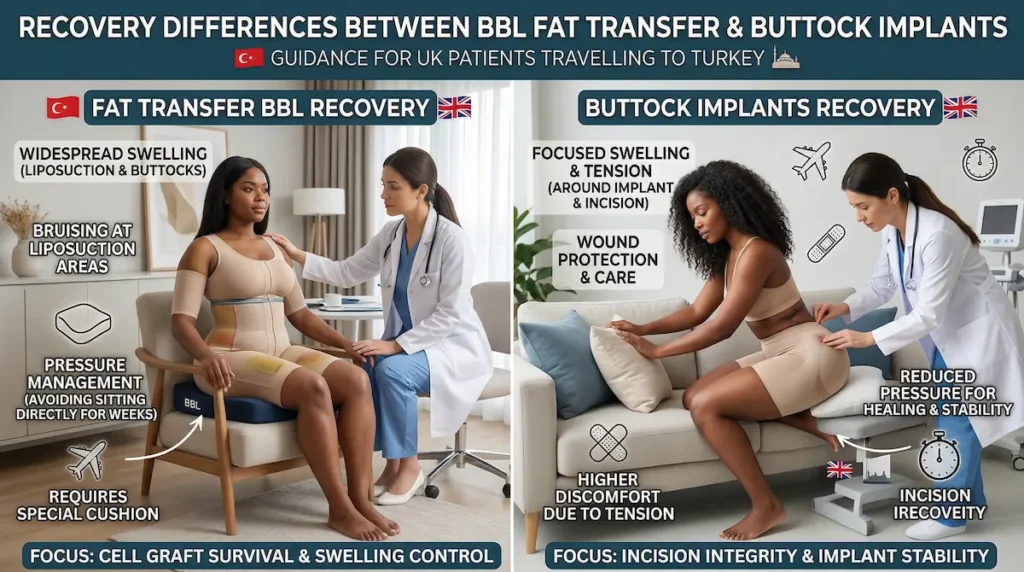
Recovery Differences Between BBL Implants and Fat Transfer
Recovery is one of the biggest practical differences between fat transfer to buttocks vs implants. Both procedures require planning, restricted pressure on the area, and careful follow-up, but the healing experience is not identical. British patients travelling for bottom augmentation in Turkey should look not only at the operation itself, but also at what the first days and weeks are likely to involve.
Sitting, sleeping, and movement restrictions after each procedure
After either procedure, the buttocks need protection during the early phase of healing. Pressure management matters, but the reason differs slightly between the two techniques. With fat transfer, the aim is to protect the newly transferred fat and avoid unnecessary pressure whilst the grafted cells settle. With implants, the concern also includes wound protection, implant position, and tension on the surgical area.
Patients generally need to follow detailed instructions on how to sit, how long to avoid direct pressure, and what sleeping positions are safest. This is one reason a planned recovery period in Istanbul matters. Rushing mobility, ignoring pressure advice, or sitting carelessly too early can compromise comfort and, in some cases, the result itself.
- Fat transfer recovery focus: protecting graft survival and controlling swelling.
- Implant recovery focus: protecting the incision, reducing wound stress, and maintaining implant stability.
- Shared rule: movement guidance must be individualised and followed carefully.
Oedema, bruising, discomfort, and expected downtime for UK patients travelling home
Both techniques can involve oedema, bruising, tightness, and temporary discomfort, but the pattern often differs. Fat transfer patients may notice more bruising in the liposuction areas as well as swelling in the buttocks. Implant patients may feel more tension around the surgical site and may need closer monitoring of the incision and wound healing.
It is also worth noting that when fat transfer is combined with VASER liposuction, recovery may feel different because the body is healing in more than one area at the same time. Patients may experience tenderness and swelling not only in the buttocks, but also in the sculpted zones where fat has been harvested. This can make early movement feel more tiring, even when recovery is progressing normally and safely.
For UK patients, the journey home is part of recovery planning, not an afterthought. The question is not simply “When can I fly?” but “Will I be flying in a way that supports safe healing?” That decision should be made by the treating team based on progress, comfort, mobility, and the overall post-operative picture.
In straightforward cases, patients are often surprised by how manageable recovery can feel when the plan is realistic and support is well organised. However, neither procedure should be treated like a weekend beauty treatment. Recovery is still a medical process, and the body needs time.
| Recovery Feature | Fat Transfer BBL | Buttock Implants |
|---|---|---|
| Swelling pattern | Usually includes both liposuction areas and buttocks | Often more focused around the implant and incision area |
| Pressure management | Important for graft protection | Important for wound healing and implant position |
| Natural early feel | May feel firm at first due to swelling, then soften | Can feel tighter or more structured during early healing |
| Travel planning | Requires structured aftercare and timing | Requires structured aftercare and even closer attention to healing progress |
How aftercare, compression garments, and follow-up planning affect recovery quality
A safe result depends as much on aftercare as on the operation. Compression garments, wound care, walking guidance, medication, hydration, and follow-up checks all influence how smooth the recovery feels. This is particularly important for international patients, because there must be a clear plan for the period in Istanbul and for the time after returning to the UK.
Compression also needs nuance. The body-contouring areas usually benefit from carefully selected garments, but the garment must not create inappropriate pressure where volume has been added. This is why generic online advice is not a substitute for a tailored surgical plan.
Well-organised aftercare does not make surgery “easy”; it makes recovery safer, calmer, and more predictable.
When comparing gluteal implants pros and cons, many patients focus on the day of surgery. In reality, the quality of support during the following days often has more impact on confidence and comfort than patients expect.
Which Option Looks and Feels More Natural?
For many British patients, this may be the deciding factor. A significant number are not looking for the most dramatic result possible. They want balance, softness, and a shape that still looks believable in clothes, in swimwear, and from different angles. That is why the visual side of buttock implants vs fat grafting cannot be separated from the safety side. Pushing for too much volume often makes a result look less natural, regardless of which method is used.
Why fat transfer usually creates a softer and more subtle result
Fat transfer often wins on natural feel because it uses living tissue from your own body. When the patient has enough donor fat and the plan is proportionate, the buttocks can look smoother, move more naturally, and blend better with the hips and waist.
This matters particularly for patients who want refinement rather than an obviously augmented look. Because liposuction shapes the surrounding frame at the same time, the result often appears more cohesive. The waist looks cleaner, the hip transition can improve, and the buttocks appear fuller without looking disconnected from the rest of the body.
- Natural advantage: softer contour and a more integrated silhouette.
- Best suited to: patients with donor fat and a preference for subtle enhancement.
- Most common misunderstanding: that “more transferred fat” automatically means a better result.
When implants may create projection but feel less natural
Implants may create stronger projection, especially where the patient is very slim and fat transfer alone would produce only a small change. That can make them appealing in selected cases. However, the look and feel may be less subtle, particularly in very lean tissue or when the requested size is not in harmony with the patient’s frame.
This does not mean implants always look artificial. It means they require more caution in planning. The surgeon must think about tissue cover, body proportions, skin quality, and how the result will appear once swelling has settled and the patient returns to normal movement.
In simple terms, implants may sometimes solve the volume problem, but they do not always solve the aesthetic harmony problem. A result can be larger without looking better.
How body frame, skin quality, and realistic proportions shape the final outcome
The most attractive results are usually the ones that respect the patient’s natural proportions. A narrow frame, limited soft-tissue cover, poor skin elasticity, or a very low BMI may all affect which option will look convincing in the long term. This is why BBL for skinny patients should never be approached as a one-size-fits-all procedure.
Good surgery is not just about adding volume. It is about deciding how much volume the body can carry gracefully. In aesthetic surgery, proportion often matters more than size. A smaller result that suits the frame almost always ages better than an oversized result that fights the anatomy.
That is also where careful scientific research and clinical experience meet. The literature helps surgeons understand safety patterns and complication profiles, but the art of the final result still lies in respecting proportion, tissue behaviour, and long-term realism.
How AKM Clinic Approaches Safety for British Patients
For British patients comparing buttock implants vs fat grafting, safety is not only about the procedure itself. It is also about who plans it, where it is performed, how recovery is monitored, and whether the clinic is honest enough to set limits. At AKM Clinic, the safest approach is based on patient selection, consultant-led decision-making, and a recovery pathway designed for international patients who need clear guidance before travelling back to the UK.
This is particularly relevant in procedures that may involve VASER liposuction as part of a wider body contouring plan, because safety depends on far more than the operation itself. It relies on careful candidate selection, precise surgical judgement, sterile theatre standards, and structured aftercare. For British patients, that level of planning is essential for reducing uncertainty and supporting a smoother, better monitored recovery.
Consultant-led planning and candidacy screening before any body contouring procedure
A responsible plan for fat transfer to buttocks vs implants begins long before the operation. The first priority is not size. It is suitability. That means assessing donor fat availability, body proportions, skin quality, medical history, scar tolerance, and the patient’s real expectations.
For patients asking about BBL for skinny patients or low BMI Brazilian butt lift, this step is especially important. A slim frame may still allow a subtle enhancement, but it may not allow a dramatic one. If a patient has not enough fat for BBL, the safest consultation is the one that explains this clearly rather than trying to force the wrong treatment.
- What careful screening protects against: unsafe volume requests, poor aesthetic matching, and preventable revision surgery.
- Why this matters: the best-looking result is usually the one that respects the frame, not the one that chases the biggest number.
- Consultant-led value: a proper assessment should identify whether fat transfer, implants, or a more conservative plan is the safest route.
In other words, a good clinic should not ask only what you want to achieve. It should also explain what can be achieved safely, proportionately, and with a realistic recovery plan.
International hygiene protocols, sterile theatres, and risk-reduction standards
Procedure choice matters, but the standard of the clinical environment matters just as much. Any meaningful BBL safety comparison has to consider theatre hygiene, sterile technique, infection prevention, and how carefully the entire surgical process is controlled.
AKM Clinic’s broader care model is built around rigorous international hygiene protocols, sterile operating theatres, and a zero-compromise attitude to patient safety. For British patients, that reassurance matters because confidence is built not only by before-and-after photographs, but by the quality systems behind the operation itself.
Where clinically appropriate within AKM Clinic’s wider surgical pathways, advanced recovery support may also include technologies such as Hyperbaric Oxygen Therapy to help manage post-operative oedema and Low-Level Laser Therapy in selected scar-healing protocols. These are not marketing extras. They reflect a more structured approach to recovery and post-operative comfort.
| Safety Element | Why It Matters for UK Patients |
|---|---|
| Consultant-led planning | Helps prevent unsuitable procedure choices and unrealistic promises |
| Sterile operating theatres | Reduces infection risk and supports safer surgical care |
| Structured recovery protocols | Improves consistency, comfort, and confidence after surgery |
| Clear risk counselling | Allows patients to compare options on medical grounds, not just visual appeal |
UK-focused aftercare reassurance, including support pathways after returning home
Aftercare is often where trust either strengthens or disappears. For international patients, reassurance does not end when they leave the clinic. It depends on whether they feel supported once they return home. That is particularly true after bottom augmentation in Turkey, where recovery instructions, travel timing, garment use, mobility advice, and follow-up communication all need to be clearly organised.
AKM Clinic’s UK-focused patient journey is designed to reduce that sense of distance. For British patients, the value of a UK support line, a direct WhatsApp contact pathway, and a London correspondence point is practical as well as psychological. It means there is a clear communication route if questions arise during recovery, rather than a feeling of being left to manage alone.
For many British patients, safety is not only about the operation. It is also about knowing that support continues after they have returned home.
That continuity matters because even a smooth recovery still brings questions. Patients want to know what level of swelling is normal, when sitting becomes easier, how long support garments are needed, and when they can feel confident returning to normal routines. Good aftercare does not remove recovery, but it does make recovery more predictable and less stressful.
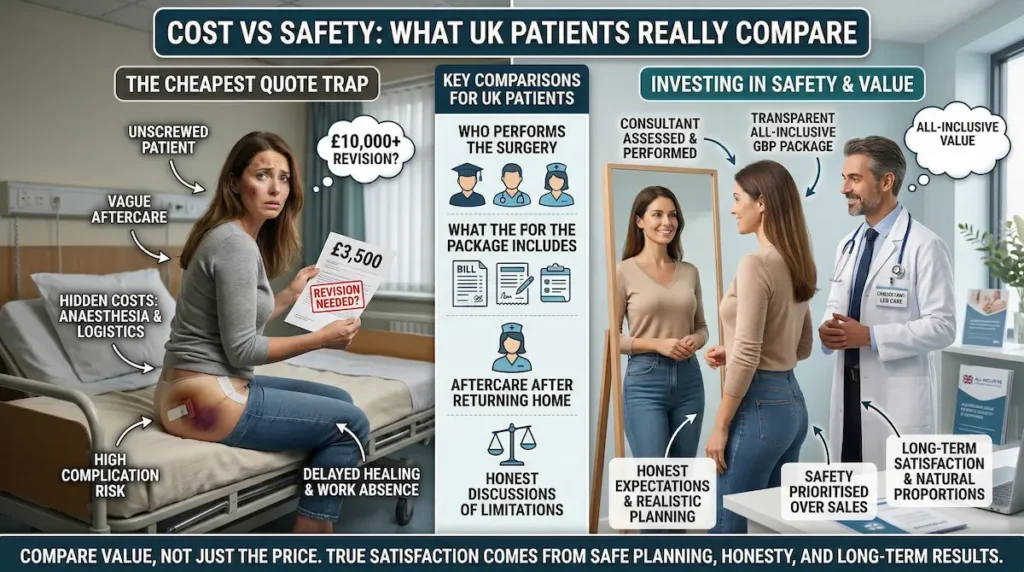
Cost vs Safety: What UK Patients Should Really Compare
When British patients compare gluteal implants pros and cons, cost is part of the conversation, but it should never be separated from safety. The cheapest quote is not always the lowest overall cost. A poor result, delayed healing, or revision procedure can turn an apparently cheaper operation into a much more expensive experience in the long run. That is why sensible patients compare value, not just headline price.
Why the cheapest quote can become the most expensive outcome after revision
Low pricing often becomes risky when it hides shortcuts: weak patient screening, vague aftercare, unclear surgical responsibility, or pressure to promise a larger result than the anatomy can safely support. That is particularly relevant in buttock implants vs fat grafting, because both procedures require judgement, not just technical execution.
A revision is never simply an inconvenience. It may involve more cost, more time off work, more travel, more emotional stress, and a more complex recovery. For that reason alone, “cheap” is not a useful category in aesthetic surgery. The real question is whether the original plan was safe and well judged.
- Short-term saving: a lower quote with unclear standards.
- Long-term risk: complication management, delayed healing, or corrective surgery.
- Smarter comparison: safety, surgeon judgement, aftercare, and realistic outcome planning.
What should be included in an all-inclusive GBP package
For UK patients, transparent pricing in pounds sterling makes comparison easier, but the figure alone is not enough. A proper package should explain exactly what is included and what is not. That is especially important for patients travelling from London, Manchester, Birmingham, or elsewhere in the UK, because logistics and recovery planning are part of the total treatment cost.
An all-inclusive package should usually clarify consultant assessment, hospital or clinic fees, anaesthesia, accommodation planning, transfers where relevant, post-operative reviews, and how communication will continue after the patient returns home. Clarity matters more than sales language.
| What UK Patients Should Compare | Why It Matters |
|---|---|
| Who performs the surgery | Ensures accountability and proper consultant-led care |
| What the package includes | Prevents hidden costs and misleading comparisons |
| How aftercare works after returning home | Reduces anxiety and improves continuity of care |
| Whether the clinic discusses limitations honestly | Shows that safety is prioritised over sales |
Why value means balancing safety, natural results, and long-term satisfaction
The best investment is not necessarily the largest operation. It is the operation that still feels right six months later, looks proportionate, and does not leave the patient managing preventable complications. This is where a true BBL safety comparison becomes more useful than a simple “before and after” search.
For some patients, fat transfer offers the most natural value because it enhances the waistline and buttocks together. For others, implants may be a reasonable option when donor fat is limited. The key is that the recommendation should follow the anatomy, not the marketing script.
British patients are often less interested in extremes and more interested in balance. In that sense, long-term satisfaction usually comes from three things working together: safe planning, natural proportions, and honest expectations from the very beginning.
Frequently Asked Questions (FAQ): BBL Implants vs Fat Transfer
Below are some of the most common questions British patients ask when comparing BBL implants vs fat transfer.
Are BBL implants safer than fat transfer?
Can a very slim patient still have a natural-looking BBL?
Why is fat transfer considered risky in some clinics?
Do buttock implants have a higher revision rate?
How long should I stay in Istanbul after surgery?
When is it safe to fly back to the UK after buttock augmentation?
Which option usually gives the most natural result for British patients?
If you would like to explore related topics, you can also read about liposuction in Turkey, J-Plasma skin tightening, lymphatic drainage massage after lipo, our all-inclusive BBL package, the questions to ask your plastic surgeon, how to avoid ghost surgery in Turkey, how an online plastic surgery consultation works, and payment options for plastic surgery in Turkey. These pages can help you compare procedures, plan your recovery and make a safer, more informed treatment decision.
Medical Disclaimer: This page is provided for general educational purposes only and does not replace a face-to-face medical consultation, diagnosis, or personalised treatment plan. All surgery carries risks and outcomes vary between individuals. Suitability for a BBL (Brazilian Butt Lift) surgery, procedure selection, and anaesthesia choice can only be determined after a full clinical assessment by a qualified surgeon. Always follow your clinician’s instructions and seek urgent medical attention if you develop concerning symptoms during recovery.