

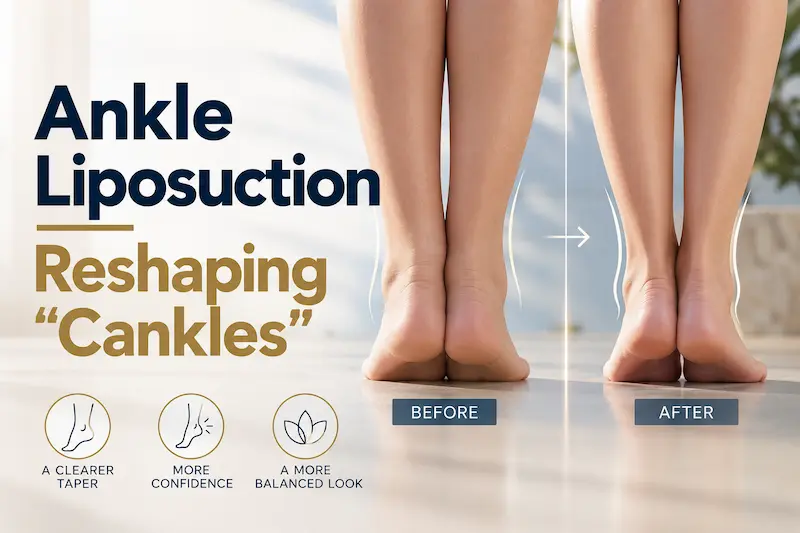
Ankle liposuction removes small, stubborn fat pads around the ankle bones and Achilles area to restore a clearer taper between the calf and ankle. This is the change many people mean when they search for “cankles”. It works only when the fullness is fat, not oedema, bone structure, tendon shape, or untreated lipoedema.
For UK patients, the decision needs a careful filter. Fullness around the ankle can look cosmetic, but it is not always a cosmetic problem. If your ankles swell more at the end of the day, leave a dent when pressed, feel painful, or change suddenly on one side, surgery should not be the first step. Medical assessment comes first.
At AKM Clinic, ankle contouring is treated as a small-zone liposuction decision, not a “slim the whole leg” promise. The goal is a subtle, cleaner transition from lower calf to ankle, planned conservatively by a European Board-Certified surgical team using standards UK patients would recognise from GMC-led safety expectations. For the broader technique behind this area, see AKM’s small-zone liposuction approach.
“The ankle has very little margin for error. Small, even fat removal usually looks more natural than aggressive reduction, especially where the skin is thin and the tendons are close to the surface.”
Table of Contents
What “Cankles” Are — and What Ankle Liposuction Can Change
“Cankles” is an informal word for a leg shape where the calf appears to continue into the ankle without a clear narrowing point. It is not a diagnosis. It simply describes the missing taper between the lower calf and the ankle, which can come from fat, fluid retention, wider bone structure, prominent tendons, muscle distribution, or a combination of these factors.
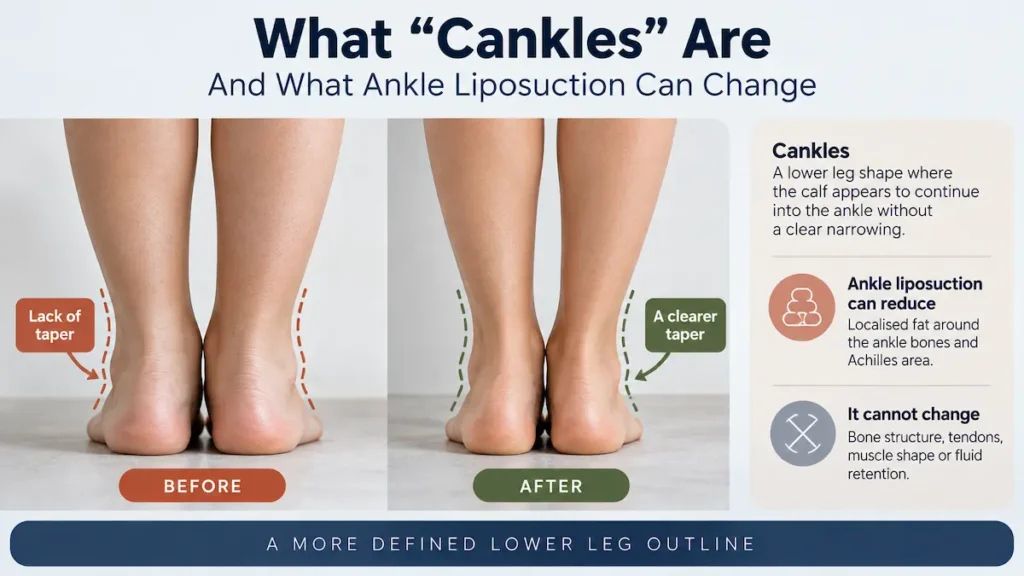
The calf-to-ankle taper
A naturally tapered lower leg narrows as the calf moves down towards the ankle. In some people, that transition is softened by a small layer of fat around the inner and outer ankle, the malleoli, and the sides of the Achilles tendon. Even a small amount can change the silhouette.
This is why cankle liposuction is different from liposuction on larger areas such as the abdomen or thighs. The volume removed is modest. The visual effect comes from refining the outline, not from taking away a large amount of fat.
Ankle fat pads around the malleoli and Achilles area
The ankle is shaped by bones, tendons, vessels, skin quality, and a thin layer of superficial fat. The bony points on each side of the ankle are called the malleoli. Behind them, the Achilles tendon creates a natural vertical line. When fat sits around these structures, the ankle can look thicker and less defined.
Ankle liposuction can reduce pinchable fat in these small pockets. It cannot narrow the bones, shrink muscle, tighten loose skin dramatically, or treat swelling caused by circulation, medication, hormones, lymphatic issues, or another medical condition.
What liposuction can and cannot change
The best result is usually a refined taper, not a dramatic “before and after” change. That matters. If the ankle is treated too aggressively, the area can look uneven, hollow, or asymmetrical because there is not much fat to disguise contour errors.
Good planning starts with a simple question: what is creating the fullness? If the answer is localised, stable fat with good skin tone, ankle liposuction may help. If the answer is oedema, bone shape, or lipoedema, the better route is medical assessment or a different treatment plan.
UK safety note: Careful screening is essential here, because swollen ankles may be oedema rather than fat, while cosmetic liposuction is most appropriate for localised deposits in carefully selected patients. That distinction matters before considering ankle surgery.
Fat, Oedema, or Bone? Who Actually Benefits?
This is the most important section of the article. Many people searching for cankles surgery are not sure whether they have fat, swelling, or a naturally wider lower-leg structure. Liposuction helps only one of those: localised fat. It should not be used to mask a medical cause of swelling.
Fat that stays similar morning and evening
Fat-related ankle fullness tends to be fairly stable. It may bother you in boots, heels, slim trousers, or summer clothing, but it does not usually change dramatically between morning and evening. When you gently pinch the area, you can feel a soft, localised layer rather than tight, fluid-filled swelling.
The strongest candidates are usually at a stable weight, have good skin elasticity, and have a clear pocket of fat around the ankle or lower calf. They are not looking for a much thinner leg. They want the ankle to look more defined in proportion to the calf.
Oedema that worsens later in the day or leaves pitting
Oedema is different. It often feels tighter, puffier, or heavier than fat. It may worsen after standing, long flights, warm weather, salty meals, certain medicines, or hormonal changes. A common sign is “pitting”: when you press the swollen area, a dent remains for a short time.
If this sounds like your ankle fullness, cosmetic surgery should wait. You should speak to your GP or an appropriate clinician first, especially if the swelling is new, one-sided, painful, red, hot, or associated with shortness of breath. In lower-leg liposuction literature, careful patient selection is repeatedly emphasised because below-knee contouring can carry visible pitfalls when the real issue is not a suitable fat pocket; see documented pitfalls of liposuction below the knee.
Bone, tendon structure, or possible lipoedema
Some ankles look broad because of bone structure, tendon prominence, or the natural shape of the lower leg. Liposuction cannot change these. A surgeon may be able to soften surrounding fat, but the result will be limited if the main issue is skeletal width or muscle distribution.
Lipoedema is another important distinction. It can cause disproportionate fat accumulation in the legs, often with tenderness, easy bruising, heaviness, and a pattern that may spare the feet. This article does not diagnose lipoedema. If those symptoms sound familiar, assessment should come before any cosmetic plan.
| What may be causing “cankles”? | Typical clues | Can ankle liposuction help? | Better next step |
|---|---|---|---|
| Localised ankle fat | Soft, pinchable fullness that stays fairly similar through the day | Possibly, if skin quality is good and expectations are subtle | Consultation with a surgeon experienced in small-zone lower-leg contouring |
| Oedema or fluid retention | Swelling worsens later in the day, feels tight, or leaves a dent when pressed | No. Liposuction does not treat fluid build-up | GP or medical assessment before considering cosmetic surgery |
| Bone or tendon structure | Firm shape with little pinchable fat; ankle width feels structural | Limited. Fat removal cannot narrow bone or tendons | Realistic contour assessment rather than volume-reduction planning |
| Possible lipoedema | Disproportionate leg heaviness, tenderness, easy bruising, or family pattern | Only after diagnosis and specialist planning | Medical evaluation; cosmetic ankle-only surgery may not be appropriate |
Why the Ankle Is a Precision Zone
The ankle is one of the least forgiving areas for liposuction. There is only a thin layer of fat, the skin is fine, and the visible landmarks are close together: ankle bones, tendons, small vessels and the Achilles contour. A few millimetres can change the result.
That is why ankle work should never be approached like high-volume body contouring. The aim is balance. A careful plan removes enough fat to improve taper, but not so much that the ankle looks hollow, uneven, or out of proportion with the calf.
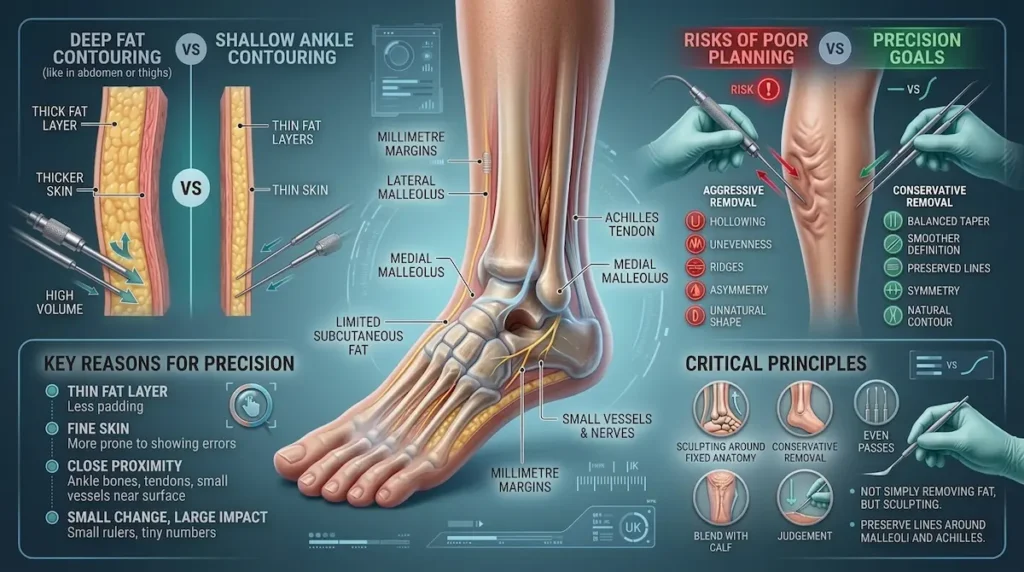
Thin fat layer and nearby tendons
In the abdomen or thighs, surgeons often work through a deeper, more forgiving fat layer. Around the ankle, there is far less padding. Tendons and bony landmarks sit close to the skin, so over-removal can show quickly.
This is also why “slimmer ankles” is not always the right target. A more accurate goal is smoother ankle definition. The surgeon must preserve the natural lines around the malleoli and Achilles tendon rather than flattening the area into an unnatural shape.
Conservative removal and fine cannulas
Small-zone ankle contouring relies on restraint. Fine cannulas, even passes and conservative fat removal help reduce the risk of dents or sharp transitions. The surgeon is not simply removing fat; they are sculpting around fixed anatomy.
This same principle applies to other small lower-leg areas, which is why the knee is a useful comparison: knees and ankles both need precise planning. Both zones can respond well when the problem is localised fat, but both can look irregular if treated too aggressively.
Irregularity and asymmetry risk
The most common aesthetic concern after poorly planned ankle liposuction is not that “not enough” fat was removed. It is unevenness. A slight hollow on one side, a ridge near the Achilles area, or a mismatch between right and left ankles can be more noticeable than a subtle amount of remaining fullness.
Scars are usually small because the access points are tiny, but their placement still matters. Lower-leg entry points need to be positioned with footwear, skin creases and visibility in mind. For a deeper scar-specific explanation, see where lower-leg liposuction access points sit.
UK planning note: A GMC-registered benchmark for cosmetic surgery is not only about credentials; it is about judgement. For ankle liposuction, the key judgement is knowing when to remove less, when to blend into the lower calf, and when not to operate because the fullness is not fat.
What Realistic Results Look Like
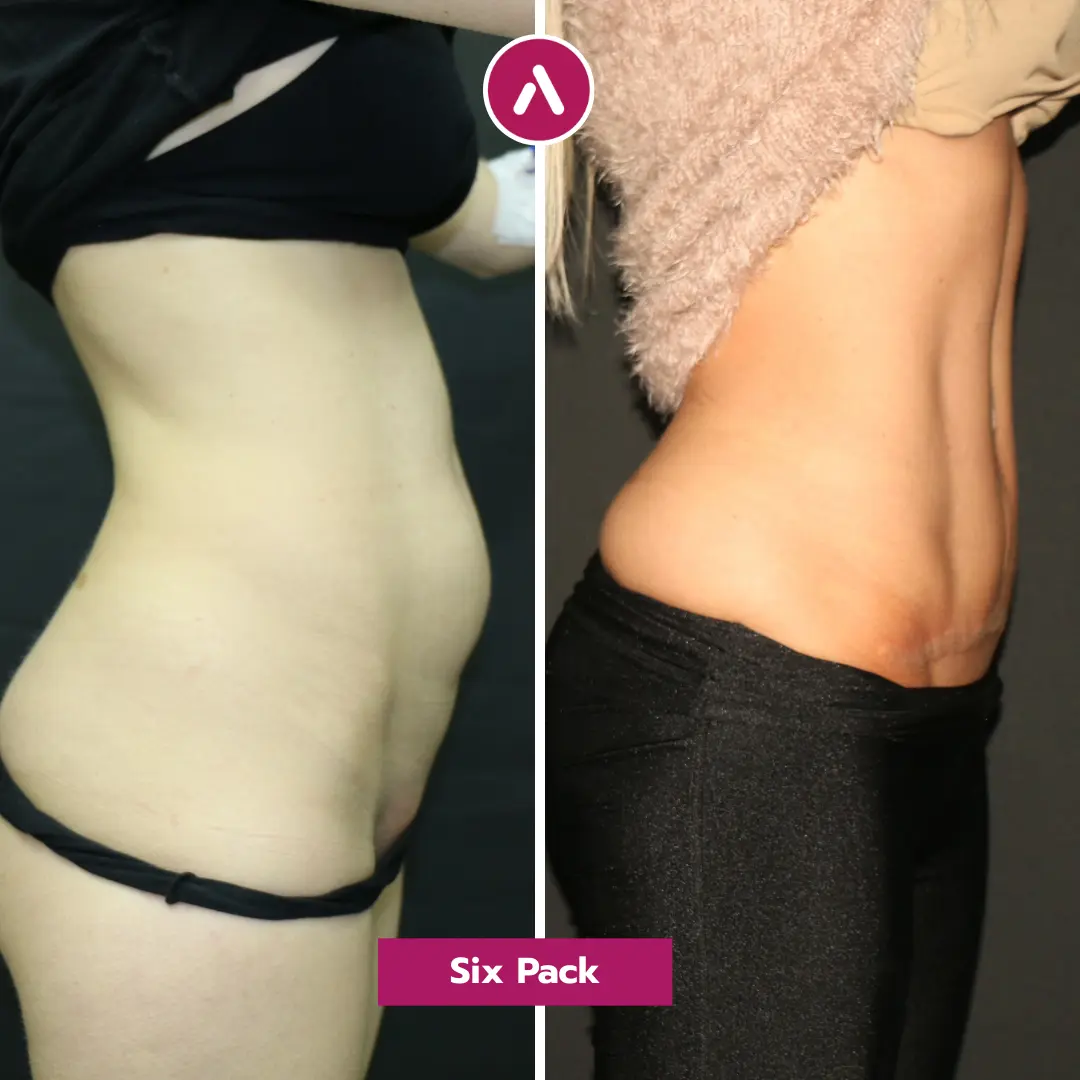
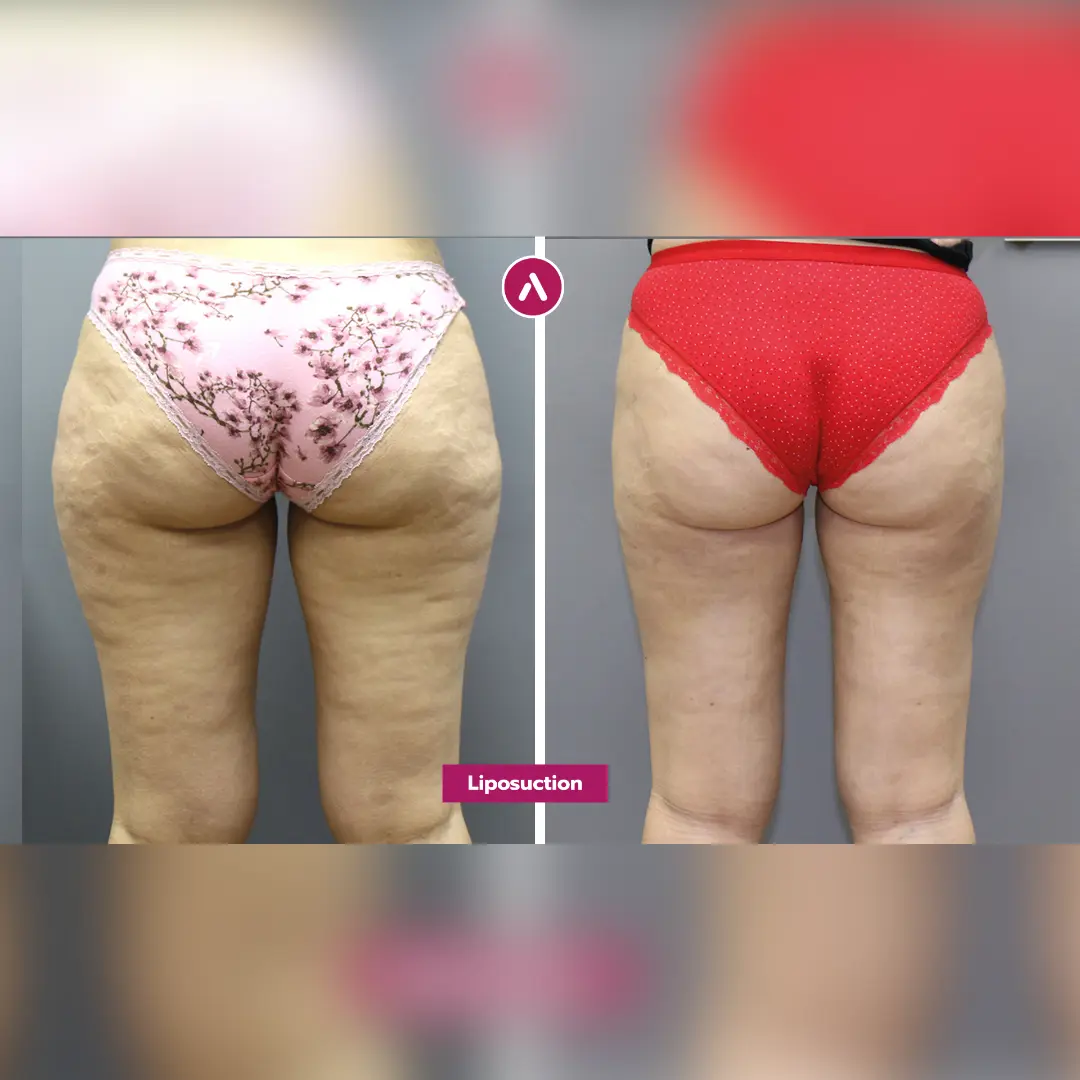
Realistic ankle liposuction results are usually refined rather than dramatic. The ankle looks less padded, the calf-to-ankle transition becomes clearer, and shoes or slim trousers may sit more comfortably. The leg should still look like your leg.
This point is important for anyone comparing photos online. A heavy-handed result can look artificial below the knee. A good result often looks quieter: the ankle appears neater, but friends may notice your leg shape looks more balanced without knowing why.
Subtle taper, not dramatic slimming
Patients often imagine that ankle liposuction will create a very narrow ankle. In reality, bone width, tendon shape and calf muscle still set the frame. Liposuction can reduce the soft layer that blurs that frame, but it cannot redraw the entire lower leg.
The best candidate is usually happy with a subtle taper. They understand that the result is measured in contour and proportion, not in large-volume fat removal. This is why consultation photos from multiple angles matter: front, side, back and three-quarter views all show different parts of the ankle line.
When calf planning matters
Some people have isolated ankle fullness. Others have a broader lower calf that blends into the ankle. In that second group, treating the ankle alone may create a step-off: a slimmer ankle sitting below a fuller calf.
That does not always mean the calf needs surgery. It means the calf must be assessed. Sometimes the right plan is ankle-only refinement. Sometimes ankle and calf liposuction may be discussed as one lower-leg contour, especially when the fullness continues above the ankle rather than sitting only around the malleoli.
The calf is its own anatomical area, with different limits and recovery considerations. This article does not cover that procedure in detail, but you can read how calf contouring can affect ankle taper if your concern extends above the ankle.
Why final definition takes months
Early swelling can hide much of the result. The ankle is low on the body, so fluid tends to collect there. That means the first few weeks may feel frustrating: the treated area can look puffy even though fat has been removed.
Definition usually appears gradually as swelling settles and the skin adapts. Many patients see meaningful change within weeks, but the cleaner lower-leg outline often continues to refine over several months. Patience matters here more than in some larger areas.
A published approach to calf and ankle liposculpture describes this area as a specialised contouring zone rather than a simple fat-removal site. For readers who want the surgical literature behind that idea, see a published approach to calf and ankle liposculpture.
Recovery Below the Knee — What’s Different?
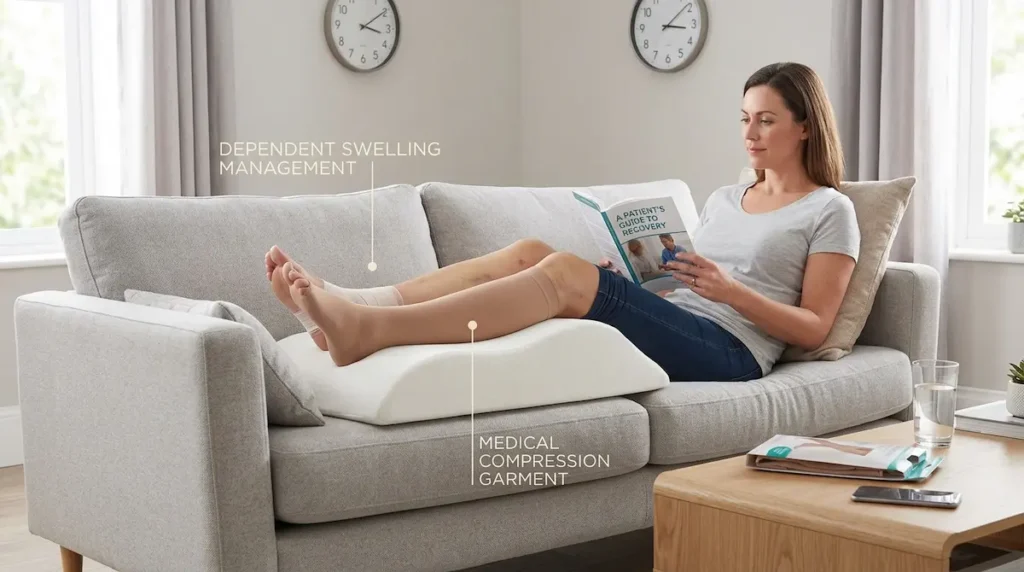
Recovery after ankle liposuction is usually manageable, but swelling can last longer than people expect. The reason is gravity. Fluid naturally travels downwards, so the ankle and foot may look puffy even when the surgical trauma is limited.
This does not mean the procedure has failed. It means the lower leg has its own recovery pattern. Compression, elevation, gentle walking and realistic timing are central to the plan.
Dependent swelling and why it can last longer
“Dependent swelling” means swelling that gathers in the lowest part of the body. After ankle liposuction, this can affect the ankle, top of the foot, and sometimes the lower calf. It is often worse after standing or sitting for long periods.
For UK patients travelling back after surgery, this is a practical issue as much as a medical one. You may feel well enough to move around, but your ankles can still react to time on your feet, airport queues, and the flight home. Planning reduces stress.
Compression stockings, elevation, and walking
Compression stockings help control swelling and support the treated area while it settles. Your surgical team will tell you how long to wear them and when to remove them for washing or skin checks. Do not improvise this part.
Elevation also matters. Short periods with the legs raised can help fluid move away from the ankle. Gentle walking is usually encouraged because it supports circulation, but strenuous lower-body training, long standing days, and heat exposure may need to wait until you are cleared.
- First days: expect swelling, mild bruising and tightness around the ankle or lower calf.
- First few weeks: compression stockings and careful activity help manage dependent swelling.
- Following months: definition becomes clearer as swelling reduces and the contour settles.
Return travel, flight socks, and costs
Return travel should be planned around your surgeon’s fit-to-fly advice, not around the earliest available ticket. Flight socks may be recommended, especially when swelling is still active. You should also walk at intervals during travel if your team advises it.
AKM’s team will discuss timing, compression, walking, and aftercare before you travel home. This article does not cover pricing in detail because it is not a cost guide, but UK patients comparing options can review liposuction prices for UK patients.
Healing is not only about swelling. Any small access point also needs time to mature. If you are anxious about visible marks, it can help to compare this with longer lower-body incisions, such as how thigh lift scars heal over the first year.
Setting expectations: Liposuction is best understood as body contouring, not a weight-loss procedure. Around the ankle, that distinction is even more important: the goal is a cleaner outline in a carefully selected patient, not a completely different leg shape.
Frequently Asked Questions: Ankle Liposuction
These questions answer the search concerns patients usually have before choosing ankle liposuction: whether it works for cankles, how to separate fat from swelling, how much change is realistic, and what recovery below the knee feels like. The answers are intentionally cautious because the ankle is a small, visible, medically sensitive area.
Does ankle liposuction work for cankles?
It will not work well if the main cause is oedema, bone width, tendon structure, muscle shape, or untreated lipoedema. A careful consultation should identify the cause before any surgical plan is made.
How do I know if my cankles are fat or swelling?
If pressing the swollen area leaves a dent, or if one ankle suddenly becomes painful, red, hot, or much larger than the other, that is not a cosmetic-surgery starting point. Speak to a GP or appropriate clinician first.
How much fat can be removed from the ankles?
This is why cankle liposuction is measured by contour improvement rather than volume. A good plan aims for a smoother lower-leg outline, not maximum fat removal.
How long is swelling after ankle liposuction?
Compression stockings, elevation, gentle walking and staged return to activity usually form part of the recovery plan. Final definition takes time. Early puffiness does not mean the result has failed.
Can I get calf and ankle liposuction together?
That said, the calf is not automatically treated. Some patients need ankle-only refinement, while others need no surgery because the issue is swelling or anatomy rather than fat.
Does ankle liposuction leave scars?
The key is not only scar size. It is also where the access points sit in relation to footwear, skin creases and the natural lower-leg outline.
Is ankle liposuction painful?
Pain experience varies. Your surgical team should explain anaesthesia, post-operative medicines, compression, walking guidance and when to report unusual pain before you travel.
Who is not a good candidate for cankles surgery?
You may also be unsuitable if there is very little pinchable fat, poor skin elasticity, unstable weight, unrealistic expectations, or a desire for a very narrow ankle that your bone and tendon structure cannot support.
Final Thoughts on Ankle Liposuction
Ankle liposuction can refine cankles when the problem is a small, stable fat deposit and the goal is a subtle calf-to-ankle taper. It is not a treatment for oedema, lipoedema, bone width, or general leg size. The safest-looking result usually comes from careful diagnosis, conservative contouring and realistic expectations.
At AKM Clinic, the first question is not “How much can we remove?” It is “What is creating the fullness?” If your ankle shape is caused by localised fat, AKM can assess whether small-zone ankle contouring is appropriate. If swelling or a medical condition is suspected, you will be guided to address that first.
Ask AKM whether your ankle fullness is a fat zone that liposuction can refine.
Medical disclaimer: This article is for general education only and does not replace a consultation with a qualified clinician. Individual anatomy, healing, medical history and surgical suitability vary. If you have new, painful, one-sided, worsening, or unexplained ankle swelling, seek medical advice before considering cosmetic surgery.