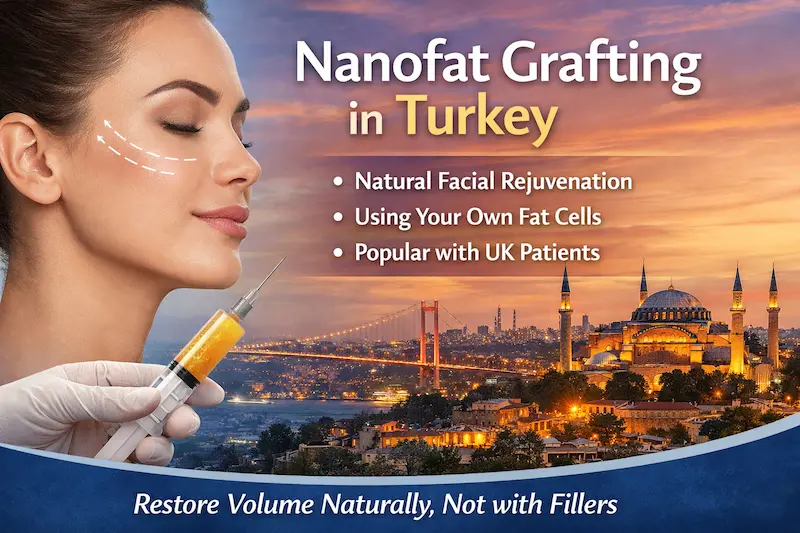
For many British patients researching nanofat grafting Turkey, the real goal is not to look dramatically different. It is to look fresher, softer, and more like themselves again. Volume loss in the face can make even healthy, energetic people appear tired, drawn, or older than they feel. This is why nanofat grafting has become such an appealing topic for patients who want subtle rejuvenation rather than an obviously “done” look.
In simple terms, nanofat is a refined form of your own fat that can be used to improve delicate facial areas where hollowness, poor skin quality, and early ageing changes begin to show. For patients comparing Turkey nanofat grafting with repeated filler appointments in London, the appeal is obvious: your treatment uses your own tissue, supports a more natural look, and fits the wider shift towards regenerative aesthetics. From the perspective of medical science, this matters because modern facial rejuvenation is no longer only about lifting or filling. It is increasingly about restoring tissues in a way that looks harmonious and believable.
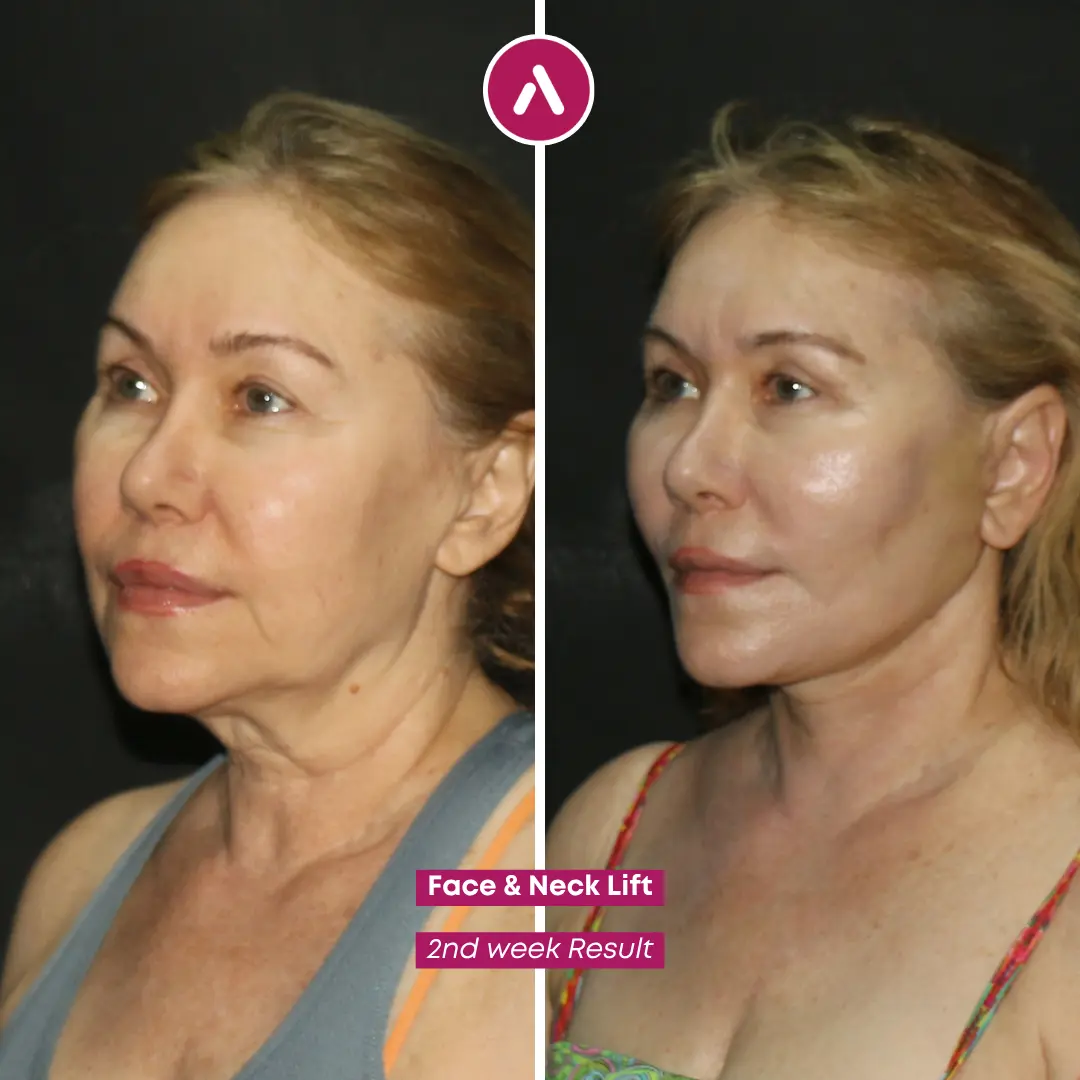
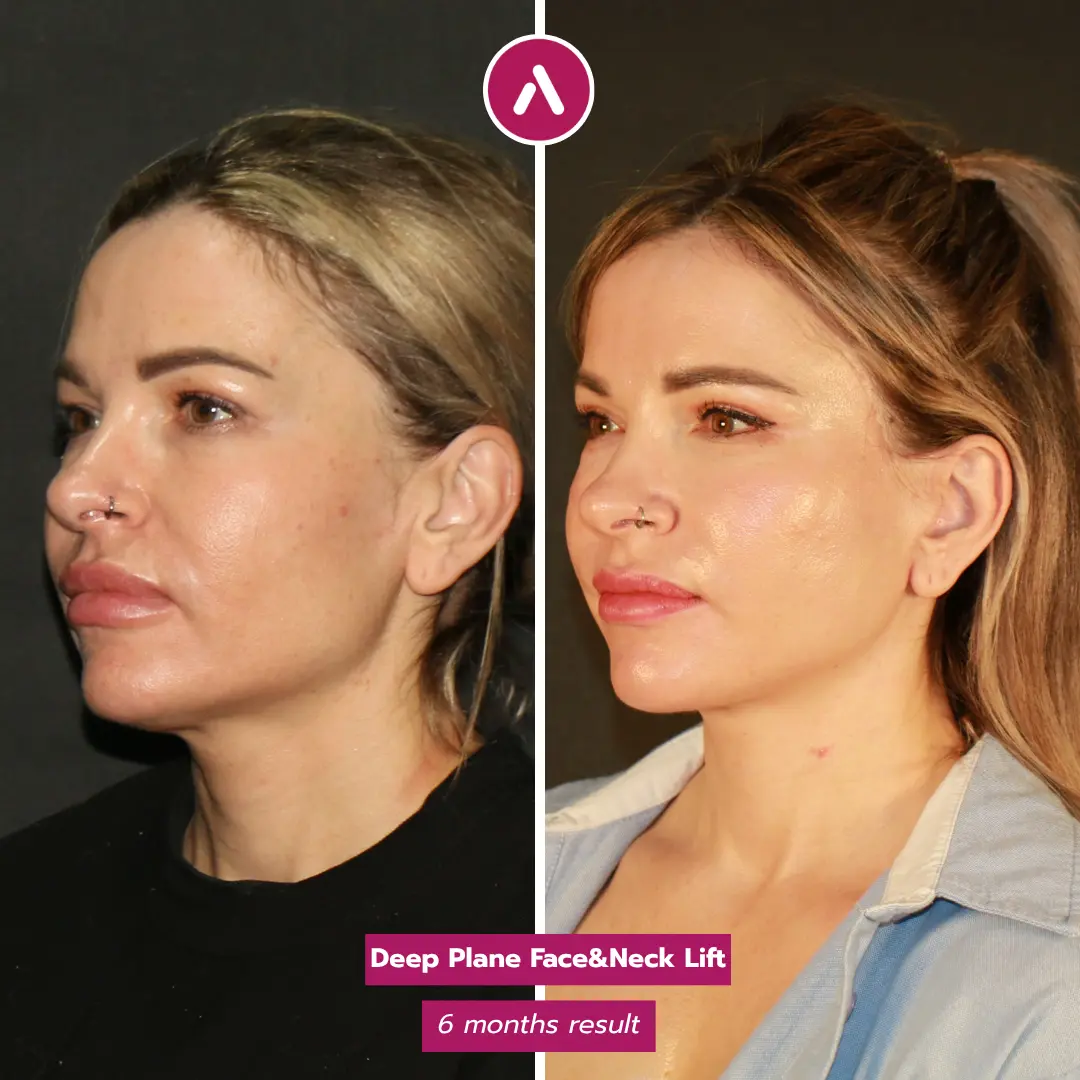
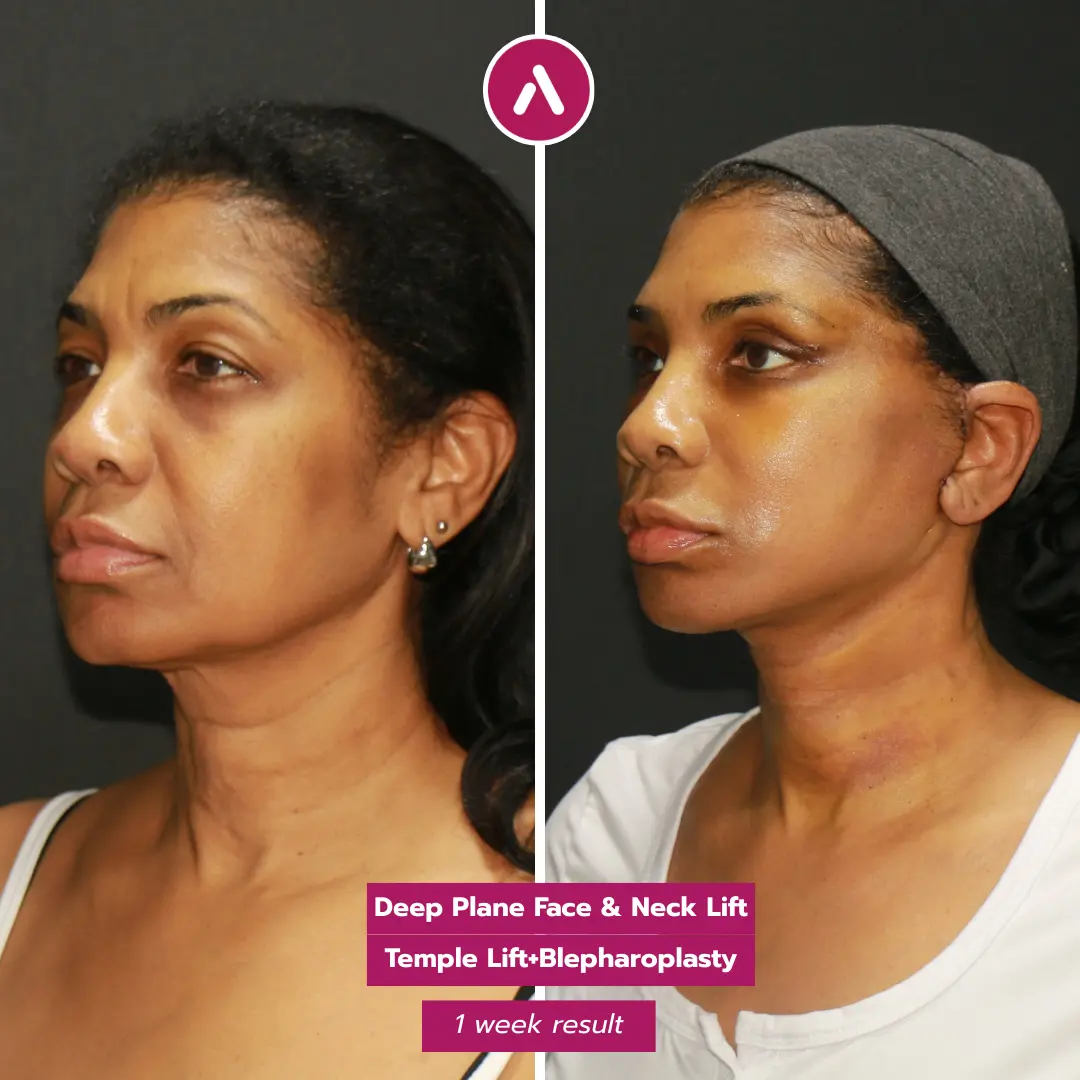
Many people begin by searching what is nanofat grafting, then move on to practical questions such as nanofat vs dermal fillers, nanofat transfer for face, facial fat transfer Turkey, nanofat grafting before and after, and eventually nanofat grafting cost. This guide is designed to answer those questions in clear British English, without hype, and with a strong focus on natural-looking outcomes for UK patients.
“Considering the London vs Istanbul quality, I would confidently choose Turkey over the UK.”Sarah from the UK
Table of Contents
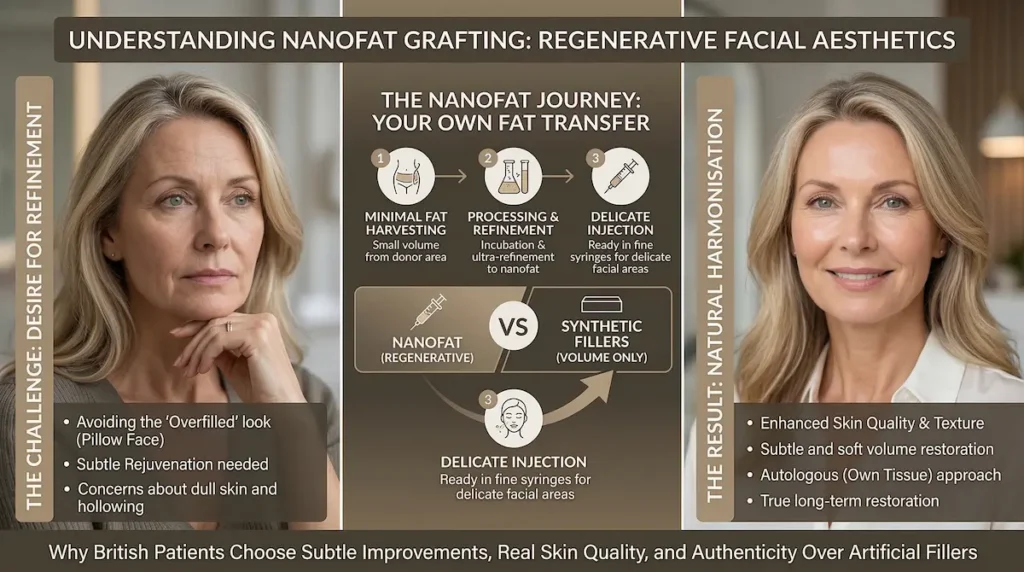
What Is Nanofat Grafting and Why Are UK Patients Choosing It?
Before comparing treatments, it helps to understand what nanofat actually is. This section explains the basics of the procedure, why it has gained attention in regenerative facial aesthetics, and why British patients often prefer it when they want refinement rather than an overfilled appearance. It also sets out why this approach appeals to people searching for an own fat transfer instead of filler solution.
For many UK patients, nanofat sits within a broader shift towards regenerative facial treatment rather than simple volume replacement. It is often researched alongside options such as stem cell assisted facelift surgery, especially by those who want results that look softer, more personalised, and less obviously cosmetic. In this context, nanofat appeals because it supports natural facial harmony while still fitting modern expectations around subtle rejuvenation and tissue-based restoration.
Understanding Nanofat: How Your Own Fat Is Processed for Facial Rejuvenation
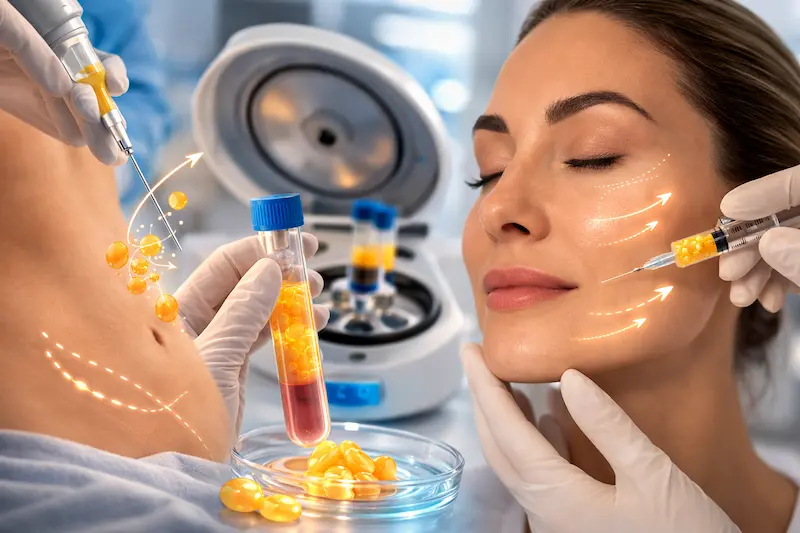
So, what is nanofat grafting? Nanofat is created by taking a very small amount of the patient’s own fat from a donor area, carefully processing it, and then preparing it for use in delicate parts of the face. Unlike traditional fat grafting that focuses more heavily on adding visible volume, nanofat is more refined and is especially useful where the skin appears thin, dull, hollow, or tired.
This is why the treatment is often discussed under terms such as autologous fat transfer face and fat grafting facial rejuvenation. “Autologous” simply means the material comes from your own body. For many patients, that idea alone is reassuring. Rather than relying on a synthetic product, the treatment uses living tissue from the patient, which supports the wider move towards more biologically aligned facial rejuvenation.
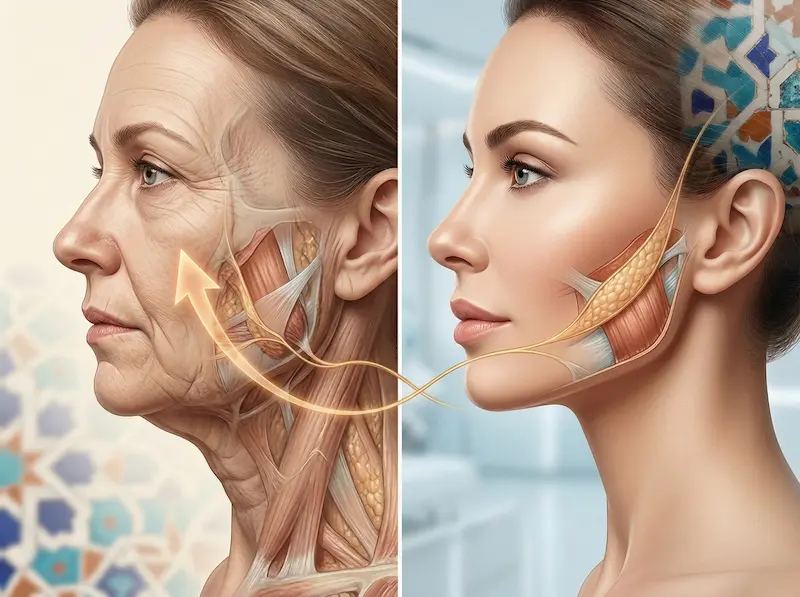
One reason facial fat transfer Turkey has become so widely researched is that patients are increasingly well informed. They do not simply want “more volume”. They want volume placed in a way that respects facial proportions, skin quality, and long-term facial harmony. In aesthetic science, that distinction matters. A face does not age only because it “needs filler”. It ages because soft tissue position, skin quality, and support structures all change over time.
The practical side of the procedure also appeals to UK patients. Small-volume fat harvesting and careful processing are central to modern nanofat grafting techniques. The aim is not to create puffiness. It is to improve quality and restore softness in a refined, understated way.
Nanofat vs Synthetic Dermal Fillers: What Makes the Result Look More Natural?
The most common comparison patients make is nanofat vs dermal fillers. This is understandable, because both are discussed when someone wants to improve hollowness or soften tired facial features. However, they are not the same thing, and they do not create exactly the same aesthetic effect.
Dermal fillers are manufactured products used to add volume in specific areas. They can be effective in the right patient, but repeated top-ups may become expensive and, in some cases, can create a look that feels heavier or less natural over time. By contrast, nanofat transfer for face focuses on using your own tissue. For patients who dislike the idea of looking overfilled, this is often a major advantage.
| Treatment Feature | Nanofat Grafting | Dermal Fillers |
|---|---|---|
| Material used | Your own fat | Synthetic filler product |
| Best suited for | Natural softening, delicate rejuvenation, skin quality support | Targeted volume enhancement and contour changes |
| Overall aesthetic style | Softer, more regenerative, less “done” | Can be precise, but may look obvious if overused |
| Patient appeal | Strong for those wanting an own fat transfer instead of filler | Strong for those wanting a quick clinic-based treatment |
That does not mean fillers are “bad” and nanofat is “perfect”. The correct approach depends on anatomy, skin quality, age-related change, and the patient’s expectations. Still, many UK patients researching Turkey nanofat grafting are specifically trying to avoid the “pillow face” effect they associate with repeated filler use. They want to look refreshed, not obviously volumised.
There is also a philosophical difference. Fillers are often used to replace lost volume quickly. Nanofat, on the other hand, sits more comfortably within a regenerative conversation. This is one reason scientific research in facial rejuvenation increasingly discusses tissue quality, not merely volume replacement. In other words, the question is no longer just “How do we fill the hollow?” but “How do we restore the face in a more natural way?”
Why “Subtle Rejuvenation” Appeals to the British Patient Mindset
UK patients tend to be highly alert to anything that might look artificial. In many consultations, the most important phrase is not “make me younger” but “I do not want to look overdone”. This is exactly where nanofat becomes relevant. The treatment fits the British preference for discreet improvement, where friends may notice you look rested or healthier without being able to identify precisely what changed.
For someone comparing expensive repeat filler visits on Harley Street with a more restorative approach abroad, nanofat can feel like a more sophisticated option. It aligns with the British preference for refinement over exaggeration. Rather than chasing sharp, high-volume contouring, the goal is usually to restore softness under the eyes, in the cheeks, or around the temples in a way that still looks believable.
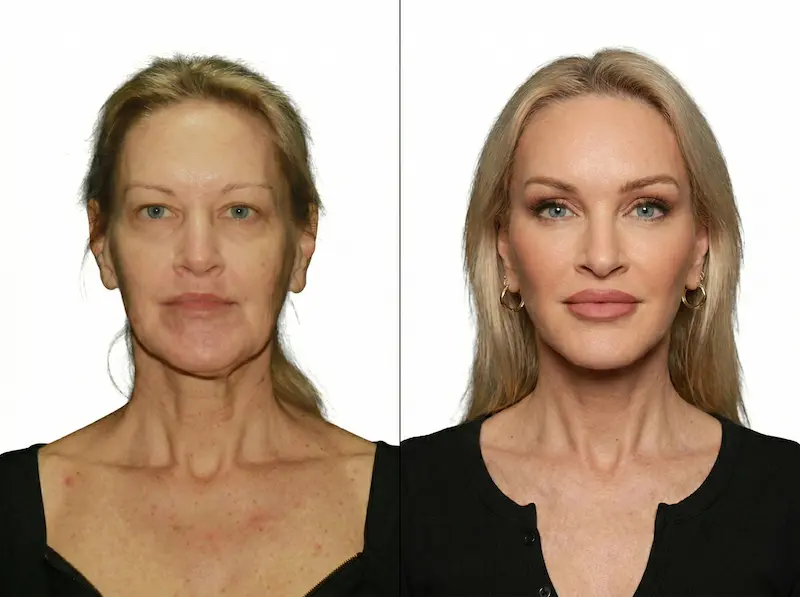
This is also why nanofat grafting before and after galleries matter so much in the research phase. Savvy UK patients do not only look for dramatic differences. They look for proof that the face still appears natural in daylight, from multiple angles, and after healing has settled. The best results do not scream “cosmetic work”. They simply look well balanced.
- A softer alternative for patients worried about looking overfilled
- A more biologically familiar option because it uses your own tissue
- A strong fit for patients seeking subtle facial rejuvenation rather than dramatic change
Which Areas Can Nanofat Grafting Improve Most Effectively?
Once patients understand the concept, the next question is usually where nanofat works best. Not every facial concern is caused by the same kind of ageing. Some people mainly have loose skin, while others are troubled more by hollowness, thin skin, or tired-looking shadows. This is where careful assessment matters. Nanofat transfer for face is most useful in areas where delicate volume restoration and quality improvement can work together.
Under-Eye Hollowing and Tired-Looking Tear Troughs
The under-eye area is one of the most requested zones for treatment because it can make someone look exhausted even when they feel well. Hollow tear troughs, shadowing, and a thin, crepey appearance often create the impression of age before more obvious sagging appears elsewhere.
For the right patient, nanofat may help soften this transition and create a less fatigued appearance. This is one reason people researching facial fat transfer Turkey often begin with concerns about the under-eye area. They are not necessarily looking for dramatic volume. They are trying to reduce the hollow, skeletal, or sunken look that can make the whole face appear older.
Because the under-eye region is delicate, subtlety is critical. Too much volume in this area can look unnatural very quickly. That is why careful technique, conservative planning, and a refined understanding of facial anatomy matter so much when discussing nanofat grafting techniques.
Cheek Deflation, Midface Volume Loss, and Soft Facial Flattening
Another common indication is early to moderate cheek deflation. When the midface loses support, the face can appear flatter, less vibrant, and less youthful. This is often described by patients as “my face looks tired” or “I look as though everything has dropped a bit”, even when the issue is not severe sagging.
In these cases, fat grafting facial rejuvenation may be a helpful part of treatment planning. Restoring volume through your own tissue can soften the transition between the lower eyelid and cheek, improve facial balance, and bring back a healthier, more rested look.
This is also where the phrase own fat transfer instead of filler becomes especially relevant. Some patients have already tried filler in the cheeks but felt the result looked too structured, too obvious, or simply unlike them. Nanofat may appeal because the aesthetic aim is not to sharpen or inflate the face, but to return a more natural softness.
Temple Hollowing, Fine Skin Quality Changes, and Early Facial Ageing
Temple hollowing is often overlooked, yet it can contribute significantly to an aged appearance. When the temples become depleted, the upper face may look more skeletal and less smooth. Even small losses of volume here can subtly alter facial harmony.
Nanofat may also be considered where skin quality has begun to decline but the patient does not yet need a lifting procedure. In these early-stage changes, the appeal of autologous fat transfer face lies in its restorative logic. The goal is not to “freeze” or “inflate” the face, but to support a healthier-looking transition across naturally expressive areas.
For many UK readers, this is the most attractive part of the treatment. It sits somewhere between standard injectables and more invasive surgery. That middle ground is exactly why searches for nanofat grafting, nanofat grafting cost, and nanofat grafting before and after have become more common among people who want a fresh appearance without crossing into an obvious surgical look.
Who Is a Good Candidate for Nanofat Grafting in Turkey?
Not every patient who dislikes facial hollowness needs the same treatment. Some mainly need lifting, some need surface skin improvement, and others need selective volume restoration. This is why a proper consultation matters. In the context of nanofat grafting, the best candidate is usually someone who wants a softer, more natural result and understands that the goal is refinement rather than dramatic change.
For this reason, the ideal candidate is not simply someone seeking more volume, but someone looking for a treatment plan tailored to the way their face is ageing. Many patients who research stem cell assisted facelift surgery are also drawn to nanofat because both approaches reflect a more modern, regenerative philosophy focused on natural-looking improvement rather than obvious correction.
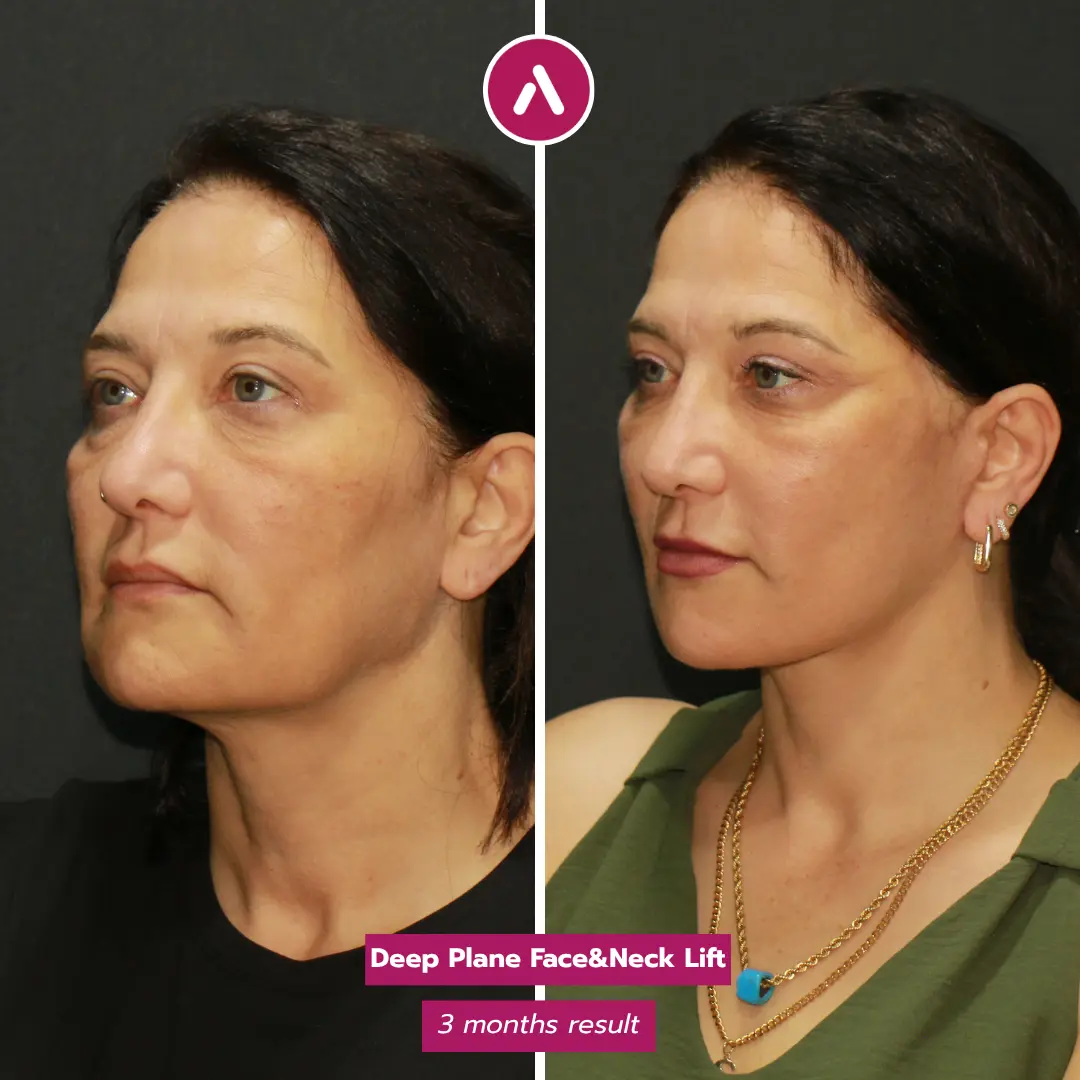
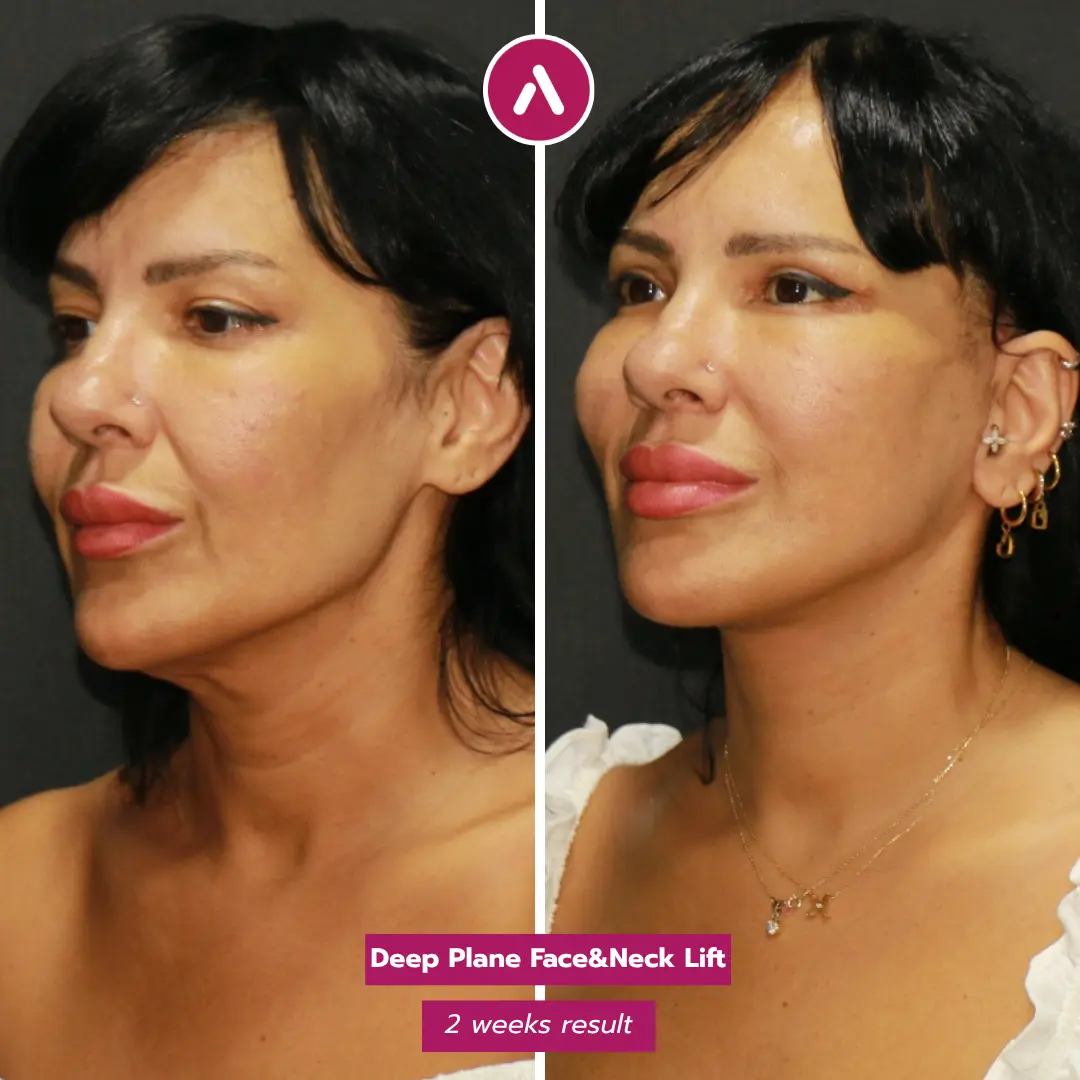
Patients Who Want a Softer Alternative to Traditional Fillers
One of the clearest candidate groups includes patients who are unhappy with the idea of repeated filler top-ups or who already feel that filler no longer suits their face. These are often the people searching for own fat transfer instead of filler, because they want something more biologically familiar and less artificial-looking.
For this patient group, nanofat vs dermal fillers is not only a technical comparison. It is also an aesthetic and emotional one. They do not want stiffness, heaviness, or a face that looks as though it has been “treated”. They want to look fresher while still looking like themselves. This is especially common among British patients who prefer discreet rejuvenation and are very alert to the risk of appearing overfilled.
Patients in this category are often ideal for nanofat transfer for face when the concern is subtle depletion rather than dramatic collapse. They may have lost softness under the eyes, in the cheeks, or around the temples, but they do not necessarily need a major surgical lift.
When Volume Loss Is the Main Problem Rather Than Skin Laxity
Another strong candidate is the patient whose main issue is facial volume loss rather than significant skin descent. In simpler terms, the face may look flatter, more tired, or slightly hollow, but not badly sagged. In these cases, fat grafting facial rejuvenation can be a useful strategy because it focuses on restoring what has gradually been lost.
This is why some patients researching facial fat transfer Turkey discover that their concern is not “I need a facelift” but “I need my face to look less drawn and depleted”. In carefully selected patients, autologous fat transfer face treatment can support a more rested appearance without pushing the face into a surgically obvious result.
That said, realistic planning is essential. Nanofat is not a magic substitute for every other rejuvenation option. It works best when there is enough donor fat available, when the quality of the tissues is suitable, and when the patient understands the role of regenerative volume support within a broader facial assessment.
When You May Need Nanofat Combined with a Lift or Another Procedure
Some patients benefit most when nanofat is combined with another treatment rather than used alone. For example, a face with both visible deflation and tissue descent may require lifting as well as volume restoration. This is particularly relevant in the midface and jawline, where hollowing and laxity can exist together.
In those situations, the consultation should separate three questions: do you need more volume, better skin quality, structural lifting, or a combination of all three? This type of assessment is an important part of modern aesthetic science. Good treatment planning does not begin with a product or a trend. It begins with anatomy.
That is why the best Turkey nanofat grafting programmes are never “one size fits all”. A bespoke plan may include nanofat as a stand-alone treatment, or it may be part of a wider facial rejuvenation strategy for a patient who wants a natural, consultant-led result.
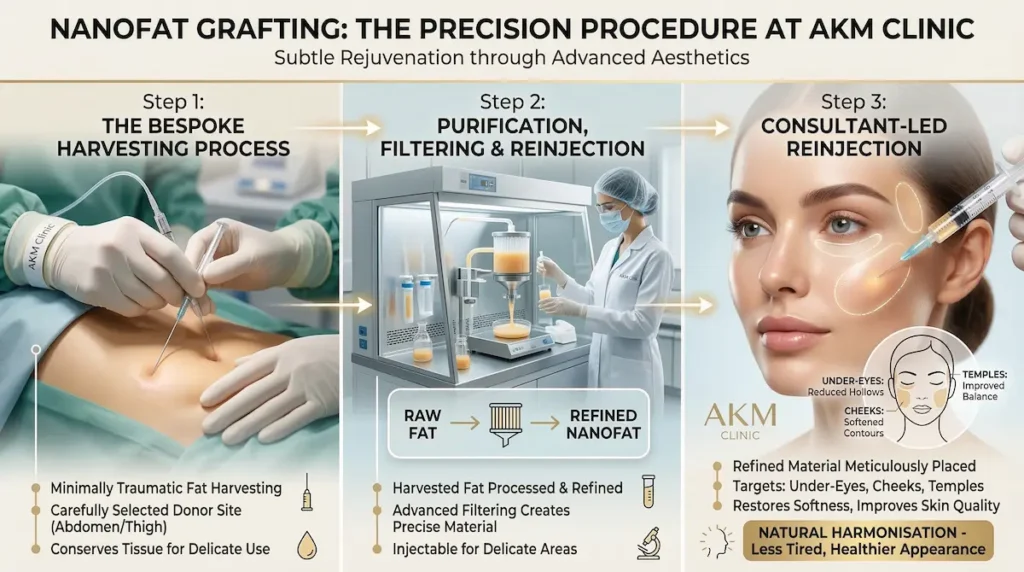
How Does the Nanofat Procedure Work at AKM Clinic?
Once candidacy is clear, most patients want to know exactly what happens on treatment day. This is where technical precision matters. The quality of the result depends not only on the patient’s tissue, but also on the processing method, the injection plan, and the surgeon’s judgement regarding where subtle restoration will create the greatest benefit.
The Bespoke Harvesting Process: Where the Fat Comes From
The first step in nanofat grafting techniques is harvesting a small amount of the patient’s own fat from a donor area. This is usually done conservatively, because the goal is not body contouring. The priority is to obtain suitable tissue for facial use while keeping the process minimally traumatic.
For patients researching what is nanofat grafting, this stage is important because it explains why the treatment is different from simply booking a filler appointment. There is a harvest stage, a processing stage, and a placement stage. Each part affects the final outcome.
In practice, this means the procedure requires planning rather than guesswork. The donor area is selected carefully, the quantity remains modest, and the overall intention is to prepare a refined material suitable for delicate facial rejuvenation rather than coarse volume loading.
Purification, Filtering, and Reinjection Into Delicate Facial Areas
After harvesting, the fat is processed and refined. This step is central to advanced nanofat grafting because the aim is to create a preparation suitable for delicate areas such as the under-eyes, cheeks, temples, and other parts of the face where finesse matters.
This filtering and preparation stage is one reason the treatment attracts patients interested in regenerative aesthetics. The process is not merely about moving fat from one area to another. It is about preparing tissue in a way that can support finer facial restoration. In the language of medical science, technique quality influences treatment quality.
Once prepared, the nanofat is placed with great care into selected facial zones. This is where artistry and anatomy come together. Too much product, poor placement, or a generic approach can all reduce naturalness. Good nanofat transfer for face planning always respects the way light, shadow, and facial proportions work together in real life.
Why Precision Matters for Smooth, Consultant-Led, Natural Results
British patients are often less interested in dramatic transformation and more interested in whether the result will look believable. That is why technical precision matters so much. A natural result depends on restraint, accurate placement, and a clear understanding of facial harmony rather than aggressive volumisation.
At AKM Clinic, this philosophy fits the wider preference for consultant-led, subtle rejuvenation. Instead of chasing exaggerated contour changes, the focus is on where refined improvement will make the patient look healthier, less tired, and more balanced. This is particularly important for patients who have searched for nanofat grafting before and after images and are specifically trying to avoid visible cosmetic “signs”.
The difference is often felt rather than shouted. Friends may say you look brighter, better rested, or somehow fresher. They may not realise why. In facial aesthetics, that is often the strongest compliment of all.
Nanofat Grafting vs Fillers in the UK: Which Option Offers Better Value?
Cost matters, but value matters more. Many UK patients begin by comparing the immediate price of filler with the broader investment involved in Turkey nanofat grafting. This is sensible, because a treatment that appears cheaper at first can become more expensive over time if it requires frequent maintenance or does not deliver the aesthetic style the patient actually wants.
Harley Street Filler Costs vs Turkey-Based Regenerative Treatment Value
In London and other premium private markets, injectable treatments can become a repeated expense. A patient may initially choose filler because it feels simpler, but once repeat appointments, maintenance, and incremental correction are added together, the long-term spend can become substantial. This is why many patients eventually start researching nanofat grafting cost instead of looking only at the price of a single syringe.
The attraction of facial fat transfer Turkey is not simply that treatment abroad may be more affordable. It is that patients may be able to access a more comprehensive and personalised regenerative approach while still achieving strong value compared with premium UK private practice. For many British patients, the comparison is not “cheap versus expensive”. It is “repeated temporary spending versus a more considered restorative investment”.
That language matters. The right conversation is not about bargain hunting. It is about whether the result, longevity profile, travel logistics, and overall experience make sense for the patient’s goals.
Why Some UK Patients Prefer Regenerative Treatment Over Repeated Top-Ups
Patients who dislike maintenance culture often find nanofat especially appealing. They do not want to keep returning for frequent small adjustments that gradually alter the face in a way they no longer recognise. They want a treatment path that feels more coherent and aligned with natural facial ageing.
This is where nanofat vs dermal fillers becomes a value discussion as much as a visual one. Even when filler works well initially, some patients become frustrated by the repeated cycle of booking, topping up, reassessing, and spending again. By contrast, autologous fat transfer face treatment can feel more purposeful because it sits within a regenerative framework rather than a simple maintenance loop.
For the right patient, the attraction is straightforward: a more natural-looking result, less anxiety about appearing overfilled, and a treatment concept that feels closer to restoration than camouflage.
All-Inclusive GBP Planning and the Appeal of Transparent Pricing
One of the strongest reassurance points for UK patients is clarity. They want to understand not only the procedure, but also the full cost structure. This is why transparent, all-inclusive planning in GBP (£) is so important when discussing nanofat grafting cost. Patients are more comfortable when they can review the treatment as a complete journey rather than a series of hidden extras.
For British patients comparing Harley Street fees with treatment abroad, transparency helps build trust. It reduces the fear of unexpected charges and makes the value proposition easier to understand. In practical terms, this means looking beyond the procedure alone and considering consultation quality, surgical planning, aftercare, travel organisation, and recovery support as part of one coherent package.
| Value Question | Repeated Filler Pathway | Nanofat Grafting Pathway |
|---|---|---|
| Primary treatment model | Maintenance-based | Restorative and regenerative |
| Main appeal | Speed and convenience | Natural tissue-based rejuvenation |
| Patient concern most often addressed | Quick volume correction | Own fat transfer instead of filler |
| Long-term value focus | Ongoing top-up budgeting | Broader treatment investment planning |
| Best suited to | Patients wanting a temporary injectable approach | Patients wanting a softer and more natural-looking strategy |
Recovery, Aftercare, and Returning to the UK
For most British patients, recovery is the point where interest becomes a serious decision. They want to know how visible the healing period will be, how comfortable the first few days are likely to feel, and when it is realistic to return home. This is one reason Turkey nanofat grafting is often researched alongside travel logistics, aftercare standards, and support once the patient is back in the UK. Recovery is always individual, but a structured plan makes the entire experience feel safer and more predictable.
For many patients, recovery planning also shapes how they compare nanofat with other regenerative procedures, including stem cell assisted facelift surgery. In both cases, the appeal lies not only in the result itself, but in having a structured healing pathway, clear aftercare, and enough support to return to the UK with greater confidence and peace of mind.
Expected Swelling, Bruising, and the Early Healing Timeline
Following nanofat grafting, it is normal to expect some swelling, mild bruising, and temporary unevenness while the treated areas settle. This is particularly relevant in delicate facial zones such as the under-eyes and midface, where even minor swelling can look more dramatic in the mirror during the first stage of healing. For that reason, patients should not judge their final result too early.
When discussing nanofat grafting before and after, this is one of the most important clinical points to understand. Immediate post-procedure photographs do not represent the healed outcome. Early changes are part of the normal healing process, whereas the more meaningful aesthetic assessment happens once swelling has reduced and facial softness begins to return.
Most patients find that the recovery is manageable rather than severe, especially when expectations are realistic. The face can look puffy before it looks refined. That is normal. In practical terms, this means planning for a short period away from work calls, social events, or situations where you feel pressure to look camera-ready.
| Healing Stage | What You May Notice | What It Usually Means |
|---|---|---|
| First few days | Swelling, mild bruising, a slightly uneven appearance | Normal early healing response |
| First 1-2 weeks | Oedema gradually settling, face looking less “full” | Tissues beginning to calm and soften |
| Following weeks | Better definition, more natural facial balance | Result becoming more representative |
| Longer-term review | Subtle, integrated facial improvement | More reliable stage for aesthetic assessment |
How HBOT and LLLT Support a Faster, More Comfortable Recovery
One of the strongest differentiators for UK patients is the use of recovery-focused technology rather than relying on time alone. At AKM Clinic, this includes HBOT (Hyperbaric Oxygen Therapy) and LLLT (Low-Level Laser Therapy) as part of a broader aftercare philosophy. These technologies are especially relevant to patients who value evidence-based treatment and want a smoother post-procedure experience.
From the perspective of scientific research and applied medical science, the logic is clear. Recovery quality matters just as much as treatment quality. HBOT is used to help reduce post-operative oedema and support lymphatic drainage, which can make the healing period feel more manageable and can help shorten social downtime. LLLT is used to stimulate tissue repair and support smoother healing, particularly where patients are concerned about visible signs of intervention.
Although nanofat transfer for face is not the same as a major facelift, British patients still appreciate technology that supports comfort, confidence, and a more polished recovery. This is especially true for those who are travelling internationally and want to feel as “flight-ready” as possible before returning home.
Flight-Ready Recovery Protocols and Post-Op Care for British Patients
Patients travelling from the UK understandably ask a very specific question: when will I feel comfortable flying back? There is no single answer for every person, because readiness depends on the procedure plan, the pace of healing, and the surgeon’s review. However, what matters most is that travel is not treated as an afterthought. It is built into the care pathway from the beginning.
This is where structured post-op care in Turkey for British citizens becomes especially reassuring. The aim is not only to perform the procedure well, but also to support the patient through the journey back to the UK with sensible timing, clinical reviews, and clear instructions. For many patients researching facial fat transfer Turkey, this level of planning is what separates a serious medical provider from a generic agency-style offer.
British patients also value knowing they are not left alone after leaving Istanbul. Ongoing support, a UK-facing communication pathway, and clear recovery guidance help reduce one of the biggest emotional barriers in aesthetic travel: the fear of needing reassurance once back home.
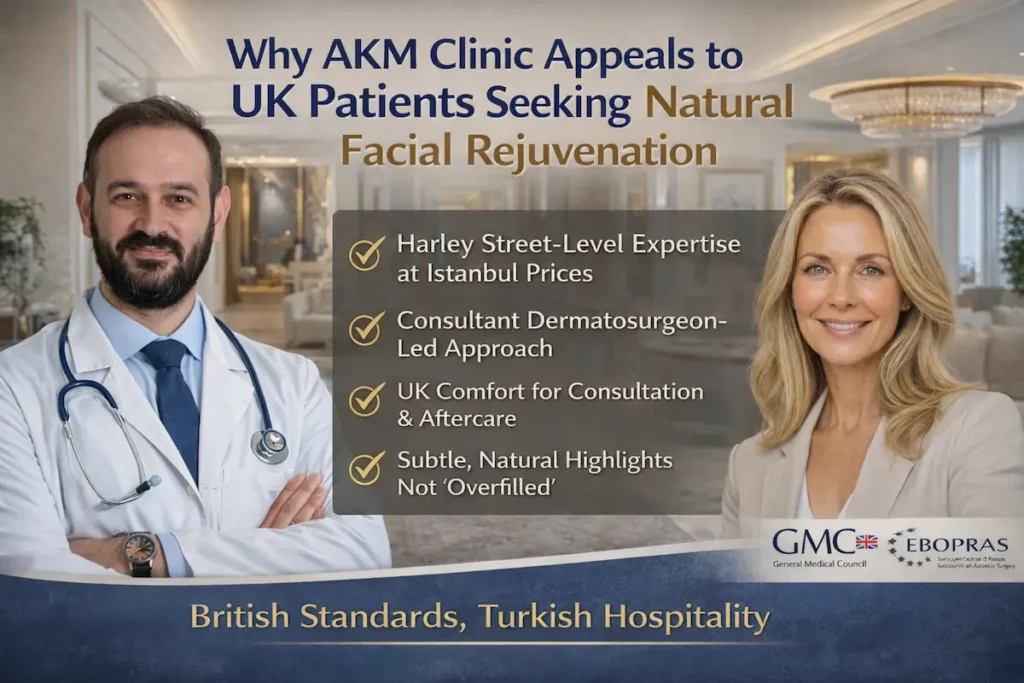
Why AKM Clinic Appeals to UK Patients Seeking Natural Facial Rejuvenation
Choosing where to have nanofat grafting is not only a question of technique. It is also a question of trust, communication, philosophy, and whether the clinic genuinely understands what British patients are looking for. For many people, the ideal clinic is not the one promising the biggest change. It is the one that combines medical credibility with subtle aesthetic judgement and dependable aftercare.
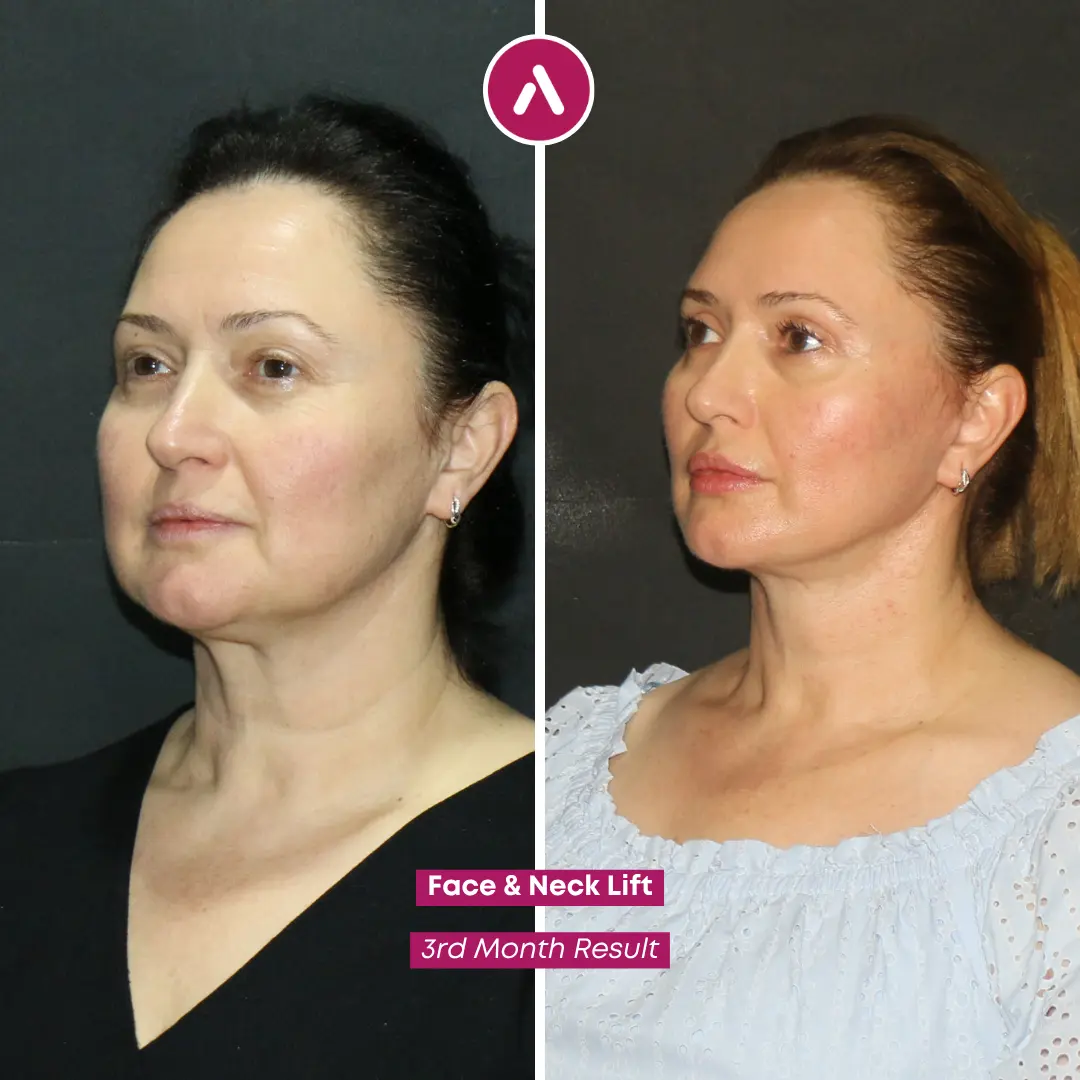
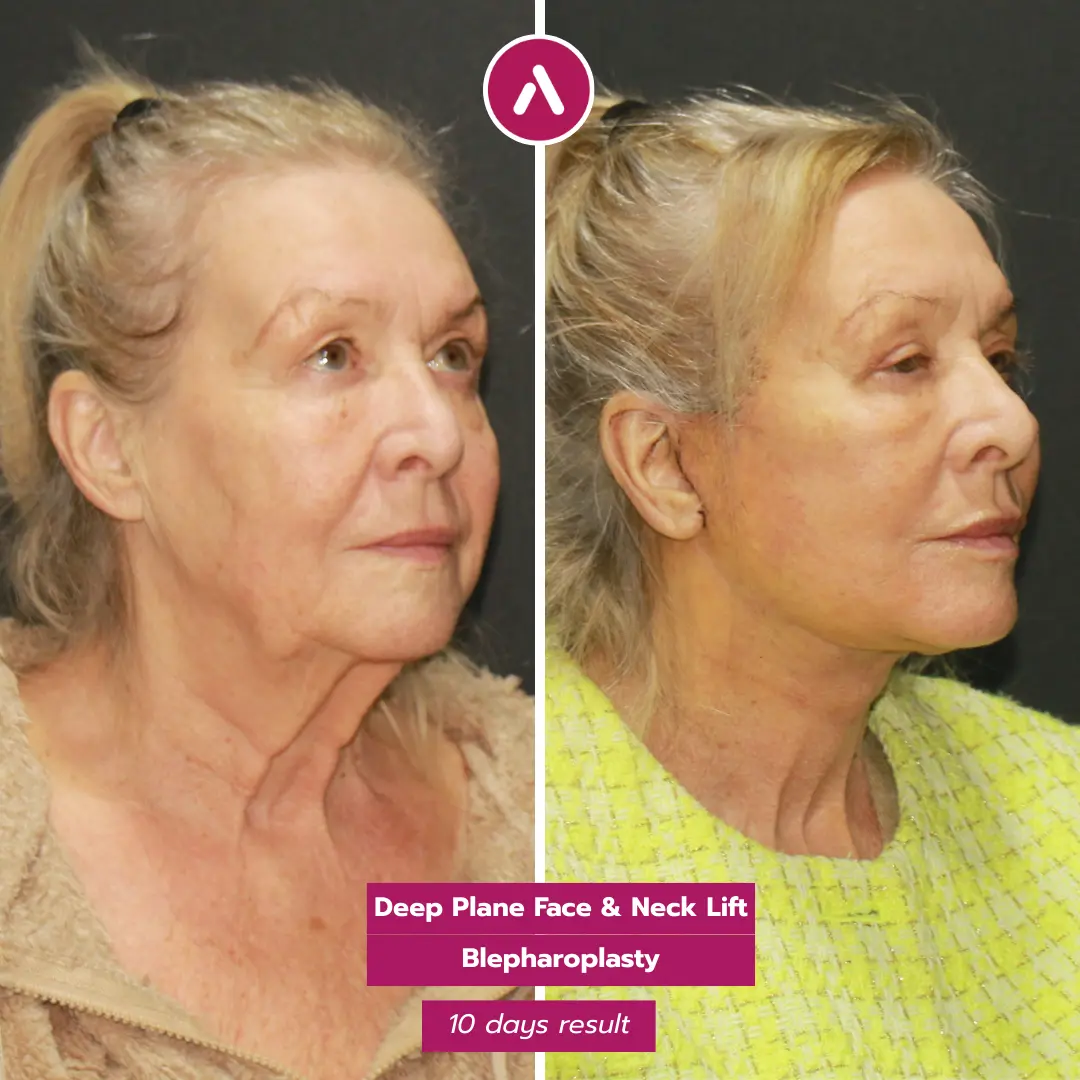
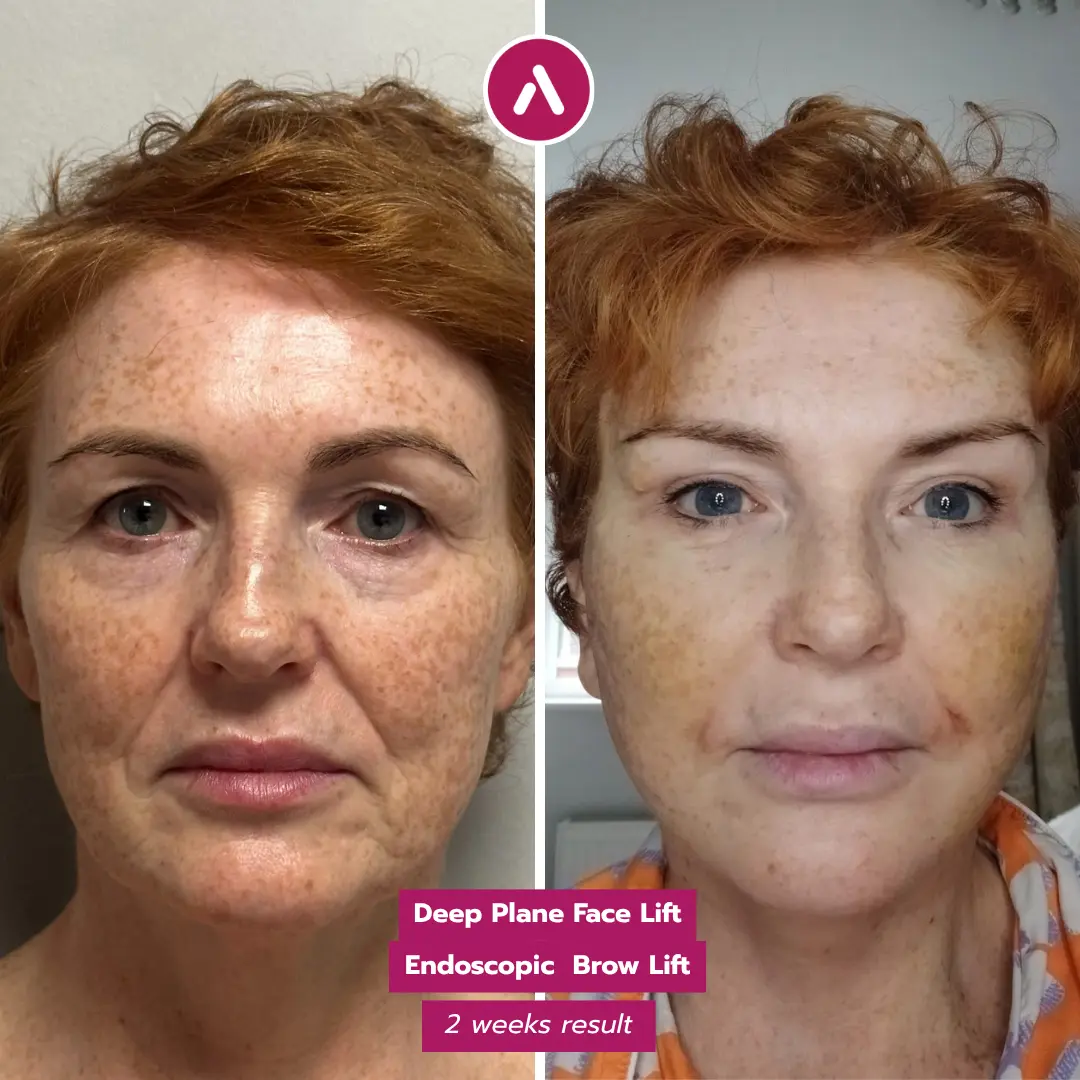
Harley Street Quality Expectations with Istanbul Accessibility
UK patients rarely want “cheap cosmetic surgery”. What they want is excellent value without compromising standards. That is why the comparison patients often make is not between random providers, but between premium UK private practice and a clinic in Istanbul that feels aligned with British expectations.
For many readers searching nanofat grafting cost, the more accurate question is this: can I access a high-standard, consultant-led, natural-looking result without Harley Street-level pricing? That value equation is a major part of why Turkey nanofat grafting continues to attract attention from patients who want quality, transparency, and a refined aesthetic rather than bargain messaging.
“Considering the facelift London vs Istanbul quality, I would confidently choose Turkey over the UK.”Sarah from the UK
That kind of comment matters because it reflects a real British patient mindset. The comparison is not only about money. It is about whether the patient feels they are receiving thoughtful, high-standard care with a natural end result.
UK Board-Certified Equivalent Trust Signals and Consultant-Led Care
Trust is often built on credentials before it is built on emotion. British patients frequently look for the closest equivalent to GMC-recognised standards when considering treatment abroad. They want to understand who is treating them, what their qualifications mean, and whether the clinic operates with the discipline they would expect from a respected private medical setting.
This is especially important for patients who are also researching advanced regenerative options such as stem cell assisted facelift surgery. In these cases, credentials, surgical judgement, and consultant-led planning carry even greater weight, because patients are not simply choosing a clinic; they are choosing the level of expertise behind a highly personalised facial rejuvenation strategy.
That is why consultant-led care and surgeon credentials matter so much in this space. AKM Clinic’s positioning speaks directly to this concern, with UK board-certified equivalent expertise and European board-level credentials forming part of the reassurance framework for patients who are understandably cautious. In other words, the message is not “just trust us”. It is “review the standards, understand the qualifications, and assess the philosophy”.
This also aligns with the preference for subtle outcomes. A clinic can only deliver a natural result consistently when the team values restraint, facial balance, and proper planning. For patients comparing nanofat vs dermal fillers, that consultant-led philosophy often feels more reassuring than a high-volume injectable model.
Local UK Contact Pathways, Ongoing Follow-Up, and British Patient Reassurance
Aftercare is one of the biggest emotional decision points for UK patients considering treatment abroad. Many have heard media stories about overseas surgery but worry less about the operation itself than about what happens afterwards. Who do they contact? How quickly can they get a reply? Will anyone still be available once they are back in Britain?
This is exactly why local reassurance signals matter. A UK-based patient contact point, a London correspondence address, a direct WhatsApp route, and a clear support line can make the experience feel more anchored and far less isolating. For many patients, these details are not “extras”. They are central to trust.
“Knowing there was a UK based patient contact point and a London correspondence address for patients provided immense psychological comfort.”Mehtap
For someone researching what is nanofat grafting today and seriously considering treatment tomorrow, that reassurance can be decisive. The ideal experience is not only a good procedure. It is a complete patient journey that remains supportive after the flight home.
Frequently Asked Questions (FAQ): Nanofat Grafting Turkey
Below are the most common questions asked by UK readers comparing nanofat grafting, fillers, and broader facial fat transfer options abroad. The answers are intentionally concise and written in clear en-GB style for patients in the research and decision stage.
Is nanofat grafting better than fillers for a natural look?
For many patients, yes. Nanofat vs dermal fillers often comes down to aesthetic preference. Patients who want a softer, less synthetic-looking approach frequently prefer nanofat because it uses their own tissue and supports a more subtle result.
How long does nanofat grafting last?
Longevity varies from patient to patient, depending on anatomy, healing, and treatment planning. In general, patients explore nanofat grafting because they want something more restorative than repeated short-term top-ups.
Can nanofat be used under the eyes?
Yes, in suitable patients. The under-eye area is one of the reasons nanofat transfer for face is so widely discussed, because it can help soften hollow, tired-looking tear troughs when planned carefully.
Is nanofat grafting painful?
Most patients describe it as manageable rather than severe. There can be soreness, swelling, and tenderness in both the donor area and treated facial areas, but the experience is usually well tolerated with proper aftercare and medication such as paracetamol where appropriate.
How much downtime should I expect before flying back to the UK?
This depends on your healing progress and your surgeon’s review. The key point is that facial fat transfer Turkey should always be planned with travel timing in mind, not fitted around flights at the last minute.
Can nanofat be combined with a facelift or eyelid surgery?
Yes. In some patients, fat grafting facial rejuvenation works best as part of a wider treatment plan rather than a stand-alone procedure. This is especially true when volume loss and skin laxity are both present.
Why do UK patients choose Turkey for nanofat grafting?
Because many are looking for natural-looking results, transparent value in GBP (£), consultant-led care, and a more complete aftercare journey than they expect from a simple filler pathway. For the right patient, Turkey nanofat grafting can feel like a more thoughtful long-term solution.
If you would like to explore related options beyond this topic, you can also learn more about Stem Cell Facelift vs Traditional Facelift, Stem Cell Facelift Longevity, Regenerative Medicine Cost in Turkey, Liquid Facelift Turkey, Thread Lift Turkey, Best Deep Plane Facelift Clinic in Turkey, Specialist Plastic Surgeon Turkey, and Facelift Recovery with Stem Cells to better understand your choices for facial rejuvenation, treatment planning, and recovery.
Medical Disclaimer: This page is provided for general educational purposes only and does not replace a face-to-face medical consultation, diagnosis, or personalised treatment plan. All surgery carries risks and outcomes vary between individuals. Suitability for a facelift surgery, procedure selection, and anaesthesia choice can only be determined after a full clinical assessment by a qualified surgeon. Always follow your clinician’s instructions and seek urgent medical attention if you develop concerning symptoms during recovery.