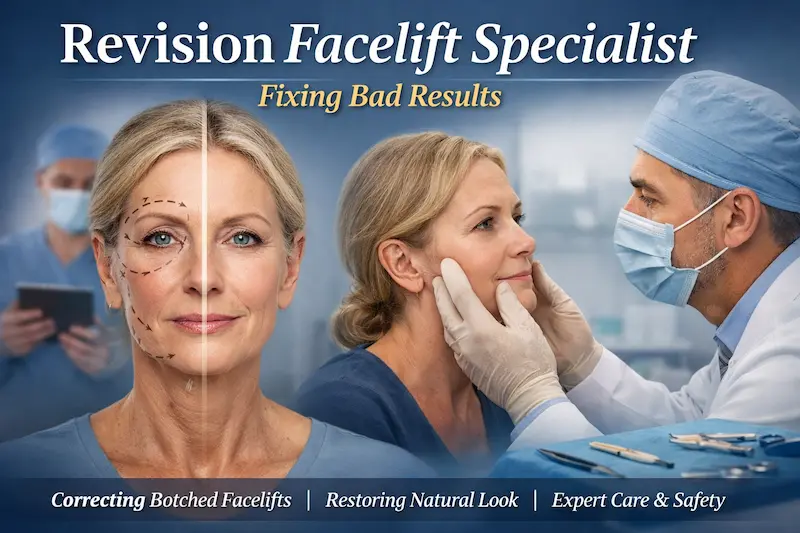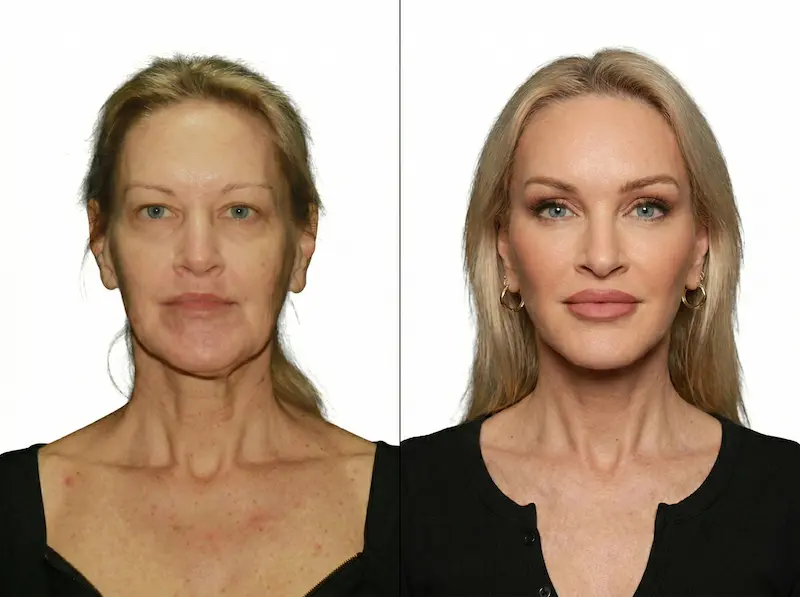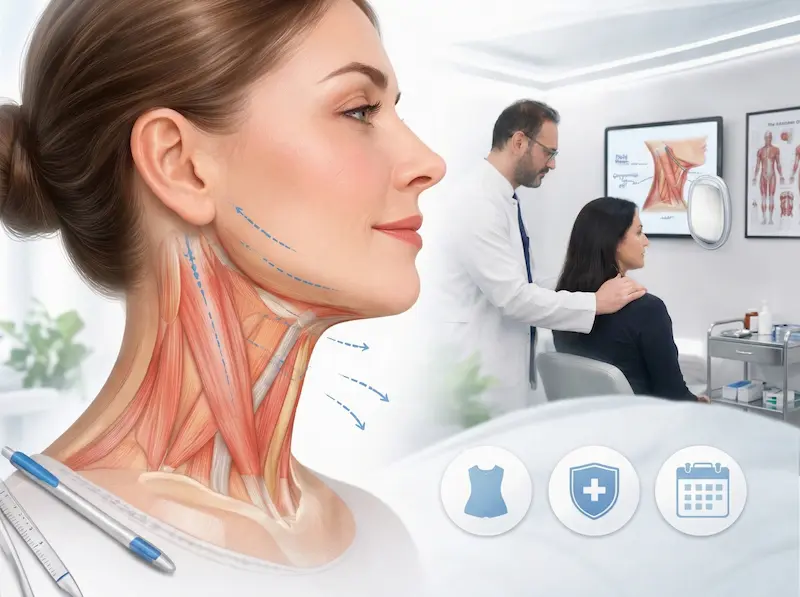

For patients researching facial rejuvenation seriously, facelift revision rate is one of the most important quality signals to understand. A facelift may look impressive in a filtered social media post or in a set of carefully selected early after photographs, but the real test is whether the result remains natural, balanced and stable without the patient later needing revision facelift surgery. In practical terms, revision tells you whether the first operation solved the problem properly, or whether it created a new one.
This is exactly why the debate around consultant vs novice facelift surgeon matters. Many patients initially compare cost, destination and recovery time. More informed patients, however, look deeper. They ask what causes a primary facelift failure, why some surgeons consistently deliver subtle outcomes, and how to identify a low facelift revision rate surgeon before booking surgery at all. These are the questions that shape safer decisions.
In the UK market especially, patients are rarely looking for a dramatic or overdone transformation. They usually want to look fresher, less tired and more like themselves. That means avoiding common signs of poor technique such as visible scars, over-tight skin, distorted earlobes or the dreaded windswept appearance. A well-performed primary facelift should reduce the need for future facelift revision surgery, not quietly increase the odds of one.
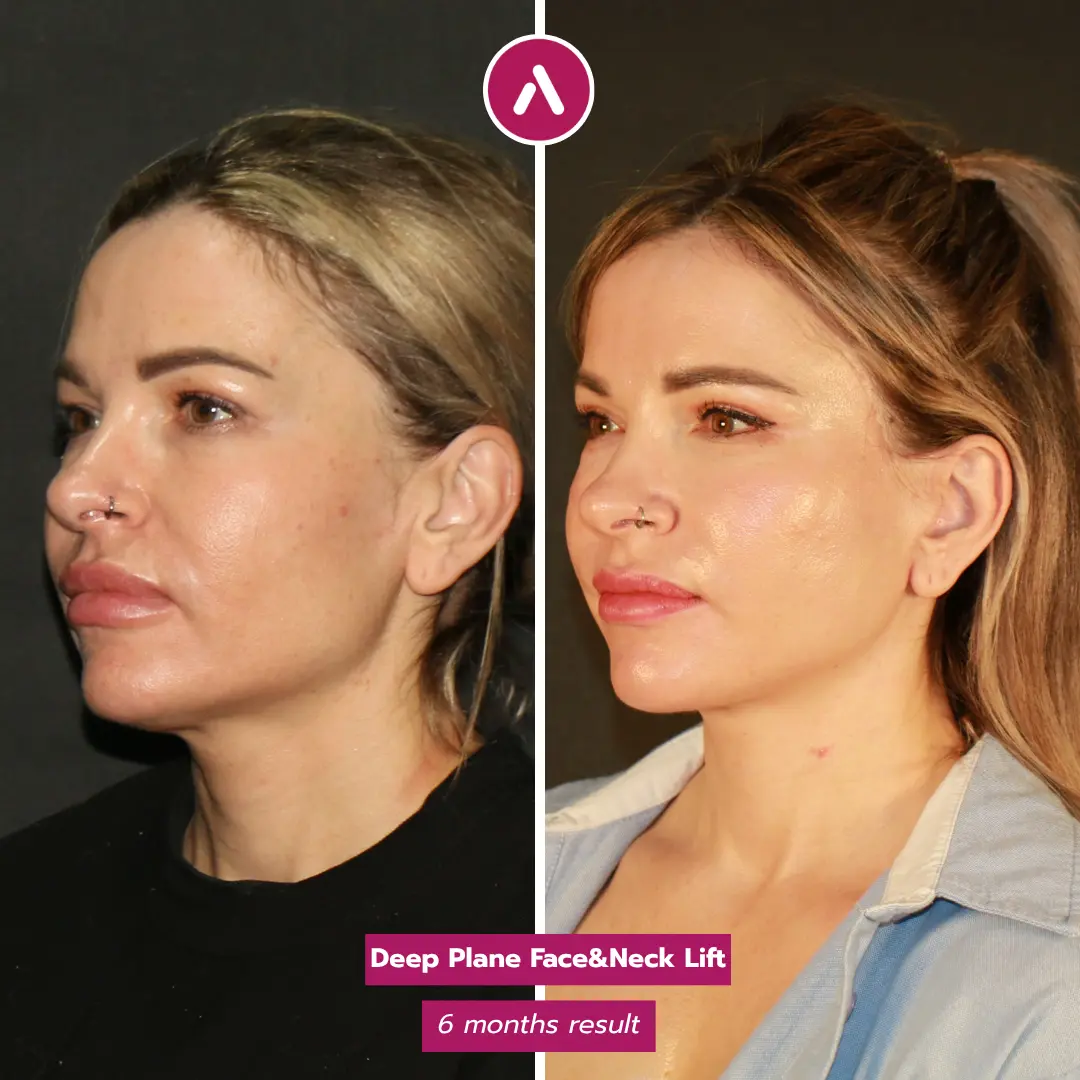
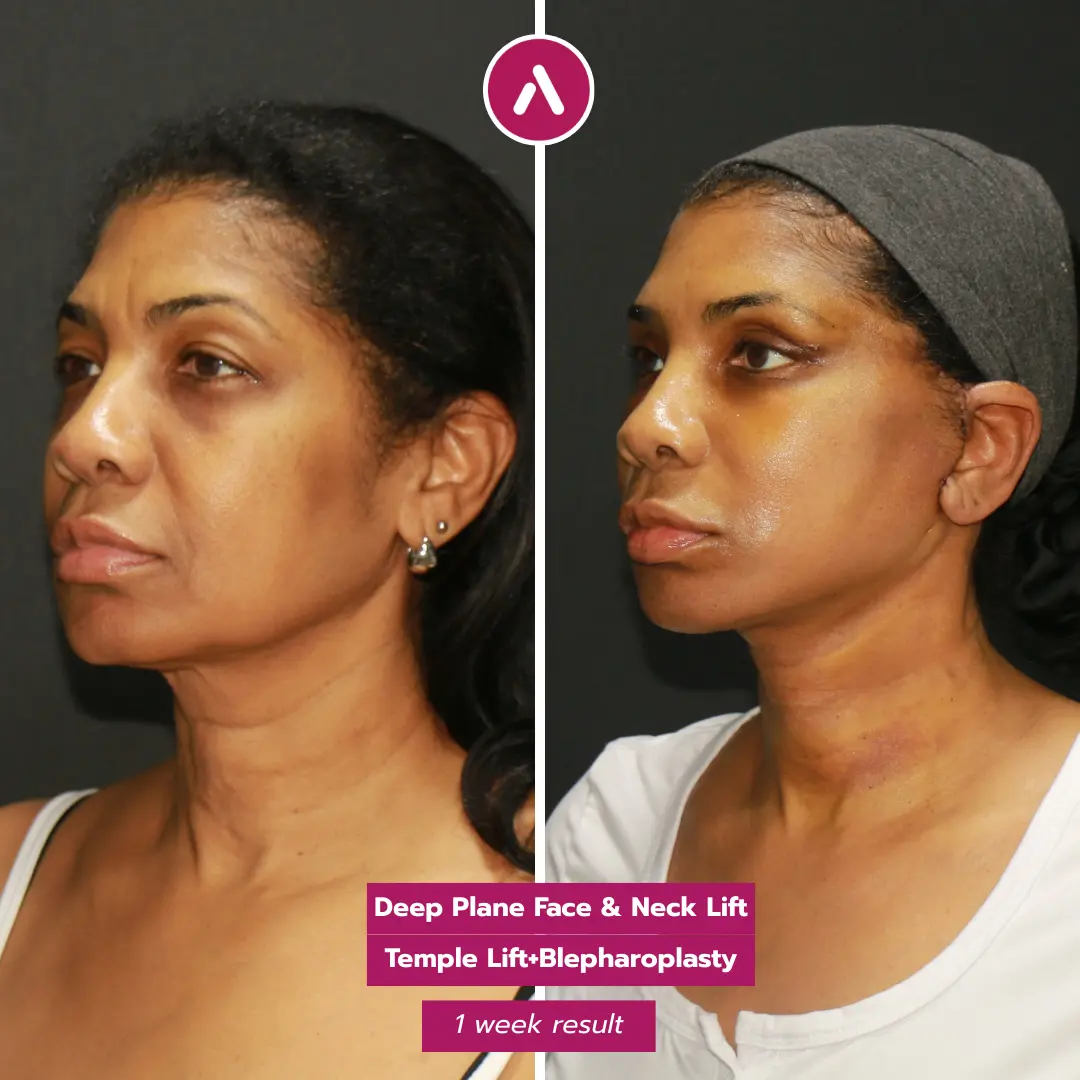
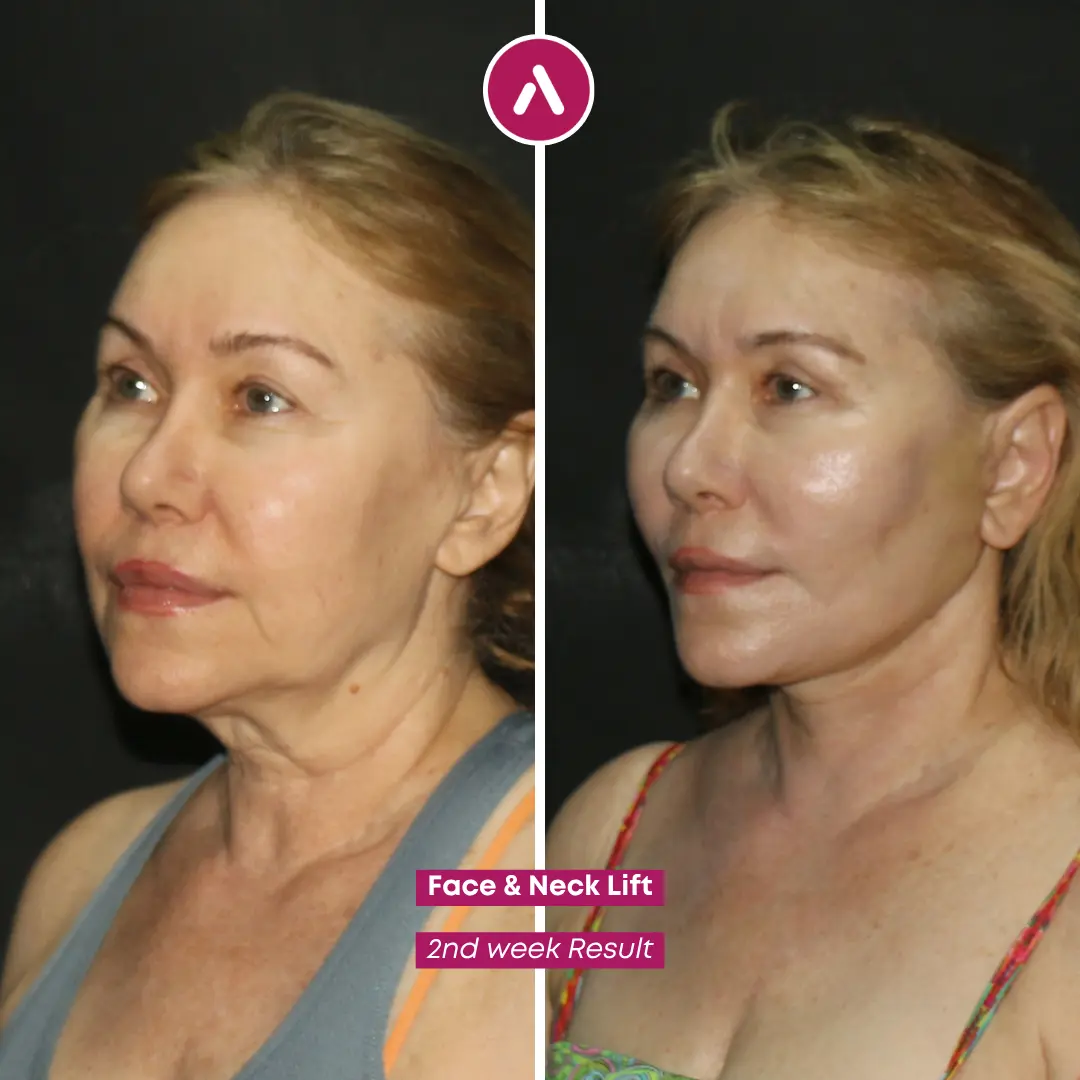
From the perspective of clinical judgement, the difference between a consultant and a novice is not just about years in practice. It is about patient selection, anatomical planning, tissue handling, incision design, tension control, and the ability to adapt when real tissue does not behave like a textbook diagram. That is where medical science meets surgical experience. Scientific research helps explain the principles, but it is consistent high-level execution that determines whether a patient enjoys a refined result or later searches for facelift correction surgery Turkey, a secondary facelift procedure, or specialist help for problems that should have been prevented in the first place.
In this guide, we will break down what revision rate really means, why expert surgeons generally achieve more reliable results, and how to recognise the technical and practical differences that protect patients from preventable revision surgery.
Table of Contents
What Does “Revision Rate” Really Mean in Facelift Surgery?
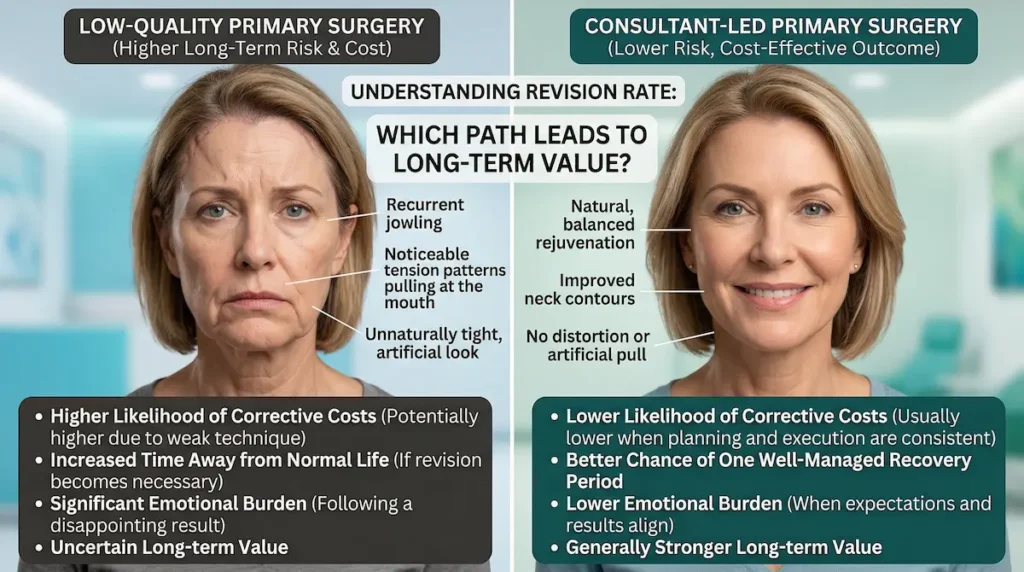
Before comparing surgeon experience, it is important to define the term properly. Patients often hear phrases such as “very low revision rate” or “almost no corrections needed”, but these statements are only useful when you understand what counts as a revision and why it happened. In facelift surgery, revision is not simply a sign that healing took time. It usually means that the original plan, execution or recovery pathway did not fully deliver the intended result.
For patients weighing their options carefully, revision rate also works as a practical filter when comparing surgeons, techniques and long-term reliability. It shifts the focus away from marketing claims and towards consistency, judgement and durable outcomes. This is why many international patients researching the best deep plane facelift surgeon in Turkey look beyond before-and-after photographs and instead ask how often corrective surgery is needed after the initial procedure.
Revision surgery vs minor touch-ups: not the same thing
A true revision facelift surgery is more than a small refinement. It generally refers to an operation performed to correct a persistent aesthetic or structural issue after the first facelift has healed. Examples may include residual jowling, recurrent neck laxity, poor scar placement, asymmetry, visible tension patterns, a distorted earlobe, or a face that looks unnaturally pulled. By contrast, minor aftercare measures or small non-surgical refinements are not always part of the formal revision category.
This distinction matters because the phrase secondary facelift procedure can sometimes be misunderstood. A second procedure years later due to natural ageing is not the same as early corrective surgery for a poor primary result. If a patient requires additional surgery because the initial lift failed to address the deeper support structures, the problem is not ageing alone. It is more likely linked to planning, technique or execution.
For that reason, an honest discussion of revision must separate three very different scenarios:
- Normal ageing after a successful facelift, which can happen gradually over years.
- Minor refinements, which may be small and limited in scope.
- True corrective revision, where the first operation left a visible or functional issue behind.
Patients who understand these distinctions ask better questions during consultation, and they are less likely to be misled by vague marketing language.
Why revision rate matters more than marketing claims
Many clinics advertise dramatic before-and-after transformations, but a polished gallery does not tell you how often patients later needed facelift revision surgery. Revision rate is more meaningful because it reflects durability, judgement and consistency. A surgeon may produce one impressive result, but the better question is whether they can reproduce balanced, natural-looking outcomes across a high number of cases.
In facial aesthetics, outcomes are judged very harshly because the face is always visible. Patients can hide body scars beneath clothing, but they cannot easily hide a stretched tragus, a pulled hairline, or the obvious signs of over-tension. That is why a surgeon’s revision profile tells you more than a set of heavily curated photographs. It suggests whether the surgeon understands restraint, proportion and how to create lift without distortion.
It also shows whether the surgeon respects one of the most important principles in aesthetic surgery: the best facelift should not look like obvious surgery. For British patients, this is often the central concern. Most are not chasing an artificial look. They want subtle rejuvenation, better definition along the jawline, improved neck contours and a rested appearance that still feels like them.
When patients compare surgeons wisely, they do not just ask, “How much younger will I look?” They ask, “How likely am I to need correction later?” That is a far more intelligent question.
The hidden cost of a “cheap” first facelift
One of the most misunderstood aspects of primary facelift failure causes is financial. A cheaper initial procedure can become significantly more expensive if it leads to revision. This is because corrective surgery is often more complex than the primary operation. Scar tissue, altered anatomy, compromised blood supply and patient anxiety all raise the difficulty of the case.
Revision also creates costs that are not shown on a simple quote. Patients may need additional recovery time, more time away from work, extra flights, hotel stays, aftercare appointments and emotional energy. In other words, the apparent saving from a low-cost first procedure can disappear quickly if it leads to a second operation.
The table below shows why revision risk should be part of the value calculation from the start:
| Decision Factor | Lower-Quality Primary Surgery | Consultant-Led Primary Surgery |
|---|---|---|
| Initial fee | May appear cheaper upfront | Usually reflects higher expertise and planning |
| Likelihood of corrective costs | Potentially higher if technique is weak | Usually lower when planning and execution are consistent |
| Time away from normal life | May increase if revision becomes necessary | Better chance of one well-managed recovery period |
| Emotional burden | Often significant after a disappointing result | Usually lower when expectations and results align |
| Long-term value | Uncertain | Generally stronger when the first surgery is done properly |
This is why experienced patients look beyond the headline price. They understand that choosing a surgeon with a reputation for reliable outcomes may be the most cost-effective choice in the long run, even before discussing a potential revision facelift Turkey pathway.
Why Consultant-Level Surgeons Usually Achieve Lower Revision Rates
Once revision is defined properly, the next question becomes clearer: why do consultant-level surgeons usually produce fewer corrective cases than novices? The answer is not luck. It is a combination of better judgement before surgery, more advanced control during surgery, and more reliable decision-making after surgery. A high case volume facelift surgeon has usually seen more anatomical variation, more healing patterns and more technical challenges, which helps reduce preventable errors.
Better patient selection before surgery
Strong facelift results begin long before the operating theatre. One major difference between a consultant and a novice is patient selection. Not every patient who wants a facelift is automatically a good candidate for the same operation on the same day under the same conditions. Skin quality, neck anatomy, degree of laxity, prior treatments, scar tendency, smoking status, weight fluctuations and facial volume all influence the surgical plan.
A novice may focus mainly on whether the patient wants lifting. A consultant usually evaluates whether the requested result is anatomically achievable and whether the patient’s tissue characteristics support the chosen technique. This matters because many primary facelift failure causes begin with poor indication rather than poor stitching. If the wrong patient receives the wrong approach, revision risk rises from the start.
For example, some patients need deeper structural work rather than simple skin tightening. Others need realistic counselling because their concern is driven more by volume loss, skin texture or lower eyelid changes than by true facial descent. When the diagnosis is inaccurate, the surgery may look incomplete or unnatural. That is how patients later begin searching for facelift correction surgery Turkey after feeling that the first procedure “did not really fix anything”.
Consultant-level surgeons are also better at saying no, delaying surgery, or recommending a more appropriate combination plan. In aesthetic practice, that ability protects patients just as much as technical skill does.
Stronger anatomical planning around the SMAS and deep tissues
A facelift is not just a skin operation. The most dependable, natural-looking outcomes usually come from respecting the deeper structures that actually support the face. This is where the gap between novice and experienced surgeons often becomes obvious. A novice may rely too heavily on surface tension. A consultant is more likely to plan around the SMAS, deep tissue vectors and the patient’s unique pattern of descent.
This matters because over-reliance on skin tension is one of the classic set-ups for poor results. It can create visible tightness without restoring youthful structure. It can also increase the risk of widened scars, a distorted earlobe, and the appearance patients describe as “done”. In contrast, deeper structural support generally allows a more natural redraping of the skin with less visible tension.
From a clinical science perspective, the principle is straightforward: if the deeper support problem is not addressed, the outer layer is forced to compensate. That compensation often looks unnatural. It may also fail earlier. This is one reason experienced surgeons who work confidently with deeper planes can often achieve more stable outcomes and a lower need for revision facelift surgery.
For UK patients especially, this point matters because the goal is rarely a dramatic “snatched” look. The preferred result is usually discreet improvement: cleaner jawline definition, a smoother neck transition, and midface support that looks elegant rather than stretched. Deeper planning is often what makes that subtlety possible.
More consistent judgement during surgery when tissues behave unpredictably
No real operation unfolds exactly like a textbook diagram. Tissue quality varies. Bleeding patterns differ. Scar tissue from previous procedures can change the surgical field. The thickness of the skin, the strength of the retaining ligaments and the behaviour of the earlobe and hairline all influence how the surgeon should proceed. That is where the experience gap becomes clinically important.
A consultant-level surgeon has usually managed many different intra-operative scenarios and is therefore more likely to make calm, proportionate decisions. They know when extra release is necessary, when more tension will be harmful, when an incision must be adjusted, and when less intervention will actually create the better result. That type of judgement is difficult to teach quickly and impossible to fake.
This is also where common revision problems often begin. Poor intra-operative decisions can lead to:
- Residual heaviness along the jawline or neck
- Over-tightening and an artificial vector of pull
- Pixie ear deformity correction being needed later because the earlobe was placed under tension
- Visible scar issues from poorly planned incision placement
- The need for pixie ear facelift prevention strategies that should have been built into the first operation
The same applies to avoiding windswept facelift results. Patients often assume this problem comes from “too much facelift”, but the real issue is usually not quantity alone. It is vector choice, tension control, tissue handling and whether the surgeon understands how to create lift without dragging facial features unnaturally sideways.
For that reason, a consultant vs novice facelift surgeon comparison is really a comparison of judgement under pressure. Training matters. Credentials matter. But when tissues behave unpredictably, it is applied experience that often determines whether the result heals beautifully or becomes a future revision case.
The Most Common Reasons Facelifts Need Revision
To understand why some surgeons maintain a lower facelift revision rate, it helps to look closely at the reasons primary procedures fail. In most cases, revision is not needed because the patient was “too demanding”. It is needed because the first plan was incomplete, the execution was technically weak, or the final result did not age well even in the short to medium term. The most frequent primary facelift failure causes are surprisingly consistent: over-pulled vectors, under-corrected deep structures, visible scars, earlobe distortion, and a mismatch between what the patient wanted and what the surgeon actually delivered.
This pattern is precisely why revision risk should be assessed as a marker of surgical judgement rather than bad luck alone. Patients who research the best deep plane facelift surgeon in Turkey are often trying to understand not just who can deliver a strong result, but who can do so consistently while minimising preventable errors such as poor vectors, visible tension and incomplete correction.
For British patients, these problems can be especially distressing because the aesthetic goal is usually refinement rather than dramatic change. Patients do not want friends or colleagues to notice “work”. They want compliments such as “you look well” or “you look rested”, not comments suggesting obvious surgery. That is why the ability to identify and prevent common revision triggers is one of the clearest differences between a novice and a consultant-led approach.
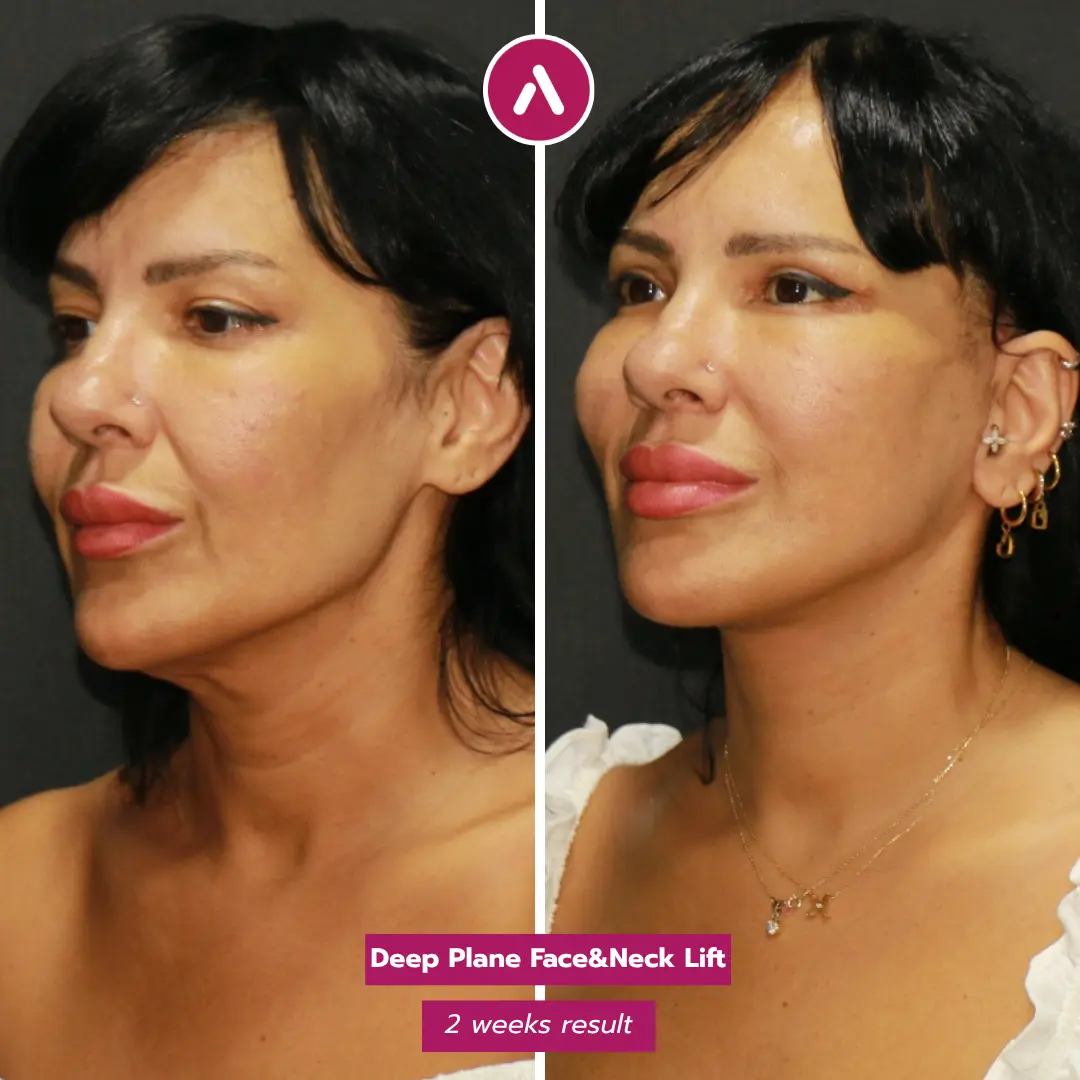
The “pulled” or windswept look
One of the best-known facelift problems is the overly tight, laterally dragged appearance often described as a windswept look. This is exactly why so many patients search for advice on avoiding windswept facelift results before committing to surgery. The issue is not simply that the face was lifted too much. More often, it is that the lift was created in the wrong direction or with too much reliance on skin tension rather than deeper structural repositioning.
When the vector is wrong, the corners of the mouth, cheeks and jawline can all appear artificially swept backwards. Instead of looking refreshed, the patient may look strained, startled, or permanently “done”. This tends to happen more often when the surgeon focuses on visible tightness rather than anatomical harmony. Novice surgeons may be tempted to create a more dramatic immediate effect because it photographs well early on, but a result that looks aggressively tightened at first often heals into a recognisable surgical appearance.
Consultant-level surgeons usually avoid this by respecting facial proportions and by lifting deeper tissues in a way that restores position rather than simply applying tension. In simple terms, they aim for rejuvenation, not alteration. That distinction is vital in facelift revision surgery, because correcting a windswept result can be far more complex than preventing it in the first place.
A natural facelift should restore facial support and softness. It should never make the face look as though it has been pulled sideways.
Incomplete correction of the jawline, neck, or midface
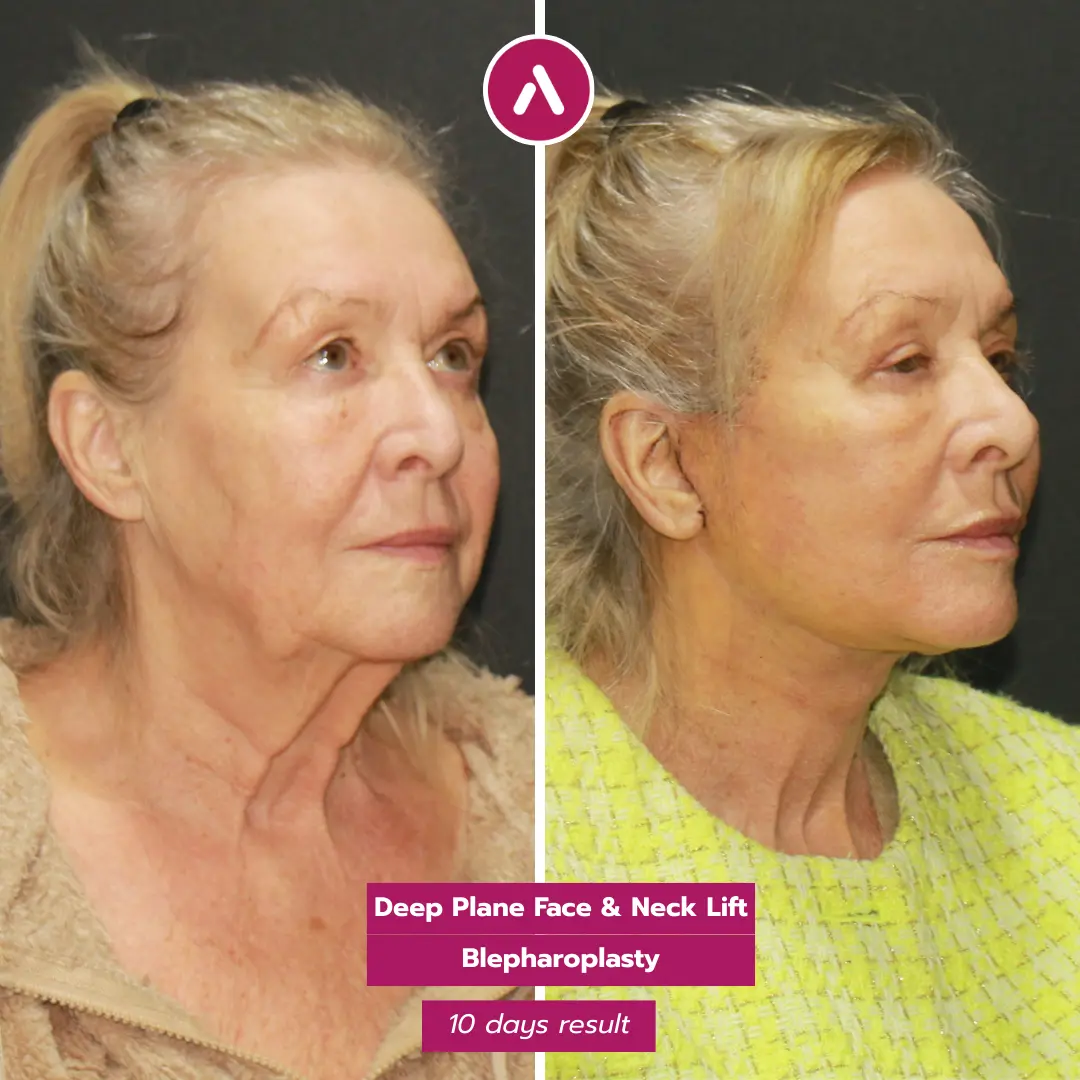
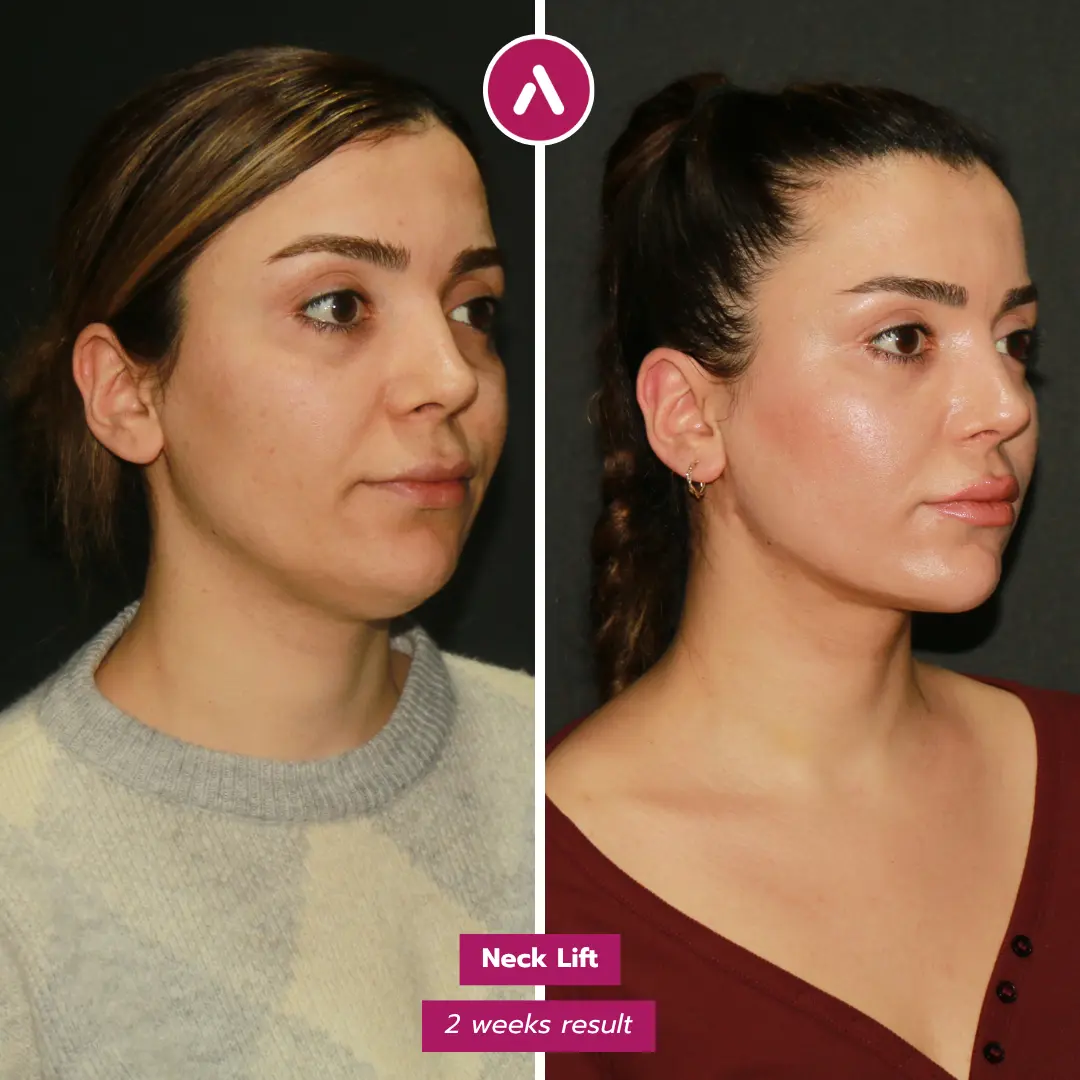
Another common reason patients seek revision facelift surgery is under-correction. The face may look marginally tighter, yet the jawline remains heavy, the neck still appears loose, or the midface has not been restored in a meaningful way. In these cases, the patient may feel that they paid for a facelift but did not truly receive a transformative structural improvement.
This usually happens when the operation addresses superficial laxity but fails to treat the deeper support system properly. A skin-only or limited lift can sometimes produce a short-lived improvement, but if the SMAS or deeper facial structures are not managed appropriately, the face may continue to look tired or descend again quite quickly. From the viewpoint of medical science, this is one of the clearest examples of why the deep support layer matters so much in facial rejuvenation.
Consultants with strong experience in facial anatomy are generally better at deciding where true correction is needed. They do not simply ask, “Can I tighten this?” They ask, “What has descended, what has deflated, and what should be repositioned without over-correcting?” That is one of the reasons a high case volume facelift surgeon often achieves more dependable results. Repetition sharpens judgement, and judgement reduces revision risk.
For patients considering revision facelift Turkey after an unsatisfactory first procedure, the key question is often whether the original operation actually corrected the anatomical problem or merely disguised it for a short period.
Visible scars, pixie ear deformity, and poorly positioned incisions
Scar quality and incision design are central to facelift success. Even if the face looks better overall, a visible scar or distorted earlobe can immediately reveal that surgery has taken place. This is why scar placement is not a minor technical detail; it is one of the most important factors in whether the result looks discreet and elegant.
A classic example is the stretched or tethered earlobe, commonly known as a pixie ear deformity. This is one of the most recognisable facelift complications and a frequent reason patients later require pixie ear deformity correction. It usually occurs when excessive tension is placed on the skin closure near the lobule, effectively pulling the earlobe downwards and forwards. Once you know what to look for, it is surprisingly easy to spot.
The good news is that pixie ear facelift prevention is possible when the lift is designed correctly. The surgeon must distribute tension properly, rely on deeper support rather than superficial pulling, and design the incision so the earlobe sits naturally after healing. This again highlights the difference between a novice and an experienced consultant. The novice may concentrate on closing the skin neatly. The consultant thinks several steps ahead: how will this heal, where will the tension sit, and will the result still look natural six months later?
Visible scars can also result from poorly concealed incisions, uneven wound closure, or a failure to consider the patient’s hairline, skin thickness and healing pattern. In a patient population such as the UK market, where subtlety is everything, these details are not secondary. They are central to the success of the operation and to keeping the facelift revision rate low.
| Common Revision Trigger | Typical Cause | Why It Matters |
|---|---|---|
| Windswept appearance | Incorrect vector and excess skin tension | Creates an obvious, artificial surgical look |
| Residual jowls or loose neck | Inadequate deep structural correction | Patient feels the facelift was incomplete |
| Pixie ear deformity | Tension placed on earlobe closure | Immediately signals poor technique |
| Visible scars | Weak incision planning or poor healing support | Reduces discretion and patient confidence |
| Early relapse | Superficial lift without durable support | May lead to earlier secondary facelift procedure |
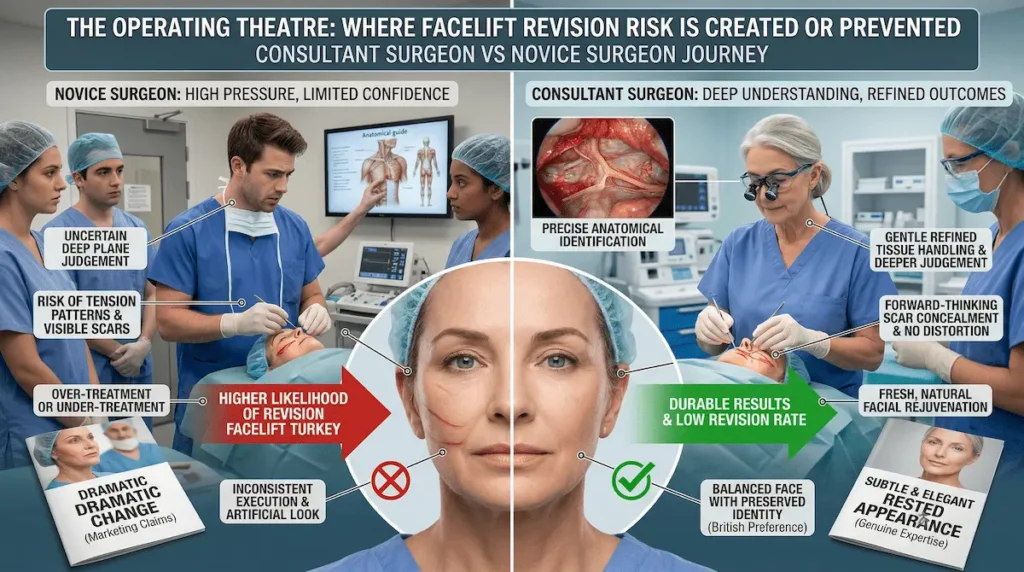
Consultant vs Novice Surgeon: What Changes in the Operating Theatre?
The difference between a novice and a consultant is not just a matter of title. It is visible in the operating theatre from the first incision to the final closure. The consultant usually brings deeper anatomical understanding, calmer judgement, stronger planning, and more refined tissue handling. In a consultant vs novice facelift surgeon comparison, these details are not theoretical. They directly shape the patient’s healing, scar quality, facial balance and long-term likelihood of needing facelift correction surgery Turkey later on.
This is also where the gap between marketing and real expertise becomes obvious. Many surgeons can describe a technique well. Fewer can execute it consistently on different faces, under real intra-operative pressure, while still preserving natural expression. That is why the operating theatre is where revision risk is often created or prevented.
Experience with deep plane judgement and tissue handling
Facelift surgery demands precise judgement of planes, ligaments, tissue resistance and facial support. A novice may understand the theory of deep plane or SMAS work, but theory is not the same as operative confidence. The face contains delicate structures, variable tissue thickness and subtle asymmetries that must be recognised in real time. This is where a consultant’s experience often makes the greatest difference.
Good tissue handling is not just about being gentle. It is about knowing how much release is needed, where support should be re-established, and how to avoid creating tension patterns that later become visible. The consultant recognises when a patient needs a more structural lift and when restraint will create the better aesthetic result. That type of judgement can reduce the need for revision facelift surgery because it prevents both over-treatment and under-treatment.
In clinics that focus heavily on natural facial rejuvenation, this experience is often combined with a philosophy of subtle enhancement rather than theatrical change. For British patients, that matters enormously. The preferred result is rarely “snatched”. It is usually a rested, elegant face with preserved identity and no obvious surgical fingerprint.
Safer decision-making around facial nerves and scar patterns
A facelift is an aesthetic procedure, but it is still surgery in a complex anatomical area. The surgeon must work with constant awareness of facial nerve pathways, blood supply, skin viability and wound healing dynamics. A consultant is usually better equipped to make safe micro-decisions throughout the case, especially when tissue planes are less straightforward than expected.
This is one reason revision surgery is often more demanding than primary surgery. Once scar tissue is present, tissue planes may be less predictable and the margin for error becomes narrower. A novice who struggles with primary anatomy is even more likely to struggle with altered anatomy. That is why patients seeking revision facelift Turkey should be even more selective than patients booking a primary procedure.
Scar patterns are another point of separation. Consultants think beyond the day of surgery. They evaluate how the scar will mature, where tension will travel, how the earlobe will sit, and whether the final result will remain discreet in different hairstyles and lighting conditions. This forward-thinking approach is essential for both pixie ear facelift prevention and scar concealment.
Put simply, safer surgery is not only about avoiding major complications. It is also about avoiding small technical errors that later become large aesthetic problems.
Knowing when less is more for subtle facial rejuvenation
Perhaps the most overlooked difference between novice and consultant surgeons is restraint. A novice may feel pressure to produce a visibly dramatic change. A consultant often understands that the best facelift is one that nobody can quite identify. The patient simply looks fresher, stronger and less tired.
This matters because over-correction is one of the main drivers of revision. When too much tension is applied, when the vector is too aggressive, or when the surgeon chases a “wow” moment rather than a balanced face, the result can become stiff, unnatural or difficult to live with socially. British patients are especially alert to this risk. They often fear looking overdone more than they fear looking slightly under-corrected.
This is where science and artistry meet. Scientific research can guide principles such as tissue support, healing and scar management, but facial aesthetics still requires refined judgement. The consultant’s strength is not merely doing more. It is knowing what to leave untouched, what to soften, and how to preserve individuality. That is one of the strongest foundations for a genuinely low facelift revision rate surgeon.
When patients choose a consultant-led team with strong case volume, transparent planning and a natural aesthetic philosophy, they are not just paying for an operation. They are paying to reduce the chance of future correction, emotional disappointment and the far greater complexity of secondary surgery.
The most elegant facelift result is usually the one that looks entirely believable. It restores confidence without advertising that surgery has taken place.
How UK Patients Can Verify Surgical Expertise Before Booking Abroad
For any patient comparing surgeons carefully, credentials should never be treated as a decorative detail. They are part of the practical process of lowering facelift revision rate and reducing the likelihood of later needing revision facelift surgery. British patients are often highly informed and rightly sceptical. They want to know who will perform the operation, what specialist standards that surgeon meets, and whether the person operating has the case volume and judgement needed to prevent avoidable errors. In a consultant vs novice facelift surgeon comparison, verification is not optional. It is one of the smartest forms of risk management available before surgery.
This is also why many British patients go beyond general credentials and look for proof of procedure-specific expertise. Someone researching the best deep plane facelift surgeon in Turkey is usually not searching for marketing language alone, but for evidence of specialist training, consistent case volume, natural healed outcomes and clear consultant-led accountability from consultation through aftercare.
Understanding UK board-certified equivalent and European Board credentials
When researching surgery abroad, many UK patients look for credentials that feel comparable to the standards they know at home. They may not expect their surgeon in Turkey to be listed on the GMC in the same way a UK consultant would be, but they do expect a clear and credible equivalent. That is why terms such as UK board-certified equivalent, European Board certification, and specialist fellowship training matter so much.
These qualifications do not guarantee perfection on their own, but they do help patients distinguish between serious specialist practice and vague marketing. A surgeon who can clearly explain their training, specialty focus and recognised certifications is usually giving you something far more valuable than a headline promise. They are giving you traceable evidence of professional depth.
For patients researching revision facelift Turkey or facelift correction surgery Turkey, this becomes even more important. Revision work is harder than primary surgery. Scar tissue, altered anatomy and emotional pressure all increase the complexity. That means the surgeon’s background should be scrutinised even more closely, not less. A consultant-led team with recognised European-level credentials is usually a far safer place to start than a clinic relying on generic advertising language and unclear professional titles.
From the standpoint of medical science, revision prevention begins with informed selection. The more clearly a clinic can define its surgeons’ training, facial surgery focus and operative philosophy, the easier it becomes for patients to assess whether they are dealing with true expertise or simply persuasive branding.
Why case volume and facelift-focused practice matter
Credentials matter, but experience in the exact procedure you are considering matters just as much. A surgeon may be generally trained in aesthetic procedures and still not be the right person to deliver a dependable facelift result. What patients really need to know is how often that surgeon performs facelifts, whether facial rejuvenation is a genuine specialist focus, and whether the surgeon has enough case volume to recognise subtle but important patterns before problems develop.
A high case volume facelift surgeon usually has an advantage because repetition builds judgement. They learn which incision choices heal discreetly, which tension patterns lead to visible distortion, and how to avoid common pitfalls such as residual jowling, poorly supported neck contours, or pixie ear facelift prevention failures. They are also more likely to recognise the early warning signs of a result that may otherwise drift towards a future secondary facelift procedure.
This is especially relevant for British patients seeking subtle improvement. The goal is rarely dramatic facial change. It is usually a fresher, better-supported face that still looks authentic. Surgeons who perform facelifts frequently are more likely to understand this aesthetic brief and less likely to impose a one-size-fits-all surgical style.
When researching a low facelift revision rate surgeon, patients should ask practical questions such as:
- How many facelifts do you perform regularly?
- Is facial rejuvenation a major part of your practice, or only a small part?
- Do you perform revision cases as well as primary facelifts?
- Can I see healed results, not only immediate after photographs?
These questions are not confrontational. They are intelligent. In fact, they often reveal more than a glossy brochure ever could.
Questions to ask about who actually performs your surgery
One of the most important safeguards for UK patients is confirming exactly who will perform the procedure from start to finish. In some settings, patients assume the named surgeon will carry out the operation personally, when in reality parts of the process may be delegated more heavily than expected. That is a serious issue in any procedure, but in facial surgery it can have long-lasting aesthetic consequences.
If your goal is to avoid primary facelift failure causes, you need clarity on who plans the operation, who makes the key intra-operative decisions, and who closes the incisions. The quality of a facelift is shaped by dozens of fine judgements. Those decisions should not be left vague.
Good questions include:
- Will the consultant surgeon perform my facelift personally?
- Who designs the incision pattern and lifting vectors?
- Who is responsible for deep tissue work and skin closure?
- Who will review me after surgery and manage my follow-up?
This is also the point where communication quality matters. A trustworthy clinic should be able to answer without defensiveness. If the answers feel vague, overly rehearsed or inconsistent, that is a warning sign. Patients considering facelift revision surgery later often say that, in hindsight, the first clinic never gave them precise ownership of the case.
In contrast, consultant-led care tends to be direct and transparent. That transparency is one of the clearest ways to reduce uncertainty before travelling from the UK for surgery.
| What to Verify | Why It Matters | What a Strong Answer Looks Like |
|---|---|---|
| Surgeon credentials | Helps assess true specialist level | Clear explanation of UK-equivalent and European Board standards |
| Case volume | Predicts consistency and judgement | Regular facelift practice with visible healed outcomes |
| Consultant involvement | Prevents uncertainty over who operates | Named consultant performs and leads the procedure |
| Revision experience | Shows ability to handle complexity | Comfort with both primary and revision facial surgery |
| Follow-up structure | Supports safer recovery and continuity | Clear aftercare pathway for UK-based patients |
Beyond the Surgeon: Which Clinic Standards Also Affect Revision Risk?
Even the most skilled surgeon does not work in isolation. Revision risk is influenced not only by the operator, but also by the standards of the clinic around them. This includes theatre hygiene, post-operative monitoring, scar support, communication systems and recovery planning. For a British patient travelling abroad, these details are not administrative extras. They are part of the safety framework that helps a primary facelift heal well and reduces the chance of later needing facelift revision surgery.
In other words, choosing between a consultant and a novice is essential, but it is not the only comparison that matters. Patients should also compare clinics that provide comprehensive consultant-led systems against clinics that simply arrange procedures. When that difference is ignored, revision risk can rise even if the surgeon appears qualified on paper.
Sterile operating theatres and zero-compromise hygiene protocols
Facelift results depend on tissue handling and healing, which means the clinical environment matters enormously. A properly run clinic should be able to explain its standards around sterile operating theatres, infection prevention, peri-operative checks and patient monitoring. These factors may not appear glamorous in advertising, but they form part of the invisible infrastructure behind a lower facelift revision rate.
Why does this matter? Because healing quality affects scar quality, tissue recovery and the overall stability of the result. Even a technically good operation can be undermined if the surrounding clinical standards are poor. In facial surgery, where scars must mature discreetly and tissue swelling must settle cleanly, the margin for compromise is small.
For UK patients, this is where a clinic that presents itself as a private cosmetic centre with British standards should be able to demonstrate what that means in practice. It should not simply sound reassuring. It should translate into orderly protocols, clear hygiene discipline and a theatre environment designed to support predictable healing.
From a science perspective, good surgery and good systems work together. The best facelift outcomes are not produced by technical flair alone. They are supported by clinical consistency from admission through recovery.
Why post-op care, HBOT, and LLLT can support smoother healing
Aftercare is often underestimated until something goes wrong. Yet in many ways, it is one of the most practical lines of defence against visible complications and dissatisfaction. A patient may leave the theatre with excellent surgical work, but if swelling, bruising, scar maturation and follow-up guidance are poorly managed, the final experience may still feel more difficult than it needed to be.
This is why technologies such as HBOT and LLLT deserve attention. For a detail-oriented patient, these are not trendy add-ons. They are part of a structured recovery philosophy. HBOT can support post-operative recovery by helping manage oedema and improving the sense of day-by-day progress. LLLT is relevant to patients concerned about scar visibility, because scar quality is one of the reasons some people later seek revision facelift surgery even when the lift itself was structurally sound.
For British patients, these technologies are especially appealing because they address real anxieties: how quickly will swelling settle, how obvious will my scars be, and how soon will I feel comfortable travelling home? In that context, HBOT and LLLT fit naturally into a modern recovery model built around both physiology and patient confidence.
This is also where scientific research and patient experience overlap. Patients may not describe recovery in technical terms, but they recognise the benefits when they feel less swollen, less bruised and more socially comfortable sooner. A clinic that integrates recovery support intelligently is doing more than improving convenience. It is helping protect the final aesthetic result.
A facelift is not judged only on the day of surgery. It is judged over the weeks and months that follow, when swelling settles, scars mature and the face reveals whether it has truly healed well.
The value of UK-facing communication, support lines, and follow-up access
One of the biggest fears for British patients travelling abroad is not the operation itself. It is the thought of returning home and feeling alone if they have a question, a concern or an unexpected healing issue. That fear is understandable, and it is one reason aftercare access should be treated as part of the procedure rather than an afterthought.
A strong clinic pathway should include clear post-operative communication and support designed for UK patients. That may mean a UK-facing support line, direct WhatsApp contact using a familiar +44 route, a London correspondence address for patient reassurance, and a visible system for ongoing follow-up once the patient is back home. These details reduce emotional stress and make it easier for patients to seek guidance early rather than worrying in silence.
This matters in revision prevention because small concerns are easier to manage when addressed promptly. Swelling patterns, scar questions, dressing concerns and general reassurance all benefit from continuity. Patients who feel supported are also more likely to follow recovery instructions carefully, which can improve the final outcome and reduce the temptation to panic over normal healing phases.
For those comparing revision facelift Turkey options, this point is even more important. Patients seeking correction are often emotionally cautious after a disappointing first experience. They want proof that they will not be abandoned once they board the flight home. UK-facing follow-up systems help build that trust.
Ultimately, the safest choice is not just the surgeon with the best headline profile. It is the clinic that combines consultant-led surgery, high standards in the operating theatre, structured healing support, and accessible aftercare for British patients. That combination gives patients the strongest possible foundation for avoiding preventable revision and achieving a result that looks natural, healed and believable.
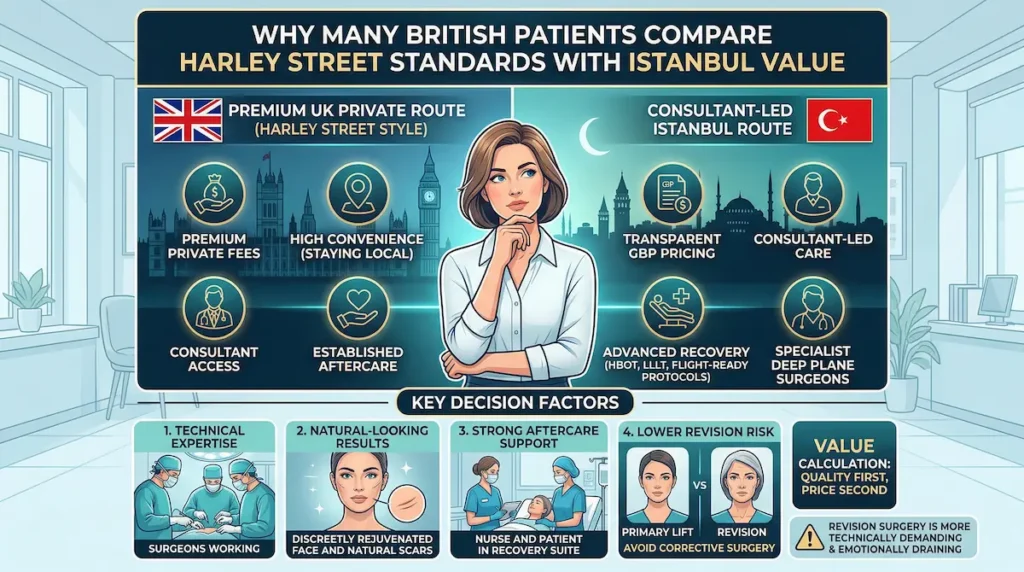
Why Many British Patients Compare Harley Street Standards with Istanbul Value
For many UK patients, the real comparison is not simply Turkey versus the UK. It is whether they can access consultant-led, natural-looking facial surgery with strong aftercare and modern recovery support without paying premium Harley Street-level private fees. That is why informed patients often compare facelift London vs Istanbul quality rather than looking at location alone. They want to know whether the surgeon’s expertise, clinic standards and healing support justify the decision, not just whether the quote looks attractive on first glance.
For many discerning patients, that comparison becomes even more specific when they begin evaluating who offers the best balance of technical expertise, natural-looking results and long-term value. This is why people searching for the best deep plane facelift surgeon in Turkey often focus not only on price, but also on consultant-led care, recovery support, scar quality and the likelihood of avoiding future revision surgery.
Quality should be compared before price
The safest way to think about value is to compare quality first and price second. A cheaper quote means very little if it increases the risk of revision facelift surgery, visible scarring, poor aftercare or an unnatural result. In contrast, a consultant-led pathway with stronger planning and lower revision risk may represent far better value over time, even before travel and recovery are taken into account.
This matters especially in facial surgery because the cost of correcting a poor result is often far higher than the cost of choosing well the first time. Patients who later need facelift correction surgery Turkey or a secondary facelift procedure often discover that revision is more technically demanding, emotionally draining and financially inefficient than investing in expertise from the outset.
For British patients, the emotional calculation is just as important as the financial one. They are not only comparing fees. They are comparing confidence, discretion, consultant access and the chance of achieving a subtle result without becoming a future revision case.
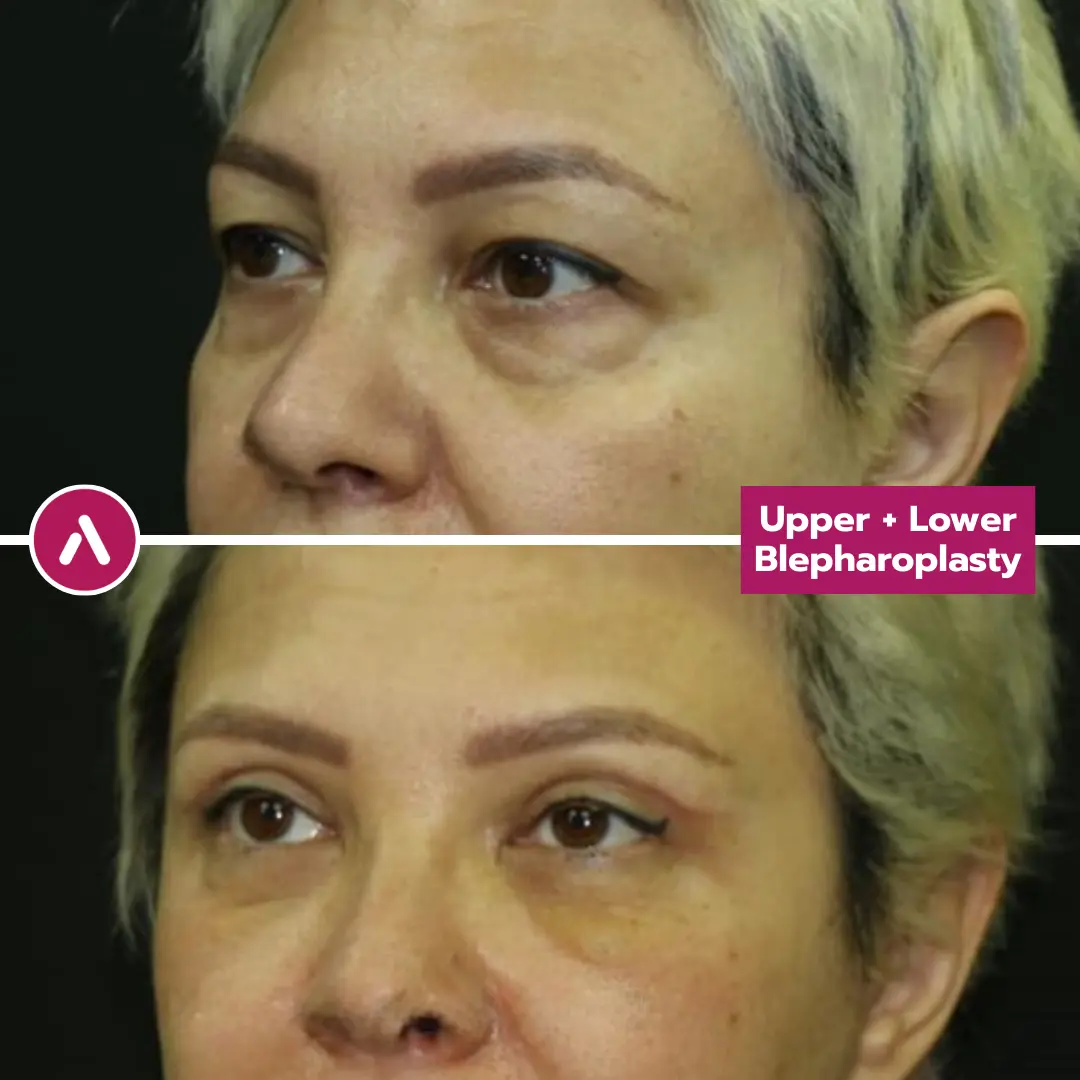
Facelift London vs Istanbul quality: what informed patients actually assess
When thoughtful patients compare Harley Street standards with Istanbul value, they usually assess more than just geography. They look at credentials, case volume, facial surgery focus, natural-looking results, scar quality, post-operative support and how well the clinic understands UK patient expectations. The best comparison is not “UK good, abroad risky”. The best comparison is “which team offers the strongest combination of expertise, safety, subtlety and continuity?”
That is why consultant-led care is so important. A team guided by specialist-level experience, awake or Twilight anaesthesia options where appropriate, and a philosophy of rejuvenation rather than alteration will naturally appeal more to patients who fear looking overdone. In a consultant vs novice facelift surgeon comparison, that difference often becomes clearer once patients review healed results, understand the recovery model and ask direct questions about who is operating.
One UK patient, Sarah, compared London and Istanbul directly after previous surgery in the UK and felt the Istanbul route offered the natural-looking result and recovery experience she had been hoping for.
Transparent GBP pricing without sacrificing consultant-led care
Another major reason British patients compare these pathways is transparency. Patients are often more comfortable when a clinic can discuss pricing clearly in GBP and explain what is and is not included. This does not mean the decision should be made on cost alone. It means that transparent pricing allows the patient to compare value honestly, rather than being distracted by unclear add-ons or vague package language.
For a patient researching revision facelift Turkey, price transparency also signals organisational maturity. It suggests the clinic is used to dealing with overseas patients, understands UK expectations, and can structure the journey in a way that feels predictable. That matters because trust is built not only through credentials, but through consistency at every stage of the patient experience.
| Comparison Point | Premium UK Private Route | Consultant-Led Istanbul Route |
|---|---|---|
| Primary concern | Convenience of staying local | Combining expertise, value and recovery planning |
| What informed patients compare | Credentials, scar quality, consultant access | Exactly the same factors, plus travel and aftercare systems |
| Price discussion | Often judged against Harley Street expectations | Often judged on transparent GBP value |
| Recovery features | Varies by clinic | May include HBOT, LLLT and flight-ready protocols |
| Best use of money | Depends on consultant level and support | Depends on whether quality remains consultant-led and natural-looking |
Who Is the Best Candidate for a Consultant-Led Facelift?
Not every patient needs the same type of facial rejuvenation, but certain patients benefit especially strongly from a consultant-led approach. This is particularly true when the goal is to lower the chance of facelift revision surgery, protect facial identity and achieve a subtle result that does not advertise surgery. Patients with higher aesthetic standards, more detailed questions or stronger anxiety about complications are often the ones who benefit most from an experienced, high-volume specialist team.
Patients who fear general anaesthesia or want an awake facelift approach
Many British patients are excellent candidates for consultant-led care because they are not only concerned about the aesthetic result. They are also concerned about the experience of surgery itself. Some are uneasy about general anaesthesia and actively search for an awake or Twilight anaesthesia (conscious sedation) pathway. In these cases, an experienced consultant who is comfortable planning surgery around local anaesthesia and patient comfort can be a major advantage.
This is especially relevant to expert patients who want a more medically reasoned route and who are likely to ask about swelling, bruising, medication needs and how soon they may feel fit to travel. A consultant-led setting is often better able to answer those questions honestly and structure the recovery in a way that feels clinically credible rather than overly promotional.
Patients with visible ageing who still want subtle, natural results
Another ideal candidate is the patient who clearly wants improvement but is deeply afraid of looking unnatural. This is one of the most common UK concerns. Patients may dislike jowls, neck laxity or tired facial descent, but they still want to look like themselves in photographs, at work and in everyday life.
These patients often do best with a surgeon who understands the balance between lift and restraint. They are not searching for aggressive transformation. They are searching for elegant correction. That is why a low facelift revision rate surgeon is often the right fit. A lower revision profile usually reflects more stable judgement, better vector choice and a more mature aesthetic philosophy.
For this group, a consultant-led plan is not about vanity. It is about preserving identity while reversing the specific ageing changes that make them look tired, heavy or older than they feel.
Patients considering a first facelift and wanting to avoid a future revision
Perhaps the most obvious candidate for consultant-led care is the patient booking their first facelift but already thinking several steps ahead. These patients understand that the goal is not merely to look better at two weeks. The goal is to avoid becoming a revision patient at all.
That mindset is wise. Many of the people later researching revision facelift surgery once believed their first procedure would be simple. They did not yet know how much incision planning, tissue handling, scar behaviour and surgeon judgement would influence the final outcome. Patients who understand that reality early are usually more selective, and that selectivity tends to protect them.
In short, the best candidate for a consultant-led facelift is often the patient who values natural results, cares about medical science, asks careful questions and would rather choose correctly once than pay emotionally and financially for correction later.

Red Flags That Suggest a Higher Revision Risk
One of the smartest ways to avoid facelift correction surgery Turkey later is to recognise the warning signs before booking. High revision risk is rarely visible in one dramatic detail. More often, it appears as a pattern: unclear qualifications, inconsistent photography, vague answers, weak aftercare, or an obvious obsession with price over quality. The more of these signs a patient notices, the more cautious they should become.
Vague qualifications or no clear consultant identity
If a clinic cannot explain clearly who will perform the surgery, what specialist credentials that surgeon holds, and whether the surgeon has meaningful facelift case volume, that is a serious concern. Patients should never have to guess whether they are choosing a consultant-level facial surgeon or a novice working under a broad cosmetic label.
This is particularly important in any consultant vs novice facelift surgeon decision. A clinic that avoids precise answers about credentials, board-level equivalence or who performs the critical steps of the operation may also be a clinic where accountability becomes blurry later. That is not the foundation for a safe facial procedure.
Before-and-after galleries with inconsistent angles or only immediate results
Photography can reveal a great deal. If the gallery uses inconsistent lighting, different angles, make-up, poor healing stages or mostly immediate post-operative images, patients should be cautious. These tactics can hide scar issues, tension problems and the very signs that later drive revision facelift surgery.
Healed results are far more useful than dramatic “on-the-day” transformations. Patients should look for consistency in ear position, hairline preservation, jawline definition, neck smoothness and the absence of obvious tension. If these details are not visible, the portfolio may be telling you less than it appears to.
This is also where patients should think about pixie ear facelift prevention and avoiding windswept facelift results. If the earlobe looks stretched or the facial pull looks too lateral, the warning signs may already be present in the photographs.
Clinics that focus on price first and aftercare second
Price matters, but it should never be the dominant message in facial surgery. If the entire consultation process revolves around “cheap deals”, short-term discounts or urgency tactics, patients should pause. A facelift is not a commodity. It is a highly visible surgical intervention with long-term consequences.
Good clinics discuss price transparently, but they also discuss surgeon credentials, operating theatre standards, scar management, recovery pathways and access to aftercare. They understand that post-operative contact matters, especially for overseas patients. A British patient should know exactly how support works once they return home, and whether there is a clear route for questions, reassurance and follow-up.
When aftercare feels vague, revision risk is not necessarily caused by the surgery alone. It can also be increased by poor communication, delayed responses and unsupported healing. In facial surgery, that is not a minor issue. It is part of the overall safety picture.
Frequently Asked Questions (FAQ): Facelift Revision Rate
Below are the key questions most UK patients ask when comparing revision risk, consultant expertise and the safety of travelling abroad for facial rejuvenation.
Is a lower facelift revision rate always a sign of a better surgeon?
Not by itself. A lower rate is meaningful, but it should be assessed alongside case volume, portfolio consistency, credentials and the quality of long-term healed results.
Why do novice surgeons have higher revision rates?
Usually because they have less experience with patient selection, deep tissue planning, scar control and intra-operative judgement. Small technical errors in facelift surgery can become very visible later.
Can a bad facelift be corrected later?
Yes, but revision facelift surgery is usually more complex than the first operation. Scar tissue, altered anatomy and emotional stress make revision a specialist procedure rather than a simple repeat facelift.
How do I know whether my surgeon is truly consultant-led?
Ask who performs the operation personally, who plans the vectors and incisions, and who manages your follow-up. Clear, direct answers are a good sign; vague answers are not.
Does deep plane facelift experience affect revision risk?
It often does. Surgeons with stronger experience in deeper structural work are usually better placed to create natural support with less visible skin tension, which can reduce the chance of a revision-triggering result.
Do HBOT and LLLT reduce the chance of needing a revision?
They do not replace surgical skill, but they can support smoother healing, better scar quality and more comfortable recovery. That can improve the overall outcome and reduce dissatisfaction linked to prolonged swelling or visible scars.
Is it safer to choose a facelift clinic in Istanbul with British standards?
Safety depends on the surgeon, the clinic systems and the aftercare structure rather than geography alone. A consultant-led clinic with clear credentials, strong hygiene standards and UK-facing support may be a safer choice than a cheaper but poorly defined option anywhere.
If you would like to explore related topics in more detail, you can also learn more about Specialist Plastic Surgeon Turkey, Questions to Ask Plastic Surgeon, Ghost Surgery in Turkey, Best Deep Plane Facelift Clinic in Turkey, Facelift Recovery with Stem Cells, Scar Revision Surgery Turkey, Stem Cell Facelift vs Traditional Facelift, Online Plastic Surgery Consultation, and English Speaking Plastic Surgeons in Turkey to support a safer, better-informed treatment decision.
Medical Disclaimer: This page is provided for general educational purposes only and does not replace a face-to-face medical consultation, diagnosis, or personalised treatment plan. All surgery carries risks and outcomes vary between individuals. Suitability for a facelift surgery, procedure selection, and anaesthesia choice can only be determined after a full clinical assessment by a qualified surgeon. Always follow your clinician’s instructions and seek urgent medical attention if you develop concerning symptoms during recovery.