
Botched Neck Lift: Warning Signs, Urgent Symptoms and What to Do Next
AI Summary
- A botched neck lift may be improved, but complete correction cannot be promised. An examination comes before any new booking.
- Severe breathing difficulty, chest pain with breathlessness or fast-growing neck swelling are emergencies: call emergency services straight away, wherever you are.
- A useful second opinion gives a written assessment, explains what is uncertain and includes the option of no further surgery.
- Before surgery abroad, confirm who holds clinical responsibility, how complications are handled and how follow-up works once you are home.
Summary generated by AI, reviewed by our editorial team
A botched neck lift may be improved, but it cannot always be fully corrected, and the first step is an examination, not another booking. Separate a problem with appearance from an urgent symptom. Severe breathing difficulty, chest pain or rapidly growing neck swelling need emergency care straight away.
“Botched” is a search term, not a diagnosis. You may dislike the contour, worry about a scar or feel that something has suddenly changed. Each of those needs a different response.
This guide is for when you are worried about the outcome. It covers how to spot urgency, how to prepare for a second opinion and what correction can and cannot do. For how the operation itself is planned and performed, see our guide to neck lift surgery in Turkey.
Experience a Seamless Neck Lift Journey
From VIP airport transfers to 5-star hotel accommodation, we manage every detail. Enjoy a premier medical travel experience in Istanbul.
Table of Contents
What are the signs of a botched neck lift?
Dissatisfaction, a recognised complication and a surgical error are three different things. They can overlap, but one does not prove another. Start by writing down what you see and feel, when it began and whether it is changing. That record is worth more than any label.
Does swelling or tightness mean my neck lift went wrong?
Not on its own. Swelling, bruising and a feeling of tightness are common after neck surgery and usually ease as healing progresses. A single photograph taken in that period tells you very little.
Be precise about tightness. Tell your surgical team where you feel it, whether it is easing or worsening and whether it affects swallowing, turning your head or sleep. Compare it with the written recovery instructions you were given. Another patient's recovery diary is not a fair yardstick.
Which contour changes need a surgical review?
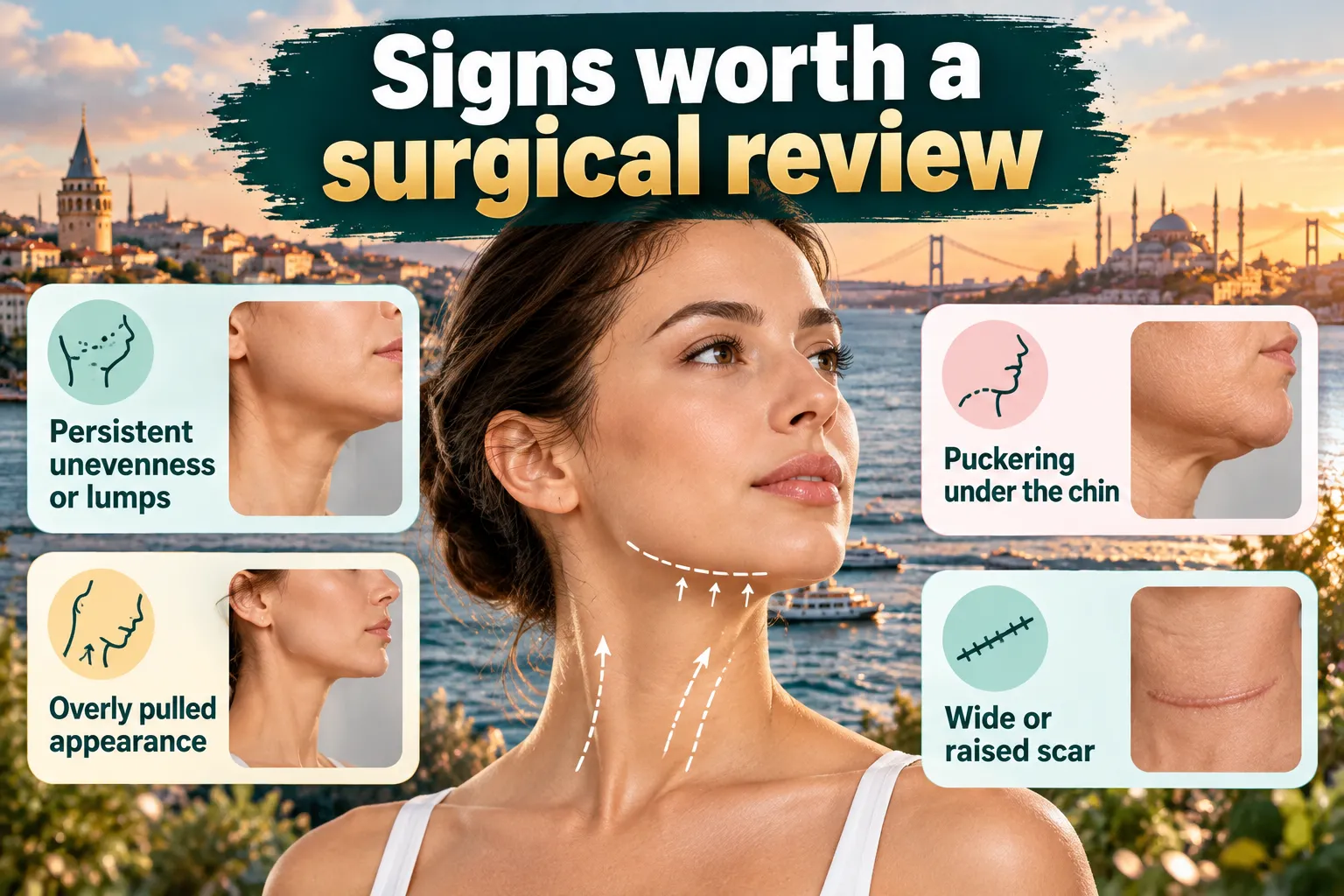
Ask for an examination if unevenness, lumps, puckering under the chin, an overly pulled look or a conspicuous scar persists. These are recognised outcomes, not proof of error. The American Society of Plastic Surgeons lists bleeding, infection, poor wound healing, nerve injury, asymmetry, unfavourable scarring and the possible need for further surgery among neck lift risks. Naming the problem does not explain its cause.
The table separates recovery changes from concerns that need a different response.
| What you notice | What to do |
|---|---|
| Swelling, bruising or tightness | Compare it with your written instructions and ask whether your pattern needs review. |
| Persistent unevenness, lumps, puckering or a pulled look | Request an examination and a written explanation once swelling has had time to settle. |
| A scar that is wide, raised or in a visible place | Ask whether the concern is the scar itself or the contour around it. |
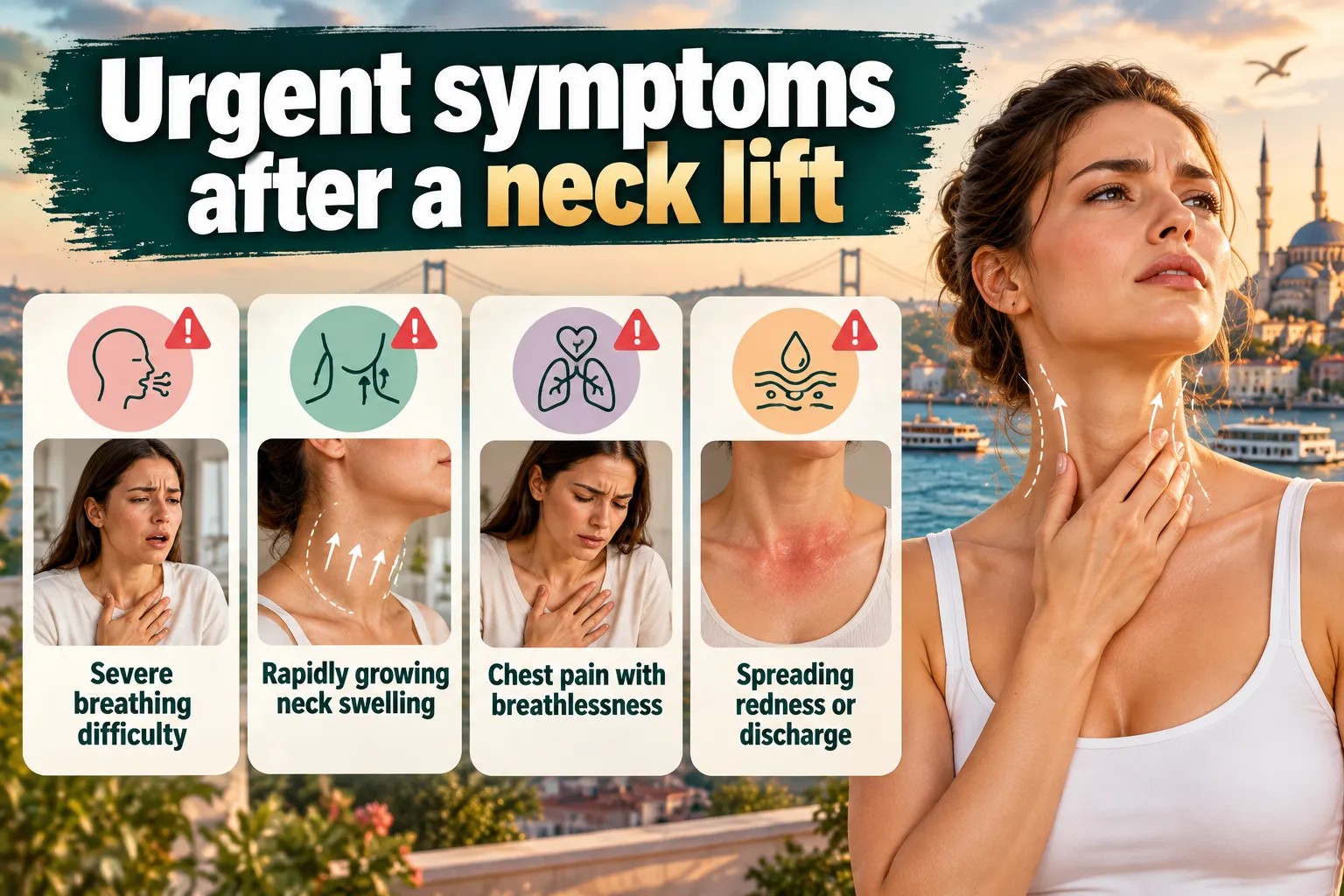
| Spreading redness, warmth, discharge or an opening wound | Contact the operating clinic the same day and ask for an assessment. |
| Severe breathing difficulty, chest pain or fast-growing neck swelling | Emergency. Call 999 in the UK, or local emergency services if you are abroad. |
Ask the clinician to separate what they can identify now from what is still uncertain. You deserve an explanation, not just a verdict.
Can bad neck lift photos tell you what happened?
Photographs support a conversation, but they rarely settle it. If you look through our neck lift before and after gallery, remember that results vary from person to person. Every image shows one patient at one stage of healing.
Your own photographs matter more. Include the dates, use the same angles where you can and note what changed between them. Then ask a better question than “does this look botched?” Ask what examination is needed to understand it.
Which symptoms after a neck lift need urgent help?
Act on urgent symptoms first and investigate later. Do not wait for a photo review, a coordinator's reply or an online second opinion if you have severe breathing difficulty, chest pain with breathlessness or neck swelling that is growing quickly. Get emergency help. Working out the cause is the emergency team's job, not yours.
What should I do about sudden neck swelling or breathing difficulty?
Sudden or rapidly increasing neck swelling needs immediate medical assessment. If you are struggling to breathe, call 999 in the UK, or local emergency services if you are still abroad. Do not try to arrange a flight home first.
Tell the emergency team you have recently had neck surgery. Contact your surgical team as well, but only once help is on its way.
A haematoma is a collection of blood under the skin, and bleeding is on the ASPS risk list above. You cannot tell from the outside whether swelling is a haematoma, which is why it needs examining. If you are alone, ask someone nearby to call for help and stay with you.
When do wound changes need prompt assessment?
Contact the operating clinic promptly about spreading redness, warmth, increasing pain or discharge from a wound. Do the same if a wound opens or the skin beside it darkens or changes colour. Ask for a clinical assessment. A reassuring message is not enough.
When you get through, keep it simple:
- What has changed, and when you first noticed it.
- Whether it is spreading or getting worse.
- Whether you feel unwell, feverish or have any other symptoms.
- Which medicines you are taking now.
If you cannot reach the clinic, see a doctor locally. Do not wait for your next scheduled follow-up.
What if I develop chest pain or breathlessness?
Treat chest pain with breathlessness as an emergency. A blood clot that travels to the lungs can be life-threatening, and the NHS guidance on blood clots explains the warning signs and when to call 999. Do not drive yourself to A&E.
Do not put it down to anxiety. Tell the emergency clinician about your surgery, any recent flights and your current medicines. Gathering paperwork can wait.
Let your surgical team know once you are being looked after. Their input matters. It must never delay treatment where you are.
Why can a neck lift look pulled, lumpy or uneven?
Start with what the operation was meant to treat. Asymmetry and unfavourable scarring are on the recognised risk list, so their presence alone does not prove a mistake. They still deserve a clear explanation. Three questions usually frame it: which tissue was treated, how much was changed and how you have healed.
Cervicoplasty vs platysmaplasty: was the right problem addressed?
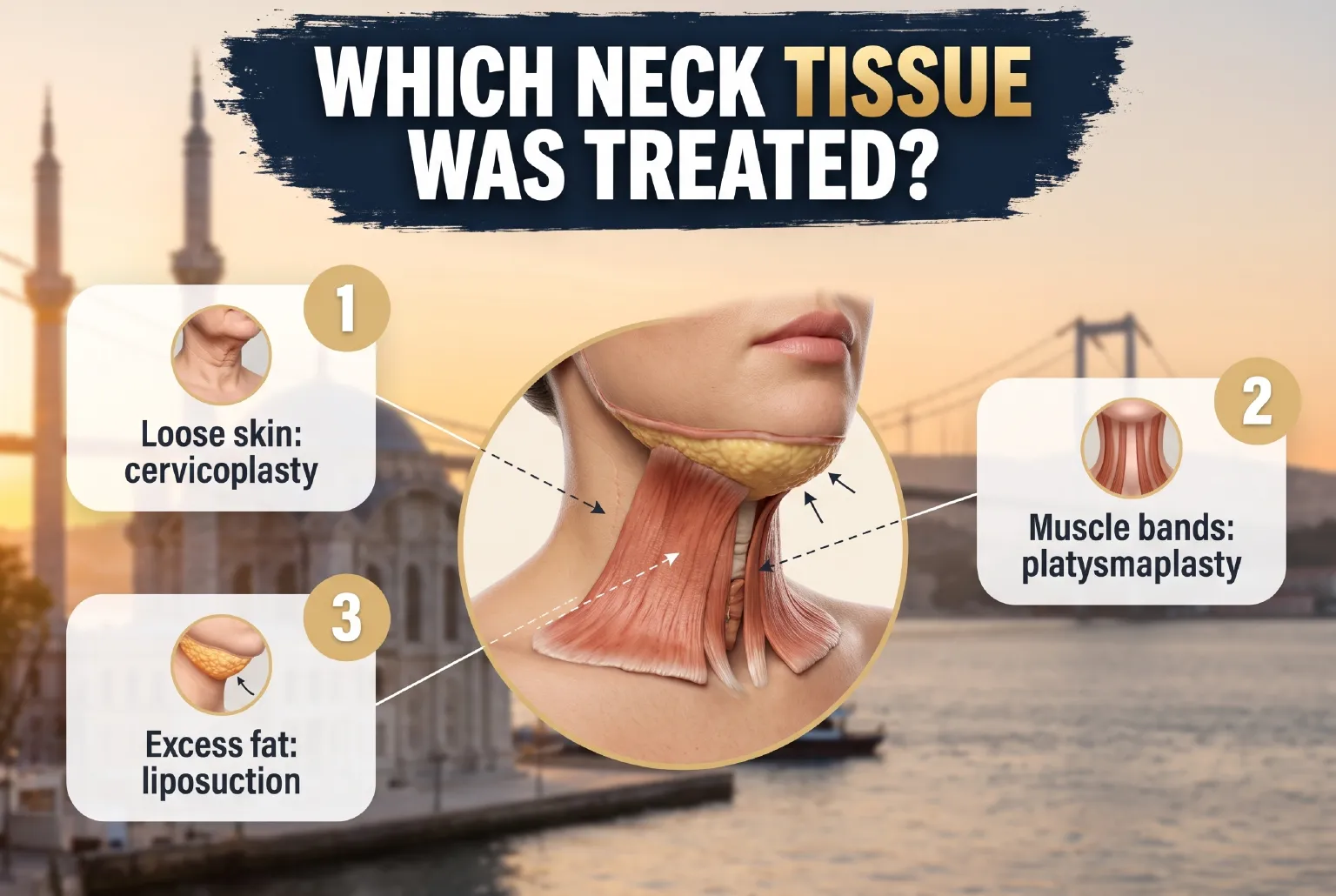
The two terms describe different targets. Cervicoplasty removes and tightens loose neck skin. Platysmaplasty works on the platysma, the thin sheet of muscle at the front of the neck that can form vertical bands. Fat under the chin is a third target, sometimes treated with liposuction.
The distinction matters when you look back at your plan. If muscle bands were your main concern, ask whether the muscle was treated at all. If loose skin bothered you most and only fat was removed, ask how the skin was meant to be addressed.
A procedure name is not an operative description. Ask for the operative report, which records what was actually done.
Can a mini neck lift in Turkey address every neck?
Ask what “mini” means in your case. Request a plain-English description of the incisions, the tissues being treated and the changes the surgeon does not expect to achieve.
Keep the comparison anatomical. Skin, fat and muscle are separate concerns, and a smaller operation may deal with only one of them. If a proposal focuses on fat removal, ask how it handles any loose skin or banding found at consultation.
A shorter name is not a reason to choose. Ask the surgeon to explain why the proposed extent of surgery suits your neck.
Discover If a Neck Lift Is Right for You
Share your photos and medical history to receive a personalised assessment from our European Board-certified facial surgery team.
How do health and healing affect the result?
Suitability matters before any operation. Surgeons generally look for people who do not smoke, have no condition that impairs healing and hold realistic expectations. Healing differs between individuals, so two people who have the same technique can end up with different results.
Be open about your history. Bring details of medicines, supplements, smoking or vaping and previous procedures, and ask how each affects the recommendation. Careful planning lowers some risks. It cannot remove them all.
What should a second opinion on a bad neck lift involve?
A second opinion should give you a documented assessment, not simply another quote. Arrange it once any urgent problem has been dealt with. Ask the reviewing surgeon what they think is happening, what remains uncertain and what they need before recommending anything.

Which records should I bring to the consultation?
Bring what you have. Separate the changes you noticed straight away from those that appeared later.
- The operation date and the operative report, if available.
- Your consent documents and any written description of the planned procedure.
- Your current medicines, including supplements, and any allergies.
- The original aftercare instructions and records of later appointments or treatment.
- Photographs from before surgery and dated photographs taken since.
- A short timeline of symptoms, changes in appearance and conversations with the original surgical team.
It does not need to be polished. Keep the originals where you can, note anything you could not obtain and do not guess which technique was used.
What needs an in-person examination?
Ask what the consultation will cover. Expect questions about your medical history and previous surgery, an examination of the face and neck, photographs, a discussion of your expectations and an explanation of the options.
Point to the problem yourself. Show where you see pulling, unevenness or scar trouble, and describe any discomfort, numbness or change in movement. Photographs cannot carry that information alone.
If the first appointment is online, ask which questions stay open until someone examines you. Before you book travel, confirm who will examine you, whether the discussion is preliminary and when you will receive a written recommendation.
How is the timing of further treatment decided?
Timing is individual. Swelling takes time to settle and scars keep changing after surgery, so an early appearance is not always the final one. A surgeon who proposes corrective surgery very soon should explain why waiting would not help.
For planning, our neck lift page lists how long the operation takes, the typical recovery time and when most people return to work. Those figures help you plan a trip. They do not tell you when a final result will show.
Use these questions to pin the recommendation down:
- What is your working diagnosis, and what remains uncertain?
- Do you recommend observation, further assessment or treatment, and why?
- What would make you change that recommendation?
- When should we review the concern again?
- Who should assess any new symptoms between appointments?
Ask for a written plan before you commit. It should record the recommendation, its limits, the next review and who holds clinical responsibility.
Everything You Need to Know About Neck Lift
From surgical stages to aftercare, discover how AKM Clinic delivers world-class Neck Lift in Istanbul.
Can a botched neck lift be fixed?
It may be improved, but complete correction cannot be promised. The possible need for further surgery is already on the ASPS risk list, and a second operation brings its own risks. Start with the problem, not the procedure. Ask what treatment could realistically change and what might remain.
When might observation or scar treatment be considered?
Another operation should not be the default. Ask whether waiting and watching is reasonable and, if treatment is suggested, which specific concern it targets. Ask about the alternatives too, including doing nothing.
Scar revision aims to make a scar less noticeable; it does not remove it. Ask the reviewing surgeon to separate a problem with the scar from dissatisfaction with the neck contour around it. The two often call for different answers.
What can revision neck surgery aim to change?
Ask for one clear aim per concern. Depending on the examination, revision may target remaining loose skin, residual fat, muscle bands or a scar. That is a list of possible targets. It is not a forecast of what a second operation would do for you.
Revision is not a simple repeat. The tissues have already been operated on once, so ask how that changes the plan. Bleeding, infection, nerve injury and scarring remain possible, and results vary. Ask which of these risks matter most for your proposed correction.
For problems that involve the face as well, see our guide to fixing bad facelift results. For eyelid concerns after combined surgery, see correcting botched lower eyelid surgery.
Who may not be a suitable candidate for another operation?
Suitability is not automatic. The general criteria above do not settle it for corrective surgery. Before agreeing to another operation, ask the surgical team to address:
- Any unresolved complication and how it is being managed.
- Your health conditions, medicines and smoking status.
- Which of your requested changes are realistic, uncertain or not advisable.
- Why further surgery would be better than leaving the area alone.
Ask for an honest recommendation, including the option of no further operation. Our surgical team assesses each person individually, and an enquiry does not mean every revision case will be accepted.
Plan Your 4–5 Day Neck Lift Stay in Istanbul
Receive a clear, day-by-day itinerary covering arrival, surgery, recovery, and fit-to-fly clearance tailored to your requirements.
What should I check before booking a neck lift abroad?
Check who carries clinical responsibility, not just who books the hotel. Get the answers in writing. The NHS advice on cosmetic surgery abroad is a sensible starting point for questions about qualifications, consultations and aftercare.
How can I check qualifications and clinical responsibility?
Start with the name and qualifications of the surgeon who will operate. GMC registration and CQC inspection are the UK reference points you know, but they do not cover surgeons or hospitals in Turkey. Ask how to verify the surgeon's Turkish specialist registration and the facility's authorisation instead.
At AKM Clinic, the founder, Dr Akif Mehmetoglu, is a dermatosurgeon with a Specialist Certificate in Dermatology and Venereology from the Republic of Turkey Ministry of Health. He has worked in facial aesthetics since 2013, and the clinic has carried out more than 2,000 facial surgeries in that time. Ask which surgeon would assess you and who would perform any operation.
- Will I consult the operating surgeon before I decide?
- Where will surgery take place, and who provides the anaesthesia?
- Who examines me if I develop a complication?
- What is the emergency escalation process?
- Who takes clinical responsibility after I return to the UK?
- What happens if I need extra appointments or a longer stay?
What can reviews tell me about complication care?
Read past the comments about hotels and transfers. Look for how people describe communication, access to a doctor and what happened when something did not go to plan.
Reviews shape your questions; they do not answer them. They cannot replace a qualification check, a consultation, informed consent or a written aftercare plan. Ask the clinic directly what happens if you develop a complication.
Where should I check neck lift costs and package details?
Keep any quote specific to your operation. Our neck lift cost breakdown for Turkey covers the figures, so this article does not repeat them. If you are comparing with a Harley Street quote, compare what each one includes, not just the total.
Ask for a written list of inclusions, exclusions and what happens if your plans change. Package terms differ: the MACS facelift and neck lift package describes a combined first operation, not a quote for corrective treatment.
How does AKM Clinic organise aftercare for UK patients?
AKM Clinic organises recovery support in Istanbul and scheduled follow-up once you are back in the UK. Check what applies to you. If you had surgery elsewhere and want an opinion, ask the team to confirm in writing what assessment and care they propose.
What does the Patient Host organise before travel?
A dedicated Patient Host plans the journey. It starts with a free online consultation using your photographs, followed by a personal treatment plan and quote, then the date, hotel and transfers. Use that first discussion to explain your concerns and to ask what still needs an in-person examination.
Our step-by-step patient journey shows how these stages fit together. A private driver meets you at Istanbul Airport (IST) or Sabiha Gökçen (SAW), and recovery stays are at selected five-star hotels in Istanbul, among them the Point Barbaros Hotel.
Travel and clinical care are separate things. A good hotel is not a substitute for a medical review. Ask who will review your concerns and how you reach the medical team.
What happens during recovery in Istanbul?
The medical team monitors you closely after surgery. You receive medication, compression garments and written care instructions. Your Patient Host is reachable on WhatsApp around the clock.
Use the Patient Host to raise a concern quickly. In an emergency, call for help first and send the message afterwards.
Before you leave Istanbul, make sure you know:
- Which written instructions apply to your operation.
- Who to contact about a new concern.
- How to request a medical review once you are home.
- What to do if your travel plans change.
Every patient has a final in-person check-up with the doctor before flying home. Raise your travel plans at that appointment. A booked flight should not override that conversation.
How does follow-up continue after I return home?
Your Patient Host schedules virtual follow-ups at 1, 3, 6 and 12 months so the doctor can check healing and answer questions. Put them in your diary now. Ask how to raise a concern between those dates.
Recovery care at the clinic can include hyperbaric oxygen therapy (HBOT) and a low-level laser therapy (LLLT) system with 424 medical-grade laser diodes at 650 nm, used for skin healing. Ask whether either would be part of your plan. Neither is a promise about your result.
If you want an assessment, gather your operation records, dated photographs and a short account of your concerns. This article is general information, not a diagnosis or a treatment recommendation for you.
Frequently Asked Questions: Botched Neck Lift
Can a botched neck lift cause death?
Some complications after an operation, such as a blood clot travelling to the lungs, can be serious and need urgent medical attention. The word “botched” says nothing about how serious your own situation is. If you have severe breathing difficulty, chest pain or collapse, call the emergency services, wherever you are, before you contact the clinic.
Will the NHS correct a neck lift performed abroad?
Do not assume so. The NHS may not cover cosmetic surgery or routine aftercare for surgery done abroad. For anything urgent, seek care according to the symptoms. For a non-urgent concern, ask your GP what assessment or referral is appropriate.
Who pays for revision surgery after a bad neck lift?
There is no automatic answer. Check your original agreement, the clinic's written revision policy and any insurance terms. Ask for written clarification of who pays for assessment, surgery, anaesthesia, accommodation and travel. If responsibility is disputed, get independent legal advice before signing anything.
How can I complain about cosmetic surgery performed in Turkey?
Start with a written complaint to the treating clinic, giving the operation date, your concerns, relevant correspondence and the outcome you want. Ask for its formal complaints procedure and which Turkish authority oversees the facility. Keep copies of everything. For compensation disputes, seek advice from someone experienced in cross-border healthcare claims.
Does local anaesthesia prevent a botched neck lift?
No. The type of anaesthetic usually affects how you are kept comfortable during the operation, but the surgical risks of the neck lift itself remain. At AKM Clinic, neck lifts are performed under general or local anaesthesia, depending on the plan agreed with you. Ask why a particular option is recommended for your health.
What can I do instead of a neck lift?
You can choose no treatment, or ask about non-surgical options after an assessment. Ask what each option could realistically change compared with surgery, what its risks are and whether leaving the area alone is reasonable. After an unsatisfactory operation, get assessed before booking anything new, surgical or not.
Can I refuse permission for my neck-lift photographs to be published?
Yes. Tell the clinic in writing that you do not consent to publication or promotional use, and ask for this to be recorded separately from consent to clinical photography. Check where images could appear and how to withdraw consent. If images are already online, request their removal.
Have Specific Questions About Neck Lift?
Speak directly with our dedicated patient coordinators regarding Neck Lift. Receive instant guidance and personalised support.
Related Treatments
Neck Lift in Turkey
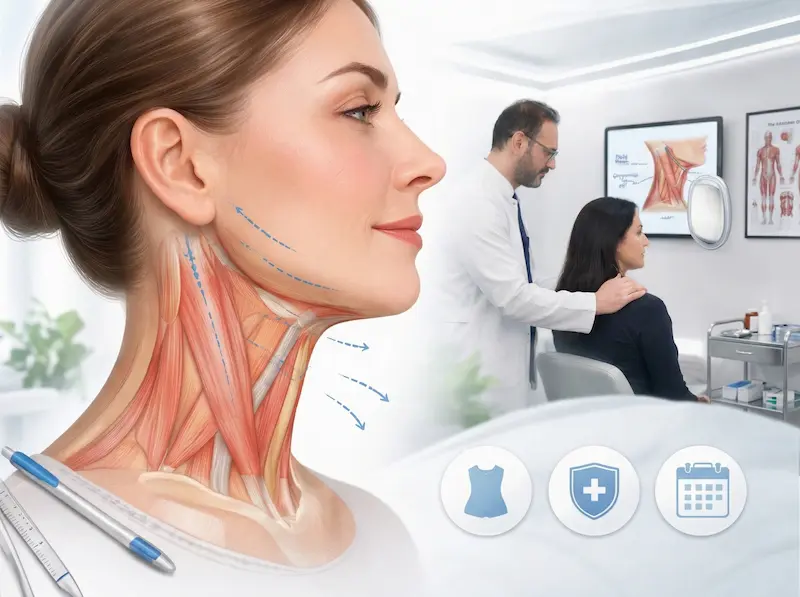
Explore Neck Lift techniques in Turkey: cervicoplasty, platysmaplasty and Deep Plane options, recovery timelines, and affordable price for UK patients.

Facelift in Turkey
Explore facelift techniques (deep plane, SMAS), scars, recovery timelines and sedation options. UK-focused safety pathway and aftercare at AKM Clinic, Istanbul.

SMAS Facelift in Turkey
Discover the SMAS facelift in Turkey. Achieve natural rejuvenation with European Board Certified surgeons. Compare UK vs Turkey costs and recovery today.
Revision Facelift in Turkey
Revision facelift in Turkey with a safety-first plan: structural correction, discreet scars, and fast recovery.
Ready to Begin Your Own Transformation Journey?
Join the 2,000+ patients who have trusted Dr Akif Mehmetoğlu and the AKM Clinic team. Your journey to a more confident, naturally restored you begins with a simple, no-obligation conversation. Contact us today from the UK for your free virtual consultation.
#1: Get Your Free Personalised Quote
Start with a free, no-obligation online consultation. Share your photos, and our surgical team will provide a fully personalised treatment plan and a transparent, all-inclusive price package. There are no hidden fees.
#2: Secure Your Date & VIP Booking
Once you are ready, our dedicated patient coordinators will help you secure your procedure date. We will handle all your bookings, including your 5-star hotel accommodation and private VIP airport transfers.
#3: Arrive in Istanbul & Meet Your Surgeon
Arrive at Istanbul Airport (IST) and be greeted by your private driver. Settle into your hotel and prepare for your in-person consultation, where you will meet your specialist surgeon to finalise the details for your "natural, subtle, and restored" new look.