
How to Prepare for Cosmetic Surgery: Emotional Trust
AI Summary
- How to prepare for cosmetic surgery starts with emotional readiness, realistic expectations, and honest consultation.
- UK patients need reassurance about safety, standards, aftercare, and trustworthy communication when considering Turkey.
- Safe cosmetic surgery in Turkey depends on consultant-led care, transparent planning, and structured support after returning home.
- Recovery confidence improves with HBOT, LLLT, patient stories, and responsive follow-up throughout healing.
AI-generated summary, fact-checked by our medical experts.
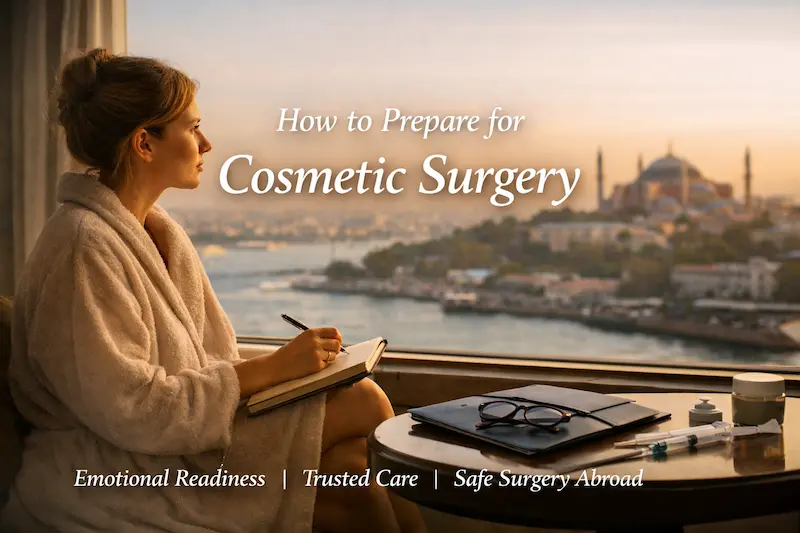
If you are wondering how to prepare for cosmetic surgery, it is important to know that preparation is not only about blood tests, hotel bookings, or arranging time away from work. It is also about trust, emotional readiness, and feeling genuinely safe with the decision you are making. For many British patients, especially those considering treatment abroad, cosmetic surgery preparation begins long before the procedure itself. It begins with the question: Do I feel calm, informed, and emotionally secure enough to move forward?
This matters even more if you have previously had a disappointing experience, felt dismissed during a consultation, or have spent months reading frightening headlines about surgery overseas. In those situations, preparing for cosmetic surgery emotionally becomes just as important as choosing the right date or planning your flight. A thoughtful decision should be built on clarity, not panic; on evidence, not pressure; and on a relationship with a surgeon and clinic that feels transparent, respectful, and consistent.
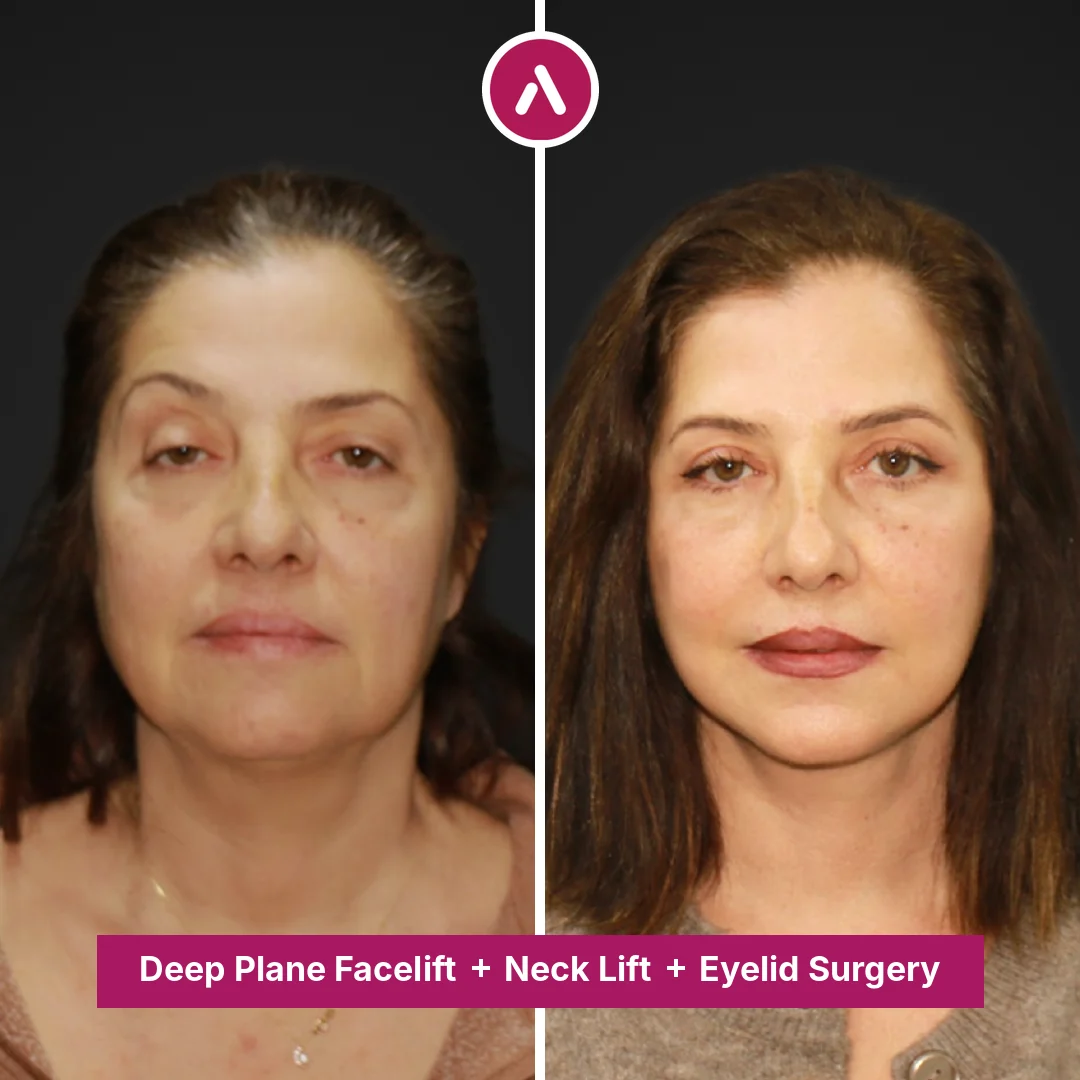
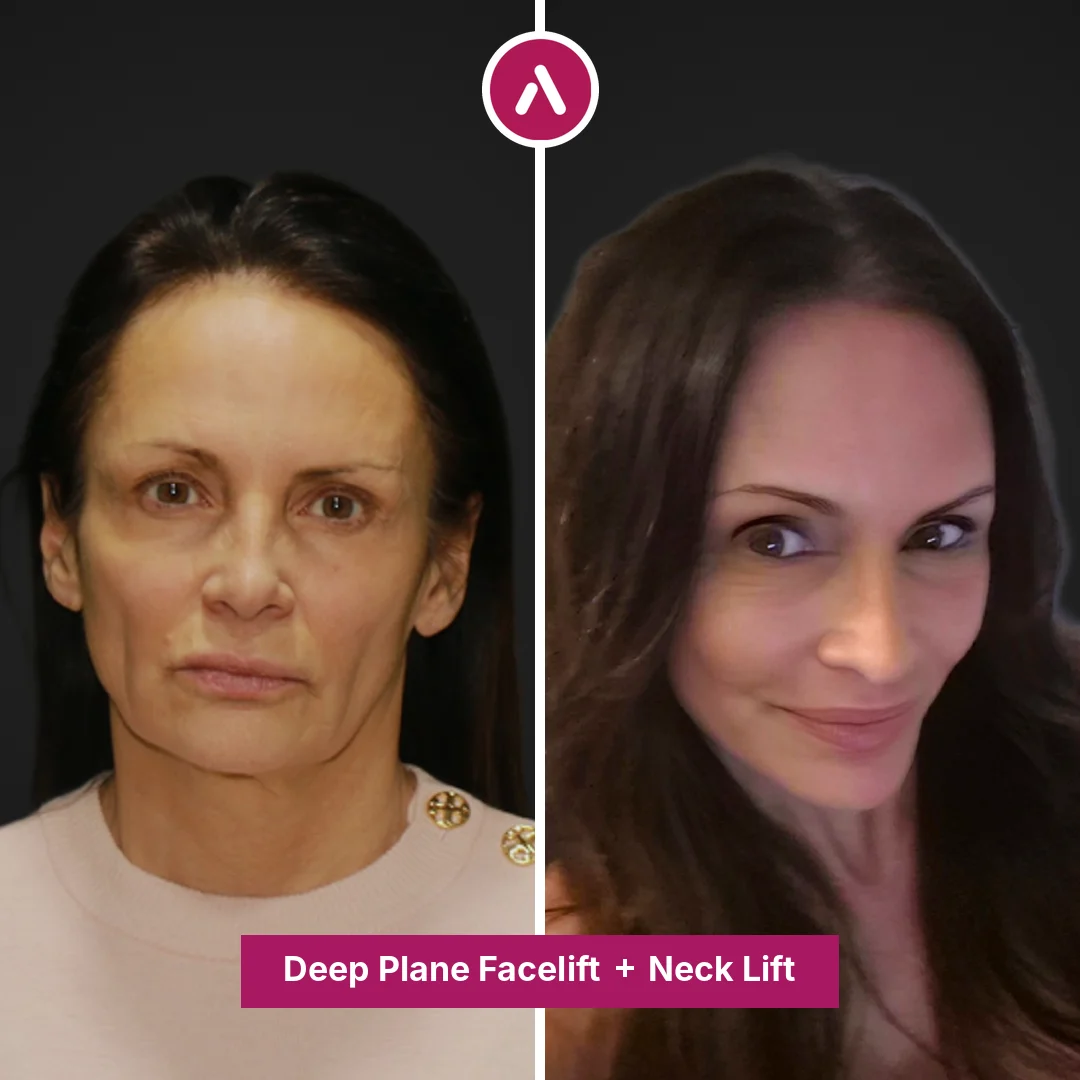
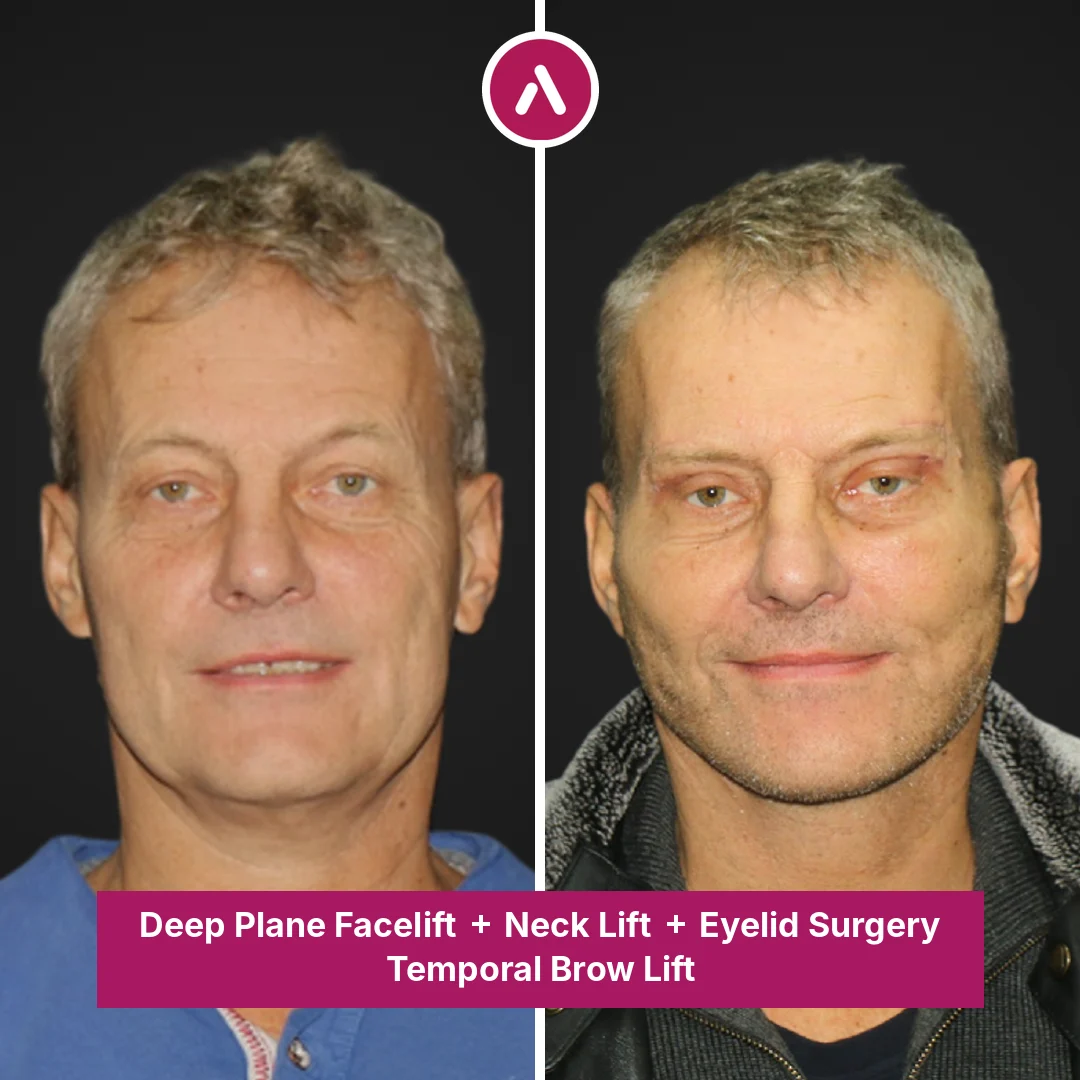
For UK patients, emotional trust often comes from a combination of factors: subtle aesthetic goals, consultant-led care, realistic communication, structured aftercare, and the reassurance that there is support both in Istanbul and after returning home to Britain. Good medicine is never only technical. The best patient journeys are guided by experience, empathy, and evidence-based medicine working together.
| Common Emotional Concern | What Usually Helps |
|---|---|
| Fear of a poor or unnatural result | A surgeon with a subtle aesthetic philosophy, clear before-and-after evidence, and honest discussion of realistic outcomes |
| Anxiety about surgery abroad | Clear travel planning, direct communication, and a structured patient journey from consultation to aftercare |
| Loss of trust after a previous bad experience | Consultant-led care, transparent answers, and time to rebuild confidence without pressure |
| Worry about recovery once back in the UK | Ongoing follow-up, digital monitoring, and accessible support after returning home |
Table of Contents
Why Emotional Trust Matters Before Cosmetic Surgery
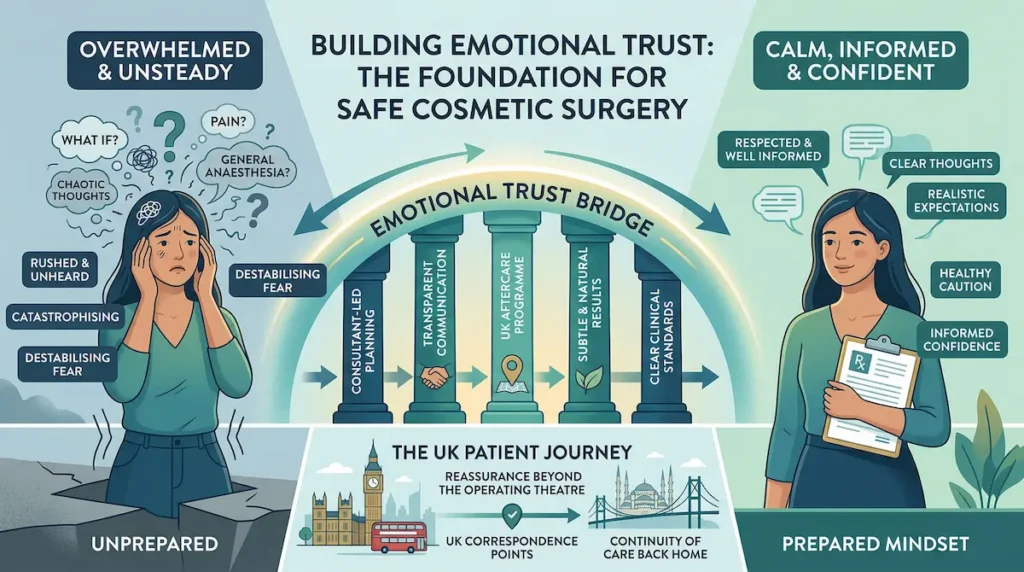
Before any procedure is booked, patients need more than clinical suitability. They need emotional steadiness. This is why mental preparation for plastic surgery should never be treated as a minor detail. A patient who feels rushed, unheard, or uncertain may continue to carry that anxiety into the operating theatre and recovery period. By contrast, a patient who feels respected and well informed is more likely to approach the journey with realistic expectations and a calmer mindset.
Why preparation is not only physical, but psychological
Many people think surgery preparation is simply administrative: arranging leave, stopping certain medication, completing tests, and following fasting instructions. In reality, true cosmetic surgery preparation also includes making peace with your reasons for having surgery. You should be able to explain your goal in a grounded way. Perhaps you want to look fresher, correct a feature that has bothered you for years, or restore confidence after weight loss, ageing, or a previous operation. These are valid motivations, but they should come from self-understanding rather than external pressure.
Psychological readiness affects how patients absorb information, respond to normal pre-operative nerves, and cope with the early recovery phase. Swelling, bruising, temporary asymmetry, and emotional ups and downs can feel far more distressing if the patient entered the process already overwhelmed. Preparing for cosmetic surgery emotionally means understanding that some uncertainty is normal, but panic should not be the driver.
The difference between fear, caution, and informed confidence
Not all fear is a warning sign. Some degree of anxiety is natural before any elective procedure. The key is learning to distinguish between healthy caution and destabilising fear. Healthy caution encourages you to ask sensible questions, review qualifications, and compare options carefully. Destabilising fear, however, often leads to obsessive over-research, sleeplessness, catastrophising, or booking impulsively just to “get it over with”.
Overcoming cosmetic surgery anxiety does not mean pretending to be fearless. It means giving your concerns proper structure. Write down what you are actually afraid of. Is it pain? General anaesthesia? Looking overdone? Travelling alone? Being unable to reach the clinic after you go home? Once the fear is named clearly, it becomes easier to solve. Trustworthy clinics do not dismiss these concerns; they answer them directly and calmly.
- Fear says: “Something bad will definitely happen.”
- Caution says: “I need more information before I decide.”
- Informed confidence says: “I understand the risks, the plan, and the support available.”
That final stage is where emotional trust begins. It is not blind optimism. It is clarity.
Why British patients often need more reassurance before travelling abroad
British patients often need a deeper sense of reassurance before committing to treatment abroad, because their concerns usually extend far beyond the operation itself. They are often weighing questions about clinical standards, continuity of care, communication, and what happens once they are back in the UK. Many have also been influenced by negative media coverage or are seeking a revision facelift specialist after a disappointing previous experience, which naturally makes trust harder to build. For this reason, patients comparing Harley Street with Istanbul are not simply looking for value, but for clear proof that choosing treatment overseas does not mean sacrificing safety, expertise, or reliable aftercare.
This is why emotional trust is especially important for those searching for safe cosmetic surgery in Turkey. Reassurance should come from substance, not slogans: surgeon credentials, consultant-led planning, hygiene standards, transparent communication, and a credible aftercare pathway. For many UK patients, practical trust signals such as a London correspondence point, a UK contact route, and ongoing follow-up help transform fear into a sense of order.
Emotional trust also matters because British patients often prefer subtle change rather than dramatic transformation. They do not want to look “done”. They want to look like themselves, but fresher, more rested, and more in harmony with how they feel inside. The consultation and preparation process should reflect that same tone: measured, calm, and free from exaggerated promises.
Discover If a Plastic Surgery Is Right for You
Share your photos and medical history to receive a personalised assessment from our European Board-certified facial surgery team.
Understanding the Emotional Concerns of UK Patients
Emotional readiness is not the same for every patient. Some are anxious first-timers. Others are carrying disappointment from a previous procedure. Some are mainly worried about safety; others are more concerned about looking unnatural, being judged by family, or coping with recovery away from home. To guide proper mental preparation for plastic surgery, these concerns need to be recognised rather than minimised.
The impact of negative “surgery abroad” headlines on decision-making
Many British patients arrive at consultation stage already emotionally guarded. They may have spent months reading sensational stories about poor outcomes overseas, or they may have been warned by friends and family not to “risk it”. This kind of media exposure can shape decision-making more than people realise. It can create a constant background of doubt, even when the clinic in question is organised, ethical, and highly experienced.
The problem is that fear-based headlines rarely teach patients how to assess a clinic properly. They heighten anxiety without improving judgement. A better approach is to replace vague fear with specific evaluation criteria. Ask who performs the operation, how the recovery is monitored, what the escalation plan is if a problem occurs, and whether communication remains strong after you return to the UK. Emotional trust grows when unknowns become knowns.
For some patients, especially those considering revision, the emotional impact is even heavier. Mental preparation for revision surgery often involves more than ordinary nerves. It may involve disappointment, embarrassment, anger, or a fear of being let down again. In those cases, the goal is not simply to book another procedure. It is to rebuild confidence in a careful, medically grounded way.
Fear of looking overdone versus the desire for subtle results
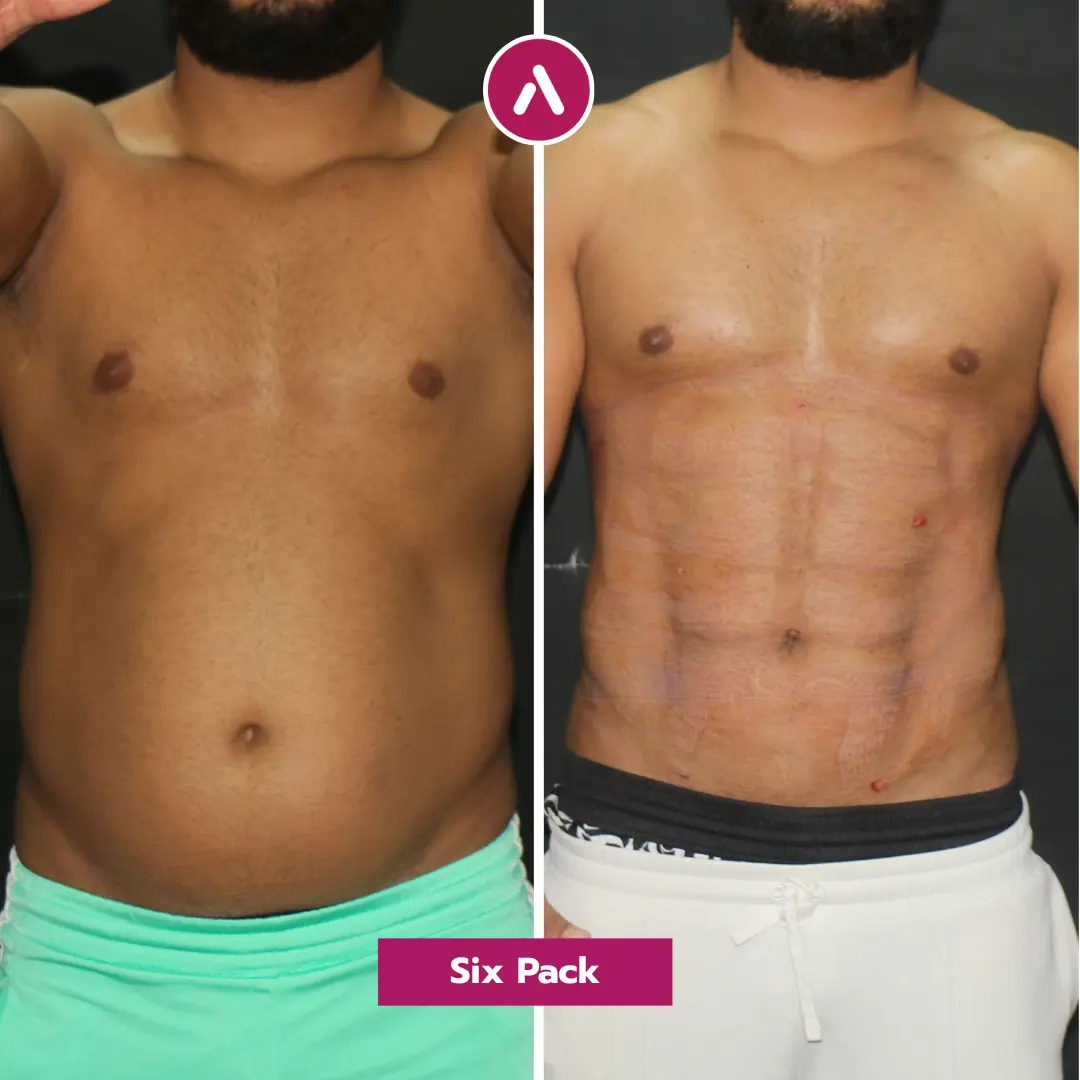
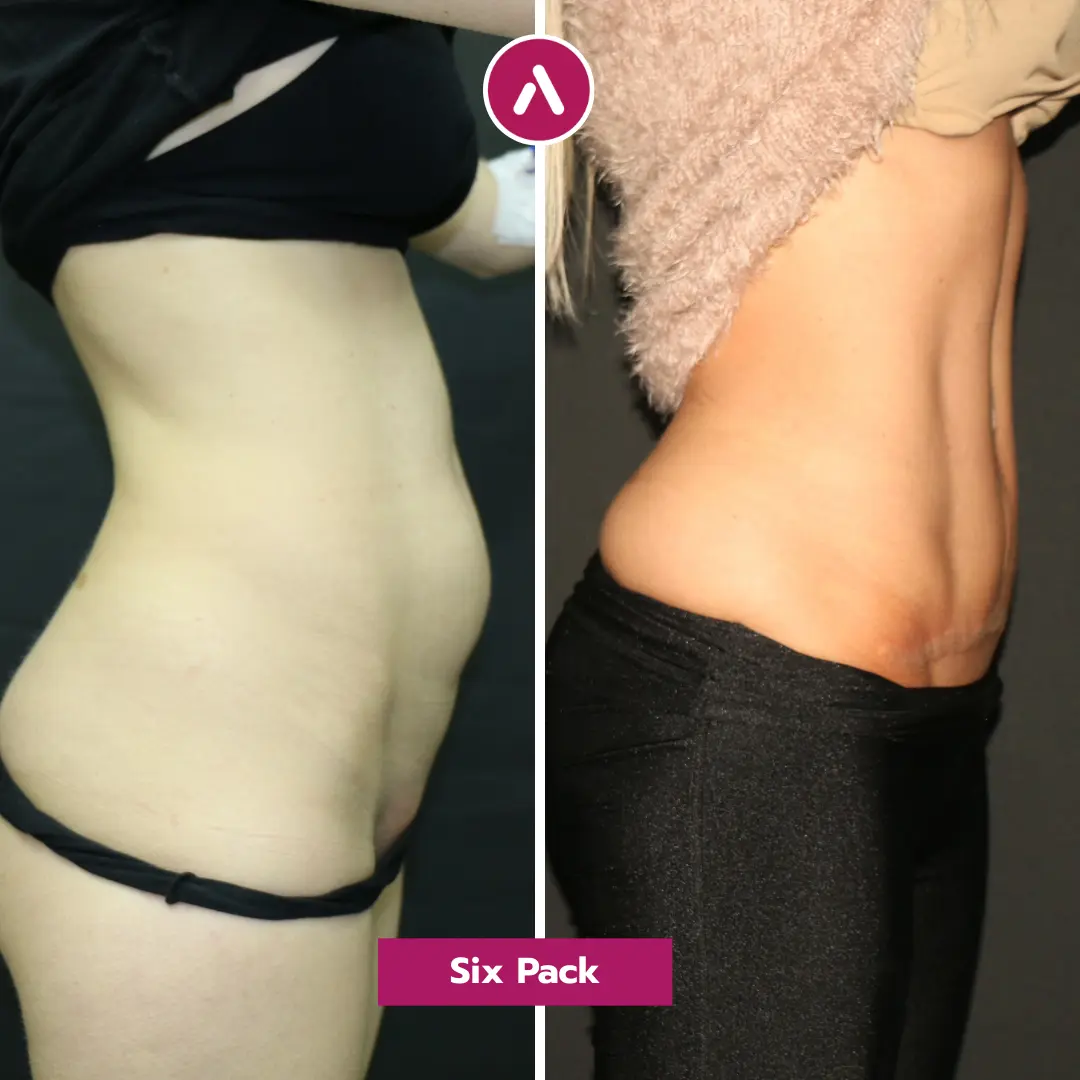
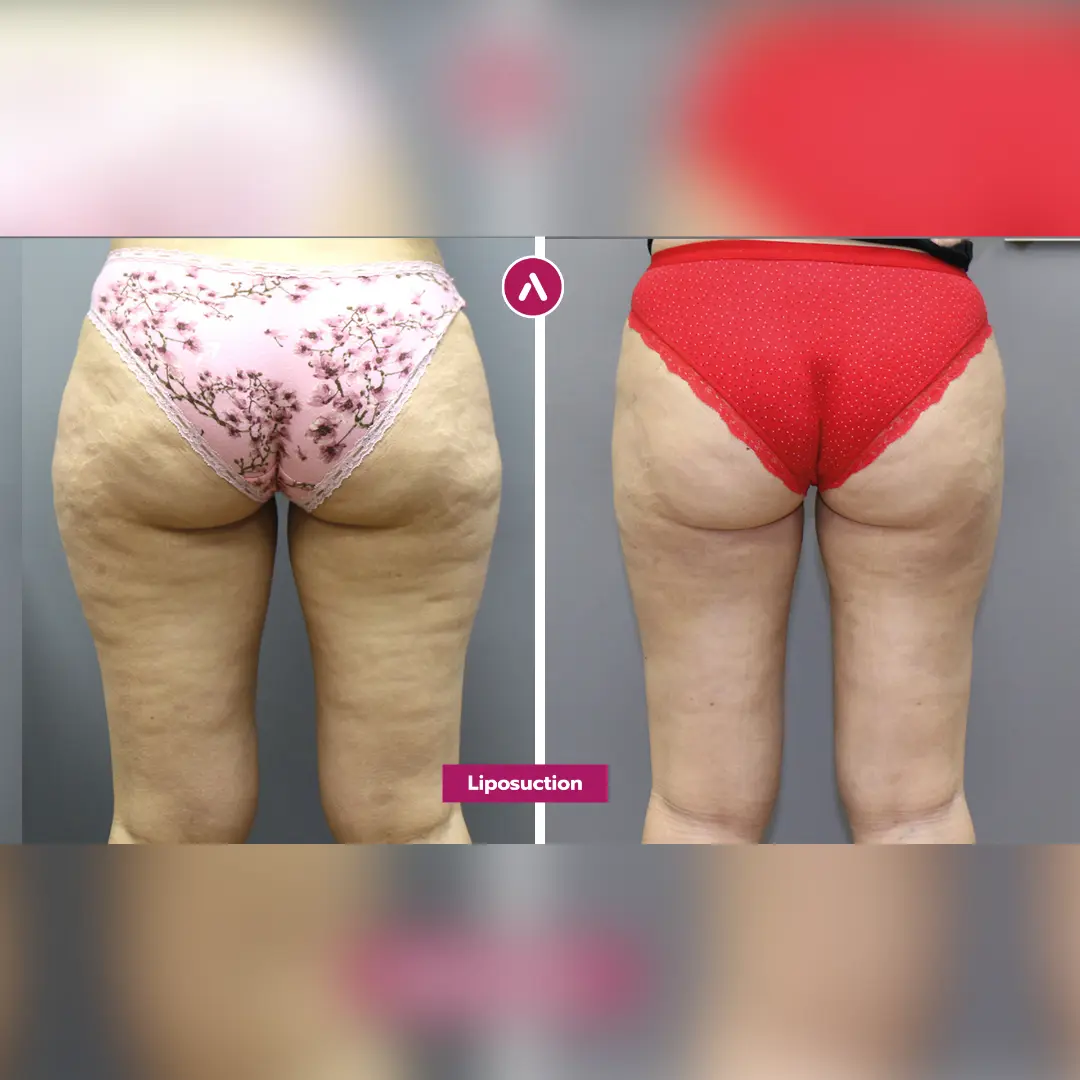
One of the most common concerns among UK patients is not whether surgery can make them look younger, but whether it will make them look artificial. Many patients would rather postpone treatment than risk a pulled, exaggerated, or obviously surgical appearance. This is particularly true for facial procedures, where the social and emotional impact of an unnatural result can feel profound.
The emotional toll of cosmetic surgery is often discussed in relation to complications, but aesthetic mismatch can be deeply upsetting as well. If a patient wanted a refreshed appearance and instead feels altered, that emotional reaction can affect self-image, work confidence, relationships, and overall wellbeing. That is why subtle planning matters so much. The best surgeon-patient relationships are built on shared aesthetic language: refreshed, balanced, natural, refined.
Patient perspective: One UK patient journey at AKM Clinic centred on avoiding high Harley Street fees while still seeking natural facial rejuvenation. Her experience highlights a common British priority: not dramatic change, but trustworthy care and subtle results that still look like you.
When patients feel that a surgeon genuinely understands this preference for restraint, their anxiety usually begins to soften. Trust is not built by promising perfection. It is built by demonstrating taste, judgement, and the ability to say what should not be done as well as what can be done.
Anxiety about being far from home during recovery
Even a confident patient may feel vulnerable when imagining the first days after surgery in another country. Questions quickly arise: Who will help me if I feel frightened? What if swelling feels worse than expected? What if I need reassurance late at night? What happens once I am back in Britain? This is where emotional and practical preparation meet.
Coping with pre-surgery panic often becomes easier when the recovery plan is clear in advance. Patients generally feel more secure when they know where they will stay, who will meet them, how follow-up is handled, and how they will communicate with the clinic after discharge. A well-structured journey reduces the mental burden of “what if” thinking.
This is also why the idea of surgery trauma recovery matters. A patient does not need to have experienced a medical emergency to feel emotionally affected by previous treatment. Sometimes the trauma lies in feeling ignored, misled, or unsupported. In those cases, trusting a surgeon after botched surgery may take time. A careful clinic does not treat that hesitation as inconvenience. It treats it as part of the patient’s history and responds with consistency, patience, and respect.
Entrust Your Plastic Surgery to Board-Certified Experts
Undergo your procedure with total confidence. Meet our European Board-certified surgeons, who have performed over 2,000 successful procedures.
How to Build Trust in Your Surgeon and Clinic
Trust should never be based on glossy marketing alone. It should come from what the clinic shows you, how it answers difficult questions, and whether the surgeon’s philosophy matches your own goals. For patients exploring safe cosmetic surgery in Turkey, trust is usually built step by step: first through clear communication, then through credentials and planning, and finally through the feeling that the clinic sees you as a person rather than a booking slot.
This is especially true for patients who have had a disappointing experience in the past and are now searching more carefully for a revision facelift specialist or a surgeon with a stronger record of judgement and continuity of care. In these cases, trust is shaped not by polished promises, but by consistent answers, realistic planning, and the feeling that the clinic understands both the technical and emotional weight of the decision.
What UK patients should check before booking any cosmetic procedure
If you want to know how to prepare for cosmetic surgery in a sensible way, begin by assessing the fundamentals. Do not focus only on photographs or price. Review how the clinic communicates. Are your questions answered properly, or are they brushed aside? Are the risks discussed in balanced language? Is the plan individualised, or does every patient seem to receive the same sales script?
Useful checkpoints include:
- Who will perform the procedure from start to finish
- Whether your consultation includes realistic limitations as well as benefits
- How the clinic handles aftercare once you return home
- Whether there is a clear route for support if you feel anxious post-operatively
- How your suitability is assessed medically before surgery is confirmed
Patients who are preparing for cosmetic surgery emotionally often benefit from slowing the process down at this stage. You should not feel embarrassed for asking difficult questions. In fact, a trustworthy clinic usually welcomes them.
Understanding GMC-equivalent credentials and consultant-led care
For British patients, professional credibility matters enormously. Many naturally look for recognisable standards and want reassurance that the surgeon they choose operates at a level comparable to the expectations they would have in the UK private sector. This is where consultant-led care and GMC-equivalent credentials become emotionally important as well as medically important.
Patients tend to feel calmer when they know they are not being passed between anonymous staff members or sold to by a non-clinical co-ordinator alone. A consultant-led pathway helps create continuity. It tells the patient that their operation is being shaped by expert judgement from the start, not by a commercial shortcut. This is especially important for patients who are rebuilding trust after a poor result elsewhere.
For revision cases, trusting a surgeon after botched surgery often depends on whether the new surgeon can explain not only what went wrong previously, but why. That level of explanation reflects experience, honesty, and scientific thinking. Patients are not merely seeking reassurance; they are seeking a rationale they can believe in.
Why transparent communication and realistic expectations matter more than marketing
The strongest emotional reassurance usually comes from plain, consistent communication. That means no exaggerated promises, no pressure to rush, and no attempt to make every case sound easy. A credible clinic explains likely stages of recovery, including swelling, bruising, temporary asymmetry, and the normal emotional fluctuations that may happen during healing. This kind of communication feels mature and safe.
It also helps patients distinguish hope from fantasy. Cosmetic surgery can produce meaningful, confidence-restoring change, but it cannot erase every insecurity or deliver perfection. Clinics that speak honestly about this tend to build deeper trust. Their message is not “everything will be flawless”; it is “you will be supported, informed, and treated with care throughout the process”.
From the patient’s side, emotional readiness improves when expectations are based on anatomy, healing patterns, and sound judgement rather than filtered images online. That is where medical knowledge and empathy should meet. The best decisions in aesthetic surgery are not impulsive. They are made when the patient feels heard, the surgeon feels credible, and the plan feels proportionate.

Emotional Preparation Before Your Consultation
Your consultation should not feel like a test you need to pass. It should feel like a structured, honest conversation that helps you decide whether surgery is truly right for you. This is where preparing for cosmetic surgery emotionally becomes practical. A good consultation does not simply confirm what can be done; it clarifies why you want it, what result is realistic, and whether you feel steady enough to proceed without pressure.
Questions to ask yourself before saying yes to surgery
Before you ask a surgeon for answers, ask yourself a few important questions. What is motivating me now? Have I wanted this change for a long time, or am I reacting to a recent emotional setback? Am I hoping to look refreshed and more confident, or am I expecting surgery to solve a much wider dissatisfaction with my life? These questions are not designed to discourage you. They help ensure your decision is grounded.
Many patients benefit from writing down three simple points before consultation:
- What bothers me most, in my own words
- What kind of result would feel natural and sufficient
- What I am most frightened of, emotionally as well as medically
This exercise often reduces mental noise. It turns vague worry into something that can actually be discussed. It also helps with mental preparation for plastic surgery, because a clear internal reason for treatment usually leads to calmer decision-making.
How to discuss your goals without chasing perfection
One of the healthiest ways to approach consultation is to talk in terms of improvement, balance, and harmony rather than perfection. Perfection is not a surgical endpoint. It is an emotional trap. Patients who seek a subtle, proportionate change often cope better during both the decision stage and recovery because they understand that anatomy, tissue quality, healing, and ageing all influence the final result.
Try to describe what you want using natural language. You may want your face to look less tired, your profile more balanced, or your body more in proportion after pregnancy or weight loss. A thoughtful surgeon will then translate that goal into a medically appropriate plan. This approach is especially important for revision patients, because mental preparation for revision surgery should be based on restoration and correction, not desperation.
Bringing your concerns to the consultation openly and honestly
Some patients worry that being too open about their fears may make them appear uncertain or unsuitable for surgery, but in most cases the opposite is true. A thoughtful, experienced surgeon will usually value honesty, particularly when a patient is dealing with anxiety, past disappointment, or difficulty trusting again after a poor result. This is especially important for someone seeking a revision facelift specialist, where emotional reassurance is often just as necessary as technical expertise. If you are worried about scarring, anaesthesia, pain, travel back to Britain, or the emotional side of recovery, it is always better to raise those concerns clearly during the consultation.
Open conversations help the clinic respond properly. They also reveal whether the team communicates with maturity. If your concerns are brushed off with phrases like “Don’t worry, it’s easy”, that is not reassuring. Reassurance should be specific. It should explain the plan, the likely recovery pattern, and the support available if you feel unsettled. This is one of the most practical ways of overcoming cosmetic surgery anxiety: replacing generic comfort with useful detail.
Experience a Seamless Plastic Surgery Journey
From VIP airport transfers to 5-star hotel accommodation, we manage every detail. Enjoy a premier medical travel experience in Istanbul.
Trusting the Journey from the UK to Istanbul
For many British patients, surgery abroad feels emotionally manageable only when the journey itself feels organised. Trust does not begin on the day of the procedure. It begins with the first message, the first consultation, and the sense that every stage has been thought through properly. When logistics are clear, emotional energy is freed up for decision-making and recovery rather than constant worry.
Why a UK support line and London correspondence point can reduce anxiety
Patients often feel safer when there is a recognisable support structure linked to the UK. A London correspondence point, a UK-based patient contact route, and direct communication channels can make the process feel less distant and more accountable. These details may seem administrative on paper, but emotionally they matter a great deal. They reduce the feeling of stepping into the unknown.
For patients who have previously felt abandoned by a provider, these support routes can be especially meaningful. They help show that communication will not simply disappear once payment is made or once the patient boards the flight home. That continuity is often essential when rebuilding confidence after a poor experience.
What makes a patient journey feel safe, organised, and personal
A safe journey usually feels predictable in the best possible way. The patient knows who is meeting them, where they are staying, when they will be seen, and how post-operative reviews are arranged. A disorganised experience increases stress even if the medical treatment itself is technically good. An organised one has the opposite effect: it lowers nervous-system overload and allows the patient to focus on healing.
This is why cosmetic surgery preparation should include a written plan for travel, accommodation, medications, garments if relevant, local transport, and support after discharge. When a patient can visualise the journey from airport to hotel to clinic to recovery, fear often becomes much more manageable.
Planning flights, accommodation, and a calm arrival without added stress
Travel details may sound secondary, but they strongly affect emotional comfort. Patients tend to cope better when they avoid rushing, allow adequate rest before surgery, and choose practical arrangements over ambitious sightseeing plans. This is not the time to treat the journey like a city break. It is a medical trip, and calm structure matters.
Consider practical steps such as travelling with a companion if that feels right, keeping documents easy to access, wearing comfortable clothing, and avoiding over-packed schedules. Small details reduce decision fatigue. For many people, coping with pre-surgery panic becomes easier when the first 48 hours of the trip are deliberately simple and supportive.
| Preparation Area | Helpful UK Patient Approach |
|---|---|
| Flights | Choose timings that minimise stress and allow rest before surgery |
| Accommodation | Stay somewhere comfortable, quiet, and suitable for post-operative recovery |
| Communication | Keep clinic contact details and follow-up instructions easy to reach |
| Companion planning | Bring support if it helps your confidence and recovery comfort |
Preparing for Recovery with Confidence
Recovery is not only physical healing. It is also an emotional adjustment period. Even when the operation goes smoothly, patients may feel vulnerable, tired, impatient, or unexpectedly tearful in the early days. Knowing this in advance is part of proper cosmetic surgery preparation. It allows you to interpret recovery more accurately and with less fear.
This emotional side of healing can feel even more significant for patients who have previously had a poor experience and are now placing their trust in a revision facelift specialist. In such cases, confidence during recovery often comes not only from physical progress, but from knowing that concerns will be taken seriously, questions will be answered clearly, and support will remain available throughout each stage of healing.
Setting realistic expectations for swelling, bruising, and emotions after surgery
Early healing rarely reflects the final result. Swelling, bruising, tightness, unevenness, and temporary discomfort are all part of normal recovery for many procedures. The mistake many anxious patients make is assuming that every temporary change is a sign of something going wrong. A better mindset is to view early recovery as a process, not a verdict.
This is also where the emotional toll of cosmetic surgery can show itself. You may feel relief one hour and worry the next. You may question your decision briefly when you look swollen or tired. None of this automatically means anything is wrong. It means you are healing from a real procedure. Emotional steadiness comes from understanding the timeline rather than judging the result too early.
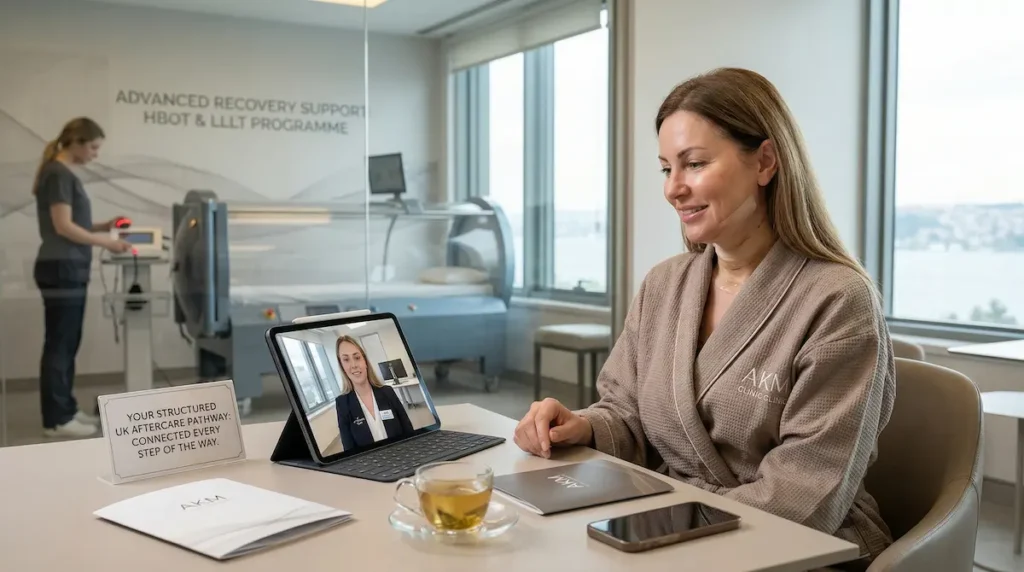
The reassurance of structured aftercare once you return to the UK
Many British patients feel most anxious about the period after they return home. They want to know who will respond if they have questions, how progress will be monitored, and whether they will still feel supported once they are no longer physically near the clinic. This concern is completely reasonable. It is also one of the most important markers of whether a clinic truly offers safe cosmetic surgery in Turkey.
Structured aftercare should feel accessible rather than vague. Patients are more confident when they know there is a clear follow-up pathway, guidance on normal healing, and a route for reassurance if something feels unfamiliar. In emotional terms, aftercare is not just a medical service. It is the continuation of trust.
How HBOT and LLLT support a smoother, more confident recovery experience
Recovery confidence also improves when patients understand the tools being used to support healing. At AKM Clinic, advanced recovery protocols such as Hyperbaric Oxygen Therapy (HBOT) and Low-Level Laser Therapy (LLLT) form part of a wider approach designed to reduce oedema, support tissue recovery, and improve scar quality. For anxious patients, this matters because the feeling of being actively cared for can be just as reassuring as the technology itself.
There is growing interest in how supportive recovery technologies can improve patient comfort and help reduce social downtime. In practical terms, patients often find that when bruising, swelling, and scar visibility are managed more effectively, the emotional burden of recovery becomes easier to handle as well. This is a good example of how physical recovery and emotional wellbeing are closely linked.
Would You Like to Hear from a Former Patient?
Upon request, we can put you in touch with a previous international patient to discuss their Plastic Surgery journey at AKM Clinic. Gain first-hand insight into the experience.
Real Stories That Help Patients Feel Emotionally Ready
Many patients do not build trust through clinical explanations alone. They build it by seeing that someone like them has already made the journey, asked the same questions, and come through the experience feeling supported. For the UK market especially, peer experience can be one of the strongest emotional bridges between hesitation and confidence.
For many people, these stories become even more meaningful when they are considering corrective treatment and want reassurance that they are choosing the right revision facelift specialist. Hearing how another patient navigated uncertainty, asked careful questions, and felt genuinely supported can make the idea of surgery feel more human and less intimidating. In this way, real experiences do not replace clinical trust, but they often make that trust easier to feel.
Sarah’s perspective on choosing Istanbul over expensive Harley Street options
Sarah, a patient from the UK, is a useful example of how emotional readiness often grows through comparison and lived experience. She had previous surgery experience in the UK and was not simply looking for a lower fee. She wanted natural results, a sense of confidence in the team, and an experience that felt worth the journey. Her story reflects a common British viewpoint: price matters, but only when trust and standards feel secure as well.
Sarah’s journey in essence: choosing Istanbul was not about taking a risk for the sake of cost. It was about finding subtle results, thoughtful care, and a level of confidence that made the decision feel emotionally right.
How Stella built trust through another UK patient’s experience
Stella’s experience highlights something very human: many people trust people before they trust institutions. Speaking to or reading about another UK patient can reduce emotional distance immediately. It turns an unfamiliar clinic into a real patient journey with recognisable concerns, practical details, and believable reassurance.
This is particularly valuable for patients dealing with surgery trauma recovery after a poor previous experience. They may not be convinced by polished claims, but they may respond to a grounded patient story that acknowledges fear honestly. In emotional terms, this kind of peer-to-peer reassurance can be as important as the formal consultation itself.
Why ongoing WhatsApp support matters after returning home
Support after returning to Britain is often the final test of whether a patient truly feels safe. Ongoing WhatsApp communication and a responsive support pathway help patients feel that they are not facing recovery alone. Even when the question is small, being able to ask it quickly can prevent unnecessary spirals of anxiety.
This matters greatly for patients who are trusting a surgeon after botched surgery elsewhere. Their nervous system may be primed to expect silence, confusion, or avoidance. Responsive post-operative communication counters that fear with consistency. It says: your recovery still matters, even after you have gone home.
Frequently Asked Questions (FAQ): How to Prepare for Cosmetic Surgery
These are the questions many UK patients ask when they are deciding whether they feel emotionally and practically ready for surgery.
How do I know if I am emotionally ready for cosmetic surgery?
Is it normal to feel frightened before travelling for surgery?
How can I trust a clinic in Turkey from the UK?
What should I ask during my online consultation?
Will I have support after I return home to Britain?
How do I prepare my family or partner for my surgery journey?
What are the signs that I should delay surgery and wait?
Ultimately, learning how to prepare for cosmetic surgery means preparing your mind as carefully as your diary, travel plans, and medical paperwork. When emotional trust is present, patients tend to make better decisions, recover with more confidence, and feel more secure throughout the entire journey. The right clinic does not ask you to ignore your fears. It helps you understand them, organise them, and move forward only when the decision feels genuinely right.
If you would like to explore related topics beyond this guide, you can also find helpful information on Best Deep Plane Facelift Clinic in Turkey, Specialist Plastic Surgeon Turkey, Questions to Ask Plastic Surgeon, English Speaking Plastic Surgeons in Turkey, Online Plastic Surgery Consultation, Surgery Companion Turkey, Mummy Makeover Recovery with Children, and Blepharoplasty Recovery Time to support your research and help you plan your treatment journey with greater confidence.
Have Specific Questions About Plastic Surgery?
Speak directly with our dedicated patient coordinators regarding Plastic Surgery. Receive instant guidance and personalised support.
Medical Disclaimer: This page is provided for general educational purposes only and does not replace a face-to-face medical consultation, diagnosis, or personalised treatment plan. All surgery carries risks and outcomes vary between individuals. Suitability for plastic surgery, procedure selection, and anaesthesia choice can only be determined after a full clinical assessment by a qualified surgeon. Always follow your clinician’s instructions and seek urgent medical attention if you develop concerning symptoms during recovery.
Related Treatments

Awake Tummy Tuck in Turkey
UK guide to Awake Tummy Tuck under twilight sedation at AKM Clinic, Istanbul—techniques, combinations, recovery timeline, risks, aftercare and GBP planning.

Facelift in Turkey
Explore facelift techniques (deep plane, SMAS), scars, recovery timelines and sedation options. UK-focused safety pathway and aftercare at AKM Clinic, Istanbul.

SMAS Facelift in Turkey
Discover the SMAS facelift in Turkey. Achieve natural rejuvenation with European Board Certified surgeons. Compare UK vs Turkey costs and recovery today.

Breast Uplift (Mastopexy) in Turkey
Breast Uplift (Mastopexy) in Turkey for UK patients: techniques, scars, anaesthesia options, recovery timeline, and best price options.
Ready to Begin Your Own Transformation Journey?
Join the 2,000+ patients who have trusted Dr Akif Mehmetoğlu and the AKM Clinic team. Your journey to a more confident, naturally restored you begins with a simple, no-obligation conversation. Contact us today from the UK for your free virtual consultation.
#1: Get Your Free Personalised Quote
Start with a free, no-obligation online consultation. Share your photos, and our surgical team will provide a fully personalised treatment plan and a transparent, all-inclusive price package. There are no hidden fees.
#2: Secure Your Date & VIP Booking
Once you are ready, our dedicated patient coordinators will help you secure your procedure date. We will handle all your bookings, including your 5-star hotel accommodation and private VIP airport transfers.
#3: Arrive in Istanbul & Meet Your Surgeon
Arrive at Istanbul Airport (IST) and be greeted by your private driver. Settle into your hotel and prepare for your in-person consultation, where you will meet your specialist surgeon to finalise the details for your "natural, subtle, and restored" new look.