Facelift results can be life-changing—yet for many British patients, the goal is not a “new face”, but a familiar one that simply looks rested, healthier, and more like how you feel inside. If you are searching for natural facelift results or natural looking facelift results, you are likely trying to avoid the same fear we hear repeatedly: looking “pulled”, “done”, or unlike yourself.
This is where the philosophy of rejuvenation not alteration facelift matters. A subtle facelift is not about chasing dramatic tightness; it is about restoring soft, continuous contours and reducing the signs of lower-face and neck ageing—without broadcasting that you have had surgery. In other words: the closest thing to undetectable facelift surgery is a plan that respects anatomy, skin biology, and healing timelines.
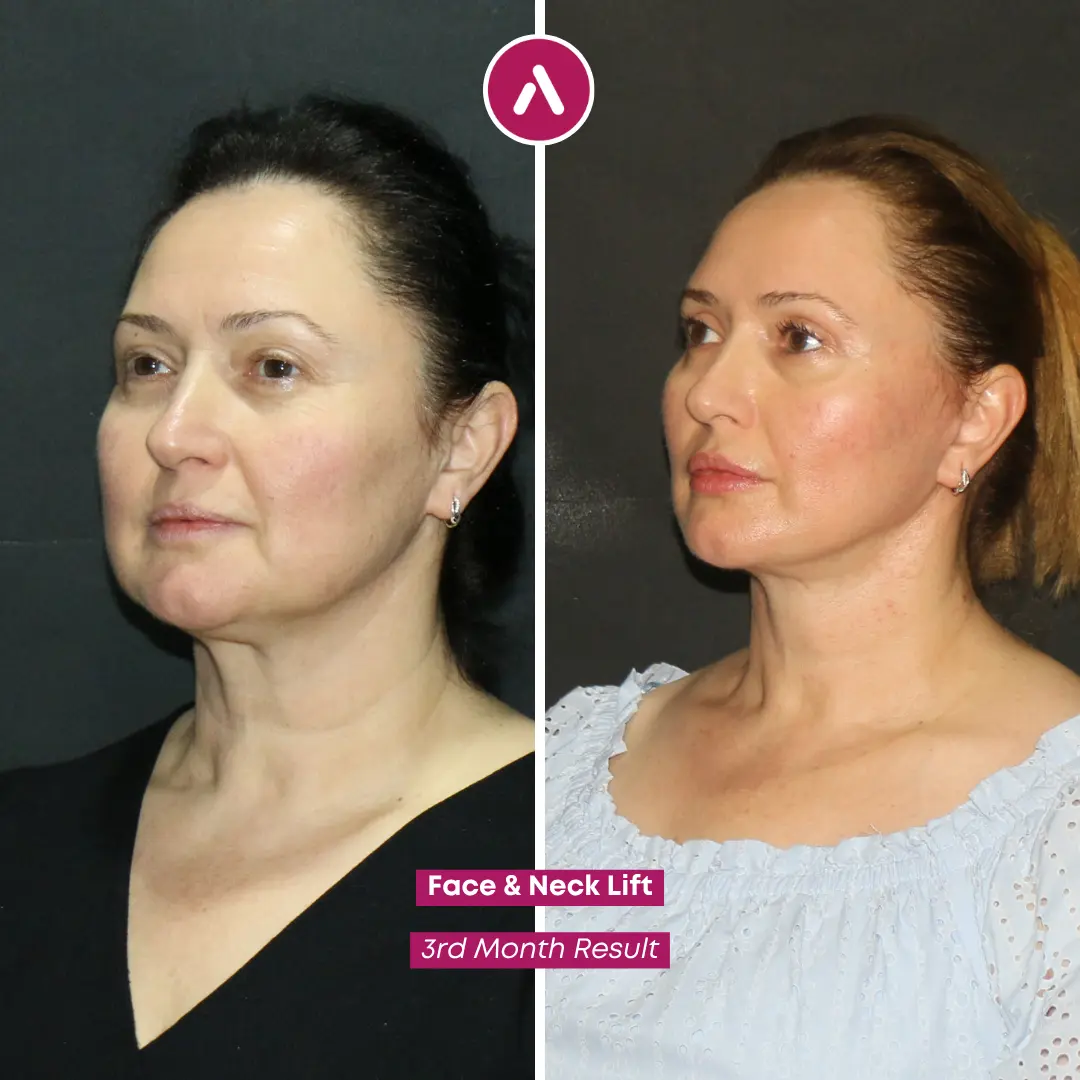
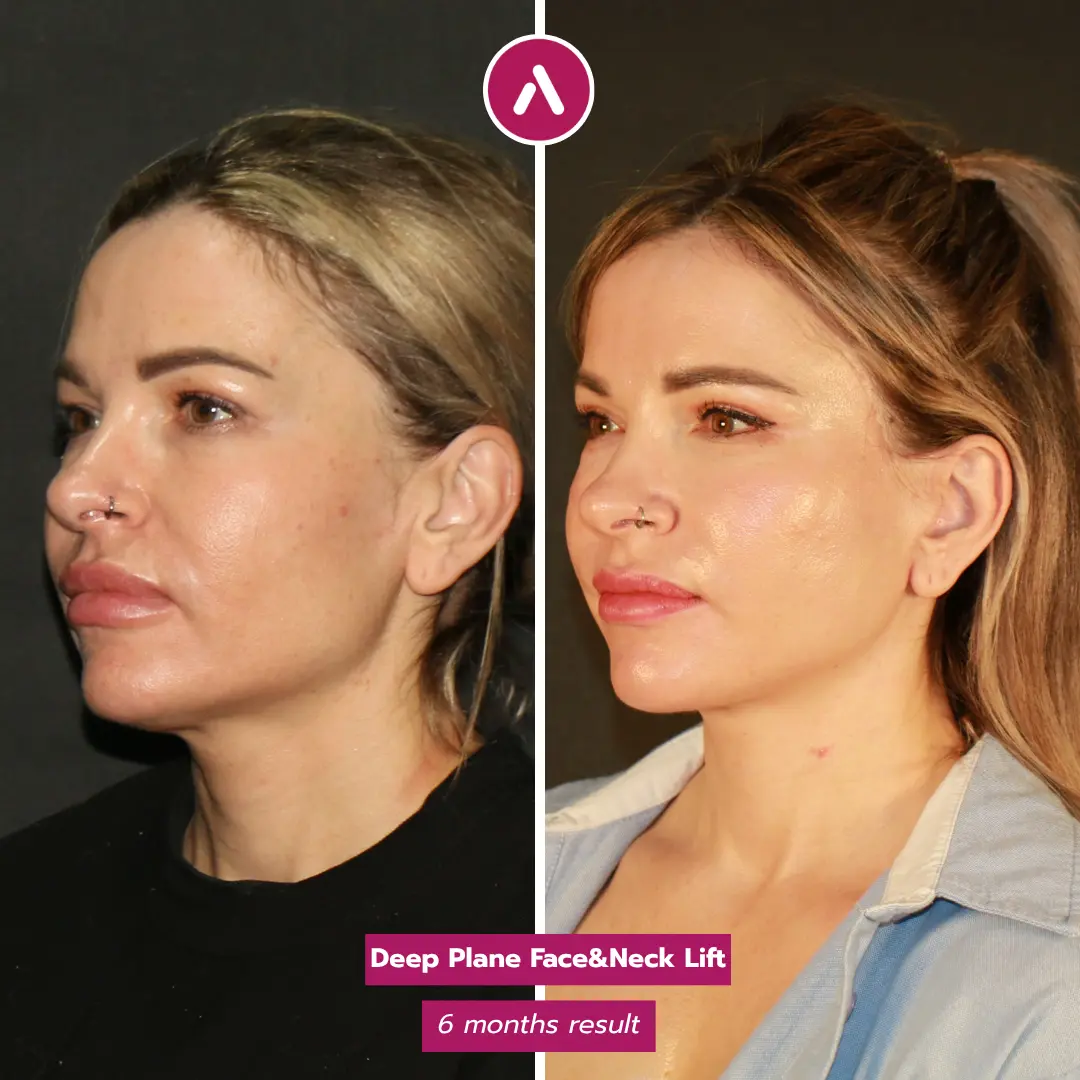
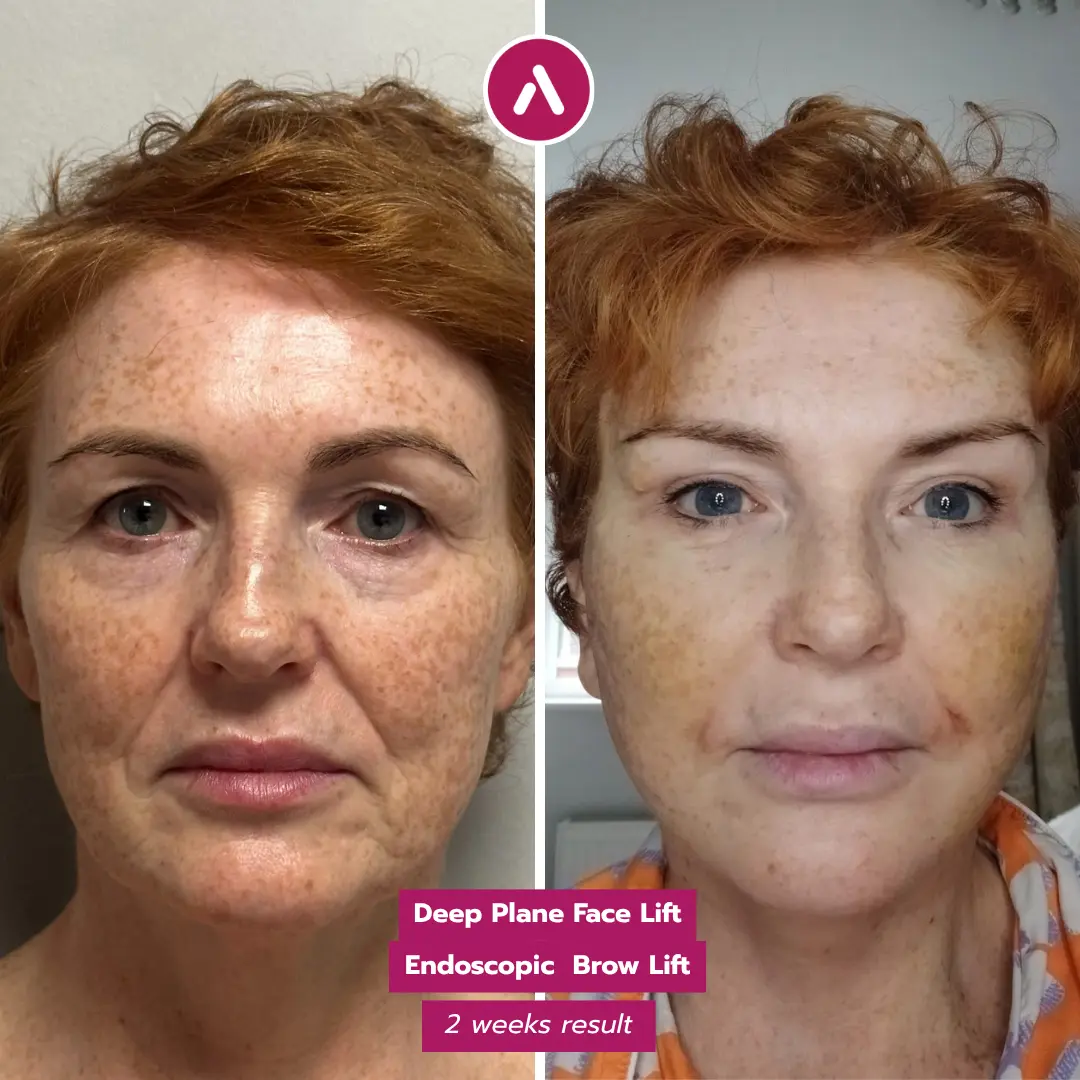
There is also real medical science behind why some approaches look natural and others look “overdone”. Technique (how the deeper support layers are repositioned), tension control (where the pull is placed), and recovery management (how oedema settles and scars mature) all affect whether your result reads as “refreshed” or “operated on”.
In this case-study style guide, we will break down what “subtle” truly means for UK expectations, how surgeons avoid the classic pitfalls, and why natural looking facelift in Turkey has become a serious consideration for British patients who want high standards alongside a seamless travel pathway.
- Goal: a subtle facelift that restores definition without altering identity
- Focus: technique choices that support Turkey facelift natural results (not dramatic change)
- Mindset: “expert patient” clarity—what to look for, what to ask, what to expect
Table of Contents

What “Subtle” Really Means in Facelift Results (The UK Standard)
“Subtle” is often misunderstood. It does not mean “barely any improvement” or “a mini lift for everyone”. It means a result that looks believable in daily life—at work, in daylight, and on video calls—without the tell-tale cues of an overly tight facelift. For UK patients, subtlety is a standard shaped by natural aesthetics and a strong preference for refinement over reinvention.
For many, the decision is also practical: how quickly you can look “presentable”, how predictable swelling is, and what aftercare looks like once you are back in Britain. That’s why patients who are considering flying to Turkey for facelift surgery tend to look beyond headline promises and focus on process—consultation detail, surgical planning, staged recovery milestones, and clear follow-up pathways. In short, subtle results aren’t accidental; they’re designed, measured, and supported.
Rejuvenation vs alteration: looking like you, just rested
The simplest test is this: do people comment that you look well, or do they ask what you had “done”? Natural looking facelift results preserve your recognisable features—your smile, your facial proportions, and your expression dynamics. A rejuvenation not alteration facelift aims to restore softness and definition rather than creating a “new” structure.
- Natural facelift results usually read as better contour and healthier facial balance.
- Overdone results often show tension where it should never be visible—especially around the mouth corners, ears, and hairline.
Where subtlety shows: jawline, midface, neck—without a “wind-swept” look
Most British patients seeking a subtle facelift are focused on three areas:
- Lower face: early jowling that blurs the jawline
- Midface: descent that flattens cheek position and deepens folds
- Neck: laxity that disrupts a clean line under the chin
Subtle facial rejuvenation in Turkey should never look “wind-swept”. The goal is a smooth, continuous contour—not tightness that appears to pull the face sideways.
The “Harley Street expectation”: refined results, not dramatic change
Many UK patients compare outcomes to the discreet, high-standard aesthetic associated with London’s private scene. Whether you choose Harley Street or travel for a natural look facelift for UK patients, your expectations are often the same: a refined result that can sit comfortably within your life, your age, and your personal style—without an obvious “surgery signature”.
The Anatomy Behind Natural Results: SMAS vs Deep Plane (Explained Clearly)
If you want natural looking facelift results, you need to understand one core idea: the face is not just skin. The most natural outcomes come from repositioning the deeper structural layers that have descended with time, rather than simply tightening skin. This is why discussions around SMAS and deep plane approaches matter—especially if your priority is a subtle, undetectable-looking outcome.
Why skin-only tension can create a pulled appearance
When a facelift relies mainly on skin tension, it can temporarily look “tight”, but it risks creating an unnatural direction of pull. Skin-only tension may also place stress on incision lines—making scars more noticeable and increasing the chance of that “done” look over time.
For patients who explicitly want to avoid a pulled appearance, the aim is to place the lift where it belongs: in the supportive layer beneath the skin.
What operating below the SMAS can change in real life
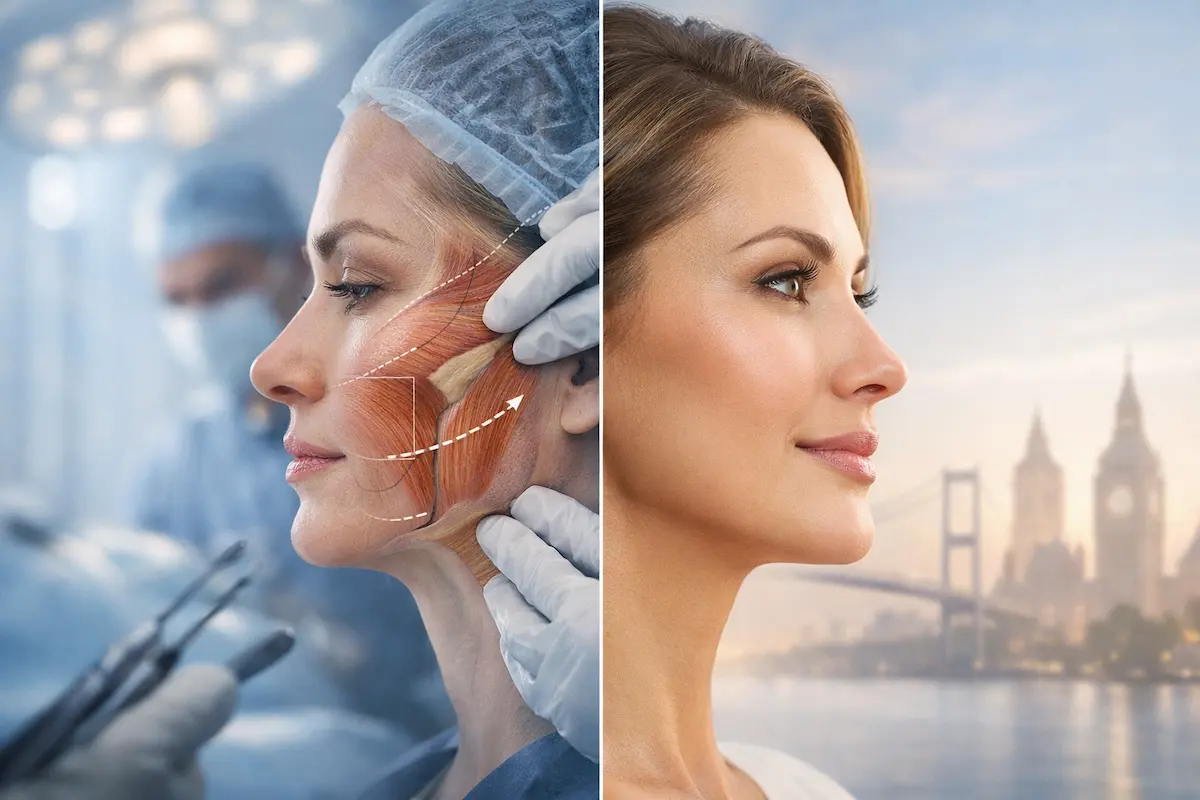
The SMAS is a supportive layer that influences how the lower face and midface hold shape. By working below the SMAS (as in deep plane methods), surgeons can reposition descended tissues more naturally—often restoring midface balance rather than simply tightening the surface.
In practical terms, this can support natural facelift results because:
- Cheek tissues can be lifted in a more anatomically consistent way (rather than “flattened back”).
- Contours can look smoother and more continuous.
- The result can appear refreshed, not “stretched”.
Vertical lift vs sideways pull: why it matters for facial identity
One of the easiest ways to spot unnatural work is the direction the face seems to have been pulled. A sideways “tug” can change identity cues. A more vertical, restorative repositioning tends to protect facial character—supporting the outcome British patients often describe as “I look like me again”.
How Surgeons Avoid the “Overdone” Look: Technique + Aesthetic Judgement
The difference between subtle facelift results and an obviously “operated” appearance is rarely one single factor. It is the combined effect of incision design, how and where tension is placed, and whether the deeper support layers are repositioned in a way that respects your facial identity. If your goal is undetectable facelift surgery, the plan must prioritise natural vectors of lift and an “invisible” finish around the ear and hairline—where the eye subconsciously looks for signs of surgery.
Incision planning & tension control (ear and hairline preservation cues)
Most patients can spot a facelift that has “announced itself” by looking at the ear and hairline. While scar placement varies by technique and anatomy, the principles behind a natural look are consistent:
- Hide and blend: scars should sit in natural creases and transitions, rather than cutting across visible skin units.
- Protect the ear shape: an over-pulled ear (or an ear that looks “pinned back”) can be a giveaway.
- Avoid hairline distortion: hairline shifts can make results look unnatural even if the face itself is improved.
In a natural looking facelift in Turkey pathway, these details matter just as much as the lift itself, because they determine whether your result reads as discreet and refined when you’re back in the UK.
Restoring contour without over-tightening
One of the biggest misconceptions is that “tighter equals better”. In reality, tightness can age a face or change expression. A subtle facelift aims to restore contour continuity—jawline, midface transition, and neck line—without creating visible tension points. When the deeper layers are appropriately repositioned, the skin can lie more naturally, supporting natural facelift results rather than a stretched surface appearance.
For UK patients seeking Turkey facelift natural results, it is useful to ask for clarity on how the surgeon manages tension:
- Where is the support placed (deep layer vs skin)?
- How is the vector of lift chosen for subtle facial rejuvenation Turkey outcomes?
- What is the strategy for avoiding “lateral pull” signs near the mouth and ear?
When volume restoration is better than “more pulling”
Ageing is not only descent; it is also volume change. Sometimes the most natural solution is not additional lift, but balanced volume restoration in the right areas—so the face looks healthier, not tighter. This is where aesthetic judgement matters. Over-lifting a face that actually needs better structural balance can create the very “alteration” that British patients are trying to avoid.
In medical science, it is well recognised that soft-tissue behaviour, skin elasticity, and wound healing biology vary between individuals. That is why a one-size approach can produce inconsistent results, whereas a personalised plan can better support natural looking facelift results.
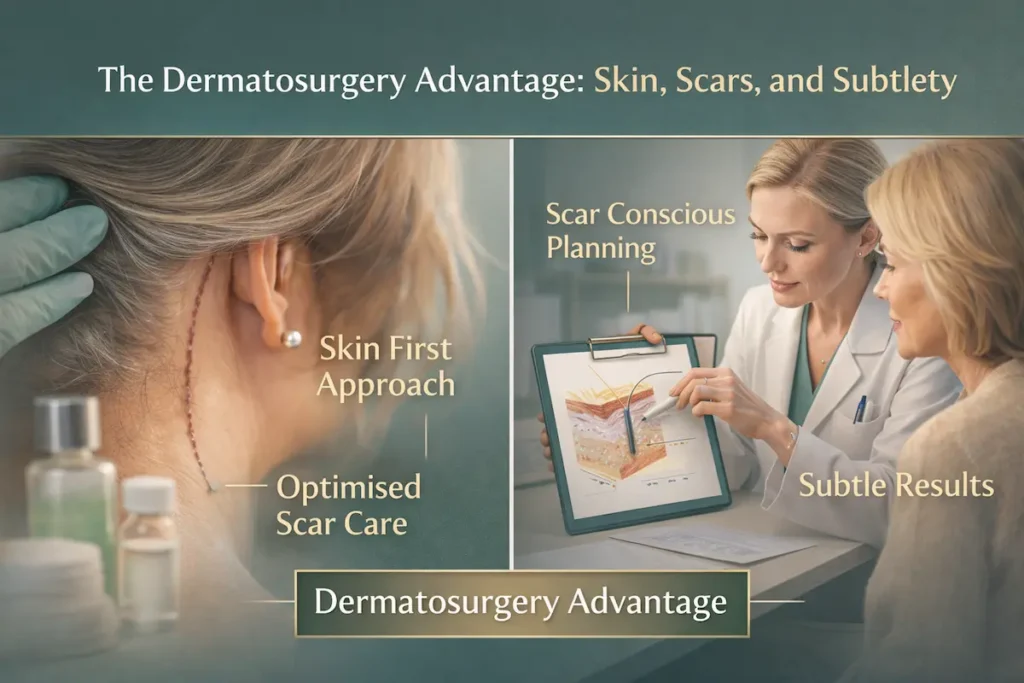
The Dermatosurgery Advantage: Skin, Scars, and Subtlety
Even when the lift is technically excellent, the final “naturalness” depends heavily on skin quality and scar behaviour. This is where a dermatosurgery-informed approach can be an advantage: it brings a skin-first mindset to planning and aftercare, which matters if your priority is rejuvenation not alteration facelift—a result that looks quietly improved, not conspicuously “treated”.
For British patients, this skin-first approach is especially reassuring because it supports discretion long after the initial lift has settled. When you’re flying to Turkey for facelift surgery, you want confidence that scar care and skin recovery are planned with the same precision as the operation itself—so redness, texture changes, and incision lines are managed proactively across the weeks and months that follow. In practice, that means clearer milestones, more tailored aftercare, and a result that matures into a genuinely natural finish.
Why scar behaviour and skin quality change the final look
Scars do not mature overnight. They evolve through stages: early healing, remodelling, and maturation. During this time, swelling (oedema), colour changes, and texture irregularities can temporarily make results look less “settled”. Patients aiming for undetectable facelift surgery benefit from a plan that treats scar management as part of the result—not an afterthought.
- Skin thickness and elasticity influence how smoothly contours settle.
- Sun exposure history can affect skin quality and healing behaviour.
- Individual scar tendency can influence how discreet incision lines become over months.
“Consultant-level” thinking: prioritising skin biology, not just the lift
A consultant dermatosurgery perspective focuses on skin biology, healing dynamics, and scar optimisation alongside surgical repositioning. This is particularly relevant for UK patients who want natural look facelift for UK patients outcomes—subtle improvements that withstand close, everyday scrutiny.
From a practical viewpoint, this kind of thinking often shows up as:
- Detailed pre-operative skin assessment (texture, laxity pattern, photodamage markers).
- Clear scar strategy (placement, tension minimisation, and post-op scar support).
- Structured follow-up instructions that reflect healing stages rather than generic timelines.
Practical scar-minimising steps patients can verify in a treatment plan
If you are researching natural looking facelift in Turkey and want to compare clinics with an “expert patient” lens, look for specific, verifiable steps rather than vague promises. The most useful questions include:
- Incision map: where exactly will the incisions be placed, and why?
- Tension plan: how is skin tension reduced so scars are not “pulled”?
- Scar care protocol: what is recommended at weeks 2–6, and what changes after 6–12 weeks?
- Realistic milestones: when should redness, firmness, and swelling typically settle?
These details matter because the “subtlety” you want is often determined in the healing phase. A thoughtful plan supports subtle facelift results that look natural in real life—especially once you return home and resume normal routines in the UK.
Who Gets the Most Subtle Results (And Who Needs a Different Plan)
A subtle facelift is not defined by “how much is done”, but by how well the plan matches your anatomy and ageing pattern. The most consistent natural facelift results come from correct patient selection, realistic expectations, and a technique that addresses the cause of change (descent and structural support), not just surface looseness. For UK patients considering natural looking facelift in Turkey, this section helps you judge suitability with an expert-patient mindset.
Age, skin elasticity, and where laxity sits (midface vs neck)
Two people can be the same age and need completely different strategies. Skin elasticity and the location of laxity often matter more than the number on your birthday cake.
- Midface descent: may benefit from deeper structural repositioning for natural looking facelift results.
- Lower-face laxity/jowls: often responds well when support layers are lifted rather than simply tightening skin.
- Neck laxity: sometimes needs a dedicated neck component; otherwise, “face-only” work can look mismatched.
If your concern is mainly neck bands or submental fullness, the plan may need neck-focused refinement to achieve Turkey facelift natural results that look cohesive.
Lifestyle factors that affect healing (smoking, sun exposure, general health)
Healing quality strongly influences whether you achieve undetectable facelift surgery outcomes. Swelling and scar maturity are part of normal biology, but certain factors can worsen them:
- Smoking/nicotine: reduces blood flow to skin and can compromise healing and scar quality.
- High sun exposure history: can affect skin texture and recovery behaviour.
- Medical conditions/medications: may affect bruising, inflammation, or wound healing.
Evidence-based (and frankly, common-sense) peri-operative planning is rooted in scientific research around wound healing and soft-tissue recovery. The point is not to be “perfect”, but to identify and reduce avoidable risk—so your subtle facelift results settle smoothly.
Common add-ons for harmony (eyelids, brow, fat transfer, neck refinement)
Sometimes “subtle” means doing less lifting and achieving better harmony with small, targeted refinements. Depending on your features, surgeons may discuss:
- Eyelid refresh: when the eyes look tired even after lower-face improvement.
- Neck refinement: for continuity under the chin and along the jawline.
- Volume balance: selective restoration rather than “more pull”.
This is often where rejuvenation not alteration facelift becomes very practical: the plan prioritises balance, not dramatic change.
A Realistic Results Timeline (1 Week → 12 Months)
One of the biggest drivers of dissatisfaction is not the final outcome—it is misunderstanding the timeline. Even with excellent technique, swelling (oedema), bruising, and scar maturation evolve in stages. If you want natural looking facelift results, you must evaluate the result at the correct time points. This is especially important for British patients planning travel, time off work, and social commitments after a natural look facelift for UK patients.
Days 1–14: swelling, bruising, and “social downtime”
In the first two weeks, your face is still in an early healing phase. You may see:
- Oedema (swelling): often the main reason results look “not yet natural”.
- Bruising: varies widely person to person.
- Tightness/odd sensations: common as tissues settle and nerves recover.
This is not the period to judge whether you achieved subtle facelift results. It is the period to follow your aftercare plan and protect healing.
Weeks 6–12: refinement phase as oedema settles
By 6–12 weeks, many patients start to recognise themselves again—just fresher. This is when natural facelift results begin to read as “rested” rather than “recently operated”.
- Contours become smoother as swelling reduces.
- Incision areas typically look less conspicuous as healing progresses.
- Movement and facial expression often feel more normal.
If you are researching subtle facial rejuvenation Turkey, ask to see results shown at multiple time points—not only at “best lighting” moments.
Months 6–12: scar maturation and the “final” definition
Scars continue to remodel for many months. Between 6 and 12 months, the result often looks the most effortless—precisely what people mean by undetectable facelift surgery. The goal is not to look “tight”, but to look naturally well.
For patients comparing Turkey facelift natural results to UK private clinics, this long view matters: subtle results often become more convincing with time, not less.
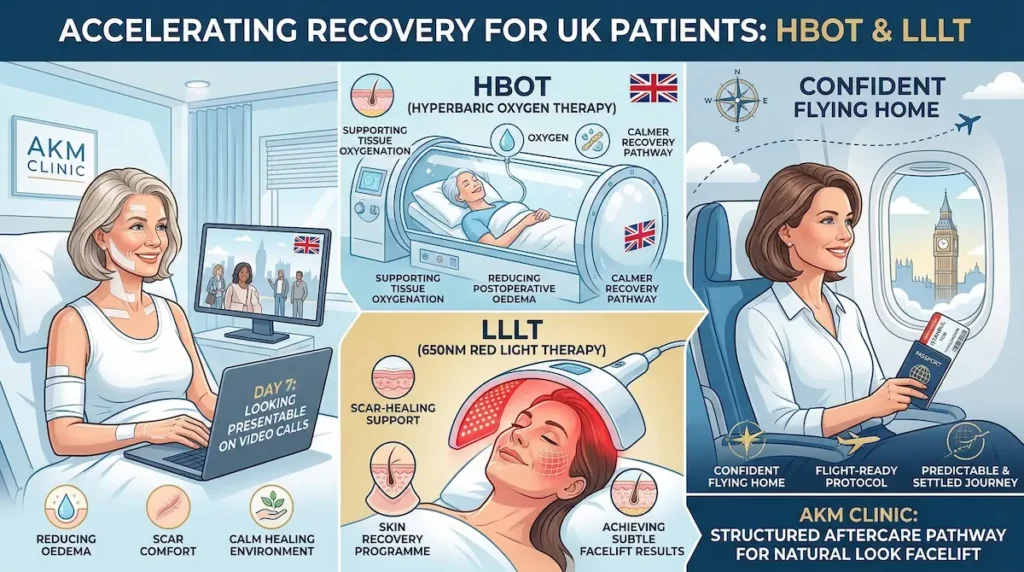
Accelerating Recovery for UK Patients: HBOT & LLLT
British patients travelling for natural looking facelift in Turkey commonly ask the same practical question: “How quickly can I look presentable and feel confident flying home?” While healing still takes time, structured recovery support can help oedema settle and support scar comfort. At AKM Clinic, recovery protocols may include HBOT and LLLT as part of a patient-care standards approach designed to support a smoother, more predictable journey back to the UK.
For patients who are flying to Turkey for facelift surgery, the value of recovery support is often measured in everyday milestones: how comfortably you can sleep, how quickly bruising softens, and when swelling looks less noticeable on video calls. HBOT and LLLT are positioned as supportive tools within a structured aftercare pathway—helping to create a calmer healing environment so your results can “settle” more predictably, rather than feeling like a rollercoaster week to week.
HBOT: supporting oxygenation and reducing postoperative oedema
Hyperbaric Oxygen Therapy (HBOT) is used in many medical settings to support tissue oxygenation. In postoperative contexts, the aim is to support the body’s recovery environment—helping tissues that have experienced surgical trauma. For patients seeking natural facelift results, reduced swelling and better tissue comfort can make the early phase feel more manageable and help the result look “settled” sooner.
LLLT (650nm): scar-healing support and why it matters cosmetically
Low-Level Laser Therapy (LLLT), including 650nm red light approaches, is used to support healing and skin recovery. For an “expert patient”, the relevance is straightforward: scar behaviour and skin quality heavily influence whether your result reads as subtle facelift results rather than “obvious surgery”. Supporting the healing environment can be valuable during the early-to-mid recovery phase.
“Flight-ready recovery protocols”: planning a confident return to the UK
Regardless of where you have surgery, flight planning should be conservative and medically guided. If your aim is natural looking facelift results, rushing the timeline can create stress, swelling fluctuations, and discomfort—none of which help subtlety. A structured protocol typically focuses on:
- Clear day-by-day aftercare instructions (including swelling management).
- Follow-up checks before travel.
- Realistic expectations: looking “good enough to travel” is not the same as the final result.
This is particularly relevant for natural look facelift for UK patients who need predictability due to work and family responsibilities.
Proof Beyond Photos: How to Judge Before/After Like an Expert Patient
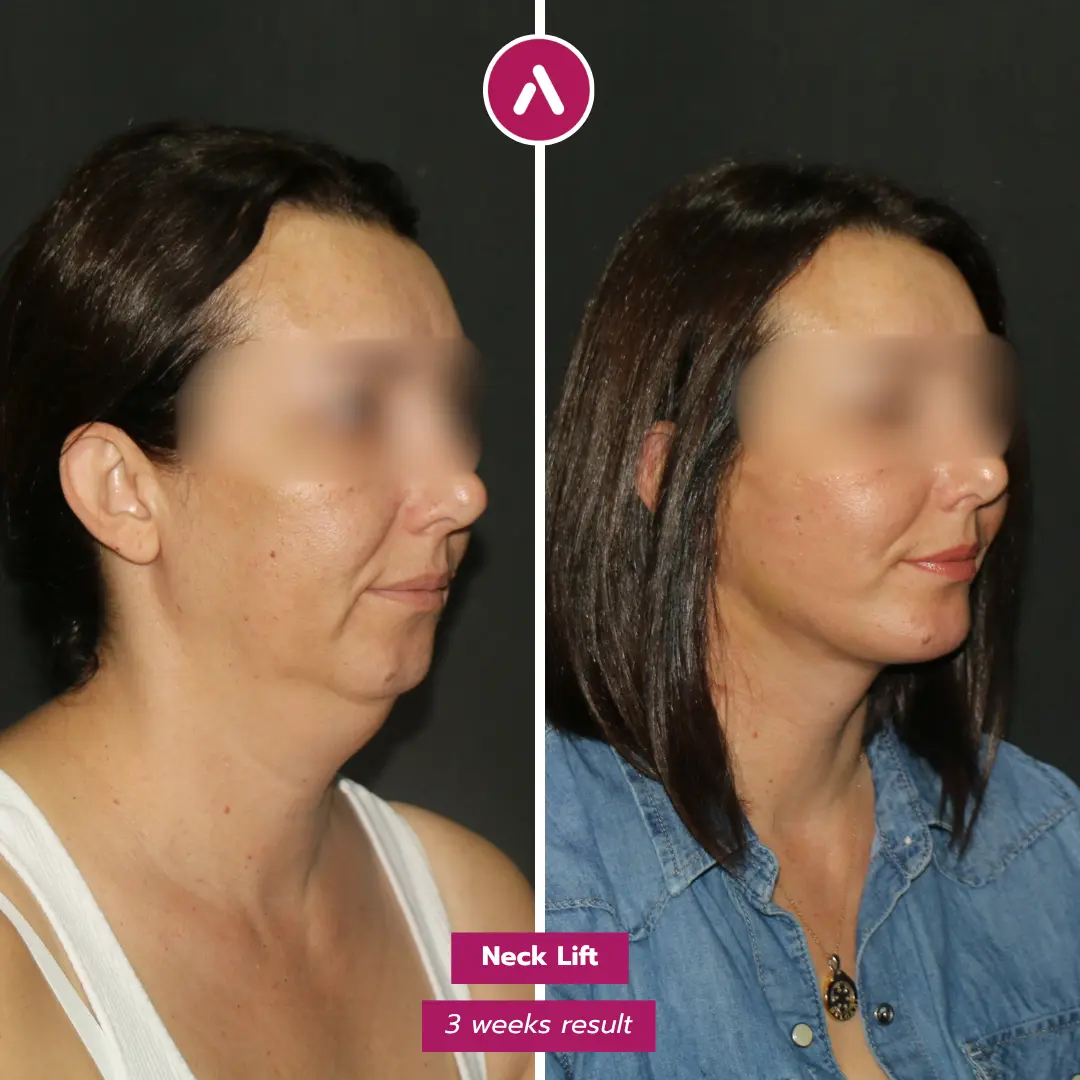
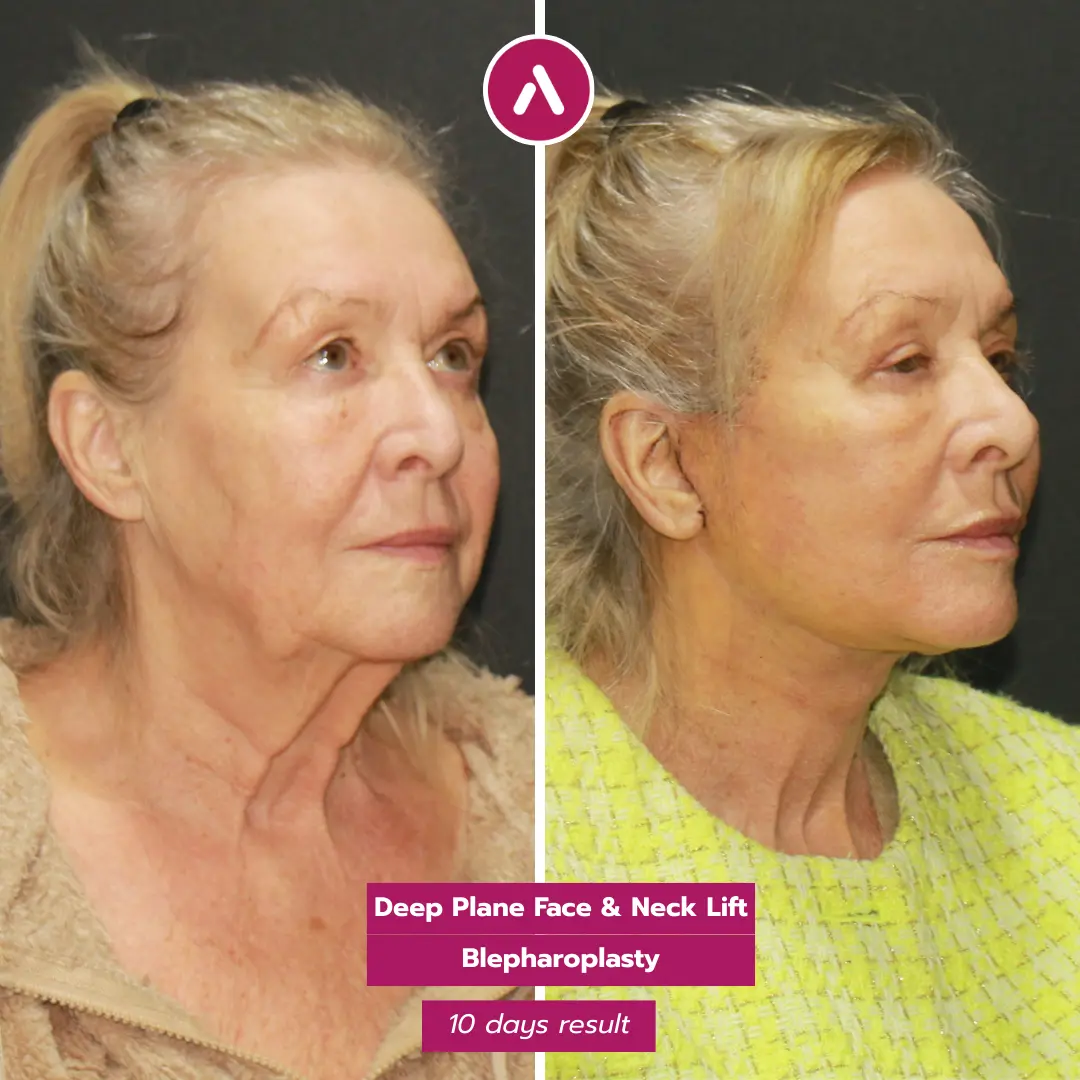
When you are aiming for natural looking facelift results, photos are helpful—but they are not the whole story. Lighting, angle, and the stage of healing can dramatically change what you think you are seeing. An “expert patient” approach is to evaluate results like evidence: look for consistency, anatomical markers of naturalness, and a timeline that reflects real recovery rather than instant perfection. This is particularly important when you are researching natural looking facelift in Turkey and comparing outcomes across clinics.
Lighting, angles, and “camera tricks” that can mislead
Before/after images can be unintentionally (or intentionally) misleading. The most common issues are:
- Different angles: even a small head tilt can sharpen a jawline.
- Different lighting: side lighting can exaggerate lines; soft front lighting can erase them.
- Different expressions: a wider smile can lift cheeks and change folds.
- Different time points: “before” may be tired/dehydrated; “after” may be styled and post-swelling.
If a clinic is confident in Turkey facelift natural results, you should be able to see consistent presentation: similar lighting, similar angle, and a clearly stated healing timeframe.
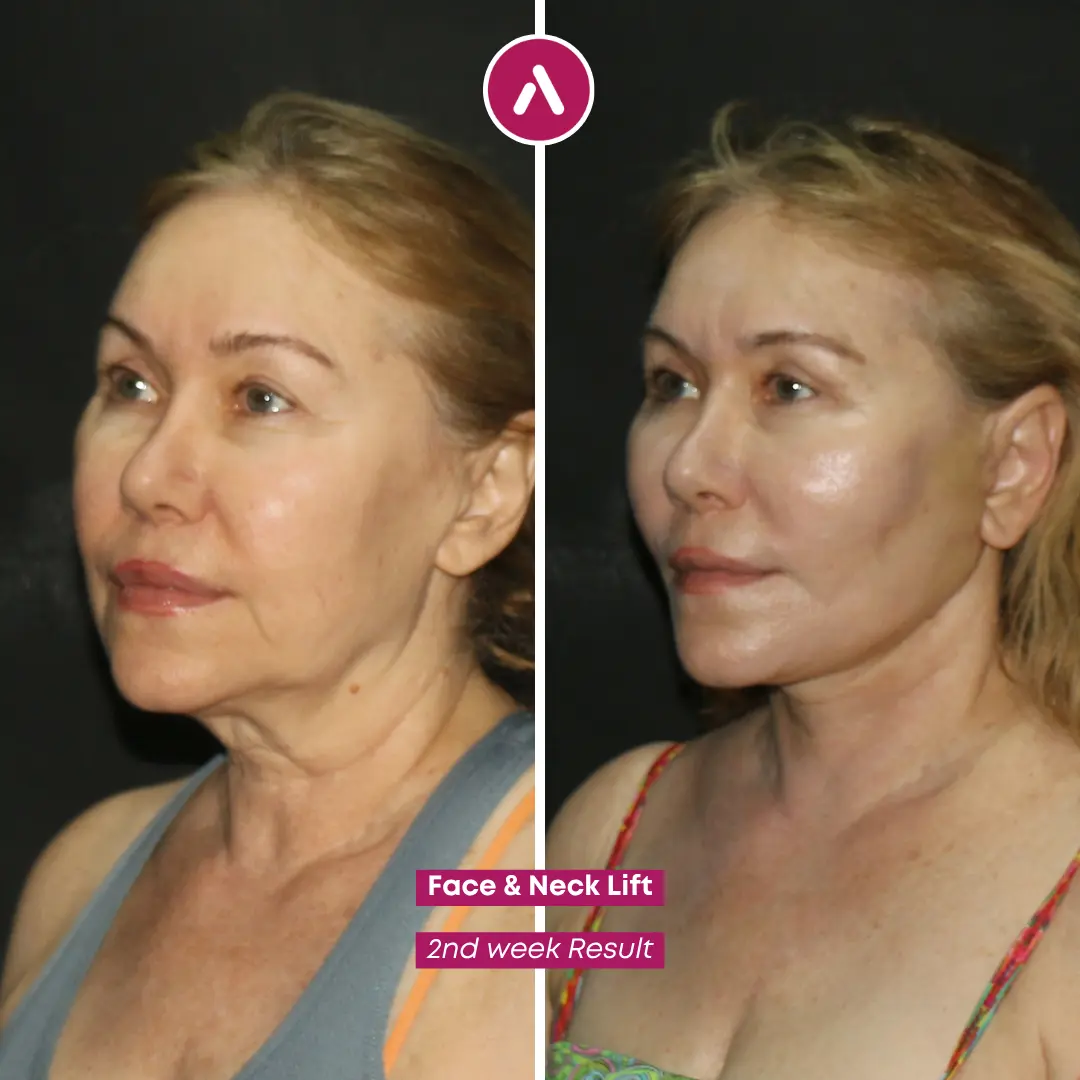
The best markers of a natural facelift (ears, hairline, neck continuity)
For subtle facelift results, the goal is to improve contour without leaving “surgical signatures”. The most reliable markers are often not the cheeks—they are the transitional areas that reveal tension and scar visibility.
| What to check | Why it matters for subtlety | Common red flags |
|---|---|---|
| Ear shape & earlobe position | Over-tension can distort the ear and give a “pulled” appearance. | Pinned-back ear, stretched earlobe, unnatural ear crease. |
| Hairline integrity | Hairline shifts can make results look “done” even if the face looks improved. | Visible hairline distortion, obvious scar in hair-bearing areas. |
| Neck-to-jawline continuity | Natural outcomes look like one continuous contour, not a “face-only lift”. | Sharp mismatch between face and neck, irregular banding. |
| Mouth corners & smile dynamics | Identity is strongly tied to expression. Subtle work preserves facial character. | Flattened or tense smile, corner distortion, “tight mask” look. |
This checklist is one of the simplest ways to separate “dramatic change” from rejuvenation not alteration facelift outcomes.
The questions to ask for transparency (timeline, swelling stage, consent)
If you want undetectable facelift surgery results, ask for transparency that demonstrates process—not just pretty pictures:
- Timepoint labelling: “How many weeks/months post-op is this photo?”
- Multiple stages: “Can I see 2 weeks, 6–12 weeks, and 6–12 months?”
- Swelling disclosure: “Was there still visible oedema at the time of the ‘after’?”
- Consent and consistency: “Do you have written consent, and are images taken in a standardised setting?”
Clinics that consistently deliver natural facelift results will typically welcome these questions.
Safety & Aftercare for British Patients (Reassurance Without Sales)
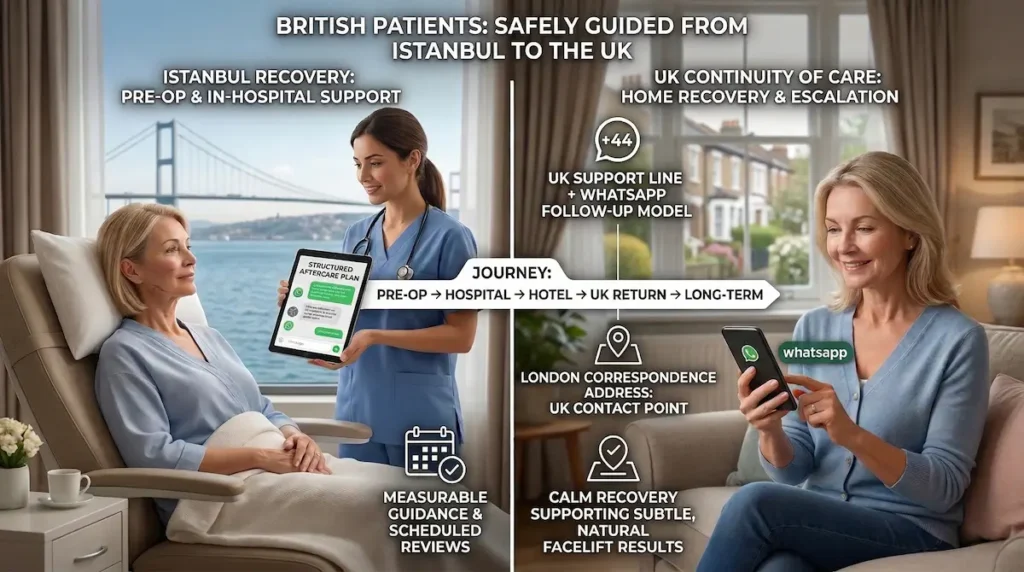
For many UK patients, the decision is not only about aesthetics—it is about safety, continuity of care, and what happens after you return home. This is where structured aftercare and communication matter. A calm, consistent plan can reduce anxiety, support healing, and help your subtle facelift settle in a predictable way—especially if your priority is to return to the UK feeling confident and supported.
When you are flying to Turkey for facelift surgery, it helps to think beyond the operation day and map the entire pathway: pre-op checks, in-hospital monitoring, hotel recovery support, and a clear escalation plan once you are back in Britain. The most reassuring clinics make aftercare measurable—scheduled reviews, written guidance for each healing phase, and responsive communication if swelling, bruising, or scar concerns arise—so you never feel “on your own” once you’ve returned to the UK.
Local anaesthesia / twilight approach: why some UK patients prefer it
Many British patients are cautious about general anaesthesia and look for alternatives when clinically appropriate. A twilight (light IV sedation) approach combined with local anaesthesia can be attractive because it may reduce the “heavy” feeling associated with full general anaesthesia, while still keeping you deeply relaxed. The key is suitability: the safest approach is the one matched to your health profile and the complexity of your plan.
When discussing anaesthesia, ask for clarity on:
- Who is responsible for anaesthesia care and monitoring.
- How discomfort is managed (including what is typical for paracetamol use post-op).
- What safeguards are in place in the operating theatre environment.
UK support line + WhatsApp follow-up model (what it’s for, when to use it)
Aftercare is where many “abroad surgery” fears live. British patients often want to know: “If something feels off at home, who do I contact?” A structured model typically includes:
- A UK support line for reassurance and escalation when needed.
- A direct WhatsApp UK number (+44) for practical questions and photo check-ins.
- Scheduled follow-ups that match healing stages (early swelling, mid-phase refinement, scar maturation).
This is not about over-contacting your medical team—it is about having a clear pathway if you need guidance during normal recovery, especially while you are aiming for natural looking facelift results and want to avoid unnecessary worry.
UK patient perspective (summary): One British patient, Sarah, described her goal as subtle improvement and noted her recovery felt surprisingly manageable, with minimal reliance on paracetamol. She also compared her experience of “facelift London vs Istanbul quality” and felt confident in her choice for a natural, discreet outcome.
London correspondence address / UK contact point: continuity of care
Some UK patients gain significant peace of mind from having a UK-based contact point and a London correspondence address. Even if you do not physically attend an office, a UK reference point can make the process feel more grounded—particularly for “expert patients” who want a clear paper trail, document handling, and dependable communication.
If your priority is natural look facelift for UK patients, continuity is part of the result: calm recovery supports calm-looking outcomes.
Frequently Asked Questions (FAQ): Facelift Results
These answers are intentionally concise and UK-focused. If you are comparing natural looking facelift in Turkey options, use these as a practical checklist for decision-making.
Will I look “pulled” or like a different person?
A well-planned subtle facelift should look like you—just rested. Techniques that focus on deeper support (rather than skin tension alone) are designed to support rejuvenation not alteration facelift outcomes.
How long before I can return to work or social life in the UK?
Many patients plan for visible bruising/swelling to improve significantly over the first 2–3 weeks, with refinement continuing through 6–12 weeks. The most “effortless” natural facelift results often appear later as oedema settles and scars mature.
When is it safe to fly back to the UK after a facelift?
Flying should be guided by your surgeon’s advice, your healing progress, and airline requirements. “Feeling okay” is not the same as being medically ready. A cautious plan supports comfort, swelling control, and safer travel.
What scars should I expect, and where are they typically hidden?
Incisions are commonly designed to sit around natural creases near the ear and into hair-bearing areas where appropriate. Scar visibility depends on placement, tension control, and aftercare. A skin- and scar-aware plan supports natural looking facelift results.
Can a deep plane facelift be done without general anaesthesia?
In selected patients, deep plane techniques may be performed using local anaesthesia with twilight sedation. Suitability depends on your medical profile and the surgical plan—this should be discussed transparently during consultation.
How long do subtle facelift results last?
A facelift does not stop ageing, but it can set the clock back. Longevity depends on technique, skin quality, lifestyle factors, and how your face ages naturally. The aim is durable refreshment—not a permanent freeze.
What should I check to verify surgeon credentials if travelling abroad?
Ask about formal board certifications, relevant specialist training, and where the surgery is performed (hospital/clinic standards, operating theatre protocols). A reputable provider should welcome verification questions and explain how their standards align with what UK patients expect.
If you’d like to explore related topics alongside this guide, you can also read our resources on Deep Plane Facelift Before After, SMAS vs Deep Plane Facelift, and Deep Plane Facelift Recovery to understand technique choices and realistic healing milestones. For travel and planning, see Fly After Facelift and our practical guide to Pain Management After Facelift. You may also find patient-led insights helpful in the Deep Plane Facelift Journey and Deep Plane Facelift Story, plus essential reassurance on Aftercare After Surgery Abroad for British patients returning home.
Medical Disclaimer: This page is provided for general educational purposes only and does not replace a face-to-face medical consultation, diagnosis, or personalised treatment plan. All surgery carries risks and outcomes vary between individuals. Suitability for a facelift surgery, procedure selection, and anaesthesia choice can only be determined after a full clinical assessment by a qualified surgeon. Always follow your clinician’s instructions and seek urgent medical attention if you develop concerning symptoms during recovery.