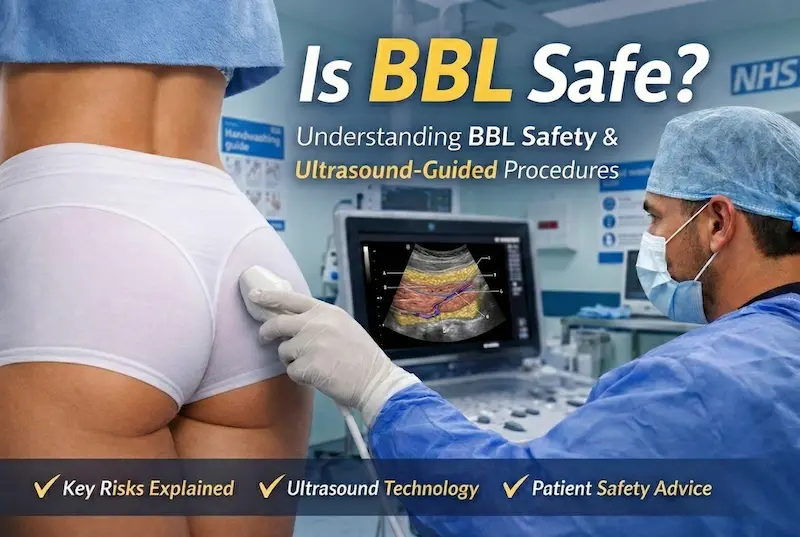
Is BBL safe? It’s the question most British patients ask first—and it’s the right one. A Brazilian Butt Lift (BBL) is not “just” liposuction plus shaping; it combines fat removal with fat grafting to the buttocks, which makes technique, anatomy awareness, and safety protocols absolutely central to outcomes.
This article explains BBL safety risks in plain English, then focuses on how BBL ultrasound technology and ultrasound-guided BBL safety protocols have improved standards. We’ll also cover what to ask a clinic before you book—especially if you’re comparing UK private options with treatment abroad. Throughout, we’ll keep the discussion aligned with medical science and what modern practice has learned from scientific research into safer fat transfer techniques.
Along the way, you’ll see the key phrases UK patients search for—such as is a BBL safe, how safe is a BBL, and bum lift safety—answered with a focus on risk reduction, not hype.
Table of Contents

Why BBL Has a Reputation for Risk (And What “Safe” Really Means)
Before we talk about ultrasound, it helps to understand why people ask “is a BBL safe?” so often. The honest answer is that no surgical procedure is zero-risk. But “safe” in modern surgery has a practical meaning: it’s about controlling risk through patient selection, surgical technique, operating theatre standards, anaesthesia safety, and structured aftercare.
Many British patients also compare BBL to other body contouring journeys they’ve researched, such as a mummy makeover package, and assume the risks are identical. In reality, BBL adds a distinct safety consideration because it involves fat transfer as well as liposuction, so the margin for error depends heavily on technique and careful planning. That’s why reputable teams focus on standardised protocols, clear suitability criteria, and consistent aftercare—not just the headline result.
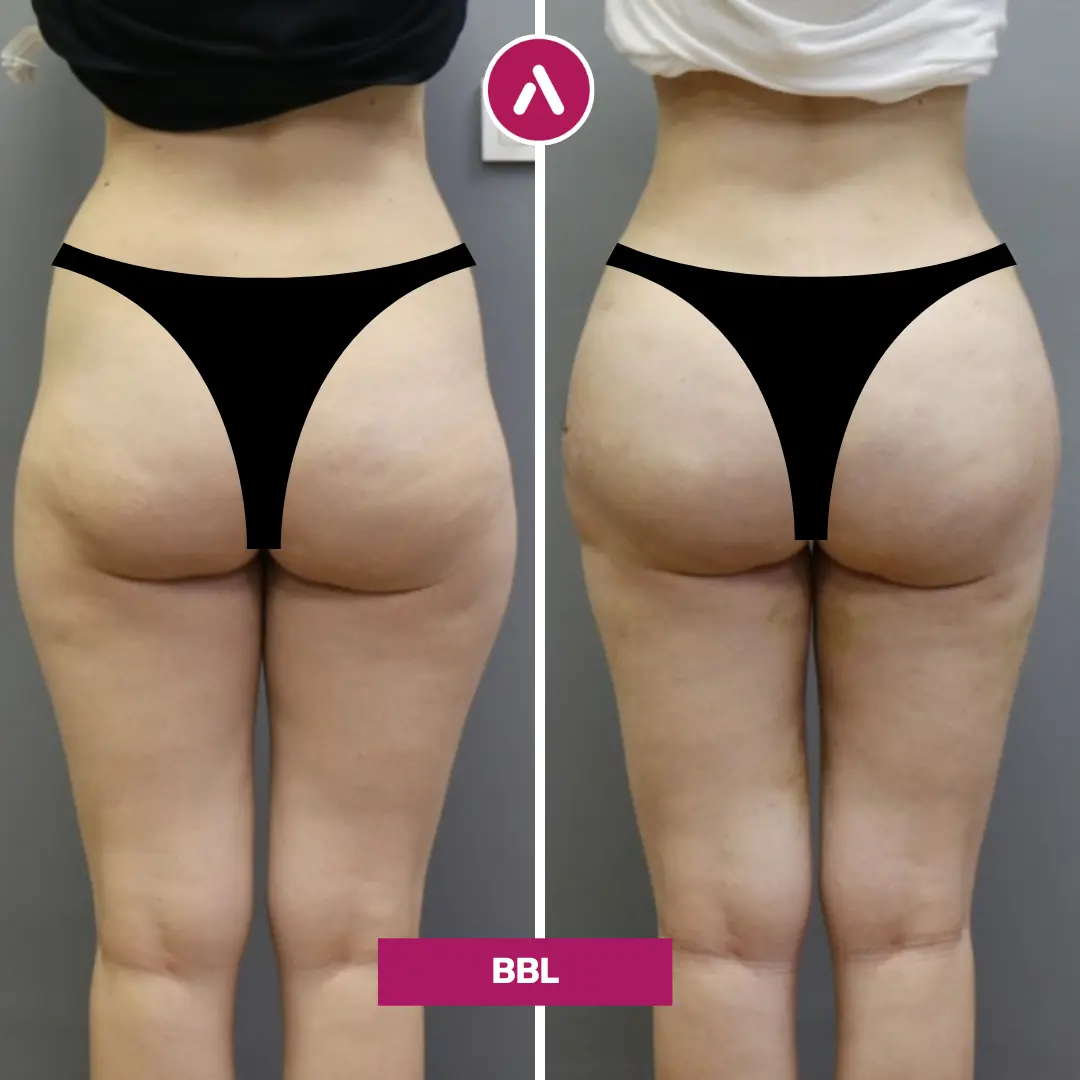
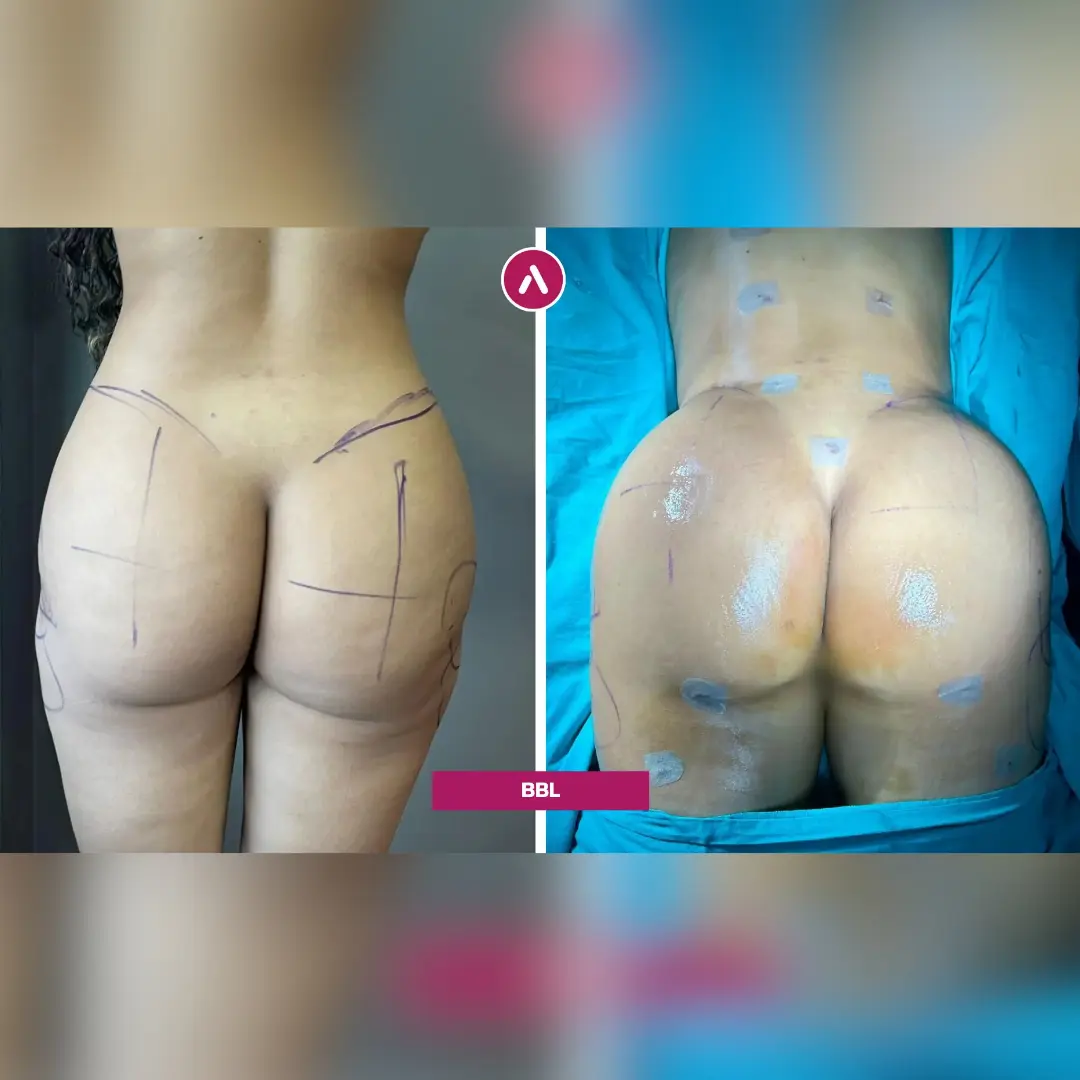
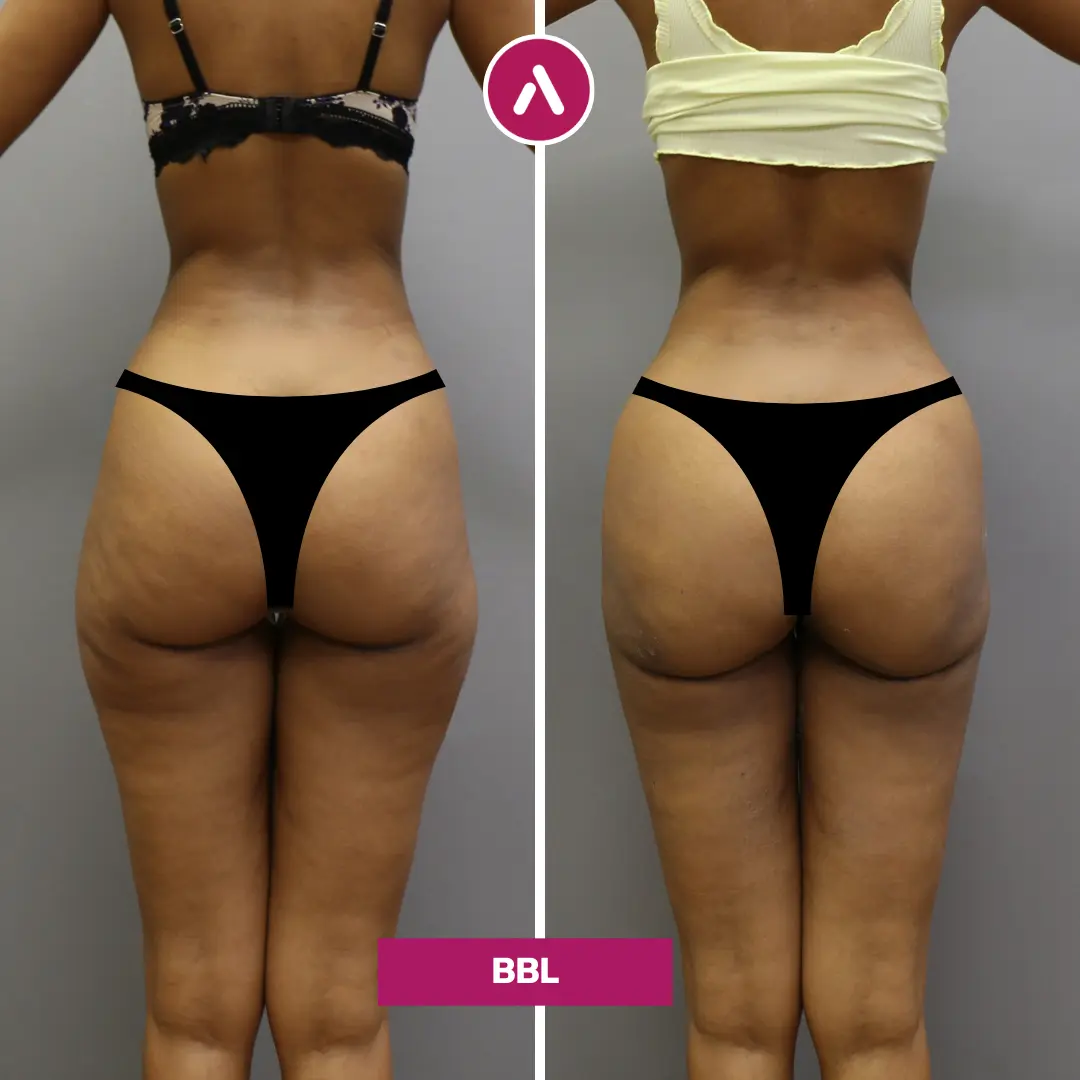
What actually makes BBL different from standard liposuction
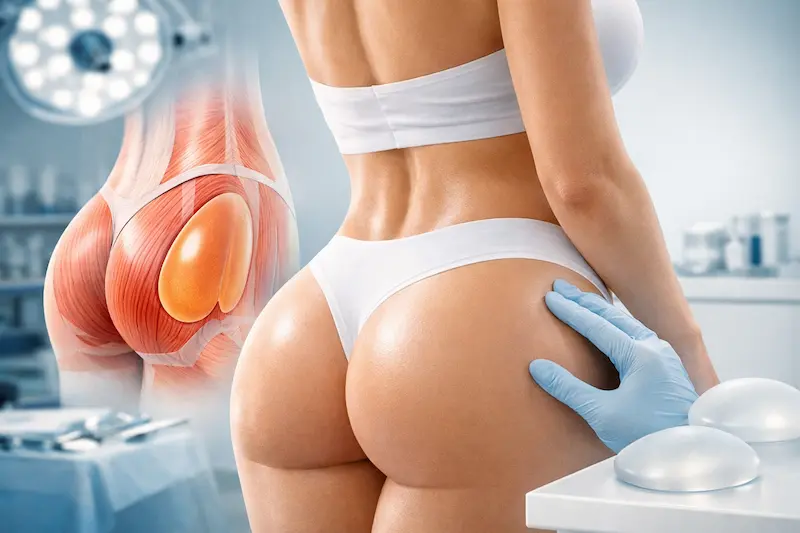
Liposuction removes fat; BBL also re-injects purified fat to shape the buttocks. That extra step is what elevates both the artistry and the safety considerations. When people search how safe is a BBL, they’re often really asking about the second half of the procedure: fat transfer to buttocks safety and how the fat is placed.
The key safety issue: where fat is placed (layer awareness)
The most important concept in BBL complications and risks is anatomical plane—in other words, the layer where fat is injected. Modern safety standards emphasise placing fat in the subcutaneous layer (the layer just under the skin) rather than deeper planes. In medical science terms, this is about reducing the chance of fat entering large blood vessels. This is precisely where ultrasound-guided BBL safety can add an extra layer of verification during the procedure.
Who is most at risk? (patient selection, BMI, medical history)
Risk is not the same for everyone. A responsible surgical team evaluates factors such as BMI, smoking status, clotting risk, previous surgery, and overall health. For a UK “expert patient”, it’s reasonable to ask for clear, written criteria and a transparent explanation of why you are (or are not) a suitable candidate. This is part of “bum lift safety” in real life—not just what happens in the operating theatre, but also whether you should have surgery at all.
What Ultrasound Scans Changed in Modern BBL Standards
So, how safe is a BBL today compared with earlier years? One of the most meaningful shifts has been the adoption of BBL ultrasound technology to support safer fat placement. Ultrasound doesn’t magically remove all risk, but it can help the surgeon confirm where the cannula tip is during fat injection—supporting best-practice standards in fat grafting to the buttocks safety.
Before ultrasound: why “blind” technique increased uncertainty
Traditionally, surgeons relied on experience, tactile feedback, and anatomical landmarks—effective in skilled hands, but with inherent uncertainty because the cannula is under the skin and not directly visible. That “blind” element is one reason BBL developed a reputation for higher risk compared with procedures that don’t involve fat transfer.
Ultrasound-guided fat grafting: what it helps the surgeon verify
With ultrasound-guided BBL safety protocols, ultrasound imaging can be used to visualise tissue layers during the fat transfer phase. Practically, this can help confirm the intended plane of injection and reduce guesswork. When a clinic claims “safer BBL”, ask specifically whether they use ultrasound during fat injection and how it’s integrated into their surgical workflow.
Intraoperative checks vs pre-op imaging: what patients should ask
Patients sometimes hear “ultrasound” and assume it’s a pre-op scan only. For bottom augmentation safety, it’s important to distinguish between:
- Pre-operative imaging (used for assessment and planning), and
- Intraoperative ultrasound guidance (used during fat injection to support safer technique).
If you are comparing options and asking “is a BBL safe for me?”, you can ask the clinic to explain which type they use, who operates the ultrasound, and how it supports safety decisions in real time.
Note on “liquid BBL”: Many UK patients also search “is liquid BBL safe”. This term is used inconsistently online and can refer to non-surgical injections and fillers. Because that can involve very different materials, regulations, and risk profiles, it should not be treated as the same thing as surgical fat transfer. We’ll address this clearly in the next section, alongside a practical UK safety checklist.

Ultrasound-Guided BBL at Our Istanbul Centre
When UK patients ask is a BBL safe, they deserve a concrete answer based on process, not promises. In a modern setting, ultrasound-guided BBL safety is best understood as one part of a wider safety system: thorough pre-operative assessment, properly monitored anaesthesia, sterile operating theatre standards, and structured aftercare. Ultrasound helps with fat transfer to buttocks safety by supporting accurate placement, but it should sit alongside robust medical governance.
Step-by-step: where ultrasound fits into the BBL workflow
A safety-focused BBL pathway typically includes:
- Pre-op assessment: medical history, medications, clot risk factors, and suitability for surgery.
- Liposuction phase: fat is removed from selected areas (e.g., abdomen, flanks, back) and then processed.
- Fat processing: the aim is to prepare viable fat for grafting while removing excess fluid and impurities.
- Fat grafting phase: this is where BBL ultrasound technology may be used as an additional safeguard to support the intended plane of injection.
- Immediate post-op monitoring: observation protocols to identify early complications and manage pain, hydration, and mobility safely.
If you are comparing providers, ask them to explain exactly how ultrasound is used during fat injection. “We have an ultrasound machine” is not the same as “we use intraoperative ultrasound guidance as part of our BBL protocol”.
Sterile operating theatre standards, anaesthesia safety, monitoring
For bum lift safety and bottom augmentation safety, ultrasound is only one piece of the puzzle. UK patients should also look for:
- Anaesthesia safety: appropriate pre-op checks, clear fasting guidance, and continuous monitoring during surgery.
- Operating theatre standards: sterile technique, infection-control protocols, and trained theatre staff.
- Post-anaesthetic care: a proper recovery area with monitoring until you are stable and safe to mobilise.
These foundations are what reduce overall BBL safety risks such as infection, bleeding, fluid imbalance, and anaesthesia-related complications.
Documentation & transparency: what you should expect to see (UK-style trust)
A clinic taking BBL complications and risks seriously will be comfortable providing transparent information. As a UK patient, it’s reasonable to request:
- Your personalised risk assessment (including why you are a suitable candidate).
- A written aftercare plan that covers both your time in Istanbul and your return to the UK.
- Clear contact routes for support (especially in the first 2 weeks post-op).
This is the practical side of answering “how safe is a BBL?”—you should be able to see how safety is managed before, during, and after surgery.
The UK Patient Safety Checklist (Before You Book Anything)
If you’re searching “is BBL safe” or “is a BBL safe” late at night, it’s often because you’ve seen conflicting information online. A useful way to cut through noise is to apply a simple checklist. This is especially important if you’re weighing up private care in the UK versus travelling, because the biggest driver of BBL safety risks is not the postcode—it’s whether the clinic can demonstrate consistent standards.
Many UK patients use the same checklist mindset they’d apply when researching a mummy makeover package: Who is the surgeon, where is the procedure performed, and what happens if something doesn’t feel right after you travel home? That comparison is helpful, because it keeps the focus on verifiable standards rather than glossy before-and-afters. The safest providers will welcome detailed questions, share clear written protocols, and explain exactly how they manage risk from assessment through aftercare.
Surgeon credentials: “GMC equivalent” and professional signals
Start with the surgeon. Ask who will perform the procedure, what their formal training is, and how often they perform fat grafting procedures. In UK terms, you’re looking for clarity similar to what you’d expect when checking a consultant’s background. A reputable provider should answer without hesitation, and explain how they stay aligned with evolving best practice in medical science.
Facility standards: hospital/clinic accreditation questions
Next, look at where the procedure is performed. Ask direct questions about the facility, staffing, and emergency readiness. For fat grafting to the buttocks safety, “safe” includes:
- Proper monitoring equipment and trained staff throughout the operation.
- Clear escalation protocols if unexpected issues arise.
- Infection control that matches modern surgical standards.
If a clinic cannot explain these basics in a clear, structured way, treat that as a red flag—regardless of how impressive the marketing looks.
Aftercare planning: what matters once you’re back in the UK
Aftercare is often where real-world safety is won or lost. Many complications (even minor ones) can be managed well if you have prompt advice and a structured plan. Before booking, ask:
- What follow-up schedule is included? (in-person while in Istanbul, then remote check-ins once you return)
- How do you contact the team? (fast response matters in the first week)
- What is your plan if I develop symptoms in the UK?
This is also where misinformation often appears around “is liquid BBL safe”. Non-surgical injections marketed online as “liquid BBL” can involve very different substances and risk profiles. If your goal is buttock enhancement, make sure you understand whether you’re considering surgical fat transfer or injectable fillers—and how each is governed, performed, and followed up.

Recovery, Flying Back to the UK, and Risk Reduction
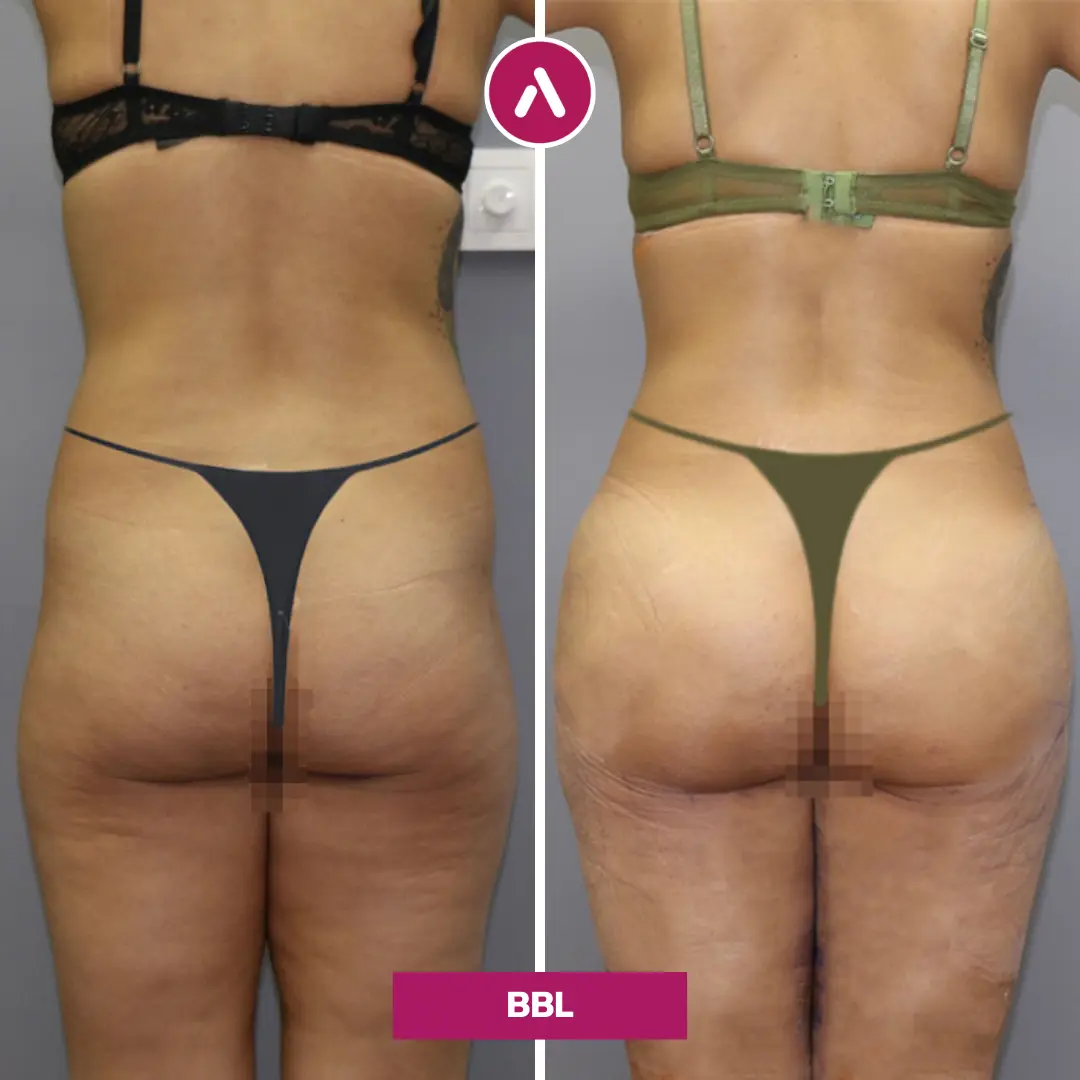
For most UK patients, “is BBL safe?” quickly becomes a second question: “Will I be safe travelling home?” Recovery is not only about aesthetics; it’s a safety phase where you reduce BBL complications and risks through sensible movement, hydration, garment use, and careful travel planning. A responsible clinic should provide a structured plan that reflects real-world needs: you’ll be healing while preparing to fly back to the UK.
Compression garments, early mobilisation, swelling (oedema) expectations
After BBL, compression garments support the liposuctioned areas and help manage swelling. Swelling (oedema) and bruising are expected early on, but good guidance matters because excessive restriction, dehydration, or prolonged immobility can raise certain risks.
- Compression garments: you should be told how long to wear them and how to check fit safely.
- Early mobilisation: gentle walking (as advised) supports circulation and reduces preventable risks.
- Practical positioning: you’ll be guided on how to rest without putting direct pressure on the grafted fat during the early phase.
These details are a core part of bum lift safety and should be explained before surgery—not improvised afterwards.
Blood clot risk awareness (DVT) and travel timing logic
Long journeys and reduced movement can increase the risk of deep vein thrombosis (DVT) in anyone, especially soon after surgery. That is why “flying home” advice should be personalised, not generic. Your plan should consider:
- Your individual risk profile (medical history, smoking status, BMI, previous clots, contraceptive use, etc.).
- How you are mobilising post-op and whether swelling and discomfort are controlled.
- What you’ll do during travel (movement breaks, hydration strategy, and what symptoms to watch for).
If you’re asking how safe is a BBL, it’s completely appropriate to ask the clinic for written travel guidance as part of your aftercare pack.
“Flight-ready” recovery approach: what support matters most for UK patients
UK patients often value anything that supports a smoother early recovery and clear decision-making around travel. Some clinics highlight recovery-support technologies; however, the most important “flight-ready” elements are still fundamentals: clinical monitoring, structured follow-ups, clear warning signs, and rapid access to advice. When considering BBL safety risks, the best reassurance is a system that detects problems early and responds quickly.
For many people, this is the same practical question they ask after a mummy makeover package: not “How quickly can I fly?”, but “How will I know I’m safe to fly?” The answer should be based on objective milestones—stable pain control, improving swelling, confident mobility, and a clear plan for managing the journey (hydration, movement, and who to contact if symptoms appear). A clinic that prioritises safety will set expectations early and won’t rush travel decisions.
Finally, keep perspective. Searching “fat grafting to the buttocks safety” can lead you to extremes online. The reality, grounded in scientific research and modern surgical practice, is that safety improves when technique is standardised, risks are openly discussed, and clinics can demonstrate reliable protocols—particularly when BBL ultrasound technology is used appropriately as part of a wider framework.
Frequently Asked Questions (FAQ): Is BBL Safe?
Below are concise, UK-focused answers to the most searched safety questions, including is a BBL safe, how safe is a BBL, and is liquid BBL safe.
Is ultrasound-guided BBL safer than traditional BBL?
Ultrasound-guided BBL safety protocols can support safer practice by helping the surgeon confirm tissue layers during fat injection. It’s not a guarantee, but it can reduce uncertainty when used correctly and consistently.
Can ultrasound guarantee zero risk? What it can and cannot do
No. Ultrasound can support technique, but it cannot eliminate all BBL safety risks. Overall safety still depends on patient selection, surgical skill, anaesthesia monitoring, sterile standards, and aftercare.
Am I a good candidate for BBL if my BMI is higher?
It depends on your overall health, fat distribution, and risk factors. A reputable clinic will assess you carefully and explain suitability in writing. If a provider minimises the conversation around risk, treat that as a warning sign.
How do I check a surgeon’s credentials when booking abroad?
Ask who the operating surgeon is, their training background, experience with fat transfer procedures, and what safety protocol they follow. The clinic should answer clearly and transparently, without vague claims.
What should aftercare look like once I’m back in the UK?
You should have a written aftercare plan, a follow-up schedule, and a rapid route to clinical advice if symptoms develop. This is central to reducing BBL complications and risks in the real world.
How long do I need to wear compression garments after BBL?
Wear time varies depending on your procedure and surgeon’s protocol. You should be given clear guidance on duration, fit, and when you can reduce use safely as swelling improves.
When can I safely fly back to the UK after BBL?
Timing should be personalised. Your surgeon should consider your recovery progress and clot-risk factors, then provide written travel guidance. Avoid anyone offering a one-size-fits-all answer.
If you’d like to go beyond this topic, you may also find our related guides useful, including: Is BBL Safer in Turkey, choosing a Plastic Surgeon Turkey, understanding Hospital Accreditation Turkey, using a Surgery Abroad Safety Checklist, when you can Fly After Facelift, deciding between Tummy Tuck vs Liposuction, and a clear breakdown of Plastic Surgery Costs Turkey for UK patients.
Medical Disclaimer: This page is provided for general educational purposes only and does not replace a face-to-face medical consultation, diagnosis, or personalised treatment plan. All surgery carries risks and outcomes vary between individuals. Suitability for a Brazilian Butt Lift (BBL), procedure selection, and anaesthesia choice can only be determined after a full clinical assessment by a qualified surgeon. Always follow your clinician’s instructions and seek urgent medical attention if you develop concerning symptoms during recovery.