



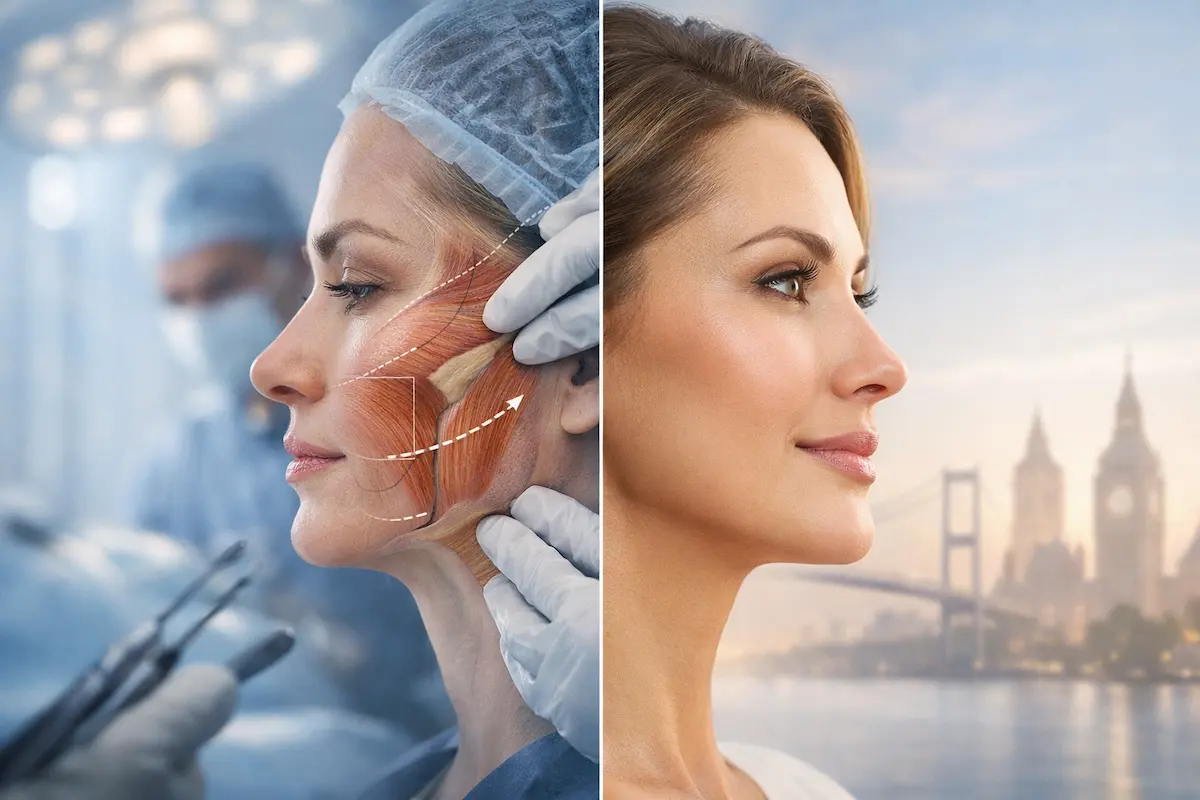
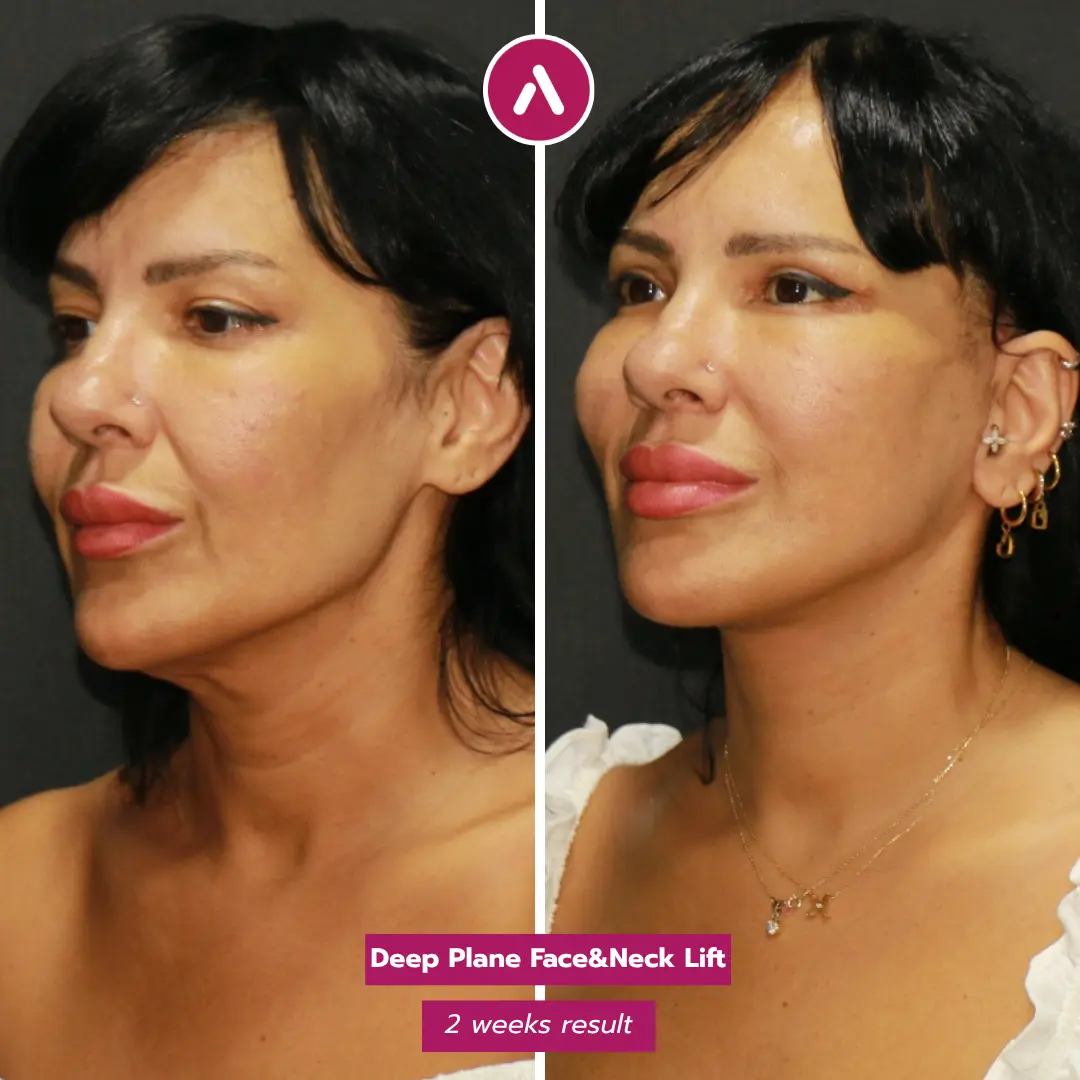
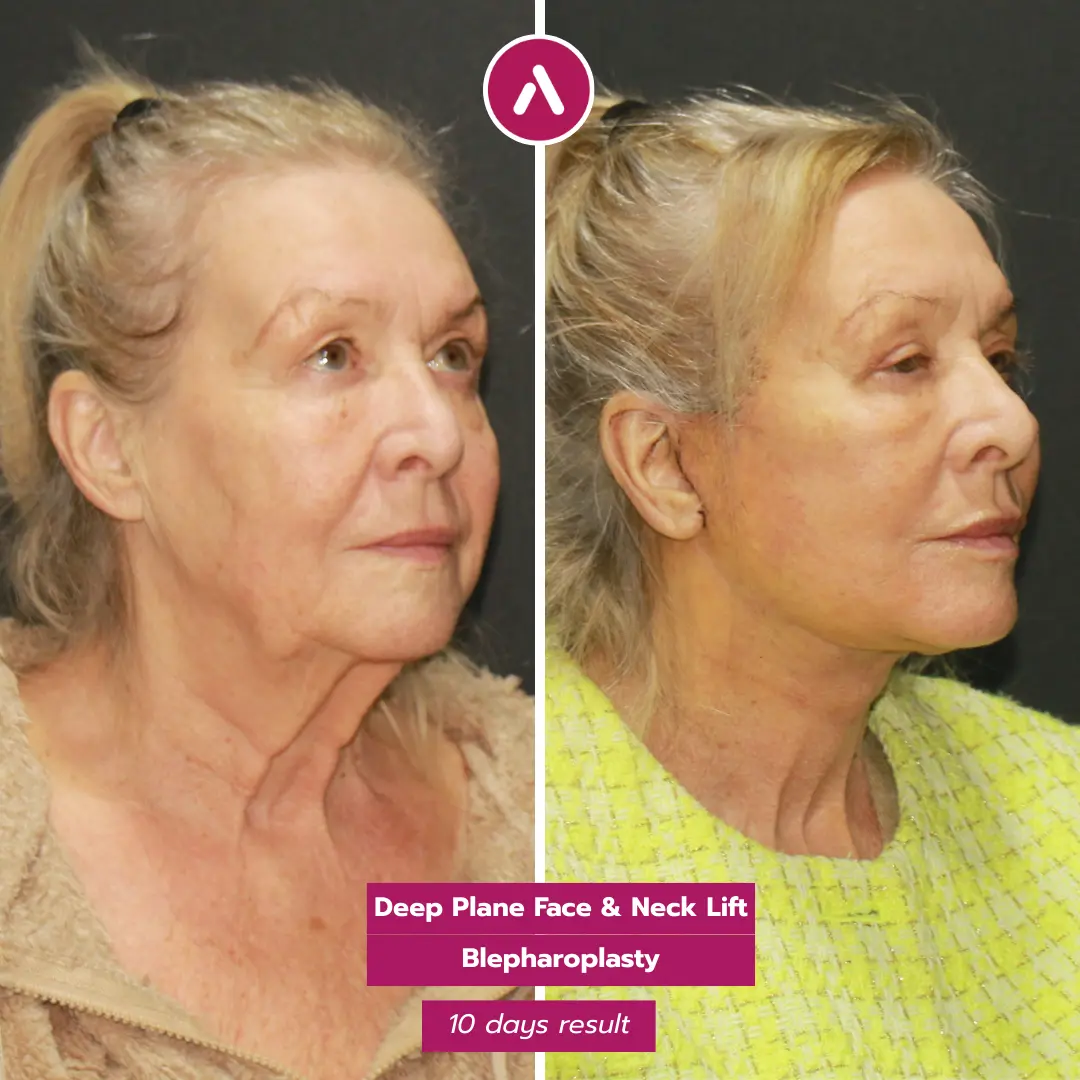
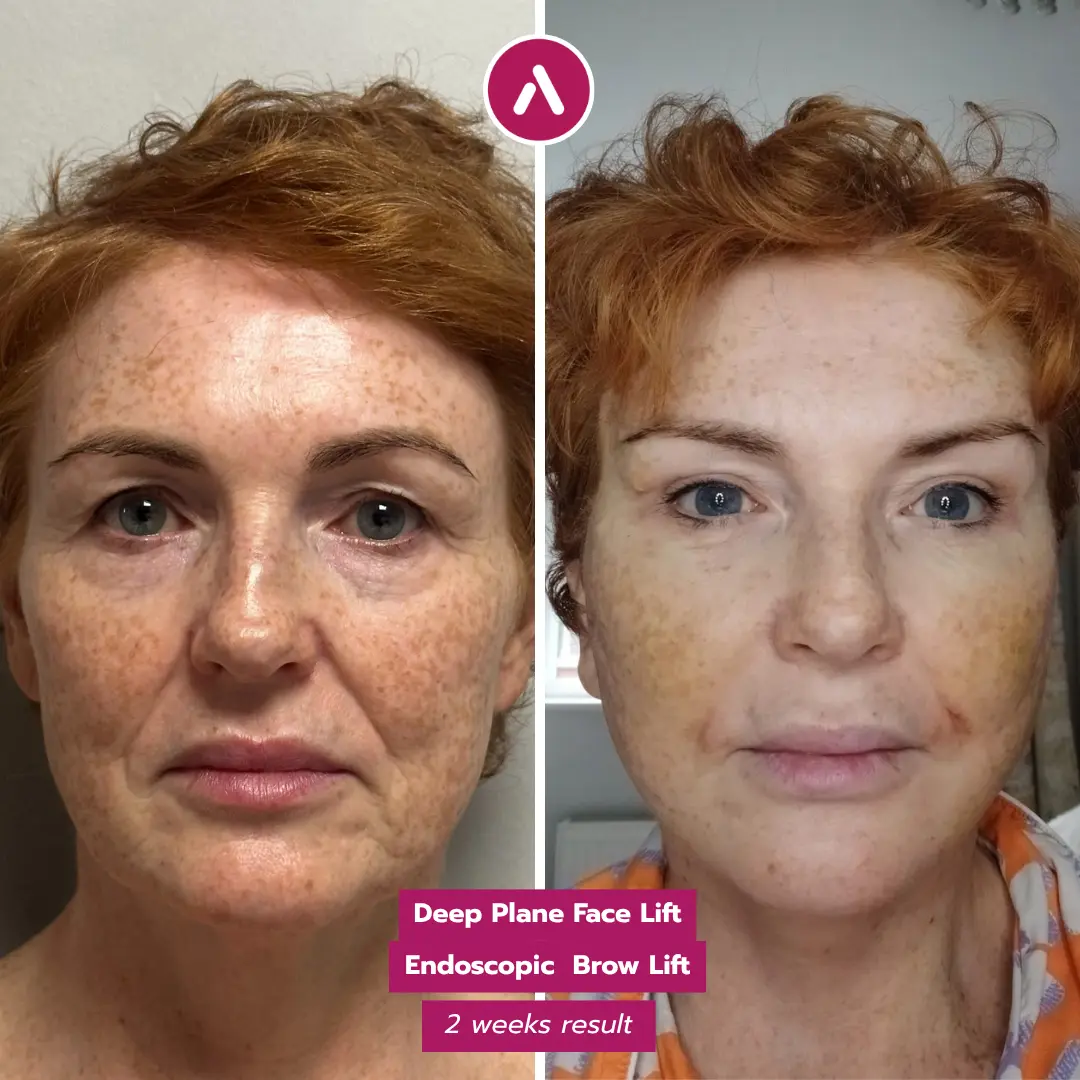
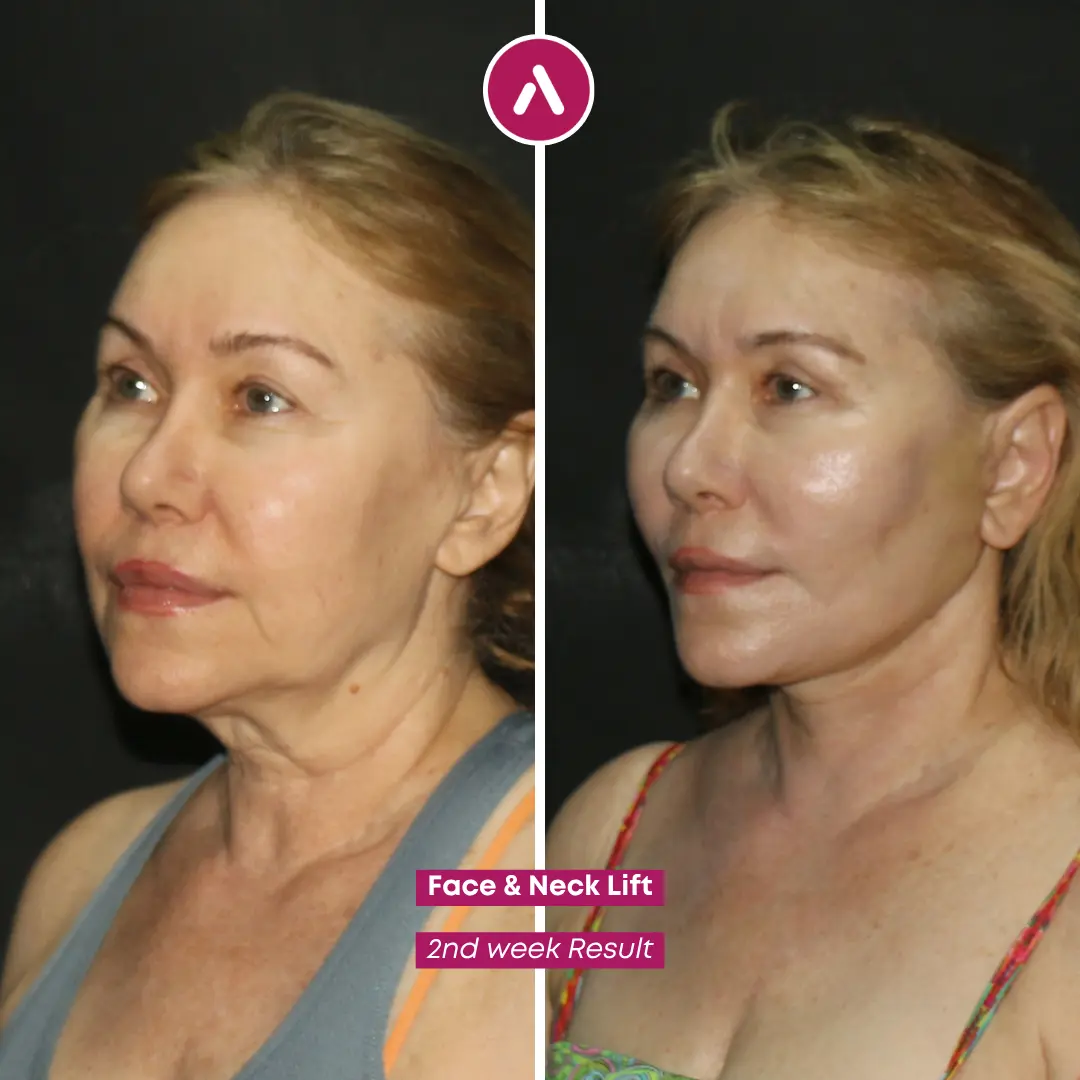
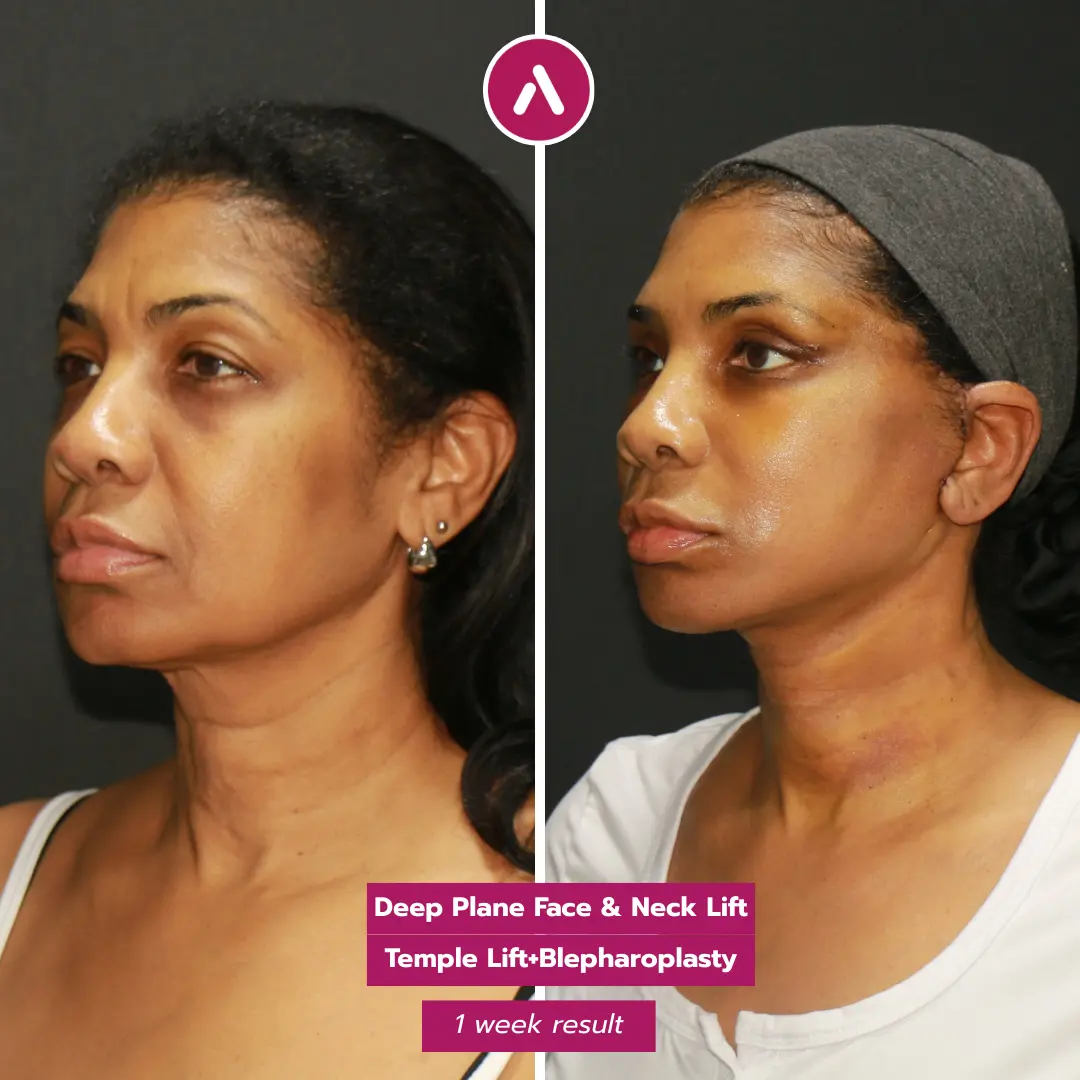
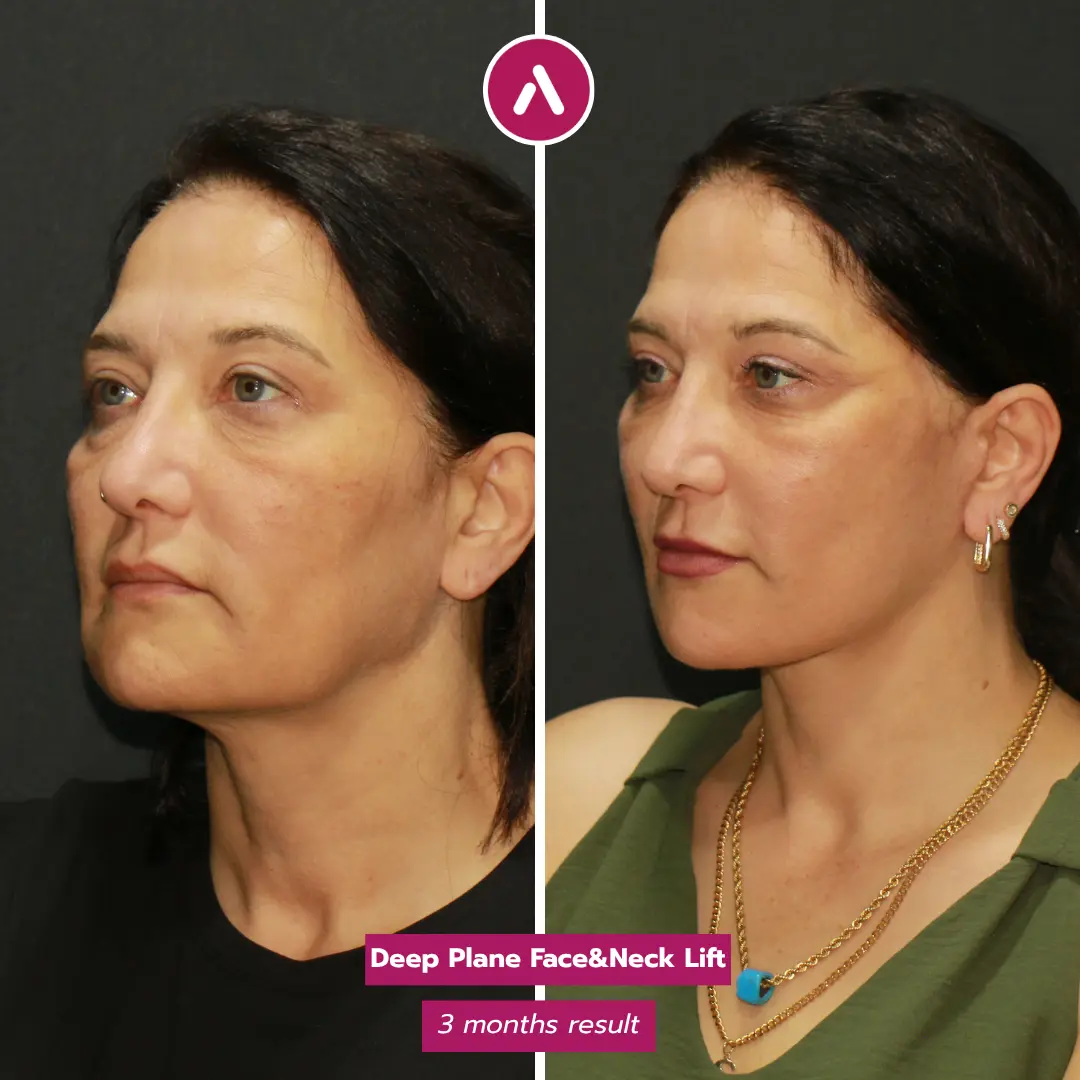
A Revision Facelift (also called a secondary or redo facelift) is a tailored procedure designed to improve the result of a previous facelift when the outcome has not met expectations, changes have occurred over time, or functional/structural concerns remain. Unlike a “simple touch-up”, revision work is planned around altered anatomy—often involving scar tissue, changed tissue planes, and a different blood supply pattern—so the approach must be precise, conservative, and technically disciplined.
Table of Contents
What is a Revision Facelift?
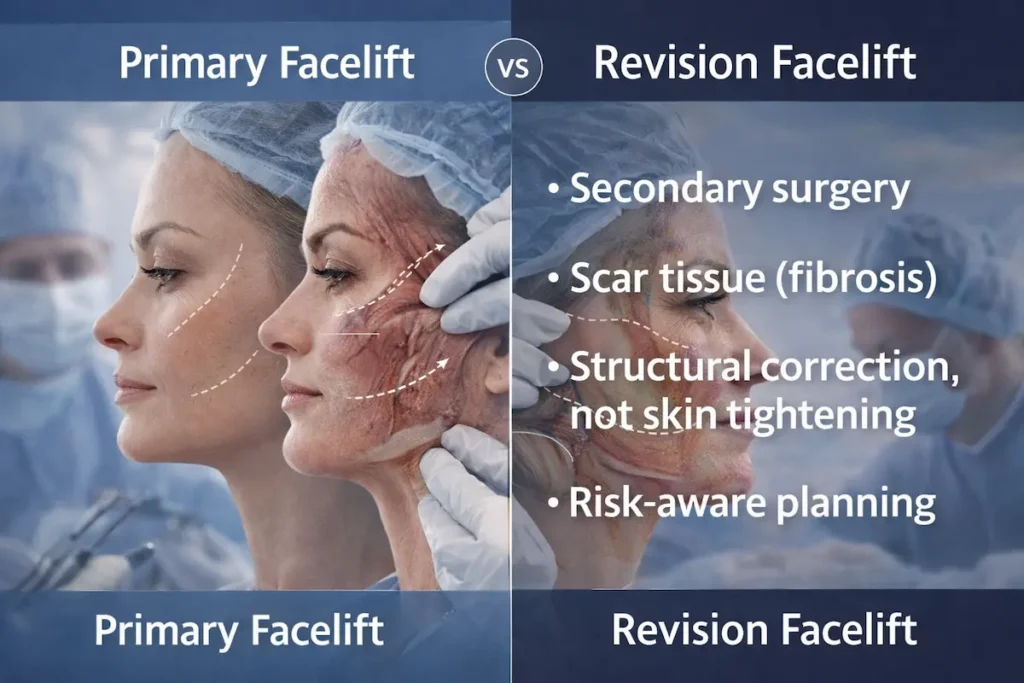
A revision facelift is a secondary facial lifting procedure performed after a prior facelift to address persistent or new concerns—such as early laxity, an over-tightened appearance, contour irregularities, or visible scarring. The key difference is that the tissues have already been operated on: planes may be scarred, the SMAS layer can be fibrotic, and the normal vascular pattern may be altered. This changes both planning and execution.
Revision facelift vs primary facelift: what changes?
In a primary facelift, a surgeon works with relatively predictable anatomy and tissue quality. In a facelift revision, the anatomy can be less “forgiving”. Scar tissue (fibrosis) may tether skin and deeper layers, previous dissection can thin tissues, and the safe mobilisation of skin may be more limited. For that reason, revision surgery is typically built around:
- Careful re-entry into previously operated planes (often with selective, staged tissue release).
- Structural correction rather than surface tightening—reducing tension on the skin where possible.
- Risk-aware planning that respects blood supply and nerve pathways.
Is revision a “correction”, or a restoration?
Many patients describe revision as “fixing” a previous operation. Clinically, it is often closer to a restoration strategy: re-establishing harmonious facial support, improving contour transitions, and reducing visible signs of prior surgery (such as distortion around the earlobe, uneven tension lines, or an unnatural pull). Where appropriate, deeper-plane methods (for example, a deep plane revision facelift) may be considered to address structural issues at their source—rather than relying on skin tension.
Common reasons patients seek a facelift revision
A revision facelift is usually considered when there is a clear concern that cannot be improved with non-surgical care alone. Typical reasons include:
- Early relapse: recurrent sagging in the lower face/jawline or neck sooner than expected.
- Over-tight or “pulled” appearance: tension patterns that read as surgical rather than refreshed.
- Visible scarring or thickened scars, particularly around the ear or hairline.
- Contour irregularities: step-offs, hollows, or asymmetry that becomes more noticeable in certain light.
- Neck concerns: persistent platysmal banding or loss of neck definition after a prior lift.
Importantly, revision does not always mean something “went wrong”. In some cases, a previous facelift was technically acceptable, but the patient’s tissues changed, the original plan did not match the patient’s facial structure, or the patient’s priorities evolved over time.
Benefits of Revision Facelift
The goal of revision is not to chase an unrealistic “perfect” face. It is to create a result that looks calm, natural, and proportionate—with improved facial support and fewer visible signs of prior surgery. For many expert patients, the most valued benefit is confidence: feeling that the face finally reflects their intention rather than the history of procedures.
A more natural, less “operated” look
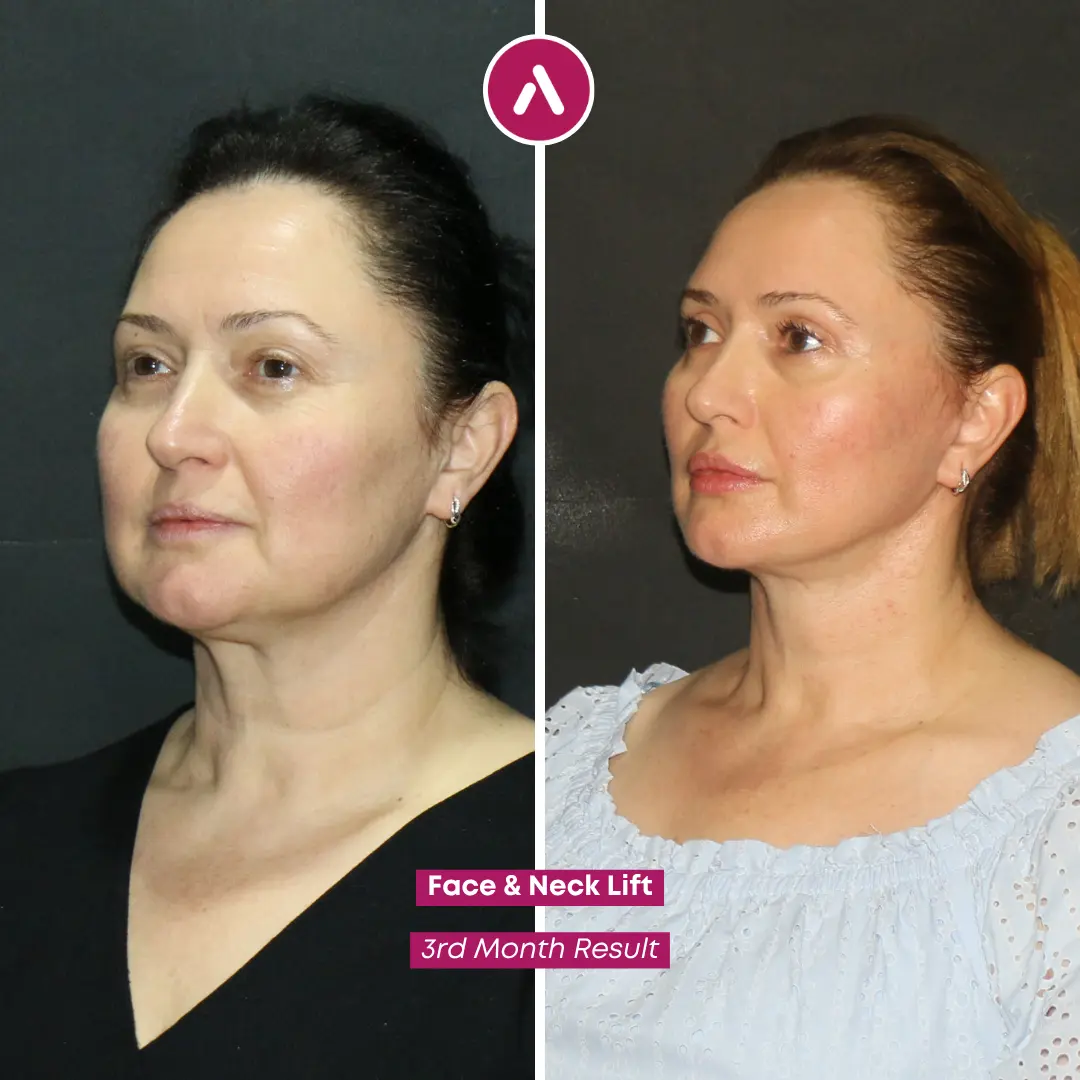
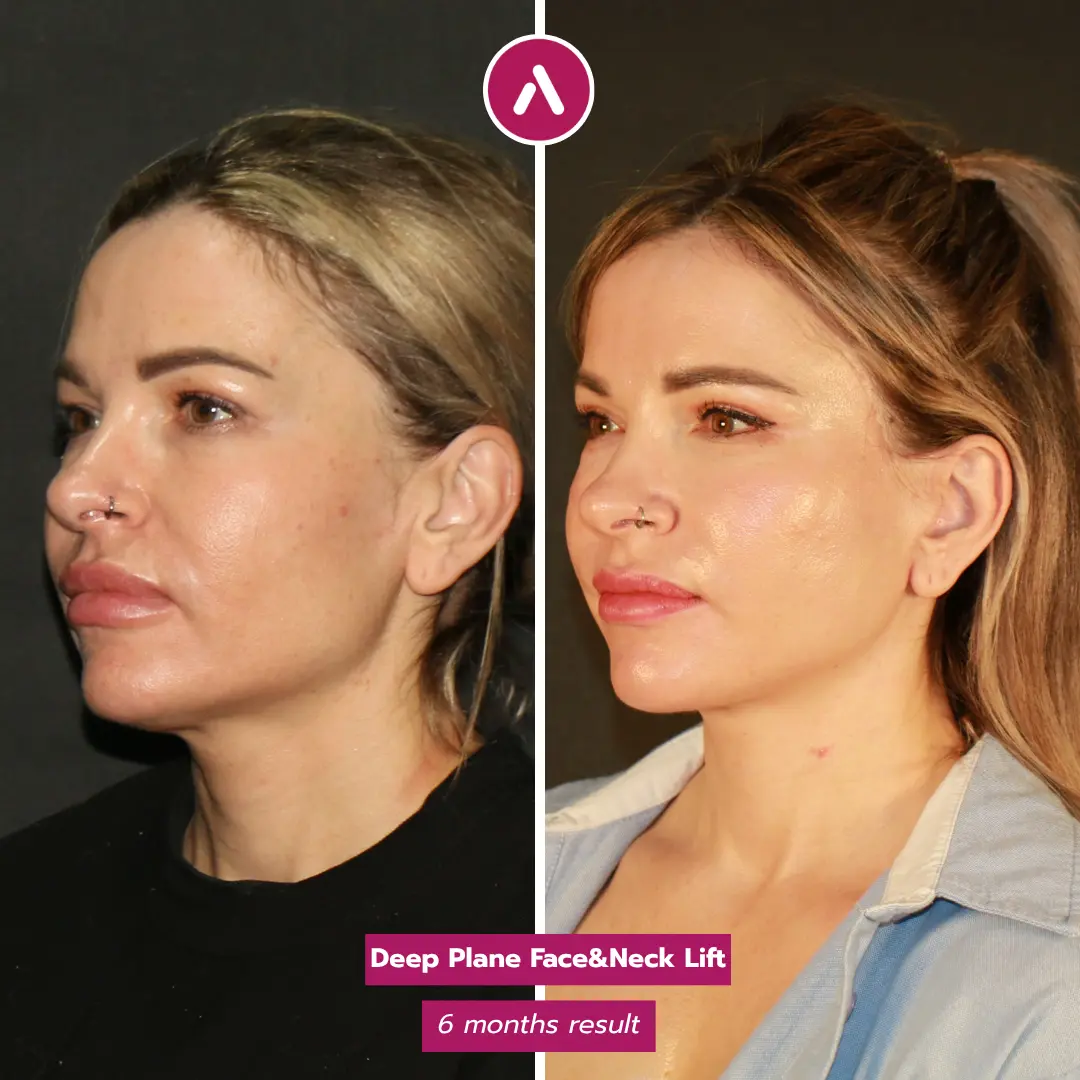
When a prior facelift result appears tight or windswept, the revision strategy typically aims to reduce skin tension and improve deeper support. Done thoughtfully, this can help the face look refreshed without the “tell-tale” pull—particularly around the cheeks, jawline, and ear region.
Improved jawline and neck definition (where appropriate)
Lower-face and neck concerns are among the most common revision requests. A revision plan may include targeted work to the neck and jawline—such as re-addressing platysmal bands or improving the transition from jawline to neck—while keeping the overall look subtle and balanced.
Scar and contour refinement
Some patients mainly want improvement in scar appearance or contour irregularities. A revision can be designed with a strong emphasis on:
- Scar placement and management (including refinement of prior incision lines where indicated).
- Softening contour transitions by carefully releasing tethered tissues and restoring smooth planes.
- Reducing asymmetry where the cause is structural and surgically addressable.
Personalised planning for the “second time around”
Revision patients are often highly informed and understandably cautious. A benefit of a specialist-led revision pathway is the emphasis on transparent planning—reviewing what was done previously (as far as can be established), assessing tissue quality and scarring, and setting realistic goals with a safety-first mindset.
While outcomes vary between individuals, a well-designed revision facelift plan aims to deliver a result that reads as rested and naturally rejuvenated, rather than dramatically changed.
Am I a Suitable Candidate for Revision Facelift?
Revision facelift patients are often more informed—and more understandably cautious—than first-time facelift patients. Suitability is not based on age alone; it’s based on tissue quality, overall health, the nature of the previous surgery, and whether your goals are realistically achievable without placing undue stress on the skin and blood supply.
You may be a good candidate if…
A Revision Facelift can be appropriate when there is a clear, surgically addressable issue after a previous facelift. In general, you may be suitable if you:
- Have persistent lower-face or neck laxity that has not improved with time.
- Feel your previous result looks tight, pulled, or “operated” rather than naturally refreshed.
- Have visible scarring, contour irregularities, or distortion around the ear/hairline.
- Have realistic expectations and prefer a calm, natural improvement over dramatic change.
- Are in stable general health and can follow a structured aftercare plan.
What we assess in a revision consultation
Revision surgery is planned around the reality that tissue planes may be scarred and the blood supply pattern may have changed. To build a safe plan, we typically assess:
- Incision placement and scars (thickness, redness, tethering, and how they sit in motion).
- Skin quality and thickness (including sun damage and elasticity).
- Deeper support in the lower face and neck (including whether a structural approach is needed).
- Signs of fibrosis (scar tissue) that could limit safe mobilisation.
- Facial nerve safety considerations, especially if prior surgery involved extensive dissection.
Where possible, bringing previous operative notes (or even a summary) can be helpful, but many patients don’t have them. It isn’t a barrier—just a detail that can improve planning.
When revision may not be the right option (or should be delayed)
There are situations where revision is best postponed, modified, or avoided. Examples include:
- Insufficient healing time after the first facelift (tissues and scars may still be evolving).
- Smoking or nicotine use (including vaping), which can significantly affect wound healing and blood supply.
- Uncontrolled medical conditions (for example, poorly controlled diabetes or blood pressure issues).
- Active infection or unresolved skin inflammation in the surgical area.
- Goals that require “tightening the skin” beyond what the tissues can safely tolerate.
If a patient’s primary concern is best addressed with scar care, skin-quality treatment, or staged revision, a conservative plan is often the safest—and ultimately the most satisfying—route.
How to prepare for a meaningful consultation
Expert patients often appreciate a structured approach. If you can, prepare:
- Clear photos: front, both profiles, and 45-degree angles in natural light.
- A brief timeline: date of prior facelift(s), any complications, and what changed over time.
- Your priority list: choose 2–3 outcomes that matter most (e.g., neck definition, naturalness, scar refinement).
- Any relevant records: discharge summary, implant details (if any), or operative notes (optional but helpful).
Why Do Facelifts Need Revising?
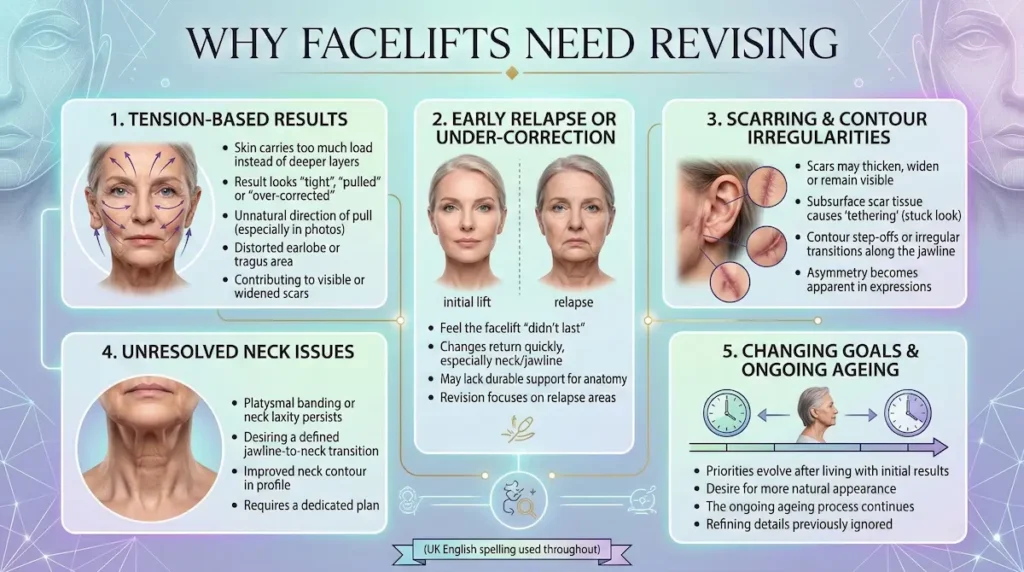
A facelift revision is not always a sign that the first surgery was “bad”. Sometimes the original operation was reasonable, but the plan wasn’t ideally matched to facial structure, tissue quality, or long-term ageing patterns. In other cases, technique choices can leave tension where it shows—particularly around the ear and lower face—leading to results that don’t look as natural as the patient hoped.
1) Tension-based results: when the skin carries too much load
One of the most common reasons patients seek revision is a look that feels tight, pulled, or over-corrected. This can happen when the skin is asked to do the “lifting” rather than deeper support layers. Over time, tension may:
- Create an unnatural direction of pull (especially noticeable in photos or certain lighting).
- Distort the earlobe or tragus area (patients often describe this as “something looks off around my ear”).
- Contribute to visible scarring or widened scars.
In revision planning, the aim is often to reduce surface tension and consider a more structural correction where appropriate—so the face looks refreshed rather than “done”.
2) Early relapse or under-correction
Some patients feel their facelift “didn’t last” or that changes returned quickly—particularly in the neck and jawline. This can be due to a number of factors, including tissue quality, weight fluctuation, the extent of the original lift, or the way deeper layers were handled. Early relapse does not automatically mean failure; it means the original approach may not have provided durable support for your anatomy.
A revision can be designed to address the specific area that has relapsed—often the lower face/neck—without over-treating the rest of the face.
3) Scar-related concerns and contour irregularities
Scar visibility varies from person to person. Some scars heal quietly; others thicken, widen, or remain more noticeable. In addition, scar tissue beneath the skin can cause:
- Tethering (a “stuck” look that becomes apparent with facial movement).
- Contour step-offs or irregular transitions along the jawline.
- Asymmetry that feels more obvious in certain expressions.
Revision surgery can incorporate scar refinement and selective tissue release where safe. However, the strategy must respect blood supply and avoid excessive skin mobilisation, especially in patients with thin tissues or prior extensive dissection.
4) Neck issues that were never fully resolved
The neck is often the area patients focus on most after surgery—because it’s highly visible and strongly linked to perceived age. If platysmal banding or neck laxity persists after a prior lift, patients may seek revision for:
- More defined jawline-to-neck transition.
- Improved neck contour (particularly in profile).
- Reduction of visible banding when speaking or turning the head.
In many revision cases, the neck requires a dedicated plan rather than being treated as an “add-on”.
5) Goals change—and so does the face
A final, often overlooked reason is that priorities evolve. Patients may feel comfortable refining details they once ignored, or they may be more attuned to naturalness after living with a result. Ageing also continues. A revision plan should be grounded in what matters now—without attempting to erase the past completely.
If you’re considering a facelift revision, the most productive starting point is a clear analysis of what exactly you want to change, why it happened, and what can be improved safely with your current tissue quality.
How Long to Wait for a Revision Facelift?
One of the most common questions is how long to wait for a revision facelift. Timing matters more in revision than in primary surgery because tissues are still evolving long after the first operation. Swelling can linger, scars mature slowly, and deeper layers continue to settle—particularly in the lower face and neck.
Why timing matters: healing, scar maturation, and tissue behaviour
After a facelift, the skin and deeper structures undergo months of change. Early on, there may be bruising and swelling; later, there can be residual oedema, firmness, and scar tissue formation (fibrosis). In revision planning, we must take into account:
- Scar maturation: scars typically soften and flatten gradually; operating too early can mean working through unstable scar tissue.
- Tissue settling: tension lines and contour transitions can improve as swelling resolves and tissues “relax” into position.
- Blood supply considerations: previous dissection can change vascular pathways, so safe mobilisation often requires a conservative, well-timed approach.
Typical waiting windows (and why they vary)
While there is no single rule, many revision plans are considered once the tissues have stabilised and scars have matured sufficiently to allow predictable surgery. In practical terms, this is often measured in months rather than weeks. Some patients will be suitable earlier than others, depending on:
- The extent of the previous facelift (skin-only vs deeper-plane work).
- The quality and thickness of the skin and soft tissue.
- Whether there were complications (for example, prolonged swelling, delayed healing, or significant scarring).
- Your specific goal: scar refinement and small contour adjustments may be timed differently from a full structural revision.
In an “expert patient” pathway, we look for a point where the face is no longer changing week-to-week, and where the underlying tissues can be handled safely without chasing temporary swelling patterns.
When earlier review is essential
There are situations where waiting is not appropriate and you should be assessed promptly. These are not “revision planning” scenarios so much as medical review scenarios. If you have concerns such as worsening redness, increasing pain, discharge, fever, or any sign of compromised healing, you should seek immediate clinical advice.
Separately, some problems are time-sensitive from a technical standpoint (for example, significant distortion around the earlobe, a tethering issue that is worsening, or a scar problem that is progressing). Even then, the solution may be staged: sometimes the best next step is not a full revision facelift, but a targeted intervention or structured scar management plan until the tissues are ready for a definitive correction.
What you can do while waiting (if revision is likely)
If a revision is planned for a later date, the “waiting period” can still be productive. Depending on your situation, you may benefit from:
- Scar optimisation strategies and consistent aftercare.
- Stability planning: keeping weight steady and avoiding nicotine exposure to support predictable healing.
- Clear documentation: taking consistent photos can help track whether the concern is improving, stable, or progressing.
The central principle is straightforward: in revision surgery, patience often improves safety and predictability. The “right” time is the moment when your tissues support a controlled, structural correction—without unnecessary risk.
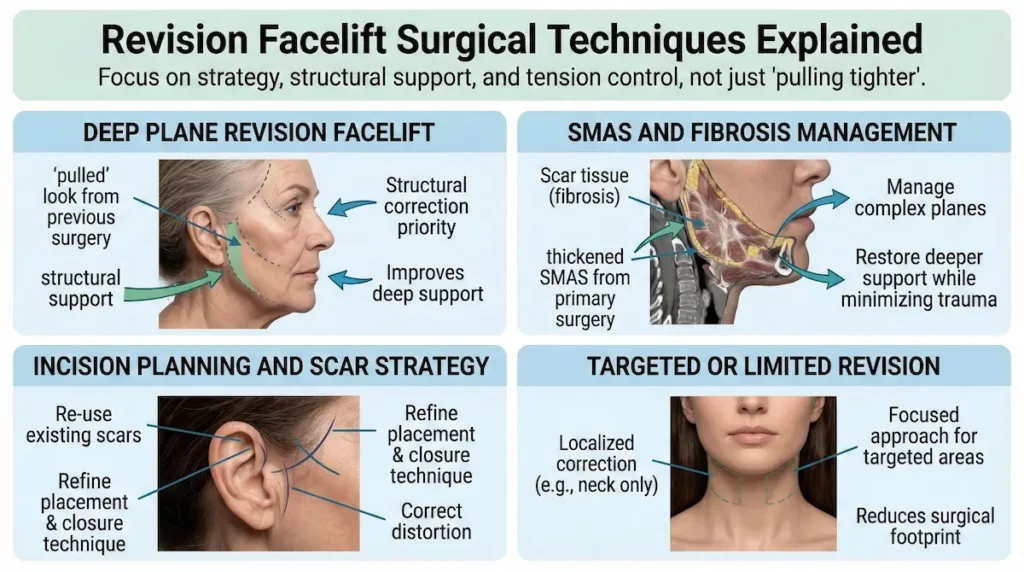
Revision Facelift Surgical Techniques Explained
A revision facelift is not a single technique—it is a strategy. The method is selected based on what was done previously, what has changed since, and what needs to be corrected now. In most revision cases, the emphasis is on structural support and tension control, rather than simply “pulling tighter”.
Deep plane revision facelift: when structural correction is the priority
A deep plane revision facelift may be considered when the core issue is structural—such as a persistent “pulled” look, early relapse due to limited deep support, or visible tension patterns. The rationale is to improve support at a deeper level so the skin can be re-draped more naturally, with less reliance on surface tension.
In revision settings, the deep plane approach is not automatically “better”; it is simply one tool that can be appropriate when the anatomy and tissue quality allow, and when the surgical goal is best served by deeper rebalancing rather than skin tightening.
SMAS and fibrosis management: working in previously operated planes
Scar tissue (fibrosis) is one of the defining challenges of revision work. The SMAS layer may be thickened, tethered, or altered by prior plication or flap techniques. A revision plan often involves:
- Selective release of tethered areas to restore smooth contours.
- Re-support of deeper tissues in a way that reduces skin tension.
- Meticulous haemostasis and tissue handling to respect altered vascular patterns.
The aim is to rebuild support while minimising trauma—particularly in areas where the blood supply may be less robust than in a primary case.
Incision planning and scar strategy (including facelift scar revision)
Scar visibility and ear-region distortion are common revision concerns. Incision planning in revision may involve re-using existing scars, refining their placement, and improving closure technique where feasible. If facelift scar revision is a key goal, the strategy may include:
- Refinement of widened or thickened scars (where appropriate).
- Reducing tension vectors that contribute to scar spreading.
- Improving contour transitions so scars are less visually “signposted”.
Scar outcomes still depend on biology, skin quality, and aftercare, so the plan is always discussed in realistic, measurable terms.
Targeted or limited revision: not every patient needs “everything” redone
Some patients do not require a full revision facelift. Depending on the issue, a more focused approach can be appropriate—such as a neck-focused correction, a limited lower-face revision, or a scar-led refinement plan. This can reduce surgical footprint while still delivering a meaningful improvement, especially when the primary concern is localised.
Technique comparison table (revision context)
| Approach | Main Aim | When it may be considered in revision | Key strengths | Key limitations |
|---|---|---|---|---|
| Skin-focused / limited revision | Refine drape and address local concerns | Minor relapse, small contour issues, or scar-led goals | Smaller surgical footprint; can be appropriate for targeted problems | May not solve deeper structural issues; risk of tension-based look if over-relied upon |
| SMAS-based revision | Restore deeper support with controlled skin redraping | When deeper laxity exists and SMAS can be safely managed | Improves durability and naturalness by reducing skin tension | Scar tissue can make dissection more complex; technique must be highly individualised |
| Deep plane revision facelift | Structural correction at a deeper level | Selected cases where anatomy and goals favour deeper rebalancing | Can address tension patterns and support issues at source; may improve “operated” appearance | Not suitable for every revision; requires careful risk assessment in previously operated tissues |
The best revision technique is the one that solves your specific problem with the least tissue stress. In practice, many revision plans combine elements—structural support where needed, conservative skin redraping, and a deliberate scar strategy—so the result looks natural and holds up over time.
Combined Procedures with Revision Facelift Surgery (Synergy)
A revision facelift plan is rarely “one-size-fits-all”. In many cases, the most natural outcome comes from a balanced approach—addressing the specific area that is bothering you (often the lower face and neck lift), while refining adjacent regions only when it genuinely supports harmony. The aim is to avoid over-treatment and instead create a result that looks quietly refreshed.
Revision facelift with neck work: the most common combination
For many patients, the neck is the main reason they seek revision. Persistent platysmal banding, loss of definition under the chin, or a blurred jawline-to-neck transition can remain after a previous lift. When indicated, revision planning may include targeted neck correction alongside lower-face support, with attention to:
- Jawline definition without creating tension that reads as surgical.
- Neck contour in profile, especially where banding appears during speech or movement.
- Skin redraping strategy that respects blood supply and tissue thickness in previously operated areas.
Eyelids and brow: when the upper face changes the whole picture
Some revision patients feel the lower face looks improved, but the eyes and brow still convey tiredness. In selected cases, a revision facelift may be combined with procedures such as blepharoplasty (upper and/or lower eyelids) or a temporal brow lift to soften heaviness around the eyes. The decision is always individualised, because combining procedures should serve a clear purpose:
- Improving the overall “rested” impression rather than chasing a dramatic change.
- Balancing upper and lower facial rejuvenation so the result feels coherent.
- Avoiding excessive lift in any one region (a common concern for expert patients).
Midface refinement: endoscopic options in selected revision cases
If the midface (cheek area) has descended or looks flattened, some patients ask whether an endoscopic midface approach can be used as part of revision. This can be relevant when cheek support is part of the underlying issue—particularly if the prior facelift did not adequately address midface structure. Not everyone needs midface work, and it is not automatically “better”; it is considered when it aligns with anatomy, tissue behaviour, and your goals.
Fat transfer and contour balance: “support”, not volume for volume’s sake
In revision work, contour irregularities or hollowness can become more noticeable—sometimes because of prior dissection, sometimes due to natural ageing. In carefully selected cases, fat transfer may be used to restore gentle contour continuity (for example, blending transitions rather than “adding fullness”). The guiding principle is proportion: small, strategic refinement can read as natural, whereas overfilling can quickly look artificial.
Staged vs combined surgery: choosing the safer, calmer route
Combining procedures can be efficient, but it is not always the best choice in revision. If tissues are thin, scarring is significant, or there is concern about healing predictability, a staged plan may be recommended—addressing the main structural issue first, and refining secondary details later if needed. This is often the more conservative way to protect blood supply, reduce surgical footprint, and keep the result understated.
Anaesthesia: Awake / Twilight Sedation vs General Anaesthesia
Many revision facelift patients ask about anaesthesia early—especially those who are cautious after a previous experience. In practice, anaesthesia is selected to match the procedure plan, your health profile, and safety considerations. Where appropriate, we may prefer local anaesthesia with twilight sedation (often described as “awake” surgery), but general anaesthesia remains the right option for some patients.
What does “awake” revision facelift actually mean?
“Awake” does not mean you feel everything. Typically, it refers to local anaesthesia to numb the surgical area, combined with twilight sedation to help you feel relaxed and comfortable. Many patients describe it as drifting in and out of light sleep, with little awareness of time passing. Your care is still managed in a controlled clinical setting with appropriate monitoring.
Potential advantages of twilight sedation (for suitable patients)
For selected patients and plans, twilight sedation can be appealing because it may offer a calmer immediate recovery experience. Patients often prioritise:
- Comfort and reassurance without the “heaviness” some associate with a full general anaesthetic.
- Clear communication before and after surgery, particularly for expert patients who value a structured pathway.
- Individualised dosing and a measured approach to safety and wellbeing.
However, suitability depends on clinical assessment. Some patients simply feel more comfortable choosing general anaesthesia, and that preference matters too.
When general anaesthesia may be the better choice
General anaesthesia may be recommended if the surgical plan is extensive, if there are positioning considerations, or if patient comfort and stillness would be best supported that way. It can also be appropriate when combining multiple procedures or when anxiety levels are high despite sedation options. The key point is that the anaesthesia plan is matched to the procedure—rather than forcing a procedure to fit a preferred anaesthesia type.
How we prioritise safety in anaesthesia planning
Revision surgery requires a safety-first mindset. Anaesthesia planning typically involves a structured review of:
- Medical history, medications, and previous anaesthetic experiences.
- Smoking/nicotine exposure and factors that affect healing and circulation.
- Realistic peri-operative planning for recovery, including travel timing and support at home.
Your comfort and safety are inseparable. A well-chosen anaesthesia plan supports a smoother day-of-surgery experience and helps keep the overall pathway predictable—especially important for revision patients.

Revision Facelift Surgery Step-by-Step: What Happens in Theatre?
Revision patients often want clarity. Not marketing, not mystery—just a clear pathway. Below is a typical revision facelift journey in a clinical setting. Your plan may differ depending on whether the revision is full, limited, neck-focused, or combined with another procedure.
1) Pre-assessment and planning (before you travel)
The revision pathway usually begins with a structured review of your priorities and your surgical history. Where possible, we assess:
- Current concerns (e.g., pulled look, early relapse, scarring, neck definition).
- Timeline since the previous facelift and any complications or prolonged healing.
- Photographic assessment (front, profiles, 45-degree angles in natural light).
- Medical background and factors that affect healing (including nicotine exposure).
Revision planning is deliberately conservative. The aim is to select the smallest surgical footprint that can achieve a meaningful improvement—without placing unnecessary stress on previously operated tissues.
2) Arrival and pre-operative checks
When you arrive in Istanbul, the pathway typically includes a medical review and pre-operative checks appropriate to your plan. For expert patients, this stage is also about transparency: confirming the surgical strategy, discussing scar placement, and agreeing what “success” looks like in your case—usually a natural, balanced improvement rather than a dramatic change.
3) Marking and final plan confirmation
On the day of surgery, careful marking is performed to guide incision placement and tension vectors. In revision cases, this is especially important around the ear/hairline region, where scar visibility and distortion can be key concerns. Final planning also includes deciding whether any targeted neck work, scar refinement, or limited adjustments are appropriate.
4) Anaesthesia and monitoring
Depending on your plan and suitability, surgery may be performed under local anaesthesia with twilight sedation or general anaesthesia. Throughout the procedure, appropriate monitoring is used to support safety and comfort.
5) The revision itself (what surgeons are focused on)
In a revision facelift, the main technical priorities are typically:
- Safe tissue handling in previously operated planes, where fibrosis and altered anatomy may be present.
- Structural support where needed (rather than asking the skin to do the lifting).
- Controlled redraping to reduce visible tension and help avoid an “operated” look.
- Scar strategy that respects existing scars and focuses on discreet placement and closure.
The goal is not to “tighten more”, but to rebalance—so the result looks calm, natural, and consistent across different angles and facial movement.
6) Immediate post-operative care
After surgery, you are monitored as you recover from anaesthesia. Early aftercare is designed to support comfort, reduce swelling, and protect incision sites. Revision patients often appreciate detailed guidance here—because small decisions (sleeping position, activity level, wound care habits) can influence how quietly the tissues settle.

Revision Facelift Recovery & Aftercare: How Long Does Healing Take?
Facelift revision recovery can feel different from a primary facelift. Some patients recover surprisingly smoothly; others notice that swelling and firmness take longer to settle—especially when significant scar tissue has been managed. The most helpful way to think about recovery is in phases: what you look like, how you feel, and what your tissues are doing can change at different speeds.
Days 1–7: swelling, bruising, and “early settling”
In the first week, it is normal to see swelling and bruising, with a feeling of tightness or heaviness. Mild asymmetry can also appear early on—often due to uneven swelling rather than a true structural issue. Priorities in this stage are:
- Rest with head elevation to support swelling control.
- Gentle mobilisation (short walks) as advised.
- Wound care discipline to keep incision sites clean and protected.
Weeks 2–6: returning to normal life (with sensible limits)
Many patients begin to look “socially presentable” during this window, although residual swelling (oedema) and firmness may persist. This is also the phase where scars can look more noticeable before they begin to soften. It helps to be realistic:
- Make-up and hairstyling can often help camouflage early healing.
- Heavy exercise and heat exposure may be restricted for a period.
- Photos can be misleading—lighting and swelling patterns vary from day to day.
Months 2–6: scar maturation and refinement
This is where many revision patients feel the “real” improvement becomes more obvious. Scars usually continue to mature, texture changes soften, and the face begins to look less like it is recovering and more like it simply belongs to you. If your revision included significant fibrosis management, patience is particularly valuable—tissues can take longer to settle into a smooth, natural contour.
Rapid recovery & safety support: HBOT and LLLT (where appropriate)
In revision surgery, patients often worry about slower healing and skin quality—especially if their first experience was difficult. Where clinically appropriate, supportive technologies such as HBOT (Hyperbaric Oxygen Therapy) and LLLT (Low-Level Laser Therapy) may be used within an aftercare framework. These are not presented as guarantees; rather, they are used as adjuncts designed to support tissue recovery and scar care in selected patients.
- HBOT may be considered to support oxygen delivery to tissues as part of a broader recovery strategy.
- LLLT may be used to support scar-care protocols and comfort during healing.
Whether these are suitable depends on your individual case and medical assessment. The guiding principle is always the same: optimise recovery without overpromising outcomes.
Flying back to the UK and long-term follow-up
UK-based patients often ask when they can fly. Travel planning is personalised, but the broader aim is to ensure you are stable, comfortable, and confident with your aftercare routine before returning home. Long-term follow-up is important in revision cases, so ongoing check-ins (including remote support) are typically part of a structured pathway.
If you ever experience worsening redness, increasing pain, discharge, or a temperature of 38°C (100.4°F) or higher, you should seek prompt medical advice.
Safety & Risks: Is Revision Facelift Dangerous?
Revision surgery demands respect. The tissues have already been moved once, and the anatomy is rarely “textbook” again. Scar tissue can change how the layers glide, and the blood supply pattern may not behave like a primary case. Our job is to plan around those realities and keep the footprint controlled.
Why revision carries a different risk profile
A revision facelift is often performed in an environment of fibrosis and altered tissue planes. That can make dissection slower, more selective, and less predictable than a first-time procedure. The aim is to avoid relying on skin tension, because tension is where visible scarring and an “operated” look often begin. We prioritise structural support and conservative redraping so the skin can settle quietly.
Common risks (and what we do to reduce them)
Every surgical procedure carries risk, including risks related to anaesthesia, bleeding, and infection. Revision work may also carry additional considerations due to previous dissection and scarring. We reduce risk through strict screening, careful technique, and structured aftercare, but no surgeon can promise a risk-free outcome.
- Bleeding / haematoma: monitored closely, particularly in the early post-operative period.
- Infection: reduced through sterile theatre standards and appropriate post-operative care.
- Scarring: managed with a deliberate incision and closure strategy, plus long-term scar guidance.
- Nerve-related symptoms: temporary numbness is common; more significant nerve issues are uncommon but discussed transparently.
- Skin compromise (rare): revision planning must respect blood supply, especially in thin tissues or heavy smokers.
- Swelling and prolonged firmness: can last longer in revision cases, particularly when fibrosis is significant.
- Asymmetry: early asymmetry is often swelling-related; longer-term asymmetry is assessed case-by-case.
Red flags: when to contact us (or seek urgent review)
Revision patients tend to be highly observant. That’s helpful. If something feels wrong, it’s worth flagging early rather than waiting it out.
- Increasing pain that does not improve with prescribed medication.
- Rapidly increasing swelling on one side, especially if it feels tense.
- Worsening redness, discharge, or an unpleasant odour from incision sites.
- Temperature of 38°C (100.4°F) or higher. (Contact us)
- Shortness of breath, chest pain, or calf swelling (seek urgent medical care).
If you are in the UK and need urgent care, A&E is the right place. We remain available for guidance, but emergency symptoms should be assessed in person without delay.
Is Revision Facelift Safe in Turkey?
“Is it safe in Turkey?” is a sensible question, especially after a difficult first experience. Safety is not about geography. It’s about the system: screening, sterile standards, monitoring, credentials, and continuity of aftercare. We built our pathway around what UK patients expect—clarity, structure, and a calm clinical environment.
Safety standards in our facility: screening, sterility, monitoring
We start with pre-operative health screening to confirm candidacy and reduce preventable risk. In theatre, we use advanced patient vitals monitoring throughout every procedure. We also adhere to rigorous international sterilisation standards, including ISO/TÜV frameworks, because revision work leaves no room for shortcuts.
Where appropriate, we use planning tools such as the 3D Vectra Imaging System to support careful pre-operative mapping. This is not about “simulation marketing”. It’s about improving precision and helping you understand the plan before a single incision is made.
Credentials and the “quality question” UK patients ask
Many UK patients benchmark against Harley Street standards. We keep it simple: verifiable credentials and clear protocols. Our surgeons’ qualifications include European board-level credentials where applicable, and we use the same category of FDA-approved materials referenced in international care pathways. For hospital-level infrastructure, we operate in JCI-accredited hospitals that meet or exceed Western expectations.
Continuity of care: the part patients worry about most
The fear is understandable: “What happens after I fly home?” We maintain continuity with a structured pathway. Immediately after surgery, you are monitored closely by our medical team, and you have a dedicated Patient Host available 24/7 via WhatsApp for practical support. Before departure, you have an in-person check-up and are cleared to fly when it is clinically appropriate.
Follow-up does not stop when you leave Istanbul. We schedule virtual reviews at 1, 3, 6, and 12 months to monitor healing progress and answer questions as your result settles.
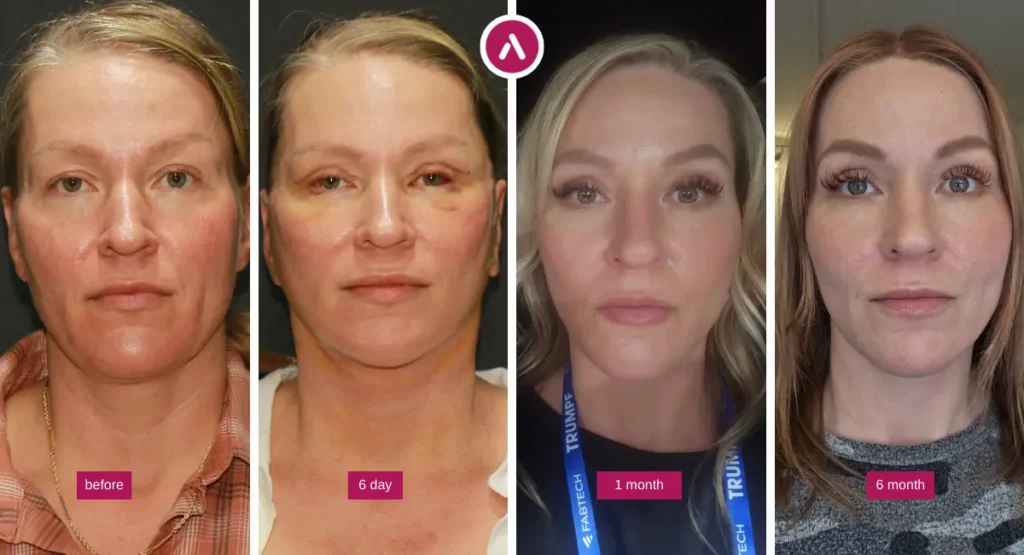
Revision Facelift Before and After: Realistic Expectations & Results
Revision facelift patients rarely want “more lift”. They want the right lift. That means restoring balance, softening visible signs of prior surgery, and improving contour without creating new tension. We plan revision outcomes around tissue reality: scarring, thickness, and how your face moves when you speak and smile.
Our philosophy: Rejuvenation, Not Alteration
Our benchmark is simple. You should look like yourself, just less tired. We avoid aggressive tension vectors and we favour structural support where it is needed, because that is how you reduce the “operated” signal. The aim is not to erase age. It is to make ageing look quieter.
Our Surgeons’ principle: “A revision result should read as natural in motion, not just in a still photo. If the skin is doing all the work, it will eventually show.”
What a “good” revision result typically looks like
A strong revision outcome usually feels understated. Friends might say you look rested, not “done”. Clinically, we look for improvements that hold up across angles and lighting, including:
- A smoother jawline-to-neck transition (without a tight, swept-back look).
- Reduced ear-region distortion and more discreet scar behaviour.
- More even contour transitions where tethering or fibrosis created visible lines.
- A calmer profile, especially if the neck was a persistent issue.
Surgeons’ insight: “Revision is rarely about tightening. It’s about rebalancing—support first, then a gentle redrape.”
What revision cannot do (and the common misconceptions)
Revision surgery can be transformative for the right problem, but it is not limitless. We set expectations early so the plan stays safe and the outcome stays believable. Common misconceptions include:
- “Tighter equals better.” In revision, excessive tension is a risk factor for visible scarring and unnatural direction of pull.
- “It should look perfect in two weeks.” Early swelling can disguise the final contour. Revision settling can take longer, especially where fibrosis was significant.
- “Scars can be erased.” We can refine scars and improve placement, but biology still plays a role in how scars mature.
Typical patient journeys we see (without the hype)
Many of our patients fit the “expert patient” pattern: they research technique, anaesthesia, and aftercare long before they consider a provider. Some have had previous surgery in the UK and want a more natural, less tension-led approach the second time around. Others mainly want scar refinement and neck definition, rather than a full re-do. In each scenario, the result we aim for is consistent: subtle facial rejuvenation Turkey that still looks like you.

Cost Analysis: Revision Facelift Cost 2026 (Turkey vs UK)
Revision fees vary because revision complexity varies. A scar-led refinement is not priced like a full structural revision with neck work and extended theatre time. For UK patients, the comparison is rarely just “Turkey vs London”. It is about what is included, how risks are managed, and whether aftercare is structured once you are back home.
What your quote typically includes (and what to check)
Expert patients read the small print. You should. When comparing clinics, make sure you understand whether fees include anaesthesia, theatre, post-operative medication, and follow-up. We prefer clarity upfront because it prevents unpleasant surprises later.
Our approach to fees: “A transparent quote is part of safety. If you don’t know what’s included, you can’t plan recovery properly.”
Why private UK fees can be higher (especially in London)
UK private pricing reflects theatre costs, staffing, insurance overheads, and location-based operational expense. London and Harley Street settings can carry a premium, particularly for complex work and senior-level surgeon time. Revision cases may also require longer operative planning, which affects total fees.
How we frame value for UK patients (not “cheapness”)
We do not position revision surgery as a bargain purchase. We position it as a high-stakes medical decision that should be planned with discipline. For many UK patients, the practical appeal is achieving facelift London vs Istanbul quality with a more accessible cost structure, plus a structured recovery pathway.
Our model is designed to be all-inclusive cosmetic surgery in GBP where possible, so you can plan your trip and recovery without piecing together multiple invoices across different providers. It also supports the time-sensitive needs of patients who want a predictable return to work and social life.
Natural-first, value-second: “Cost matters, but revision success is decided by planning, tissue respect, and aftercare—not by how tight the skin is pulled.”
Turkey vs UK comparison table (what usually differs)
| Cost Component | Typical UK Private Model | Our Istanbul Model | Why it matters for revision |
|---|---|---|---|
| Theatre & facility fees | Often itemised separately | Typically bundled into a package quote | Revision may require longer theatre time and meticulous set-up. |
| Anaesthesia | May be separate; general anaesthesia commonly used | Option-led: twilight sedation (where suitable) or general anaesthesia | Anaesthesia choice affects recovery experience and overall logistics. |
| Aftercare & follow-up | Often clinic-based; limited remote structure | Structured remote follow-up once you return to the UK | Revision settling takes months. Ongoing guidance reduces anxiety. |
| Recovery support | Usually standard clinical aftercare | Adjunctive options: HBOT & LLLT when clinically appropriate | Supports patients concerned about downtime and scar behaviour. |
| Logistics (hotel/transport) | Typically arranged independently | Often included as part of an end-to-end pathway | Reduces friction for international patients and supports rest. |
If you want a precise figure, the safest next step is a tailored plan. Send clear photos and a short timeline of your previous facelift. We will tell you what is realistically achievable, what we would avoid, and what your pathway would look like from assessment to aftercare.

Finding the Best Revision Facelift Surgeon
A revision facelift is not the place for guesswork. If you’re considering a secondary procedure, the most important decision is not the country or the clinic interior—it’s the surgeon’s revision judgement: how they analyse a previous result, how conservatively they handle tissues, and how clearly they communicate what can and cannot be improved.
Look for revision thinking, not just facelift marketing
Many clinics advertise facelifts; fewer demonstrate true revision expertise. In a revision consultation, the surgeon should be able to explain:
- What likely happened in the first operation (even when operative notes are unavailable).
- Which layer needs support now (skin, SMAS, deep plane, neck structures) and why.
- How they will reduce tension so the result looks natural and scars behave more quietly.
If the entire plan sounds like “we’ll just tighten more”, that is usually a warning sign in revision surgery.
Questions worth asking (expert patient checklist)
A serious revision consult welcomes specific questions. Consider asking:
- How many revision facelifts do you perform? (Revision volume matters.)
- What is your approach to fibrosis and altered planes? (You want a calm, methodical answer.)
- How do you protect blood supply in previously operated tissues?
- Which technique is most suitable for my case—and why not the others?
- What does a “good outcome” look like for you in my case? (Naturalness should be central.)
- What is your anaesthesia plan? (Twilight sedation vs general anaesthesia, and why.)
- How is aftercare structured once I’m back in the UK?
Before-and-after photos: how to read them properly
Photos can help, but only if you interpret them like a clinician rather than a consumer. Look for:
- Consistency across angles (front, oblique, profile) rather than a single flattering view.
- Naturalness in the ear region (avoid visible pull, distortion, or obvious tension patterns).
- Neck and jawline harmony (a defined jawline that doesn’t look “drawn back”).
- Scar discretion (not “invisible”, but quietly placed and well-behaved).
In revision work, “dramatic” is not always “better”. A good revision often looks understated.
Credentials and standards: what actually matters
Credentials are not a guarantee of artistry, but they do help you filter for seriousness. In revision surgery, look for:
- Board-level training and a clear surgical track record.
- Revision-specific experience (not only primary facelifts).
- Structured patient safety systems (screening, monitoring, continuity of care).
The goal is a surgeon who is both technically capable and temperamentally conservative—someone who prioritises tissue respect over “bigger changes”.
Your Medical Journey (UK → Istanbul)
If you’re travelling from the UK for a revision facelift, the pathway needs to be seamless. Revision patients typically want two things: control and predictability. That means clear scheduling, structured aftercare, and practical support without fuss.
Step 1: Remote assessment and an honest plan
The process usually begins with a remote review of your case. You’ll be asked for:
- Clear photos (front, both profiles, 45-degree angles) in natural light.
- A short timeline of previous procedures (dates, technique if known, and any complications).
- Your top 2–3 priorities (e.g., neck definition, naturalness, scar refinement).
We then outline what is realistically achievable, what we would avoid, and whether a full revision, limited revision, or staged plan makes the most sense.
Step 2: Arrival, pre-op review, and final planning
Once in Istanbul, you typically have an in-person review before surgery. This stage is where revision becomes precise: tissue quality, scar behaviour, and movement patterns are assessed in real time. The plan is confirmed with a focus on:
- Incision strategy (especially around the ear/hairline).
- Tension control (structural support first, gentle redrape second).
- Neck integration where it’s part of the underlying issue.
- Anaesthesia choice (twilight sedation where suitable, or general anaesthesia where appropriate).
Step 3: Surgery day and immediate recovery
On surgery day, the aim is a calm, controlled experience: appropriate monitoring, clear communication, and a measured approach to revision tissues. After surgery, you’ll be monitored and guided through the essentials—wound care, swelling control, activity limits, and what to expect during the first week.
Step 4: Aftercare in Istanbul and travel readiness
Before you fly back, you’ll have a check-up to confirm you’re recovering as expected and that you’re confident with aftercare instructions. Travel timing is individualised, but the principle is consistent: you should be stable, comfortable, and clear on how to manage incisions and swelling before returning home.
Step 5: UK-based continuity: structured follow-up
Revision healing continues for months, not days. For UK patients, we support a structured follow-up pathway with remote reviews so you’re not left guessing as swelling settles and scars mature. If something concerns you, you’ll know exactly how to reach the team and what symptoms should be assessed urgently in person.
For many patients, the value of an international pathway is not only the operation—it’s the combination of a revision-focused plan, a calm recovery framework, and continuity once you return to the UK.
Revision Facelift Frequently Asked Questions (FAQ):
What is a revision facelift?
A revision facelift is a secondary (redo) facelift performed after a previous facelift to improve a result that feels unnatural, has relapsed early, or left concerns such as scarring, contour irregularities, or neck definition issues. Because tissues have already been operated on, planning is typically more conservative and more structural.
How long should I wait before having a revision facelift?
The safest timing depends on tissue healing, swelling patterns, and scar maturation. In many cases, surgeons prefer to wait until the face is stable and scars have matured enough to make the revision predictable. If you have a medical concern (worsening redness, increasing pain, discharge, fever), that is not “revision timing” and should be assessed promptly.
Is facelift revision recovery harder than a first facelift?
It can be different. Some patients recover smoothly; others find swelling, firmness, and scar sensitivity last longer—especially when fibrosis (scar tissue under the skin) is significant. The best predictor is not the calendar; it’s your tissue quality, what needs correcting, and how extensive the revision plan is.
Can a revision facelift fix a “pulled” or “windswept” look?
In many cases, yes—if the cause is tension-based pull and the tissues allow a safer, more structural correction. The goal is usually to reduce skin tension, rebalance deeper support where appropriate, and redrape the skin more naturally. A good revision should look calm in motion, not just in photos.
Can you revise scars from a previous facelift?
Scars can often be improved through a careful scar strategy, including refining placement, reducing tension vectors, and using long-term scar-care guidance. That said, scars cannot be “erased”, and biology plays a role in how quietly scars mature. The realistic aim is more discreet, better-behaved scarring.
Do you use deep plane techniques for revision facelifts?
A deep plane revision facelift can be appropriate in selected cases—particularly when the core issue is structural support rather than surface tightening. It is not an automatic choice. The technique should match your anatomy, tissue behaviour, and the specific problem that needs correction.
Will I need a neck lift as part of my revision facelift?
Many revision patients are primarily concerned about the neck: banding, laxity, or a blurred jawline-to-neck transition. If the neck is part of the underlying issue, it may be addressed within the same plan. The key is balance—improving definition without creating an over-tight appearance.
Can revision facelift be done under twilight sedation rather than general anaesthesia?
Depending on your health profile and the surgical plan, local anaesthesia with twilight sedation may be an option. Some cases are better suited to general anaesthesia, particularly if the plan is extensive or combined. The best approach is the one that keeps the procedure controlled and comfortable.
Is it safe to travel from the UK for a revision facelift?
UK patients often travel for revision work, but safety depends on screening, theatre standards, monitoring, and continuity of aftercare—not geography. A reliable pathway includes clear pre-assessment, in-person checks before surgery, travel readiness review before flying home, and structured follow-up once you’re back in the UK.
How soon can I fly back to the UK after surgery?
Travel timing is individualised. The practical goal is that you feel stable, comfortable, and confident with your wound care and swelling plan before you fly. You should also know what symptoms require urgent in-person assessment once home.
Do you provide revision facelift before-and-after photos?
Case examples can be helpful when interpreted properly. The most useful images show multiple angles (front, oblique, profile) and demonstrate a natural ear region, discreet scars, and balanced neck/jawline transitions. In revision work, “dramatic” isn’t always “better”—naturalness and tissue respect are the real benchmarks.
How much does a revision facelift cost?
Fees vary widely because revision complexity varies. The most accurate quote comes after reviewing your photos, surgical timeline, and whether the plan is full, limited, neck-focused, or combined. When comparing providers, check what’s included (theatre, anaesthesia, aftercare, follow-up) and avoid choosing solely on price.
Medical Disclaimer: This page is provided for general educational purposes only and does not replace a face-to-face medical consultation, diagnosis, or personalised treatment plan. All surgery carries risks and outcomes vary between individuals. Suitability for a revision facelift, procedure selection, and anaesthesia choice can only be determined after a full clinical assessment by a qualified surgeon. Always follow your clinician’s instructions and seek urgent medical attention if you develop concerning symptoms during recovery.