
Tummy Tuck Belly Button Healing: What's Normal and What's Not
AI Summary
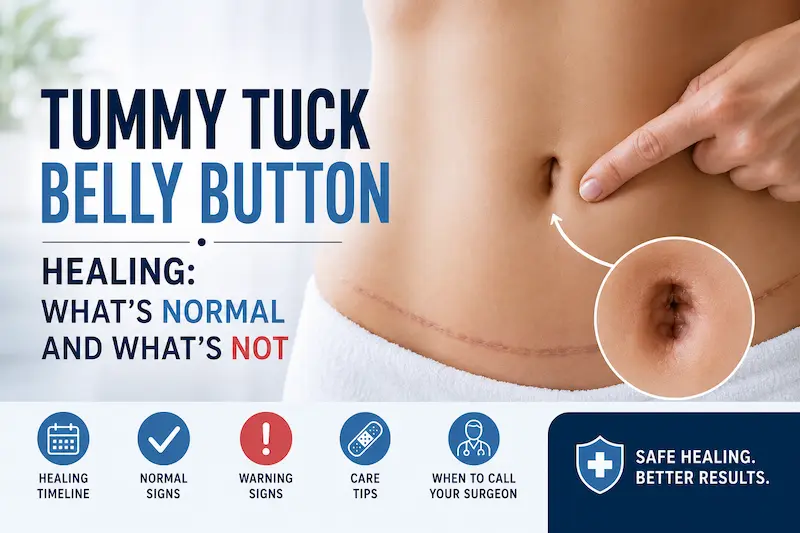
- Tummy tuck belly button healing often looks swollen, crusted, or uneven during early recovery.
- Warning signs include black tissue, foul odor, pus-like drainage, fever, or spreading redness.
- Safe aftercare means keeping the navel clean, dry, protected, and surgeon-guided.
- Final shape usually improves over months as swelling decreases and scar tissue softens.
Summary generated by AI, fact-checked by our medical experts
Quick answer: A tummy tuck belly button often looks swollen, tight, crusted, or slightly odd during the first few weeks. In most cases, that is normal healing, not a failed result. What is not normal is black tissue, worsening odor, pus-like drainage, spreading redness, fever, or pain that keeps intensifying. Those signs deserve a prompt call to your surgeon.
After a tummy tuck, the belly button is one of the areas patients check most closely. It sits in the center of the result, it changes shape as swelling shifts, and it can look “wrong” before it looks natural.
That early anxiety is understandable. A healing navel can look pinched, puffy, red, shiny, scabbed, or slightly off-center while the tissues settle. The key is knowing which changes belong to normal umbilicus healing and which changes suggest infection, poor blood supply, or another issue that needs medical review.
This guide focuses only on belly button healing after a tummy tuck. For the full procedure plan, incision strategy, and abdominal contouring approach, see AKM’s tummy tuck technique. Here, we will stay with one question: what should your new belly button look and feel like as it heals?
Table of Contents
How the New Belly Button Is Created?
Before you can judge healing, it helps to understand what actually happened to the belly button during surgery. In a full tummy tuck, the navel is usually not “removed” and replaced with an artificial one. Instead, the original umbilical stalk stays attached deeper on the abdominal wall while the loosened abdominal skin is pulled downward and the belly button is brought through a new opening.
That new opening is why the area can look tight, swollen, or unfamiliar early on. It is healing as both a small incision and a reshaped contour point. The skin around it has been moved. The scar around it is new. The surrounding abdomen is swollen. So, yes, it can look strange at first.

Why the Navel Is Repositioned
During a full tummy tuck, the surgeon removes excess lower abdominal skin and tightens the abdominal envelope. If the belly button were left exactly where it sat in the outer skin, it would be pulled too low or distorted as the skin flap moves downward.
To avoid that, the surgeon keeps the belly button attached at its deeper base and creates a new skin opening for it. ASPS describes this as a small incision around the belly button, with the belly button brought out through a new opening while staying in its original position on the abdominal wall. You can read the ASPS overview here: ASPS on the tummy tuck belly button incision.
This distinction matters. A healing belly button is not just a surface scar. It is a small, three-dimensional reconstruction. Shape, depth, tightness, and scar position all mature over time.
Sutures and Scabbing Basics
Most belly button openings are closed with fine sutures. Some are dissolvable. Some may need removal, depending on the surgeon’s technique. Steri-Strips, surgical glue, or a small dressing may also be used to protect the skin while the outer layer seals.
Scabbing is common. A scab is dried fluid and healing tissue, not something to pick off. In the first days, you may see light crusting, tiny spots of dried blood, or a small amount of clear to pale yellow fluid on the dressing. That can be part of normal surface healing.
Thick pus, a strong worsening smell, spreading redness, or increasing warmth is different. Those signs are not just “scabbing.” They belong in the warning-sign category and should be discussed with your surgical team.
Why It Looks Different at First
The first version of your belly button is not the final version. Early swelling compresses the opening. The abdominal binder or compression garment can press on the area. Bruising can change the skin color. Small scabs can make the shape look uneven.
Many patients describe the early look as too small, too round, too vertical, too tight, or “not like me.” That does not automatically mean the result is poor. The belly button has to soften before its depth and shape can be judged fairly.
The incision ends of a tummy tuck can also create separate concerns, such as small folds or “dog ears.” Those are a different issue from belly button healing. For that topic, see dog-ear correction at the incision ends.
Week-by-Week Healing
Belly button healing does not move in a perfectly straight line. It often looks roughest before it looks refined. Swelling can make the opening appear tight one day and wider the next. Scabs can darken before they lift. Itch can appear as nerves wake up and the skin seals.
The timeline below is a general guide, not a substitute for your surgeon’s instructions. Your exact healing pace depends on your skin quality, smoking status, diabetes risk, tension on the closure, surgical technique, aftercare, and how your body handles swelling. For whole-abdomen swelling rather than belly button-specific healing, read the overall swelling timeline.
Week 1: Swollen, Crusted, and Sensitive
In the first week, the belly button often looks swollen, shiny, tight, and slightly distorted. It may have a small dressing inside or over it. The edges may look pink or red. You may see dried blood or light crust.
Mild tenderness is expected. A small amount of clear or faintly yellow fluid can appear on the dressing, especially early on. The area may feel numb in some spots and tender in others. That combination can feel odd, but it is common after abdominal surgery.
Your job in week one is simple: follow the wound-care plan exactly. Keep the area clean and dry according to your surgeon’s instructions. Do not insert anything into the belly button unless your surgical team specifically tells you to. Do not scrub the scab.
Weeks 2–3: Scabs, Dissolving Sutures, and Itch
By weeks two and three, scabs may become more obvious. They can look brown, dark red, or almost black on the surface because dried blood darkens as it dries. That surface scab is different from black, unhealthy tissue underneath the skin.
Itching often starts around this time. It can be annoying. It is also a common sign that the outer layer is sealing and nerves are waking up. Mild itching is usually less concerning than worsening pain, heat, or drainage.
If dissolvable sutures are used, you may notice tiny suture ends or small “spitting” points. Do not pull on them. If a stitch catches on clothing or seems irritated, ask your surgical team how they want it handled.
Weeks 4–6: A More Natural Shape Starts to Show
Around weeks four to six, the belly button often starts to look less alarming. The scabs may lift or fall away on their own. The scar line can look pink, firm, or slightly raised. The opening may begin to look more like an innie, although it may still be shallow or uneven.
This is also the stage when patients start comparing their healing photos week by week. Be careful with that. A belly button can look better, then more swollen again after a long day, extra walking, salty food, or pressure from a garment.
At this stage, most concerns are about shape rather than safety. Is it too round? Too tight? Too high? Too visible? Those are fair questions, but they are rarely final at one month. The tissue is still remodeling.
Months 2–6: Settling and Scar Fade
From month two onward, the belly button scar usually enters a slower maturation phase. Pinkness softens. Firmness relaxes. The opening becomes less compressed. The surrounding abdominal swelling continues to drop.
The belly button can keep changing for several months. Some patients do not feel confident judging the final shape until six months or later. Scar color may take even longer to fade, especially in patients prone to hyperpigmentation or raised scars.
ASPS notes that tummy tuck scars can take a full year to fade. The belly button scar is smaller than the main lower abdominal scar, but it still follows the same biological rule: scar maturation is measured in months, not days.
What’s Normal
A healing belly button can look imperfect without being dangerous. In fact, the first few weeks are often the least flattering stage: swelling is high, the scar is fresh, and the skin has not relaxed into its final shape. The goal is not to decide whether the result is beautiful at week two. The goal is to separate expected healing from warning signs.
Normal changes should gradually improve or stay mild. They may be annoying, but they should not worsen day after day. If a change is spreading, darkening, smelling stronger, or becoming more painful, treat it differently.

Compressed or Uneven Shape
A compressed, oval, tight, or slightly uneven belly button is common early after a tummy tuck. Swelling pushes from the outside, while the healing scar pulls from the edge of the opening. That can make the navel look smaller, sharper, or more pinched than expected.
Compression garments can add to that effect. They help support the abdomen, but they can also press the belly button into a temporary shape. Once swelling decreases and scar tissue softens, the opening often looks more natural.
Mild asymmetry is also common in the early phase. The right side may look puffier than the left. One edge may be redder. One side may scab first. These differences usually matter less than the overall trend: is the area calming down over time?
Light Crusting
Light crusting around the belly button is usually part of surface healing. The crust may be tan, brown, dark red, or almost black if it contains dried blood. It may sit along the incision line or inside the navel fold.
Do not pick it. Picking a scab can reopen the skin, increase irritation, and make the scar more visible. If the crust is loose, let your surgeon’s wound-care instructions guide whether it should be left alone, softened, or cleaned gently.
Light crusting is different from thick yellow-green discharge. It is also different from a wet, foul-smelling wound. Crusting should gradually dry and lift. Drainage that becomes heavier, cloudier, or smellier deserves attention.
Mild Redness and Tenderness
Mild redness around the belly button incision can be normal, especially in the first few weeks. The skin is healing. Small blood vessels are active. The scar may look pink or red before it fades.
Some tenderness is expected too. The area may feel sore when you move, cough, bend, or adjust your garment. It may also feel numb in places, which can be unsettling but is common after abdominal surgery.
The key word is mild. Redness that stays close to the incision and slowly improves is different from redness that spreads outward, becomes hot, or comes with fever. Tenderness that eases over time is different from pain that suddenly spikes.
Early belly button healing can look strange before it looks natural. Swelling, light crusting, mild redness, and an uneven shape are often part of the process. The exceptions are the signs that point to poor blood supply or infection: black tissue, worsening odor, pus-like drainage, spreading redness, fever, or increasing pain.
What’s NOT Normal — Warning Signs
This is the section to take seriously. Most odd-looking belly buttons heal without drama, but a small number of patients develop wound-healing problems, infection, seroma, or blood-supply issues. A PubMed-indexed review of abdominoplasty complications discusses local complications such as seroma, infection, skin necrosis, suture extrusion, hypertrophic scarring, and umbilical anomalies; the practical takeaway is simple: changes that worsen rather than improve should be reviewed, not watched indefinitely. You can read the review here: research on complications after abdominoplasty.
Do not try to diagnose these signs from photos alone. Lighting, bruising, ointment, dried blood, and swelling can make the belly button look more dramatic than it is. But if you see the warning signs below, contact your surgeon or seek urgent medical care based on your team’s instructions.
Darkening or Black Tissue
A dark surface scab can be normal. Black tissue that looks wet, leathery, spreading, or attached to the skin is different. That can suggest poor blood supply or tissue necrosis, especially if the area is also numb, cold, painful, or worsening.
Patients often search for “dead belly button after tummy tuck” when they see dark scabbing. The fear is understandable. The safer approach is not to guess. Send clear photos to your surgical team, explain when the color changed, and ask whether the appearance matches normal scabbing or needs review.
Do not pull at dark tissue. Do not cut it. Do not apply harsh antiseptics unless your surgeon told you to. The right care depends on whether it is a simple scab, superficial delayed healing, or true tissue compromise.
Pus, Foul Odor, or Spreading Redness
A mild “healing” smell can happen when a covered area has ointment, dressing material, dried fluid, and sweat. A strong or worsening foul odor is not something to ignore. Odor matters more when it comes with thick drainage, warmth, redness, swelling, or fever.
Pus-like drainage may look yellow, green, gray, or cloudy. It may stain the dressing more heavily than before. The belly button may feel hot or more painful. Redness may spread outward instead of staying near the incision edge.
These signs can suggest infection. They do not mean you should panic, but they do mean you should contact your surgeon promptly. Early treatment is easier than waiting until the wound worsens.
When to Contact Your Surgeon Urgently
Call your surgeon promptly if the belly button becomes increasingly painful, develops pus-like drainage, smells strongly, turns black, or has redness that spreads across the abdomen. Also call if you have fever, chills, sudden swelling, or drainage that changes quickly.
Fluid build-up can create pressure and delayed healing around the abdomen, although seroma is not the same thing as normal belly button crusting. If the area feels like a pocket of fluid, becomes more swollen on one side, or starts leaking clear fluid in larger amounts, read more about fluid build-up (seroma) and its signs and contact your surgical team.
If you had surgery abroad, do not wait until your scheduled follow-up if a warning sign appears. Use your clinic’s emergency contact channel, send photos in good lighting, and ask for specific next steps. If you feel systemically unwell, seek local urgent medical care.
| Sign | Normal or Warning? | What to Do |
|---|---|---|
| Swollen, tight, or slightly odd shape in the first weeks | Usually normal | Track the trend, follow dressing instructions, and avoid judging the final shape too early. |
| Light brown or dark red crusting | Usually normal | Do not pick. Keep the area clean and dry as instructed by your surgeon. |
| Mild pinkness around the incision | Usually normal | Monitor whether it fades over time and stays close to the incision edge. |
| Mild itch as the skin seals | Usually normal | Avoid scratching. Ask your team what products are safe to use near the incision. |
| Black, wet, leathery, or spreading tissue | Warning sign | Contact your surgeon promptly and send clear photos. Do not remove the tissue yourself. |
| Thick yellow, green, gray, or cloudy drainage | Warning sign | Call your surgeon. This may need medical review for infection or wound-healing delay. |
| Strong foul odor that gets worse | Warning sign | Contact your surgical team, especially if odor comes with drainage, heat, redness, or pain. |
| Redness spreading outward from the belly button | Warning sign | Seek prompt advice. Spreading redness can suggest infection or inflammation that needs treatment. |
| Fever, chills, or feeling unwell | Warning sign | Contact your surgeon and seek local urgent care if symptoms are significant or escalating. |
Supporting Belly Button Healing
Good belly button healing is not about doing more. It is about doing the right things consistently and avoiding the small mistakes that irritate a fresh incision. The navel is a tight, folded area, so moisture, friction, pressure, and picking at scabs can slow it down.
Your surgeon’s instructions come first. Some surgeons want the belly button kept completely dry for a period. Others may allow gentle cleansing earlier. Some use dressings inside the navel; others do not. Follow your own plan, not a random routine from social media.

Keep It Dry and Clean
The belly button can trap moisture, especially under compression garments. Moisture softens the healing skin and can make crusting worse. That is why many aftercare plans focus on keeping the area dry, protected, and free from unnecessary products.
Use only the cleanser, ointment, or dressing your surgical team recommends. Do not use hydrogen peroxide, alcohol, essential oils, or harsh antiseptics unless your surgeon specifically tells you to. Those products can irritate healing tissue.
After showering is allowed, pat the area dry gently. Do not rub. If you are unsure whether the inside of the navel is fully dry, ask your team whether a clean gauze technique is appropriate. Guessing can do more harm than good.
Use Non-Stick Dressings Correctly
A non-stick dressing can protect the belly button from friction, but it should not create a wet, sealed pocket. If dressings are part of your plan, change them as directed and look at the drainage pattern each time.
A small amount of dried spotting can be normal. A dressing that becomes increasingly wet, cloudy, foul-smelling, or blood-soaked is not something to ignore. Take a clear photo and contact your surgical team.
Compression garments should feel supportive, not cutting. If the garment edge digs directly into the belly button, ask whether it needs adjustment. Pressure marks are common, but sharp pressure on the healing navel can irritate the incision.
Silicone Once the Scar Is Closed
Scar care usually starts only after the skin is fully closed and your surgeon clears it. That timing matters. Silicone gel or sheets can support scar maturation, but applying products too early over an open or draining area can trap moisture and increase irritation.
ASPS notes that surgeons may transition patients to scar creams after the early wound-care phase and that sun protection is important while scars mature. Belly button scars are smaller than the lower abdominal scar, but they still need time. Scar color can keep fading for many months.
If you are using silicone, keep it simple. Use it consistently, stop if the area gets irritated, and ask your surgeon before layering it with other products. More products do not mean faster healing.
What an “Innie” vs “Stuck Out” Result Depends On
Patients often ask whether the belly button will become an innie. The answer depends on several factors: the depth of the original umbilical stalk, how the new opening is shaped, skin thickness, scar contraction, swelling, and how the surrounding abdominal skin settles.
Early swelling can make the belly button look shallow or pushed out. That does not always mean the final result will be an outie. The scar can soften, the surrounding abdomen can flatten, and the navel can gain more depth as the tissue relaxes.
Still, some belly buttons heal flatter, wider, or more visible than others. If the final shape remains bothersome after full healing, revision may be discussed later. That is not a week-three decision. It is usually a conversation after the scar has matured.
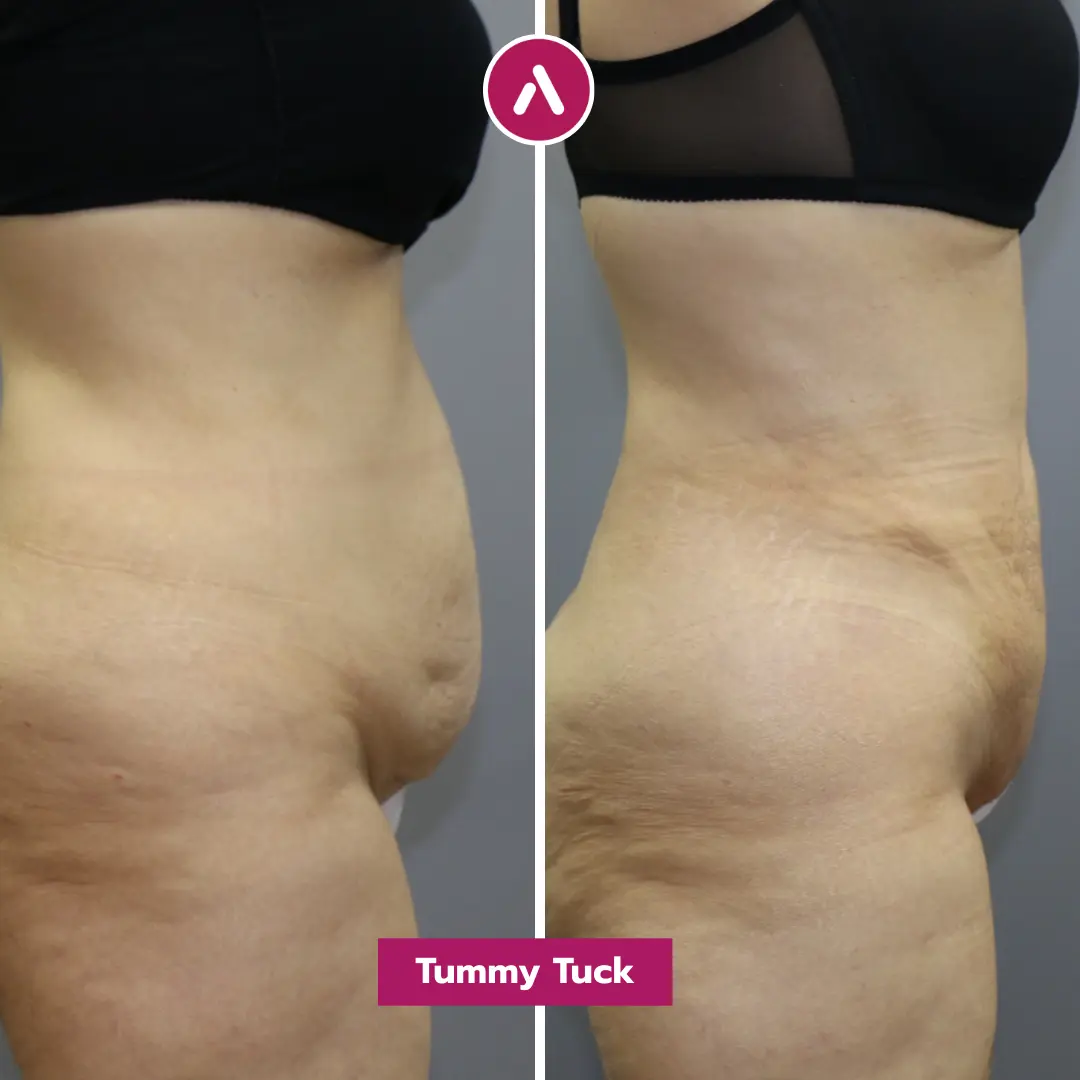
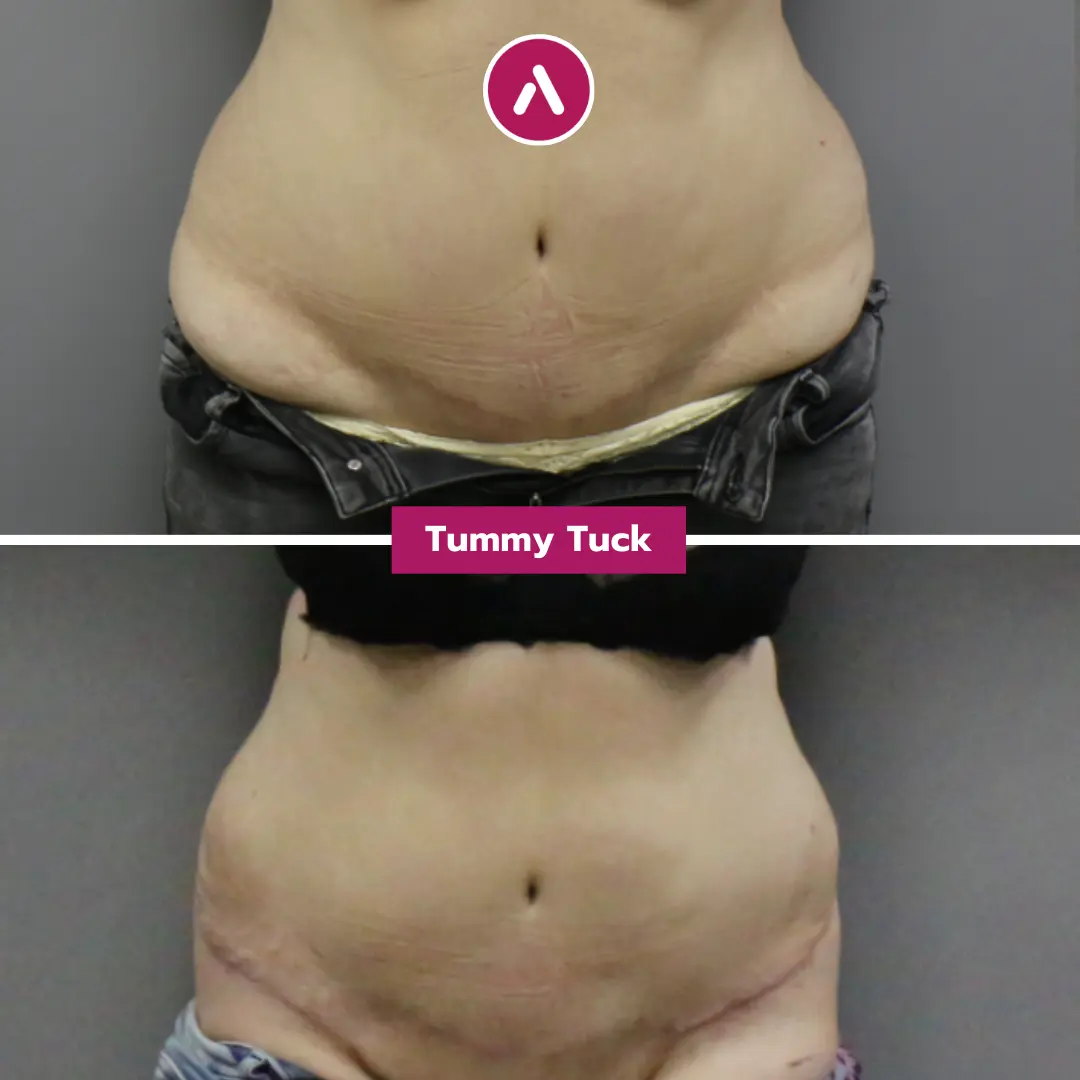
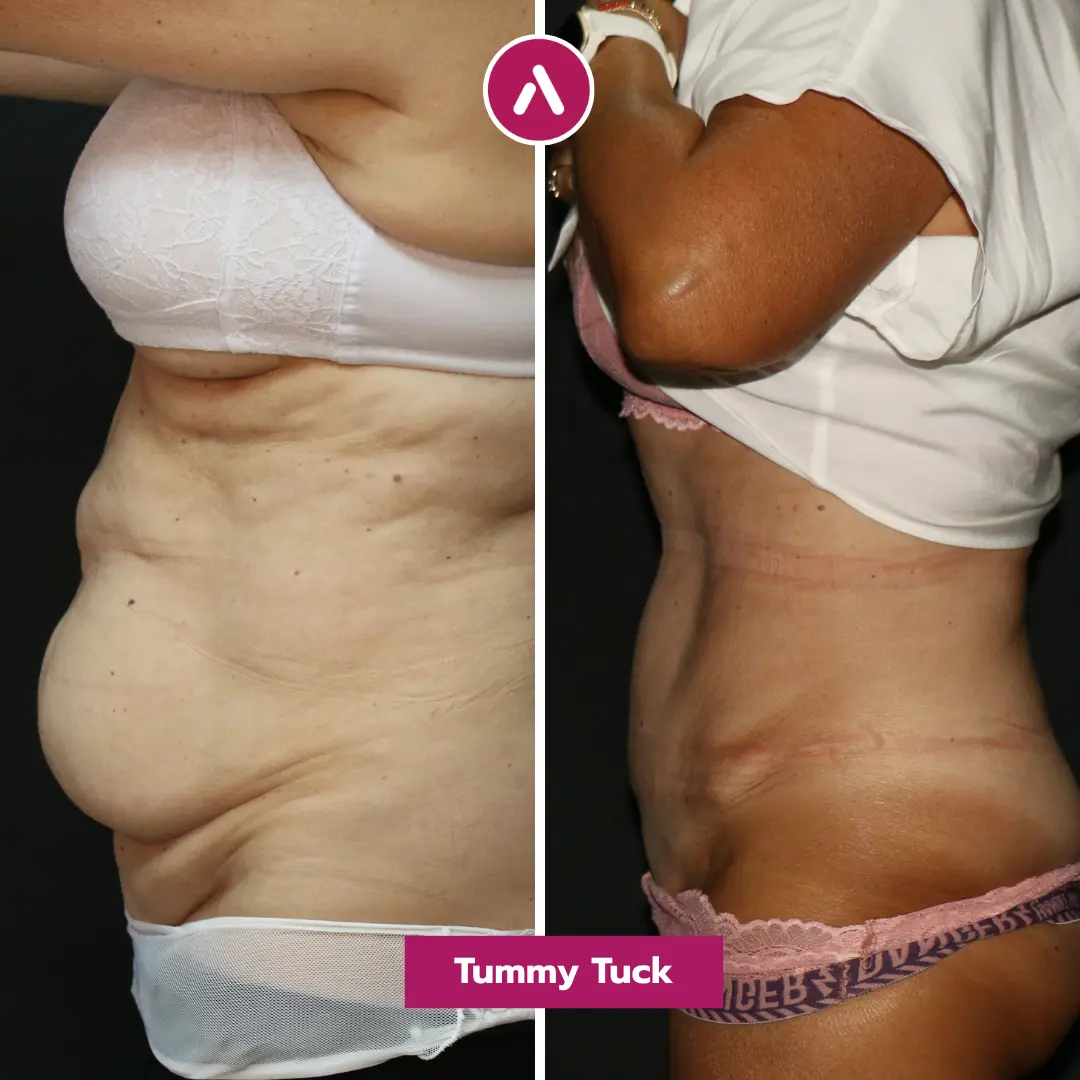
For broader activity, garment, showering, and mobility questions, use the full tummy tuck recovery guide. If you are comparing treatment investment rather than healing signs, keep this article focused and review what a tummy tuck costs in Turkey. To understand what healed outcomes can look like once swelling and scars settle, see healed belly button results.
Frequently Asked Questions: Tummy Tuck Belly Button
These are the questions patients most often ask when the belly button looks strange during recovery. The answers are general, because your surgeon’s exam and photos matter most. Use them as a guide for what is usually expected and what deserves follow-up.
Why does my belly button look weird after a tummy tuck?
What matters is the trend. A strange shape that slowly softens is different from tissue that turns black, smells worse, drains pus, or becomes more painful. If the appearance changes quickly or worries you, send photos to your surgeon.
Is scabbing normal after a tummy tuck belly button?
Do not pick the scab. Let it lift naturally unless your surgeon gives different instructions. Thick drainage, strong odor, spreading redness, or increasing pain is not simple scabbing and should be checked.
Why does my belly button smell after a tummy tuck?
If the smell is new or getting worse, contact your surgical team. Do not try to mask it with scented products or harsh cleansers. The cause needs to be assessed.
Can a belly button die or turn black after a tummy tuck?
If you notice black tissue, do not remove it yourself. Send photos to your surgeon and ask for prompt guidance. If you also feel feverish, unwell, or have spreading redness, seek urgent medical care.
When will my belly button look normal?
A fairer judgment is usually made after the early swelling phase, not in the first two or three weeks. Some scar fading continues for up to a year.
Will my belly button be an innie?
If it looks too shallow early on, wait before assuming that is final. Swelling can temporarily flatten the belly button. If the mature result still bothers you, your surgeon can discuss whether revision is appropriate.
Planning Safe Belly Button Aftercare With AKM
For US patients traveling for surgery, the most important question is not only how the belly button is created. It is how aftercare is handled once you leave the operating room, recover in Istanbul, and return home.
At AKM Clinic, tummy tuck planning is handled by a board-certified plastic surgery team, with surgery performed in Istanbul. Your care pathway includes in-person pre-op assessment, post-op monitoring, hotel recovery support, and long-term virtual follow-up at 1, 3, 6, and 12 months.
Before surgery, ask exactly how your umbilicus will be reconstructed, how dressings should be changed, what photos your team wants during healing, and which warning signs should trigger urgent contact. Good aftercare is specific. It should not leave you guessing.
Medical disclaimer: This article is for educational purposes only and is not medical advice. Tummy tuck belly button healing varies from person to person. If you have black tissue, worsening odor, pus-like drainage, spreading redness, fever, severe pain, or any concern about your incision, contact your surgeon or seek urgent medical care.
Related Treatments

Ready to Start Your Own Transformation Journey?
Join the 2,000+ patients who trusted Dr. Akif Mehmetoğlu and the AKM Clinic team. Your journey to a more confident, revitalized you begins with a simple, no-obligation conversation. Contact us today from the USA for your free virtual consultation.
#1: Get Your Free Personalised Quote
Start with a free, no-obligation online consultation. Share your photos, and our surgical team will provide a fully personalised treatment plan and a transparent, all-inclusive price package. No hidden fees.
#2: Secure Your Date & VIP Booking
Once you're ready, our dedicated patient coordinators will help you secure your procedure date. We'll handle all your bookings, including your 5-star hotel and private VIP airport transfers.
#3: Arrive in Istanbul & Meet Your Surgeon
Arrive at Istanbul Airport (IST) and be greeted by your private driver. Settle into your hotel and prepare for your in-person consultation, where you'll meet your specialist surgeon to finalise the details for your "natural, subtle, and revitalized" new look.