
Labiaplasty Recovery: A Week-by-Week Timeline
AI Summary
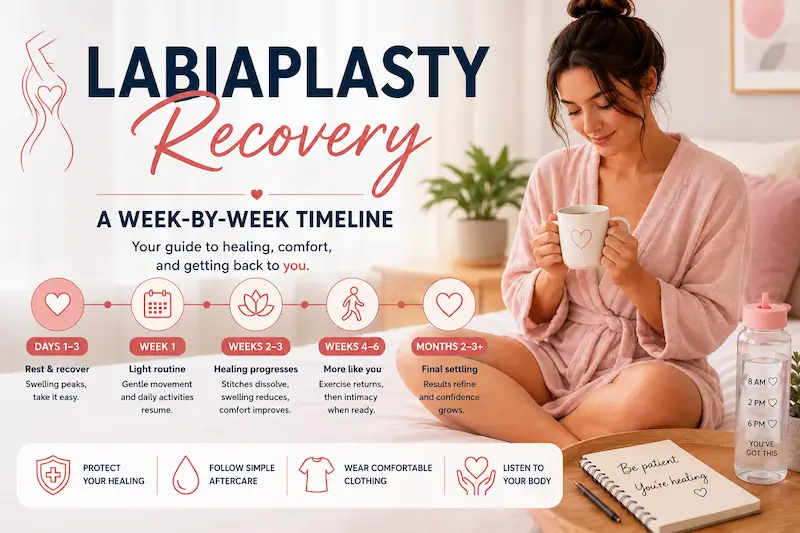
- Labiaplasty recovery typically allows desk work after one week and exercise around week four.
- Safe healing depends on gentle hygiene, loose clothing, rest, and surgeon-approved aftercare.
- Sexual activity usually resumes around six weeks, only after comfort and medical clearance.
- Cost details stay separate; planning focuses on recovery safety, comfort, and personalized follow-up.
Summary generated by AI, fact-checked by our medical experts
Labiaplasty recovery usually moves in clear stages: the first few days bring the most swelling and tenderness, many patients return to desk work after about one week, light exercise often resumes around week four, and sexual activity is usually delayed until about six weeks. Final softening and settling can continue for two to three months.
A good recovery plan should feel specific, private, and realistic. This guide walks you through labiaplasty recovery week by week, with practical details on swelling, dissolving stitches, hygiene, clothing, work, exercise, and intimacy. If you are still comparing the procedure itself, start with what labiaplasty involves at AKM; here, we will stay focused on healing.
The exact timeline depends on your anatomy, surgical plan, tissue response, and your surgeon’s aftercare instructions. Still, most patients follow a similar pattern: early swelling, gradual comfort, dissolving sutures, then a careful return to daily life. Do not rush it. Small choices in the first weeks can make recovery calmer.
Table of Contents
What to Expect Right After Surgery
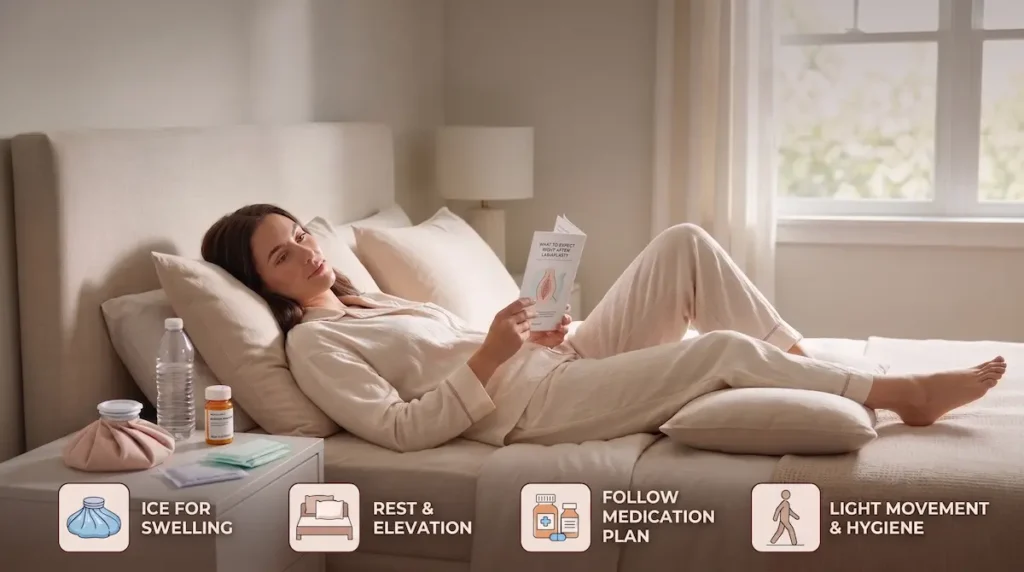
The first hours after labiaplasty are about comfort, bleeding control, swelling prevention, and protecting the incision lines. You may feel groggy if sedation was used, or fully awake but tender if the procedure was done with local anesthesia. Either way, your surgical team should send you home with clear instructions for hygiene, cold packs, medication, movement, and follow-up.
Anesthesia Wear-Off
As anesthesia wears off, mild burning, tightness, pressure, or stinging can appear. This is usually strongest on the day of surgery and the first night. The area may also feel numb in places, which can make the swelling feel strange rather than sharply painful.
Plan for a quiet first 24 hours. You should not drive yourself home, make major decisions, or try to “test” how much you can do. Rest with your hips slightly elevated when possible, walk slowly to the bathroom, and follow the medication plan your surgeon approved.
Early Swelling and Discomfort
Swelling is expected. In fact, the labia can look more swollen than many patients imagine during the first few days because the tissue is delicate and vascular. One side may look puffier than the other. That does not automatically mean the final result will be uneven.
Light spotting on a pad, mild bruising, and tenderness when sitting are also common early findings. Many patients prefer lying on their back or side with a pillow placed for support. Avoid pressure, friction, tight leggings, cycling, and long sitting sessions during this phase.
Why Technique Can Affect Recovery
Different surgical plans can create different healing patterns. A trim approach and a wedge approach may both heal well, but they place tension and incision lines differently. That can affect where swelling is most noticeable, how the sutures feel, and how long certain spots stay tender.
This article will not turn into a technique comparison. For that decision-making layer, our labiaplasty treatment page explains how trim and wedge techniques differ. In recovery, the more useful question is simple: where are my incisions, what restrictions apply to them, and when should I check in if something changes?
Week-by-Week Timeline
Labiaplasty healing is not one straight line. It moves in waves. Swelling can rise, fall, and briefly rise again after more walking or sitting. Stitches may feel prickly before they dissolve. The tissue can look uneven before it softens. A week-by-week view keeps those changes from feeling alarming.
| Recovery stage | What is healing | Activity usually allowed | Care tip |
|---|---|---|---|
| Days 1–3 | Peak swelling, tenderness, early bruising, light spotting | Short walks at home, bathroom trips, rest | Use cold packs only as directed, with a cloth barrier; never place ice directly on skin. |
| Week 1 | Swelling begins to settle, sitting feels easier, incisions still fragile | Desk work for many patients, gentle walking | Wear loose cotton underwear and avoid tight pants or friction. |
| Weeks 2–3 | Dissolving stitches may loosen, itching can appear, tenderness improves | More normal daily movement, no strenuous exercise yet | Do not pull at sutures, even if they feel irritating. |
| Weeks 4–6 | Incisions gain strength, swelling drops further, sensitivity improves | Gradual exercise if cleared; intimacy usually waits until around six weeks | Increase activity in steps, not all at once. |
| Months 2–3 | Final softening, scar maturation, shape settling | Most normal routines, with surgeon-specific guidance | Expect subtle changes rather than dramatic daily shifts. |
Recovery is usually smooth when milestones are not rushed. The goal is not to prove you feel fine early; it is to let delicate tissue heal without friction, tension, or repeated swelling triggers.
Days 1–3: Peak Swelling and Rest
The first three days are usually the most uncomfortable. Swelling often peaks here, and the labia may look puffy, firm, bruised, or temporarily uneven. This can be emotionally unsettling, especially if you expected the area to look smaller right away.
Do not judge your result in this window. The tissue is reacting to surgery. Your job is to rest, keep the area clean according to instructions, use pads rather than tampons, take short walks to reduce stiffness, and avoid anything that increases pressure.
You may be advised to use cold packs in short intervals during the first day or two. Keep a soft barrier between the cold source and skin. Direct ice can injure delicate tissue, so more cold is not better.
Week 1: Desk Work and Gentle Walking
By the end of the first week, many patients can return to desk work if they can avoid long sitting blocks and heavy physical tasks. Remote work may feel easier because you can change position, wear loose clothing, and take short breaks. A commute may make things harder.
Walking is usually encouraged, but only in a light, practical way. Think bathroom, kitchen, short indoor strolls, and gentle circulation. Avoid long walks for fitness, squats, lunges, cycling, running, or any movement that creates rubbing.
Some spotting can still occur. It should trend lighter, not heavier. If bleeding increases, pain suddenly worsens, or one area becomes sharply swollen, contact your surgical team instead of waiting for the next scheduled check-in.
Weeks 2–3: Sutures Dissolve and Swelling Eases
Weeks two and three often feel more manageable. The swelling is still present, but it may no longer dominate every movement. Sitting can become easier. Clothes may feel less irritating. Itching can appear as the skin and incision lines heal.
Dissolving stitches may soften, loosen, or fall away in small pieces. Do not tug at them. Pulling can reopen a tiny spot or create irritation. If a stitch feels sharp or catches on clothing, ask your surgeon what to do rather than trimming it yourself.
This is also the stage where patients sometimes overdo activity because they feel better. That can trigger a swelling rebound. If you have a busy day and the area feels more tender or puffy that evening, scale back and rest the next day.
Weeks 4–6: Exercise First, Then Intimacy
Around week four, many patients begin a gradual return to exercise if their surgeon clears them. Start with low-impact movement. Avoid cycling, horseback riding, intense lower-body workouts, hot tubs, swimming, and anything that creates direct pressure until you have explicit clearance.
Sexual activity is usually delayed until about six weeks. This is not only about pain. It is about protecting incision strength, reducing friction, and lowering the risk of bleeding or delayed healing. Feeling ready emotionally and physically matters too.
If you resume exercise or intimacy and notice pain, fresh bleeding, or significant swelling afterward, stop and contact your surgical team. Healing milestones are not deadlines. They are checkpoints.
Months 2–3: Final Settling
By two to three months, most patients feel much more normal. Swelling continues to fade, sensitivity becomes less distracting, and the tissue gradually softens. The final shape looks more settled than it did in the first month.
Small asymmetries can still improve during this period. Scar tissue also matures over time, so the feel of the area may keep changing. Some patients notice brief sensitivity shifts, especially with tight clothing or prolonged activity.
Your long-term result should be assessed after healing has had time to mature. Early photos can be useful for documentation, but they should not be treated as the final outcome.
Hygiene, Clothing & Comfort
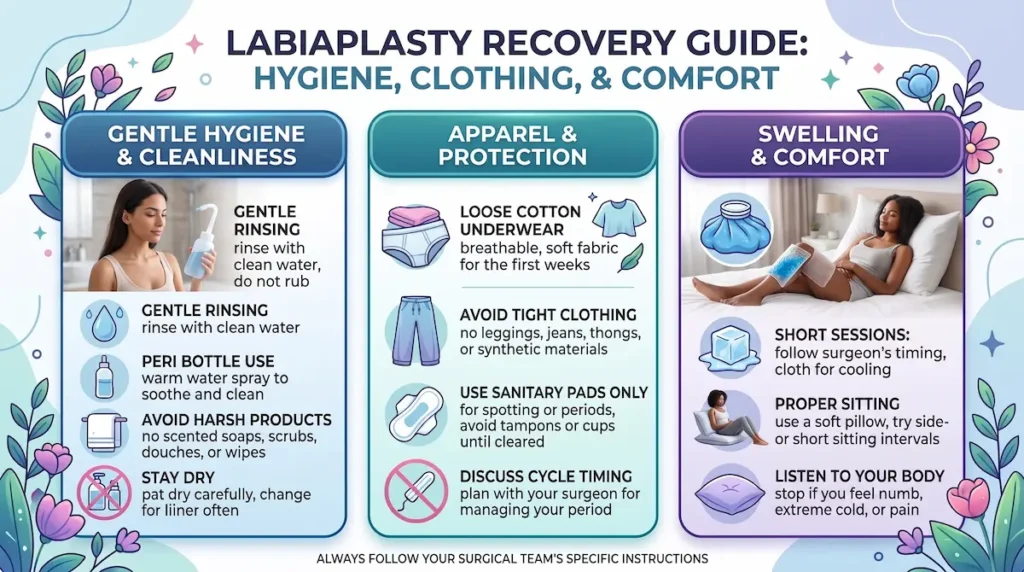
Good labiaplasty recovery is not only about resting. It is also about reducing friction, keeping the area clean without over-cleaning it, and choosing clothing that does not press on healing tissue. The aim is simple: protect the incisions while swelling, stitches, and sensitivity settle.
Keeping the Area Clean
Your surgeon’s hygiene instructions come first. In general, the area should be kept clean, gently rinsed as directed, and patted dry rather than rubbed. Avoid scented soaps, harsh wipes, exfoliants, douches, and any product that was not approved by your surgical team.
After urinating, some patients are told to rinse with a peri bottle or clean water to reduce stinging and keep the area comfortable. Use a gentle approach. Strong water pressure can irritate the incision lines.
Dryness matters too. Moisture trapped against the skin can make itching, odor, or irritation worse. Change pads regularly, wear breathable underwear, and avoid sitting in damp workout clothes or swimsuits while you are still healing.
Loose Cotton, Pads, and No Tampons Early
Loose cotton underwear is usually the most comfortable choice in the first weeks. Tight leggings, jeans, thongs, shapewear, and synthetic fabrics can rub directly on swollen tissue. Even if they feel fine for a few minutes, they may cause soreness after several hours.
Use pads or liners if you have spotting or your period begins during early recovery. Tampons are usually avoided until your surgeon clears them because insertion can create pressure, friction, or contamination near the healing area. Menstrual cups should also wait for clearance.
If you are planning surgery around your cycle, discuss timing during your consultation. You do not need to feel embarrassed. This is practical recovery planning, and your team should answer it clearly.
Cold Packs Done Safely
Cold packs can help with early swelling, but they must be used carefully. Place a soft cloth barrier between the cold source and skin. Keep sessions short and follow the schedule your surgeon gave you.
Never apply ice directly to the labia. Direct cold can damage delicate tissue and reduce circulation. If the area feels numb, overly white, sharply painful, or more irritated after cooling, stop and ask your surgical team what to do.
Comfort also includes how you sit. A soft pillow, side-lying position, or short sitting intervals may feel better than sitting upright for long periods. Listen to those signals. Discomfort is often your body’s way of asking for less pressure.
What’s Normal vs Worth Flagging
The hardest part of recovery is often knowing what to ignore and what to report. Mild swelling, temporary asymmetry, bruising, itching, and tenderness can be normal. Sudden worsening, spreading redness, heavy bleeding, pus, fever, or severe one-sided swelling should be treated differently.
Normal Swelling and Asymmetry
Swelling is expected after labiaplasty. It can make the labia look larger before they look smaller. It can also make one side appear more prominent, especially if one side needed more correction or carries more early fluid.
That early unevenness is not the same as a final asymmetry. The tissue changes day by day during the first weeks and more subtly over the next few months. For a deeper look at the swelling curve, read our guide to how labiaplasty swelling progresses.
Itching can also be part of healing, especially as sutures dissolve. Mild yellowish bruising, light spotting, and a pulling sensation with certain movements may occur. These should gradually improve, not intensify.
Signs to Contact Your Surgeon
Call your surgeon if pain suddenly increases after it had been improving, bleeding becomes heavy, or swelling becomes sharply one-sided and tense. A foul odor, pus-like discharge, fever, chills, spreading redness, or skin that looks dark, gray, or blistered also deserves prompt medical review.
Some symptoms are not emergencies, but still need guidance. Persistent burning, unusual discharge, severe itching, or sensitivity changes should be discussed rather than guessed at.
Do not try to self-treat an incision concern with leftover antibiotics, strong topical creams, alcohol, hydrogen peroxide, or online remedies. These can irritate healing tissue and make assessment harder.
Poor-Result Red Flags
A final result cannot be judged in the first few weeks. Swelling can distort shape, and the incisions need time to soften. Still, there are warning signs that should not be dismissed as “normal healing.”
Open wound edges, tissue loss, severe notching, persistent bleeding, marked asymmetry that worsens instead of improves, or intense pain with abnormal color change should be reviewed. If you are worried about an outcome rather than routine healing, ask your surgical team to review it instead of waiting.
Clinical note: A 2024 systematic review of labiaplasty outcomes describes the procedure as generally effective with low associated risks, but also emphasizes individualized technique selection. In recovery terms, that means your surgeon should judge your healing against your exact anatomy and operative plan, not a generic photo online.
Getting Back to Activity Safely
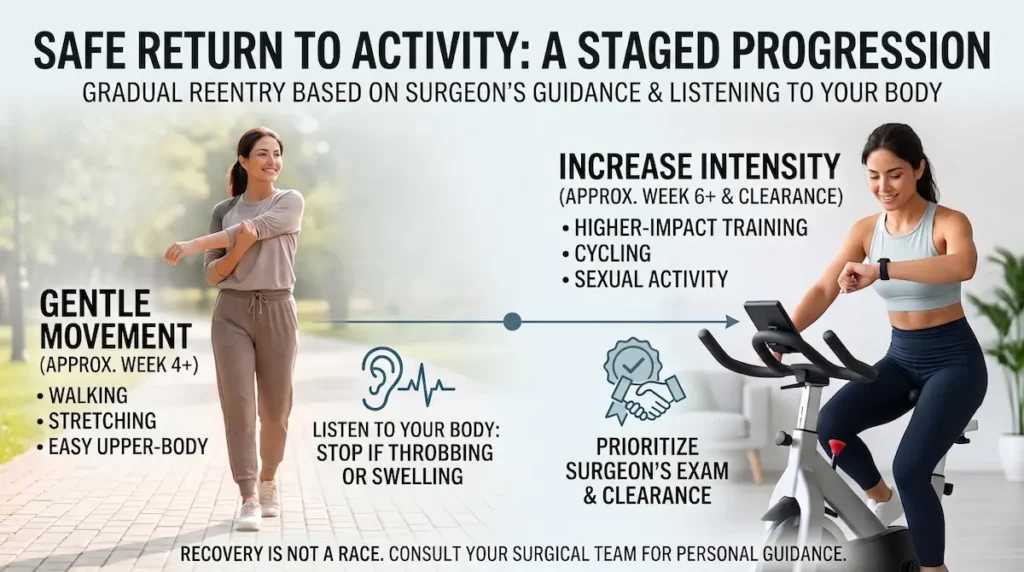
Returning to activity is a staged process. Feeling better does not always mean the incision lines are strong enough for friction, stretching, sweating, or sexual activity. This section keeps the timeline practical, but your own clearance should come from your surgeon.
Exercise Around Four Weeks
Many patients can begin gentle exercise around week four if healing is on track. Start low-impact. Walking, light stretching, and easy upper-body movement are usually safer first steps than running, cycling, squats, hot yoga, or intense lower-body training.
Cycling, spinning, horseback riding, rowing, and similar activities create direct pressure or repeated friction. These often need more time. If an activity makes the area throb, swell, or bleed, stop and step back.
ASPS patient guidance places return to an active lifestyle in the two-to-four-week range for many patients, while also advising that sexual intercourse may require a longer wait. Use that as a general benchmark, not a personal clearance slip. Your surgeon’s exam matters more than the calendar.
Sex Around Six Weeks
Sexual activity is commonly delayed until around six weeks, sometimes longer. This waiting period protects the incision lines from stretching, pressure, bacteria, and friction. It also gives swelling and sensitivity more time to settle.
When you are cleared, resume slowly. Use lubrication if needed, avoid pressure if anything feels tender, and stop if there is pain or bleeding. Emotional readiness matters too. It is normal to feel cautious the first time.
If you notice swelling after intimacy, rest and monitor it. If swelling is significant, painful, one-sided, or paired with bleeding or discharge, contact your surgical team. Do not push through symptoms to “get back to normal.”
Listening to Your Body
Recovery is not a race. Some patients feel nearly normal after two weeks; others need more time before sitting, workouts, or intimacy feel comfortable. Both can be normal if the overall trend is improving.
A helpful rule is to increase one variable at a time. Do not return to work, restart workouts, wear tight clothing, and resume sex in the same week if you can avoid it. If swelling rebounds, you will not know what triggered it.
If you are comparing treatment costs while planning recovery time, keep that topic separate from healing decisions. This article stays focused on recovery; for the pricing page, see what labiaplasty costs in Turkey.
US planning note: Before traveling, ask your board-certified plastic surgery team for written guidance on work, showering, pads, tampons, exercise, sex, flying, and who to contact after you return home. A safe recovery plan should be specific, not vague.
If you want a discreet recovery plan built around your work schedule, travel dates, and comfort concerns, ask AKM about the recovery plan and aftercare support in a consultation.
Frequently Asked Questions: Labiaplasty Recovery
These questions cover the most common practical concerns patients have during labiaplasty recovery. Use them as a planning guide, but follow your own surgeon’s instructions if they are more specific or more conservative.
How long is labiaplasty recovery?
Final settling can continue for two to three months. Some residual firmness, sensitivity, or mild swelling may improve gradually after the visible early recovery has passed.
When can I work out after labiaplasty?
ASPS notes that many women return to active lifestyle and fitness routines within the 2–4 week range, while still emphasizing surgeon guidance. You can review ASPS guidance on returning to activity for a general US benchmark.
When can I have sex after labiaplasty?
When you are cleared, resume slowly and stop if you feel pain, pulling, or bleeding. If symptoms appear afterward, contact your surgical team rather than trying again too soon.
When do stitches dissolve after labiaplasty?
If a stitch feels sharp, catches on underwear, or seems to be irritating the skin, ask your surgeon what to do. A small stitch concern is easier to manage early than after repeated friction.
Can I use tampons after labiaplasty?
Your surgeon may clear tampons after several weeks, often around the same time the tissue is strong enough for more normal activity. Menstrual cups should also wait for direct clearance.
When does swelling go down after labiaplasty?
Most visible swelling improves by six weeks, but subtle residual swelling and tissue firmness can continue to settle for a few months. If swelling suddenly worsens, becomes sharply one-sided, or comes with increasing pain, bleeding, odor, fever, or discharge, contact your surgeon.
For broader evidence context, a systematic review of labiaplasty outcomes found high overall satisfaction across methods while noting that technique choice and patient anatomy matter. That is why your recovery advice should be personalized to your operative plan.
Medical disclaimer: This article is for general educational purposes only and is not a substitute for medical advice, diagnosis, or treatment. Recovery timelines vary by anatomy, surgical technique, health history, and aftercare. Always follow the instructions of your qualified surgeon and seek urgent medical care for severe pain, heavy bleeding, fever, spreading redness, foul-smelling discharge, or any symptom that feels unsafe.
Related Treatments



Ready to Start Your Own Transformation Journey?
Join the 2,000+ patients who trusted Dr. Akif Mehmetoğlu and the AKM Clinic team. Your journey to a more confident, revitalized you begins with a simple, no-obligation conversation. Contact us today from the USA for your free virtual consultation.
#1: Get Your Free Personalised Quote
Start with a free, no-obligation online consultation. Share your photos, and our surgical team will provide a fully personalised treatment plan and a transparent, all-inclusive price package. No hidden fees.
#2: Secure Your Date & VIP Booking
Once you're ready, our dedicated patient coordinators will help you secure your procedure date. We'll handle all your bookings, including your 5-star hotel and private VIP airport transfers.
#3: Arrive in Istanbul & Meet Your Surgeon
Arrive at Istanbul Airport (IST) and be greeted by your private driver. Settle into your hotel and prepare for your in-person consultation, where you'll meet your specialist surgeon to finalise the details for your "natural, subtle, and revitalized" new look.