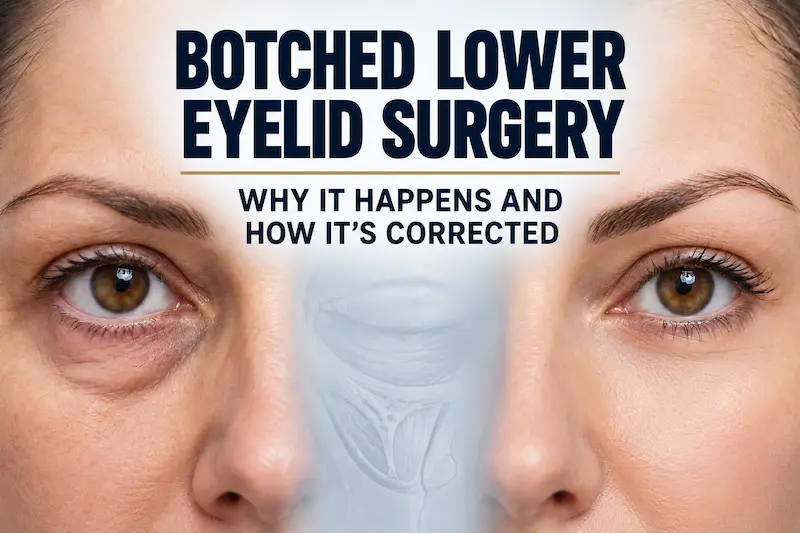
Botched lower eyelid surgery usually means the lower lid sits too low, pulls away from the eye, or makes the eye look rounder, sadder, hollow, or uneven. It can happen after too much skin or fat is removed, when lid laxity is missed, or when canthal support is not planned. Many problems can be improved, but the right fix depends on the cause.
Lower eyelid surgery is delicate. A few millimeters matter. The lower lid must keep its position against the eye, support the tear film, protect the cornea, and still look natural in motion.
That is why a “bad” result is rarely just a cosmetic complaint. It may involve anatomy, eyelid support, scarring, and eye comfort. At AKM Clinic, lower-lid planning starts with the same principle used across facial surgery: rejuvenation over alteration. You can learn more about how AKM plans lower eyelid surgery before comparing revision options.
This guide is written for patients who feel something is wrong after lower blepharoplasty. It explains what a true complication looks like, why it happens, how experienced surgeons try to prevent it, and what correction may involve.
Table of Contents
What “Botched” Lower Eyelid Surgery Actually Means
A lower eyelid result is usually called “botched” when the lid no longer rests in a stable, natural position or the under-eye looks structurally depleted. The issue may be visible in photos, but patients often feel it too. Dryness, exposure, tearing, tightness, or a pulled-down lid can all point to a functional problem.
Lower eyelid retraction, ectropion, and scleral show
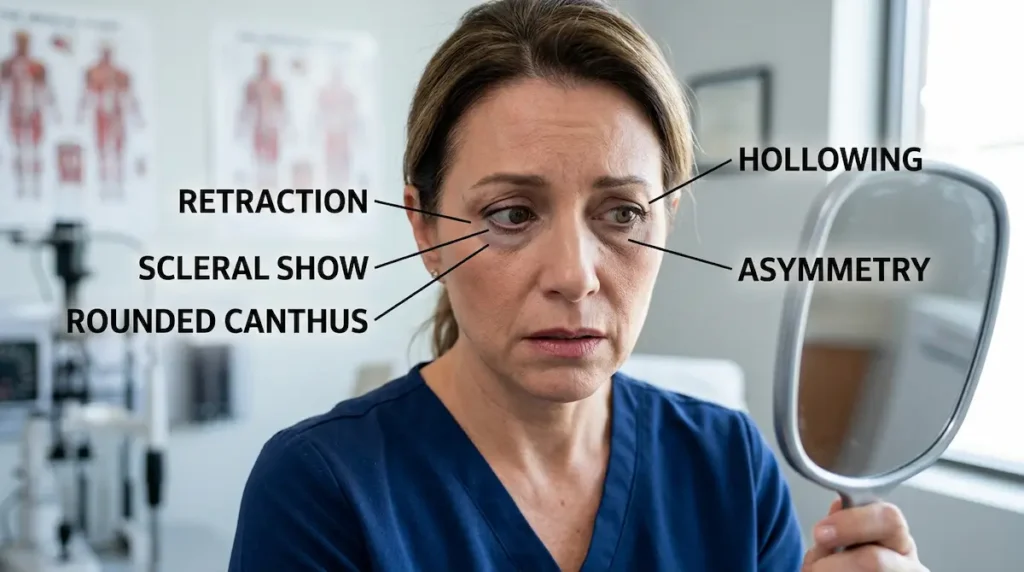
Lower eyelid retraction means the lower lid sits too low on the eye. It often exposes more of the white of the eye than before. This is called scleral show after eyelid surgery, and it can make the eyes look startled, tired, or surgically altered.
Ectropion after blepharoplasty is different but related. In ectropion, the lower lid rolls outward or pulls away from the eyeball. The eye may water, burn, feel gritty, or become red because the lid is no longer protecting the surface correctly.
These changes can be mild or severe. Some early tightness improves. Persistent pulling needs assessment.
Rounded eyes after blepharoplasty
Rounded eyes after blepharoplasty happen when the natural almond shape is softened or lost. The outer corner may sit lower, the lower lid may curve downward, or the eye may look wider than intended. Patients often describe this as a “sad eye,” “puppy eye,” or “operated-on” look.
The problem is usually not the incision alone. It is support. If the lower lid had pre-existing laxity, or if the outer corner was not protected, surgery can reveal or worsen that weakness.
Hollowing and asymmetry after fat removal
Another form of bad lower blepharoplasty is hollowing. This happens when under-eye fat is removed too aggressively, especially in patients who already have a tear-trough hollow or weak cheek support. The bags may be gone, but the eye can look sunken.
Hollow under eyes after fat removal can be harder to correct than a small residual bag. Volume has to be restored carefully. In many cases, modern planning favors conservative fat removal, fat repositioning, or cheek support rather than simply “taking out the bags.”
Asymmetry can also appear. One lid may sit lower, one hollow may look deeper, or one outer corner may look rounder. Small asymmetries are common in healing; stable asymmetry after swelling resolves needs a more precise diagnosis.
Normal healing vs. a true lower-lid problem
Not every early concern is a botched result. Swelling can distort the lower lid. Bruising can make hollows look darker. Temporary tightness can make the eye shape look strange for several weeks.
Still, some signs deserve prompt review. Call your surgeon urgently if you have worsening pain, vision changes, increasing redness, discharge, inability to close the eye, or severe dryness. Do not wait on eye symptoms.
| Problem | Typical Cause | Prevention | Possible Correction |
|---|---|---|---|
| Lower eyelid retraction | Missed lid laxity, scarring, negative vector anatomy | Snap-back and distraction testing, canthal support, conservative skin removal | Massage early; later canthoplasty, spacer graft, or midface support |
| Ectropion | Weak lower lid support or excess skin removal | Canthopexy or canthoplasty when laxity is present | Canthal tightening, skin graft, or reconstructive eyelid repair |
| Scleral show | Lower lid pulled below its natural position | Preserve lid tone and avoid over-resection | Canthal support, spacer graft, or cheek-lid lift depending on anatomy |
| Under-eye hollowing | Too much fat removed or weak cheek volume | Fat repositioning, conservative fat removal, cheek assessment | Fat grafting, filler in selected cases, or fat repositioning revision |
| Asymmetry | Uneven swelling, scar pull, uneven fat removal, pre-existing asymmetry | Pre-op photo analysis and measured tissue handling | Wait for swelling to settle; targeted revision if stable |
“Lower-eyelid mistakes often start in planning. If laxity is not measured, the surgeon may remove tissue from a lid that actually needed support.” — AKM Clinic board-certified surgical team
Why It Happens
Most lower-lid complications have a reason. They are not random. The same visible problem can come from skin shortage, weak canthal support, internal scarring, prominent-eye anatomy, or volume loss.
Untreated lid laxity and missed canthal support
The lower eyelid works like a small suspension system. It needs enough tone to stay against the eye after surgery. If the lid is already loose before surgery, removing skin or tightening tissue can pull it downward instead of making it look smooth.
This is why surgeons examine lid laxity before lower blepharoplasty. Two common checks are the snap-back test and the distraction test. Clinical references on lower-lid canthal support describe canthopexy and canthoplasty as structural tools for lower eyelid laxity, ectropion, and lid malposition; see the StatPearls chapter on lower lid canthal support.
Canthal support is not cosmetic decoration. It is structural. When the outer corner is weak, the lower lid can drift down, roll out, or lose its clean almond shape.
Too much skin or muscle removal
Old-style lower blepharoplasty often focused on removing skin, muscle, and fat. That approach can help the right patient. In the wrong patient, it can shorten the front layer of the eyelid, called the anterior lamella.
When this layer is too short, the lid may not have enough tissue to sit comfortably against the eye. Retraction and ectropion become more likely. This is one reason conservative skin removal matters so much.
More removal does not mean a better result. It often means less forgiveness.
Middle lamellar scarring
The middle layer of the lower eyelid can scar after surgery. This is called middle lamellar scarring or fibrosis. When scar tissue contracts, it can pull the lid downward from the inside.
This type of problem may not be obvious in the first few days. It can become clearer as swelling falls and scar contraction develops. Patients may notice that the lid looks tighter, lower, or more exposed over time.
Negative vector or prominent-eye anatomy
Some patients have eyes that sit more forward relative to the cheek. Surgeons may call this a negative vector or prominent globe anatomy. In simple terms, the lower lid has less cheek support beneath it.
This anatomy does not mean surgery is impossible. It means planning must be more cautious. The surgeon may need stronger canthal support, cheek support, fat repositioning, or a less aggressive skin-removal plan.
Fat removal without volume planning
Lower eyelid bags are often caused by fat that bulges forward. The tempting answer is to remove it. But the under-eye ages through both bulging and volume loss, so simple fat removal can trade a bag for a hollow.
That is how hollowing happens. In patients with tear-trough depth or cheek flattening, fat repositioning may be safer than fat removal alone. The goal is not an empty under-eye; the goal is a smooth lid-cheek transition.
Confusing the real source of the problem
Sometimes the eyelid is blamed for a problem that comes from somewhere else. Brow position, upper-lid hooding, ptosis, facial asymmetry, or cheek descent can all change how the lower eyelid looks.
For example, some patients who think a lid result is “bad” actually have an untreated drooping-lid condition. This is where it helps to understand why droop can be ptosis rather than a bad result.
Upper-lid heaviness can also distract from lower-lid planning. It belongs in a separate assessment, especially when patients are considering upper eyelid hooding and its surgery.
Technique-specific procedures have their own risk patterns too. For example, double eyelid surgery and its own risk profile should not be judged by the same criteria as lower-lid retraction surgery.
How Good Planning Prevents It
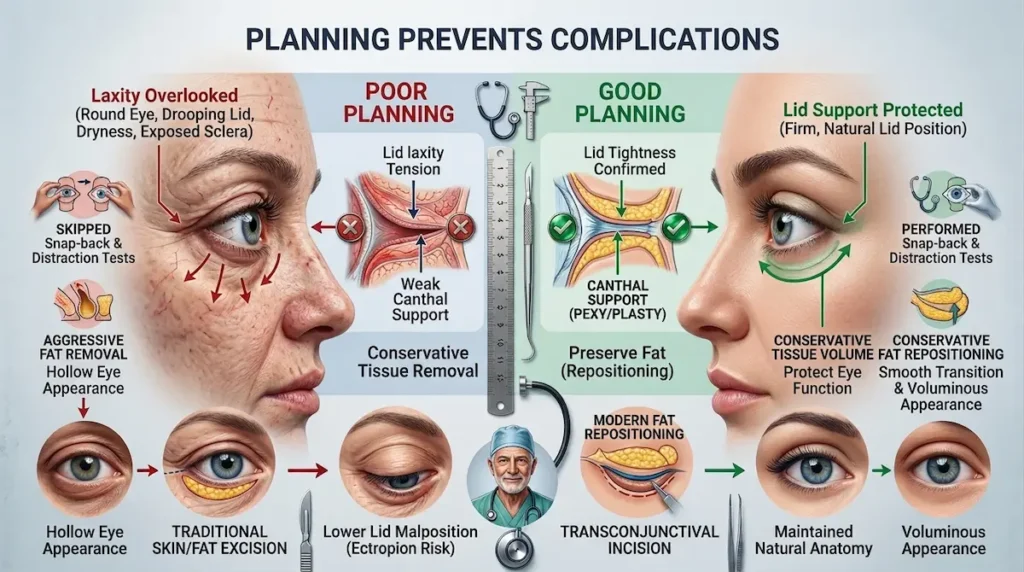
Prevention starts before the first incision. A safe lower blepharoplasty plan does not ask only, “How much skin or fat can be removed?” It asks whether the lower lid can tolerate the change.
Snap-back and distraction tests
Before lower eyelid surgery, the surgeon should check how firmly the lid rests against the eye. The snap-back test gently pulls the lower lid down and watches how quickly it returns. A healthy lid snaps back immediately. A weak lid returns slowly or needs a blink to reset.
The distraction test checks how far the lower lid can be pulled away from the eye. More movement can mean more laxity. That matters because a loose lid is more likely to drop, round, or roll outward after surgery.
These tests are simple. They are also easy to skip. In revision consultations, patients often say they were told only that their bags would be removed. They were not told their eyelid support would be assessed.
Canthopexy vs. canthoplasty
The lateral canthus is the outer corner of the eyelid. It helps keep the lower lid in position. If that support is weak, a surgeon may recommend canthal support at the same time as blepharoplasty.
Canthopexy is a reinforcing procedure. It supports the outer corner without fully cutting and reconstructing the tendon. Canthoplasty is stronger and more reconstructive. It is often used when laxity is more advanced or when correction is needed after a bad result.
This is also where terminology can confuse patients. A canthopexy may be discussed in aesthetic eye-shape procedures, but in lower blepharoplasty planning it has a protective role. For context, see how canthopexy is used in fox eye surgery, while remembering that this article is focused on lower-lid support rather than cosmetic eye tilting.
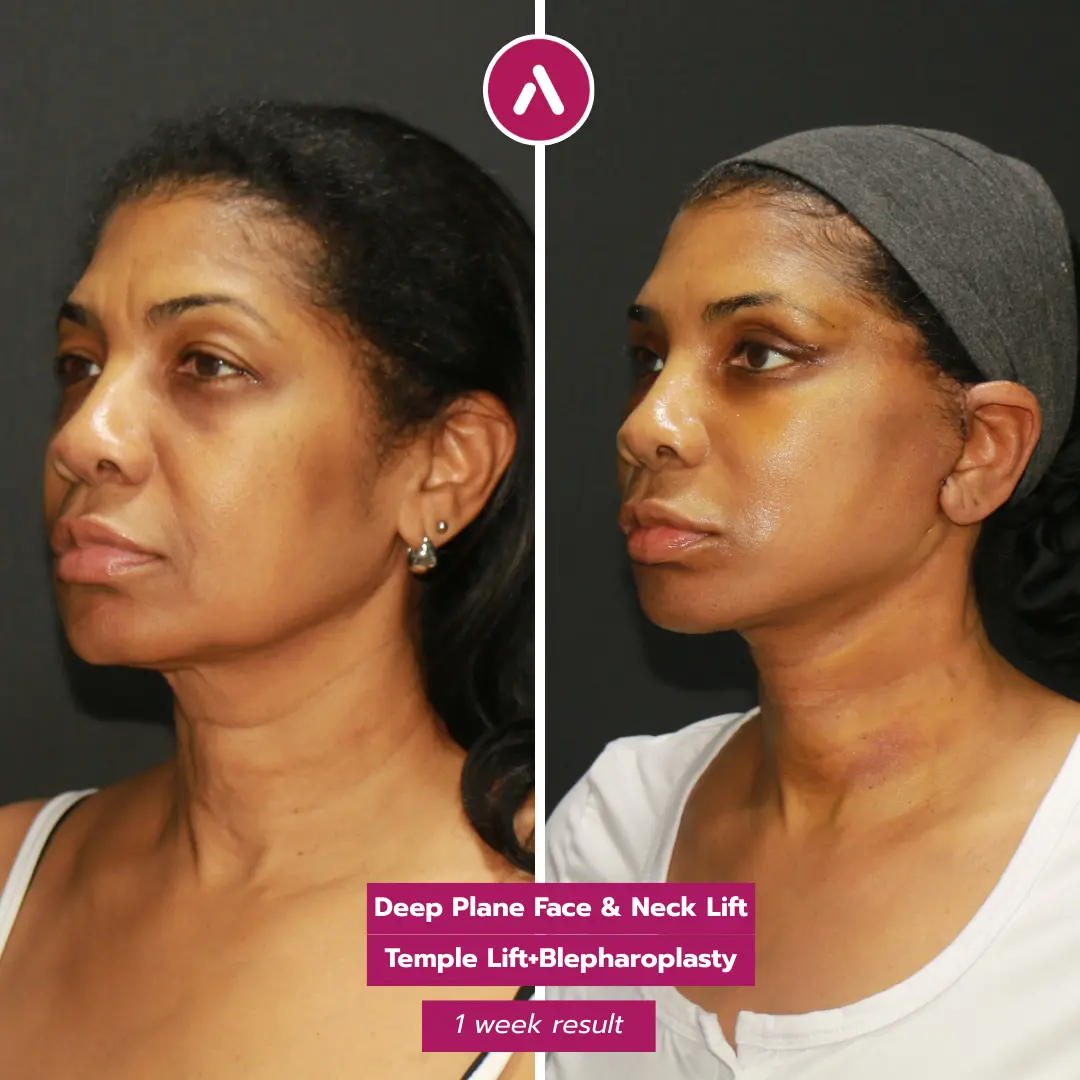
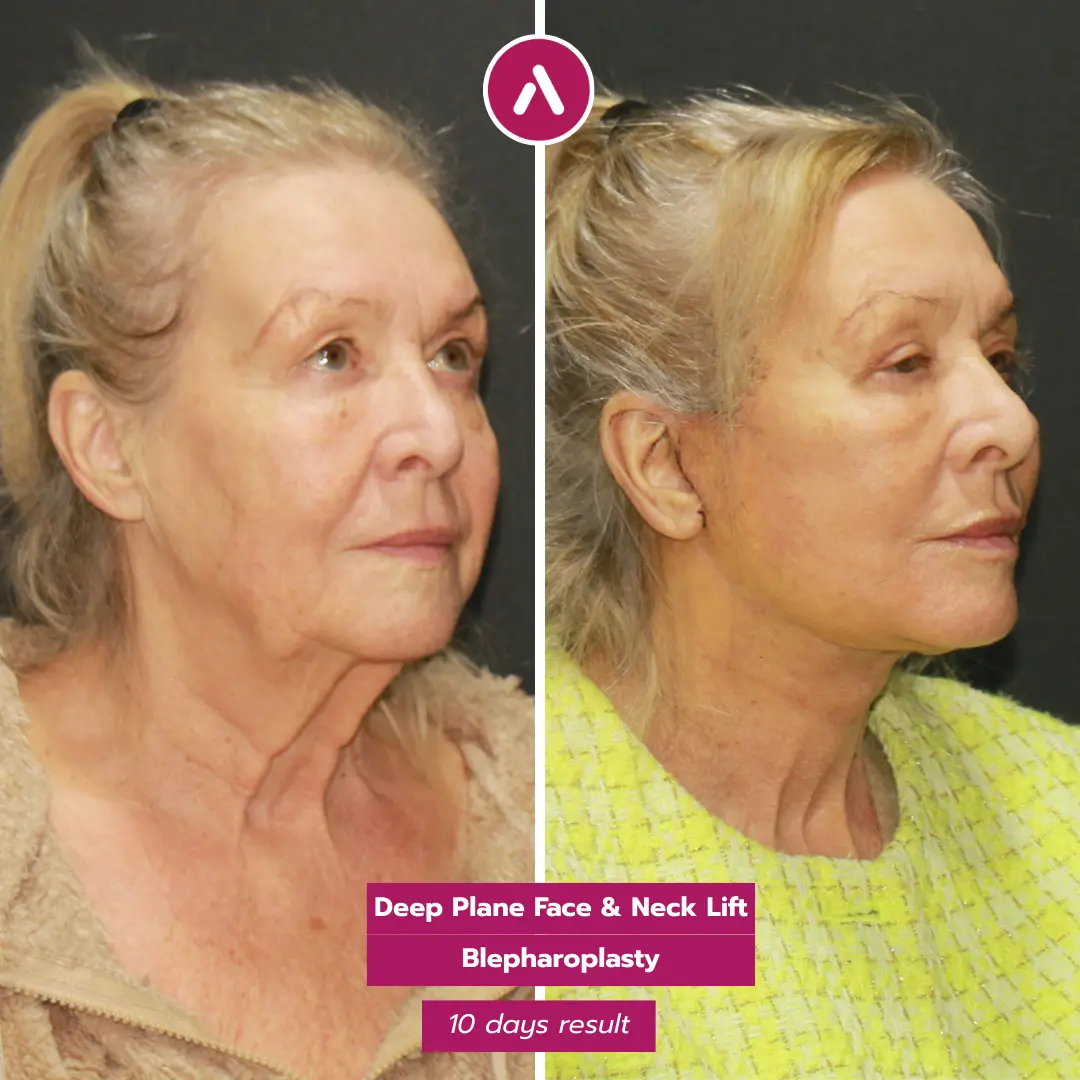
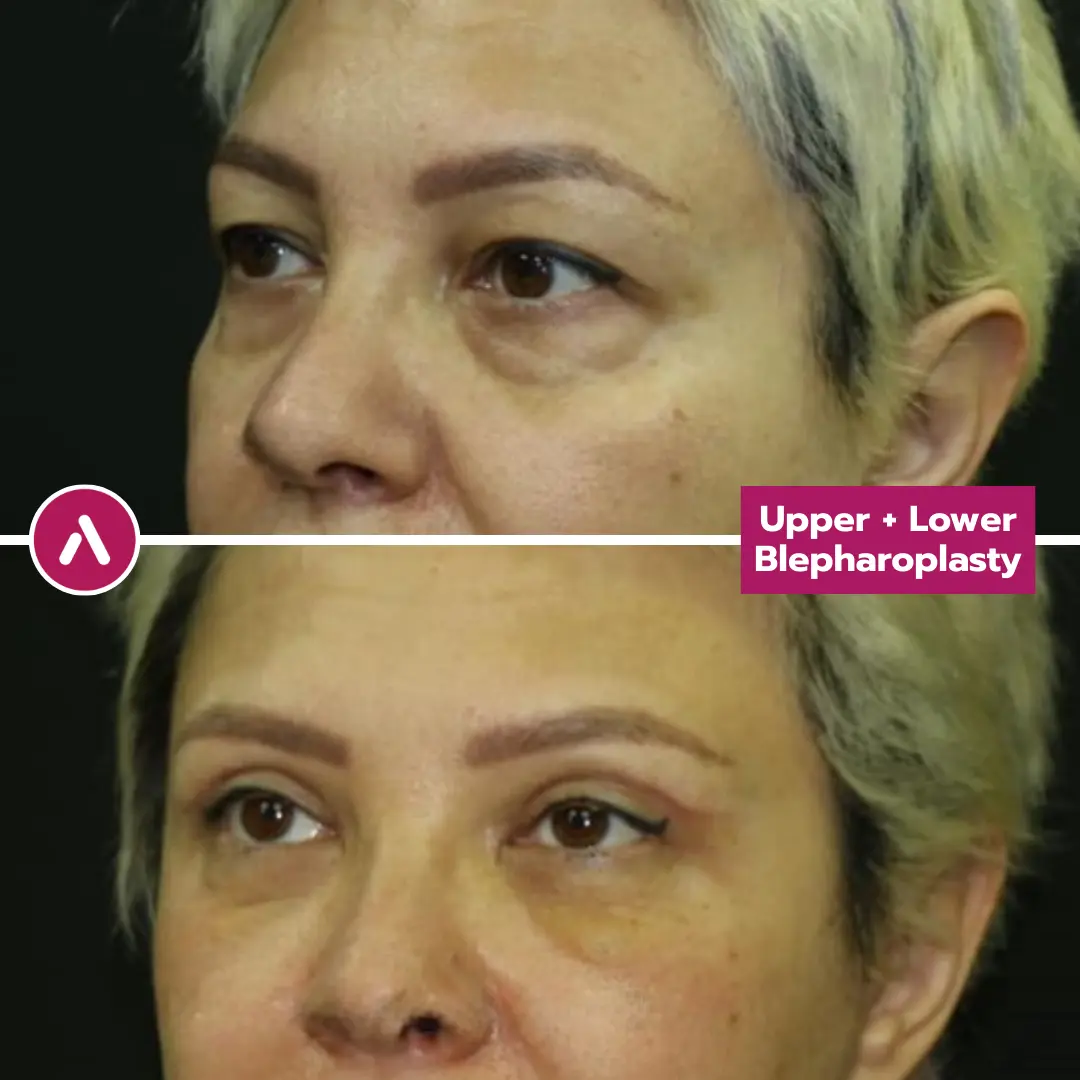
Transconjunctival lower blepharoplasty
A transconjunctival approach places the incision inside the lower eyelid. It avoids cutting through the external lower-lid skin and can reduce the risk of visible scarring. In selected patients, it may also lower the chance of anterior lamellar shortage because external skin is not aggressively removed.
This approach is not right for every patient. It works best when the main issue is fat bulging rather than loose lower-lid skin. If there is extra skin, a conservative pinch excision or laser resurfacing may be considered separately.
The key word is conservative. Lower eyelids do not tolerate aggressive tissue removal well.
Fat repositioning instead of aggressive fat removal
Modern lower blepharoplasty often aims to smooth the transition between the lid and cheek. That may mean preserving or repositioning fat instead of removing too much of it.
Fat repositioning moves under-eye fat into the tear trough area. The goal is to soften the hollow below the eye while reducing the bulge above it. This can be especially useful in patients who have both bags and a groove.
Not every bag should be emptied. Some should be redistributed.
Respecting cheek support and facial balance
The lower eyelid does not exist alone. It blends into the cheek. If the cheek has dropped or is naturally flat, the lower eyelid may need more support than it appears to need in a front-facing photo.
Patients with negative vector anatomy need careful planning. Too much lower-lid tightening or fat removal can make the eye look hollow and pulled. In these cases, cheek-lid support may matter as much as eyelid skin removal.
Good planning also means asking whether the patient’s concern is truly lower eyelid aging. Sometimes the brow or midface is driving the appearance. In those cases, when the brow, not the lid, needs lifting becomes part of the conversation.
“The safest lower-lid plan is usually the most anatomical one: test the lid, protect the canthus, preserve support, and remove only what the tissue can afford to lose.” — AKM Clinic board-certified surgical team
How Botched Lower Eyelids Are Corrected
Correction depends on the problem. A hollow lower eyelid is treated differently from ectropion. A scar-tethered lid is treated differently from a weak outer corner. The first step is diagnosis, not rushing into another surgery.
Early phase: massage, taping, steroid, and waiting
In the first weeks after surgery, swelling and tightness can mimic a bad result. Some patients improve as inflammation settles. For mild retraction or tightness, surgeons may recommend massage, lubricating drops, taping, or close observation.
Steroid injections may be considered when scar tissue is pulling the lid and the surgeon believes the timing is appropriate. This is not a do-it-yourself decision. The eye is too sensitive for guesswork.
Waiting can feel frustrating. Still, early revision can make things worse if the tissues are inflamed and unstable.
When revision timing matters
Many lower-eyelid revisions are planned after the tissues soften, often around six months or longer after the original surgery. The exact timing depends on eye exposure, severity, symptoms, and whether the cornea is safe.
There are exceptions. If the eye cannot close, the cornea is exposed, vision changes occur, or the lid is severely malpositioned, urgent medical assessment is needed. Eye comfort is not the only concern. Eye protection matters.
A delayed revision is not neglect. It is often how surgeons get a more predictable repair.
Canthopexy revision and canthoplasty
A canthopexy revision may be used when the lower lid needs more outer-corner support but the tendon does not require a full reconstruction. If the lid is more unstable, canthoplasty may be needed to tighten or reposition the lateral canthus more powerfully.
These procedures can raise the lower lid, improve lid-globe contact, and restore a more stable eye shape. The goal is not to create an exaggerated tilt. The goal is a supported lower lid that looks natural and protects the eye.
Patients should ask exactly which structure is being tightened. “Lifting the corner” is not enough detail for revision surgery.
Spacer grafts for lower eyelid retraction
When the lower eyelid is vertically short or scarred, support alone may not be enough. A spacer graft can add internal height to the lower lid and help push it back upward.
Different graft materials may be used depending on the case, including hard palate grafts or other spacer options. The surgeon chooses based on anatomy, tissue shortage, scarring, and the amount of lift needed.
Spacer grafts are often discussed in more advanced retraction cases. They are reconstructive tools, not quick cosmetic tweaks.
Midface lift or cheek support
If the cheek is not supporting the lower lid, a midface lift may be part of the correction. This helps elevate the cheek-lid complex and reduces downward pull on the lower eyelid.
This is especially relevant in patients with negative vector anatomy, cheek descent, or a hollow lid-cheek junction. A lower-lid revision that ignores the cheek may tighten the lid but leave the eye looking strained.
The face moves as one system. Revision planning should respect that.
Skin grafts when too much skin was removed
If the lower lid is pulled down because the front layer of skin is truly short, the surgeon may need to replace skin. A skin graft can lengthen the anterior lamella and reduce outward pull.
This option is usually reserved for selected cases. It requires careful color, thickness, and texture matching. The surgeon must also correct the forces that caused the lid to pull down in the first place.
Adding skin without stabilizing the eyelid may not solve the problem.
Correcting hollow under eyes after fat removal
When the main issue is volume loss, correction focuses on restoring a smoother under-eye contour. Options may include fat grafting, cautious filler in selected patients, or revision fat repositioning.
Fat grafting can help hollowing, but it must be conservative. Overfilling the under-eye creates a new problem. Filler can also help in limited cases, but it is not ideal for every post-surgical hollow, especially when scar tissue or lid malposition is present.
The safest plan separates two questions: does the lid need support, and does the hollow need volume?
Realistic goals after bad lower blepharoplasty
The aim of revision is improvement, not a promise of perfect symmetry. A strong result may mean better lid position, less scleral show, improved comfort, a softer hollow, or a more natural eye shape.
Some patients need more than one stage. Others need non-surgical support before or after revision. The right plan depends on the original operation, current anatomy, scar behavior, eye symptoms, and healing capacity.
For patients researching the medical literature, one review describes multiple approaches for post-blepharoplasty lower lid retraction, including canthal support, spacer grafts, and midface lifting; see a review of managing post-blepharoplasty lower lid retraction.
Choosing a Surgeon for Revision
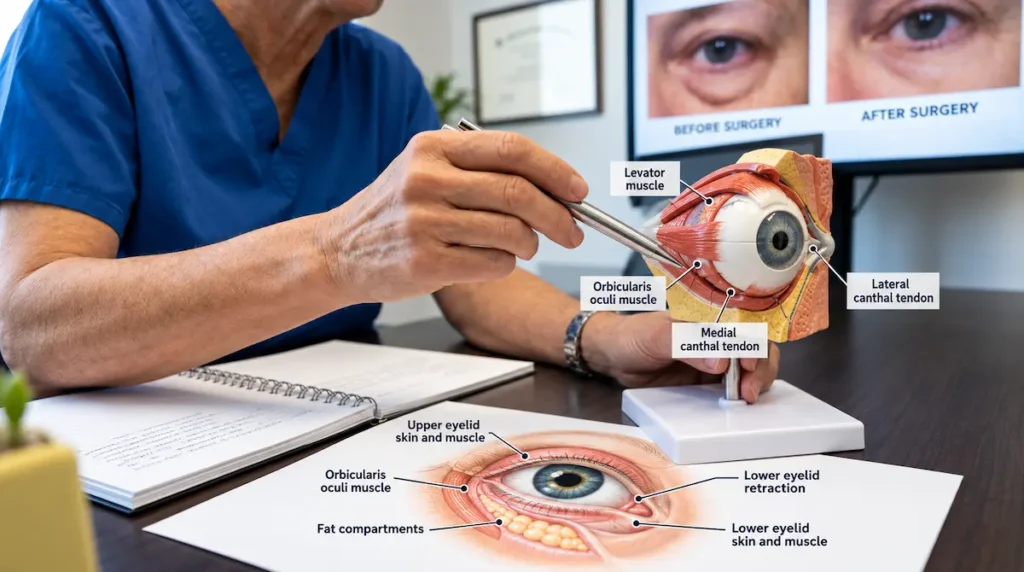
Revision lower eyelid surgery is not the same as primary lower blepharoplasty. The surgeon is working through scar tissue, altered anatomy, and a patient who may already have eye irritation or loss of trust. This is where credentials, lower-lid experience, and a precise diagnosis matter most.
Look for lower-eyelid revision experience
A surgeon who performs standard eyelid surgery may not automatically be the right surgeon for a revision. Ask how often they manage lower eyelid retraction, ectropion, scleral show, spacer grafts, canthal tightening, and post-blepharoplasty hollowing.
The consultation should include more than a photo review. It should include lid-position analysis, lid-laxity testing, blink assessment, tear-film questions, scar evaluation, and a review of your previous operative details if available.
At AKM Clinic, facial revision planning is handled through a surgeon-led assessment. The goal is to understand why the eyelid failed before recommending another procedure.
Questions to ask before revision surgery
Bring direct questions. A careful surgeon will not be offended by them. A vague answer is a warning sign.
- Is my main problem lower eyelid retraction, ectropion, hollowing, asymmetry, or a combination?
- Do I have lid laxity on snap-back or distraction testing?
- Do I need canthopexy, canthoplasty, a spacer graft, skin replacement, midface support, or volume restoration?
- Is my eye surface safe, or should I see an ophthalmologist before revision?
- How long should I wait before surgery if I am still healing?
- What improvement is realistic, and what may not fully change?
These questions help separate a true revision plan from a cosmetic sales pitch. Revision surgery should feel specific. It should not sound like “we will just tighten it.”
Cost and revision logic
Revision cost depends on the problem and the repair. A simple hollowing correction is not the same as lower eyelid retraction with spacer grafting and canthal reconstruction. For that reason, this article does not turn revision into a price table.
If you are comparing options, review eyelid surgery pricing, including revisions as a separate cost resource. The safer question here is not “What is the cheapest fix?” but “Which anatomical problem needs to be corrected?”
When another procedure may be the better answer
Sometimes the lower eyelid is not the only issue. Brow descent, cheek volume loss, ptosis, or upper-lid skin excess can make the eyes look tired even after technically sound lower eyelid surgery.
That does not mean every patient needs multiple procedures. It means the diagnosis should be honest. If the real issue is above the eye, another lower-lid revision may not help. If the cheek is the problem, eyelid tightening alone may look strained.
A good revision consultation should tell you what surgery can improve and what it cannot.
Frequently Asked Questions: Botched Lower Eyelid Surgery
These answers cover the concerns patients most often raise after a bad lower blepharoplasty: lid position, eye shape, hollowing, timing, and revision options. They are educational and cannot replace an in-person medical examination.
What does a botched lower eyelid surgery look like?
Can lower eyelid retraction be fixed?
How long after blepharoplasty can ectropion be corrected?
Why do my eyes look rounded after eyelid surgery?
Can hollowing after fat removal be fixed?
Does canthopexy prevent lower lid problems?
Final Thoughts: The Best Correction Starts With the Right Diagnosis
Botched lower eyelid surgery is frightening because the eyes are central to expression, comfort, and identity. But a bad result is not one single problem. Retraction, ectropion, scleral show, hollowing, and asymmetry each have different causes and different solutions.
The safest next step is a careful revision assessment. That means measuring lid laxity, checking eye-surface symptoms, reviewing scar behavior, studying cheek support, and identifying whether tissue was removed, displaced, or pulled out of position.
At AKM Clinic, the focus is natural-first facial surgery: correcting the problem without creating an over-tightened or visibly operated look. Ask AKM how your lower eyelid would be assessed, what revision options are realistic, and how your anatomy guides the plan.
Medical disclaimer: This article is for educational purposes only and does not replace medical advice. If you have pain, vision changes, severe dryness, discharge, inability to close the eye, or worsening redness after eyelid surgery, seek urgent medical evaluation.