Breast Lipofilling in Turkey: Natural Augmentation Without Implants
AI Summary
- Breast lipofilling in Turkey offers natural, implant-free breast enhancement using your own fat for subtle, balanced results.
- Ideal for modest volume, it combines body contouring with breast shaping when enough donor fat is available.
- Recovery is usually manageable, with swelling and bruising improving gradually before medically guided return to the UK.
- Turkey can offer better value through transparent GBP pricing, personalised aftercare, and careful patient-led safety planning.
AI-generated summary, fact-checked by our medical experts.
For many women researching breast lipofilling in Turkey, the main goal is not to look dramatically different. It is to feel more feminine, more proportionate, and more confident without the obvious signs of surgery. For British patients in particular, the appeal of implant-free breast enlargement lies in its subtlety: your own fat is used to enhance your breasts, rather than a foreign implant creating a firmer or more projected look.
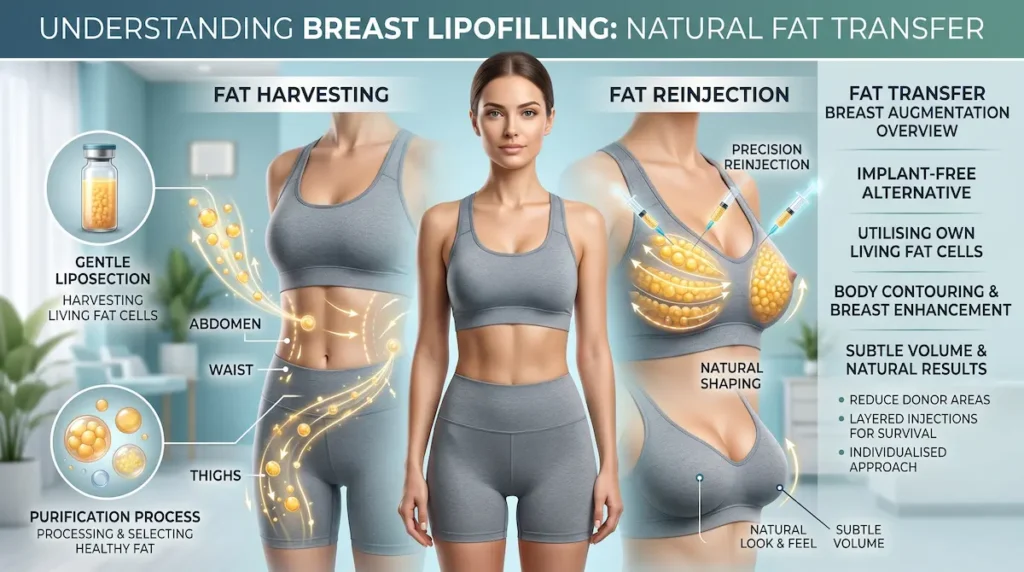
This approach, also known as breast lipofilling, breast fat transfer or autologous fat transfer, combines two objectives in one procedure. First, unwanted fat is removed from areas such as the abdomen, flanks, or thighs. Then, that purified fat is strategically placed into the breasts to improve softness, shape, and volume. For the right patient, it can create elegant, natural-looking enhancement while also refining the donor area.
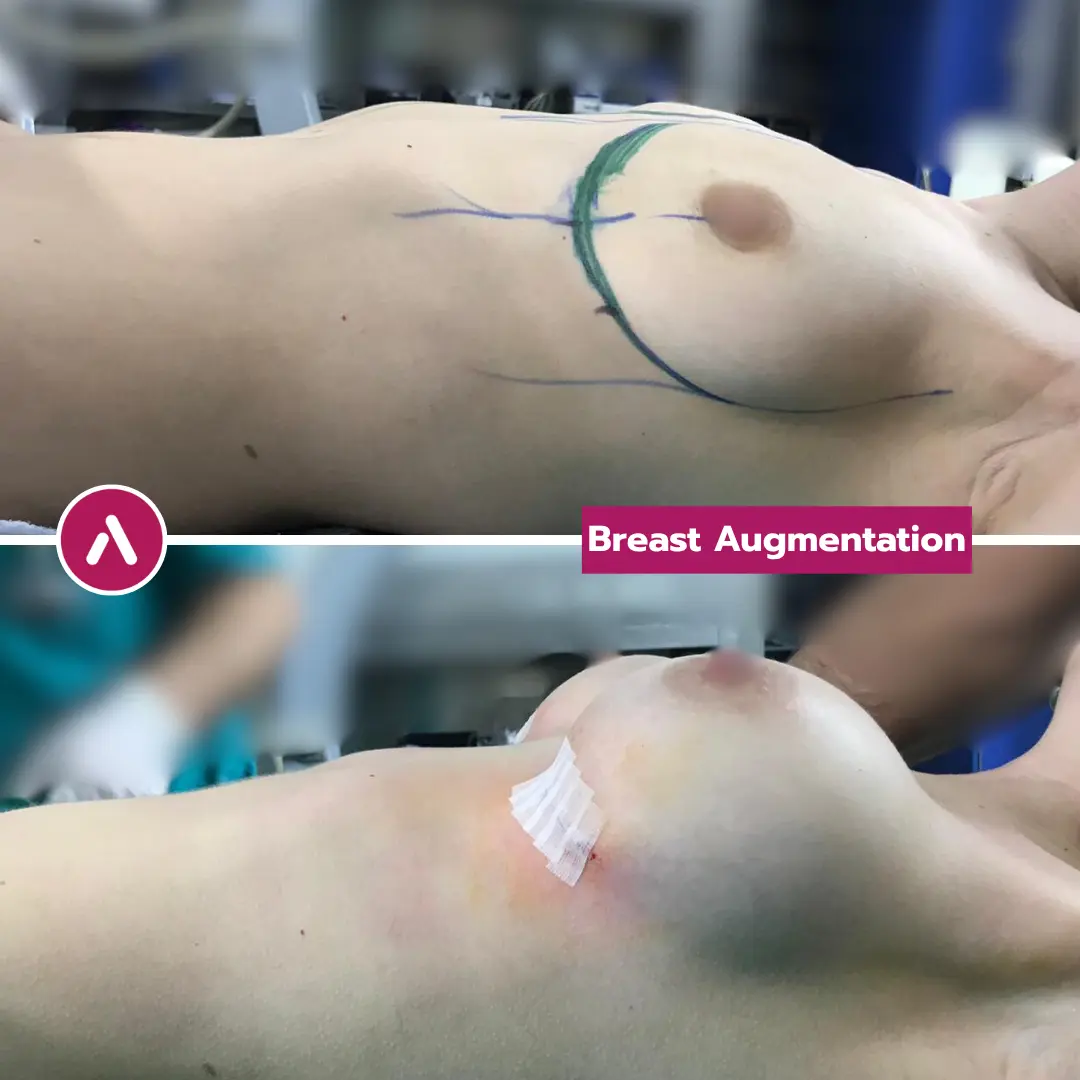
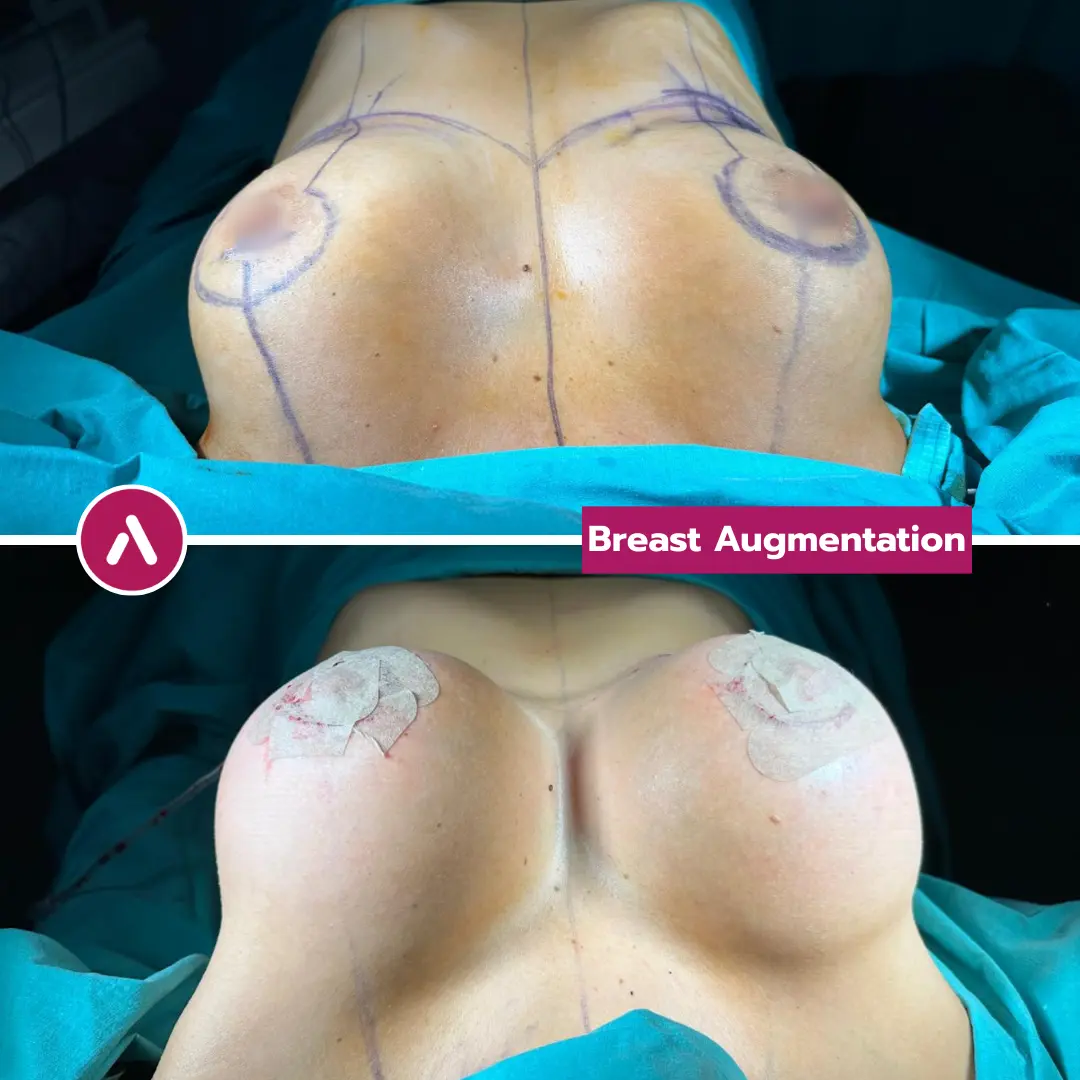
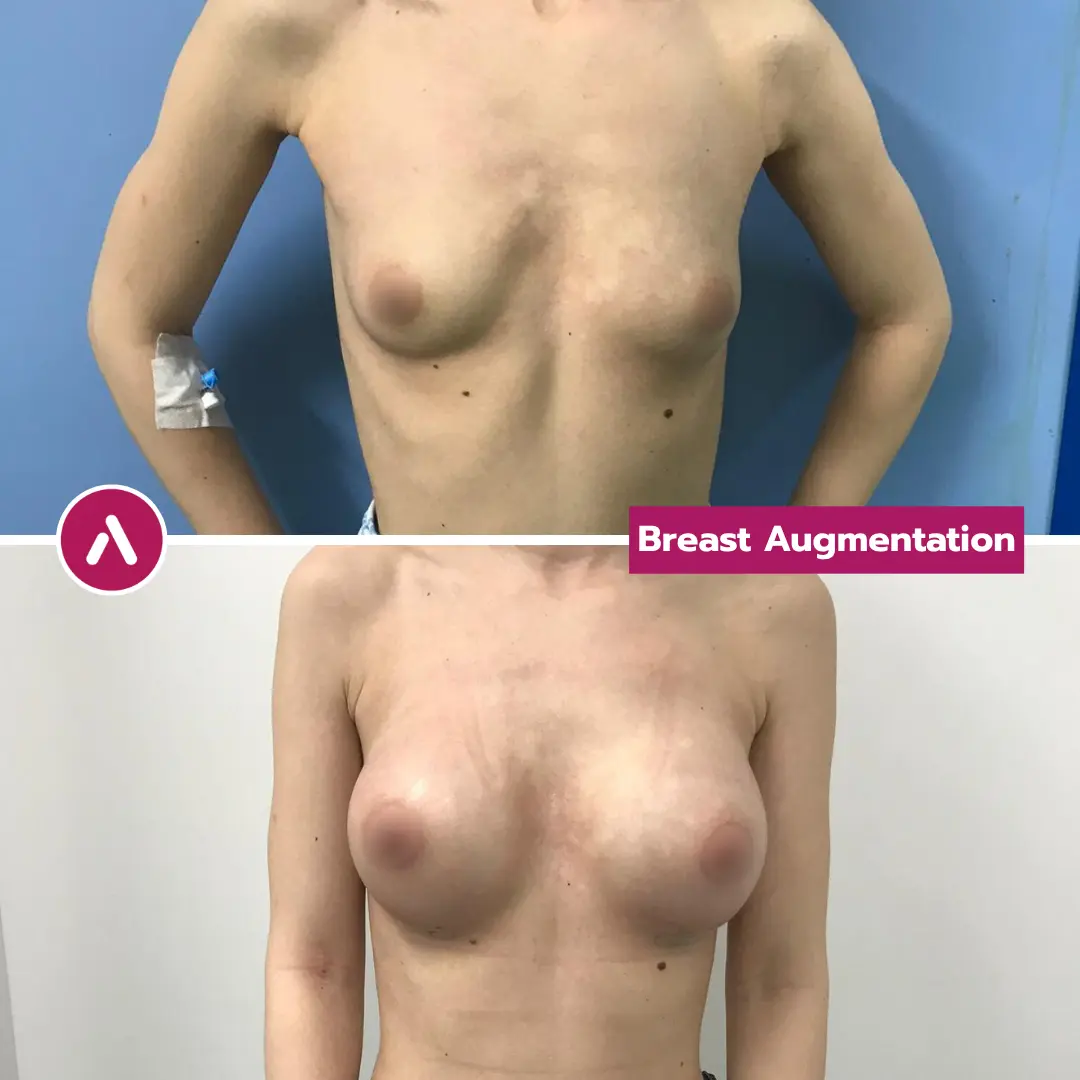
At AKM Clinic, this treatment is especially relevant for women who want a modest but meaningful improvement rather than a noticeably augmented appearance. In other words, it is often better suited to patients seeking breast enhancement without implants than to those hoping for a dramatic multi-cup-size increase. That distinction matters, because the best outcomes in fat transfer breast augmentation come from matching the correct technique to the correct anatomy and expectation.
In this guide, we explain how natural breast augmentation in Turkey works, who is a suitable candidate, how it compares with implants, and what British patients should realistically expect before travelling for surgery. The aim is to give you a clear, evidence-led overview in plain English, so you can decide whether natural breast augmentation in Istanbul is the right path for your body and your goals.
Table of Contents
What Is Breast Lipofilling and How Does It Work?
Breast lipofilling is a form of body contouring and breast enhancement in which fat is taken from one part of the body and transferred to the breasts. It is designed for patients who value a softer, more natural look and who prefer to avoid implants where possible. Understanding the fundamentals is essential, because the success of the procedure depends not only on surgical technique, but also on realistic expectations and careful patient selection.
The basics of fat transfer breast augmentation
Fat transfer breast augmentation refers to the process of using your own living fat cells to increase breast volume and improve breast contour. Rather than placing a silicone implant beneath the breast tissue or chest muscle, the surgeon harvests fat from an area where you have enough reserve tissue, purifies it, and reinjects it into carefully planned layers of the breast.
The key advantage is biological compatibility. Because the transferred tissue comes from your own body, there is no implant shell, no implant pocket, and no concern about the breasts feeling unnaturally firm due to a prosthetic material. For women who want gentle upper-pole fullness, improved cleavage balance, or correction of mild asymmetry, breast augmentation with fat grafting can be a refined and elegant solution.
That said, breast lipofilling is not simply a “natural replacement” for implants in every case. It is a different treatment with different strengths. It is particularly effective for:
- subtle volume enhancement;
- improving shape and contour;
- softening minor asymmetry;
- creating a more natural feel and appearance;
- combining breast enhancement with liposuction-based body sculpting.
Patients who arrive expecting a large, dramatic enlargement are often better served by a different approach or by a staged plan. The most satisfied patients are usually those seeking breast enlargement without implants for a discreet, harmonious result.
How liposuction and reinjection are combined in one procedure
The procedure has two distinct surgical stages. The first is fat harvesting. Using gentle liposuction techniques, the surgeon removes fat from donor areas such as the abdomen, waist, inner thighs, or outer thighs. The objective is not merely to “collect fat”, but to do so in a way that protects fat cell viability. This matters because the more carefully the fat is handled, the better its chance of establishing a blood supply after transfer.
The second stage is processing and placement. Once harvested, the fat is purified so that excess fluid, damaged cells, and debris are removed. The healthy fat is then injected into the breasts in small amounts and in multiple layers. This careful placement technique helps the transferred cells integrate with the surrounding tissue and supports a smoother, more even contour.
In practical terms, that means breast fat transfer is both a sculpting procedure and a breast enhancement procedure. You are not simply adding volume to the breasts; you are also reshaping the donor area. For many patients, this dual effect is one of the strongest reasons to choose natural breast augmentation over implants alone.
Common donor areas may include:
- lower abdomen;
- upper abdomen;
- flanks or waist;
- inner thighs;
- outer thighs.
The exact donor area is selected according to your anatomy, skin quality, fat availability, and overall body proportions. A bespoke surgical plan is crucial, because the goal is not only to enlarge the breasts, but to create balanced results that suit the rest of your figure.
Why British patients are choosing natural augmentation over implants
There has been a clear shift among many UK patients towards results that look elegant rather than overt. Instead of asking for a dramatic transformation, many women want their breasts to appear as though they have simply returned to a fuller, more youthful version of themselves. That is precisely where breast enhancement without implants becomes attractive.
For British patients, several concerns tend to come up repeatedly. They often want to avoid the idea of a foreign device in the body. They may dislike the thought of implant maintenance in the future. They are also frequently drawn to the softer movement and more understated appearance that natural breast augmentation can offer when performed well.
There is also a lifestyle element. Women who exercise regularly, prefer a subtle silhouette, or want to avoid a visibly “done” look often feel that implant-free breast enlargement is more aligned with their aesthetic goals. The preference is not necessarily for “bigger” breasts, but for breasts that are slightly fuller, better shaped, and more in proportion with the waist and hips.
In short, breast lipofilling appeals to a patient who values:
- natural feel and movement;
- modest enhancement rather than obvious enlargement;
- body contouring and breast enhancement in one operation;
- a personalised result rather than a standard implant size.
Am I a Suitable Candidate for a Breast Augmentation?
Answer a few brief questions about your concerns, health, and goals to discover which treatment options may suit you best.
Who Is a Good Candidate for Breast Lipofilling?
Not every patient is equally suitable for breast lipofilling, and this is one of the most important points to understand before travelling for surgery. The ideal candidate is not simply someone who wants larger breasts. She is someone whose anatomy, available donor fat, skin quality, and expectations all support a safe and realistic outcome. In expert hands, good selection leads to better survival of transferred fat, improved symmetry, and greater long-term satisfaction.
How much donor fat is needed for a successful transfer
One of the first questions any surgeon must answer is whether there is enough donor fat available. Unlike implants, which can provide a predetermined volume, fat transfer relies on tissue that already exists on your body. Very slim patients may not have enough spare fat to produce a meaningful change in breast size, particularly if they want more than a subtle enhancement.
This does not mean you need to be overweight. Many healthy women with a soft lower abdomen, mild flank fullness, or some excess fat on the thighs can still be suitable for fat transfer breast augmentation. However, the amount of improvement possible must always be balanced against the amount of viable fat that can be harvested safely.
It is also important to remember that not all transferred fat survives. A proportion will naturally be reabsorbed by the body during healing. That is normal. For this reason, surgeons plan not only around the amount harvested, but also around the likely long-term retained volume.
As a general principle, the most suitable candidates usually have:
- enough donor fat in at least one body area;
- stable body weight;
- good skin quality;
- small to moderate enhancement goals;
- realistic expectations about final volume.
The best candidates for subtle volume increase and shape refinement
The best outcomes in breast enlargement without implants are usually seen in women who already have some natural breast tissue and who want refinement rather than a dramatic change. For example, a patient may want to restore fullness lost after weight loss, pregnancy, or ageing. Another may wish to improve mild asymmetry or soften a deflated upper breast pole without appearing “augmented”.
This is why the procedure is often especially well suited to the UK patient seeking a discreet, feminine result. If your aim is to look balanced in clothing, feel more confident without a padded bra, or regain a proportionate contour, breast fat transfer may be a strong option.
Typical good candidates include women who:
- want a modest increase rather than a dramatic enlargement;
- have mild breast asymmetry;
- have lost upper fullness after pregnancy or weight fluctuation;
- want a softer, more natural alternative to implants;
- would also benefit from liposuction contouring in donor areas.
For such patients, the advantage is not simply “more volume”. It is improved overall silhouette. The waist may look more defined, the hips more balanced, and the breasts subtly fuller, all without the more obvious hallmarks of implant surgery.
When breast lipofilling may not be enough on its own
Breast lipofilling has clear strengths, but it also has limitations. If a patient wants a substantial increase in size, has very little donor fat, or has significant breast drooping, fat transfer alone may not deliver the desired result. In such cases, it is better to discuss that honestly from the outset rather than forcing a procedure to do more than it realistically can.
For example, if the breasts are significantly ptotic, a lift may be needed to reposition the nipple and reshape the breast envelope. If the desired size increase is large, implants may offer more predictable projection and volume. In selected cases, a combined or staged strategy may be more appropriate than lipofilling alone.
| Patient Goal or Anatomy | Is Breast Lipofilling Alone Likely to Suit? |
|---|---|
| Subtle increase in fullness | Usually yes |
| Mild asymmetry correction | Usually yes |
| Very slim body with minimal donor fat | Possibly not |
| Large increase in cup size desired | Often not ideal |
| Significant breast drooping | May require a lift or another approach |
The safest and most satisfactory consultation is the one that makes these boundaries clear. A patient considering autologous fat transfer to the breasts should not be persuaded that it can do everything. Instead, she should be guided towards the option that best suits her anatomy and desired outcome.
Breast Lipofilling vs Implants: Which Option Looks More Natural?
This is one of the most common questions from British patients, and it deserves a nuanced answer. Breast lipofilling and breast implants are not interchangeable procedures. Each has specific benefits, limitations, and aesthetic characteristics. The right choice depends on what “natural” means to you: natural feel, natural movement, natural shape, or simply a result that does not look surgically obvious.
Natural feel, movement, and body harmony
When patients describe the results of natural breast augmentation as more “natural”, they are usually referring to softness and movement. Because the transferred tissue is your own fat, the breast can feel more like natural breast tissue than a breast enlarged with an implant. This can be particularly appealing to women who dislike the idea of a firmer upper pole or a more projected implant-based look.
There is also the issue of body harmony. With fat grafting to the breasts, the enhancement tends to be more integrated into the patient’s frame. The increase is generally more modest, and because the donor area is simultaneously sculpted, the overall silhouette may look more proportionate rather than simply “larger”.
For women who want to look better in fitted tops, swimwear, or dresses without drawing attention to obvious surgery, this softer effect can be a major advantage. In that sense, implant-free breast enlargement often aligns well with UK preferences for understated cosmetic results.
Why lipofilling appeals to UK patients seeking subtle results
Many women from the UK are not looking for a dramatic “before and after” transformation. They want refinement. They want to restore volume after pregnancy, achieve better symmetry, or feel more confident in their proportions, but without the fear of appearing overfilled or visibly artificial. That is why breast lipofilling in Turkey is increasingly relevant to the British market.
Another key factor is decision psychology. Research-oriented patients often compare not only cup size outcomes, but also long-term considerations such as maintenance, feel, and whether the result will still suit them years later. For these women, breast enhancement without implants can feel like a more conservative and body-led decision.
That said, subtle does not mean ineffective. In the right candidate, breast fat transfer can still produce a visible and pleasing change. The improvement is simply more discreet. Friends may notice that you look better proportioned or more confident, without immediately identifying that you have had breast surgery.
For many British patients, the ideal result is not “obviously larger”, but “beautifully balanced”. That is exactly where breast lipofilling can excel.
When implants or a combined lift may still be the better choice
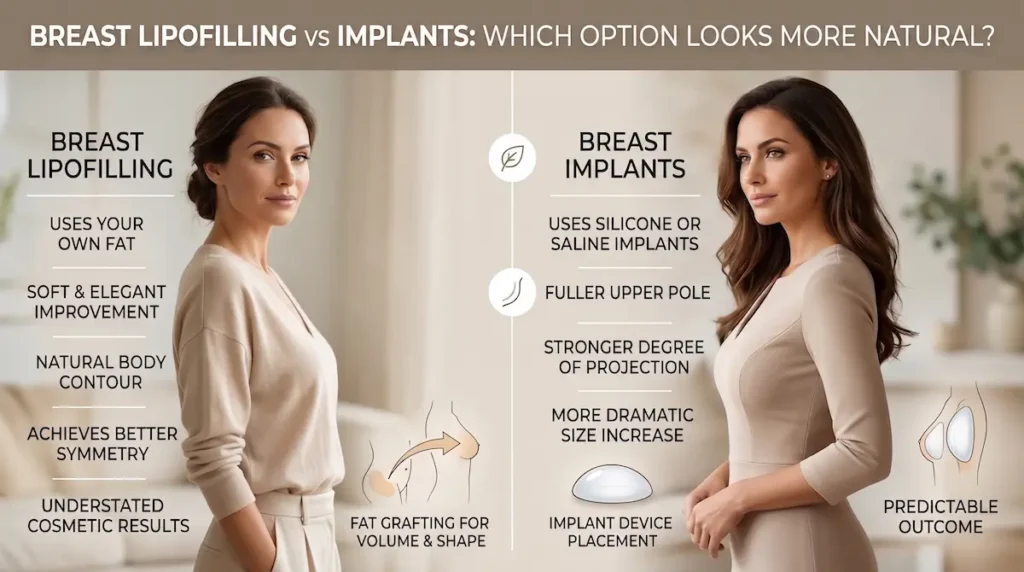
There are situations in which implants remain the more predictable option. If you want a distinctly fuller upper pole, a large size increase, or a stronger degree of projection, implants can achieve those goals more reliably than fat transfer alone. Likewise, if the breast envelope has significant looseness or the nipple position has dropped considerably, a mastopexy may be needed to create the correct breast shape.
This does not make one option superior in absolute terms. It simply means that the best operation depends on the result you are actually trying to achieve. Some patients prioritise maximum volume; others prioritise natural feel and subtlety. Some need shape correction as much as enlargement. The consultation process should separate these goals carefully.
In practice, the comparison can be summarised as follows:
| Feature | Breast Lipofilling | Breast Implants |
|---|---|---|
| Material used | Your own fat | Implant device |
| Best for | Subtle, natural enhancement | More dramatic size increase |
| Feel and movement | Usually softer and more natural | Depends on implant type and tissue coverage |
| Need for donor fat | Yes | No |
| Body contouring benefit | Yes, through liposuction | No |
| Suitable for large size increase | Limited | Usually more suitable |
The central question, therefore, is not “Which is better?” but “Which is better for my anatomy, my preferences, and my long-term comfort?” For women who want a soft, elegant improvement rather than a pronounced augmentation, natural breast augmentation may be the more appropriate route.
Everything You Need to Know About Breast Augmentation
From surgical stages to aftercare, discover how AKM Clinic delivers world-class Breast Augmentation in Istanbul.
How the Procedure Is Performed at AKM Clinic
For British patients considering breast lipofilling in Turkey, the technique matters just as much as the concept. Fat transfer to the breasts is not simply about removing fat from one area and putting it somewhere else. It is a highly planned procedure that depends on donor-site selection, gentle fat harvesting, careful purification, and meticulous injection technique. Each step affects how smooth the result looks, how much fat survives, and how naturally the breasts settle over time.
Personalised surgical planning for breast shape and proportion
Every successful autologous breast fat transfer procedure begins with planning rather than surgery. During the assessment, the surgeon evaluates your natural breast width, skin quality, existing breast tissue, nipple position, chest wall anatomy, and the areas of the body that may be suitable for fat harvesting. This is especially important for patients seeking a discreet result, because subtle enhancement requires precision. A result that looks “natural” is rarely accidental; it is designed around proportion.
At this stage, the key question is not simply how much volume can be added, but where that volume should go. Some patients need better upper-pole fullness. Others benefit more from correcting mild asymmetry, softening a hollow cleavage area, or improving the transition between the chest and the breast mound. In natural breast augmentation, thoughtful distribution of volume often matters more than chasing the largest number possible.
For UK patients, this consultation stage is also where expectations are aligned properly. The surgeon should explain clearly whether your anatomy is suitable for a modest enhancement, whether the result may need to be staged, and whether another approach would better serve your goals. A trustworthy consultation does not promise an unrealistic cup size. Instead, it explains what is anatomically achievable while preserving softness and balance.
Gentle fat harvesting with minimally invasive liposuction techniques
The harvesting stage is performed using liposuction, but the goal is not aggressive fat removal. In breast fat transfer, the surgeon aims to collect healthy, viable fat cells while also contouring the donor area in a refined way. This requires careful technique, because fat that is damaged during harvesting is less likely to survive after transfer.
Typical donor sites include the abdomen, waist, flanks, or thighs. These are selected according to where you have enough spare fat and where contour improvement will be aesthetically beneficial. In many cases, the body contouring aspect is one of the most attractive elements of fat transfer breast augmentation. The patient gains not only fuller breasts, but also a more sculpted silhouette overall.
From the patient’s point of view, it is helpful to understand that donor-site liposuction is also the main source of early discomfort. The breasts themselves may feel full or mildly tender, but the abdomen or thighs often feel more bruised and sore during the first stage of recovery. Knowing this in advance helps set realistic expectations and prevents unnecessary anxiety after surgery.
Fat purification and precise reinjection for smooth contouring
Once the fat has been harvested, it must be prepared for reinjection. Only healthy, usable fat is selected. The purpose of purification is to remove unwanted fluid, damaged cells, and impurities so that the best-quality tissue can be transferred back into the body. This step is fundamental to achieving an even, long-lasting result.
The purified fat is then injected into the breasts in multiple tiny passes and in carefully chosen planes. This is not done as one large deposit. Instead, the fat is layered strategically so that it has the best opportunity to establish a blood supply and survive. Good technique reduces the risk of irregularity and supports a smoother breast contour once healing is complete.
This is one reason why breast augmentation with fat grafting should be approached as a specialist contouring procedure rather than a simple volume-filling treatment. The surgeon is shaping, balancing, and blending, not merely “filling up” the breasts. For patients who want elegance rather than exaggeration, that distinction is crucial.
Dreaming of a Natural-Looking Breast Augmentation?
Our philosophy is “Restoration, Not Alteration.” Discover how our surgeons achieve subtle, naturally restored results that honour your unique beauty.
What Results Can You Realistically Expect?
One of the most important parts of any consultation is understanding what breast lipofilling can and cannot do. This procedure can create beautiful, natural-looking enhancement in the right patient, but it is not designed to produce the same type of result as a larger implant-based augmentation. The most satisfied patients are usually those who understand that the goal is refinement, softness, and harmony rather than dramatic enlargement.
How much enlargement is possible with fat transfer alone
In general, breast enlargement without implants is best suited to women seeking a modest increase in volume. The exact improvement varies from patient to patient because it depends on the amount of donor fat available, how much of that fat is suitable for transfer, the capacity of the breast tissues, and how much of the transferred fat ultimately survives.
For many patients, the result is best thought of as a moderate enhancement in fullness and contour rather than a guaranteed cup-size change. That may include improved cleavage balance, a rounder upper breast, correction of asymmetry, or restoration of volume lost after pregnancy or weight change. In some women, the visual improvement can be striking precisely because it remains understated and proportional.
It is also worth remembering that bra sizing is not fully standardised. A “cup size” can vary depending on the brand, band size, and style of bra. For that reason, experienced surgeons do not usually promise a specific bra outcome. Instead, they discuss the likely degree of visible enhancement and how it will suit your frame. This is especially relevant for patients researching breast enhancement without implants who want clarity without unrealistic guarantees.
Understanding fat survival rates and why some reabsorption is normal
Not every transferred fat cell will survive, and this is a normal part of healing. After surgery, the body begins integrating the newly placed fat into the surrounding tissue. Some of those cells successfully establish a blood supply and remain long term. Others are naturally reabsorbed during the recovery process. This is why the breasts can look slightly fuller at first and then settle into a more stable size over the following weeks and months.
Patients should not interpret this as failure. Reabsorption is expected. The aim is not to keep every cell, but to achieve a stable, healthy, aesthetically pleasing retained volume. This is also why surgical technique matters so much. Gentle handling, proper purification, and careful placement all help improve the chances of good fat survival.
Several factors can influence the final retained result, including:
- the quality of the harvested fat;
- the precision of the injection technique;
- your natural circulation and healing response;
- whether the breasts are overfilled beyond what the tissues can support;
- weight stability after surgery.
Patients planning major weight loss soon after surgery should discuss this honestly with their surgeon. Significant weight fluctuation can affect the long-term appearance of the breasts because transferred fat behaves like living tissue elsewhere in the body.
Why the goal is enhancement, not an “overdone” look
The strongest aesthetic argument for natural breast augmentation is not simply that it avoids implants. It is that it can produce a result that feels genuinely in keeping with the patient’s body. For many women from the UK, that subtlety is not a compromise. It is the entire point.
In practical terms, this means the best result may be one that no one can identify immediately as surgery. Clothes may fit more elegantly, the silhouette may appear more feminine, and the patient may feel more confident in swimwear or fitted dresses, yet the change does not look exaggerated. For women who actively want to avoid the visible hallmarks of an augmented look, this is often the greatest advantage of implant-free breast enlargement.
It is also why realistic planning matters more than aggressive filling. Overcorrection does not make a result more premium. It can make it less refined. The aim should be soft contour, proportionate fullness, and harmony with the waist, hips, and chest wall. In expert hands, that is where natural breast augmentation can look particularly elegant.
| Expectation | What Is Usually More Realistic? |
|---|---|
| A dramatic size increase | Usually limited with fat transfer alone |
| A softer, more natural feel | Usually achievable in the right patient |
| A subtle but visible improvement | Common goal of breast lipofilling |
| Perfectly identical breasts | Not realistic in natural anatomy |
| Zero change during healing | Not realistic, as some settling is normal |
Recovery After Breast Lipofilling: Timeline, Swelling, and Return to the UK
Recovery is one of the biggest concerns for British patients travelling abroad for surgery, and understandably so. People want to know how much discomfort to expect, what is normal in the early stages, and when they can safely travel back home. After breast lipofilling, recovery is shaped by two healing zones rather than one: the breasts and the donor areas. Understanding that dual recovery pattern makes the process far less stressful.
The first 24 to 72 hours: soreness, swelling, and mobility
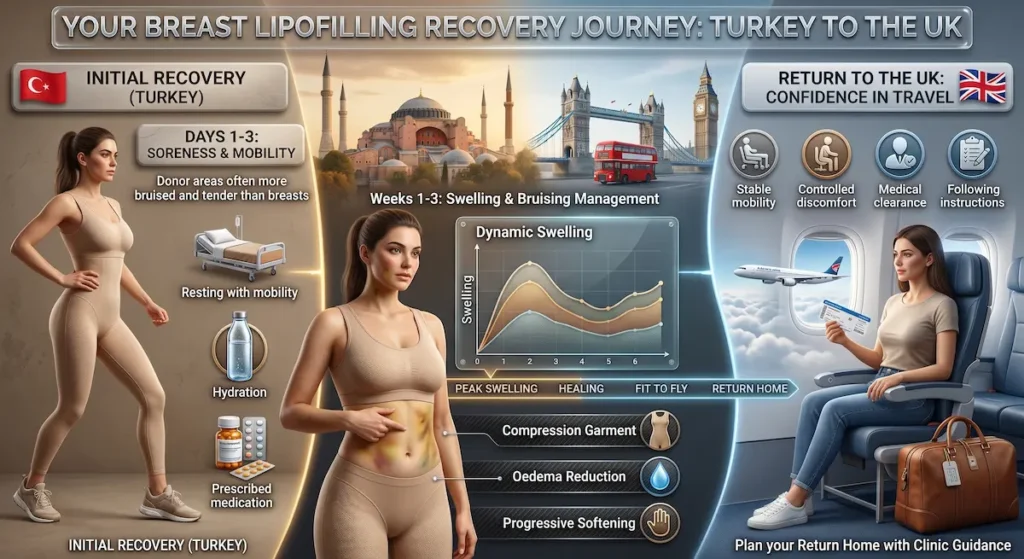
During the first one to three days, it is common to feel tired, swollen, and stiff. The donor areas usually feel more bruised and tender than the breasts themselves. Many patients describe the sensation as soreness after an intense workout, combined with pressure or tightness. The breasts can feel full and sensitive, while the abdomen, flanks, or thighs may feel more uncomfortable when moving, sitting, or standing up.
Swelling during this stage is entirely expected. The body is responding to surgery, tissue handling, and fluid shifts. Light walking is usually encouraged early, as this supports circulation and helps reduce stiffness. However, strenuous activity, lifting, and unnecessary upper-body strain should be avoided.
From a practical perspective, the early priorities are:
- resting with sensible mobility rather than complete bed rest;
- wearing the recommended compression garment for the donor areas;
- avoiding pressure on the breasts where advised;
- maintaining hydration and gentle nutrition;
- taking prescribed medication exactly as instructed.
For UK patients, it is reassuring to know that this initial stage is temporary. The first few days are usually the most uncomfortable, after which mobility and day-to-day confidence steadily improve.
Managing oedema, bruising, and compression garments properly
Oedema and bruising are a normal part of healing after breast fat transfer. In fact, swelling often peaks after the immediate post-operative period rather than disappearing straight away. This can make the body look and feel temporarily more dramatic than the final result will be. Patients who understand this are less likely to panic when they notice fluctuation in shape during the first two weeks.
The compression garment is usually worn over the donor areas, not as a way of flattening the breasts, but to help support the liposuction zones and manage swelling. The exact regimen depends on your surgeon’s instructions and the extent of liposuction performed. Good compression can improve comfort, reduce fluid retention, and help the donor area settle more smoothly.
Bruising also varies widely between individuals. Some patients experience only mild skin discolouration, while others bruise more noticeably. This difference is not, on its own, a sign that something is wrong. It is simply part of the body’s normal inflammatory response to surgery.
As recovery progresses, patients should expect:
- daily variation in swelling during the first week;
- gradual improvement in bruising over 10 to 21 days;
- progressive softening of firmness in both donor and recipient areas;
- continued contour refinement over the following weeks.
Advanced post-operative support can also make a meaningful difference to comfort and recovery confidence. At AKM Clinic, recovery protocols may include supportive technologies aimed at reducing oedema and encouraging better-quality healing, which is especially relevant for patients planning international travel soon after surgery.
When most UK patients are fit to fly home safely
The question of flying is understandably a major concern for anyone considering breast lipofilling in Turkey. The answer depends on the extent of surgery, your mobility, your general health, and how smoothly your early recovery is progressing. In principle, patients should never plan return travel based purely on convenience. They should travel only when medically cleared by the surgical team.
For many patients, the ability to return to the UK depends on stable mobility, controlled discomfort, no concerning signs during early healing, and confidence in post-operative instructions. Walking comfortably, maintaining hydration, and following the clinic’s recovery guidance are all part of being fit to travel.
It is also important to distinguish between being able to sit on a plane and being genuinely ready for the journey. Flights involve prolonged sitting, changes in routine, and logistical stress. A well-managed recovery plan should therefore include not only the likely return date, but also practical travel advice on garments, movement, hydration, and support after landing.
British patients should expect their timeline to be individualised. A safe medical team will base travel clearance on your recovery rather than on a fixed marketing promise. That is the most responsible approach for any patient travelling for breast enlargement without implants.
Have Safety Concerns Regarding Surgery Abroad?
Speak directly with our Patient Safety Coordinator regarding anaesthesia options, risk management, and travel safety following Breast Augmentation. Your peace of mind is our priority.
Safety, Scarring, and Aftercare for British Patients
For most UK patients, the decision to have surgery abroad is shaped less by glamour and more by trust. They want to know who is looking after them, how complications are reduced, what kind of scarring to expect, and whether support continues once they are back home. Those are sensible questions. For breast lipofilling in Turkey, safety is not defined by the marketing language around the procedure, but by patient selection, surgical discipline, sterile operating standards, and reliable aftercare once the patient returns to the UK.
How patient selection improves safety and long-term satisfaction
The safest cosmetic procedure is one performed on the right patient for the right reason. In breast enhancement without implants, that means confirming there is sufficient donor fat, that the patient’s goals are modest and realistic, and that the anatomy is suitable for transfer rather than a more structural operation. Good selection reduces the risk of disappointment, avoids pushing the tissues beyond what they can accept, and supports a more stable long-term result.
It also means proper medical screening. Patients should be assessed for their general health, smoking status, previous breast history, weight stability, and healing capacity before any surgical date is confirmed. A surgeon-led consultation is essential, because suitability cannot be determined safely by photographs alone or by a sales-led conversation about desired size.
For British patients, this stage matters enormously. Many are specifically trying to avoid the feeling of being rushed into a cosmetic decision. A high-trust clinic should therefore make room for questions, explain the limitations of autologous fat transfer to the breasts clearly, and avoid overpromising outcomes that the anatomy may not support.
What kind of scarring to expect from donor-area liposuction
One reason implant-free breast enlargement appeals to many women is that it avoids the larger scars associated with some forms of breast surgery. However, “scar-free” would be inaccurate. Breast lipofilling still involves small access points for liposuction and for fat placement. These marks are typically minimal and strategically positioned, but patients should know they exist.
In most cases, the more visible healing process concerns the donor area rather than the breasts themselves. Tiny liposuction entry points may look pink or slightly raised early on, before settling gradually over time. Their final appearance depends on skin type, healing response, post-operative care, and whether the patient follows scar-management guidance correctly.
This is where precise technique and thoughtful aftercare both matter. Small scars can often heal very well, but they still deserve proper attention. Patients should be advised not to judge scar quality too early, as early colour and texture changes are a normal part of maturation.
Remote aftercare, WhatsApp communication, and UK patient support
Aftercare is often the deciding factor for a British patient choosing between clinics. It is not enough for the surgery itself to go well. Patients want to know what happens on day three, on the flight home, and two weeks later when they notice swelling changing shape and begin wondering what is normal. Strong aftercare reduces anxiety as much as it supports medical safety.
For international patients, structured remote follow-up can make a meaningful difference. That includes direct communication, practical recovery guidance, and a clear route back to the medical team if questions arise after returning home. In reality, most post-operative questions are not emergencies. They are reassurance questions. But that reassurance still needs to be available.
One UK patient summary highlighted that ongoing WhatsApp contact and a UK-based patient support route made recovery at home feel far more manageable and psychologically reassuring.
For women considering breast lipofilling in Turkey, this kind of support is not a small extra. It is part of the treatment itself. When the clinic provides a clear aftercare structure, patients can focus on healing rather than second-guessing every normal stage of recovery.
Experience a Seamless Breast Augmentation Journey
From VIP airport transfers to 5-star hotel accommodation, we manage every detail. Enjoy a premier medical travel experience in Istanbul.
The Role of HBOT and LLLT in Faster Recovery
Many patients researching surgery abroad focus almost entirely on the operation itself, but recovery technology can be just as important to the overall experience. This is especially true for UK patients who need to return home within a defined timeframe and want to minimise social downtime. In that context, recovery support is not a luxury add-on. It is part of a more modern and patient-centred approach to surgical care.
How HBOT may help reduce post-operative oedema
Hyperbaric Oxygen Therapy, often shortened to HBOT, is used at AKM Clinic as part of a broader recovery strategy. In simple terms, it is designed to support tissue oxygenation and may help reduce post-operative oedema. For patients recovering from liposuction and fat transfer, this can be particularly valuable because swelling in the donor areas often affects comfort, mobility, and confidence during the first phase of healing.
Although no recovery tool can remove normal healing altogether, supportive technology may help the body move through that process more efficiently. In practical terms, British patients often care less about technical terminology and more about the lived benefit: reduced puffiness, improved comfort, and a quicker sense of feeling presentable and mobile again.
For women planning natural breast augmentation in Turkey, that matters. Better-controlled swelling can make the early recovery period feel far less disruptive, especially when travel and return-to-routine timing are already part of the planning process.
How LLLT supports healing and scar quality
Low-Level Laser Therapy, or LLLT, is another recovery support used to encourage better-quality healing. At AKM Clinic, this is described as a 650 nm soft laser approach aimed at stimulating fibroblast activity. In plain English, the goal is to support tissue repair and help scars mature as favourably as possible.
In breast augmentation with fat grafting, where small liposuction access points are part of the procedure, scar quality still matters even if the scars are discreet. Many UK patients are highly detail-oriented and want to know not just whether scars are small, but how they may evolve over time. That makes scar-support strategies especially relevant to this audience.
LLLT does not replace good technique or good aftercare habits, but it can complement them. For the patient, the value lies in supporting smoother healing rather than expecting a dramatic overnight transformation.
Why recovery technology matters for flight-ready healing
Travelling for surgery introduces a practical deadline into recovery. The patient not only wants to heal well, but also wants to reach a stage where travel feels manageable and medically sensible. That is why recovery protocols matter so much for international care.
When clinics talk about being “flight-ready”, the meaning should be responsible rather than promotional. It should refer to stable early healing, manageable swelling, safe mobility, and a recovery plan that accounts for the realities of air travel. Technologies such as HBOT and LLLT can support that broader pathway by helping reduce some of the factors that make early recovery feel more difficult.
For women travelling from Britain for breast fat transfer in Turkey, the real benefit is confidence: confidence in walking comfortably, confidence in looking less visibly post-operative, and confidence that the clinic has planned for the journey home rather than leaving recovery to chance.
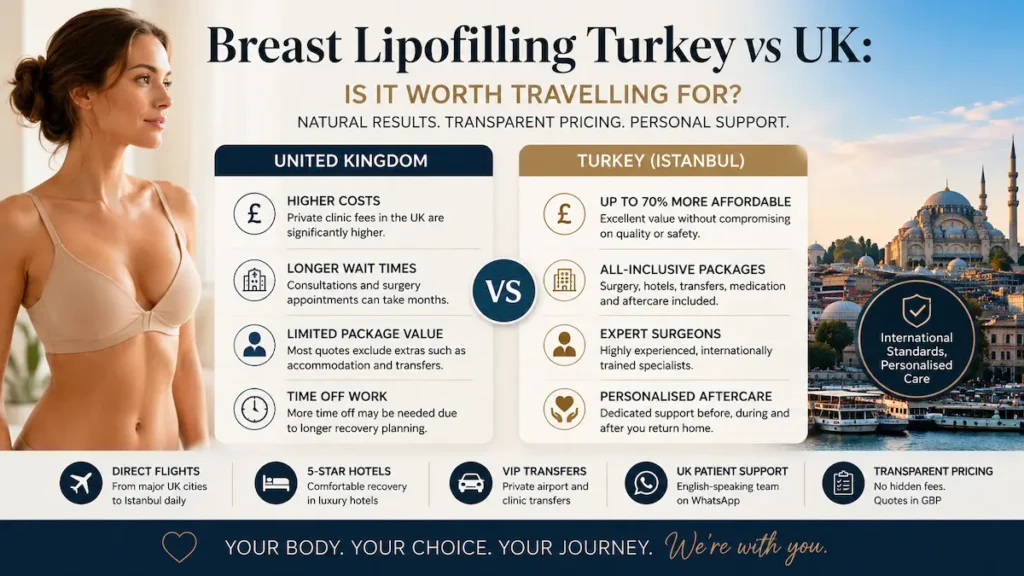
Breast Lipofilling in Turkey vs the UK: Is It Worth Travelling For?
This is not simply a question of price. For most British patients, it is a question of value. Is the treatment appropriate? Is the planning bespoke? Is the aftercare credible? And does the overall experience justify leaving the UK for surgery? The answer depends on what the patient prioritises. If the priority is subtle, natural enhancement with body contouring benefits and clear cost transparency, travelling can be highly worthwhile. If the patient wants a dramatic increase, no travel, and a very local recovery path, another option may be better.
Comparing Harley Street-style pricing with Istanbul value
Many women begin researching breast enlargement without implants in Turkey because private cosmetic surgery in the UK can feel financially fragmented. The headline fee is only one part of the picture. Consultations, garments, medication, accommodation, transport, and time away from routine can all shape the true cost.
By contrast, the Istanbul model often appeals because it is easier to understand financially. A transparent quotation in GBP allows patients to compare the overall commitment rather than just the surgical line item. For the value-focused British patient, that clarity can be just as important as the numerical saving itself.
Crucially, a lower total fee should not be framed as “cheap surgery”. The more accurate comparison is often one of operational economics. Lower facility and labour costs can make comprehensive care more accessible without automatically implying lower clinical seriousness. That distinction matters for UK patients who want Harley Street-style attention to detail without Harley Street-level pricing.
What all-inclusive GBP quotations should include
One of the strongest trust signals for British patients is a quotation that feels genuinely complete. If a patient has to keep asking what is not included, confidence falls quickly. A well-structured all-inclusive package should therefore be transparent from the beginning and written in a way that a UK patient can compare easily.
Depending on the procedure and package design, patients typically want clarity on the following items:
- surgical fees;
- hospital or operating theatre costs;
- pre-operative tests;
- post-operative medication;
- compression garments where relevant;
- hotel accommodation;
- VIP airport and clinic transfers;
- follow-up appointments and remote aftercare.
For a woman comparing natural breast augmentation in Istanbul with UK private-sector care, the advantage is not just that the package may be more affordable. It is that the financial structure is easier to understand in full before committing.
| Comparison Point | Typical UK Private Pathway | Transparent Istanbul Package Model |
|---|---|---|
| Pricing visibility | May be split across several cost lines | Often presented as one clearer total quotation |
| Travel and accommodation | Usually arranged separately by the patient | Often integrated into the package |
| Aftercare structure | Local, but may be charged separately | Often includes remote follow-up planning |
| Overall value perception | High convenience, higher private-sector overheads | More bundled value for travelling patients |
Why lower prices in Turkey do not automatically mean lower standards
This is one of the most important issues to address honestly. Lower pricing can be a red flag in some contexts, but it is not automatically a sign of poor care. British patients should judge standards through evidence: surgeon-led consultation, medical screening, operating theatre discipline, hygiene protocols, recovery planning, and aftercare accessibility.
In other words, the real question is not “Is it abroad?” but “How is it run?” A clinic that operates with rigorous hygiene standards, careful patient selection, clear consent processes, and structured follow-up may provide a stronger overall experience than a superficially expensive but poorly coordinated alternative.
UK patient journey summaries consistently show that transparent pricing, seamless logistics, and reliable contact after returning home are central to perceived quality, not optional extras.
For many women, the decision becomes worthwhile when three elements align: the result they want is naturally suited to fat transfer, the package is financially clearer than the UK private route, and the aftercare pathway feels dependable even once they are back in Britain.
Frequently Asked Questions (FAQ): Breast Lipofilling in Turkey
Below are the questions British patients most commonly ask when researching breast lipofilling in Turkey. The answers are intentionally concise and practical, but each should still be personalised during a proper surgeon-led consultation.
Is breast lipofilling safer than implants?
How many cup sizes can I gain with breast lipofilling?
Will all of the transferred fat survive?
Can breast lipofilling be combined with liposuction in other areas?
How long do the results of breast lipofilling last?
When can I wear a normal bra again after surgery?
When can I fly back to the UK after breast lipofilling in Turkey?
Have Specific Questions About Breast Augmentation?
Speak directly with our dedicated patient coordinators regarding Breast Augmentation. Receive instant guidance and personalised support.
Medical Disclaimer: This page is provided for general educational purposes only and does not replace a face-to-face medical consultation, diagnosis, or personalised treatment plan. All surgery carries risks and outcomes vary between individuals. Suitability for breast augmentation surgery, procedure selection, and anaesthesia choice can only be determined after a full clinical assessment by a qualified surgeon. Always follow your clinician’s instructions and seek urgent medical attention if you develop concerning symptoms during recovery.
Related Treatments

Awake Breast Lift in Turkey
Awake breast lift (mastopexy) under local anaesthesia with optional twilight sedation. Technique-led planning for ptosis grades, recovery week-by-week, and safety. Premium UK-to-Istanbul pathway with HBOT and LLLT aftercare support.
Awake Breast Augmentation in Turkey
Awake breast augmentation under local anaesthesia with conscious (twilight) sedation. Suitability, recovery, UK-to-Istanbul care and clear GBP pricing.

Awake Mummy Makeover in Turkey
UK-focused guide to an awake mummy makeover using tumescent local anaesthesia with optional conscious sedation. Explore tummy tuck, liposuction and breast options, recovery timelines and costs in GBP.

Fat Transfer Breast Augmentation in Turkey
Fat Transfer Breast Augmentation with your own fat for natural volume. Compare UK vs Turkey cost, plus HBOT/LLLT recovery support—book a consultation.
Ready to Begin Your Own Transformation Journey?
Join the 2,000+ patients who have trusted Dr Akif Mehmetoğlu and the AKM Clinic team. Your journey to a more confident, naturally restored you begins with a simple, no-obligation conversation. Contact us today from the UK for your free virtual consultation.
#1: Get Your Free Personalised Quote
Start with a free, no-obligation online consultation. Share your photos, and our surgical team will provide a fully personalised treatment plan and a transparent, all-inclusive price package. There are no hidden fees.
#2: Secure Your Date & VIP Booking
Once you are ready, our dedicated patient coordinators will help you secure your procedure date. We will handle all your bookings, including your 5-star hotel accommodation and private VIP airport transfers.
#3: Arrive in Istanbul & Meet Your Surgeon
Arrive at Istanbul Airport (IST) and be greeted by your private driver. Settle into your hotel and prepare for your in-person consultation, where you will meet your specialist surgeon to finalise the details for your "natural, subtle, and restored" new look.