If you’re looking to speed up facelift recovery, you’re not alone—especially if you’re an “expert patient” who wants clear milestones, realistic expectations, and a plan grounded in medical science rather than hype. In this guide, we’ll cover what faster recovery genuinely means, why swelling (oedema) and bruising behave the way they do, and the evidence-informed strategies clinicians use to support healing. Along the way, we’ll answer common questions such as reduce swelling after facelift, bruising after facelift how long, and practical facelift recovery tips you can apply safely.
We’ll also explore supportive technologies—HBOT (Hyperbaric Oxygen Therapy) and LLLT (Low-Level Laser Therapy)—and where they may fit into a well-structured aftercare pathway, using plain-English explanations rooted in scientific research principles (without overpromising).
Table of Contents
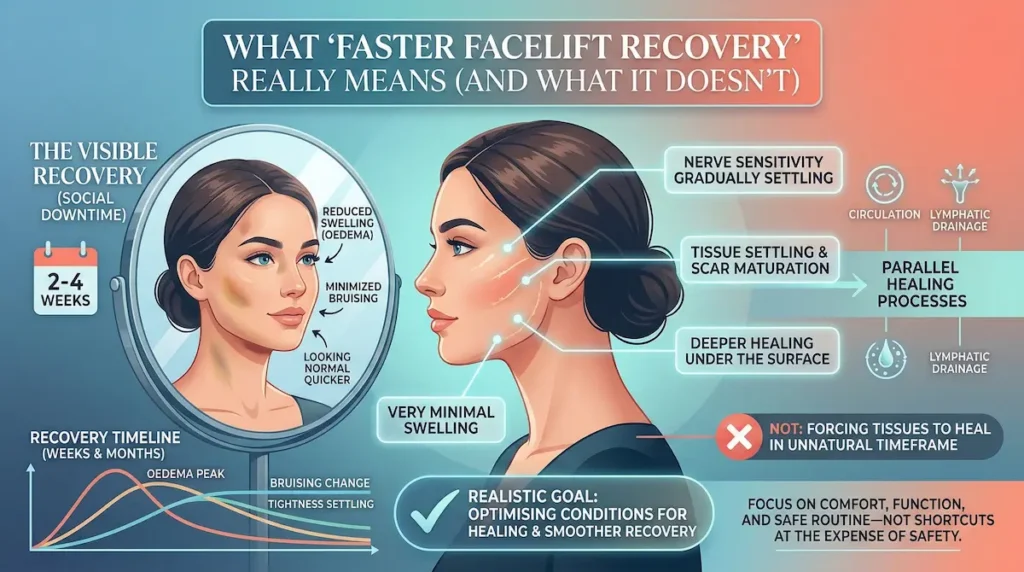
What “Faster Facelift Recovery” Really Means (and What It Doesn’t)
Before asking how to speed up facelift recovery (or how can I speed up my facelift recovery), it helps to define what “fast” is. Recovery isn’t a single event—it’s a timeline with different processes happening in parallel: swelling (oedema), bruising, nerve sensitivity, tissue settling, and scar maturation. A realistic goal is to reduce swelling after facelift, support comfortable daily function sooner, and minimise risks—rather than trying to “force” tissues to heal in an unnatural timeframe.
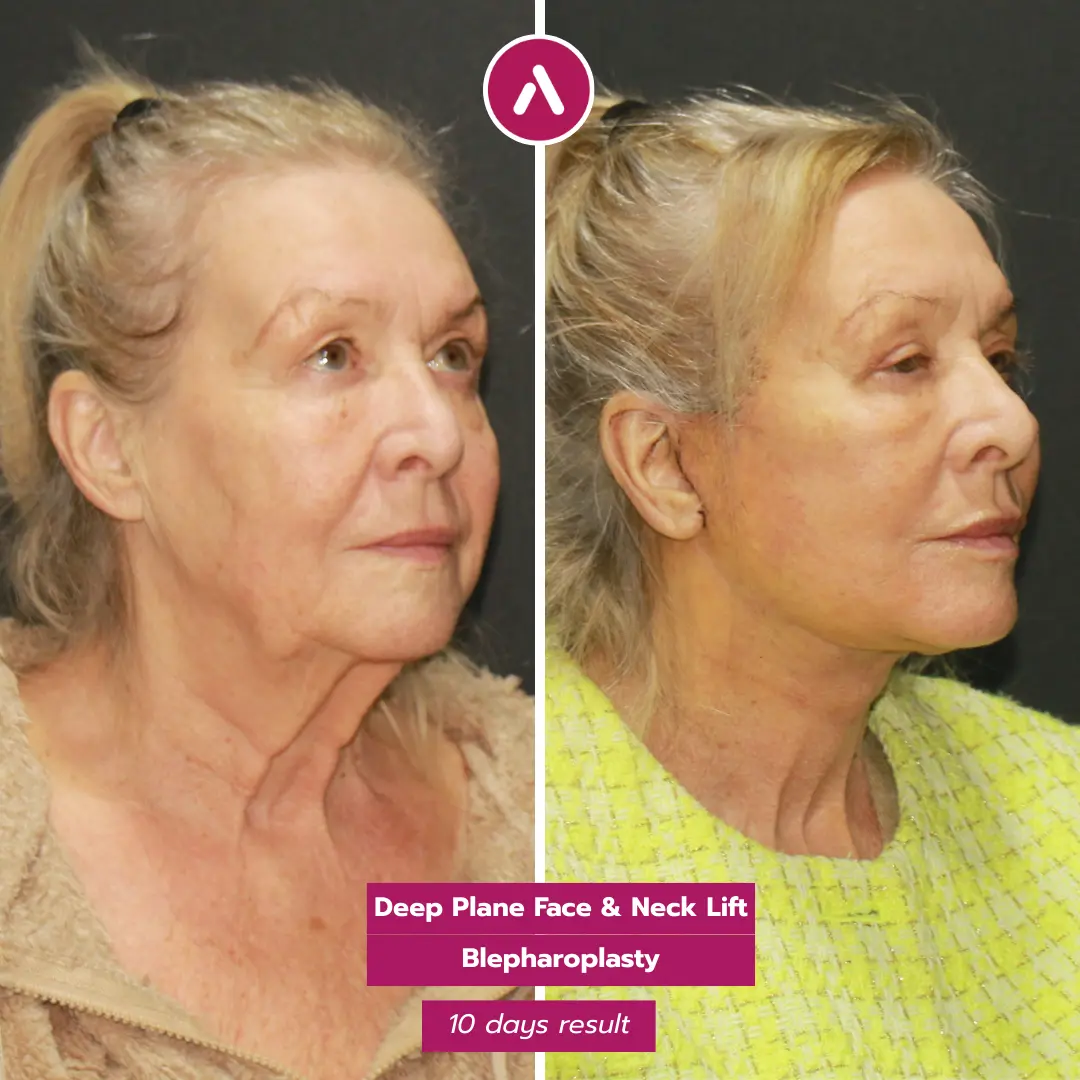
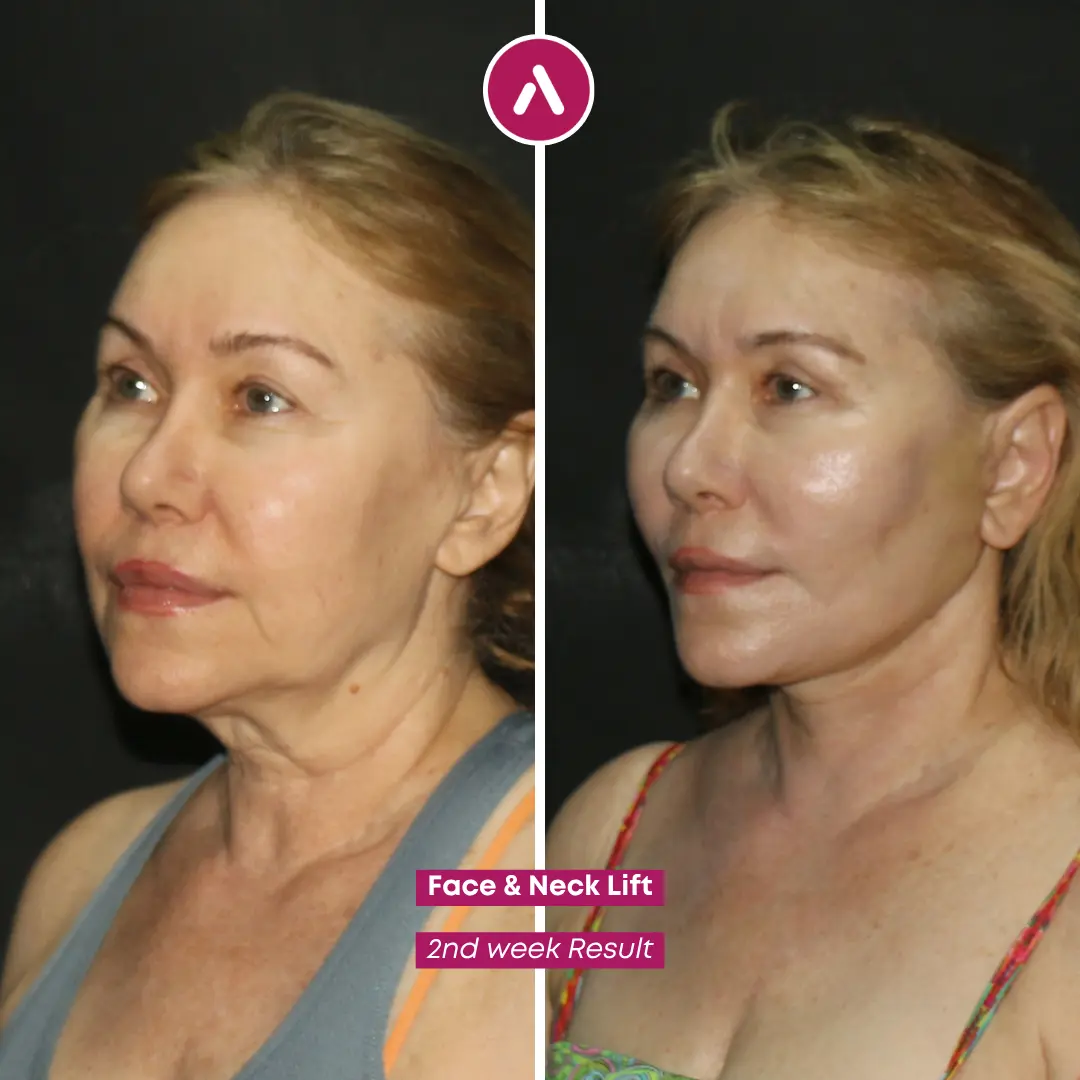
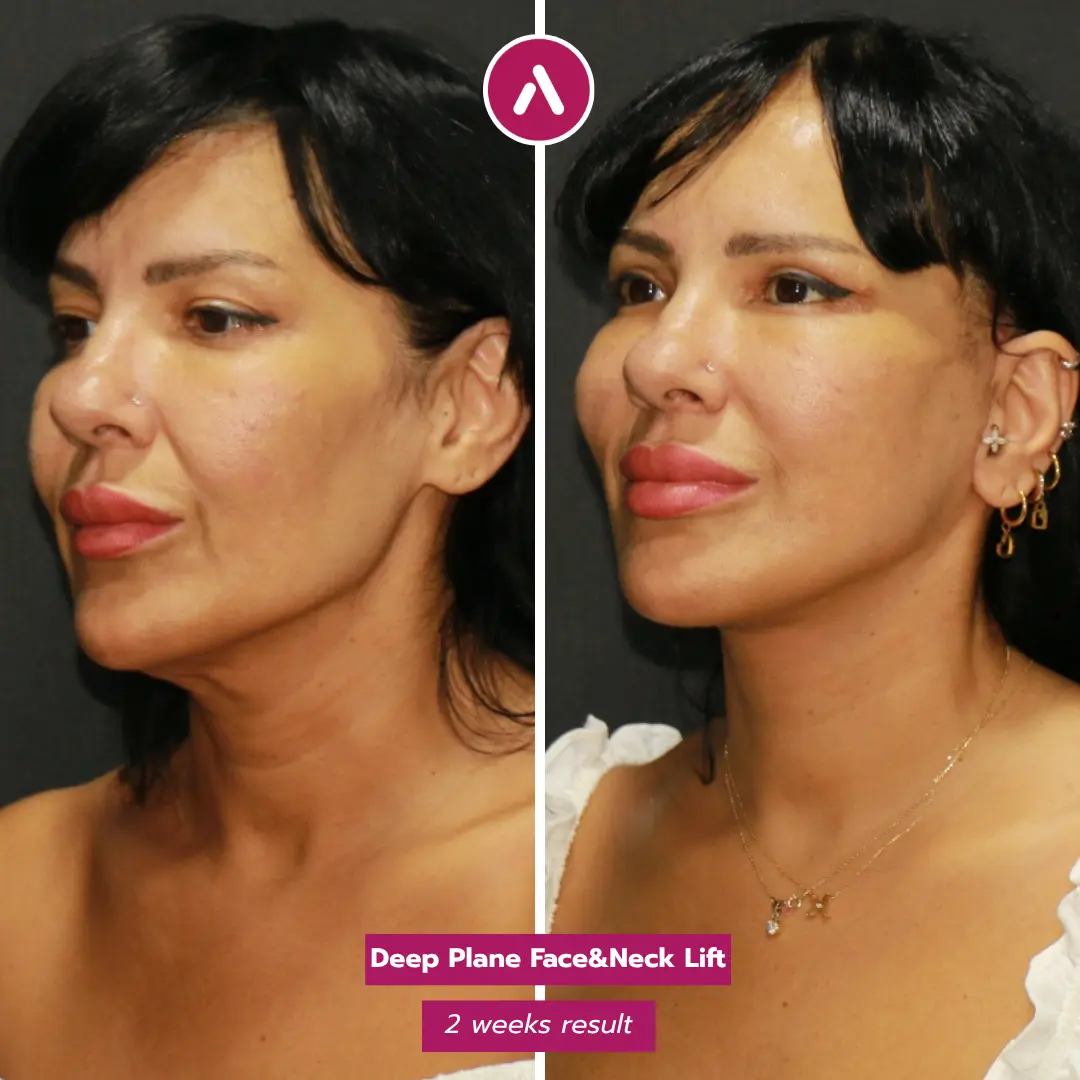
The difference between healing vs “looking presentable” (social downtime)
Many people mean “I want to look normal quickly” rather than “my tissues should fully heal quickly”. The first is about visible signs—bruising, puffiness, tightness—while the second is about deeper recovery that continues for weeks and months. The fastest way to recover from facelift aesthetically often focuses on swelling control, gentle mobilisation, good sleep, and consistent aftercare—because these are the levers that most reliably influence what you see in the mirror.
Why oedema, bruising, and tightness peak at different times
Swelling (oedema) commonly peaks early, then gradually reduces. Bruising can appear to “move” and change colour as blood pigments break down and are reabsorbed. Tightness and altered sensation may linger longer because nerves and soft tissues take time to settle. This is why questions like bruising after facelift how long don’t have a single answer—your starting skin quality, surgical technique, and individual healing biology all matter.
The realistic goal: lower swelling, smoother healing, safer return to routine
Clinically, “speeding up” is best framed as optimising conditions for healing: improving comfort, supporting circulation and lymphatic drainage, and reducing inflammation. That might mean targeted swelling strategies (minimising oedema after facelift), careful wound care, and—where appropriate—adjuncts such as HBOT or LLLT to support tissue recovery. Importantly, faster-looking recovery should never come at the expense of safety.
The Biology of Healing After a Facelift (A Quick, Expert-Patient Explanation)
To understand how to speed up facelift healing, it helps to understand what your body is actually doing after surgery. Healing follows phases: inflammation (early), proliferation (repair), and remodelling (long-term refinement). Many “quick fix” tips fail because they ignore biology. The most effective facelift recovery tips are those that support these phases without disrupting them—an approach consistent with how medical science explains tissue repair.
Inflammation, microcirculation, and lymphatic drainage—why swelling happens
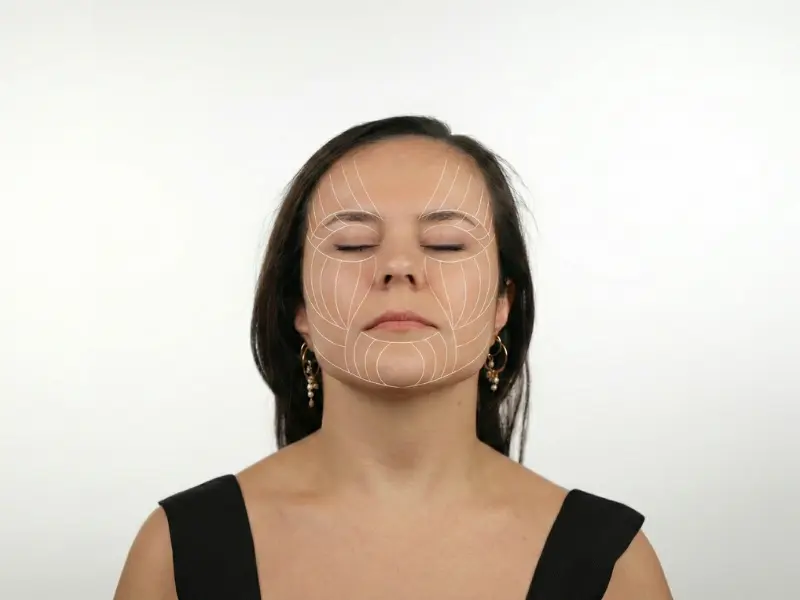
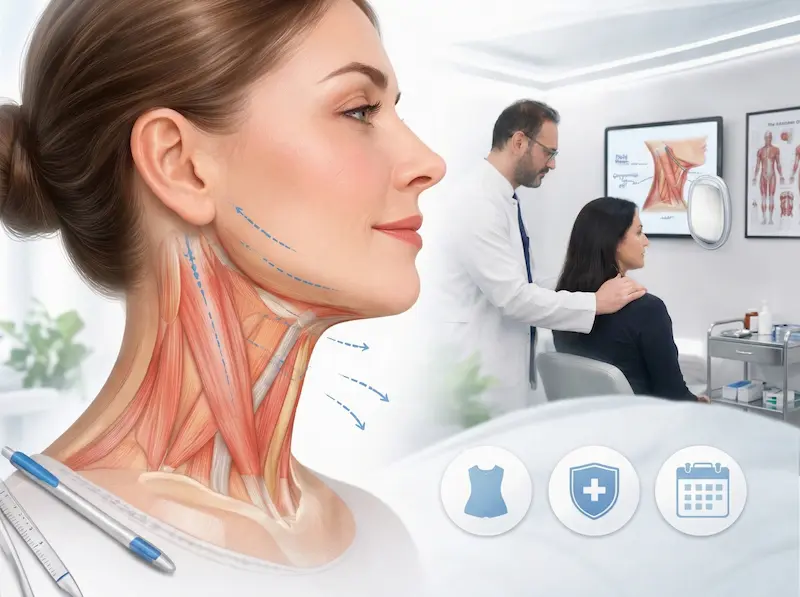
Swelling is partly a protective response: blood vessels become more permeable, and fluid moves into tissues. Lymphatic drainage then gradually clears this fluid. When you’re trying to reduce swelling after facelift, you’re essentially supporting this clearance process—through positioning, gentle movement, and avoiding behaviours that increase facial congestion (for example, smoking or excessive alcohol, which can impair microcirculation).
Oxygen demand in tissues: why recovery can feel slow in the first week
Repairing tissue is energy-intensive and oxygen-dependent. Your body needs oxygen to fuel cell activity involved in wound healing. This is one reason supportive strategies that optimise oxygen delivery and circulation are discussed in recovery pathways. It’s also why interventions like Hyperbaric Oxygen Therapy (HBOT) are explored in some clinical settings: they aim to increase oxygen availability to tissues—although suitability and timing must be individualised and medically assessed.
Scar maturation basics: why “final results” are measured in months, not days
Even when bruising fades and swelling settles, scars continue to remodel. Collagen fibres reorganise over time, and scar colour and texture can change for months. If your goal is “I want the scar to be as discreet as possible”, your plan should extend beyond the first fortnight. This is where scar-care fundamentals and adjuncts (including LLLT laser therapy in some protocols) may play a role, depending on your skin type and incision healing.
Hyperbaric Oxygen Therapy (HBOT): How It Supports Facelift Recovery
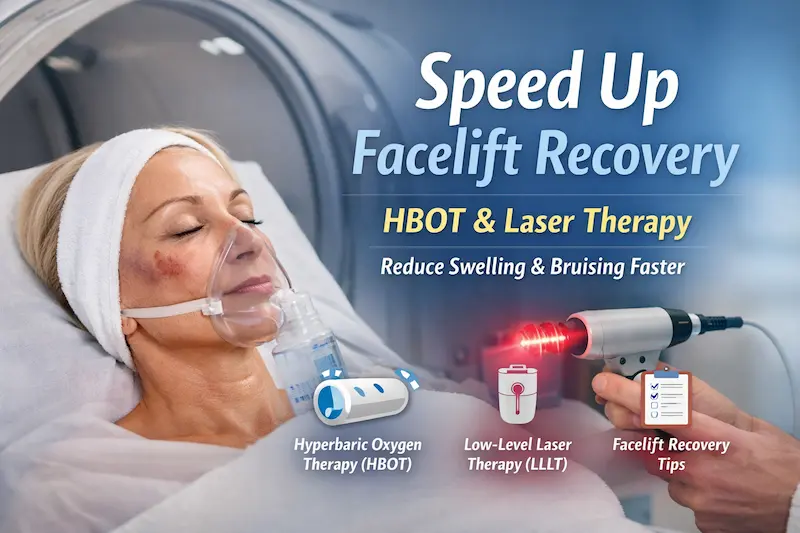
If you’re researching how to speed up facelift recovery, HBOT often comes up as a “high-support” option in advanced recovery pathways. HBOT stands for Hyperbaric Oxygen Therapy, where you breathe oxygen in a pressurised chamber. The goal is not a miracle shortcut—it’s to support tissue oxygenation during a phase when swelling, bruising, and the body’s repair demands are high. Used appropriately and under clinical oversight, HBOT may be considered as part of a structured plan to minimise oedema after facelift and support more predictable healing.
What HBOT is (plain-English explanation of pressure and oxygen)
In simple terms, HBOT increases the amount of oxygen carried in your blood plasma by combining a higher oxygen concentration with increased pressure. That can enhance oxygen delivery to tissues during recovery. This concept sits squarely within medical science: oxygen is a key requirement for wound healing, cell function, and tissue repair. The key word is “support”—HBOT is an adjunct to good surgery and good aftercare, not a replacement.
How HBOT may help: oedema control, oxygenation, and tissue support
When people ask how to speed up facelift healing, what they often want is: “How do I look less swollen and bruised sooner?” HBOT is discussed because improved oxygen availability may help support tissue metabolism and microcirculation during the early recovery window. In practice, patients typically report that the “puffy” phase feels more manageable when swelling is well-controlled, but outcomes depend on the individual, timing, and overall recovery protocol.
Who HBOT may be most useful for (and who needs extra caution)
HBOT is not for everyone. It may be considered for patients who historically swell heavily, those who want an extra-structured recovery plan, or those travelling and aiming to be “flight-ready” with careful swelling management. However, it also has contraindications and safety checks. If you’re asking how can I speed up my facelift recovery, the best next step is a clinician-led assessment of whether HBOT is appropriate for your medical history, medications, and recovery needs.
Low-Level Laser Therapy (LLLT): Laser Therapy for Scars and Skin Quality
LLLT is often referred to as laser therapy in recovery settings, but it’s important to understand what type of laser we mean. LLLT uses low-energy light (commonly in red or near-infrared wavelengths) to support tissue recovery—very different from aggressive “resurfacing” lasers used for pigmentation or texture. For patients focused on facelift recovery tips that improve comfort and scar quality, LLLT is sometimes included as part of a broader plan.
What LLLT is (and what it is not)
LLLT is a non-ablative, low-intensity therapy intended to support cellular activity. It is not a laser that “burns” the skin or peels layers away. The aim is gentle stimulation, typically used around the healing phase once incisions are stable and your clinician confirms it’s appropriate.
Fibroblast and collagen support in plain language
In simplified terms, LLLT may encourage the activity of cells involved in repair (including fibroblasts, which help produce collagen). In the context of scientific research, the discussion often focuses on supporting tissue recovery and potentially improving the quality of healing—particularly scar appearance over time. It does not mean scars disappear; it means they may mature more smoothly in suitable patients.
Where it fits in facelift aftercare
LLLT, when used, is typically positioned as a supportive tool alongside foundational scar care (such as keeping incisions clean, using clinician-advised topical care, and protecting healing skin from UV exposure). If your priority is how to speed up facelift recovery from a “looking well sooner” angle, LLLT may be relevant as part of an overall approach aimed at calmer healing and better-quality tissue recovery.
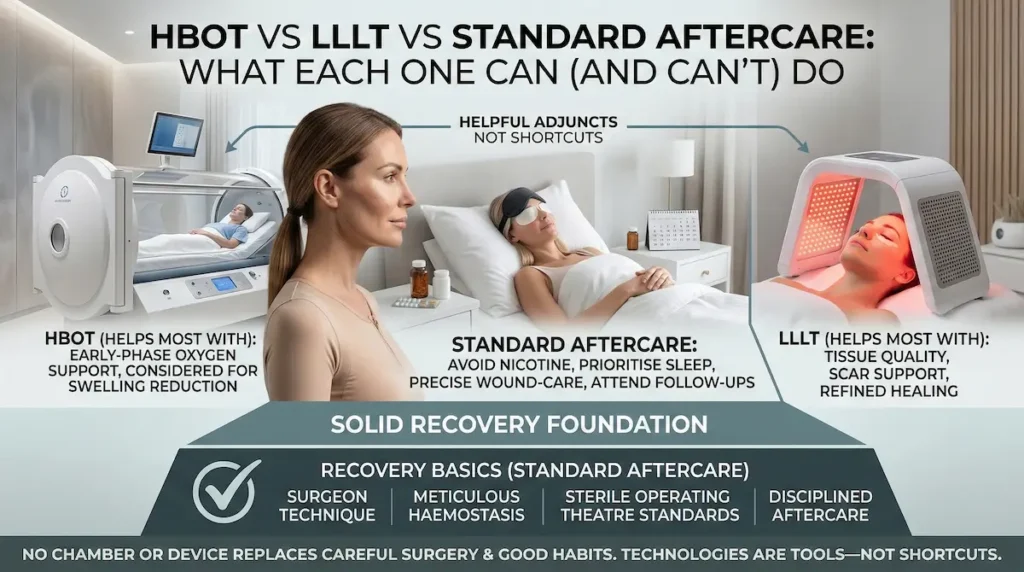
HBOT vs LLLT vs Standard Aftercare: What Each One Can (and Can’t) Do
Patients searching fastest way to recover from facelift often compare technologies without comparing fundamentals. The truth is that the biggest drivers of a smooth recovery are still: surgeon technique, meticulous haemostasis, sterile operating theatre standards, and disciplined aftercare. HBOT and LLLT can be helpful adjuncts, but they work best when layered onto a solid recovery foundation.
HBOT: where it may help most
HBOT is primarily discussed in relation to oxygen support and early-phase recovery. If your main concern is reduce swelling after facelift and you want an advanced-support option, HBOT may be considered—assuming you’re medically suitable and it’s properly supervised.
LLLT: where it may help most
LLLT is more often discussed in relation to tissue quality and scar support rather than “overnight” swelling reduction. If your focus is refined healing—helping scars mature well and supporting skin recovery—LLLT may be a better match than HBOT, or used alongside it depending on your clinician’s protocol.
What no technology replaces
No chamber or device replaces careful surgery and good habits. The most reliable facelift recovery tips remain the basics: avoid nicotine, prioritise sleep, follow wound-care instructions precisely, and attend follow-ups. Technologies are tools—not shortcuts.
A Practical “Faster Recovery” Protocol (Day-by-Day / Week-by-Week)
If you’re asking how to speed up facelift recovery in practical terms, a structured timeline helps you avoid the two common mistakes: doing too much too soon, or doing nothing and hoping swelling resolves “by itself”. Below is a general framework used in many clinician-led pathways. Your own plan must follow your surgeon’s instructions, especially regarding dressings, drains (if used), and incision care.
Days 1–3: swelling control, safety, and “what’s normal”
- Positioning: Sleep with your head elevated to help reduce swelling after facelift.
- Gentle mobilisation: Short, frequent walks indoors support circulation.
- Cold care (if advised): Some clinicians recommend limited cold compress use early on—only as directed (too much cold can be counterproductive).
- Hydration and nutrition: Prioritise protein and fluids to support repair.
Bruising and oedema are expected early. If you’re worrying about bruising after facelift how long, it’s often more helpful to track whether bruising is changing colour and slowly shifting downwards (a common pattern) rather than expecting it to vanish in a few days.
Days 4–7: easing into routine, clinician-led adjuncts where appropriate
- Consistency beats intensity: Keep movement gentle and regular.
- Follow-up checks: This is where dressing changes and incision checks matter.
- Adjuncts (if clinically appropriate): Some pathways introduce supportive therapies during this phase, such as HBOT or LLLT, but only if your clinician confirms timing and safety.
If your aim is how to speed up facelift healing, this is often the phase where patience pays off: you can support healing without stressing tissues.
Weeks 2–6: scar support, return to work, and managing expectations
- Scar care: Use surgeon-approved scar care strategies consistently.
- UV protection: Healing skin is more vulnerable; protect it carefully.
- Activity progression: Return to exercise gradually as advised—overdoing it can increase swelling.
For many, this is when they feel “more like themselves”. If you’re searching how to reduce bruising after facelift, remember bruising generally resolves with time; you can support the process through rest, gentle movement, hydration, and adherence to aftercare.
Safety First: Who Should Avoid HBOT or Laser Therapy (and Key Questions to Ask)
Any strategy to speed up facelift recovery must start with safety. HBOT and LLLT can be beneficial for selected patients, but they are still medical interventions and require screening. A responsible clinic should clearly explain suitability criteria and what monitoring is in place.
HBOT: medical history matters
HBOT may not be suitable if you have certain lung/ear conditions, unmanaged respiratory issues, or other contraindications. A proper assessment should include your medical history, medications, and any prior complications with pressure changes (for example, ear equalisation problems). If you want the fastest way to recover from facelift, the safest route is an individually tailored protocol—not a one-size-fits-all package.
LLLT: timing, skin sensitivity, and expectations
Laser therapy should only be used when incisions are stable and your clinician confirms appropriate timing. LLLT is gentle, but “gentle” doesn’t mean “automatic”. Skin sensitivity, incision status, and your overall healing pattern should guide whether and when it’s used.
Questions to ask as a UK patient
- What is the clinical rationale for HBOT/LLLT in my case?
- How many sessions are typically used, and what is the schedule?
- Who oversees treatment and what training do staff have?
- What is the escalation pathway if swelling, bruising, or pain worsens unexpectedly?
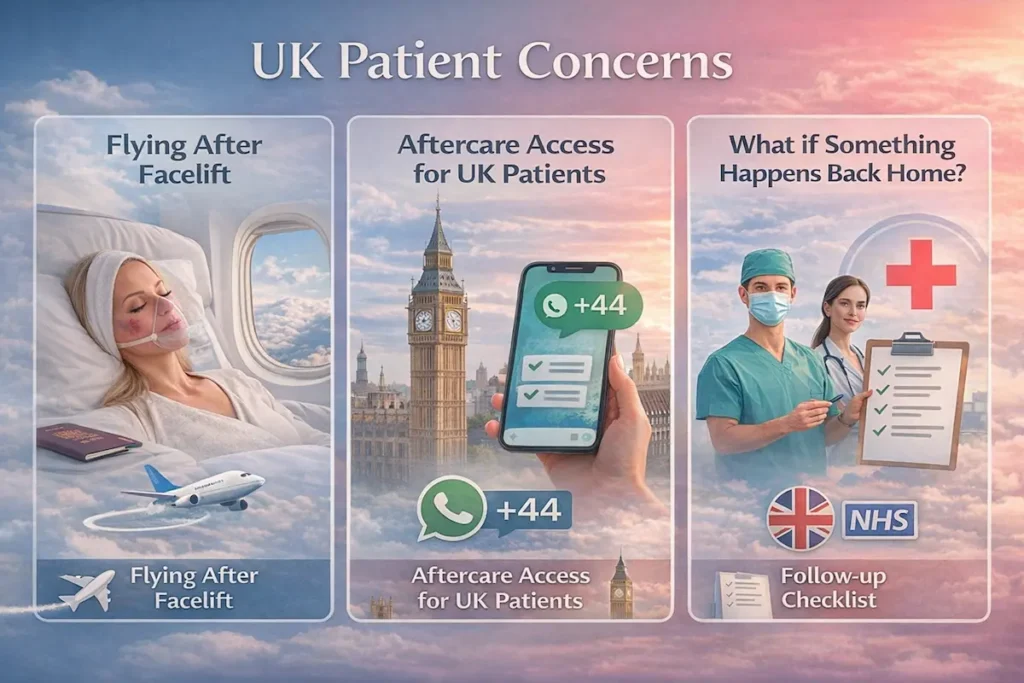
UK Patient Concerns: Flying, Aftercare Access, and “What If Something Happens Back Home?”
UK patients often choose surgery abroad for quality and value, but their number-one concern is aftercare: “What happens once I’m home?” A high-quality medical tourism pathway must include structured follow-up, clear safety advice, and accessible contact channels. That reassurance matters as much as any technology when your goal is to minimise oedema after facelift and return to normal life confidently.
Flying and swelling: building a “flight-ready” plan
Travel can increase facial congestion and discomfort in some patients, especially if swelling is still active. The practical approach is to plan travel timing based on your recovery milestones rather than calendar pressure. If you’re asking how can I speed up my facelift recovery specifically to travel sooner, the safest strategy is to follow a clinician-led plan designed for travellers, including monitoring and conservative decision-making.
Continuity of care: what good follow-up looks like
Good follow-up is proactive: scheduled check-ins, guidance on photos, and clear instructions on what is normal versus what needs urgent assessment. This is particularly important for questions like reduce swelling after facelift and bruising after facelift how long, because reassurance and appropriate escalation reduce anxiety and prevent avoidable setbacks.
What to do if something feels “off” once you’re back in the UK
You should receive clear written instructions: who to contact, what symptoms matter, and what to do outside working hours. If you develop signs of infection (for example, increasing redness, worsening pain, discharge, or a fever—commonly considered 38°C or above), you should seek urgent clinical advice.
What Results Can You Expect? “Subtle” Recovery Outcomes UK Patients Prefer
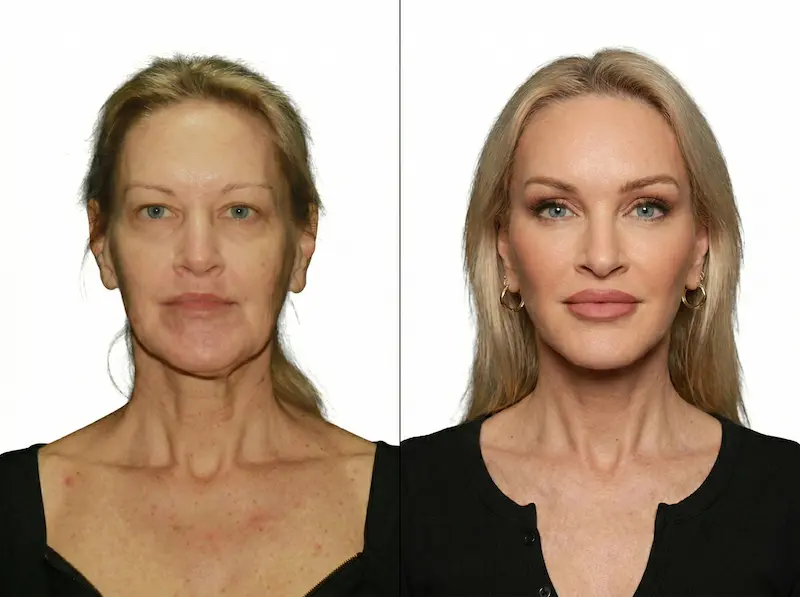
Many UK patients want to look refreshed but not “done”. That preference shapes recovery priorities: reducing puffiness, allowing tissues to settle naturally, and supporting scar maturation. If you’re searching facelift recovery tips, your best results usually come from consistency, not aggressive interventions.
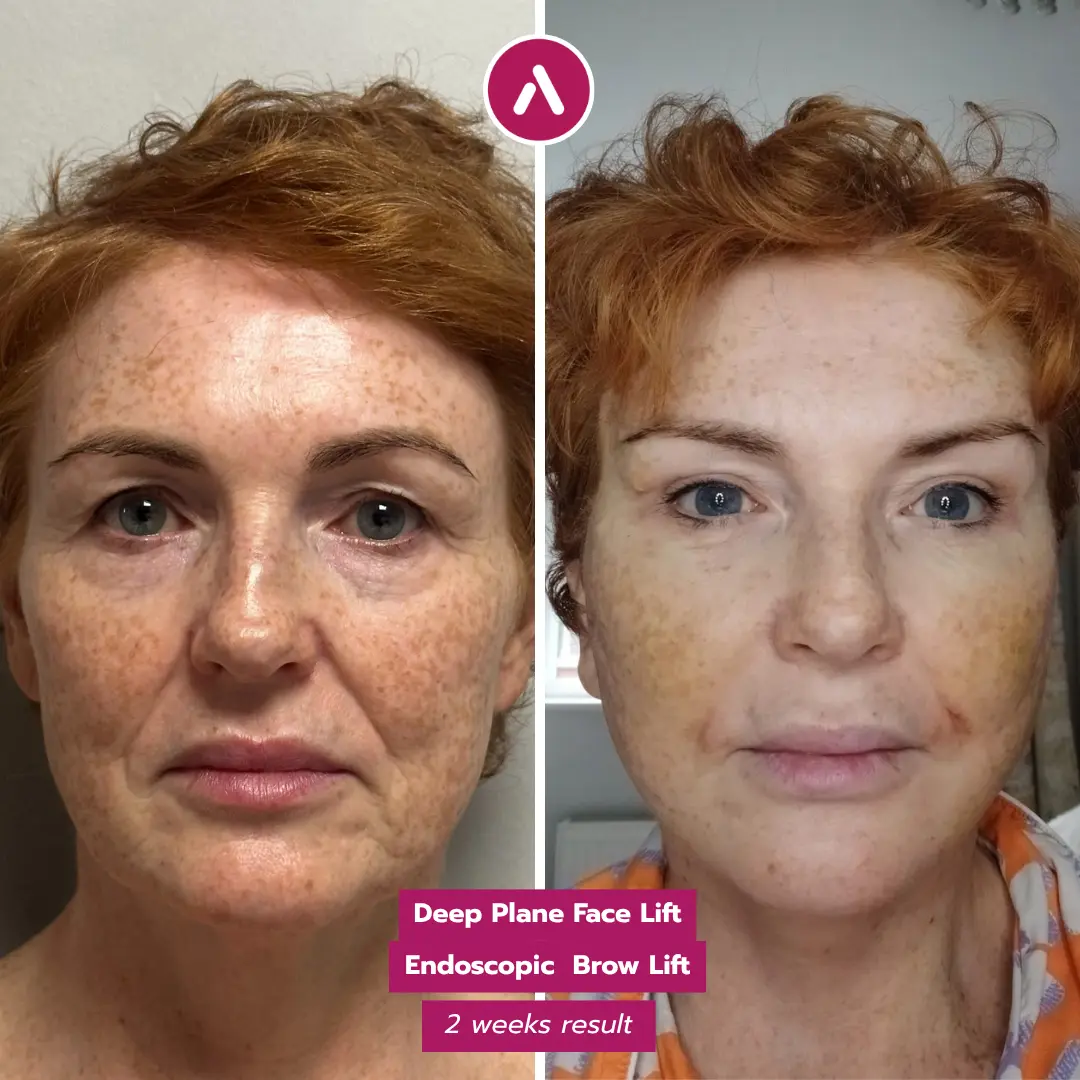
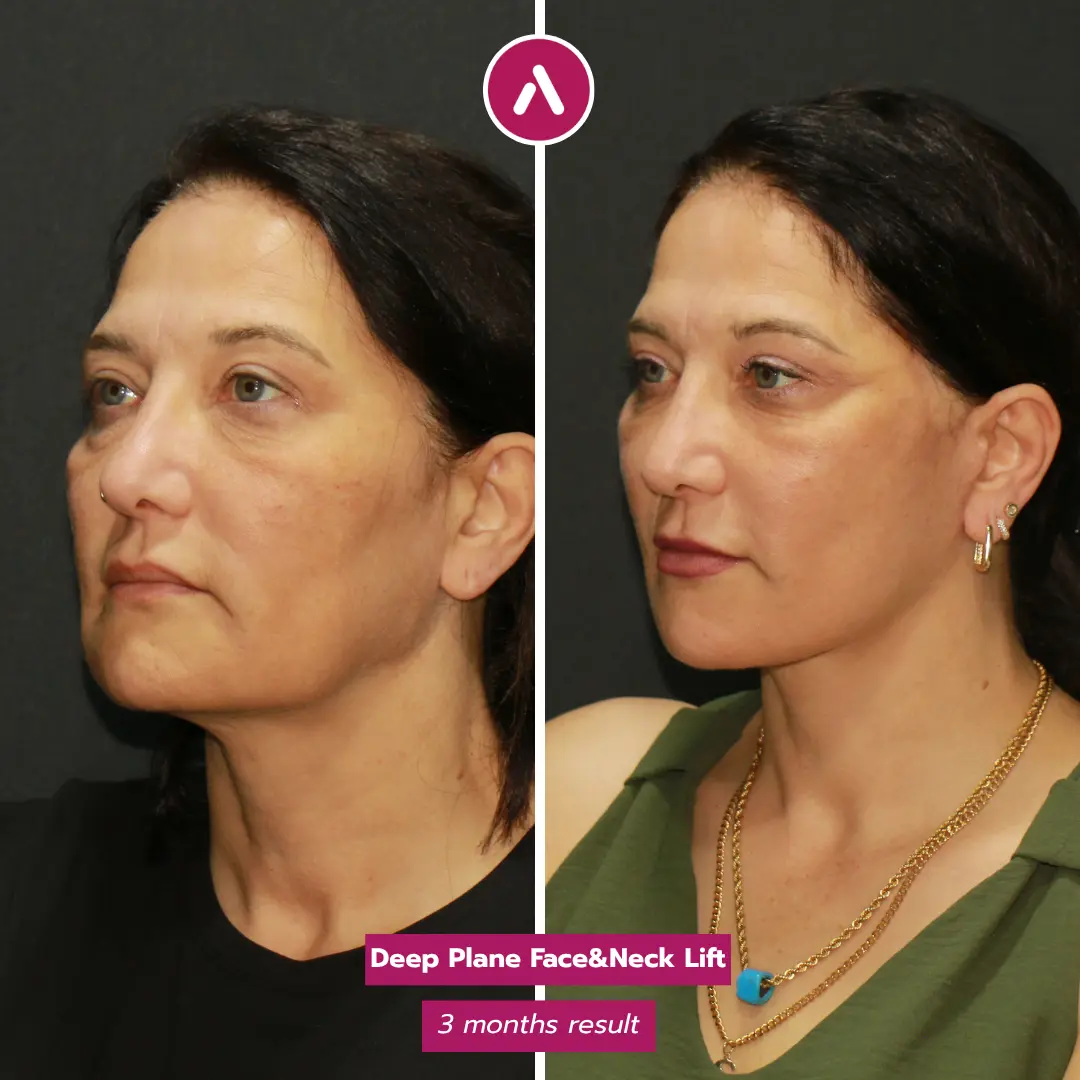
Reducing the “puffy” phase sooner (without overpromising)
The “puffy” look is often oedema plus tissue tightness. You can support improvement by following a calm recovery plan: elevation, gentle walking, hydration, and avoiding triggers that worsen swelling. If you’re trying to reduce swelling after facelift, small daily behaviours add up more than any single gadget.
Scar realism: what “minimised” typically means
Minimised scars are typically flatter, lighter, and less noticeable over time—not invisible. Scar quality is influenced by incision placement, tension, skin type, and care. This is where LLLT may be discussed as part of a scar-support pathway in selected patients.
The “subtle rejuvenation” goal: refreshed, not changed
A natural result is not just a surgical outcome—it’s also a recovery outcome. Calm healing, controlled swelling, and properly supported scars contribute to a refined, subtle appearance that aligns with what many UK patients want.
Frequently Asked Questions (FAQ): Speed Up Facelift Recovery
How to speed up facelift recovery safely?
The safest approach is structured aftercare: head elevation, gentle movement, good sleep, hydration, protein intake, and strict adherence to incision-care instructions. Adjuncts like HBOT or LLLT may be considered if clinically suitable.
How can I speed up my facelift recovery if I swell a lot?
Swelling-prone patients often benefit from consistent elevation, gentle walking, avoiding nicotine and alcohol, and careful activity progression. Ask your clinician whether an advanced-support pathway is appropriate for you.
What are the best facelift recovery tips for bruising?
Bruising typically resolves with time. Support recovery with rest, hydration, gentle movement, and following medication guidance. Avoid unapproved supplements or medicines that could increase bleeding risk.
Bruising after facelift how long does it last?
Bruising commonly improves over 1–2 weeks, but timelines vary. Colour changes and gradual fading are typical; worsening bruising or new swelling should be discussed with your clinician.
How to reduce bruising after facelift?
Follow your surgeon’s advice precisely, keep activity gentle early on, stay hydrated, and prioritise sleep. Don’t self-prescribe blood-thinning products unless advised.
How to speed up facelift healing of incisions?
Incision healing is supported by cleanliness, avoiding strain, good nutrition, and attending follow-ups. LLLT may be considered in some pathways once incisions are stable.
Minimising oedema after facelift: what actually works?
Elevation, gentle mobilisation, avoiding overheating and strenuous activity early on, and consistent aftercare. Some patients may be assessed for adjuncts such as HBOT depending on suitability.
Is HBOT the fastest way to recover from facelift?
HBOT can be a supportive adjunct for selected patients, but it isn’t a guarantee or a replacement for good surgery and good aftercare. The “fastest” recoveries usually come from comprehensive, clinician-led protocols.
Can laser therapy help after a facelift?
Low-Level Laser Therapy (LLLT) may support tissue recovery and scar maturation in selected patients when used at the right time. It should be clinician-directed and tailored to incision status.
What should I do if swelling gets worse or I feel unwell?
Contact your clinic promptly. If you develop worrying symptoms—such as increasing redness, discharge, rapidly worsening pain, or fever (commonly 38°C or above)—seek urgent clinical advice.
Medical Disclaimer: This page is provided for general educational purposes only and does not replace a face-to-face medical consultation, diagnosis, or personalised treatment plan. All surgery carries risks and outcomes vary between individuals. Suitability for a facelift, procedure selection, and anaesthesia choice can only be determined after a full clinical assessment by a qualified surgeon. Always follow your clinician’s instructions and seek urgent medical attention if you develop concerning symptoms during recovery.