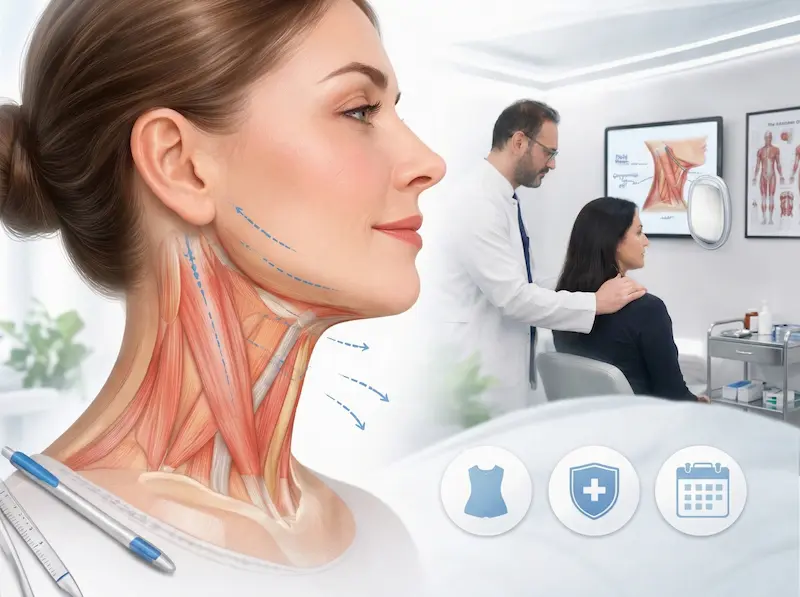
If you’re researching deep plane facelift results, you’re probably not looking for a “new face”. You’re looking for a version of you that seems rested, healthy, and quietly more youthful—without friends clocking exactly what you’ve done. In UK terms, the goal is typically refreshed, not altered.
This article explains—using clear anatomy and the principles of medical science—why deep plane techniques are so often associated with natural-looking facelift results, especially for patients who want to avoid that overly tight, “done” appearance.
- Focus: what “natural” really means (and how to judge it)
- Core comparison: deep plane vs SMAS vs skin-only tightening
- Practical outcomes: jawline definition, midface support, and how to avoid the windblown look
Table of Contents
What “Natural” Facelift Results Mean for UK Patients
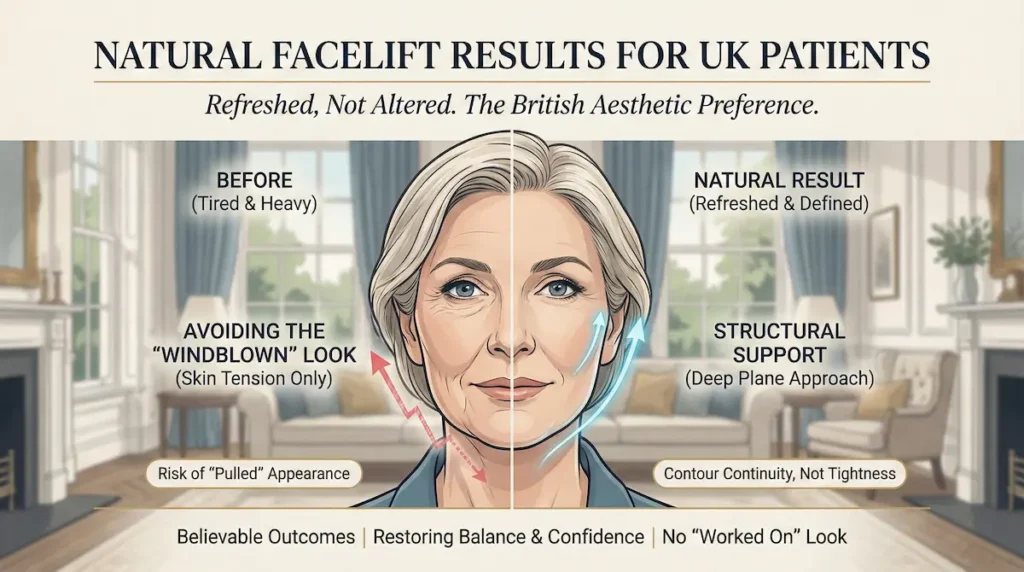
In clinic, “natural” doesn’t mean “no change”. It means the face still looks like you—just less tired, less heavy, and more defined in the right places. For many British patients, the fear is not ageing itself; it’s the risk of looking wind-swept, “pulled”, or noticeably operated on. That’s why phrases like refreshed not altered facelift and avoiding the windblown look matter so much when you’re assessing the best deep plane facelift results.
Rejuvenation, not alteration: the UK aesthetic preference
The most convincing outcomes don’t erase every line. They restore balance: a softer transition from cheek to lower eyelid, a cleaner jawline, and a calmer neck—without changing your identity. That’s the heart of a refreshed not altered facelift approach: improvement that reads as “well” rather than “worked on”.
The “pulled” or “wind-swept” fear—why it happens
That “windblown” look is usually a vector and tension problem. When the lift relies heavily on skin tightening (rather than structural repositioning), the skin can be placed under higher tension. Over time—or even immediately in some cases—this can create lateral pulling near the mouth corners, cheeks, and hairline. In other words: if your plan is “tighten the skin to fix everything”, you may be increasing the risk of the look you’re trying to avoid.
If your priority is to avoid wind-swept facelift look, your consultation should focus on:
- Which layer will be lifted (skin only, SMAS, or deep plane)
- How the surgeon manages skin tension (lower tension often looks more natural)
- How the midface and jawline are supported (not just tightened)
How to judge naturalness: contour continuity, not tightness
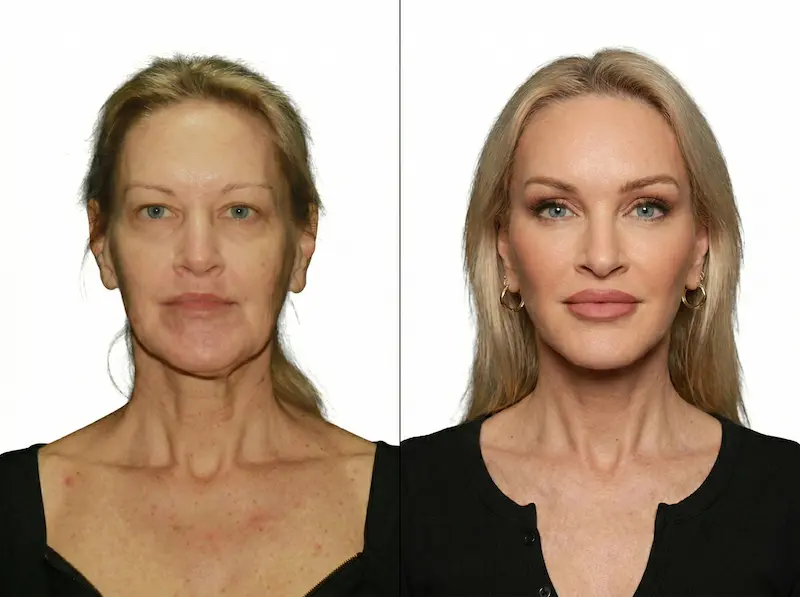
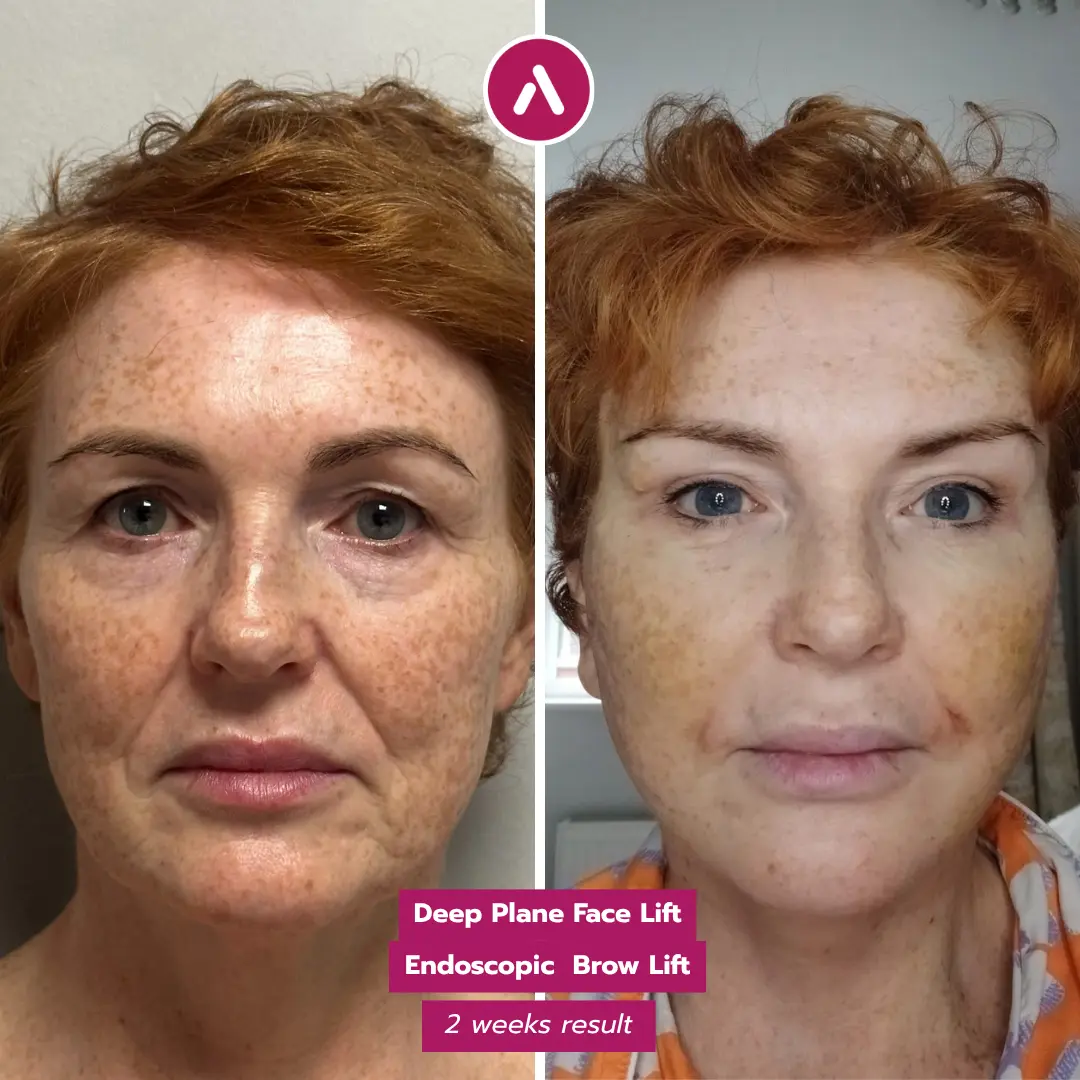
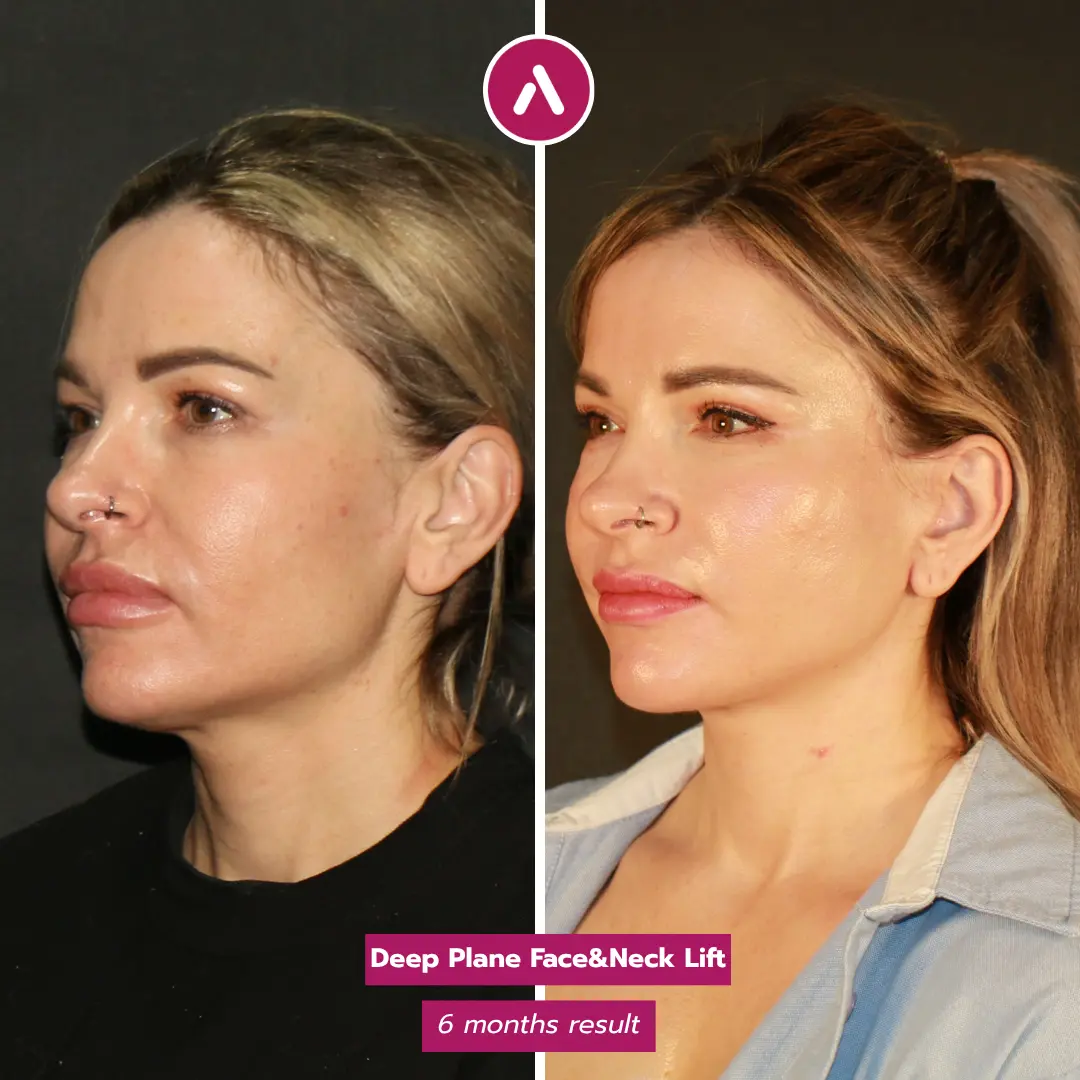
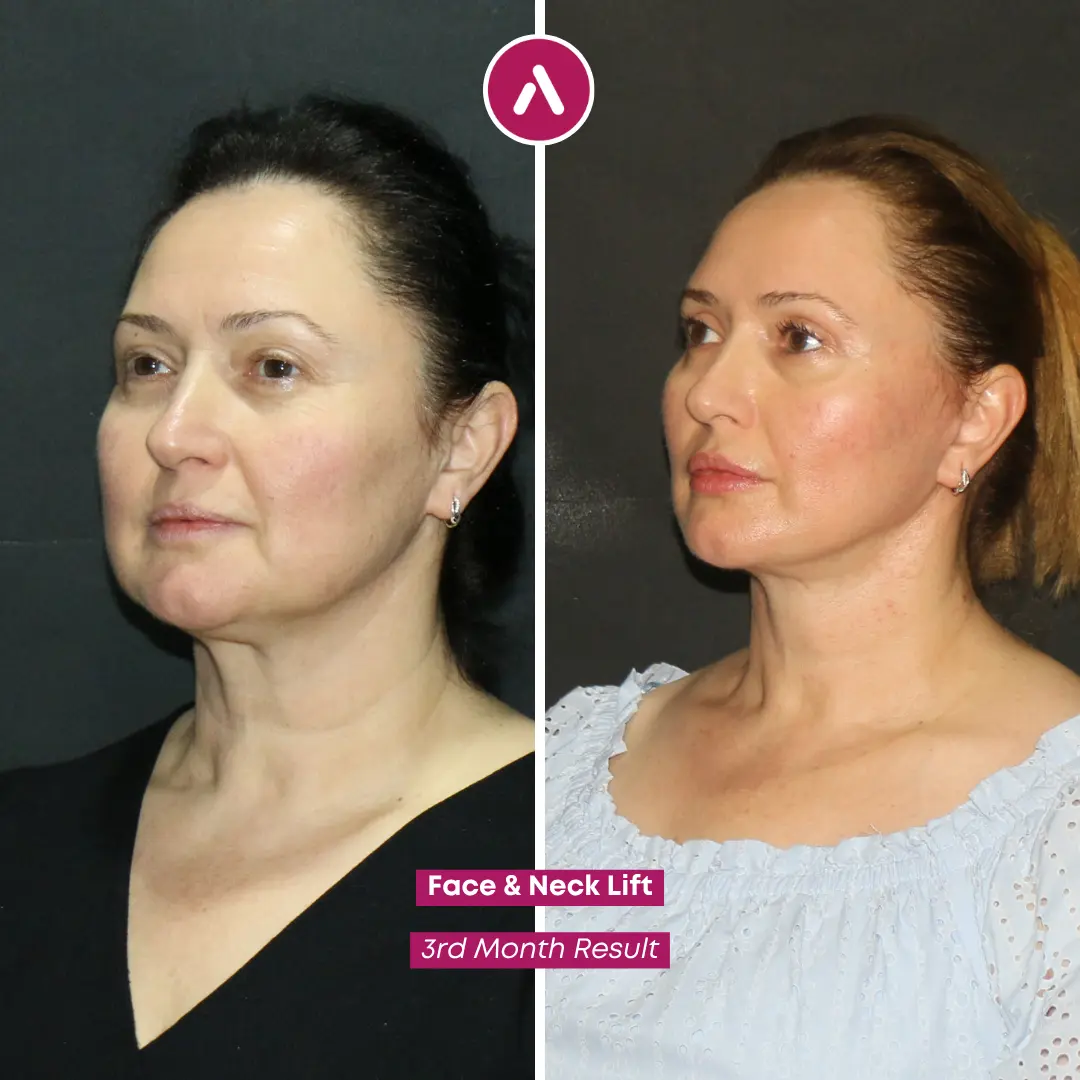
When you review before/after photos, don’t just look for “lifted”. Look for continuity—a smooth, believable flow from cheek to jaw and from jaw to neck. The hallmark of natural-looking facelift results is that the face appears structurally supported, not stretched. A useful check: if the jawline looks sharper but the mouth area appears strained, the technique may be relying too much on skin tension rather than deep support.
Deep Plane Facelift Explained (In Plain English)
A deep plane facelift is best understood as a method that aims to reposition key facial tissues rather than simply tightening the surface. From a scientific research perspective, the logic is straightforward: if ageing involves descent and loosening of deeper facial structures, then a more natural correction usually comes from addressing those structures—so the skin can “drape” smoothly with less tension.
Where the “deep plane” sits anatomically
Facelift techniques differ by which layer is lifted. The “deep plane” is beneath the superficial support layer (often discussed alongside the SMAS) and allows the surgeon to release and reposition tissues that contribute to midface heaviness and jowling. This is one reason the best deep plane facelift results can look less “tight”—because the lift is not asking the skin to do all the work.
Why lifting deeper layers changes outcomes
When deeper tissues are repositioned, the visible improvement often looks like a genuine reversal of sagging rather than a surface pull. Patients frequently describe this as looking “rested” or “back to myself”. Clinically, that’s consistent with a refreshed not altered facelift outcome. It can also support a more convincing midface contour, which is a major contributor to “naturalness” in photos and in real life.
Who is a typical candidate (40s, 50s, 60s and beyond)
Deep plane techniques are commonly considered by patients with midface descent, early-to-moderate jowls, and a jawline that has softened with time—especially when they want natural jawline definition after facelift without a “pulled” appearance. Age alone isn’t the deciding factor; it’s your facial anatomy, skin quality, and the pattern of ageing. A thorough consultation should cover what’s driving your concerns (midface, jawline, neck) and match the technique accordingly.
Deep Plane vs SMAS vs Skin-Only: Why Technique Drives Natural Results
Most people judge a facelift by the surface: how tight the skin looks. Surgeons judge it by structure: which layers were repositioned and how the skin was allowed to settle afterwards. This is where the technique matters for natural-looking facelift results—and for anyone focused on avoiding the windblown look or wanting the best deep plane facelift results.
Skin-only tightening: why it can look artificial
Skin-only lifts rely on pulling and trimming the skin to create a “lifted” appearance. The problem is that skin is not the main driver of facial descent. When skin carries too much tension, it can create an overly smooth, tight surface while the deeper heaviness (midface, jowls) is incompletely corrected. This mismatch is one reason some results look “operated on”. If your goal is to avoid wind-swept facelift look, a plan that depends on high skin tension is a risk factor.
SMAS lifts: when they work well (and when they don’t)
SMAS-based techniques aim to address the supportive layer beneath the skin. In the right hands and with the right anatomy, SMAS approaches can deliver excellent outcomes. However, the degree of release, the vectors used, and how the midface is addressed vary widely. Some SMAS techniques may still leave the midface under-corrected or rely on a more lateral pull, which can matter if you’re particularly concerned about avoiding the windblown look.
Deep plane: why less skin tension can look more natural
One reason deep plane techniques are associated with natural-looking facelift results is that they can allow deeper repositioning of tissues that create jowls and midface heaviness. When the structure is corrected, the skin can be re-draped with less tension. Practically, that can support a more believable contour and reduce the “tight skin” signal that can read as artificial—supporting a truly refreshed not altered facelift.
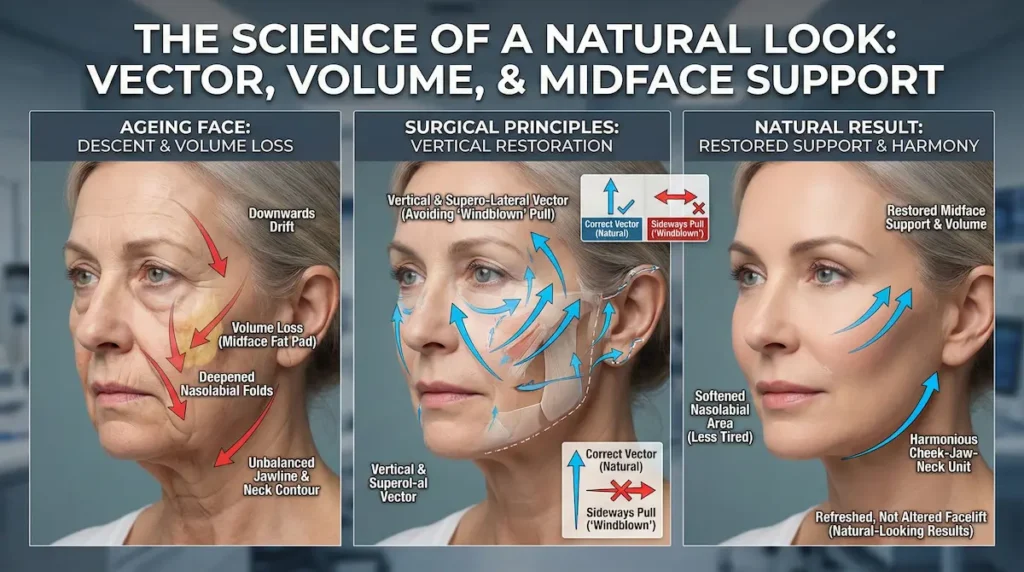
The Science of a Natural Look: Vector, Volume, and Midface Support
Ageing is not simply “loose skin”; it’s a combination of tissue descent, volume changes, and alterations in facial support. Medical science helps explain why some techniques look natural: they restore the way facial structures sit and move. When you’re assessing the best deep plane facelift results, think about three things: vector (direction of lift), volume (how fullness is restored or respected), and midface support (cheek and lower eyelid transition).
Vertical lift vs “sideways pull”
Faces age with a general downward drift. Natural correction often involves a more vertical or supero-lateral restoration rather than a purely sideways pull. A sideways vector can contribute to that “wind-swept” feel, especially around the mouth and cheek. This is why consultation language matters: ask about the direction of the lift and how the plan supports avoiding the windblown look.
Midface (cheek fat pad) support and softening the nasolabial area
Midface descent can create heaviness under the eyes and deepen the nasolabial area. When the midface is supported appropriately, patients often look less tired—even if they still have normal expression lines. This is the essence of a refreshed not altered facelift: the face looks healthier and more awake, not “tight”. Deep plane approaches may facilitate midface improvement in a way that reads as subtle rather than dramatic.
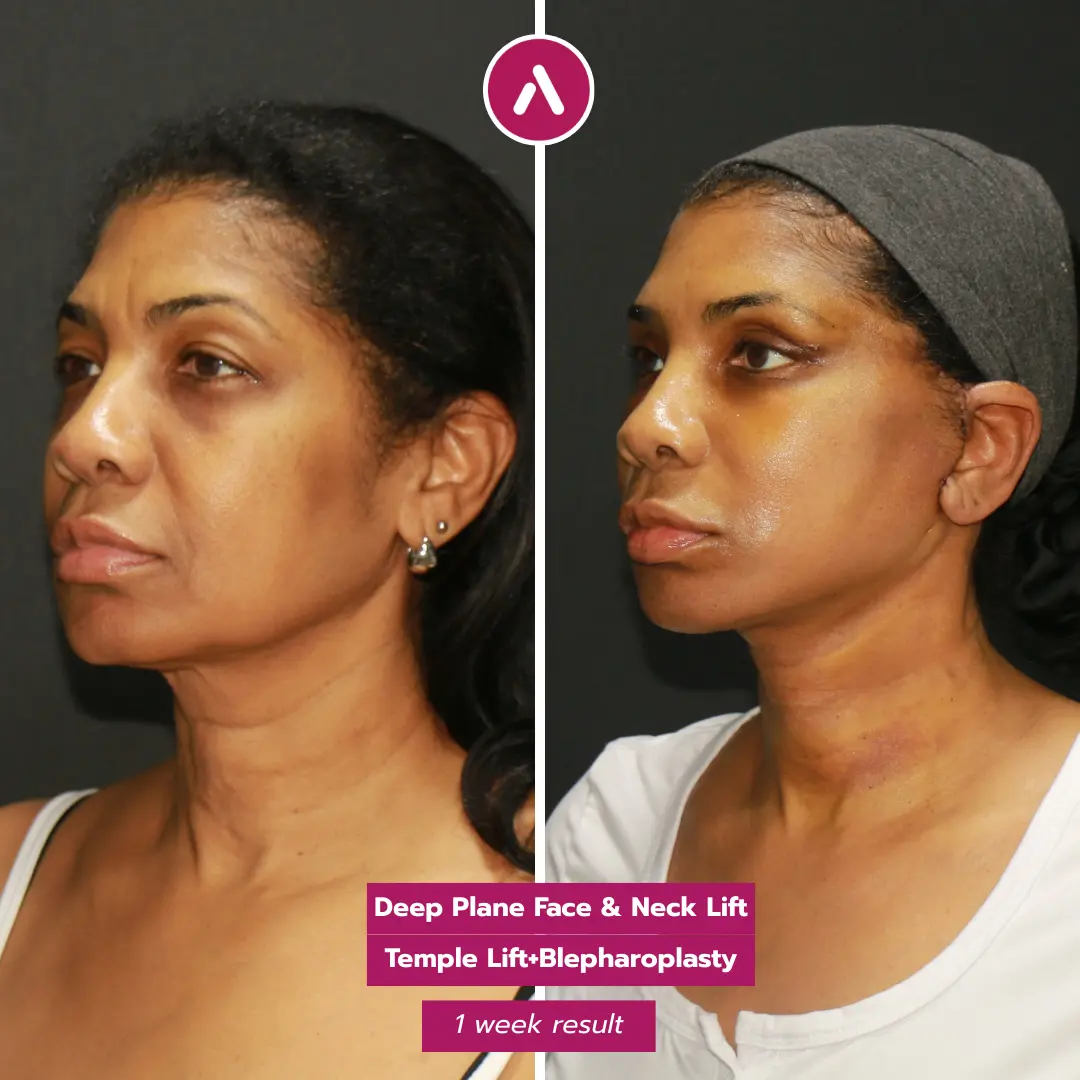
Jawline and neck harmony: avoiding mismatched results
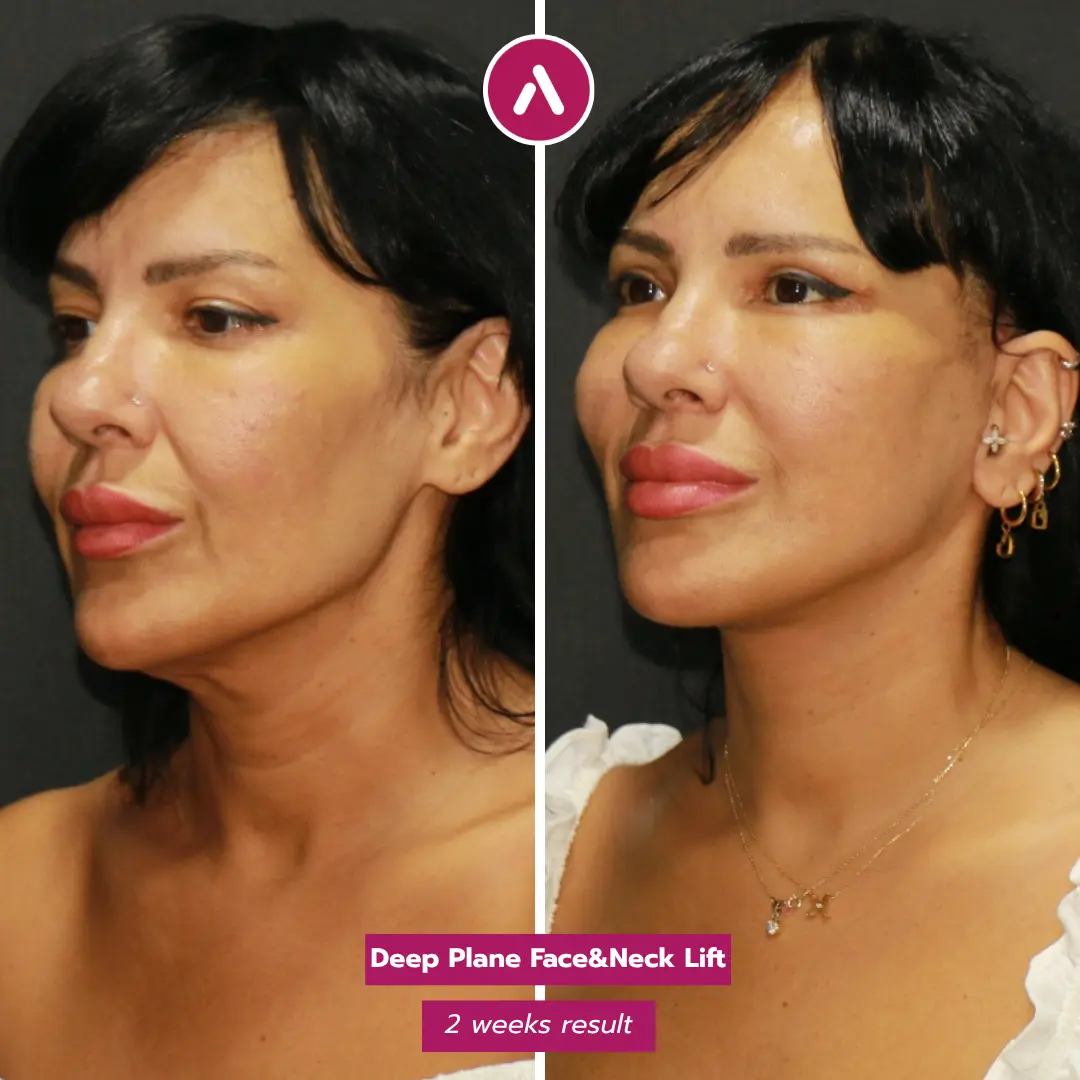
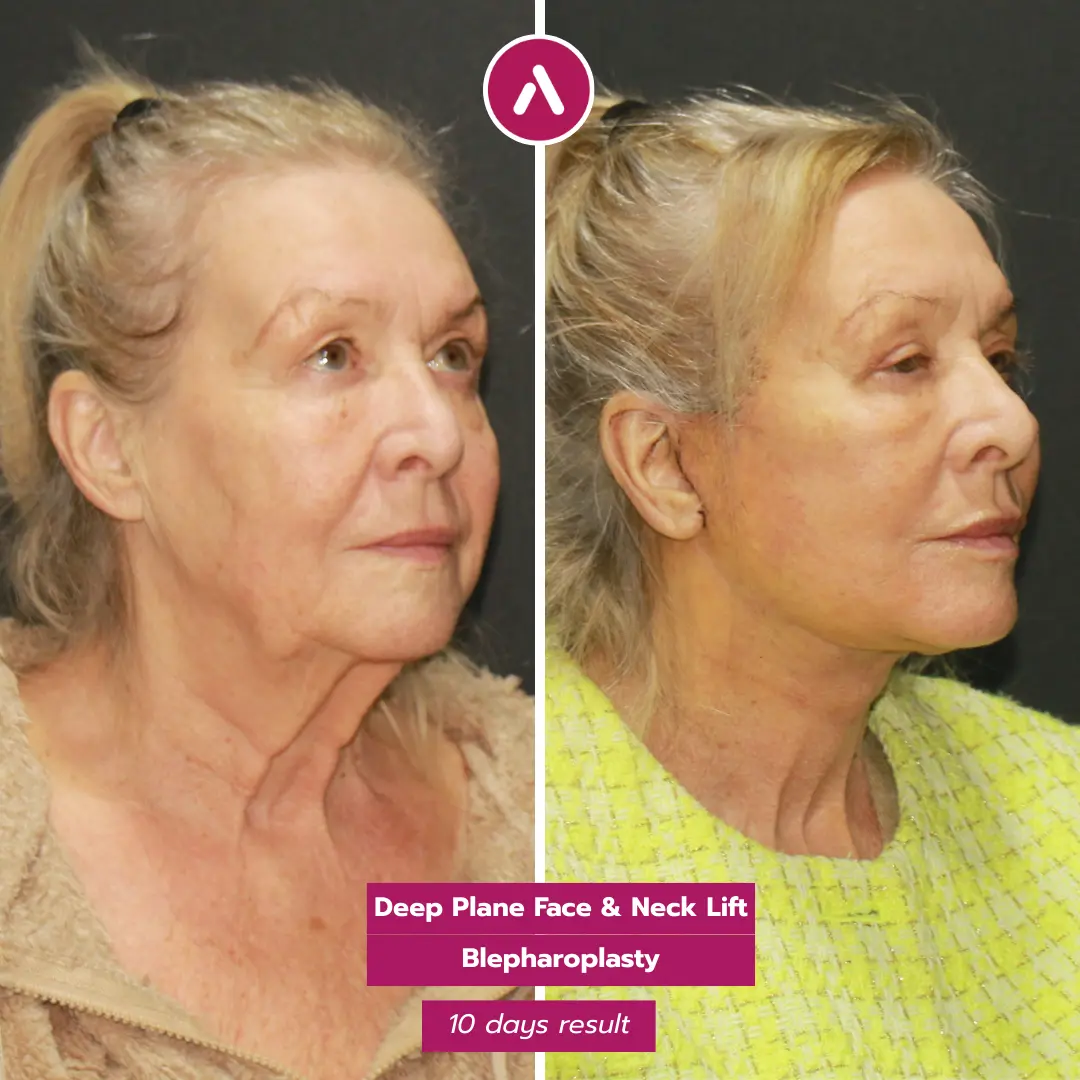
One of the most requested changes is natural jawline definition after facelift. The key word is “natural”. A sharp jawline that doesn’t match the neck—or a tightened neck with a still-heavy jawline—can look odd. Balanced planning considers the lower face and neck as one aesthetic unit. If you want natural-looking facelift results, the question isn’t “How tight can it be?” but “How harmonious is the contour from cheek to jaw to neck?”
What Makes Deep Plane Results Look “Undetectable” (Key Visual Markers)
To evaluate deep plane facelift results objectively, you need markers that go beyond “looks lifted”. The most convincing outcomes are typically the ones that look unremarkable in the best possible way—no obvious tension cues, no distorted landmarks, and preserved expression. These are the practical signs many patients associate with the best deep plane facelift results.
Smooth, continuous contour (no step-offs)
A natural result shows a continuous transition across the cheek, jawline, and neck—without “shelves” or abrupt changes. Over-tightening can create unnatural edges or a “stuck” look. A structurally supported lift tends to read as smoother and more believable.
Natural ear/hairline transitions and scar placement principles
Even a technically excellent lift can be compromised by visible distortion at the hairline or around the ear. Look for ears that appear normal in shape and position, and hairlines that look undisturbed. Good planning aims to place scars so they are concealed in natural creases and hair-bearing areas where appropriate, without dragging the hairline forward.
Expression preservation: smile lines and “movement” staying authentic
Natural rejuvenation preserves the way you move when you talk and smile. Some lines are part of normal expression and shouldn’t be eliminated at the expense of authenticity. A refreshed not altered facelift prioritises expression preservation—so you look like you, just better rested.
Recovery and Swelling: When Results Start Looking Natural
Patients often panic too early. In the first days and weeks, swelling (oedema) can make you look tighter or fuller than your final result. Understanding a realistic healing timeline is essential if you want to assess natural-looking facelift results fairly—especially if you’re travelling back to the UK and hoping to look “socially presentable” on a schedule.
Oedema and bruising: what’s normal (week-by-week)
- Days 1–7: swelling, bruising, tightness and temporary asymmetry can be normal.
- Weeks 2–4: bruising typically fades; swelling reduces but can linger around the jawline and neck.
- Weeks 6–12: the face usually looks more “yours”; refinement continues, especially in the lower face.
These are general patterns; individual recovery varies based on anatomy, extent of surgery, and adherence to aftercare.
The “socially presentable” timeline for UK travellers
Many patients aim to be presentable for day-to-day life within a few weeks, but “truly natural” often takes longer—because swelling must settle and tissues must soften. If you’re evaluating whether you achieved the best deep plane facelift results, give your body time. A deep, structural lift can look progressively better as oedema resolves.
Red flags vs normal healing (when to contact your surgeon)
Some discomfort, tightness and uneven swelling can be normal. However, severe pain, sudden swelling on one side, fever, spreading redness, shortness of breath, or any concern that feels “wrong” should be reported immediately. Clear aftercare access matters—especially once you’re back in the UK.
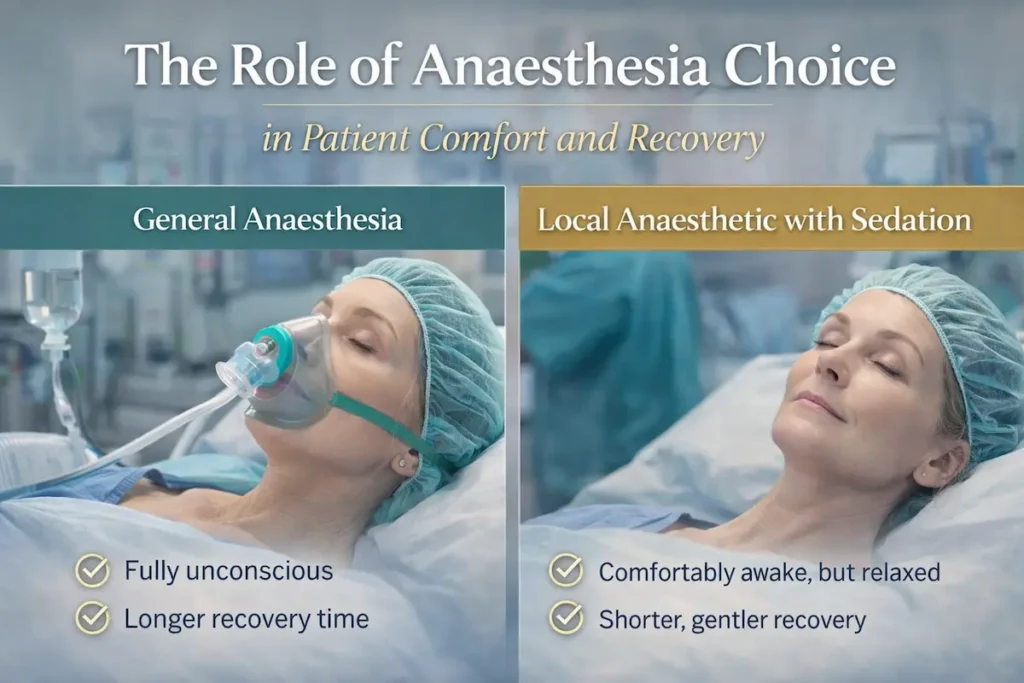
The Role of Anaesthesia Choice in Patient Comfort and Recovery
Anaesthesia is not just a comfort issue; it can influence your overall experience, early recovery, and how confident you feel travelling home. For UK patients comparing options, this section is about informed choice—aligned with medical science, safety protocols, and what supports genuinely natural-looking facelift results without avoidable stress.
Local anaesthesia + light sedation (twilight) vs general anaesthesia
Broadly, facelifts can be performed under general anaesthesia or under local anaesthesia with sedation (often called “twilight” sedation or “conscious” sedation). The right choice depends on the surgical plan, your medical history, and your surgeon’s assessment. Some patients prefer general anaesthesia for complete unconsciousness; others value a lighter approach where suitable. What matters most is that monitoring, airway management planning, and anaesthetic standards are appropriate and clearly explained.
Why some UK patients prefer avoiding general anaesthesia
Many British patients are comfortable with general anaesthesia, but some prefer to minimise it where clinically appropriate—often due to personal anxiety, prior experiences, or a desire for a smoother “day one” feel. When the technique and patient selection allow, a lighter anaesthetic approach may support a calmer early recovery phase. The key is not the label, but the safety framework and suitability for your procedure.
Safety protocols and what to ask your clinic about monitoring
To assess safety properly, ask practical questions:
- Who provides the anaesthesia (anaesthetist-led care and qualifications)?
- What monitoring is used during the procedure?
- How is nausea, pain control, and hydration managed postoperatively?
- What is the escalation plan if an issue arises?
Well-run pathways feel organised, transparent, and calm—an important signal for UK “expert patients” who want reassurance, not vague promises.
How We Support Natural Results with Advanced Recovery (HBOT & LLLT)
Even the best deep plane facelift results can be undermined if recovery is poorly supported. The early post-operative period affects swelling (oedema), bruising, comfort, and your confidence returning to normal life—especially if you’re travelling back to the UK. This is where structured aftercare and evidence-informed adjuncts can matter.
HBOT: reducing postoperative oedema and downtime
Hyperbaric Oxygen Therapy (HBOT) is used in various medical settings to support tissue oxygenation. In a postoperative context, some clinics use HBOT as part of a recovery programme aimed at supporting healing and reducing swelling. For patients who want to look “presentable” sooner (without compromising naturalness), a well-managed recovery strategy can be a practical advantage.
LLLT: scar support and skin recovery
Low-Level Light Therapy (LLLT) is commonly discussed in recovery settings for supporting skin comfort and scar maturation. While your scar quality depends heavily on surgical technique, incision placement, and your biology, structured scar support can help optimise the final finish—an important detail when you care about “undetectable” natural-looking facelift results.
“Flight-ready recovery protocols” for returning to the UK
UK travellers often plan their return based on swelling, confidence in aftercare access, and practical comfort. A flight-ready protocol should include:
- Clear day-by-day guidance on activity, head elevation, and wound care
- Medication plan using UK-familiar terminology (e.g., paracetamol where appropriate)
- Scheduled reviews before flying and a remote follow-up plan once in the UK
Importantly, “ready to fly” should never be purely marketing language; it should reflect an individual clinical assessment.
Choosing the Right Surgeon for Natural Deep Plane Outcomes (UK Lens)
If you want a refreshed not altered facelift, your best protection is surgeon selection and a clear plan. Deep plane technique is not a magic word; it’s a set of technical decisions. The most reliable path to best deep plane facelift results is choosing a team that can explain those decisions clearly—backed by consistency in outcomes.
Credentials to verify (UK board-certified equivalent approach)
UK patients are often used to checking professional registers and standards. When considering treatment abroad, you should expect transparency about training, credentials, and scope of practice. A trustworthy clinic will welcome these questions and give you clear documentation—without defensiveness.
Before/after analysis: spotting subtle vs overdone results
Look for:
- Natural jawline changes that still look like the patient’s original face (natural jawline definition after facelift)
- No obvious lateral “pull” around the mouth or cheek (avoid wind-swept facelift look)
- Consistent results across different ages and face shapes
- Normal-looking ears and hairline, with no visible distortion
If the photos look uniformly “tight” or overly smooth, be cautious. The goal is believable structure, not a “mask” effect.
Aftercare access: UK support signals that matter
Aftercare is one of the biggest concerns for British patients travelling for surgery. Practical trust signals include:
- A clearly defined follow-up schedule (in person before travel, then remote support)
- Direct access to clinical advice (not just a generic number)
- Written guidance on what is normal vs what needs urgent review
These details matter as much as the technique if you want to feel safe—and heal well—once you’re home.
Frequently Asked Questions (FAQ): Deep Plane Facelift Results
These answers are intentionally concise, practical decision-making criteria—especially for readers seeking natural-looking facelift results and trying to avoid the windblown look.
How long do deep plane facelift results last?
Many patients enjoy long-lasting improvement, but longevity varies with genetics, skin quality, lifestyle, and surgical technique. A facelift doesn’t stop ageing; it repositions tissues to a more youthful baseline.
Is deep plane always more “natural” than SMAS?
Not always. “Natural” depends on surgeon skill, vectors used, and whether the plan matches your anatomy. Deep plane can be highly natural when correctly indicated and performed.
At what age is deep plane facelift most suitable?
There’s no single age. It’s more about the pattern of ageing—midface descent, jowling, and jawline softening—than the number on your passport.
Will I look “tight” or “pulled”?
A well-planned facelift aims for refreshed not altered facelift outcomes, with low skin tension and preserved expression. Discuss how your surgeon avoids the “wind-swept” risk.
How long does swelling (oedema) typically last?
Noticeable swelling often improves over the first few weeks, but refinement can continue for 2–3 months (sometimes longer), particularly in the jawline and neck.
When can I fly back to the UK after a facelift?
This depends on your individual healing and your surgeon’s assessment. Many patients travel after early review confirms stable healing, manageable swelling, and no clinical concerns.
What scars should I expect and where are they placed?
Incisions are usually positioned around natural creases near the ear and within the hairline where appropriate. Scar quality varies by person; good technique and aftercare are key.
Can deep plane be combined with eyelid surgery (blepharoplasty) or neck lift?
Yes, combination procedures can be appropriate for balanced rejuvenation. The safest plan is one that matches your goals and medical profile without overloading recovery.
What questions should I ask in a consultation to avoid a botched result?
Which layer will you lift, and why is it right for me?
How do you manage vectors to support a natural look?
How do you minimise skin tension to help avoid the wind-swept look?
What is your aftercare pathway once I’m back in the UK?
What aftercare support is available once I’m back in the UK?
You should expect structured remote follow-ups, clear red-flag guidance, and direct access to clinical advice. Aftercare is a core part of achieving the best deep plane facelift results, not an optional extra.
Medical Disclaimer: This page is provided for general educational purposes only and does not replace a face-to-face medical consultation, diagnosis, or personalised treatment plan. All surgery carries risks and outcomes vary between individuals. Suitability for a deep plane facelift, procedure selection, and anaesthesia choice can only be determined after a full clinical assessment by a qualified surgeon. Always follow your clinician’s instructions and seek urgent medical attention if you develop concerning symptoms during recovery.