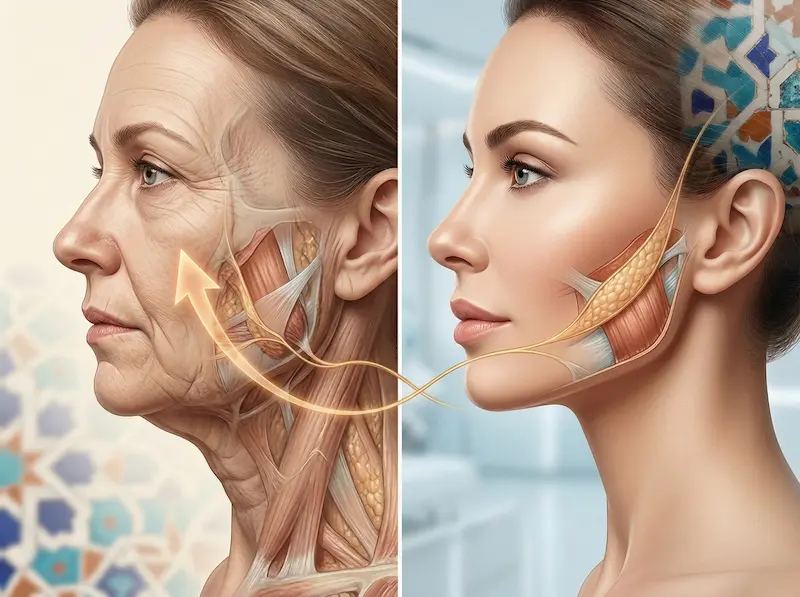

For many British men, the idea of a daddy makeover Turkey plan is not about chasing an artificial or dramatic transformation. It is about looking healthier, leaner, sharper, and more rested without losing masculine character. In practical terms, a daddy makeover in Turkey usually refers to a bespoke combination of procedures designed to address the areas men most commonly worry about: the abdomen, chest, jawline, neck, and hairline.
Whether you are comparing Turkey daddy makeover options, researching daddy makeover surgery Turkey pathways, or trying to understand daddy makeover Turkey cost and daddy makeover Turkey price, the real question is not simply “How much is it?”. The more important question is whether the surgical plan has been designed specifically for male anatomy, male ageing patterns, and male aesthetic goals. That is where a thoughtful, consultant-led approach matters.
This is also why many UK patients begin by comparing a male makeover Turkey journey with the cost of separate procedures in London or Harley Street. When carried out with good planning, combined male surgery Turkey can reduce repeated travel, repeated time away from work, and repeated recovery periods. For the right candidate, it can also create a more balanced result because the face, body, and hairline are considered as one aesthetic whole rather than treated in isolation.
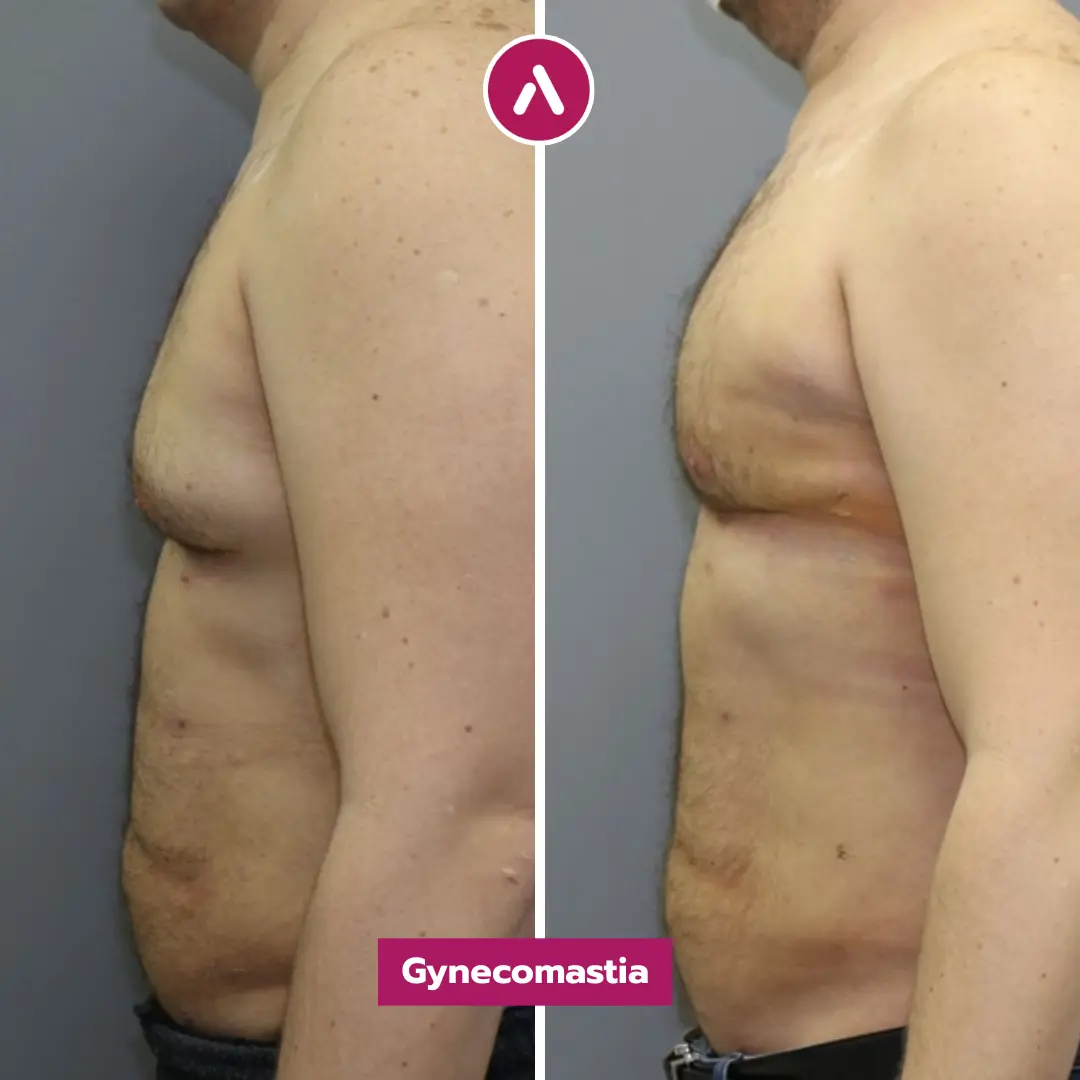
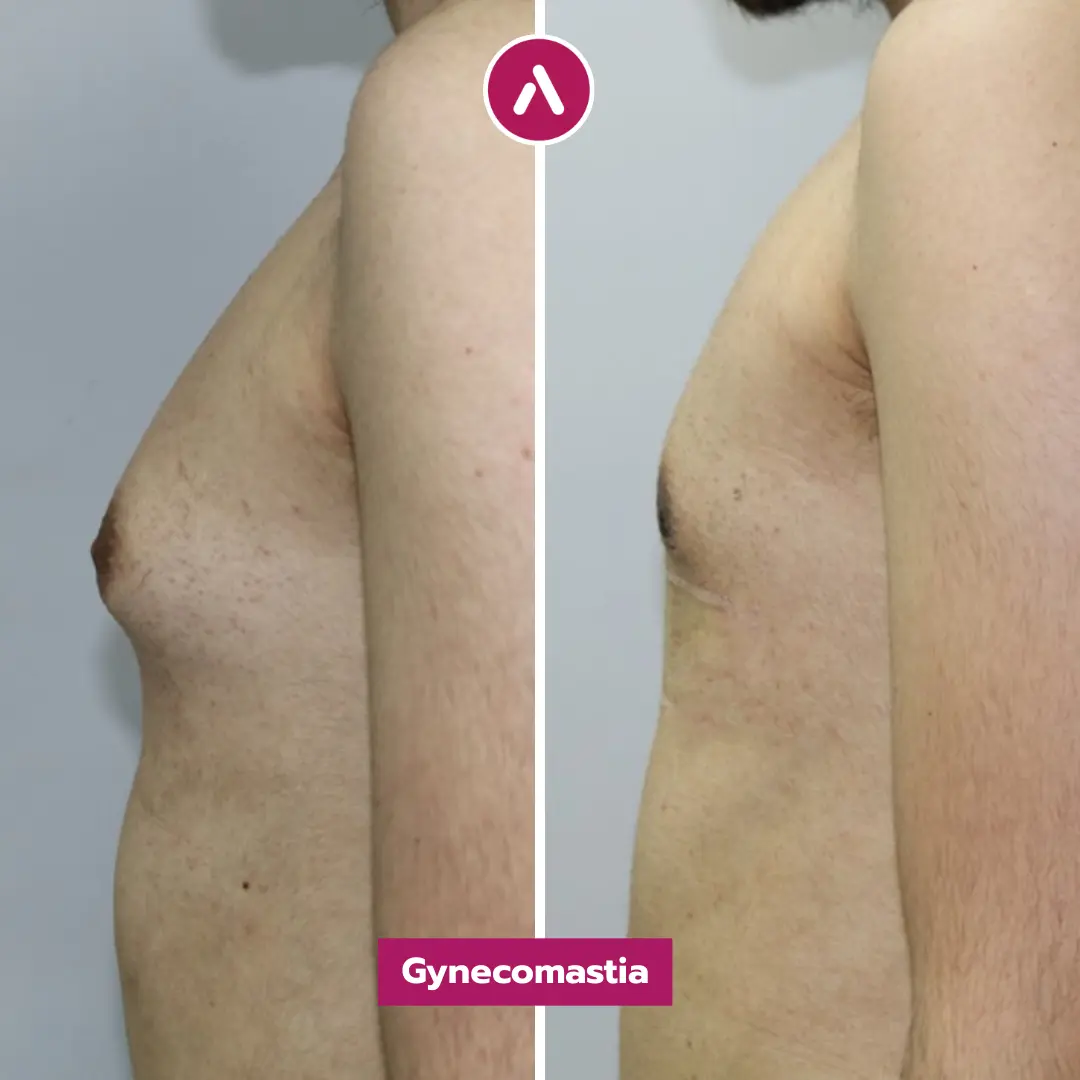
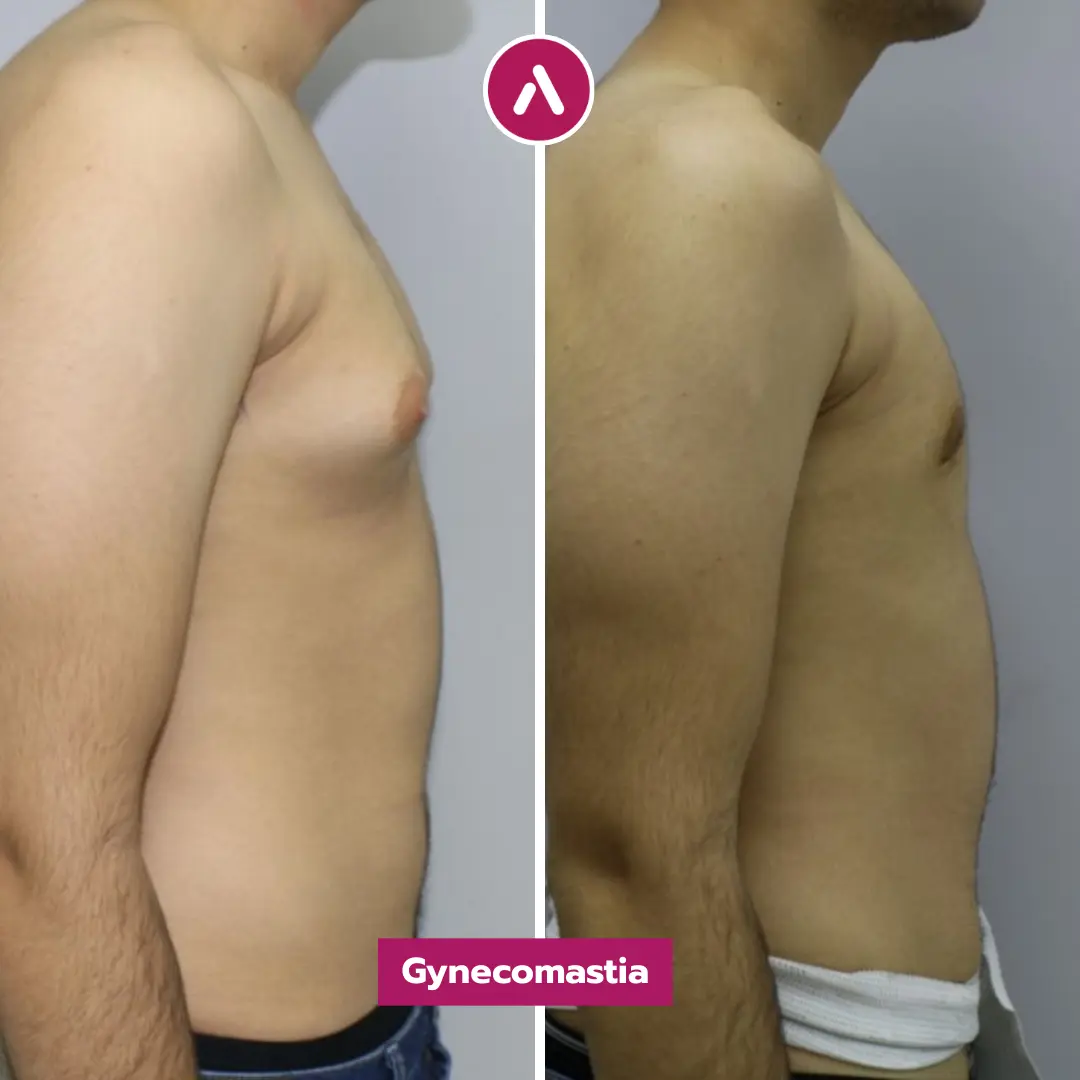
In this guide, we will explain what is usually included in all-inclusive daddy makeover packages Turkey, how the best surgeons protect masculine facial structure, what influences male cosmetic surgery Turkey price, and why good outcomes depend on anatomy, judgement, and medical science rather than marketing language. If your goal is to return to the UK looking refreshed, fitter, and more confident, this guide will help you understand what to look for.
Good male aesthetic surgery should make a man look stronger, fresher, and better rested — not altered, over-pulled, or feminised.
Table of Contents
What Exactly Is a “Daddy Makeover”?
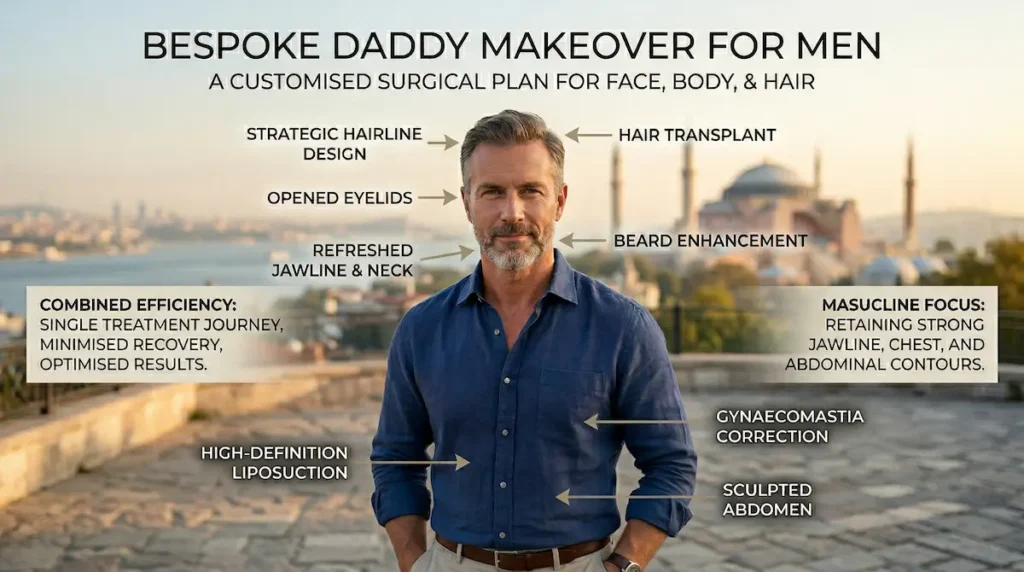
A daddy makeover is not one fixed operation. It is a tailored surgical strategy for men who want to improve several concerns during one treatment journey. Most often, that means combining selected face, body, and hair procedures into one cohesive plan. The goal is not to copy a female makeover model and simply change the label. A true daddy makeover must be built around male proportions, thicker skin, different fat distribution, stronger bony landmarks, and the expectation of a natural, masculine result.
Curating a Bespoke Package: Face, Body, and Hair
The most effective daddy makeover plans are bespoke. One man may be mainly concerned with a fuller chest, resistant abdominal fat, and loss of waist definition. Another may feel that hair loss, a tired lower face, and loose neck tissue are making him look older than he feels. A third may want a more athletic midsection combined with treatment for gynaecomastia and a stronger beard or hairline design.
That is why a proper consultation starts with priorities rather than package names. Instead of asking, “What is the standard daddy makeover?”, the better question is, “Which combination will give me the most balanced improvement with the safest recovery?” In many cases, the answer includes two or three complementary procedures rather than a long list of operations.
- Face-focused plans may include male facelift techniques, neck refinement, eyelid surgery, or jawline contour support.
- Body-focused plans may include high-definition liposuction, abdominal contouring, or gynaecomastia correction.
- Hair-focused plans may include hair transplantation, beard transplantation, or strategic hairline design.
When these are chosen correctly, the result is more coherent. For example, tightening the neck without addressing a weak hairline may leave a man looking younger in one area but still tired overall. Equally, sculpting the abdomen without treating glandular chest fullness may leave the torso looking unfinished. A well-designed daddy makeover treats the whole presentation, not just one isolated feature.
Why Men Choose Combined Surgery Instead of Staging Procedures Separately
There are several reasons British men look into combined treatment rather than arranging separate operations months apart. The first is efficiency. A single surgical journey to Istanbul can be easier to organise than multiple rounds of leave from work, multiple anaesthetic events, and multiple recovery periods. This is especially relevant for men with demanding office schedules, frequent meetings, or family responsibilities at home.
The second reason is balance. If ageing or weight-related changes affect more than one area, correcting only one feature can sometimes highlight the untreated areas. A man who improves his jawline but ignores chest fullness and central abdominal heaviness may still feel that his body does not match his face. In contrast, a coordinated plan creates harmony.
The third reason is value. Many men exploring a daddy makeover in Turkey are not looking for the cheapest quote. They are looking for better overall value than they would find in high-cost UK private practice. When a clinic offers transparent planning, proper aftercare, and clear surgical leadership, combined procedures can be a more sensible investment than piecemeal surgery spread over years.
That said, not every man is a good candidate for doing everything at once. The safest plan depends on age, BMI, medical history, smoking status, skin quality, travel logistics, and the expected recovery burden. A good surgeon may recommend staging if that is clinically wiser. In aesthetic surgery, restraint is often a sign of quality.
Typical Daddy Makeover Combinations for UK Patients: Abdomen, Chest, Jawline, and Hairline
Although every plan should be customised, some combinations are far more common than others. These reflect the concerns many UK male patients raise during consultation: a softer chest, stubborn abdominal fat, early jowling, loose neck definition, and hair loss that changes the entire frame of the face.
| Common Combination | Main Concern | Typical Goal | Why It Works Well Together |
|---|---|---|---|
| High-Def Liposuction + Gynaecomastia Surgery | Soft chest and poorly defined torso | A flatter chest and more athletic upper body | Improves overall male torso shape rather than treating the chest alone |
| Abdominal Contouring + Chest Sculpting | Stubborn fat around the waist and chest | A leaner, stronger silhouette in fitted shirts and holiday wear | Creates proportion between upper and lower torso |
| Male Facelift + Neck Refinement | Jowls, heaviness, tired lower face | A cleaner jawline and fresher appearance | Jawline and neck usually age together, so treating both gives a more natural result |
| Hair Transplant + Facial Rejuvenation | Receding hairline and facial ageing | A younger frame to the face without looking “done” | The hairline strongly affects how facial surgery is perceived |
| Hair Transplant + Beard Enhancement + Jawline Strategy | Weak lower-face definition | A more structured masculine profile | Hair distribution can visually strengthen facial architecture |
These combinations are popular because they respond to real-life male priorities. Men rarely ask to look “prettier”. They usually want to look more capable, healthier, fitter, and less tired. In clinical terms, that means preserving strong transitions between the cheek, jaw, neck, chest, and abdomen rather than softening them.
Who Is an Ideal Candidate for a Daddy Makeover in Turkey?
The ideal candidate is not necessarily the youngest man or the fittest man. It is the man whose goals are realistic, whose health profile is suitable, and whose concerns can be improved through a structured surgical plan. Most strong candidates share several traits:
- They are in stable general health and suitable for surgery after full assessment.
- They have concerns in more than one area, such as chest plus abdomen, or hairline plus jawline and neck.
- They want visible improvement but not an exaggerated or artificial look.
- They understand that recovery, garment use, and follow-up are part of the process.
- They value planning, safety, and long-term outcome over rushed decision-making.
Men who do especially well with this approach are often those who have already done the basics. They may train regularly, eat reasonably well, and still feel held back by glandular chest tissue, genetically resistant fat, loose skin, or age-related facial descent. Surgery can refine what discipline alone cannot fully correct.
Equally, the wrong candidate is a man who wants a dramatic overnight identity change, expects every concern to be solved with one quick procedure, or ignores the importance of recovery and aftercare. A refined male result is usually built through precision, not excess.
For British patients, practical suitability also matters. You should be able to stay in Istanbul for the recommended period, follow post-operative instructions carefully, and maintain contact with the clinic once back in the UK. The best results come when good surgery is matched by good follow-through.
Masculine vs. Feminine Aesthetic Standards
This is one of the most important sections in any daddy makeover guide because male cosmetic surgery should never be planned as though men and women age in the same way or should look the same afterwards. They do not. Male facial structure, hairline design, chest contour, abdominal definition, and soft tissue behaviour all require a different strategy. This is where experience matters most: not just the ability to perform an operation, but the judgement to know how far to go, what to preserve, and what would look wrong on a male face or body.
Preserving a Strong, Rugged Jawline in Male Facelifts
In men, the jawline is a central marker of masculinity. When it is blurred by jowling, neck heaviness, or skin laxity, a man can look older, heavier, or more fatigued than he actually is. However, correcting that problem requires care. A male facelift should sharpen the lower face while preserving the natural strength of the mandibular border. It should not create a narrow, over-sculpted, or delicate look.
The best male facelift planning respects three principles. First, the vector of lift must suit male anatomy. Secondly, the sideburn, beard-bearing skin, and hairline need careful preservation. Thirdly, the transition between the jaw and neck should look clean and masculine rather than tight and obviously operated upon.
This is one reason why consultant-level facial judgement matters so much. A surgeon with a strong understanding of facial proportions and skin behaviour knows that a masculine jawline is not created by aggressive pulling. It is created by restoring structure, reducing heaviness, and respecting the original architecture of the face.
Avoiding the “Over-Pulled” or “Windswept” Look in Men
One of the most common fears among British male patients is looking obviously “done”. They do not want visible surgical stigma, unnatural tightness, or the kind of result that makes colleagues ask whether something looks odd. They simply want to look better. That fear is reasonable, because poor technique or poor judgement can produce a windswept appearance, distortion around the ears, or an unnaturally flat mid-face.
A good male result should make people think you look well, rested, or as though you have lost weight and taken better care of yourself. It should not erase your character. In aesthetic terms, subtlety is not weakness. It is the highest form of precision.
This is also where the philosophy of the clinic matters. The right approach is rejuvenation, not alteration. In other words, the surgeon should restore cleaner lines and healthier structure without changing the man’s identity. For UK patients, that often means results that feel more “Harley Street discreet” than “internet dramatic”.
The aim in male facial surgery is not to feminise, soften, or over-lift. It is to restore definition while keeping the face believable, proportionate, and unmistakably male.
Why Male Skin, Fat Distribution, and Hairline Design Require a Different Surgical Plan
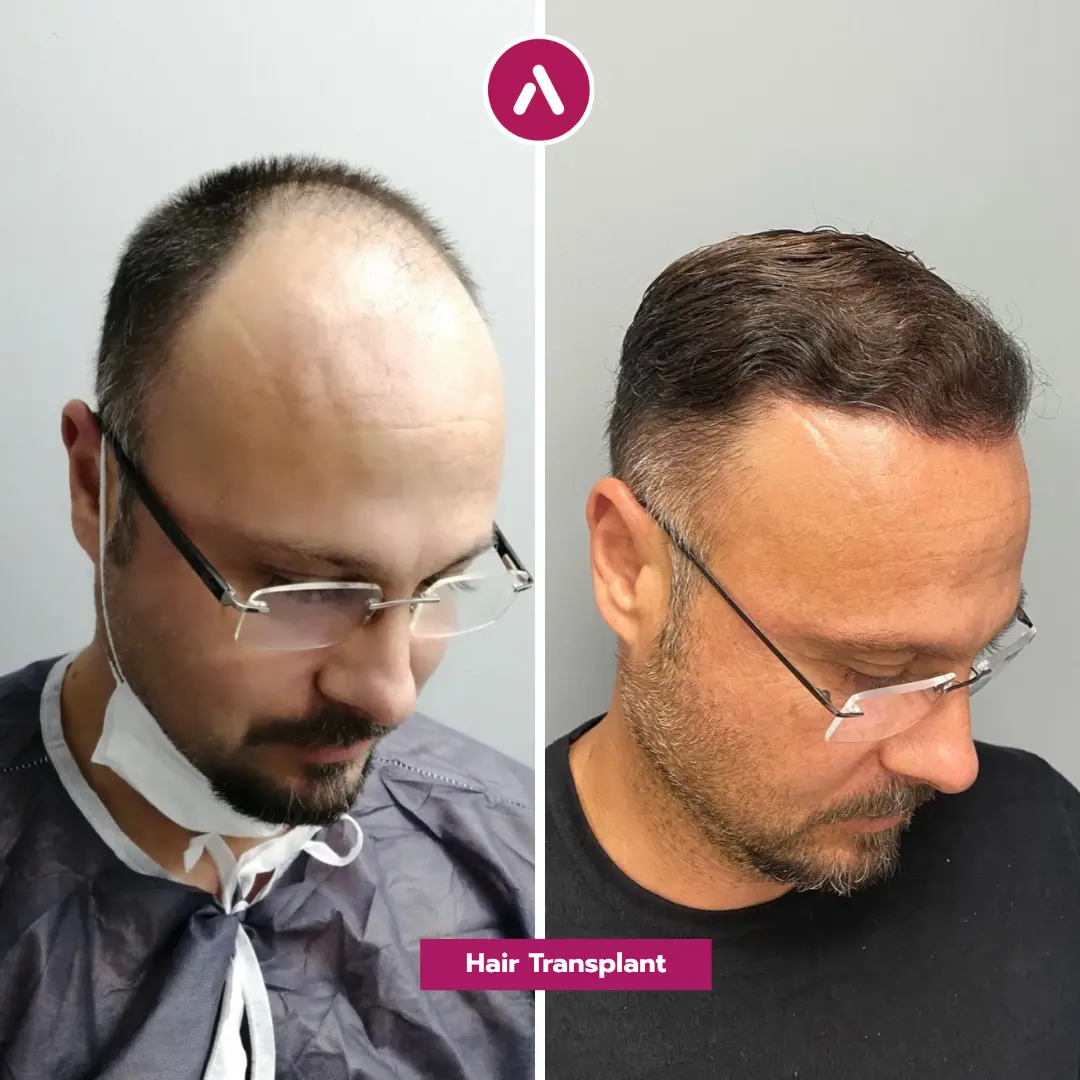
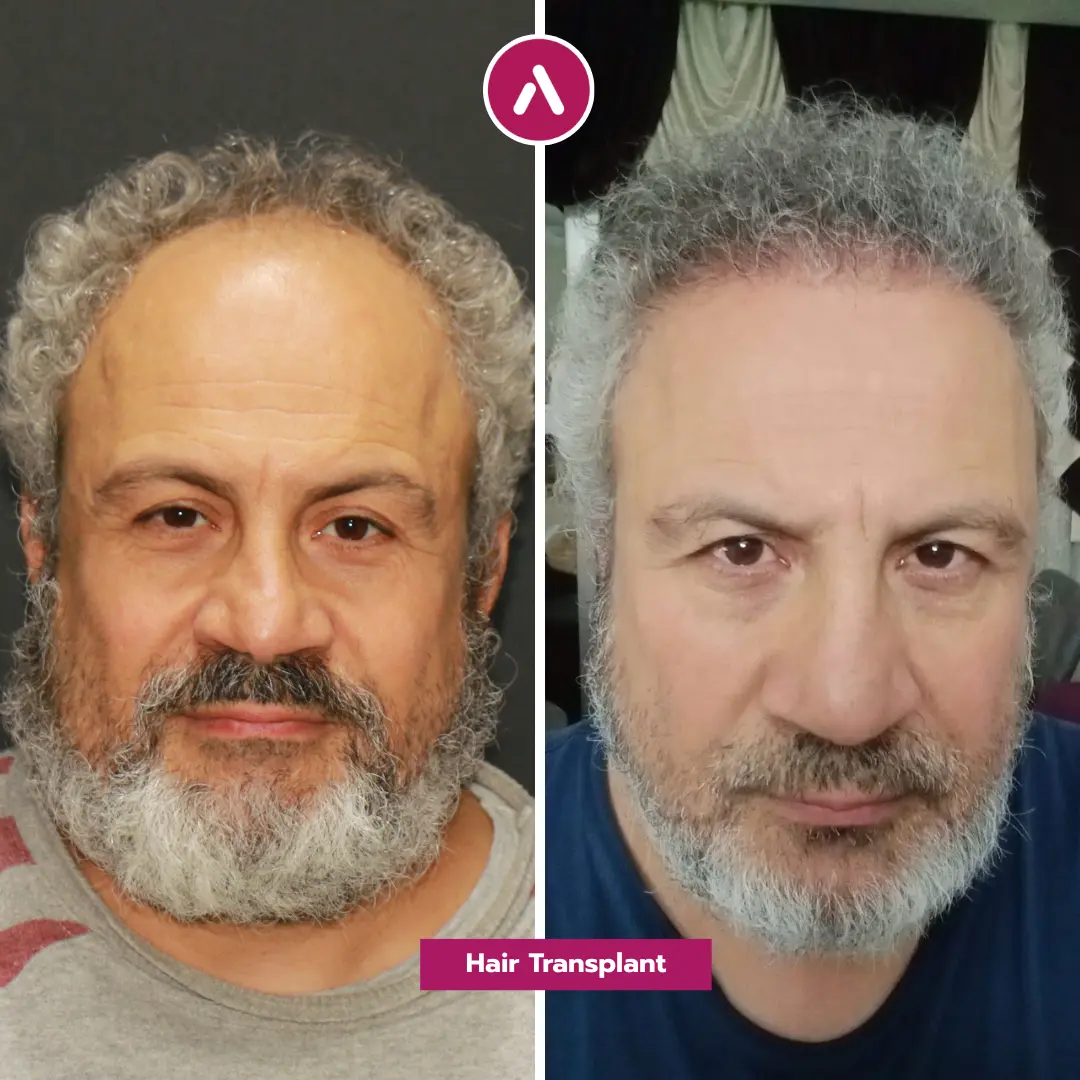
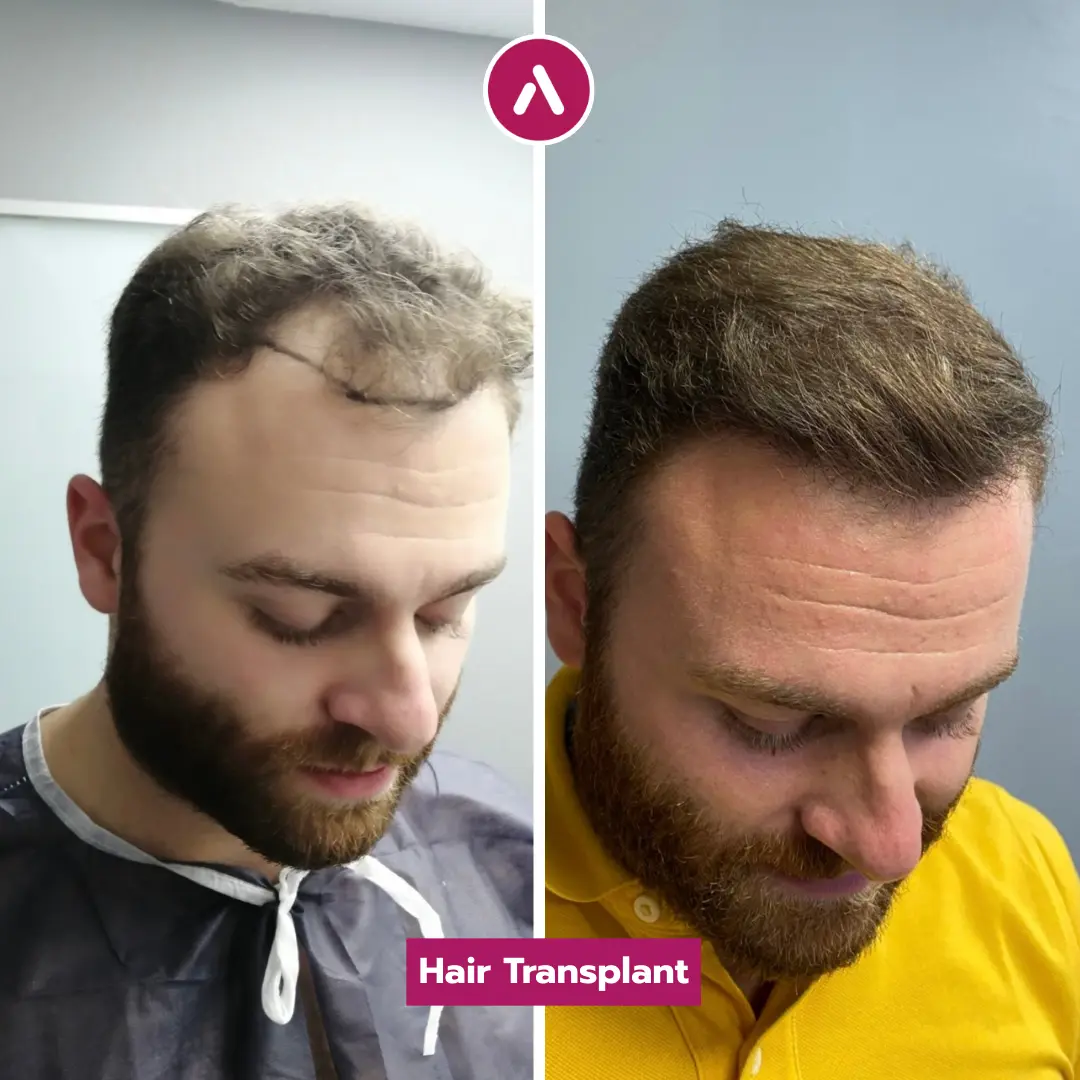
Male surgery is rooted in anatomy, scientific research, and medical science, not trend-driven aesthetics. Men generally present with different skin thickness, different facial fat distribution, stronger brow and jaw architecture, and a different relationship between beard-bearing skin and incision placement. Hairline management is also more complex. A poorly planned incision can disturb the temporal hairline, sideburn position, or beard pattern in a way that immediately looks unnatural.
Body surgery follows the same logic. Men tend to store fat differently from women, especially around the abdomen, flanks, and chest. Their goals are also different. Rather than a curved waist or softened contour, most men want a straighter, more athletic torso with visible transitions between the pectoral area, upper abdomen, and flanks. That is why body contouring for men is not simply standard liposuction performed on a male patient. It is a separate sculpting strategy.
Hairline design is another area where mistakes can undermine an otherwise good result. Many men do not want a very low, juvenile hairline. They want a natural, age-appropriate pattern that frames the face properly without looking artificial. When facial rejuvenation and hair restoration are planned together, the outcome is often more convincing because the upper and lower face support each other visually.
The Consultant Dermatosurgeon Advantage for Subtle, Masculine Results
For facial aesthetics and contour refinement, the consultant dermatosurgeon advantage is not just technical. It is visual and biological. A consultant dermatosurgical approach takes skin quality, scar behaviour, tissue handling, contour transitions, and healing patterns seriously. That matters enormously in male patients, because men often want results that are noticed only as “looking better”, not as “having had surgery”.
In practical terms, this means thinking beyond tissue removal alone. It means respecting how light falls across the male jawline, how beard-bearing skin must remain natural, how chest contour should read as athletic rather than hollow, and how scars should be planned with future healing in mind. It also means understanding that men often prioritise speed back to work, privacy, and low social downtime.
That is why subtle masculine surgery is rarely about doing more. It is about doing the right amount, in the right place, with the right plan. For the British patient who wants a credible result, this is the difference between simply having surgery and having surgery well.
Body Contouring for Men: High-Def Vaser Liposuction
For many men, the body side of a daddy makeover is where the biggest visual change happens. A flatter chest, a tighter waist, and more defined abdominal transitions can make clothing fit better, improve posture confidence, and create a stronger overall silhouette. However, male body contouring should not be approached as generic fat removal. In a well-planned male makeover Turkey journey, the aim is to preserve masculine structure while removing the tissue that blunts it.
The science of male body contouring is not about taking away the maximum amount of fat. It is about sculpting. In practical terms, that means thinking in lines, shadows, and proportions: where the chest should look athletic rather than hollow, where the upper abdomen should transition naturally into the lower abdomen, and how the flanks affect the appearance of the waist from both the front and side view. This is why a thoughtful, consultant-led plan is so important in daddy makeover surgery Turkey.
Etching the Six-Pack and Athletic Chest Sculpting
High-definition liposuction is designed for men who want shape, not simply shrinkage. Traditional fat removal can reduce fullness, but it does not always create the athletic definition that many male patients are after. High-def contouring takes a more strategic approach by enhancing natural muscular landmarks rather than flattening everything evenly.
In the right candidate, this can help reveal the transitions between the pectoral border, the upper abdominal lines, and the central abdominal grooves. The end goal should not be an artificial “painted-on” six-pack. It should be a fitter-looking torso that still appears believable in daylight, in fitted shirts, and at close range. The best results are usually seen in men who already have reasonable muscle tone but are held back by stubborn fat distribution.
This is also where judgement matters. Over-aggressive contouring may look sharp when a patient is standing under clinical lighting, yet unnatural in normal life. A high-quality result preserves softness where the male torso should still look real. That balance between definition and credibility is what separates refined male contouring from overdone contouring.
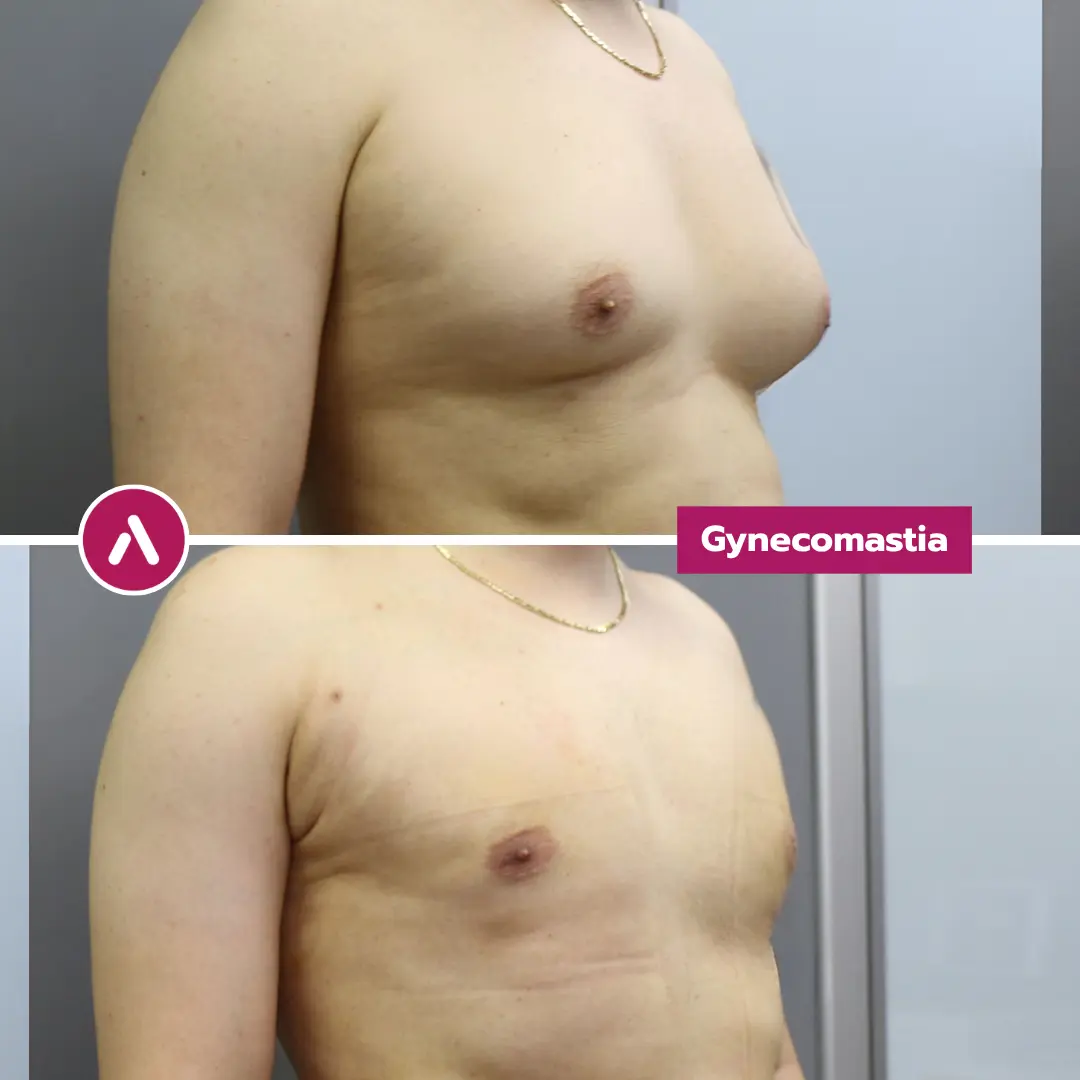
Gynaecomastia Correction as Part of Your Surgical Plan
For many British men, chest fullness is not just a weight issue. It can be a long-standing source of embarrassment that affects swimwear, fitted clothing, posture, and confidence. When glandular tissue, resistant fat, or both are present, gynaecomastia correction can be one of the most important elements of a combined male surgery Turkey plan.
When chest surgery is paired with abdominal contouring, the result is often far more harmonious than treating either area alone. A flatter chest can still look incomplete if the waist remains heavy, and a sharper midsection can still look unbalanced if glandular chest fullness remains. By treating both areas together, the torso starts to read as stronger and more athletic overall.
Good male chest surgery is not about making the chest look empty. It is about restoring the right projection, the right upper chest shape, and the right transition into the lateral chest and underarm area. In well-planned surgery, the chest should look naturally masculine rather than scooped out or surgically obvious.
High-Definition vs Standard Liposuction: What Athletic Men Need to Know
Many men researching a Turkey daddy makeover assume all liposuction is essentially the same. It is not. Standard liposuction is useful for reducing volume. High-definition liposuction is more nuanced and aims to reveal structure. The difference matters most in male patients who care about visible shape rather than simply being “smaller”.
In simple terms, standard liposuction may help a man go down a shirt size. High-definition contouring aims to improve how the chest, waist, and abdomen are read visually. That means the surgeon is thinking not only about removing fullness, but also about preserving or enhancing the contours that suggest fitness and strength.
| Approach | Main Aim | Best For | Typical Visual Outcome |
|---|---|---|---|
| Standard Liposuction | Reduce bulk | General fullness without strong focus on definition | Smaller overall shape |
| High-Def Male Contouring | Sculpt masculine lines | Men who want a fitter, more athletic appearance | Sharper torso transitions and more visible definition |
Not every patient needs high-definition work. The right choice depends on skin quality, body fat distribution, muscle tone, and expectations. The best surgical recommendation is not always the most dramatic-sounding one. It is the one that matches your anatomy.
When Skin Tightening Technologies May Be Added for a Sharper Result
In some men, removing fat alone is not enough. If the skin has reduced recoil due to age, previous weight change, or tissue quality, some degree of skin tightening support may be helpful. This is particularly relevant in the lower abdomen, lateral waist, and chest, where the goal is not just less fullness but a cleaner final drape.
In a premium daddy makeover in Turkey plan, this decision is made at consultation rather than added casually at the last minute. Good surgeons assess whether the skin has enough natural contraction potential or whether adjunctive technologies may improve the finish. This is another reason why the right plan is bespoke rather than copied from a standard package list.
For facial and contour work alike, the consultant dermatosurgeon advantage is especially valuable here. Surface quality, scar placement, skin handling, and the subtle transitions between treated and untreated areas all influence whether the final result looks polished and natural. In male patients, that subtlety often matters more than chasing extreme change.

Combining Hair Transplants with Facial Plastic Surgery
Hairline loss changes far more than the hair itself. It alters facial framing, shifts perceived age, and can make the temples, forehead, and upper face look tired even when the lower face remains strong. That is why many men considering a daddy makeover Turkey journey ask whether hair transplantation can be safely combined with facial surgery. In selected patients, the answer is yes. But the key word is selected.
A combined plan only works when the order of treatment, total operating time, swelling pattern, and recovery burden are carefully controlled. This is where clinical judgement matters more than marketing. A man with early jowling and a receding hairline may benefit enormously from a coordinated strategy. Another may achieve a safer and better-looking result by staging treatment. The right answer depends on anatomy, goals, and sensible surgical sequencing.
Rigorous Clinical Safety Protocols for Multiple Procedures
Combining procedures should never mean relaxing standards. In fact, it demands stricter planning. Before any combined facial and hair strategy is considered, the surgical team should review your medical history, smoking status, age, medications, travel plans, and how much swelling and downtime you can realistically manage.
It is also important to remember that not every facial procedure needs the same anaesthetic approach. In appropriate cases, some facial surgery can be performed with local anaesthesia and light intravenous sedation rather than general anaesthesia. However, the anaesthetic plan must always fit the individual procedure mix and the patient’s health profile, not the other way round.
Hairline Design, Beard Definition, and Facial Rejuvenation as One Masculine Strategy
One of the biggest advantages of coordinated planning is aesthetic coherence. A natural hairline can make the upper face look younger and stronger. Beard definition can visually reinforce the jawline. Facial rejuvenation can improve the lower face and neck. When these are planned together, they can support each other rather than compete for attention.
This is especially important for the UK male patient who wants to look fresher, not transformed. A man may not need an aggressively low hairline. He may need a mature, age-appropriate frame that restores balance to the forehead and temples. In the same way, he may not need a dramatic lift. He may need cleaner jaw and neck definition that matches his restored hairline.
That kind of balance is rarely achieved by treating one area in isolation. It is achieved by looking at the full face in profile and from the front, and by respecting the masculine relationship between the brow, temple, cheek, beard zone, jawline, and neck.
When to Combine a Hair Transplant and When to Separate It
There is no universal rule that these procedures must always be done together or always be separated. In some men, a combination is logical because it saves time, reduces repeated travel from the UK, and creates one coordinated recovery period. In others, separating the procedures leads to clearer planning and a lower overall treatment burden.
For example, the hairline may be the dominant ageing cue in one patient, making restoration the first priority. In another, heavy jowls and neck laxity may be the more powerful issue, meaning lower-face work should lead the plan. The decision depends on which feature most strongly affects age perception and whether combining treatment would increase recovery complexity beyond what is sensible.
The best surgeons are not the ones who say yes to everything. They are the ones who know when a staged programme will produce a calmer, safer, and more elegant result.
Planning Graft Numbers, Downtime, and Procedure Order for Better Outcomes
Hair restoration planning should never be vague. Men like to know what is being proposed, why it is being proposed, and how it affects downtime. That means discussing graft numbers where relevant, hairline maturity, donor limitations, expected shedding, and how the timing fits around any facial procedure.
From a practical perspective, this matters to men who work in client-facing, financial, legal, or corporate roles. They need to know when they can return to meetings, how visible the recovery phase will be, and whether one combined trip is genuinely more efficient than two shorter, staged trips. A good plan answers those questions plainly.
For this reason, a sensible all-inclusive daddy makeover packages Turkey discussion should not just describe what can be included. It should explain why the combination has been chosen, what will happen first, and what level of downtime the patient should expect afterwards.
Recovery Timeline for the UK City Professional
For many men, recovery is the deciding factor. They are less concerned about whether surgery exists and more concerned about how it fits around work, flights, meetings, social visibility, and family obligations. This is why the best daddy makeover Turkey guide for British men has to talk honestly about downtime. A strong result depends not only on surgery, but on how intelligently the recovery phase is planned.
For UK patients, that usually means asking very practical questions: How long do I need in Istanbul? When can I fly? When will the swelling be socially acceptable? When can I put on a shirt and jacket without feeling restricted? When can I sit in meetings without drawing attention? Those are exactly the right questions to ask.
How Many Days Should You Plan in Istanbul Before Flying Back to the UK?
The right answer depends on the exact procedures performed, but most men should think in terms of a proper recovery stay rather than a rushed weekend itinerary. A daddy makeover is not a haircut or a dental visit. The first few days matter because this is when swelling, mobility, dressing changes, and early review appointments are most important.
As a general principle, a combined plan involving torso contouring and facial work requires a more cautious stay than a single straightforward procedure. A well-organised programme gives time for initial checks, medication review, garment fitting, early mobility guidance, and sensible observation before the patient boards a flight back to London, Manchester, Birmingham, or elsewhere in the UK.
Men who rush this stage usually do so for work reasons. Ironically, that can create more stress later. A well-planned recovery trip often protects the result and makes the return-to-work period smoother overall.
Flight-Ready Recovery Protocols, Oedema Control, and Return-to-Work Expectations
The phrase “flight-ready” should never be used as a gimmick. It should mean that swelling, comfort, mobility, hydration, circulation, medication planning, and basic wound management have all been assessed sensibly. British patients are right to be cautious here, particularly if they are worried about DVT risk, discomfort during travel, or looking obviously post-operative in the airport.
In real life, recovery is gradual. You may be mobile well before you feel presentable. You may feel mentally ready to work before the swelling fully settles. The key is to separate functional recovery from social recovery. These are not always the same thing.
| Recovery Stage | What Men Commonly Notice | What You Should Prioritise |
|---|---|---|
| Early Days | Tightness, swelling, reduced movement, visible signs of treatment | Rest, hydration, walking, medication, garment use, review appointments |
| First 1-2 Weeks | Improved comfort but ongoing oedema and unevenness | Patience, sleep positioning, low-salt routine, sensible activity only |
| Return-to-Work Phase | Most men feel more functional than “finished” | Plan around visibility, clothing comfort, and energy rather than ego |
| Later Recovery | Definition sharpens and scars mature gradually | Follow-up, scar support, photography, and long-term review |
One reason UK patients value a structured clinic is that realistic guidance reduces anxiety. You do not need false promises. You need an honest timeline and a team that understands what it is like to fly home and step back into normal life quickly.
How HBOT and LLLT Support Faster Recovery and Scar Management
This is where technology can make a meaningful difference. AKM Clinic highlights HBOT as part of its rapid recovery approach because Hyperbaric Oxygen Therapy is used to reduce post-operative oedema, support lymphatic drainage, and shorten social downtime. In simple terms, the goal is not to “speed up biology” unrealistically, but to support a smoother, better-managed recovery.
LLLT also matters, especially for patients concerned about scar quality. Low-Level Laser Therapy is used to support fibroblast activity and improve scar maturation support. For the British patient who wants discreet healing and a faster return to office life, that matters a great deal. It is one thing to heal. It is another to heal well.
When a clinic combines surgical judgement with recovery technology, the patient experience often feels calmer and more predictable. That is one reason why men comparing Harley Street with Istanbul often look beyond the headline operation itself. They want to know what happens afterwards, because that is where confidence is either built or lost.
UK patient perspective: One British patient described her recovery as comfortable enough to require only minimal paracetamol and said that, when comparing London with Istanbul quality, she would confidently choose Turkey again.
Practical Recovery Advice for Men Returning to Office Life, Meetings, and Family Duties
The most useful recovery advice is usually the least glamorous. Wear your compression garment exactly as directed. Choose loose shirts and loose trousers that do not irritate treated areas. Keep walking, but do not confuse walking with full exercise recovery. Sleep in the recommended position. Do not judge your result too early, especially when swelling fluctuates.
Men returning to desk work often make two mistakes: they return to normal posture too aggressively, and they underestimate how tiring recovery can be. Even if you are mentally bored after a few days, your body is still healing. Build in margin where you can. Try not to schedule your most important in-person meeting on the earliest day you think you might possibly manage it.
Practical aftercare support also matters once you return home. Many UK patients find reassurance in having access to a direct WhatsApp contact, a UK support line, and a London correspondence point for communication. That kind of structure can reduce the psychological distance that some men worry about when choosing treatment abroad.
Cost Comparison: UK Private Clinics vs. All-Inclusive Turkey Packages
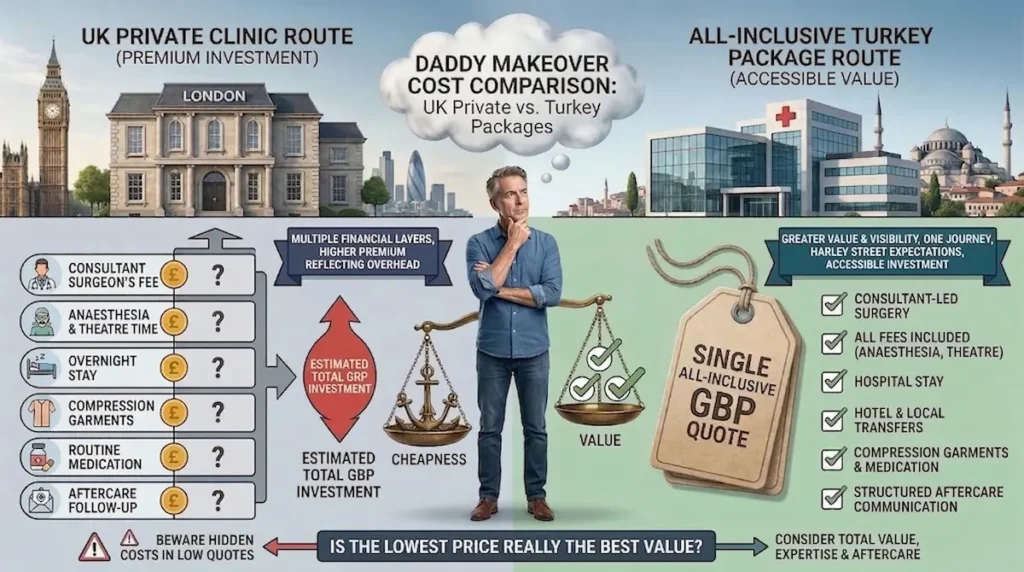
For many families, the financial question is what starts the research. They begin by looking up daddy makeover Turkey cost, daddy makeover Turkey price, and male cosmetic surgery Turkey price. That is completely reasonable. However, the right way to compare prices is not procedure name versus procedure name in a vacuum. It is total investment versus total value.
In other words, you are not comparing a single fee line. You are comparing surgeon expertise, anaesthetic planning, operating theatre standards, aftercare structure, technology support, accommodation, transfers, communication, and the cost of doing one journey instead of several. Once you compare the whole pathway, the price picture becomes much clearer.
Why Harley Street Combination Surgery Prices Are Often Far Higher
Private UK cosmetic surgery can be excellent, but it is often priced at a premium that reflects property, staffing, overhead, and local market positioning. When multiple male procedures are required, that cost can rise quickly because each part of the journey may be priced separately: consultation, surgeon’s fee, anaesthesia, theatre time, overnight care, garments, medication, and follow-up.
This is one reason why many patients explore a Turkey daddy makeover option in the first place. They are not necessarily looking for “cheap”. They are looking for a more efficient route to a consultant-led result with fewer separate financial layers. For a British couple comparing overall spend, this can be the difference between indefinitely postponing surgery and moving forward with a realistic plan.
The best UK-facing messaging here is not “low-cost surgery”. It is “Harley Street-level expectations, more accessible overall investment”. That is a very different promise, and it is the right one.
What an All-Inclusive GBP Quote Typically Covers
One of the most important advantages of a structured overseas package is visibility. A clear all-inclusive daddy makeover packages Turkey quote allows the patient to understand what is included and what is not before travelling. This reduces financial surprises and makes budgeting easier for men travelling from the UK.
| Typical Cost Area | UK Private Route | All-Inclusive Turkey Route |
|---|---|---|
| Consultant surgeon fee | Usually separate | Usually included within the package quote |
| Anaesthesia and theatre | Often itemised separately | Often bundled into one figure |
| Hospital stay / nursing | May be billed separately | Commonly included |
| Hotel and local transfers | Usually arranged and paid separately | Often part of the package |
| Compression garments / routine medication | May be separate extras | Often included, depending on the programme |
| Aftercare communication | Varies by clinic | Often structured around direct remote follow-up |
This is why a daddy makeover Turkey cost discussion should never stop at the headline number. Ask what is included. Ask who performs the surgery. Ask how aftercare works. Ask whether the quote is in GBP and whether anything meaningful has been left out.
Value vs Cheapness: How UK Patients Should Assess Surgical Investment
Cheapness and value are not the same thing. A suspiciously low quote may reflect shortcuts in planning, staffing, aftercare, or surgical leadership. A better-value quote, by contrast, reflects strong standards delivered more efficiently. For British patients, that distinction matters enormously.
When evaluating a male makeover Turkey pathway, the useful questions are these: Is the plan consultant-led? Are the surgeons’ credentials clear? Are the standards aligned with what a UK patient expects from a private medical environment? Is there a real aftercare pathway once I return home? Are recovery technologies and communication systems part of the experience?
If the answer to those questions is yes, then the lower total price compared with London does not mean the pathway is inferior. It may simply mean the model is more efficient. That is why sophisticated patients increasingly compare outcomes, process, and support, not just sticker price.
Hidden Costs to Watch for When Comparing UK and Turkey Quotes
Whenever you compare a male cosmetic surgery Turkey price or daddy makeover Turkey price, look carefully for hidden gaps. These may include extra night charges, garment replacements, medications, extended hotel stays, airport transfers, revision exclusions, or vague aftercare arrangements. Sometimes the cheapest-looking quote becomes less attractive once these details are added back in.
It is also worth counting the cost of time. Multiple staged procedures in the UK may mean repeated leave from work, repeated travel, and repeated recovery weeks. A carefully planned combined trip can reduce those hidden personal costs for the right candidate.
Ultimately, the best price comparison is not “How low can this go?”. It is “What level of expertise, safety, logistics, and aftercare am I receiving for the investment I am making?”. For the man considering a daddy makeover, that is the adult question — and the one most likely to lead to the right decision.
Frequently Asked Questions (FAQ): Daddy Makeover Turkey
Before booking a daddy makeover Turkey journey, most British men ask the same practical questions: what can be combined, how long recovery takes, whether results will look natural, and how to compare value properly. The answers below are written for the UK patient who wants straight, medically sensible guidance rather than vague promises.
What procedures are usually included in a Daddy Makeover?
A daddy makeover usually combines two or more male-focused procedures, most commonly abdominal contouring, gynaecomastia surgery, male facelift techniques, neck refinement, or hair transplantation. The exact mix depends on your anatomy, priorities, and recovery tolerance.
Am I too old for a Daddy Makeover?
Age alone does not decide suitability. Your overall health, skin quality, weight stability, medical history, and surgical goals matter far more than the number on your birthday card.
Can I combine gynaecomastia surgery with abdominal liposuction?
Yes, this is one of the most common combinations in daddy makeover surgery Turkey. It often creates a more balanced masculine torso because the chest and abdomen are improved together rather than separately.
Is Turkey safe for male cosmetic surgery?
Turkey can be a safe option when you choose a consultant-led clinic, verify surgeon credentials carefully, and understand the aftercare pathway before travelling. Safety depends on standards, planning, and who is actually performing your surgery.
How long should I stay in Istanbul after surgery?
That depends on the number and type of procedures performed, but a proper stay is essential. Combined surgery requires enough time for early review appointments, garment checks, wound care guidance, and sensible flight planning before you return to the UK.
When can I fly back to London, Manchester, or Birmingham?
You should only fly once your treating surgeon confirms that you are clinically ready. The timing varies by procedure, swelling level, mobility, and your general condition. It is always better to follow a medical recommendation than to book around convenience alone.
Will the results look natural and masculine?
That is the goal. Good male aesthetic surgery should preserve masculine structure, avoid feminising the face or torso, and make you look fitter, fresher, and less tired rather than obviously operated on.
Is a hair transplant safe to combine with facelift surgery?
In selected patients, yes. However, not every man is suitable for doing both at once. The decision should be based on total operating time, recovery burden, aesthetic priorities, and whether a staged programme would be safer or more refined.
How much cheaper is Turkey compared with UK private clinics?
A daddy makeover Turkey cost plan is often considerably more accessible than arranging equivalent procedures separately in the UK private sector. However, you should compare total value, not just headline price, because surgeon expertise, aftercare, accommodation, transfers, and recovery support all matter.
What aftercare will I have once I return to the UK?
A well-structured clinic should provide remote follow-up, direct messaging access, clear recovery instructions, and a reliable communication pathway once you are home. For British patients, this support is one of the most important parts of the overall treatment experience.
Medical Disclaimer: This page is provided for general educational purposes only and does not replace a face-to-face medical consultation, diagnosis, or personalised treatment plan. All surgery carries risks and outcomes vary between individuals. Suitability for a dady makeover surgery, procedure selection, and anaesthesia choice can only be determined after a full clinical assessment by a qualified surgeon. Always follow your clinician’s instructions and seek urgent medical attention if you develop concerning symptoms during recovery.