




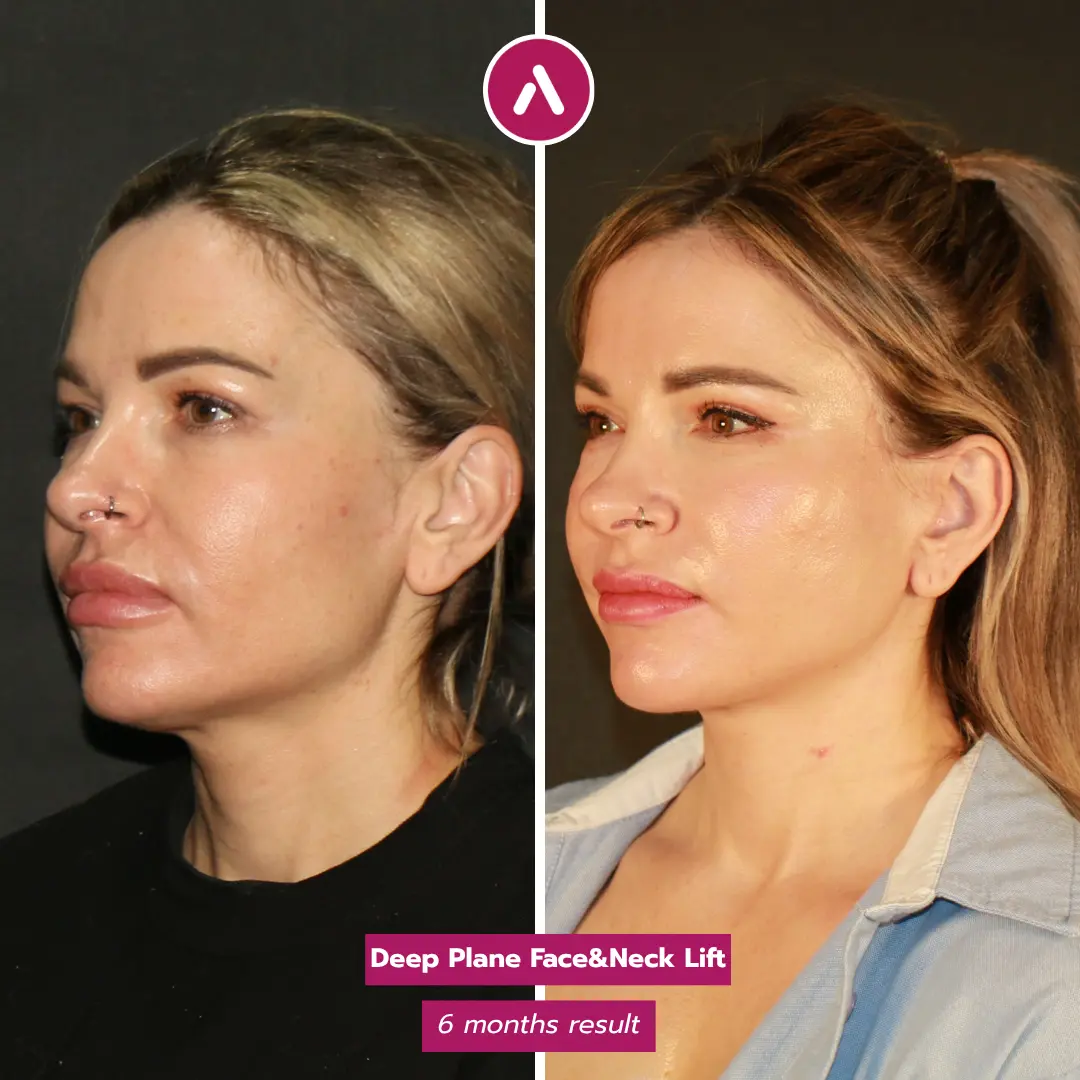
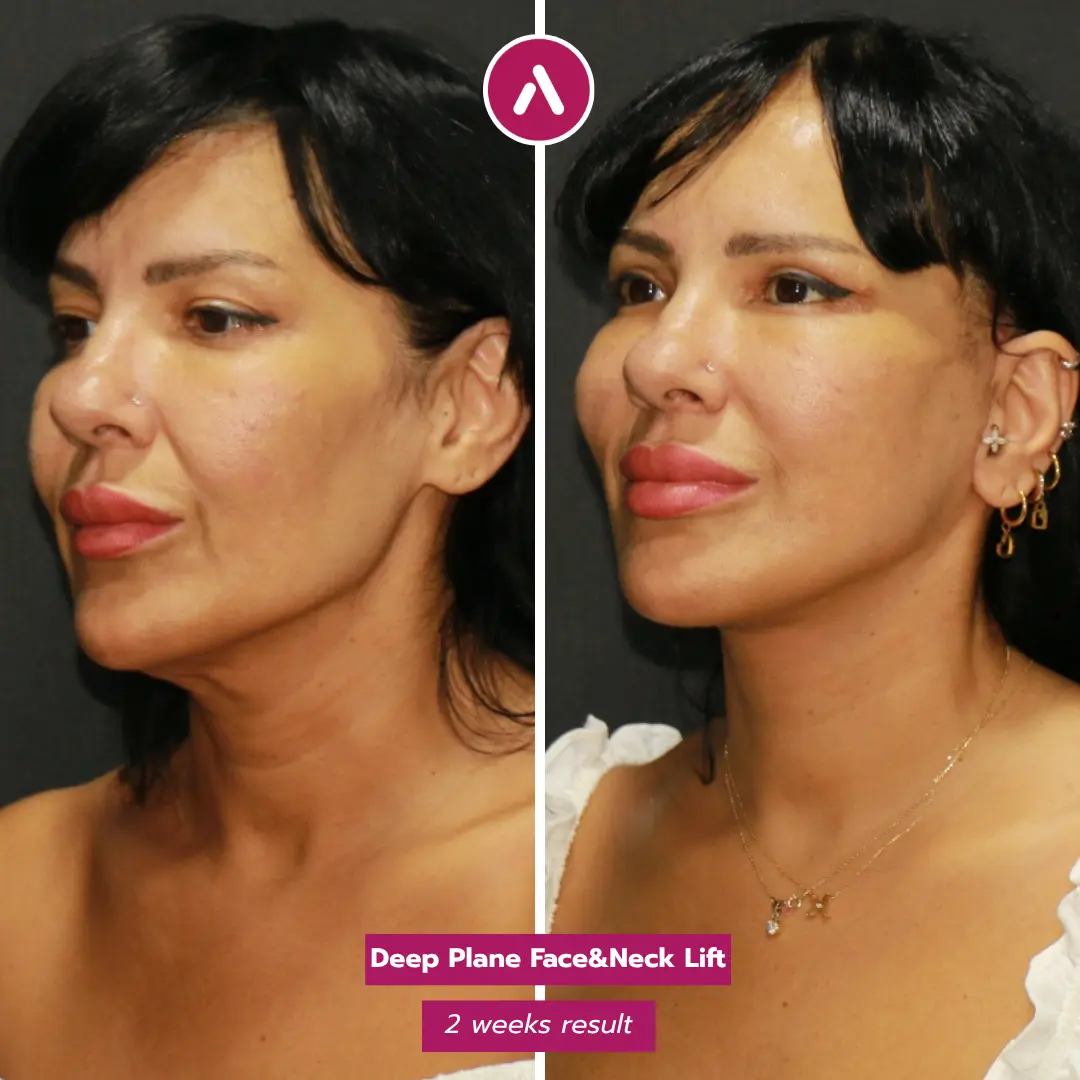
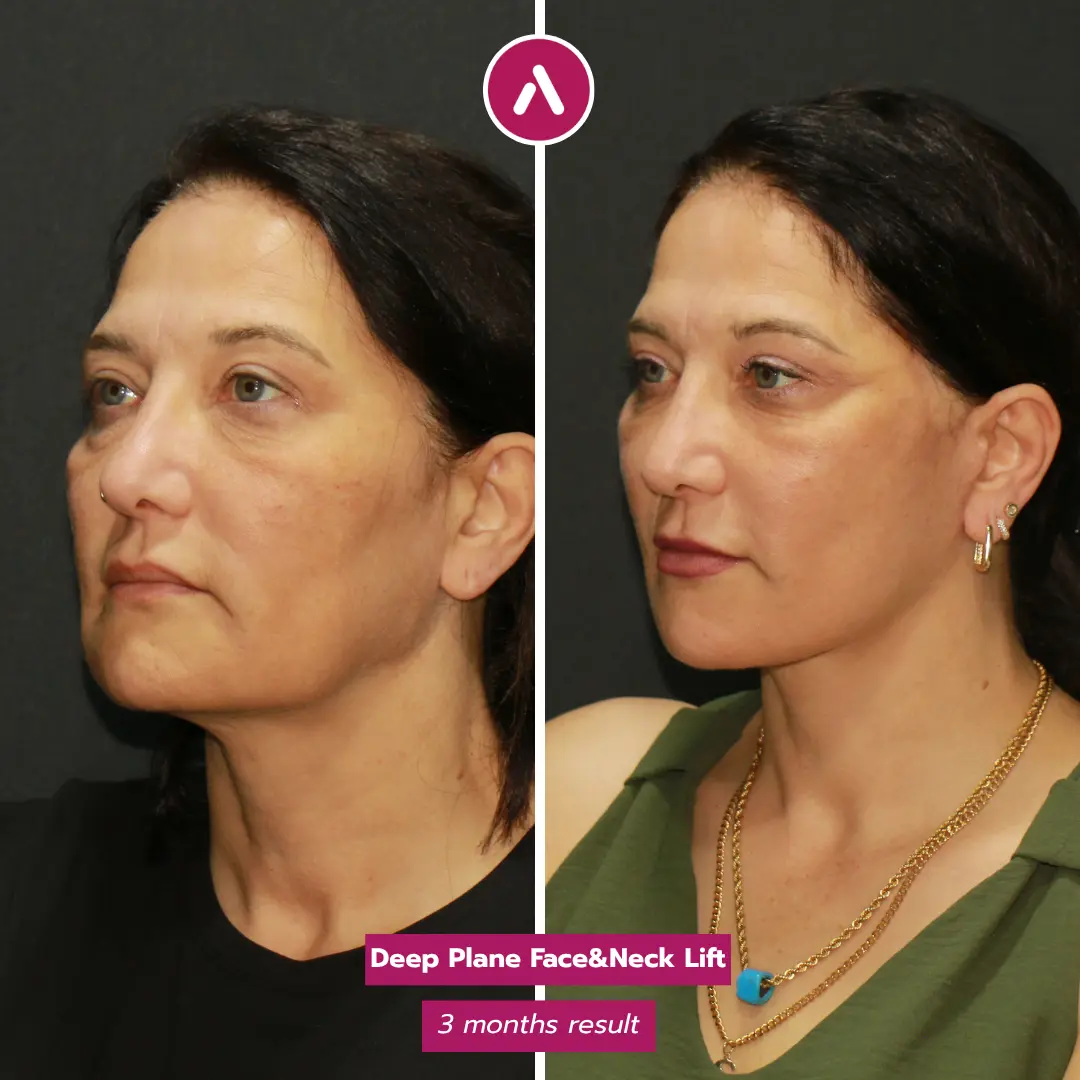
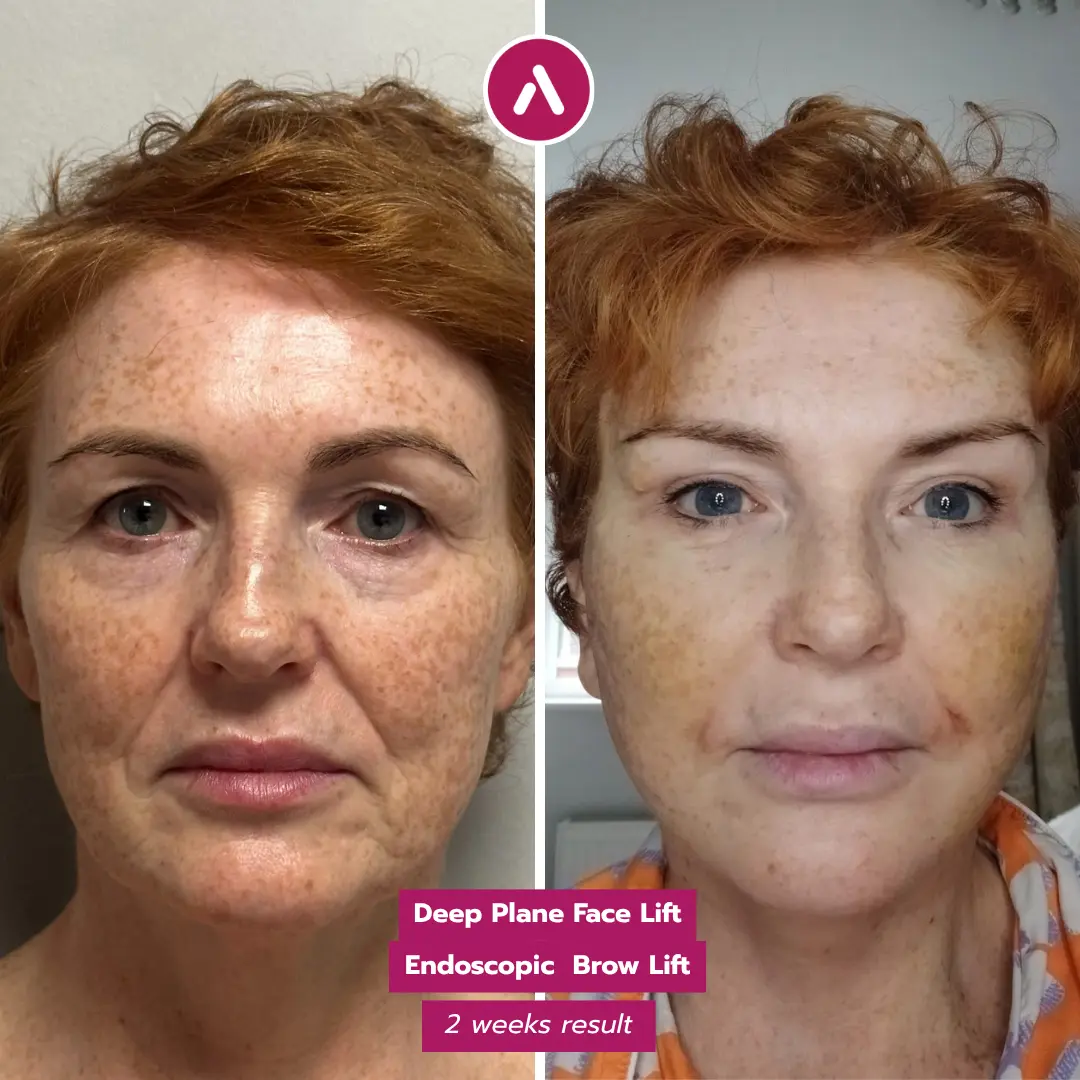
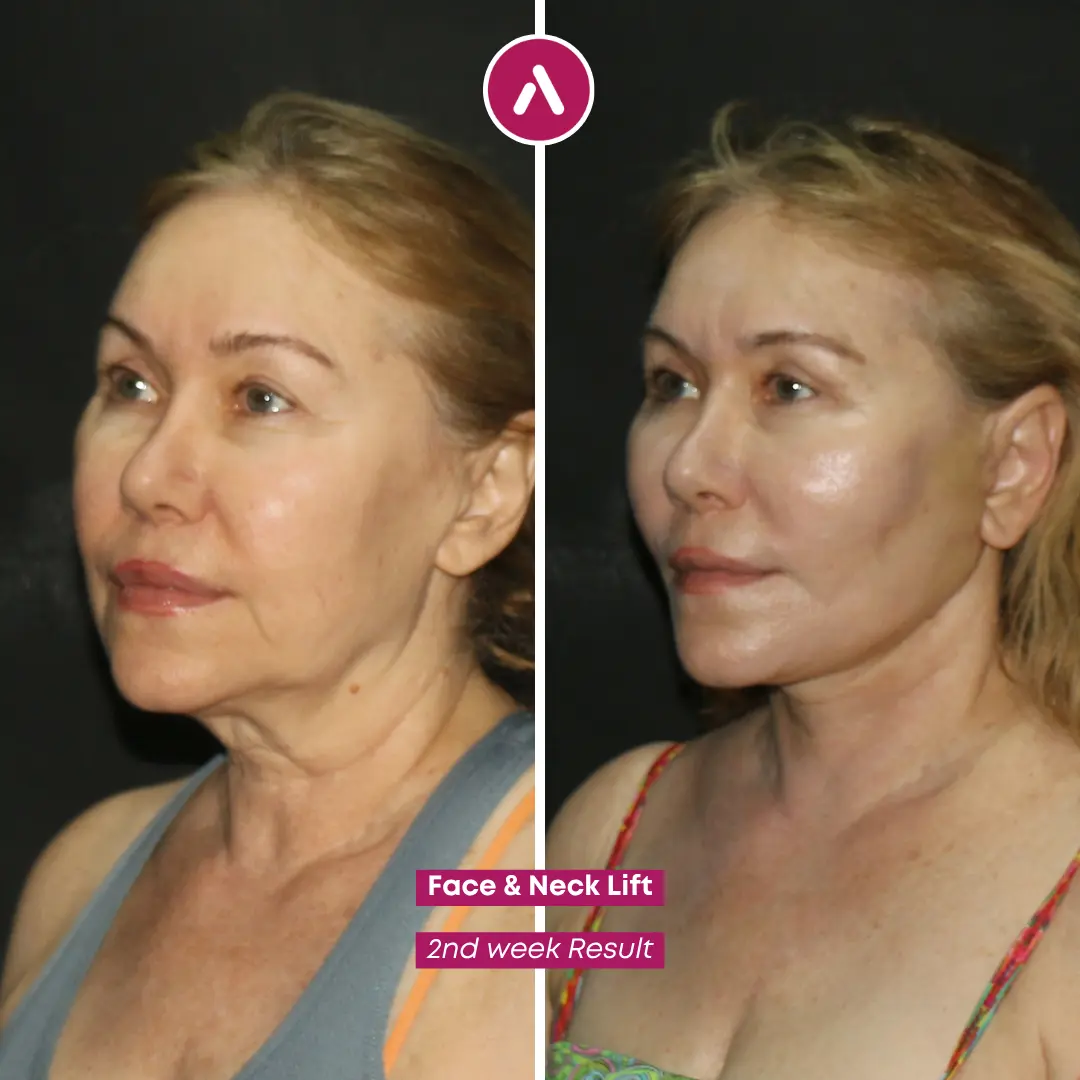
A Mini Facelift is a precision lower-face lift designed to refine the jawline, soften early jowls and marionette lines, and keep results natural in motion. For UK patients seeking Harley Street-level standards with a smarter recovery plan, our Istanbul pathway pairs support-first techniques (SMAS, MACS or deep-plane mini facelift when indicated) with careful incision and scar strategy.
We discuss awake or twilight sedation where suitable, map recovery day by day, and integrate HBOT and LLLT to support swelling and scar management. You’ll see guidance on safety, travel, and cost vs the UK, so you can compare like-for-like and book confidently.
Table of Contents
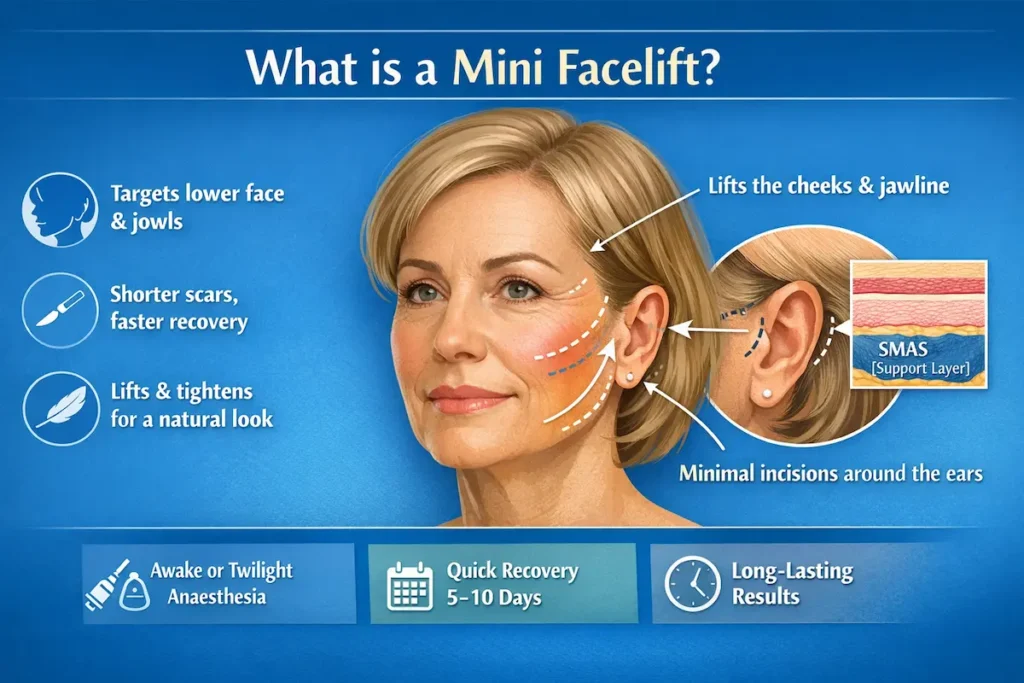
What is a Mini Facelift?
A Mini Facelift is a targeted facial surgery designed to lift and stabilise the lower face, mainly around the jawline, early jowls, and the corners of the mouth. It focuses on underlying support (not just skin) to create a refreshed, natural-looking result with a typically lighter recovery than a full facelift.
If you’re researching this procedure, you’re probably noticing early sagging that “tweakments” can’t fully correct anymore. That is the right context. A mini facelift is not a shortcut or a “small pull”. It’s a structural adjustment of the lower-face tissues, planned to reduce tension on the skin and manage scars carefully.
What a mini facelift actually treats (jawline, jowls, marionette lines)
A mini facelift is most effective when ageing changes are concentrated in the lower third of the face. The typical goal is sharper definition, not a different face. In UK terms, it’s often chosen for early jowling and a softened jawline that makes the face look heavier or tired.
- Mini facelift for jowls and marionette lines when the jawline has started to blur and the mouth corners look pulled down.
- Softening of the jawline (“sagging jawline”) that shows most in profile or on video calls.
- Early-to-moderate lower-face descent that creates a “compressed” look around the mouth.
Nasolabial folds can improve when lower-face support is restored, but they are not always the primary target. If folds are driven mainly by mid-face descent or volume loss, we may discuss different or combined options later in the plan.
Mini facelift vs “tweakments”: where surgery starts to make sense
Many UK patients reach mini facelift research after trying Botox, filler, or thread lifts. Those options can work well for the right problem. The issue is that laxity is a mechanical change, not just a line. Once the skin and deeper tissues have descended, a meaningful lift usually needs a surgical vector and stable fixation.
- Botox treats muscle-driven lines; it does not lift descended tissue.
- Fillers can camouflage shadows, but overfilling the lower face can add heaviness.
- Threads can give a temporary lift in selected cases, but longevity varies and the lift is limited.
If your key concern is definition (not just wrinkles), surgery is often the more logical tool. That’s especially true for people searching mini facelift for sagging jawline rather than “lines on the skin”.
Incisions and scar strategy: where cuts are placed and why
Most mini facelift incisions are designed to sit around natural boundaries of the ear and hairline, so scars can heal discreetly. The exact placement depends on your hairline, skin quality, and how much lift is required. Our priority is to avoid visible tension at the incision line, because that is when scars tend to look more obvious.
- Mini facelift incisions placement is typically around the front of the ear, sometimes extending slightly into the hairline.
- Closure is planned to support the deeper tissues first, so the skin can rest rather than strain.
- Aftercare matters: scar maturation is a process, not a moment.
Scars usually look most noticeable early on, then soften as the tissue remodels. We’ll cover realistic scar timelines and day-by-day healing later in the recovery section.
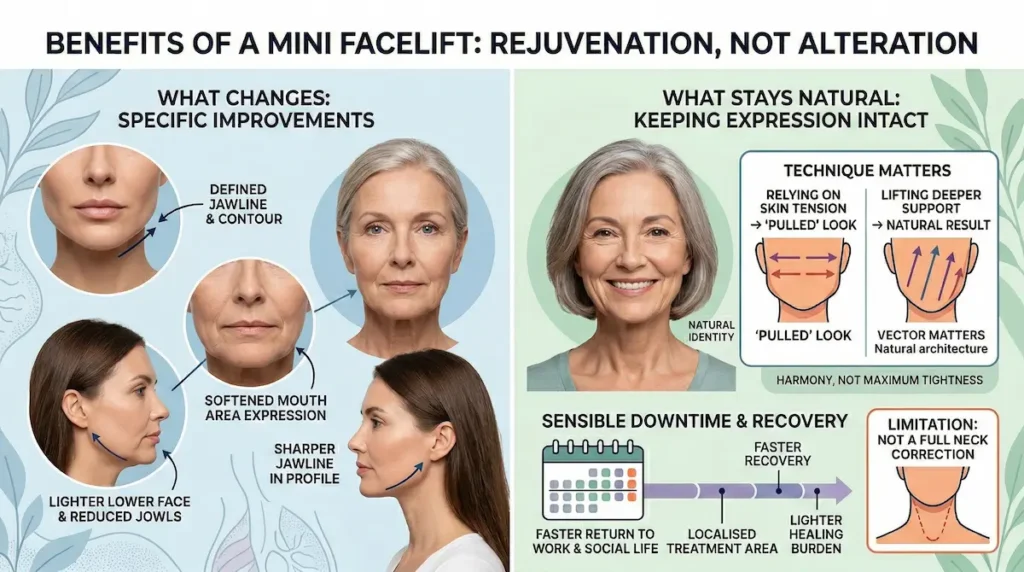
Benefits of a Mini Facelift: what changes, what stays natural
A mini facelift’s best benefit is precision. It aims to correct specific, lower-face signs of ageing while keeping your expression and identity intact. Done properly, it should look like you’ve slept well, not like you’ve “had work done”. The decision often comes down to whether you want structural improvement with a defined recovery plan.
Rejuvenation, Not Alteration.
Natural-looking improvement (without the “pulled” look)
People in the UK often worry about looking tight, wind-swept, or overdone. That fear is valid. A natural result depends on two things: lifting the deeper support rather than relying on skin tension, and choosing the right amount of correction for your anatomy.
- Support-first technique planning helps reduce skin strain.
- Vector matters: the direction of lift should follow your natural facial architecture.
- Balance matters: the aim is harmony, not maximum tightness.
When patients describe the outcome they want, it’s usually subtle facial rejuvenation Turkey rather than dramatic change. That language is helpful, because it keeps goals realistic and measurable.
Sharper jawline and a lighter lower face
A well-selected mini facelift can restore a cleaner jawline and reduce the “heavy” look that comes from early jowls. This can change how your face reads in photos and in motion. It also helps the mouth area look less downturned, which can soften a tired or stern resting expression.
- Improved jawline definition in profile and three-quarter view.
- Less bunching at the sides of the mouth and lower cheek.
- A more continuous contour from cheek to jaw.
We set expectations carefully. A mini facelift is not a full neck correction, and it is not designed to fully address significant laxity under the chin. If neck concerns are dominant, we discuss a broader plan.
Downtime, confidence, and “being presentable” sooner
Recovery is personal, but many patients choose a mini facelift because they want a sensible timeline back to work and social life. Bruising and swelling still happen. The difference is that the treated area is more localised, so the overall healing burden can feel lighter than more extensive surgery.
- Common early phase: swelling and bruising that changes day by day.
- Key milestone: looking “presentable” can arrive before you feel fully settled.
- Scar care and sun protection play a long game.
Our role is to make the plan practical: realistic timelines, clear aftercare steps, and a recovery strategy that fits UK travel and work rhythms. If minimising social downtime is a priority, we build that into the decision-making from the start.
Am I a Suitable Candidate for Mini Facelift?
A mini facelift works best when your concerns are real, but not extreme. Think early-to-moderate lower-face laxity: a softened jawline, early jowls, and marionette lines that make you look heavier or more tired than you feel. Good candidates usually have reasonably elastic skin and want refinement rather than a dramatic overhaul. Your overall health matters too, because healing is part biology, part discipline. We assess both.
Suitability is not just about age. It’s about anatomy, tissue quality, and what you want the change to do. If your neck laxity is the main problem, a mini facelift may not be the right tool on its own. If your main issue is volume loss rather than descent, surgery may need to be paired with volume restoration rather than “more lift”. That’s why we plan from the inside out.
Signs you’re likely to benefit
Most candidates come to us with a similar pattern: the lower face has started to drop, and non-surgical treatments feel like they’re chasing the problem rather than correcting it. The aim is a cleaner contour and a lighter lower face, without shifting your identity. Small change. High impact.
- Early jowls that blur the jawline, especially in profile or in video calls.
- Marionette lines that create a downturned mouth appearance.
- Lower-face heaviness that makes filler look “puffy” rather than fresh.
- A preference for structural correction over repeated maintenance appointments.
Age is a guideline, not a rule
UK patients often search by decade because it’s a quick shortcut. We understand why. Still, what matters is the condition of the tissues, not the number on your passport. Some people see early descent in their 30s. Others maintain strong support well into their 50s.
- Mini facelift in 30s: usually “maintenance” territory for early jawline softening and subtle lower-face descent.
- Mini facelift at 35: often chosen when jowling has started but the neck is still relatively tight.
- 40 year old mini facelift before and after: this search intent usually reflects a desire for a clear, natural shift without looking “done”.
- is 50 too old for a mini facelift? Not automatically. We see suitable candidates in their 50s when laxity is still concentrated in the lower face and the neck doesn’t require a full correction.
When a mini facelift is not enough, we say so. It saves time, money, and disappointment.
Who should avoid or delay surgery
Safety is a strategy, not a slogan. Some factors make elective surgery a poor idea right now, even if your aesthetic goals are reasonable. Others don’t rule you out completely, but they change the plan, the timing, or the aftercare.
- Uncontrolled medical conditions that increase surgical or healing risks.
- Active skin infections or untreated dental issues that can raise infection risk.
- Smoking or nicotine use (including vapes) that compromises circulation and scar quality.
- Unrealistic expectations, body dysmorphia concerns, or pressure from someone else.
We coordinate sensibly with your existing healthcare team when needed, including your GP in the UK, so decisions are grounded in your health history rather than guesswork.
We plan for your anatomy, not a template.
Mini Facelift vs Full facelift: what’s the real difference?
The simplest difference is coverage. A mini facelift targets the lower face. A full facelift addresses broader facial descent and, in many cases, is paired with more substantial neck work. The more important difference is intention: a mini facelift is precise. A full facelift is comprehensive.
Choosing between them is not about “bigger is better”. It’s about matching the procedure to the problem so you don’t over-treat or under-treat. Over-treating can mean unnecessary downtime. Under-treating can mean spending money twice. We look at the jawline, neck, mid-face descent, and your skin quality as a complete picture.
Coverage: lower face only vs face + neck
A mini facelift is typically a lower-face operation. It’s designed to lift and secure tissues around the jawline and mouth corners. A full facelift tends to address wider descent patterns, often including more obvious mid-face changes and a more significant neck component.
- Mini vs full facelift differences often come down to where the laxity lives: lower face only, or lower face plus neck and mid-face.
- If neck bands, under-chin laxity, or a heavy neck profile dominate, a broader plan may be more appropriate.
- If your main concern is early jowls and jawline blur, a mini facelift may be the cleaner, more rational choice.
Longevity and maintenance: what to expect realistically
No facelift stops ageing. It resets the clock. Longevity depends on technique, tissue quality, lifestyle, and how your face naturally ages. A mini facelift can deliver durable improvement for the right candidate, but it won’t hold like a full facelift if your laxity is already advanced.
- Expect improvement to soften slowly over time, not “drop” overnight.
- Stable deep support tends to age more gracefully than skin-only tightening.
- Skincare, sun protection, and consistent weight stability help protect your result.
When a full facelift (or neck lift) makes more sense
Some patients come in asking for a mini facelift because they want less downtime. That’s understandable. But if your anatomy needs a wider correction, we will be direct about it. The goal is a natural result, not a compromised one.
- Pronounced neck laxity or muscle banding that changes your profile.
- Significant mid-face descent where lower-face lifting alone will look incomplete.
- Deep folds where the primary driver is structural descent (sometimes searched as nasolabial folds surgical correction).
In those cases, we may recommend a more comprehensive approach, or a combined plan, so the result looks balanced rather than “partially improved”.
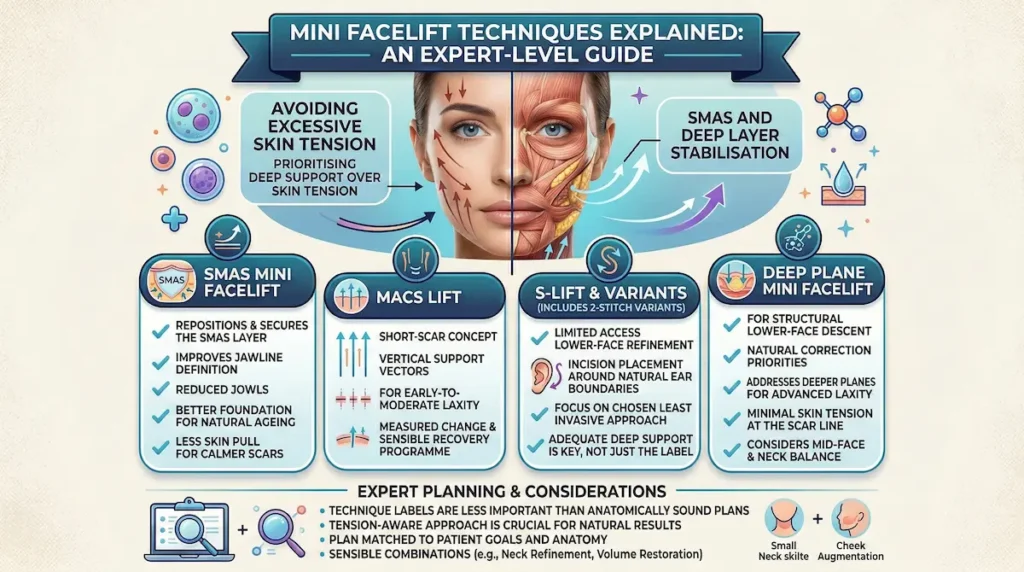
Mini Facelift Surgical Techniques Explained (expert-level)
“Mini facelift” is a category, not a single method. What matters is how the deeper tissues are lifted and stabilised, because that determines stability, scar behaviour, and how natural the result looks in motion. For UK “expert patients”, the key question is whether the plan prioritises deep support over skin tension.
We prioritise deep support over skin tension.
SMAS mini facelift: what it means for stability
SMAS refers to the supportive layer beneath the skin that helps shape the lower face. A SMAS mini facelift aims to reposition and secure this layer, rather than relying on the skin alone. This approach can improve jawline definition and reduce early jowls while keeping scars calmer, because the skin is not asked to “carry” the lift.
- Better structural support for the lower face compared with skin-only tightening.
- Typically more natural ageing of the result, because the foundation is addressed.
- Useful when the main problem is lower-face descent rather than surface wrinkling.
MACS lift, S-lift, and “2-stitch” variants: where they fit
Different mini facelift techniques are often variations on access, vectors, and fixation. The aim is to choose the least invasive approach that still delivers a stable, natural correction for your anatomy.
- MACS lift: commonly uses short-scar concepts and vertical support vectors to refine the lower face. It can be a strong option for early-to-moderate laxity when you want a measured change with a sensible recovery plan.
- S-lift: typically describes a limited-access approach often used for lower-face refinement. The planning focus is on where the lift is needed and how to avoid tension at the incision line.
- 2-stitch facelift (one stitch facelift): these names are sometimes used in marketing to describe simplified fixation concepts. In practice, what matters is not the label but whether the underlying support is truly repositioned and secured appropriately for your tissues.
If your primary concern is a softer jawline and early jowls, these approaches can be relevant. If laxity is more advanced or tissue descent is deeper, we may discuss techniques that address deeper planes for a more complete correction.
Deep plane mini facelift: when it may be preferred
A Deep plane mini facelift is typically considered when lower-face descent is more structural and the goal is a natural correction with minimal skin tension. It’s not “better for everyone”; it’s more about the right match between technique and anatomy. For patients who are particularly concerned about a tight, pulled look, deep support strategies can be a meaningful part of the discussion.
In expert planning, we also consider how the mid-face and neck relate to the jawline. Sometimes the “best” mini facelift is the one that’s combined sensibly (for example, a limited neck refinement) so the result looks balanced rather than partially improved.
Technique comparison: a practical overview
| Technique | Best for | Scar strategy | Downtime notes | Common combinations |
|---|---|---|---|---|
| SMAS mini facelift | Early-to-moderate jowls and jawline blur | Support-first closure to reduce skin tension | Typically manageable bruising/swelling; timelines vary | Limited neck refinement, volume restoration |
| MACS lift | Lower-face refinement with vertical support vectors | Short-scar concepts with careful tissue fixation | Often chosen for “presentable sooner” goals | Lower blepharoplasty, subtle neck support |
| S-lift | Focused lower-face tightening in selected cases | Incision placement around natural ear boundaries | Localised recovery; outcomes depend on laxity level | Fat transfer, skin-quality treatments |
| Deep plane mini facelift | More structural descent; natural correction priorities | Deep support to minimise skin strain at the scar line | Recovery varies; planning focuses on stability | Neck lift (when indicated), mid-face balance planning |
The headline is simple: technique labels are less important than whether the plan is anatomically sound, tension-aware, and matched to your goals.
Mini facelift vs Thread Lift vs Botox: choosing the right tool
If you’re comparing options, you’re already thinking like an “expert patient”. The most reliable way to decide is to separate what you see (lines, heaviness, shadows) from what causes it (muscle activity, volume loss, or tissue descent). Each option has a place — but they solve different problems.
Thread lift: when it can help (and where it falls short)
A thread lift can offer a modest, temporary lift for selected candidates, especially when laxity is mild. However, threads typically have limits in both lifting power and longevity, and the effect can be less predictable than surgical repositioning. If your main concern is a blurred jawline with early jowls, you may find yourself searching mini facelift vs thread lift because threads didn’t deliver the stability you wanted.
- Can suit mild laxity and patients prioritising minimal intervention.
- Results vary by tissue quality and the degree of descent.
- May not address more established jowling or deeper structural descent.
Botox and fillers: great tools for the right indication
Botox works best for muscle-driven lines. Fillers can restore volume and reduce shadows when loss is the dominant issue. But neither is designed to reliably “lift” descended tissues. In the lower face, excessive filler can sometimes add weight, which is why some patients feel their face looks heavier over time.
It’s common to ask, is a mini facelift better than botox? The honest answer is: it depends on the problem. If the problem is lower-face descent, a mini facelift is often the more direct solution. If the problem is expression lines or volume-related shadows, Botox or filler may be more appropriate — or used alongside surgery in a measured way.
A simple decision framework (anatomy + goals + downtime)
- If your issue is muscle activity (dynamic lines): Botox is often the first-line tool.
- If your issue is volume loss (hollowness/shadows): conservative filler or fat transfer may help.
- If your issue is descent (jowls, jawline blur, marionette lines): a Mini Facelift is often the most structurally logical option.
We build the plan around what you want to look like in real life: in daylight, on camera, and in motion. The goal is not to chase every line — it’s to restore shape where shape has shifted.
Combined Procedures (synergy): maximise your result
A mini facelift can be highly effective on its own when ageing changes are concentrated in the lower face. However, facial ageing rarely happens in one isolated zone. For “expert patients”, the smartest question is often: what should be treated together so the result looks balanced? Combining procedures can improve harmony and, in many cases, avoid the “partially improved” look where one area is refreshed but neighbouring areas still feel out of sync.
Mini facelift + neck refinement: jawline continuity
The jawline and neck are visually connected. If your jawline is blurred largely because of early jowls, a mini facelift may be enough. If you also have under-chin laxity, neck heaviness, or early banding, a combined plan can create a cleaner transition from face to neck.
- For selected candidates, pairing a mini facelift with a Neck Lift (or limited neck refinement) can improve profile definition.
- Balance matters: treating the jawline without addressing a dominant neck concern can leave you feeling “better, but not finished”.
- We decide based on anatomy, not preference alone, because the wrong combination can increase downtime without improving the outcome.
Mini facelift + eyelids: a “refreshed, not different” effect
Lower-face correction can make your jawline look sharper, but the eyes often carry the “tired” signal. If your concern includes heaviness or puffiness around the eyes, combining can create a more coherent rejuvenation without chasing dramatic change.
- Upper Eyelid Surgery can address hooding that makes the eyes look smaller or fatigued.
- Lower Eyelid Surgery may help if under-eye bags or shadowing dominate your “tired” look.
- Combination planning is conservative: the goal is harmony and natural expression, not a “total transformation”.
Mini facelift + temporal/brow support: when the upper face needs alignment
If the upper face has dropped (especially at the outer brow), correcting only the lower face can feel slightly mismatched. In those cases, a subtle lift to the temples or brow can improve overall facial balance.
- A measured Endoscopic Brow Lift can restore upper-face openness without changing your identity.
- Temporal support is considered when the outer brow has descended and contributes to a heavy, tired expression.
Mini facelift + volume restoration: lift + shape
Ageing is not only descent. It’s also volume redistribution. Some patients have a jawline issue and hollowing that makes the mid-face look flat. In those cases, lifting alone can improve contour, but adding conservative volume can improve softness and natural proportion.
- Fat Transfer to the Face may be discussed if volume loss is a major driver of shadows or a “drawn” look.
- We avoid overfilling the lower face. The aim is structure and lightness, not heaviness.
The best “combo” is the one that looks invisible to everyone but you.
If you’ve had previous treatment that didn’t meet expectations, your plan may be different. Revision planning focuses on what the tissues can safely do now, not what marketing promised before. For that pathway, we discuss a structured approach via Revision Facelift assessment.
Anaesthesia: why we often prefer awake or twilight sedation
One of the most common concerns for UK patients is anaesthesia. It’s not just fear — it’s sensible risk awareness. Depending on your health profile, anatomy, and surgical plan, a mini facelift may be performed with local anaesthesia (awake) or with twilight sedation. The best approach is individual, based on safety, comfort, and what’s required to deliver a precise, stable result.
Awake mini facelift (local anaesthesia): what it means
An Awake mini facelift typically means the area is fully numbed with local anaesthesia, while you remain awake and able to communicate. For selected patients, this can be an appealing option when minimising the footprint of general anaesthesia is a priority. Comfort is managed carefully, and the operating theatre team focuses on keeping the experience calm and controlled.
- Local anaesthesia can be suitable when the surgical plan is limited and the patient is comfortable with an awake approach.
- It allows real-time communication, which some patients find reassuring.
- Not everyone is suited: anxiety levels, medical factors, and the extent of correction all matter.
Twilight sedation: a middle ground for comfort
Twilight sedation (conscious sedation) is often described as “drifting in and out” while remaining comfortable. You are not typically aware of the details, but you are not in a deep general anaesthetic state either. Many patients who want the reassurance of feeling less aware — without necessarily requiring full general anaesthesia — ask about this option.
- Often chosen for comfort when local anaesthesia alone feels daunting.
- May support a smoother experience for patients who are anxious or sensitive to sensations.
- Appropriateness depends on your medical profile and what the surgical plan requires.
Awake/twilight vs general anaesthesia: how we decide
We don’t treat anaesthesia type as a marketing feature. It’s a clinical decision. The priority is safety, followed by comfort, followed by practicality (including travel plans and recovery timelines for UK patients).
- Procedure scope: the more extensive the correction, the more likely deeper anaesthesia planning may be discussed.
- Medical history: existing conditions, medications, and risk factors influence the safest choice.
- Patient comfort: calm patients often do well with local anaesthesia; high anxiety may favour twilight sedation.
- Precision and stability: the technique must be executed without rushing or compromise.
Comfort matters, but safety comes first.
Whichever route is chosen, your plan is confirmed in consultation and aligned with your health profile. If your goal is a mini facelift approach that reduces reliance on general anaesthesia, we can discuss whether an awake or twilight pathway is suitable for you, and how that interacts with technique selection and recovery planning.
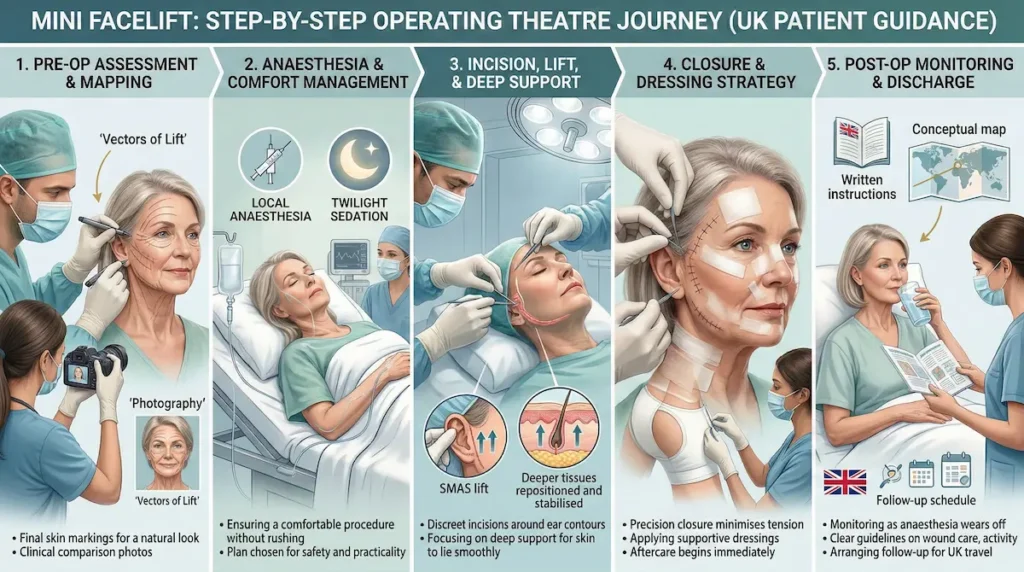
Mini Facelift Surgery Step-By-Step: what happens in the operating theatre?
Knowing exactly what happens on the day reduces anxiety and helps you plan your return to normal life (especially if you’re travelling from the UK). While every plan is personalised, the pathway is generally consistent: assessment, preparation, precise lifting, careful closure, and structured monitoring afterwards.
1) Pre-op checks and surgical mapping
Before you go into the operating theatre, we confirm the plan that was agreed in consultation: your lift vectors (the direction of support), incision placement strategy, and any combined procedures. You’ll also have routine safety checks (such as vital signs and a review of medications and allergies). If your mini facelift is planned under local anaesthesia or twilight sedation, the team will walk you through what you may feel and what’s considered normal.
- Final skin marking and vector planning (so the result looks natural in motion).
- Photography for clinical comparison (baseline vs outcome tracking).
- Confirmation of anaesthesia plan: local anaesthesia, twilight sedation, or (when needed) general anaesthesia.
2) Anaesthesia and comfort management
Comfort is managed so the procedure can be carried out without rushing. With local anaesthesia, the area is fully numbed; with twilight sedation, you remain relaxed and comfortable. Your plan is chosen for safety first, then comfort, then practicality (including travel and recovery timelines).
3) Incision, lift, and deep support
Incisions are planned around natural contours of the ear and, when required, within discreet hairline areas. The core principle is support-first lifting: deeper tissues are repositioned and stabilised so the skin can lie smoothly without being overstretched. This is one of the key factors behind a natural result and calmer scar behaviour.
- Incision placement follows anatomical boundaries to help scars settle discreetly.
- Deep support is addressed to reduce reliance on skin tension.
- Excess skin is managed conservatively to avoid a “tight” look.
4) Closure and dressing strategy
Closure is performed with precision to minimise tension along the scar line. Dressings and support garments (when used) are applied in a way that protects the incision and helps manage swelling. Your aftercare plan starts immediately, not “later”.
5) Post-op monitoring and discharge plan
After the procedure, you’ll be monitored as the anaesthesia wears off. Discharge timing depends on your plan and how you’re feeling. You’ll receive clear written instructions covering wound care, sleep position, activity limits, and what to do if something feels unusual. If you’re travelling, your follow-up schedule is arranged around safe milestones, not wishful thinking.
Mini Facelift Recovery & Aftercare: how long does healing take?
Recovery is one of the most searched topics for a reason: you want a predictable path back to being “presentable”. A mini facelift can offer a sensible timeline, but it still involves swelling, bruising, and scar maturation. The goal is not to pretend healing is instant — it’s to make your recovery structured, supported, and realistic.
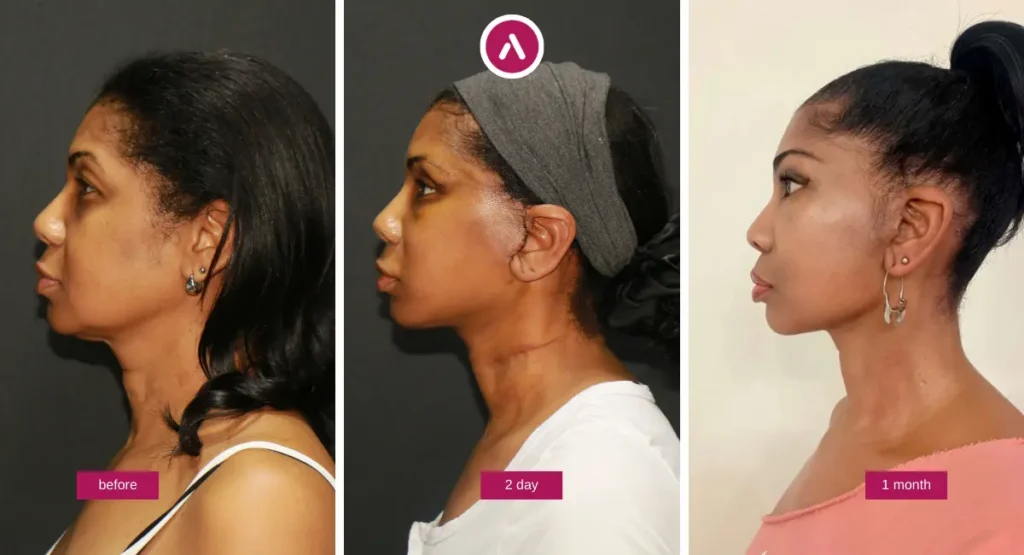
Mini facelift recovery day by day (first week)
Below is a practical guide many patients find helpful. Your experience may vary depending on your anatomy, whether you combined procedures, and how your body handles swelling.
- Day 1: Expect tightness, swelling, and a “full” sensation around the lower face. Rest is the priority. Keep your head elevated. If pain relief is needed, it’s often managed with simple options (for example, paracetamol), but you’ll follow your personalised instructions.
- Days 2–3: Swelling and bruising often peak. The face can look uneven or “puffy” — this is common and temporary. Short walks are encouraged, but avoid bending, heavy lifting, and heat exposure.
- Days 4–5: Many patients feel noticeably better. Bruising may start to change colour and move downward as it resolves. If you’re searching “5-day recovery pictures”, remember that photos vary wildly — lighting and makeup can hide a lot. We focus on clinical milestones, not social media.
- Days 6–7: You’ll often look more “socially acceptable”, though you may still feel tightness or mild swelling. Gentle routine activities are usually fine, but exercise and high-intensity movement typically wait until cleared.
What to expect at 2 weeks (and how scars behave)
At around two weeks, many patients feel more confident in public. However, this is not the end of healing — it’s a checkpoint. If you’re searching “scars after 2 weeks”, the most important point is this: scars often look more noticeable before they look better. This is part of normal scar maturation.
- Residual swelling is common, especially later in the day.
- Incision lines may appear pink or slightly raised early on.
- Scar care and sun protection are essential for long-term scar quality.
Our Rapid Recovery & Safety Protocol: HBOT + LLLT support
For UK patients who prioritise downtime minimisation and scar management, we may integrate supportive technologies into aftercare. These are not “magic fixes”, but they can be valuable when used appropriately and consistently.
- HBOT (Hyperbaric Oxygen Therapy): delivers oxygen in a controlled environment, which may support tissue recovery and help with swelling in selected cases.
- LLLT (Low-Level Laser Therapy): is used as a supportive scar and tissue-care tool, often discussed for reducing inflammation and supporting orderly healing.
We’ll advise whether HBOT/LLLT is suitable for you based on your procedure scope and healing profile. The aim is to support recovery quality — not to overpromise timelines.
Aftercare fundamentals that protect your outcome
- Sleep position: head elevation helps swelling control.
- Activity: gentle walking early; avoid strenuous exercise until cleared.
- Incision care: follow the plan exactly; do not “experiment” with products.
- Nutrition and hydration: support healing; avoid alcohol early on.
- Travel planning: we schedule follow-ups around safe milestones for UK travel, rather than a one-size timeline.
Safety & risks: Is a Mini Facelift Dangerous?
Any surgery carries risk. A Mini Facelift is generally considered a targeted procedure, but “targeted” does not mean “risk-free”. The right way to think about safety is in layers: selecting the right candidate, choosing the right technique, using a controlled operating theatre environment, and following a disciplined recovery plan. When those layers are aligned, risk is reduced — never eliminated.
Common side effects vs true complications
Some early effects are normal and expected. Others are less common and require prompt review. We explain the difference clearly so you know what to watch for, without spiralling into worst-case scenarios.
- Common and expected: swelling, bruising, tightness, temporary numbness, mild asymmetry during early healing, and scar redness in the early phase.
- Less common but important: infection, haematoma (a collection of blood), delayed wound healing, unfavourable scarring, contour irregularities, or prolonged numbness.
- Rare but serious: nerve injury affecting movement, significant skin compromise, blood clots, or complications linked to anaesthesia.
How we reduce risk (practically, not rhetorically)
Risk reduction is not a single step — it’s a chain. Weak links matter. Our approach is built around predictable controls and transparent planning.
- Candidate selection: we assess tissue quality, health history, medications, and nicotine exposure (including vapes) because circulation affects healing and scar quality.
- Technique selection: we choose methods that prioritise deep support so the skin isn’t overstressed, reducing tension-related scar issues.
- Operating theatre discipline: sterile protocols, careful haemostasis (bleeding control), and methodical closure reduce complication risk.
- Aftercare structure: clear instructions, scheduled check-ins, and realistic milestones reduce “DIY” mistakes that can compromise healing.
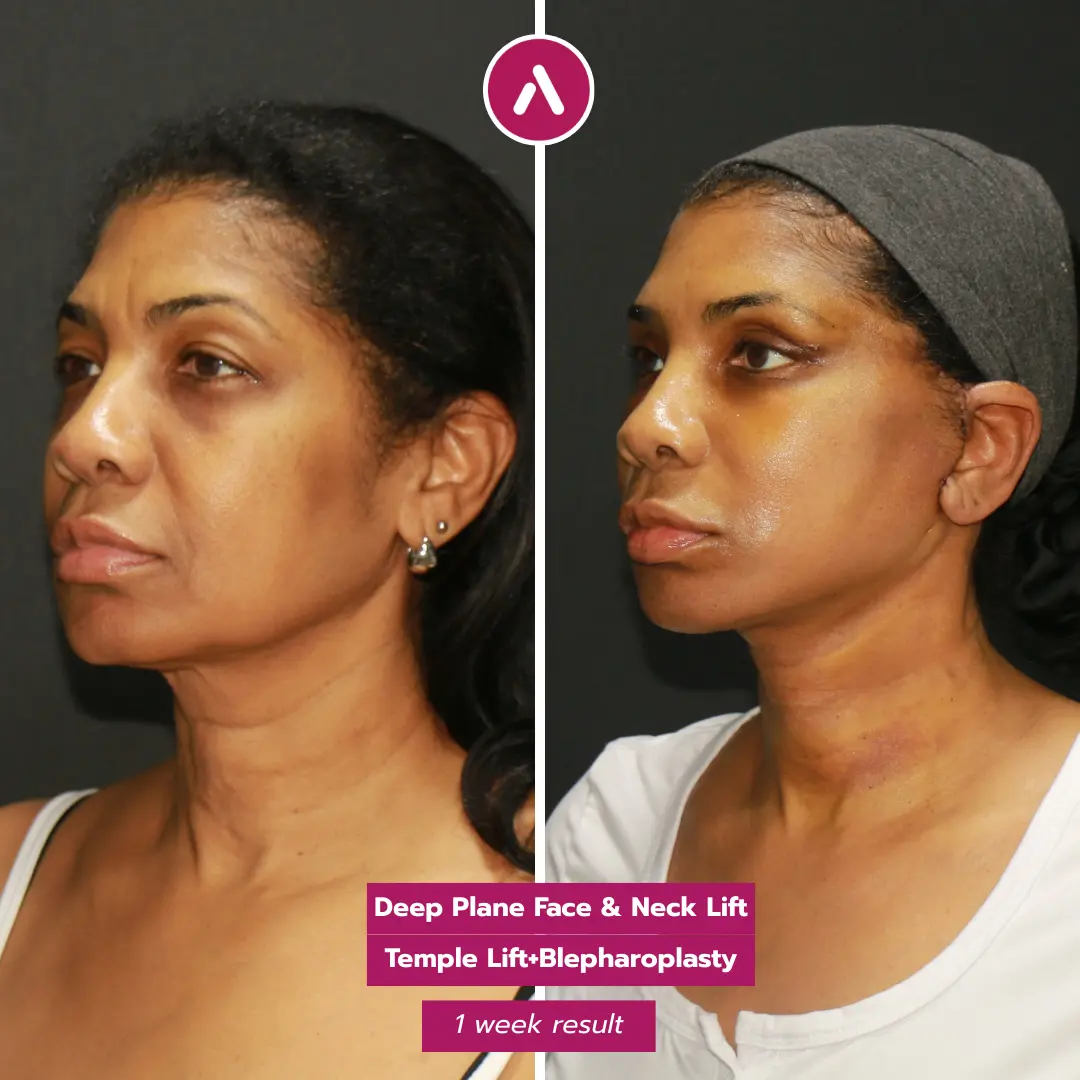
Warning signs: when to contact us immediately
We want you to feel informed, not hypervigilant. Still, certain changes should never be “waited out”. If you experience the following, you should contact us promptly:
- Sudden, increasing swelling on one side, especially with pressure or significant pain.
- Bleeding that soaks through dressings or does not settle with advised measures.
- Fever, increasing redness, heat, or discharge around the incision line.
- Shortness of breath, chest pain, or calf swelling (urgent medical assessment required).
“Botched” outcomes and revision: what causes problems (and what can be done)
Searches like botched mini facelift revision Turkey often come from people who have seen scary stories online or have had disappointing work elsewhere. It’s important to understand that poor outcomes usually come from a handful of predictable issues:
- Over-tensioning the skin instead of stabilising deeper support (increases visible scarring and an unnatural look).
- Wrong procedure choice (a mini facelift used when a more comprehensive plan was needed, leading to under-correction).
- Inadequate aftercare or unrealistic “fast travel” timelines that ignore key healing milestones.
Revision planning is cautious. We assess tissue quality, scar position, and what the anatomy can safely tolerate now. If revision is appropriate, the aim is improvement and restoration of natural contour — not chasing perfection or repeating the same mistake with a more aggressive pull. If you’re exploring this pathway, we discuss it via structured Revision Facelift assessment.
Is a Mini Facelift Safe In Turkey (for UK patients)?
It’s a fair question — and it deserves a clinical answer, not a sales answer. When UK patients search Mini facelift Turkey safe?, they’re usually asking about standards, accountability, and what happens if something doesn’t go to plan. Safety is determined by systems: surgeon credentials, facility standards, anaesthesia governance, and aftercare continuity.
Standards and governance: what you should verify
Whether a procedure takes place in London or Istanbul, the fundamentals are the same: controlled theatre environment, appropriate monitoring, and clear escalation pathways. We encourage you to verify the essentials rather than rely on glossy claims.
- Facility standards: accredited environments, modern monitoring, and defined infection-control protocols.
- Anaesthesia governance: an approach that matches your health profile, with comfort planning that never compromises safety.
- Clear documentation: written aftercare instructions, medication guidance, and a structured follow-up plan.
Surgeon credentials: why “European Board Certified” matters
UK “expert patients” often know what Harley Street standards look like. If you’re travelling, you want comparable accountability and competence. This is where credential transparency becomes non-negotiable. Our surgical team includes European Board Certified Surgeons, and your plan is built around technique selection (not a one-size-fits-all protocol) and candid suitability assessment.
Aftercare continuity for UK travel: the missing piece in many packages
Travel is not the risk. Poor planning is. We structure timelines around safe checkpoints so you’re not pressured into flying too early or “pushing through” swelling milestones. Your plan is designed to support a controlled recovery even when you return to the UK.
- Follow-up structure: scheduled check-ins and clear milestones for dressing changes and scar care.
- Remote support: direct communication channels for questions, photos, and symptom triage.
- Travel guidance: advice aligned with swelling control, comfort, and sensible mobility planning.
In short: Turkey can be safe when standards are verifiable, technique is appropriate, and aftercare is structured for travel reality. In the next section, we’ll move into outcomes and expectations — what a “natural” mini facelift result should look like, and what it cannot do.

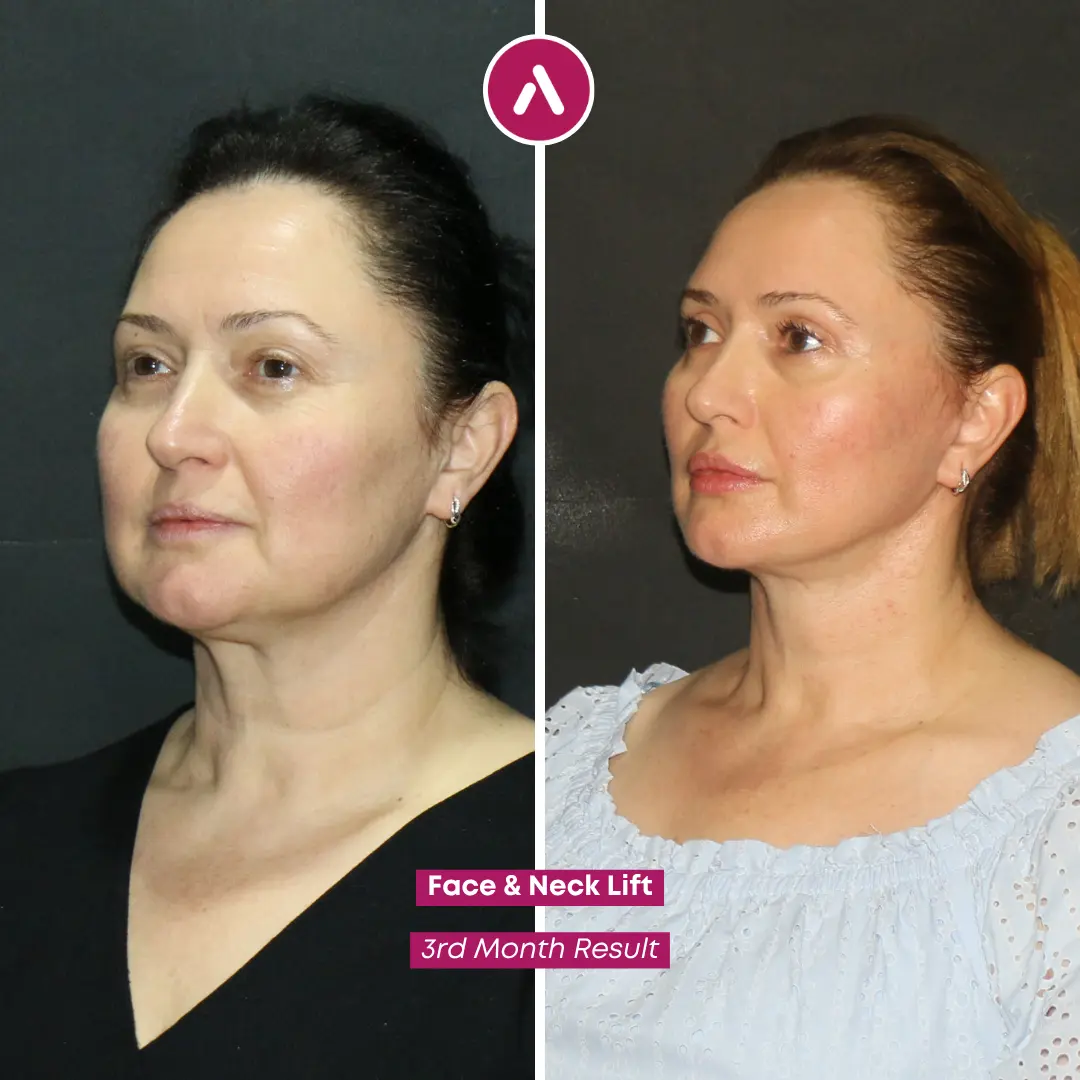
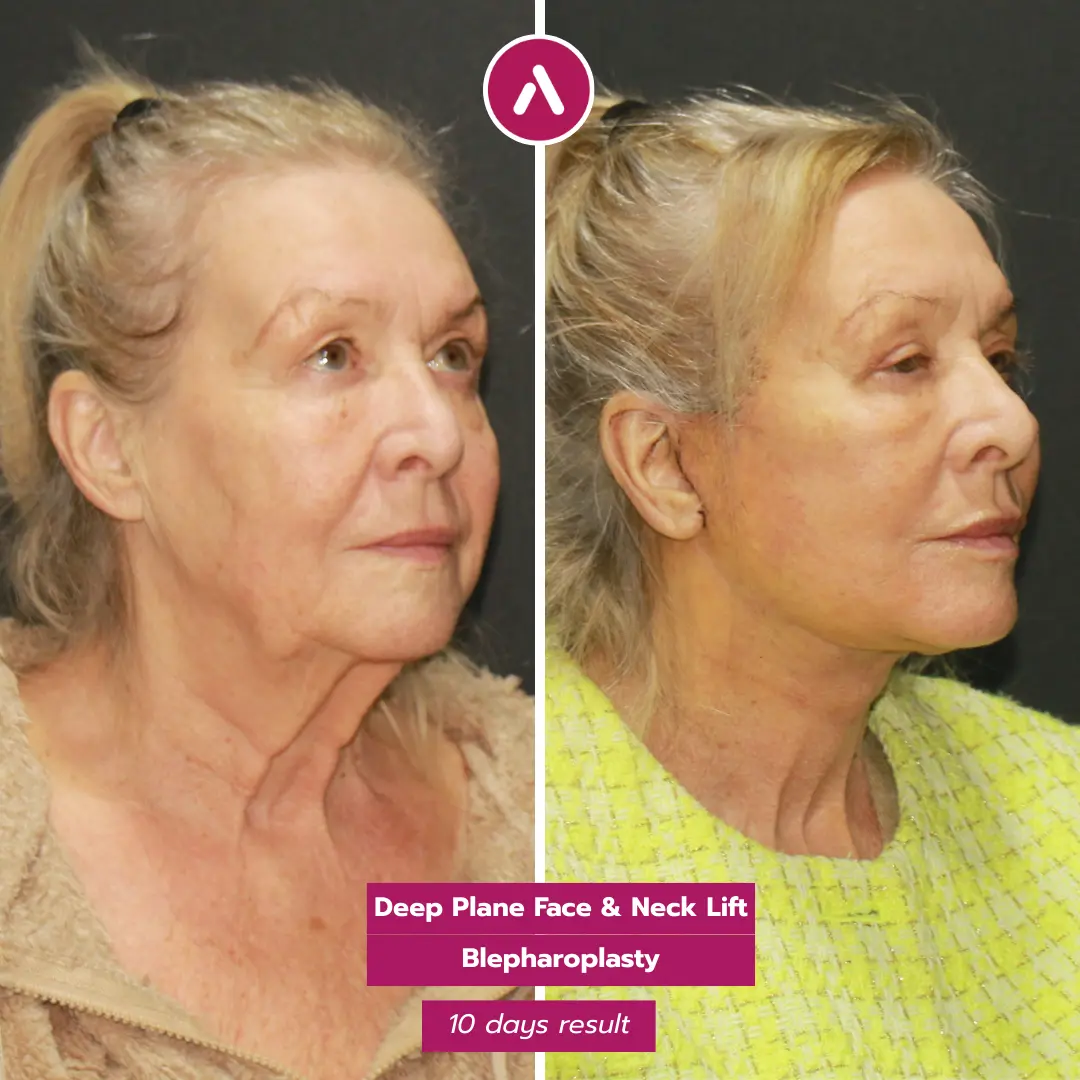
Mini Facelift Before and After: Realistic Expectations & Results
The most satisfying mini facelift outcomes are not the most extreme ones — they’re the most believable. A Mini Facelift should make you look refreshed, lighter in the lower face, and more defined at the jawline, without changing your expression or giving you that “pulled” appearance UK patients rightly want to avoid.
What a mini facelift can do (and what it can’t)
A mini facelift is designed for the lower face. That focus is a strength, because it allows precision. It is not a full-face overhaul, and it is not a substitute for neck surgery when the neck is the dominant issue.
- It can: improve jawline definition, reduce early jowls, soften marionette lines, and restore a lighter lower-face contour.
- It may help: the appearance of nasolabial folds when they’re influenced by lower-face descent, but it is not always a direct fold “eraser”.
- It can’t: fully correct significant neck laxity, heavy under-chin tissue, or advanced mid-face descent on its own.
Timeline of results: when you look better vs when you are “settled”
Two timelines run in parallel: the social timeline and the biological timeline. Many patients feel “presentable” sooner than they feel fully settled. That’s normal. The goal is to plan around predictable milestones rather than wishful dates.
- Early phase (first 1–2 weeks): swelling and bruising shift day by day. You may look better before you feel better.
- Intermediate phase (weeks 3–8): swelling continues to reduce, contours refine, and the result begins to look more like “you, but rested”.
- Longer-term phase (months): scars mature and soften; the face continues to settle in a subtle way.
What “natural” actually looks like
Natural does not mean “no change”. It means the change looks internally consistent with your facial architecture. People should notice you look well, not wonder what you’ve done. This is why we focus on deep support, measured correction, and tension-aware closure rather than chasing maximum tightness.
We aim for “refreshed”, not “done”.
Typical feedback themes from UK patients (without the hype)
While every face is different, the most common “wins” UK patients describe are practical: their jawline photographs better, their lower face looks lighter, and their resting expression feels less downturned. Equally important: they appreciate clear recovery guidance, because uncertainty is often the most stressful part of travelling for surgery.
If you’d like to see what changes are realistic for your anatomy, we use your photos and goals to build a personalised plan rather than projecting someone else’s “before and after” onto your face.
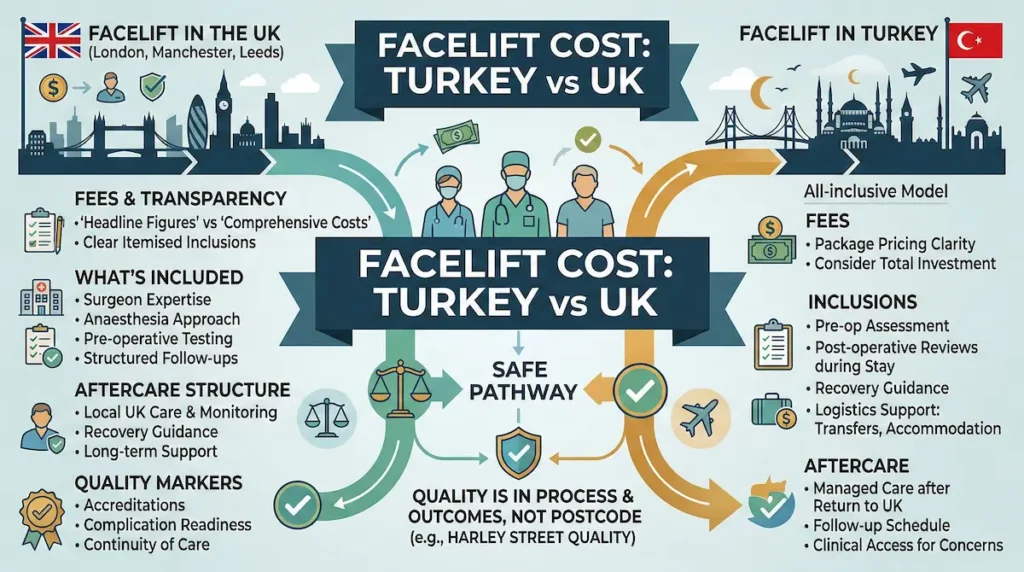
Mini Facelift Cost 2026 Turkey vs UK (value, not “cheap”)
Cost comparisons are unavoidable — and sensible. Searches like mini facelift cost UK, mini facelift London price, and mini facelift Turkey price are usually about more than money. They’re about what’s included, how aftercare is handled, and whether the plan is designed to minimise downtime with structured recovery support.
We don’t position Istanbul as a “low-cost alternative”. For the UK “expert patient”, the value proposition is premium technique choice, robust post-op planning, and access to recovery-support technologies that are not routinely built into many UK pathways.
What drives UK pricing (London, Manchester, Cheshire, Bournemouth)
In the UK, private pricing is heavily influenced by overheads (theatre time, staffing, insurance structures, facility costs) and by how aftercare is packaged. London (including Harley Street) often carries additional premium pricing, while other regions such as Manchester, Cheshire, Birmingham, and Bournemouth may vary by clinic model and surgeon availability.
- Facility and staffing costs are typically higher in the UK.
- Aftercare may be structured differently (often billed as separate appointments).
- Technology add-ons (where available) may not be integrated into a single pathway.
How Turkey delivers “accessible luxury” for UK patients
In Istanbul, a premium clinic model can offer strong value without cutting corners, mainly because of different operating costs and the ability to integrate services into a coherent pathway (planning + surgery + aftercare + logistics). Many UK patients also prefer the clarity of an all-inclusive cosmetic surgery GBP quote that covers the essentials rather than a list of separate charges.
Cost comparison overview (UK vs Istanbul premium clinic model)
| Cost / Value Factor | UK (London / Manchester / Cheshire / Bournemouth) | Istanbul (Premium Clinic Model) |
|---|---|---|
| What you pay for | Often separated into surgeon fee, theatre, anaesthesia, follow-ups | Typically structured as a single pathway covering surgery + planned aftercare |
| Anaesthesia and theatre time | Priced by facility model; varies widely by city and provider | Planned based on technique scope; often integrated into the pathway |
| Aftercare structure | May involve multiple clinic visits, sometimes billed separately | Follow-ups + structured travel-safe milestones built into the plan |
| Recovery-support tech | Not routinely integrated; availability varies | HBOT / LLLT can be integrated for selected patients as part of recovery support |
| Accommodation & transfers | Typically arranged and paid independently | Often included as part of a premium “medical journey” package |
| Cost clarity for UK patients | Can involve multiple line items and add-ons | Often offered as an all-inclusive plan quoted in GBP for clarity |
What affects your exact quote
Because mini facelift plans vary, the most honest pricing is personalised. Your quote depends on:
- Technique choice (e.g., SMAS-based, MACS, deep support strategies)
- Whether you combine procedures (neck refinement, eyelids, fat transfer)
- Anaesthesia plan (local anaesthesia, twilight sedation, or general anaesthesia when needed)
- Your recovery plan and any supportive protocols used
If you’re comparing facelift cost Turkey vs UK, compare like-for-like: technique quality, facility standards, aftercare continuity, and what happens if you need extra support. Cost matters — but value is the full system.
Best Mini Facelift Surgeon: what to verify (especially when travelling from the UK)
When UK patients search best mini facelift surgeon in Turkey or advanced mini facelift specialists Istanbul, they’re rarely looking for a catchy title. They’re looking for competence, ethics, and predictability — the kind of standards they associate with top private practice at home. The safest way to choose is to verify specific, non-negotiable markers rather than relying on social media popularity.
1) Credentials and accountability (beyond marketing)
If you’re used to UK systems, you might instinctively look for a familiar framework such as the GMC. Searches like GMC registered surgeon alternatives reflect that mindset. When travelling, the principle stays the same: you want clear credentials, defined scope, and transparent professional accountability.
- Board-level credentials: look for recognised European standards such as European Board Certified Surgeons and verifiable training pathways.
- Defined scope of practice: the surgeon should regularly perform facelift surgery and be able to explain technique choices clearly.
- Facility standards: the surgeon should operate in a controlled operating theatre environment with appropriate monitoring and governance.
2) Technique competence: can they explain why this plan suits you?
Mini facelift outcomes vary hugely because candidates vary. A serious consultation should include a clear explanation of:
- Why a mini facelift is the correct procedure (rather than a full facelift, neck lift, or non-surgical option).
- Which support layer will be addressed (for stability and natural movement).
- How incision placement is planned for your hairline, ear anatomy, and scar behaviour.
Be cautious of “one technique for everyone”. Expert planning is selective. The plan should be built around your facial architecture and your goals — not the clinic’s default template.
3) Revision capability: plan for the worst-case, even if you never need it
Most patients never need revision surgery. However, the presence of revision capability is often a sign of maturity and depth in a surgical practice. If something doesn’t heal as expected — or if you’ve had previous work elsewhere — you want a team that can assess tissue safely and manage complexity without overpromising.
- Ask how revision cases are assessed and when revision would (or would not) be advised.
- Look for a cautious tone: ethical teams don’t promise “perfect”, they promise a plan.
- Clarify what follow-up support looks like once you return to the UK.
If a consultation feels like a sales pitch, treat that as data.
4) “Harley Street standards” — what that phrase should actually mean
Some patients describe their goal as Harley Street quality facelift in Istanbul or private cosmetic clinic Istanbul British standards. In practical terms, that should translate into:
- Conservative, anatomy-led planning (not trend-led procedures).
- Clean, tension-aware scar strategy and realistic recovery timelines.
- Clear documentation and structured follow-ups, including remote support.
Your Medical Journey in Istanbul: arrival to departure (designed for UK patients)
Travel can be smooth when the pathway is organised. The common failure point in overseas surgery isn’t the flight — it’s a plan that ignores healing milestones. We build a structured “medical journey” so your timeline fits recovery reality, not wishful scheduling.
Step 1: Virtual consultation and personalised plan
Your journey typically starts with a remote assessment, where we review your concerns (jawline, jowls, marionette lines), your medical history, and your goals for “natural”. This is also where we discuss technique direction and whether an awake or twilight pathway may be suitable.
- Photo and goals review with honest suitability guidance.
- Procedure plan: mini facelift alone or combined (e.g., neck refinement, eyelids, volume restoration).
- Initial timeline planning built around safe recovery checkpoints.
Step 2: Travel logistics that protect recovery
Many patients consider direct flights London to Istanbul surgery because it keeps the travel day simple. Our focus is to make the entire sequence predictable: airport-to-hotel-to-clinic, with minimal friction and clear instructions.
- Airport welcome and transfers arranged to reduce stress and walking load.
- Hotel planning aligned with rest, elevation, and privacy needs.
- In-person pre-op checks and final planning before surgery day.
Step 3: Post-op follow-ups before you fly home
Before you return to the UK, we schedule follow-ups to check swelling patterns, incision condition, and comfort. The aim is to confirm you are progressing normally and that you understand the next phase of aftercare.
- Wound and scar-care guidance with clear do’s and don’ts.
- Activity and sleep instructions to support swelling control.
- Travel guidance based on healing milestones (not generic timelines).
Step 4: UK-friendly support once you’re back
Continuity is where many overseas packages fall short. We build support around real life: you’re back in the UK, you have questions, and you want quick, calm answers. Patients often look for practical reassurance such as UK support line cosmetic surgery and rapid access for photo checks.
- Remote follow-ups and symptom triage via direct communication.
- Optional: a UK based patient contact point pathway for coordination and planning.
- Many patients value a direct WhatsApp UK number Istanbul surgeon-style line for fast support during the key healing weeks.
How To Plan Your Mini Facelift Safely (UK-focused)
If you’re comparing options between the UK and Istanbul, aim to compare like-for-like: technique quality, facility standards, aftercare continuity, and how your recovery is supported when you return home. The simplest way to get clarity is a personalised plan based on your photos, medical history, and goals for a natural result.
- Step 1: Share your concerns (jawline, jowls, marionette lines) and what “natural” means to you.
- Step 2: We assess suitability and recommend the most appropriate pathway (mini facelift alone or combined).
- Step 3: You receive a structured timeline for surgery, recovery milestones, and UK-friendly follow-up support.
If you’re ready, you can request a consultation and we’ll outline the safest, most predictable route for your goals — including technique direction, anaesthesia options, and a recovery plan built around travel reality.
Mini Facelift results are at their best when the plan is selective, the technique is support-first, and the recovery is treated as part of the procedure — not an afterthought.
Mini Facelift Surgery Frequently Asked Questions (FAQ):
Can a mini facelift fix nasolabial folds?
It can improve them in some cases, but it depends on what’s driving the fold. If the fold is mainly caused by lower-face descent and heaviness around the mouth, restoring support can soften the appearance. If the fold is driven by mid-face descent or volume loss, the most natural improvement may come from a different plan (or a combined approach such as conservative volume restoration). We explain what is realistically achievable for your anatomy before recommending anything.
When will I look “presentable” (1 week vs 2 weeks)?
Most patients notice meaningful improvement in bruising and swelling through the first 7–14 days, but “presentable” is personal. At one week, you may feel comfortable with close friends, remote work, or light social contact. At two weeks, many people feel more confident in public. However, some residual swelling can still appear later in the day, and tightness can linger. We plan your timeline around key milestones rather than promising a fixed date.
How long does a mini facelift last?
A mini facelift doesn’t stop ageing — it resets the clock. Longevity depends on technique choice, tissue quality, lifestyle (especially sun exposure and weight fluctuation), and how your face naturally ages. The goal is durable improvement that ages gracefully, not a “forever fix”. In suitability assessment, we’re honest about whether a mini facelift is likely to meet your longevity expectations or whether a broader plan would be more appropriate.
When can I fly back to the UK?
We don’t use a one-size timeline because travel planning should match healing milestones, swelling patterns, and your comfort. Flying too early can be uncomfortable and can complicate recovery logistics. The safest approach is to follow a structured schedule: early post-op checks in Istanbul, clear wound-care stability, and a travel plan aligned with mobility and swelling control. If you have fixed commitments in the UK, we’ll build a plan around them where possible — but we won’t compromise safety to fit a calendar.
Will scars show after 2 weeks?
At two weeks, scars can still look pink, slightly raised, or more visible than you expected — and that can be completely normal. Scar maturation is a process. Early visibility often improves over time as the tissue remodels. The most important factors you control are following incision-care instructions, avoiding irritation, and protecting scars from sun exposure. If anything looks unusual (increasing redness, warmth, discharge, or sudden worsening), you should contact us promptly for guidance.
What pain relief is typical after surgery?
Discomfort is usually described as tightness, pressure, or tenderness rather than sharp pain. Many patients do well with simple pain relief (such as paracetamol) when appropriate, but your medication plan is individual and based on your medical history. We give clear written instructions so you’re not guessing. Avoid taking anything not specifically advised, especially in the early post-op period.
Is an awake mini facelift right for me?
An awake pathway (local anaesthesia) can be suitable for selected patients who are comfortable with the idea and whose procedure plan is appropriate for it. Others prefer twilight sedation for comfort. The deciding factors are your medical profile, anxiety level, and the scope of correction needed. We discuss the safest option for you rather than treating anaesthesia type as a “selling point”.
Mini facelift vs thread lift: which lasts longer?
Threads can be helpful in mild laxity for selected patients, but results and longevity can be variable. A mini facelift is designed to reposition and stabilise tissues more definitively, which is why it’s typically considered when you want a more durable structural change — especially for jowls and jawline definition. The right choice depends on anatomy, goals, and how much change you actually need.
What if I’ve had previous surgery or I’m worried about a “botched” result?
Revision assessment is cautious and structured. We look at scar position, tissue quality, and whether the underlying support is stable. If revision is appropriate, the goal is improvement and natural contour restoration — not aggressive tightening. If revision is not appropriate (or should be delayed), we will explain why and outline safer alternatives.
Medical Disclaimer: This information is provided for educational purposes only and does not constitute medical advice. Aesthetic surgery is personalised and suitability, technique selection, and recovery guidance must be determined through an individual consultation with a qualified medical professional. If you have urgent symptoms or concerns, seek immediate medical attention.