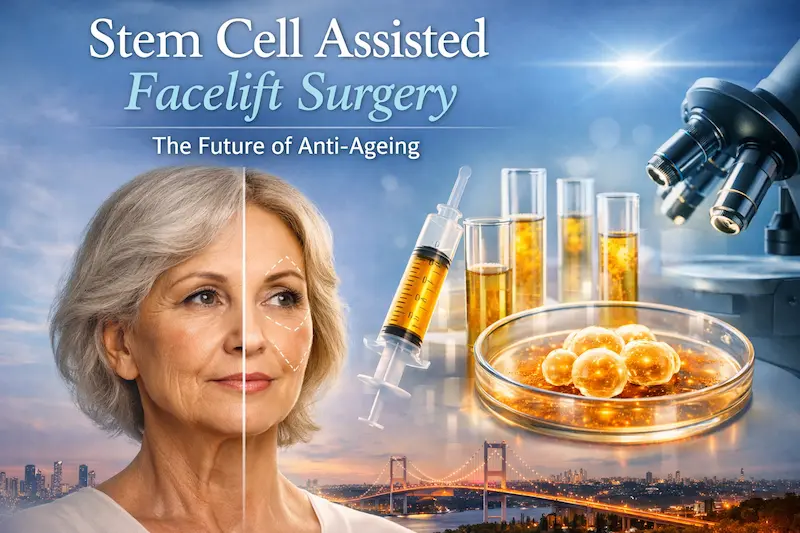
Stem cell assisted facelift surgery has become one of the most talked-about developments in modern facial rejuvenation because it does more than simply lift tissue. For the informed British patient, it represents a more complete strategy: structural lifting where the face has descended, plus regenerative support where the skin has thinned, dulled, or lost vitality. In practical terms, this means a regenerative facelift aims to improve both facial shape and skin quality, rather than focusing on tension alone.
Many patients first discover this treatment while searching phrases such as stem cell facelift, facelift with stem cells, what is stem cell facelift, or fat-derived stem cells facelift. What they are usually looking for is not a trend, but a rational answer to a very British concern: how do you look fresher without looking altered? That question matters especially to patients comparing a stem cell facelift Harley Street approach with a more value-conscious, yet still premium, option in Istanbul.
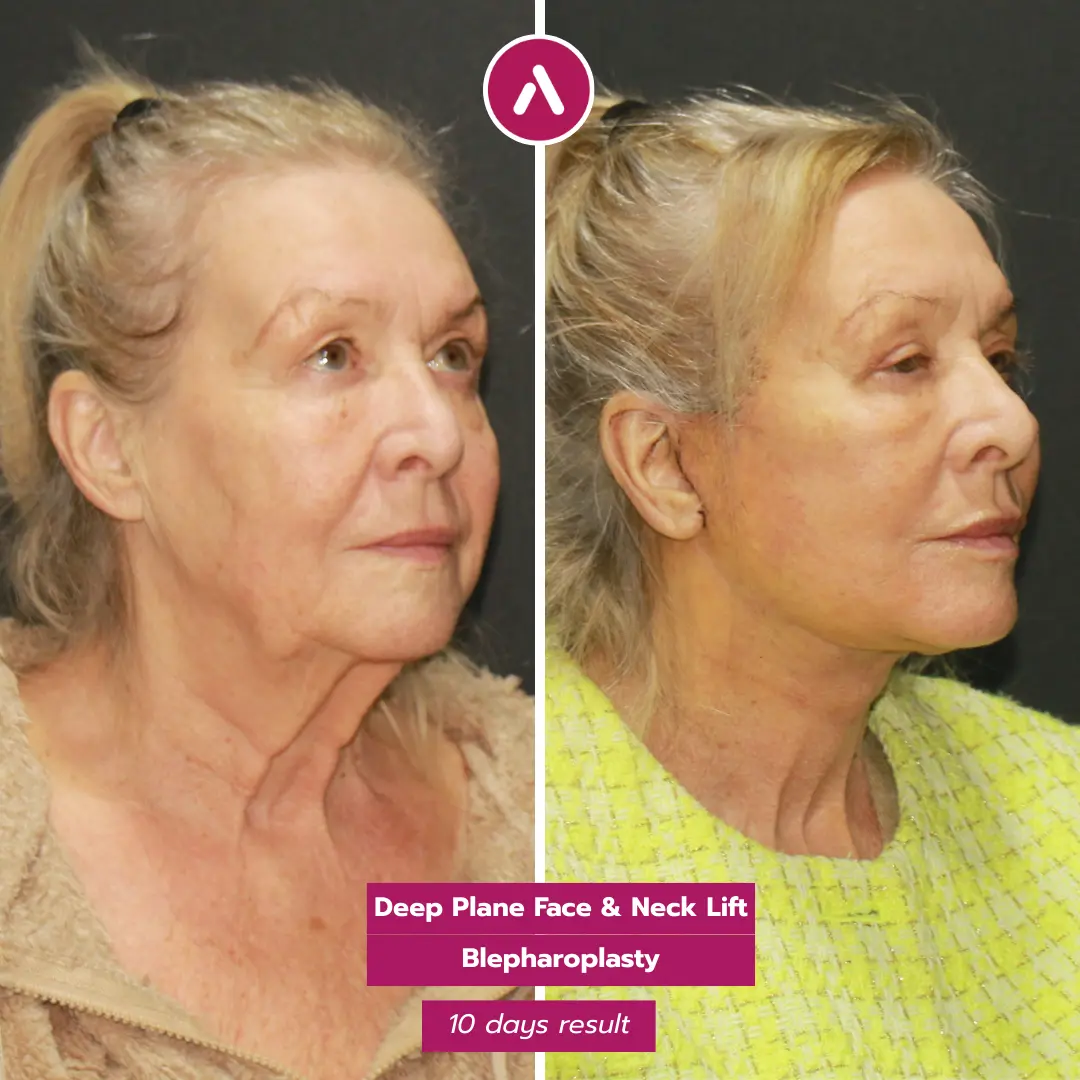
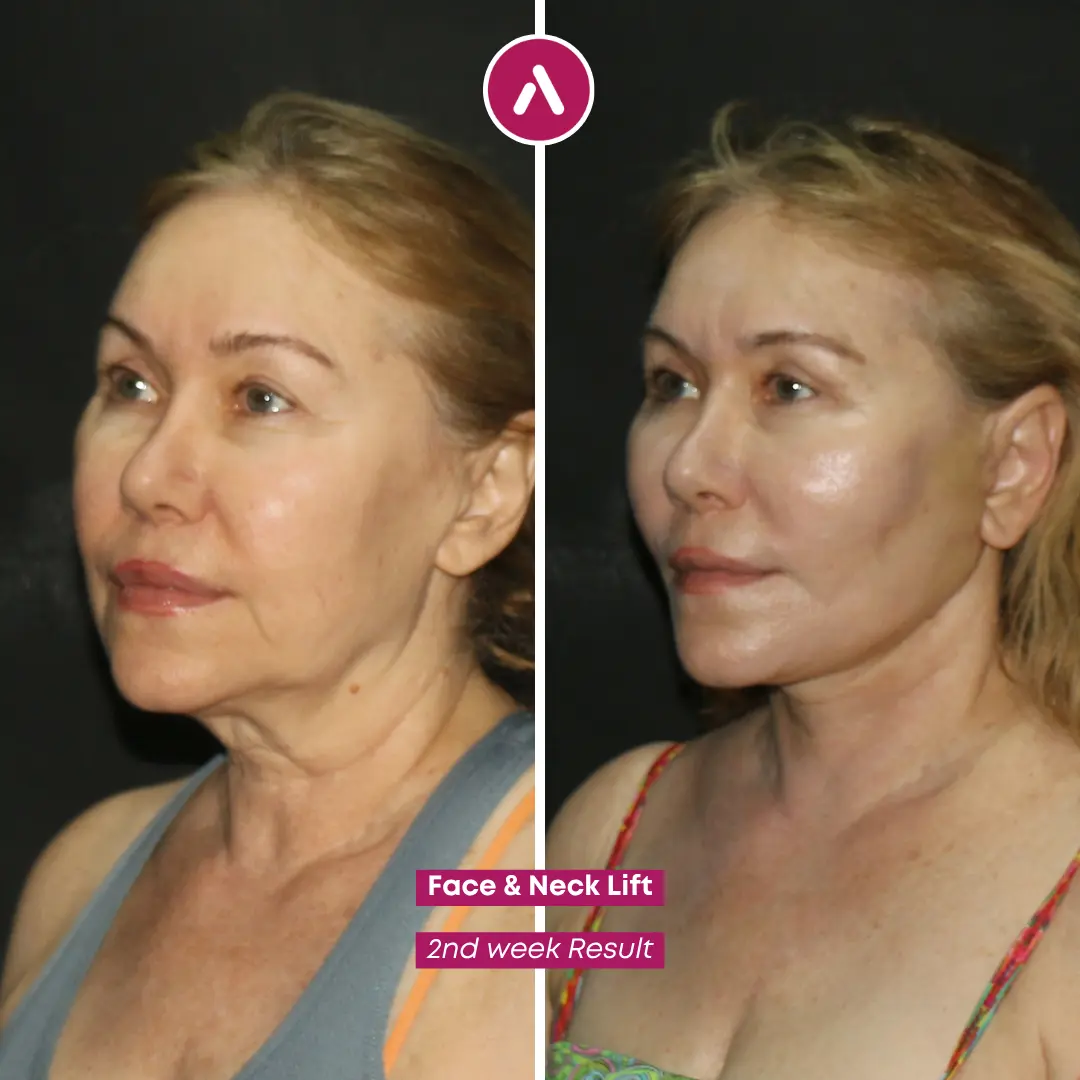
At AKM Clinic, the conversation is not framed around “bigger” or “more dramatic” change. It is framed around subtle facial rejuvenation, consultant-led planning, and a philosophy of preserving identity while addressing visible ageing. This is why a Harley Street quality facelift in Istanbul is increasingly attractive to patients who want refined outcomes, modern recovery support, and a medical team that understands UK expectations around safety, communication, and natural results.
It is also why the science behind the treatment matters. A facelift can reposition deeper structures, but medical science and regenerative aesthetics have moved the discussion forward by asking an important question: can we also improve the biological environment of the skin itself? That is where processed fat, nanofat, and regenerative cell-rich tissue have entered the discussion. While no responsible surgeon should promise “miracles”, scientific research and clinical experience increasingly support the idea that carefully prepared fat-based regenerative material may contribute to improved skin texture, elasticity, and overall facial quality when used appropriately.
In this guide, we will explain the stem cell facelift procedure, who it suits, how it differs from a traditional lift, what realistic stem cell facelift results look like, and why patients searching stem cell facelift Istanbul, stem cell facelift reviews, stem cell facelift before and after, and stem cell facelift cost should look beyond marketing language and focus on technique, safety, and evidence-based planning.
Table of Contents
What Is a Stem Cell Assisted Facelift?
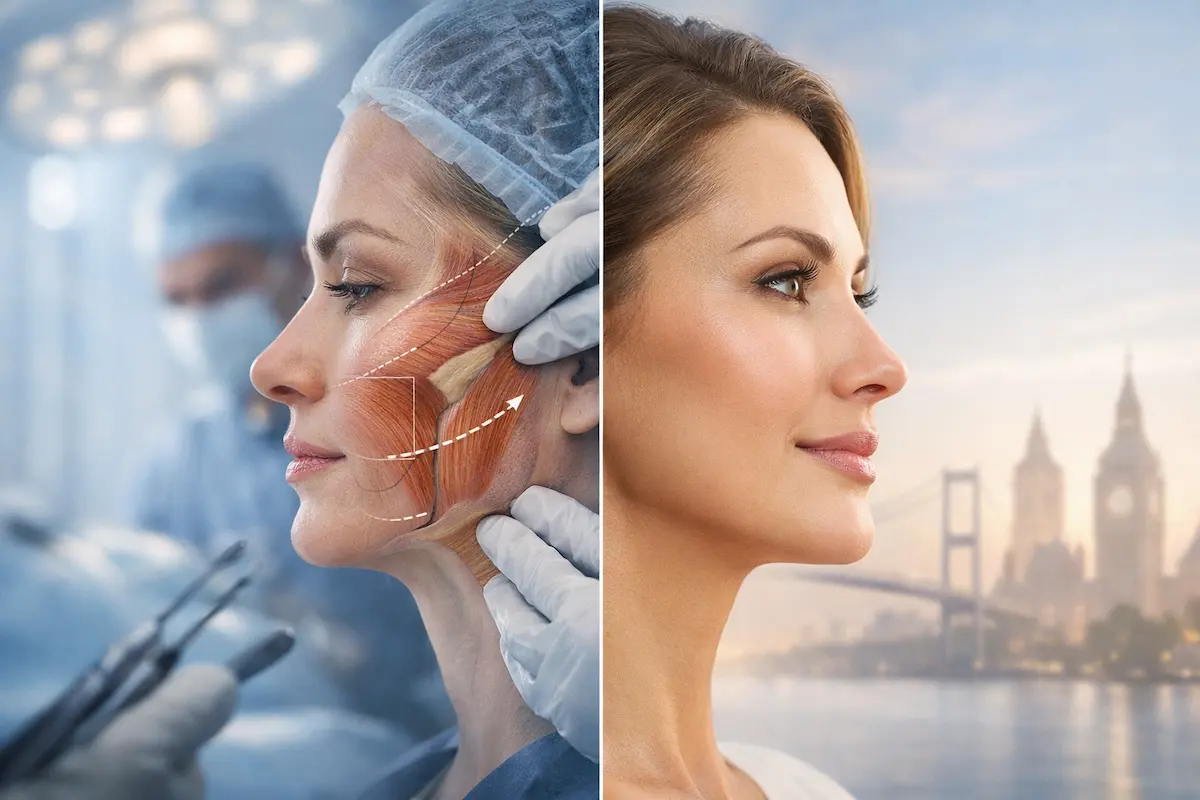
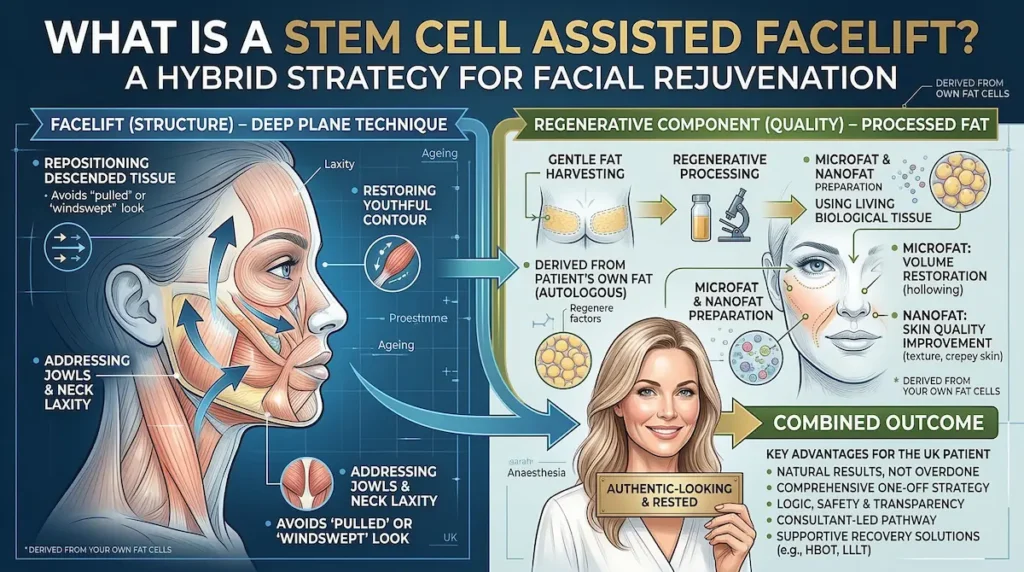
A stem cell assisted facelift is not a completely separate operation from a modern facelift. It is better understood as a hybrid facial rejuvenation strategy. First, the surgeon performs a facelift technique designed to reposition descended tissue and restore youthful contour. Then, regenerative fat processing is used to prepare a refined injectable material, often derived from the patient’s own fat, to support skin quality and delicate volume restoration. In other words, the lift treats structure; the regenerative element treats quality.
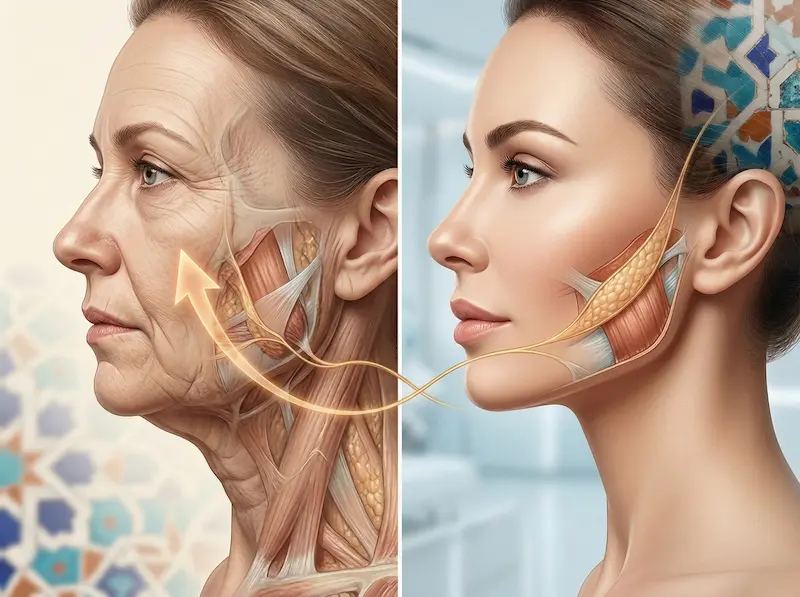
This distinction is important. A traditional facelift can improve jowls, the jawline, the neck, and mid-face descent, but it does not automatically improve crepey skin, surface texture, or the “tired” quality that many patients still notice afterwards. A facelift with stem cells is designed to bridge that gap more elegantly.
Combining Deep Plane Surgery with Advanced Regenerative Medicine
In a well-planned case, the surgical lift and the regenerative component are not competing ideas. They do different jobs. A modern deep plane approach repositions deeper facial structures in a more anatomical way, which helps avoid the flat, tight, or “windswept” look associated with older techniques. The regenerative component is then used more selectively to improve skin quality and soften areas where ageing is not simply a matter of sagging, but of thinning, hollowing, or textural decline.
That is why a stem cell facelift often appeals to patients who say, “I do not only look lower; I look older.” Descent and degeneration are not the same thing. One is mechanical. The other is biological. A strong surgical plan recognises both.
For British patients, this hybrid logic is particularly persuasive because it feels more clinically coherent than chasing multiple isolated treatments. Rather than relying on repeated syringes of filler every few months, the goal is to create a more comprehensive anti-ageing facelift surgery strategy with one operative plan and a more authentic-looking endpoint.
How Your Own Fat Cells Turn into a “Youth Serum”
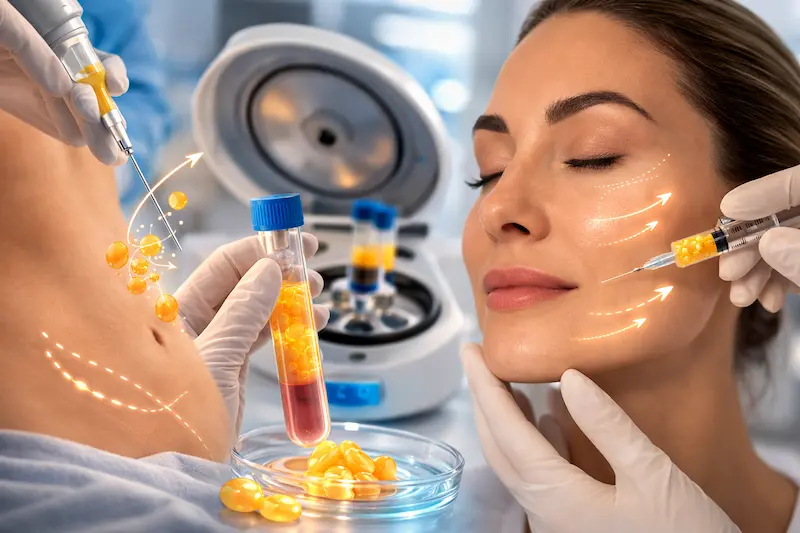
The term sounds dramatic, but the principle is straightforward. A small amount of the patient’s own fat is harvested from a donor area, then processed so that the most useful regenerative fraction can be used in the face. Depending on the treatment plan, this may involve microfat for gentle volume support and nanofat for more superficial skin improvement. Many patients searching for a fat-derived stem cells facelift are referring to this broader family of autologous regenerative fat techniques.
Because the material comes from your own body, the treatment is biologically compatible. That does not mean every transferred cell survives or that every patient gets the same response. However, it does mean the surgeon is using living tissue rather than a synthetic implant or manufactured filler product. For patients who want to remain cautious and evidence-led, that distinction matters.
In simple terms, the process usually follows this pattern:
- Step 1: A small volume of fat is gently harvested from an appropriate donor area.
- Step 2: The tissue is processed to isolate finer, more regenerative material.
- Step 3: The surgeon places this material into carefully selected facial zones where skin quality or fine-volume support is needed.
- Step 4: Over time, the face may benefit from both the structural lift and the biological support provided by the processed fat.
This is one reason the phrase regenerative facelift has become more popular. The aim is not simply to fill. The aim is to encourage a healthier-looking skin envelope over the lifted facial framework.
| Approach | Main Goal | What It Best Addresses | Key Limitation |
|---|---|---|---|
| Traditional Facelift | Lift and reposition descended tissue | Jowls, neck laxity, facial descent | Does not directly improve skin quality |
| Dermal Fillers | Add temporary volume | Selected hollows and contour loss | Cannot replace true surgical lifting |
| Stem Cell Assisted Facelift | Combine lifting with regenerative support | Facial descent, skin quality, subtle volume refinement | Requires careful patient selection and expert technique |
Why This Hybrid Approach Appeals to the UK Expert Patient
The UK patient profile is often very specific. They do not want an obviously “done” face. They do not want vague promises. They do not want to be pushed into general anaesthesia without good reason. They want logic, transparency, and outcomes that read as rested rather than surgically transformed. That is exactly why interest in the stem cell facelift procedure has grown among expert patients.
Many British patients comparing stem cell facelift Harley Street options with stem cell facelift Istanbul providers are not merely comparing geography. They are comparing philosophy, safety standards, and whether the surgeon genuinely understands subtle aesthetic preferences. The attraction of Istanbul is not “cheap surgery”; it is access to a consultant-led treatment pathway that can combine advanced technique with better overall value.
It is also worth noting that the clinic approach matters just as much as the treatment itself. Patients who prefer local or twilight (conscious) anaesthesia, who are concerned about visible scars, or who want modern recovery support often respond well to a programme built around anatomical facelift surgery plus regenerative support, followed by technologies such as HBOT and LLLT in the recovery phase. These details may sound secondary, but for the UK patient they are often decisive.
“I wanted subtle facial rejuvenation rather than a pulled look, and when comparing London with Istanbul, I would confidently choose Turkey again.”Sarah, UK patient journey
That quote captures something important about stem cell facelift reviews. The strongest reviews are not usually about glamour. They are about trust, calm recovery, natural results, and feeling that the face still looks like you.
The Clinical Science: How Stem Cells Regenerate Skin Quality
The clinical science behind regenerative facial surgery is one of the main reasons patients become interested in this topic in the first place. It sounds futuristic, but the central idea is actually quite practical: ageing is not only about falling tissue; it is also about declining tissue quality. Skin becomes thinner, drier, less elastic, and less reflective. So even after an excellent lift, patients may still ask why the skin does not look as youthful as the new facial contour.
This is where the regenerative element becomes relevant. In facial aesthetics, the purpose of nanofat and related fat-processing methods is not simply to “plump”. It is to introduce biologically active material that may support a healthier tissue environment. That is why discussions around scientific research and medical science are central to a meaningful explanation of the treatment.
Increasing Collagen and Elastin Production Naturally
Collagen gives skin structure. Elastin contributes to flexibility and recoil. As both decline with age, the face can begin to look looser, duller, and more fragile, even before severe sagging appears. A conventional lift can improve contour, but it cannot alone reverse every sign of tissue ageing. By contrast, regenerative fat processing aims to support the skin at a more biological level.
When patients search what is stem cell facelift, this is often the answer they are really seeking. They are not asking whether the surgeon can pull the skin. They are asking whether the treatment can help the skin behave in a more youthful way. In carefully selected cases, the goal is to improve the appearance of texture, radiance, and fine creasing over time, not only the shape of the lower face and neck on day one.
From a realistic perspective, it is best to think of these benefits as quality enhancement, not age reversal. The most convincing stem cell facelift results are usually the ones that make other people say, “You look well,” rather than, “You have had surgery.”
The Difference Between Synthetic Dermal Fillers and Nanofat
This is one of the most important distinctions in the entire discussion. Fillers are useful products in the right patient, but they are not regenerative surgery. They are designed primarily to create volume or contour in a targeted area, and they do so with manufactured material. Nanofat, by contrast, is processed from the patient’s own fat and is generally used for biological skin support rather than traditional “filling” in the obvious sense.
That difference matters because many patients have already tried filler and discovered its limitations. Some found the look too soft, too round, or too maintenance-heavy. Others noticed that repeated filler appointments never truly addressed jowls, neck laxity, or deeper facial descent. In those cases, a facelift with stem cells may represent a more coherent next step because it combines structural correction with biological refinement.
| Feature | Synthetic Filler | Nanofat / Regenerative Fat Processing |
|---|---|---|
| Source | Manufactured product | Your own tissue |
| Primary Purpose | Volume and contour shaping | Skin quality support and refined regenerative enhancement |
| Best Use | Selective non-surgical correction | As part of a broader surgical rejuvenation strategy |
| Limitation | Does not lift descended tissues | Not a substitute for surgical lifting where laxity is significant |
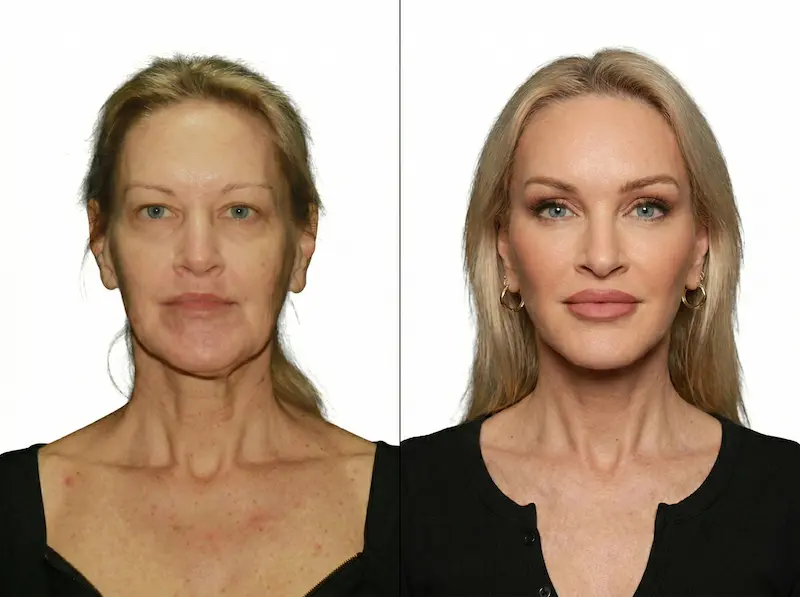
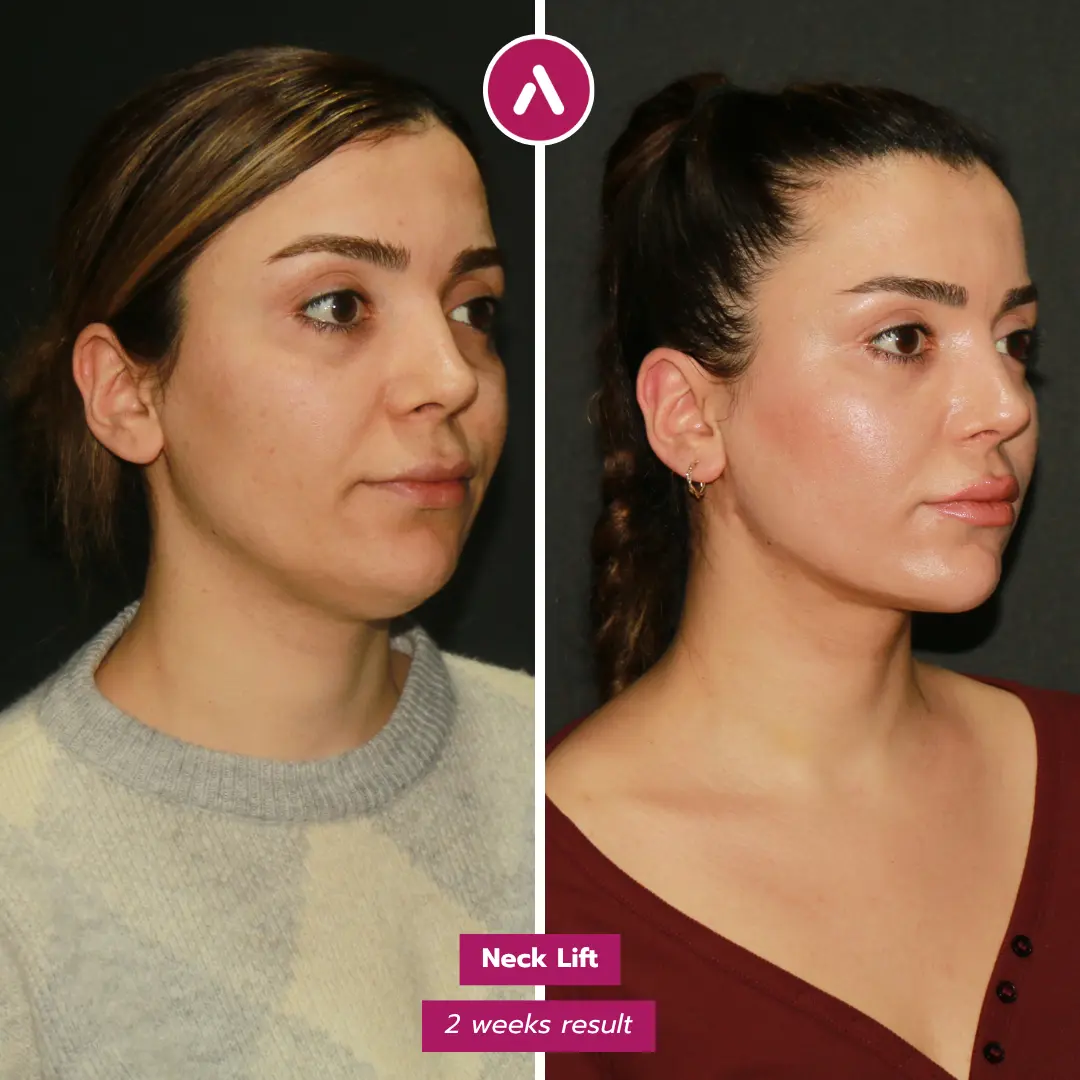
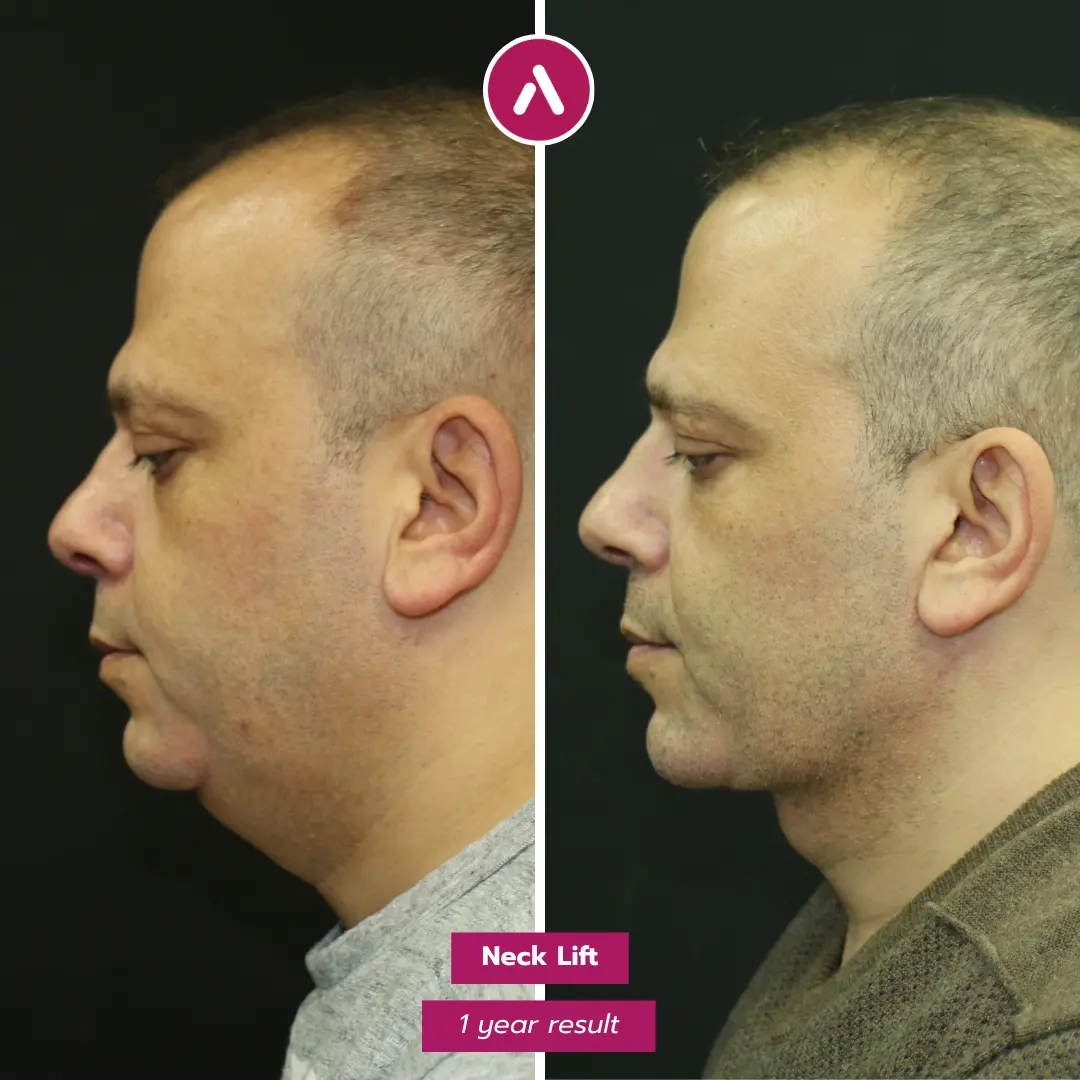
This is also why patients browsing stem cell facelift before and after photographs should be careful about what they are evaluating. The most informative before-and-after sets show not just tighter contours, but better harmony between contour, skin texture, and expression.
Why Biological Regeneration Appeals to Patients Seeking Subtle, Natural Rejuvenation
There is a strong cultural reason this approach resonates with UK patients. British aesthetic preferences often lean towards discretion. The ideal result is not a conspicuous transformation, but a believable restoration of freshness. Biological regeneration fits that goal because it is not about creating a new face. It is about helping the existing face look healthier, less deflated, and less fatigued.
That is why this topic is especially relevant to patients who say they look tired despite sleeping well, or older than they feel despite maintaining good health. It also explains why the phrase anti-ageing facelift surgery is best understood not as “fighting age” in an artificial way, but as restoring structural support and improving the quality of ageing tissues in a more elegant manner.
For the patient comparing a stem cell facelift Harley Street service with treatment abroad, the real issue is not postcode prestige. It is whether the surgeon understands restraint. A regenerative approach can be extremely attractive in this setting because it supports the “better, not different” philosophy that many British patients actively seek.
Ultimately, the clinical promise of a stem cell assisted facelift is not extravagance. It is integration: lift what has descended, support what has biologically aged, and do so in a way that respects natural identity. That is the core reason this treatment continues to draw interest from well-informed patients who want both surgical precision and regenerative sophistication.
Benefits of Adding Stem Cells to Your Facelift
For many patients, the real appeal of a stem cell facelift is not that it sounds new, but that it answers a practical problem older facelift methods did not always solve. A well-executed lift can improve the jawline, neck, and mid-face position, yet some patients still feel their skin looks thin, tired, or “operated on” rather than refreshed. A facelift with stem cells aims to narrow that gap by combining structural surgery with regenerative support for the skin envelope.
This is where the treatment becomes especially relevant for British patients who prioritise subtlety. The goal is not to create a glossy or overfilled appearance. It is to support more believable stem cell facelift results: less visible fatigue, improved skin vitality, softer transitions between facial zones, and a better overall quality of healing. In short, the lift restores position, while regenerative fat-based support may improve the finish.
Accelerated Healing and Meticulously Concealed Scarring
One of the strongest clinical reasons patients ask about a fat-derived stem cells facelift is recovery. Although no ethical surgeon should promise “no swelling” or “instant healing”, regenerative support may contribute to a more favourable recovery environment when combined with careful technique and disciplined aftercare. For the informed patient, that matters just as much as the operation itself.
At AKM Clinic, recovery planning is not treated as an afterthought. It is part of the treatment design. This is particularly important for UK patients who are concerned about post-operative oedema, bruising, scar visibility, and how soon they may feel presentable enough to return home. A modern regenerative programme should therefore be judged not only by the surgery, but also by the quality of the healing strategy around it.
That is why technologies such as HBOT and LLLT have become so relevant in this field. Hyperbaric Oxygen Therapy is used to support recovery by helping reduce post-operative oedema and encouraging better lymphatic drainage. Low-Level Laser Therapy is used more specifically to support scar quality by stimulating fibroblast activity and encouraging smoother skin healing. For patients searching stem cell facelift reviews, these details often make a significant difference because the review is shaped by the recovery experience as much as the final aesthetic result.
- HBOT: Supports oxygen delivery during recovery and may help reduce social downtime.
- LLLT: Used to help scars settle more discreetly and support a smoother surface quality.
- Regenerative fat support: May help create a better biological environment for healing tissues.
- Consultant-led technique: Gentle tissue handling remains essential; technology is supportive, not a substitute for surgical skill.
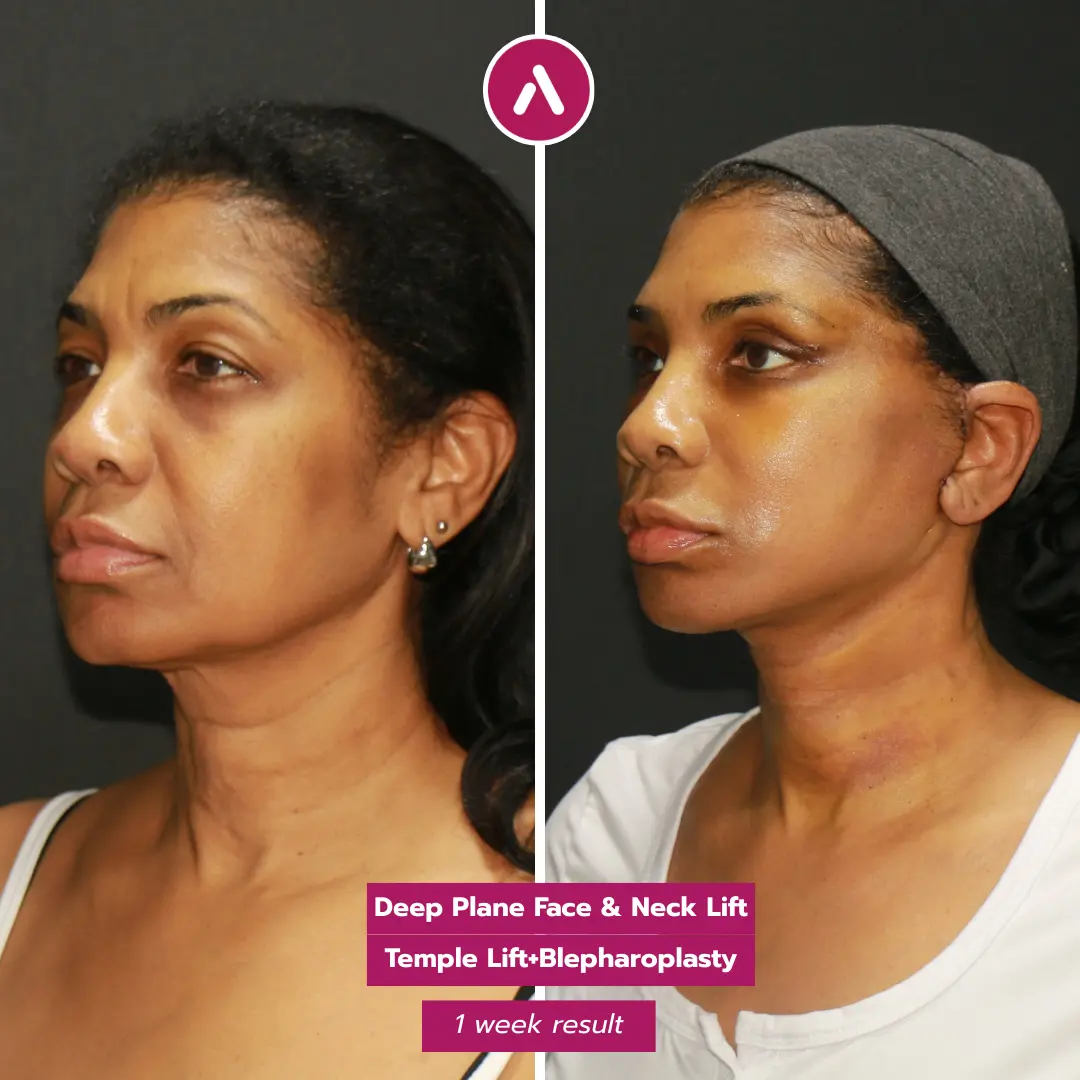
This is one of the reasons patients comparing stem cell facelift before and after images should not only focus on the lift. They should also assess bruising patterns, scar quality, and whether the result appears calm and natural when healed.
Restoring the “Glow” That Surgery Alone Cannot Achieve
There is a difference between a face that is lifted and a face that looks well. Many patients discover this difference only after researching regenerative facial procedures. A traditional facelift can absolutely improve contour, but it cannot by itself fully restore the smoother, healthier surface quality associated with younger skin. This is where a regenerative facelift becomes especially attractive.
Patients often describe their goals in non-surgical language. They say they want their skin to look fresher, their under-eye region less tired, their cheeks less flat, or their overall complexion more alive. These are not unreasonable concerns. They simply reflect the fact that ageing affects both the deep facial framework and the superficial tissue quality. When regenerative fat processing is added thoughtfully, the aim is to improve this second layer of ageing in a more biologically coherent way.
From the perspective of medical science, this is one of the most compelling arguments for the technique. The point is not to replace surgery with a fashionable add-on. The point is to address the aspects of ageing that surgery alone cannot fully solve. That is why a successful anti-ageing facelift surgery plan increasingly involves not only repositioning, but also regeneration.
| Concern | Lift Alone | Lift with Regenerative Support |
|---|---|---|
| Jowls and neck laxity | Usually improved well | Usually improved well |
| Skin texture and radiance | Limited direct effect | May improve more noticeably over time |
| Fine tissue quality | Partially addressed | Better addressed in selected patients |
| Overall “freshness” of the face | Depends on starting skin quality | Often more harmonious when successful |
This matters a great deal to UK patients who want refinement without obvious change. In many cases, the best stem cell facelift results are not the most dramatic. They are the most integrated: better contour, better skin quality, and a face that still belongs unmistakably to the patient.
Supporting Recovery with HBOT and LLLT for British Patients Returning Home
British patients do not only think about surgery day. They think about the journey back to normal life. When can I travel? How visible will the swelling be? Will I feel comfortable on the flight back to the UK? These are entirely sensible questions, and they are part of why a stem cell facelift Istanbul pathway must include more than the operation itself.
At AKM Clinic, the recovery philosophy is designed around this reality. HBOT is used as part of a rapid recovery strategy to help manage oedema and support lymphatic drainage, while LLLT is used to encourage calmer scar maturation. Together, these support measures are particularly valuable for the British patient who wants to feel more “flight-ready” without compromising the quality of healing.
That does not mean anyone should rush home irresponsibly. Sensible medical clearance always comes first. However, it does mean that the clinic’s approach is aligned with the practical needs of international patients, especially those travelling on direct flights between London and Istanbul and seeking a structured, consultant-led recovery programme rather than improvised aftercare.
One UK patient described her recovery as remarkably comfortable, noting that she required only minimal paracetamol and would confidently choose Istanbul again over paying higher Harley Street fees for a similar goal of subtle rejuvenation.
For patients comparing a Harley Street quality facelift in Istanbul with domestic private options, this point matters enormously. Value is not simply about the operation fee. It is also about whether the full experience, including recovery, aftercare, and support on returning home, feels medically organised and psychologically reassuring.
The Procedure Step-by-Step at the AKM Clinic
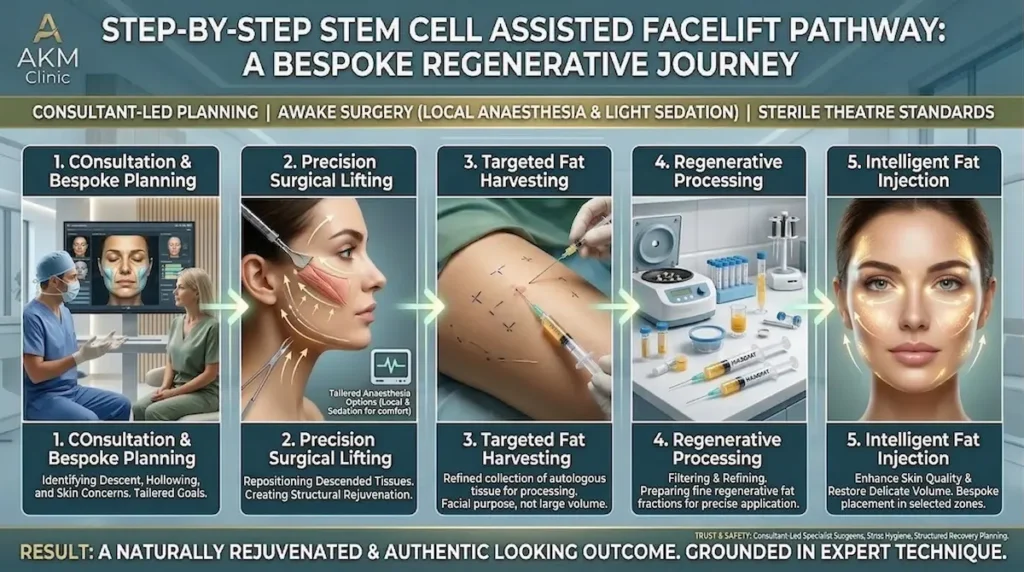
The phrase stem cell facelift procedure can sound vague unless it is broken down properly. In reality, this is a carefully staged treatment plan rather than a single “miracle injection”. A high-quality result depends on patient selection, facial analysis, anaesthesia planning, precise surgical lifting, careful fat harvesting, intelligent processing, and refined placement of the regenerative material. Each stage matters, and weakness in any one stage can reduce the quality of the final result.
For the UK expert patient, transparency is essential here. The goal is not to make the process sound simpler than it is. It is to explain it clearly enough that the patient understands where the result really comes from: surgical judgement, meticulous technique, and recovery planning grounded in science, not hype.
The Bespoke Harvesting, Filtering, and Injection Process
The regenerative element of the operation begins with harvesting a small amount of the patient’s own fat from a suitable donor area. This is not large-volume body contouring; it is targeted tissue collection with a facial purpose. The harvested fat is then processed so that a finer, more useful fraction can be prepared for reinjection into selected facial zones.
The exact placement plan varies from patient to patient. Some require refined support in the cheeks, some in the temples, some around the lower eyelid-cheek junction, and some in areas where the skin quality itself has become part of the ageing problem. This is why a good stem cell facelift procedure should always feel bespoke rather than formulaic.
The distinction between simply “putting fat in” and performing a refined regenerative procedure is important. Overcorrection, poor placement, or using volume where quality is the real issue can all lead to disappointing outcomes. The best treatment plans are restrained. They are based on anatomy, not excess.
| Stage | Purpose | Why It Matters |
|---|---|---|
| Assessment and planning | Identify descent, hollowing, and skin quality concerns | Ensures the treatment addresses the real ageing pattern |
| Facelift surgery | Reposition descended tissues | Creates structural rejuvenation |
| Fat harvesting | Collect autologous tissue for processing | Provides the regenerative source material |
| Processing and filtering | Prepare finer regenerative fat fractions | Supports more precise facial application |
| Targeted injection | Enhance skin quality and delicate volume where needed | Helps create more natural integration |
Local Anaesthesia, Comfort, and the Awake Surgery Experience
One of the most important aspects of AKM Clinic’s approach for British patients is the use of local anaesthesia with light intravenous sedation for appropriate facelift cases. This is often described as an “awake facelift”, although in practice the patient is deeply relaxed rather than fully alert in a stressful sense. For many patients, this approach feels more acceptable than general anaesthesia and aligns closely with the concerns of the expert patient profile.
Patients who search for a stem cell facelift Istanbul option are often also searching for a more controlled overall experience. They may be worried about nausea, grogginess, or the physiological burden of general anaesthesia. They may also want the reassurance that the procedure is being carried out within a carefully managed, consultant-led setting where comfort is planned rather than improvised.
This is where the clinic’s awake surgery philosophy becomes a genuine differentiator. The combination of local anaesthesia, light sedation, and meticulous operative technique can make the experience feel calmer and more streamlined for the right candidate. It also complements the broader regenerative philosophy of reducing avoidable trauma wherever possible.
- Why patients like it: A calmer peri-operative experience and less concern about general anaesthesia.
- Why surgeons value it: A focused operative environment with precise control.
- Why it suits UK patients: It aligns with demand for transparency, lower perceived physiological stress, and a walk-in, walk-out style recovery mindset where appropriate.
Not every patient is suitable for the same anaesthetic approach, and individual medical assessment always comes first. Still, for many well-selected patients, this is one of the reasons a stem cell facelift journey in Istanbul feels more modern than older facelift models built entirely around general anaesthesia.
Consultant-Led Planning, Sterile Operating Theatre Standards, and UK-Style Safety Expectations
Even the best regenerative concept is meaningless without strong clinical governance. For British patients, trust is built when the surgery is clearly consultant-led, the standards are explicit, and the environment feels equivalent to what they would expect from a premium private medical setting. That is why the operative setting matters so much in any discussion of a Harley Street quality facelift in Istanbul.
At AKM Clinic, this means consultant-led facial planning, a philosophy of “rejuvenation, not alteration”, and operating theatre protocols designed around strict hygiene and sterile-field discipline. It also means patients are not asked to choose between artistry and medical seriousness. They should expect both.
This is also where the facial specialisation of the surgical team becomes relevant. In facial rejuvenation, subtle results depend on restraint, anatomical judgement, and an understanding of how the face ages in layers. The advantage of a specialist consultant-led approach is not only technical safety; it is aesthetic accuracy. For the patient seeking a natural result rather than an obvious one, that difference can be decisive.
Patients exploring stem cell facelift cost should keep this in mind. Cost alone never tells the full story. The true comparison is not “UK versus Turkey” in simplistic terms. It is whether the patient is receiving transparent planning, expert facial surgery, regenerative sophistication, disciplined aftercare, and standards that justify the investment. That is the more meaningful way to compare stem cell facelift Harley Street expectations with treatment in Istanbul.
In other words, the procedure is not merely about adding regenerative material. It is about creating a complete treatment pathway: consultant-led analysis, refined lift surgery, carefully processed autologous support, structured recovery, and an outcome designed to look believable both in close-up and in everyday life.
Longevity: Does It Truly Outlast a Traditional Facelift?
One of the most common questions British patients ask is whether a stem cell facelift actually lasts longer than a conventional facelift, or whether it is simply a more expensive variation of the same operation. The most accurate answer is nuanced. A stem cell assisted facelift does not stop the ageing process, and no ethical surgeon should suggest otherwise. However, it may offer a more complete and potentially more satisfying long-term result because it addresses not only tissue descent, but also aspects of tissue quality.
That distinction matters. A traditional lift can restore contour and improve laxity very effectively, but the skin and soft tissue envelope will still continue to age. A regenerative facelift attempts to improve the quality of that envelope at the same time as the deeper structures are repositioned. For the patient comparing stem cell facelift results over several years, the question is therefore not simply “How long is the face lifted?” but also “How well has the face aged after the lift?”
What “Longevity” Really Means in a Regenerative Facelift
When patients talk about longevity, they often mean several different things at once. They may mean how long the jawline remains defined, how long the neck stays smoother, how long the skin keeps a fresher appearance, or how long it is before they feel tempted by further treatment. In a facelift with stem cells, these elements should be discussed separately, because structural lifting and tissue quality do not age at exactly the same pace.
The lift itself is designed to reposition deeper tissues in a durable way. The regenerative element, by contrast, is intended to support better skin quality, softer transitions, and more harmonious facial ageing over time. This is where science and clinical judgement intersect. The goal is not to promise permanence, but to help the face age more gracefully after surgery.
In practical terms, the most meaningful sign of longevity is often not whether the result looks identical years later, but whether the patient still looks well, balanced, and naturally rejuvenated rather than prematurely “back where they started”. That is one reason the best anti-ageing facelift surgery plans are those that respect anatomy, avoid overcorrection, and include a strong aftercare strategy.
| Aspect of Longevity | Traditional Facelift | Stem Cell Assisted Facelift |
|---|---|---|
| Structural lift of descended tissue | Strong when well performed | Strong when well performed |
| Skin quality support | Limited direct effect | Potentially better support in selected patients |
| Natural ageing over time | Improved contour, but skin continues to age | May age more harmoniously when tissue quality also improves |
| Need for minor adjunctive treatments later | Still possible | Still possible, though some patients feel less dependent on fillers |
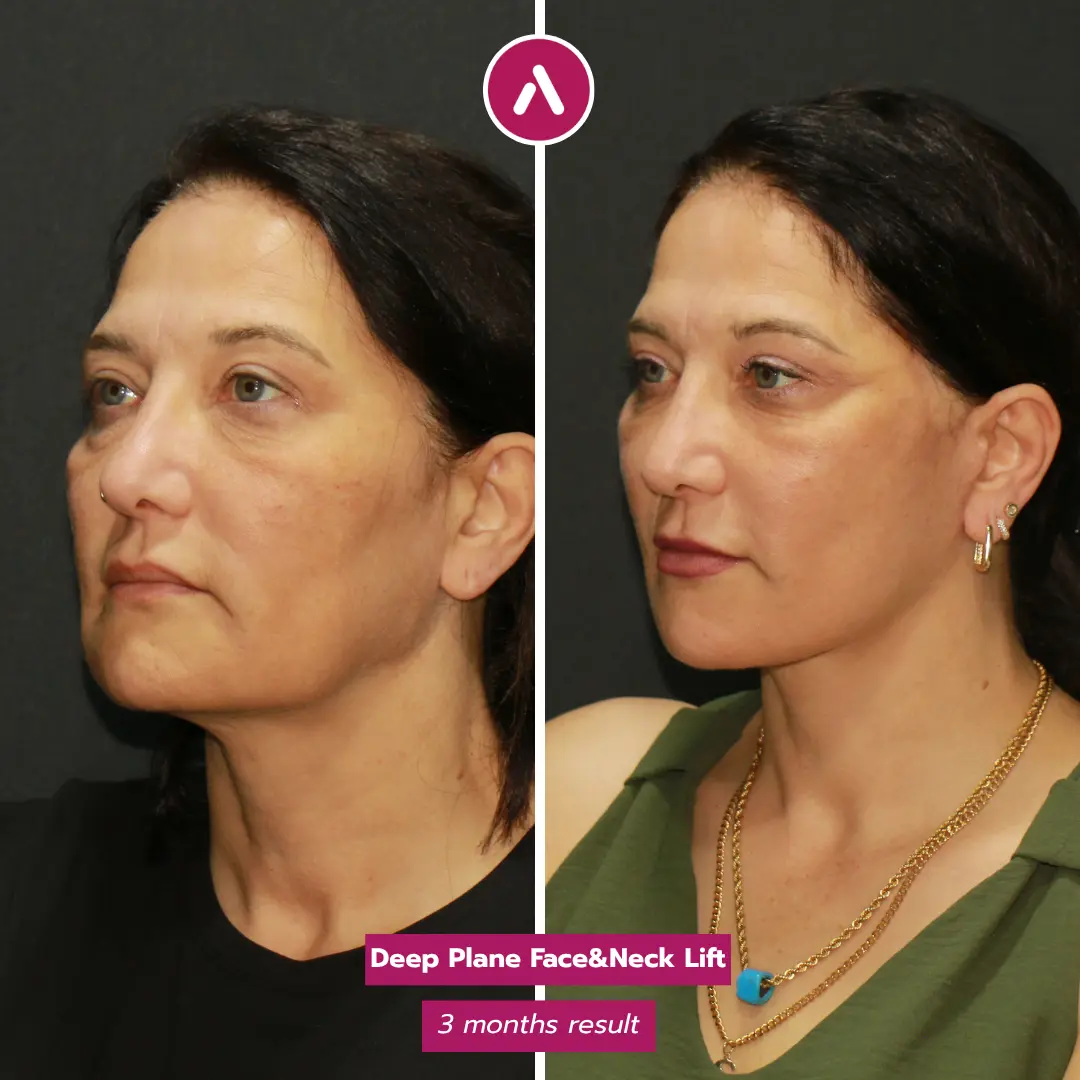
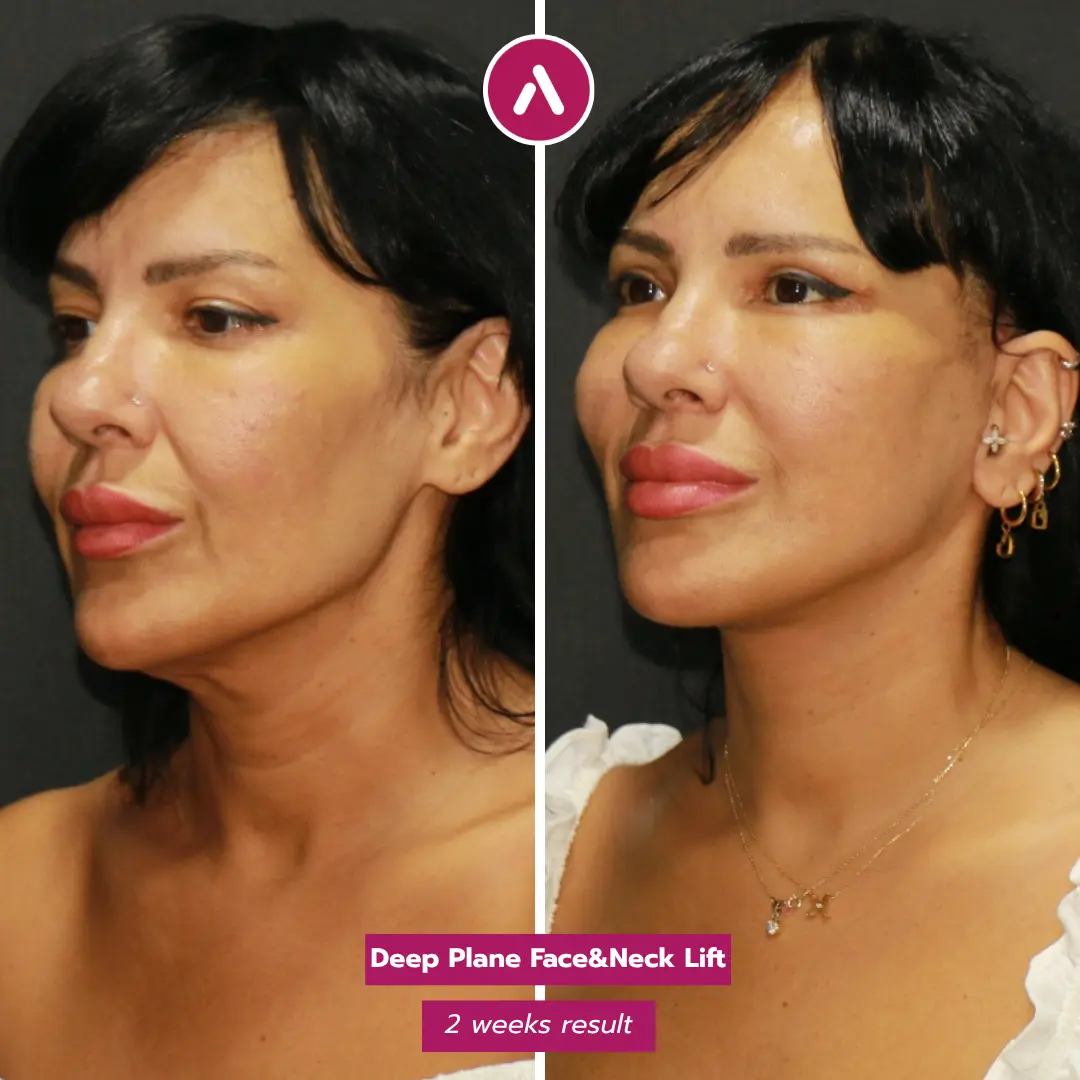
Stem Cell Assisted Facelift vs Traditional Facelift: Skin Quality, Volume, and Ageing Gracefully
This comparison is especially important for the UK patient who wants to avoid looking “done”. A traditional facelift can certainly create excellent correction of jowls and laxity, but if the skin remains thin, sun-damaged, or depleted, the final result may still feel incomplete. A fat-derived stem cells facelift aims to improve that balance by combining lifting with a more biologically thoughtful approach to the superficial tissues.
That does not mean everyone needs the regenerative component. Some patients with good baseline skin quality and minimal volume depletion may do beautifully with a traditional lift alone. Others, however, particularly those with thinning skin, volume loss, or a generally tired facial quality, may benefit from a combined plan. This is one reason why stem cell facelift before and after galleries should be interpreted carefully. The best results are not simply tighter. They look healthier, softer, and more believable.
From the perspective of medical science, it is also worth noting that a successful long-term result depends on integration. Lifting without addressing tissue quality may leave the skin lagging behind the contour. Filling without lifting may leave facial descent unresolved. A stem cell facelift procedure tries to avoid both extremes by using the right tool for the right layer of ageing.
The most successful long-term facelift is not the one that looks most dramatic in week one, but the one that still looks balanced, subtle, and authentically like the patient several years later.
This philosophy is a major reason patients compare a stem cell facelift Harley Street offering with a Harley Street quality facelift in Istanbul. They are not merely asking where the operation takes place. They are asking where the result is likely to look the most natural over time.
How Lifestyle, Skin Health, and Aftercare Influence Long-Term Results
No facelift, however advanced, exists in isolation from the patient’s lifestyle. Smoking, major weight fluctuation, poor sun protection, unmanaged stress, poor sleep, and inconsistent skincare can all influence how the face ages after surgery. This is why the discussion of longevity must include patient behaviour as well as surgical technique.
For British patients returning home after surgery, good aftercare is particularly important. Long-term success depends on allowing swelling to settle properly, following travel guidance, attending review appointments as advised, and protecting the skin carefully during recovery. Patients who treat surgery as a one-day transaction often become disappointed; patients who see it as a structured rejuvenation programme tend to do better.
This is also where recovery support technologies matter again. HBOT and LLLT are often discussed in terms of short-term healing, but their value also lies in helping tissues settle in a more organised way. Better healing conditions may support a better long-term finish. For the patient searching stem cell facelift reviews, that often helps explain why some journeys sound calm and rewarding whilst others sound chaotic despite similar operations on paper.
- Protect your investment: Follow scar care, travel, and recovery advice closely.
- Support skin health: Maintain sensible skincare and sun protection after healing.
- Be realistic: Longevity means ageing well after surgery, not remaining frozen in time.
- Choose wisely from the start: A lower fee alone does not guarantee better value if the plan is poorly suited to your face.
This final point matters when patients research stem cell facelift cost. The true value of the procedure is not measured by the operation fee alone, but by how well the result holds up aesthetically, biologically, and emotionally over time.
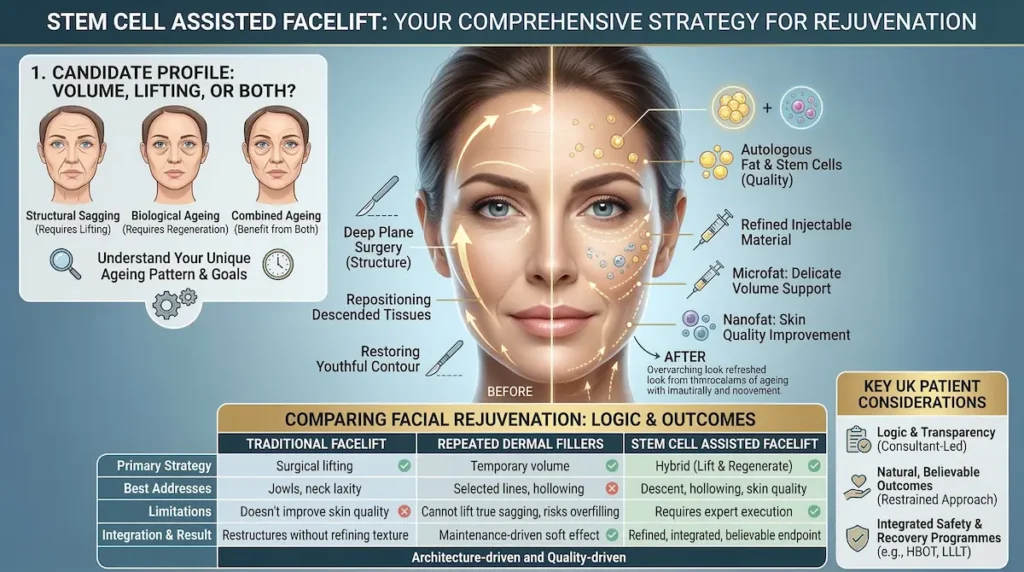
Candidate Profile: Do You Require Volume, Lifting, or Both?
Not every patient who searches what is stem cell facelift is automatically the right candidate for one. Some require lifting more than volume. Some require volume and tissue quality support more than aggressive surgical repositioning. Others require both. This is why accurate facial assessment is more important than trend-driven treatment selection.
For the British expert patient, this part of the discussion is often the most valuable. People do not want a fashionable label attached to their face. They want to understand what problem they actually have. Is the issue jowling, skin laxity, hollowing, poor skin quality, or a mixture of all four? A well-planned stem cell facelift Istanbul consultation should answer that clearly and honestly.
Who Benefits Most from Added Regenerative Volume and Tissue Quality Improvement
The ideal candidate for a regenerative facelift is often someone who has both structural ageing and biological ageing. In other words, the face has not only descended, but also become thinner, flatter, and more fatigued in its surface quality. These patients may complain that they look drawn, tired, or older in photographs even when the lower face is partly disguised with makeup or hairstyle.
They may also have reached the point where injectables no longer feel like a sensible long-term strategy. Repeated filler can sometimes soften the face in an unhelpful way, particularly when the true issue is descent combined with tissue depletion. In these patients, a facelift with stem cells may create a more coherent result because the lift restores architecture and the regenerative element helps soften the depleted quality of the skin and soft tissue.
Patients who often benefit from this combined approach include:
- Those with jowls and neck laxity plus visible facial hollowing.
- Those with thinning, crepey, or sun-damaged skin that does not match the desired level of rejuvenation.
- Those who want subtle improvement rather than repeated maintenance filler appointments.
- Those seeking more elegant, biologically integrated stem cell facelift results.
For these patients, the treatment is attractive not because it is “high-tech”, but because it matches the real pattern of ageing more accurately.
When Nanofat May Be Preferable to Repeated Filler Appointments
This is one of the most important clinical conversations for discerning UK patients. Many people considering a stem cell facelift have already spent years on injectables. They may have had some benefit, especially earlier on, but eventually they begin to feel that filler does not truly solve the problem. The face may still look tired, and in some cases may even begin to look softer or puffier rather than fresher.
Nanofat and related regenerative processing methods may be preferable in selected patients because they are not trying to imitate surgery. They are usually being used to support tissue quality in a more biologically compatible way as part of a broader facial rejuvenation plan. That distinction is crucial. Filler is often maintenance-driven. Regenerative support is often architecture-driven and quality-driven.
From the viewpoint of scientific research, this is one reason interest in autologous facial regeneration has continued to grow. Patients are increasingly asking whether it makes more sense to use their own tissue, in carefully selected cases, rather than continue indefinitely with temporary synthetic products. Whilst no treatment suits everyone, the question itself is highly rational.
| Patient Situation | Repeated Fillers | Nanofat / Regenerative Support |
|---|---|---|
| Early mild hollowing without laxity | May be appropriate | Not always necessary |
| Visible laxity plus poor skin quality | Usually insufficient alone | Often more logical when combined with surgery |
| Desire for subtle, natural rejuvenation | Can be variable | Often attractive in well-selected patients |
| Concern about looking overfilled | Valid concern with repeated use | May feel more restrained and integrated |
This is also why stem cell facelift before and after evidence can be so persuasive for sceptical patients. They are often less interested in dramatic transformation than in whether the face still looks refined, light, and believable.
Who May Need a Traditional Lift Alone, and Who Benefits from a Combined Approach
There are certainly patients for whom a traditional facelift alone remains the best option. For example, someone with good skin quality, minimal facial deflation, and mainly lower-face descent may not require the added regenerative component. In such cases, adding extra treatment simply because it sounds advanced would not be good medicine.
On the other hand, patients with a more complex ageing profile often benefit from a combined approach. These are typically the individuals with visible laxity, reduced skin elasticity, soft tissue thinning, and areas of facial flatness or fatigue that a lift alone would not fully address. For them, a fat-derived stem cells facelift may provide a more satisfying overall result because it aligns the skin quality more closely with the new facial contour.
The decision should never be based on marketing phrases such as “future of anti-ageing” alone. It should be based on anatomy, goals, and the patient’s tolerance for different recovery pathways. That is where consultant-led judgement becomes indispensable. A good surgeon does not try to fit every face into the same technique. A good surgeon identifies whether the patient needs lifting, regenerative support, or both.
Natural facial rejuvenation depends less on doing the maximum and more on doing the correct combination for the individual face.
This is ultimately what patients should keep in mind when comparing stem cell facelift Harley Street searches with stem cell facelift Istanbul options. The most important question is not where the treatment is marketed most elegantly, but where the plan is designed most intelligently. For the right candidate, a combined approach can be transformative in a subtle, refined way. For the wrong candidate, it may simply add cost without adding meaning.
Frequently Asked Questions (FAQ): Stem Cell Assisted Facelift Surgery
Patients exploring a stem cell facelift are usually looking for clear, medically grounded answers rather than marketing language. The questions below address the most common concerns from UK patients researching stem cell facelift Istanbul, stem cell facelift cost, recovery, longevity, and how a facelift with stem cells compares with more traditional facial rejuvenation options.
Is a stem cell assisted facelift the same as a traditional facelift?
No. A traditional facelift mainly addresses tissue descent by lifting and repositioning deeper facial structures. A stem cell assisted facelift surgery adds a regenerative component, usually derived from your own fat, to support skin quality and selected areas of soft tissue depletion. In simple terms, one addresses lift; the other aims to improve the biological quality of the final result.
Are the stem cells taken from my own body?
In most cases, yes. The regenerative material used in this type of procedure is typically processed from a small amount of your own harvested fat. This is why patients often search for a fat-derived stem cells facelift. Using your own tissue makes the approach autologous and biologically compatible, although the exact technique and suitability depend on your anatomy and treatment plan.
Is the procedure performed under general anaesthesia?
Not always. At AKM Clinic, appropriate facelift cases may be performed under local anaesthesia with light intravenous sedation rather than full general anaesthesia. This is often attractive to British patients who prefer an awake or twilight-style approach. Your final anaesthesia plan should always be based on medical assessment, comfort, and procedural complexity.
How long do swelling and bruising usually last?
Most patients should expect swelling and bruising in the early recovery phase, with the most noticeable changes usually settling over the first couple of weeks. However, subtle residual swelling can take longer to resolve fully. Recovery varies according to surgical extent, individual healing, and the quality of post-operative support. Treatments such as HBOT and LLLT may help support a calmer recovery environment, but they do not remove the need for patience.
Can stem cell support improve scar quality?
It may contribute to a better healing environment, but scar quality depends on several factors, including surgical technique, incision placement, skin type, aftercare, and individual biology. In a well-managed regenerative facelift, the goal is not only discreet scar placement, but also organised healing. LLLT may also be used as part of scar management in selected patients.
How long do the results typically last?
A facelift does not stop ageing, but a well-performed procedure can deliver long-lasting structural improvement. The regenerative component may help the face age more gracefully by supporting skin quality as well as contour. The most realistic way to think about stem cell facelift results is not permanent youth, but better-quality ageing over time.
Am I too old or too young for this procedure?
Suitability depends less on chronological age and more on anatomy, skin quality, health status, and expectations. Some younger patients are not yet ready for a surgical lift and may be better suited to non-surgical options. Some older patients, on the other hand, can be excellent candidates if they are medically appropriate and want a natural rather than exaggerated result.
How soon can I safely fly back to the UK?
There is no universal answer, because travel timing depends on the extent of surgery, your recovery progress, and your surgeon’s clinical assessment. British patients should never book return travel based on guesswork alone. A responsible plan includes post-operative checks, swelling assessment, and clear medical guidance before flying back to the UK.
What affects stem cell facelift cost?
Stem cell facelift cost is influenced by the complexity of the lift, whether regenerative fat processing is added, the anaesthesia plan, the recovery programme, and the level of consultant-led care provided. The most meaningful comparison is not simply between low and high prices, but between basic surgery and a comprehensive treatment pathway. This is why many patients compare stem cell facelift Harley Street options with Istanbul to assess overall value rather than headline fee alone.
Can it be combined with eyelid surgery, neck lift, or other facial procedures?
Yes, it often can. A stem cell facelift procedure may be combined with related facial treatments such as blepharoplasty, neck rejuvenation, brow procedures, or selected skin-quality interventions, depending on your anatomy and goals. Combination planning should always be bespoke, because the best results come from matching procedures to the way your face has actually aged, not from adding treatments unnecessarily.
Medical Disclaimer: This page is provided for general educational purposes only and does not replace a face-to-face medical consultation, diagnosis, or personalised treatment plan. All surgery carries risks and outcomes vary between individuals. Suitability for a facelift surgery, procedure selection, and anaesthesia choice can only be determined after a full clinical assessment by a qualified surgeon. Always follow your clinician’s instructions and seek urgent medical attention if you develop concerning symptoms during recovery.