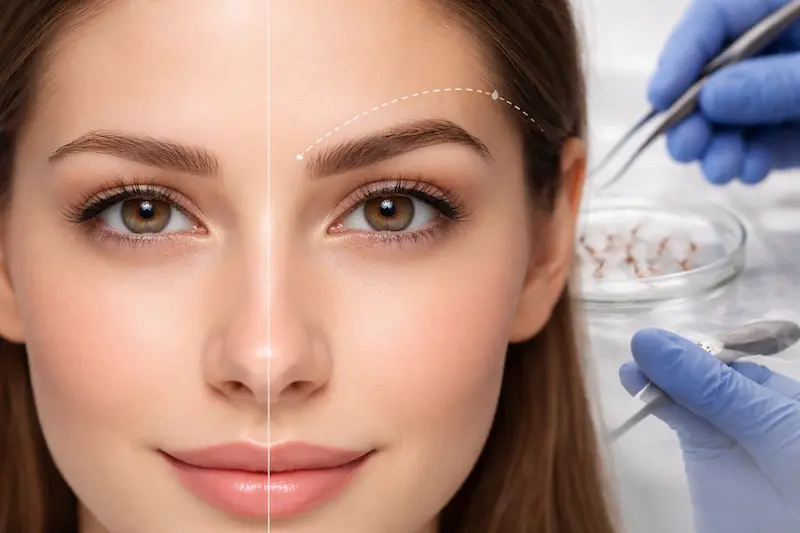
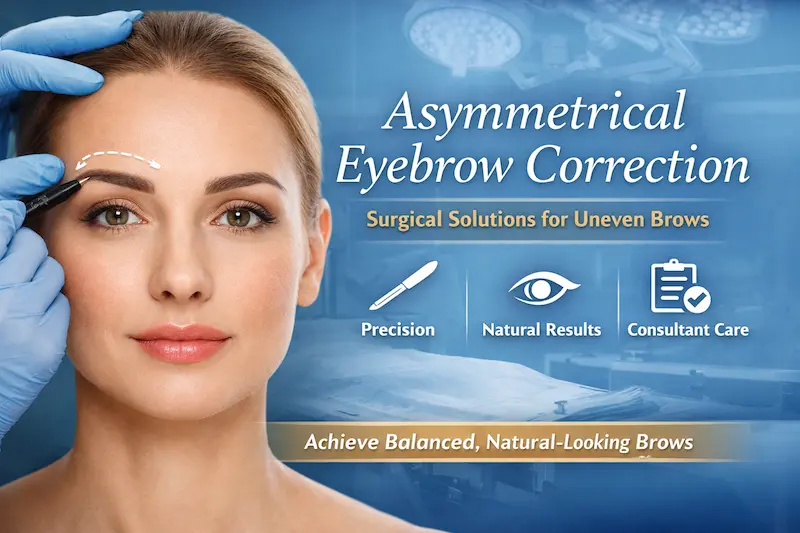
For many patients, asymmetrical eyebrow correction is not about chasing a dramatic new look. It is about restoring balance to the upper face so that the eyes appear more even, less tired, and more in harmony with the rest of the features. In a UK context, most patients are not asking for an exaggerated arch or a trend-led “fox eye”. They are usually looking for a subtle improvement that feels natural, polished, and appropriate for their own facial structure.
In practice, eyebrow imbalance can show up in different ways. One brow may sit lower than the other. A patient may notice a drooping eyebrow on one side, a heavier upper eyelid on one side, or a more rounded arch on one side and a flatter line on the other. Some people describe this as wanting to fix asymmetrical eyebrows, while others search for eyebrow asymmetry correction, uneven eyebrows surgery, or a brow lift for facial asymmetry. Although the wording varies, the goal is usually the same: a more balanced and refreshed appearance without looking “done”.
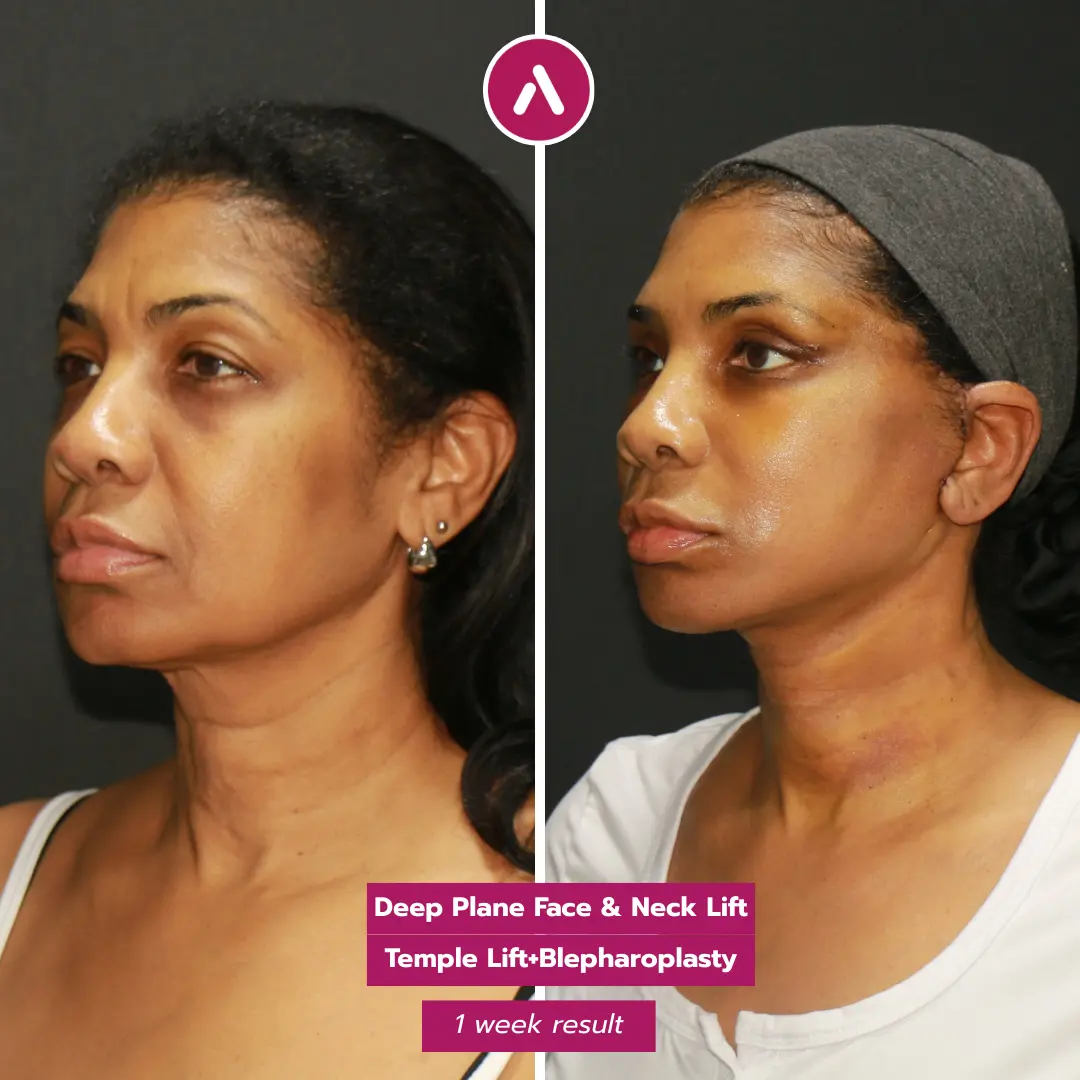
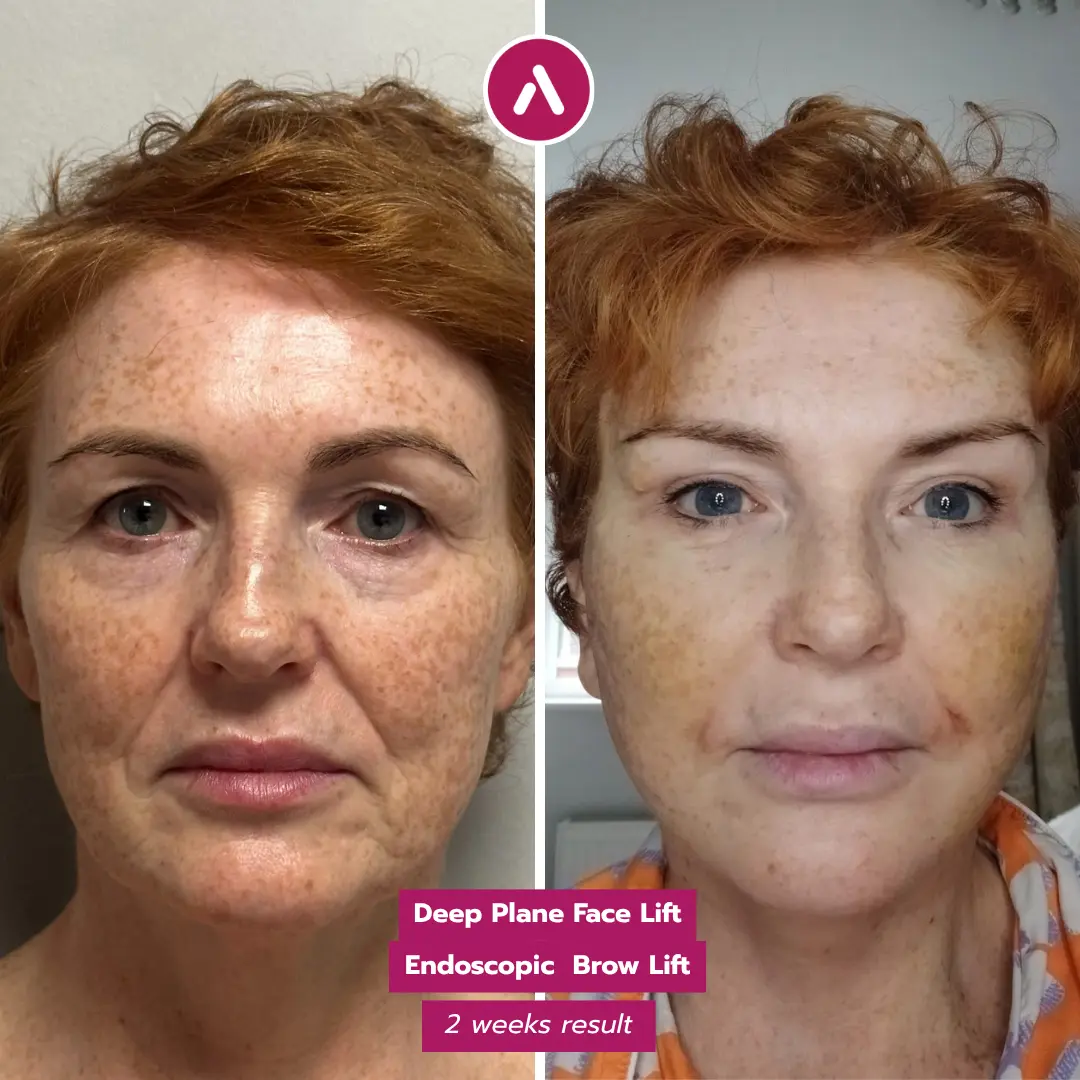
From a medical science perspective, eyebrow position is influenced by several structures at once. Bone support, skin quality, fat distribution, frontalis muscle activity, eyelid compensation, and natural facial asymmetry all play a role. That is why a proper correction for asymmetrical eyebrow should never be planned by looking at the brow in isolation. The brow, eyelid, temple, forehead, and upper cheek must all be assessed together.
At AKM Clinic, this type of facial analysis is approached in a consultant-led way, with attention to subtle rejuvenation rather than overcorrection. For British patients especially, that matters. Most want a result closer to “well-rested” than “obviously lifted”, and they often compare the decision against high-cost private care in London or Harley Street.
| Common patient concern | What it may actually mean clinically | Typical surgical direction |
|---|---|---|
| One brow sits lower | True brow ptosis or soft tissue descent on one side | Unilateral brow lift or targeted surgical brow correction |
| One eye looks more hooded | May be brow-related, eyelid-related, or both | Brow assessment with possible blepharoplasty planning |
| Brows look uneven in photos | Natural facial asymmetry, muscle dominance, or posture | Detailed facial mapping before any procedure |
| Face looks tired on one side | Combined brow, lid, and temple imbalance | Bespoke upper-face rejuvenation plan |
British patients usually do not want an aggressively lifted brow. They want the upper face to look balanced, fresher, and more natural-looking, with the sort of subtle refinement often associated with Harley Street standards rather than social media extremes.
Table of Contents
What Causes Eyebrow Asymmetry?
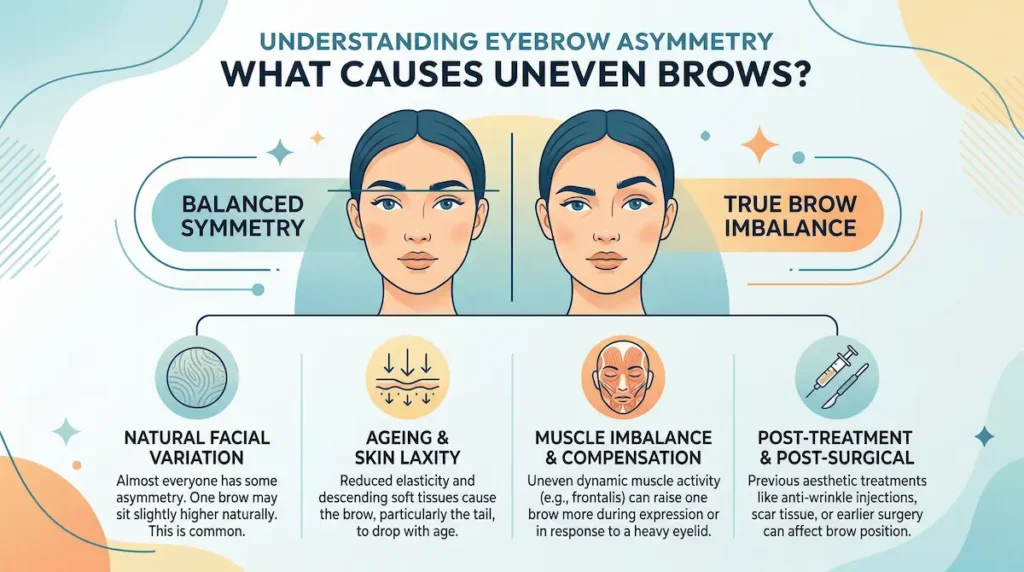
Before discussing treatment, it is important to understand that eyebrow asymmetry is common. Almost nobody has perfectly matched brows. The key question is whether the difference is mild and natural, or whether it is significant enough to affect facial harmony, expression, or confidence. A good surgeon must distinguish between normal asymmetry and a structural issue that is likely to benefit from surgical brow correction.
Natural facial asymmetry vs. true brow imbalance
Every face has some degree of asymmetry. One eyebrow may naturally sit a few millimetres higher, one eye may open slightly more, or one side of the forehead may be more expressive. This alone does not always justify treatment. In many cases, what patients notice most in the mirror is not a true deformity, but a normal variation that becomes more visible in photographs, harsh lighting, or during facial expression.
True imbalance is different. In those cases, one brow consistently appears lower, flatter, heavier, or more descended than the other. The asymmetry remains visible even when the forehead is relaxed. Patients may describe the face as “crooked”, “uneven”, or “heavier” on one side. This is where eyebrow asymmetry correction can become a realistic surgical discussion rather than a cosmetic worry alone.
Ageing, skin laxity, and changes in the upper face
Ageing often makes pre-existing asymmetry more noticeable. As skin elasticity reduces and soft tissues descend, the tail of one brow may begin to fall faster than the other. This can create the impression of a permanently tired or slightly stern expression. In some patients, the brow tail drops first; in others, the central brow becomes heavier, affecting the upper eyelid and making one eye appear more hooded.
This is one reason patients start searching for brow lift for asymmetrical eyebrows later in life, even if they did not notice much imbalance when they were younger. The issue is not always the brow alone. The temple, upper eyelid skin, and forehead soft tissues may all contribute. Good surgical planning therefore focuses on the upper face as a whole rather than promising a simplistic “quick fix”.
Muscle imbalance, previous treatments, and post-surgical causes
Not all brow asymmetry comes from ageing. In some patients, the problem is dynamic, meaning it relates to muscle activity. One side of the frontalis muscle may be stronger, causing one brow to rise higher during expression. Others develop a compensatory pattern: if one eyelid feels heavier, the forehead may unconsciously lift more on that side in an effort to open the eye.
Previous aesthetic treatment can also play a role. Inconsistent anti-wrinkle injection patterns, scar tissue, or earlier surgery may change brow position over time. Occasionally, patients are specifically looking for a unilateral brow lift because only one side needs repositioning. In other cases, what looks like brow asymmetry is actually an eyelid issue, which is why careful examination matters before any recommendation is made.
- Natural asymmetry: common and often non-surgical
- Age-related descent: usually linked to skin laxity and brow tail drop
- Muscle-driven asymmetry: related to facial expression and compensation
- Post-treatment imbalance: may follow injections, scars, or previous surgery
When Is Surgical Eyebrow Correction the Right Choice?
Not everyone with uneven brows needs an operation. The right candidate is usually someone whose asymmetry is visible at rest, bothers them consistently, and cannot be explained away as a small or purely dynamic difference. In these patients, surgery may provide a more reliable and longer-lasting solution than temporary camouflage. The goal is not mathematical perfection. It is meaningful improvement with preserved facial identity.
Signs that non-surgical options may not be enough
Non-surgical approaches can be useful in selected cases, especially when the asymmetry is mild or mostly related to movement. However, they have limits. If the brow tissue has descended, if one side is structurally lower, or if excess upper-lid heaviness is part of the problem, injections alone may not give enough lift or control. In some cases, they can even make the upper face look less balanced if used too aggressively.
This is the point at which patients often start researching uneven eyebrows surgery or asking whether surgery can genuinely fix asymmetrical eyebrows. The honest answer is that surgery can improve position, shape, and symmetry far more precisely than non-surgical methods in the right patient, but only when the diagnosis is correct.
Patients bothered by a tired, uneven, or “pulled” appearance
Patients considering surgery are rarely asking for a dramatic beauty trend. More often, they are frustrated by looking tired, lopsided, or unintentionally expressive. One side of the face may seem sadder, heavier, or older. In consultation, they may say things such as “one eye always looks smaller” or “one brow makes me look cross”.
Interestingly, another group of patients seeks surgery for the opposite reason: they have already tried to compensate for the imbalance and now fear ending up with a “pulled” or unnatural appearance. For UK patients in particular, this concern is very common. They want to correct the asymmetry without creating an arched, over-tightened result that looks artificial in person. That is why the concept of subtle repositioning matters so much in modern upper-face surgery.
A natural result matters just as much as the lift itself. Many British patients would rather accept a small amount of natural asymmetry than end up with brows that look over-elevated or stylistically out of place.
Why a bespoke surgical assessment matters for subtle results
A successful correction for asymmetrical eyebrow depends on custom planning. The surgeon must assess brow height, brow tail position, eyelid show, forehead movement, temple hollowing, and the patient’s own preferences. Some patients need only a small lift at the lateral brow. Others need broader support through a more comprehensive upper-face approach. Sometimes the correct answer is not a brow lift at all, but blepharoplasty or a combined plan.
This is where consultant-led judgement becomes especially important. A bespoke plan can determine whether the patient needs a full brow lift, a unilateral brow lift, a targeted temporal approach, or a combined eyelid and brow procedure. It can also prevent overtreatment, which is essential if the aim is a refined, natural-looking outcome rather than a conspicuous cosmetic change.
For patients travelling from the UK, this level of planning also supports trust. Patients want to know not only what can be done, but what should not be done. That is often the difference between a surgeon-led recommendation and a sales-led one.
| Finding at consultation | May suggest | Not always solved by |
|---|---|---|
| Mild dynamic asymmetry only | Observation or non-surgical management | Immediate surgery |
| Drooping brow tail on one side | Targeted lift or unilateral brow lift | Generic anti-wrinkle treatment alone |
| Heavy lid with low brow | Combined brow and eyelid plan | Single-procedure assumptions |
| Fear of overdone result | Conservative, bespoke elevation | Trend-based brow reshaping |
UK patients also tend to value practical reassurance. They want clarity on recovery, visible swelling, return to work, and whether the result will look discreet. A well-planned surgical approach should answer those concerns from the start, not after the operation has already been booked.
Surgical Options for Asymmetrical Eyebrow Correction
There is no single operation that suits every case of brow asymmetry. The correct procedure depends on where the imbalance sits, how severe it is, whether the eyelids are involved, and whether the problem is central, lateral, or one-sided. That is why “brow lift” is really an umbrella term rather than one uniform technique. The best approach is the one that produces balance with the least unnecessary intervention.
Endoscopic brow lift for controlled upper-face repositioning
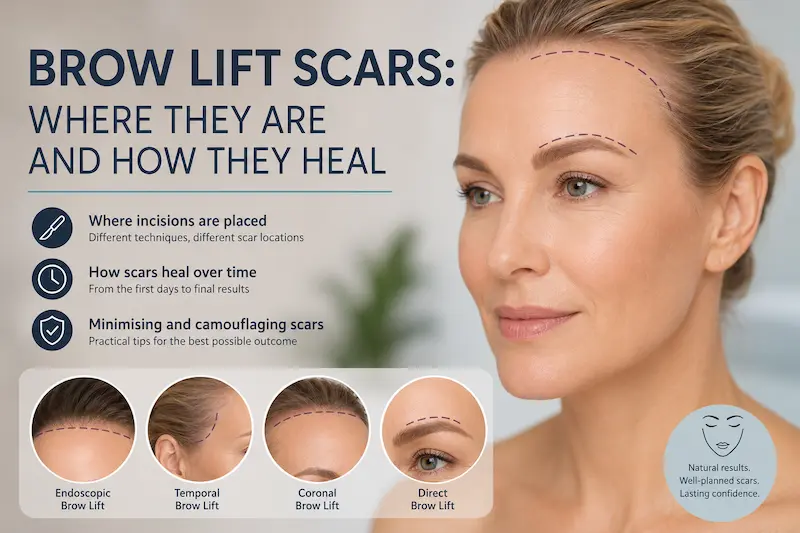
An endoscopic brow lift is often one of the most elegant solutions for structural asymmetry in the upper face. Using small incisions hidden within the hair-bearing scalp, the surgeon can elevate and reposition deeper tissues with precision. For patients seeking a brow lift for asymmetrical eyebrows, this approach can be particularly useful when the imbalance involves more than just the outer brow tail.
The advantage of endoscopic work is control. Rather than relying on skin tension alone, the surgeon can address the soft tissue descent in a more anatomical way. This supports a balanced lift while helping to avoid the rigid or over-arched appearance that many UK patients specifically want to avoid. In the right candidate, it can also improve forehead heaviness and upper-lid crowding at the same time.
Temporal lift for lateral brow imbalance
When the main issue is at the outer brow, a temporal lift may be more appropriate than a full brow lift. This is especially relevant if the patient has a drooping eyebrow on one side mainly at the tail, while the central brow remains reasonably positioned. In those cases, a more focused lift can produce a softer, more proportionate improvement.
This targeted option is often considered when a patient asks for a more conservative surgical brow correction. It may also be appropriate in selected cases of unilateral brow lift, where one side requires more support than the other. The key is precision. Too much lateral elevation can create an unnatural “surprised” look, so careful planning and restraint are essential.
Combining brow correction with blepharoplasty when needed
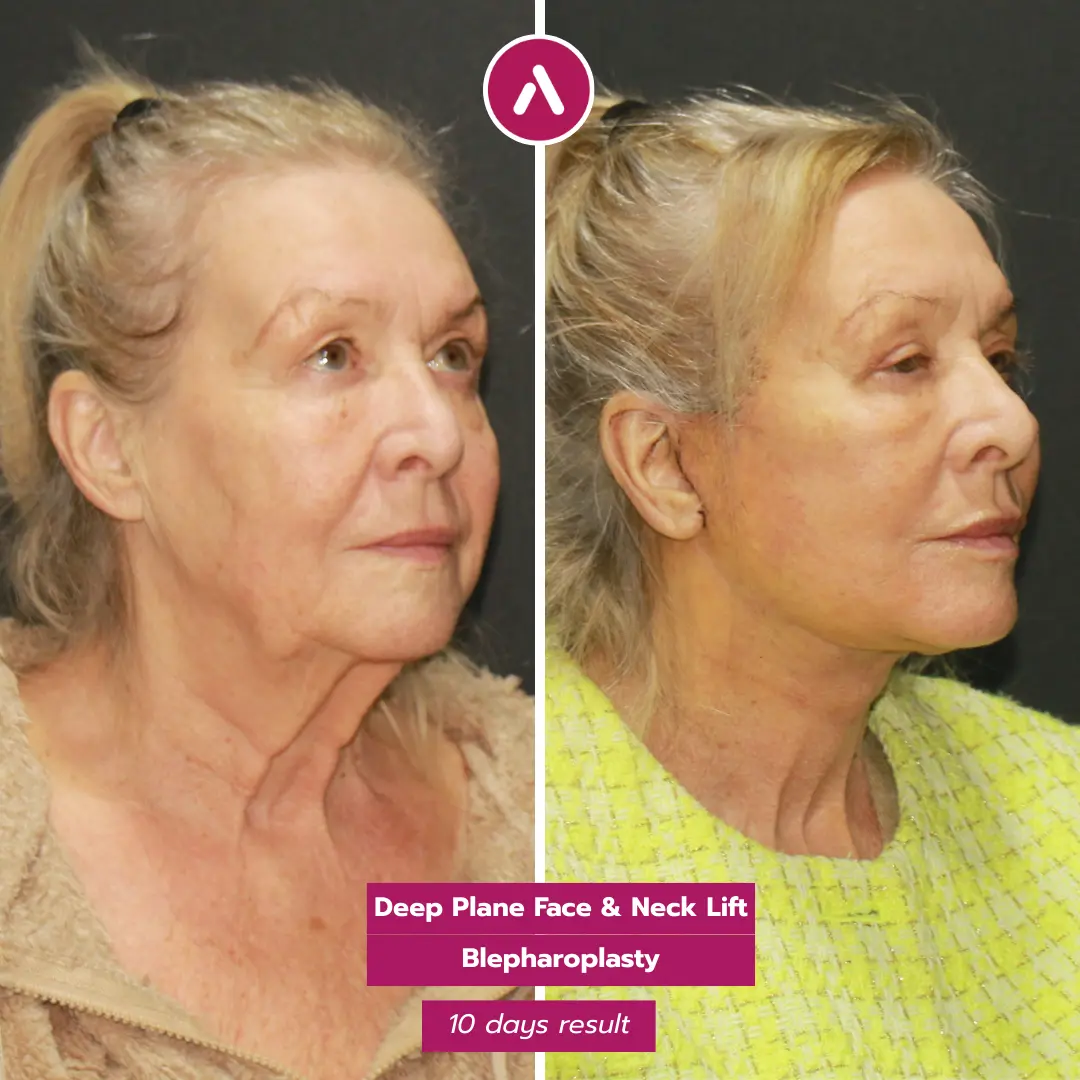
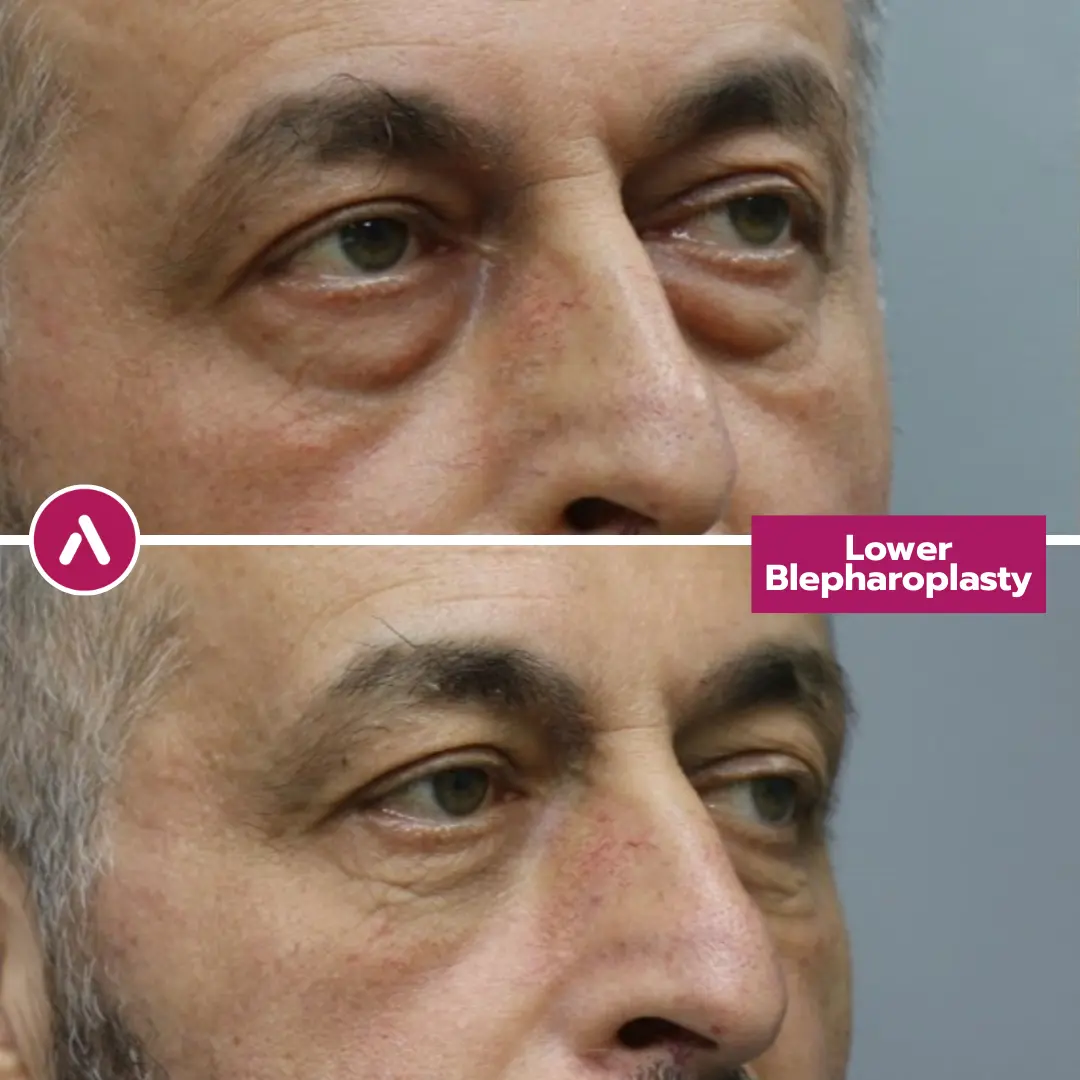
Sometimes the brow is only part of the story. If the upper eyelid skin is also heavy, a brow-only procedure may not fully address the patient’s concern. In those cases, combining brow repositioning with blepharoplasty can produce a more complete and harmonious result. This is particularly relevant when one eye appears more hooded and the asymmetry involves both lid and brow.
For patients searching brow lift for facial asymmetry, this distinction matters. A surgeon must identify whether the eye looks uneven because the brow has descended, because the eyelid is heavier, or because both factors are present together. When correctly combined, the procedures can create a fresher and more balanced upper face while still preserving a natural character.
Brow Lift vs. Blepharoplasty vs. Temporal Lift
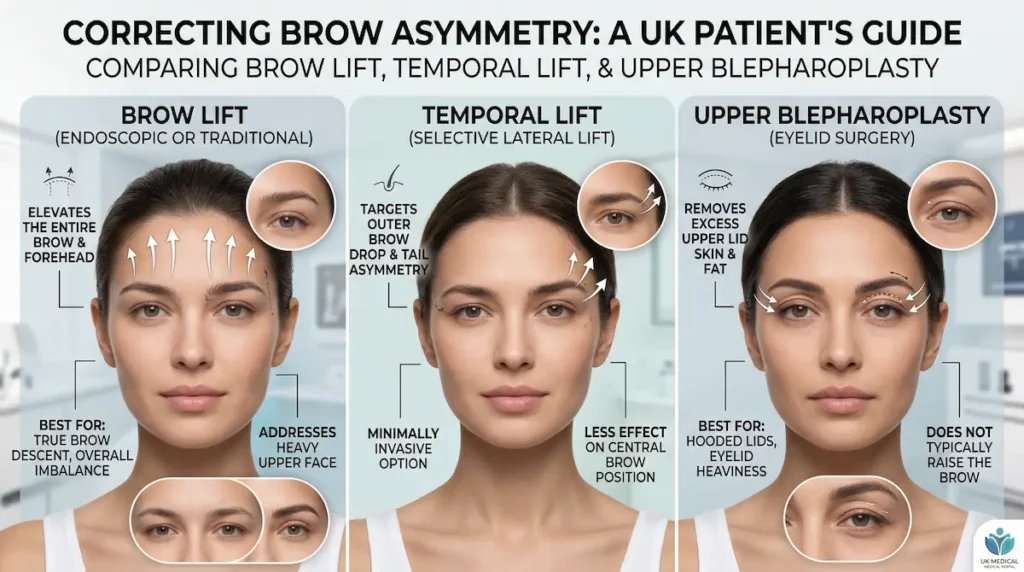
Patients researching eyebrow asymmetry correction often come across three procedures repeatedly: brow lift, blepharoplasty, and temporal lift. They are related, but they are not interchangeable. Choosing the wrong one can lead to under-correction, over-correction, or a result that improves one feature while leaving the original concern largely unchanged. The aim should always be to treat the actual anatomical cause of the imbalance, not simply the part of the face that draws the eye first.
Which procedure treats the brow, and which treats the eyelid?
A brow lift is designed to elevate and reposition the brow itself. This makes it the more direct option when the problem is true brow descent, a low brow tail, or a drooping eyebrow on one side. By contrast, upper blepharoplasty focuses on removing or refining excess skin and fat from the upper eyelid. It can improve heaviness and hooding, but it does not truly raise the brow.
This distinction matters enormously in patients seeking fix asymmetrical eyebrows. If the asymmetry comes from the brow sitting too low, eyelid surgery alone may not fully solve the issue. Equally, if the eyelid is the main problem and the brow is reasonably well positioned, a brow lift may be unnecessary. A precise diagnosis protects the patient from having more surgery than they need.
How to avoid overtreatment and preserve facial harmony
One of the biggest concerns for UK patients is ending up with a result that looks over-lifted, surprised, or stylised rather than refreshed. That is why facial harmony matters more than aggressive elevation. A well-planned surgical brow correction should respect brow shape, forehead movement, upper-lid show, and the natural differences already present in the face.
In practical terms, this often means choosing the least intensive procedure that can still achieve a worthwhile improvement. Some patients need a brow lift for asymmetrical eyebrows. Others need blepharoplasty. Others do best with a conservative combination. The goal is not to chase an idealised brow shape taken from social media. It is to restore balance in a way that still looks like the patient.
Choosing the least invasive effective solution
A temporal lift may be the most suitable option when the asymmetry is concentrated at the outer brow. A full endoscopic brow lift may be more appropriate if the imbalance affects a wider portion of the upper face. Blepharoplasty may be the better solution when the eyelid is the main source of heaviness. In some patients, a unilateral brow lift may be appropriate if one side requires more support than the other.
What matters is not choosing the most fashionable procedure, but the most proportionate one. A thoughtful surgical plan treats the specific asymmetry while preserving expression, softness, and natural facial character.
| Procedure | Best for | Less suitable when |
|---|---|---|
| Brow lift | True brow descent, overall brow imbalance, heavier upper face | The main issue is only eyelid skin excess |
| Temporal lift | Lateral brow drop, brow tail asymmetry, selective lifting | Central brow position is also significantly low |
| Upper blepharoplasty | Hooded lids, excess upper-lid skin, eyelid heaviness | The brow itself sits too low |
How AKM Clinic Plans Natural-Looking Brow Symmetry for UK Patients?
For British patients, planning is often just as important as the operation itself. Many are not only asking how to correct asymmetry, but how to do so without looking altered. That is why consultation must move beyond a simple “lift or not lift” decision. In modern facial aesthetics, the best correction for asymmetrical eyebrow is one that improves balance while still preserving identity, expression, and a believable relationship between the brow, eyelid, and forehead.
Harley Street-style expectations: subtle, not overdone
UK patients often compare their options against the standards they associate with Harley Street: consultant-led care, careful planning, and discreet results. In this setting, the desired outcome is rarely dramatic. Most patients want to look fresher, lighter, and more even, not obviously “treated”. This is particularly true for the upper face, where even a few millimetres of lift can change expression significantly.
That is why a successful brow lift for facial asymmetry is not judged by how high the brows sit, but by how well the result blends with the patient’s natural facial character. A subtle change usually ages better, photographs better, and feels more comfortable in everyday life.
Consultant-led planning and facial proportion analysis
At AKM Clinic, upper-face planning should begin with facial proportion analysis rather than a one-size-fits-all template. Brow height, arch position, lateral tail descent, eyelid show, forehead movement, and soft-tissue imbalance must all be assessed together. In facial rejuvenation, this kind of analysis is part of the bridge between aesthetic judgement and scientific research, because good outcomes depend on anatomical understanding rather than guesswork alone.
For patients with uneven eyebrows surgery in mind, this is especially important. What appears to be a simple brow problem may actually involve the eyelid, temple, or habitual muscle compensation. Bespoke planning is what allows the surgeon to choose whether a full lift, a temporal lift, or a more selective unilateral brow lift is likely to give the most natural result.
Why UK patients value “balanced” rather than dramatically lifted brows
Many UK patients are highly sensitive to the risk of looking artificial after cosmetic surgery abroad. They often fear overly arched brows, visible tension, or a “done” look more than they fear keeping a small amount of natural asymmetry. In many cases, that instinct is sensible. Perfect symmetry is not a realistic human goal, and chasing it too aggressively can create a less attractive result than a conservative correction would.
For that reason, the surgical aim is often balance rather than symmetry in the strict mathematical sense. A good result may still leave minor natural differences, but the overall face will feel calmer, lighter, and more harmonious. That is usually what patients actually mean when they say they want to fix asymmetrical eyebrows.
“Considering the London vs Istanbul quality, I would confidently choose Turkey over the UK.”— Sarah from the UK, reflecting on her experience of subtle facial rejuvenation
What Happens During Eyebrow Correction Surgery?
Although the exact technique varies, most surgical plans for eyebrow asymmetry correction follow the same broad structure: assessment, marking, anaesthetic planning, controlled tissue repositioning, and guided aftercare. Patients generally find the process less mysterious once they understand that the operation is not about simply “pulling” the skin. Modern techniques focus on structural support, thoughtful elevation, and discreet scar placement.
In suitable candidates, an endoscopic brow lift may be used to improve asymmetry with a more precise and less invasive approach than traditional open methods. By working through small, carefully placed incisions, the surgeon can reposition deeper tissues with greater control, helping to create a balanced, natural-looking result while keeping visible scarring to a minimum.
Consultation, photography, and asymmetry mapping
The process begins well before the day of surgery. Clinical photographs are taken, brow positions are compared at rest and in movement, and the surgeon maps the asymmetry from multiple angles. This is especially important in correction for asymmetrical eyebrow cases, because minor differences can look more or less obvious depending on expression, posture, and lighting.
Patients should also discuss what bothers them most. Some want the lower brow raised. Others want the higher side softened visually by improving overall balance. These are not the same objective, and the treatment plan should reflect the patient’s own priorities rather than a generic aesthetic formula.
Anaesthesia options and operating theatre planning
The anaesthetic plan depends on the exact procedure, the extent of correction, the patient’s health profile, and the surgeon’s preferred technique. Some upper-face procedures can be performed under local anaesthesia with sedation, while others may require a different approach. What matters is that the plan prioritises comfort, safety, and appropriate monitoring in a properly equipped operating theatre.
For many patients travelling from the UK, this is a key trust point. They want reassurance not only about the outcome, but about the entire operative environment: sterility, patient comfort, observation, and a structured recovery pathway.
Incision placement, scar strategy, and recovery preparation
Incision placement depends on whether the brow needs broader elevation, lateral support, or a more selective adjustment. In every case, scar strategy matters. The surgeon should plan access in a way that supports good visibility during surgery while keeping visible signs of treatment as discreet as possible.
Patients should also be prepared for the normal short-term effects of surgery, including swelling, bruising, and temporary tightness. Realistic preparation is part of good care. It helps the patient understand the difference between early healing changes and the true long-term result.
Recovery After Surgical Eyebrow Correction
Recovery is one of the first questions asked by patients considering surgical brow correction, especially those travelling back to the UK. Most are not only thinking about discomfort. They are thinking about how visible the swelling will be, when they can return to work, and how soon they can fly without feeling anxious. Recovery planning therefore deserves as much attention as the operation itself.
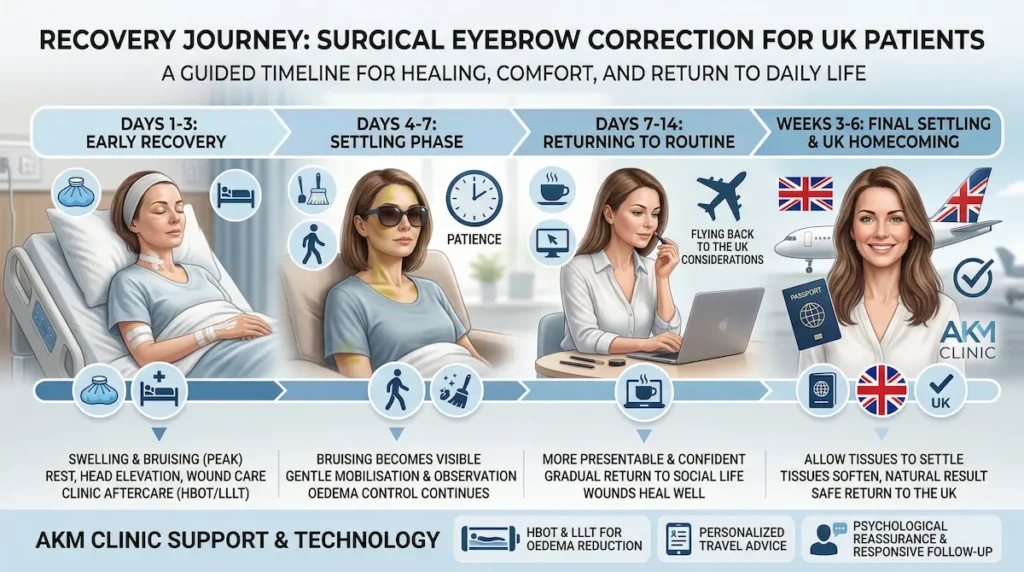
Swelling, bruising, and the first 7–14 days
In the first days after surgery, patients should expect some swelling, tightness, and bruising around the forehead, temple, and upper eyelid region. The exact degree varies from one patient to another. In general, the first week is focused on rest, head elevation, cold compress guidance where appropriate, and careful wound care.
Most patients feel socially more presentable as the second week progresses, although small signs of healing can remain beyond that point. It is better to prepare patients for a conservative timeline than to promise an unrealistically quick recovery.
When patients can return to work, social life, and flights back to the UK
Return-to-work timing depends on the type of work and on how visible the bruising is. Remote workers may feel ready sooner than patients whose role is highly public-facing. Social confidence also tends to return gradually rather than all at once. For that reason, many patients prefer to build in a little extra margin before an important event.
For those flying home, the plan should be individualised. A sensible clinic will consider swelling, comfort, mobility, and overall recovery rather than offering a one-size-fits-all travel promise. Patients should always follow personalised post-operative travel advice rather than relying on generic internet timelines.
The role of aftercare, oedema control, and realistic timelines
High-quality aftercare can make recovery feel more manageable and more predictable. At AKM Clinic, technologies such as HBOT and LLLT can be relevant to selected facial surgery patients because they support oedema control, scar quality, and a smoother healing journey. For British patients, this matters not only medically but practically, because a calmer recovery can make the return journey feel less daunting.
Good aftercare also includes communication after the patient has gone home. For many UK patients, psychological reassurance is just as valuable as physical care. Knowing there is responsive follow-up support can reduce anxiety and improve confidence throughout the healing period.
| Recovery stage | What patients often notice | General focus |
|---|---|---|
| Days 1–3 | Swelling, tightness, early bruising | Rest, head elevation, comfort, observation |
| Days 4–7 | Bruising may become more visible before it settles | Gentle mobilisation, wound care, patience |
| Days 7–14 | More socially presentable for many patients | Gradual return to routine |
| Weeks 3–6 | Improved softness and reduced tightness | Allow tissues to settle naturally |
Risks, Limitations, and Realistic Expectations
No operation should be discussed honestly without addressing its risks and limitations. Patients searching for eyebrow asymmetry correction are often highly observant and may already be sensitive to very small facial differences. That makes expectation management essential. Surgery can improve asymmetry, but it cannot transform a human face into a perfectly mirrored image.
Even when an endoscopic brow lift is performed with careful planning and refined technique, the final result still depends on individual anatomy, tissue quality, and healing response. This is why experienced surgeons focus on improvement rather than perfection, aiming to reduce visible asymmetry while preserving natural expression and avoiding an over-lifted or artificially tightened appearance.
Why perfect symmetry is not the goal
Faces are naturally asymmetrical. Bones differ slightly, muscles pull differently, and soft tissues age at different rates. Even after excellent surgery, small differences may remain. In fact, a face that appears completely identical on both sides can look less natural than one with a subtle, believable degree of variation.
The real objective is a more balanced appearance. In most successful cases, the patient looks rested, lighter, and more even, but still recognisably like themselves. That is a healthier and more realistic aim than expecting total geometric symmetry.
Understanding revision risk, scar concerns, and healing variability
As with any facial operation, there are potential risks, including under-correction, over-correction, contour irregularity, scar visibility, prolonged swelling, and the possibility of needing further refinement. Healing also varies from one patient to another. Skin quality, age, previous surgery, and tissue behaviour all affect the final appearance.
Patients considering uneven eyebrows surgery should understand that revision does not necessarily mean something has gone “wrong”. Sometimes it reflects the complexity of asymmetry itself. Even so, the better the original diagnosis and planning, the lower the chance of needing further intervention.
The importance of surgeon judgement in avoiding an unnatural arch
One of the clearest signs of poor judgement in brow surgery is an arch that is too high, too sharp, or inconsistent with the patient’s sex, age, and facial structure. This risk is particularly relevant in patients who are understandably focused on small asymmetries and may assume that “more lift” automatically means a better result.
In reality, restraint is often the mark of expertise. A skilled surgeon knows when to stop, how to avoid turning correction into exaggeration, and how to preserve a calm, natural expression.

Why Many UK Patients Compare Harley Street with Istanbul?
Patients researching brow lift for asymmetrical eyebrows are not only comparing procedures. They are comparing systems of care, price structures, convenience, and trust. For many, the real question is not “UK or abroad?” in simplistic terms. It is whether they can receive consultant-led, natural-looking care with strong aftercare and better overall value than they expect from a London private pathway.
Quality expectations, safety standards, and consultant credentials
British patients tend to look for familiarity in standards even when they choose treatment abroad. They want clear credentials, structured communication, hygienic operating conditions, and consultant involvement in the decision-making process. This is one reason why discussions around European Board credentials, operating theatre standards, and surgeon-led planning carry so much weight in the UK market.
For the patient, trust does not come from glossy before-and-after images alone. It comes from clarity, consistency, and the sense that medical judgement is leading the process rather than sales pressure.
Natural rejuvenation goals vs. dramatic social media trends
There is also a cultural element. Many British patients are explicitly not looking for a dramatic trend-led appearance. They often reject exaggerated brow arches, heavily altered eye shapes, or the sort of “noticeable” upper-face change associated with short-term aesthetic fashions. Instead, they want something more restrained: a fresher look, improved symmetry, and a face that still feels credible in everyday life.
For this reason, an endoscopic brow lift is often appealing to patients who want refinement without obvious surgical change. By allowing controlled elevation through small incisions, it can support a softer, more natural correction of brow asymmetry while avoiding the overly sharp or exaggerated look that many British patients associate with short-lived aesthetic trends.
This is one reason why articles about fix asymmetrical eyebrows perform best when they focus on balance, anatomy, and realistic outcomes rather than promising a transformation. In the UK market, subtlety is often the stronger value proposition.
Value perception without using “cheap surgery” language
Patients comparing Harley Street with Istanbul are rarely looking for “cheap” surgery. More often, they are looking for value: consultant-led care, a coherent patient journey, transparent planning, and a result that feels worth the investment. They may be open to travelling because the comparison is not only about the operation fee. It is also about waiting times, accessibility, aftercare structure, and the practicality of all-inclusive planning.
That is why the language of value matters. The stronger message is not low cost, but thoughtful care at a more accessible level than many patients expect in London private practice.
| What UK patients often compare | Typical London private expectation | Why Istanbul enters the conversation |
|---|---|---|
| Consultant access | High expectation, high private cost | Patients seek equivalent confidence with better value |
| Result style | Subtle, discreet, socially acceptable | Natural-looking outcomes remain the key priority |
| Pricing structure | Often consultant and facility costs separated | Patients appreciate transparent all-inclusive planning |
| Aftercare reassurance | Expected as standard | Responsive remote follow-up becomes essential |
Frequently Asked Questions (FAQ): Asymmetrical Eyebrow Correction
Patients exploring eyebrow asymmetry correction often ask the same practical questions before deciding whether surgery is worth pursuing. The answers below are intentionally concise and written for clarity.
Can asymmetrical eyebrows be corrected permanently?
Surgery can provide a long-lasting improvement, but the face will continue to age naturally over time. The aim is durable balance, not a frozen result.
Is a brow lift the best option for uneven eyebrows?
Not always. It is best when the brow itself is too low or uneven. If the issue mainly comes from the eyelid, blepharoplasty may be more appropriate.
Can blepharoplasty fix eyebrow asymmetry?
It can improve upper-lid heaviness, but it does not truly reposition the brow. Some patients need eyelid surgery, some need brow surgery, and some need both.
How long does swelling last after eyebrow correction surgery?
The most noticeable swelling and bruising are usually early in recovery, with visible improvement over the first one to two weeks. Subtle settling continues for longer.
Will eyebrow correction leave visible scars?
All surgery leaves a scar, but careful incision planning aims to keep scars as discreet as possible. Visibility depends on technique, healing, and skin quality.
When can I fly back to the UK after surgery?
This should be based on your surgeon’s personalised advice. Travel timing depends on the procedure, swelling, overall recovery, and your general health.
How do I know whether I need a temporal lift or a full brow lift?
That depends on where the asymmetry sits. A temporal lift targets the outer brow, while a full brow lift addresses a broader upper-face imbalance.
If you would like to explore related topics alongside asymmetrical eyebrow correction, you may also find our guides on Temporal Lift vs Brow Lift, Blepharoplasty Recovery Time, Fox Eye Surgery Turkey, Facelift Recovery with Stem Cells, and How to Prepare for Cosmetic Surgery helpful. These articles offer further insight into upper-face procedures, recovery expectations, treatment planning, and the practical steps involved in making a safe, well-informed decision before cosmetic surgery.
Medical Disclaimer: This page is provided for general educational purposes only and does not replace a face-to-face medical consultation, diagnosis, or personalised treatment plan. All surgery carries risks and outcomes vary between individuals. Suitability for an endoscopic temporal & brow lift surgery, procedure selection, and anaesthesia choice can only be determined after a full clinical assessment by a qualified surgeon. Always follow your clinician’s instructions and seek urgent medical attention if you develop concerning symptoms during recovery.