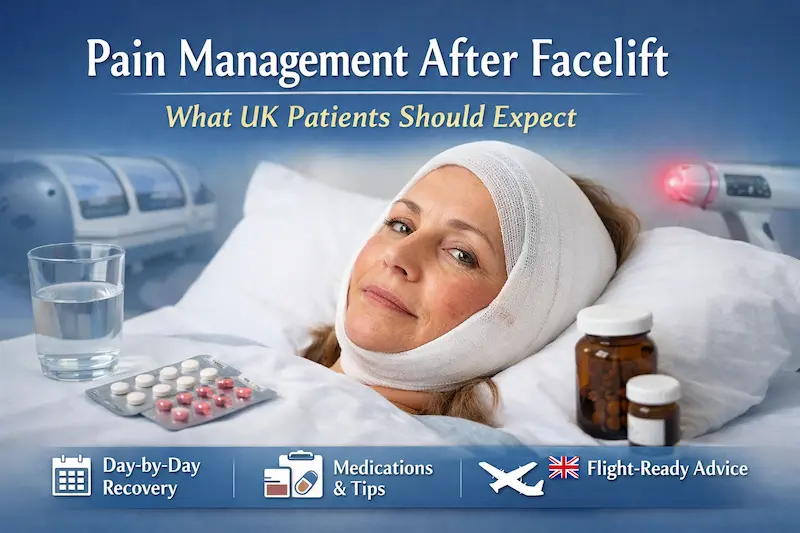
Pain management after facelift is one of the biggest “unknowns” for UK patients considering surgery in Istanbul: Will it hurt? What’s normal? And how do you stay comfortable without taking unnecessary risks?
This guide is written for the UK “expert patient” who wants detail, not reassurance-by-vibes. You’ll see what a typical recovery feels like day by day, how to tell discomfort vs pain, what medication plans commonly look like (including paracetamol after facelift), and when to message the team. Where appropriate, we’ll also explain the “why” behind symptoms using principles from medical science—because understanding often reduces anxiety.
Important: This article provides general information and does not replace personalised advice from your surgeon, anaesthetist, pharmacist, or GP. Always follow your AKM Clinic plan first, especially if you have allergies, asthma, stomach ulcers, kidney disease, are on blood thinners, or are pregnant/breastfeeding.
Table of Contents
What Pain Level to Expect (Day 1–10)
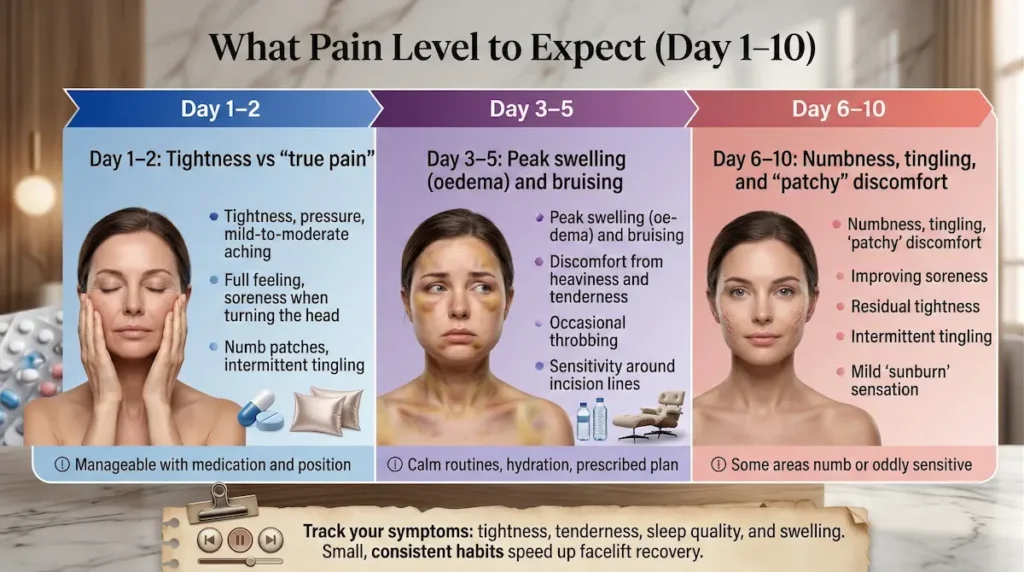
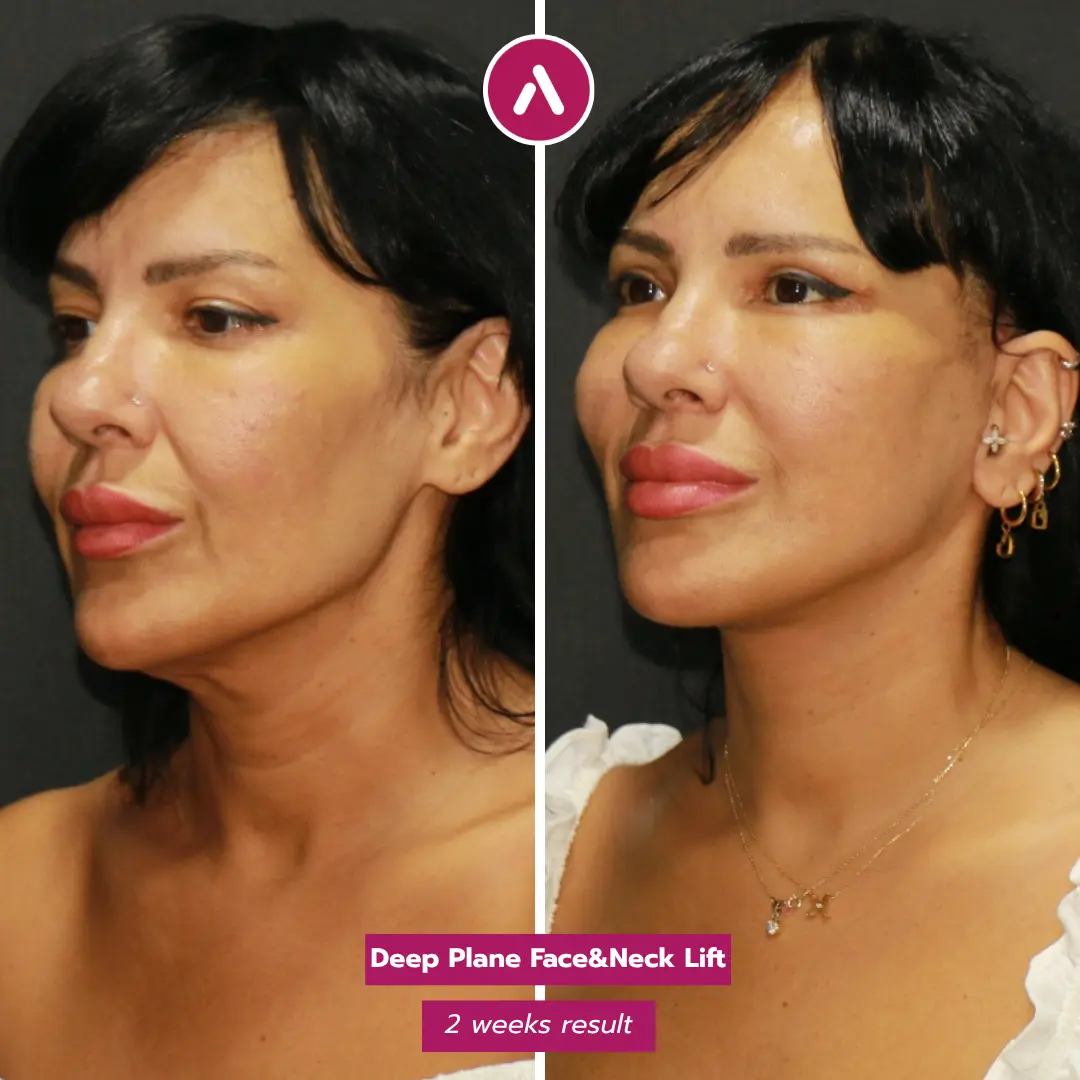
If you’re searching facelift pain level day by day or how painful is facelift recovery, the key idea is this: many patients describe early recovery as tightness, pressure, and stiffness rather than sharp pain. Discomfort often fluctuates through the day, especially with swelling (oedema) and bruising.
It may help to track your symptoms in a simple day-by-day note (tightness, tenderness, sleep quality, and swelling), because patterns matter more than any single moment of discomfort. Many patients find that small, consistent habits—head elevation, short gentle walks, and sticking to the agreed medication plan—can noticeably speed up facelift recovery by keeping swelling under control and supporting restful sleep, which is when your body does much of its healing.
Day 1–2: Tightness vs “true pain” (what’s normal)
In the first 48 hours, the most common sensation is tightness vs pain after facelift. The face and neck can feel “held” or “pulled”, particularly around the ears and jawline. This is usually linked to post-operative swelling and the way tissues have been repositioned and supported.
- Typical: tightness, pressure, mild-to-moderate aching, a “full” feeling, soreness when turning the head.
- Also common: numb patches (reduced sensation) and intermittent tingling.
- Often manageable: with scheduled paracetamol (when appropriate) and positioning strategies.
Day 3–5: Peak swelling (oedema) and bruising can change sensation
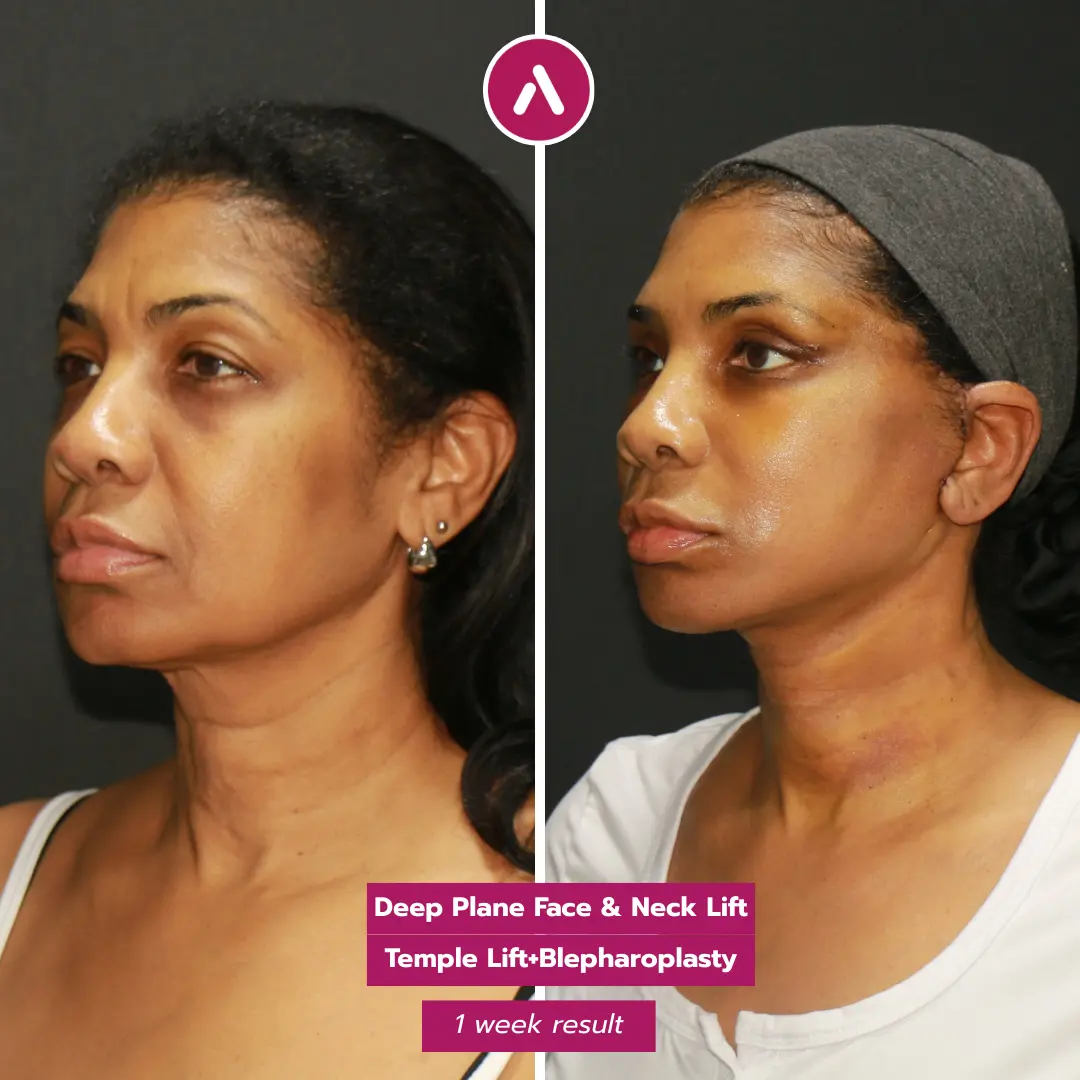
Many patients feel more “bothered” around days 3–5 even if the surgical pain itself is not severe. This is often when oedema and bruising peak, creating heaviness and tenderness. You may notice discomfort increases after activity (more time upright) and improves with rest and elevation.
- Typical: pressure around the cheeks/neck, sensitivity around incision lines, occasional throbbing.
- What helps: calm routines, hydration, and sticking to your prescribed plan rather than “chasing pain”.
Day 6–10: Numbness, tingling, and “patchy” discomfort
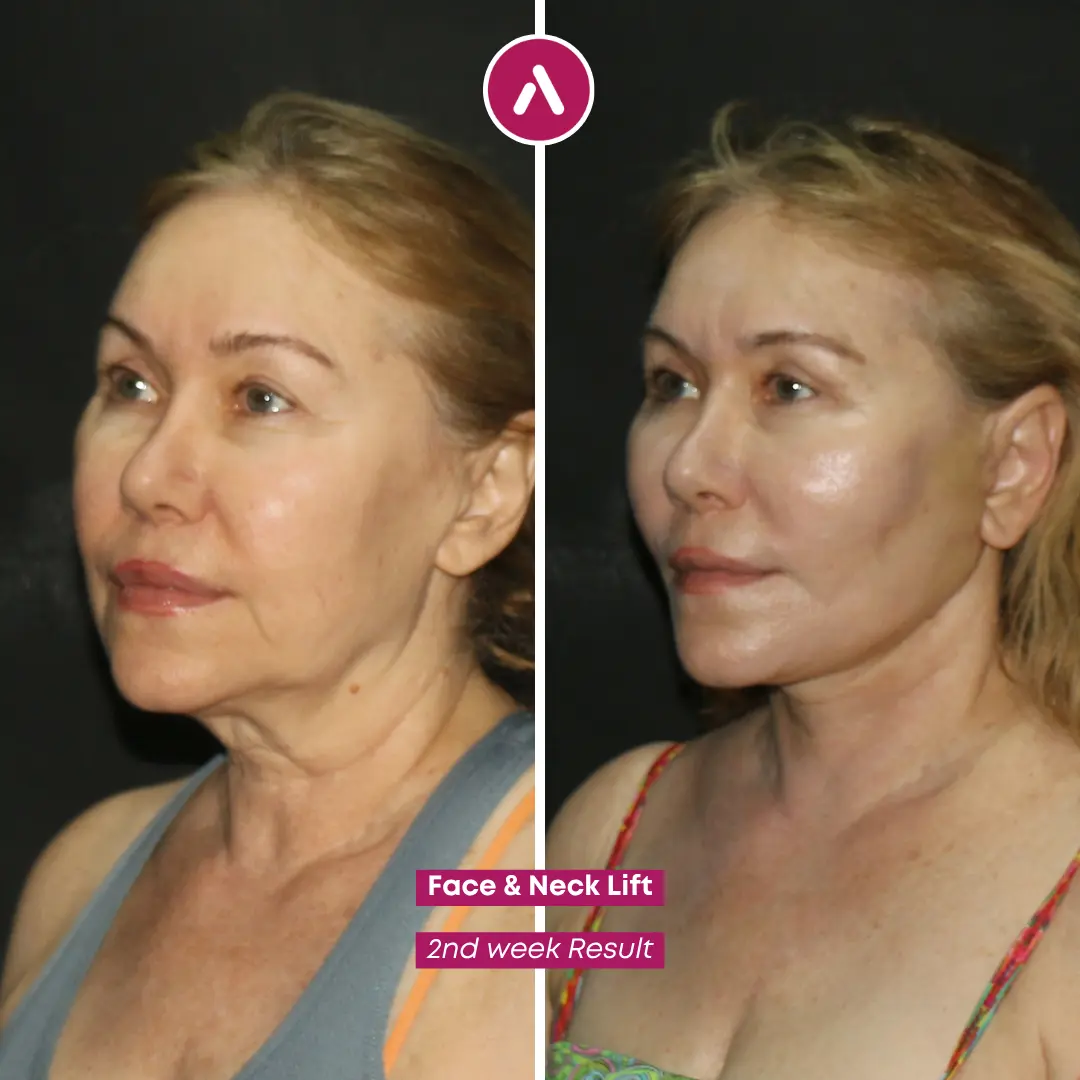
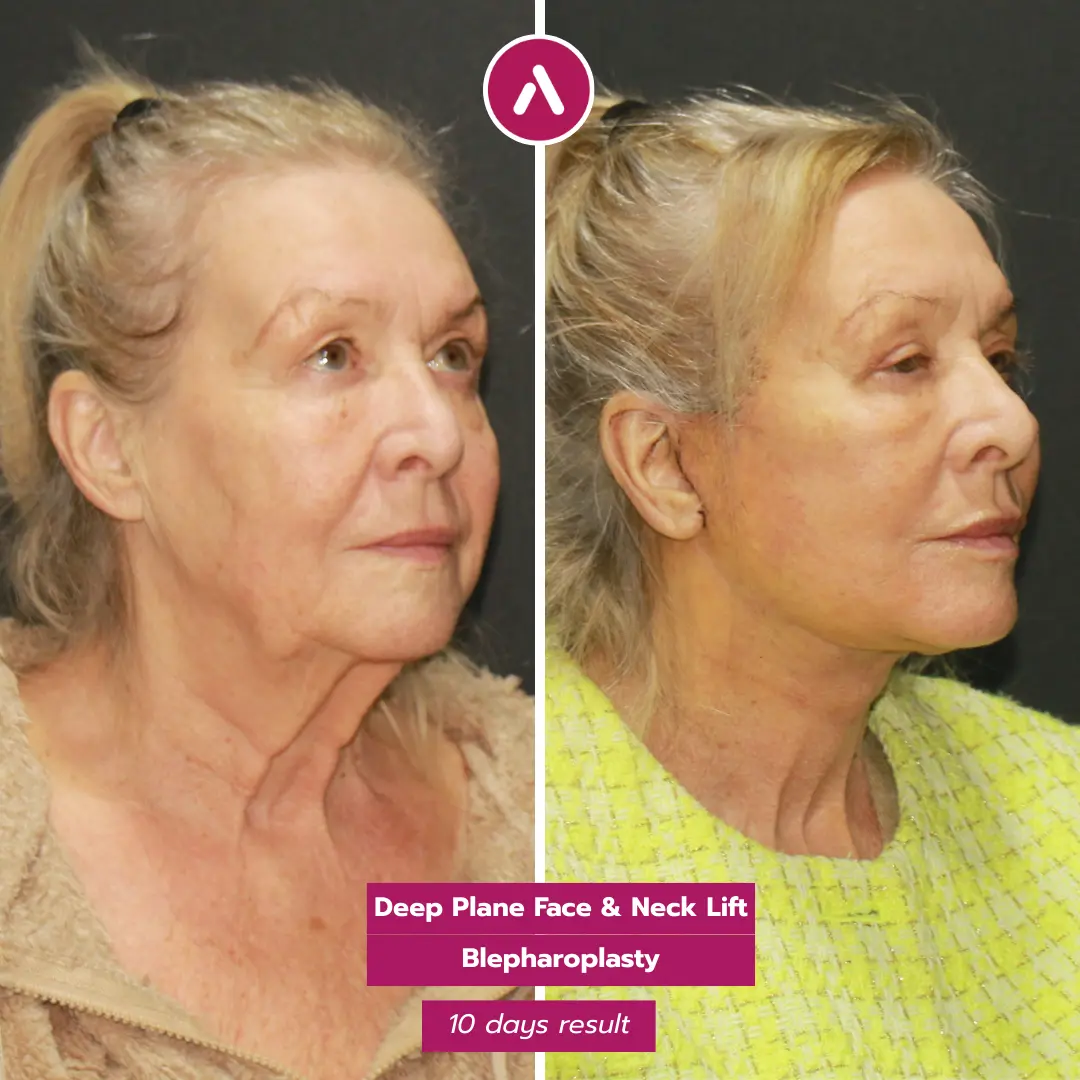
By days 6–10, discomfort often becomes less constant but more “patchy”. Some areas may still feel tight, while others feel numb or oddly sensitive. This can be confusing, and it’s where patients commonly ask: pain after facelift how long does it last?
- Typical: improving soreness, fading bruising, residual tightness, intermittent tingling.
- Not unusual: a mild “sunburn” sensation in certain areas as sensation begins to return.
- General timeline: most patients notice steady improvement week by week, but some tightness and altered sensation can persist longer.
Medication Protocols: Paracetamol and Prescription Drugs
Medication should support comfort and safety. UK patients commonly ask about paracetamol after facelift, prescription pain relief after facelift, and whether they can take anti-inflammatories such as ibuprofen. The correct answer depends on your medical history, the details of your operation, and your surgeon’s protocol—so treat this section as an explanation of typical approaches, not a DIY plan.
First-line plan: Paracetamol scheduling (UK terminology & safe use)
For many patients, paracetamol is the backbone of early pain control because it can reduce discomfort without increasing bleeding risk in the same way some anti-inflammatory medicines can. Taking it at consistent intervals (as advised) is often more effective than waiting until discomfort peaks.
- Why it helps: it supports baseline comfort, especially for aching and pressure sensations.
- Safety note: do not exceed the maximum daily dose on the label or your clinician’s instructions, and avoid doubling up with cold/flu products that may also contain paracetamol.
When we add prescription medication (and what it’s for)
Some patients benefit from short-term prescription medication, particularly in the first few nights when sleep is disrupted. The aim is not to “knock you out”, but to keep discomfort controlled so you can rest, hydrate, and recover.
- Typical reasons: stronger aching, significant neck tightness, or discomfort that prevents sleep.
- What to expect: you may be advised to use prescription medication only for a brief window and step down to paracetamol as soon as comfortable.
- Travel consideration: if you’re flying back to the UK, your team will consider what is appropriate and safe in that context.
Taking ibuprofen after a facelift: why you must follow surgeon-specific advice
Searches for taking ibuprofen after a facelift are very common. Ibuprofen is an anti-inflammatory medicine (an NSAID). In some surgical protocols it may be avoided early on because it can increase bruising or bleeding risk in certain patients or procedures. In other contexts, a clinician may approve it for specific individuals.
- Do: ask your AKM team (or your UK pharmacist/GP if needed) before taking ibuprofen or aspirin-containing products.
- Don’t: self-add NSAIDs “just because swelling is inflammation”. Post-operative swelling is complex, and comfort strategies should be aligned with your surgeon’s plan.
Twilight (Conscious) Anaesthesia vs Local Anaesthesia Nerve Blocks
Many UK patients worry less about the operation itself and more about the first night afterwards. Understanding how comfort is supported during surgery helps you predict what recovery will feel like. In simple terms, your early pain pattern can be influenced by (1) the type of anaesthesia/sedation used, and (2) whether local anaesthetic is used strategically to “buffer” the first hours after surgery. This is a good example of how medical science translates into practical comfort: if the nervous system is calmer early on, patients often describe less “spiky” discomfort later.
When these techniques are used appropriately, the first evening can feel more manageable because you’re not “chasing” discomfort from the start. That early stability matters: better rest, steadier hydration, and calmer movement in the first 24–48 hours can genuinely speed up facelift recovery by helping to limit swelling peaks and reducing the likelihood of tension headaches from guarding your neck and jaw. The aim is a smooth transition as sensation returns—so you feel prepared, not surprised, when the local anaesthetic gradually wears off.
What “twilight anaesthesia” means in practice (local anaesthesia + light sedation)
“Twilight (conscious)” usually refers to light sedation alongside local anaesthesia. The goal is to keep you comfortable and relaxed while the surgical area is numbed. Some patients prefer this approach because they feel it may reduce anxiety compared with deeper forms of anaesthesia (appropriateness depends on your case and clinician assessment).
- What you may feel: calmness and reduced awareness; you may drift in and out of sleep.
- What you don’t usually feel: sharp pain during the procedure (because local anaesthesia is doing the heavy lifting).
- Afterwards: as local anaesthesia wears off, you may notice a gradual return of sensation and tightness.
Nerve blocks: how they reduce early post-op discomfort (and what you feel as they wear off)
Local anaesthetic techniques (including targeted injections) can reduce early discomfort by interrupting pain signals from the surgical area. When this wears off, some patients notice a “step up” in sensation—often described as increased tightness, warmth, or aching rather than sudden severe pain.
- Practical tip: if your clinician has advised scheduled medication (e.g., paracetamol), it’s often most helpful to take it before discomfort escalates as sensation returns.
- What’s reassuring: a gradual increase in sensation is expected; the key is whether it remains manageable and improves with your plan.
Who benefits most: patients anxious about general anaesthesia
If you’re particularly concerned about anaesthesia, discuss your preferences and medical history openly during assessment. The safest option is always the one chosen by your surgical and anaesthetic team for your health profile and procedure plan.
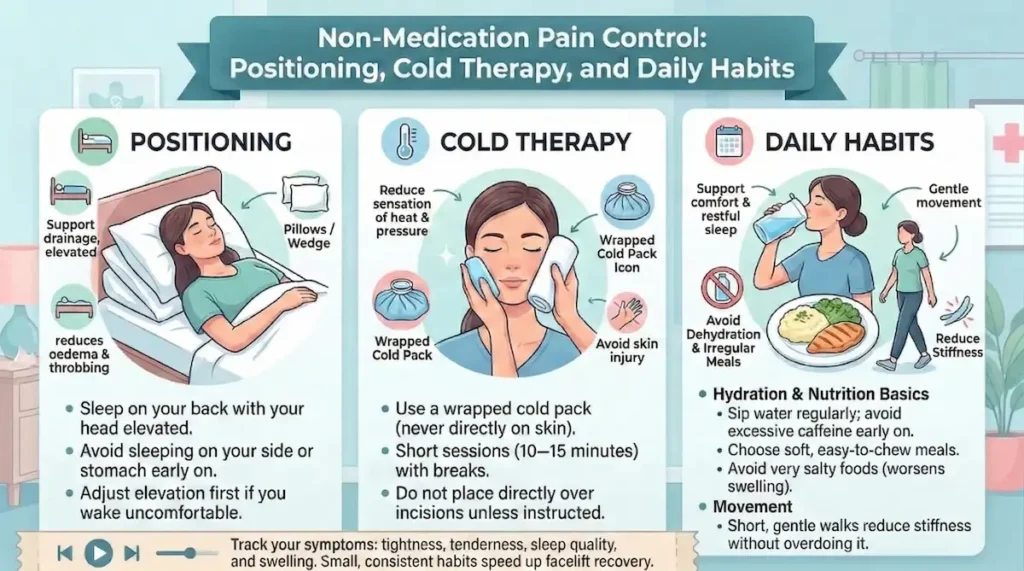
Non-Medication Pain Control: Positioning, Cold Therapy, and Daily Habits
If you’ve searched facelift recovery discomfort vs pain or sleeping after facelift pain tips, you’re already thinking like an expert patient. The truth is: the best comfort strategies are often the least dramatic. Good positioning, gentle routines, and avoiding “trigger” behaviours can reduce throbbing, pressure, and the sense of tightness—especially in the first week.
Sleeping position, head elevation, and why it matters for throbbing/swelling
Sleeping flat can increase the sensation of facial fullness and throbbing because fluid shifts can worsen oedema. Elevation supports drainage and often improves comfort.
- Best practice: sleep on your back with your head elevated (extra pillows or a wedge).
- Avoid: sleeping on your side or stomach early on, which can increase swelling and irritate incision areas.
- If you wake uncomfortable: adjust elevation first before reaching for extra medication (unless your plan requires it).
Cold compress rules (where/when to use; avoiding skin injury)
Cold therapy can reduce the sensation of heat and pressure. However, it must be done safely—especially where sensation is reduced.
- Use: a wrapped cold pack (never directly on skin).
- Timing: short sessions (e.g., 10–15 minutes) with breaks, as advised by your team.
- Do not: place ice directly over incisions unless you’ve been specifically instructed.
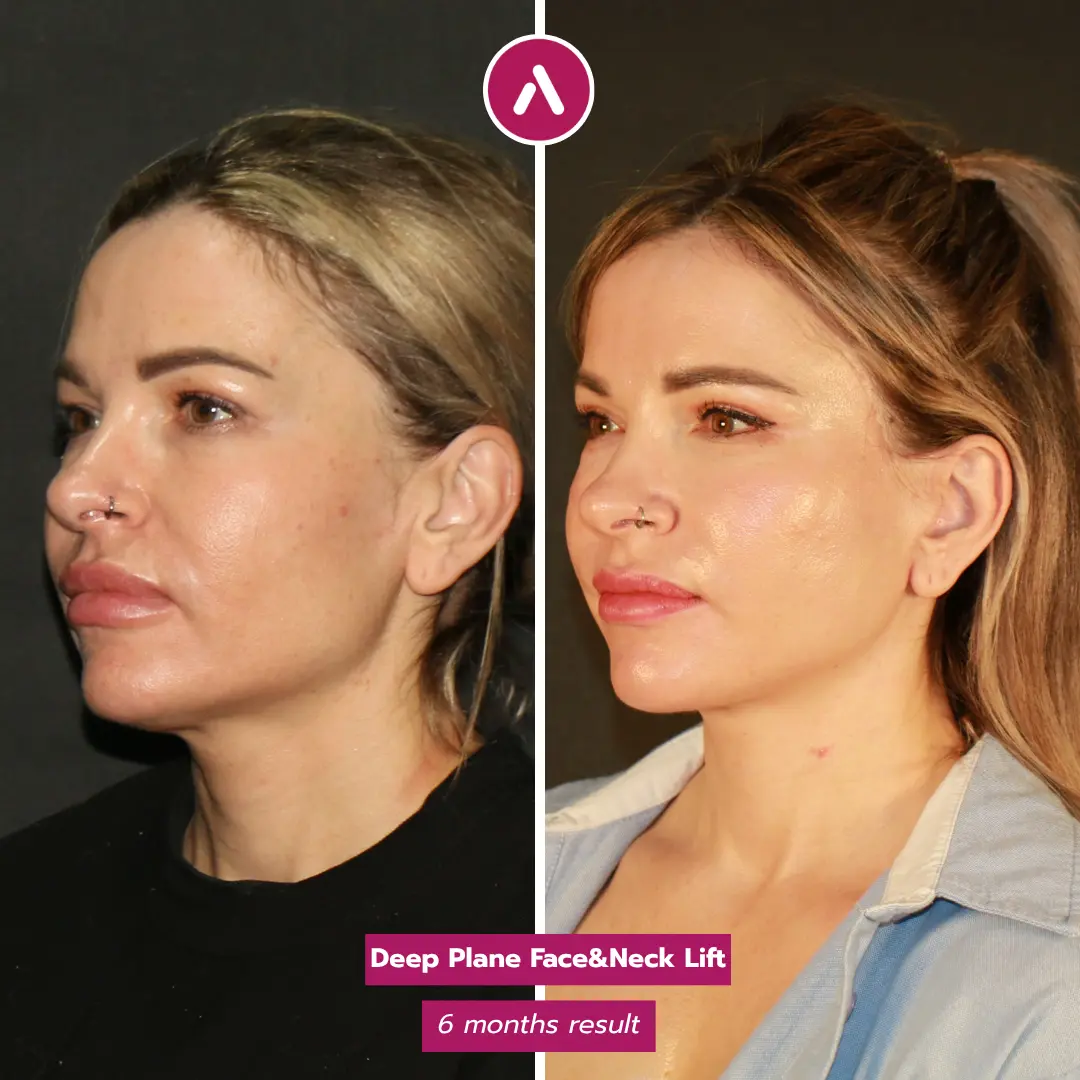
Hydration & nutrition basics (simple routines that reduce “rebound” discomfort)
Dehydration and irregular meals can make you feel worse overall and may amplify headaches and “wired-but-tired” sensations. Gentle, consistent intake supports comfort.
- Hydration: sip water regularly; avoid excessive caffeine early on if it affects sleep.
- Food: choose soft, easy-to-chew meals; avoid very salty foods which can worsen swelling.
- Movement: short, gentle walks reduce stiffness without overdoing it.
Faster, Flight-Ready Comfort: HBOT & LLLT Support
UK patients often want to recover efficiently and feel “flight-ready” with confidence. At AKM Clinic, enhanced aftercare can include supportive technologies such as HBOT (Hyperbaric Oxygen Therapy) and LLLT (Low-Level Laser Therapy). These are not “magic fixes”, but they may support the body’s natural recovery processes in ways that are consistent with the principles of scientific research into wound healing and inflammation modulation.
Used as part of a structured aftercare plan, these sessions can complement the basics—rest, elevation, hydration, and sensible pacing—rather than replace them. The practical goal is to speed up facelift recovery by supporting comfort and helping you stay consistent with day-to-day routines, especially during the swelling-heavy first week. Many patients find that when discomfort is steadier and sleep is less disrupted, they feel more confident about moving around, maintaining appetite, and preparing for travel back to the UK without feeling “wiped out”.
HBOT and postoperative oedema/bruising: what it aims to improve
HBOT involves breathing oxygen in a pressurised environment. In post-operative settings, it is used with the intention of supporting tissue oxygenation, which can be helpful in recovery protocols focused on swelling and bruising management.
- How patients describe the goal: “help the swelling settle sooner” and “feel more normal faster”.
- What it doesn’t replace: good surgical technique, correct dressings, and proper medication planning.
LLLT support for incision comfort and scar-quality goals
LLLT is often used to support healing and comfort in soft tissues. For facelift patients, this can be positioned as part of a scar-quality and recovery-comfort strategy, especially when patients are anxious about visible incision lines around the ear.
- Comfort angle: reduced tenderness around healing tissue can make daily care easier.
- Quality angle: supports a structured approach to scar optimisation alongside topical care advice.
Aligning pain control with safe travel planning
“Flight-ready” doesn’t mean “zero sensation”. It means your symptoms are stable, manageable, and you understand what’s normal vs not normal. The aim is to have a clear plan for the day of travel: medication timing (if advised), hydration, light movement, and a simple checklist for reassurance.
When Pain Is Not Normal: Using the UK Support Line
A major fear for British patients travelling for surgery is: “What if something feels wrong once I’m back home?” The safest pathway is knowing exactly what to watch for and how to reach support quickly. This is where aftercare systems matter as much as the procedure itself.
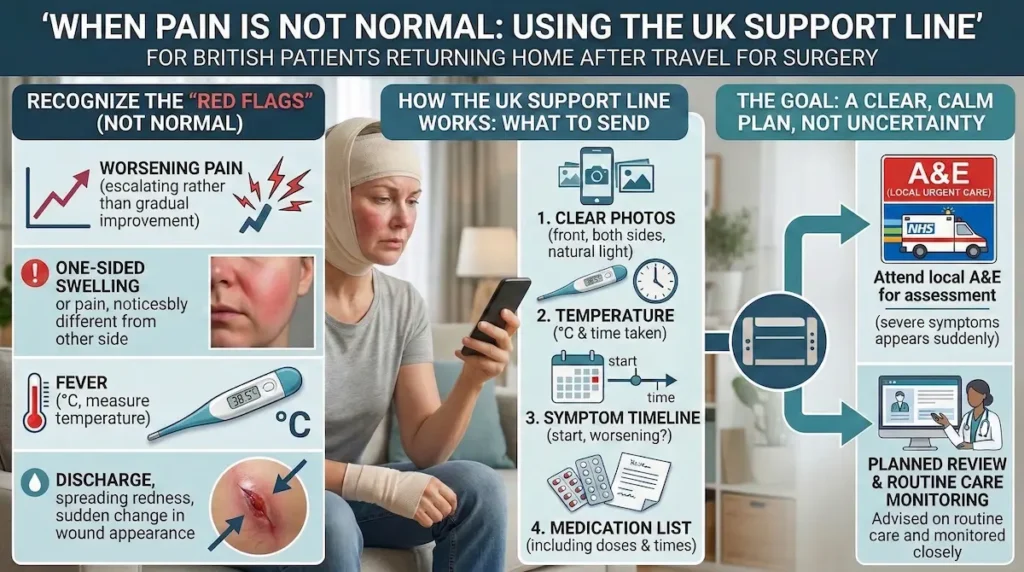
Red flags: fever, one-sided worsening, discharge, sudden increasing pain
While tightness and mild-to-moderate aching can be normal, certain patterns are not. Contact your team urgently if you experience any of the following:
- Worsening pain that escalates rather than gradually improves.
- One-sided swelling or pain that is increasing and noticeably different from the other side.
- Fever (measure your temperature in °C) or feeling significantly unwell.
- Foul-smelling discharge, spreading redness, or a sudden change in wound appearance.
How the UK support line works (what to send)
When messaging, it helps to send structured information so the team can advise quickly and safely:
- Photos: clear images in natural light (front and both sides).
- Temperature: your reading in °C and when it was taken.
- Timeline: when symptoms started and whether they are improving or worsening.
- Medication list: what you’ve taken (including doses and times).
Escalation pathway: A&E vs planned review
Sometimes the safest advice is to attend local urgent care (A&E) for assessment—particularly if severe symptoms appear suddenly. In other cases, you may be advised on adjustments to routine care and monitored closely. Either way, the goal is a clear, calm plan rather than uncertainty.
Frequently Asked Questions (FAQ): Pain Management After Facelift
These answers are designed for quick clarity and reflect the most common UK search queries, including pain after facelift how long does it last and facelift recovery discomfort vs pain. Always follow your personalised plan if it differs.
Is facelift pain worse at night?
It can feel worse at night because you’re more aware of sensations when you’re still, and swelling can feel more noticeable when you lie down. Elevation, a calm bedtime routine, and following your medication plan usually helps.
How long will I need paracetamol after a facelift?
Many patients use paracetamol regularly in the early phase and then taper as comfort improves. The exact duration varies by individual and procedure details. Follow your surgeon’s instructions and do not exceed label guidance.
What does “tightness” mean — is it the same as pain?
Not necessarily. Tightness is often a pressure or pulling sensation related to swelling and tissue support. It can be uncomfortable, but it isn’t always “pain” in the sharp sense. This distinction is at the heart of tightness vs pain after facelift.
Is numbness normal, and can it feel uncomfortable?
Yes—numbness is common and can feel strange. Some people experience tingling or “pins and needles” as sensation returns. This is usually part of nerve recovery.
What pain level should make me contact the UK support line?
Contact the team if pain is worsening rather than improving, becomes severe, is one-sided and increasing, or is associated with fever, discharge, or feeling unwell.
Can I take ibuprofen after a facelift?
This depends on your surgeon’s protocol and your medical history. Because ibuprofen can affect bleeding/bruising risk in some contexts, do not self-start it. Ask your AKM team first—especially in the first week.
How long does pain after a facelift last?
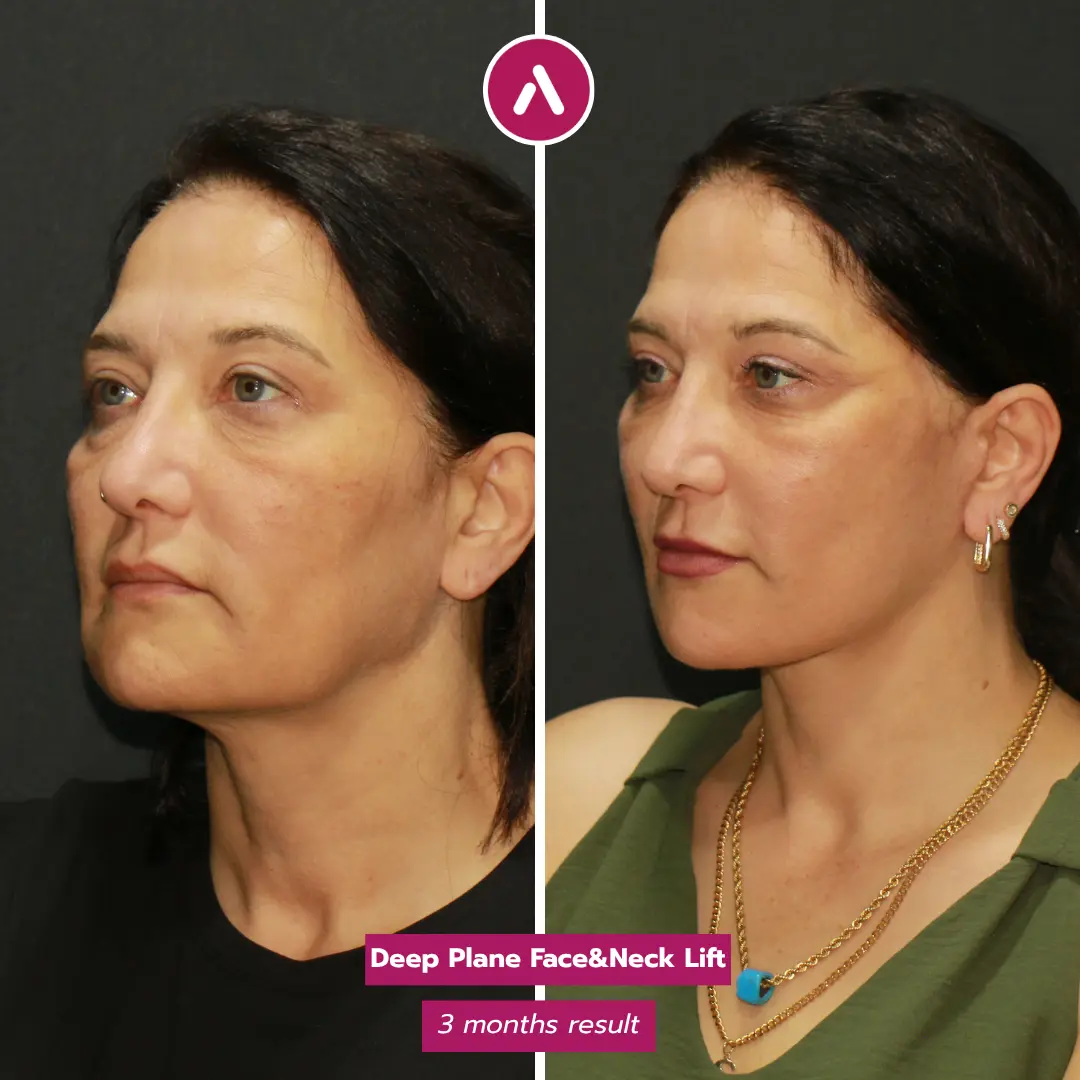
Most patients notice discomfort reducing steadily over the first 7–14 days, with tightness and altered sensation sometimes lasting longer. The overall trend should be gradual improvement week by week.
If you’d like to go beyond pain control, you can also explore our related guides on Hyperbaric Oxygen Therapy and Minimising Scars, as well as practical planning topics such as Fly After Facelift, the Surgery Abroad Safety Checklist, Travelling Solo for Surgery, and your Pre-Surgery Checklist—so you can feel confident about every step, from preparation in the UK to recovery and safe travel home.
Medical Disclaimer: This page is provided for general educational purposes only and does not replace a face-to-face medical consultation, diagnosis, or personalised treatment plan. All surgery carries risks and outcomes vary between individuals. Suitability for a facelift surgery, procedure selection, and anaesthesia choice can only be determined after a full clinical assessment by a qualified surgeon. Always follow your clinician’s instructions and seek urgent medical attention if you develop concerning symptoms during recovery.