
Deep plane facelift recovery is often the single biggest deciding factor for UK patients considering surgery in Istanbul: not just “how long until I look better?”, but “how soon can I be confidently seen, comfortably fly home, and return to normal life?”. In this guide, we explain an evidence-led, practical approach to recovery after deep plane facelift surgery — including how supportive modalities like HBOT for facelift recovery (Hyperbaric Oxygen Therapy) and LLLT scar healing therapy facelift recovery (Low-Level Laser Therapy) may help optimise healing. We’ll also map out a clear deep plane facelift recovery timeline, and what “accelerated” can realistically mean in the context of modern medical science and post-operative care.
Important note: Recovery varies between individuals. Factors such as skin quality, smoking status, existing medical conditions, and surgical technique influence healing speed. This article is educational and does not replace an individualised surgical consultation.
Table of Contents
Why “Accelerated Recovery” Matters for UK Patients Travelling to Istanbul
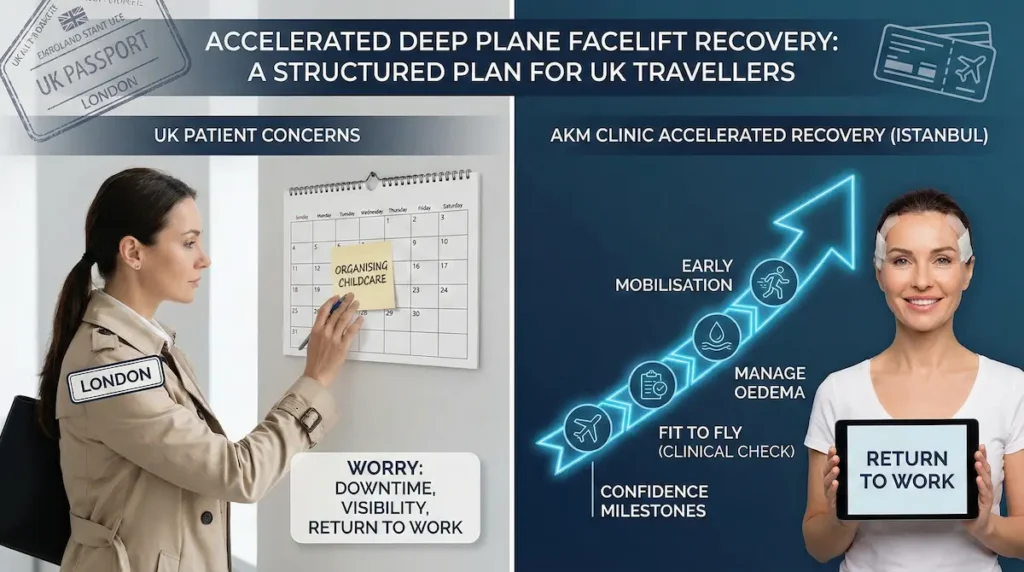
For many British patients, the goal is not only an excellent aesthetic outcome, but also a predictable, well-supported return to daily life. If you are planning time off work, organising childcare, or managing “public-facing” commitments, you need more than vague reassurance — you need a structured plan. That’s why we frame recovery deep plane facelift in practical milestones and a travel-aware schedule, rather than a one-size-fits-all promise. When patients ask for recovery time for deep plane facelift, they are often asking when they’ll look socially presentable and feel comfortable, not just when the wound is technically healed.
The real-world problem: downtime, visibility, and returning to work in the UK
Deep plane techniques can deliver refined, long-lasting rejuvenation, but the first two weeks can involve bruising, swelling (oedema), and tightness. That “visible” stage is what many patients worry about most. A sensible plan focuses on:
- Appearance milestones: when bruising starts fading and swelling becomes easier to conceal.
- Comfort milestones: when sleeping, eating, and light activity feel normal again.
- Confidence milestones: when you feel comfortable seeing friends, attending appointments, or being on camera.
This is the mindset behind a structured deep plane facelift recovery timeline — it supports realistic planning, not wishful thinking.
Travel Planner priorities: DVT risk, swelling (oedema), and flight timing
UK patients travelling for surgery often have additional concerns beyond healing. Flying too soon can aggravate swelling and discomfort, and prolonged immobility is a known risk factor for deep vein thrombosis (DVT). A recovery plan should therefore include travel-aware precautions such as:
- Early mobilisation guidance (safe walking schedules from the first days).
- Hydration and movement strategies for travel days.
- A clear “fit-to-fly” mindset based on clinical checks rather than guesswork.
When people search for recovery after deep plane facelift, they’re often looking for exactly this: a day-by-day approach that makes travelling home feel safer and more predictable.
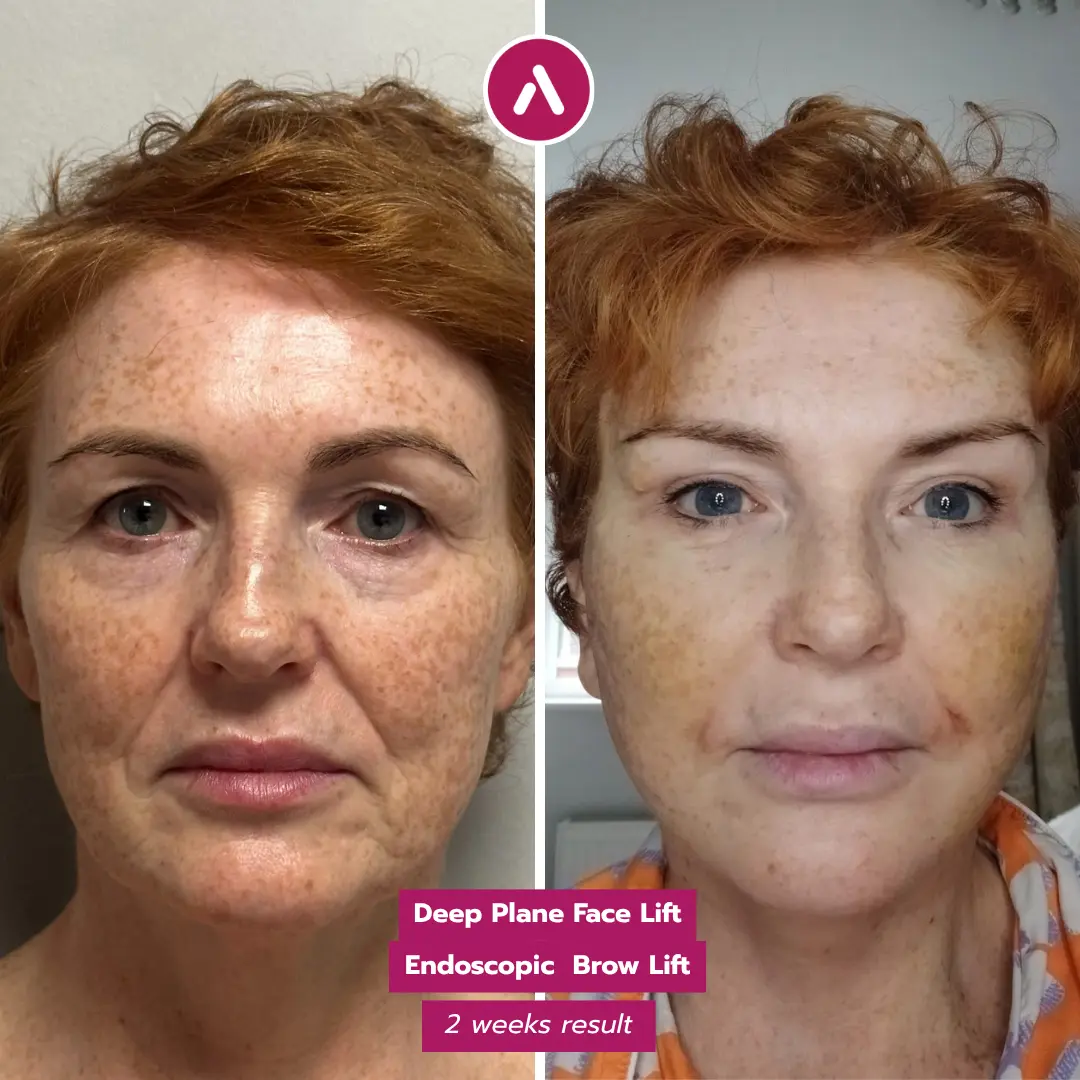
“Rejuvenation, not alteration”: why subtle healing matters as much as subtle results
Most “expert patients” in the UK want natural-looking outcomes — refreshed, not recognisably “done”. That preference extends to recovery: patients want swelling and bruising managed carefully, scars supported thoughtfully, and post-operative care delivered with a calm, methodical approach. In the language of science and scientific research, that means prioritising tissue oxygenation, inflammation control, wound healing conditions, and patient compliance — the fundamentals that influence how you look and feel week by week.
Deep Plane Facelift Healing Basics (What’s Normal vs What Needs Attention)
Understanding what is normal during deep plane facelift recovery can reduce anxiety and help you respond appropriately if something feels “off”. Deep plane surgery works at a deeper structural level than skin-only tightening, so early sensations such as tightness, numbness, and swelling can be expected — but they should follow a steady improving trend. Below, we separate normal healing patterns from signs that merit prompt clinical contact.
What deep plane surgery changes beneath the skin (and why swelling behaves differently)
In a deep plane facelift, repositioning occurs in the deeper facial layers, which can produce more meaningful lifting with a more natural contour. Because deeper tissues are involved, post-operative swelling may feel more “structural” (firmness, tightness) at first. This does not automatically mean something is wrong — it often reflects the body’s inflammatory response as tissues stabilise.
For patients asking “recovery time for deep plane facelift — why does it feel tight for weeks?”, the answer is usually that deeper tissue healing and remodelling continues long after bruising fades.
Expected bruising and oedema patterns: first 72 hours vs first 2 weeks
While each patient varies, there are commonly recognised phases within a deep plane facelift recovery timeline:
- First 72 hours: swelling tends to peak; bruising can appear darker; discomfort is often best controlled with a planned regimen (for UK patients, typically including Paracetamol where appropriate).
- Days 4–7: bruising begins to shift colour and migrate; swelling gradually softens; light walking helps circulation and comfort.
- Days 8–14: many patients feel significantly more presentable; residual swelling may remain around the jawline/neck; makeup (when approved) can help camouflage mild bruising.
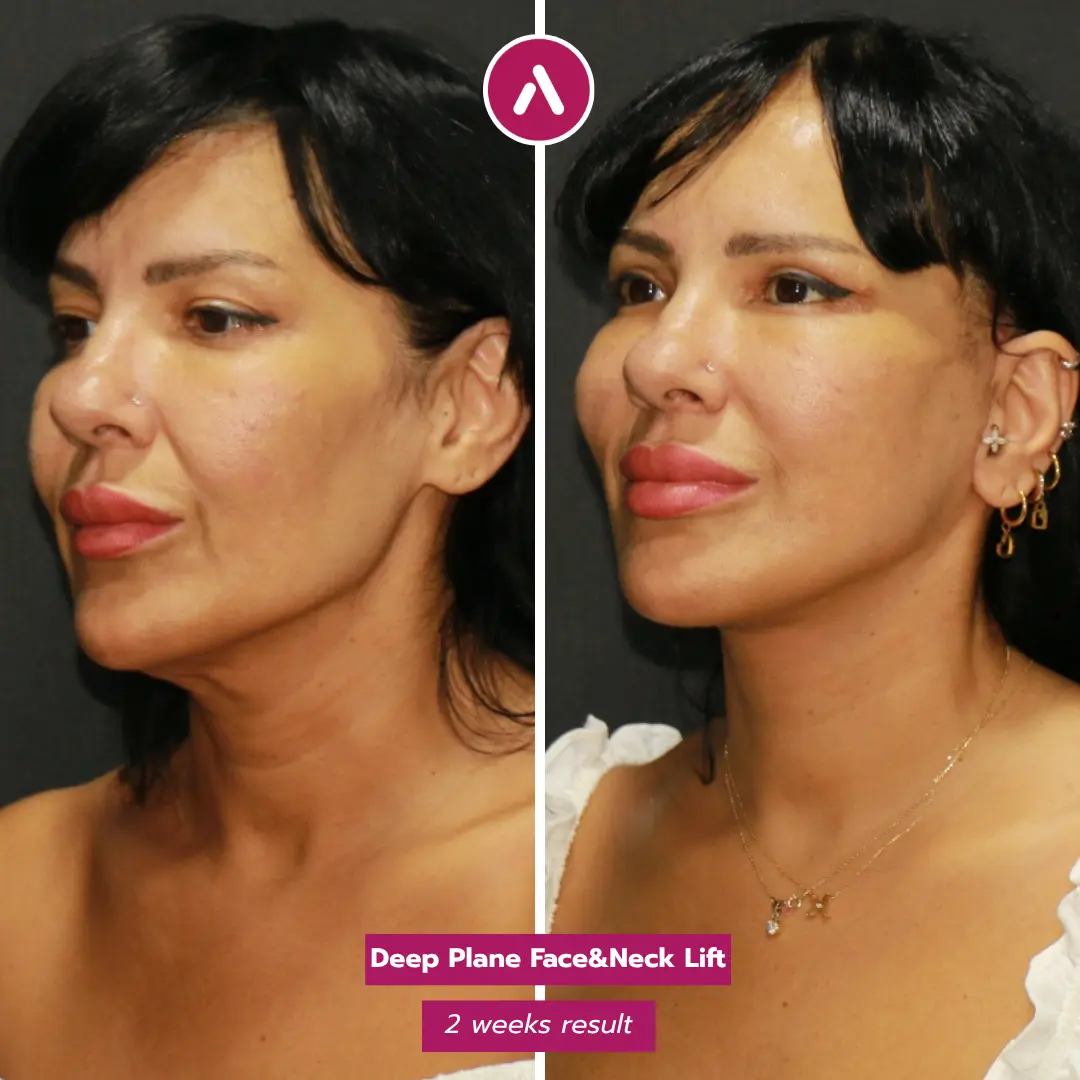
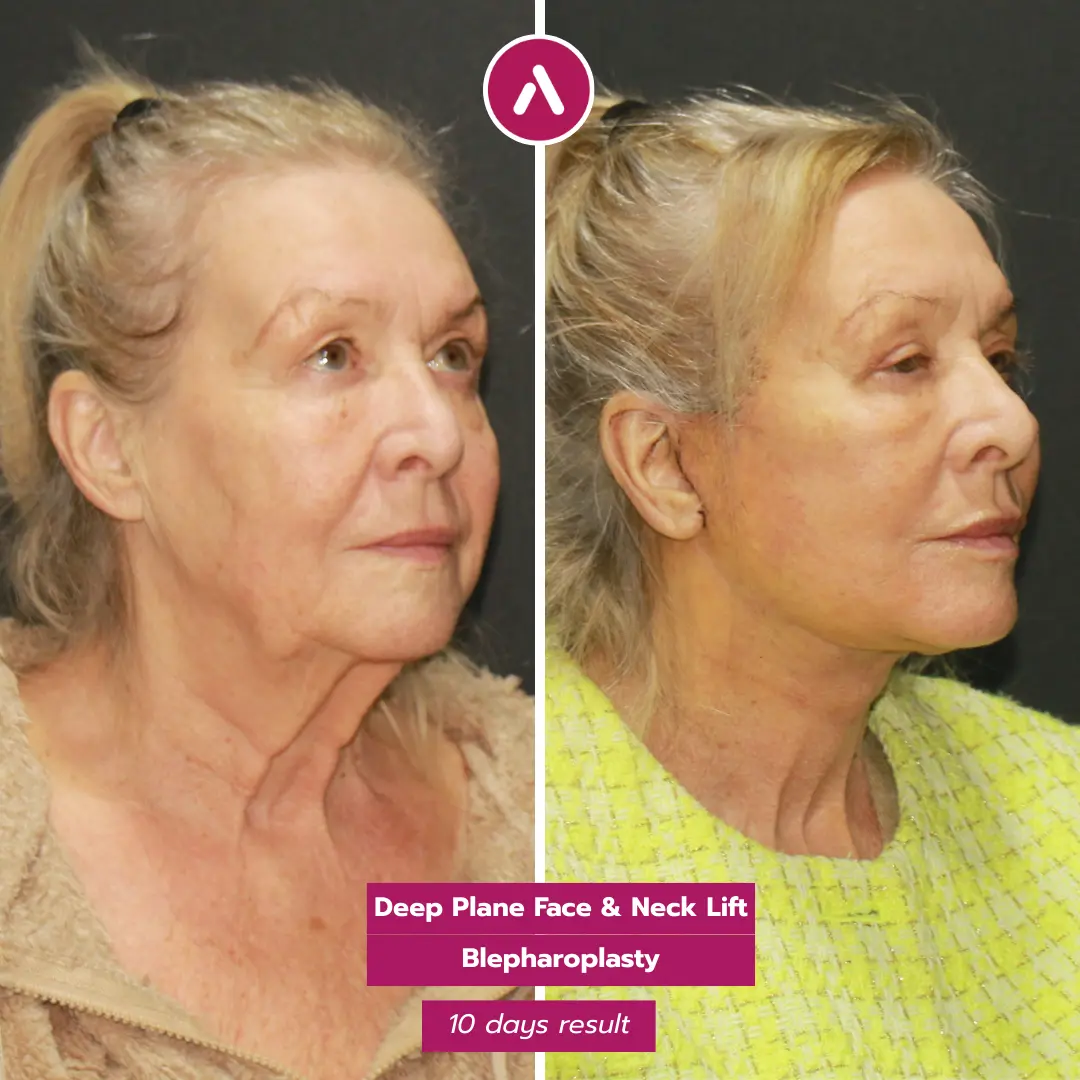
If you are researching deep plane facelift recovery day by day photos, remember that images online may not represent your skin tone, bruising tendency, or surgical plan. Use photos as general orientation — not as a promise of your exact day-by-day appearance.
Red-flag symptoms and when to contact your clinical team
Most recovery is uneventful, but certain symptoms should be treated seriously. You should contact your clinical team promptly if you experience:
- Sudden, rapidly increasing swelling on one side (especially if tense and painful).
- Increasing redness, heat, or discharge around an incision, or fever.
- Shortness of breath, chest pain, or calf swelling (urgent assessment is needed).
- Severe pain not improving with the agreed plan, or new neurological symptoms.
A well-run post-operative pathway includes clear instructions, an easy route to clinical advice, and structured follow-ups — particularly important for British patients returning home after surgery.
A Practical Recovery Timeline (Day 1 to Week 12) — UK Travel-Friendly View
A clear deep plane facelift recovery timeline helps you plan realistically: time off work, who will see you when, and when you might be comfortable flying back to the UK. Think of recovery as two parallel tracks: (1) how the tissues are healing internally, and (2) how you look and feel externally. The aim of “accelerated” recovery is to support both tracks responsibly — grounded in medical science, not hype — so swelling, bruising and scar healing progress as smoothly as possible.
Day 1–3: inflammation peak, dressings, sleep positioning, early mobilisation
In the first 72 hours, swelling commonly peaks and bruising may deepen in colour. You may feel tightness, mild numbness, and a “pulled” sensation, especially when speaking or chewing. Your priorities during this phase are:
- Rest with structure: Sleep with your head elevated to help reduce oedema.
- Gentle mobilisation: Short, regular walks (as advised) to support circulation and reduce DVT risk.
- Consistent aftercare: Follow dressing and wound-care guidance precisely (clean hands, no unapproved products).
- Comfort plan: Use only the pain relief agreed by your clinician (UK patients often expect Paracetamol options where appropriate, and clear guidance on what to avoid).
If you are looking for deep plane facelift recovery day by day photos online, Day 1–3 images can be confronting. They do not predict your final outcome — they simply reflect normal post-operative inflammation.
Day 4–14: bruising shift, stitch care, confidence milestones for “public-facing” days
This is often when patients start to feel noticeably better. Bruising typically changes colour and becomes easier to camouflage; swelling softens and begins to settle. Many UK patients find this phase most useful for planning “visibility milestones”:
- Days 4–7: Bruising migrates; swelling becomes less “tight”; appetite and energy improve.
- Days 8–10: Many patients feel more comfortable seeing people they trust.
- Days 11–14: A common point where patients feel increasingly “socially normal”, though not fully settled.
Stitch/incision care matters here. Even if you feel better quickly, incision sites still require disciplined protection. This is also the phase where supportive therapies (when clinically appropriate) may be introduced to optimise healing conditions.
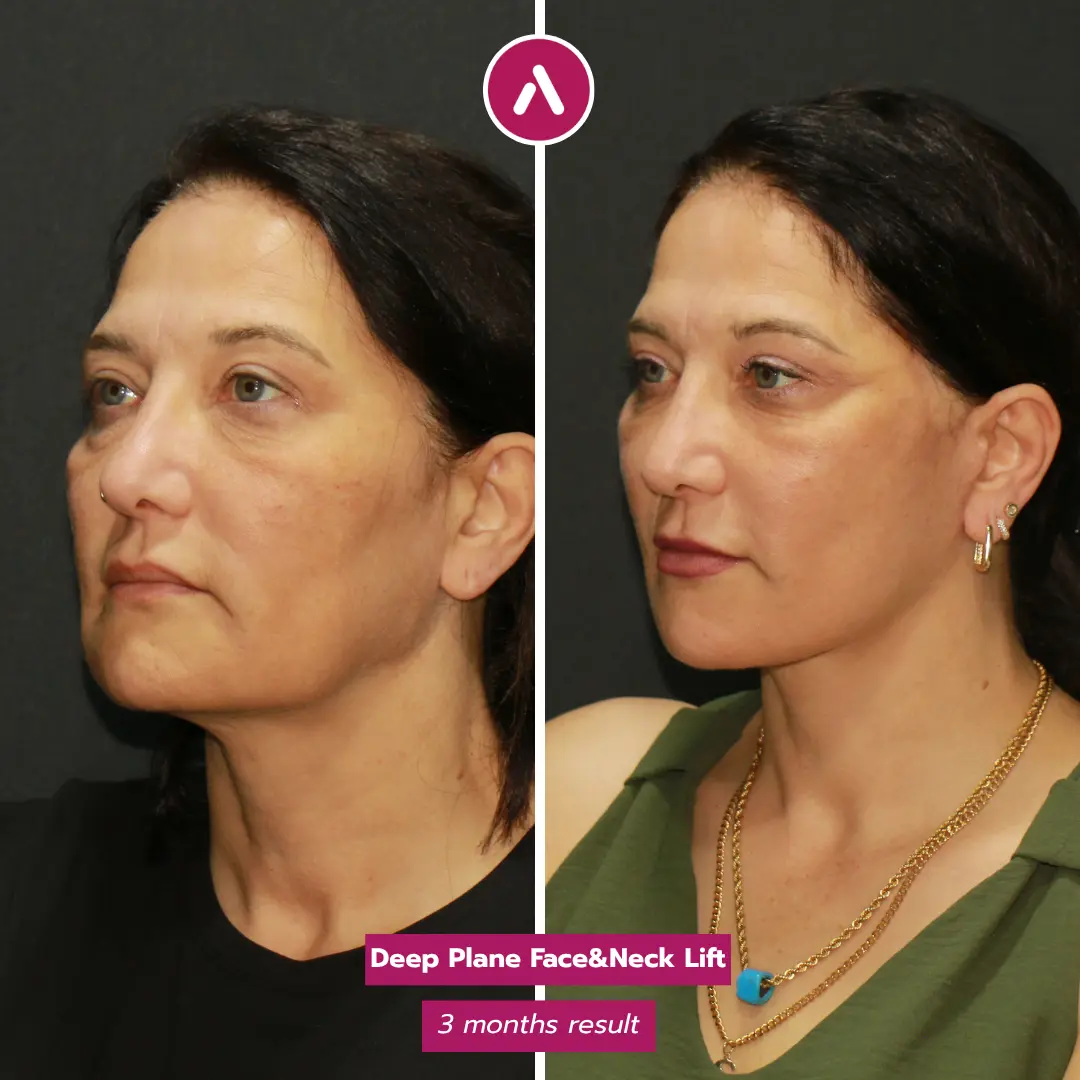
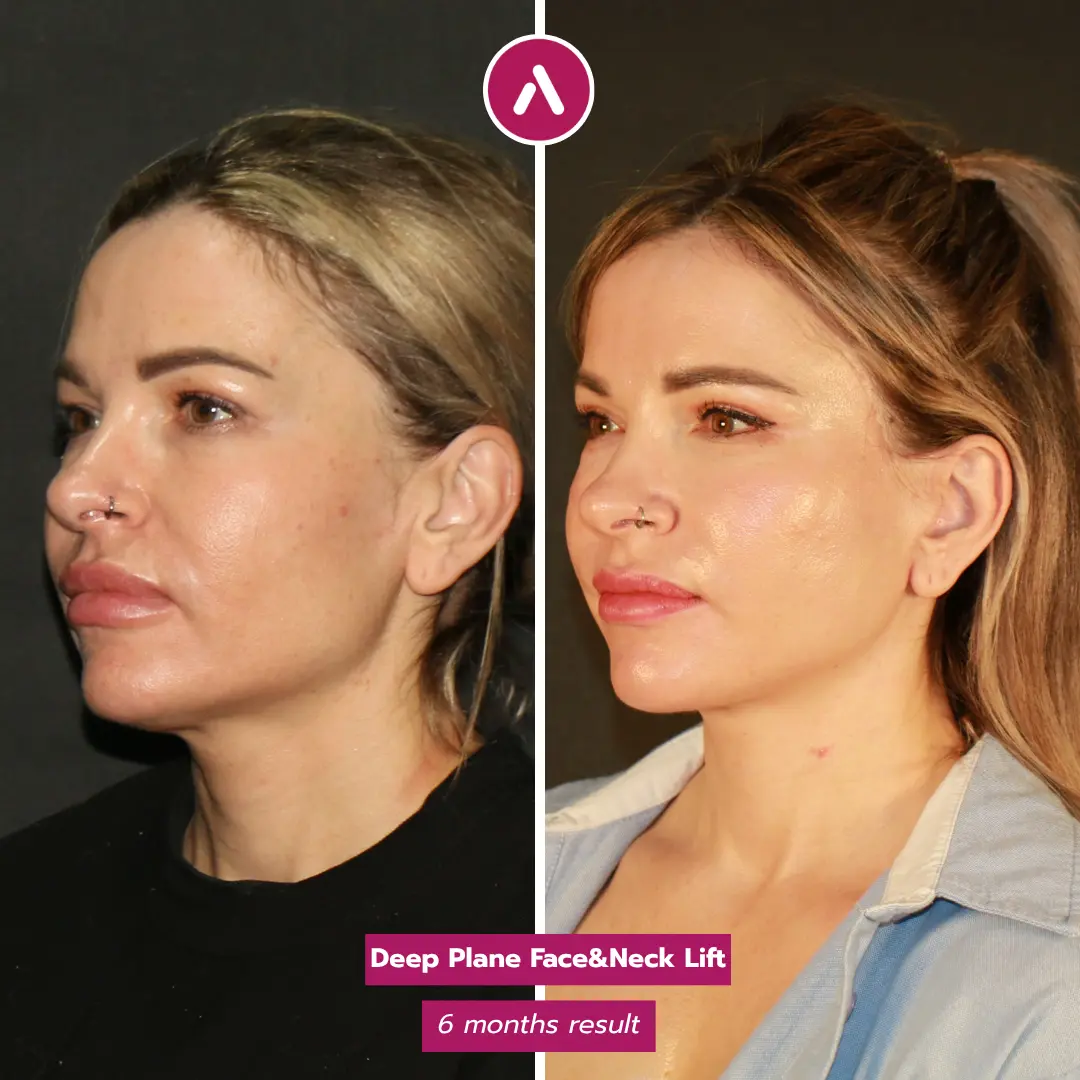
Week 3–12: scar maturation, residual tightness, and when results look “socially normal”
From Week 3 onwards, the “public” recovery tends to improve steadily — but internal healing continues. Mild swelling may persist, particularly around the jawline and under the chin. Tightness and numbness often fade gradually over weeks to months. If you’re asking about recovery time for deep plane facelift, this is the reality: you can look very presentable before tissues are fully remodelled.
- Weeks 3–6: Most bruising is gone; swelling continues to reduce; scars may look pink and feel slightly firm.
- Weeks 6–12: Oedema typically continues to settle; scars begin to mature; facial movement feels more natural.
During this period, scar support and skin care guidance become increasingly important. Many patients also choose to track progress through private photographs. (If you’re searching deep plane facelift recovery day by day photos, consider that consistent lighting and angles give a more accurate picture than random snapshots.)

What HBOT Is and How It May Support Post-Op Recovery
HBOT for facelift recovery refers to Hyperbaric Oxygen Therapy, where you breathe oxygen in a pressurised environment. The core concept is to support oxygen delivery to tissues at a time when swelling and surgical trauma can temporarily reduce local circulation efficiency. In the context of scientific research and post-operative wound care, oxygen availability is a key variable in healing biology — it influences processes involved in tissue repair.
HBOT explained in plain English: oxygen delivery and tissue healing rationale
After surgery, tissues are repairing, and the body’s inflammatory response is active. HBOT aims to increase the amount of oxygen dissolved in the bloodstream, potentially supporting oxygenation of healing tissues. While individual outcomes vary, the clinical reasoning is grounded in the role of oxygen in tissue repair pathways.
For UK patients, the practical question is: “Will this help me look and feel better sooner?” HBOT is often used as a supportive measure within a wider recovery protocol — not as a magic switch.
HBOT and bruising/oedema: what improvements patients typically notice and when
Patients who undergo HBOT as part of a structured pathway often report that swelling feels less “heavy” and bruising may appear to resolve more smoothly. When it helps, the perceived benefits are most often noticed within the first 1–2 weeks — the stage where oedema and bruising are most visible.
It’s important to interpret “accelerated” correctly: it usually means earlier confidence and earlier comfort, rather than skipping recovery altogether. That’s why HBOT is positioned as part of a responsible approach to recovery after deep plane facelift, not a replacement for time and disciplined aftercare.
Who is (and isn’t) a candidate for HBOT: safety screening and contraindications
HBOT is not suitable for everyone. A reputable clinic should screen you properly, including medical history and relevant risk factors. Common reasons to defer or avoid HBOT can include certain ear/sinus issues, untreated pneumothorax, or other contraindications assessed by clinicians. If you’re travelling from the UK, this screening should be done early — before you build your trip plan around specific session schedules.
What LLLT Is and Why We Use It for Incision & Scar Support
LLLT scar healing therapy facelift recovery refers to Low-Level Laser Therapy (sometimes called “cold laser”). It is not the same as cosmetic resurfacing lasers. Instead, it uses low-intensity light to support cellular processes associated with healing. In broad terms of medical science, it aims to create a supportive environment for tissue repair and scar quality.
LLLT explained: low-level laser therapy and why it’s different from “aesthetic lasers”
LLLT uses low-energy light delivered in a controlled way. It is designed to be gentle and is typically used to support healing rather than to remove layers of skin. That distinction matters: deep plane facelift patients need incision support and scar optimisation, not aggressive resurfacing during early healing.
Incision support: reducing visible scar signals and supporting clean healing
When used appropriately, LLLT is often included to support incision comfort and scar quality during the early-to-mid healing window. The goal is not to erase scars instantly (no therapy can do that), but to support the biological conditions that influence how scars mature over weeks and months.
From a patient perspective, this aligns with what many UK patients want most: a discreet recovery and refined, subtle results — including discreet scars.
How sessions are scheduled alongside wound care and skin sensitivity
Timing matters. LLLT should only be started when your surgeon confirms that incisions are stable enough and that your wound-care plan is on track. It must be integrated into a wider recovery plan that includes:
- Incision hygiene and protection (no unapproved topical products).
- Guidance on when makeup and skincare can be safely reintroduced.
- Clear expectations for what “normal” scar maturation looks like over time.
The AKM Clinic Integrated Protocol: How HBOT + LLLT Fits Into a Deep Plane Journey
To support a smoother deep plane facelift recovery, HBOT and LLLT work best when they are not treated as add-ons, but integrated into a structured post-operative pathway. In plain terms: timing, screening, and consistency matter. An “accelerated” plan in medical science is rarely about a single intervention; it is about stacking sensible, low-risk supports that improve the healing environment while maintaining patient safety and realistic expectations.
When HBOT starts, how often it’s delivered, and what patients feel during sessions
HBOT is usually most relevant during the early window when bruising and oedema are at their most visible and uncomfortable. Session scheduling varies by patient factors and clinical assessment, but the logic is typically to place sessions within the first days to two weeks, when tissues are actively managing inflammation and early repair.
- What it feels like: Many patients describe a pressure-change sensation similar to flying (ear “popping”), plus a calm, resting environment during the session.
- Why that matters: Comfort and compliance are part of outcomes; a therapy you can tolerate consistently is more useful than a theoretically perfect plan you cannot follow.
- Safety note: Proper screening and ear/sinus assessment is essential, especially for patients planning to fly back to the UK soon after surgery.
When LLLT begins: timing around incision integrity and surgeon clearance
LLLT scar healing therapy facelift recovery should only begin when the surgeon is satisfied that incision sites are stable and healing is progressing appropriately. Starting too early can be counterproductive if it interferes with wound-care priorities. Used at the right time, LLLT is typically positioned as supportive for incision comfort and scar maturation over the weeks that follow.
- Early healing priority: Clean, protected incisions and consistent aftercare.
- Mid healing priority: Supporting scar quality while swelling continues to settle.
- Long-term priority: Scar maturation (colour and texture changes) over weeks to months.
“Flight-ready recovery protocols”: combining tech with mobilisation, hydration, and monitoring
For UK patients, the most valuable “accelerated recovery” framing is often flight-ready planning. This is where HBOT and LLLT sit alongside fundamentals that are strongly supported by scientific research on post-operative recovery and travel risk reduction:
- Early mobilisation: short, frequent walks (as advised) to support circulation and reduce DVT risk.
- Hydration & nutrition: consistent fluids and protein intake to support tissue repair.
- Swelling control: elevation, gentle activity, and avoiding triggers (smoking, alcohol, heat exposure where advised).
- Monitoring & escalation: clear guidance on normal symptoms vs red flags, plus rapid access to clinical advice.
This combined approach is often what patients really want when they search for recovery deep plane facelift or recovery after deep plane facelift: fewer surprises and a smoother return to normal life.
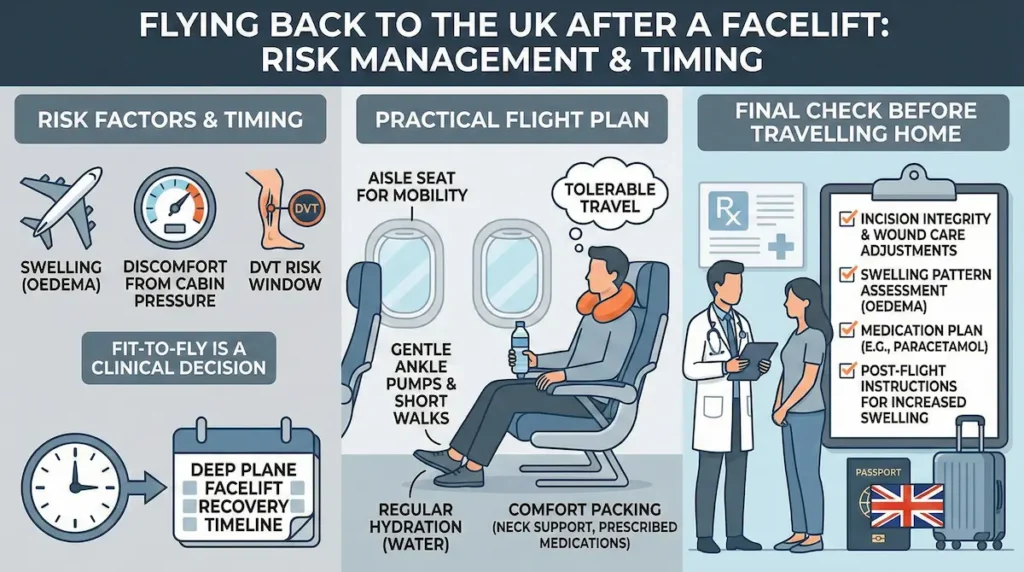
Flying Back to the UK After a Facelift: Risk Management & Timing
Flying after facial surgery is not simply a matter of booking a ticket. Your recovery plan should include a clinically sensible view of timing, comfort, swelling behaviour, and DVT risk management. The most responsible answer to “when can I fly?” is based on your individual clinical assessment and progress — not an arbitrary number of days. That said, you can reduce risk and discomfort by approaching travel as part of your deep plane facelift recovery timeline.
The main risks of flying too early (swelling, discomfort, DVT risk window)
Flying too early can increase discomfort and swelling because cabin pressure and prolonged sitting can aggravate oedema. The other key consideration is DVT risk, which is influenced by immobility, dehydration, recent surgery, and individual risk factors. This is why “fit-to-fly” should be treated as a clinical decision, not a social deadline.
Practical flight plan: seat choice, movement schedule, and comfort measures
If your surgeon confirms you are fit to fly, travel can be made significantly more manageable with practical planning:
- Seat strategy: aisle seats can make it easier to stand and walk at intervals.
- Movement plan: gentle ankle pumps and short walks when safe to do so.
- Hydration: regular water intake; avoid alcohol which can worsen dehydration and swelling.
- Comfort packing: neck support pillow, prescribed medications, and aftercare essentials.
Patients often compare their progress to deep plane facelift recovery day by day photos online and worry that swelling will “ruin the flight home”. In reality, a well-structured plan and the right timing usually make travel tolerable — but rushing is rarely worth it.
What your final in-person check should include before travelling home
Before returning to the UK, you should have an in-person review that focuses on clinical stability and practical readiness, including:
- Incision integrity and any wound-care adjustments.
- Swelling pattern assessment (is it improving in a predictable way?).
- Medication plan for travel day (including guidance on pain relief such as Paracetamol where appropriate).
- Clear instructions for what to do if swelling increases after the flight.
Evidence-Led Expectations (What “Faster” Actually Means)
In the language of medical science, “faster recovery” should be defined in measurable, patient-relevant outcomes — not in unrealistic claims. Even with excellent surgery and supportive care, healing still requires time. The value of an optimised protocol is often seen in the quality and smoothness of recovery: less anxiety, fewer unexpected setbacks, and earlier confidence in your appearance.
“Accelerated” ≠ instant: setting honest expectations for bruising, swelling, and scars
It is normal for swelling to fluctuate, and scars take time to mature. If you are asking about recovery time for deep plane facelift, the honest answer is that early “social recovery” can happen well before complete tissue remodelling. Many patients feel increasingly presentable within a few weeks, but refinement continues over months.
What patients usually mean by faster: earlier confidence, earlier routine, less visible downtime
When patients search HBOT for facelift recovery or LLLT scar healing therapy facelift recovery, they often mean:
- “Will I feel comfortable going out sooner?”
- “Will bruising and oedema settle more smoothly?”
- “Can I return to work and social life without being obviously post-op?”
These are reasonable goals, and they’re best achieved by combining surgeon-led planning with disciplined aftercare — and supportive modalities used at the right time for the right patient.
What else moves the needle: technique, aftercare discipline, smoking status, and nutrition
Even the best supportive therapy cannot fully compensate for modifiable risk factors. The strongest predictors of a smoother recovery typically include:
- Surgeon technique and tissue handling: gentle, meticulous surgery supports cleaner healing.
- Aftercare compliance: incision care, activity guidance, and follow-up adherence.
- Smoking status: smoking is a major risk factor for impaired healing and poor scar quality.
- Nutrition and hydration: adequate protein and fluids support repair processes.
Frequently Asked Questions (FAQ): Deep Plane Facelift Recovery
Below are concise answers to common UK patient questions about recovery after deep plane facelift, including HBOT and LLLT. These are general guidelines; your own plan should be personalised after clinical assessment.
How many HBOT sessions do I need after a deep plane facelift?
It depends on your healing profile and clinical assessment. HBOT is often scheduled in the early recovery window when swelling and bruising are most active, but the exact number of sessions should be decided by your clinical team based on safety screening and progress.
When can I start LLLT after surgery?
LLLT should only begin once your surgeon confirms incision stability and appropriate wound healing. Starting at the right time is more important than starting early.
Does HBOT help with swelling (oedema) and bruising, or is it mainly for wound healing?
HBOT is used with the aim of supporting tissue oxygenation and healing conditions. Patients often seek it for smoother bruising and oedema resolution, but results vary and it should be viewed as supportive rather than guaranteed.
Is LLLT safe around facelift incisions and stitches?
When used under clinical guidance and at the correct stage, LLLT is generally positioned as a supportive therapy for incision comfort and scar quality. It should not replace wound care and should not be started without surgeon clearance.
When is it usually safe to fly back to the UK after a facelift?
There is no single universal day that fits everyone. “Fit-to-fly” should be assessed clinically, taking into account incision status, swelling behaviour, comfort, and individual DVT risk factors.
What should I do if swelling increases after my flight home?
Mild swelling increase can happen after travel. Follow your aftercare guidance (elevation, hydration, gentle movement) and contact your clinical team if swelling is sudden, painful, one-sided, or accompanied by redness, heat, fever, or breathing symptoms.
Can HBOT/LLLT reduce the risk of visible scarring?
They may support the biological conditions associated with better healing and scar maturation, but no therapy can “guarantee” invisible scars. Scar quality is influenced by technique, genetics, incision care, and time.
If you’d like to go beyond this topic, you can also explore our guides on Fly After Facelift and the Surgery Abroad Safety Checklist, plus a step-by-step Deep Plane Facelift Journey to help you plan confidently. For real patient insight, read a Deep Plane Facelift Story, and see what to expect from natural-looking Facelift Results with our Deep Plane Facelift Before After overview—useful for setting realistic timelines, visibility milestones, and “socially presentable” expectations for UK patients.
Medical Disclaimer: This page is provided for general educational purposes only and does not replace a face-to-face medical consultation, diagnosis, or personalised treatment plan. All surgery carries risks and outcomes vary between individuals. Suitability for a deep plane facelift, procedure selection, and anaesthesia choice can only be determined after a full clinical assessment by a qualified surgeon. Always follow your clinician’s instructions and seek urgent medical attention if you develop concerning symptoms during recovery.