



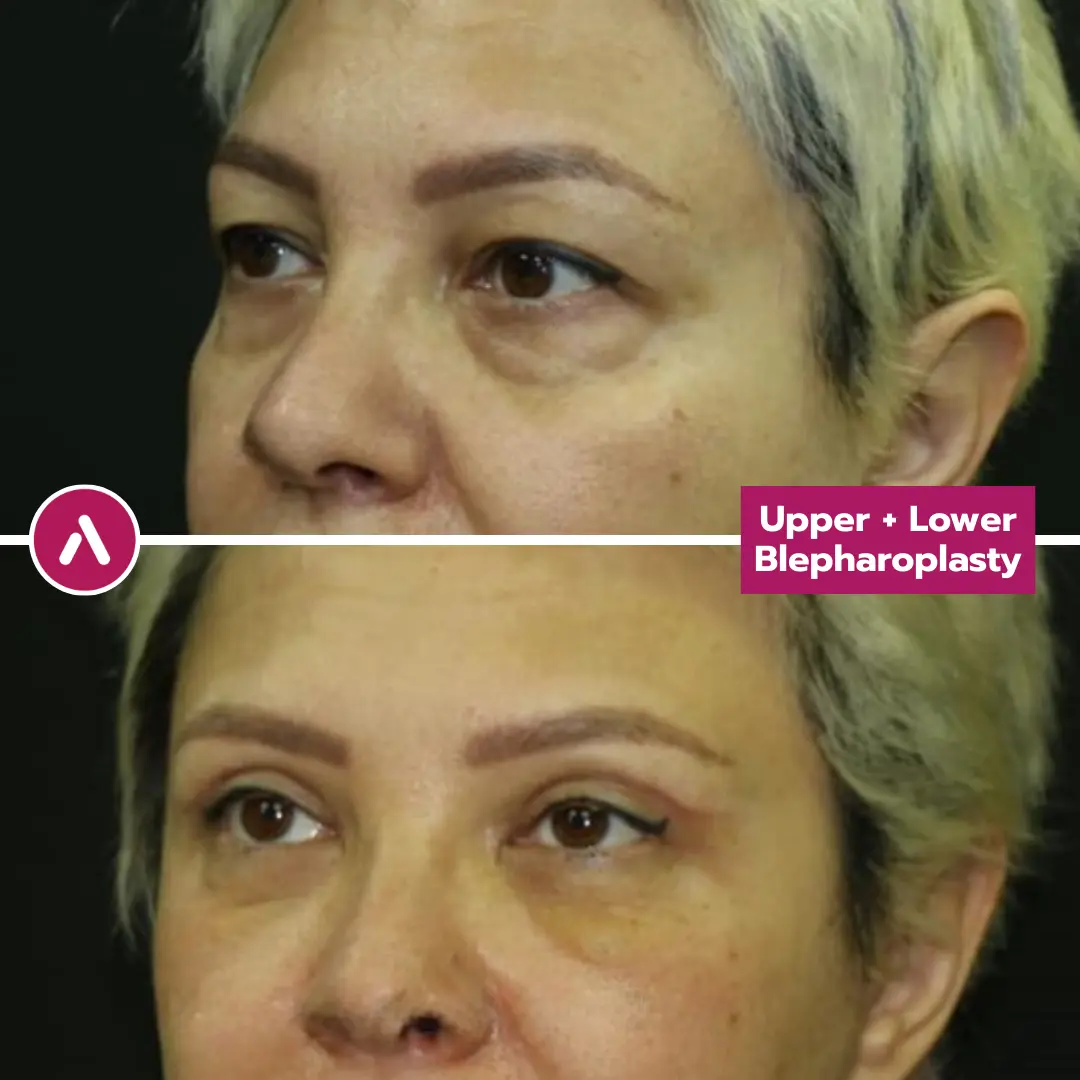
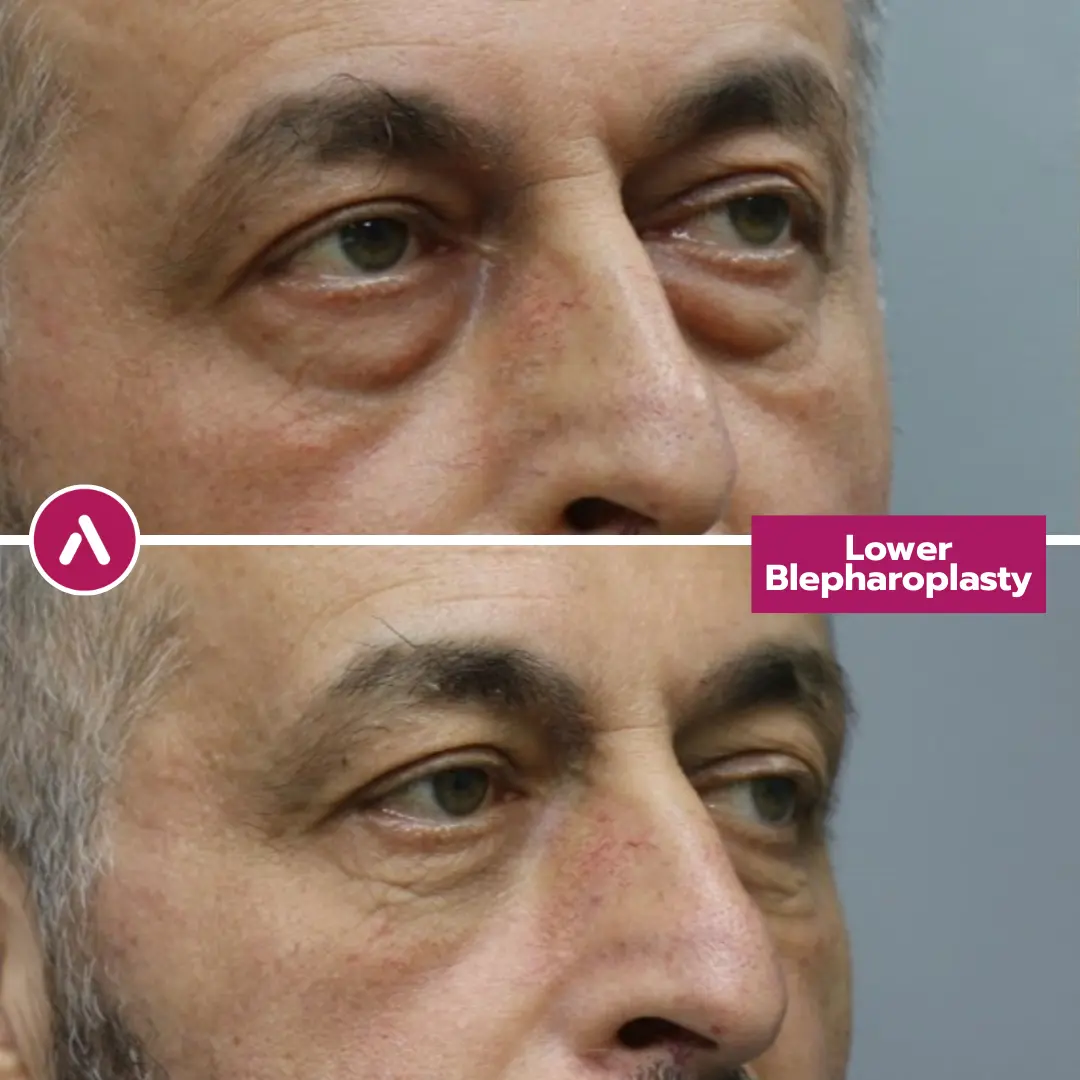
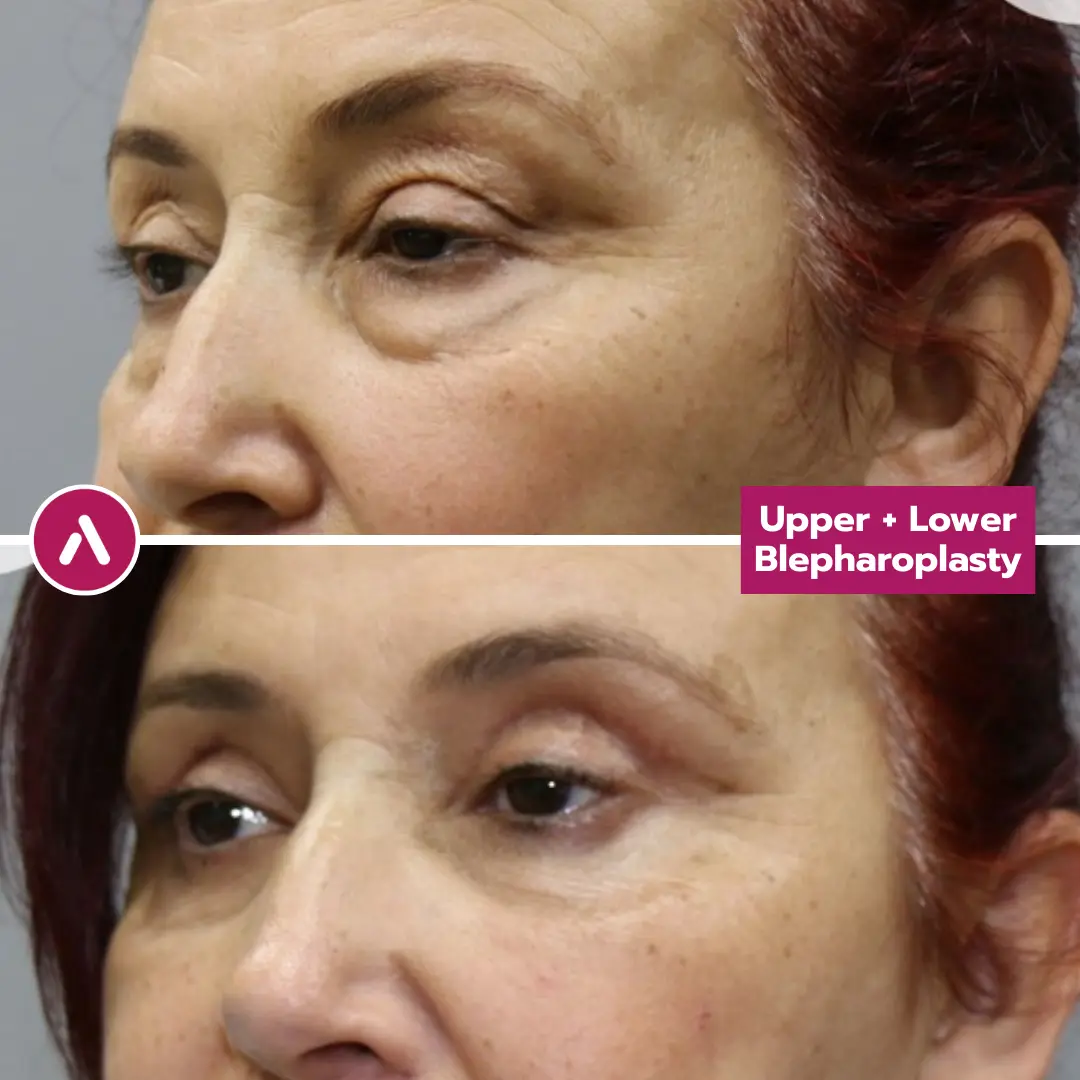
Blepharoplasty (Eyelid Surgery) is a precise procedure with a simple goal: to help your eyes look rested without changing your identity. Most people researching it are not chasing a dramatic “new face”. They are trying to remove heaviness, soften under-eye shadows, and look less tired on camera and in daylight. Our approach is guided by one principle: rejuvenation, not alteration.
Our aim is to restore a rested, natural expression. Not to create a different set of eyes.
Table of Contents

What is Blepharoplasty (Eyelid Surgery)?
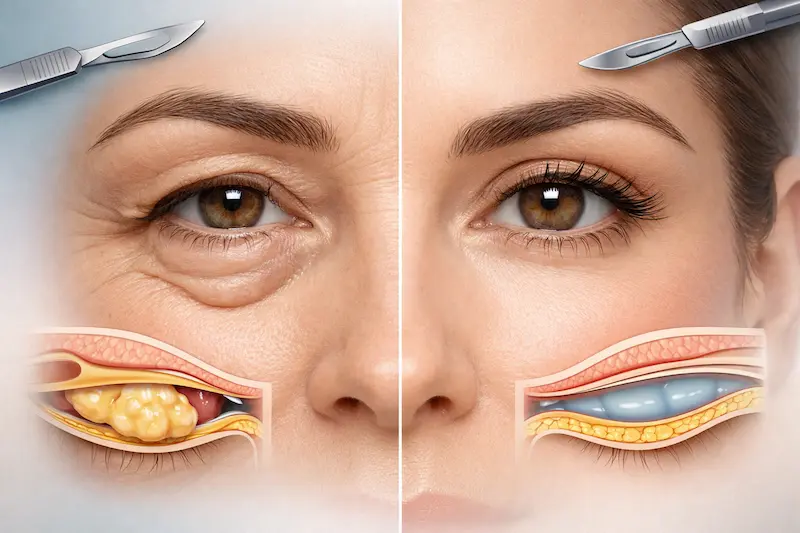
Blepharoplasty is a surgical reshaping of the upper eyelids, lower eyelids, or both. It removes or repositions small amounts of skin and, when needed, adjusts fat to reduce hooding or under-eye bags. The key is balance: too little change looks under-corrected, too much can look unnatural. Done properly, it should look like you slept well for months.
Upper vs lower eyelid surgery: what changes, what doesn’t
Upper eyelid surgery focuses on “hooding” — excess skin that folds over the natural crease. Lower eyelid surgery targets puffiness, bag-like bulges, and the shadow that forms between the lower lid and cheek. These are different anatomical problems, so they require different plans. It is normal to need one but not the other.
- Upper eyelid: reduces heaviness, reveals the lid crease, improves symmetry when one side droops more.
- Lower eyelid: softens bags and under-eye contour irregularities; may involve fat repositioning rather than removal.
- Both: chosen when the “tired” look comes from the entire peri-orbital area, not a single zone.
Blepharoplasty vs upper eyelid ptosis surgery (functional vs aesthetic)
Blepharoplasty is often aesthetic, but it can overlap with functional concerns. Ptosis surgery is different: it addresses a true droop of the eyelid margin caused by a weakened lifting muscle. In ptosis, the lash line sits lower and may affect vision, even if there is not much extra skin. In blepharoplasty, the lid margin position is usually normal, but the skin and soft tissue create the heaviness.
- Ptosis: eyelid margin sits low; the eye looks smaller; the issue is muscle function.
- Blepharoplasty: eyelid margin may be fine; excess skin or fat causes hooding or puffiness.
- Some patients need both: we decide this by examining lid height, crease position, and how your lids move.
Why eyelids look “tired”: the anatomy behind hooding and bags
The eyelid skin is among the thinnest on the body, so small changes show quickly. With time, the skin becomes looser and the supporting structures relax. Fat that once sat neatly behind the eyelid can bulge forward, creating a bag-like contour. Brow position also matters; a low brow can mimic excess upper eyelid skin.
- Skin laxity can form a fold over the crease (upper hooding).
- Fat prolapse can create lower lid “bags” and shadowing.
- Brow descent can make the upper lids feel heavier, even with minimal excess skin.
Benefits of Blepharoplasty (Eyelid Surgery)
The most valuable benefit is subtle: your expression matches how you feel. People often describe looking “fine” in the mirror but “exhausted” in photos. Eyelid surgery can reduce that mismatch by removing visual weight from the upper lids and smoothing the under-eye contour. The best result is not obvious surgery. It is a calmer, brighter baseline.
A more rested look, without changing your identity
When upper lid skin is heavy, it can create a shadow that reads as fatigue or stress. Reducing the fold can make the eyes look more open and alert. The change should be proportionate to your anatomy. We plan for a refreshed look, not a different eye shape.
- Less “hooding” in the upper lids
- Improved eyelid crease definition
- Better symmetry when one side has more skin or droop
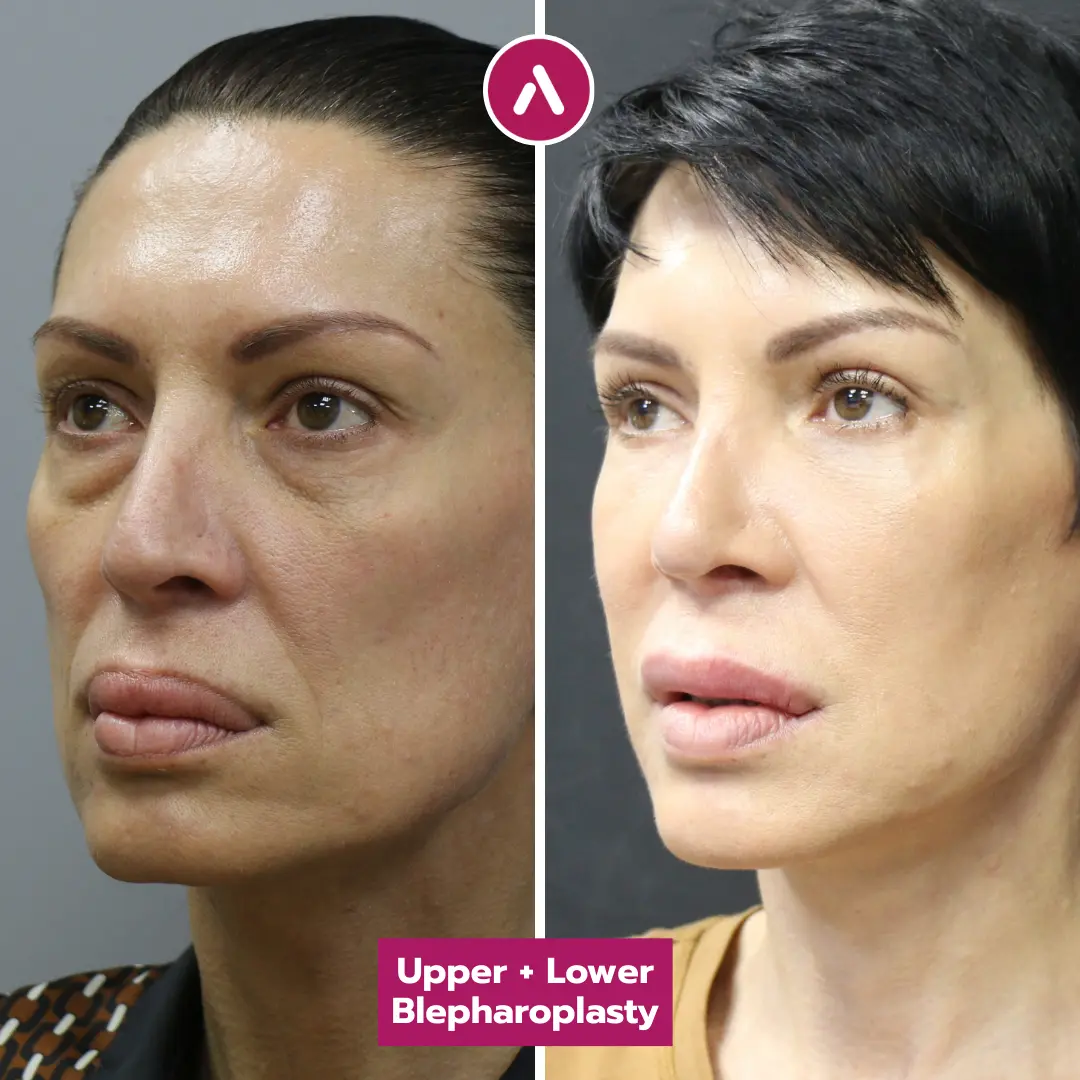
Under-eye bags and shadowing: when surgery helps most
Lower lid bags are not always “too much fat”. Often, they are a contour problem — bulge next to hollow creates a strong shadow. Surgery can reduce this by careful fat handling and skin support. In many patients, repositioning fat is more natural than aggressive removal. The aim is a smoother transition from eyelid to cheek.
- Reduced puffiness that makes the under-eye look swollen
- Softer tear-trough shadowing (where anatomy allows)
- A more even lower lid contour on video calls and in harsh lighting
Confidence, comfort, and practical day-to-day improvements
Some benefits are emotional, others are practical. With less upper lid heaviness, make-up can sit more predictably and the eyes can look less “closed off” by the end of the day. When the lower lid contour is smoother, people often report feeling less self-conscious in candid photos. If vision obstruction is present, upper lid correction may also support functional comfort.
- More consistent make-up application on the upper lids
- Reduced “tired” appearance in photos and bright environments
- Potential functional improvement when hooding blocks the upper visual field
Am I a Suitable Candidate for Eyelid Surgery?
Most suitable candidates are not looking to change their eye shape. They want to reduce upper lid heaviness, soften under-eye puffiness, or restore symmetry. Suitability is not only about appearance; it is also about eye health, skin quality, and realistic expectations. Our surgeons assess the full peri-orbital area so we can recommend the safest, most appropriate approach for your anatomy.
Signs you may benefit
You may be a good candidate if your concerns are caused by skin laxity, soft-tissue heaviness, or under-eye contour changes that do not respond to non-surgical options.
- Upper eyelid “hooding” that makes you look tired or older than you feel
- Asymmetry between the eyelids (one side looks heavier or lower)
- Lower eyelid puffiness or bags that create shadowing in photos
- A persistent “heavy” sensation in the upper lids by the end of the day
When we advise caution or delay
Eyelid surgery is generally well tolerated, but certain conditions can increase risk or complicate healing. In these situations, we may recommend stabilising the condition first, adjusting the plan, or involving your usual doctor. If you have a complex ocular history, we will be more conservative. Safety comes first.
- Significant dry eye symptoms, severe blepharitis, or uncontrolled eye irritation
- Thyroid eye disease or active inflammatory eye conditions
- Uncontrolled diabetes, uncontrolled blood pressure, or bleeding disorders
- Smoking or vaping (higher risk of delayed healing and visible scarring)
- Regular use of blood-thinning medication (this needs careful planning with your GP)
Your consultation checklist (what we need to plan properly)
Our aim is a plan that is tailored, not templated. During a surgeon-led consultation, we assess what is causing the “tired” look and what needs to change to correct it safely. This is also where we align on what a natural result looks like for you. Clear planning reduces the risk of over-correction.
- Front and side photos in natural light (plus a short video if possible)
- Your medical history, including eye history (dry eye, LASIK, contact lenses)
- Current medications and supplements (including aspirin, anti-inflammatories, herbal products)
- Your priorities: upper lids, lower lids, or both
- Your timeline for social downtime and travel

Your Anatomy, Your Plan: What We Assess Before Surgery
Successful eyelid surgery is decided before you enter the operating theatre. The planning stage is where we prevent common problems like a “hollowed” look, visible lid irregularities, or unnatural changes to eye shape. We evaluate not only the eyelids but also the surrounding structures that influence them. This is how we keep results refined and consistent with our “rejuvenation, not alteration” philosophy.
Skin quality and crease position
Upper eyelid surgery is not simply “removing skin”. Where the crease sits, how the skin folds, and how the scar will hide in the natural eyelid line all matter. We assess how much skin can be removed without creating tightness, lid pulling, or difficulty closing the eye comfortably. Small differences in millimetres can change the outcome.
- Skin laxity and how it drapes over the natural crease
- Crease symmetry from side to side
- Scarring risk based on skin thickness and healing profile
Fat compartments and lid support (remove vs reposition)
Under-eye “bags” are often a contour issue rather than “too much fat”. Removing fat aggressively can flatten the under-eye and create a hollow appearance over time. In many patients, a more natural plan is to reposition or conserve fat while improving support. Our surgeons decide this based on lid tone, cheek support, and the pattern of puffiness.
- Whether puffiness is true fat prolapse or a shadow/transition problem
- Lower lid tone and the risk of lid malposition if support is weak
- When fat repositioning is likely to look more natural than fat removal
Brow position: when the brow is the real driver of “heaviness”
A low brow can mimic excess upper lid skin. If we remove too much eyelid skin without addressing brow descent, the result can look tight rather than refreshed. That is why we assess brow height and tail position as part of every plan. In some cases, a brow or temporal lift is the more logical correction, either alone or alongside eyelid surgery.
- Brow descent patterns that create false “hooding”
- When a temporal lift improves the upper eyelid without over-resection
- How combined planning can protect a natural eye shape
Non-Surgical Alternatives: What They Can and Can’t Do
Many patients first explore non-surgical options because they want minimal downtime or feel unsure about surgery. That is understandable — but eyelid ageing is often structural. If the main issue is excess upper lid skin (hooding) or true lower lid fat prolapse (bags), non-surgical treatments can soften the appearance but rarely produce the clean, lasting improvement that surgery can achieve. The safest path is clarity: what a treatment can realistically do, and where it reaches its limit.
Upper eyelid fat removal without surgery: what’s realistic
In the upper eyelid, “fat” is not always the true cause of heaviness. Often, the dominant factor is skin laxity and how the skin drapes over the crease. Non-surgical treatments may tighten skin slightly or reduce inflammation-related puffiness, but they cannot reliably remove excess eyelid skin or reshape the internal structures with precision. If hooding is significant, blepharoplasty remains the most predictable corrective option.
- Non-surgical options may offer subtle skin tightening, not structural reshaping.
- They cannot remove a true skin fold that covers the crease in a stable way.
- They may be useful when surgery is not yet indicated, or as maintenance in selected cases.
Laser upper eyelid surgery vs non-surgical “laser tightening”
The term “laser” is often used in two very different ways. Some clinics use laser devices for superficial skin tightening. Surgical blepharoplasty, however, is a controlled, anatomical procedure performed in the operating theatre, where the surgeon can precisely remove or reposition tissue and create stable crease definition. If you are considering a “laser” approach, the key question is whether it is a true surgical technique under sterile conditions with appropriate anaesthesia — or a non-surgical device treatment that cannot correct hooding to the same degree.
- Non-surgical laser tightening: may improve skin texture or mild laxity; limited impact on true hooding.
- Surgical blepharoplasty: precise tissue control; stable correction for moderate to significant hooding.
- Best approach: decided by anatomy, not marketing terms.
Injectables and skin-tightening: where they help
In selected patients, non-surgical treatments can improve the overall “tired” impression — particularly when the issue is volume imbalance around the eyes rather than excess skin. For example, carefully placed filler can reduce the appearance of tear-trough shadowing in suitable candidates, and skin-quality treatments can improve fine crepiness. The limitation is that these options do not remove excess skin and can sometimes worsen puffiness if the product retains fluid.
- May help mild under-eye hollowing when anatomy is suitable.
- May improve fine lines and skin texture in selected patients.
- Not ideal for significant upper lid hooding or true lower lid bags.
When “non-surgical” delays the inevitable
If you repeatedly invest in treatments that cannot correct the core anatomical problem, you may lose time and money without achieving the outcome you want. More importantly, repeated treatments in the wrong candidate can complicate future surgical planning by creating swelling patterns or tissue changes. A surgeon-led assessment helps you avoid that cycle and choose the most direct, safest route to a natural result.
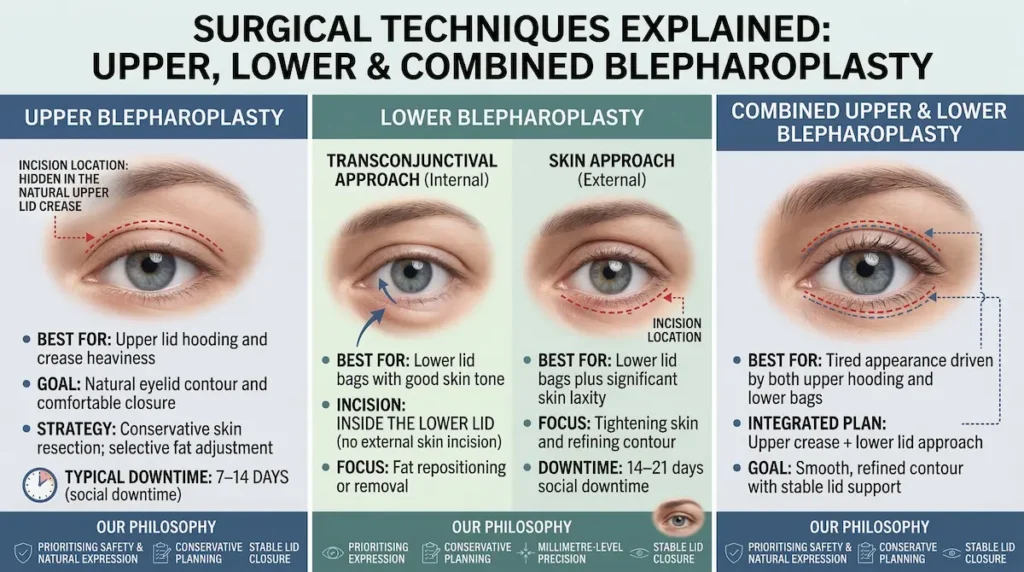
Surgical Techniques Explained (Upper / Lower / Combined)
There is no single “best” blepharoplasty technique. The right approach depends on whether your concern is skin, fat, lid support, or a combination — and whether the upper or lower lids are driving the tired appearance. Our surgeons plan conservatively, prioritising safety and natural expression. The goal is a smooth, refined contour with stable lid closure and support.
| Technique | Best for | Incision location | Typical downtime | Key risk to manage | How we mitigate risk |
|---|---|---|---|---|---|
| Upper blepharoplasty | Upper lid hooding and crease heaviness | Hidden in the natural upper lid crease | Most swelling/bruising improves in 7–14 days | Over-resection causing tightness or an unnatural look | Millimetre-level planning, conservative resection, symmetry checks |
| Lower blepharoplasty (transconjunctival) | Lower lid bags with good skin tone | Inside the lower lid (no external skin incision) | Bruising/swelling typically settles over 10–21 days | Residual contour irregularity if the problem is transition/shadow | Assess fat compartments and consider repositioning rather than removal |
| Lower blepharoplasty (skin approach) | Lower lid bags plus significant skin laxity/crepiness | Just under the lash line | Often 14–21 days for social downtime | Lid malposition if support is weak | Pre-op lid tone assessment and supportive techniques when needed |
| Combined upper & lower blepharoplasty | Tired appearance driven by both upper hooding and lower bags | Upper crease + lower lid (inside or under lash line) | Typically 14–21 days depending on bruising tendency | Prolonged swelling or dryness in sensitive eyes | Careful candidate selection, tailored aftercare, close follow-up |
Upper blepharoplasty: incision placement and scar strategy
For upper eyelid surgery, the incision is designed to sit within the natural crease so it is well concealed when your eyes are open. The plan is not about removing the maximum amount of skin — it is about removing the right amount. We aim to preserve a natural eyelid contour and comfortable closure. Symmetry is checked throughout the procedure.
- Incision placed within the crease to camouflage the scar
- Conservative skin resection to avoid tightness or a “pulled” look
- Selective fat adjustment only when it improves contour naturally
Lower blepharoplasty: transconjunctival vs skin approach
Lower eyelid surgery requires careful respect for lid support. If the main problem is puffiness (bags) and your skin quality is good, a transconjunctival approach may be suitable — the incision is inside the eyelid, so there is no external scar. If you also have significant skin laxity, a skin approach may be considered to refine the surface and contour. The best technique is determined by your anatomy, not by preference alone.
Fat repositioning vs fat removal: how we decide
Under-eye ageing is often a balance problem: bulge beside hollow creates a strong shadow. Removing fat can reduce bulge but may exaggerate hollowing over time. Repositioning or conserving fat can look more natural in many patients, especially when shadowing is the dominant concern. We decide based on the pattern of puffiness, cheek support, and lower lid tone — with the aim of a smooth eyelid-to-cheek transition.
Checkpoint: Bir sonraki bölümde Combined Procedures (Synergy) ve ardından Anaesthesia: Awake / Twilight Sedation başlıklarına geçiyorum. İsterseniz bu sayfada “upper” mı “combined” mı daha baskın ilerleyeyim?
Combined Procedures (Synergy): When Eyelids Aren’t the Only Issue
Sometimes the eyelids are not the true “source” of a tired expression. The eye area is influenced by brow position, cheek support, and the overall balance of the midface. If we treat the eyelids in isolation when the underlying driver is elsewhere, results can look tight rather than refreshed. That is why we assess the full peri-orbital frame and discuss whether a combined approach is genuinely helpful — or whether it would add complexity without meaningful benefit.
Blepharoplasty + brow or temporal lift (when brow descent is the driver)
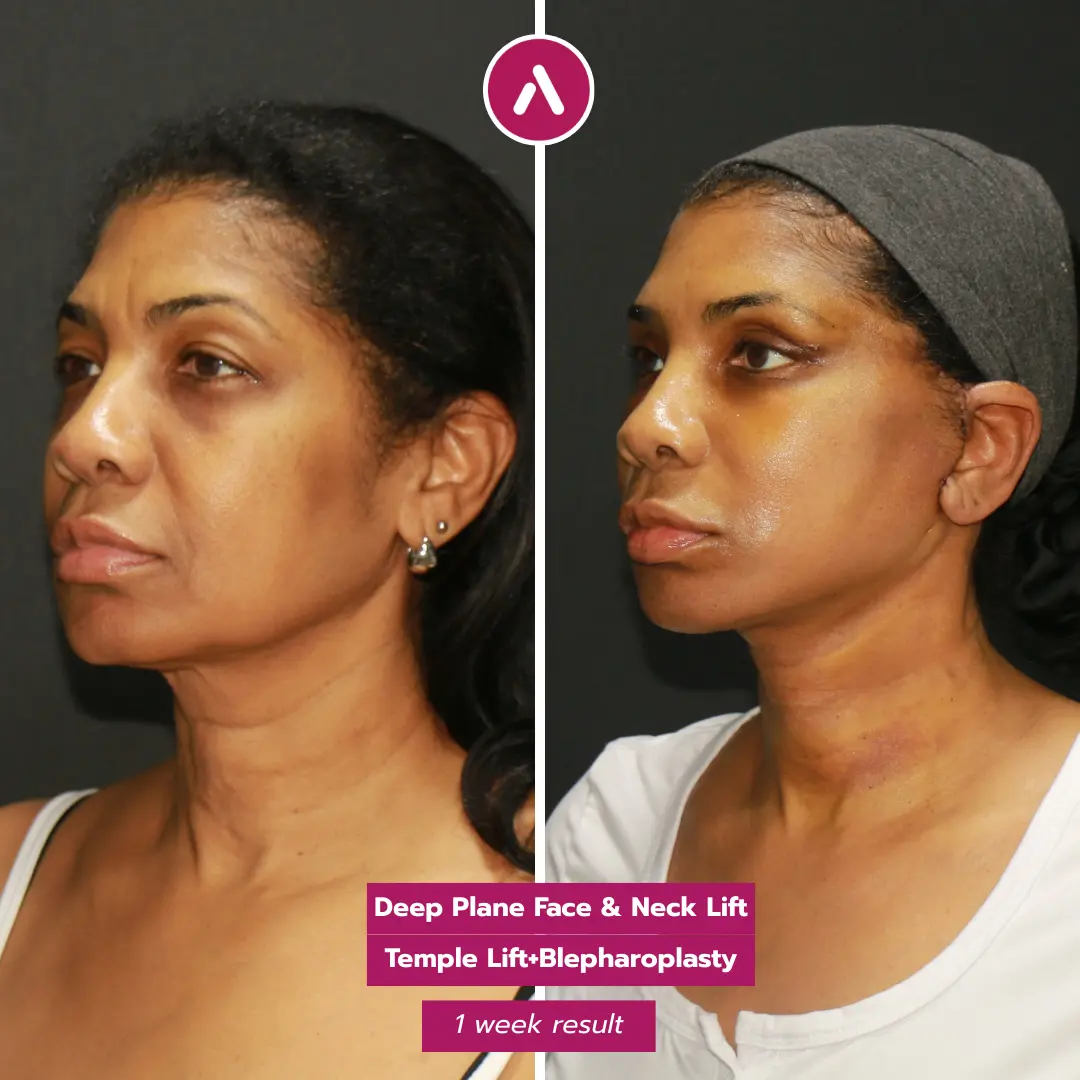
A low brow (especially the outer tail) can create the impression of upper eyelid hooding even when there is not a large amount of excess eyelid skin. In these cases, removing too much eyelid skin may over-tighten the lid and still fail to address the true cause. A brow or temporal lift can restore the frame around the eye, allowing a more conservative upper blepharoplasty (or, in selected cases, reducing the need for it).
- Best for: outer-upper lid heaviness driven by brow descent rather than true excess eyelid skin
- Planning focus: preserve a natural eye shape and avoid over-resection of eyelid skin
- Outcome goal: a lighter, more open expression without a “pulled” look
Blepharoplasty + facelift / neck lift (facial harmony)
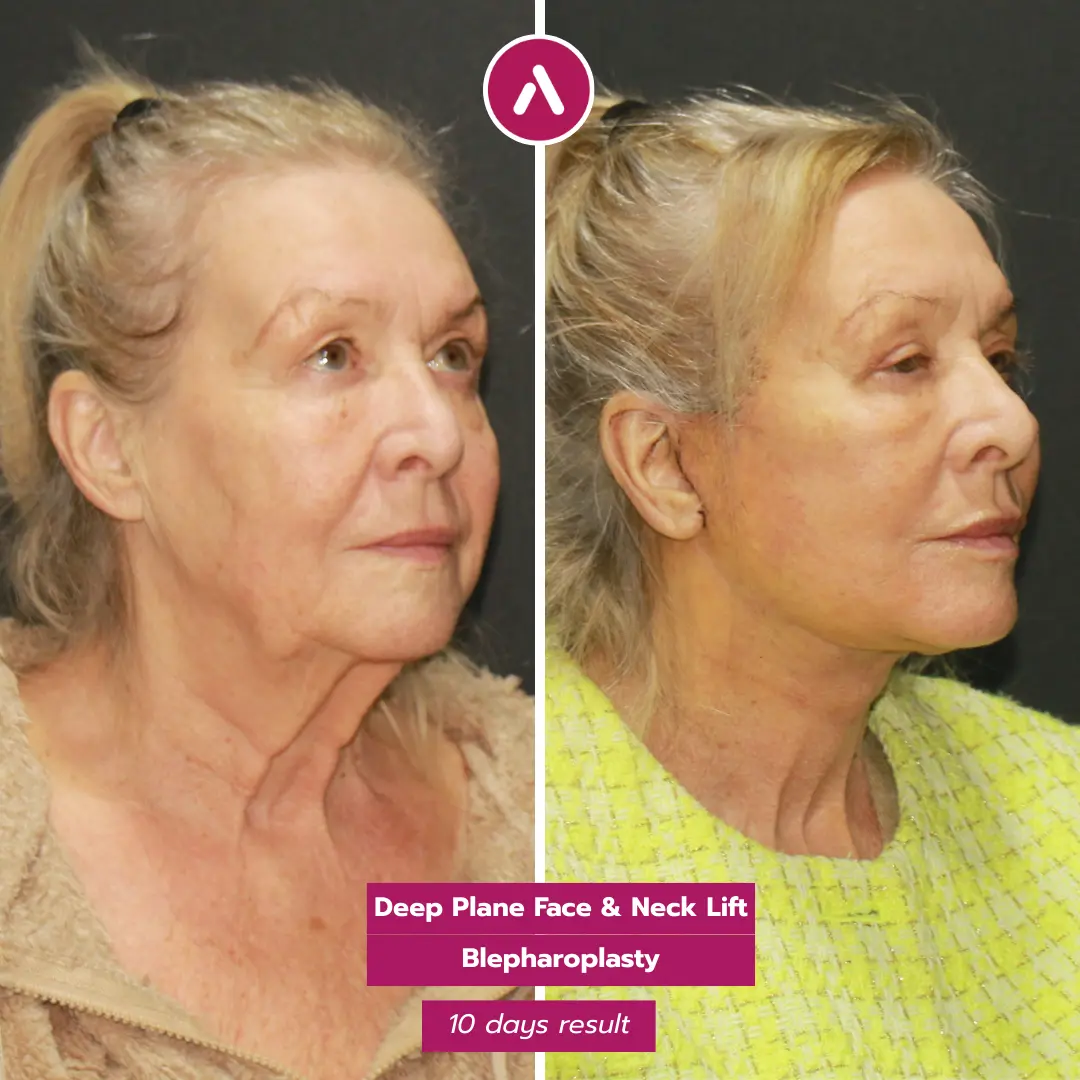
Patients who are already considering facial rejuvenation may benefit from a single, cohesive plan that combines blepharoplasty with a facelift and/or neck lift. Eyelids can look “out of sync” if the face is refreshed but the eyes remain heavy — or vice versa. When combined safely and appropriately, the result can appear more natural because the face changes in a balanced way rather than one isolated area looking “done”. For selected patients, a deep plane facelift may be considered as part of the overall strategy to restore midface support and harmony around the eyes.
- Best for: patients seeking a broader rejuvenation strategy, not a single-zone change (blepharoplasty + facelift/neck lift synergy).
- Planning focus: staging vs combining a facelift, neck lift, and blepharoplasty is decided by safety, medical profile, and recovery preference.
- Outcome goal: proportionate refresh across the face, keeping identity intact, with natural eyelid-to-cheek and jawline harmony.
Revision eyelid surgery: staged vs combined planning
If you have had a previous eyelid operation (especially if it was over-aggressive or left asymmetry), planning is more technical. Revision work often requires a conservative, problem-solving approach and may be safer in stages. The priority is restoring comfort, lid function, and natural contour before chasing any further aesthetic refinement.
- Best for: patients searching for upper eyelid surgery revision or concerned about an unnatural previous result
- Planning focus: accurate diagnosis (skin, muscle, support) and risk-controlled correction
- Outcome goal: stable, natural improvement with preserved eyelid closure and support
Anaesthesia: Why We Often Prefer Awake / Twilight Sedation
For many patients — particularly those who feel anxious about general anaesthesia — eyelid surgery under local anaesthetic with light sedation can be reassuring. The objective is not simply “comfort”; it is to reduce barriers for patients who prioritise safety and controlled recovery. The right anaesthesia plan depends on your medical history, the extent of surgery (upper, lower, or combined), and your comfort level.
Upper eyelid surgery local anaesthesia: who it suits
Upper blepharoplasty is commonly suitable for local anaesthetic. You are comfortable, the area is numbed precisely, and you are monitored throughout. Many patients appreciate the idea of avoiding a full general anaesthetic, particularly if they have had unpleasant experiences in the past or simply prefer a lighter approach.
- Often suitable for: upper eyelid surgery, straightforward cases, and patients who prefer to avoid general anaesthesia
- Benefits: targeted numbness, controlled comfort, typically smoother immediate recovery experience
- Key requirement: a calm, well-structured theatre environment and clear pre-op preparation
Twilight sedation (what you feel and remember)
Twilight sedation is designed to help you feel relaxed while keeping the experience controlled. You are monitored closely, and the surgical area is still fully numbed with local anaesthetic. Most patients describe the experience as calm and uneventful. We explain beforehand what is normal to feel (pressure, gentle movement) and what should not be felt (pain).
- Designed for: comfort and reduced anxiety, especially for patients who are anaesthesia-sensitive or nervous
- What to expect: relaxation, monitoring, local anaesthetic for pain control
- What we prioritise: safety protocols, stable vital signs, and a predictable patient experience
Safety logic: choosing the right approach for your profile
“Safest” is not one-size-fits-all. The safest plan is the one that matches your medical profile, procedure scope, and recovery needs. Our surgeons guide the decision with a clinical mindset: minimising risk while maintaining comfort and surgical precision.
- Procedure scope matters: upper-only vs combined upper-and-lower can influence anaesthesia planning
- Medical profile matters: medications, cardiovascular history, and anxiety level are considered
- Recovery matters: we plan for a controlled, supported post-op period, not a “rush out” experience
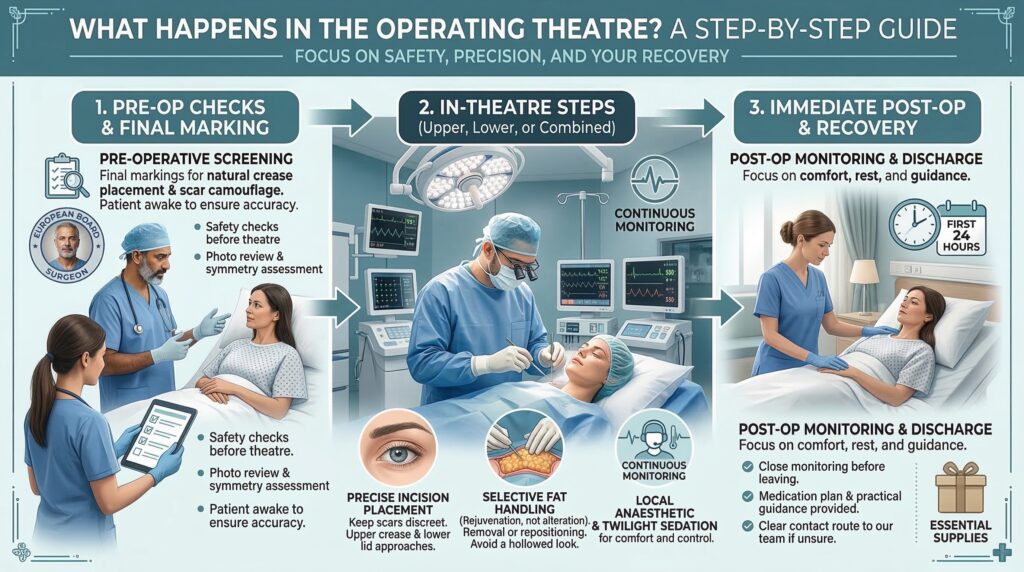
Eyelid Surgery Step-by-Step: What Happens in the Operating Theatre?
For an expert patient, “what actually happens” matters more than general reassurance. So we keep it clear. Your day is structured around safety checks, precise planning, and a calm, sterile environment. Our European Board Certified Surgeons confirm your plan in person before we start. We then run the procedure with continuous monitoring, so the experience stays predictable and controlled.
Most eyelid surgery is not about speed. It is about accuracy. Small decisions in millimetres affect both the aesthetic result and how comfortably your eyelids close afterwards.
Pre-op checks and final marking
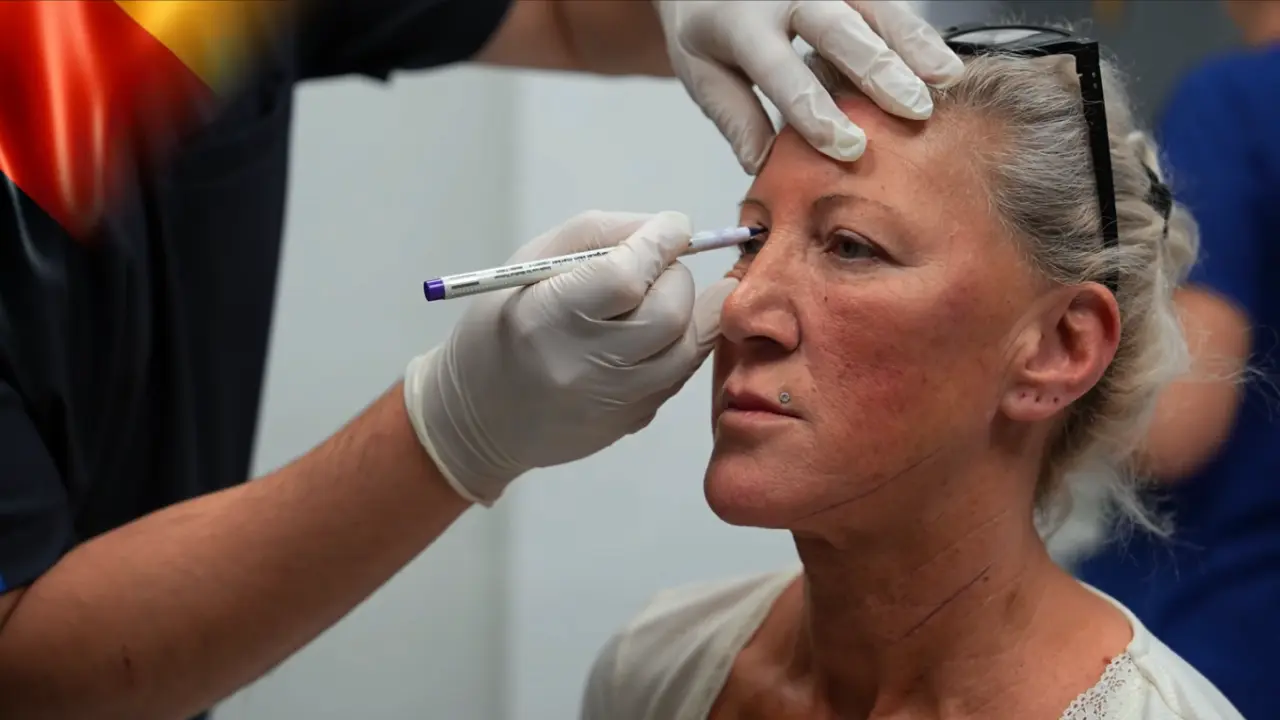
Before you enter our sterile theatres, we complete the practical essentials. We confirm your medical details, review medications, and check that you are a suitable candidate for the anaesthesia plan chosen. Your surgeon then performs final markings with you awake, so the plan matches how your eyelids naturally sit when you are upright.
- Pre-operative screening and safety checks before theatre
- Photo review and symmetry assessment
- Final markings designed for natural crease placement and scar camouflage
In-theatre steps (upper, lower, or combined)
Once you are comfortable, we numb the area precisely and begin. Your procedure is performed under close vitals monitoring throughout. The incision pattern is planned to hide well: upper eyelid scars sit in the crease, and lower eyelid approaches are selected based on your anatomy and lid support. Tissue handling is conservative, because “rejuvenation, not alteration” is not a slogan. It is a surgical discipline.
- Local anaesthetic and (when indicated) twilight sedation for comfort and control
- Precise incision placement to keep scars discreet
- Selective fat handling (removal or repositioning) to avoid a hollowed look
- Closure designed for a smooth contour and stable eyelid function
Immediate post-op: monitoring, discharge, and first 24 hours
After surgery, we monitor you and make sure you feel steady before discharge. You will receive clear aftercare instructions and your first set of essential supplies. Many patients are surprised by how manageable the first evening feels, especially when the plan avoids general anaesthesia. The first 24 hours are about swelling control, eye comfort, and rest.
- Close monitoring immediately after the procedure
- Medication plan and practical aftercare guidance
- A clear contact route to our team if you feel unsure at any point

Blepharoplasty Recovery & Aftercare: How Long Does Healing Take?
Eyelid surgery heals in stages. The first stage is visible swelling and bruising. The second is refinement, where the eyelid contour settles and the scar line softens. Your job is to protect the tissues while they stabilise. Our job is to support healing with structured aftercare, consistent check-ins, and—when appropriate—our Rapid Recovery & Safety Protocol.
Recovery is individual. Some people bruise lightly. Others carry colour for longer. What matters is that your progress follows a normal pattern and your eyes stay comfortable.
Recovery from upper eyelid surgery: a realistic week-by-week timeline
The first week is the most “visible” week. Swelling and bruising tend to peak early, then improve steadily. By week two, many patients feel socially comfortable, even if small changes are still settling. Final refinement continues for weeks to months, particularly for scar maturation.
- Days 1–3: swelling, tightness, and watery eyes can be normal; rest and cold compresses help
- Days 4–7: bruising colour often shifts (purple to yellow); comfort improves day by day
- Week 2: most patients feel more “public-ready”, with milder residual swelling
- Weeks 4–12: contour refinement and scar softening continue quietly in the background
Day by day upper eyelid surgery healing photos: what “normal” can look like
Many patients search for day-by-day healing photos because they want reassurance. That instinct is sensible. The key is to judge progress by trends, not by a single morning in harsh bathroom lighting. You may look puffier on waking, then better later in the day.
- Early asymmetry is common because swelling is rarely identical on both sides
- Bruising may “travel” downward with gravity before it fades
- Dryness or a gritty sensation can happen as the eyelids settle; we guide you on comfort measures
Bruising after upper eyelid surgery, swelling (oedema), and how we support faster settling
Bruising is not a complication. It is a normal response to tissue handling. Swelling (oedema) is also expected, especially in the first week. We reduce avoidable trauma through technique, and we support the recovery phase with a structured plan.
When a patient needs minimal “social downtime”, we can integrate our Rapid Recovery & Safety Protocol. We utilise Hyperbaric Oxygen Therapy (HBOT) to increase tissue oxygenation in a pressurised environment and support recovery at a systemic level. We can also utilise Low-Level Laser Therapy (LLLT) as a targeted adjunct to stimulate cellular repair (ATP support) and collagen activity, helping swelling and redness settle more smoothly.
- Clear guidance on cold compresses, head elevation, and activity limits
- A medication plan tailored to UK expectations (for example, paracetamol when appropriate)
- Flight-ready recovery protocols and final checks before you travel home
- Long-term digital follow-up so post-op care in Turkey for British citizens does not end when you leave Istanbul
If you feel concerned at any point, you should not “wait it out”. You contact us. We maintain structured follow-ups after you return home, including scheduled virtual reviews at 1, 3, 6, and 12 months.
Safety & Risks: Is Blepharoplasty Dangerous?
Eyelid surgery is delicate work. That does not automatically mean it is “dangerous”, but it does mean planning and technique matter. The eyelids protect the eye surface, so we prioritise function as much as aesthetics. Our job is to reduce risk before surgery starts, then guide you through a structured aftercare plan until healing stabilises.
- We plan conservatively. Natural first. Always.
- We protect eyelid function. Comfortable closure and stable support matter.
- We support recovery. Healing is managed, not guessed.
Is upper eyelid surgery safe? Understanding normal healing vs warning signs
Most post-op symptoms are normal and temporary. Mild bruising, swelling (oedema), watering, and a tight sensation can all occur in the first week. Some days look better than others. What matters is the direction of travel.
- Common and expected: bruising, swelling, mild asymmetry early on, dryness or grittiness, light sensitivity
- Usually manageable: pressure sensation, tenderness at the incision line, morning puffiness
- Often improves steadily: comfort and appearance over 7–14 days, with refinement continuing for weeks
Less common (but important): the risks we talk about openly
Every surgery has risks. Eyelid surgery has a specific set, and we discuss them clearly because “expert patient” decisions are made with full context. Rare does not mean impossible. It means we plan properly and we react early if something feels off.
- Infection: uncommon, but needs prompt treatment if suspected
- Bleeding/haematoma: risk is higher with blood-thinning medication and uncontrolled blood pressure
- Lid malposition: more relevant in lower lid surgery if lid support is weak
- Dry eye flare: can worsen temporarily, especially in patients with pre-existing dryness
- Contour issues: under- or over-correction, irregularities, or persistent asymmetry (usually improves as swelling settles)
How we reduce risk: screening, technique, and recovery protocols
Most “problems” are prevented before theatre. We screen carefully, plan for your anatomy, and choose an anaesthesia approach that matches your medical profile. Then we run a structured recovery pathway. Calm, predictable, controlled.
- Pre-op screening: medical history, medications, eye history, and candidacy for local/twilight anaesthesia
- Precision planning: millimetre-level markings, conservative tissue handling, symmetry checks
- Lid support focus: we assess lower lid tone and choose the safest approach for your anatomy
- Aftercare structure: clear instructions, scheduled check-ins, and rapid access to our team if anything changes
- Recovery support: when appropriate, we integrate HBOT and LLLT as part of our Rapid Recovery & Safety Protocol
When to contact us (don’t second-guess it)
You should not “wait and see” if something feels wrong. You contact us. We will tell you what is normal, what needs a photo review, and what needs urgent assessment.
- Increasing pain that does not settle with the recommended medication plan
- Rapidly increasing swelling on one side, or sudden tightness
- Fever of 38°C (100.4°F) or higher, or signs of infection at the incision line
- Any change in vision, severe headache, or symptoms that feel alarming
Is Eyelid Surgery Safe in Turkey for UK Patients?
This is the right question. The safest surgery is not defined by a postcode; it is defined by standards, credentials, and continuity of care. UK patients are often less worried about the day of surgery and more worried about what happens after they fly home. We built our service model around that exact concern. Clinical safety plus structured aftercare is the point.
- Standards: sterile theatres, modern monitoring, and protocol-led patient flow
- Credentials: European Board Certified Surgeons and international board registration
- Continuity: planned follow-up and clear access routes after you return to the UK
Private cosmetic clinic Istanbul British standards: what “standards” actually means
“Standards” is not a slogan. It is checklists, sterility, monitoring, and clear escalation pathways. We run pre-operative tests, we operate in fully accredited facilities, and we keep the patient journey structured from arrival to discharge. You should feel that discipline in the details.
- Pre-op testing and risk screening before the procedure
- Sterile theatres with continuous monitoring during surgery
- Clear discharge criteria and written aftercare instructions
- Final in-person check before you are cleared to fly
GMC registered surgeon alternatives: what matters more than a UK location
Many UK patients start by searching for a familiar regulatory label. That is understandable. The deeper question is surgeon training, board certification, and case selection. We position our surgeons as European Board Certified Surgeons because verifiable international credentials and a conservative surgical philosophy are stronger safety signals than a marketing claim.
- Ask about board certification and international affiliations
- Ask how the plan protects eyelid function (not just appearance)
- Ask how revision cases are handled and when we recommend staging
UK support line cosmetic surgery and continuity after you return home
The fear of abandonment is real. We do not leave you on your own after your flight. You have a dedicated Patient Host with 24/7 access, plus scheduled surgeon-led follow-ups at 1, 3, 6, and 12 months.
- Direct WhatsApp UK number Istanbul surgeon: fast access when you need reassurance or a clinical decision
- Flight-ready recovery protocols: structured checks and guidance before you travel
- Post-op care in Turkey for British citizens: a defined digital follow-up pathway, not “message us if needed”
- Clear advice on bruising, swelling, eye comfort, and when to escalate
Practical point: If you are comparing London vs Istanbul, compare the aftercare model as well as the operating theatre. That is where many international patients feel the difference.
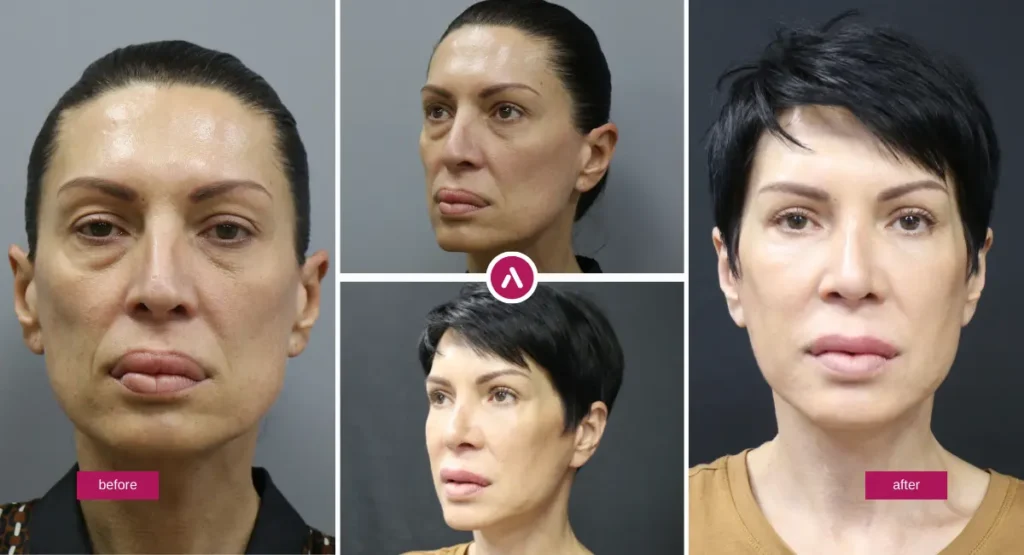
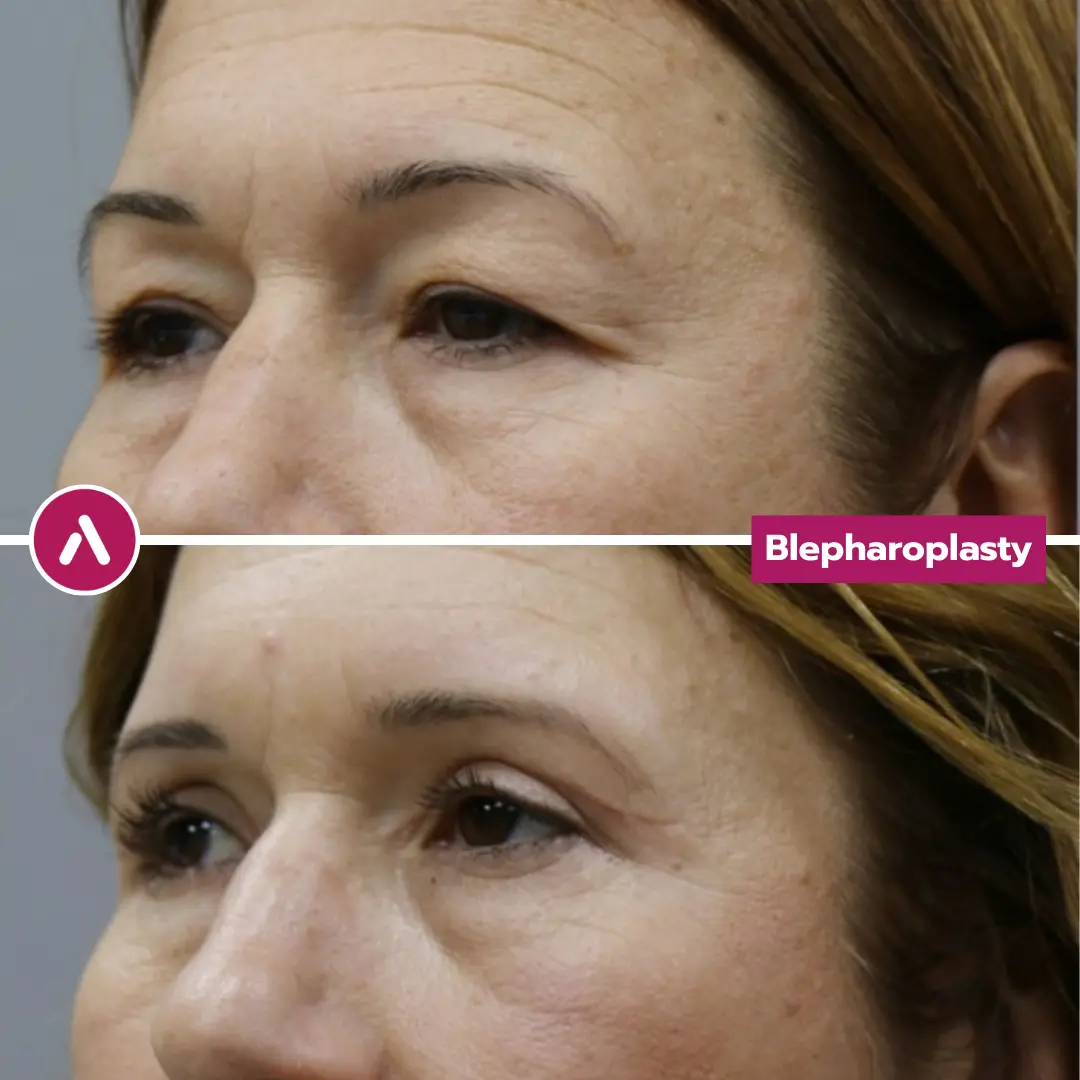
Blepharoplasty Before and After: Realistic Expectations & Results
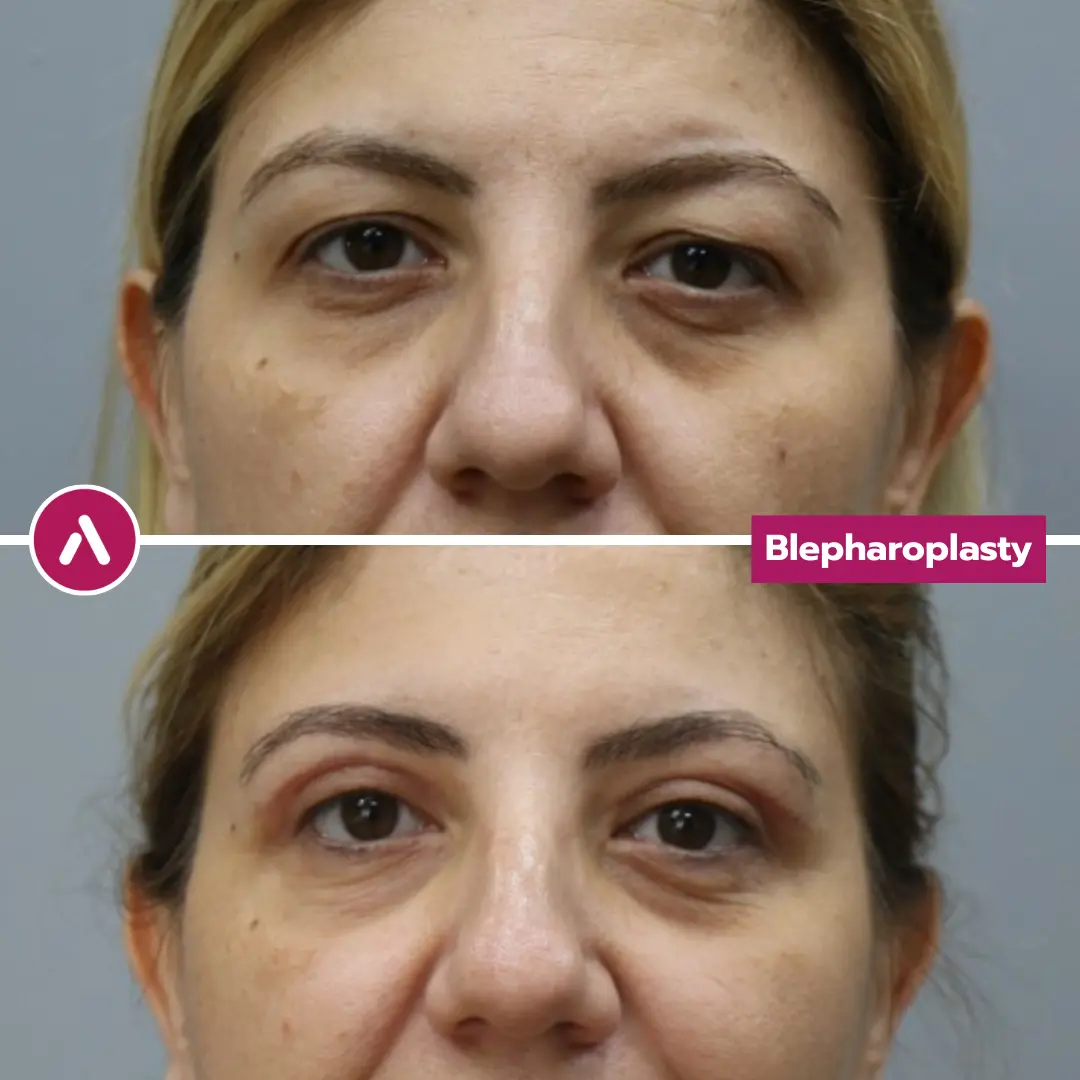
The best blepharoplasty result is not “obvious surgery”. It is a calmer, brighter baseline that still looks like you. Eyelid surgery is a precision procedure, and small choices make a big difference. Our surgeons plan conservatively to protect eyelid function, maintain a natural eye shape, and avoid the common “over-done” signals that expert patients want to avoid.
What “natural” looks like in eyelid surgery
A natural result does not mean “no change”. It means the change fits your face and your age. Your eyes should look less heavy and less tired, without looking pulled, hollow, or unusually wide. This is why our approach focuses on restoring balance, not chasing extremes.
- Upper lids: less hooding and clearer crease definition, without tightness
- Lower lids: smoother transition into the cheek, without a hollowed appearance
- Overall: refreshed expression that reads as “well-rested”, not “surgical”
What surgery cannot do (and what to consider instead)
Blepharoplasty cannot solve every eye-area concern. Some issues are driven by skin quality, pigmentation, or midface volume loss, and they may need a different strategy. Clear boundaries are part of medical honesty — and they protect you from disappointment.
- Dark circles: if the cause is pigment rather than shadow, surgery may have limited impact
- Fine crepey skin: may improve, but severe crepiness can need skin-quality treatments as well
- Brow descent: may need a brow/temporal lift to address the root cause of heaviness
Typical patient profiles: subtle refresh vs structural correction
Many UK patients want a subtle refresh — they want to look less tired, not different. Others have a structural issue (significant hooding, strong lower bags, or asymmetry) that needs a more technical correction. Your plan depends on where you sit on that spectrum, your lifestyle, and how much social downtime you can accept.
- Subtle refresh: mild-to-moderate hooding; refined crease definition; minimal contour change
- Structural correction: significant hooding or bags; fat repositioning decisions; lid support considerations
- Revision authority: corrective planning for previous over-resection, asymmetry, or persistent issues
Faster healing and lower risk is a protocol — not a promise. The goal is predictable recovery with a natural result.
Cost Analysis: Blepharoplasty Cost 2026 (Turkey vs UK)
Cost is a valid question — but it should never be reduced to a “cheap vs expensive” narrative. A meaningful comparison looks at what is included, how aftercare is structured, and who is accountable for your outcome over time. Many UK patients compare London pricing to Istanbul pricing, but the more useful comparison is value: surgeon expertise, safety protocols, and the depth of aftercare.
| Cost / Value Factor | Typical UK Private Structure | AKM Clinic (Turkey) Structure | Why it matters |
|---|---|---|---|
| Pricing model | Procedure fee + separate facility / anaesthesia fees (varies) | All-inclusive planning with clear scope and inclusions | Reduces surprise costs and improves decision clarity |
| What’s included | Often varies by clinic; aftercare depth differs | Surgeon-led planning + structured aftercare pathway | Aftercare is where international patients feel most supported |
| Anaesthesia options | Often general or sedation depending on clinic | Local / twilight sedation focus where appropriate | Can reduce barriers for anaesthesia-anxious patients |
| Recovery support | Standard post-op checks; technology support varies | Rapid Recovery & Safety Protocol (HBOT + LLLT when appropriate) | Supports controlled recovery and confidence after surgery |
| Continuity after travel | Local follow-up in-person | Planned digital follow-up at 1, 3, 6, 12 months + 24/7 access | Addresses the common fear: “What happens when I’m back in the UK?” |
| Value narrative | Cost-led comparisons often dominate marketing | Value-driven premium quality (safety + expertise + aftercare) | Aligns with expert-patient decision making |
Important note: UK fees vary widely by city, surgeon, and facility. If you want a precise UK vs Turkey comparison in GBP, we can prepare a transparent, itemised quote for your surgical plan (upper, lower, or combined) and match it against a like-for-like UK structure.
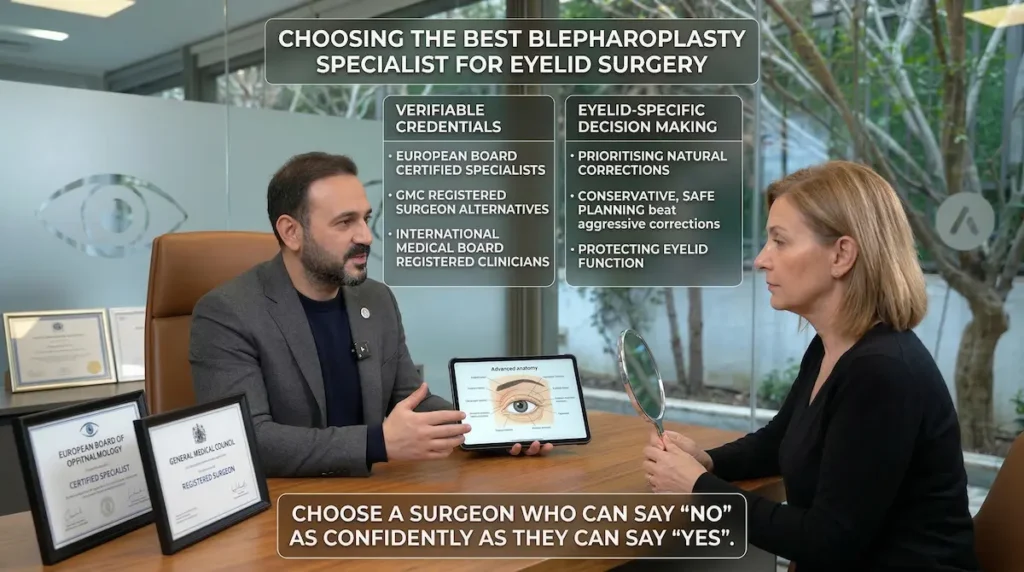
How Do You Choose The Best Blepharoplasty Surgeon For Eyelid Surgery?
When patients search for the “best surgeon for upper eyelid surgery”, they are usually trying to protect themselves from two risks: an unnatural look and a complicated recovery. That instinct is sensible. Eyelid surgery is small-area surgery, but it is high-precision surgery. The right surgeon is not the one who promises the most. It is the one who plans the safest, most natural correction for your anatomy.
We encourage a simple mindset: choose a surgeon who can say “no” as confidently as they can say “yes”. That is where safety lives.
Board certification and verifiable training (what actually matters)
Many UK patients start with regulatory comfort signals such as GMC registered surgeon alternatives. That search intent is understandable, but the stronger question is: are the credentials verifiable, and do they reflect rigorous standards? We position our surgeons as European Board Certified Specialists and clinicians registered with international medical boards because objective, third-party credentials are a meaningful trust signal for an expert patient.
- Look for board certification and recognisable professional affiliations.
- Ask where the surgeon trained and how they maintain continuing education.
- Ask who will be accountable for your plan and your long-term follow-up.
Eyelid-specific decision making (conservative planning beats aggressive correction)
Good eyelid surgery often looks “understated” on paper. That is intentional. Over-resection can create tightness, an overly “open” look, or long-term hollowing. A safe surgeon plans around eyelid function first: comfortable closure, stable support, and a scar strategy that respects your crease anatomy.
- Ask how the plan protects eyelid closure and eye comfort.
- Ask whether fat will be removed, conserved, or repositioned—and why.
- Ask how brow position is assessed so the eyelids are not over-treated.
Revision readiness: the sign of a true specialist mindset
Revision patients are not “rare”. They are simply less talked about. A surgeon who understands revision planning is often safer for primary surgery too, because they plan with complications in mind. If you are researching upper eyelid surgery revision, you need a surgeon who can diagnose what went wrong (skin, muscle, lid support, scarring) and who will recommend staging if that is the safest route.
- Ask how revision cases are assessed and when surgery is staged for safety.
- Ask what “success” means beyond appearance (comfort, function, stability).
- Ask what the escalation pathway is if you feel worried after you travel home.
Questions to ask in a surgeon-led consultation
A proper consultation is not a sales call. It is clinical decision making. You should leave with clarity on anatomy, the plan, the recovery timeline, and the risks that are relevant to your profile.
- “Am I a candidate for upper, lower, or combined surgery—and why?”
- “Do I need ptosis correction, or is it purely skin/soft tissue?”
- “What is my realistic social downtime, based on my bruising tendency?”
- “How will you support me once I am back in the UK?”
We measure success by what doesn’t stand out. A rested look. Stable eyelids. No “surgical signature”.
Your Medical Journey: What to Expect (UK → Istanbul)
For UK patients, the biggest concern is rarely the operating theatre. It is the process around it. Who coordinates everything? What happens if you feel anxious the night before? What support exists after you fly home? We built our pathway to remove uncertainty with a structured, end-to-end plan that covers logistics, clinical checks, and long-term follow-up.
You do not have to “figure it out” in a foreign country. Our Patient Host team coordinates the details so you can focus on preparation and recovery.
Step 1: surgeon-led digital consultation and a clear plan
Your journey starts with a remote assessment. You share photos, your medical history, and your priorities (upper, lower, or both). We then outline candidacy, recommend the safest approach, and set realistic expectations for recovery and social downtime.
- Surgeon-led review of your goals and eyelid anatomy.
- Clear discussion of risks relevant to your profile (dry eye, medication, smoking).
- Itemised scope so you know exactly what is included.
Step 2: VIP planning (hotel and private transfers organised)
Once you proceed, your dedicated Patient Host coordinates the practical details. We book your procedure date, arrange 5-star hotel accommodation from our partner list, and schedule VIP transfers. You manage your international flight. We handle the rest.
- Procedure date secured around your timetable.
- Hotel and transfer planning designed for comfort and privacy.
- A direct WhatsApp route to your Patient Host for questions.
Step 3: arrival, in-person consultation, and pre-operative tests
On arrival, you are met at the airport and transferred to your hotel in a private vehicle. Before surgery, you meet your surgeon in person to confirm the plan and complete pre-operative tests. Nothing is rushed. We confirm details calmly, face to face.
- Airport meet-and-greet and private transfer to your hotel.
- Final in-person consultation to confirm the surgical plan.
- Pre-operative screening and readiness checks before theatre.
Step 4: post-op monitoring, flight-ready clearance, and long-term follow-up
Immediately after surgery, we monitor you closely. Your Patient Host remains available 24/7 via WhatsApp while you recover in Istanbul. Before you leave, you have a final in-person check to confirm you are healing well and are cleared to fly. After you return to the UK, we schedule virtual follow-ups at 1, 3, 6, and 12 months to track healing and keep continuity of care strong.
- Post-op monitoring and practical aftercare guidance.
- Flight-ready recovery protocols and a final clearance appointment before travel.
- Structured virtual follow-up: 1, 3, 6, and 12 months after surgery.
Next Steps
- Request a Surgeon-Led Digital Consultation to confirm candidacy and the safest approach (upper, lower, or combined).
- Request a Transparent, All-Inclusive Quote in GBP that reflects your exact surgical plan and aftercare pathway.
- Download the Recovery Timeline (day-by-day expectations, swelling/bruising guidance, and flight-ready checkpoints).
Blepharoplasty Frequently Asked Questions (FAQ):
How long does swelling last after upper eyelid surgery?
Most visible swelling (oedema) improves noticeably within 7–14 days, but subtle swelling can linger longer and settles gradually. Morning puffiness is common early on. Final refinement continues quietly over several weeks, especially around scar maturation.
How long does bruising last after eyelid surgery?
Bruising often peaks in the first few days and then fades over 10–21 days. Some patients bruise lightly; others carry colour longer. Bruising can “travel” downward with gravity before it resolves. We guide you on practical measures that support comfortable, controlled settling.
Will my scar be visible?
Upper eyelid scars are designed to sit within the natural crease, so they are typically well concealed when your eyes are open. Lower eyelid scars (when a skin approach is used) sit just beneath the lash line and usually soften over time. Scar quality depends on skin type, healing profile, and aftercare.
When can I wear make-up and contact lenses again?
Timings vary depending on your surgery (upper, lower, or combined) and how your eyes feel. We give you personalised guidance at your follow-ups. As a general principle, we prioritise clean healing and eye comfort before returning to make-up and contact lenses.
Is “laser upper eyelid surgery” better?
“Laser” can mean different things. Non-surgical laser tightening may help mild skin texture concerns, but it does not reliably correct significant hooding. Surgical blepharoplasty is an anatomical procedure performed under sterile theatre conditions with precise tissue control. The best option is decided by your anatomy, not the label.
What’s the difference between blepharoplasty and ptosis surgery?
Ptosis surgery addresses a true droop of the eyelid margin caused by weakened lifting mechanics. Blepharoplasty reshapes excess skin and/or soft tissue that creates hooding or puffiness. Some patients need both, and we confirm this by assessing eyelid height, crease position, and lid movement.
Is eyelid surgery painful?
Most patients describe tightness, tenderness, and a “heavy” sensation rather than significant pain. We provide a medication plan aligned with UK expectations and advise you clearly on what is normal vs what needs review. If discomfort escalates rather than improves, you should contact us promptly.
Can I fly after eyelid surgery?
Yes, most patients can fly once your surgeon confirms you are healing normally and you are “flight-ready”. We schedule an in-person check before you travel home and provide guidance on swelling control, hydration, and what to do if you feel concerned after returning to the UK.
What if I’ve had eyelid surgery before and I’m unhappy (revision)?
Revision planning is more technical than primary surgery. The first step is accurate diagnosis: is the issue skin, muscle function, lid support, scarring, or over-resection? We often plan conservatively and may recommend staging if that is safest. The priority is restoring comfort, stability, and natural contour before further refinement.
How do I compare “Upper eyelid surgery London vs Istanbul” properly?
Compare like-for-like: surgeon credentials, the anaesthesia plan, the facility standards, and—crucially—the aftercare model. For international patients, continuity of care (scheduled follow-up and clear access routes after returning home) is often the defining difference.
What about “Upper eyelid surgery cost UK vs Turkey” or “Upper eyelid lift surgery price” searches?
Prices vary widely by city (London, Edinburgh, Glasgow, Belfast), surgeon, and facility structure. The meaningful comparison is value: what is included, who leads the plan, what aftercare looks like, and how risks are managed. We can provide a transparent, itemised quote in GBP for your specific plan (upper, lower, or combined).
I searched “Blepharoplasty surgery near me” — why travel at all?
For many UK patients, travel is justified only when it upgrades what matters most: verifiable credentials, a conservative surgical philosophy, and an aftercare pathway that feels more “hospital-grade” than standard. If those criteria are met, the decision becomes less about geography and more about clinical confidence.
Medical disclaimer: This page is for general information and does not replace a medical consultation. Suitability, surgical technique, anaesthesia choice, and recovery timelines vary by individual anatomy, medical history, and ocular health. Any medication changes (including blood-thinning medicines and supplements) must be discussed with your prescribing clinician/GP. In case of urgent symptoms (such as sudden vision changes, severe pain, rapidly increasing swelling, or signs of infection), seek immediate medical attention and contact our clinical team.