




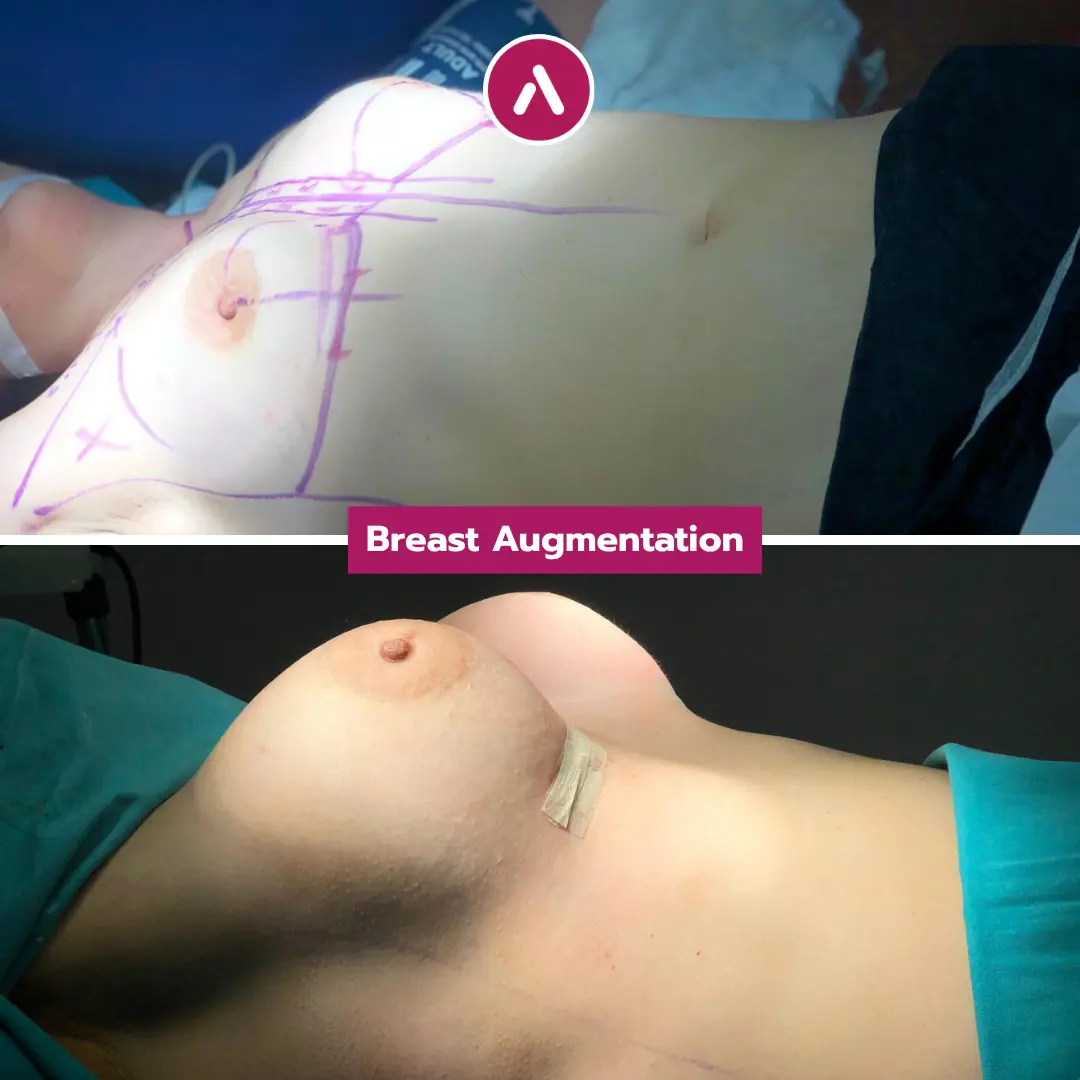
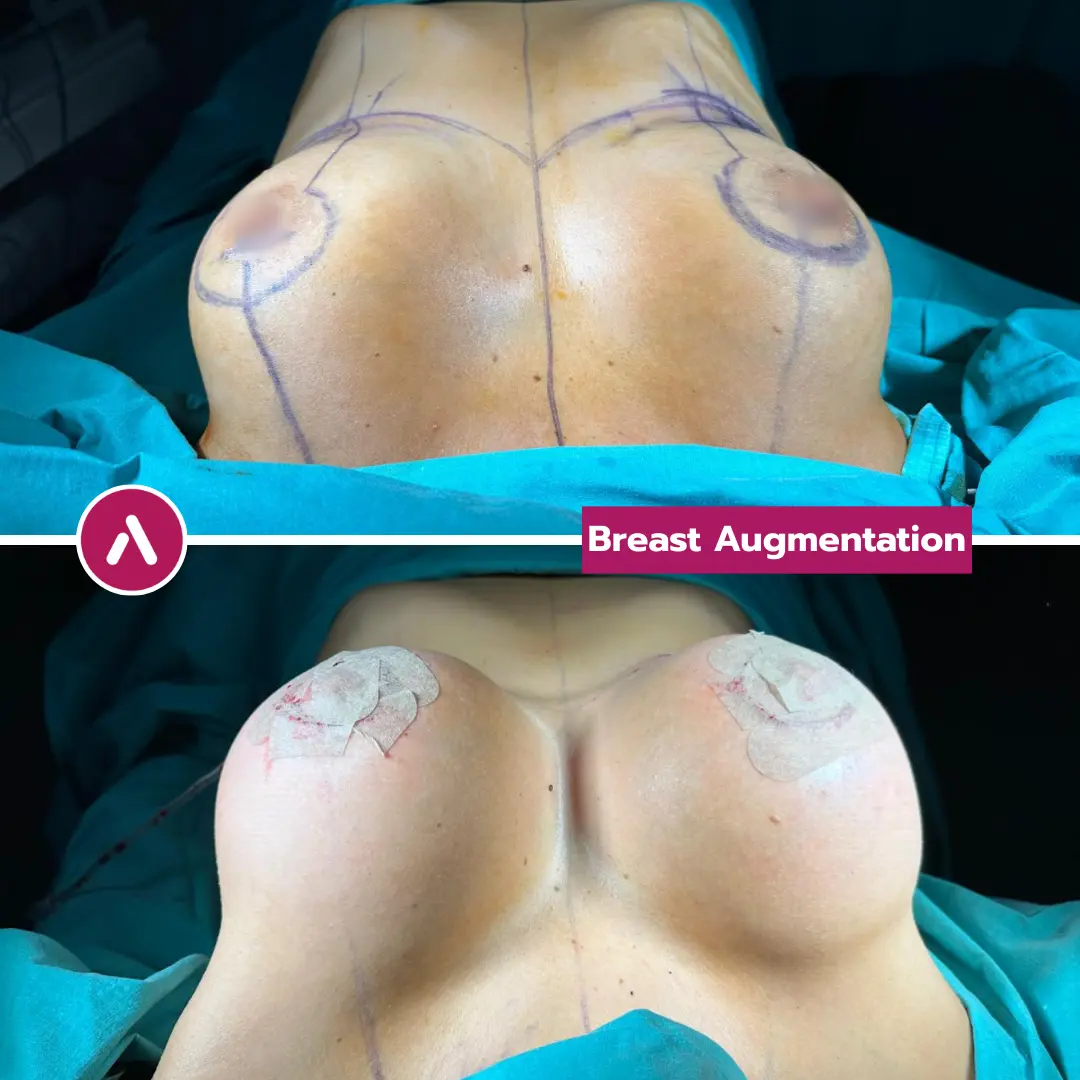
Considering a breast lift with implants in Turkey? At AKM Clinic in Istanbul, augmentation mastopexy reshapes sagging breasts while restoring upper-pole volume with carefully selected implants. Our European Board Certified surgeons plan lift technique, implant size and placement around your anatomy for natural, stable results.
UK patients benefit from an all-inclusive package—5-star hotel, VIP transfers, medications, garments and structured virtual follow-up. We support recovery with HBOT and LLLT where appropriate, then clear you to fly home confidently after your check.
Table of Contents
What is Breast Lift With Implants (Augmentation Mastopexy)?
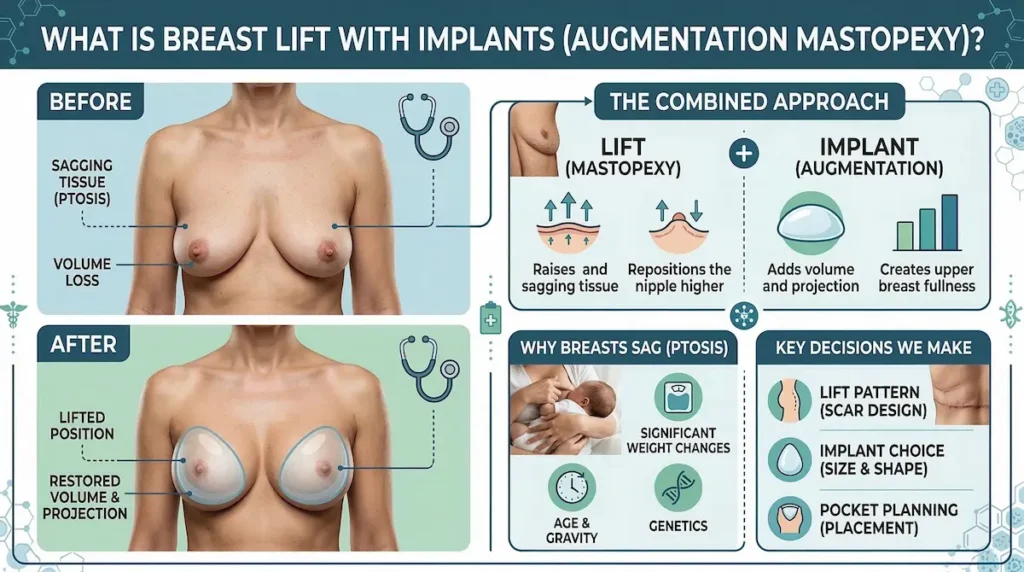
Breast Lift with Implants, also known as augmentation mastopexy, combines a breast lift (mastopexy) with an implant in one operation. We use it to raise and reshape sagging breast tissue while restoring volume that has been lost. The aim is a refined, natural-looking contour. It is planned and performed by our European Board Certified Surgeons in Istanbul.
Why breasts sag (ptosis) and what a lift actually changes
Most sagging is not “just skin”. It is a combination of skin stretch, changes in breast tissue volume, and the natural effects of gravity over time. Pregnancy, breastfeeding, significant weight changes, and genetics all play a role. Many UK patients describe it as “my breasts have dropped” or “the nipple sits too low”. That description matters, because it guides the surgical plan.
- Breast ptosis is assessed by nipple position relative to the breast crease.
- We look at skin quality, areola size, and how much upper-pole fullness remains.
- We also assess asymmetry, chest width, and your baseline breast footprint.
Our guiding principle is simple: rejuvenation, not alteration. The most convincing result is the one that still looks like you.
Why add implants: when a lift alone isn’t enough
A lift repositions and tightens the “envelope”. It does not reliably replace lost volume, particularly in the upper breast. If your main concern is shape and nipple position, a lift alone can be enough. If you also want more fullness, projection, or a firmer upper contour, adding an implant can be the more predictable route.
- Lift alone: best when you have adequate volume but poor position.
- Lift + implant: best when you have both sagging and volume loss.
- Implants alone: best when position is acceptable and the issue is mainly size/shape.
We plan the lift and the implant as one design. The goal is balance—shape, volume, and a scar pattern that fits your anatomy.
How we plan the “lift + implant” combination (and why it’s technically demanding)
This procedure is often researched in depth because it combines two goals that can pull in opposite directions: lifting the breast while adding volume. The implant adds weight and stretch potential; the lift tightens and reshapes. That is why careful sizing and technique selection matter, especially for the “expert patient” comparing options like mastopexy with implants versus a staged approach.
In straightforward terms, we focus on three decisions:
- Lift pattern (the scar design) based on the degree of sagging and skin excess.
- Implant choice (size, profile, and material) to match your chest frame and desired projection.
- Pocket planning (implant placement strategy) to support shape while respecting tissue limits.
With augmentation mastopexy, “bigger” is not always “better”. The best size is the one your tissues can support long-term.
Benefits: what results can you realistically expect from a lift-and-implant combination?
The strongest outcomes come from matching the operation to the problem you actually have. If sagging is the issue, lifting improves position and contour. If volume loss is also present, an implant can restore structure and fullness. We keep the objective practical: a stable breast shape that looks proportionate in clothing and natural out of it. Subtle beats “overdone”.
Improved shape and position (not just “higher”)
A well-executed lift does more than raise the nipple. It reshapes the breast mound, refines the lower pole, and re-centres the breast on the chest wall. This often improves symmetry, especially when one side has dropped more than the other.
- More centred nipple and areola position
- A firmer, more supported breast contour
- Better proportional balance between upper and lower breast
We aim for a breast shape that looks settled and believable—especially in the first year, when tissues are still maturing.
Restored volume and projection (upper-pole fullness, done carefully)
Many patients specifically want upper-pole fullness after pregnancy or weight loss. Implants can provide that structural support when natural tissue volume has reduced. If you are comparing “breast lift with 300cc vs 500cc implants”, it helps to know that volume is only part of the story; chest width, implant profile, and skin elasticity are just as important.
- Improved upper-breast fullness where a lift alone may fall short
- More predictable projection (how the breast sits from the side)
- Better stability of shape when tissue is thin or deflated
Clothing fit, confidence, and day-to-day comfort
Patients often notice the practical effects first: bras fit more evenly, necklines sit better, and they feel less “collapsed” in the upper chest. We do not position this as a personality change. It is a physical correction that can make you feel more comfortable in your body.
- Improved bra and swimwear fit
- More balanced silhouette in fitted tops
- Greater comfort with posture and proportions
Am I A Good Candidate For A Breast Lift with Implants?
Suitability is not only about cup size. It is about tissue strength, skin quality, and what you want the breast to look like in two years, not just two months. Our European Board Certified Surgeons assess the degree of ptosis (sagging), your breast footprint, and whether your tissues can support an implant safely.
If you are the “expert patient”, you will recognise this point quickly: the best plan is the one that matches your anatomy. Not a trend. Not a template.
Signs you are a strong candidate
You tend to be a good candidate when sagging and volume loss happen together. This is common after pregnancy, breastfeeding, or significant weight change. Some patients also have naturally low-set breasts that have always sat lower on the chest.
- Your nipple sits at or below the breast crease, or points downwards.
- You feel “deflated” in the upper pole and want more structure, not just lifting.
- You have stable weight and realistic expectations about scars and recovery.
- You can commit to post-operative support (bra, rest, follow-ups).
We choose the operation that your tissues can hold. Long-term shape matters more than short-term volume.
When we may recommend a different route
Not every patient needs an implant. Not every patient should have both procedures at once. We often discuss alternative plans when your priorities or anatomy point elsewhere.
- Lift alone: if you have adequate volume but want a higher, firmer shape.
- Implants alone: if position is acceptable and the main concern is size or projection.
- Staged approach: if your tissues are tight, very thin, or you want a major size change.
If your primary concern is heaviness, back/neck discomfort, or very large breasts, a reduction may be the more appropriate operation. In those cases, we frame it as a function-first decision.
Who should avoid surgery, or delay it
Safety comes first. Some risk factors do not “rule you out” forever, but they change timing and planning. We talk about them openly during your consultation.
- Smoking or nicotine use: increases wound-healing risks and can compromise scars.
- Uncontrolled medical conditions: such as poorly controlled diabetes or blood pressure issues.
- Pregnancy or near-term plans for pregnancy: can stretch tissues and affect results.
- Unstable weight: frequent weight change can undo shaping.
We may also discuss breast imaging based on age, history, and your GP’s guidance. It is a sensible step for peace of mind.
Good surgery starts before theatre. Pre-operative screening is how we reduce avoidable risk.
What we check in your consultation
Our assessment is methodical. You will understand exactly why we recommend a certain lift pattern and implant plan. No vague promises.
- Degree of ptosis and skin excess
- Areola position and size
- Breast width (the “base” we must respect)
- Tissue thickness and support
- Asymmetry and chest wall differences
Surgical Techniques Explained: Choosing The Right Lift Pattern
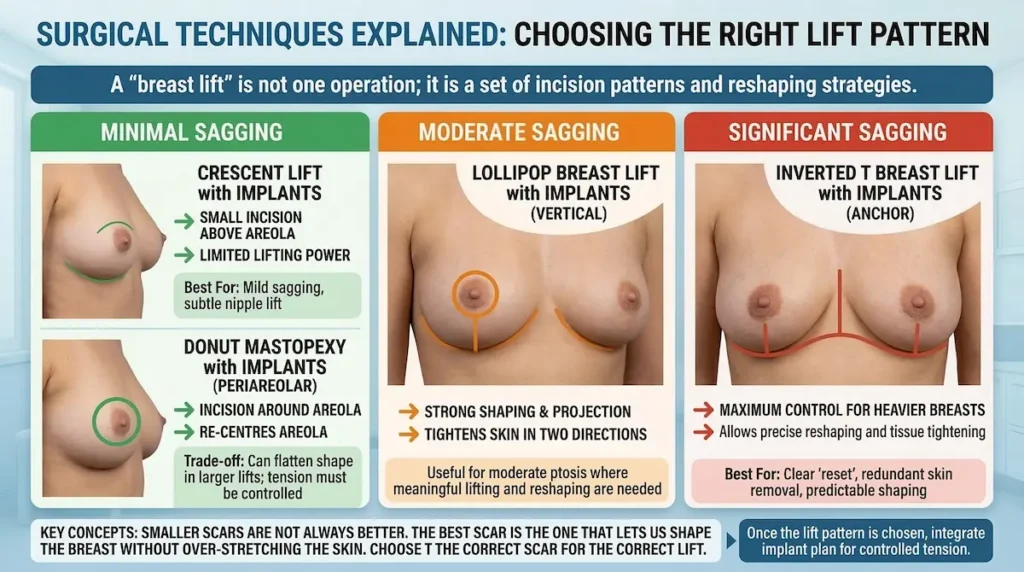
Technique selection is where most misinformation lives. A “breast lift” is not one operation; it is a set of incision patterns and reshaping strategies. We choose the pattern based on sagging severity and skin redundancy, then integrate the implant plan to keep tension controlled.
Here is the key idea: smaller scars are not always better. The best scar is the one that lets us shape the breast without over-stretching the skin.
Minimal-scar options: when less incision is genuinely enough
For mild sagging, we may use limited incisions. These techniques are not “easy”. They are simply appropriate in narrow indications. Used outside those limits, they can disappoint.
- Crescent breast lift with implants: a small crescent-shaped excision above the areola for subtle lift.
- Donut mastopexy with implants (Periareolar): a circular incision around the areola to tighten and re-centre.
We do not chase the smallest scar. We choose the correct scar for the correct lift.
Moderate sagging: the vertical “lollipop” approach
If your nipple position is lower and the lower breast has stretched, we often need more control. The vertical technique reshapes the breast mound and improves projection without the full horizontal scar of an anchor pattern.
- Lollipop breast lift with implants (vertical): areola incision plus a vertical line to the crease.
- Useful when you need meaningful lifting and reshaping, not only areola adjustment.
- Often chosen for moderate ptosis where skin needs tightening in more than one direction.
Significant sagging: the inverted-T (anchor) pattern
For heavier breasts, more skin excess, or more severe ptosis, we need maximum control. The anchor pattern allows us to remove more redundant skin and create a stable breast shape. It is often the right answer when patients want a clear “reset”.
- Inverted T breast lift with implants: areola incision + vertical line + crease line.
- Best when you need major lifting and predictable lower-pole tightening.
- Allows the most precise reshaping when tissue has stretched substantially.
Technique comparison table (quick decision logic)
| Lift Pattern | Incision / Scar Placement | Best For | Key Trade-off |
|---|---|---|---|
| Crescent | Small arc at the top of the areola | Mild sagging, subtle nipple lift | Limited lifting power; not suitable for moderate-to-severe ptosis |
| Donut (Periareolar) | Around the areola | Mild sagging, areola repositioning/reshaping | Can flatten shape if used for bigger lifts; tension must be controlled |
| Lollipop (Vertical) | Around the areola + vertical line to crease | Moderate sagging with reshaping needs | More visible scar than periareolar; stronger shaping and stability |
| Inverted T (Anchor) | Around the areola + vertical + along the crease | Significant sagging, heavier breasts, maximal control | More extensive scarring; often the most reliable shaping option |
Once the lift pattern is chosen, we integrate implant size, profile, and pocket planning. That is where “300cc vs 500cc” and “saline vs silicone” discussions become meaningful, because they sit inside a structure that can actually support them.
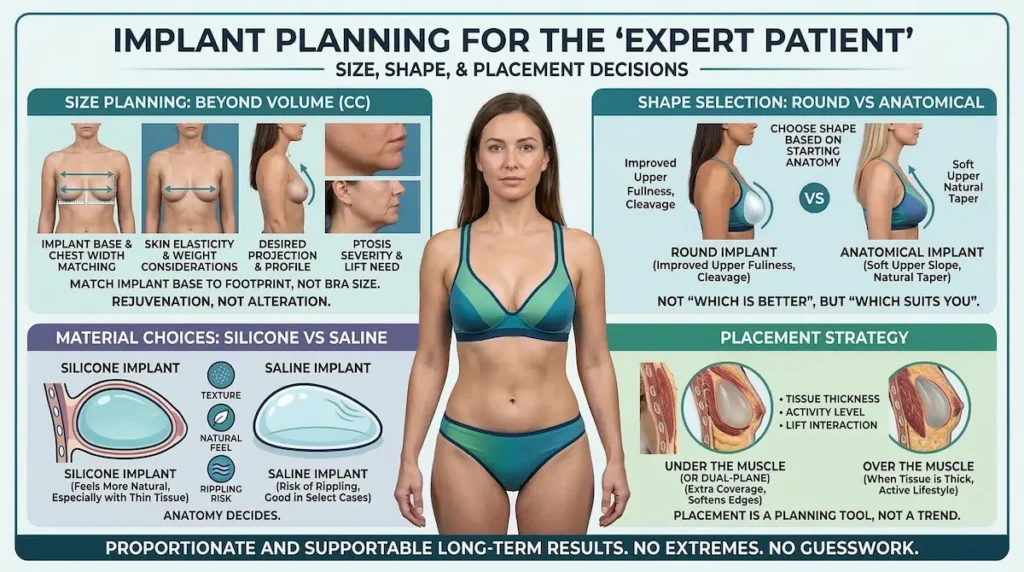
Implant Planning For the “Expert Patient”: Size, Shape, and Placement Decisions
This is the part most UK patients research the hardest. Understandably. An implant is not a “one size fits all” product, and a lift changes the breast envelope at the same time. We plan both together, so your final shape looks proportionate and remains supportable long-term.
We keep the goal steady: Rejuvenation, Not Alteration. No extremes. No guesswork.
300cc vs 500cc: why volume alone is a blunt tool
If you are searching breast lift with 300cc vs 500cc implants, you are already thinking like a surgeon. The number matters, but it is not the whole picture. Two patients can choose the same “cc” and end up with completely different outcomes because their chest frame and tissue strength are different.
- Chest width: we match the implant base to your breast footprint, not your bra label.
- Skin elasticity: tighter skin cannot safely carry the same weight as more elastic tissue.
- Desired projection: profile changes the side view as much as volume does.
- Ptosis severity: the more lift you need, the more disciplined we are with size.
We plan the size your tissues can hold. That is how results stay stable.
Round vs anatomical (teardrop): what changes in real life
Shape selection is often misunderstood online. Round implants can still look natural when planned well. Anatomical (teardrop) implants can create a beautifully tapered slope for the right anatomy. The deciding factor is not “which is better”. It is “which suits your starting point”.
- Round: can improve upper-pole fullness and cleavage predictably.
- Anatomical: can favour a softer upper slope when tissue is very thin or deflated.
- Profile choice: affects projection more than many patients expect.
During consultation, we talk in outcomes, not marketing labels. How you want your breasts to sit in a T-shirt matters more than the implant’s catalogue description.
Saline vs silicone: what the comparison should actually focus on
Patients often search saline vs silicone implants with lift because they want reassurance about safety and feel. That is sensible. Most decisions come down to texture, visible rippling risk, and how much natural tissue you have over the implant.
- Silicone: typically feels more like natural breast tissue, especially in thinner patients.
- Saline: can be a valid option in selected cases, but may show rippling more easily when tissue coverage is limited.
- Your anatomy decides: tissue thickness and skin quality often matter more than the implant “type”.
We do not sell a material. We match a material to your anatomy and your risk tolerance.
Over the muscle vs under the muscle: why placement is a stability decision
The online debate around over the muscle vs under the muscle placement usually misses one point: placement is not a trend. It is a planning tool. We choose it based on tissue thickness, your activity level, and how we want the implant to behave as your body heals.
- Under the muscle (or dual-plane): can offer extra coverage in thinner patients and can soften implant edges.
- Over the muscle: can be appropriate when tissue coverage is strong and muscle movement would be undesirable.
- Lift interaction: the lift tightens the envelope; we plan the pocket so tension stays controlled.
We explain our recommendation clearly. You should know why we chose it.
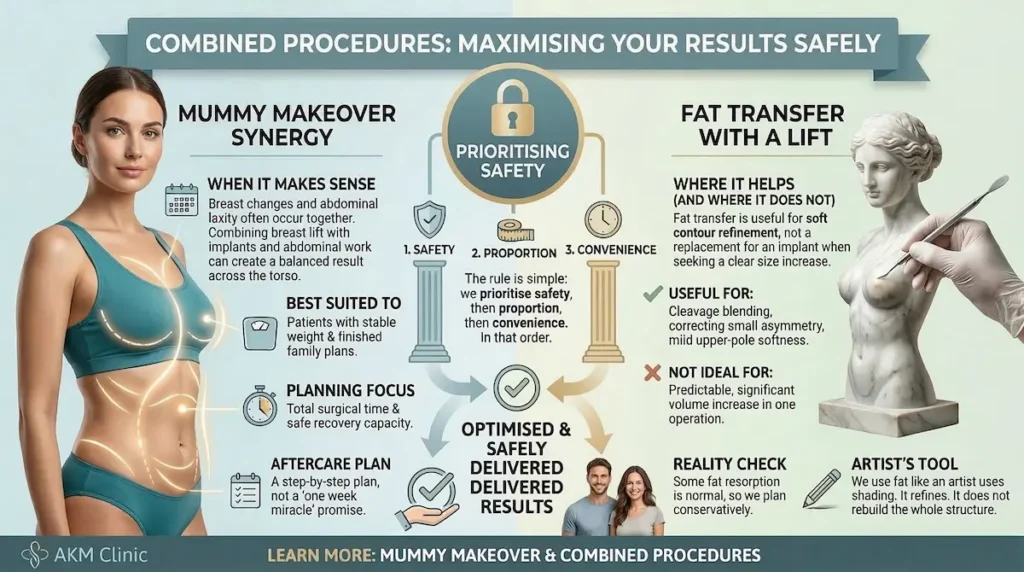
Combined Procedures: Maximising Your Results Safely
Some patients want a broader reset, not a single change. That can be done safely, but only when it is planned properly. We do not stack procedures to “do more”. We combine procedures when the body can reasonably heal from them in one well-managed recovery period.
The rule is simple: we prioritise safety, then proportion, then convenience. In that order.
Mummy Makeover synergy: when it makes sense
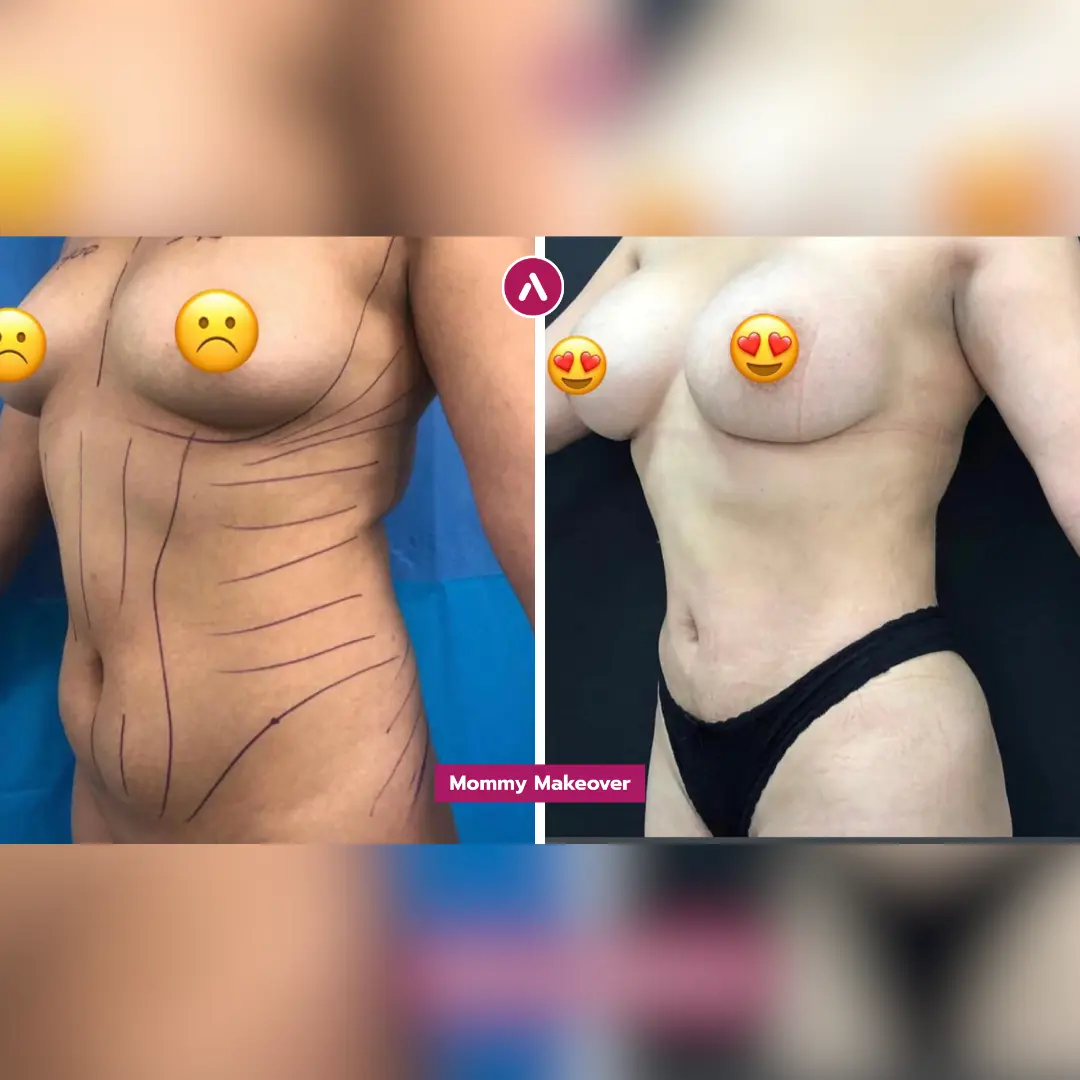
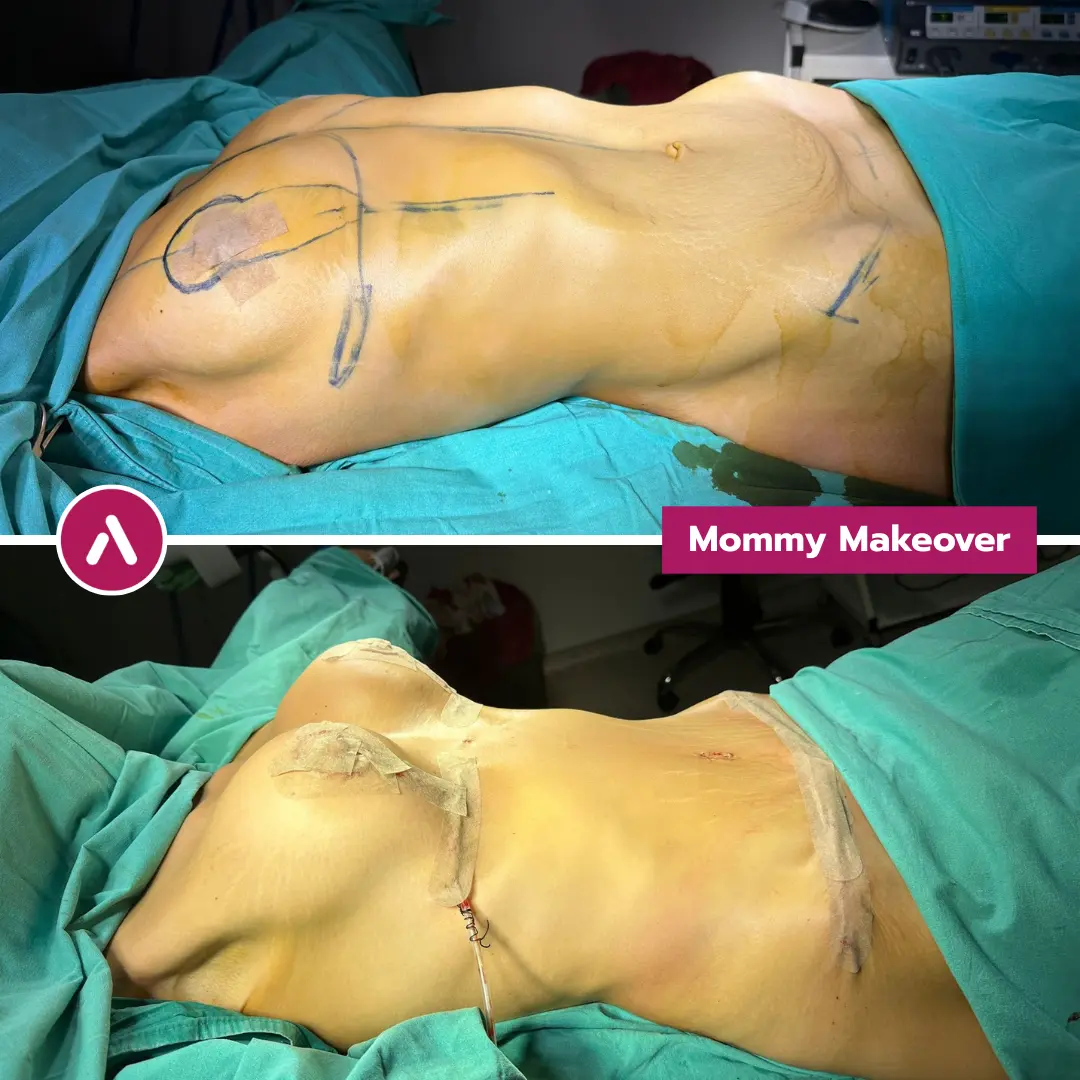
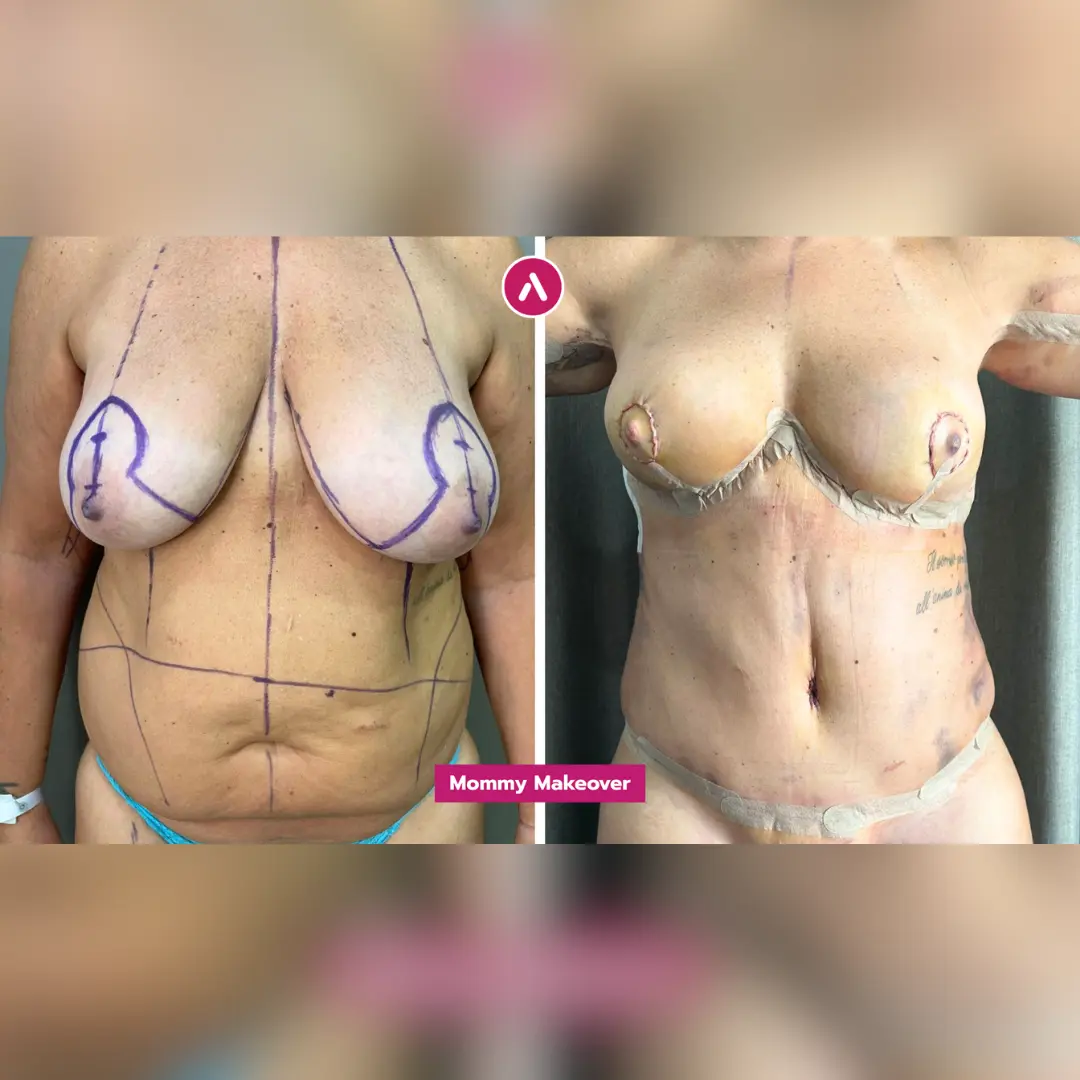
After pregnancy, breast changes rarely happen alone. Many patients also notice abdominal laxity and stubborn fat distribution. In those cases, combining a breast lift with implants with abdominal work such as a tummy tuck and targeted liposuction can create a balanced result across the torso as part of a tailored mummy makeover.
Best suited to patients with stable weight and finished family plans.
Planning focuses on total surgical time and safe recovery capacity.
We build a step-by-step aftercare plan, not a “one week miracle” promise.
If you are exploring this route, see: Mummy Makeover.
Fat transfer with a lift: where it helps (and where it does not)
Fat transfer breast can be useful for soft contour refinement. It is not a replacement for an implant when you want a clear size increase. We use it selectively, usually to smooth transitions and improve harmony rather than chase volume.
- Useful for: mild upper-pole softness, cleavage blending, small asymmetry adjustment.
- Not ideal for: predictable, significant volume increase in one operation.
- Reality check: some fat resorption is normal, so we plan conservatively.
We use fat like an artist uses shading. It refines. It does not rebuild the whole structure.
When a breast reduction is the better answer
Not every patient should add volume. If heaviness, skin irritation, posture strain, or a consistently “too large” breast size is the core problem, a reduction-based plan may serve you better than a lift-and-implant combination.
- Reduction addresses weight and proportional balance directly.
- It can still include lifting and reshaping as part of the technique.
- We focus on function and long-term comfort, not just cup size.
For a reduction-focused plan, see: Breast Reduction.
A staged approach: the quiet option that can be the safest
Sometimes the most intelligent plan is not “all at once”. If you want a major size change, or your tissue is very tight or thin, a staged approach may reduce tension and improve predictability. We will tell you when that is the safer route.
- Stage 1: lift and reshape for stable position.
- Stage 2: implant refinement once tissues have settled.
- Less tension can mean better scars and fewer compromises.
Anaesthesia: Why We Prefer Awake / Twilight Sedation Where Appropriate
Anaesthesia is often the quiet deciding factor for UK patients. Some people are completely comfortable with general anaesthesia. Others are not. Our job is to give you a safe, clear plan that fits both your procedure and your medical profile.
Where clinically appropriate, we prefer an Awake Surgery approach using local anaesthetic with twilight sedation (conscious sedation). It is not a gimmick. It is a practical option that can reduce anxiety for patients who are particularly concerned about “going under”.
We are direct about the limits. Not every breast procedure can be done this way, and not every patient is suitable. The final decision is made after medical screening and an anaesthetic assessment.
What “twilight sedation” actually means
Twilight sedation sits between being fully awake and being fully asleep. You remain comfortable and relaxed, with the area numbed using local anaesthetic. Many patients remember little of the procedure, while others recall parts of it in a calm, detached way.
- You are closely monitored throughout, the same way you would be under general anaesthesia.
- Local anaesthetic targets the surgical area directly.
- Sedation is adjusted to your comfort and vital signs, not a fixed “one dose” approach.
We aim to reduce fear without compromising control. Calm surgery is safer surgery.
Why some patients prefer to avoid general anaesthesia
This is not about being “brave”. It is about personal comfort and past experiences. Some patients have had difficult recoveries from general anaesthesia before. Others simply dislike the idea of losing awareness.
- Strong anxiety around general anaesthesia
- Previous nausea or prolonged grogginess after surgery
- A preference for a lighter, more controlled experience
We take these concerns seriously. We talk through the options with you, and we make sure you understand what you would feel on the day.
Who is (and isn’t) a candidate for awake/twilight techniques
Suitability depends on several factors: the complexity of your lift, the implant plan, and your medical history. Your safety comes first. Always.
- May be suitable: patients with stable health, moderate surgical scope, and strong preference to avoid general anaesthesia.
- May not be suitable: complex multi-procedure plans, certain medical conditions, or cases where full general anaesthesia is clinically safer.
- Non-negotiable: honest disclosure of medications, allergies, and nicotine use.
We do not “force” an anaesthetic style. We match the method to the patient.
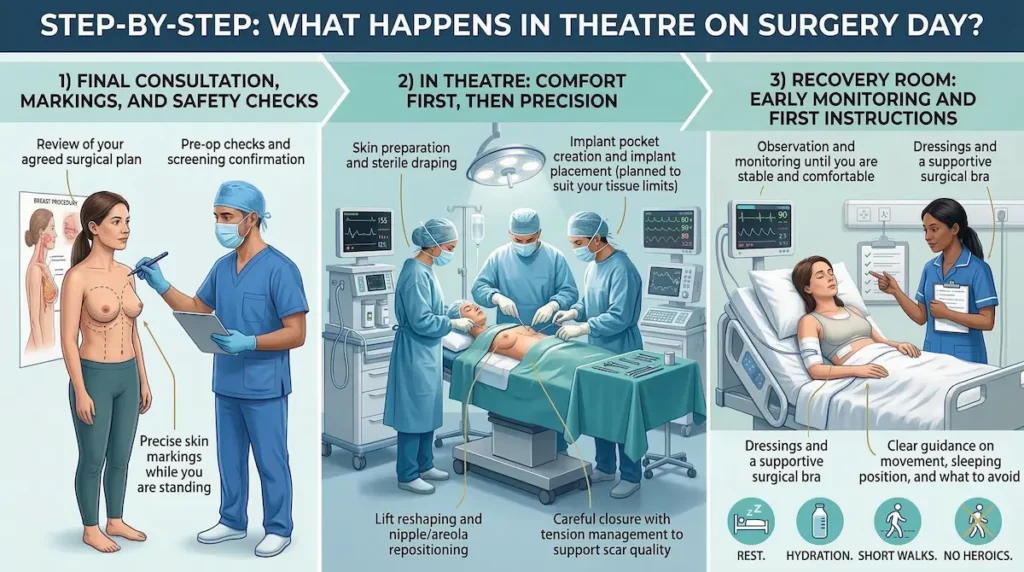
Step-By-Step: What Happens In Theatre On Surgery Day?
Most people feel calmer once they know the sequence. Surgery day is structured, not chaotic. We keep the process predictable and carefully paced.
Your day typically begins with final checks and a clear re-confirmation of the plan. Then we move to theatre, complete the procedure, and monitor you closely afterwards. Our approach is practical: you should know what happens next, and why it matters.
Exact timings vary depending on the lift pattern, implant pocket planning, and your individual anatomy. We keep you informed at each stage.
1) Final consultation, markings, and safety checks
Before theatre, you meet the surgical team for a final review. This is where we confirm implant choice, lift design, and symmetry goals. We also answer last-minute questions properly, not rushed in a corridor.
- Review of your agreed surgical plan
- Pre-op checks and screening confirmation
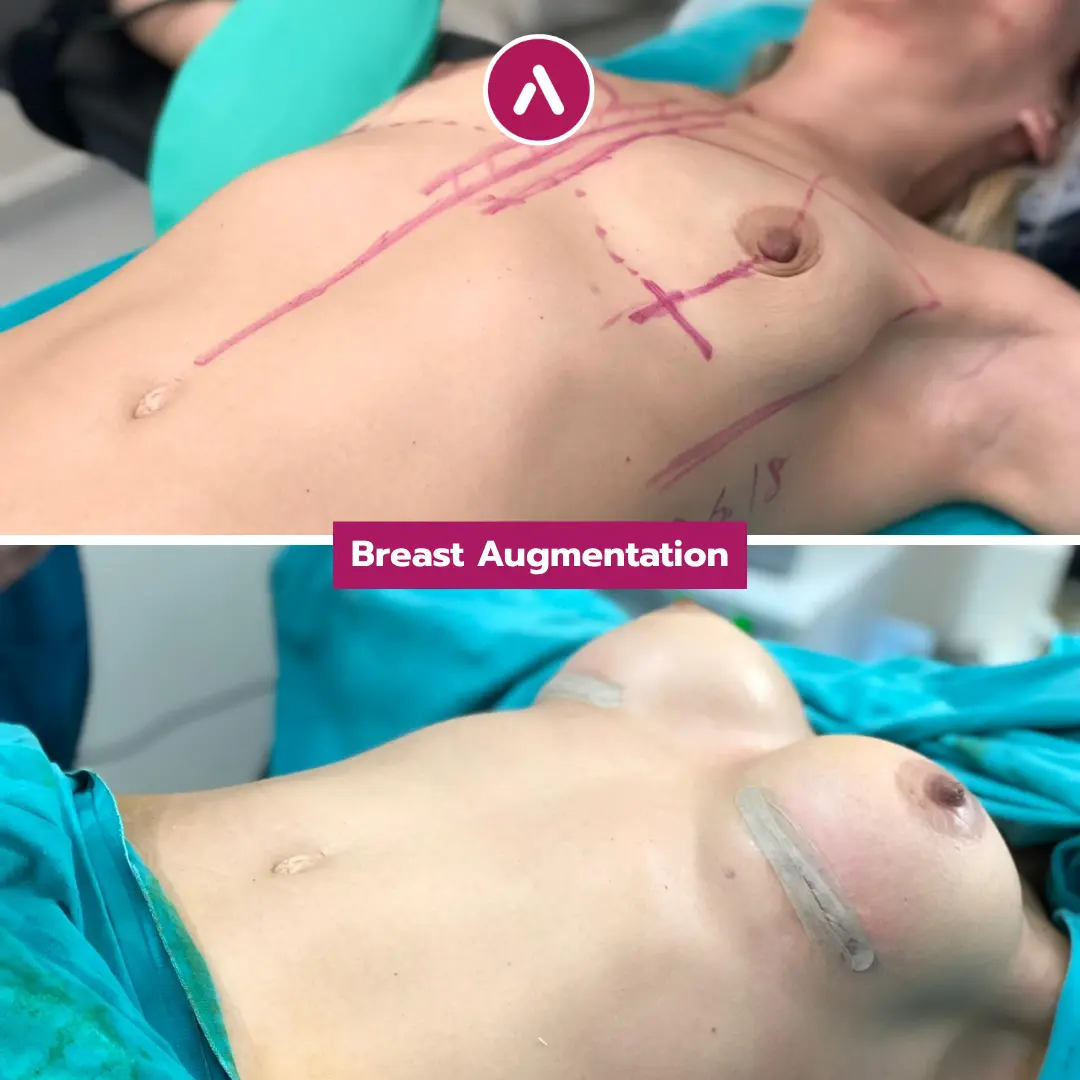
- Precise skin markings while you are standing (this matters for accuracy)
2) In theatre: comfort first, then precision
Once you are in theatre, we focus on control and consistency. Your comfort is managed by the anaesthetic plan, and your vital signs are monitored throughout. Then the surgical work begins.
- Skin preparation and sterile draping
- Implant pocket creation and implant placement (planned to suit your tissue limits)
- Lift reshaping and nipple/areola repositioning (based on the technique selected)
- Careful closure with tension management to support scar quality
In a lift-and-implant procedure, precision is not optional. It is the difference between “good now” and “stable later”.
3) Recovery room: early monitoring and first instructions
After surgery, you are monitored as the anaesthetic wears off. This is where we check comfort, circulation, and early wound status. We also explain what is normal in the first hours, so you are not guessing.
- Observation and monitoring until you are stable and comfortable
- Dressings and a supportive surgical bra
- Clear guidance on movement, sleeping position, and what to avoid
If you are travelling from the UK, we also keep the next few days simple. Rest. Hydration. Short walks. No heroics.
Breast Lift with Implants Recovery & Aftercare
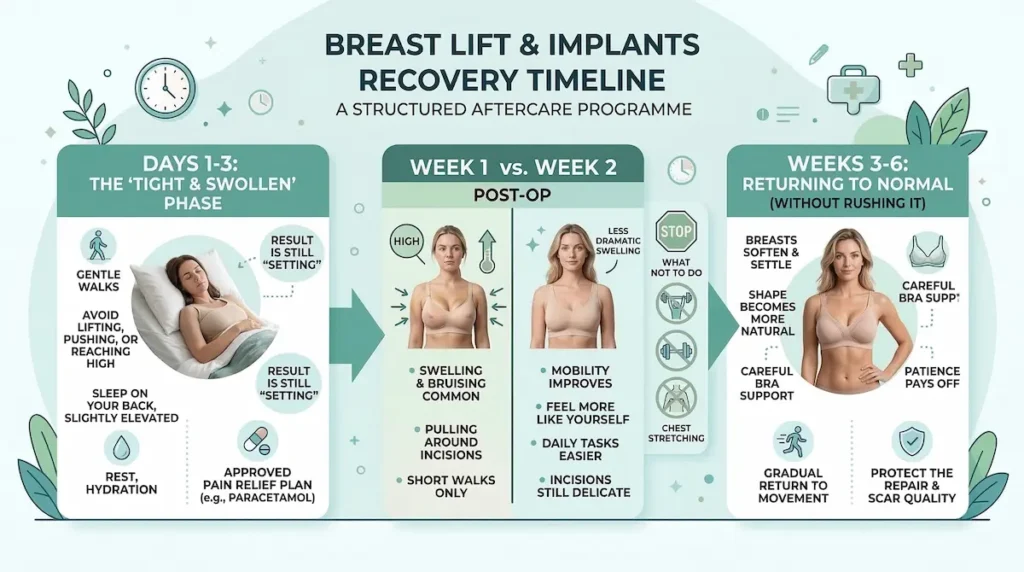
Recovery after a lift-and-implant procedure is predictable when you treat it like a programme, not a guess. The first two weeks are about swelling control, wound protection, and keeping tension off the incisions. Weeks three to six are about gradual return to normal movement and careful bra support. Final settling takes longer, and scars mature slowly, but most day-to-day milestones happen earlier than patients expect.
Days 1–3: the “tight and swollen” phase
The first 72 hours usually feel tight rather than sharply painful. Your chest can feel heavy, firm, and high on the chest wall. This is normal early on. Rest, hydration, and short walks matter more than heroics.
- Movement: gentle walking is encouraged; avoid lifting, pushing, or reaching high.
- Sleep: on your back, slightly elevated, to reduce swelling.
- Comfort: we give you a clear plan for approved pain relief; many UK patients recognise options such as paracetamol as part of standard post-op care.
- Support: wear your surgical bra as instructed to stabilise the new shape.
Early recovery is about protection. The result is still “setting”.
Week 1 vs Week 2: what changes in real life?
Patients often search 1 week post op vs 2 weeks post op breast lift and implants because they want a reality check. At one week, you typically still look swollen and “high”. At two weeks, the swelling begins to feel less dramatic, and daily tasks become easier. You are not “healed” yet, but you are usually more comfortable.
- Week 1: swelling and bruising are common; you may feel pulling around incisions; short walks only.
- Week 2: mobility improves; many patients feel more like themselves; incisions are still delicate.
- What not to do: no heavy lifting, no gym sessions, no stretching that stresses the chest.
We keep your aftercare structured. You should know what is normal, what is not, and when we want to hear from you.
Weeks 3–6: returning to normal (without rushing it)
This is where patience pays off. The breasts begin to soften and settle, and the shape becomes more natural. You can usually do more, but we still protect the repair and the scar quality. A rushed return to upper-body strain is one of the most common avoidable setbacks.
- Work: desk-based work is often manageable earlier; physical jobs need more time.
- Exercise: lower-body activity may return first; upper-body training comes later and gradually.
- Scars: we guide you on scar support and sun protection; mature scars take months, not weeks.
Healing is not a straight line. It is a gradual settling process.
Our Rapid Recovery & Safety Protocol: HBOT + LLLT
For the expert patient, “aftercare” is not just a follow-up visit. It is a protocol. We utilise Hyperbaric Oxygen Therapy (HBOT) and Low-Level Laser Therapy (LLLT) as a structured recovery system designed to support safer, calmer healing. The logic is simple: HBOT supports oxygen delivery at a systemic level, and LLLT targets cellular repair and collagen support locally.
- HBOT: supports tissue oxygenation to create a stronger healing environment.
- LLLT: supports cellular energy (ATP) and collagen activity, helping to reduce swelling and redness.
- Why the combination matters: it is a macro-to-micro approach—system first, then targeted acceleration.
Safety & Risks: Is Breast Lift With Implants Dangerous?
Every surgery has risks. We do not minimise them, and we do not dramatise them either. What matters is selection, planning, and how you manage the first few weeks. A lift with implants is technically demanding because it balances lifting (tightening) with volume (weight), so risk management must be built into the plan from the start.
General surgical risks (and how we reduce them)
These are the risks that exist with most operations. Our job is to reduce them with screening, sterile technique, and proper monitoring. Your job is to follow instructions and be honest about your health history.
- Infection: reduced by sterile protocols and clear wound-care guidance.
- Bleeding/haematoma: reduced by careful technique and post-op activity limits.
- Blood clots: reduced by early walking, hydration, and risk-based precautions.
Implant-specific risks you should understand
Implants are medical devices. Most patients do well, but long-term planning matters. We discuss the risks in plain language so you can make a calm decision.
- Capsular contracture: scar tissue tightening around the implant can affect feel and shape.
- Implant position changes: can occur if tissues are pushed too far or after premature strain.
- Revision surgery: sometimes needed over a lifetime, depending on anatomy and goals.
A safe plan is a disciplined plan. We prioritise stability over extremes.
Scars, sensation, and “normal worries” after surgery
Scars are part of a lift. The aim is that they fade and sit where bras and swimwear typically cover them. Sensation changes can happen, especially around the nipple-areola complex, and it can take time to settle.
- Scars: improve gradually; early redness is common; sun protection is important.
- Sensation: numbness or sensitivity can occur and often evolves over months.
- Swelling: uneven swelling early on is common; we assess if anything looks outside the expected range.
When to contact us immediately (red flags)
Most recovery questions are normal and easily managed. A small number are urgent. We give you clear instructions and keep communication simple.
- Sudden one-sided swelling or severe pain
- High fever or worsening redness around an incision
- Shortness of breath, chest pain, or calf swelling
- Any concern that feels “not right” rather than “uncomfortable but expected”
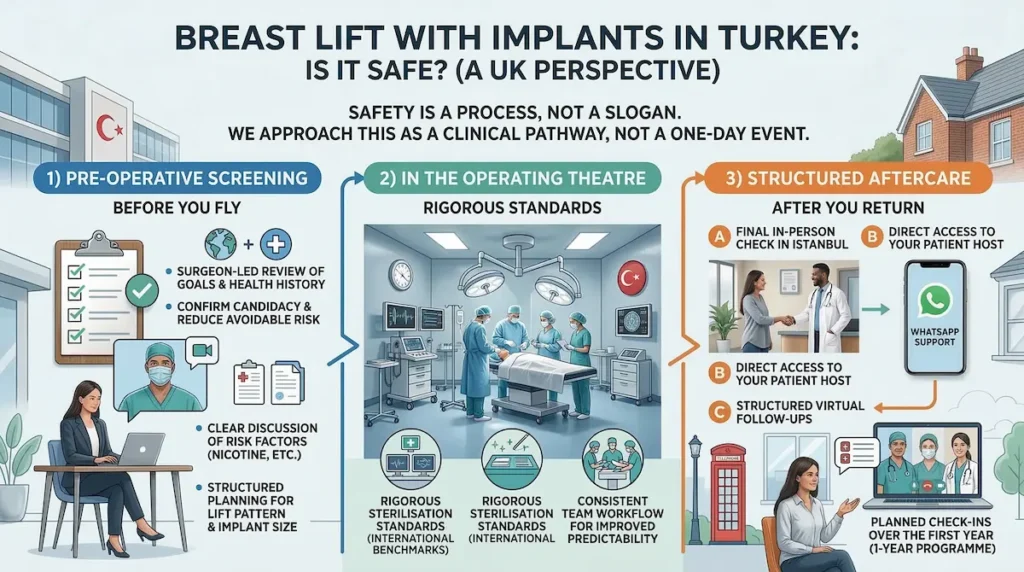
Is Breast Lift with Implants Safe In Turkey (from a UK perspective)?
If you are comparing Turkey to the UK, you are not only comparing geography. You are comparing systems. Safety depends on how a clinic screens patients, how it monitors you in theatre, and what happens after you fly home.
We approach this as a clinical pathway, not a one-day event. That means strict pre-operative screening, continuous monitoring during surgery, and structured aftercare that continues once you are back in the UK. Calm. Methodical. Documented.
1) Safety starts before you travel: screening and candidacy
Most complications are preventable when you select the right patient and plan properly. That is why we begin with a surgeon-led review of your goals, anatomy, and health history before confirming your date.
- Pre-operative health screening to confirm candidacy and reduce avoidable risk
- Clear discussion of risk factors (nicotine use, uncontrolled conditions, unstable weight)
- Structured planning so your lift pattern and implant size match your tissue limits
Safety is not a slogan. It is a process we follow before, during, and after surgery.
2) In theatre: monitoring, sterile standards, and consistency
During surgery, details matter. Monitoring matters. Sterility matters. A lift-and-implant procedure demands control because it balances tightening with added volume.
- Advanced patient vital-sign monitoring throughout the procedure
- Rigorous sterilisation standards (clinic-level protocols designed around international benchmarks)
- A consistent team workflow to reduce variability and improve predictability
For UK patients, this is the closest equivalent to what you expect from a serious private medical centre. It is not about luxury. It is about discipline.
3) The travel question: “What happens when I’m back in the UK?”
A common fear with international surgery is abandonment after you leave. We treat aftercare as part of the operation. It is planned, scheduled, and easy to access.
- A final in-person check in Istanbul before you are cleared to fly
- Direct access to your Patient Host for ongoing questions (WhatsApp-based support)
- Structured virtual follow-ups after you return home (planned check-ins over the first year)
Good aftercare removes the biggest stressor for international patients: feeling alone once they are home.
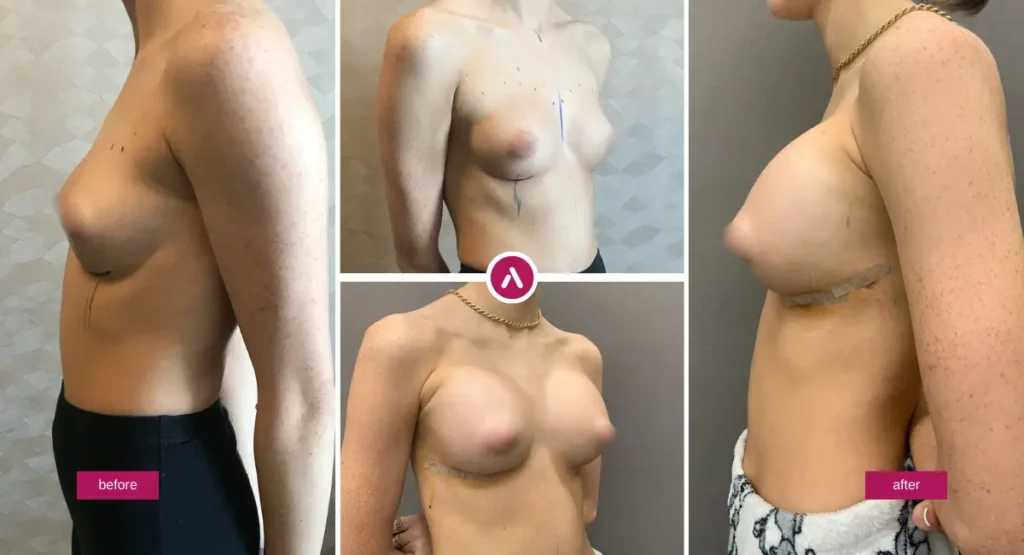
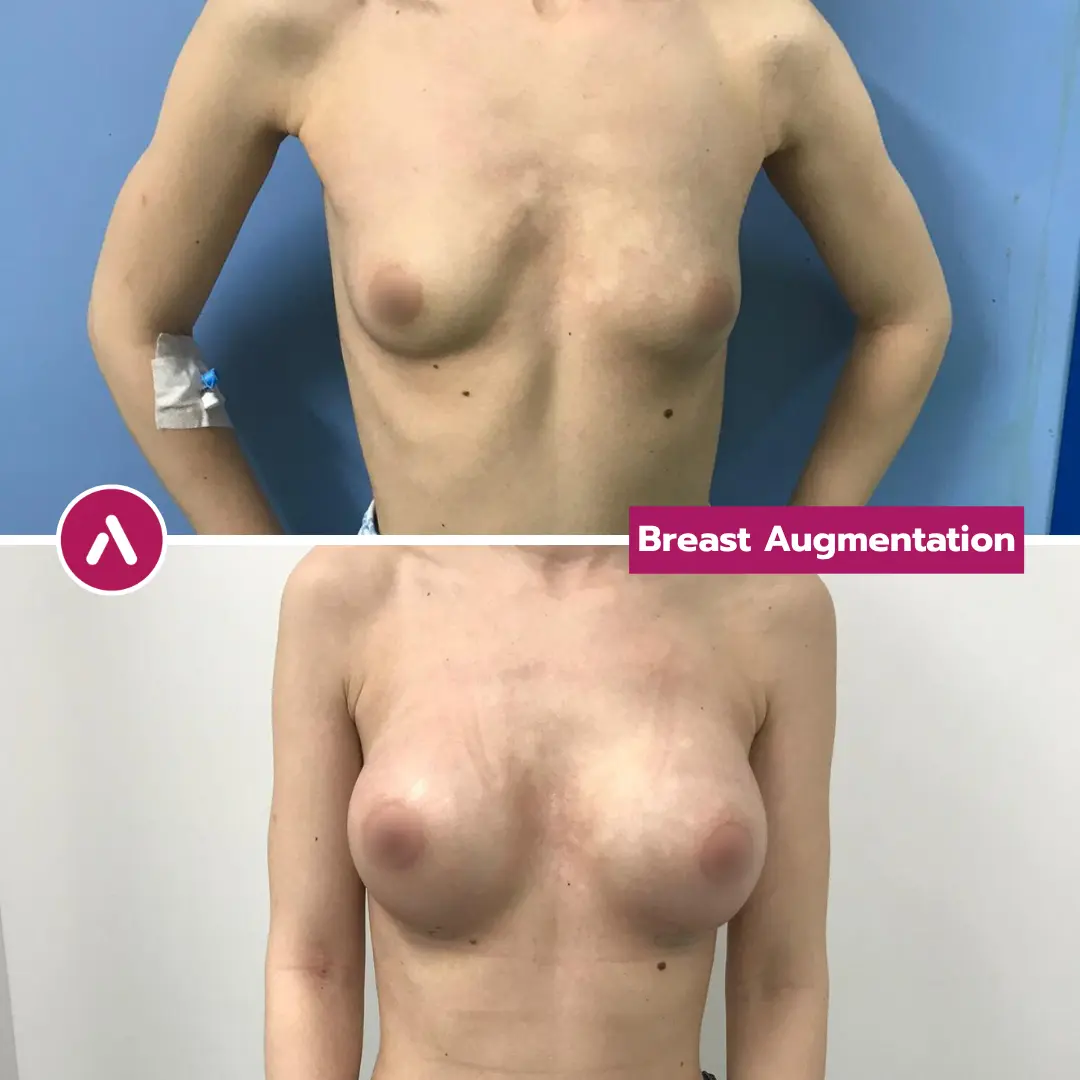
Breast Lift with Implants Before and After: Realistic Expectations & Results
Results are not just about size. They are about proportion, position, and how the breasts settle over time. Early swelling, tightness, and asymmetry can make patients second-guess themselves in the first weeks.
That is why we frame results as a timeline. At first, you see change. Later, you see refinement. Final shape is a “settling” process, not a photo taken at day 10.
Our philosophy is consistent: Rejuvenation, Not Alteration. The best result looks like you on a better day, not like a different person.
What you will see early vs what you will see later
In the early weeks, breasts can sit higher, feel firmer, and look more swollen than expected. That is normal. As oedema reduces and tissues soften, the shape becomes more natural.
- Weeks 1–2: swelling and tightness dominate the look and feel
- Weeks 3–6: the breasts begin to drop and settle into a more natural contour
- Months 3–6: scar maturation and subtle shape refinement continue
Scars: what is realistic, and what is not
A lift creates scars. There is no honest way around that. The goal is that scars sit in predictable lines, fade over time, and are supported by proper tension management and aftercare.
- Scar pattern depends on your technique (periareolar, vertical, or inverted-T)
- Early redness is common; fading is gradual
- Sun protection and consistent scar support help long-term quality
We choose the scar that gives the best shape with the least tension. Tension is the enemy of scar quality.
Implants: the long-term view (not the internet myths)
Implants are medical devices. They are designed to be durable, but they are not a “fit-and-forget” concept for life. A responsible plan includes long-term awareness and periodic clinical review.
- Your chosen size must be supportable by your tissues long-term
- Some patients need revision surgery at some point in their lifetime
- We give you clear guidance on follow-up and what changes to watch for
Common UK-patient concerns we address directly
Most expert patients have the same questions. We welcome them. Clear answers reduce anxiety.
- “Will I look overdone?” (We plan proportion first, cleavage second.)
- “How soon can I feel normal?” (Most milestones are early; final refinement takes longer.)
- “What if something worries me back home?” (You have a defined aftercare pathway.)
Cost analysis: Breast Lift with Implants Cost 2026 (Turkey vs UK)
UK patients usually start with one practical question: “breast lift and implants turkey prices — what should I realistically expect?” The honest answer is that fees depend on your anatomy and the surgical plan. Technique choice, implant type, and the amount of lifting required all change the scope of surgery.
What we can promise is clarity. We work with an all-inclusive model so you are not piecing together separate invoices across multiple providers.
What influences the price the most
- Lift technique: periareolar, vertical (lollipop), or inverted-T (anchor) patterns require different levels of reshaping.
- Implant planning: size, profile, and material choice (and the pocket strategy) change complexity and theatre time.
- Combined procedures: if you are combining with abdominal work, planning and recovery needs are broader.
- Aftercare pathway: structured recovery support (including our HBOT/LLLT protocol where appropriate) is part of a disciplined programme.
We do not price a “template”. We price a plan that fits your anatomy and your safety profile.
Turkey vs UK: what the comparison should actually be
Most comparisons online focus only on a headline number. That is rarely the full story. In the UK, private care is often priced as separate elements (surgeon’s fee, anaesthesia, hospital, garments, follow-ups). In Istanbul, we package the pathway so the logistics are simple and the cost model is predictable.
When there is a meaningful difference in overall cost, it is typically linked to macro factors such as exchange rates and national operational costs, rather than a compromise on clinical standards.
Comparison table: typical UK private pathway vs our all-inclusive model
| Cost Element | UK Private Pathway (typical structure) | Istanbul with Us (all-inclusive structure) |
|---|---|---|
| Surgeon + theatre fees | Often itemised separately | Included in one transparent quote |
| Anaesthesia | Separate billing is common | Included |
| Pre-operative tests | May be separate | Included |
| Accommodation | Not included | 5-star partner hotel included |
| Transfers (airport + clinic) | Not included | VIP transfers included |
| Post-op medications + garments | Often additional | Included |
| Long-term follow-up | Varies by provider | Structured virtual follow-up included |
What’s included in our VIP package (so you can compare properly)
- Your complete surgical procedure
- Anaesthesia and operating theatre fees
- All pre-operative tests
- 5-star hotel accommodation
- All VIP airport and clinic transfers
- Your 24/7 dedicated Patient Host
- All post-operative medications and garments
- First post-op meal
- Long-term virtual follow-up care
What is not included (and why we are explicit about it)
- International flight tickets (you choose what suits you)
- Personal travel insurance
- Personal expenses (meals beyond the provided first post-op meal)
- Additional hotel nights (if you extend your stay)
- Visa fees (if applicable)
Contextual next step: If you want a clear answer, ask for a personalised quote. We will outline the recommended lift technique, implant plan, and what is included—so you can compare like-for-like against UK private options.
Your Medical Journey From The UK: what to expect (arrival to departure)
International surgery feels far less daunting when the logistics are defined. We run a structured pathway designed for UK patients who want clarity, privacy, and continuity of care.
You manage one thing only: your flight booking. We handle the rest.
1) Free virtual consultation (before you commit)
- You share your goals and provide photos for review.
- Our team explains the likely lift pattern and implant direction.
- You receive a personalised plan with a transparent, all-inclusive quote.
2) Secure your date + VIP planning
- Your dedicated Patient Host coordinates scheduling and planning.
- We book your 5-star partner hotel and arrange VIP transfers.
- You receive a simple itinerary so you know what happens each day.
3) Arrival in Istanbul: airport welcome + hotel transfer
- You are met at the arrivals gate by a private driver.
- You transfer to your hotel in a private vehicle.
- Rest comes first. No rushing.
4) In-person consultation + tests (then surgery)
- We confirm the surgical plan in person, answer questions, and finalise details.
- Pre-operative tests are completed before theatre.
- After surgery, we monitor you closely and keep instructions practical.
UK patients do best with predictability. We keep the pathway structured so you can focus on healing.
5) Post-op recovery in Istanbul + clearance to fly
- Your Patient Host stays available 24/7 via WhatsApp.
- We plan your in-person check before you travel home.
- When you are clinically ready, we clear you to fly.
6) Long-term follow-up (back in the UK)
- We schedule virtual follow-ups to monitor healing over time.
- You can raise concerns early rather than “waiting it out”.
- We keep communication direct and calm.
Breast Lift with Implants Frequently Asked Questions (FAQ):
Which lift technique will I need (crescent, donut, lollipop, or inverted-T)?
It depends on the degree of sagging (ptosis), skin excess, and how much reshaping is needed. Mild sagging may suit a crescent or periareolar (donut) approach, moderate sagging often suits a vertical (lollipop) lift, and significant sagging typically requires an inverted-T (anchor) pattern for the most reliable shaping. We confirm the technique after an anatomical assessment, not based on a trend.
Can I choose the smallest scar option?
You can express a preference, but the safest and most predictable option is the technique that matches your anatomy. Smaller scars can be appropriate for mild cases, but used outside their limits they can lead to flattening, recurrent sagging, or an under-corrected result. We prioritise shape stability and controlled tension, because tension is the enemy of scar quality.
Is it better to do a breast lift with implants in one operation or in stages?
One-stage surgery can be an excellent option when your tissues can safely support the lift and the implant together. A staged approach may be safer if you want a major size change, have very thin tissue, or require a significant lift. We recommend the route that reduces risk and improves predictability—not the route that simply feels faster.
How do you decide between 300cc vs 500cc implants?
We do not decide by “cc” alone. Chest width, tissue thickness, skin elasticity, and your lift requirements all matter. In augmentation mastopexy, a disciplined size choice often produces the most stable, natural-looking result over time.
Saline vs silicone implants with a lift: which is safer?
Both can be safe when used appropriately. The more meaningful discussion is which option best suits your tissue coverage and your priorities around feel, rippling risk, and long-term maintenance. Many patients prefer silicone for a more natural feel, particularly when tissue is thin. We explain the logic behind our recommendation in plain language.
Over the muscle vs under the muscle: which looks more natural?
“Natural” is a result, not a placement. Under-the-muscle (or dual-plane) placement can provide extra coverage in thinner patients. Over-the-muscle placement can be suitable when tissue coverage is strong and we want to avoid implant movement with muscle use. We choose placement to protect the result and reduce avoidable compromises.
What will I look like at 1 week post-op vs 2 weeks post-op?
At one week, most patients still have noticeable swelling, firmness, and a “high” appearance. At two weeks, swelling often begins to reduce and day-to-day comfort improves, but incisions are still delicate and you must avoid strain. Early asymmetry can be normal during the settling phase. We guide you on what is expected and what is not.
How soon can I fly back to the UK after surgery in Istanbul?
Flying is planned around your clinical check and your individual recovery. We do not give a “one-size” number because lift pattern, implant planning, and your body’s response matter. You are cleared to fly only after an in-person assessment confirms you are stable and healing as expected.
Will I lose nipple sensation or the ability to breastfeed?
Changes in sensation can happen after a lift, especially around the nipple–areola complex, and it may take months to settle. Breastfeeding can still be possible for many patients, but it cannot be promised, as it depends on anatomy and the surgical plan. We discuss this openly during consultation so you can make an informed decision.
Do breast implants last forever?
Implants are durable medical devices, but they are not “lifetime guarantees”. Some patients never need revision for many years, while others may require changes over time due to natural ageing, tissue changes, or implant-related factors. A responsible plan includes long-term awareness and periodic follow-up guidance.
Breast lift with implants surgery in Mexico vs Turkey: what should I compare?
Compare like-for-like: surgical planning, facility standards, monitoring, aftercare structure once you return home, travel logistics, and continuity of support. The “best” destination is the one that gives you a disciplined surgical pathway and clear follow-up—not just a headline fee.
What does a breast lift and implants package include?
Our all-inclusive model is designed to remove logistical stress for UK patients. It typically includes your procedure, anaesthesia and theatre fees, pre-operative tests, accommodation in a 5-star partner hotel, VIP transfers, a dedicated Patient Host, post-operative medications and garments, and structured virtual follow-up. You will receive a clear inclusions list with your quote.
Medical Disclaimer: This page is for information only and does not replace a medical consultation. Every surgical plan is personalised and suitability depends on your medical history, anatomy, and clinical assessment. Results and recovery timelines vary from person to person.