

If you’re searching for “mommy makeover recovery with kids,” you’re probably not looking for vague reassurance—you want a realistic plan you can actually follow while parenting. This article zooms specifically into recovery logistics, kid-safe boundaries, and procedure-specific limitations. The procedure-level scope—candidacy criteria, which combinations make sense for which postpartum anatomy, and what “mommy makeover” actually delivers as a contour result—belongs on a dedicated page.
The full combined-procedure breakdown: post-pregnancy surgery hub.
In this article, you’ll get practical, safety-first mommy makeover recovery tips grounded in what we know from medical science and day-to-day post-op care routines: how to protect your incisions, avoid setbacks, and build a home routine that works with real life (kids included).
Table of Contents
The Reality Check: Recovery With Kids Is Different (And That’s Okay)
Before we talk schedules and checklists, it helps to reset expectations. With kids at home, the hardest part of recovery is rarely “pain”—it’s the constant pull to do more than your body can safely handle. A mommy makeover typically affects core strength, upper-body range of motion, stamina, and swelling patterns. That means your recovery time for mommy makeover with kids may feel longer if you don’t plan support and boundaries from day one.

What “normal” healing looks like when you still have parenting duties
Most moms describe recovery as a series of small wins rather than a straight line. Swelling fluctuates, energy comes in waves, and you’ll have “good mornings / tough afternoons.” That’s normal. In practical terms, a realistic mommy makeover recovery with kids time plan assumes you will need:
- Help for lifting (especially toddlers) for several weeks—your surgeon will define the safest timeline.
- Protected rest blocks every day (even if they’re short and scheduled).
- Simple routines you can repeat—because decision fatigue is real when you’re healing and parenting.
The 3 biggest risk moments at home (and how to avoid them)
In our experience, these are the most common “setback moments” during recovery after mommy makeover when children are involved:
- Sudden grabbing or jumping: Kids can unintentionally pull your arms, bump your abdomen, or hug too hard. Create a “gentle zone” rule and practice soft hugs (more on scripts later).
- Stairs + carrying: Carrying a child up/down stairs is a high-risk combo for strain and falls. Set up a recovery station on one level if possible.
- Nighttime wake-ups: Getting up quickly can spike discomfort and dizziness, especially in the first days. Pre-position supplies and ask a partner to handle wake-ups early on.
Setting expectations: what you can/can’t do in the first 2 weeks
In the first two weeks, your primary job is healing. That means your “parenting” may shift from doing everything to supervising safely. The most important boundary is avoiding lifting, twisting, and sudden movements—especially if you had a tummy tuck. If you’re looking for a “rule of thumb,” think: protect the core, protect the incisions, protect your energy. This approach supports a smoother mommy makeover recovery time and reduces the chance of prolonged swelling or wound issues.
Key takeaway: The goal isn’t to be a “hero mom” during week one. The goal is to prevent small mistakes that can add weeks to your recovery.
Pre-Op Planning for Moms: Childcare, Home Setup, and Support
If you want a calmer mommy makeover recovery timeline, the best work happens before surgery. Planning isn’t just convenience—it’s safety. A well-prepped mommy makeover recovery house reduces bending, reaching, and lifting, and keeps kids entertained without constantly pulling you into risky movements. This is where “scientific research” meets real life: structured routines and reduced physical strain support better recovery behaviors (sleep, hydration, gentle walking, and consistent aftercare).
Build your “help calendar” (partner, family, nanny, school runs)
Create a simple calendar for at least the first 10–14 days that covers:
- Morning logistics: breakfast, dressing, daycare/school drop-off.
- Afternoon coverage: pickups, snacks, homework supervision.
- Evening routine: dinner, baths, bedtime, nighttime wake-ups.
This is the single biggest factor in reducing stress during recovery time for mommy makeover with kids. If you can’t get full coverage, aim for coverage during the most physically demanding windows (mornings and evenings).
Home prep checklist: sleeping setup, easy meals, supplies, stair strategy
Set up your recovery “home base” so you can rest, medicate on time, and move safely with minimal effort. A practical mommy makeover recovery must haves checklist usually includes:
- Recovery pillow/wedge system (or recliner setup) to support back/abdomen comfort.
- Side table kit: water, meds, snacks, lip balm, phone charger, tissues.
- Loose, easy clothing and slip-on shoes to reduce bending.
- Prepped meals (freezer portions, protein options) for the first week.
- Kids’ activity bin near your base: coloring, puzzles, sticker books, audiobooks.
If your home has stairs, decide in advance where you’ll spend most of your time. Ideally, keep sleeping, bathroom access, and kid activity on one level for the early phase.
What to arrange before surgery: car seats, lifting alternatives, hygiene plan
Kids create “lifting traps”—moments you don’t notice until you’re post-op (buckling car seats, lifting into high chairs, bath time). Arrange alternatives now:
- Car seat plan: have another adult handle buckling and lifting in/out of the car.
- Stool steps: let toddlers climb into their seat/bed with supervision (no lifting).
- Hygiene workaround: plan sponge baths, quick showers, and a helper for kids’ bath time.
These small setups reduce the urge to “just do it once,” which is a common cause of setbacks in a mommy makeover recovery day by day routine.
| Task | Why It’s Risky Early On | Safer Alternative |
|---|---|---|
| Buckling toddlers into car seats | Twisting + reaching + sudden pulling | Partner/helper does buckling; child climbs in |
| Lifting into crib/high chair | Core strain + arm extension | Use step stool; switch to low bed/high chair assist |
| Bathing kids | Bending + slipping risk | Helper handles baths; use wipes/sponge baths temporarily |
How Each Procedure Affects Your Ability to Care for Kids
One reason “mommy makeover” recovery feels unpredictable is that it’s not one procedure—it’s a combination, and each part affects your daily function differently. Understanding recovery time for mommy makeover with kids starts with knowing what your body will struggle with most: core protection (tummy tuck), arm/chest movement (breast surgery), and swelling/compression management (liposuction). When you plan your days around these limits, your mommy makeover recovery day by day experience becomes far more manageable.
Tummy tuck recovery realities: core protection and posture limits
If your mommy makeover includes a tummy tuck, this is usually the biggest “parenting limiter.” Your abdominal wall and incision need protection from strain. That means:
- No lifting children early on (especially toddlers). Lifting is one of the fastest ways to trigger pain, swelling spikes, or delayed healing.
- Posture changes: you may walk slightly bent at first to reduce tension on the incision—totally normal.
- Getting up/down is the challenge: standing from a couch, getting in/out of bed, and using stairs require slow, deliberate movement.
“Core protection” is the phrase that gets used in mommy makeover recovery content, but it covers a specific set of postural and lifting limits that change daily over the first 6-8 weeks. Posture changes, log-roll transfers, and “no lifting” rules aren’t generic precautions—they’re tied to specific tissue healing milestones. The procedural-level scope—what tightening was done, whether muscle plication was involved, scar placement, and how these factors shape the parenting-with-recovery balance—deserves its own deep dive.
The full tummy tuck reference: tummy tuck recovery reference.
Practical with-kids workaround: set up “climb-in” solutions (step stools, low beds) so children can come to you without being lifted. This single change can protect your core and shorten the stressful part of your mommy makeover recovery timeline.
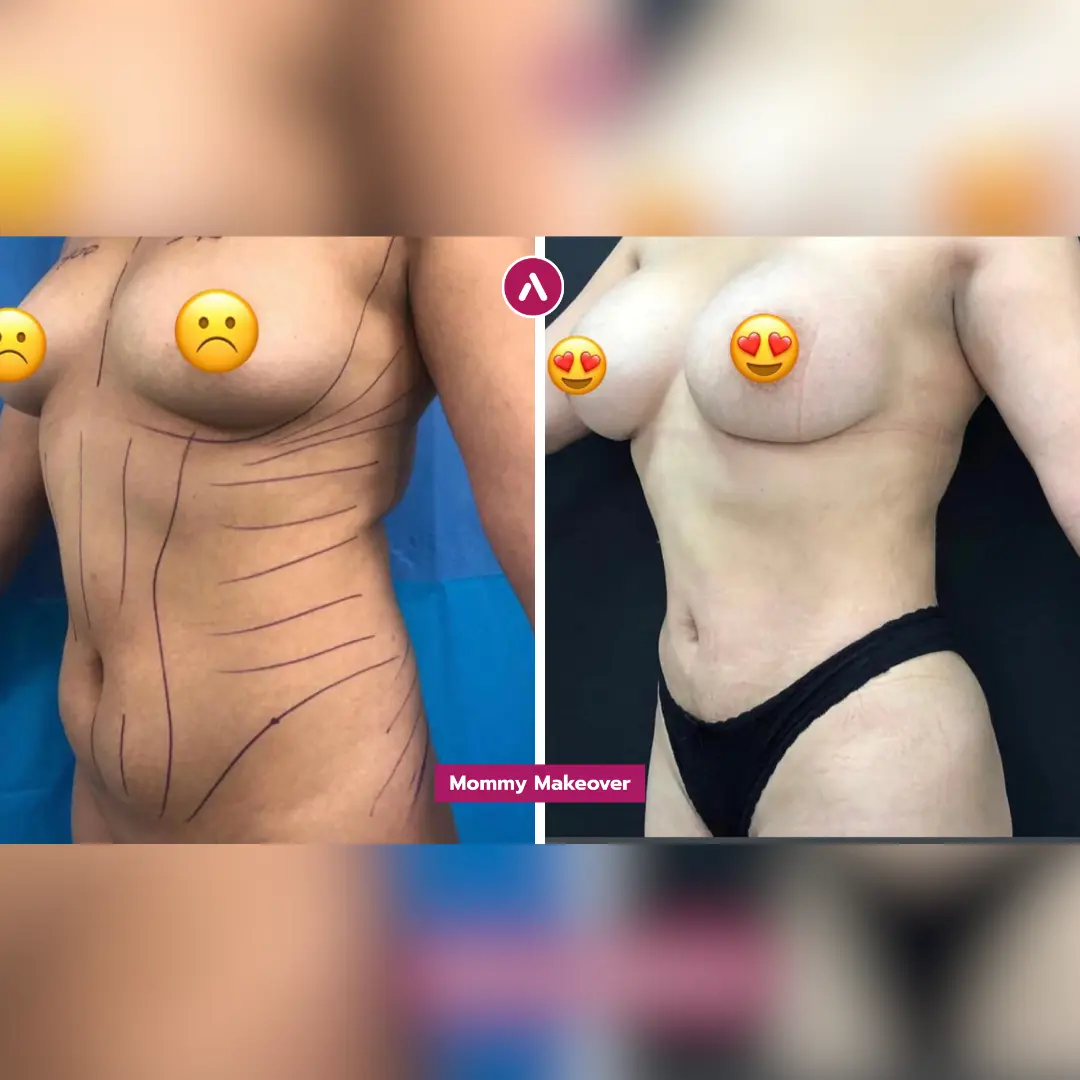
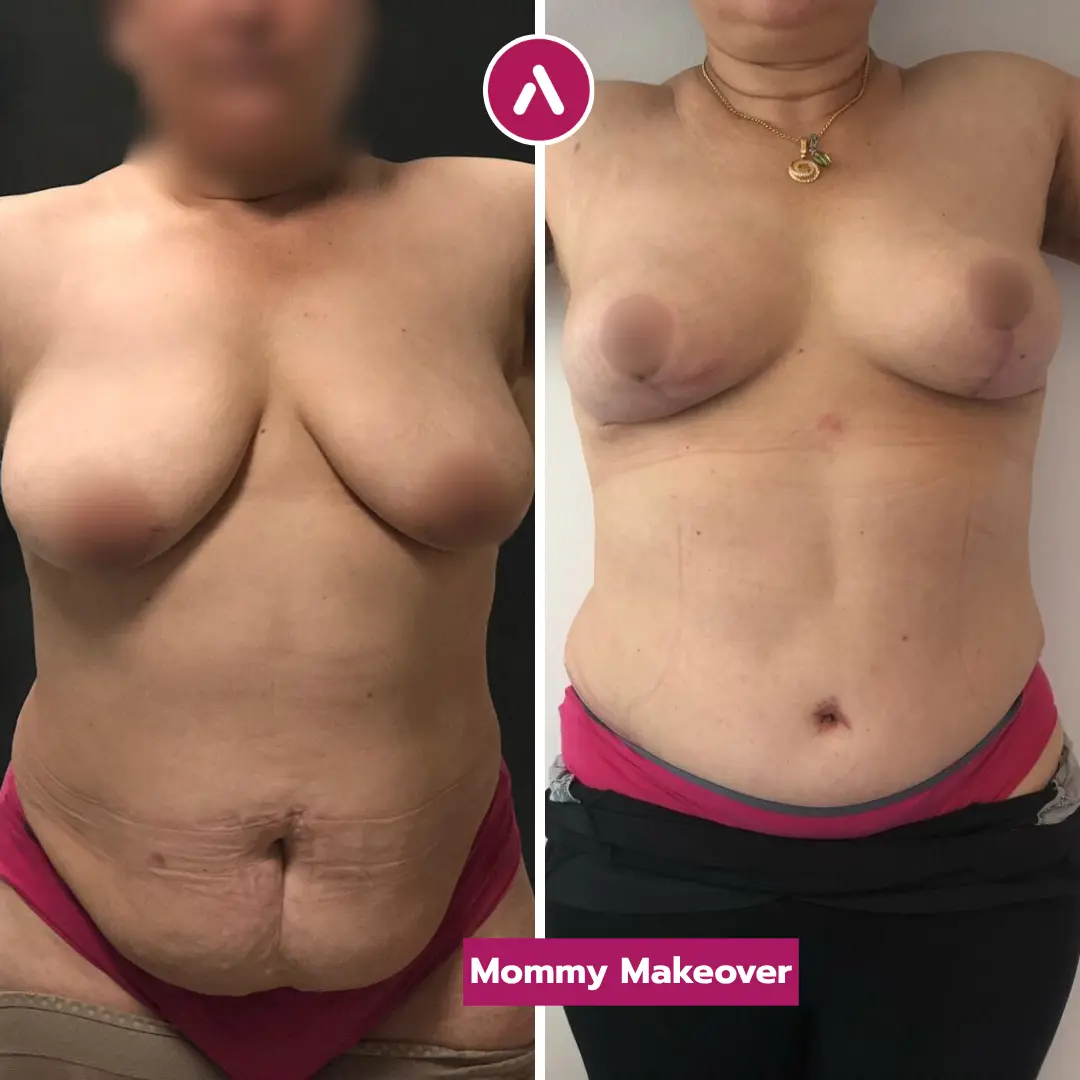
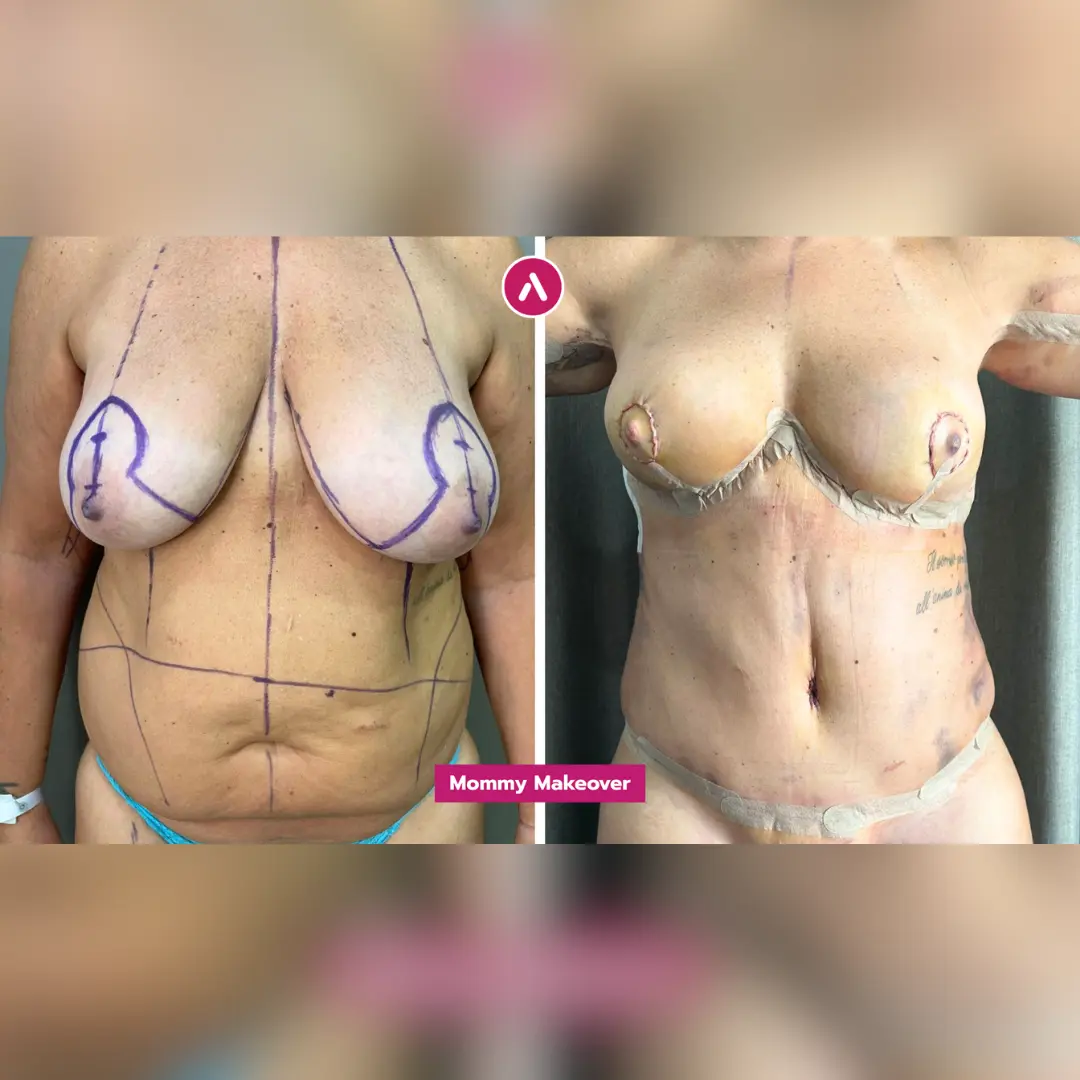
Outcome photos are a different kind of recovery tool. Looking at mature results—how the abdomen, breasts, and waist look 6-12 months after the recovery window you’re now planning for—anchors the daily limits to the long-term reason for them. Curated outcomes with multi-timepoint documentation make the trade-offs concrete: yes to “no lifting” for several weeks, because the result on the other side is real.
The procedure-specific outcome reference: postpartum transformation gallery.
Breast lift/augmentation considerations: arm movement and holding toddlers
Breast procedures often limit how comfortably you can reach, lift, or hold a child—especially if they’re used to being carried on one hip. Common early restrictions include:
- Reduced upper-body strength and discomfort with pushing/pulling (strollers, heavy doors).
- Limited overhead reaching (putting dishes away, lifting laundry baskets, reaching into cribs).
- Holding kids close can be uncomfortable due to pressure on the chest.
“Arm movement and holding toddlers” is where breast surgery recovery gets unexpectedly hard for moms. Upper-body strength comes back in waves, and the discomfort with pushing, pulling, or one-hip carrying isn’t pain—it’s mechanical tension on healing tissue. The procedural-level scope—incision pattern (anchor, lollipop, periareolar), implant vs. no-implant, scar placement—shapes which parenting limitations matter most and for how long.
The full breast lift breakdown: breast lift technique reference.
Practical with-kids workaround: switch to side-by-side connection (reading, puzzles, movies) rather than “pick-up cuddles.” If a child needs closeness, try seated cuddles with a pillow barrier to prevent direct pressure.
Liposuction + combo procedures: swelling, compression garments, mobility
Liposuction (especially when combined with other procedures) can come with more swelling and soreness than many people expect. Compression garments can feel restrictive, and swelling often fluctuates depending on activity level. That matters in a busy mommy makeover recovery house because “a little extra walking” or a rushed day can mean a bigger swelling day tomorrow.
- Compression is non-negotiable if your surgeon prescribed it—plan outfits and bathroom routines accordingly.
- Swelling patterns change (often worse later in the day). Schedule rest blocks before the afternoon crash.
- Gentle movement helps—short, frequent walks are often recommended to support circulation.
“Swelling fluctuates” sounds vague until you map the actual pattern: morning baseline, afternoon spike, evening crash, overnight redistribution. That rhythm shapes how a mom-with-kids schedules rest blocks, garment wear, and the realistic “good hours” for active parenting. Compression isn’t optional decoration—it’s part of the swelling management mechanism, and lipo-specific recovery dynamics differ from tummy-tuck-only or breast-only recoveries.
The lipo-specific recovery framework: liposuction recovery dynamics.
From a medical science perspective, consistency beats intensity: predictable walking, hydration, and rest usually lead to a smoother recovery after mommy makeover than “doing a lot” on good days and crashing afterward.
| Procedure Component | What Feels Hardest With Kids | Best Planning Fix |
|---|---|---|
| Tummy tuck | Lifting, bending, quick standing, stairs | One-level setup; no lifting plan; help calendar |
| Breast surgery | Holding kids, pushing/pulling, reaching | Seated bonding; move essentials to waist height |
| Liposuction | Compression comfort, swelling swings, fatigue | Rest blocks + short walks; simple routines |
“Swelling fluctuates” is the technical truth, but for a mom-with-kids it translates into something concrete: which hours of the day allow more activity, when to plan rest blocks, and how to interpret a sudden swelling spike vs. a normal afternoon shift. Compression and gentle walking are the foundation, but manual lymphatic drainage adds an active swelling-reduction layer with its own timing rules—too early or too aggressive can backfire.
The full swelling-management protocol with timing principles: swelling management protocol.
The First 72 Hours: Survival Mode, Safely
The recovery framework here—routines, rest blocks, gentle walks, swelling management, garment compliance—maps directly onto tummy-tuck-only recovery, with the added complexity of mommy makeover combination procedures. The principles are shared; the specifics scale up. Reading the tummy-tuck-specific recovery playbook side by side reveals which practices are universal post-op rhythm and which are mommy-makeover-specific tactical adjustments (childcare timing, partner roles, household setup).
The parallel framework with abdominal-specific timing: tummy tuck recovery playbook.

Pain control + nausea prevention without feeling “checked out”
Your surgeon will prescribe a pain-control plan—follow it exactly. What matters with kids is minimizing “peaks and valleys” so you’re not suddenly in significant pain while alone with them. Practical tips:
- Use alarms for medication timing (including stool softeners if prescribed).
- Eat small, protein-forward meals to reduce nausea and support healing.
- Hydrate consistently—dehydration can worsen dizziness and fatigue.
If nausea is an issue, ask your surgical team about anti-nausea options. In many cases, steady routines help more than pushing through. This is the unglamorous but effective side of scientific research: adherence to a structured plan is strongly linked to smoother recovery behavior and fewer avoidable setbacks.
Safe movement: getting in/out of bed, bathroom routine, short walks
Movement is important, but it must be gentle and controlled—especially after tummy tuck or liposuction. The goal in the first 72 hours is not “exercise.” It’s circulation and safety:
- Use the log-roll method to get out of bed (avoid twisting).
- Short walks around the room/house at intervals recommended by your surgeon.
- Bathroom safety: keep pathways clear, use non-slip mats, and avoid rushing.
With-kids strategy: place a “quiet activity station” near your recovery base so children can be close without requiring you to move fast.
Kid-safe boundaries: hugs, jumping, sudden pulls, and germ exposure
Kids don’t mean to be rough—they’re just being kids. In the first days, you need clear, simple rules:
- No running-jump hugs. Teach “side hugs” or “gentle hugs” while you’re seated.
- No climbing on mom—use a pillow barrier if needed.
- Hand hygiene matters more than usual; kids bring germs home, and early healing tissue is sensitive.
Plan who handles daycare/school exposure and sick-child care early on. A simple germ-minimizing routine (handwashing on arrival, separate tissues/trash, wiping common surfaces) can reduce risk during recovery after mommy makeover.
Key takeaway: In the first 72 hours, your “job” is consistency—rest, short walks, hydration, medication timing, and strict no-lifting boundaries.
Week 1–2: Daily Routine Templates That Work With Kids
Week 1–2 is where most moms either protect their results—or accidentally extend their recovery time for mommy makeover with kids. You may feel “better” before you’re truly ready for real parenting tasks, which is why a simple structure matters. A predictable mommy makeover recovery day by day rhythm reduces overdoing it, keeps swelling more stable, and lowers the chance of incision irritation.
A realistic day plan (school drop-off alternatives, meals, naps, meds)
Here’s a realistic “low-risk” template you can adapt. The goal is consistency, not perfection.
| Time Block | What You Do | What Someone Else Covers |
|---|---|---|
| Morning | Wake, meds (set alarms), hydration, light protein breakfast, brief walk | Kids’ breakfast, dressing, school/daycare drop-off |
| Late Morning | Rest block (45–90 min), incision/garment check per surgeon protocol | Toddler supervision / playtime |
| Midday | Short walk, lunch, hydration, bathroom routine | Meal prep, cleaning, errands |
| Afternoon | Rest block + swelling management (elevation as instructed) | School pickup, snacks, activities |
| Evening | Light dinner, meds, gentle movement, early wind-down | Bath time, bedtime routine, lifting/carrying |
| Night | Sleep in supported position; keep essentials within reach | Night wake-ups (ideally) during first week |
Why this works: swelling and fatigue often increase later in the day. Scheduling rest before the afternoon/evening “kid chaos” protects your body and keeps your mommy makeover recovery timeline on track.
Managing drains, dressings, and incision care around children
If you have drains or dressings, the biggest risk with kids is accidental tugging and contamination. Practical strategies:
- Wear drain management clothing (drain belt/pockets) so nothing dangles.
- Do incision care in a “closed door” routine (bathroom/bedroom) to avoid curious hands.
- Handwashing rule for everyone before “gentle hugs.”
- Keep supplies in a lidded container out of reach (kids + pets).
“Incision care around children” sounds like a niche concern until you account for sticky hands, sudden hugs, and the everyday environment a toddler creates. The framework—handwashing protocols, private routine timing, supply containment, dressing protection—isn’t kid-specific; it’s general scar care principles adapted to a high-friction home. The underlying scar-quality logic transfers across procedures: tension control, contamination minimization, and predictable timing of silicone/compression once the incision closes.
The full incision care reference with abdominal scar specifics: incision care framework.
The evidence base for mommy makeover wound healing has matured into prospective, randomized data—specifically targeting the wound complications (dehiscence, seroma, hematoma) that recovery protocols try to prevent. A January 2025 prospective randomized trial in Case Reports in Plastic Surgery and Hand Surgery (Taylor & Francis) compared 40 mommy makeover patients across two dressing protocols (NPWT vs. standard) using Vancouver Scale outcomes: mommy makeover wound trial. The NPWT group showed accelerated wound healing and reduced localized complications—mechanism evidence for why dressing protocols, not just patient compliance, shape recovery outcomes.
Important caveat: this is a 40-patient single-center prospective RCT (Sassari, Italy), not a large multi-center trial—useful for mechanism evidence and protocol design, but larger-scale outcome generalization remains a separate research need. Honest disclosure: this is the second trial by the same author team (Tettamanzi et al, University of Sassari) referenced in this blog series; the prior was a gynecomastia TLA paper, this is a separate mommy makeover wound study.
Screen time, activities, and “quiet play” ideas that protect your body
During week 1–2, your recovery improves when kids are occupied without you needing to stand, bend, or lift. Permission to use more screen time (temporarily) is not failure—it’s strategy. Quiet-play ideas for a mommy makeover recovery house:
- Sticker books, coloring kits, magnetic tiles (on a table near you)
- Audiobooks / story podcasts during rest blocks
- “Special recovery basket” that only comes out when mom rests
- Movie + snack picnic on the floor (you seated safely, no bending)
Key takeaway: Week 1–2 success is built on two things: a strict no-lifting rule and scheduled rest that’s protected like an appointment.
“Accelerate recovery” gets used in clinic marketing as if it’s a single feature. The actual mechanism behind it is a stack: HBOT for tissue oxygenation, LLLT for inflammation modulation, hospital-grade monitoring during the perioperative window, and structured protocols connecting them. Each adjunct has its own evidence base and realistic outcome boundary—and for moms returning to kid-care logistics, the question isn’t whether a clinic offers these technologies but how they’re integrated into your specific aftercare pathway.
The complete technology and protocol reference: recovery acceleration toolkit.
HBOT comes up in mommy makeover marketing as a “boost”—a framing that obscures the actual mechanism. Pressurized oxygen dissolves directly into plasma, bypassing the hemoglobin transport bottleneck and reaching tissues with compromised microcirculation. For combination procedures with extensive dissection (tummy tuck + breast + lipo), the relevance sits in the early-weeks window when swelling and tension can slow perfusion exactly where you need calm healing.
The full mechanism with realistic outcome boundaries: hyperbaric oxygen healing mechanism.
Weeks 3–6: Gradual Return to Parenting Tasks (Without Setbacks)
Weeks 3–6 is when you can usually do more—but “more” must be earned gradually. Many moms feel a burst of energy around this time and then experience a swelling rebound if they overdo it. A steady, step-by-step progression is the safest way to shorten the frustrating part of mommy makeover recovery time.
Lifting timeline: when it’s safer to pick up a child (and how to do it)
Your surgeon’s guidance is the rule here, because procedure combinations vary. As a general principle, you want to avoid lifting until you’re cleared—especially after tummy tuck. When you are cleared, technique matters:
- Bring the child to you (have them climb onto a couch/chair) instead of lifting from the floor.
- Keep the child close to your body (less leverage = less strain).
- No twisting while holding—turn with your feet.
This is one of the biggest determinants of recovery time for mommy makeover with kids because repeated “small lifts” can quietly add up to strain and swelling.
Driving, chores, and carrying: rules that prevent swelling and strain
Driving clearance varies (pain control, mobility, reaction time). Once cleared, start with short trips. For chores:
- Keep items light (no heavy laundry baskets, no grocery hauling).
- Use rolling carts or split loads into small trips.
- Avoid deep cleaning that requires twisting, reaching, and bending.
In a home with kids, this is where you’ll want “systems”: pre-portioned snacks, a simplified kitchen setup, and a rule that toys go into bins you can reach without bending.
Exercise restart: walking → light movement → surgeon-cleared activity
Walking is usually the first structured movement. Then you progress to light activity only after clearance. The safest mental model is a staircase, not a sprint:
- Step 1: consistent daily walks (short but frequent)
- Step 2: gentle mobility / stretching (only if approved)
- Step 3: return to exercise gradually, monitoring swelling and discomfort
In terms of scientific research, the “dosage” of movement matters: steady, low-intensity activity generally supports circulation and mood without stressing healing tissue.
Talking to Your Kids About Surgery (Age-Appropriate Scripts)
Kids handle recovery better when they understand the rules—and when those rules are explained in a way they can process. This section helps you reduce guilt, reduce fear, and reduce the “accidental bump” risk that can disrupt your mommy makeover recovery timeline.
Toddlers vs. school-age vs. teens: what to say and what to avoid
- Toddlers (2–4): “Mom has a boo-boo and needs gentle hugs.” Avoid long explanations—repeat simple rules.
- School-age (5–10): “My body is healing, so I can’t lift or run right now. Your job is to help me heal.” Give them one helpful task.
- Teens: Be direct and calm: “I’ll be sore and tired for a few weeks. I need help with pickups/chores.”
Handling guilt and “mom anxiety” during recovery
It’s common to feel guilty resting while someone else does the parenting. But guilt can push you into overdoing it. Try reframing:
- Rest is treatment. It’s not “time off.”
- Short-term help protects long-term outcomes.
- Kids learn empathy when you model healthy boundaries.
Creating “connection without pressure”: cuddles without strain, routines
Connection doesn’t require lifting. Replace physical strain with predictability:
- Daily reading ritual (same time every day)
- Movie night with “gentle hug rules”
- Bedtime talk where you sit and they come to you
This protects your recovery after mommy makeover while keeping kids emotionally regulated.
Red Flags: When to Call Your Surgeon Immediately
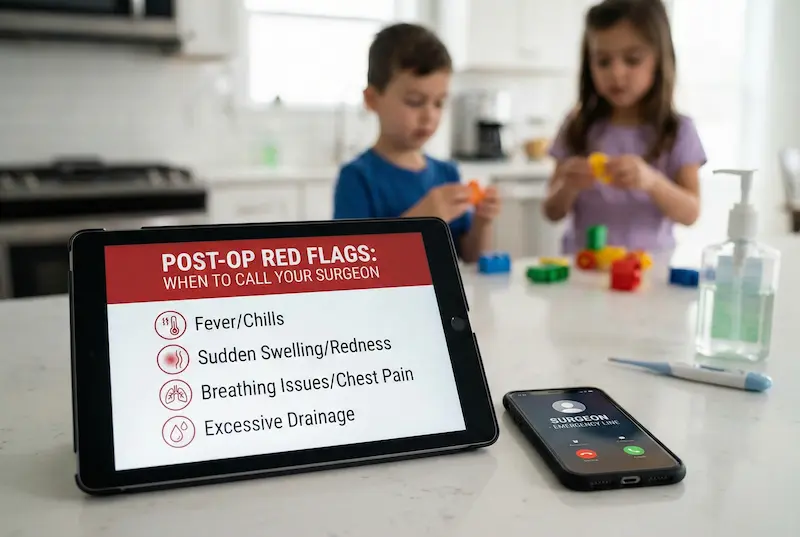
With kids at home, it’s easy to dismiss symptoms as “normal exhaustion.” But safety comes first. If anything feels suddenly worse, trust your instincts and contact your surgical team. Fast action can prevent small problems from becoming major ones—something emphasized across post-op protocols in modern medical science.
Symptoms that are NOT normal (fever, sudden swelling, breathing issues)
- Fever or chills
- Sudden one-sided swelling, severe pain, or rapidly increasing redness
- Shortness of breath, chest pain, or fainting
- Excessive drainage or foul-smelling discharge
- Calf pain/swelling (especially one side)
If you experience any of the above, contact your surgeon urgently or seek emergency care per their instructions.
Infection prevention at home (kids bring germs—here’s the plan)
- Handwashing on arrival from school/daycare
- Separate towels and no sharing cups/utensils
- Wipe high-touch surfaces (doorknobs, remotes, tablet screens)
- Keep incision care private (closed room, clean setup)
Blood clot prevention basics: movement, hydration, warning signs
Follow your surgeon’s prevention plan. In general, gentle movement and hydration are common fundamentals. Warning signs can include calf pain/swelling, sudden shortness of breath, or chest pain—do not ignore these.
Key takeaway: If symptoms feel sudden, severe, or “not like yesterday,” contact your surgeon. Early intervention protects your recovery.
Frequently Asked Questions (FAQ): Mommy Makeover Recovery with Kids
These quick answers address the most searched questions about mommy makeover recovery with kids, including timelines, safety, and daily logistics.
When can I pick up my toddler after a mommy makeover?
Only when your surgeon clears you—especially if you had a tummy tuck. Until then, use “climb to you” setups (step stools, low beds) and seated cuddles to avoid lifting.
How do I prevent my kids from accidentally hurting my incisions?
Create clear “gentle rules” (no jumping, no climbing on mom), use pillow barriers during seated cuddles, and keep incision care private behind a closed door.
What’s the best sleeping position when I still need to respond at night?
Use the position your surgeon recommends (often supported on your back with pillows). Keep essentials within reach and ask a partner to handle wake-ups early on if possible.
Can I be alone with my kids during the first week?
Many moms need help in week one—especially if toddlers require lifting. If you must be alone, plan low-risk activities, keep kids in the same room, and avoid tasks that require bending or carrying.
How long until I can drive my kids to school and activities?
Driving clearance varies by procedure, pain control, and mobility. You’ll need your surgeon’s approval before driving—start with short trips once cleared.
What if my child gets sick while I’m recovering?
Try to designate another caregiver for direct sick care early on. Prioritize hand hygiene, separate towels, and limit close face-to-face contact to reduce infection risk.
How do I know if swelling/bruising is normal or a complication?
Some swelling and bruising are expected, but sudden worsening, one-sided swelling, fever, foul drainage, or breathing symptoms are red flags. Contact your surgeon promptly if you’re concerned.
"Tummy tuck recovery" varies dramatically depending on which version of the procedure was performed. A mini tummy tuck involves a smaller dissection plane and typically shorter recovery; a full tummy tuck adds muscle plication and longer healing windows. Mommy makeover combinations usually fall closer to the full-scope end. Which version you had directly shapes the parenting-with-recovery limits—lifting timelines, posture changes, and how long the "no twisting" rule stays in force.
The full scope-vs-scope breakdown: abdominoplasty scope contrast.
Medical Disclaimer: This content is for educational purposes only and does not replace medical advice, diagnosis, or treatment. Surgical options, anesthesia choices, risks, costs, and recovery vary by individual. Always consult a qualified, board-certified clinician for personalized guidance. If you have urgent symptoms, seek emergency care.