

Vaginoplasty (Vaginal Tightening) in Turkey




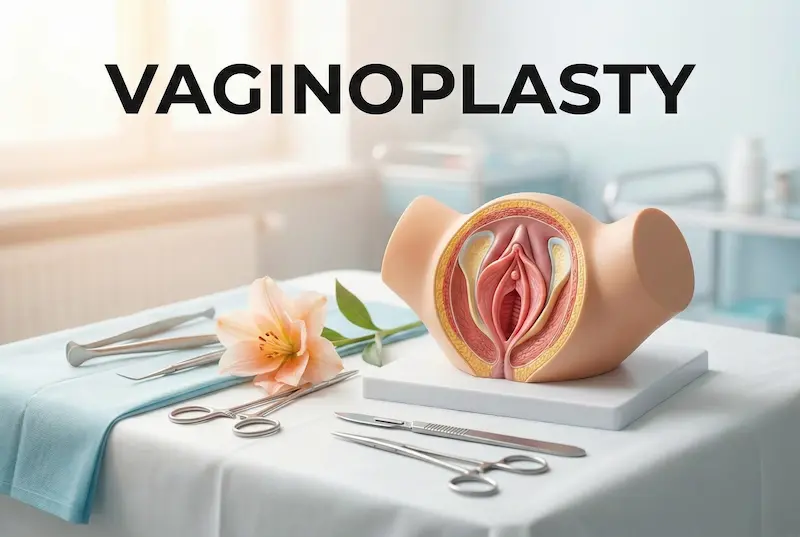
Vginoplasty: Quick Facts
Duration of Surgery
Type of Anaesthesia
Initial Recovery Period
Hospital Accommodation
Return to Daily Activities
Vginoplasty Results: Before and After
Considering Vaginoplasty (Vaginal Tightening) in Turkey? This page is for UK patients seeking clear, clinical guidance on vaginal laxity, candidacy, and what surgery can realistically change. We focus on comfort, function, and natural-looking outcomes with planning from consultation to aftercare.
You’ll learn how tightening is achieved, when labiaplasty or perineoplasty may be combined, and what to expect during recovery. We also outline risks, red flags, and how UK-to-Istanbul follow-up supports peace of mind as you heal in a patient-first pathway.
Table of Contents
What is Vaginoplasty (Vaginal Tightening)?
Vaginoplasty (often searched as “vaginal tightening”) is a surgical procedure that reduces excess laxity at the vaginal opening and, when appropriate, supports deeper tissues to improve comfort and function. The aim is controlled, anatomical refinement—never an artificial, “over-tightened” result.
Definition in plain UK English
The word “vaginoplasty” is used in two different medical contexts. In gynaecological aesthetics and reconstruction, it can describe surgery for vaginal laxity after childbirth or age-related change. In gender-affirming care, it can also describe the creation of a neovagina. We cover those gender-affirming surgery types in a dedicated section later, so you can compare terminology without confusion.
- Vaginal laxity: a looseness that can affect comfort, sensation, and confidence.
- “Vaginal tightening surgery”: a common lay term for the aesthetic/reconstructive approach.
- Gender-affirming vaginoplasty: a separate pathway with different techniques and goals.
Basic anatomy: what changes, what does not
For most patients seeking tightening, the focus is the vaginal opening (introitus) and the supportive tissues around it. The goal is to restore tone and support where stretching or tissue changes have occurred. It is not about “changing who you are”. It is about bringing comfort back into daily life.
- Vaginal opening: can feel looser after delivery, perineal injury, or time.
- Perineum: the tissue between the vagina and anus; it matters for support and stability.
- Pelvic floor: muscles that support pelvic organs; surgery may be complemented by pelvic floor care, depending on your exam findings.
Aesthetic vs functional goals
Patients rarely come to us asking for change for the sake of change. They usually want to feel more comfortable, more confident, and more like themselves again. We plan around function first, then aesthetics. That is how we protect a natural result.
- Functional goals: improved comfort in exercise, reduced friction, and better tissue support.
- Aesthetic goals: a neater, more proportionate look that still appears entirely natural.
- Expectation setting: we discuss what surgery can improve and what may need a different solution (for example, pelvic floor therapy).
Why Do Women Consider Vaginal Tightening Surgery?
Most women do not wake up one day and decide on surgery lightly. This tends to be a slow build—small discomforts, then bigger frustrations, then the realisation that the issue is persistent. Some patients want to address changes after childbirth. Others notice a shift with ageing or menopause. The common thread is quality of life.
Post-pregnancy changes
Pregnancy and vaginal birth can stretch tissues and, in some cases, affect the perineum. Even with good healing, the “before” feeling may not fully return. When the concern is primarily tissue laxity or a widened opening, surgical tightening can be considered after a proper assessment.
- Common triggers: persistent looseness, discomfort during activity, or a sense of reduced support.
- Important timing: we usually advise waiting until you have recovered fully after childbirth.
- Practical point: if you plan future pregnancies, we discuss how that might influence timing and strategy.
Ageing, perimenopause, and menopause-related changes
Hormonal changes can affect tissue elasticity, hydration, and resilience. Some women describe a general sense of “fragility” or discomfort that was never present before. Surgery is not the answer for every menopause-related symptom, but it can help where structural laxity is the dominant issue. When dryness or irritation is the primary driver, we may discuss non-surgical options alongside your GP or specialist care plan.
- Structural laxity: more likely to respond to surgical tightening.
- Tissue dryness/irritation: often needs medical management, sometimes combined with device-based options.
- Comfort-first planning: we avoid aggressive tightening that could create new discomfort.
Quality-of-life drivers (comfort, confidence, intimacy)
Some patients come in with a very practical request: “I want day-to-day comfort back.” Others talk about confidence, body image, or intimacy concerns. These are valid motivations, but they deserve a calm, clinical approach. Our job is to match the technique to the anatomy, not to a trend.
- Everyday comfort: exercise, sitting, and certain clothing can become more comfortable after addressing laxity.
- Confidence: many women simply want to feel more “put together” again.
- Intimacy: we discuss this respectfully, with a focus on comfort and function rather than extremes.
Surgeon’s Insight: Our philosophy is “Rejuvenation, Not Alteration.” The best result is the one that feels like a return to your own baseline—subtle, proportionate, and clinically safe.
Am I a Good Candidate for Vaginoplasty (Vaginal Tightening)?
Suitability is not about a single symptom. It is about anatomy, tissue quality, and what you want to improve. We start by clarifying whether your concern is primarily internal laxity, the vaginal opening, the perineum, or a combination. Then we match the plan to the simplest option that can deliver a natural, comfortable outcome.
Who benefits most?
Women who benefit most usually have a clear, consistent pattern of symptoms and exam findings. The goal is not “maximum tightening”. It is stable support and comfort.
- Moderate vaginal laxity that has not improved with time, pelvic floor work, or lifestyle changes.
- A sense of “widening” at the opening (introitus), especially after childbirth or perineal stretching.
- Physical discomfort during activity (running, cycling) linked to tissue movement or reduced support.
- A desire for functional improvement alongside a refined, natural appearance.
During consultation, we also screen for issues that may need a different pathway, such as pelvic floor dysfunction or pain syndromes. If surgery is not the right tool, we say so.
Who should wait or avoid surgery?
Safety comes first. Some situations mean you should delay surgery. Others mean you should not proceed until underlying problems are addressed.
- Active infection, unexplained bleeding, or untreated gynaecological conditions.
- Pregnancy, immediate postpartum healing, or major hormonal instability without a medical plan.
- Uncontrolled medical conditions that increase surgical risk.
- Smoking or vaping without a willingness to stop (wound healing matters).
- Expectations focused on an “extreme” result rather than comfort and function.
We discuss risks in plain terms. We also explain what you can do to improve readiness, from optimising general health to setting a realistic recovery window.
Consultation checklist for the “Expert Patient”
If you are comparing providers, bring structure to the decision. A serious consultation should answer serious questions. We encourage you to ask them directly.
- What exactly are you tightening: the opening, deeper support, the perineum, or all three?
- How do you avoid over-tightening and long-term discomfort?
- Will you recommend combined procedures (and why), or is staging safer?
- What does the aftercare plan look like once I am back in the UK?
- What are the most common short-term issues you see, and how do you manage them?
- When can I realistically return to desk work, exercise, and intimacy?
We run our consultations as a clinical planning session, not a sales call. The aim is clarity. If you do not feel clearer after a consultation, treat that as information.
Surgeon’s Insight: The best candidates are not chasing an extreme result. They want comfort, confidence, and a natural feel. Our job is to deliver that without creating new problems.
Vaginoplasty vs Labiaplasty vs Perineoplasty: what’s the difference?
Many women use “vaginoplasty” as a catch-all term for intimate surgery. That is understandable, but it can lead you to the wrong procedure. The three most commonly confused options target different structures. Once you separate them, the decision becomes simpler and far more rational.
| Procedure | Primary target | Main aim | Typical reasons |
|---|---|---|---|
| Vaginoplasty (vaginal tightening) | Vaginal opening and/or supportive tissues | Improve support and reduce laxity | Post-pregnancy looseness, functional discomfort, reduced support |
| Labiaplasty | Labia minora (sometimes labia majora) | Refine shape and reduce excess tissue | Discomfort in clothing/exercise, irritation, aesthetic concern |
| Perineoplasty (perineal repair) | Perineum and introitus support | Restore perineal body support | Post-birth perineal stretching, gaping at the opening, stability concerns |
Vaginoplasty (tightening focus) explained
For tightening, our focus is controlled anatomical support. That may involve refining the tissues at the opening, and in selected cases, reinforcing deeper supportive layers. The endpoint is comfort and stability, not a “new body”.
- Best for: internal laxity and reduced support that impacts daily life.
- Not ideal for: primarily external tissue concerns (that is usually a labiaplasty discussion).
- Key principle: function first, then aesthetics.
Labiaplasty: when the issue is external
Labiaplasty addresses the labia, not the vaginal canal. If the main concern is rubbing, irritation, difficulty with certain clothing, or asymmetry, labiaplasty may be the correct procedure. Many women assume they need “tightening” when the real issue is excess external tissue.
- Best for: discomfort from labial tissue movement, irritation, or aesthetic disproportion.
- Can be combined with vaginoplasty: yes, when both internal and external concerns are present.
- Natural result marker: proportionate shape that does not look “operated”.
Perineoplasty: why the perineum matters
Perineoplasty focuses on the perineum and the structural support at the vaginal opening. This can be relevant after childbirth, particularly if the perineal body feels weakened or stretched. In practical terms, perineal support often influences both comfort and the feeling of stability.
- Best for: gaping at the opening linked to perineal stretching.
- Often paired with: tightening strategies when the opening and perineum are both involved.
- Safety focus: restoring support without creating tension or pain.
If you are unsure which procedure matches your anatomy, we can usually clarify this quickly in a structured consultation. The aim is a surgeon-led plan with clear reasoning, so you are not choosing a procedure based on a label.
Non-Surgical Vaginal Tightening: where do lasers and energy devices fit?
Non-surgical “vaginal tightening” treatments are often marketed as a quick alternative to surgery. In reality, these options can be helpful for the right patient, but they do not replace surgical tightening when structural laxity is the main issue. The key distinction is this: energy-based treatments may improve tissue quality (for example, hydration, elasticity, and mild laxity), while surgery corrects structural support (the opening, the perineum, and deeper supportive layers when indicated).
CO2 fractional laser, RF, and HIFU: what they can (and cannot) do
Laser and energy-based devices generally aim to stimulate collagen remodelling and improve tissue quality over time. Some patients report improved comfort and confidence, and some notice a subtle “firmer” feel. However, these technologies have limitations, particularly when there is significant widening at the vaginal opening or perineal stretching after childbirth.
- CO2 fractional laser: often discussed for improving tissue texture and dryness-related symptoms; changes are typically gradual and subtle.
- Radiofrequency (RF): uses controlled heating to encourage collagen response; may support mild laxity and comfort goals.
- High-intensity focused ultrasound (HIFU): designed to target deeper layers with focused energy; results can vary widely depending on anatomy and treatment parameters.
What they cannot reliably do: create a meaningful structural “tightening” where the issue is primarily mechanical support (for example, a stretched perineal body or a widened introitus). In those cases, energy devices may improve tissue quality, but they do not reconstruct support in the way surgery can.
Who may be a candidate for non-surgical vaginal tightening?
Non-surgical options can be appropriate when concerns are mild, when you want a lower-commitment starting point, or when your priority is tissue quality rather than structural change. The best candidates typically have mild laxity, early post-pregnancy changes (after appropriate healing), or dryness/comfort concerns that benefit from a medical and device-based approach.
- Mild laxity where the main goal is a subtle improvement rather than a structural correction.
- Discomfort related to tissue quality (for example, sensitivity or dryness) where medical management may be combined with device-based care.
- Patients not ready for surgery who want to explore conservative options first, with realistic expectations.
Equally important is identifying when a non-surgical pathway is not advisable or should be delayed. For example, active infection, unexplained bleeding, or unresolved gynaecological concerns should be assessed clinically before any device-based treatment.
| Option | Best suited for | Typical downtime | Sessions | Durability | Key limitation |
|---|---|---|---|---|---|
| CO2 fractional laser | Tissue quality goals; mild symptoms | Minimal to short | Often a course | Maintenance may be needed | Limited effect on structural laxity |
| RF | Mild laxity; comfort and confidence goals | Minimal | Often a course | Maintenance may be needed | Not a substitute for perineal repair |
| HIFU | Selected mild cases; patient-specific | Minimal to short | Varies | Variable | Results depend heavily on anatomy |
| Surgical vaginoplasty (tightening) | Moderate–significant laxity; structural support needs | Longer, structured recovery | Single procedure | Long-lasting when well-indicated | Requires downtime and careful aftercare |
When surgery is the correct option
Surgery becomes the more rational choice when the underlying problem is structural. This is especially true when there is meaningful widening at the vaginal opening, perineal stretching after childbirth, or a clear support deficit on examination. In these situations, surgery allows the surgeon to restore support in a controlled, anatomical way—something devices cannot reliably replicate.
- Moderate to significant laxity that affects comfort, confidence, or function.
- Perineal stretching or gaping where the perineum is contributing to reduced support.
- Combined concerns (for example, internal laxity plus external tissue issues) where a tailored surgical plan is more effective than “one device fits all”.
We often describe the decision as a “tissue quality” vs “structural support” question. If your symptoms are driven mostly by tissue quality, non-surgical options may be enough. If your symptoms are driven mostly by support and anatomy, surgery is usually the more predictable route.
Surgeon’s Insight: The right choice is the simplest one that can safely achieve your goal. Devices can be useful for mild concerns and tissue quality. For structural laxity, surgery is more predictable—because it actually restores support rather than hoping the body tightens enough on its own.
Vaginoplasty Surgical Techniques Explained: how tightening is actually achieved
When “vaginal tightening” is discussed clinically, the goal is not to make tissues as tight as possible. The goal is to restore support in a controlled way—so you feel comfortable in day-to-day life and confident in your body, without creating tension, pain, or a long-term sense of “tightness” that does not feel natural.
Tissue strategy: what “tightening” means anatomically
Surgical tightening typically focuses on the structures that influence support at the vaginal opening and (when indicated) selected internal supportive layers. A good plan is patient-specific: it is guided by examination findings, your symptoms, and your lifestyle.
- Introitus-focused refinement: when the main concern is widening at the opening.
- Perineal support restoration: when the perineum contributes to a gaping or reduced support feeling (common after childbirth).
- Internal support correction (selected cases): when deeper support contributes to symptoms and a structural approach is clinically appropriate.
We also discuss what surgery does not replace. If pelvic floor dysfunction is a major driver, we may recommend pelvic floor assessment and targeted therapy as part of a broader plan.
Incision planning and scar placement: why comfort comes first
Scar quality is not just a cosmetic issue in intimate surgery—it affects comfort. Incisions must be planned to protect function, minimise tension, and support predictable healing. In practical terms, this means:
- Conservative tissue handling to reduce swelling and promote cleaner healing.
- Tension-aware closure to avoid pulling, tightness, and irritation as you recover.
- Natural contour preservation, so the result looks and feels like you—not “operated”.
In a high-quality plan, every step is designed around the same endpoint: stable support with a natural feel.
How we avoid over-tightening
Over-tightening is one of the most common fears—and it is a sensible fear. The safest approach is to treat “tightening” as a functional restoration, not an aggressive alteration. We reduce risk by using a measured, anatomy-led strategy rather than a one-size-fits-all template.
- Function-first planning: the goal is comfort and stability, not maximal narrowing.
- Patient-specific targets: your anatomy, childbirth history, tissue quality, and symptoms guide the plan.
- Clear recovery rules: healing is protected by structured aftercare and realistic timelines.
Surgeon’s Insight: A successful result is not defined by “how tight” it is. It is defined by how comfortable and natural it feels months later—without friction, tension, or new sensitivity issues.
Vaginoplasty Surgery Types
It is important to clarify terminology. In aesthetic and reconstructive gynaecology, “vaginoplasty” may refer to vaginal tightening. In gender-affirming surgery, “vaginoplasty” usually refers to creating a neovagina and vulva as part of feminising genital surgery. The techniques below are presented at a high level to support informed discussion—your best option depends on anatomy, goals, and a specialist’s assessment.
Penile Inversion Vaginoplasty (PIV)
Penile inversion is one of the most widely used approaches in gender-affirming vaginoplasty. In simplified terms, existing genital tissue is used to create the vaginal canal and vulva. The method can be effective, but suitability varies depending on anatomy and prior treatments. A structured aftercare plan—particularly around healing and dilation—is typically part of the pathway.
Peritoneal Pull-Through (PPV)
Peritoneal pull-through uses peritoneal tissue (from the abdominal lining) to help form the vaginal canal lining. It may be considered in specific situations, including cases where tissue availability or revision considerations influence planning. This approach is often associated with minimally invasive abdominal techniques and may be discussed when depth goals and lining characteristics are important to the patient.
Intestinal Vaginoplasty (Colovaginoplasty)
Intestinal vaginoplasty (commonly involving a segment of bowel) can be considered in selected complex or revision cases. Because intestinal tissue naturally produces mucus, the postoperative experience and long-term maintenance can differ from other techniques. This option requires careful counselling, as it involves abdominal surgery and has its own risk profile and follow-up considerations.
Zero-Depth Vaginoplasty (Vulvoplasty)
Zero-depth vaginoplasty (often called vulvoplasty) creates external female genital appearance without constructing a vaginal canal. It may suit patients who prioritise external appearance, comfort, and a potentially simpler maintenance pathway, and who do not want penetrative vaginal sex. For many, the key advantage is aligning outcomes with personal goals while avoiding the requirements associated with a canal (such as ongoing dilation).
Robotic-Assisted Vaginoplasty
Robotic-assisted vaginoplasty typically refers to using robotic technology to support the abdominal portion of surgery (most commonly in approaches involving peritoneal work). It is best understood as a surgical approach that may improve visualisation and precision in selected cases, rather than a single “type” of lining or outcome on its own. Whether it adds value depends on your anatomy, goals, and the surgical team’s expertise.
| Technique | What it primarily uses | May be considered when | Key counselling points |
|---|---|---|---|
| PIV | Genital skin/tissue | Common primary pathway for many patients | Aftercare and dilation are commonly part of long-term success |
| PPV | Peritoneal lining assistance | Selected cases; depth/lining considerations; some revisions | Usually involves an abdominal component and specialist expertise |
| Colovaginoplasty | Intestinal segment | Selected complex or revision scenarios | Different long-term maintenance; abdominal surgery considerations |
| Zero-depth (Vulvoplasty) | External construction without canal | No desire for a vaginal canal; comfort-focused goals | Aligns outcomes to goals; avoids canal-specific maintenance |
| Robotic-assisted | Robotic approach (often for abdominal component) | Selected cases where added precision/visualisation may help | Best seen as an approach; value depends on team and indication |
Surgeon’s Insight: In gender-affirming surgery, the “best” technique is the one that matches your goals and anatomy with the lowest avoidable risk—supported by a team that can deliver structured aftercare and long-term follow-up.
Combined Procedures with Vaginoplasty: maximising results safely
Many patients have more than one concern. Some want internal support restored, but also feel bothered by external tissue or perineal changes after childbirth. When multiple concerns are present, a combined approach can be sensible—but only if it remains safe, measured, and anatomy-led. The guiding principle is simple: combine procedures only when the added benefit is clear and the recovery plan stays realistic.
Vaginoplasty + labiaplasty (single-stage vs staged approach)
If you have both internal laxity and external labial concerns, combining vaginoplasty with labiaplasty can create a more harmonious result. The advantage is a single recovery period and a single anaesthesia event. The trade-off is that swelling and aftercare can be more demanding, so careful planning matters.
- Single-stage may be appropriate when both concerns are moderate, your tissue quality is good, and you can commit to a structured recovery window.
- Staged surgery may be safer when the procedures are complex, when you have higher risk factors (for example, healing concerns), or when the plan would otherwise be too aggressive in one session.
- Natural-first objective: the aim is proportion and comfort—never an “over-done” look.
Vaginoplasty + perineal repair (post-birth perineal changes)
After childbirth, the perineum can play a major role in the feeling of reduced support. In these cases, perineal repair (perineoplasty) can be as important as the tightening itself, because it restores stability at the vaginal opening. For many women, this is where daily comfort is won or lost.
- When it helps most: gaping at the opening, reduced support sensation, and perineal stretching affecting comfort.
- Why it matters: stable support can improve comfort with movement and reduce irritation from tissue instability.
- Safety note: restoration is measured—too much tension creates discomfort.
When we advise “less is more”
In intimate surgery, more intervention is not automatically better. Over-treatment can lead to prolonged swelling, sensitivity issues, and discomfort that undermines the very goal of surgery. We recommend “less is more” when your anatomy does not justify a combined plan, or when your priority is comfort and function above all.
- Red flag for over-treatment: the plan is driven by a trend, not by your symptoms and examination.
- Better strategy: choose the single procedure that targets the main driver of your discomfort.
- Long-term mindset: the best outcome is the one that remains comfortable months and years later.
Surgeon’s Insight: Combining procedures can be efficient, but only when it stays conservative and logical. In intimate surgery, precision beats intensity every time.
Anaesthesia Choices: why “twilight” matters to many UK patients
Anaesthesia is not a technical detail—it shapes your experience on the day and influences recovery. Many UK patients ask specifically about “twilight” because they want comfort without feeling they are losing control. The correct choice depends on your health, the surgical plan, and the safest route for predictable monitoring.
What twilight anaesthesia (conscious sedation) means in practice
Twilight anaesthesia (often described as sedation with local anaesthetic support) is designed to help you feel relaxed and comfortable. You typically remain breathing on your own, with careful monitoring throughout. Some patients remember little of the procedure; others remember brief moments. The aim is calm comfort—not toughness.
- Comfort goals: reduced anxiety, reduced awareness, and a smoother immediate recovery for many patients.
- Monitoring: heart rate, oxygen levels, and blood pressure are continuously monitored.
- Practical note: you still need fasting and a responsible adult plan post-procedure.
When general anaesthesia is still appropriate
General anaesthesia may be advised when the surgical plan is more complex, when procedural time is longer, or when your clinical profile suggests general is safer or more controlled. This is not a “better” or “worse” option—just a different safety strategy.
- More extensive combined procedures or higher complexity planning.
- Specific medical considerations where a controlled airway and deeper anaesthesia is the safer choice.
- When patient comfort and immobility requirements favour general anaesthesia.
| Anaesthesia option | What you may experience | Why it may be chosen | Key considerations |
|---|---|---|---|
| Twilight anaesthesia (sedation + local) | Deep relaxation; reduced awareness; often quicker “clear-headed” recovery | Comfort-focused, suitable for selected cases with appropriate monitoring | Not ideal for every case; decision is medical and procedure-specific |
| General anaesthesia | Fully asleep; no awareness during procedure | Complexity, duration, or clinical safety profile may favour general | May involve a longer immediate recovery phase; still highly controlled and monitored |
Reducing the fear barrier: what matters more than the label
Patients often focus on the word “twilight” or “general”, but the safer question is: what is the safest plan for me, with the most predictable monitoring and recovery? A high-quality clinic will explain the reasoning clearly and build your comfort into the process—from pre-op preparation to pain control and aftercare instructions.
Surgeon’s Insight: The best anaesthesia plan is the one that keeps you safe, comfortable, and stable. “Twilight” can be an excellent option for the right patient—but suitability should always be decided clinically, not by preference alone.
Vaginoplasty Surgery Step-By-Step: What Happens In Theatre
UK patients often tell us the same thing: “I’m not scared of the result—I’m scared of the unknown.” A structured pathway reduces that anxiety. While individual plans vary, the safest clinics follow a predictable sequence: pre-operative assessment, procedure-day checks, controlled surgery, monitored recovery, and clear discharge criteria.
Pre-op screening and candidacy checks (safety-first)
Before surgery, we confirm you are a suitable candidate medically and anatomically. This is where a surgeon-led plan matters: the goal is to match the procedure to your anatomy and goals, and to reduce avoidable risk.
- Medical review: current health conditions, medications, allergies, past anaesthesia experiences, and any bleeding/clotting risks.
- Gynaecological context: symptom pattern, childbirth history, perineal healing, and any prior procedures or pelvic floor concerns.
- Examination and plan: clarifying whether the main driver is the opening, perineum, internal support, external tissue, or a combination.
- Preparation guidance: smoking/vaping cessation, medication adjustments where appropriate, and what to avoid before surgery.
If we identify issues that need a different pathway (for example, an active infection or an unmanaged condition), we address them first. Safety always outranks speed.
Procedure day flow (final checks, theatre, monitoring)
On the day, the process is designed to be calm and clinical. You will typically have final checks, and your team will confirm your procedure plan and anaesthesia approach. The aim is to reduce anxiety, prevent errors, and keep the experience predictable.
- Admission and final review: identity checks, consent confirmation, and a final opportunity to ask questions.
- Anaesthesia plan: your anaesthetist confirms suitability for twilight sedation or general anaesthesia, based on your health and the procedure plan.
- Surgery: performed with a conservative, function-first strategy—tissue handling, tension-aware closure, and anatomical goals.
- Immediate recovery monitoring: you are observed for comfort, stability, and early healing milestones.
Throughout, the priority is controlled, safe delivery—not rushing through a “package” timetable.
Discharge criteria and the first 24 hours
Discharge is based on clinical criteria, not the clock. In the first 24 hours, your focus is comfort, hygiene, and gentle mobilisation. You should leave with clear instructions—written, not just verbal.
- Comfort plan: how to use pain relief safely, what is normal, and what is not.
- Hygiene and wound care: how to keep the area clean and dry, and what to avoid.
- Mobility guidance: gentle walking is usually encouraged; strenuous activity is not.
- Red flags: what symptoms require urgent contact (for example, increasing pain, fever, heavy bleeding, or concerning discharge).
| Milestone | What we look for | Why it matters |
|---|---|---|
| Comfort controlled | Pain managed with a clear plan | Supports sleep, mobility, and smoother healing |
| Stable observations | Vital signs stable, no concerning bleeding | Safety before discharge |
| Aftercare understood | Written instructions + contact pathway | Prevents avoidable complications and anxiety |
Surgeon’s Insight: The difference between a stressful experience and a calm one is usually not “how brave you are”—it is how structured the pathway is. Predictability is a form of safety.
Vaginoplasty Recovery Timeline: how long does healing take?
Healing is a process, not an event. Most recovery issues happen when patients feel better and do too much too soon. Your plan should protect early healing, then gradually return you to normal life—without shortcuts. Timelines vary, but the framework below is a reliable guide for many patients.
First week: swelling, hygiene, support
In the first week, swelling and sensitivity are expected. Your priorities are rest, hygiene, and following your comfort plan. Keep movements gentle and avoid anything that increases pressure or friction.
- What is common: swelling, bruising, and a “tight” sensation as tissues settle.
- What helps: short walks, careful hygiene, supportive underwear, and consistent pain control.
- What to avoid: heavy lifting, intense exercise, and any activity that strains the area.
Weeks 2–6: returning to routine (and why patience matters)
Many patients return to desk-based work sooner than physically demanding jobs, but feeling “mostly fine” is not the same as being healed. This phase is about protecting your repair while swelling continues to reduce.
- Work: desk work may be possible earlier than active work; comfort and swelling guide the timeline.
- Exercise: gentle activity progresses first; high-impact and heavy lifting usually come later.
- Intimacy: penetration is typically delayed until healing is secure and your surgeon confirms it is safe.
Months 2–6: scar maturation and the “final feel”
The most natural result is usually a late result. Tissues soften, scars mature, and sensation normalises over time. This is also when most women report that the area begins to feel “like me again”, rather than “like surgery”.
- Texture changes: firmness gradually softens as healing progresses.
- Comfort: improves steadily when recovery rules are respected.
- Long-term stability: depends on correct indication, conservative technique, and aftercare discipline.
Surgeon’s Insight: Early healing is about protection. Later healing is about patience. If you respect both phases, the result typically feels more natural and more comfortable long-term.
Risks and Side Effects: a candid discussion
Any surgical procedure has risks, and intimate surgery deserves especially clear counselling. The safest approach is to discuss risks openly, explain how they are reduced, and give you practical guidance on what is normal during healing versus what requires urgent review. The aim is not to frighten you—it is to help you make a confident, informed decision.
Common short-term effects (what is usually normal)
Most early effects are related to inflammation and normal wound healing. They tend to improve steadily over the first days and weeks.
- Swelling and bruising: common in the first week; swelling may fluctuate during the day.
- Soreness and tenderness: typically improves with a structured pain-control plan and rest.
- A “tight” sensation: often reflects swelling and tissue settling rather than “over-tightening”.
- Light spotting or discharge: can occur early on; you should still be given clear limits on what is acceptable.
- Temporary changes in sensation: mild numbness or hypersensitivity may occur as nerves settle.
In a well-managed recovery, these effects trend in the right direction week by week. Worsening symptoms or new severe symptoms should never be ignored.
Surgical risks (and how we reduce them)
Risk is never “zero”, but it can be reduced through correct patient selection, conservative technique, sterile operating standards, and strong aftercare. Commonly discussed surgical risks include:
- Bleeding: usually minor, but occasionally can require additional treatment.
- Infection: reduced by sterile technique and correct aftercare; early recognition matters.
- Wound healing issues: including delayed healing or small separations; risk increases with smoking/vaping and poor rest.
- Scarring concerns: most scars soften over time, but scar discomfort can occur if healing is stressed.
- Changes in sensation: temporary changes are more common than permanent ones, but counselling should be honest.
- Discomfort with intercourse: can occur if tissues are stressed early, if dryness is unaddressed, or if healing is incomplete.
Two factors consistently improve outcomes: (1) a measured plan that avoids aggressive tightening, and (2) patients following recovery guidance precisely, even when they start to feel better.
| Risk | What it may feel/look like | What reduces it | What you can do |
|---|---|---|---|
| Infection | Increasing redness, swelling, pain, fever, concerning discharge | Sterile technique, appropriate aftercare, early review | Follow hygiene guidance; contact your team if symptoms worsen |
| Wound healing delay | Persistent weeping, tenderness, small wound separation | Tension-aware closure, conservative handling | Rest, avoid friction, stop smoking/vaping, attend follow-ups |
| Over-tightening symptoms | Persistent tightness, pain, difficulty with comfort milestones | Measured planning and avoidance of aggressive narrowing | Choose a function-first surgeon; avoid rushing recovery milestones |
Red flags and when to seek urgent help
You should be given a clear contact pathway and emergency guidance. Seek urgent medical advice if you experience any of the following, especially if symptoms are worsening rather than improving:
- Heavy bleeding (for example, soaking pads rapidly) or bleeding that suddenly increases.
- Fever, chills, or feeling acutely unwell.
- Severe or escalating pain not controlled by your agreed plan.
- Foul-smelling discharge or discharge that changes sharply with increasing discomfort.
- Difficulty passing urine or significant new urinary symptoms.
- Shortness of breath, chest pain, or new calf swelling (seek emergency care immediately).
When in doubt, it is always safer to ask. A responsible surgical pathway makes it easy to reach someone who can triage your symptoms properly.
Surgeon’s Insight: The best “complication prevention” is not a slogan—it is careful selection, conservative technique, and aftercare discipline. Most problems become manageable when they are identified early.
Vaginoplasty Before and After: Results and Realistic Expectations
Results should be discussed in terms of comfort, support, and long-term natural feel—not extremes. The most satisfying outcomes are those that restore a sense of normality: you move without irritation, you feel more supported, and the area looks proportionate without appearing “surgically designed”.
What “tighter” should feel like
Clinically successful tightening usually feels like improved stability rather than constant tightness. You should not feel permanently “restricted”. As swelling settles and tissues soften, the result becomes more natural.
- Support: improved sense of stability, especially at the opening, where appropriate.
- Comfort: reduced friction or irritation during day-to-day activity.
- Confidence: feeling more “put together”, without an unnatural look or sensation.
Most importantly, the late result is the true result. Early swelling can distort how you perceive the outcome, which is why we emphasise patient, staged healing.
What surgery cannot fix (and what may need a different plan)
Some concerns that women attribute to “laxity” are driven by different factors. A trustworthy consultation makes those distinctions clear.
- Pelvic floor dysfunction: may require pelvic floor assessment and targeted therapy, with or without surgery.
- Chronic pelvic pain or vaginismus: tightening surgery is not a primary treatment; it may worsen discomfort if the root issue is not addressed.
- Hormone-related dryness: often needs medical management; surgery may not solve dryness on its own.
- Relationship or confidence concerns unrelated to anatomy: surgery should not be positioned as a cure-all.
This is not about discouraging you—it is about choosing the correct tool. The safest care plans are the ones that match the solution to the actual driver of your symptoms.
Longevity and maintenance
When vaginoplasty is correctly indicated and performed conservatively, results can be long-lasting. Long-term stability depends on tissue quality, lifestyle factors, and major events such as future childbirth.
- Weight stability and healthy habits support predictable tissue behaviour over time.
- Future pregnancy plans may influence timing and the strategy we recommend.
- Pelvic floor health can complement surgical outcomes, especially if your baseline support is reduced.
Surgeon’s Insight: The goal is not a dramatic change. The goal is a result that stays comfortable and natural—so you stop thinking about the area in daily life.
Is Vaginoplasty Safe In Turkey for UK Patients?
Safety is not determined by a country—it is determined by standards, systems, and clinical decision-making. For UK patients considering vaginoplasty abroad, the most important question is not “Is Turkey safe?” but “Is this clinic operating to a safety framework I can verify—and do I have structured aftercare once I’m back in the UK?”
Safety framework: what a high-standard clinic should have
A reputable surgical pathway is built like a checklist. It is designed to reduce avoidable risk before you even enter theatre, and to manage predictable recovery issues calmly and early.
- Surgeon-led assessment: a consultation that clearly explains what will be done, why, and what will be avoided.
- Pre-operative screening: medical history review, medication planning, and appropriate pre-op tests where indicated.
- Controlled operating standards: sterile theatre environment, trained anaesthesia team, and consistent monitoring.
- Written aftercare: hygiene guidance, pain-control plan, activity restrictions, and a clear “red flags” list.
- Follow-up structure: scheduled check-ins, plus a simple contact route if you are worried.
If any provider cannot clearly explain their pathway, treat that as a warning sign. In intimate surgery, the process is part of the outcome.
Credentials that matter (what to verify, not what to assume)
For an “Expert Patient”, credentials are not a marketing badge—they are a risk filter. Focus on the things that reflect training, scope of practice, and accountability. If you are comparing providers, ask for clarity on:
- Specialist background: the surgeon’s primary specialty and specific experience in intimate surgery.
- Case-based evidence: not just photos—clear explanation of typical candidates, outcomes, and recovery patterns.
- Complication management: what they see most commonly and how they handle it.
- Anaesthesia standards: who provides anaesthesia, where, and what monitoring is used.
- Continuity: who supports you after you fly home, and how follow-up is structured.
You do not need to be impressed by grand claims. You need to be reassured by calm, specific answers.
Aftercare continuity: how to avoid the “I’m on my own” fear
Aftercare is where medical travel succeeds or fails. UK patients often worry about being “left alone” once they return home. A responsible pathway reduces this fear by building continuity into the plan.
- Planned follow-ups: a schedule of check-ins (for example, early post-op, then staged reviews as healing progresses).
- Clear escalation rules: what symptoms are normal, what is not, and exactly who to contact.
- UK re-entry guidance: how to manage the first weeks back (work, exercise, intimacy timing), plus when to seek local review if needed.
- Documentation: you should be able to access a clear summary of your procedure and aftercare plan.
Surgeon’s Insight: “Safety” is not a slogan—it is a system. If a clinic cannot show you how they screen, operate, and follow up, they cannot offer you real reassurance.
Cost & value: Vaginoplasty Price 2026 Turkey vs the UK
UK patients often start with price, but “value” is the smarter lens. A lower fee only makes sense if standards, surgeon involvement, anaesthesia quality, and aftercare remain strong. In other words: compare what you are actually buying—not just the headline number.
What shapes fees (and why “cheap” is not the point)
Vaginoplasty costs are influenced by clinical complexity and what is included in the pathway. The most meaningful cost drivers include:
- Procedure scope: tightening alone vs combined procedures (for example, perineal repair and/or labiaplasty).
- Anaesthesia choice: sedation vs general anaesthesia, and the level of monitoring and staffing required.
- Facility standards: theatre quality, infection control systems, and postoperative observation capacity.
- Aftercare intensity: scheduled follow-ups, wound support, and the clarity of escalation pathways.
A trustworthy provider will explain cost structure in clinical terms. If the explanation is purely commercial, you are not being assessed safely.
What’s typically included in an all-inclusive pathway (and what might not be)
When patients compare Turkey and the UK, they often compare an all-inclusive medical travel pathway to a UK clinic fee that excludes accommodation and transport. To make the comparison fair, break it down:
- Included (often): surgeon fees, theatre fees, anaesthesia, medications, scheduled check-ups.
- Sometimes included: hotel, transfers, translation support, nursing assistance (varies widely).
- Often excluded: extended stay needs, unexpected additional appointments, and some prescription items (clinic-dependent).
The right question is: “What is included in my clinical pathway from arrival to safe discharge—and what happens if I need extra support?”
How to compare like-for-like: a practical checklist
Use the table below to compare a UK private clinic and a Turkey-based pathway without guesswork. It prevents the most common mistake: comparing a “headline price” to a “complete service”.
| Comparison point | UK private clinic (check) | Turkey-based pathway (check) | Why it matters |
|---|---|---|---|
| Surgeon-led assessment | Is the plan explained by the surgeon? | Is the plan explained by the surgeon? | Reduces mismatched procedures and unrealistic promises |
| Anaesthesia standards | Who provides it and where? | Who provides it and where? | Comfort and safety depend on monitoring and expertise |
| Procedure scope clarity | Exactly what is included? | Exactly what is included? | Prevents “surprises” and poor expectation setting |
| Aftercare plan | Written instructions + follow-ups? | Written instructions + follow-ups? | Aftercare quality is a major outcome driver |
| UK return support | How is remote support handled? | How is remote support handled? | Reduces anxiety and protects early healing |
| Total trip costs | Travel/accommodation separate | May be bundled or separate | Ensures a fair “total cost” comparison |
Surgeon’s Insight: Value is not “the lowest price”. Value is the most predictable outcome with the lowest avoidable risk—supported by a clear, structured pathway from consultation to long-term follow-up.
Finding The Best Vaginoplasty Surgeon: what the “Expert Patient” should verify
If you are comparing clinics, focus on what reduces risk and increases predictability. A polished website or confident sales call does not equal clinical quality. The most reliable reassurance comes from credentials you can verify, a surgeon-led plan, and a structured aftercare system.
Board credentials, case experience, and complication readiness
In intimate surgery, outcomes are shaped by judgement as much as technique. That judgement comes from training, repetition, and the ability to manage problems calmly if they occur. During consultation, look for evidence of:
- Appropriate specialty background: the surgeon’s core training and scope of practice should match the procedure you are seeking.
- Relevant case experience: not just “years in practice”, but a clear focus on intimate surgery and the ability to explain typical candidates and outcomes.
- Realistic risk discussion: a surgeon who can describe common issues and how they are managed is safer than one who says “no risks”.
- Revision strategy: if a revision is needed (rare, but possible), there should be a clear pathway for assessment and planning.
Consultation quality: what a serious plan looks like
A high-standard consultation should feel like clinical planning, not persuasion. You should leave with a clear understanding of what will be done, what will be avoided, and why.
- Diagnosis clarity: is your main issue internal laxity, the opening, the perineum, external tissue, or a combination?
- Procedure logic: why this procedure (or combination) is appropriate for your anatomy and goals.
- Conservatism where needed: the plan should protect function and comfort, not chase extremes.
- Recovery reality: timelines are explained in practical terms (work, exercise, intimacy, travel).
Clinic systems: privacy, safety processes, and aftercare structure
Clinics differ most in their systems. The “Expert Patient” should verify the pathway, not just the surgeon’s name. Ask what happens before, during, and after theatre—and who is responsible at each stage.
| What to verify | What “good” looks like | Why it matters |
|---|---|---|
| Pre-op screening | Medical review + clear suitability criteria | Reduces avoidable risk and mismatched procedures |
| Anaesthesia standards | Qualified anaesthesia team + continuous monitoring | Safety and comfort depend on systems, not marketing |
| Written aftercare | Clear hygiene, pain plan, activity rules, and red flags | Prevents anxiety and complications from guesswork |
| Follow-up continuity | Scheduled check-ins + easy escalation route | Protects early healing, especially for UK return |
| Privacy and data handling | Confidential communication and secure records | Intimate care requires discretion and trust |
Surgeon’s Insight: Choose the surgeon and clinic that explain things calmly, clinically, and specifically. Predictable outcomes come from predictable systems.
Your Medical Journey With Us (UK-to-Istanbul logistics)
Medical travel is only reassuring when it is structured. UK patients generally want two things: (1) a clear timetable that makes planning simple, and (2) confidence that aftercare does not end when they board the flight home. A good pathway makes the journey feel supported, not improvised.
Planning and scheduling (from first contact to confirmed itinerary)
Before travel, your plan should be confirmed clinically: what procedure is recommended, what anaesthesia is advised, and what recovery window you need. Once clinical planning is complete, logistics should be straightforward.
- Clinical planning first: suitability, procedure scope, and realistic recovery milestones.
- Travel-ready timeline: choosing dates that protect early healing and do not rush return-to-work.
- Preparation guidance: what to stop/avoid pre-op, what to pack, and how to plan your first week.
Arrival, private transfers, and accommodation support
A calm experience begins with reduced friction: clear directions, private transfers, and a predictable environment for early recovery. For many UK patients, comfort and privacy are not luxuries—they are part of stress reduction, which supports healing.
- Airport-to-hotel transfers: organised so you are not navigating unfamiliar transport immediately after travel.
- Recovery-friendly accommodation planning: quiet, clean environment and practical access to your clinic appointments.
- Clear appointment schedule: check-ups arranged so you know what happens each day.
Long-term follow-up once you are back in the UK
Aftercare continuity should be built into the plan from day one. The strongest reassurance is a clear follow-up schedule and a simple route to clinical advice if you are worried.
- Staged check-ins: early post-op review, then follow-ups as swelling reduces and healing progresses.
- Escalation pathway: what is normal, what is not, and exactly how to reach the team.
- UK reality: guidance tailored to your return (work, exercise, intimacy timing, and travel considerations).
Surgeon’s Insight: Medical travel should feel supported from start to finish. The best reassurance is a pathway that tells you exactly what happens next—at every stage.
Vaginoplasty (Vaginal Tightening) Frequently Asked Questions (FAQ):
How painful is vaginoplasty (vaginal tightening)?
Most patients describe the first few days as sore and swollen rather than “sharp pain”. Discomfort is typically managed with a structured plan (rest, supportive garments where advised, careful hygiene, and appropriate pain relief). The most important factor is not “toughness” — it is following recovery rules, especially in the first week.
When can I return to work after vaginoplasty?
Desk-based work is often possible sooner than physical work, but timelines depend on swelling, comfort, and how demanding your job is. If your role involves lifting, long periods on your feet, or intense activity, you will usually need more time. Plan for recovery as a protected window, not an inconvenience to “push through”.
When can I exercise again after vaginal tightening surgery?
Gentle walking is typically encouraged early, but higher-impact exercise and heavy lifting usually come later. Returning too soon can increase swelling and irritate healing tissues. A safe approach is staged: walking first, then low-impact activity, then higher intensity once healing is secure.
When can I have sex after vaginoplasty surgery?
Penetration should be delayed until healing is stable and your surgeon confirms it is safe. Even if you feel well, tissues may still be healing under the surface. Rushing this milestone is a common reason for discomfort and delayed recovery. If dryness is a factor (especially around menopause), it should be addressed as part of your return-to-intimacy plan.
When can I fly back to the UK?
Travel should be planned around early healing and clinical review milestones, not just convenience. You will typically need to be comfortable walking, have stable swelling, and have had an appropriate post-op check before flying. Your team should give you travel-specific guidance, including mobility advice during the flight and clear “red flags” to watch for once you are home.
Will I need pelvic floor therapy as well as surgery?
Sometimes. If pelvic floor dysfunction contributes to your symptoms, pelvic floor assessment and targeted therapy may complement surgery — or, in some cases, be recommended before surgery. A careful consultation distinguishes structural laxity from muscle function issues so you get the right solution.
Vaginoplasty vs laser/RF/HIFU: which is better for me?
Think of it as tissue quality versus structural support. Energy-based treatments may help selected mild concerns and tissue-quality goals. Vaginoplasty surgery is usually more predictable for moderate–significant laxity, widening at the opening, or perineal support issues — because it restores structure rather than relying on a variable collagen response.
Will it look natural after vaginal tightening surgery?
A natural result comes from a conservative, anatomy-led plan: preserving proportion, avoiding aggressive vaginal tightening, and prioritising comfort. The most reliable marker of a good outcome is not a dramatic visual change — it is that the area feels comfortable and looks unremarkable in a natural way.
Can it affect sensation?
Temporary changes in sensation can occur during healing. Most patients improve as swelling reduces and tissues soften. Honest counselling matters here: any surgery around sensitive anatomy requires careful technique, realistic expectations, and patience during recovery.
How long do results last?
When correctly indicated and performed conservatively, results can be long-lasting. Longevity depends on tissue quality, lifestyle factors, and major events such as future childbirth. Your surgeon should discuss how your personal plans (including pregnancy) may influence timing and expectations.
Can I have children after vaginoplasty?
Many women can, but future pregnancy and vaginal birth can affect tissues again. If you plan future pregnancies, it is important to discuss timing. In some cases, delaying surgery until family planning is complete may be the most rational strategy.
What if I smoke or vape?
Smoking and vaping can impair wound healing and increase complication risk. If you are considering surgery, stopping is one of the most powerful ways to improve safety and healing quality. Your clinic should give you clear guidance on timelines and support.
Medical Disclaimer: This page is for general information only and does not replace a personal medical consultation, examination, or diagnosis. Surgical suitability, technique selection, risks, recovery timelines, and expected outcomes vary between individuals. Always seek personalised advice from a qualified clinician, and follow your surgeon’s specific aftercare instructions.
Vginoplasty: Patient Stories




Lisa

Vginoplasty Surgeons


Vginoplasty Cost in Turkey
Starting from ~ £3600
* There are no hidden fees or unexpected charges.
- Your PersonalisedVginoplastyProcedure
- All Specialist Surgeon & Anaesthesia Fees
- All Pre-Op Tests & Post-Op Check-ups
- 5-Star Hotel Accommodation (incl. breakfast)
- All Private VIP Airport & Clinic Transfers
- 24/7 Dedicated Patient Coordinator & Translation Services
Vginoplasty: A Cost Comparison
| City | Cost |
|---|---|
| Los Angeles (CA) | 9.000 USD |
| Chicago (IL) | 12.000 USD |
| San Francisco (CA) | 12.000 USD |
| Houston (TX) | 9.500 USD |
| Boston (MA) | 15.000 USD |
Vginoplasty: Patient Reviews
Jammal Canada
I have had face and neck lift with AKM Clinic they have been so good to me and my operation went so smoothly🥰 i would like to thank my doctor here and also to the team 💐
Ava Canada
Thank you AKM Clinic for giving me my confidence back! Had facelift + temporal lift 3 months ago and the outcome is already stunning. Special thanks to Hande!

Jakayla USA
Had a deep plane facelift and lower eyelid procedure at AKM Clinic 7 months ago. The results are fantastic - very subtle and natural. I didn’t expect the entire experience to be so comfortable. Hande managed everything and kept in contact even after I returned to USA. I’m beyond pleased with the outcome and the care I received. Would do it again in a heartbeat!
Barbara United Kingdom
It has been 4 months since my surgery. Everything is great, The most important thing is l love the way l look, l look exactly how l wanted. Meaning l look natural, just almost 40 years younger. I pulled Facebook - majority voted 37ys. I also had face, neck, chest, and hands CO2 laser. My skin is flawless.
Lisa Canada
I had a face, neck and arm lift at AKM. I’m just over 4 weeks post and couldn’t be happier with the results. The entire experience was wonderful! My coordinator, Khadija made me feel comfortable from beginning to end! I highly recommend AKM and will definitely go back for other procedures!
Julie USA
I am beyond grateful I went with AKM Clinic for my deep plane face and neck lift, upper eyelid, and co2 laser. Dr. Akif has magic hands and my results are truly incredible! I came from the US and assistant Emine was the best in assuring every detail was coordinated and communicated with me beyond my expectations every step of the way. 10 out of 10 to the entire team! I couldn’t be more pleased!
Ready to Begin Your Own Transformation Journey?
Join the 2,000+ patients who have trusted Dr Akif Mehmetoğlu and the AKM Clinic team. Your journey to a more confident, naturally restored you begins with a simple, no-obligation conversation. Contact us today from the UK for your free virtual consultation.
#1: Get Your Free Personalised Quote
Start with a free, no-obligation online consultation. Share your photos, and our surgical team will provide a fully personalised treatment plan and a transparent, all-inclusive price package. There are no hidden fees.
#2: Secure Your Date & VIP Booking
Once you are ready, our dedicated patient coordinators will help you secure your procedure date. We will handle all your bookings, including your 5-star hotel accommodation and private VIP airport transfers.
#3: Arrive in Istanbul & Meet Your Surgeon
Arrive at Istanbul Airport (IST) and be greeted by your private driver. Settle into your hotel and prepare for your in-person consultation, where you will meet your specialist surgeon to finalise the details for your natural, subtle, and restored new look.
