



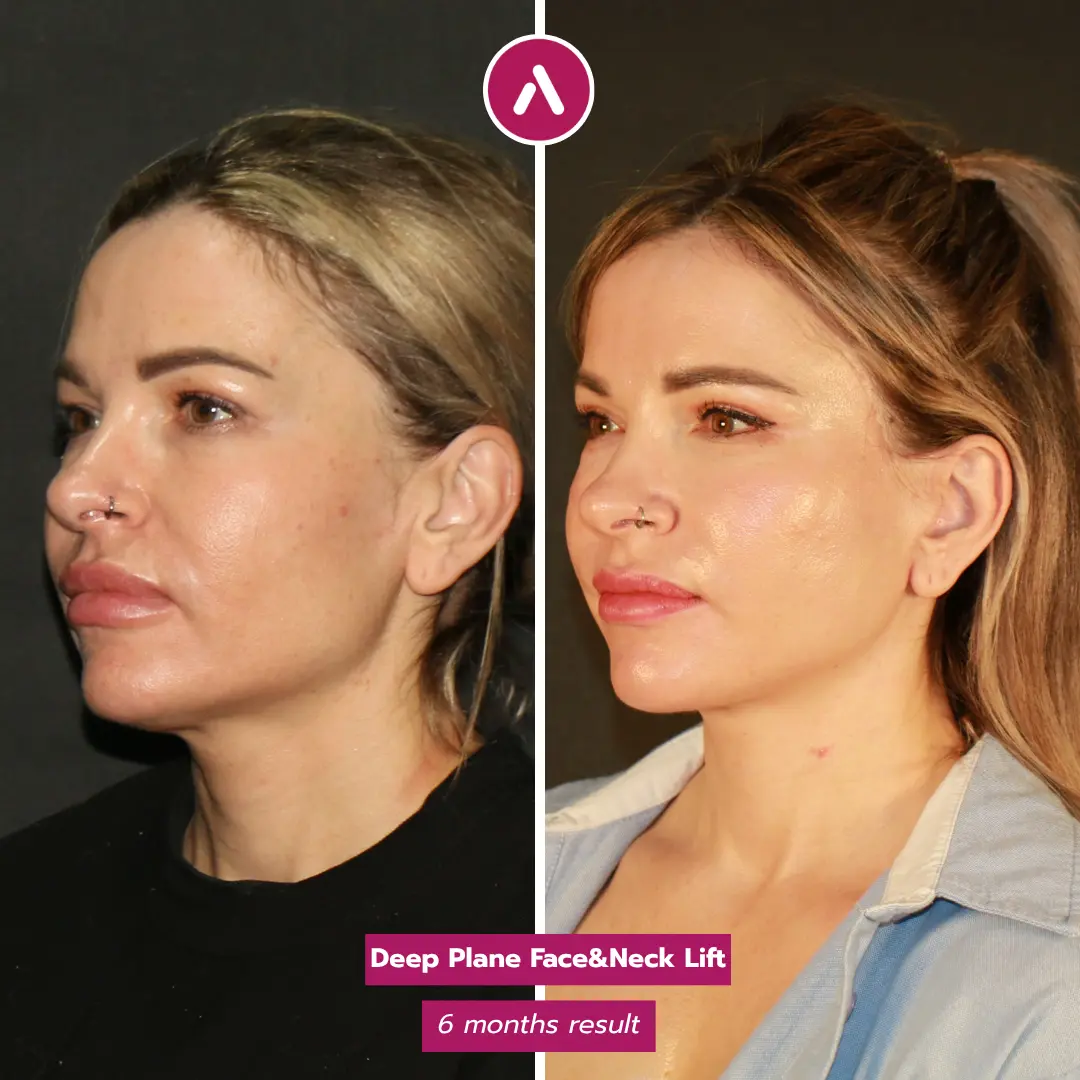
A Mid Face Lift is designed to reposition the cheek complex and soften midface heaviness, malar bags, and nasolabial folds without a tight, overdone look. At AKM Clinic in Istanbul, our anatomy-led approach focuses on deep support, a vertical lift vector, and balanced facial harmony for patients seeking subtle rejuvenation.
Whether you are considering an endoscopic, temporal, or subciliary (transblepharoplasty) Mid Face Lift, we plan technique, anaesthesia, and recovery as one system. For UK patients, aftercare is structured, with optional HBOT and LLLT support where clinically appropriate. You’ll find candidacy, risks, and travel guidance here, plus transparent 2026 cost comparisons.
Table of Contents
What is a Mid Face Lift?
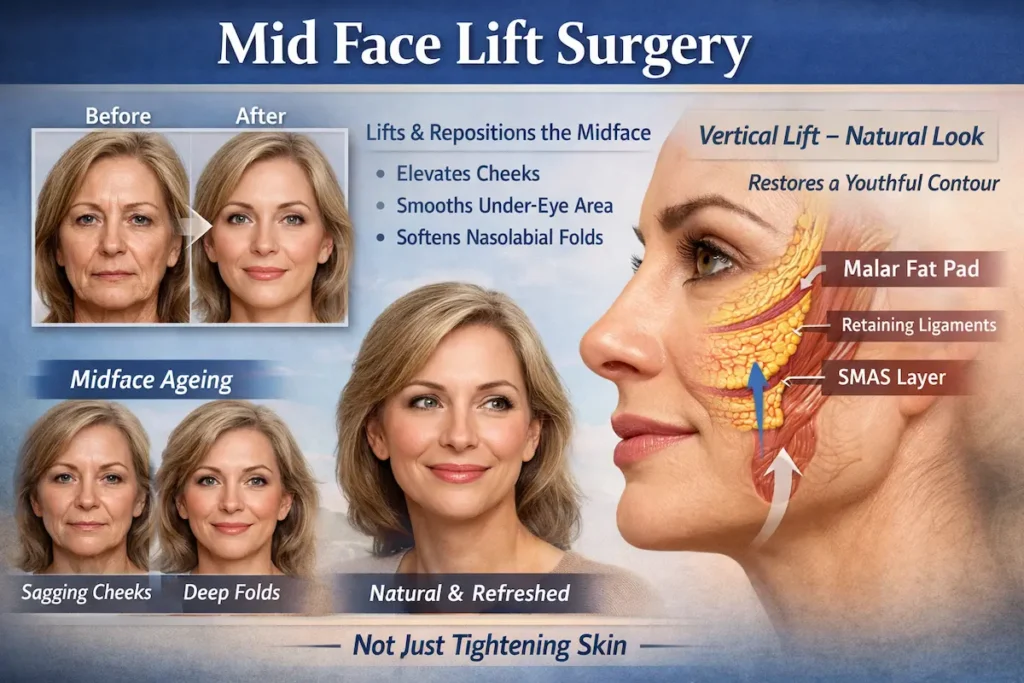
Mid Face Lift is a surgical procedure designed to reposition the structures of the midface—particularly the cheek (malar) tissues—back to a more youthful level. Rather than simply tightening skin, it targets the deeper support layers to soften midface heaviness and restore a rested, natural contour.
In practical terms, the midface is the zone between your lower eyelids and upper lip. When this area descends, cheeks can look flatter, folds can deepen, and the face can appear tired even when you feel well. Our approach is built around structural correction and a natural finish. The aim is to lift and support, not to “pull”.
- Focus area: cheek prominence, lower eyelid–cheek junction, and the central face
- Main goal: restore midface position with a vertical, anatomy-led lift vector
- Typical concern: looking refreshed without looking “done”
Midface anatomy (malar fat pad, retaining ligaments, and the SMAS)
The “cheek” is not one simple layer. It includes fat pads, connective tissue bands (retaining ligaments), and support layers that help keep the face stable as you move and speak. When those supports loosen over time, the cheek fat pads can drift downwards. That shift changes light reflection, creating shadows and a heavier look.
In modern facial surgery, restoring midface position is closely linked to how the deeper layers are handled. Techniques that release and mobilise retaining ligaments beneath the support layers allow a more vertical repositioning, which is often associated with a more natural result than relying on skin tension alone.
How “midface descent” happens
Midface ageing is rarely about “extra skin” only. Gravity, gradual ligament laxity, and changes in facial fat distribution all contribute. As cheek volume moves down, the lower face can look heavier and the midface can lose its youthful projection. This is why some people describe a “sad” or fatigued resting expression, even without dramatic wrinkles.
- Cheek volume sits lower than it used to
- Transitions look sharper: lower eyelid to cheek, cheek to upper lip
- Folds and shadows become more prominent in photos and overhead lighting
What concerns does a midface lift target?
A midface lift is typically chosen when the core issue is descent in the cheek complex rather than laxity along the jawline or neck. It can be particularly relevant if your main concern sits high on the face and the “centre” of the face feels heavier than before.
- Nasolabial folds that have deepened due to cheek descent
- Malar bags and mid-cheek heaviness that create a tired look
- Flattened cheeks and loss of a smooth lower eyelid–cheek transition
- A general sense that the face has “dropped” in the central zone
Benefits of a Mid Face Lift Surgery
The most meaningful benefits are structural. When we reposition the midface at the correct anatomical level, the face can look lighter, softer, and more balanced—without changing your identity. This is exactly why the midface is a frequent focus for patients who want refinement, not reinvention. The outcome should look like you, on a well-rested day.
Our guiding principle is simple: Rejuvenation, not alteration.
Subtle facial rejuvenation (natural look, not a “pulled” face)
For many UK patients, the biggest fear is looking tight, obvious, or “wind-swept”. A well-planned midface lift is designed to avoid that by prioritising deep support and a vertical repositioning rather than surface tension. Done properly, it is a form of subtle facial rejuvenation—improvement that is visible, but not conspicuous.
- Supports the cheek rather than stretching the skin
- Helps maintain natural facial movement and expression
- Targets shape and position, not just texture
Effect on nasolabial folds and midface shadowing
When cheek fat pads descend, they can deepen folds around the mouth and create heavier midface shadows. By lifting the midface vertically, we aim to restore the cheek’s original height, which often softens the appearance of folds and improves overall facial continuity. The goal is not to erase every line, but to correct the structural cause so the face reads as fresher and more supported.
This is also why midface correction is sometimes discussed alongside deeper structural facelift concepts: when the underlying support is repositioned, the improvement can look more natural than results driven by skin tension alone.
Malar contour and the “tired” or “sad” resting expression
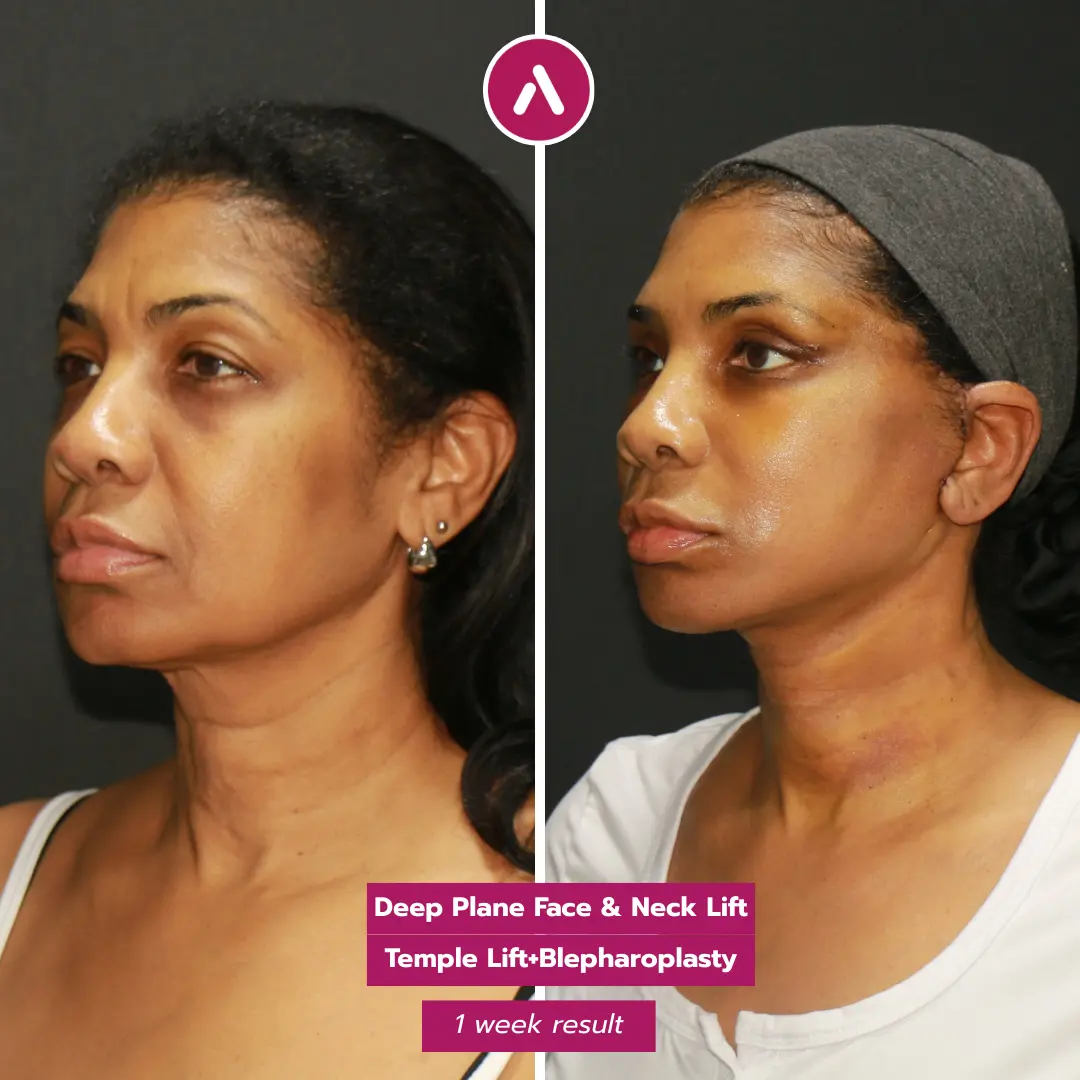
Midface descent can change the emotional “read” of a face. A lowered cheek can create heaviness and shadows that mimic fatigue or low mood. By restoring the malar area to a more youthful position, the face can appear brighter and more open—especially in the central third where most people focus when they speak to you.
- A more defined cheek highlight (without looking overfilled)
- A smoother transition from lower eyelid to cheek
- A softer, less heavy midface appearance in photos
Am I a Suitable Candidate for Mid Facelift?
Most people don’t need “more tightening”. They need the right structural correction. A mid facelift is usually considered when the central face has descended, the cheek contour has flattened, and the lower eyelid–cheek junction looks heavier or more tired than before. Our role is to confirm whether the midface is the true driver of what you’re seeing, and whether a lift is the most sensible route. We start with an anatomy-led assessment and strict pre-operative screening, because candidacy is a safety decision first.
Ideal candidate profile
You may be a good fit if your concerns sit primarily in the mid third of the face, rather than the jawline or neck. In clinic, we look for predictable signs of midface descent and how your tissues respond to gentle repositioning. We also consider skin quality, facial volume, and your tolerance for downtime.
- Noticeable cheek descent or flattening, especially in photographs
- Heavier lower eyelid–cheek junction, with a “tired” look
- Deepened folds linked to cheek drop (rather than skin texture alone)
- Preference for a natural result over a dramatic change
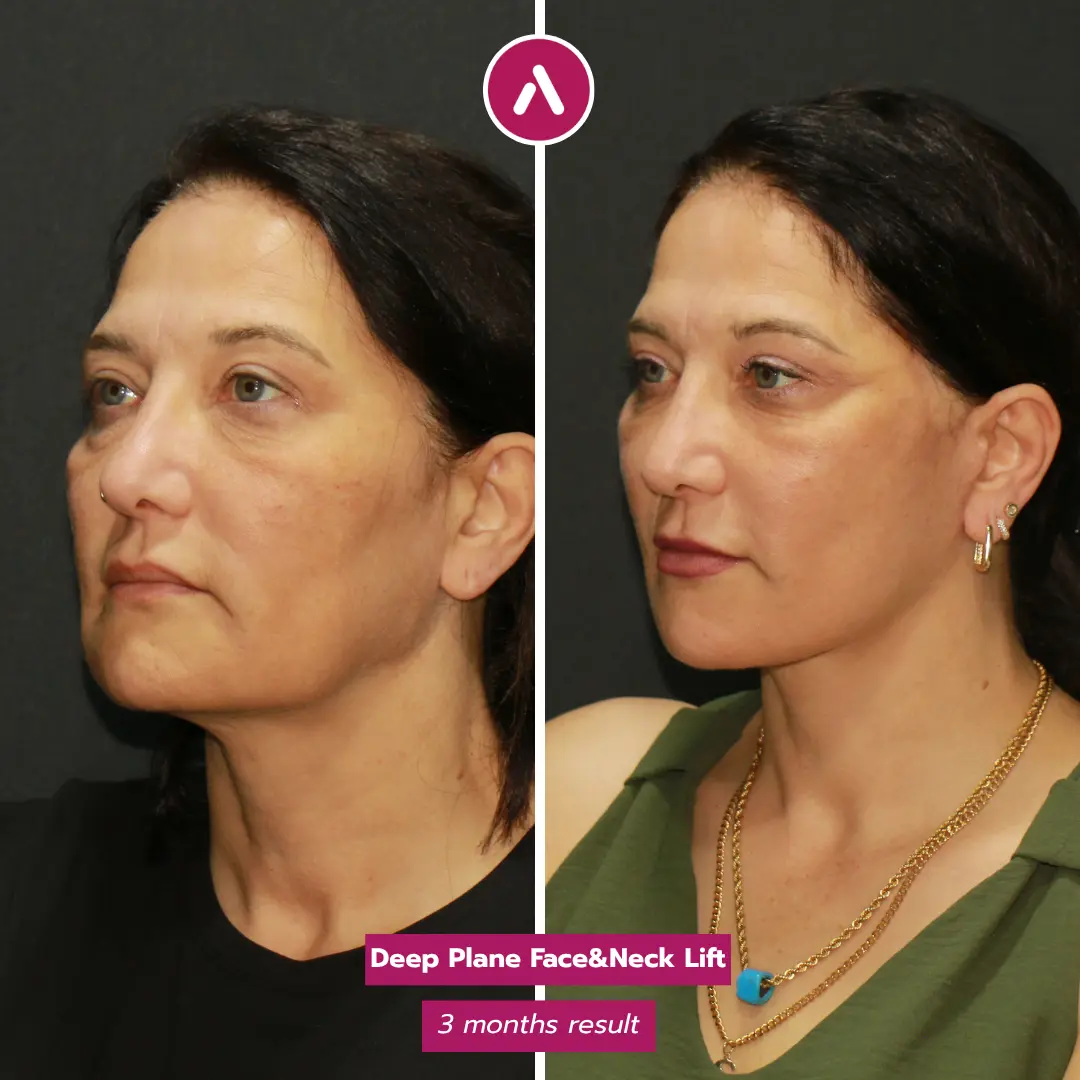
Who should avoid or delay surgery (contraindications)
Some factors don’t rule surgery out forever, but they do change timing or planning. We take a conservative view here. If the risk profile isn’t right, we slow things down and optimise your health first.
- Smoking or nicotine use (increases wound-healing and scar risks)
- Uncontrolled medical conditions that affect healing or bleeding risk
- Active eye issues that require ophthalmic assessment before lower eyelid work
- Unrealistic expectations (wanting a “filter effect” rather than anatomical improvement)
If you’ve had previous treatments (fillers, eyelid surgery, prior facelift)
Previous work doesn’t automatically mean “no”. It means “plan carefully”. Dermal fillers, prior blepharoplasty, or a previous facelift can alter tissue planes and scar behaviour, so we map the anatomy in more detail and set clearer boundaries for what revision can achieve.
- Long-standing filler in the midface may need a staged strategy
- Prior eyelid surgery can influence lower lid support and incision choices
- Previous facelift work may shift the priority to midface re-suspension rather than skin tightening
We choose the technique to match your anatomy—not the other way round. The aim is support and proportion, not tension.
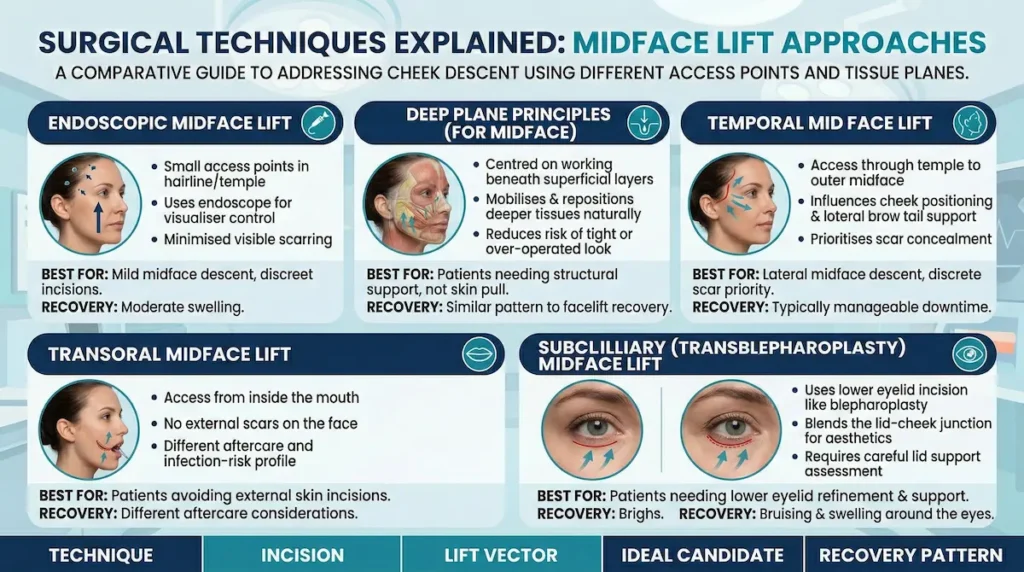
Surgical Techniques Explained (Endoscopic vs Deep Plane vs Other Approaches)
“Midface lift” is not one single operation. It is a category of approaches that reposition the cheek complex using different access points and tissue planes. The right choice depends on what needs lifting, where support must be re-established, and whether the lower eyelid area needs to be refined at the same time. We explain techniques in plain terms, including trade-offs, so you can make a decision with proper context. For the expert patient, details matter—incisions, lift vector, fixation, and expected recovery pattern.
Endoscopic midface lift
An endoscopic midface lift typically uses small access points (often within the hairline/temple region) and an endoscope for visual control. The benefit is targeted release and repositioning with minimal visible scarring. It can be a strong option when the goal is midface elevation with a controlled, vertical vector.
- Often selected for midface descent with relatively good skin quality
- Endoscopic visualisation supports precision in release and fixation
- Commonly considered when patients want subtle change and discreet incisions
Deep Plane principles for the midface
“Deep plane” is a concept as much as a technique. In midface terms, it centres on working beneath the superficial layers to mobilise and reposition the cheek unit more naturally. Rather than relying on skin pull, the lift comes from restoring deeper support, which can reduce the risk of a tight or over-operated look.
Temporal mid face lift
A temporal mid face lift approach focuses on access through the temple to influence the outer midface and the cheek’s upper positioning. It can also offer a supportive effect on the lateral brow tail in selected patients. We consider it when the descent pattern is more lateral and when scar concealment is a priority.
Transoral vs endoscopic approaches
A transoral midface lift approach uses access from inside the mouth, avoiding external scars but introducing a different recovery profile. Endoscopic access, by contrast, often prioritises visual control and controlled fixation through limited incisions. Choice depends on anatomy, infection-risk considerations, and whether lower eyelid work is planned.
Subciliary (Transblepharoplasty) Mid Face Lift
A subciliary (transblepharoplasty) midface lift approach uses a lower eyelid incision similar to blepharoplasty access. It can be relevant when the lid–cheek junction needs careful blending and when midface elevation is part of a broader peri-orbital plan. Because the lower lid is unforgiving, we assess lid support and eye health carefully before recommending this route.
| Technique | Incision / Access | Lift Vector | Best For | Recovery Pattern | Practical Notes |
|---|---|---|---|---|---|
| Endoscopic Midface Lift | Small temple/hairline access points | Vertical, controlled | Midface descent with discreet scarring goals | Moderate swelling; bruising varies | Good visual control; fixation is key |
| Deep Plane Principles | Depends on facelift plan and anatomy | Structural repositioning | Patients needing deeper support (not skin pull) | Often similar to facelift recovery | Designed to avoid a “pulled” look |
| Temporal Mid Face Lift | Temple region access | Lateral-to-vertical blend | Lateral midface descent; scar concealment priority | Typically manageable downtime | May complement brow-tail support |
| Transoral Midface Lift | Inside the mouth (no external scar) | Midface elevation | Selected cases prioritising no skin incision | Different aftercare considerations | Case selection is critical |
| Subciliary (Transblepharoplasty) Midface Lift | Lower eyelid incision | Midface support + lid–cheek blending | Patients needing refinement around the lower eyelid | Bruising/swelling around the eyes can be expected | Lower-lid support must be assessed carefully |
Mid Face Lift for Malar Bags and Nasolabial Folds
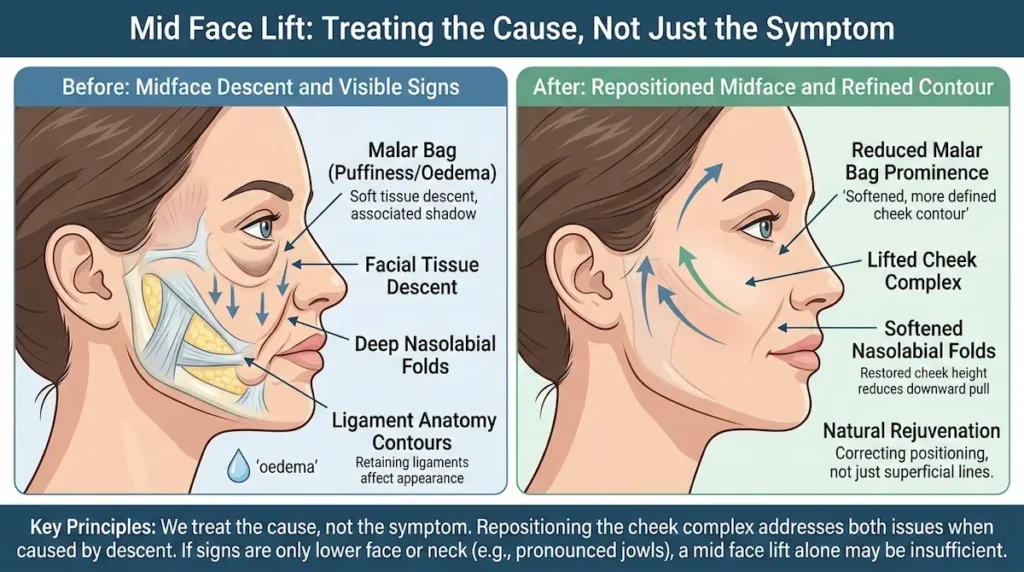
Two of the most common “midface questions” we hear are: “Will a mid face lift help my malar bags?” and “Will it soften my nasolabial folds?” The honest answer is that it depends on what is driving the change—fluid, fat, skin, or structural descent. A well-planned Mid Face Lift is designed to reposition the cheek complex. When the cheek has dropped, the resulting shadowing and heaviness can make both malar bags and folds appear more pronounced.
Malar bags: what they are (and what they are not)
“Malar bags” is a popular term, but it can describe several different issues. Some patients have true mid-cheek swelling (oedema) that fluctuates, while others have a fixed “puffiness” caused by soft tissue descent and retaining ligament anatomy. In many cases, the cheek’s position changes the way light falls across the lower eyelid and upper cheek, which can exaggerate the appearance of bags—especially in photos, overhead lighting, or after a poor night’s sleep.
- Fluid-based oedema: often fluctuates day to day; may not be solved by lifting alone
- Soft-tissue descent: cheek structures sit lower, creating a heavier mid-cheek contour
- Ligament-related contouring: the transition can look “stepped” rather than smooth
In appropriate cases, elevating and supporting the midface can improve the mid-cheek contour and reduce the visual “weight” that makes malar bags stand out. Where the primary issue is fluctuating oedema, a lift may still help the overall contour, but we set expectations carefully and plan peri-orbital support with precision.
Nasolabial folds: lifting structure vs stretching skin
Nasolabial folds are not simply lines in the skin. They are a boundary created by anatomy and movement, and they can deepen when the cheek descends and “rests” lower on the face. A midface lift is most useful when the fold is being driven by cheek drop, because lifting the cheek complex can reduce the downward pull and soften the fold’s depth.
- Structural lifting can soften the fold by restoring cheek height
- Skin-only tightening tends to be less durable in the midface
- The goal is a natural softening, not the complete removal of all lines
For the expert patient, the key distinction is this: correcting position is different from chasing lines. We aim for improved facial continuity and a rested midface, rather than an over-corrected, overly smooth appearance.
When a midface lift alone is not enough
A midface lift is a targeted solution. If the dominant signs of ageing sit in the lower face (jowls, jawline laxity) or the neck, midface correction alone may leave you feeling “unfinished”. Similarly, if lower eyelid laxity is a major contributor to the lid–cheek junction, we may discuss a combined strategy rather than relying on midface elevation alone.
- Pronounced jowls and neck laxity may need lower-face/neck work for balance
- Significant lower eyelid laxity may require dedicated eyelid support planning
- Volume loss may benefit from a staged or combined approach (e.g., structural lift + volume refinement)
In short: we treat the cause, not the symptom. When the midface is the driver, a mid face lift can be transformative in a subtle, believable way. When it is not, we will tell you—and redirect the plan accordingly.
Revision Mid Face Lift (Complex Cases)
Revision surgery is a different category of work. A revision mid face lift is considered when previous surgery or prior interventions have left persistent descent, asymmetry, scarring concerns, or an unnatural contour. For many patients, the goal of revision is not “more lift”—it is better engineering: restoring support, improving balance, and reducing signs of tension or irregularity.
When is a revision mid face lift considered?
Revision may be discussed when a prior procedure did not address the true problem, when tissues have shifted over time, or when the outcome created an appearance that doesn’t feel like you. Patients searching for endoscopic midface lift revision are often looking for a more precise, controlled approach and a plan that respects tissue limits.
- Ongoing midface descent despite previous lifting
- Asymmetry or contour irregularities that remain visible in normal lighting
- Scar-related concerns, especially around peri-orbital access points
- A result that looks tight, tense, or “pulled” rather than supported
Scar tissue, tissue planes, and risk management
After prior surgery, tissue planes may be altered and scar tissue can make dissection and mobilisation more complex. This is where case selection and surgical planning matter most. We assess skin quality, lower eyelid support (when relevant), and the feasibility of safe release and re-suspension. The objective is a stable, natural midface position with minimal additional trauma.
- Revision often requires a more conservative, precision-led approach
- Lower eyelid support and scar behaviour are assessed carefully
- Risk reduction begins with screening, planning, and realistic boundaries
Realistic expectations: results and recovery in revision cases
Recovery after revision can be comparable to primary surgery, but variability is higher. Swelling may last longer, and subtle refinements can take time to “settle” as tissues adapt. We set expectations clearly: revision aims for improvement and refinement, not perfection. If you are seeking a revision mid face lift specialist because your previous result felt unnatural, the priority is often to remove tension, restore structural support, and re-establish harmony through the midface.
- Expect a staged-looking improvement: early change, then gradual refinement
- Final contour can take months to stabilise, particularly after complex revision
- The best outcomes are built on realistic goals and anatomy-led planning
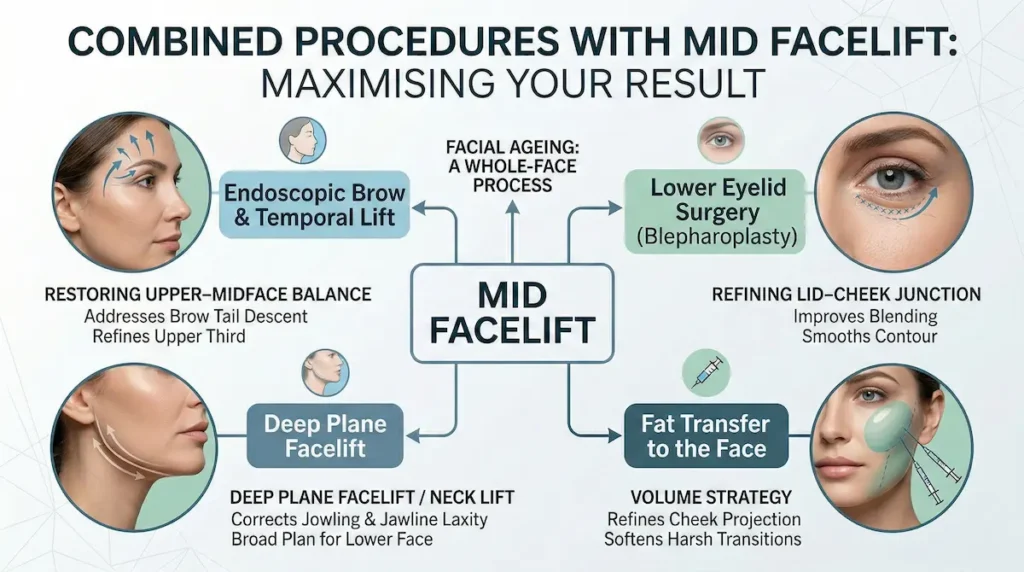
Combined Procedures with Mid Facelift: Maximising Your Result
A midface lift is a focused operation, but the midface does not exist in isolation. Facial ageing is a “whole-face” process, and the best results often come from balancing neighbouring areas rather than over-correcting one zone. In selected patients, combining procedures can improve harmony between the lower eyelid, cheek, brow, and lower face—while keeping the outcome natural and proportionate.
Endoscopic brow & temporal lift: restoring upper–midface balance
If the outer brow has descended or the upper face looks heavier, a midface-only correction can sometimes feel incomplete. An endoscopic brow lift or a temporal lift may be considered to refine the upper third and support a more consistent “lift vector” across the face. This can be especially relevant when the lateral midface descent is accompanied by brow tail drop, which can intensify a tired or stern appearance.
- Helps address lateral brow tail descent that can “weigh down” the eye area
- Can complement temporal midface approaches for a cohesive transition
- Aims for a rested, open look rather than a dramatic brow change
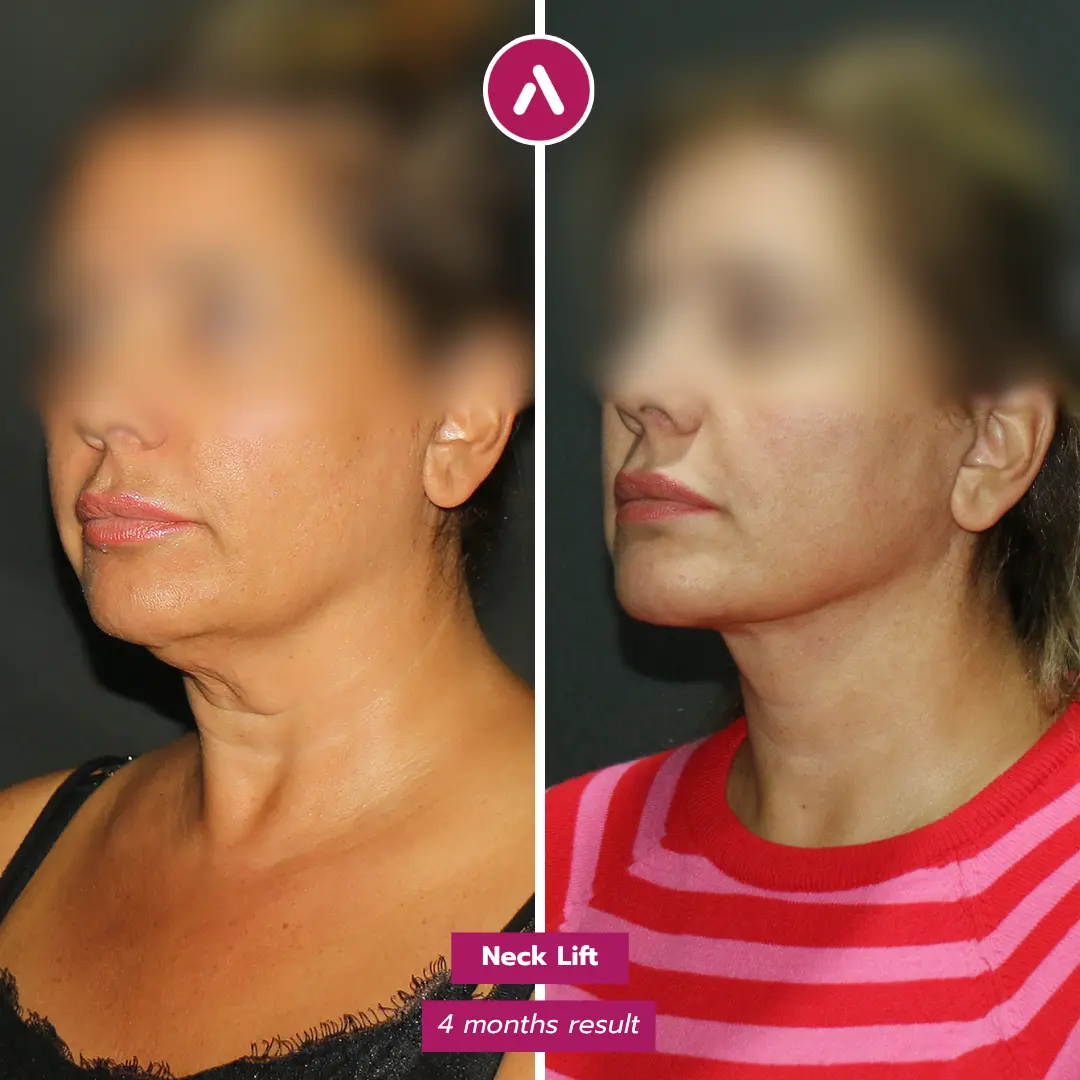
Lower eyelid surgery + midface: refining the lid–cheek junction
The lower eyelid–cheek junction is one of the most visible ageing interfaces on the face. If there is prominent lower-lid laxity, lid-cheek separation, or under-eye hollowing, combining a midface lift plan with lower eyelid surgery (blepharoplasty) can improve blending and reduce the risk of an “unfinished” result. This is where technique choice matters: peri-orbital tissues are delicate, and we prioritise support and safe lid position.
- Targets the lid–cheek transition rather than “chasing lines”
- Supports a smoother contour in patients with under-eye heaviness
- Requires careful assessment of lower-lid support and eye health
Fat transfer to the face: volume strategy (when lifting alone is not enough)
Some midface ageing is positional (descent), and some is volumetric (deflation). A midface lift repositions; it does not always replace lost volume. Fat transfer can be considered to refine cheek projection, soften harsh transitions, and improve overall facial continuity—particularly when the midface has both descent and a “flattened” look. We use volume conservatively, aiming for believable contour rather than an overfilled appearance.
- Useful when the cheek looks flat as well as low
- Can refine shadows and transitions in a subtle way
- Best outcomes rely on conservative, anatomy-led placement
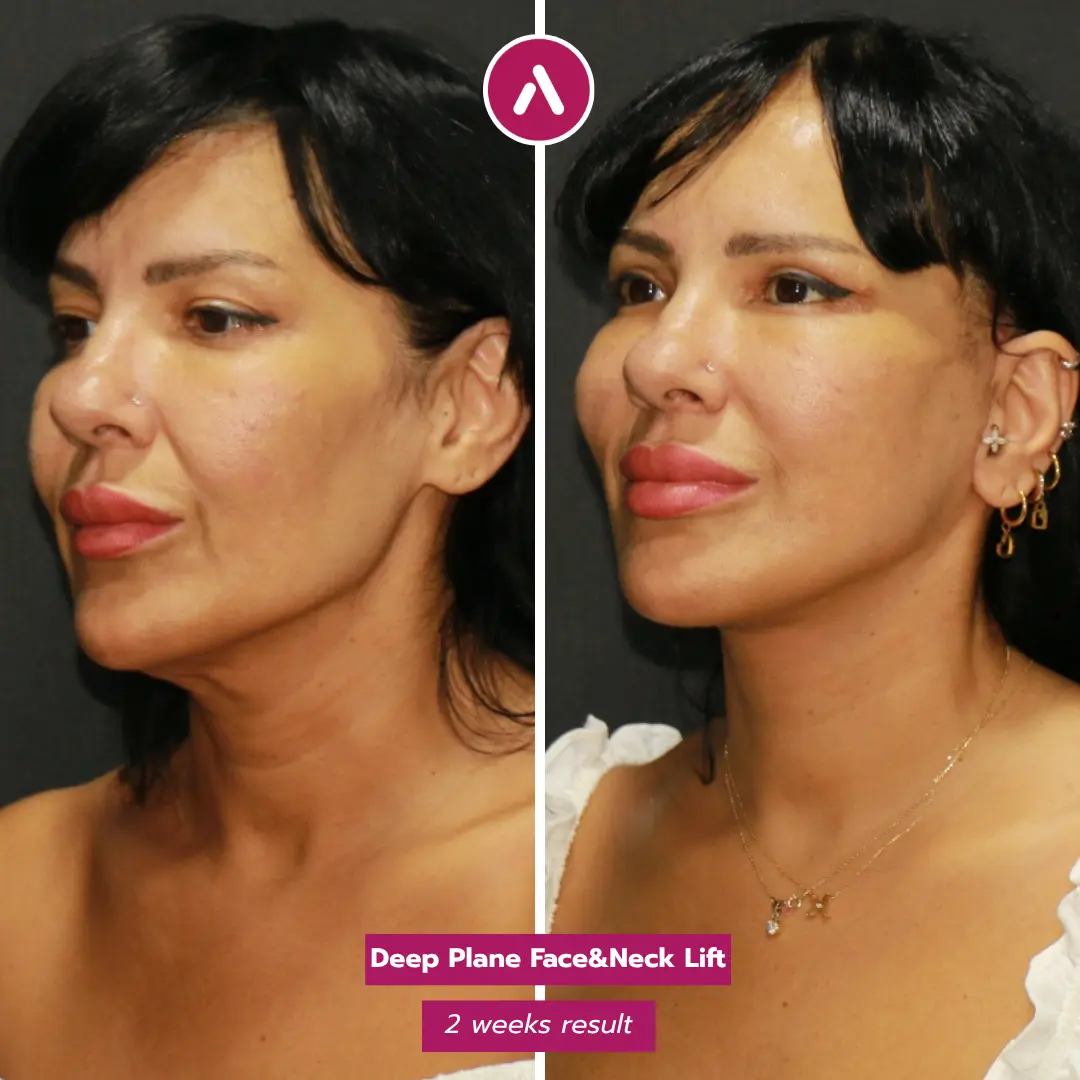
Deep Plane facelift/neck lift: when the lower face is part of the problem
If your dominant concerns include jowling, jawline laxity, or neck changes, midface correction alone may not deliver the balance you want. In those cases, a broader plan—such as a deep plane facelift and/or neck lift—may be discussed to create a consistent improvement from the midface downwards. The principle remains the same: structural support over surface tension, with a natural finish that preserves your identity.
Combination planning is never about “doing more”; it is about doing what is necessary for proportion. When the face is treated as a connected structure, the result often reads as fresher and more coherent—without obvious surgical cues.
Anaesthesia: Why We Prefer Awake / Twilight Sedation
For many patients, the anaesthetic plan is as important as the surgical technique. Where clinically appropriate, we often prefer awake or twilight sedation approaches because they can provide a controlled, comfortable experience while reducing the burden associated with a full general anaesthetic. The key phrase is “where appropriate”: safety and suitability always come first.
UK terminology and what “awake” actually means
“Awake” does not mean you are fully alert and uncomfortable. It typically refers to a carefully managed combination of local anaesthesia and sedation. The goal is to keep you relaxed, comfortable, and stable, with close monitoring throughout. We explain the plan clearly in your pre-operative consultation so you know what to expect and what sensations are normal.
- Local anaesthesia targets the surgical area directly
- Twilight sedation helps you remain calm and comfortable
- Continuous monitoring supports safety and predictability
Awake vs twilight sedation: comfort, control, and recovery considerations
Twilight sedation is often chosen by patients who want to minimise the “big anaesthetic” experience while still being comfortable during surgery. It can be particularly appealing for those who value a smoother immediate recovery and a less groggy post-operative period. However, suitability depends on your health profile, the planned procedure, and the anticipated duration and complexity of surgery.
- May reduce post-anaesthetic grogginess in suitable candidates
- Allows a calm, controlled experience with appropriate monitoring
- Not every patient or every combined plan is suitable
“Walk-in, walk-out”: what it means (and what it does not)
You may see the phrase “walk-in, walk-out” used to describe modern day-case surgery pathways. In safe, selected cases, this can mean you arrive, have your procedure, are monitored closely, and return to your accommodation the same day with detailed aftercare guidance. It does not mean rushing, and it does not replace proper observation and follow-up. Our priority is safe discharge criteria and clear post-operative support.
When general anaesthesia may be recommended
General anaesthesia can be the safest and most appropriate choice for certain patients—particularly where medical factors, anxiety levels, or the scope of combined procedures make it the better option. The right plan is the one that balances surgical goals with medical safety, and we discuss the reasoning transparently during your assessment.
We plan anaesthesia the same way we plan surgery: individualised, evidence-led, and designed to protect both safety and outcome.

Mid Facelift Surgery Step-by-Step: What Happens in Theatre?
A well-executed midface lift begins long before the first incision. The safest, most natural results come from disciplined planning, an anatomy-led technique, and a recovery pathway that is structured rather than improvised. Below is a practical overview of what typically happens on the day of surgery, from pre-operative mapping through to your first hours post-op.
Pre-operative assessment and surgical planning (including 3D analysis)
Before surgery, we confirm that your concerns are truly driven by midface descent (not primarily lower-face laxity, eyelid laxity, or volume deflation alone). Where appropriate, we use structured imaging and analysis to map the cheek complex, the lid–cheek junction, and the lift vector. For expert patients, this step matters: it is where we translate “what you see in the mirror” into an operative plan with defined priorities.
- Clinical assessment of midface descent patterns and tissue behaviour
- Review of medical history, medications, and healing risk factors
- Photography and, where indicated, 3D planning to guide proportions and targets
We also align expectations. The goal is a refreshed midface contour and a smoother central transition—not a new face, and not a tight “pulled” appearance.
The day-of flow: marking → access → release → fixation → closure
On the day, the sequence is methodical. First comes surgical marking—done with you upright—so we can see how tissues sit under gravity. In theatre, the plan typically follows a consistent order:
- Preparation and monitoring: safety checks, sterile preparation, and anaesthetic plan confirmation.
- Access: chosen based on your anatomy and the agreed technique (e.g., endoscopic/temporal, transoral, or subciliary where relevant).
- Release and mobilisation: careful work around retaining ligaments and the support layers to allow a controlled reposition.
- Reposition and fixation: stabilising the cheek complex in the intended, natural vector (support, not tension).
- Closure: meticulous closure designed to minimise visible scarring and optimise healing.
Throughout, we prioritise structural support and proportion. “More pull” is not the target; stable repositioning is.
The first hours: observation, swelling control, and discharge criteria
After surgery, you are monitored closely while the early swelling response begins. Most patients experience a sense of tightness or fullness rather than sharp pain, and we provide a structured plan for comfort and inflammation control. Discharge (where planned as a day-case pathway) is based on clinical criteria—stable observations, controlled discomfort, clear aftercare instructions, and a safe support plan.
- Immediate post-op monitoring and comfort management
- Swelling and bruising guidance (what is normal, what is not)
- Written aftercare plan and contact pathway for reassurance
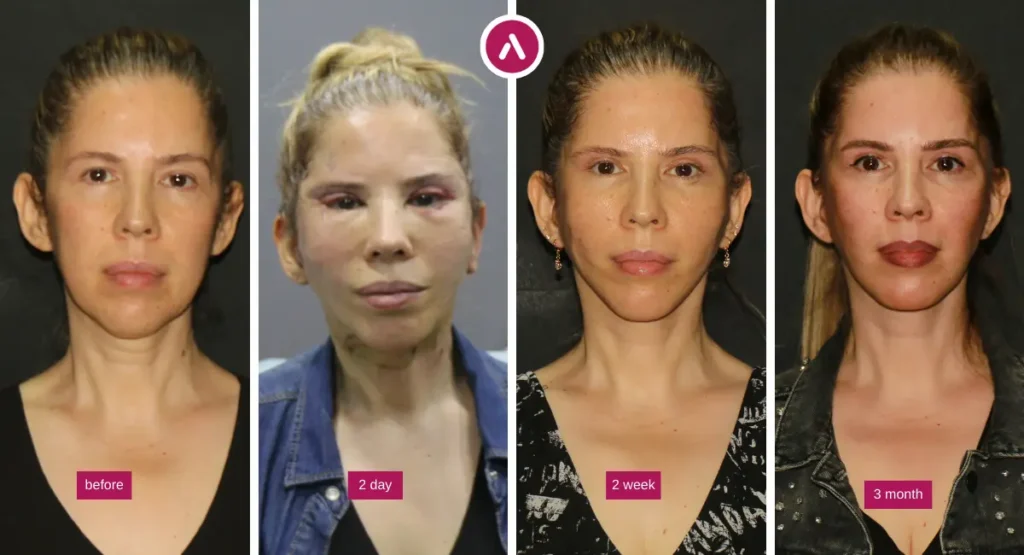
Mid Facelift Recovery & Aftercare: How Long Does Healing Take?
Recovery is not just “waiting for swelling to go down”. It is a staged healing process with predictable phases. Most patients notice early improvement quickly, but refinement continues over weeks and months as swelling resolves and tissues settle into a stable position. We support you with clear milestones and practical rules—particularly important for UK patients planning travel and a timely return to normal life.
0–14 days: a realistic timeline (bruising, swelling, and social downtime)
The first two weeks are where most visible bruising and swelling occur. Your face may look uneven day to day; this is normal. Many patients feel comfortable being “out and about” sooner than they feel camera-ready. The concept to plan around is social downtime—how long you want before you feel confident in public.
- Days 1–3: swelling builds; tightness/fullness is common; rest and head elevation matter.
- Days 4–7: bruising often becomes more visible before it improves; light walking is encouraged.
- Days 7–14: most bruising starts to fade; swelling reduces gradually; you begin to look more “like yourself”.
We advise avoiding heavy exercise, heat exposure (saunas/steam rooms), and anything that increases facial pressure early on. Your plan is designed to protect your result and reduce unnecessary swelling.
Scar management and “scar anxiety” (including supportive technologies)
Modern scar management is proactive. Where incisions are used, we focus on clean healing conditions, careful wound care, and a disciplined routine. If you are concerned about scars, it is worth remembering that scar quality is influenced by multiple factors: incision placement, closure technique, your biology, and post-op care. Supportive technologies may be incorporated into your aftercare plan where appropriate, particularly to optimise tissue recovery and reduce visible redness and inflammation during the healing phase.
- Keep incisions clean and protected as advised
- Avoid smoking/nicotine (a major risk factor for poor scarring)
- Follow the recommended scar-care timeline rather than starting too early
When can I fly? “Flight-ready” recovery protocols for UK patients
Travel planning is a core part of aftercare for international patients. Your return flight is scheduled around safe milestones, and your instructions are tailored to your surgery plan and recovery progress. As a general principle, we prioritise stability, hydration, and swelling control before travel. You will also receive guidance on how to manage comfort during the flight and what to do if swelling fluctuates after landing.
- Flight timing is individualised based on your procedure scope and early recovery
- We provide practical rules for swelling control and comfort during travel
- Clear red-flag guidance is included in your aftercare pack
Long-term follow-up: 1, 3, 6, and 12 months
Your result evolves. That is why follow-up matters. We schedule structured check-ins—typically at 1, 3, 6, and 12 months—to monitor healing, scar maturation, and contour settling. For UK patients, much of this can be supported through organised online follow-ups, with clear guidance on when an in-person assessment is advisable.
Rapid Recovery & Safety Protocol: HBOT + LLLT
Excellent surgery is only half the story. A modern midface programme also prioritises how tissues recover—especially for patients travelling internationally who want a predictable, confident return to daily life. Where clinically appropriate, we integrate supportive recovery technologies into the post-operative pathway, not as “extras”, but as tools designed to optimise healing conditions and reduce unnecessary downtime.
HBOT: why tissue oxygenation matters after facial surgery
Hyperbaric Oxygen Therapy (HBOT) is used in many medical contexts to support tissue oxygenation. In a surgical recovery setting, the underlying principle is straightforward: when tissues are well oxygenated, they can be better supported through the early healing phase. This is relevant in facial surgery because swelling, bruising, and the body’s inflammatory response can temporarily affect microcirculation.
- Supports oxygen delivery to tissues during early healing
- May help manage the intensity of post-operative inflammation in suitable candidates
- Particularly relevant for patients seeking a structured “flight-ready” recovery pathway
HBOT is not a shortcut or a substitute for careful surgery. It is a supportive protocol that may be used to improve the healing environment—when it is clinically appropriate for the individual patient.
LLLT: cellular-level support for recovery and scar quality
Low-Level Laser Therapy (LLLT) is used as a non-invasive supportive therapy aimed at cellular regeneration pathways. In practical terms, the goal is to promote a calmer recovery profile and to support tissue quality as healing progresses—particularly relevant for patients concerned about redness, tenderness, or scar behaviour.
- Non-invasive supportive therapy focused on tissue recovery
- Often positioned for scar quality support and inflammation management
- Designed to complement (not replace) disciplined aftercare and incision care
When patients ask, “Will this eliminate scarring?”, we answer honestly: scars are part of surgery. The aim is better scar quality through excellent technique and a proactive recovery plan.
Safety & Risks: Is a Mid Face Lift Dangerous?
Every surgical procedure carries risk. The sensible question is not “Is it risk-free?”—it is “How are risks identified, reduced, and managed?” A midface lift is typically safe when performed by an experienced surgical team, with appropriate patient selection, sterile standards, and a disciplined aftercare pathway. We discuss risks clearly and without drama, because informed patients make better decisions.
General surgical risks
These risks apply to most surgical procedures, even when everything is done correctly. Your individual risk profile depends on health factors, medications, smoking/nicotine exposure, and the scope of surgery.
- Bleeding or haematoma
- Infection
- Delayed wound healing
- Prolonged swelling or bruising
Midface-specific considerations
The midface sits close to delicate structures, particularly around the lower eyelid and cheek support anatomy. Technique choice, careful tissue handling, and conservative planning are essential—especially in combined or revision cases.
- Asymmetry or contour irregularity during the settling phase
- Temporary sensory changes (numbness or altered sensation)
- Scar quality concerns (risk influenced by biology and aftercare discipline)
- Lower eyelid support considerations when peri-orbital access is used
How we reduce risk (screening, monitoring, and sterile discipline)
Risk reduction is a system, not a slogan. It begins with strict pre-operative screening and continues through the anaesthetic plan, intra-operative monitoring, and structured aftercare. We also set clear boundaries: if your risk profile is not suitable, we pause and optimise health rather than pushing ahead.
- Pre-operative screening: medical history review, medication guidance, and optimisation of modifiable risks
- Intra-operative safety: appropriate monitoring, controlled technique, and careful haemostasis
- Sterile protocols: disciplined infection-control standards and meticulous closure
- Aftercare structure: clear rules, planned follow-ups, and fast access to clinical support if concerns arise
Safety is not a single step. It is the sum of screening, technique, sterile discipline, and a recovery pathway that anticipates problems before they develop.
Is a Mid Face Lift Safe in Turkey? (UK Patient Perspective)
Safety is not a postcode—it is a system. UK patients often ask whether having a Mid Face Lift in Turkey can meet the standards they expect at home. The right question is: “What protocols are in place to protect screening, sterility, monitoring, and aftercare?” When those elements are structured properly, international surgery can be both safe and predictable.
“British standards” in practice: screening, sterility, and clinical discipline
We approach safety as a chain of decisions rather than a single promise. It begins with pre-operative screening (medical history, medications, risk-factor optimisation) and continues with controlled anaesthesia planning, intra-operative monitoring, and a disciplined aftercare pathway. Sterility is treated as non-negotiable: the objective is to minimise infection risk through controlled theatre protocols, not rely on “luck” or vague reassurance.
- Structured pre-operative screening and optimisation of modifiable risks
- Continuous monitoring during surgery and careful haemostasis
- Disciplined sterile standards and meticulous closure
- Clear aftercare rules, follow-up milestones, and fast access to clinical support
Why location matters: Levent as a clinical hub
For patients travelling from London, Manchester, and affluent regions such as Cheshire, the practical experience matters as well as the surgical outcome. We position Istanbul as a surgical hub rather than a “holiday destination”, and that includes choosing a location that is well-connected and appropriate for medical care. A calm, organised pathway—clinic access, transfers, and planned reviews—reduces stress, which is not trivial in the early recovery phase.
“Harley Street quality”: what that should mean (and what it should not)
When patients reference Harley Street, they are usually describing an expectation: specialist-led care, transparent planning, and a professional clinical environment. We treat that as a benchmark for process quality—consultation depth, technique selection, and aftercare structure—rather than marketing language. In practice, it means you should be able to ask detailed questions about technique, incision choice, fixation, and recovery protocols—and get clear answers.
If you’re searching for “GMC-registered alternatives”: how to evaluate expertise
Some UK patients use “GMC-registered” as shorthand for accountability and professional standards. When travelling internationally, the equivalent evaluation is centred on the surgeon’s proven focus, case selection discipline, and results consistency—especially in complex or revision cases. A safe clinic should welcome scrutiny: who will operate, how decisions are made, what follow-up looks like, and what happens if you need support after you return home.

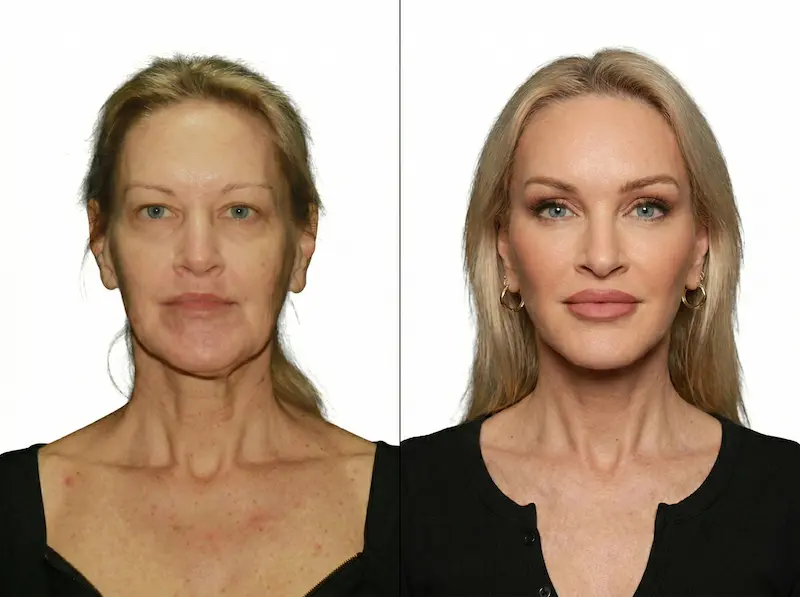
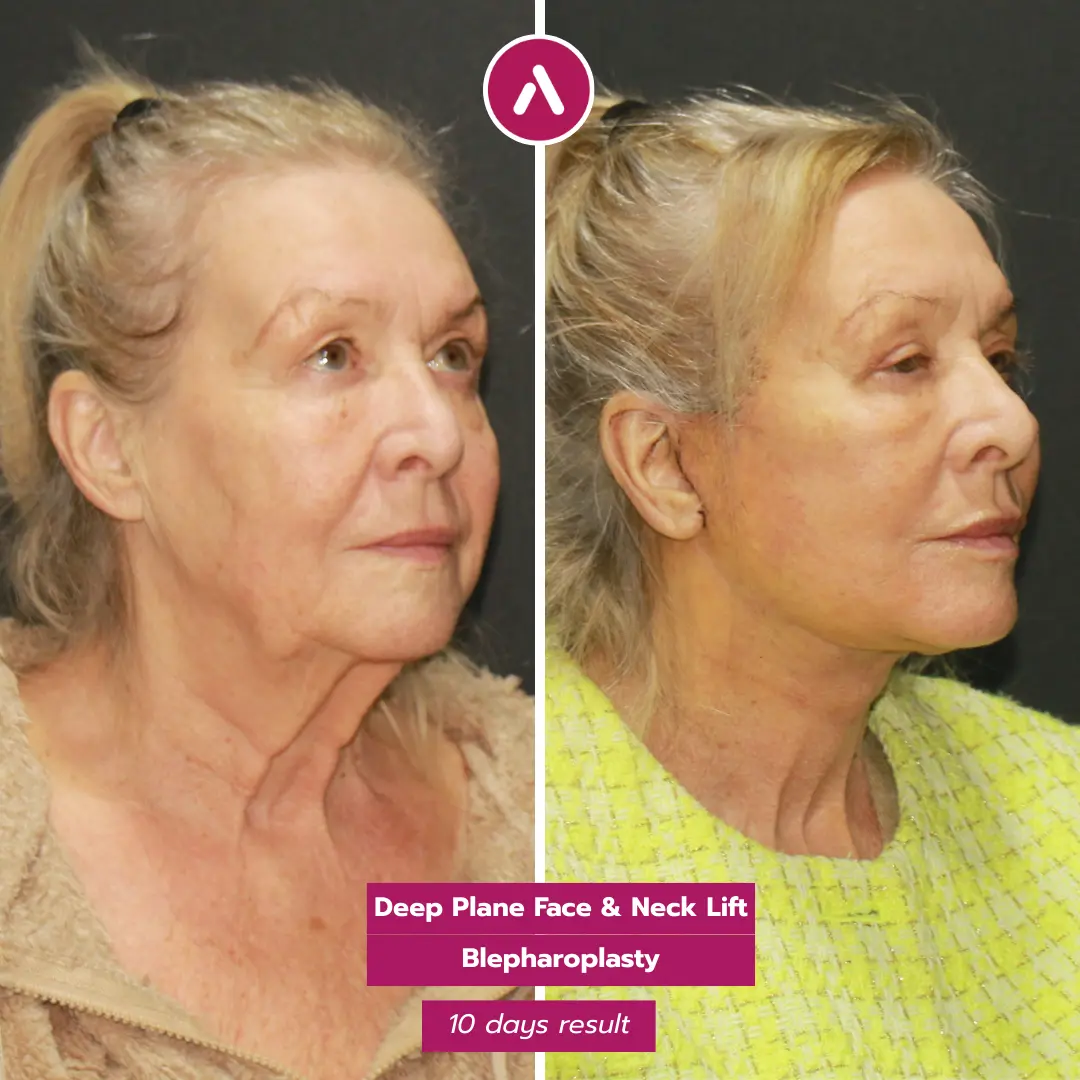
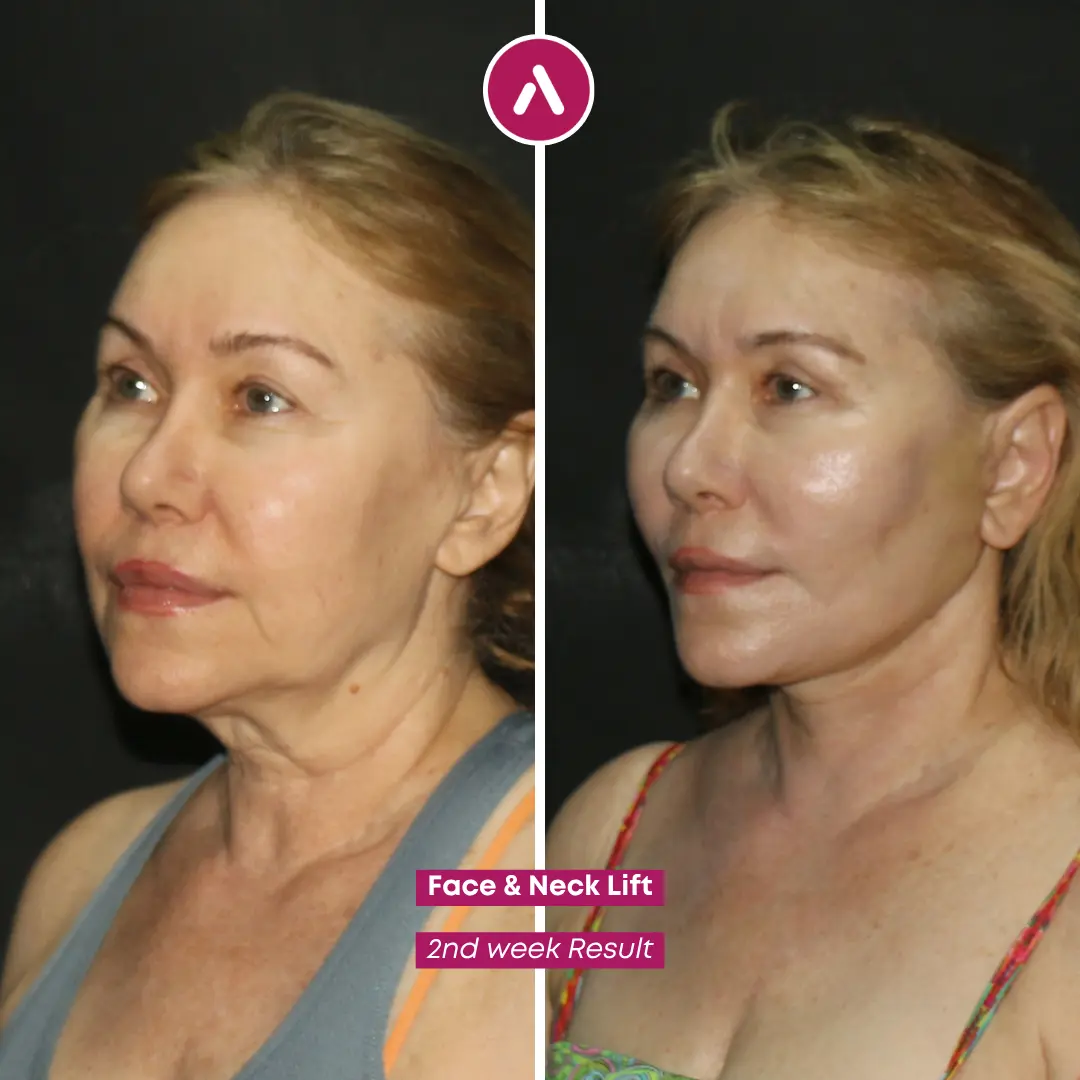
Mid Face Lift Before and After: Realistic Expectations & Results
The best midface results are often the least obvious. The aim is for people to think you look well-rested—not “operated on”. Because the midface is central to expression and identity, we prioritise proportion, soft transitions, and stable support. We discuss what is achievable, what is unlikely, and what would require a different plan (for example, lower-face/neck work or volume refinement).
When results start to look “like you” again (early change vs 3–6 months)
You will often see a positive shift early, but healing is a process. Swelling and firmness can temporarily obscure fine detail, particularly around the lower eyelid–cheek junction. Most patients look increasingly natural as weeks pass, with refinement continuing over months as tissues settle and scar maturation progresses.
- First 2 weeks: visible swelling/bruising improves; you may feel “tight” or puffy
- Weeks 3–6: contour becomes clearer; day-to-day variability reduces
- Months 3–6: the result typically looks more stable and naturally integrated
The “natural look” standard: avoiding a tight or pulled appearance
A natural outcome is built by supporting deeper structures rather than over-tensioning skin. In midface work, we prioritise a vertical, anatomy-led repositioning and stable fixation. The face should still move normally and read as familiar. If your primary fear is looking tight or obvious, that concern should be addressed directly in planning—technique choice, incision strategy (where relevant), and conservative goals.
The goal is a rested midface with stable support—never a tight, over-corrected look.
Longevity: how long does a midface lift last?
A midface lift can be long-lasting because it restores position and support—but it does not stop ageing. Your tissues will continue to change over time, and lifestyle factors (smoking, sun exposure, weight fluctuation, general health) can influence how long results remain at their best. We frame longevity in a realistic way: a structural improvement that ages with you, rather than a permanent “freeze”.
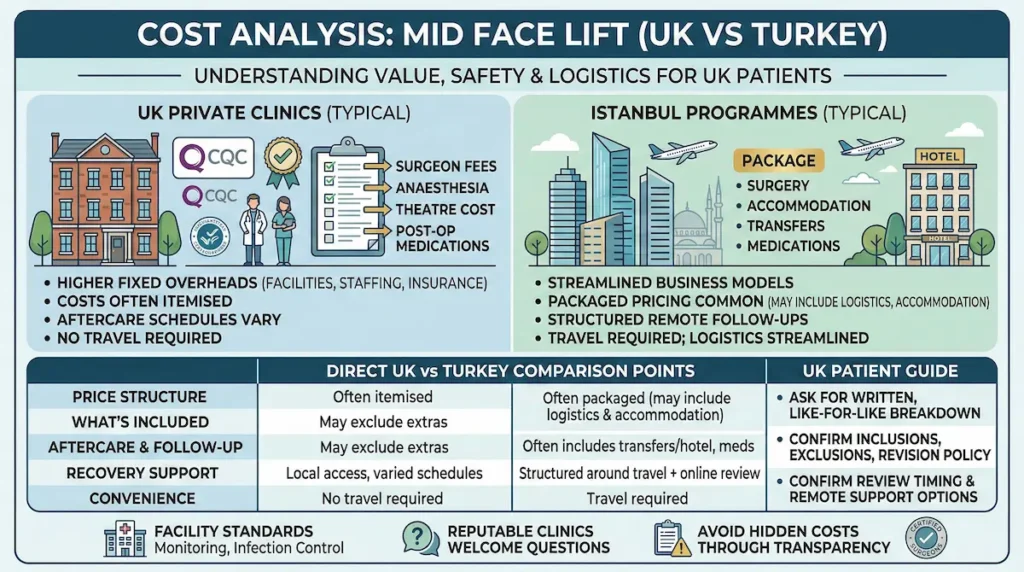
Cost Analysis: Mid Face Lift Cost 2026 (Turkey vs UK)
Costs for a Mid Face Lift vary widely because the procedure is not a single, standardised “package”. Your final quote depends on the technique (endoscopic, temporal, subciliary/transblepharoplasty, revision planning), anaesthesia plan, theatre time, and whether complementary procedures are recommended for balance (for example, lower eyelid work or volume refinement). In 2026, most patients are best served by comparing value and safety structure rather than focusing on a headline number alone.
Why UK and Turkey pricing can differ
The UK private sector typically carries higher fixed overheads (facility costs, staffing, insurance, and regulatory burdens), which can influence pricing even when the surgical goals are similar. In Turkey, many clinics operate with a streamlined model that can offer a different cost structure—particularly when accommodation and logistics are integrated into a single programme.
- Technique complexity: endoscopic fixation, peri-orbital planning, or revision surgery can increase theatre time
- Anaesthesia plan: local anaesthesia with twilight sedation vs general anaesthesia
- Aftercare pathway: structured follow-ups, recovery protocols, and medical support availability
- Facility standards: theatre discipline, monitoring, and infection-control systems
All-inclusive model: what is typically included (and what to clarify)
When comparing UK vs Turkey, clarity is everything. Some quotes include surgeon, anaesthetist, theatre, medications, and follow-up, while others list these separately. UK patients should ask for a written breakdown so the comparison is like-for-like.
- Surgeon and anaesthesia fees
- Theatre and clinical facility costs
- Post-operative medications and dressings (where applicable)
- Follow-up schedule (in person and/or online)
- Accommodation and transfers (if offered as part of a programme)
If you are travelling, confirm the practical details: number of nights recommended, review appointments before flying, and the support route if you have a question after returning to the UK.
Transparency: reducing the “hidden cost” problem
For expert patients, the most common frustration is not price—it is ambiguity. The safest approach is to insist on transparency: what exactly is included, what is optional, and what triggers additional costs (for example, adding eyelid support work after assessment). A reputable clinic will welcome these questions and answer them clearly.
| Comparison Point | UK Private Clinic (Typical) | Istanbul Programme (Typical) | What to Check (UK Patient) |
|---|---|---|---|
| Price Structure | Often itemised (surgeon, anaesthetist, facility, follow-up) | Often packaged (may include logistics and accommodation) | Ask for a written, like-for-like breakdown |
| What’s Included | May exclude extras (medications, garments, additional reviews) | May include transfers/hotel and defined follow-up pathway | Confirm inclusions, exclusions, and revision policy |
| Aftercare & Follow-Up | Local access but follow-up may be limited by schedule | Often structured around travel timeline + online reviews | Confirm review timing before flying and remote support options |
| Recovery Support | Varies by provider | May integrate supportive protocols (case dependent) | Ask what is clinically indicated vs optional |
| Convenience | No travel; easier in-person revisits | Travel required; logistics can be streamlined | Confirm flight timing guidance and “flight-ready” plan |
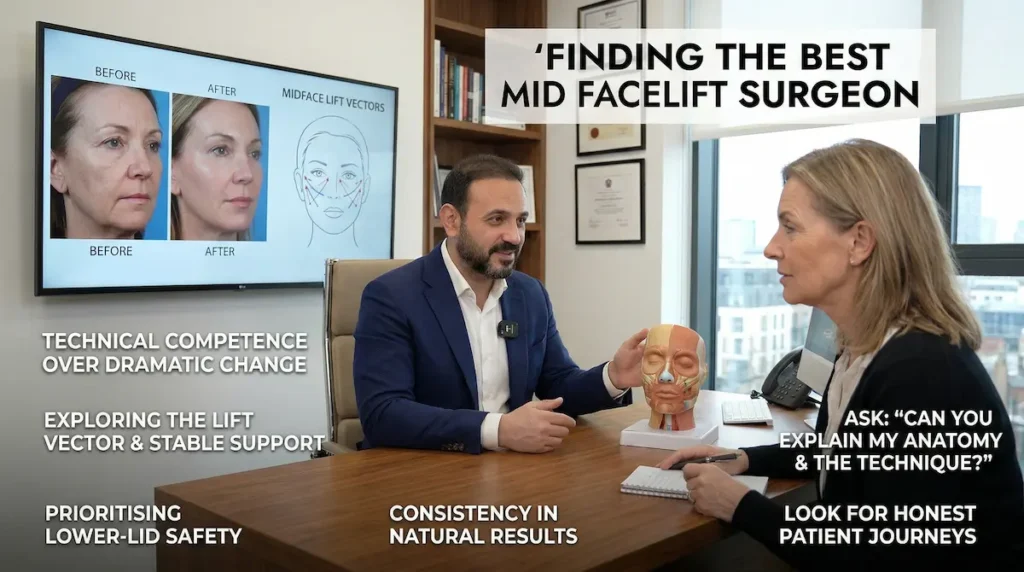
Finding the Best Mid Facelift Surgeon (For Midface Work)
Choosing a surgeon for midface work is not the same as choosing a general “facelift provider”. The midface involves delicate anatomy and, in some techniques, close planning around the lower eyelid–cheek junction. The strongest candidates are those who can explain their approach in technical terms, show consistent results across different face types, and demonstrate disciplined decision-making—especially for revision cases.
Credentials and accountability: what to look for
Rather than chasing a single label, focus on a surgeon’s training pathway, clinical focus, and transparency. You should know who will operate, who will provide anaesthesia, and what follow-up support looks like—before you commit.
- Clear identity of the operating surgeon (not a rotating team)
- Documented experience in midface and peri-orbital work
- Willingness to discuss risks, limitations, and trade-offs
- Structured follow-up plan (especially important for international patients)
Technical competence indicators (endoscopic skill, fixation, revision planning)
Expert patients benefit from asking technique-level questions. A confident surgeon should be able to explain incision choice, lift vector, fixation strategy, and how they avoid skin tension. For endoscopic approaches, visual control and stable fixation are central. For subciliary/transblepharoplasty access, lower-lid support assessment is critical. For revision, the ability to work safely in altered tissue planes is often the difference-maker.
- Can they explain the lift vector and why it fits your anatomy?
- How do they achieve stable support (not just tightening)?
- How do they plan for lower eyelid safety if peri-orbital access is used?
- What is their revision philosophy when tissues are scarred or irregular?
How to read before/after results like an expert
Before/after galleries are useful, but only if you know what to look for. Pay attention to consistency and naturalness rather than dramatic change. Look for balanced, believable improvements and the absence of “tension cues”. Ideally, results should show a smoother lid–cheek transition, improved cheek position, and softened shadowing—without distortion or an overfilled look.
- Natural expression and facial movement (no “tight” cues)
- Improved cheek height with a smooth, stable contour
- Consistency across lighting angles and different patient ages
- Honest presentation (not over-edited, not only perfect cases)
The right surgeon is the one who can explain your anatomy, justify the technique, and set realistic boundaries—clearly and calmly.
Your Medical Journey (UK → Istanbul)
For UK patients, a Mid Face Lift is not only a surgical decision—it is also a logistics decision. The experience should feel organised, calm, and clinically led from the first enquiry to your final follow-up. Our pathway is designed to reduce uncertainty, protect recovery time, and make travel planning straightforward, particularly for patients coming from London, Manchester, and affluent surrounding areas such as Cheshire.
Online assessment and pre-travel planning
Your medical journey typically starts with a structured online review. We assess your midface anatomy, your main concerns (malar bags, nasolabial folds, lid–cheek transition), and whether a midface lift is the correct solution—or whether a combined or alternative plan would be more balanced. You will receive clear guidance on preparation, medication rules, and what to expect in the first two weeks after surgery.
- Photo/video assessment focused on midface descent patterns and proportions
- Health screening questions and pre-op optimisation guidance
- A personalised plan outlining technique options and recovery milestones
VIP logistics: airport welcome, transfers, and accommodation
Travel should not add stress to recovery. Where arranged as part of your programme, support typically includes airport welcome, organised transfers, and a comfortable hotel environment so you can rest properly. We treat this as part of a “recovery ecosystem”: predictable transport, clear timings for clinic reviews, and an environment that supports swelling control and sleep quality.
- Planned transfers to minimise unnecessary walking and fatigue
- Accommodation arranged with recovery comfort in mind
- A clear schedule for clinic appointments and review checks
Clinical timeline in Istanbul: surgery day, reviews, and discharge planning
Once in Istanbul, the pathway is deliberately structured. Your in-person consultation confirms candidacy, finalises technique choice, and reviews the anaesthesia plan. After surgery, we focus on safe observation, clear aftercare instructions, and a recovery plan built around your return flight window.
- In-person assessment and final surgical mapping
- Procedure day with appropriate monitoring and a defined post-op plan
- Review appointments before travel to confirm “flight-ready” progress
After you return to the UK: organised follow-up and support
Support continues after you fly home. Follow-up milestones (commonly at 1, 3, 6, and 12 months) help track swelling resolution, scar maturation, and contour settling. For international patients, many check-ins can be supported remotely, with clear guidance on what is normal, what to monitor, and how to reach the clinical team if you have concerns.
Mid Facelift Frequently Asked Questions (FAQ):
Mid Face Lift vs Deep Plane facelift – what’s the difference?
A midface lift targets the cheek complex and the central third of the face. A deep plane facelift is a broader lower-face and neck rejuvenation strategy that may also influence the midface depending on the plan. The right choice depends on whether your main concern is midface descent or lower-face/jawline ageing.
How long do results last?
Results are typically long-lasting because the procedure restores support and position. Ageing continues, so think of it as turning the clock back rather than stopping time.
What does “mid face lift through eyes” usually mean?
This phrase often refers to approaches that use lower eyelid access (for example, subciliary/transblepharoplasty routes) as part of midface support planning. It is not literally “through the eye”, but through carefully planned peri-orbital incisions.
Can a Mid Face Lift help malar bags?
Mid face lift can help when malar bags are driven by soft-tissue descent and contour changes. If your main issue is fluctuating oedema, improvement may be more limited, and we plan expectations carefully.
Will it soften nasolabial folds?
Often, yes—when folds are deepened by cheek descent. The goal is structural softening and better facial continuity, not the total elimination of every line.
Where are the scars, and can LLLT help?
Scar location depends on technique (endoscopic/temporal, transoral, or subciliary). LLLT may be used as a supportive therapy to promote calmer recovery and support scar-quality goals as part of a structured aftercare plan.
When can I return to work after Midface Lift?
It depends on your role and your “social downtime” tolerance. Many patients plan around 10–14 days for visible bruising and swelling to settle, with refinement continuing beyond that.
When can I fly back to the UK after Midface Lift?
Flight timing is individualised based on your procedure scope and early recovery progress. We plan your review schedule in Istanbul to support safe, confident travel rather than relying on guesswork.
Is awake/twilight anaesthesia suitable for everyone?
No. It can be an excellent option for suitable candidates, but medical history, anxiety level, and the complexity of combined procedures all influence the safest anaesthetic plan.
When is a revision mid face lift needed?
Revision is considered when prior surgery or treatments left ongoing descent, asymmetry, scarring concerns, or an unnatural contour. It requires careful planning because tissue planes can be altered.
Medical disclaimer: This information is for educational purposes and does not replace a face-to-face consultation. Suitability, technique choice, risks, and recovery timelines vary by individual. A personalised clinical assessment is essential before making any treatment decision.