

Fat Transfer Breast Augmentation in Turkey




Fat Transfer Breast Augmentation: Quick Facts
Duration of Surgery
Type of Anaesthesia
Initial Recovery Period
Hospital Accommodation
Return to Daily Activities
Fat Transfer Breast Augmentation Results: Before and After
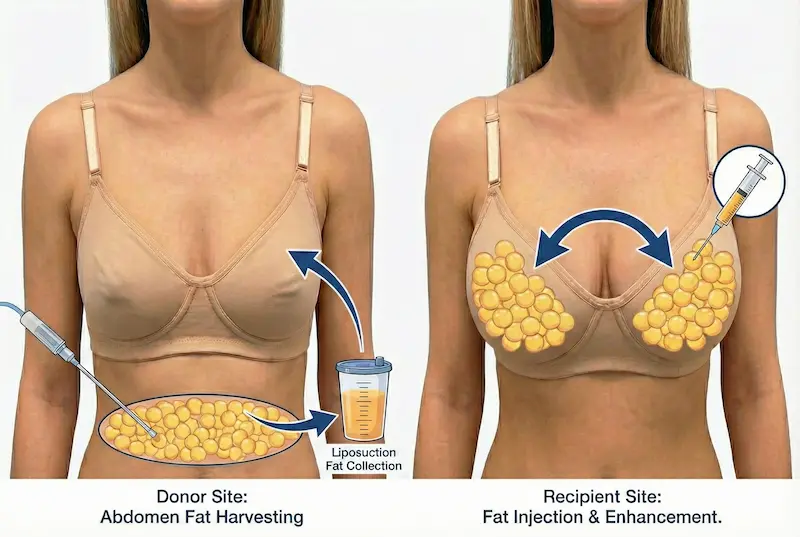
Fat Transfer Breast Augmentation uses your own purified fat to enhance breast volume and shape with a soft, natural feel. Fat is gently harvested by liposuction, refined, then placed in layered micro-droplets to support integration and symmetry.
For UK patients considering surgery in Turkey in Istanbul, our plan focuses on fat survival, aftercare, and clear risk discussion. The AKM Protocol may include HBOT and LLLT to support recovery. Compare fat transfer vs implants and book consultation for a personalised strategy.
Table of Contents
What is Fat Transfer Breast Augmentation?
Fat Transfer Breast Augmentation is a breast enhancement procedure that uses your own fat—taken from areas such as the abdomen, flanks, or thighs—to add soft, natural-looking volume to the breasts. We harvest the fat with gentle liposuction, prepare it, then place it back into the breast in small amounts. The aim is refinement, not a dramatic change. Think “you, restored”.
Autologous breast fat grafting: what “using your own tissue” really means
This approach is also called autologous fat grafting. Autologous simply means the tissue comes from you. There is no implant material involved, and the result is based on living tissue that needs to settle and integrate.
- Donor areas: where we collect fat (often places you’d prefer to slim).
- Recipient area: where we place it (the breast) in a controlled, layered way.
- Integration: the transferred fat needs to establish a blood supply to remain long-term.
How the procedure works: harvest, preparation, and placement
Most confusion comes from assuming this is “liposuction plus injection”. It is more precise than that. We plan it as a tissue-handling procedure, because fat cells are delicate. Handle them well, and your body is more likely to accept them.
- Harvest: we remove fat with techniques designed to minimise trauma.
- Preparation: we separate and refine the fat so we are working with healthier graft material.
- Placement: we place fat in small parcels across multiple layers to support oxygen diffusion and healing.
Fat survival: why early healing matters more than the day of surgery
Most UK patients have one core question: “Will the fat last?” It’s a fair concern. In the early period, transferred fat relies on diffusion for oxygen before it fully integrates. This is why aftercare, stability, and good technique are part of the same conversation.
- Protect the graft: avoid pressure, trauma, and aggressive massage in the early phase.
- Support recovery: sleep position, movement, and nutrition all matter.
- Expect change: swelling can mimic extra volume at first; the settled result is assessed later.
Our principle is simple: we treat fat as living tissue, not filler. The goal is predictable healing and a natural look—never an “operated” appearance.
Benefits of Fat Transfer Breast Augmentation: Beyond Volume
The appeal of fat transfer is not just “bigger breasts”. It is a softer, more natural route to shape improvement, with the added benefit of body contouring where the fat is taken from. For many patients, that dual effect is the deciding factor. The key is matching the method to the outcome you want.
A natural look and feel (when your goal is subtle refinement)
Because we are using your own tissue, the breasts usually look and feel like you. That is why many patients describe the change as “more balanced” rather than “obvious”. It can be especially useful for restoring volume lost after weight changes or pregnancy, or improving mild asymmetry.
- Softness: the result is based on natural breast tissue behaviour.
- Shape refinement: we can target specific areas for a more harmonious contour.
- Understated outcome: aligned with our “Rejuvenation, Not Alteration” philosophy.
Two procedures in one: contouring the donor area while enhancing the breast
Fat transfer starts with liposuction, so you are not only adding volume—you are also sculpting the donor area. This can create a more proportionate silhouette overall. It is not a weight-loss treatment, but it can refine areas that resist diet and exercise.
- Common donor sites: abdomen, waist, flanks, hips, thighs.
- Outcome focus: improved waist-to-bust balance, not just cup size.
- Planning matters: donor selection affects fat quality and result strategy.
Clear limitations: when implants may be the more logical option
Fat transfer has natural limits. If you want a large, predictable size jump in one step, implants can be more suitable. The same applies if you need strong upper-pole projection or if you have very low body fat available for harvesting. In those cases, we discuss fat transfer vs implants based on your anatomy and goals, not trends.
- Volume ceiling: fat transfer is best for modest-to-moderate enhancement.
- Body fat availability: you need enough donor fat to achieve a meaningful change.
- Staged planning: some patients prefer a second session rather than changing method.
The “right” choice is the one that matches your anatomy and your risk tolerance. We prioritise a result that looks like you—just more proportionate.
Am I a Suitable Candidate For Breast Fat Grafting?
Fat transfer is not a “one-size-fits-all” procedure. It works best when your goal is a natural-looking refinement, not a dramatic jump in size. Your starting anatomy matters, and so does the quality of the fat we can safely harvest. Our role is to be direct about what your body can realistically achieve in one session.
What makes someone a strong candidate?
You’re usually a good candidate when you have enough donor fat, stable weight, and a clear idea of the type of change you want. Subtle, proportion-driven improvements tend to deliver the most satisfying outcomes. We also look at breast shape, skin quality, and symmetry from the start.
- Enough donor fat to harvest without compromising contour balance.
- Stable weight (major weight changes can affect the long-term look).
- Realistic size goals (fat transfer is typically modest-to-moderate enhancement).
- Good skin quality or a plan to address laxity if needed.
Who should avoid or postpone the procedure?
Some factors don’t mean “never”, but they do mean “not now”. Smoking and nicotine use can impair healing. Uncontrolled medical conditions may raise anaesthetic or recovery risks. If you’re pregnant, breastfeeding, or planning a major weight change, timing becomes part of the treatment plan.
- Smoking / nicotine use (we’ll advise a clear stop plan before and after surgery).
- Uncontrolled health conditions that increase surgical risk.
- Pregnancy or breastfeeding, or a planned pregnancy in the near term.
- Unstable weight or active weight-loss programmes.
The best candidates aren’t chasing the biggest change. They’re choosing the most natural-looking one their anatomy can support.
What we assess in your consultation (and what you should ask us)
We assess your donor sites, breast shape, skin quality, and your priorities. We also talk through your lifestyle, medication list, and any previous surgery. This is where we align expectations with a surgical plan that protects tissue and prioritises safety.
- Your goal in plain terms: more fullness, better symmetry, post-pregnancy restoration, or all three.
- Your baseline: skin elasticity, existing volume, and whether a lift may be more logical.
- Your recovery reality: time off work, travel, support at home, and sleep position.
If you want to prepare like an “expert patient”, bring your questions. Ask about likely timelines for breast fat grafting recovery, how we manage swelling, and what we consider normal versus concerning. Ask us to walk you through potential breast fat grafting side effects and how we reduce the chance of them becoming a problem.
Surgical Techniques Explained: Planning For Fat Survival
Technique is the difference between “fat placed” and “fat that lasts”. The breast is not a single empty space; it’s a living tissue environment with limits on how much can be safely placed at once. We plan the procedure around blood supply, tissue planes, and gentle handling of the graft. That planning is what turns a simple concept into a predictable medical result.
Structural fat grafting: why micro-placement matters
Structural fat grafting breast techniques are built on one idea: transferred fat needs oxygen and a blood supply to survive. Large blobs of fat struggle to integrate. Small parcels, placed in multiple layers, have a better chance of establishing long-term viability.
- Layered placement: we distribute fat across tissue planes rather than concentrating it in one pocket.
- Micro-aliquots: smaller deposits support oxygen diffusion early on.
- Shape control: placement strategy can refine contour, not just add volume.
Protecting fat quality from harvest to transfer
Fat cells can be damaged by overly aggressive harvesting or rough handling. That’s why liposuction fat grafting is approached differently from liposuction done purely for reduction. The aim is to preserve cell integrity, reduce trauma, and deliver clean graft material for transfer.
- Donor site selection: not just “where there’s fat”, but where we can harvest safely and evenly.
- Gentle technique: less trauma can mean a calmer healing process.
- Careful processing: preparing the fat so we transfer the most viable portion.
We don’t chase volume at any cost. We prioritise tissue respect, because survival beats swelling every time.
Technique comparison: what changes (and what doesn’t)
Most clinics describe fat transfer as one thing. In reality, there are different approaches, and each has trade-offs. Here’s a practical comparison to help you understand the logic behind the plan.
| Approach | How it’s typically done | Best suited for | Key limitations |
|---|---|---|---|
| Basic Fat Transfer | Fat is harvested, prepared, and placed with less emphasis on layered micro-placement. | Small refinements in patients with good tissue quality and modest goals. | Less control over distribution; may be less predictable in challenging anatomy. |
| Structural Fat Grafting | Fat is placed in small parcels across multiple planes to support integration and contour control. | Patients prioritising natural shape, symmetry, and long-term viability planning. | Still limited by biology; may require staged sessions for larger goals. |
| Staged Planning (Two Sessions) | Volume is built gradually, allowing tissue to adapt and results to settle between sessions. | Patients wanting more change while staying implant-free. | More time commitment; final result takes longer to complete. |
Breast Fat Transfer vs Breast Implants: how to choose logically
If you’re comparing Fat Transfer Breast Augmentation with implants, the most useful question is not “Which is better?” but “Which is more logical for my anatomy, goals, and risk tolerance?” Both options can be excellent when used for the right patient. The difference is how volume is created, how predictable the change is in one step, and what you’re comfortable having in your body long-term.
1) How much change do you want (and how quickly)?
Fat transfer is usually best when you want a modest-to-moderate enhancement that looks and feels natural. Implants can deliver a larger, more predictable size change in one procedure.
- Fat transfer: ideal for subtle-to-moderate volume, soft contour refinement, and improving mild asymmetry.
- Implants: often better when you want a bigger jump in size, strong upper-pole fullness, or a clearly defined “augmented” silhouette.
2) Predictability: “planned volume” vs “biological volume”
Implants are engineered devices with known sizes, so planning is highly predictable. Fat transfer is living tissue, so planning has to respect biology. You can still plan strategically—but it may be staged, and the final result is assessed once swelling settles and tissue integration has occurred.
- Implants: predictable size selection, predictable projection options.
- Fat transfer: predictable strategy, but the body’s healing response is part of the outcome.
3) Feel, movement, and “naturalness”
Many UK patients choose fat transfer because they want the breasts to remain soft, natural, and proportionate. Because we’re using your own tissue, the result typically moves and feels like you. Implants can also look very natural in the right hands, but the feel and mechanics are still different because an implant is a separate structure within the breast pocket.
4) Maintenance and long-term planning
An implant-based result may involve future decisions—such as revision surgery for changes in shape, size preferences, or implant-specific concerns over time. Fat transfer does not involve an implant device, but some patients choose a second fat transfer session to build more volume.
- Implants: may require revision planning across a lifetime (not always, but it is a rational consideration).
- Fat transfer: may involve staged enhancement if you want more change while remaining implant-free.
5) Scars, recovery profile, and lifestyle fit
Both procedures involve recovery. Fat transfer includes donor-site recovery from liposuction plus breast healing. Implant surgery focuses more on the breast pocket and implant positioning. Your job demands, exercise routine, and travel plans all influence which recovery profile suits you best.
- Fat transfer recovery: breast swelling plus donor-area bruising and garment use.
- Implant recovery: breast tightness and pocket settling can be more noticeable early on.
A high-quality result is not about choosing the trend. It’s about choosing the method that matches your anatomy and delivers the outcome you can maintain confidently.
A practical decision framework (the one we actually use)
If you want to make this decision like an expert patient, use a simple framework. In consultation, we map your priorities against what each method does best.
- If your priority is “as natural as possible” and your volume goal is moderate, fat transfer may be the logical first option.
- If your priority is “a bigger, predictable change in one step”, implants may be the more efficient choice.
- If you want more than fat transfer can safely deliver in one session but you prefer to stay implant-free, staged planning may be discussed.
Combined Procedures: How We Maximise Proportion (not just breast size)
Fat transfer is often most powerful when it’s planned as part of a broader proportion strategy. Because the procedure includes liposuction, the donor-site plan can improve your overall silhouette while the breast gains subtle volume. For many patients, that full-body balance is what makes the result look “expensive” and natural.
Fat transfer + breast lift: when shape matters more than volume
If your main concern is sagging (ptosis) or stretched skin—often after pregnancy, breastfeeding, or weight changes—adding volume alone may not give the outcome you want. In these cases, a breast lift can reposition the breast tissue and nipple, while fat transfer can add softness and upper contour refinement.
- Lift addresses: position, shape, and skin envelope.
- Fat transfer supports: softness, contour, mild asymmetry correction.
- Goal: a youthful shape that still looks natural, rather than “bigger but low”.
Fat transfer as part of a Mummy Makeover plan
Many UK patients explore fat transfer in the context of post-pregnancy changes—breast volume loss combined with changes in the abdomen, waist, or hips. Planning fat transfer alongside body contouring can make the overall result more coherent. The priority remains safety, realistic recovery planning, and a proportion-focused aesthetic.
- Common pairings: abdominal contouring, waist refinement, and breast restoration.
- Why it works: it addresses the “whole silhouette” rather than a single area.
- Recovery logic: one consolidated recovery period can be preferable for some patients.
Donor-site planning: why “where the fat comes from” is not an afterthought
Donor-site choice affects both your body contour and the quality of the graft material. We plan donor sites to avoid irregularities, maintain symmetry, and support a smooth, elegant contour. The aim is refinement—never aggressive removal that compromises tissue quality or recovery comfort.
- Common donor areas: abdomen, flanks, hips, outer thighs, inner thighs.
- Planning principles: balance, symmetry, and a conservative approach that protects tissue.
- Patient reality: donor-area swelling and bruising often feels “more noticeable” than breast discomfort early on.
The best fat transfer plans are proportion plans. We design the donor and recipient strategy together, so the result looks cohesive—not pieced together.
If you’d like, the next step is a virtual consultation where we review your goals, assess donor-site suitability, and advise whether fat transfer alone is appropriate—or whether a lift, staged approach, or implant-based plan would be more logical for your anatomy.
Anaesthesia Options: “Awake” (twilight sedation) vs General Anaesthesia
For many UK patients, the anaesthesia question is not a detail—it’s a deciding factor. Some people want to avoid general anaesthesia if a safe alternative is appropriate. Others prefer to be fully asleep. The right choice depends on your medical history, the surgical plan (including how much liposuction is required), and what our anaesthesia team considers safest for you.
What does “awake sedation” actually mean?
You may see terms like awake sedation, twilight sedation, or conscious sedation. In practical terms, “twilight” means you’re drowsy, comfortable, and monitored closely, but not necessarily fully unconscious in the way you are with general anaesthesia. People often remember very little afterwards.
- Twilight sedation: deep relaxation, reduced awareness, continuous monitoring.
- General anaesthesia: fully asleep with controlled airway management.
When might twilight sedation be considered?
Some patients exploring awake sedation breast fat transfer are motivated by faster-feeling recovery and a desire to avoid certain risks associated with general anaesthesia. However, suitability is individual. The anaesthesia plan is always made with safety first—never preference first.
- Suitable cases may include: smaller-to-moderate volume plans with clear medical suitability.
- May not be appropriate: larger surgical plans, complex medical histories, or situations where airway control under general anaesthesia is safer.
When is general anaesthesia the more logical choice?
If the plan involves more extensive liposuction, longer operating time, or if your safety profile indicates it, general anaesthesia may be the most controlled option. Many patients also simply feel more comfortable being fully asleep—and that comfort matters when it aligns with safety.
Safety monitoring: what matters more than the label
Whether your procedure is done under twilight sedation or general anaesthesia, the real safety factors are screening, monitoring, and clinical decision-making. That includes reviewing your medications, medical history, airway considerations, and ensuring your recovery is properly supported.
| Factor | Twilight (Sedation) | General Anaesthesia |
|---|---|---|
| Awareness | Reduced awareness; often minimal recall | Fully unconscious |
| Best for | Selected cases with suitable medical profile | Wider range of cases, longer procedures, more extensive plans |
| Comfort | Very comfortable for appropriate candidates | Very comfortable for most patients |
| Decision driver | Clinical suitability + procedure scope | Clinical suitability + procedure scope |
Anaesthesia is not chosen by trend. It’s chosen by safety. We recommend the option that gives you the most controlled surgical environment for your specific plan.
Step-By-Step: What Happens On The Day Of Surgery?
Expert patients value transparency—especially when travelling. The day follows a structured pathway: confirmation of your plan, safety checks, the procedure itself, and then careful monitoring before discharge. While individual timings vary, the sequence is consistent because it’s designed around clinical control and predictable recovery.
1) Pre-operative checks and final planning
Before you go to theatre, we confirm your medical details and your plan. This is also where we review donor areas and mark the body for harvesting and contour balance. If you’re travelling from the UK, this step is especially important because it ensures nothing is “assumed” from an online discussion—everything is clinically verified in person.
- Medical review: medications, allergies, past surgery, and any new symptoms.
- Body marking: donor-site strategy and breast contour objectives.
- Expectation alignment: what is realistic in one session and what may be staged.
2) Harvesting: liposuction designed for graft quality
Fat transfer begins with harvesting. This is not “aggressive fat removal”. It’s controlled liposuction designed to preserve fat quality while shaping the donor site smoothly. You’ll typically wear compression garments afterwards to support healing and help manage swelling in the donor area.
- What you may feel afterwards: donor-site tightness, soreness, and bruising are common early on.
- Why garments matter: they support comfort and help swelling settle in a controlled way.
3) Fat preparation: turning harvested fat into graft material
After harvesting, fat is prepared so that we can work with cleaner, more viable graft material. This step is part of the “fat survival” strategy—because what you place matters, not just how you place it.
4) Placement into the breast: layered, measured, symmetrical
This is where structural planning shows its value. Fat is placed in small amounts across multiple layers to support integration and contour refinement. We aim for a balanced result that looks natural in clothing and without it, with symmetry as a key priority.
- Shape focus: improving contour and proportion, not forcing “maximum size”.
- Symmetry approach: measured placement on each side to reduce imbalance risk.
- Safety logic: respecting tissue limits rather than overfilling.
The goal is not to “put in as much as possible”. The goal is to place what the tissue can support—because long-term survival is the real outcome.
5) Immediate aftercare: dressings, monitoring, and first mobilisation
After surgery, you’ll be monitored as your anaesthesia wears off. We check comfort levels, mobility, and ensure your dressings and garments are positioned correctly. Early gentle mobilisation is typically encouraged (when clinically appropriate) because it supports circulation and reduces stiffness.
6) Discharge guidance: what you’ll go home with
You’ll receive clear aftercare instructions covering compression garments, hygiene, movement, sleep position, and warning signs. This guidance is the foundation of breast fat grafting recovery because the first couple of weeks are where your body is doing the integration work that influences long-term outcome.
- Sleep and pressure management: positioning matters early on.
- Activity boundaries: what to avoid, what to do, and when to progress.
- When to contact us: clear “don’t wait” symptoms and reassurance on what is normal.
Recovery & Aftercare: What To Expect (day-by-day and week-by-week)
Breast fat grafting recovery has two recovery zones: the breasts (where the fat is placed) and the donor area(s) (where liposuction is performed). Most patients are surprised that the donor area can feel more “noticeable” than the breasts in the first week. The aim of aftercare is simple: support comfort, reduce unnecessary swelling, and protect the transferred fat while it settles.
The first 24–72 hours: swelling, bruising, and “what’s normal”
In the first few days, swelling and bruising are expected in both the donor area and the breasts. The breasts may feel full, firm, or unusually high—this is not your final result. You may also notice asymmetry early on due to swelling differences from side to side.
- Breasts: fullness, tightness, mild tenderness, temporary firmness.
- Donor areas: soreness, bruising, a “tight” feeling, and sensitivity to movement.
- Energy: tiredness is common as your body focuses on healing.
Gentle walking (as advised) is typically encouraged to support circulation and reduce stiffness. You’ll also be guided on sleep positioning to minimise pressure on the breasts.
Week 1: protecting the graft while your body settles
During the first week, the priority is to avoid anything that increases swelling or places direct pressure on the breasts. This is not the time for “testing” your range of motion or returning to intense activity. Think stability and consistency.
- Compression garments: usually focused on the donor area to support comfort and swelling control.
- Breast support: a supportive, non-compressive bra as advised (no aggressive compression on the breasts unless specifically instructed).
- Activity: light movement only; avoid heavy lifting and high-impact exercise.
- Sleep: aim to avoid sleeping directly on the breasts.
Weeks 2–3: returning to routine without rushing the biology
Many patients can resume desk-based work within this window, depending on their comfort, the extent of donor-site liposuction, and travel logistics. Swelling begins to settle gradually, but the tissues are still healing underneath the surface.
- Work: desk work is often possible sooner than physically demanding roles.
- Mobility: you’ll usually feel more comfortable walking and moving normally.
- Donor areas: bruising fades, but firmness and sensitivity can linger.
Weeks 4–6: progressive activity, continued shape settling
By this stage, many patients feel “more like themselves”. This is also when people can become overconfident. The breasts may look like they are changing week to week—because they are. Internal healing and swelling resolution take time.
- Exercise: gradual return is typically advised; intensity is built step-by-step.
- Breast feel: may soften gradually as swelling reduces and tissues settle.
- Donor areas: may still feel firm or “lumpy” in places as swelling resolves.
Weeks 8–12: when the result starts to look more “true”
By around 8–12 weeks, swelling has usually reduced significantly and the breasts often look more natural in shape and movement. This is a common window for a more meaningful progress review—although long-term assessment continues beyond this.
| Timeframe | Breast: typical experience | Donor area(s): typical experience |
|---|---|---|
| Days 1–3 | Fullness, tightness, swelling | Soreness, bruising, “tight” feeling |
| Week 1 | Tenderness; avoid pressure | Garments; bruising noticeable |
| Weeks 2–3 | Swelling begins to ease | Bruising fades; firmness may persist |
| Weeks 4–6 | Shape settling becomes clearer | Comfort improves; contour refines |
| Weeks 8–12 | More natural look and feel | Ongoing refinement |
Flying back to the UK: how we approach “fitness to fly”
Because many patients travel, “When can I fly?” is a practical priority. We do not treat this as a generic timeline. Clearance depends on your individual recovery, the scope of your procedure, and your clinical assessment. We guide you on movement, hydration, and comfort measures for travel, and we will only advise travel when you are clinically appropriate to do so.
Recovery isn’t just about feeling better—it’s about giving the graft the calm, stable environment it needs to integrate. Our guidance is designed to protect the long-term result, not just the first week.
The AKM Protocol: HBOT + LLLT as a Supportive Recovery Layer
One reason “expert patients” choose specialist centres is the support system around the operation. At AKM Clinic, we use an enhanced recovery approach that can include HBOT after fat grafting and LLLT for fat survival as supportive modalities. These are not marketed as “magic”. They are framed as a clinical layer that may support tissue recovery and reduce downtime when used appropriately within a safe post-operative plan.
HBOT (Hyperbaric Oxygen Therapy): what it is and why it’s used
Hyperbaric Oxygen Therapy (HBOT) involves breathing oxygen in a controlled, pressurised environment. In a surgical recovery context, it is often discussed in relation to supporting tissue oxygenation and recovery. For fat transfer patients, the early healing phase is when the body is establishing the environment that supports integration.
- Clinical intention: support recovery by improving oxygen availability to healing tissues (when appropriate).
- Patient experience: sessions are non-surgical and supervised.
- Positioning: a supportive layer—not a replacement for technique or aftercare discipline.
LLLT (Low-Level Laser Therapy): supporting the healing response
Low-Level Laser Therapy (LLLT) is a non-invasive modality commonly discussed in post-operative care for its potential role in supporting tissue repair and calming inflammation. In practical terms, it’s used as part of a recovery-focused pathway to help the body move through swelling and sensitivity in a controlled way.
- Clinical intention: support the healing response and recovery comfort (patient suitability dependent).
- Why it matters: calmer swelling and better comfort can make aftercare adherence easier.
- Integration: complements, but never replaces, good surgical planning and lifestyle stability.
Why we frame this as “risk management”, not marketing
In the UK market, patients are rightly sceptical of exaggerated claims. We treat HBOT and LLLT as part of a broader “risk reduction” mindset: careful screening, respectful tissue handling, structured aftercare, and optional supportive technologies. The goal is to create the best possible conditions for healing—without promising outcomes that medicine cannot ethically guarantee.
Technology is only valuable when it supports a safe plan. We use supportive therapies to strengthen recovery conditions—not to overpromise results.
Safety & Risks: Side Effects, Complications, and How We Reduce Them
Every procedure carries risk. The safest clinics don’t hide that—they explain it clearly, then show how they reduce it through screening, technique, and follow-up. When patients search breast fat grafting side effects, they usually want two things: what is common (and manageable), and what is uncommon (but important to recognise early).
Common side effects (expected and typically temporary)
- Swelling and bruising in both donor areas and the breasts.
- Tenderness and temporary firmness as swelling resolves.
- Temporary asymmetry due to uneven swelling early on.
- Numbness or sensitivity changes around donor areas (usually improves over time).
Less common complications (what they are and what we do about them)
Complications are uncommon, but an expert patient plans for them anyway. Potential issues can include infection, collections of fluid, contour irregularities at donor sites, fat necrosis (firm nodules), oil cysts, and the possibility that the final volume is less than desired—sometimes leading to staged planning or revision.
- Infection: managed with clinical assessment and treatment pathways.
- Fat necrosis / oil cysts: can present as firmness or nodules; evaluated properly rather than guessed.
- Contour irregularity: donor-site planning reduces risk; treatment depends on severity and healing stage.
- Volume unpredictability: managed through realistic planning, tissue-respecting technique, and (when needed) staged sessions.
Serious risks (rare, but part of informed consent)
Rare but serious risks can include anaesthesia-related complications, blood clots, significant infection, and other surgical risks. This is why pre-operative screening and a controlled clinical environment matter. Your personal risk profile (medical history, smoking status, medications, BMI, prior surgery) influences planning.
How we reduce risk: the “expert patient” checklist
- Pre-op screening: identifying red flags before surgery rather than reacting after.
- Conservative, tissue-respecting technique: prioritising integration over “maximum fill”.
- Structured aftercare: clear boundaries and practical guidance you can follow.
- Follow-up discipline: timely reviews so normal healing is reassured—and abnormal signs are acted on early.
When to contact us urgently (don’t “wait it out”)
We provide personalised guidance, but in general you should contact us promptly if you experience significant one-sided swelling, increasing redness or heat, fever, worsening pain that doesn’t respond to the plan you were given, shortness of breath, chest pain, or any symptom that feels sudden, severe, or unusual.
A safe result is built on honesty. We explain risks clearly, then build the plan around prevention, early recognition, and structured follow-up.
How Long Does Fat Transfer To The Breast Last?
This is the question behind most UK research: how long does fat transfer to breast last? The honest answer is that fat transfer is a living-tissue procedure. Some early volume changes are normal, and long-term stability depends on how well the transferred fat integrates into your body. What matters is not what you see in week one—it’s what remains once healing, swelling, and tissue adaptation have settled.
Understanding “settling”: swelling vs long-term volume
Immediately after surgery, breasts can look fuller due to a combination of transferred fat and post-operative swelling. As swelling reduces, the breasts naturally appear to change. This is why early photos can be misleading—both positively and negatively.
- Early phase: swelling can make the result look larger than the settled outcome.
- Settling phase: tissues soften and shape becomes more natural over time.
- Stability phase: long-term assessment is more meaningful once healing has progressed.
What influences fat retention (and what you can control)
Fat survival is influenced by biology, technique, and lifestyle stability. You cannot “force” retention, but you can create the conditions that support calm healing.
| Factor | Why it matters | What you can do |
|---|---|---|
| Technique & placement strategy | Layered micro-placement supports integration | Choose a clinic that explains its fat survival strategy clearly |
| Smoking / nicotine | Impairs circulation and healing | Stop nicotine as advised before and after surgery |
| Weight stability | Fat cells can shrink with weight loss and enlarge with weight gain | Aim for stable weight before and after surgery |
| Aftercare discipline | Pressure and trauma can disrupt early healing | Follow sleep and activity guidance carefully |
| Overall health status | Healing capacity varies between individuals | Optimise nutrition, hydration, and rest around surgery |
Will I need a second session?
Some patients achieve their desired outcome in one session. Others prefer a second, staged session to build more volume while remaining implant-free. Staging is not “failure”—it is a deliberate strategy when you want more change than your tissue can safely support in a single step.
- One session: often ideal for modest refinement and restoring lost fullness.
- Two sessions: considered when you want a greater change but prefer not to use implants.
The goal isn’t the biggest early volume. The goal is the most stable, natural-looking result your tissue can support long-term.
Breast Screening and Imaging After Fat Transfer Breast Enlargement
UK patients often ask whether fat transfer affects routine breast screening. It’s a sensible question. Fat transfer can lead to post-operative changes as tissues heal, and it’s important to approach screening with clarity—not fear. The key principles are: keep to your routine screening schedule, inform clinicians about your surgical history, and assess any new lump properly rather than guessing.
What may change after surgery?
As the breast heals, you may notice areas of firmness or small nodules. Many of these are benign post-operative changes, but they should be assessed appropriately—especially if something feels new, persistent, or concerning.
- Temporary firmness as swelling resolves and tissues settle.
- Small nodules that can occur as part of healing (assessment is important).
- Scar-related texture changes depending on where and how the tissue heals.
How to handle routine mammograms, ultrasound, or MRI
Breast imaging is interpreted by trained professionals who regularly assess post-surgical changes. The most helpful step is simply to disclose your procedure history so imaging is read in the correct context.
- Tell your clinician you have had fat transfer to the breasts.
- Follow your UK screening schedule unless advised otherwise.
- Don’t self-diagnose if you feel something—get it assessed.
The “expert patient” move is simple: keep screening routine, disclose your history, and investigate changes properly—without panic and without delay.
Is it safe to have Fat Transfer Breast Augmentation in Turkey?
Safety is not a geography question—it’s a standards question. Patients in London, Manchester, Leeds, and beyond often explore Turkey because they want specialist experience and an organised care pathway. The rational way to assess safety is to focus on clinical environment, screening, anaesthesia standards, and follow-up structure.
What matters most: standards, screening, and surgical environment
When comparing clinics, focus on the systems that prevent problems and detect issues early.
- Pre-operative screening: clear medical evaluation and risk assessment.
- Anaesthesia governance: appropriate monitoring and a safety-first selection of anaesthesia type.
- Infection control: robust theatre protocols, sterilisation, and post-op guidance.
- Clinical escalation pathways: what happens if you need unexpected support?
Continuity of care after you return to the UK
International surgery should still feel structured. You should know how follow-up works, what check-ins are expected, and how you can reach your team if you have concerns once you’re home.
- Planned follow-ups: clear checkpoints rather than “message us if needed”.
- Documentation: written aftercare guidance and operative summaries where appropriate.
- Clear red-flag rules: you should know what symptoms require urgent attention.
A premium result is built on premium processes: screening, monitoring, and disciplined follow-up—before you travel, while you’re here, and after you return home.
Fat Transfer Breast Augmentation Cost 2026 UK vs Turkey
When patients search fat transfer breast augmentation cost UK vs Turkey, they often expect a simple number. The reality is more nuanced. Pricing varies based on procedure scope (donor sites, volume targets, combined procedures), anaesthesia needs, facility standards, aftercare provision, and what is actually included in the quote.
Why the UK and Turkey cost structures differ
UK private pricing is influenced by local operating costs, facility overheads, staffing, and insurance structures. Turkey can offer different cost dynamics while still delivering premium care when standards and systems are strong. The critical point is to avoid “cheap vs expensive” thinking and use “included value and safety systems” instead.
What should be included in a transparent quote?
For an expert patient, “price” is incomplete without “what’s included”. Look for a quote that makes the care pathway explicit.
- Pre-op assessment and any required blood tests or checks
- Theatre and facility fees
- Anaesthesia fees
- Post-op garments (for donor areas)
- Medication plan (as clinically appropriate)
- Follow-up structure
- Travel logistics support (if offered as part of a package)
A practical comparison table (apples-to-apples)
| Line item | UK private clinics (often quoted separately) | All-inclusive model (often bundled) | What to check |
|---|---|---|---|
| Consultation & planning | May be separate | May be included | Is imaging/history review part of planning? |
| Theatre & facility fees | Included, but varies by hospital | Included | Facility standards and monitoring protocols |
| Anaesthesia | Can be separate | Often included | Who provides it and how suitability is assessed |
| Compression garments | Often separate | Often included | Quality, fit, and how long you should wear them |
| Medication plan | Usually separate | Often included | What is prescribed, and why |
| Follow-up care | Varies by clinic | Structured pathway may be included | Clear check-ins + how issues are handled remotely |
| Enhanced recovery support (HBOT/LLLT) | Often not offered or charged separately | May be available within a protocol | What’s included, suitability, and realistic aims |
| Travel logistics | Not applicable | May be included | Transfers, coordination, and support while in Istanbul |
A checklist for UK patients comparing quotes
- Is the method explained? “Structural fat grafting” planning should be described, not hand-waved.
- Is aftercare structured? You should receive a clear recovery plan and escalation pathway.
- Is the quote complete? Confirm what’s included in writing—don’t assume.
- Are your goals realistic? A clinic promising “any size” with fat transfer is a red flag.
Value is not a low number. Value is a safe plan, a realistic outcome, and a recovery pathway you can actually follow.
How To Choose The Best Breast Fat Transfer Surgeon and Clinic
If you search terms like “best fat transfer breast surgeon Turkey”, the challenge is separating marketing from meaningful clinical indicators. Fat transfer is deceptively simple in concept but technically demanding in execution. The best questions are not “How many followers?” but “How is fat survival planned, and what happens if healing doesn’t follow the perfect script?”
What to verify (expert patient essentials)
- Clinical credentials and scope: confirm who performs the operation and who provides anaesthesia.
- Facility standards: ask where the surgery is performed and what monitoring is used.
- Technique explanation: the clinic should clearly explain harvesting, preparation, and layered placement strategy.
- Complication readiness: you want a clinic that can explain its response pathway calmly and transparently.
- Follow-up structure: planned reviews and accessible post-op support.
What to ask in consultation (copy/paste list)
- How do you plan fat placement to support long-term integration?
- What outcome is realistic for my body in one session?
- What are the most common issues you see in recovery, and how do you manage them?
- How do you advise patients who travel to manage recovery and follow-up?
- When would you recommend a second session—or a different method entirely?
A trustworthy plan sounds conservative, not spectacular. The clinic that respects biology is usually the clinic that delivers the most natural-looking outcome.
Your UK-to-Istanbul Medical Journey: what the care pathway looks like
Travelling for surgery should feel organised, not uncertain. A structured pathway reduces stress and helps you focus on recovery. From the first virtual consultation to post-op follow-up after you return to the UK, the goal is continuity: one plan, one team, one set of clear instructions.
1) Virtual consultation and personalised plan
- Goal alignment: volume target, shape priorities, symmetry concerns.
- Suitability review: donor fat availability, health history, lifestyle factors.
- Procedure strategy: fat transfer alone vs staged plan vs lift/hybrid options.
2) Travel planning with recovery in mind
Your schedule should include time for assessment, surgery, and early recovery monitoring before you fly home. We also advise on travel comfort strategies that support circulation and reduce stress.
3) In-person assessment in Istanbul
This is where we verify everything clinically: your health status, donor-site plan, and final markings. It’s also where we answer last questions—calmly, thoroughly, and with realistic framing.
4) Surgery, monitoring, and structured aftercare
Post-op care is not a single instruction sheet. It’s a structured plan: garments, activity boundaries, hygiene, sleep, and warning signs—plus follow-up touchpoints.
5) Returning to the UK: continuity and follow-up
Once you’re home, you should still feel supported. Follow-up check-ins are important for reassurance, guidance, and early action if anything feels off. Your one-year outcome is not an accident—it’s the result of consistent planning and recovery discipline.
The journey should feel premium because the process is premium: structured, predictable, and designed to reduce risk—not improvised around a flight date.
Fat Transfer Breast Augmentation Frequently Asked Questions (FAQ):
How much bigger will I look after one fat transfer session?
Fat transfer is usually best for modest-to-moderate enhancement. The outcome depends on your starting size, skin quality, and donor fat availability. In consultation we focus on the most realistic result your tissue can support in a safe, stable way.
How long does fat transfer to the breast last?
Transferred fat that integrates becomes part of your body. Early swelling settles, and the long-term result is assessed later in healing. Weight stability, nicotine avoidance, and good aftercare support the most stable outcome.
Is fat transfer safer than implants?
They are different procedures with different risk profiles. Fat transfer avoids an implant device but includes liposuction recovery and tissue-integration variables. Implants offer predictable size but can involve long-term device-related considerations. The safest option is the one that matches your anatomy and clinical suitability.
What are common breast fat grafting side effects?
Swelling and bruising are common, along with temporary firmness and donor-area soreness. Less common issues can include nodules or contour irregularities, which should be assessed properly if they occur.
Will I need to sleep in a certain position?
Yes—early positioning matters because pressure management supports calm healing. You’ll receive specific guidance based on your procedure plan.
When can I exercise again?
Return to exercise is gradual. Light movement comes first, then progressive activity as advised. High-impact training and heavy lifting are usually delayed until healing has progressed.
Can fat transfer be combined with a breast lift?
Yes. If skin laxity or sagging is a major issue, a lift can address position and shape, while fat transfer can enhance softness and contour refinement.
When can I fly back to the UK?
We treat “fitness to fly” as an individual clinical decision based on your recovery and procedure scope. We provide travel guidance when you are clinically appropriate to fly.
Will fat transfer affect future breast screening?
Routine screening should continue. Always disclose your surgical history to clinicians so imaging is interpreted in the correct context. Any new lump should be assessed properly rather than guessed.
What if I lose weight after surgery?
Because the transferred fat is living tissue, significant weight loss can affect breast volume. If you’re planning weight changes, it’s usually best to time surgery after your weight is stable.
Medical Disclaimer: This page is for information only and does not replace a medical consultation. Every surgical plan is personalised and suitability depends on your medical history, anatomy, and clinical assessment. Results and recovery timelines vary from person to person.
Fat Transfer Breast Augmentation: Patient Stories


Laura


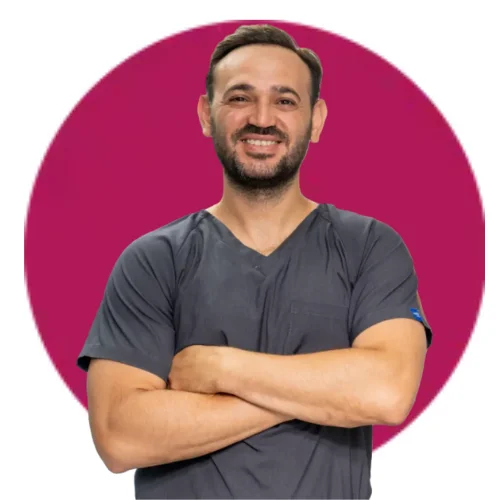
Fat Transfer Breast Augmentation Surgeons
Fat Transfer Breast Augmentation Cost in Turkey
Starting from ~ £4500
* There are no hidden fees or unexpected charges.
- Your PersonalisedFat Transfer Breast AugmentationProcedure
- All Specialist Surgeon & Anaesthesia Fees
- All Pre-Op Tests & Post-Op Check-ups
- 5-Star Hotel Accommodation (incl. breakfast)
- All Private VIP Airport & Clinic Transfers
- 24/7 Dedicated Patient Coordinator & Translation Services
Fat Transfer Breast Augmentation: A Cost Comparison
| City | Cost |
|---|---|
| Los Angeles | 15.000 USD |
| Francisco | 15.000 USD |
| Houston | 13.000 USD |
| Denver | 17.000 USD |
| New York City | 13.000 USD |
| Chicago | 12.500 USD |
Fat Transfer Breast Augmentation: Patient Reviews
Jammal Canada
I have had face and neck lift with AKM Clinic they have been so good to me and my operation went so smoothly🥰 i would like to thank my doctor here and also to the team 💐
Ava Canada
Thank you AKM Clinic for giving me my confidence back! Had facelift + temporal lift 3 months ago and the outcome is already stunning. Special thanks to Hande!

Jakayla USA
Had a deep plane facelift and lower eyelid procedure at AKM Clinic 7 months ago. The results are fantastic - very subtle and natural. I didn’t expect the entire experience to be so comfortable. Hande managed everything and kept in contact even after I returned to USA. I’m beyond pleased with the outcome and the care I received. Would do it again in a heartbeat!
Barbara United Kingdom
It has been 4 months since my surgery. Everything is great, The most important thing is l love the way l look, l look exactly how l wanted. Meaning l look natural, just almost 40 years younger. I pulled Facebook - majority voted 37ys. I also had face, neck, chest, and hands CO2 laser. My skin is flawless.
Lisa Canada
I had a face, neck and arm lift at AKM. I’m just over 4 weeks post and couldn’t be happier with the results. The entire experience was wonderful! My coordinator, Khadija made me feel comfortable from beginning to end! I highly recommend AKM and will definitely go back for other procedures!
Julie USA
I am beyond grateful I went with AKM Clinic for my deep plane face and neck lift, upper eyelid, and co2 laser. Dr. Akif has magic hands and my results are truly incredible! I came from the US and assistant Emine was the best in assuring every detail was coordinated and communicated with me beyond my expectations every step of the way. 10 out of 10 to the entire team! I couldn’t be more pleased!
Ready to Begin Your Own Transformation Journey?
Join the 2,000+ patients who have trusted Dr Akif Mehmetoğlu and the AKM Clinic team. Your journey to a more confident, naturally restored you begins with a simple, no-obligation conversation. Contact us today from the UK for your free virtual consultation.
#1: Get Your Free Personalised Quote
Start with a free, no-obligation online consultation. Share your photos, and our surgical team will provide a fully personalised treatment plan and a transparent, all-inclusive price package. There are no hidden fees.
#2: Secure Your Date & VIP Booking
Once you are ready, our dedicated patient coordinators will help you secure your procedure date. We will handle all your bookings, including your 5-star hotel accommodation and private VIP airport transfers.
#3: Arrive in Istanbul & Meet Your Surgeon
Arrive at Istanbul Airport (IST) and be greeted by your private driver. Settle into your hotel and prepare for your in-person consultation, where you will meet your specialist surgeon to finalise the details for your natural, subtle, and restored new look.
