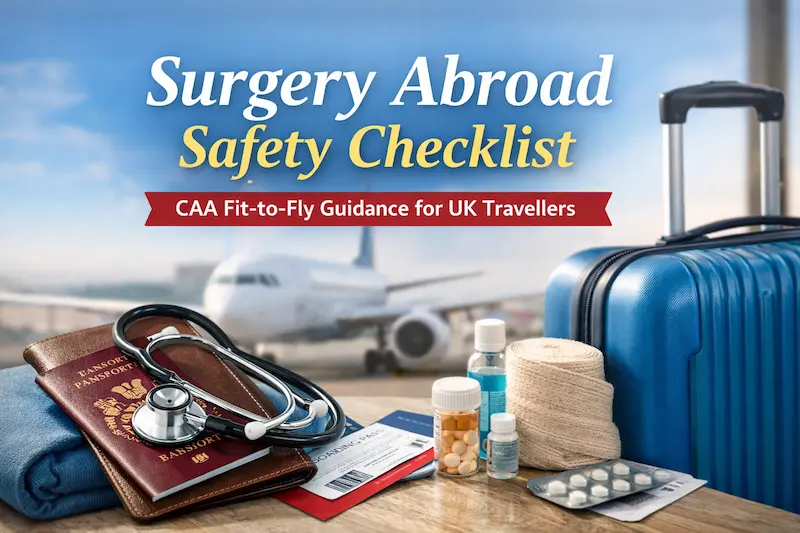
If you’re planning a procedure overseas, the most reassuring thing you can do is follow a surgery abroad safety checklist that treats your trip like a medical journey — not just a holiday. This guide is written for UK patients who want clear, practical steps on CAA medical guidelines after surgery, timing your flight safely, and what “medical clearance” really involves. We’ll also cover how to reduce oedema after surgery, lower DVT risk, and build “flight-ready” habits that support a smoother return to Britain.
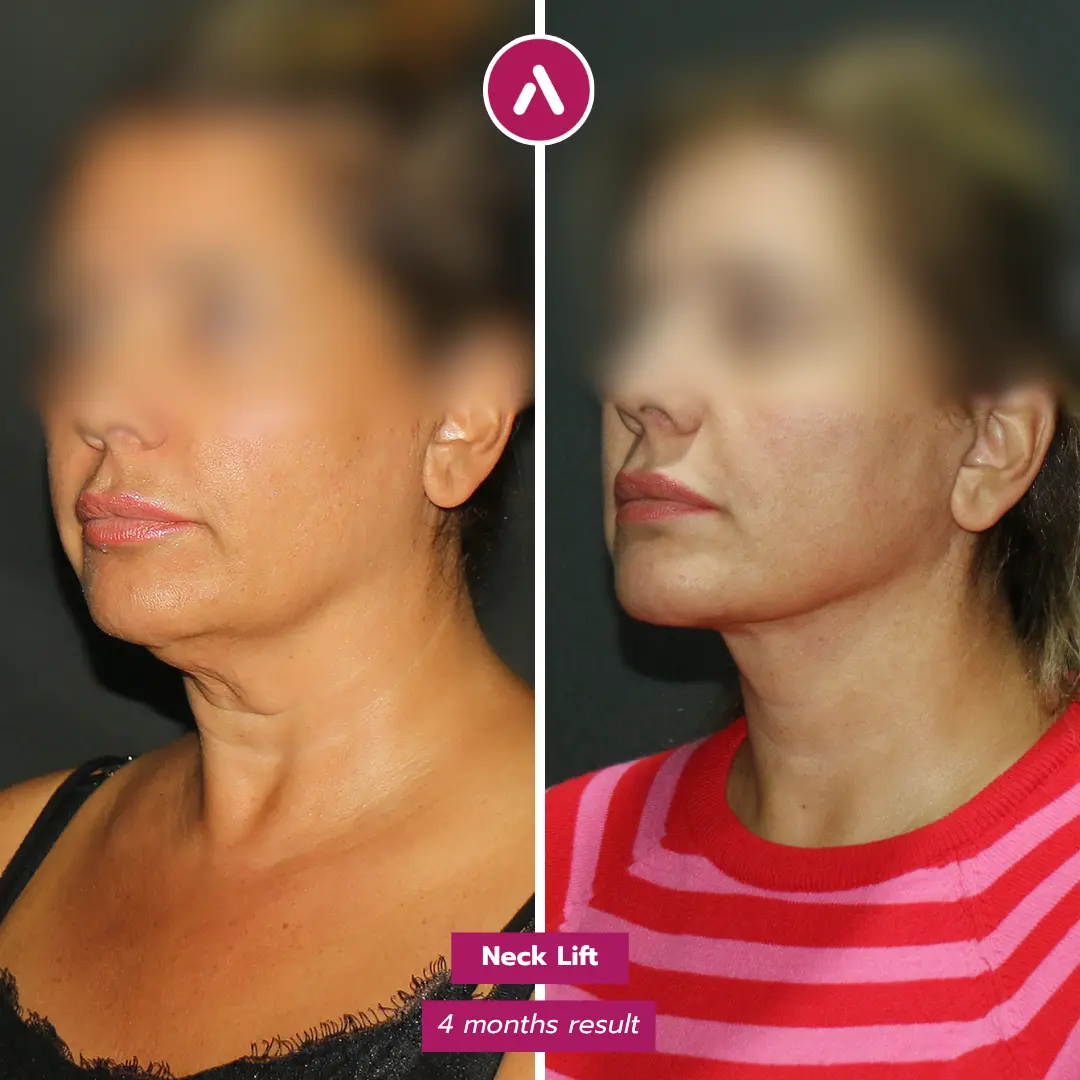
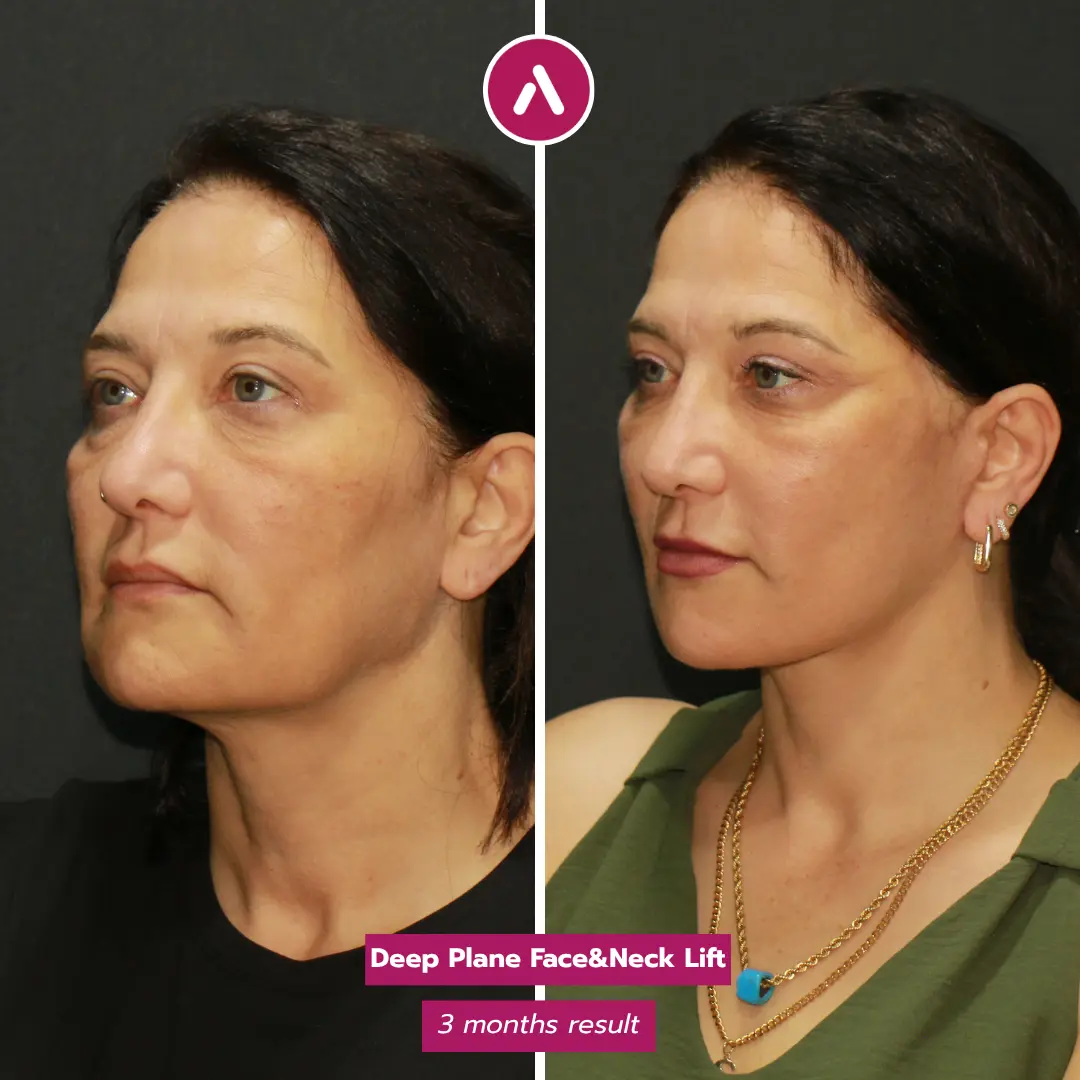
Throughout, we’ll use UK terminology (for example, anaesthesia not “anesthesia”) and focus on what the Civil Aviation Authority medical guidance framework implies for air travel. Where the evidence is still evolving, we’ll explain the logic clinicians use — informed by medical science and established peri-operative risk principles — so you can make safer, calmer decisions.
Table of Contents
CAA Medical Flight Guidelines for UK Travellers
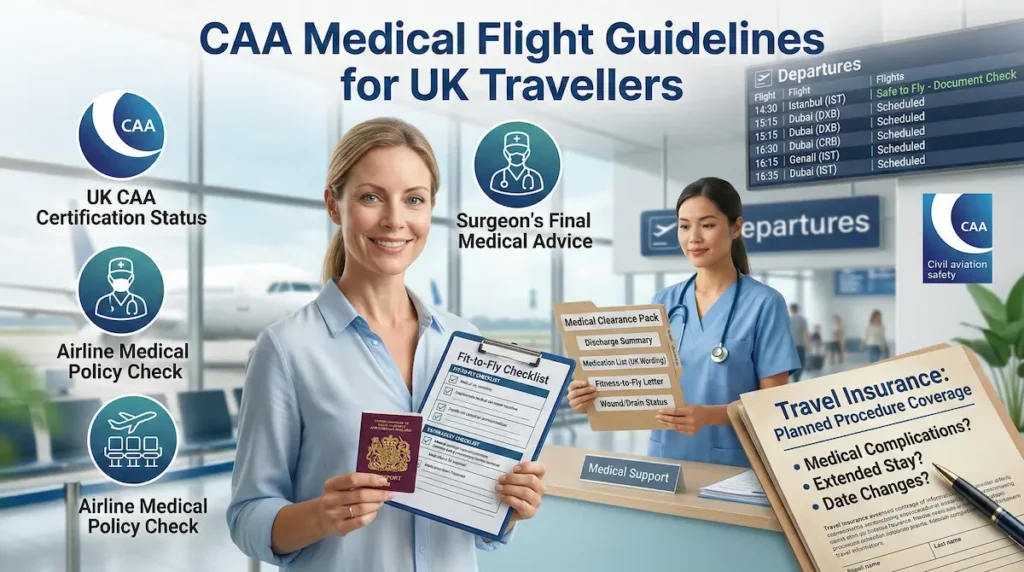
The CAA does not “approve” you personally to fly, but it provides a UK aviation safety framework that influences how airlines manage passenger fitness to travel. In real life, your ability to board a flight after surgery is shaped by CAA fit to fly guidelines-style principles, your surgeon’s advice, and the airline’s own medical policy. This is why UK patients searching CAA fitness to fly after surgery often find mixed answers: guidance, clinical judgement, and airline rules overlap but aren’t identical.
For many UK patients, this becomes especially relevant when the question is not just “can I fly?”, but also “is it safe to travel to Turkey for surgery“ in the first place. The safest answer comes from planning the entire pathway — choosing a reputable surgical team, confirming post-operative monitoring, and ensuring you can meet airline requirements with clear documentation. When these pieces are in place, your return journey is typically guided by structured recovery milestones rather than guesswork or conflicting online advice.
What “fit to fly” actually means (CAA principles vs airline policy)
CAA fitness to fly after surgery is best understood as a risk assessment: can you tolerate cabin pressure changes, prolonged sitting, reduced mobility, and limited access to urgent medical care mid-flight? Airlines then apply their own thresholds, which can be stricter than general guidance. So, even if you feel “fine”, you may still need documentation or a delay if your risk profile is higher.
CAA medical guidelines after surgery: what UK patients should look for
When patients talk about CAA medical guidelines after surgery, they usually mean the practical questions:
- Is it safe to fly at this stage of healing (bleeding, swelling, pain control, mobility)?
- Could cabin pressure worsen swelling (oedema) or discomfort?
- Does the procedure increase the risk of DVT with prolonged sitting?
- Do I need additional support (wheelchair assistance, extra legroom, companion)?
Use these questions to guide discussions with your surgeon — and to plan your return flight around recovery milestones rather than convenience.
Medical clearance to fly after surgery UK: what to request from your clinic
If an airline requests medical clearance to fly after surgery UK, you’ll typically need a concise document pack that is easy for a non-clinician to interpret. Ask your clinic for:
- Discharge summary: procedure performed, date/time, anaesthesia type, and immediate post-op course.
- Medication list: including anticoagulants (if prescribed), pain relief (UK wording), and antibiotics.
- Fitness-to-fly letter: current clinical status, mobility level, any restrictions, and recommended assistance.
- Wound/drain status: whether drains are present/removed, dressing guidance, and warning signs.
Keep these documents in your hand luggage, along with your clinic contact details for any airline queries.
Insurance and “planned procedure” wording (a hidden UK risk)
Many UK travel policies exclude complications related to a planned procedure unless you buy a specialist product. Before you book flights, confirm whether your policy covers medical complications, extended hotel stay, and changes to travel dates. This isn’t about fear — it’s a practical “safety checklist for surgery abroad” item that prevents avoidable stress.
When You Can Safely Fly After Each Procedure
There isn’t a single universal “safe day to fly” after surgery, because different procedures create different risks: swelling, bleeding, pain control needs, mobility limits, and clot risk. What matters is your function (how well you can move), your clinical stability, and whether your recovery is tracking normally. UK patients often search flying after surgery UK because they want a clear timeline — the safest approach is to combine procedure-specific guidance with a personal risk check.
Procedure-by-procedure timing: a sensible UK planning method
Rather than relying on a single number you saw online, plan around three anchors:
- Early healing window: when swelling and bruising can rise and comfort is more fragile.
- Mobility threshold: when you can walk comfortably, manage stairs, and sit for a flight duration without significant pain.
- Complication watch period: when the chance of needing an urgent review is still meaningful.
This framework helps you plan realistic flights whether you’re considering facial surgery, breast procedures, body contouring, or dental work.
“Risk window” logic: cabin pressure, bleeding risk, swelling and comfort
Cabin pressure changes don’t “undo” surgery, but they can aggravate discomfort and swelling. If you’re prone to significant swelling, planning to reduce oedema after surgery before travel becomes part of your flight plan: consistent compression (if advised), hydration, gentle mobilisation, and appropriate medication. A cautious approach is especially important for patients considering a long-haul flight after plastic surgery, where immobility is prolonged.
Drains, compression garments and the “can I sit for this flight?” test
If you still have drains, limited mobility, or struggle to sit comfortably for extended periods, you are not “flight-ready” even if the calendar says you are. For many UK patients, the best practical test is:
- Can you walk independently for 5–10 minutes without dizziness?
- Can you sit upright for 60–90 minutes with manageable pain?
- Can you get up regularly (every 60–90 minutes) to mobilise?
If the answer is no, speak to your surgeon about adjusting your plan and delaying travel.
Flight-ready recovery protocols: building a safer return-to-UK plan
“Flight-ready recovery protocols” means structuring recovery so your body can tolerate travel: sleep, nutrition, hydration, controlled mobilisation, and wound care. Patients often want rapid recovery after cosmetic surgery, but the safer goal is stable recovery. Your checklist should prioritise: controlled pain, safe mobility, predictable swelling trajectory, and a clear aftercare pathway once you’re back in the UK.
Risks of Flying Too Early (DVT and Oedema)
Flying too soon after surgery isn’t only about discomfort — it can increase medical risks. The two issues UK patients most commonly worry about are DVT (deep vein thrombosis) and worsening oedema (swelling). This is why searches like CAA medical guidelines after surgery, CAA fitness to fly after surgery, and medical clearance to fly after surgery UK tend to cluster around “How soon is too soon?” The safer approach is to understand your personal risk factors, the procedure’s impact on mobility, and what you can do to reduce preventable risk.
DVT risk explained plainly (who is higher risk and why)
DVT is a blood clot that can form in deep veins, often in the legs, especially when you are immobile for long periods. Surgery can temporarily increase clot risk; long flights can add another risk factor because you sit still for hours. Risk tends to be higher if you:
- Have a history of clots, thrombophilia, or certain cardiovascular conditions
- Smoke or vape
- Have obesity or limited mobility after surgery
- Are taking certain hormones (your clinician can advise)
- Are planning a long-haul flight after plastic surgery (prolonged sitting time)
This is where medical science supports a simple principle: combining risk factors can raise overall risk more than any single factor alone. That’s why your surgeon’s personalised advice matters more than generic timelines.
Oedema (swelling) + cabin pressure: what UK patients notice on landing
Oedema commonly increases after surgery and can feel worse with travel due to prolonged sitting and fluid shifts. Cabin pressure changes may contribute to discomfort, but the bigger factors are reduced movement, hydration, and positioning. Patients often report:
- Tightness around compression garments
- Heavier limbs or “puffiness” in the lower legs
- Increased facial or abdominal swelling if travelling early
If your priority is to reduce oedema after surgery, plan your flight around stability: better mobility, predictable swelling, and a routine that includes gentle walking and hydration.
Red flags during the flight home (when to seek urgent advice)
Most people feel sore, tired, and swollen after surgery — that can be normal. However, seek urgent medical advice if you develop:
- Sudden shortness of breath, chest pain, or coughing blood
- One-sided leg swelling, warmth, redness, or significant calf pain
- Fainting, severe dizziness, or confusion
- Rapidly worsening swelling with severe pain or a new wound issue
Your safety checklist should include a clear plan: who you contact first (your clinic), what documentation you have, and when you go directly to A&E.
Prevention checklist: practical steps that make a real difference
These steps are commonly used in peri-operative care and are consistent with risk reduction logic from scientific research on venous thromboembolism prevention strategies:
- Mobilise regularly: stand and walk briefly every 60–90 minutes if you are able.
- Hydrate: sip water regularly; avoid excess alcohol.
- Compression: wear compression stockings if advised by your clinician (not everyone needs them).
- Seat and support: consider extra legroom to help with movement and comfort.
- Medication plan: take prescribed medicines exactly as instructed (do not self-prescribe anticoagulants).
These actions fit neatly into a safety checklist for surgery abroad because they’re easy to plan and can reduce avoidable risk.
Choosing a Safe Overseas Clinic: UK Patient Due Diligence Checklist
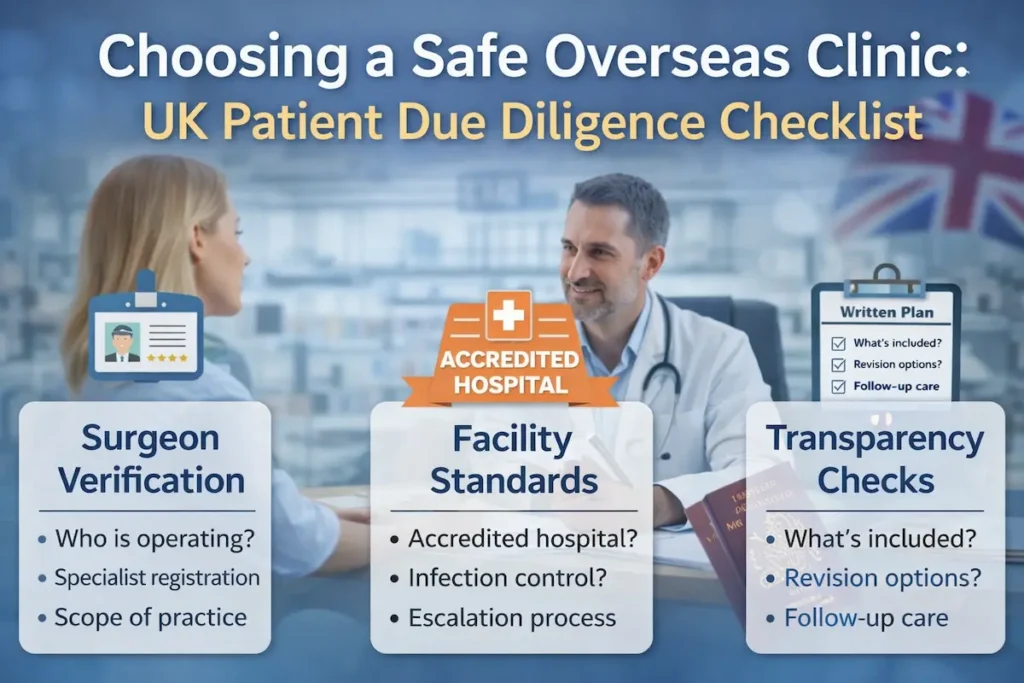
A strong surgery abroad safety checklist starts before you book flights. The most common UK fear isn’t “the plane” — it’s choosing the wrong provider and being left without adequate aftercare. Use the checklist below to vet a clinic’s clinical standards, transparency, and post-operative support. This due diligence also makes airline conversations easier, because you’re more likely to receive clear documentation for CAA fit to fly guidelines-type requests.
For many people, the real safety question is broader than flights — it’s also “is it safe to travel to Turkey for surgery“ when you’re comparing providers at a distance. This is exactly why due diligence should include evidence of standards (where surgery is performed, who provides anaesthesia care, and how complications are managed), not just marketing claims. If a clinic can clearly explain its protocols and provide written documentation without hesitation, it’s usually a strong sign that your care pathway — including aftercare — has been properly planned.
Surgeon verification: training, scope, and who is actually operating
Ask direct questions and expect direct answers:
- Who will perform the operation (name and role), and who covers if they are unavailable?
- What is the surgeon’s core specialty, and how often do they perform your procedure?
- What is the complication pathway — who reviews you, where, and how fast?
It’s reasonable for UK patients to request clarity on qualifications and the clinical team structure. Transparency here is a major safety signal.
Facility standards: theatre safety, infection control, and escalation capability
Ask about the operating theatre environment, anaesthesia team, and escalation plans. Key items:
- Do they operate in an accredited hospital environment with appropriate monitoring?
- What is the infection prevention protocol?
- Is there access to higher-level care if complications occur?
A clinic that can explain these calmly and clearly is typically a safer bet than one that only talks about “deals”.
Transparency checks: written plan, inclusions, and revision policy
To reduce unpleasant surprises, ask for a written plan that includes:
- Exactly what is included in the quote (surgeon, anaesthesia, garments, medications, follow-ups)
- How complications are managed (and what costs might apply)
- The revision policy and realistic boundaries of “touch-ups”
This isn’t being difficult; it’s behaving like an “expert patient”.
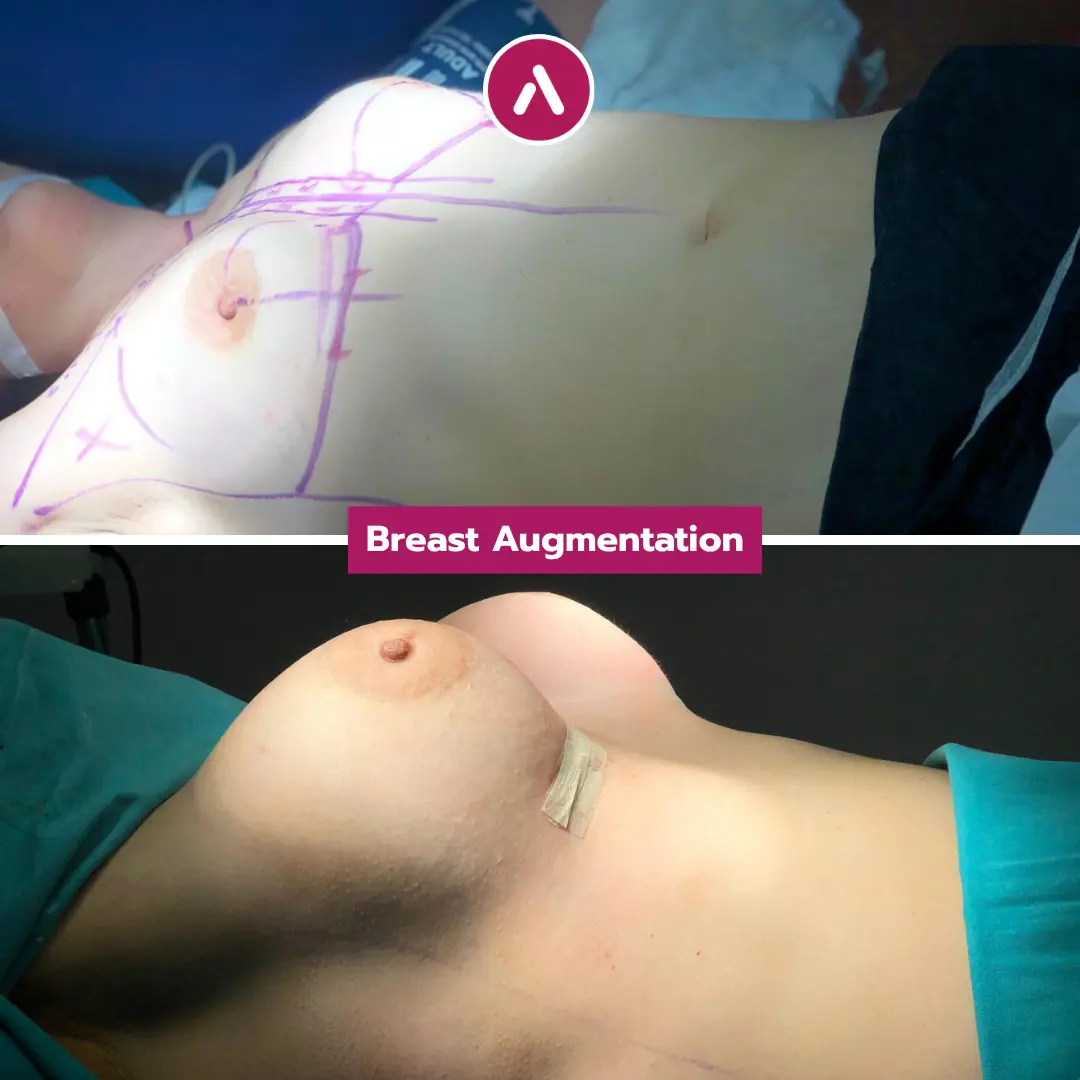
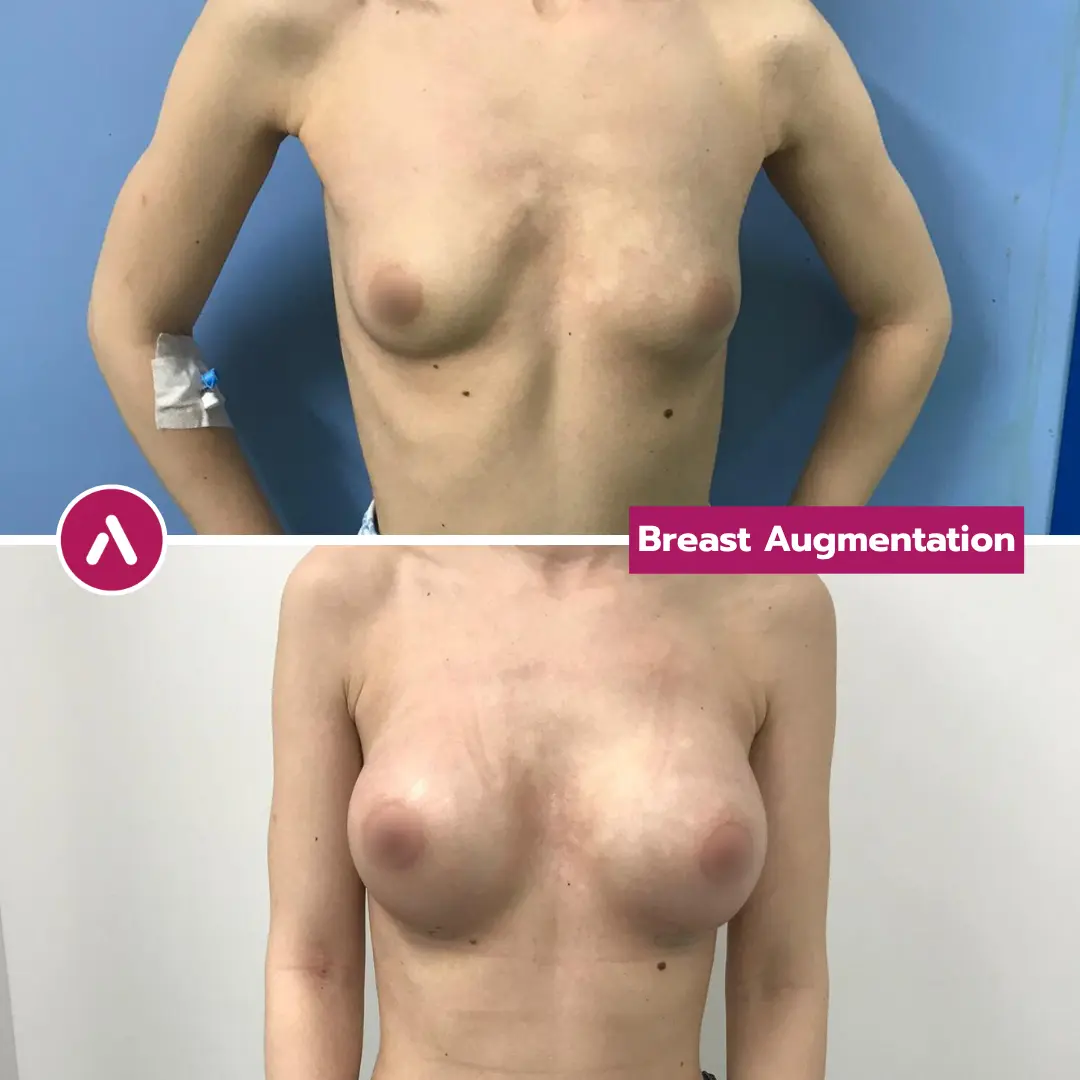
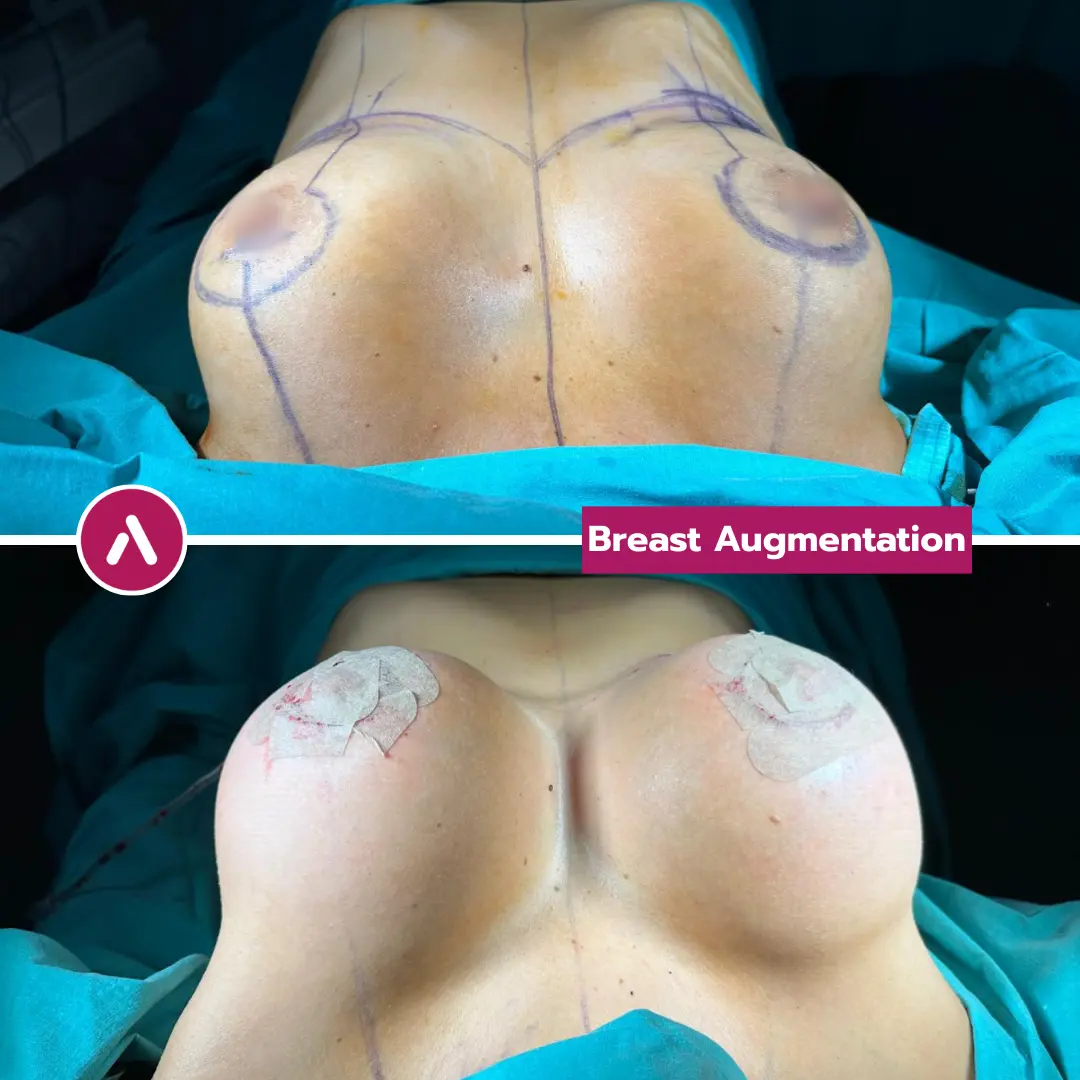
Before-and-after expectations: natural results and honest limitations
A reliable clinic sets realistic expectations and avoids over-promising. Look for consistency across cases, similar body types, and honest discussion of scarring and recovery time. This reduces disappointment and supports safer decisions about timing your return travel.
Aftercare & Return-to-UK Plan (What Happens After You Land in Britain?)
For UK patients, the real test of a clinic isn’t the day of surgery — it’s what happens after you fly home. A strong aftercare pathway supports peace of mind, helps you spot problems early, and provides documentation if you need medical clearance to fly after surgery UK or follow-up advice. Build a return-to-UK plan that assumes you’ll be tired, swollen, and not at your most resilient.
Remote follow-up pathway: what good aftercare looks like
Your aftercare should include:
- Scheduled check-ins (including photos if appropriate) at agreed time points
- A clear point of contact for questions (ideally with rapid response expectations)
- Written guidance on wound care, compression, showering, activity, and sleeping position
This is part of “flight-ready” planning — it’s much easier to travel when you know what is normal and what is not.
GP/NHS reality: planning without assumptions
UK patients often assume their GP will handle everything. In practice, NHS services prioritise medical urgency and may not provide routine post-operative cosmetic follow-up. Plan as though your clinic will remain your primary clinical guide for routine healing questions, and know when you would escalate to urgent care in the UK.
If something feels wrong: escalation steps you can follow under stress
Put this in your notes before you fly:
- Clinic contact details and a backup number
- A summary of your procedure, date, and medications
- Your red flag list (bleeding, fever, wound changes, breathing symptoms, severe unilateral leg swelling)
When you’re tired and anxious, simple steps reduce delays and help clinicians help you faster.
The first 72 hours at home: a “flight-ready to home-ready” routine
Your immediate focus should be stability: hydration, gentle mobilisation, and consistent wound care. If your goal is rapid recovery after cosmetic surgery, prioritise safe basics rather than “pushing through”. A calm, steady routine is often what produces the best recovery trajectory.
What to Pack for a Safe Return Flight to London
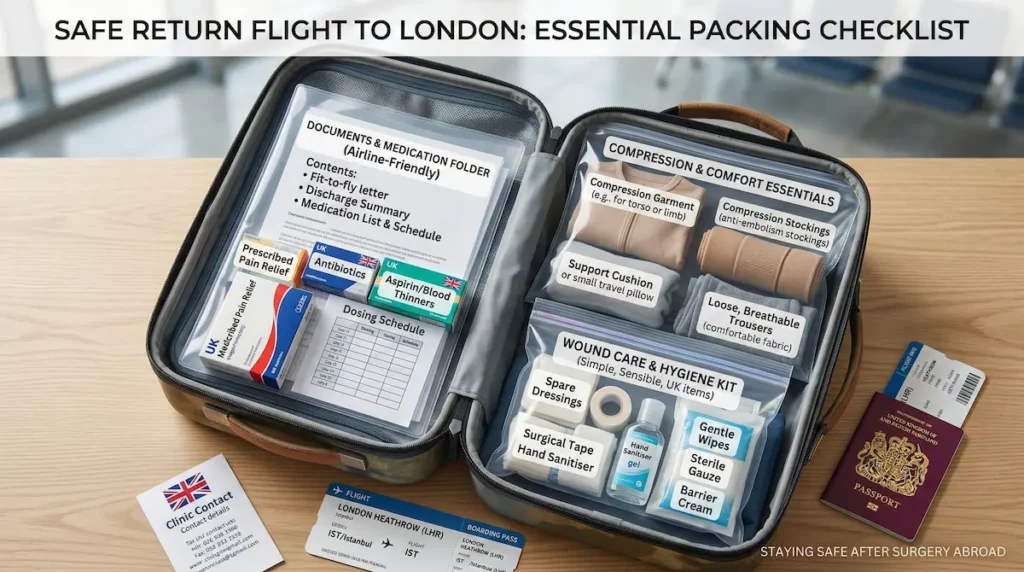
Packing isn’t cosmetic — it’s clinical logistics. The right items make it easier to manage pain, reduce swelling, and respond quickly if airline staff ask about your condition. For UK patients searching flying after surgery UK, a well-prepared cabin bag is part of your safety checklist for surgery abroad.
If you’re still weighing up “is it safe to travel to Turkey for surgery“, think of your packing list as a final safety layer that protects you during the most vulnerable part of the journey: the flight home. Having the right documents, medications, and comfort essentials in your hand luggage reduces last-minute stress at check-in, supports swelling control in the cabin, and helps you follow your surgeon’s instructions precisely. In short, good packing turns a long travel day into a more controlled, clinically sensible extension of your recovery plan.
Documents and medication folder (make it airline-friendly)
- Discharge summary and medication list
- Fit-to-fly / medical letter if applicable (for CAA fitness to fly after surgery queries)
- Clinic contact details and your booked follow-up schedule
- Medications in original packaging, plus a simple dosing schedule
Compression, comfort, and swelling management essentials
- Compression garment(s) if prescribed
- Compression stockings if advised
- A small pillow/support cushion
- Loose, breathable clothing (comfortable trousers, not restrictive waistbands)
If you’re trying to reduce oedema after surgery, comfort items that allow better positioning and movement can genuinely help.
Wound care and hygiene mini-kit (simple, sensible, UK items)
- Dressings and spare tape (as advised)
- Hand sanitiser and gentle wipes
- Spare sterile gauze (if recommended)
- Barrier cream if your clinician advises it for friction areas
Airport strategy: assistance, boarding, and pacing
Request wheelchair assistance if you need it, board early to avoid rushing, and plan your pace. If you can, choose seating that supports gentle movement. A calm airport plan is a hidden “recovery tool”.
Frequently Asked Questions (FAQ): Surgery Abroad Safety Checklist
These are the most common UK questions that sit behind searches like CAA medical guidelines after surgery, CAA fit to fly guidelines, and medical clearance to fly after surgery UK. Use them to structure your conversation with your surgeon and your airline.
How soon can I fly after cosmetic surgery abroad?
It depends on the procedure and your personal risk factors. The safest approach is a personalised plan based on mobility, swelling trajectory, pain control, and complication risk — not a one-size-fits-all number.
Do I need a fit-to-fly letter for British Airways / easyJet / Turkish Airlines?
Sometimes. Airlines vary, and they may request documentation if you’ve had recent surgery, have reduced mobility, or require assistance. Ask your clinic for a clear letter and discharge summary in case it’s needed.
What are DVT symptoms to watch for after surgery?
One-sided leg swelling, redness, warmth, and calf pain are key signs. Sudden breathlessness or chest pain requires urgent assessment. If in doubt, seek medical advice immediately.
Does swelling (oedema) get worse during flights?
It can, especially if you sit still for long periods. Hydration, gentle mobilisation, and any clinician-advised compression can help. Planning your travel when swelling is more stable is often the best strategy.
What should be in my medical documents pack for the airport?
Your discharge summary, medication list, clinic contact details, and any fit-to-fly letter if requested. Keep everything in your hand luggage and make it easy to read.
Can I travel alone after surgery — and what support should I expect?
Some patients can, but it depends on your procedure and your mobility. A safer plan includes airport assistance, clear post-op instructions, and a reliable aftercare contact who can respond quickly.
What if I have a concern once I’m back in the UK?
Contact your clinic first for routine healing guidance, and use A&E for urgent red flags (breathing symptoms, chest pain, severe bleeding, sudden one-sided leg swelling, or rapidly worsening symptoms).
If you’d like to go beyond this guidance, you may also find our related resources helpful: Fly After Facelift for procedure-specific flight timing, Travelling Solo for Surgery for planning support and logistics, and a practical Pre-Surgery Checklist to prepare properly before you travel. We also explain how to assess credentials in Plastic Surgeon Turkey, and what standards to look for in Hospital Accreditation Turkey when comparing overseas providers — all designed to help UK patients make safer, better-informed decisions.
Medical Disclaimer: This page is provided for general educational purposes only and does not replace a face-to-face medical consultation, diagnosis, or personalised treatment plan. All surgery carries risks and outcomes vary between individuals. Suitability for a plastic surgery, procedure selection, and anaesthesia choice can only be determined after a full clinical assessment by a qualified surgeon. Always follow your clinician’s instructions and seek urgent medical attention if you develop concerning symptoms during recovery.