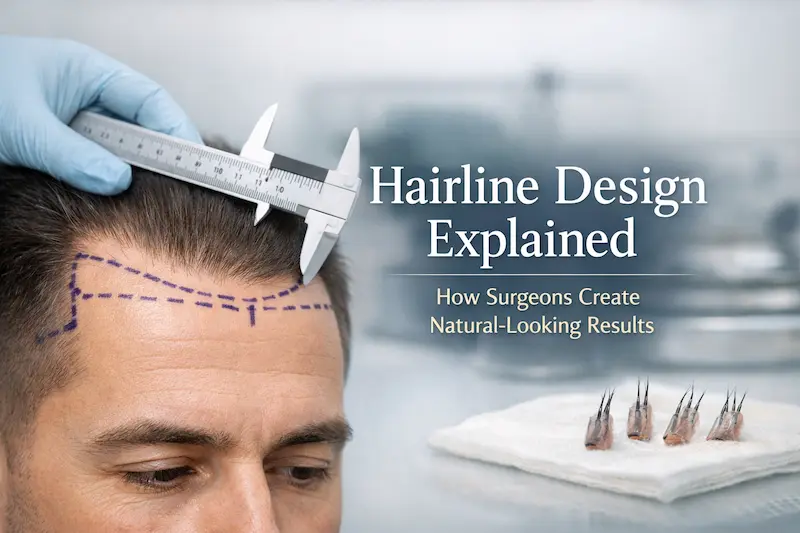
For most UK patients, the difference between an excellent result and an obvious one comes down to hairline design — not “more grafts”, not a trend-driven low line, and not a one-size-fits-all template. A truly natural hairline is engineered to match your face shape, age, hair calibre, and the way your hair naturally grows. That’s why modern natural hairline restoration is best understood as applied medical science: surgeons use anatomy, geometry, and predictable hair-growth behaviour to create a natural looking hairline that still looks right years later.
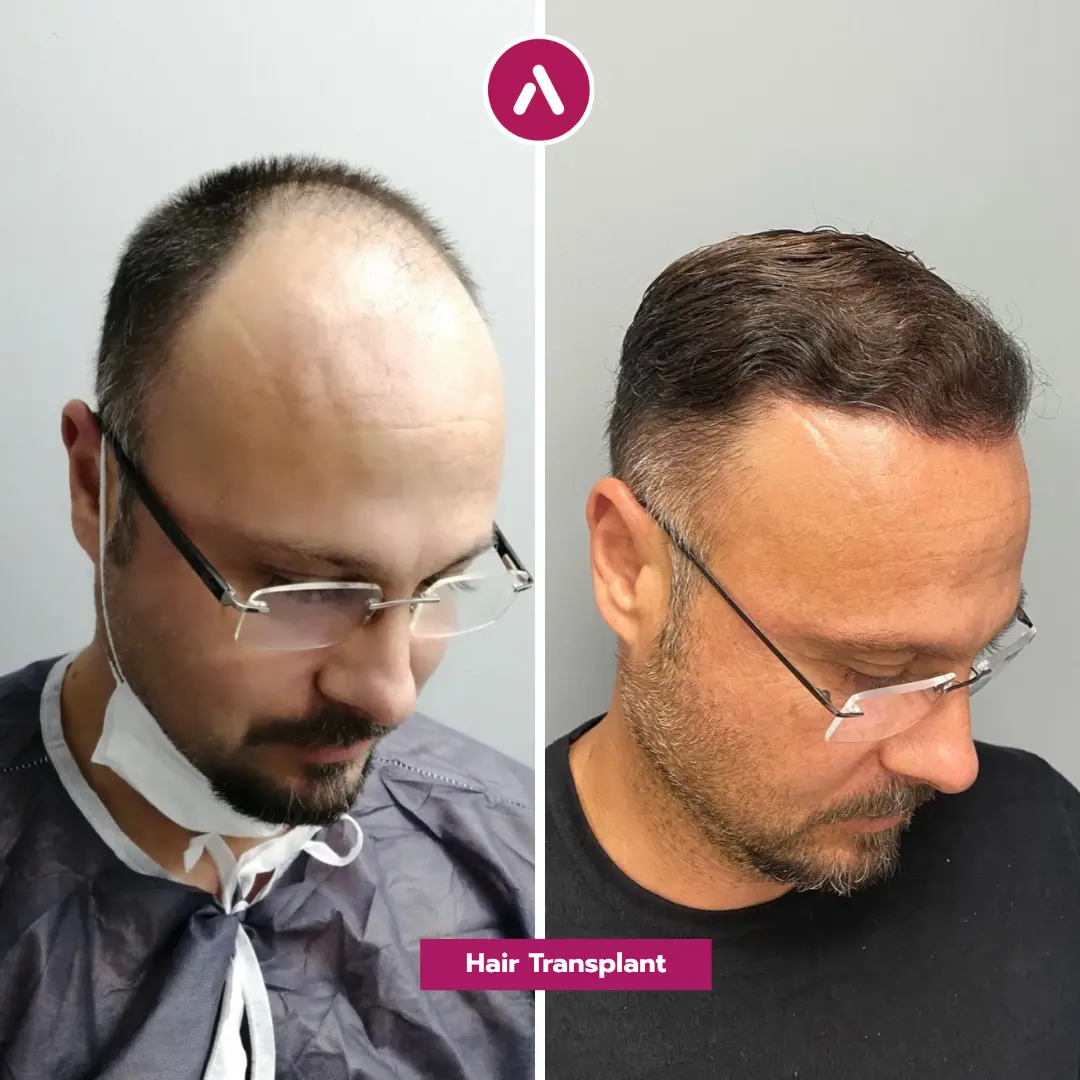
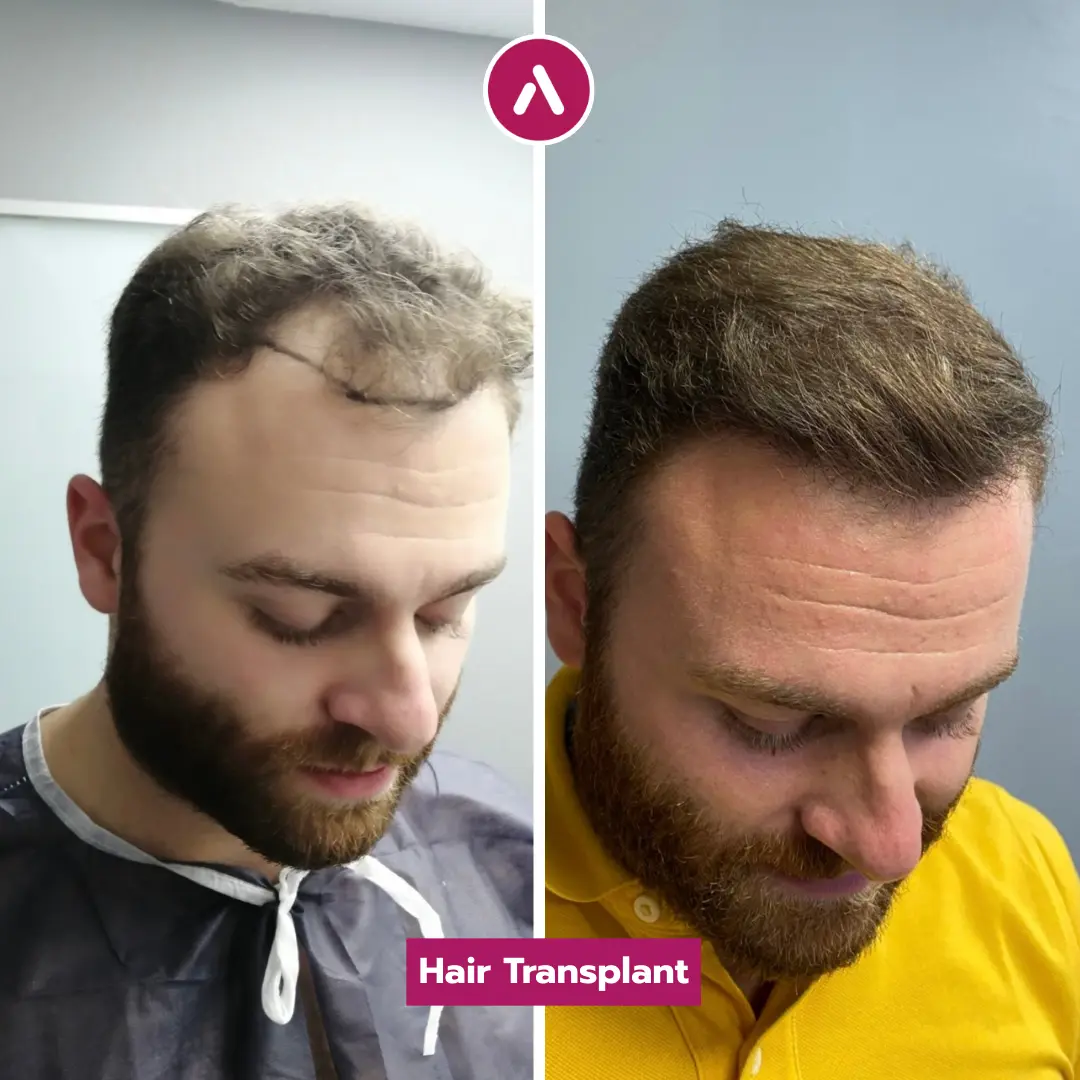
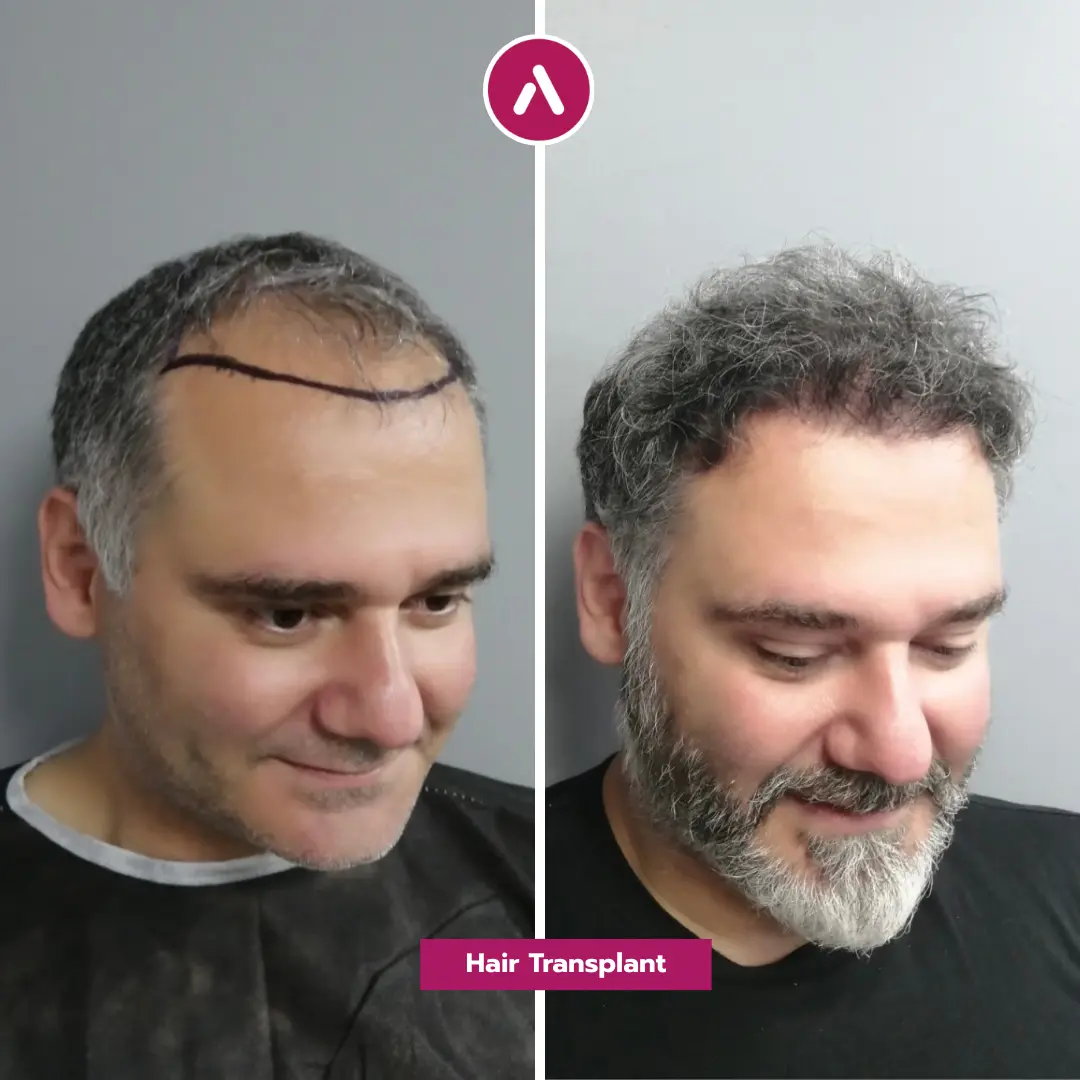
In this guide, you’ll learn how surgeons approach hairline planning for men and women, and how micro- and macro-angles influence the realism of a natural hairline transplant. If you’re comparing options (including hairline lowering vs transplant) or you’re worried about a “too straight” or “pluggy” outcome, the sections below will give you the decision-making framework you need.
| What creates a natural-looking hairline? | What tends to look unnatural? |
|---|---|
| Age-appropriate placement with a soft, irregular leading edge | A low, ruler-straight line that ignores ageing and facial proportions |
| Correct graft selection (fine single hairs at the very front) | Too many multi-hair grafts at the hairline edge |
| Direction and angle matched to natural growth (micro + macro) | Uniform angles, row patterns, or “spiky” hair emergence |
| Balanced temple work that frames the face | Temples left empty or rebuilt too sharply |
| Donor-aware planning for future thinning | Overusing donor hair early with no long-term strategy |
Table of Contents
Ideal Male vs Female Hairlines
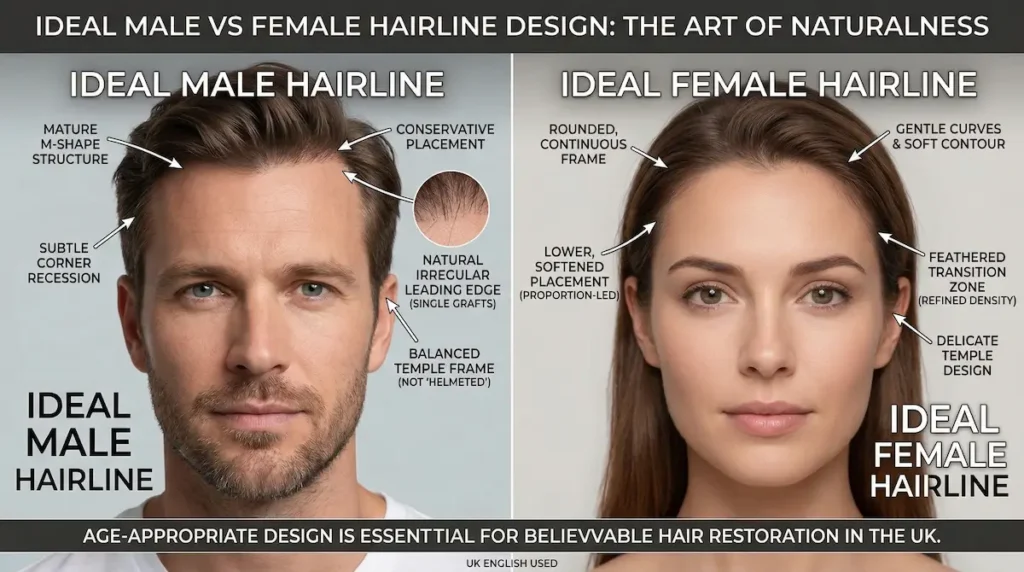
Before discussing angles and implantation, surgeons start with the fundamentals: what “natural” looks like for male hairline design and female hairline design. These are not simply higher vs lower lines. They differ in shape, transition zones, and how the temples are treated. This is also where hairline reconstruction becomes personalised — because copying someone else’s hairline rarely produces a believable result on a different face.
Technique matters, but it only works as well as the plan behind it. Whether you choose a DHI vs FUE hair transplant, the end result will still depend on how precisely the surgeon designs the hairline to suit your facial proportions, hair calibre, and long-term pattern of loss. A well-designed hairline also considers how the frontal zone blends into the temples, so the overall frame looks balanced rather than “built”. This is why a surgeon-led assessment is essential before committing to any technique.
What makes a “male” hairline look natural (maturity, soft recession, temple balance)
A natural male hairline is usually mature rather than juvenile. That means a subtle, believable recession at the corners and a gentle “M” structure that suits the patient’s age and likely future pattern of hair loss. The goal is not to push the line as low as possible; it’s to create a natural hairline that harmonises with the forehead and doesn’t look “drawn on”.
- Position: conservative, proportion-led placement (often measured in cm during consultation)
- Shape: soft corner recession rather than a flat wall of hair
- Temples: balanced temple hairline design so the face looks framed, not “helmeted”
In practical terms, good frontal hairline design for men is a blend of: (1) a slightly irregular leading edge, (2) fine single-hair grafts at the front, and (3) direction that follows your natural hair flow. These principles are repeatedly supported by scientific research in hair biology and surgical technique: hair emergence angle and direction are key contributors to the perception of naturalness.
What makes a “female” hairline look natural (lower placement, softer curves, frontal density)
For many women, the aesthetic priority is a soft, continuous frame — often with a more rounded contour and less corner recession than men. However, “lower” is not automatically better. A line that’s too low can look unnatural, especially if it clashes with facial proportions or creates a heavy, wig-like edge.
- Shape: gentle curves with a feathered transition
- Density strategy: refined density at the front without a harsh border
- Temples: delicate temple hairline design to soften the overall frame
Female hairline planning also needs to consider styling habits (parting, ponytails), traction risk, and whether thinning is diffuse. The result should read as a natural looking hairline at conversational distance and in close-up photos — because UK patients often judge outcomes in everyday lighting, not just clinic lighting.
Age-appropriate design (why the “too-low, too-straight” hairline ages badly over time)
One of the most common regrets after a poorly planned procedure is an overly low, straight hairline that looked “exciting” at first but becomes less believable over time. Age-appropriate design is a cornerstone of natural hairline restoration because your face changes, and hair loss can progress behind the transplanted zone.
Surgeons typically plan for:
- Future thinning: maintaining a realistic density gradient so the front doesn’t look disconnected later
- Proportion: a hairline that fits the brow, forehead height, and overall face balance
- Natural irregularity: avoiding the “ruler line” effect that stands out in real life
Where does “hairline lowering vs transplant” fit? In some women with a naturally high hairline but good density, surgical hairline lowering may be discussed as an alternative. In others — especially where there is thinning or a desire to rebuild specific zones — a natural hairline transplant (with surgeon-led design) may be more appropriate. The right option depends on anatomy, hair characteristics, and risk tolerance, and should be assessed case-by-case.
Micro & Macro Hairline Angles
Even a perfectly placed hairline can look artificial if the hair doesn’t exit the skin in the correct direction and angle. This is where “micro” and “macro” planning becomes critical. In straightforward terms: macro design governs the overall flow (how the hair sweeps across the scalp), while micro design controls the tiny, millimetre-level exit angles that make hair lie flat and behave naturally. These details are central to modern hairline reconstruction and are often what separates a “clinic result” from a result that looks like it was always yours.
Macro direction — mapping the flow from frontal zone to temples
Macro direction is the big-picture map. Surgeons plan how hair should flow from the frontal hairline design zone into the forelock and then into the sides. This includes how the temple hairline design integrates with the front so the face looks naturally framed.
- Frontal flow: forward and slightly lateral direction that mirrors natural patterns
- Temple integration: gradual change in direction rather than an abrupt angle shift
- Symmetry without perfection: natural hairlines are balanced, not identical
Micro angulation — exit angle and direction to avoid an “implanted” look
Micro angulation is where realism lives. Hair at the very front typically grows at a shallow angle so it lies flatter against the scalp. If grafts emerge too upright, the hair can look “spiky” or plug-like — even if density and placement were reasonable. Precise micro angulation supports a natural hairline because it helps the transplanted hair behave like native hair in everyday conditions (wind, rain, styling products, hats).
Key micro principles include:
- Shallow angles at the leading edge to keep the hairline soft
- Directional variation within a controlled pattern (not random, not uniform)
- Consistent spacing that avoids obvious rows while preserving blood supply
Transition zones — singles at the front, then blended density behind (creating a soft edge)
The most believable hairlines have a deliberate transition: the very front is built with fine single-hair grafts to create a feathered edge, followed by a gradual increase in density behind. This is a core concept in hairline planning for both men and women and is a major contributor to a natural looking hairline.
Surgeons commonly think in “zones”, for example:
- Zone 1 (Leading edge): fine singles for softness
- Zone 2 (Support zone): mixed singles/doubles for natural build-up
- Zone 3 (Density zone): higher-density packing where appropriate and safe
This staged approach also helps outcomes photograph well — not just immediately after styling, but in normal UK lighting and day-to-day scenarios.

Technical Mistakes That Ruin Results
Most “obvious” transplants aren’t obvious because hair transplantation doesn’t work — they’re obvious because the hairline design and execution ignore how real hairlines behave. A natural hairline transplant depends on subtle irregularity, correct graft selection, and accurate angulation. When any of these are off, the result can look harsh, pluggy, or strangely uniform. Understanding these pitfalls also helps if you’re considering hairline reconstruction after a previous procedure.
Even the most advanced technique won’t compensate for weak planning. When patients compare a DHI vs FUE hair transplant, it’s important to remember that “method” mainly affects how grafts are handled and placed — but the realism of the outcome still comes down to hairline design choices: the softness of the leading edge, the use of single-hair grafts at the front, and precise angulation that matches natural growth. That’s why surgeon-led quality control matters at every step, not just the extraction phase.
| Common technical mistake | How it shows up | What surgeons do instead |
|---|---|---|
| Ruler-straight leading edge | “Drawn-on” look, especially in photos and bright UK daylight | Soft, irregular edge with micro-variation and a feathered transition |
| Wrong graft types at the front | Pluggy or bulky hairline | Fine single-hair grafts at the front, gradual density build behind |
| Incorrect angles / row implantation | Spiky, upright hair or visible “rows” | Micro-angulation matched to natural growth, careful spacing |
| Overbuilding temples | Sharp corners, unnatural framing | Conservative temple hairline design with soft blending |
The “straight-line” hairline and why it reads as artificial
The human eye quickly detects straight borders. Natural hairlines have small irregularities — not random chaos, but controlled variation that looks organic. A perfectly straight line can make even a dense, well-grown transplant look unnatural.
- What goes wrong: the hairline becomes a hard “edge” rather than a gradient
- What’s better: a slightly broken, feathered leading edge (especially in frontal hairline design)
- Why it matters: this is one of the biggest drivers of a natural looking hairline
In clinical practice, surgeons apply consistent design principles rooted in medical science: soft transitions and realistic borders typically read as “real” at both close distance and social distance.
Wrong graft selection (too many doubles/triples in the first 1 cm)
Graft selection is not a minor detail — it’s central to realism. The very front of a natural hairline is usually made of finer, single-hair units. If multi-hair grafts are placed right at the edge, the hairline can look bulky or “plugged”.
- Leading edge: prioritise fine singles for a soft appearance
- Support zone: blend singles and doubles behind the edge
- Density zone: build density where appropriate (and safe) without creating a wall
This is why experienced surgeons treat hairline planning as a zone-based strategy, rather than “placing grafts until it looks full”. The aim is an outcome that remains credible as you age.
Row implantation and poor spacing (the pluggy / doll-hair effect)
Even with good grafts, poor spacing and patterning can reveal the work. Obvious rows or uniform spacing can create an “implanted” look, and overly dense packing in the wrong place may compromise healing.
- Patterning: avoid visible rows; use controlled, natural distribution
- Spacing: respect blood supply and tissue recovery
- Angles: maintain consistent micro-angulation so the hair lies naturally
From a scientific research perspective, tissue healing and follicle survival relate to surgical handling, placement strategy, and biological limits. In plain terms: “more” isn’t always better — “better planned” is better.
Graft Planning for a Natural Hairline: Density, Donor Management & Future Hair Loss
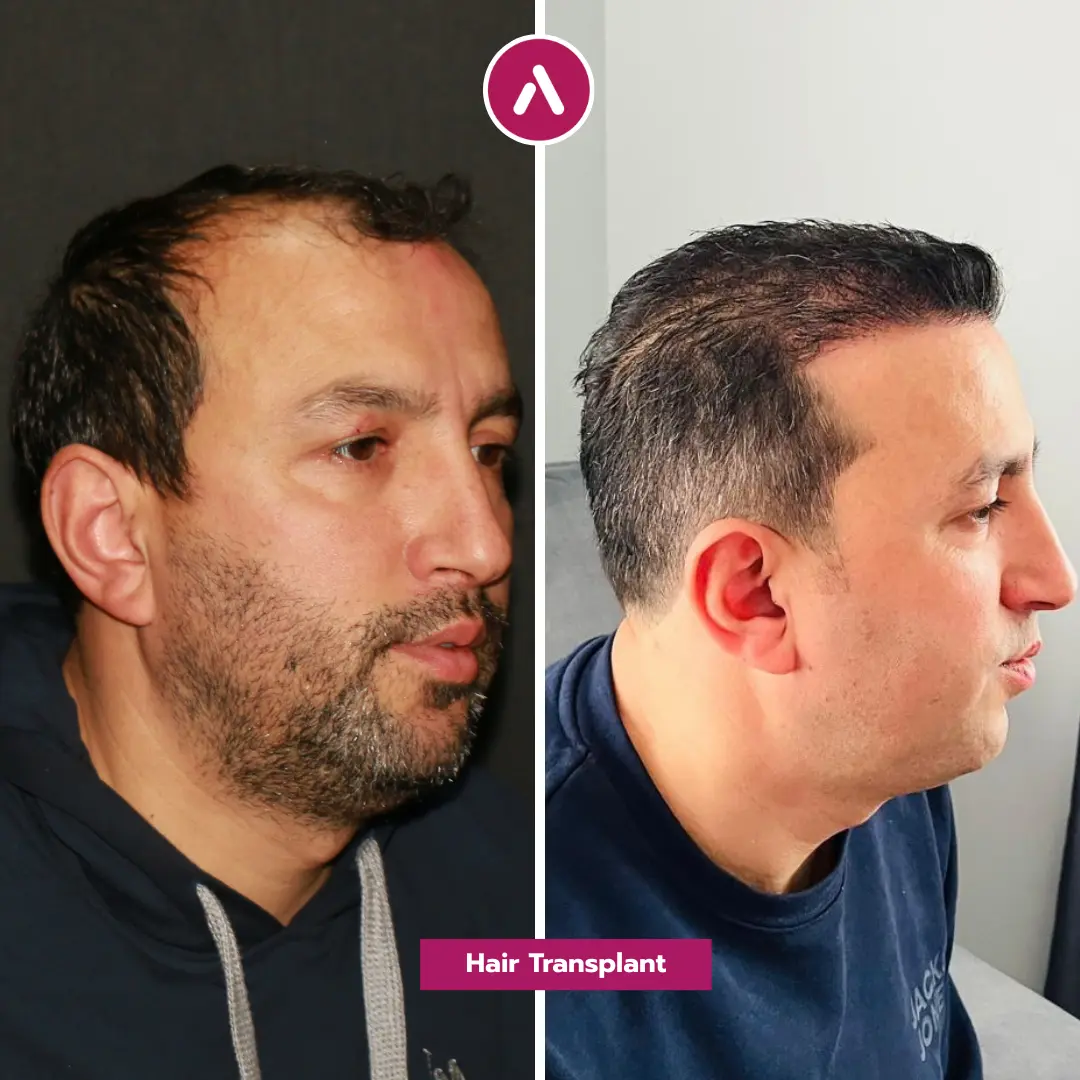
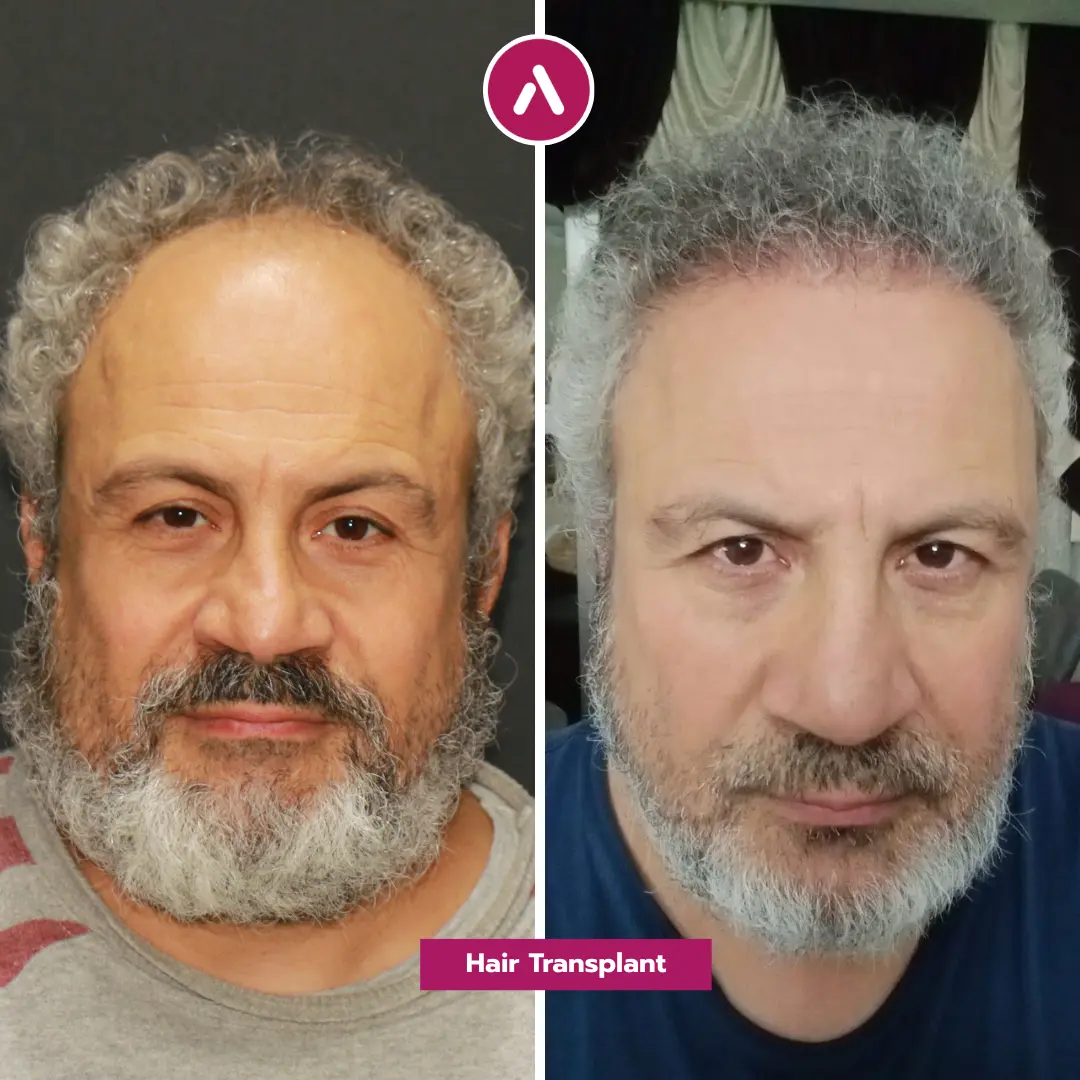
A convincing result isn’t just about today’s hairline — it’s about what will look natural in five or ten years. That’s why hairline planning must consider density distribution, donor capacity, and likely progression of thinning. For UK patients, this long-term thinking is essential: you want a natural hairline restoration that still suits you as your hair changes, rather than a dramatic “instant fix” that becomes difficult to maintain.
Density targets that still look natural (front vs mid-scalp strategy)
When patients ask for a natural looking hairline, they often imagine “dense at the front”. But the most realistic approach is usually a density gradient: softer at the leading edge, increasing behind it. This creates the visual impression of fullness without an obvious border.
- Front: softness and transition (not a dense wall)
- Behind the front: supportive density to prevent see-through
- Overall balance: density that matches your hair calibre and styling
This strategy also supports future options if additional work is needed, and can be tailored for male hairline design versus female hairline design.
Donor capacity and safe extraction (avoiding overharvesting and patchiness)
The donor area is not unlimited. Overharvesting can lead to visible thinning at the back or sides, especially with short haircuts — a common concern for UK men who prefer a tidy fade or shorter styles. A responsible plan prioritises safe extraction patterns and preserves donor integrity.
- Donor mapping: assessing safe zones and hair calibre
- Extraction strategy: even distribution to minimise patchiness
- Realism: designing a hairline that fits what your donor can support
If donor limitations exist, surgeons may adjust the frontal hairline design, temple work, or density plan to keep the outcome natural and sustainable.
“Future-proofing” the plan (how surgeons design for likely progression of hair loss)
The best hairline is one that still makes sense if surrounding hair thins later. Future-proofing means avoiding an overly low, dense front that becomes isolated over time. This is especially relevant for men with a family history of advanced hair loss.
- Conservative placement: a mature, believable line for long-term harmony
- Temple restraint: careful temple hairline design that doesn’t overcommit grafts
- Planning for touch-ups: keeping donor reserves where possible
If you’re weighing hairline lowering vs transplant, the “future-proof” question matters too: which option best supports a natural frame as you age, given your current density and likely progression? A surgeon-led consultation should address this directly.
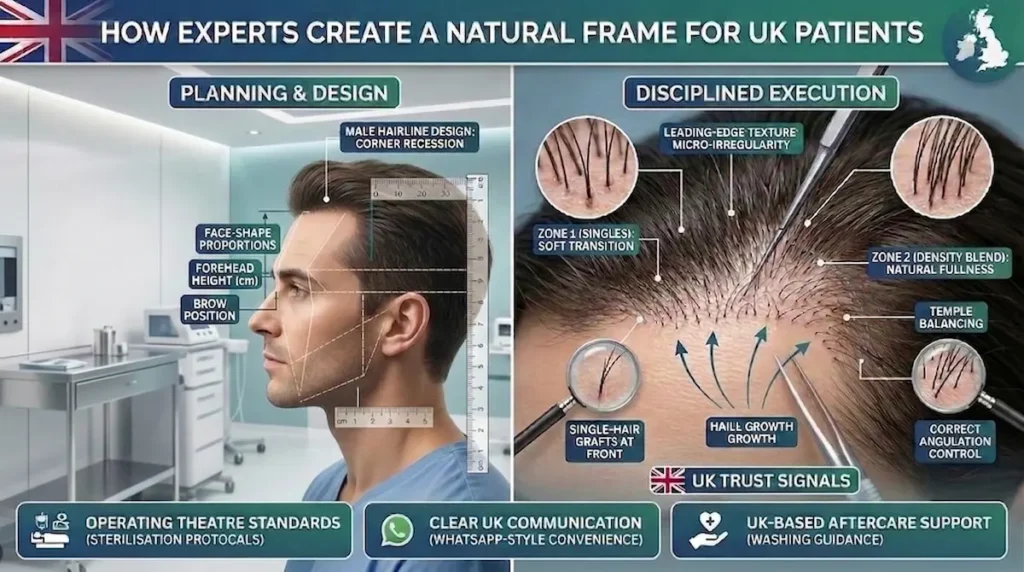
How Experts Create a Natural Frame for UK Patients
For UK patients who think like “expert patients”, a natural hairline restoration is about repeatable decision-making: clear measurements, realistic density targets, correct graft choice, and disciplined execution. In other words, good results come from a surgeon-led method — the same way medical science approaches any complex aesthetic outcome: define the variables, plan the trade-offs, then deliver consistently.
Even when you’re weighing a DHI vs FUE hair transplant, “expert-level” decision-making stays the same: you start with the design brief (what looks natural on your face), then choose the technique that best delivers that plan with minimal trauma and predictable graft placement. In practice, that means documenting hairline position in cm, agreeing a density gradient, and confirming how the temples will be blended. The technique is the tool — the surgeon-led plan is what makes the result look convincingly yours.
Below is how experienced teams approach hairline design so the outcome reads as a natural looking hairline in everyday life — not just in a clinic mirror.
Face-shape + proportions: building a hairline that fits the whole face, not just the forehead
The starting point for hairline planning is your facial “frame”: forehead height, brow position, and the proportions of the upper third of the face. For many UK men, the key is avoiding a low, juvenile line that looks out of place; for many women, the priority is a softer curve with a natural transition. This is where male hairline design and female hairline design diverge in practical ways.
- Measured placement (in cm): a planned start point that respects proportions and ageing
- Leading-edge texture: micro-irregularity for a believable natural hairline
- Zone logic: fine singles at the front, blended density behind for realism
- Temple balance: careful temple hairline design so the face looks naturally framed
When done properly, frontal hairline design is not a straight “line” at all — it is a controlled gradient, designed to be convincing from multiple angles and under normal UK lighting.
Surgeon-led design process: consultation, marking, and intraoperative checks
A high-quality natural hairline transplant begins before the first graft is placed. The consultation should translate your goals (“natural, not obvious”) into a plan with numbers: estimated graft range, donor assessment, and the specific areas being rebuilt (front only, front + temples, or full hairline reconstruction).
A typical surgeon-led workflow includes:
- Pre-op mapping: agreeing the hairline shape, corner recession (if appropriate), and temple strategy
- Graft strategy: singles reserved for the leading edge; blends behind it
- Angle planning: macro flow + micro angulation so the hair lies naturally
- Donor protection: extraction patterns that preserve long-term options
- Quality control: intraoperative checks to avoid rows, upright angles, or harsh borders
This is also where “shopping by technique” can mislead patients. DHI vs FUE matters in certain cases, but hairline design fundamentals matter in all cases. A great plan plus disciplined placement tends to outperform a fashionable technique with weak design logic.
UK trust signals: standards, aftercare, and the “what if I need help back home?” question
British patients often have the same (very reasonable) concern: “What happens when I’m back in the UK?” A clinic that understands the UK mindset builds confidence with structure — clear hygiene standards in the operating theatre, transparent planning, and reliable support once you’re home.
- Operating theatre standards: strict hygiene protocols and internationally aligned sterilisation practices
- Clear communication: a plan you can understand, with realistic expectations and numbers
- UK contact reassurance: a direct support channel (including WhatsApp-style convenience) and a UK-based point of contact
- Aftercare that continues: guidance for washing, swelling, and what is normal vs not normal
For UK patients comparing options abroad, these “process signals” often matter as much as the clinical skill itself — because they reduce uncertainty. That’s also why any serious provider should be able to explain their approach in plain language that matches the underlying scientific research principles: correct graft selection, correct angulation, and biologically sensible density/spacing.
Frequently Asked Questions (FAQ): Hairline Design
These FAQs are written for UK patients who want a clear, technical explanation of what drives a natural hairline — and how to avoid common pitfalls when planning a natural hairline transplant.
What is the most common reason hairlines look “fake” after a transplant?
The leading edge is often too straight, too dense, or built with the wrong graft types (too many multi-hair grafts at the very front). Poor angles (upright/spiky emergence) also contribute.
Can you recreate a youthful hairline without it looking unnatural?
Sometimes, but “youthful” must still be age-appropriate. Most natural outcomes use a softer, slightly higher or more mature design, with a feathered transition rather than a hard border.
How do surgeons decide where the hairline should start (in cm)?
They use facial proportions, age, hair calibre, and future-loss risk. The final position is measured and agreed during consultation — not guessed on the day.
Do I need DHI or FUE for a natural hairline — or does design matter more?
Design and execution matter in every case. Technique selection (DHI vs FUE) can influence handling and placement, but a natural outcome still depends on correct graft choice, angulation, and density planning.
How many grafts are typically needed for the hairline and temples?
It varies widely depending on your starting point, hair calibre, and whether temple hairline design is included. A responsible clinic gives a range and explains how it was calculated, rather than promising a single “magic number”.
When will the hairline start to look “normal” again (timeline milestones)?
Early healing is followed by a shedding phase, then gradual regrowth over months. Your clinic should provide a month-by-month expectation plan (and clear aftercare instructions) so you know what is normal at each stage.
What are the options if I already have an unnatural hairline from a previous procedure?
That’s typically a hairline reconstruction or revision plan. Options may include softening the leading edge with fine singles, correcting angles where feasible, and rebuilding temples more conservatively. A proper assessment is essential before committing.
If you’d like to go a step further beyond hairline design, you can also explore our guides on Hair Transplant Cost UK (to compare pricing and what’s included), the Hair Transplant Growth Timeline (so you know what to expect month by month), and Sapphire Hair Transplant options. We also cover practical recovery advice such as how to Wash Hair After Transplant, plus essential travel planning with a Surgery Abroad Safety Checklist. Finally, if you’re evaluating clinics, our Plastic Surgeon Turkey resource explains what to look for when assessing a surgeon and a provider’s standards.
Medical Disclaimer: This page is provided for general educational purposes only and does not replace a face-to-face medical consultation, diagnosis, or personalised treatment plan. All surgery carries risks and outcomes vary between individuals. Suitability for a hair transplant surgery, procedure selection, and anaesthesia choice can only be determined after a full clinical assessment by a qualified surgeon. Always follow your clinician’s instructions and seek urgent medical attention if you develop concerning symptoms during recovery.