
If you’re researching recovery after tummy tuck alongside a breast lift, sleep is usually the first “real-life” challenge: finding a position that protects your incisions, reduces swelling (oedema), and helps you rest without feeling stiff or anxious. This guide focuses on sleeping after tummy tuck and combined-procedure comfort, using practical, step-by-step advice that aligns with what we know from medical science about wound support, circulation, and early mobility.
You’ll also find a clear tummy tuck recovery timeline framework and how it overlaps with a breast lift recovery timeline, so you can plan your days (and nights) with fewer surprises. Where appropriate, we’ll use the proper term abdominoplasty when discussing post-operative care for abdominoplasty—because the details matter when you want a safe, calm recovery.
Table of Contents

The First 72 Hours: What to Expect (And What’s Normal)
The first three days are typically the most uncomfortable because swelling builds, tissues feel tight, and you’ll be sleeping in a new, supported posture. Your main job in this window is not to “push through”; it’s to protect your results and your wellbeing. A good night’s sleep is not always immediate—but calmer, safer rest is achievable with the right positioning, gentle movement, and symptom awareness.
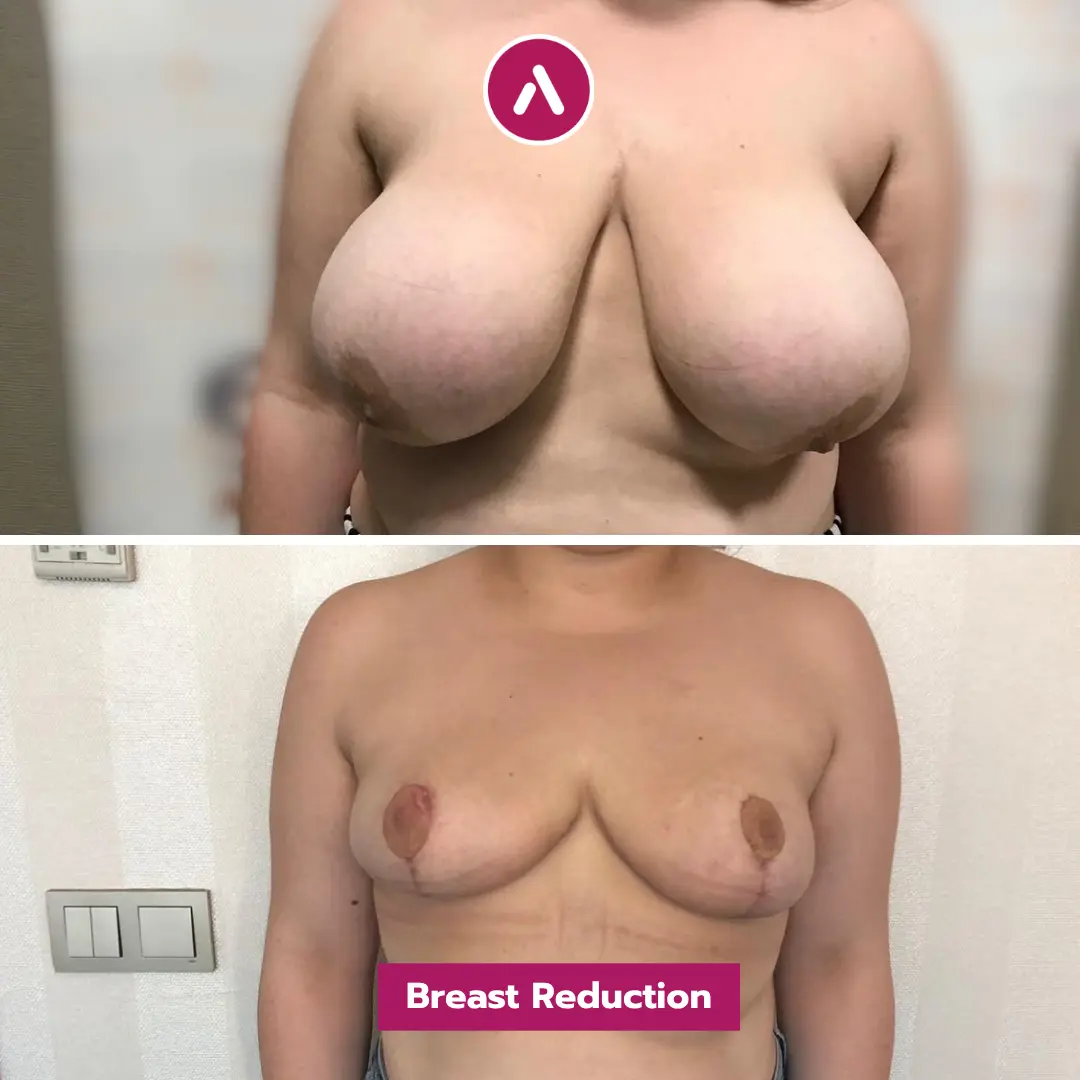
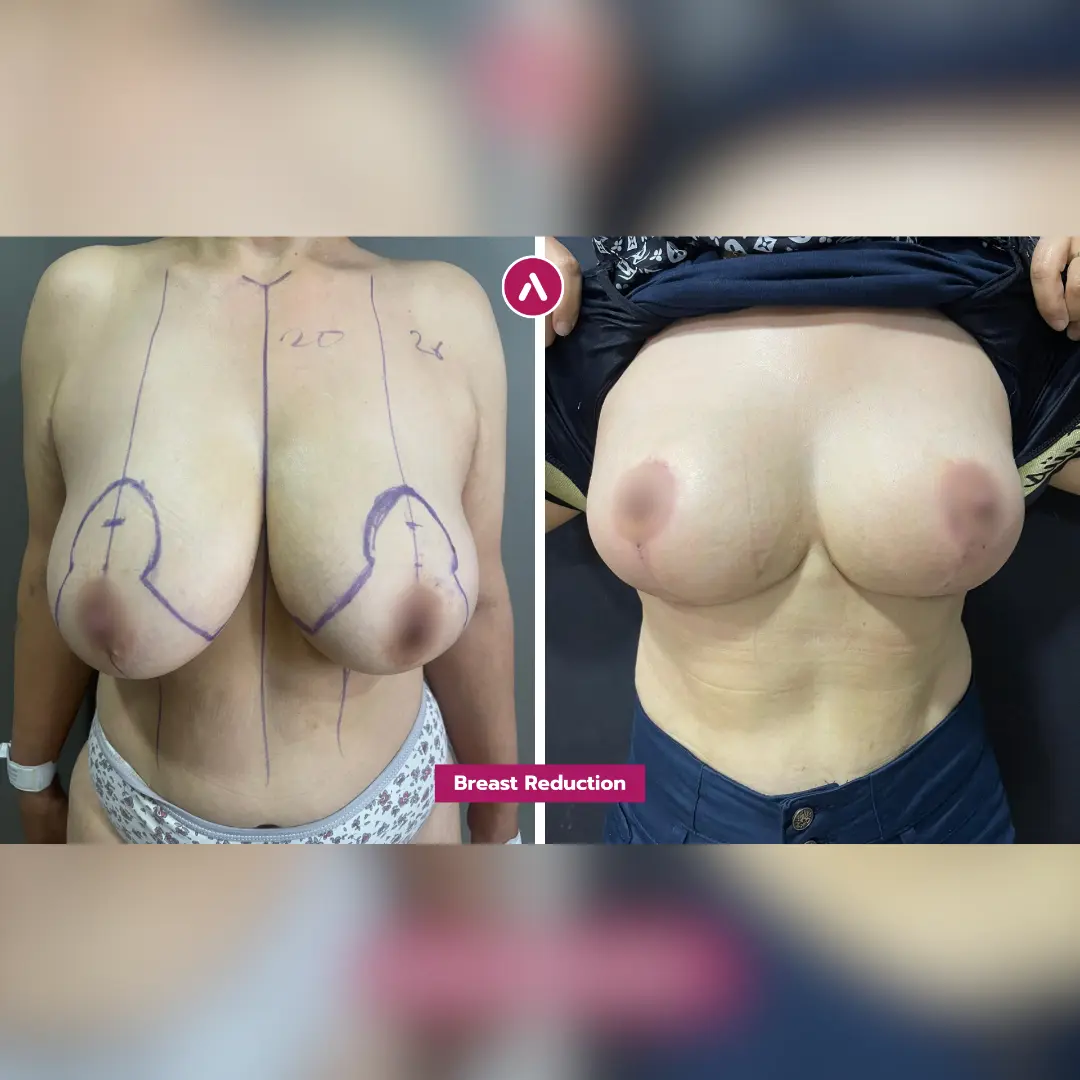
Why the first nights feel the most uncomfortable
After a tummy tuck and breast lift, you may feel:
- Tightness across the abdomen (especially when standing fully upright)
- Chest heaviness or pressure from swelling and surgical support
- Back and neck stiffness from sleeping more upright than usual
- Interrupted sleep due to timed medications, bathroom trips, and general restlessness
This early discomfort is common and usually improves as swelling settles and you become more confident moving safely.
Your priorities: pain control, circulation, and safe rest
In the first 72 hours, think in terms of “small wins” that protect healing and help you rest:
- Consistent pain relief (take medication exactly as instructed; don’t wait until pain is severe)
- Gentle, regular walking (short and frequent is better than long and exhausting)
- Supported posture (upper body elevated, knees supported, no twisting)
- Hydration and light nutrition to reduce dizziness and support recovery
This approach is supported by scientific research around early mobilisation and circulation: small, regular movement can support comfort and reduce complications risk in the post-operative period.
Warning signs that require urgent medical advice
It’s normal to have swelling, bruising, and fatigue. However, seek urgent medical advice if you experience any of the following:
- Sudden shortness of breath, chest pain, or coughing blood
- One-sided calf pain, swelling, warmth, or redness (possible clot symptoms)
- Rapidly worsening pain that is not controlled by prescribed medication
- High temperature, spreading redness, or foul-smelling wound discharge
- Persistent vomiting or inability to keep fluids down
If you’re unsure whether something is “normal”, it’s always safer to ask—early reassurance (or early treatment) is part of good aftercare.
Best Sleeping Positions After a Tummy Tuck and Breast Lift
When patients ask how to sleep after tummy tuck and breast lift, the goal is always the same: protect the abdomen from stretching, keep the chest supported, and minimise pressure on incisions. For most people, the safest early approach is a supported, elevated position that reduces strain and makes it easier to get up without using your core.
Even if you’re recovering from a combined procedure such as a tummy tuck and breast lift within a mummy makeover package, the principles stay consistent: prioritise a stable, supported posture and reduce any movement that pulls across the abdomen or compresses the chest. The right sleep set-up also helps you manage swelling (oedema) and stiffness, which can make the biggest difference to comfort in the first week—especially when you’re waking for medication, short walks, or bathroom breaks.
The “beach chair” position (upper body elevated + knees supported)
This is the most commonly recommended early set-up for sleeping positions after breast lift and tummy tuck:
- Upper body elevated (often 30–45°) to reduce pressure and support comfort
- Knees slightly bent and supported to prevent pulling across the tummy tuck incision
- Arms supported with pillows to reduce chest tension and shoulder strain
Many patients find this set-up reduces the “tight, stretched” feeling across the abdomen and helps them feel more secure when dozing off.
When side-sleeping becomes safer and how to support your incisions
Side-sleeping is usually not advised immediately. When it becomes appropriate depends on your surgeon’s guidance, your swelling level, and how stable your incisions feel. If and when you’re cleared to try it, support matters:
- Use a pillow behind your back to prevent rolling flat
- Place a pillow between your knees to keep hips aligned and reduce abdominal pull
- Keep your upper body slightly elevated if your chest still feels tight
If side-sleeping causes pulling, increased pain, or a strong “stretch” sensation, return to the supported back position and try again later.
Positions to avoid (flat, twisting, stomach sleeping) and why
Early on, these positions typically create unnecessary strain:
- Sleeping flat: may increase tightness across the abdomen and make it harder to get up safely
- Twisting when turning: can stress incisions and worsen discomfort
- Stomach sleeping: usually unsafe early and can place direct pressure on surgical areas
In short: if you’re focused on recovery after a tummy tuck, choose positions that minimise stretch, support circulation, and keep movements slow and controlled.
How to Create a Sleep-Friendly Recovery Set-Up (Hotel and Home)
Whether you’re recovering in a hotel during the first days or back at home, the right set-up can make the biggest difference to sleeping after tummy tuck. The aim is to keep your upper body supported, reduce abdominal stretching, minimise pressure on the breasts, and make it easy to get up without sudden strain. A good environment also supports calmer rest—an underrated part of recovery after a tummy tuck.
Wedge pillows vs extra pillows: what actually works
Most people do best with a stable, non-slipping incline rather than a “tower” of pillows that collapses at 2 a.m. Consider:
- Wedge pillow(s): usually the most stable option for upper-body elevation
- Knee support: a second wedge or firm pillow under the knees reduces pull on the abdominal incision
- Side supports: pillows placed either side can prevent rolling and help you feel secure
- Arm support: a small pillow under each forearm can reduce chest and shoulder tension
If you don’t have wedges, use firm pillows and rolled towels, but check the set-up is stable before you settle in.
Getting in and out of bed safely (step-by-step technique)
The way you move matters almost as much as the way you sleep. The goal is to avoid “sit-ups” and sudden abdominal engagement.
- To get in: sit on the edge of the bed, keep your core relaxed, and lower yourself using your arms.
- Keep your upper body supported and bring your legs up together (avoid twisting).
- Adjust pillows once you are settled—don’t wrestle with them mid-movement.
- To get out: move slowly, roll as one unit (no twisting), bring legs down together, then push up with your arms.
This approach supports post-operative care for abdominoplasty by reducing strain across the incision line and keeping movements controlled.
Night-time routine: hydration, light food, and medication timing
Many sleep issues in the first week are not “just pain”—they’re a combination of discomfort, dry mouth, constipation, anxiety, and frequent waking. A simple routine can help:
- Hydration earlier: drink well in the day; taper slightly 1–2 hours before bed to reduce night-time bathroom trips
- Light evening food: avoid heavy meals late; nausea and reflux can worsen when sleeping elevated
- Medication timing: take prescribed medication exactly as directed; consistency often provides better overnight control
- Short walk before bed: a gentle 5–10 minute indoor walk can ease restlessness
- Phone off / lights low: reduced stimulation matters when you’re already sleeping in a new position

Pain Relief, Medication, and Better Sleep (UK Terminology)
Sleep and pain are closely linked. If you’re searching for how to sleep after tummy tuck and breast lift, it often comes down to staying ahead of discomfort—without overdoing it. Your own plan will be surgeon-led, but understanding common patterns can make the early nights less worrying.
Typical pain patterns: why evenings can feel worse
It’s common for discomfort to feel more noticeable at night because:
- you’re less distracted
- swelling can feel heavier after a day of being upright
- you may be stiffer from holding a protective posture
This is a normal pattern within recovery after a tummy tuck and usually improves as swelling and tightness settle.
Paracetamol and prescribed medication: practical scheduling tips
In the UK, patients are familiar with paracetamol as a baseline pain reliever. Your surgeon may advise a structured plan that can include paracetamol and/or prescribed medicines. The key points are:
- Follow your surgeon’s instructions exactly (never exceed recommended doses)
- Don’t wait until pain is severe—regularly timed relief often supports better rest
- Plan for the night: if you know discomfort spikes in the evening, align your schedule accordingly (within the safe plan you’ve been given)
If you have medical conditions, take other medicines, or are unsure about interactions, you must check with your clinical team.
Constipation and nausea: common causes of poor sleep (and what helps)
Constipation is one of the most common reasons people can’t sleep well after surgery—especially if they are taking stronger pain medicines and moving less. Helpful strategies (again, surgeon-led) often include:
- Regular hydration and warm drinks in the morning
- Fibre-friendly foods once your appetite returns
- Gentle walking several times a day
- Stool-softener guidance if recommended by your team
Nausea can also disrupt rest, particularly early on. Small meals, avoiding rich foods, and taking medicines with appropriate food (when advised) can help.
Managing Swelling (Oedema), Bruising, and Tightness So You Can Rest
Swelling (oedema) and bruising are expected after both procedures. They can make you feel “too full” to sleep, especially if your garments feel tight. The good news: oedema usually follows a predictable pattern, and small daily habits can noticeably improve comfort.
If your surgery was part of a mummy makeover package, swelling can feel more noticeable because multiple areas are healing at once, and your body is managing a larger overall inflammatory response. That’s why comfort strategies should focus on consistency rather than quick fixes: wear your compression garments as advised, keep your upper body slightly elevated, and build in short, frequent walks to support circulation. These small habits often make nights easier and help you feel less “puffy” by morning.
Why oedema peaks and when it usually improves
Oedema can increase over the first few days as your body responds to surgery and fluid shifts. Many patients notice gradual improvement over the following weeks. This is why the first week often feels the most restrictive and why tummy tuck recovery timeline expectations should be realistic: recovery is not linear day-to-day, but it trends in the right direction.
Compression garments: comfort tips and wear guidance
Compression is often used in post-operative care for abdominoplasty and breast surgery to support tissues and manage swelling. Comfort tips include:
- Check fit: too tight can cause numbness/pressure; too loose may not support well
- Smooth folds: creases can irritate the skin overnight
- Layering: if advised, a soft layer beneath can reduce rubbing
- Night checks: if you wake with new tingling, severe discomfort, or colour changes, contact your team
Always follow your surgeon’s guidance on how long to wear garments and how to manage hygiene.
Gentle walking and breathing: improving sleep by improving circulation
One of the most consistent findings in medical science around post-operative recovery is the value of safe early mobilisation. Gentle, frequent walking and calm breathing can:
- support circulation
- reduce stiffness
- help bowel function
- reduce the “wired but tired” feeling at night
Keep it simple: short indoor walks, several times daily, building gradually as advised.

Drains, Dressings, and Incision Comfort Overnight
Night-time discomfort often comes from practical issues: drains tugging, dressings rubbing, and the “pulling” sensation around incision lines. Managing these details helps you sleep more confidently and supports post-operative care for abdominoplasty as well as breast surgery healing. The aim is to keep everything secure, reduce friction, and avoid sudden movements that stretch the abdomen or chest.
Sleeping with drains: securing, positioning, and leak prevention
If drains are used, your team will show you how to manage them safely. For overnight comfort:
- Secure the drain bulbs to your garment or a soft belt so they don’t pull when you change position.
- Keep the tubing slack (not tight) and avoid lying directly on the bulbs.
- Protect bedding with a dark towel or waterproof pad in case of minor leakage.
- Plan a safe route to the toilet so you don’t snag tubing when you get up.
If a drain stops working, suddenly fills with bright red blood, or you notice significant new swelling on one side, contact your clinical team promptly.
Itching, pulling, and skin sensitivity: keeping the area comfortable
Itching can be a normal healing sensation, but scratching can irritate the skin and introduce bacteria. Consider:
- Keeping the skin clean and dry as advised by your team
- Wearing soft, breathable layers to reduce friction under garments
- Using cold packs only if approved (never directly on skin, never over incisions, and only for short periods)
A “pulling” sensation is common after a tummy tuck because the abdominal skin and deeper tissues are healing under tension. This is one reason why sleeping after tummy tuck is usually best in a supported, slightly flexed position at first.
Showering and bedtime hygiene: what’s safe and when
Showering rules vary depending on technique, dressings, and incision closure. Follow your surgeon’s instructions precisely. In general, bedtime hygiene helps sleep:
- Fresh dressings (if advised) can reduce itch and irritation overnight.
- Gentle pat-drying avoids friction around sensitive skin.
- Avoid lotions or oils on incisions unless your team has specifically approved them.
Recovery Timeline: Day 1 to Week 6 (Key Milestones)
A realistic tummy tuck recovery timeline and breast lift recovery timeline reduces anxiety and helps you plan. Recovery isn’t perfectly linear, but there are common milestones. Your surgeon’s instructions always override general guidance—especially if you’ve had a more extensive abdominoplasty or additional procedures.
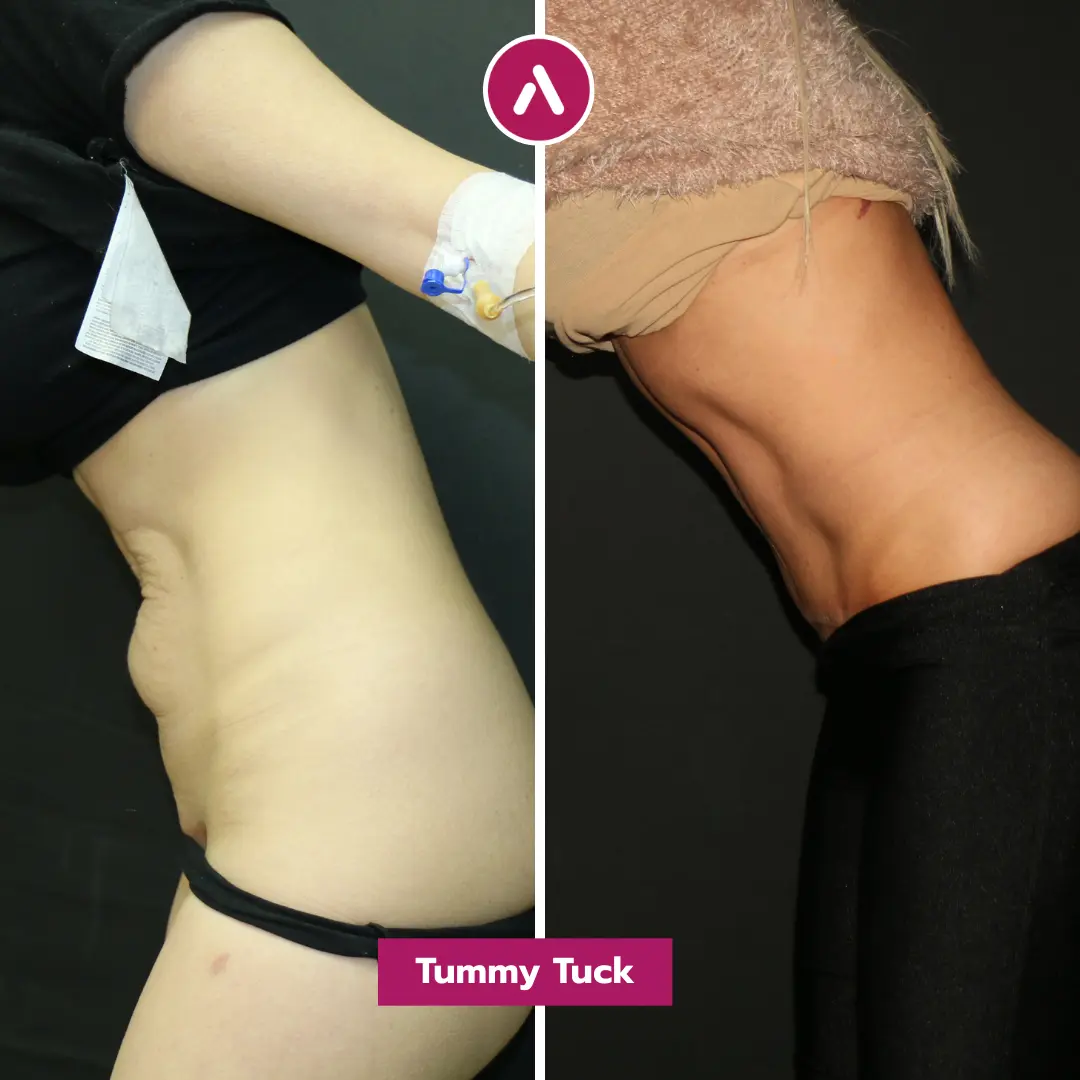
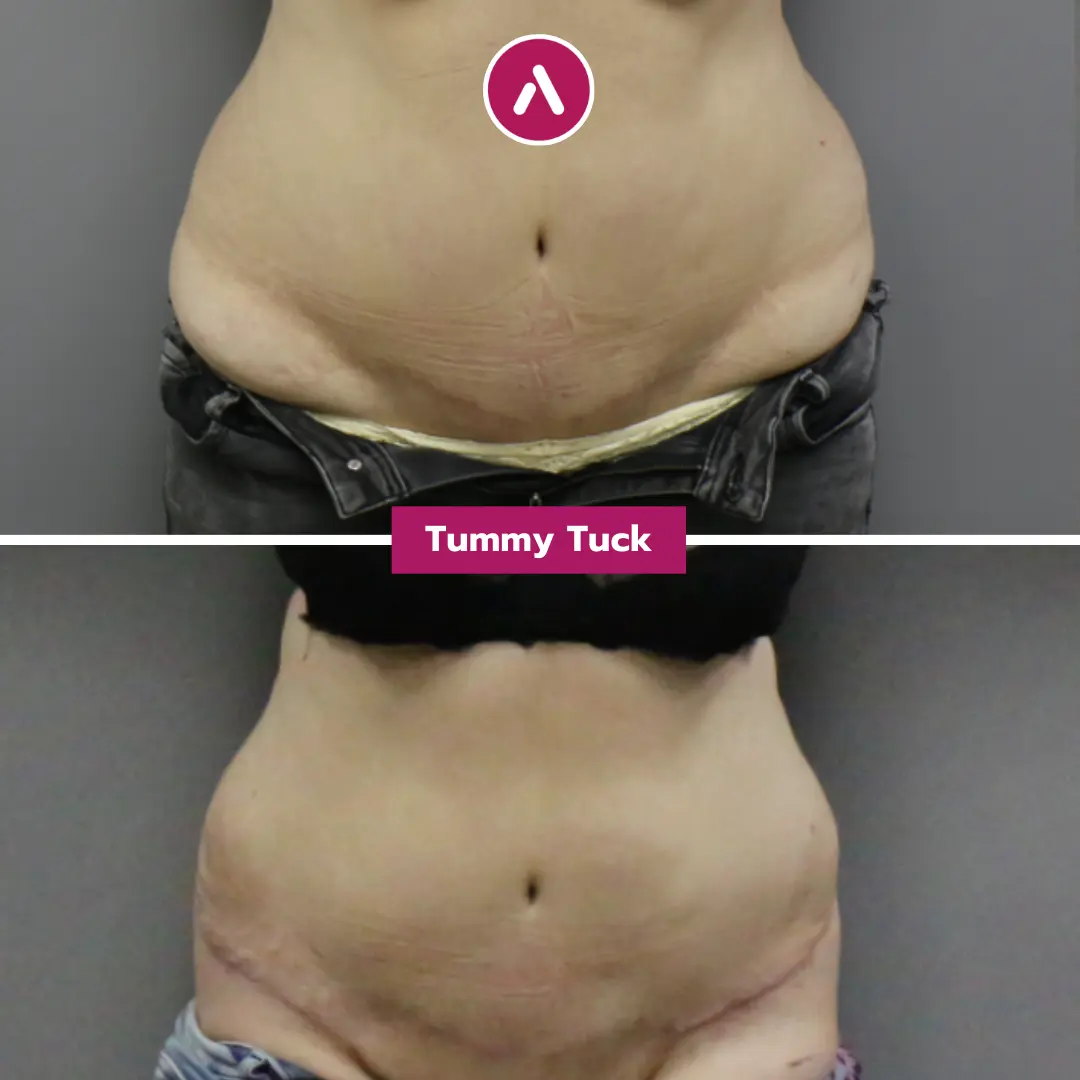
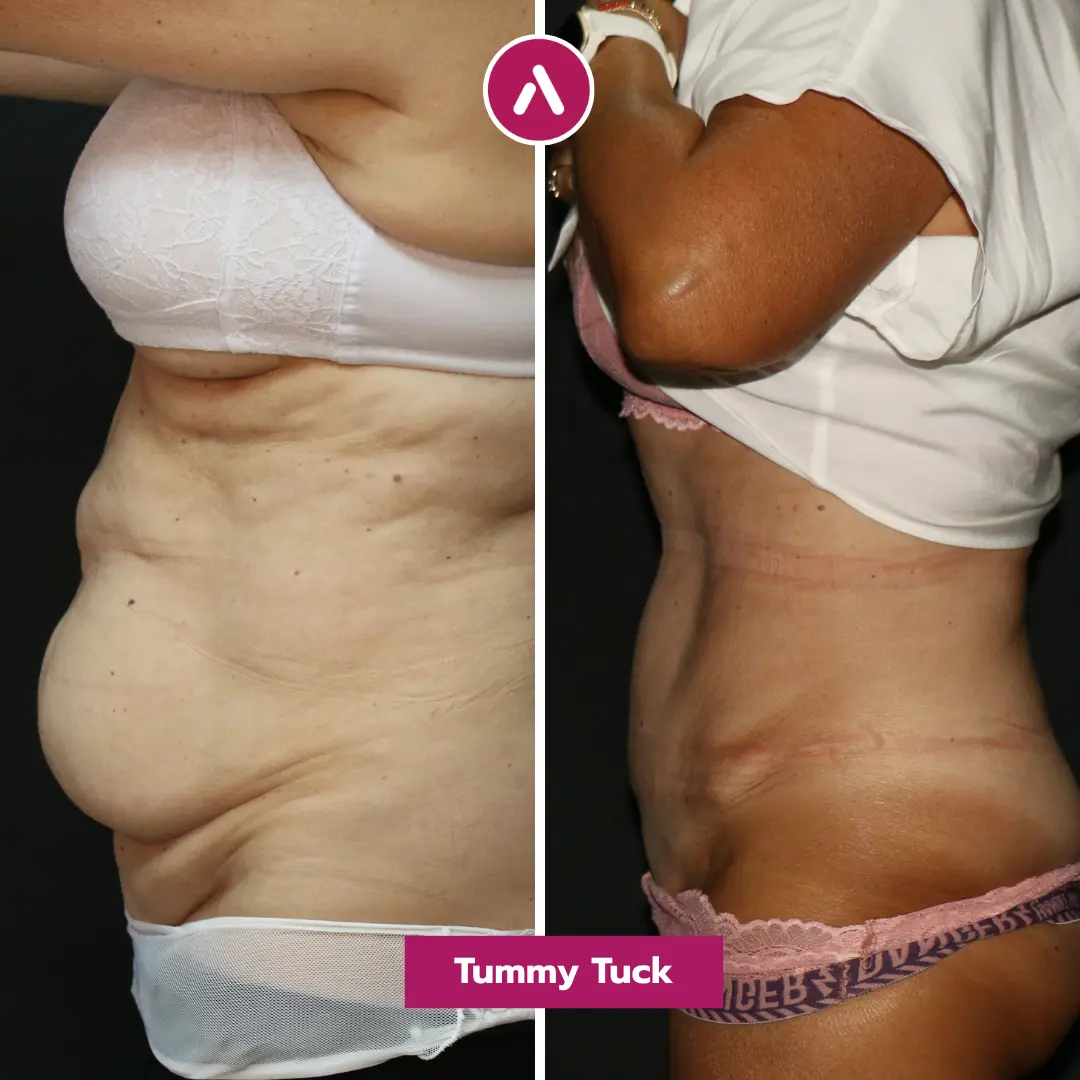
Week 1: posture, fatigue, swelling, and what “progress” looks like
- Sleep: usually upright or “beach chair” position; waking frequently is common.
- Movement: short, frequent walks; you may still be slightly bent at the waist to protect the abdomen.
- Swelling/bruising: typically prominent; garments may feel tight.
- Energy: fatigue is normal—your body is doing intensive healing work.
During this phase, many people search repeatedly for how to sleep after tummy tuck and breast lift—because comfort changes day by day. The key is consistent support and avoiding strain.
Weeks 2–3: mobility gains, returning to desk work, and sleep changes
- Sleep: still supported, but many people feel less “trapped” by swelling; some may begin gentle side-lying only if cleared.
- Work: desk work may be possible for some, depending on fatigue and pain control.
- Walking: longer and easier; posture often becomes more upright.
- Comfort: incision tightness may persist, but overall day-to-day function usually improves.
This is often when patients notice their first “proper” nights of sleep—still supported, but more restorative.
Weeks 4–6: safer activity progression and sleep position transitions
- Sleep: many patients can transition gradually towards their usual positions, guided by comfort and surgeon advice.
- Activity: light exercise may be introduced depending on healing; heavy lifting and core strain remain restricted until cleared.
- Swelling: typically reduces, but may persist mildly—especially later in the day.
- Scars: scar care guidance may begin or progress (only as advised).
Even at 6 weeks, internal healing continues—so it’s normal for the abdomen to feel firmer or tight after activity. This is consistent with what we understand from scientific research on tissue remodelling and recovery after surgery.
Flying Back to the UK: Practical Guidance for Safe Travel
For many UK patients, travel is part of the plan. The safest time to fly varies based on your procedure details, your risk factors, and your surgeon’s assessment. The key priorities are: stable healing, manageable swelling, safe mobility, and a clear plan to reduce clot risk. If you’re planning flights, discuss timing early with your clinical team as part of recovery after a tummy tuck.
What “flight-ready” recovery means in real terms
Being “flight-ready” is not about being pain-free—it’s about being safe. In practical terms, it often means:
- you can walk comfortably (including through an airport) with breaks
- your pain is controlled with the plan provided
- you can sit with support for the duration of the flight
- your surgeon confirms your risk profile is suitable for travel
DVT risk reduction: movement plan, hydration, and compression
Longer journeys can increase clot risk, particularly after surgery. Your team may advise a personalised plan. Common practical measures include:
- Move regularly: gentle ankle pumps and short walks when safe
- Hydrate: water is better than alcohol or excessive caffeine
- Compression: only if advised by your surgical team, and worn correctly
- Aisle seat: easier for movement and bathroom breaks
If you develop new calf swelling/pain, chest pain, or breathlessness after travel, seek urgent medical assessment.
Travel-day checklist: what to pack for comfort and safety
- Wedge travel pillow or firm cushion for abdominal support
- All prescribed medication in hand luggage
- Water bottle (refill after security)
- Light snack to avoid nausea
- Wet wipes and spare dressings if advised
- Loose, soft clothing that won’t press on incisions
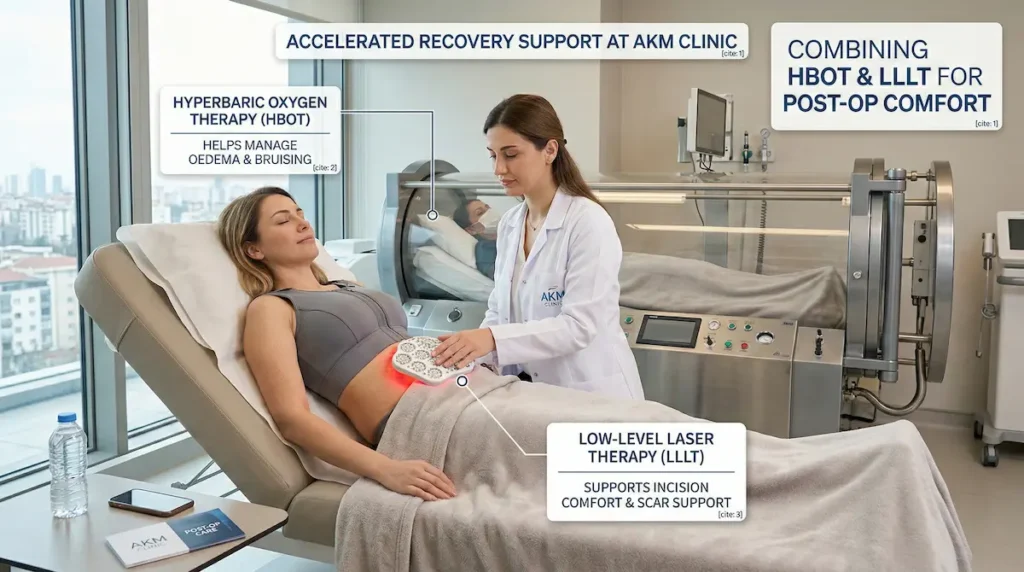
Accelerated Recovery Support at AKM Clinic (HBOT & LLLT)
Comfort and confidence during recovery after a tummy tuck can improve when swelling, bruising, and incision sensitivity are managed well—especially if you’re aiming to be “flight-ready” and return to normal routines as smoothly as possible. Alongside surgeon-led aftercare, some clinics use supportive technologies such as Hyperbaric Oxygen Therapy (HBOT) and Low-Level Laser Therapy (LLLT) to complement healing.
If your procedure was part of a mummy makeover package, supportive therapies like HBOT and LLLT can be particularly appealing because they target the “comfort bottlenecks” that often disrupt rest—oedema, bruising, and that sensitive, tight feeling around incisions. While these technologies don’t replace careful surgical technique or good aftercare, they may help some patients feel more comfortable sooner, which can make it easier to keep moving gently, stay hydrated, and settle into a more reliable sleep routine.
HBOT: how it may support bruising and oedema management
HBOT involves breathing oxygen in a pressurised environment. In clinical settings, it has been used to support tissue oxygenation. In post-operative care, the potential benefits often discussed in medical science include supporting recovery comfort and helping the body’s natural healing processes—particularly where swelling (oedema) and bruising are prominent.
- Potential focus areas: tissue support, recovery comfort, oedema/bruising management
- What it is not: a “magic fix” or a replacement for proper surgical technique and aftercare
Any use should be part of a clinician-led plan, tailored to your procedure and overall health.
LLLT: how it may support incision comfort and scar quality
LLLT (sometimes called “cold laser”) uses low-intensity light with the aim of supporting tissue recovery. In post-operative contexts, it is commonly discussed in relation to comfort, inflammation modulation, and scar support. While outcomes vary and it’s not a guarantee, many patients prioritise anything that improves day-to-day comfort—especially when sleeping after tummy tuck is disrupted by tightness and sensitivity.
How these fit into a short Istanbul stay (typical scheduling)
Where offered, supportive sessions are generally scheduled around your immediate post-operative check-ups and comfort needs. The most important point is that these are adjuncts—your main recovery pillars remain: safe positioning, early gentle mobility, hydration, nutrition, and surgeon-guided wound care.
Aftercare for UK Patients: What Good Follow-Up Should Look Like
High-quality aftercare is a major safety factor for patients travelling for surgery. Good follow-up isn’t vague reassurance—it’s structured, responsive, and clinically sensible. This is especially important in combined procedures where the tummy tuck recovery timeline and breast lift recovery timeline overlap and symptoms can feel confusing.
Remote check-ins: photos, symptom tracking, and expected milestones
A practical follow-up plan typically includes:
- Scheduled check-ins (not only “message if worried”)
- Guidance on photos: what angles to take, how often, what changes matter
- Symptom tracking: swelling, temperature, incision appearance, pain patterns
- Milestones: when sleep positions may change, when walking increases, when desk work may be realistic
This kind of structure helps patients feel grounded and reduces unnecessary anxiety during recovery after a tummy tuck.
When to message your surgical team vs when to seek urgent assessment
Contact your surgical team promptly for:
- new or worsening redness, heat, or discharge at the incision
- pain that is escalating rather than gradually settling
- asymmetrical swelling that suddenly increases
- concerns about drains, dressings, or garments
Seek urgent medical assessment (A&E) for:
- sudden shortness of breath, chest pain, or coughing blood
- one-sided calf swelling/pain/warmth (possible clot symptoms)
- fainting, severe dizziness, or confusion
Reducing anxiety at home: what’s normal vs what’s not
Common “normal-but-worrying” sensations include tightness, mild uneven swelling, tingling/numb patches, and sleep disruption. If you’re not sure, ask—post-operative support should feel accessible. Anxiety often improves when you have a clear plan for how to sleep after tummy tuck and breast lift, how to increase walking safely, and what changes are expected week by week.
Frequently Asked Questions (FAQ): Recovery After Tummy Tuck
These are the most common questions UK patients ask about sleeping positions after breast lift and tummy tuck and day-to-day recovery comfort.
How long do I need to sleep upright after a tummy tuck?
Many people need an elevated, supported position for at least the first 1–2 weeks, sometimes longer. The safest timing depends on how tight your abdomen feels and what your surgeon advises.
When can I sleep on my side after a breast lift?
Side-sleeping is often delayed until swelling settles and incisions feel stable. If you’re cleared to try it, use pillows to prevent rolling and reduce pressure on the chest.
Why does swelling feel worse at night?
Swelling can feel heavier after being upright during the day. At night, you also have fewer distractions, so sensations feel more intense—this is common during recovery after a tummy tuck.
What if I accidentally roll in my sleep?
It happens. A single brief roll is unlikely to “ruin” results, but you should return to a supported position. Using side pillows and a stable wedge set-up reduces the chances of rolling.
Can I take sleeping tablets after surgery?
Only if your surgeon (or prescribing clinician) says it’s safe. Some sleep medicines can interact with pain medication or increase dizziness and fall risk. Always ask before taking anything new.
When is it safe to fly back to the UK after tummy tuck + breast lift?
It depends on your healing, mobility, and clot-risk profile. Your surgeon should confirm timing and provide a travel plan to reduce DVT risk. Do not fly until you have clear clinical approval.
What are the warning signs of infection or a blood clot (DVT)?
Infection may involve increasing redness, heat, discharge, and feeling unwell. A clot may present as one-sided calf pain/swelling/warmth, or sudden breathlessness/chest pain (urgent).
If you’d like to explore related topics alongside this guide, you can also read our resources on Tummy Tuck Before After results, Tummy Tuck vs Liposuction to understand which option fits your goals, and guidance on when you can Fly After Facelift. For planning and peace of mind, we also recommend the Surgery Abroad Safety Checklist and a practical Pre-Surgery Checklist. If you’re travelling independently, Travelling Solo for Surgery can help you prepare, and Plastic Surgeon Turkey explains what credentials and standards to look for before booking.
Medical Disclaimer: This page is provided for general educational purposes only and does not replace a face-to-face medical consultation, diagnosis, or personalised treatment plan. All surgery carries risks and outcomes vary between individuals. Suitability for a tummy tuck (abdominoplasty), procedure selection, and anaesthesia choice can only be determined after a full clinical assessment by a qualified surgeon. Always follow your clinician’s instructions and seek urgent medical attention if you develop concerning symptoms during recovery.