
How Long Does a Breast Lift Last? What to Realistically Expect

AI Summary
- How long does a breast lift last? Many results last years, but aging and gravity continue.
- Best longevity factors: stable weight, strong tissue support, realistic timing, and supportive bras.
- Pregnancy and weight changes can stretch skin, shift volume, and shorten result stability.
- A second breast lift may help recurrent ptosis, asymmetry, or major shape changes.
Summary generated by AI, fact-checked by our medical experts
Quick answer: If you are asking how long does a breast lift last, the honest answer is: many years, but not forever. A breast lift can reset breast position, but skin quality, gravity, pregnancy, weight changes, breast size, and natural aging keep acting on the tissue after surgery. The longest-lasting results usually come from stable weight, finished family planning, and consistent breast support.
A breast lift, also called mastopexy, is designed to raise and reshape sagging breasts by removing excess skin and repositioning the breast tissue. You can read more about the breast lift procedure explained, but this guide focuses on one specific question: how long the result can realistically hold over time.
That distinction matters. Longevity is not the same as a permanent freeze-frame result. A lift can create a higher, firmer, more balanced breast shape, yet the breasts still belong to a living body. They respond to hormones, weight shifts, skin stretch, and time.
For patients, the useful answer is not a vague promise. It is a practical framework: what changes after surgery, what factors shorten or extend breast lift longevity, and how to know whether a second lift may ever make sense.
Table of Contents

How Long Does a Breast Lift Last?
Most breast lift results last for many years, but no ethical surgeon should describe them as permanent. The operation improves the breast position you have now; it does not stop future aging, gravity, or changes in breast volume. A better way to think about it is this: surgery resets the starting point, then your anatomy and lifestyle influence how slowly or quickly the breasts settle again.
The honest answer: years, not forever
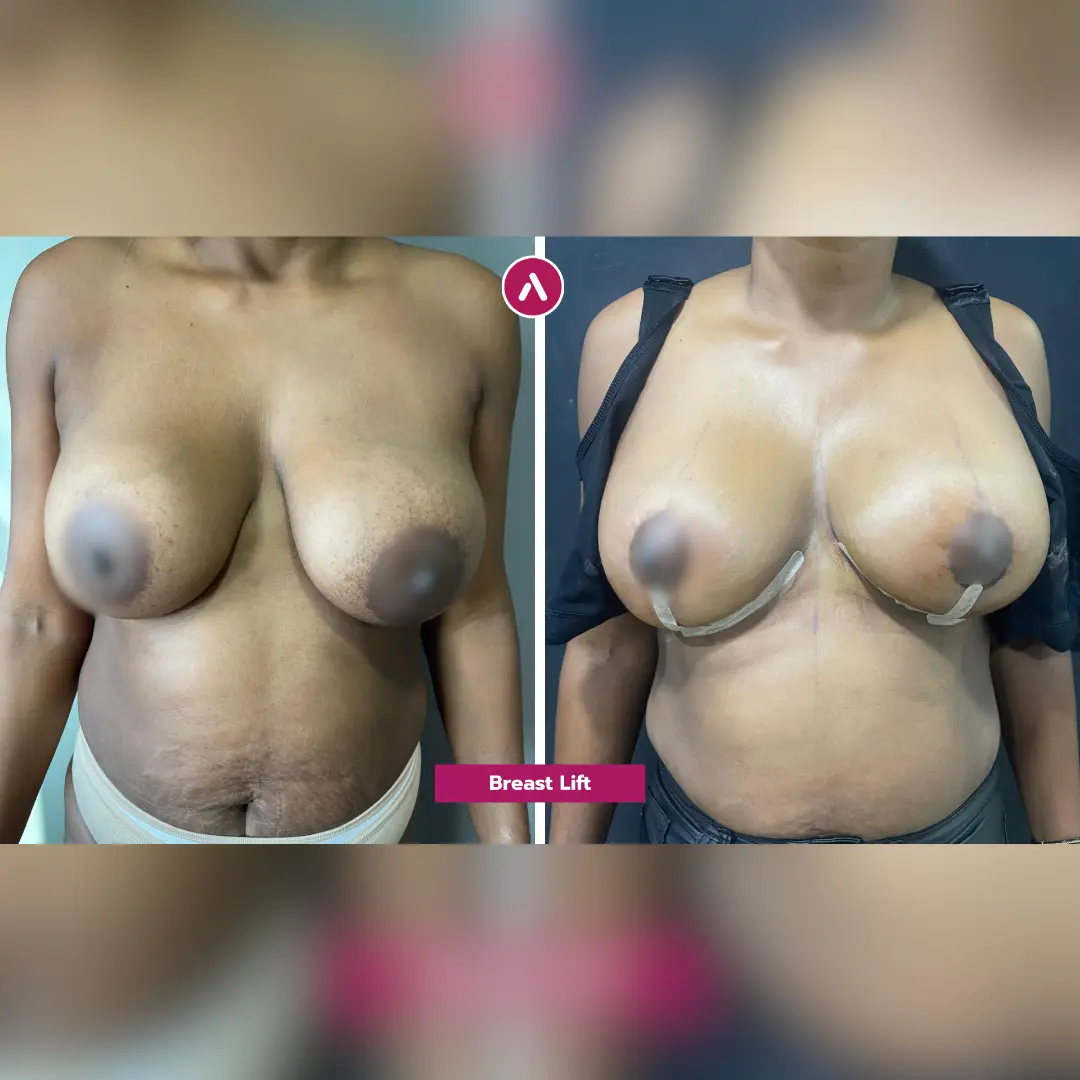
Many patients enjoy their breast lift results for a long time. The breasts usually sit higher, the nipple position is improved, and the lower-pole skin envelope is tightened. That said, “long-lasting” does not mean “unchanging.”
Over the years, the skin and internal support structures can gradually relax. This may show as mild settling, a softer lower breast shape, or a nipple position that is still improved compared with before surgery but not quite as high as the early post-op result.
That is normal. It does not automatically mean the lift has “failed.” A good result can age naturally and still look better than the starting point.
Why a breast lift is not permanent
A breast lift changes the skin envelope and reshapes breast tissue, but it cannot change the biology of skin. Collagen, elastin, ligaments, and soft tissue support all change with time. This is why breasts can sag again even after technically successful surgery.
Medical literature on mastopexy longevity describes recurrent ptosis, or renewed breast sagging, as a known long-term issue influenced by tissue quality, technique, and patient factors. A systematic review of how long lift results last highlights that maintaining upper-pole fullness and preventing recurrent sagging are central challenges in breast lift surgery.
In plain language: the surgery can lift, reshape, and support. It cannot make skin immune to stretching.
What “lasting” really means after a breast lift
When patients ask whether a breast lift lasts, they often mean one of three things:
- Will my breasts stay higher than before surgery? Usually, yes, for many years.
- Will they always look exactly like the early post-op result? No. Some settling is expected.
- Will I definitely need another lift later? Not necessarily. Many patients do not pursue a second lift, even when natural aging continues.
The most realistic goal is not a result that never changes. It is a result that ages gracefully, keeps the nipple and breast mound in a better position than before, and remains proportionate to your body as the years pass.
Am I a Good Candidate for a Breast Lift (Mastopexy)?
Answer a few quick questions about your concerns, health, and goals to learn which treatment options may suit you best.
What Affects How Long It Lasts?
Breast lift longevity is highly individual. Two patients can have the same operation and very different long-term outcomes because their skin, breast weight, pregnancy history, weight stability, and natural tissue support are different. This is why a careful consultation should assess more than the amount of sagging seen in photos.
Skin quality and tissue support
Skin quality is one of the biggest predictors of how long a lift will hold. Thicker, more elastic skin tends to support the new breast shape better. Thin, stretched, or sun-damaged skin may relax sooner.
The same is true for internal tissue support. Breast tissue is held by skin, connective tissue, and ligament-like structures. When these are naturally weaker or have been stretched by pregnancy, weight changes, or aging, the result may still be attractive, but it may settle earlier.
This is one reason your surgeon should evaluate skin stretch, nipple position, lower-pole length, and breast weight together. A lift is not just about moving the nipple. It is about rebuilding a stable shape.
Gravity and breast size
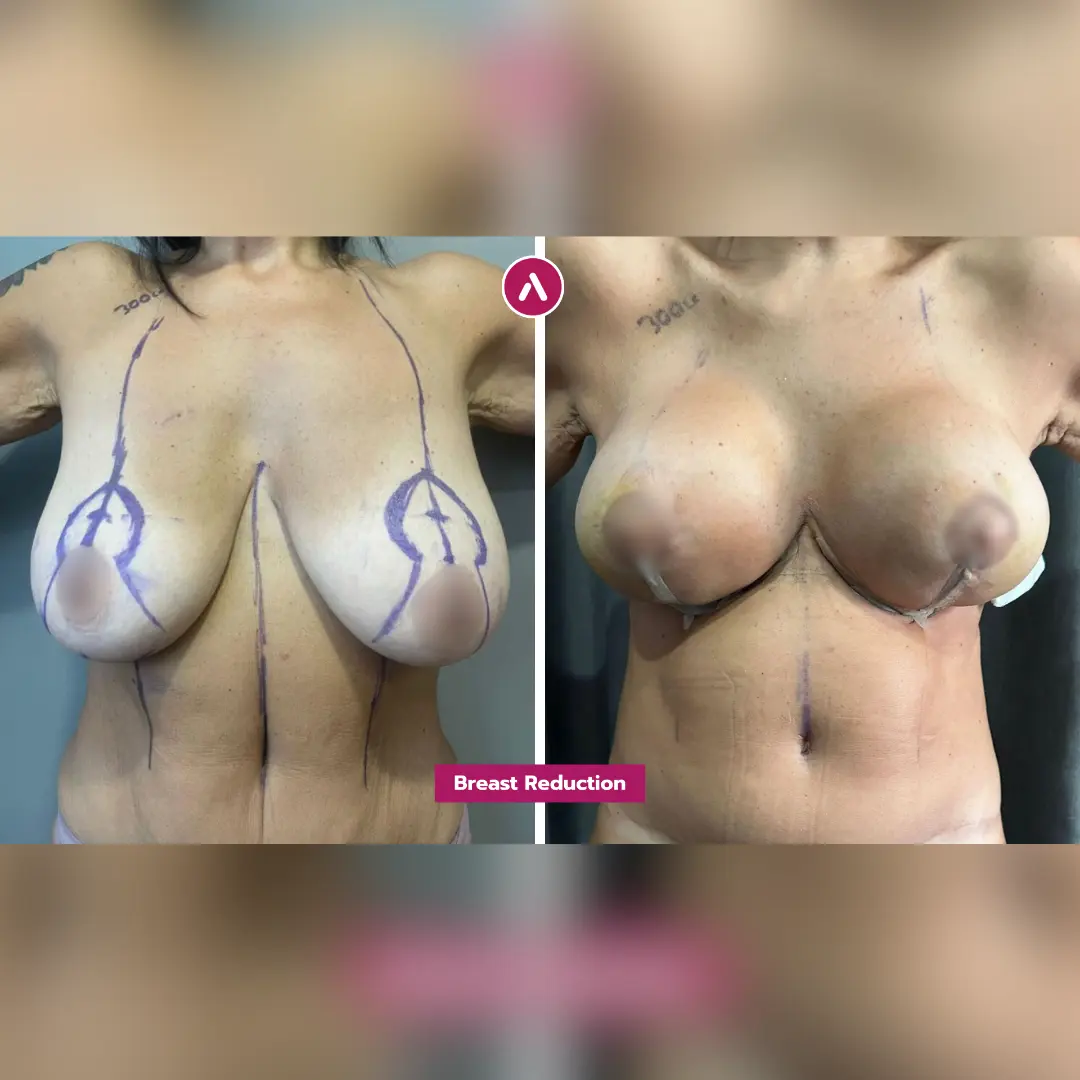
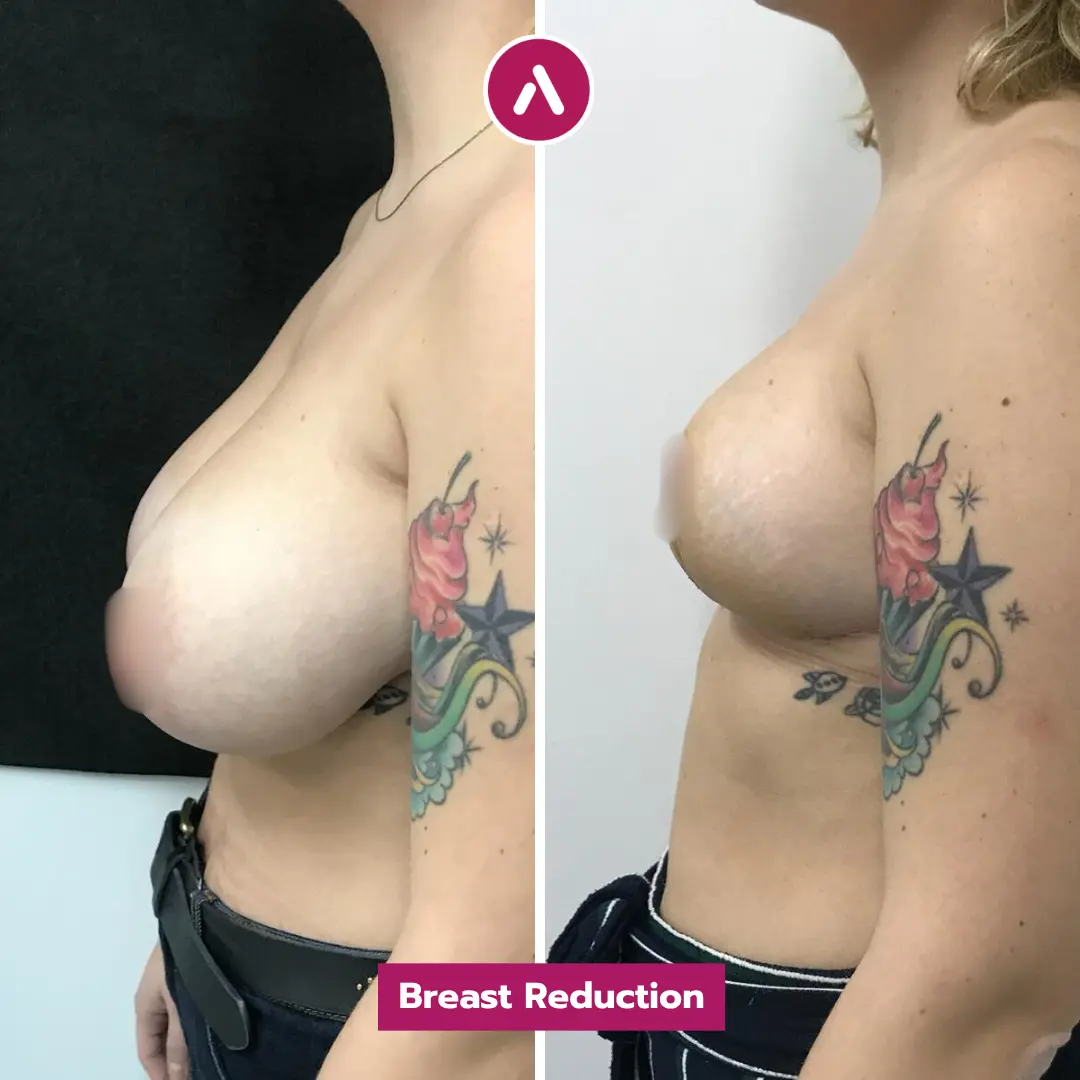
Heavier breasts place more downward force on the skin envelope. That does not mean a breast lift is only worthwhile for smaller breasts. It means patients with heavier natural breast tissue need a particularly realistic discussion about support, shape, and long-term settling.
Breast size matters because gravity never takes a break. A small-to-moderate breast with strong tissue support may hold its lifted position longer than a larger, heavier breast with thin skin. This is anatomy, not patient failure.
In some cases, patients who want both lift and lasting fullness may ask about implants. This article is not a deep dive into implant decisions; for patients who prefer natural tissue and want to understand volume expectations, keeping fullness without implants is a separate decision path worth reviewing.
Aging over time
Natural aging affects the breast the same way it affects the face, neck, and body. Skin becomes less elastic. Connective tissue loses some strength. Fat distribution changes. Hormonal shifts may alter breast volume.
These changes are gradual, but they are real. Research discussing why breasts can sag again over time points to the role of connective tissue support and structural changes in recurrent ptosis.
For patients, the takeaway is simple: a breast lift can improve breast position, but the body continues to move through time. The goal is a durable, natural-looking reset, not a result that ignores biology.
| Factor | How it affects breast lift longevity | What you can do |
|---|---|---|
| Skin quality | Elastic skin holds the lifted shape longer; thin or stretched skin may relax sooner. | Protect skin from sun damage, avoid smoking, and follow scar and support instructions. |
| Breast size and weight | Heavier breasts place more downward tension on the skin envelope. | Use supportive bras and discuss realistic shape goals before surgery. |
| Pregnancy | Hormonal breast enlargement and later volume loss can stretch the result. | Consider timing surgery after finishing planned pregnancies when possible. |
| Weight changes | Weight gain can enlarge the breast; weight loss can deflate it, both affecting shape. | Plan surgery near a stable, maintainable weight. |
| Aging | Collagen, elastin, and connective support naturally weaken over time. | Expect gradual settling and choose a surgeon who plans for long-term support. |
These factors also explain why non-surgical options have limits. Skin-tightening devices, threads, or energy-based treatments may create mild improvement in select cases, but they cannot reposition the nipple or remove significant excess skin the way surgery can. Patients comparing options can review non-surgical lift alternatives separately.
Pregnancy and Weight Changes
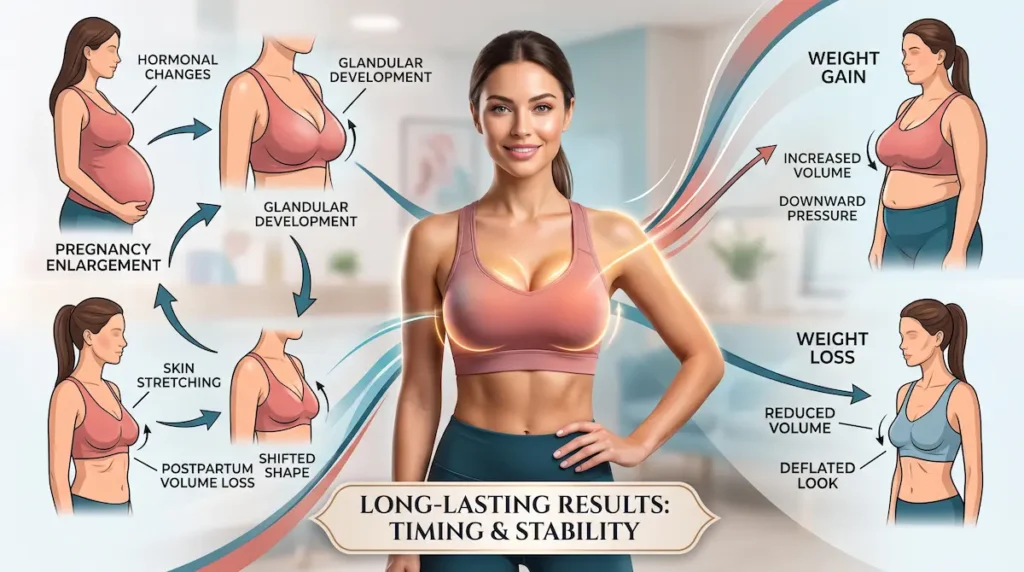
Pregnancy and weight changes are two of the most important reasons breast lift results change over time. They do not automatically “ruin” a lift, but they can stretch the skin, alter breast volume, and shift the breast shape after surgery. This is why timing matters as much as technique for patients who want the longest-lasting result.
How pregnancy can affect a breast lift
During pregnancy, the breasts often enlarge because of hormonal changes and glandular development. After pregnancy and breastfeeding, that fullness may reduce again. This cycle of expansion and deflation can stretch the skin envelope that was tightened during mastopexy.
Some patients still look good after pregnancy. Others notice renewed sagging, loss of upper-pole fullness, or a softer breast shape. The difference depends on how much the breasts changed during pregnancy, whether breastfeeding occurred, baseline skin quality, and how much volume was lost afterward.
If you plan to become pregnant soon, it may be wiser to delay surgery. If pregnancy is only a remote possibility, the decision becomes more personal. The key is not fear. It is timing.
Weight gain and weight loss after surgery
Breasts contain varying amounts of fat and glandular tissue. Because of that, weight changes can affect breast lift results differently from one patient to another.
Weight gain may increase breast volume and add downward pressure to the lifted skin envelope. Weight loss may reduce breast volume and create a more deflated look, even if the nipple position remains better than before surgery. Both can change the result.
This is especially relevant for patients who are actively losing weight or considering a major body transformation. A breast lift performed before the body stabilizes may need revision sooner than one performed after weight has been steady for several months.
Why stable weight gives the result its best chance
A stable, maintainable weight gives your surgeon a more reliable foundation. It helps them judge breast size, skin laxity, tissue support, and the amount of lift needed. It also reduces the chance that your result will shift dramatically after surgery.
This does not mean you must reach a perfect number on the scale. It means your weight should be realistic for your life, not a temporary low point you cannot maintain.
For patients who have lost significant weight, breast shape can also be affected by underlying tissue distribution, skin stretch, and chest-wall anatomy. When the starting shape is complex, reviewing how underlying breast shape affects results can help frame the conversation more accurately.
Experience a Stress-Free Breast Lift (Mastopexy) Journey
From VIP airport transfers to 5-star hotel accommodations, we handle every detail. Enjoy a seamless medical travel experience in Istanbul.
Can You Make It Last Longer?
You cannot stop time, but you can influence how well your breast lift ages. The most durable results usually come from a combination of good surgical planning, stable body weight, realistic expectations, and everyday support habits. Small choices after surgery can make a meaningful difference over the years.
Maintain a stable weight
Stable weight is one of the simplest ways to protect your result. Repeated cycles of gaining and losing weight can stretch and deflate breast tissue, which may speed up recurrent sagging.
After surgery, think of your result as a structure that needs consistency. The less the breast volume fluctuates, the less stress is placed on the lifted skin envelope.
This is not about strict dieting. It is about avoiding major swings that repeatedly stretch the tissue.
Wear supportive bras when they matter most
A supportive bra does not prevent aging, but it can reduce daily downward strain on the breasts. This is especially useful during exercise, higher-impact movement, and long days when the breasts need more support.
Patients with heavier breast tissue may benefit most from consistent support. The heavier the breast, the more gravity works against the lift over time.
Support does not need to be uncomfortable. The goal is well-fitted, practical support that matches your activity level and breast size.
Choose surgical planning that respects long-term support
Technique matters. A breast lift is not only a skin-tightening operation; it also involves reshaping and supporting the breast tissue so the result does not depend on tight skin alone.
Your surgeon should evaluate skin quality, nipple position, breast weight, lower-pole stretch, and asymmetry before recommending a plan. The best plan is not always the most aggressive one. It is the one that creates a stable, natural shape for your anatomy.
Planning principle: The longest-lasting breast lift results usually come from three things working together: surgery at a stable weight, timing after major pregnancy plans when possible, and a lift design that supports the breast tissue instead of relying on tight skin alone.
That is why the consultation should include more than cup-size goals. It should include a discussion of long-term shape, tissue quality, pregnancy plans, weight stability, and how the breasts are likely to age.
Follow aftercare without rushing the early phase
The early recovery period is when the tissue begins to settle into its new support structure. Rushing exercise, skipping support garments, or ignoring activity restrictions can increase swelling, tension, and unnecessary strain.
Most long-term problems are not caused by one small movement. Still, consistent aftercare gives the tissue the best healing environment. It is one of the few things fully within your control.
Think of aftercare as protecting the surgical work while the body seals it into place.

Will You Need a Second Lift?
Not everyone needs a second breast lift. Some patients are happy for many years with the original improvement, even as mild settling occurs. A second lift becomes relevant when recurrent sagging changes the breast shape enough that the patient wants another correction.
Signs of recurrent ptosis
Recurrent ptosis means the breast has begun to sag again after surgery. This can happen gradually over time or more noticeably after pregnancy, breastfeeding, major weight loss, or weight gain.
Common signs include the nipple sitting lower than before, the lower breast looking stretched again, or the breast mound losing the lifted shape that was created during surgery. Mild settling is expected. True recurrent ptosis is more than normal softening.
Asymmetry can also become more noticeable over time. Breasts are sisters, not twins, and small differences are normal. When the difference becomes visually distracting or changes clothing fit, patients may want to learn more about correcting breast asymmetry.
Revision versus waiting
A second lift should not be rushed. If sagging is mild, it may be better to wait until weight is stable, pregnancy plans are complete, or the breast shape has fully settled after a major body change.
Revision surgery is most useful when the concern is clear and stable. For example, a patient who has completed pregnancies and has renewed skin laxity may be a better revision candidate than someone who is still losing weight or planning another pregnancy soon.
Timing protects the result. It also reduces the chance of needing another correction later.
What a re-do lift may involve
A repeat lift usually addresses stretched skin, lowered nipple position, and breast shape. It may use existing scar lines where possible, but the exact plan depends on your anatomy, previous incision pattern, tissue quality, and current goals.
This article is not a revision-technique guide. The important point is that a second lift is possible for selected patients, but it requires careful planning. Scar position, blood supply, nipple sensation, breast volume, and tissue support all need to be evaluated.
Cost is also a separate decision factor. Because this article is focused on longevity rather than pricing, patients comparing financial options should review what a breast lift costs on the dedicated cost page instead of relying on general estimates.
When a consultation makes sense
A consultation makes sense if you notice renewed sagging, major breast deflation, nipple position changes, or asymmetry that bothers you in clothing. It also makes sense before surgery if you want to plan around pregnancy, weight loss, or a future Mommy Makeover.
At AKM Clinic, breast lift planning is built around natural proportions, long-term shape, and realistic timing. Surgery is performed in Istanbul, with an emphasis on transparent planning and structured follow-up.
The right question is not only, “How high can the breasts be lifted?” It is also, “How can this result be planned so it still looks balanced as I age?”
Frequently Asked Questions: How Long Does a Breast Lift Last?
These are the questions patients most often ask when they are trying to understand breast lift longevity. The answers below are general educational guidance, not a substitute for a personal surgical assessment.
How long does a breast lift last?
Do breast lifts last forever?
Will pregnancy ruin my breast lift?
Can a breast lift be redone?
Does weight loss affect breast lift results?
How can I make breast lift results last longer?
Final Takeaway
A breast lift can create a meaningful, long-lasting improvement in breast position and shape, but it is not a permanent shield against aging. The result can last many years when surgery is timed well, weight is stable, breast tissue is properly supported, and expectations are realistic.
The most honest answer is this: your lift should age with you, not fight your body. If it is planned around your anatomy, pregnancy goals, weight history, and tissue quality, it has the best chance of staying natural and balanced over time.
Ask AKM how to time your breast lift so results last as long as possible.
Have Specific Questions About Breast Lift (Mastopexy)?
Chat directly with our dedicated patient coordinators regarding Breast Lift (Mastopexy). Get instant answers and personalized support.
Medical disclaimer: This article is for educational purposes only and does not replace medical advice, diagnosis, or treatment from a qualified clinician. Breast lift results vary by anatomy, surgical plan, healing response, pregnancy history, weight changes, and long-term tissue quality. Always consult a qualified surgeon for guidance specific to your case.
Related Treatments

Awake Breast Lift in Turkey
Guide for Awake breast lift in Turkey: incision options, twilight sedation vs general anesthesia, recovery week by week, scars, risks, and candidacy criteria.

Awake Breast Augmentation in Turkey
Awake breast augmentation under twilight sedation: candidacy, steps, risks, recovery timeline, and USA vs Turkey cost/value—made for expert patients.

Awake Mommy Makeover in Turkey
Learn what an awake mommy makeover in Turkey includes, twilight sedation vs general anesthesia, recovery timeline, scars, risks, and value vs NYC/LA/Miami.
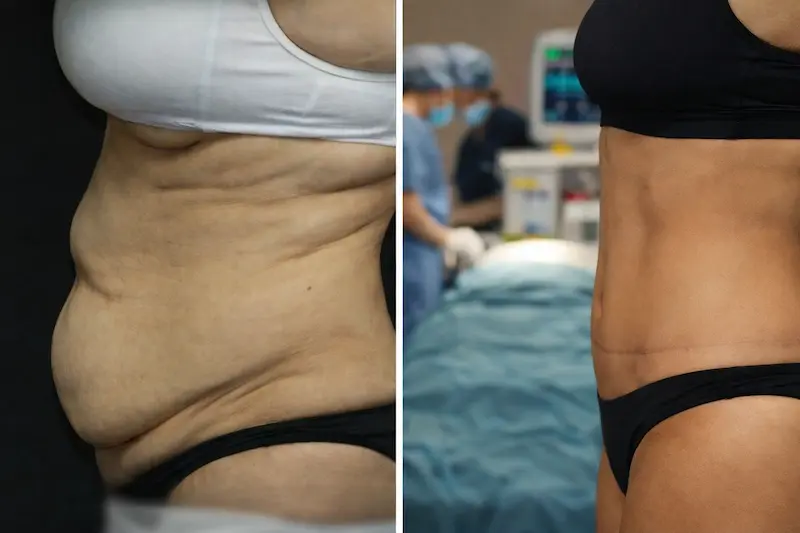
Awake Tummy Tuck in Turkey
Learn how an awake tummy tuck works, who qualifies, anesthesia options, step-by-step surgery, recovery timeline, risks, scars, and cost comparison.
Ready to Start Your Own Transformation Journey?
Join the 2,000+ patients who trusted Dr. Akif Mehmetoğlu and the AKM Clinic team. Your journey to a more confident, revitalized you begins with a simple, no-obligation conversation. Contact us today from the USA for your free virtual consultation.
#1: Get Your Free Personalised Quote
Start with a free, no-obligation online consultation. Share your photos, and our surgical team will provide a fully personalised treatment plan and a transparent, all-inclusive price package. No hidden fees.
#2: Secure Your Date & VIP Booking
Once you're ready, our dedicated patient coordinators will help you secure your procedure date. We'll handle all your bookings, including your 5-star hotel and private VIP airport transfers.
#3: Arrive in Istanbul & Meet Your Surgeon
Arrive at Istanbul Airport (IST) and be greeted by your private driver. Settle into your hotel and prepare for your in-person consultation, where you'll meet your specialist surgeon to finalise the details for your "natural, subtle, and revitalized" new look.