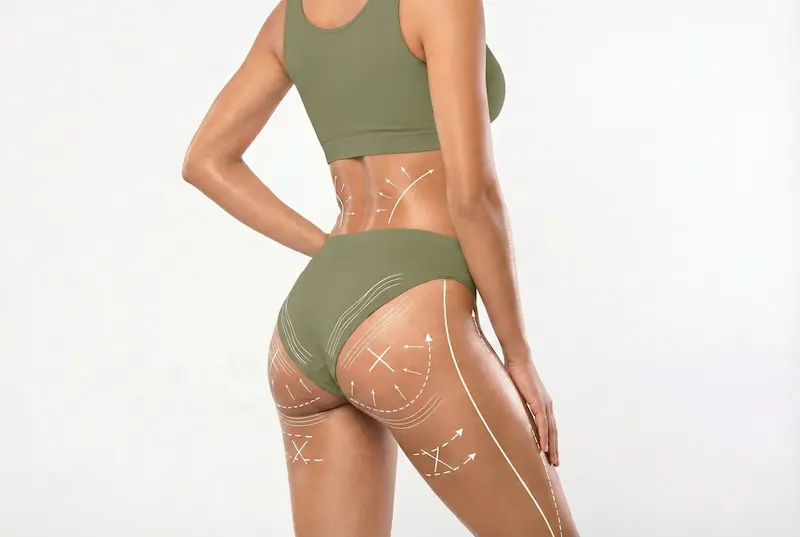
For many patients in the United States, the Brazilian Butt Lift (BBL) carries a polarizing reputation. On one hand, it is one of the most transformative aesthetic procedures available. On the other hand, headlines labeling it dangerous cause significant hesitation. For patients specifically researching bbl safety turkey, distinguishing between sensationalist news and medical facts is the first step toward a safe journey.
For the “Skeptical Sam”—the patient who digs deep into medical journals—the critical nuance often gets lost: The risk of BBL surgery is not inherent to the fat transfer itself, but rather to the technique used. The conversation around bbl safety turkey has shifted dramatically in recent years, driven by strict government regulations and the adoption of advanced technologies.
From Awake BBL techniques that mitigate embolism risks to ultrasound-guided precision, Turkey has emerged as a center for advanced safety protocols. This article deconstructs the myths, explains what is a BBL in the modern medical context, and analyzes why high-standard clinics are changing the safety statistics.
Table of Contents
Why BBL Has a Reputation for Risk (The “Danger Zone” Explained)
To understand safety, we must first understand the danger. The primary reason BBL surgery has historically had a high mortality rate is a specific complication known as a Fat Embolism (FE). Understanding the anatomy of this complication is essential for any patient considering this procedure.
The Science Behind Fat Embolism: Understanding the #1 Patient Fear
A fat embolism occurs when fat grafted into the buttocks enters the bloodstream. Once in the venous system, this fat can travel to the heart or lungs (pulmonary embolism), causing severe respiratory distress or cardiac arrest. This is the catastrophic risk that every “Skeptical Sam” is rightfully worried about. However, this complication is not random; medical science shows it is almost exclusively the result of surgical error—specifically, where the fat is placed.
Intramuscular vs. Subcutaneous Injection: Where the Danger Lies
The gluteal region contains large blood vessels, particularly deep within the gluteus muscle. The “Danger Zone” is the muscle itself.
- Intramuscular Injection (High Risk): In older techniques, surgeons would inject fat into or under the muscle to create maximum volume. This places the cannula dangerously close to the large gluteal veins. If a vein is punctured, fat can enter the bloodstream.
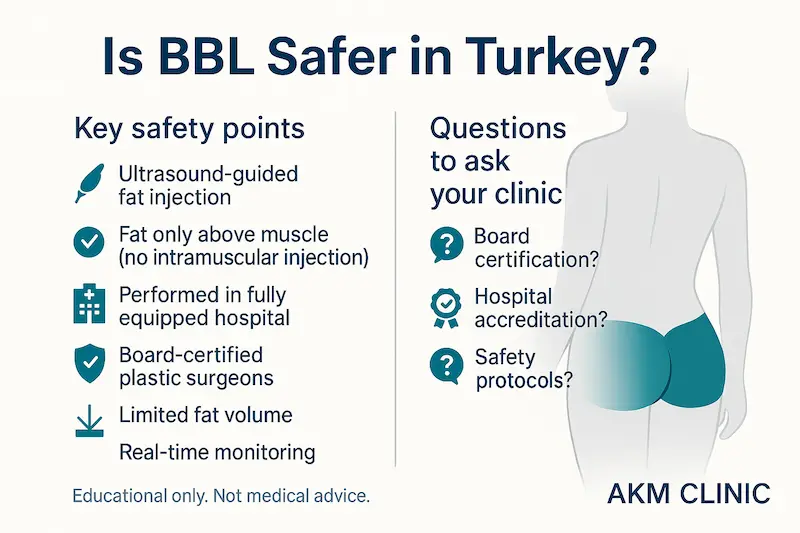
- Subcutaneous Injection (Safe Zone): Modern safety standards, including those rigorously followed in Turkey, dictate that fat must only be placed in the subcutaneous space (the layer of fat just beneath the skin) and never into the muscle.
Why the Old “Blind Cannula” Technique is No Longer Acceptable
The traditional method of brazilian butt lift surgery relied heavily on the surgeon’s “feel” of the cannula tip. This is often referred to as a “blind” technique. While experienced surgeons have a good sense of tissue planes, relying solely on tactile feedback increases the risk of accidental intramuscular injection. Today, leading clinics have moved away from blind insertion, adopting technologies and anesthesia methods that provide real-time feedback and visualization to ensure the cannula remains in the Safe Zone.
Awake BBL is Safer Than Having BBL Under General Anesthesia
One of the most significant advancements in reducing the risks of BBL surgery in Turkey is the shift toward “Awake” or “Twilight” procedures. While initially developed for facelifts to reduce downtime, this methodology has profound safety implications for body contouring.
Why Awake BBL Is Safer Than BBL Under General Anesthesia
The single most effective way to prevent a fat embolism is to ensure the cannula never enters the muscle. When a patient is under General Anesthesia, their muscles are chemically paralyzed and completely relaxed. The surgeon might inadvertently push the cannula into the muscle without resistance.
In an Awake BBL (performed under local anesthesia with sedation):
- Muscle Tone Preservation: The gluteal muscle retains its natural tone. It acts as a firm barrier, making it physically difficult for a blunt cannula to penetrate accidentally.
- Patient Feedback Loop: Because the muscle itself is not as deeply anesthetized as the skin, if the surgeon’s instrument touches the muscle fascia, the patient will feel a sensation and react. This provides an immediate “warning system” that is impossible when a patient is unconscious.
- Zero Embolism Risk Profile: By mechanically preventing intramuscular injection through muscle tone and patient feedback, the risk of fat embolism is virtually eliminated in Awake BBL procedures.
Awake BBL vs General Anesthesia: Risks, Safety, and Recovery
Comparing the two approaches reveals why the “Awake” method is gaining traction among safety-conscious patients.
| Feature | General Anesthesia BBL | Awake BBL (Local/Sedation) |
|---|---|---|
| Embolism Risk | Higher (due to muscle relaxation) | Near Zero (Muscle acts as barrier) |
| Deep Vein Thrombosis (DVT) | Moderate Risk (Immobility) | Low Risk (Patient is mobile sooner) |
| Systemic Stress | High (Respiratory/Cardiac load) | Minimal (Bypasses systemic trauma) |
| Recovery Time | Longer (Grogginess, nausea) | Rapid (Walk out shortly after) |
Is Awake BBL Really Safer? What Patients Should Know About Anesthesia Options
Patients often ask, “Will I be in pain?” The answer lies in Tumescent Anesthesia. This technique involves infiltrating the fat layers with a solution containing lidocaine (for numbing) and epinephrine (to minimize bleeding). This ensures the brazilian butt lift procedure is pain-free while avoiding the “hangover” of general anesthesia.
Furthermore, avoiding general anesthesia means avoiding its specific risks, such as aspiration or adverse reactions to heavy paralytic drugs. For brazilian butt lift recovery, this translates to a faster return to daily activities and a significantly lower incidence of post-operative nausea, allowing patients to hydrate and move immediately—critical factors in preventing blood clots.
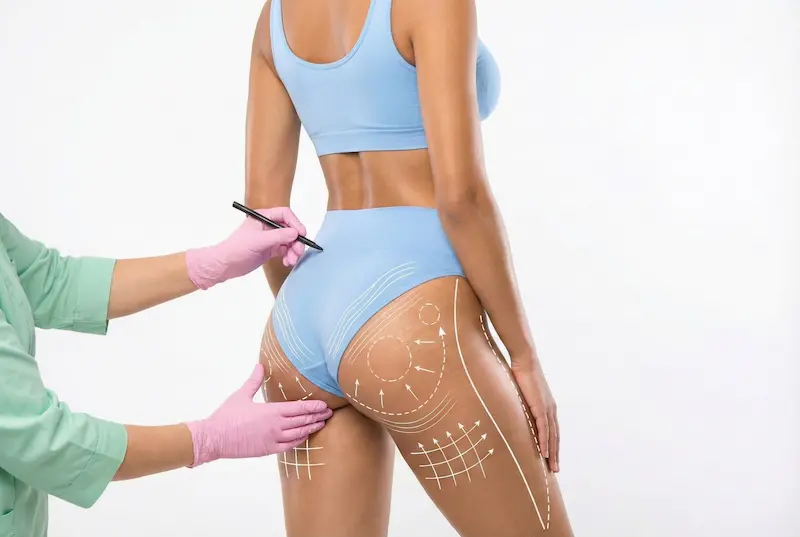
Ultrasound-Guided BBL in Turkey: The New Safety Standard
For the informed patient, the conversation around BBL surgery in Turkey has moved beyond simple technique to advanced technology. While the “Awake” method uses physiology to prevent embolisms, technology provides the visual verification. The adoption of ultrasound guidance during fat transfer is becoming the gold standard for safety, yet it remains surprisingly rare in many Western clinics due to the extra time and equipment cost involved.
Real-Time Visualization: Seeing Exactly Where the Fat Goes
In a standard brazilian butt lift surgery, the surgeon relies on tactile feedback—the “feel” of the cannula popping through tissue layers. While effective in expert hands, it leaves a margin for error. Ultrasound technology changes this by turning a “blind” procedure into a visualized one. By placing an ultrasound probe on the skin during the injection phase, the surgeon can see the cannula tip, the fat layers, and most importantly, the muscle fascia on a screen in real-time.
How Ultrasound Technology Prevents Injection into the Muscle
The gluteal muscle appears distinctively on an ultrasound monitor. With this visual aid, the surgeon can navigate the cannula into the subcutaneous fat layer (the Safe Zone) with millimeter precision. If the cannula tip approaches the muscle boundary, it is immediately visible on the screen, allowing the surgeon to redirect before any fat is released. This dual-layer safety system—Awake patient feedback plus ultrasonic visualization—creates a redundancy that drastically reduces the risk of fat embolism.
Why Many Clinics (Even in the US) Still Skip This Crucial Step
If ultrasound makes BBL surgery so much safer, why doesn’t every surgeon use it? The answer is often logistical. It requires expensive equipment and significantly slows down the procedure. In the high-volume assembly lines of some Miami or Los Angeles clinics, speed is prioritized. In contrast, premium clinics in Turkey, which focus on value and medical tourism reputation, are increasingly integrating these “slow medicine” safety protocols to reassure international patients.
Common Myths Debunked: Separating Fact from Tabloid Fiction
If the medical protocols are so advanced, why does the stigma persist? The narrative around brazilian butt lift surgery in Turkey is often clouded by misconceptions that conflate “affordability” with “danger.” Let’s dismantle the three biggest myths preventing patients from making objective decisions.
Myth #1: “Turkey is Cheap Because the Medical Quality is Low” (The Economic Reality)
This is the most pervasive economic fallacy in medical tourism. The 60-70% cost difference between a BBL in Turkey and the USA is not a reflection of cut corners; it is a reflection of macroeconomics. The lower costs are primarily driven by the favorable exchange rate between the US Dollar and the Turkish Lira, as well as significantly lower national operational costs such as facility rents and staff salaries. You are not paying for “cheap surgery”; you are paying for high-quality surgery in a lower-cost economy.
Myth #2: “Turkish Surgeons Aren’t Board-Certified” (EBOPRAS & US Equivalency)
Skeptical patients often assume that “Board Certified” is a title unique to American doctors. This is false. Top Turkish surgeons undergo rigorous training and certification processes that rival US standards. Many hold the European Board of Plastic, Reconstructive and Aesthetic Surgery (EBOPRAS) certification, which is widely considered the direct equivalent of US board certification. Furthermore, reliable clinics are “surgeon-led,” meaning medical ethics dictate the patient journey, not sales targets.
Myth #3: “Hygiene Standards Are Lower Than in the USA” (JCI Accreditation Facts)
There is a misconception that clinics abroad operate in less-than-sterile environments. The reality is often the opposite. Turkey serves as a massive hub for international healthcare, and its government imposes strict regulations to protect this industry. Leading clinics operate in hospitals accredited by the Joint Commission International (JCI)—the gold standard in global healthcare. These facilities adhere to multi-stage sterilization protocols identical to those mandated by the CDC and the World Health Organization (WHO). When you choose a reputable provider, the clinical environment is statistically as safe, if not safer, than many private outpatient centers in the US.
Safety Checklist for U.S. Patients: How to Vet Your Clinic
For the “Skeptical Sam,” trust is not given; it is earned through verification. If you are considering traveling for a brazilian butt lift surgery in Turkey, you need to act less like a medical tourist and more like an investigator. Use this checklist to vet potential surgeons and clinics to ensure they meet the highest safety standards.
Essential Questions to Ask Your Surgeon About Their Technique
During your virtual consultation, do not just ask about the price. Ask specific technical questions that reveal the surgeon’s safety protocols. If a clinic cannot answer these clearly, walk away.
- “Do you use ultrasound guidance during the fat injection phase to visualize the muscle fascia?”
- “Do you perform Awake BBL or use general anesthesia? If general, what specific measures do you take to prevent intramuscular injection?”
- “What is your protocol if the extracted fat volume is not enough? Do you stop, or do you risk taking from unsafe areas?” (A safe surgeon will always prioritize safety over volume).
- “Can I see your specific board certifications?” (Look for EBOPRAS or Turkish National Board certification).
Verifying Hospital Accreditation and Anesthesia Protocols
Safety is not just about the surgeon; it is about the facility. Ensure that your BBL surgery will be performed in a fully accredited hospital, not a small office clinic. Look for JCI (Joint Commission International) accreditation, which guarantees that the hospital meets rigorous global standards for sterility, emergency equipment, and patient care.
Additionally, ask about the anesthesia team. In reputable Turkish hospitals, a dedicated anesthesiologist—not just a technician—monitors you throughout the entire brazilian butt lift procedure to manage your vitals and safety.
The Importance of Post-Op Care and “Fit-to-Fly” Assessments
The surgery is only half the journey. The critical danger zone for complications like DVT (Deep Vein Thrombosis) extends into the recovery period. A safe clinic will not let you fly home immediately. Your package should include:
- Post-Op Checkups: Daily or alternate-day checks by a nurse or doctor while you are in Istanbul.
- DVT Prophylaxis: The provision of compression garments and, if necessary, blood thinners to prevent clots.
- Final “Fit-to-Fly” Clearance: A final examination by your surgeon to confirm your incisions are healing and you are medically safe to handle the cabin pressure of a long-haul flight.
The Importance of Aftercare in Mitigating BBL Risks
Safety in BBL surgery does not end when the last stitch is placed. The first 24 to 48 hours post-operation are just as critical as the procedure itself. In “budget” clinics, patients might be discharged to a hotel room too early. However, at premium, surgeon-led clinics in Turkey, the post-operative phase is a medically rigorous period designed to detect and prevent complications before they escalate.
Monitoring Vital Signs and Fluid Levels in the First 24 Hours
The metabolic impact of removing liters of fat (via liposuction) and reinjecting it is significant. The body undergoes fluid shifts that, if not managed, can lead to dehydration or electrolyte imbalances. This is why strict hospital observation is non-negotiable.
In a JCI-accredited environment, you are not just “resting”; you are being actively monitored. Advanced systems track your blood pressure, oxygen saturation, and heart rate continuously. Nurses strictly monitor fluid output (via drains and urine) against input (IV fluids) to ensure your kidneys are functioning perfectly and your body is hemodynamically stable. This level of vigilance is the standard of care that prevents “post-op shock”—a risk factor often overlooked in less regulated environments.
The Role of Hyperbaric Oxygen Therapy (HBOT) in Fat Survival and Safety
One of the most advanced safety protocols implemented by AKM Clinic to mitigate ischemic risks (lack of blood flow) is the use of Hyperbaric Oxygen Therapy (HBOT). This is not a spa treatment; it is a clinical intervention designed to maximize the survival rate of the newly transferred fat cells and prevent tissue necrosis.
- Boosting Fat Survival: Newly grafted fat cells are fragile because they do not yet have their own blood supply. They rely on oxygen diffusing from surrounding tissues. HBOT involves breathing 100% pure oxygen in a pressurized chamber, which super-saturates the blood plasma. This floods the surgical area with oxygen, ensuring the grafted fat survives during those critical first days.
- Accelerating Recovery & Preventing Infection: The high-oxygen environment is inherently hostile to anaerobic bacteria, providing a powerful defense against infection. Furthermore, HBOT significantly reduces post-operative inflammation and stimulates fibroblasts, which accelerates incision healing and results in smoother, less visible scarring.
By integrating technologies like HBOT into the standard brazilian butt lift recovery protocol, clinics significantly lower the risk profile, offering a safety net that goes beyond surgical skill alone.
Conclusion: Making an Informed Decision on BBL Safety
The decision to undergo body contouring abroad is significant, and the concerns regarding bbl safety turkey are valid. However, as this guide has outlined, safety is not a matter of geography; it is a matter of methodology. The combination of JCI-accredited facilities, surgeon-led care, and advanced protocols like Awake BBL and ultrasound guidance has established a new standard of care that rivals, and often exceeds, international benchmarks.
For the discerning patient, the focus should shift from “Is Turkey safe?” to “Which surgeon utilizes the safest technologies?” By prioritizing clinics that offer transparent safety data, utilize the “Safe Zone” subcutaneous technique, and provide comprehensive aftercare like HBOT, you can achieve transformative results without compromising your well-being.
Ultimately, bbl safety turkey is defined by the rigorous choices you make before you even board the plane. We invite you to continue your research, ask the hard questions, and verify the credentials that ensure your peace of mind.
BBL Safety Turkey Frequently Asked Questions (FAQ):
What is the current mortality rate for BBL when performed correctly?
While past statistics were alarming (as high as 1 in 3,000), recent studies show that when the "Subcutaneous Only" technique and ultrasound guidance are strictly followed, the safety profile of BBL surgery improves dramatically, becoming comparable to that of a Tummy Tuck. The risk drops significantly when intramuscular injection is completely avoided.
Is it safe to fly back to the USA after a BBL in Turkey?
Yes, but not immediately. Most surgeons require you to stay in Istanbul for 4 to 5 days after your brazilian butt lift surgery. This allows the initial swelling to subside and ensures no immediate complications arise. You will be advised to walk frequently during the flight and stay hydrated to maintain healthy circulation.
Do I really need to stop smoking before BBL surgery?
Yes, absolutely. Nicotine constricts blood vessels, which can cause the newly transferred fat cells to die (fat necrosis) and significantly delays wound healing. For a successful brazilian butt lift recovery and to ensure the survival of your results, you must stop smoking at least 4 weeks before and after the procedure.
How does the "Safe Zone" technique change the results?
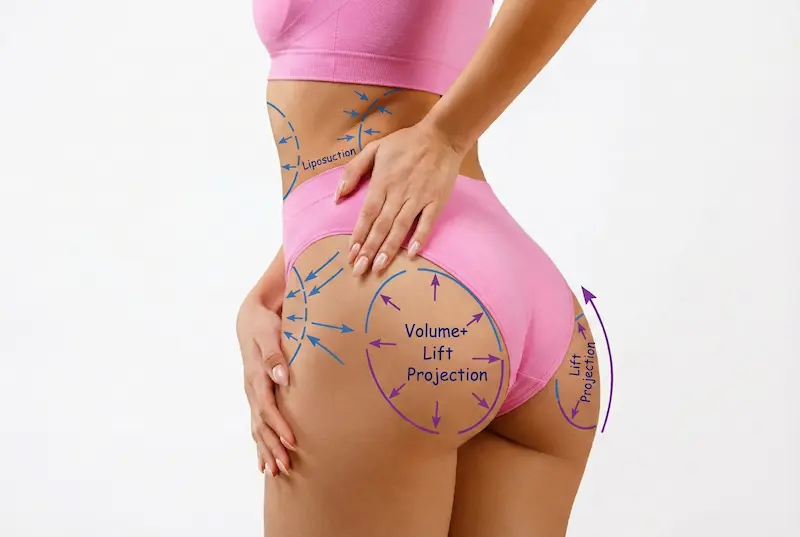
The "Safe Zone" technique places fat only between the skin and the muscle. While this prioritizes safety, it also tends to yield more natural, smoother results. Old intramuscular techniques often resulted in a disproportionately bulky look. The modern approach focuses on reshaping and lifting for an aesthetic, athletic contour rather than just excessive size.
Can I combine BBL with a Tummy Tuck safely?
Yes, this combination (often part of a "Mommy Makeover") is common. However, combining procedures increases the duration of surgery. Your surgeon will evaluate your BMI and overall health to determine if it is safe to perform them together or if they should be staged to minimize stress on your body.
What happens if I have a complication after returning home?
Reputable clinics provide long-term follow-up care. Before you leave, you should have a direct line (often via WhatsApp) to your medical team. In the rare event of a complication back in the US, your Turkish surgeon can guide your local physician or advise you on the necessary steps. Always ensure your clinic offers this "aftercare" support before booking.
Why is the consultation phase critical for safety?
The consultation is where the surgeon determines if you are a good candidate. Not everyone is suitable for what is a BBL. If you have insufficient body fat or underlying health issues, a safe surgeon will refuse to operate. If a clinic approves you instantly without a medical history review, consider it a red flag.
Where to get a BBL?
If you are wondering where to get a BBL, the safest answer is this: choose a surgeon-led clinic with experienced plastic surgeons, hospital-based surgery, strict patient screening, and modern safety protocols such as ultrasound-guided bbl fat injection. The best place is not simply the cheapest country or the most popular Instagram clinic. It is the clinic where your surgeon can clearly explain the Brazilian butt lift procedure, show how they reduce the risk of fat embolism, and manage your recovery properly after surgery.
Beyond the topic discussed above, you may also want to explore related guides on Is BBL Safe and BBL Safety Turkey, including how to choose JCI Accredited Hospitals Turkey and verify Plastic Surgeon Credentials Turkey. If you are planning a cosmetic trip, our resources on What To Pack For Your Surgery Trip and Solo Travel Surgery Istanbul will help you feel prepared and confident. You can also read about Turkey Plastic Surgery Myths and evidence-based Facelift Pain Management to better understand what to expect before, during, and after your procedure.