
If you are planning a facelift, one of the first questions you’ll ask is, “How long will I be out of my normal life?” Understanding awake facelift recovery time compared with a traditional facelift under general anesthesia helps you plan your work, social life, and even your travel dates if you are flying to Turkey for surgery.
At its core, a facelift is still a surgical procedure: tissue is lifted, tightened, and repositioned. That means some swelling, bruising, and downtime are inevitable. However, the type of anesthesia you choose (awake/local vs. general) can change how you feel in the first hours and days after surgery, how quickly you can move around comfortably, and how soon you feel confident enough to be seen in public or on camera.
In this guide, we’ll walk through how awake and traditional facelifts differ, what a realistic recovery timeline looks like, and how technique and technology can shorten your “social downtime” without compromising on results.
Table of Contents
Understanding Awake Facelift Recovery Time vs. Traditional Facelift
How an “Awake Facelift” Differs From a Traditional Facelift
An “awake facelift” (also called a twilight facelift or facelift under local anesthesia) is performed using local anesthetic plus mild IV or oral sedation. You are relaxed, comfortable, and usually drowsy, but you can breathe on your own and do not need a breathing tube or full general anesthesia.
In a traditional facelift, patients are typically put under general anesthesia. You are fully asleep, intubated, and your entire body—and not just the face—is exposed to the physiological stress of anesthesia. The surgical steps for lifting and tightening the tissues can be similar, but the anesthesia experience and the early recovery phase are very different.
Because the surgical work can be identical, the final aesthetic result of an awake facelift versus a traditional facelift is not determined by the anesthesia type. The main difference lies in how you feel immediately after surgery and during the first stages of healing.
Why Anesthesia Type Changes Your Facelift Recovery Time
General anesthesia affects the entire body. After a traditional facelift, many patients describe feeling groggy, nauseated, or “wiped out” for the first 24–48 hours, even if the surgical area itself is well controlled. This systemic “anesthesia hangover” can prolong what people perceive as their recovery time for a facelift, because they simply do not feel like themselves.
With an awake facelift, the body is exposed to far less anesthetic medication. Most of the numbing is applied locally to the face, and sedation is kept light to moderate. As a result, many patients:
- Wake up faster and feel clearer within a few hours
- Experience less nausea, dizziness, or sore throat
- Can stand, walk to the bathroom, and eat light meals sooner
- Are able to return to their hotel the same day in relative comfort
The awake facelift recovery time therefore often feels shorter in the early phase, even if swelling and bruising follow a similar biological pattern to a traditional facelift.
Key Factors That Influence Your Awake Facelift Recovery Time
No two patients heal at exactly the same pace. Even with the advantages of local anesthesia, your personal recovery timeline will depend on several factors:
- The extent of surgery: A mini lift generally has a shorter recovery than a full deep plane facelift combined with a neck lift or fat transfer.
- Your general health and lifestyle: Non-smokers, patients with good circulation, and those who follow pre-op instructions tend to heal faster.
- Quality of surgical technique: Gentle tissue handling, meticulous control of bleeding, and precise closure can reduce bruising and swelling.
- Post-operative care: Proper elevation, cold compresses, prescribed medications, and advanced therapies (like HBOT or low-level laser) can accelerate healing.
- Realistic expectations: Understanding that internal healing continues for weeks to months helps you interpret your recovery milestones correctly.
When you combine a carefully planned procedure with awake anesthesia and modern recovery protocols, most patients experience a smoother, more predictable facelift recovery timeline, with less disruption to their daily life.
Day-by-Day Awake Facelift Recovery Time Under Local Anesthesia
One of the biggest advantages of an awake facelift is how you feel during the first few days after surgery. Because the body is not recovering from heavy general anesthesia, the awake facelift recovery time in the early phase usually feels smoother and more manageable, especially for patients who want to travel or return to light responsibilities quickly.
First 24 Hours After an Awake Facelift: What You Really Feel
Right after your awake facelift, your face will be comfortably numb from the local anesthetic. Most patients describe a tight, pressure-like sensation rather than sharp pain. As the numbing slowly wears off, your prescribed pain medication keeps discomfort under control.
In the first 24 hours:
- You will have bandages or a light compression garment around your face and possibly your neck.
- Mild swelling and bruising can begin, but usually peak over the next 48–72 hours, not immediately.
- You’ll be encouraged to walk gently around the room and drink plenty of fluids.
- Most patients can eat soft foods and go to the bathroom with assistance soon after surgery.
Unlike the traditional recovery time for a facelift under general anesthesia, you are less likely to feel groggy, nauseated, or disoriented. Many patients are surprised by how “normal” they feel mentally, even though their face is bandaged and swelling is beginning.
Days 2–7: Swelling, Bruising and Comfort Levels After Awake Facelift
Between days 2 and 3, swelling and bruising generally reach their peak. This is true for both awake and traditional techniques, because your body is following a natural healing pattern. The difference is that you can usually move, eat, and sleep more comfortably when your body has not been stressed by deep anesthesia.
During days 2–7 of your awake facelift recovery time, you can typically expect:
- Increased swelling around the cheeks, jawline and sometimes under the eyes
- Visible bruising that may shift downward as gravity pulls residual blood lower
- A feeling of tightness when smiling, talking or turning the head
- Mild to moderate discomfort managed with prescribed or over-the-counter pain relief
- Improved ability to shower (following your surgeon’s specific instructions), walk and sit up for longer periods
Patients who have had mini, lower or endoscopic lifts under local anesthesia often describe this as the “stay-in-your-hotel” phase rather than being completely bedbound. For many, the practical recovery time for facelift activities like checking emails, taking phone calls or walking short distances starts within this first week, even if they are not yet ready to be seen socially.
If you are an international patient coming to Istanbul, this is usually the period when you attend your first or second post-op check at the clinic. Your surgeon removes or adjusts bandages, checks your incisions, and confirms that healing is on track.
Week 2–4: When Does Awake Facelift Recovery Time Become “Socially Invisible”?
Around the start of week 2, swelling and bruising typically begin to settle. Stitches may be removed as advised by your surgeon, and the tight, heavy sensation in your face often eases noticeably.
Between weeks 2 and 4:
- Bruises fade from purple/blue to yellow/green and then disappear.
- Swelling reduces enough for you to recognize an improved jawline and smoother contours.
- You can usually resume light daily activities and computer-based work, depending on your job.
- Makeup can often be used (once the surgeon clears you) to camouflage any residual discoloration.
For many patients, this is the point where awake facelift recovery time feels shorter compared with traditional surgery, because they have maintained their energy, appetite and sleep quality from day one. They may still have mild swelling and some firmness along the incision lines, but in real life—and in most photos—they already look “refreshed” rather than “recently operated.”
While you are not yet at your final result, this is usually the stage where friends and colleagues simply comment that you look well rested or younger, without realizing you have had surgery. For many people, that is the most important milestone in their facelift recovery timeline.
Traditional Facelift Recovery Time Under General Anesthesia
Traditional facelift surgery is still a highly effective way to rejuvenate the face and neck, especially when there is more advanced skin laxity and deeper sagging. However, when we compare it with an awake facelift, the recovery time for a facelift under general anesthesia often feels longer because your body is healing from both the surgery and the anesthesia itself.
Recovery Time for a Facelift in the First Week After Surgery
Immediately after a traditional facelift, patients are usually taken to a recovery room while they wake up from general anesthesia. Many people feel groggy, nauseated or disoriented for several hours. Some experience a sore throat from the breathing tube and a general sense of fatigue that can last for a couple of days.
During the first week:
- You will typically need more help with walking, toileting and eating during the first 24–48 hours.
- Nausea or dizziness may limit how quickly you can move around the house or hotel room.
- Swelling and bruising develop just as they do in an awake or deep plane facelift, but you may feel more “worn out” overall.
- Strong pain medication is more commonly used in the first days, which can sometimes increase drowsiness or constipation.
On paper, the biological healing timeline (swelling, bruising, tissue repair) is similar to an awake procedure, but many patients describe the early recovery time facelift experience as heavier and more demanding on their energy levels.
Week 2–4: How Long Does Traditional Facelift Recovery Time Really Last?
By week 2, most patients who have had a traditional facelift are past the worst of the bruising and swelling. Stitches may be removed, and compression garments are gradually reduced according to the surgeon’s plan. However, some people still feel more tired than usual and may need extra rest breaks during the day.
Between weeks 2 and 4 after a traditional facelift:
- Bruising continues to fade but may last slightly longer in more extensive procedures.
- Swelling reduces, but residual puffiness around the cheeks and jawline is common.
- Many patients return to desk-based work around week 2, provided they are comfortable being seen by colleagues.
- Exercise remains restricted to light walking until your surgeon clears you for more strenuous activity.
In practical terms, the recovery time for facelift patients under general anesthesia is often 2–3 weeks before feeling socially comfortable without heavy makeup or scarves. In contrast, patients who had an awake procedure often feel more like themselves mentally and physically during the same period, which can make the overall process easier to handle.
Month 2–3: Comparing Final Results to the Awake Facelift Recovery Timeline
By the end of the second month, most of the visible signs of surgery have settled, regardless of whether you chose an awake or traditional technique. This is the phase where you start to see the true contour of your jawline, neck and midface, even though internal healing is still ongoing.
Between months 2 and 3:
- Incision lines continue to soften and fade, especially around the ears and hairline.
- Residual swelling becomes subtle and is often noticeable only to you and your surgeon.
- The skin and deeper tissues feel more natural and less tight or “pulled.”
- You can usually resume full exercise, travel and social activities, subject to your surgeon’s advice.
When we compare this stage with the awake facelift recovery time, the end results are typically judged by surgical technique rather than by anesthesia. High-quality work will age gracefully in both approaches. The real difference is how quickly you were able to move, travel, work and feel “normal” in the early weeks of your facelift recovery timeline.
For patients who value a lighter experience, fewer systemic medications and a smoother first week, an awake facelift in an experienced center can be a compelling alternative—especially if you are flying to a destination like Istanbul and want to minimize the impact on your daily life.
Mini, Deep Plane, Lower and Endoscopic Facelift Recovery Times Compared
Not every facelift is the same. The extent of lifting and the areas treated will directly influence how long you need to recover. Understanding the differences between mini facelift recovery time, deep plane facelift recovery time, lower facelift recovery time and endoscopic facelift recovery time helps you choose a technique that fits both your goals and your lifestyle.
Mini Facelift Recovery Time: Who Truly Benefits From a Shorter Downtime?
A mini facelift focuses on early jowling and mild laxity in the lower face. Incisions are usually shorter and less tissue is repositioned compared with a full or deep plane facelift. Because the surgery is less extensive, the mini facelift recovery time is often faster.
In many cases:
- Swelling and bruising are milder, peaking around days 2–3 and improving quickly after.
- Patients feel comfortable working from home within 3–5 days, depending on their job.
- Social downtime may be as short as 7–10 days with good makeup coverage.
When performed as an awake procedure, mini facelift patients often report an even smoother recovery time for facelift, because their overall energy levels remain relatively stable from day one. However, it is important to remember that mini lifts are best for early signs of aging, not for advanced laxity.
Deep Plane Facelift Recovery Time vs. SMAS: Is It Really Longer?
A deep plane facelift repositions the deeper facial layers (SMAS and ligaments) to create a more natural, long-lasting rejuvenation. Because it works at a deeper level, many patients assume that the deep plane facelift recovery time is dramatically longer. In reality, the difference is often less than people expect when the surgery is performed gently and with precise control.
Typical recovery time for deep plane facelift includes:
- 1–2 weeks of visible bruising and moderate swelling.
- 2–3 weeks before feeling socially comfortable without obvious signs of surgery.
- 2–3 months for the tissues to fully settle and feel completely natural.
If the deep plane lift is performed as an awake procedure, the internal healing time is similar, but the early phase of your awake facelift recovery time may feel easier. You are less likely to struggle with anesthesia-related fatigue, so many patients describe being more mobile, more alert and more independent in the first week.
Lower Facelift and Neck Lift Recovery Time: Jowls, Neck and Jawline
A lower facelift with or without a neck lift targets the jawline, jowls and neck banding. These areas can be more prone to swelling and bruising simply because gravity pulls fluids downward. As a result, lower facelift recovery time can feel slightly more noticeable in the neck and beneath the chin.
During the first two weeks:
- Swelling often “settles” into the lower face and neck before starting to resolve.
- Compression garments are commonly recommended to support the contour and reduce fluid buildup.
- Turning the head or looking up may feel tighter than usual, and this gradually improves.
After 3–4 weeks, most people see a much sharper jawline and smoother neck, even if subtle internal healing continues. In both traditional and awake approaches, patient satisfaction with lower face and neck improvement is often very high once this phase is reached.
Endoscopic Facelift Recovery Time and Combined Procedures
Endoscopic techniques are often used for the midface or brow, through smaller incisions and with the aid of a camera. Because the access points are shorter and tissue disruption is more focused, the endoscopic facelift recovery time can be shorter in selected patients.
Typically:
- Bruising and swelling are more localized to the midface or forehead region.
- Many patients feel comfortable returning to work within 7–10 days.
- The main limitations involve avoiding heavy lifting or intense exercise until cleared.
When endoscopic lifts are combined with deep plane or lower face work, the overall timeline shifts toward the more extensive procedure. In other words, your true recovery time facelift experience is determined by the most demanding part of the surgery, rather than by the smallest element.
For this reason, personalized planning is essential. During consultation, your surgeon should explain how your chosen techniques—mini, lower, deep plane, endoscopic or a combination—translate into a realistic and manageable recovery timeline that matches your lifestyle, travel plans, and expectations.
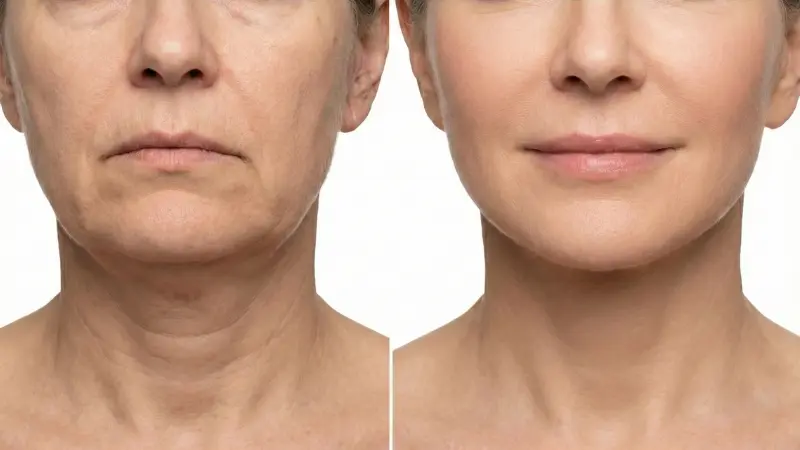
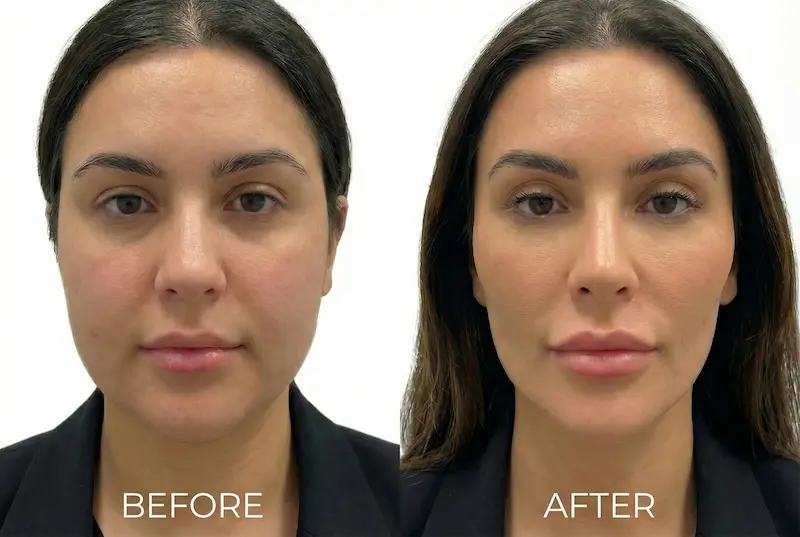
Facelift Recovery Time Photos and Milestones: When You Look “Normal” Again
Patients often tell their surgeon, “I don’t just want to know the medical facts – I want to know when I’ll look normal again.” That’s where facelift recovery time photos and clear milestones are so helpful. While every person heals at a slightly different pace, most awake and traditional facelift patients move through similar visual phases.
Understanding what you will probably see in the mirror at each step of your awake facelift recovery time can reduce anxiety and help you plan time off work, events and travel with more confidence.
Facelift Recovery Time Photos: What You Can Expect Week by Week
Surgeons often use a structured set of facelift recovery time photos taken at specific intervals – for example, day 1, day 7, week 2, week 4, month 3 and beyond. These images show how swelling, bruising and incision lines evolve over time.
A typical visual timeline looks like this:
- Day 1–3: Swollen, tight and obviously post-op. Bruising is visible, bandages or garments may still be in place.
- Day 4–7: Swelling and bruising peak and then plateau. You still look “operated,” but the initial shock has softened.
- Week 2: Bruises start to fade and change color; swelling begins to come down. You look less puffy and more like yourself.
- Week 3–4: Big improvements. In many recovery time facelift photos, this is where people already look refreshed, not “surgical.”
- Month 2–3: Contours are defined, and scars are less visible. Most photos at this stage look like true “after” pictures.
Whether you choose an awake or traditional approach, your own facelift recovery time photos will follow a similar pattern – but you may feel more energetic, mobile and relaxed in those pictures if your body did not have to process general anesthesia.
When Can You Safely Take “After” Photos After an Awake Facelift?
Many patients considering an awake facelift are planning for important milestones: a wedding, a reunion, a big birthday or professional photos. They often ask when they can schedule their “after” pictures so they look their best.
As a general guide:
- At 2 weeks: You can take casual photos and video calls with good lighting and makeup; most people will not notice you’ve had surgery.
- At 4–6 weeks: Swelling is mild, and you are usually camera-ready for social media and normal life.
- At 3 months: This is a common point for official “after” pictures, as your result is close to final.
Because the awake facelift recovery time experience is often smoother, patients may feel more confident stepping in front of the camera sooner – especially for relaxed, natural photos during a stay in Istanbul or shortly after returning home.
Realistic Timeline to Look Camera-Ready After a Facelift
A realistic, conservative rule for being “camera-ready” (without heavy filters or editing) is:
- Plan for 2 weeks before casual photos and small social gatherings.
- Plan for 3–4 weeks before high-resolution photos, work events or important meetings.
- Plan for around 3 months for any major, once-in-a-lifetime event where you want to look your absolute best.
Of course, some people heal faster and feel confident earlier, especially after a mini or endoscopic lift. Others prefer to give themselves a bigger buffer, even if their recovery time for facelift technically allows them to return sooner. Your surgeon can review your progress and help you decide when you are truly camera-ready based on your own healing and expectations.
Regardless of the technique, remember that internal healing continues long after you look “normal” in photos. Protecting your skin from the sun, maintaining a stable weight and following long-term skincare advice will help you enjoy your facelift results for many years.
Awake Facelift Recovery in Turkey: AKM Clinic’s Timeline, Stay and Costs
For international patients, planning awake facelift recovery time is not just about healing – it is also about flights, hotel nights, and how long you need to stay in Istanbul before safely going home. AKM Clinic in Istanbul is built around that reality: the awake facelift is paired with an all-inclusive, VIP-style journey that’s designed for patients flying in from Chicago, San Francisco, Houston, Seattle or Boston.
How Many Days Do You Need in Istanbul for Awake Facelift Recovery Time?
Every surgical plan is personalized, but most international facelift patients are advised to plan for a stay long enough to cover:
- A full, in-person consultation and pre-operative assessment
- Surgery day and the first 24–48 hours of close monitoring
- At least one or two early post-operative check-ups
In practical terms, many awake facelift patients traveling to Turkey choose to spend about 4–5 days in Istanbul. This window usually allows enough time for:
- Initial swelling and bruising to peak and begin to settle
- Dressings to be adjusted or removed according to the surgeon’s protocol
- Confirmation that your recovery time for facelift is progressing normally before a long flight
For smaller procedures such as a mini lift, some patients may be comfortable with a slightly shorter stay, while those combining a deep plane facelift with neck lift or eyelid surgery may prefer the full 4-5 days or more. Your exact timeline is confirmed during your consultation and tailored to your medical history, the complexity of surgery and your flight distance home.
Sample 4–5 Day Travel Plan for Facelift Recovery in Turkey
To make the awake facelift recovery time feel as smooth as possible, AKM Clinic structures the experience as a step-by-step journey with VIP transfers, 5-star hotel accommodation and a dedicated, English-speaking patient host.
A simplified example of a 4–5 day itinerary might look like this:
- Day 1 – Arrival & In-Person Consultation: VIP pickup at the airport, check-in to your 5-star hotel and a detailed, face-to-face consultation with your surgeon to finalize your plan.
- Day 2 – Surgery Day: Awake (twilight) facelift under local anesthesia and light IV sedation in a fully equipped, JCI-accredited hospital. You return to your hotel the same day with your face bandaged and pain well controlled.
- Days 3–4 – Early Awake Facelift Recovery Time: First post-op checks at the clinic. Swelling and bruising increase and then plateau. You rest at the hotel, walk short distances, and are supported by your patient host for any needs.
- Day 5 – Stabilization Phase, Final Check & Fit-to-Fly: Swelling begins to slowly come down; bruises start to change color. Depending on the plan, sutures or dressings may be adjusted or removed. Many patients feel comfortable working remotely from the hotel. Your surgeon confirms that your recovery time for a facelift is on track, reviews wound care for when you’re back home, and gives you personalized advice for long-haul travel.
Throughout this period, logistics (transfers between hotel, clinic and hospital) are handled for you, so your energy can stay focused on healing and adapting to each step of your facelift recovery timeline.
How AKM Clinic’s Technology Can Shorten Your Social Downtime
Beyond the awake anesthesia technique itself, AKM Clinic emphasizes advanced recovery technologies as part of its standard care – not as optional “spa” add-ons. Two systems, in particular, are used to support and potentially accelerate awake facelift recovery time:
- Hyperbaric Oxygen Therapy (HBOT): In a specialized, pressurized chamber, you breathe 100% oxygen. This super-saturates your blood plasma with oxygen, which can diffuse into healing tissues where circulation may be temporarily reduced after surgery. The clinic’s analysis highlights benefits such as:
- Supporting tissue survival and regeneration in freshly operated areas
- Reducing inflammation and swelling, which can shorten “social downtime”
- Encouraging stronger, smoother scar formation
- Creating an environment that is hostile to bacteria while supporting the immune response
- Low-Level Laser Therapy (LLLT): A dermatological “soft laser” system with hundreds of medical-grade diodes emitting 650 nm light is used over the skin. For facelift patients, this is positioned to:
- Boost cellular energy (ATP production) for faster repair
- Stimulate fibroblasts to build new collagen, helping skin quality post-surgery
- Further reduce redness and postoperative inflammation when combined with HBOT
These tools do not erase the normal biological phases of healing, but they are specifically chosen to make the recovery time for facelift more comfortable and to help patients return to everyday life and social activities as soon as safely possible.
From a financial standpoint, AKM Clinic’s all-inclusive awake facelift packages are designed to be transparent and competitive for patients coming from high-cost markets. Internal strategy documents position package prices as starting from around 5,500 USD, compared with typical deep plane facelift pricing of around 30,000 USD in many parts of the United States, while still providing board-certified surgeons, surgery in a JCI-accredited hospital and the same class of technology used in top US centers. Exact quotes depend on your individual case, but this cost difference is a key reason many patients choose to combine their awake facelift recovery time with a carefully planned trip to Istanbul.
Frequently Asked Questions About Awake Facelift Recovery Time
Is Awake Facelift Recovery Time Really Shorter Than a Traditional Facelift?
Biologically, your tissues go through similar stages of healing whether you choose an awake or traditional facelift: swelling, bruising, tissue repair and gradual refinement of your result. However, the awake facelift recovery time often feels shorter because your body is not recovering from heavy general anesthesia.
Patients who stay awake (with local anesthesia and light sedation) usually:
Wake up faster and feel clearer in the first 24 hours
Experience less nausea, dizziness and fatigue
Move, eat and sleep more comfortably during the first days
Need less strong pain medication, which further improves energy levels
So while the overall recovery time for a facelift in terms of tissue healing is similar, the first 1–2 weeks are often easier to manage with an awake facelift, especially for international patients who need to walk, travel and organize flights home after surgery.
What Is the Average Recovery Time for a Facelift if I Have an Office Job?
For most patients with a desk-based or computer job, a realistic average is:
- Home-based work or emails: often within 3–7 days after an awake facelift
- Returning to the office: usually around 10–14 days, depending on bruising and swelling
If your work environment is very public or appearance-focused, you might prefer a full 2–3 weeks before going back. This applies to both awake and traditional facelifts, but the lighter anesthesia used in an awake procedure can make those first remote-working days more comfortable and productive.
Your surgeon will review your healing and give you personalized advice based on how your recovery time facelift is progressing at each follow-up.
How Long Is Deep Plane Facelift Recovery Time Under Local Anesthesia?
A deep plane facelift is more technically advanced than a simple skin or SMAS-only lift, but that does not automatically mean months of downtime. In many cases, the typical deep plane facelift recovery time under awake anesthesia looks like this:
- First week: significant swelling and bruising, but pain usually well controlled
- 2 weeks: able to work from home and perform light daily activities
- 3–4 weeks: comfortable with most social situations and normal errands
- 2–3 months: near-final shape, with residual internal healing continuing quietly
The recovery time for deep plane facelift is more influenced by how gently the tissues are handled and how carefully your aftercare is managed than by the depth of the lift alone. When combined with awake anesthesia, many patients feel that the experience is intense for the first week but surprisingly manageable overall.
Will I Need to Stay in Turkey Until My Full Facelift Recovery Time Is Over?
No. You do not need to stay in Turkey until every trace of swelling is gone. The full healing process after a facelift takes weeks to months, and this will continue at home. What matters is that the early phase of your awake facelift recovery time is well supervised and stable before you fly.
This is why most AKM Clinic patients stay in Istanbul for around 7–10 days:
The most critical days of swelling, bruising and pain control are supervised.
Your surgeon can check your wounds, change dressings and remove sutures as needed.
You receive clear guidance on wound care, sleeping position, activity level and flight precautions.
After that point, you can safely continue your recovery time for facelift at home. Online video follow-ups are often used to track your progress and answer any new questions.
When Can I Fly Home After an Awake Facelift in Istanbul?
Most international patients are ready to fly home between day 7 and day 10, once the surgeon confirms there are no concerns about bleeding, infection, or wound problems.
Before your flight, AKM Clinic will typically:
Provide a “fit-to-fly” check and final in-person consultation
Review medications to take before, during and after the flight
Advise on walking, hydration and simple exercises during long-haul travel
You may still look a little swollen or bruised at the airport, but this is normal. The key is that your awake facelift recovery time is stable and complications are unlikely. From there, healing continues at home, and you should keep your surgeon updated with photos and virtual check-ins.
Can HBOT or Laser Therapy at AKM Clinic Speed Up My Facelift Recovery Time?
Advanced technologies such as Hyperbaric Oxygen Therapy (HBOT) and low-level laser therapy (LLLT) are not magic shortcuts, but they can support your body’s biology at a time when it needs extra help. At AKM Clinic, these tools are integrated into the care pathway rather than sold as cosmetic extras.
Potential benefits include:
Improved oxygen delivery to healing tissues after surgery
Reduced inflammation and swelling in the early recovery time facelift phase
Stimulation of collagen and better scar quality in the long term
They do not replace good surgical technique or careful aftercare, but they are designed to help patients move through each stage of their awake facelift recovery time more comfortably and possibly reach their “socially confident” point sooner.
When Will Swelling, Bruising and Scars Be Invisible in Facelift Recovery Time Photos?
Most patients want to know when their facelift recovery time photos will look “normal,” without obvious signs of surgery. A typical, conservative expectation is:
2 weeks: Less swelling and fading bruises; easily disguised with makeup.
4 weeks: Most people look very presentable in photos and everyday life.
3 months: Scars are flatter and lighter; your photos look like true “after” images.
Scar lines around the ear and hairline usually continue to mature for up to a year, gradually becoming finer and closer to your natural skin tone. In many cases, even high-resolution facelift recovery time photos taken after 6–12 months show only subtle, well-hidden incision lines that are hard to spot unless you know where to look.
Good skincare, sun protection and following your surgeon’s instructions (for example, not smoking, avoiding strain and using recommended scar treatments) are just as important as the initial awake facelift recovery time when it comes to achieving beautiful, long-lasting results.