

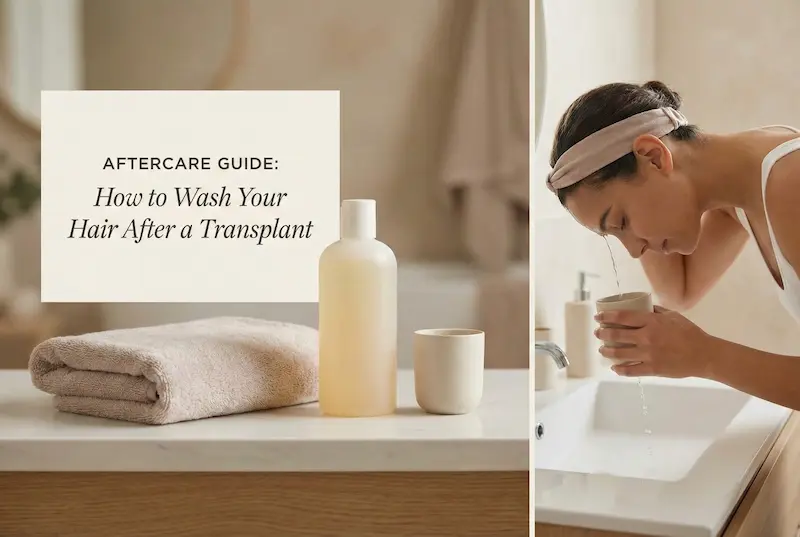
Washing hair after transplant is a recovery moment most patients overrate in difficulty and underrate in technique. The shampoo brand matters far less than the rules around water pressure, towel contact, and timing — and most "graft loss" stories trace back to friction or pressure errors, not product choices. This guide focuses on the wash-and-aftercare layer. The broader procedural reference — candidacy, technique selection, hairline design, and cost framework — lives on a dedicated page.
The full hair restoration reference: complete hair restoration overview.
Table of Contents
The #1 Rule: Protect Your Grafts During the First 14 Days
The first two weeks are the most delicate phase of your hair transplant recovery. Your grafts are settling into place, and your scalp is forming small protective crusts (scabs). You still need cleanliness to reduce irritation and infection risk—but the technique matters far more than the products.
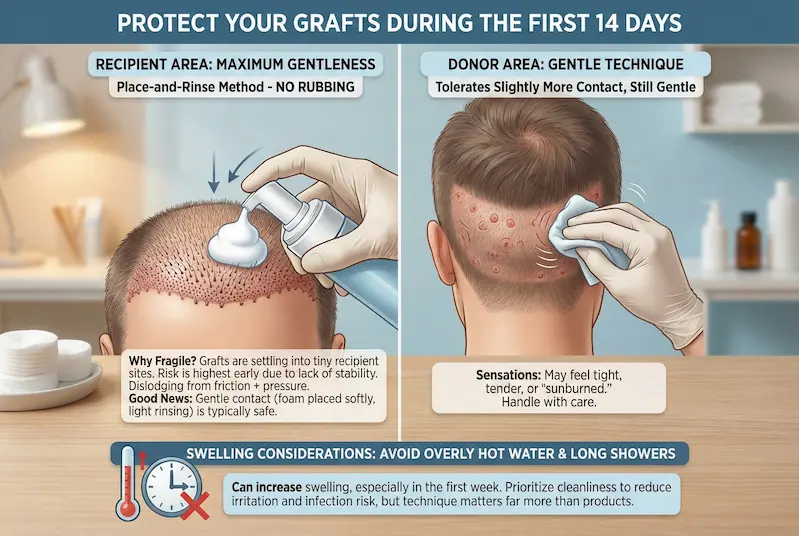
Why grafts are fragile (and what “dislodging” really means)
Newly implanted follicles are placed into tiny recipient sites. In the early days, they’re held mainly by the body’s natural clotting and early healing response. This is why the “first hair wash after hair transplant” should never involve rubbing, scratching, or massaging.
- Dislodging usually comes from friction + pressure (rubbing with fingertips, towel friction, strong water jets).
- Risk is highest early because the grafts haven’t stabilized into the tissue yet.
- Good news: gentle contact (foam placed softly, light rinsing) is typically safe when started at the time your clinic recommends.
Clean scalp vs. infection risk: why hygiene matters for growth
“Avoid touching it” is only half the story. A scalp that’s never cleaned can trap sweat, oil, and debris—leading to irritation and sometimes folliculitis-like bumps. The goal is a balanced approach: keep the area clean without disturbing healing.
- Cleanliness supports comfort (less itch, less crust buildup).
- Lower irritation can mean fewer “panic moments” where patients scratch in their sleep.
- Better aftercare habits reduce preventable setbacks—one of the most overlooked hair transplant recovery tips.
The difference between recipient area and donor area during washing
When learning how to clean scalp after hair transplant, separate your scalp into two zones—because they behave differently:
- Recipient area (where grafts were implanted): must be treated with maximum gentleness. Early on, you’ll use a “place-and-rinse” method—no rubbing.
- Donor area (where follicles were harvested): often tolerates slightly more contact sooner, but still requires gentle technique. It may feel tight, tender, or “sunburned.”
- Swelling considerations: overly hot water or long showers can increase swelling—especially in the first week.
When Can You Start Washing Hair After a Transplant? (Day-by-Day Timeline)
The timing of your first hair wash after hair transplant depends on your clinic’s protocol, your scalp sensitivity, and how quickly you form scabs. But most patients follow a phased approach: first you protect grafts, then you clean gently, then you soften and lift scabs safely. These hair transplant washing instructions are designed to reduce friction and keep healing on track.
| Timeframe | What you should do | What to avoid |
|---|---|---|
| Day 0–2 | Saline spray as directed, keep scalp clean/dry, sleep with head elevated | Shower pressure, rubbing, hot water, sweating |
| Days 3–7 | Start gentle washing (foam/low contact), careful rinsing, pat-dry | Scratching, scab picking, towel friction, high-pressure rinse |
| Days 8–14 | Continue gentle washes; focus on softening scabs so they lift naturally | Forceful “removal,” fingernail scratching, harsh shampoos/actives |
| After 2 weeks | Transition toward a normal shower routine (still gentle if sensitive) | Aggressive exfoliation, strong styling products too soon |
Important: If your clinic told you a different start day for washing, follow that. The safest plan is always the surgeon’s plan—especially if you had a high graft count or very dense implantation.
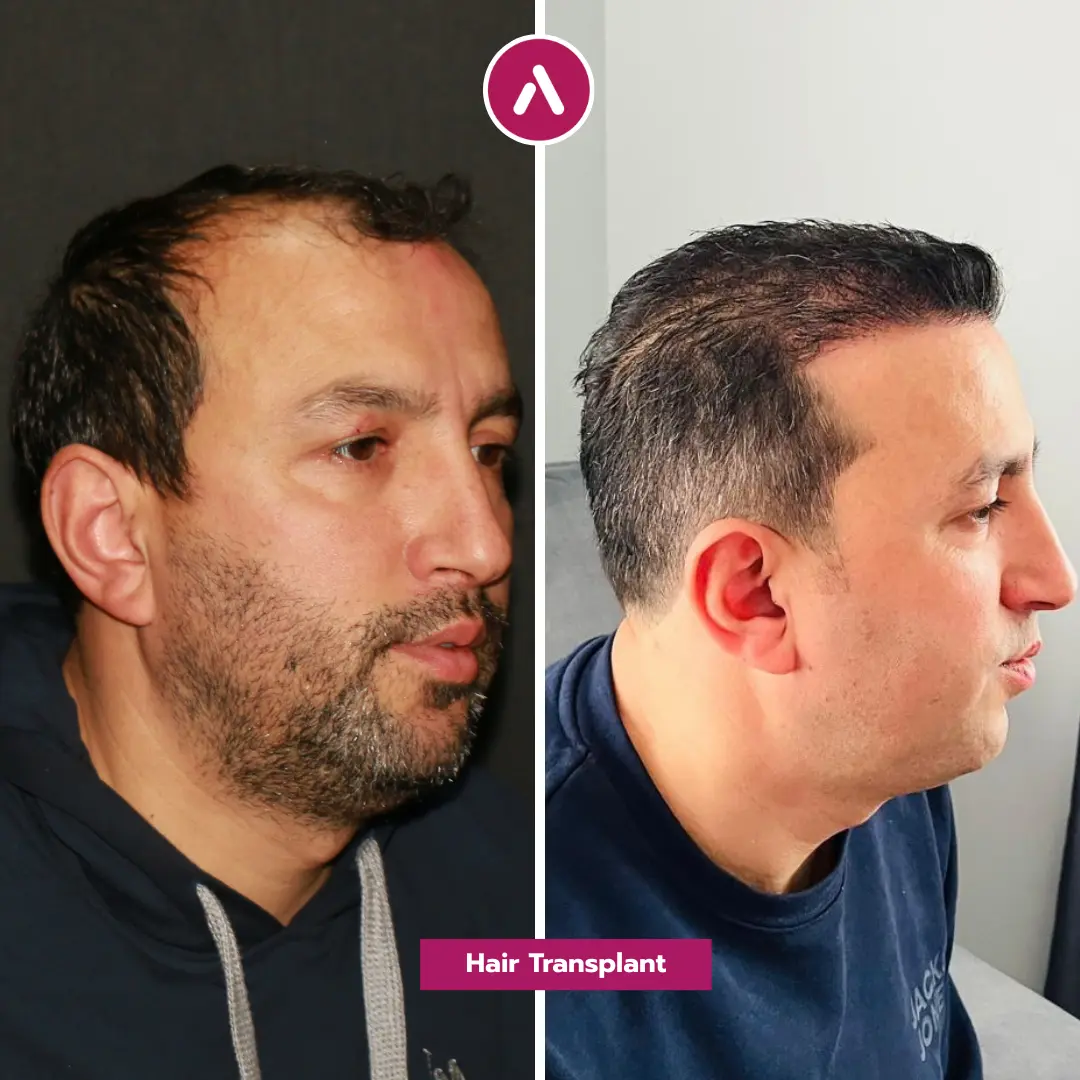
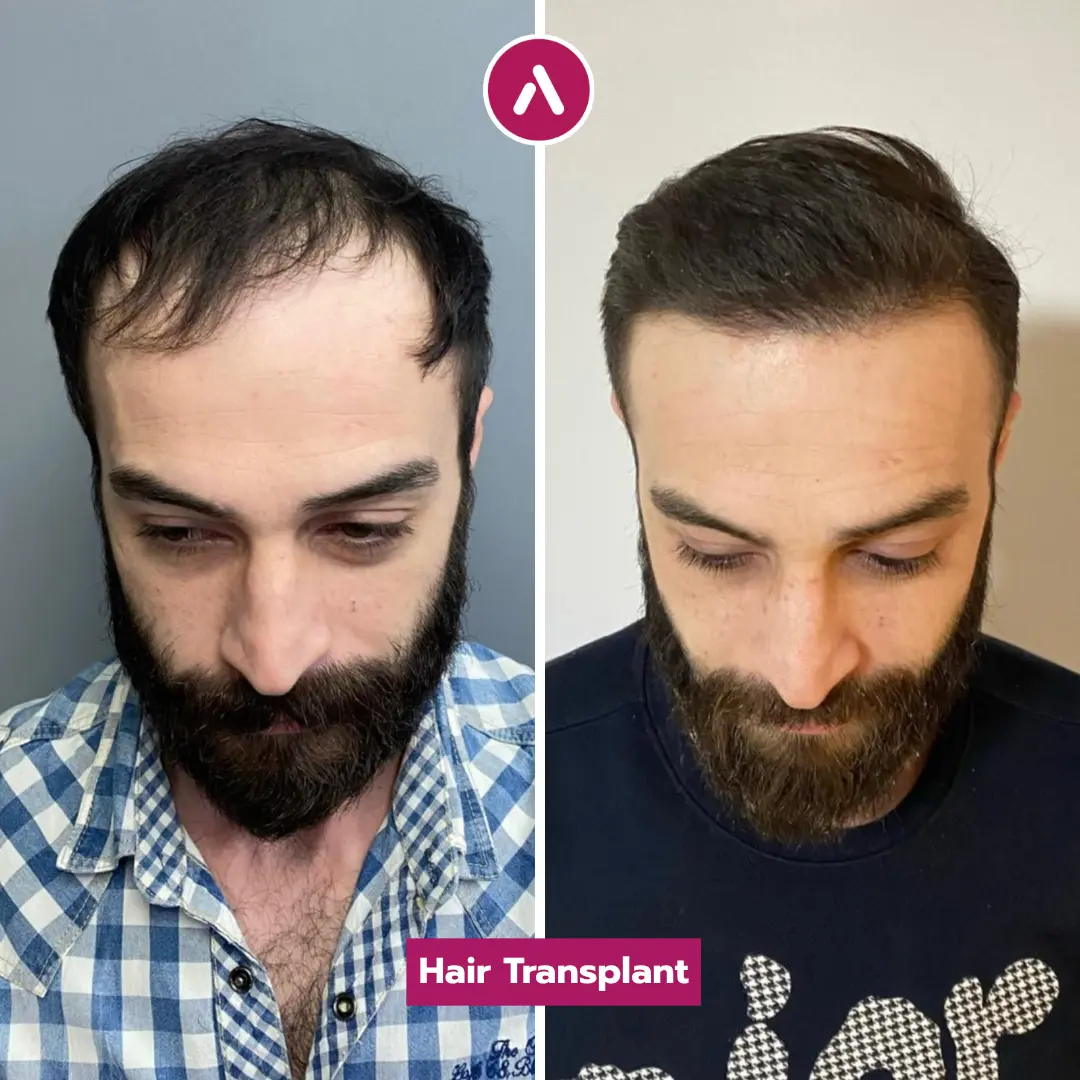
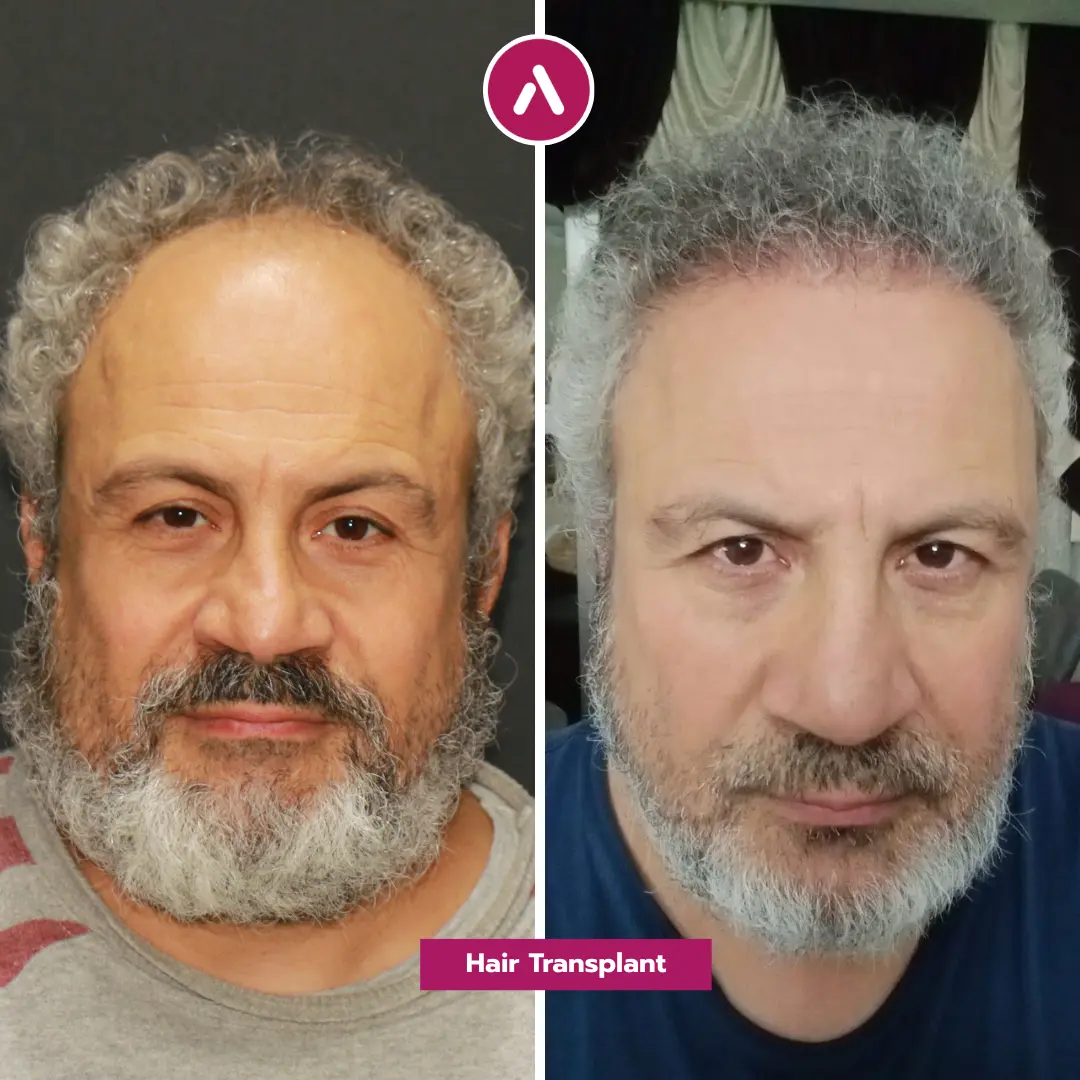
The patient cases referenced in this guide — UK and US patients across age ranges from late 20s to mid-40s — sit inside a broader before-and-after archive organized by procedure rather than only by individual patient page. For pattern recognition across face shapes, hair textures, and age groups, the consolidated archive is faster to review than scrolling individual case pages.
The complete hair transplant before-and-after archive: hair transplant results archive.
Day 0–2: Spray-only phase (what to do instead of washing)
In the first 48 hours, the priority is stabilization. Most protocols avoid direct washing because even gentle water flow can loosen early crusts or increase swelling. This is a core part of hair transplant aftercare.
- Use saline spray exactly as instructed to keep grafts hydrated and reduce tightness.
- Keep hands off the recipient area. No “checking,” no touching to see if it hurts, no tapping.
- Avoid sweat and steam. Heat can increase swelling and itch—two triggers for accidental scratching.
- Sleep elevated to help swelling settle (especially days 1–3).
Days 3–7: First gentle wash phase (what “gentle” actually looks like)
This is when many patients start the first hair wash after hair transplant. The technique should feel almost “too careful.” That’s normal. Your goal is to cleanse the surface without creating friction on the grafts.
- Foam first: Lather shampoo in your hands (or use a foam method if advised), then place it over the recipient area—no rubbing.
- Low-pressure rinse: Use a cup or very gentle shower flow. Let water run over the scalp rather than hitting it directly.
- Donor area: Usually tolerates slightly more contact, but keep it gentle and avoid scrubbing.
- Drying: Pat-dry with a soft towel or let it air-dry. No towel rubbing.
If you’re searching for how to wash hair after FUE transplant vs. how to wash hair after DHI transplant, the core rules are the same: protect grafts from friction and pressure. Differences are usually about comfort and scab density—not “a totally different wash.”
The phrase "how to wash hair after FUE transplant" gets thousands of monthly searches, but the wash itself isn't FUE-specific. What is FUE-specific is the donor-area pattern (dotted punctate sites vs strip line), the punch diameter behind crusting tightness, and the follicular unit handling that defines how delicate the first 14 days actually feel. The dedicated FUE technique reference covering punch diameter, donor-density limits, and recipient-site sequencing: FUE procedural reference page.
DHI's recovery profile is similar to FUE on the wash side — same foam-first, same low-pressure rinse, same pat-dry rule — but spacing density tends to be tighter at the leading edge, which can mean slightly heavier crusting in the first 5-7 days. That density difference is a technique trade-off, not an aftercare burden. The dedicated DHI implantation method reference with case selection and density logic: DHI direct implantation guide.
Days 8–14: Scab-softening and controlled removal phase
By the second week, scabs typically start loosening. This phase is where technique prevents two common problems: (1) scabs that linger too long and increase itch, and (2) scabs that are forcibly removed and irritate the skin.
- Soften, don’t scrape: Let shampoo/foam sit briefly (as advised) to soften crusts.
- Gentle fingertip contact only—no nails. If a scab resists, it’s not ready.
- Consistency beats force: Daily gentle washing usually clears scabs naturally across this window.
After 2 weeks: transitioning back to a normal shower routine
After around 14 days, grafts are typically more stable, and you can gradually return to a normal shower routine—still with common sense. Many patients can increase water flow and wash more normally, but if your scalp remains sensitive, keep it gentle a bit longer (a smart long-term approach to hair transplant recovery tips).
- Increase pressure gradually rather than suddenly switching to a strong showerhead.
- Reintroduce products carefully: avoid harsh actives or heavy styling products until your clinic gives the green light.
- Listen to your scalp: persistent burning, increasing redness, or pimples/bumps deserve a quick message to your team.
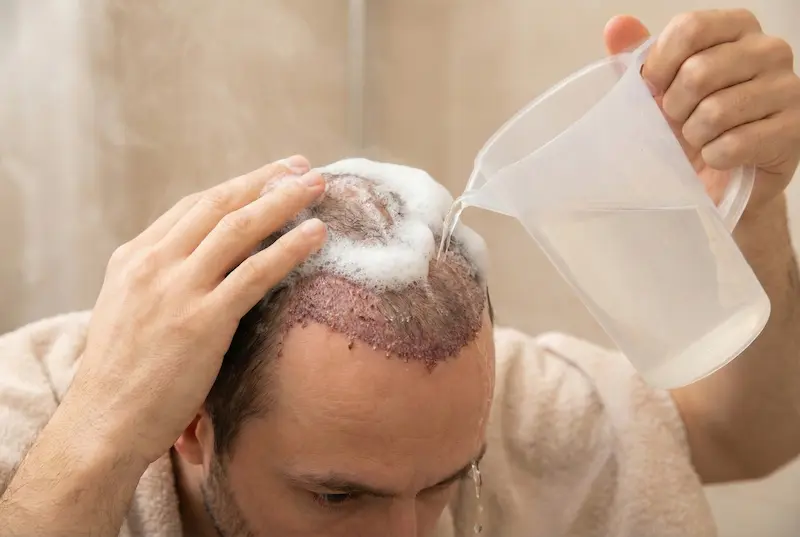
Step-by-Step: Washing Hair After Transplant (Clinic-Approved Method)
This is the practical “do it exactly like this” section. The safest approach to washing hair after transplant is a low-friction routine that cleans the scalp surface while keeping the grafts calm. Follow these hair transplant washing instructions closely—especially during your first week.
Goal: Clean without rubbing. Rinse without pressure. Dry without friction.
Before you start: water temperature, setup, and clean hands
Preparation prevents mistakes. Most problems happen when patients rush, use hot water, or wash “like normal.”
- Wash your hands first (short nails, no rings/watches that can scrape).
- Use lukewarm water—not hot. Heat can worsen swelling and itch.
- Choose a low-pressure method: a clean cup/pitcher is often safest early on.
- Have a soft towel ready for pat-drying (no rubbing).
How to apply shampoo/foam without rubbing the grafts
Whether you’re looking up how to wash hair after FUE transplant or how to wash hair after DHI transplant, the key is the same: apply product to the recipient area as a “blanket,” not a scrub.
- Pre-foam in your hands (or use foam if your clinic recommended it).
- Place the foam gently onto the recipient area—do not massage it in.
- Donor area: you may cleanse a little more normally, but still gently—no aggressive scrubbing.
- Let it sit briefly (if advised) to soften oil/crusts rather than forcing removal.
How to rinse safely (low pressure, angle, and technique)
Rinsing is where people accidentally “blast” the grafts. Keep water flow soft and indirect.
- Use a cup rinse or a very gentle shower stream.
- Angle matters: let water run over the scalp instead of hitting grafts head-on.
- No prolonged soaking early on—short, controlled rinses are better.
- If scabs remain: that’s normal. Do not try to “finish the job” in one wash.
Drying the right way: pat-dry rules and what to avoid
Drying is as important as washing. Towel friction can irritate healing skin and pull on crusts.
- Pat-dry only with a soft, clean towel.
- Air-dry is fine if you’re not cold and you can avoid touching the scalp.
- Avoid rubbing or twisting hair with the towel.
- Hair dryer: if allowed later, use cool or low heat from a distance—never hot air close to the grafts.
| Step | Do | Avoid |
|---|---|---|
| Apply shampoo | Foam in hands, gently place on scalp | Rubbing, massaging, circular scrubbing |
| Rinse | Low pressure, indirect flow, cup rinse | High-pressure showerhead, direct jet |
| Dry | Pat-dry softly, clean towel, air-dry | Towel rubbing, hot blow-drying, scratching |
Between Washes: Daily Scalp Care That Supports Healing and Growth
The first 14 days are not only about the first hair wash after hair transplant. What you do between washes can reduce itching, prevent accidental rubbing, and keep the recipient area calm—so washing hair after transplant stays safe and predictable. Use these hair transplant recovery tips alongside your clinic’s hair transplant washing instructions for how to wash hair after FUE transplant and how to wash hair after DHI transplant.
Keep the scalp clean without disturbing grafts
If you’re unsure how to clean scalp after hair transplant on non-wash moments, think “light and hygienic.” Use only the products your team advised, and avoid adding new tonics or oils.
- Saline spray: mist gently; do not wipe.
- Hands off: no “checking” or scratching—press lightly around the area if needed.
- Pillow hygiene: change pillowcases frequently to limit irritation.
Control sweat, swelling, and friction
Heat and sweat increase itch, which increases the risk of rubbing. Keep routines calm in week one.
- Sleep elevated: avoid face-down positions.
- Pause intense workouts: skip gyms and saunas until cleared.
- Limit friction: avoid tight hats/helmets; choose loose, clean coverage only if approved.
Support healing with simple lifestyle choices
Strong hair transplant aftercare also means protecting blood flow and reducing inflammation.
- Hydrate and eat well: prioritize protein-rich meals.
- Avoid smoking and limit alcohol: especially during early healing.
- Protect from sun: avoid direct exposure until your clinic approves.
When to contact your clinic
Good aftercare is also knowing when to ask for help.
- Urgent signs: increasing pain, spreading redness, pus, fever, or worsening swelling.
- Repeated bleeding: after gentle washing or rinsing.
- Persistent thick scabs: beyond the expected window.</
What NOT to Do: Common Hair-Washing Mistakes That Can Ruin Results
Most setbacks after the first hair wash after hair transplant don’t come from “using the wrong shampoo.” They come from friction, pressure, and panic behaviors—scratching, picking, over-washing, or trying to remove scabs too fast. These are the most common mistakes we see in real-world hair transplant aftercare.
Rule of thumb: If it feels like a “normal shower,” it’s probably too aggressive for the first 10–14 days.
Rubbing, scratching, “checking” grafts, or picking scabs
Itch is normal, but scratching is risky—especially with fingernails. Picking scabs is one of the fastest ways to irritate healing tissue and potentially disturb graft sites.
- Don’t scratch with nails even if you feel “just one spot” itching.
- Don’t pick or peel scabs to “see how it looks underneath.” Scabs should soften and lift gradually.
- Don’t “test” grafts by touching, tapping, or rubbing to see if they’re secure.
- Safer alternative: follow your saline/soothing routine and keep washing gentle and consistent.
High-pressure showerheads, hot water, and long steamy showers
Pressure and heat can both make recovery harder. Strong water jets can irritate the recipient area; hot water can increase swelling and itch—leading to more scratching.
- Avoid direct jet rinsing onto the recipient area in the first week.
- Skip hot showers and steam-heavy bathrooms early on.
- Keep showers brief—long exposure can over-soften scabs too quickly and inflame sensitive skin.
- Best practice: lukewarm water + low pressure + controlled rinse.
Towels, hair dryers, styling products, and harsh/medicated shampoos
Even if your washing technique is perfect, drying and product use can undo your progress. This is a key part of hair transplant washing instructions patients often overlook.
- No towel rubbing (recipient or donor). Pat-dry only.
- Avoid early blow-drying unless your clinic approves it—and then use cool/low heat from a distance.
- Hold styling products (gels, sprays, powders, fibers) until the scalp is fully calm and your team says it’s safe.
- Avoid harsh/medicated shampoos early (anti-dandruff actives, strong fragrances) unless specifically prescribed.
Hats/helmets and friction: when covering your head becomes risky
Many patients ask about hats because they want privacy. The issue isn’t the hat itself—it’s friction and pressure on a healing recipient area.
- Avoid tight hats that press on grafts, especially in the first 7–10 days.
- If your clinic allows a hat, choose a loose, clean, soft option that doesn’t rub when you move.
- Helmets are higher risk because they compress and trap heat/sweat—both can aggravate healing.
- Travel tip: if you must cover your head, confirm timing and the right hat type with your clinic first.
An international hair restoration trip carries more aftercare moving parts than the surgery itself — specialized shampoo kit timing, LLLT session scheduling, post-op medication adherence, photo-based check-ins after flying home, and structured follow-up at the shedding/regrowth milestones. When these run as separate bookings, coordination falls on the patient; when they live inside one structured package, the surgical team owns the timeline end-to-end.
The recovery-inclusive package structure covering Hair Restoration coordination: post-op recovery package outline.
What Products and Tools Should You Use?
For most patients, the safest approach is simple: fewer products, fewer variables. During hair transplant aftercare, your scalp is reactive—so your product choices should support healing, not “treat” the scalp aggressively. The goal of these hair transplant washing instructions is to reduce irritation while keeping the area clean.
Shampoo checklist: mild, fragrance-free, pH-friendly options
If you’re unsure what to buy, choose the most basic, gentle shampoo you can find. In the first couple of weeks, “strong cleansing” is not a benefit—it’s often a trigger for dryness and itching.
- Mild cleanser (think: gentle daily shampoo, not “deep clean”)
- Fragrance-free or low-fragrance (less irritation risk)
- No strong actives unless your clinic prescribed them
- Easy to rinse (heavy formulas can tempt over-rinsing and friction)
Whether you’re researching how to wash hair after FUE transplant or how to wash hair after DHI transplant, the safest shampoo choice is usually the same: gentle and uncomplicated.
Saline sprays and moisturizers: when they help (and when they don’t)
Saline sprays are commonly used early on to keep graft sites comfortable and reduce tightness. Some clinics also recommend a specific lotion/foam protocol to soften scabs at the right time.
- Helpful when: your scalp feels tight, dry, or itchy; you’re in the first few days and not washing yet.
- Not helpful when: you’re “over-wetting” the area or applying too much product, too often, which can make the scalp feel soggy and irritated.
- Best practice: use only what your clinic instructed—more is not better.
Tools that protect grafts: soft towel, clean pillowcase, gentle cup rinse
Tools matter because most damage comes from accidental friction—especially during your first hair wash after hair transplant.
- Clean cup/pitcher: ideal for controlled, low-pressure rinsing.
- Soft, clean towel: pat-dry only (no rubbing).
- Clean pillowcases: change frequently in the first week to keep the area hygienic.
- Wide personal space: keep showers calm—no rushing, no bumping your head, no tight hats right after washing.
Product red flags: alcohol-heavy sprays, anti-dandruff actives, oils too early
Many “scalp care” products are too aggressive early on. If your goal is how to clean scalp after hair transplant safely, avoid anything that encourages scrubbing or adds irritation.
- Avoid alcohol-heavy tonics/sprays (can sting and dry the skin)
- Avoid anti-dandruff shampoos with strong actives unless prescribed (they can be irritating on healing skin)
- Avoid heavy oils early if your clinic didn’t recommend them—oily buildup can trap debris and tempt rubbing
- Avoid exfoliants/scalp scrubs until you’re fully healed
| Category | Safer choice (early phase) | Best to avoid (early phase) |
|---|---|---|
| Shampoo | Gentle, mild, low-fragrance | “Deep cleansing,” anti-dandruff actives, heavy fragrance |
| Rinsing | Cup rinse / low-pressure flow | High-pressure showerhead directed at grafts |
| Drying | Pat-dry / air-dry | Towel rubbing, hot blow-drying close to scalp |
| Styling | Wait until cleared by your clinic | Fibers, gels, sprays, perfumes on scalp too soon |
After Washing: What’s Normal vs. What’s a Red Flag
One reason patients obsess over washing hair after transplant is fear: “What if I mess it up?” The truth is, a healing scalp can look messy even when everything is going perfectly. This section helps you separate normal healing from signs that deserve quick medical advice—an essential part of hair transplant aftercare.
Practical mindset: Mild redness + scabs + itch are common. Worsening pain, spreading redness, or pus is not.
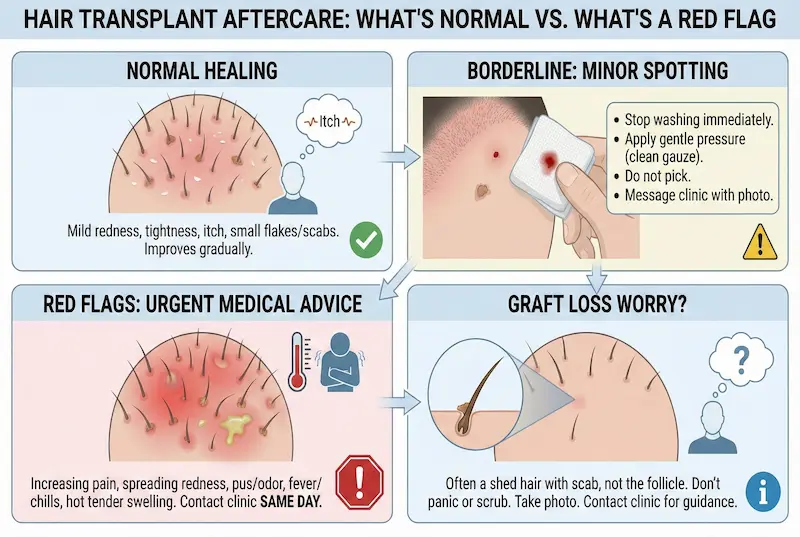
Normal: mild redness, tightness, itch, small flakes/scabs
Most patients experience some combination of these—especially around the time of the first hair wash after hair transplant and during scab-softening days.
- Redness: usually mild and gradually improves over days to weeks (varies by skin type).
- Tightness: common in both donor and recipient areas, especially after FUE.
- Itch: very common; usually peaks as scabs form and begin to loosen.
- Scabs/flakes: expected; should reduce gradually with consistent gentle washing.
Borderline: minor spotting/oozing—what to do immediately
A small amount of spotting can happen if a scab catches on clothing or you accidentally touch the area. The key is to stay calm and avoid “fixing” it with scrubbing.
- Stop washing immediately if you see fresh bleeding.
- Apply gentle pressure with a clean gauze/pad (do not rub).
- Do not pick the area to “clean the blood.”
- Message your clinic with a clear photo if you’re unsure.
HBOT in a hair-restoration context isn't a marketing add-on — it's a documented adjunct that increases dissolved oxygen tension at the recipient site during the days when grafts are still establishing vascular supply. The mechanism is the same that earned HBOT its place in post-surgical body-contouring recovery: oxygen-driven VEGF upregulation supports angiogenesis, which the transplanted follicles need to integrate. For hair specifically, the practical benefit is shorter crusting time and an earlier return to normal washing — the two recovery friction points that drive most patient anxiety in weeks 1-2.
The HBOT protocol reference covering mechanism, session structure, and clinical evidence: HBOT graft healing acceleration.
The clinical evidence base for accelerated recovery via hyperbaric oxygen support continues to grow with prospective data from December 2025.
A case report published in Cureus (Giardiello et al., 17(12): e99635 — December 19, 2025) evaluated HBOT as an adjunct in five male FUE patients (age range 28-56): HBOT postoperative recovery study. Protocol: 90-minute daily sessions at 2.4 absolute atmospheres for six consecutive days, initiated 4-6 hours postprocedure. Reported outcome: complete elimination of scab formation within 5 days (range 3-5 days), permitting accelerated postoperative cleansing protocols and earlier resumption of standard hygiene practices compared to conventional aftercare timelines.
Important caveat: this is a case report (N=5), not a randomized controlled trial — the protocol-level demonstration of accelerated cleansing windows is valuable directional evidence, but broader RCT data is still needed to generalize timing thresholds across diverse patient populations. The fundamental wash-and-aftercare rules described in this guide still apply regardless of whether HBOT is added.
Red flags: increasing pain, pus, fever, spreading redness—when to contact your team
These signs are not “normal healing” and should be evaluated quickly. If you’re following hair transplant washing instructions correctly and symptoms are still worsening, that’s a reason to contact your clinic the same day.
- Increasing pain instead of steady improvement
- Spreading redness that expands beyond the treated area
- Pus-like discharge or foul odor
- Fever/chills or feeling systemically unwell
- Hot, tender swelling that is getting worse
What to do if you think a graft came out
This is a common worry—especially after washing hair after transplant. Sometimes patients see a small crust with a hair attached and assume they “lost the graft.” In many cases, it’s just a shed hair with a scab, not the follicle unit itself.
- Don’t panic and don’t scrub to “check the area.”
- Take a photo of what you saw (if possible) and the scalp area.
- Contact your clinic for guidance—especially if you notice repeated bleeding or a clear open spot.
- Remember: early shedding can occur later as part of the normal cycle; that’s different from dislodging in the first days.
How AKM Clinic Supports a Safer Recovery (Especially for International Patients)
If you’re flying home soon after your procedure, the hardest part of hair transplant aftercare is often not the washing itself—it’s the uncertainty: “Is this normal?” “Did I do it right?” “Who do I contact if something changes?” A good clinic doesn’t just give you hair transplant washing instructions; it builds a system that reduces guesswork and supports healing long after you leave Istanbul.
"Structured protocols beat guesswork" is the recovery-quality differentiator most international patients underestimate. The verifiable layers are documented: multi-stage instrument sterilization, hospital-grade environment classification (rather than office-based), Ministry of Health licensing tier, and adverse-event review pathways that can be requested. For hair restoration specifically, sterility matters because folliculitis or recipient-site infection in the first 14 days can directly compromise graft survival — and that's the same window where you're learning the wash technique under remote support.
The complete technology and standards documentation: sterility protocol governance.
Post-op recovery support: LLLT for graft healing and early growth support
Alongside careful washing and hygiene, AKM Clinic uses Low-Level Laser Therapy (LLLT) as part of recovery support for hair restoration patients. In simple terms, LLLT is designed to support the scalp environment by improving microcirculation and helping follicles transition into an active growth phase—while also supporting the healing process after a transplant.
- Why it matters: early healing is the foundation of healthy growth. Anything that reduces inflammation and supports tissue recovery can make the first 2–4 weeks smoother.
- What it is NOT: it’s not a substitute for correct washing hair after transplant. If the wash technique is rough, no device “fixes” friction damage.
- Where it fits: most useful during the early recovery window—when patients are anxious about scabs, redness, and “did I lose a graft?” moments.
The 3-bullet LLLT mechanism described above — microcirculation boost, active growth phase support, healing process acceleration — describes how photobiomodulation translates light wavelength into cellular ATP production. The post-op leverage point for hair specifically is the early window: transplanted follicles are still establishing vascular connections, and wavelength-driven mitochondrial support raises the floor of graft survival probability.
The same wavelength logic applies across post-surgical recovery applications. The LLLT protocol foundation and mechanism documentation: LLLT graft survival mechanism.
“No abandonment” principle: remote follow-up and fast responses after you fly home
International patients often worry that support ends once they board the plane. The safest model is structured follow-up: you send clear photos, your team tells you what’s normal, and you get quick, practical adjustments (for example: “continue gentle foam washing,” “reduce water pressure,” or “do not pick scabs”). This is especially helpful during the first hair wash after hair transplant week and the scab-softening phase.
- Photo-based check-ins help confirm you’re washing correctly and healing normally.
- Fast answers reduce panic behaviors (scratching, over-washing, aggressive scab removal).
- Long-term follow-up is useful because recovery isn’t finished at day 14—patients often have questions during shedding and regrowth months.
The aftercare essentials referenced above — specialized shampoo kit, post-op medications, LLLT sessions, scheduled follow-ups — are sometimes priced separately at lower-tier clinics and sometimes bundled into the surgical package. The difference between a "low headline price" and a "true total cost" usually lives in this aftercare line.
The 2026 pricing structure with what each tier actually includes: transparent cost inclusions guide.
Photo-based check-ins, fast remote answers, and structured long-term follow-up after you fly home aren't extras — they're the active mechanism that prevents panic behaviors (scratching, over-washing, aggressive scab removal) during the most fragile recovery window. The "no abandonment" model lives inside a broader 7-touchpoint patient pathway, not in a single message thread.
The complete patient journey breakdown with all touchpoints from first inquiry through 12-month follow-up: remote follow-up architecture.
Hygiene standards and controlled aftercare instructions (why protocols beat guesswork)
Proper washing is only one part of a safe outcome. The quality of sterility and hygiene protocols behind the scenes matters—because lower infection risk and cleaner healing make home care easier and less stressful.
- Structured protocols reduce “random advice” you find online and keep your routine consistent.
- Clear washing rules (foam placement, low-pressure rinsing, pat-drying) prevent the most common mistakes.
- Patient education helps you understand what you’re seeing: scabs, redness, itch, and why “gentle” is the fastest route to normal.
What to read next: growth timeline expectations and hairline planning
Wash discipline keeps grafts safe during weeks 1-2; design discipline keeps the result believable for decades. Once the recovery routine stabilizes, the next question worth understanding is what makes a hairline read as natural versus obviously transplanted — angles, single-hair frontal placement, temple framing, and how the design ages with your face.
The dedicated hairline design reference: natural hairline planning guide.
Ready to Plan Your Hair Restoration Journey?
Proper aftercare is just one piece of a successful transformation. If you are still researching procedures, exploring the differences between FUE and DHI, or wondering what an all-inclusive VIP recovery in Istanbul looks like, we have everything you need.
👉 Explore our complete guide: Hair Transplant in Turkey
Frequently Asked Questions (FAQ): Washing Hair After Transplant
These answers are intentionally concise. If your clinic gave you different timing, follow their protocol—especially for your hair transplant washing instructions during the first two weeks.
Can I wash my hair every day after a transplant?
When can I take a normal shower (not cup rinsing)?
When can I use conditioner?
When can I use a hair dryer?
What if scabs don’t come off by themselves?
When can I wear a hat or helmet safely?
If I see shedding early on, did I lose my grafts?
Can I wash my hair in the shower if I don’t have a cup?
How long should shampoo/foam stay on my scalp during the first week?
What if my scalp feels too dry after washing?
When can I start using minoxidil (or other topical growth products) again?
Medical Disclaimer: This page is provided for general educational purposes only and does not replace a face-to-face medical consultation, diagnosis, or personalised treatment plan. All surgery carries risks and outcomes vary between individuals. Suitability for a hair transplant, procedure selection, and anesthesia choice can only be determined after a full clinical assessment by a qualified surgeon. Always follow your clinician’s instructions and seek urgent medical attention if you develop concerning symptoms during recovery.