
Nose Types: Identify Your Shape and Understand Your Options
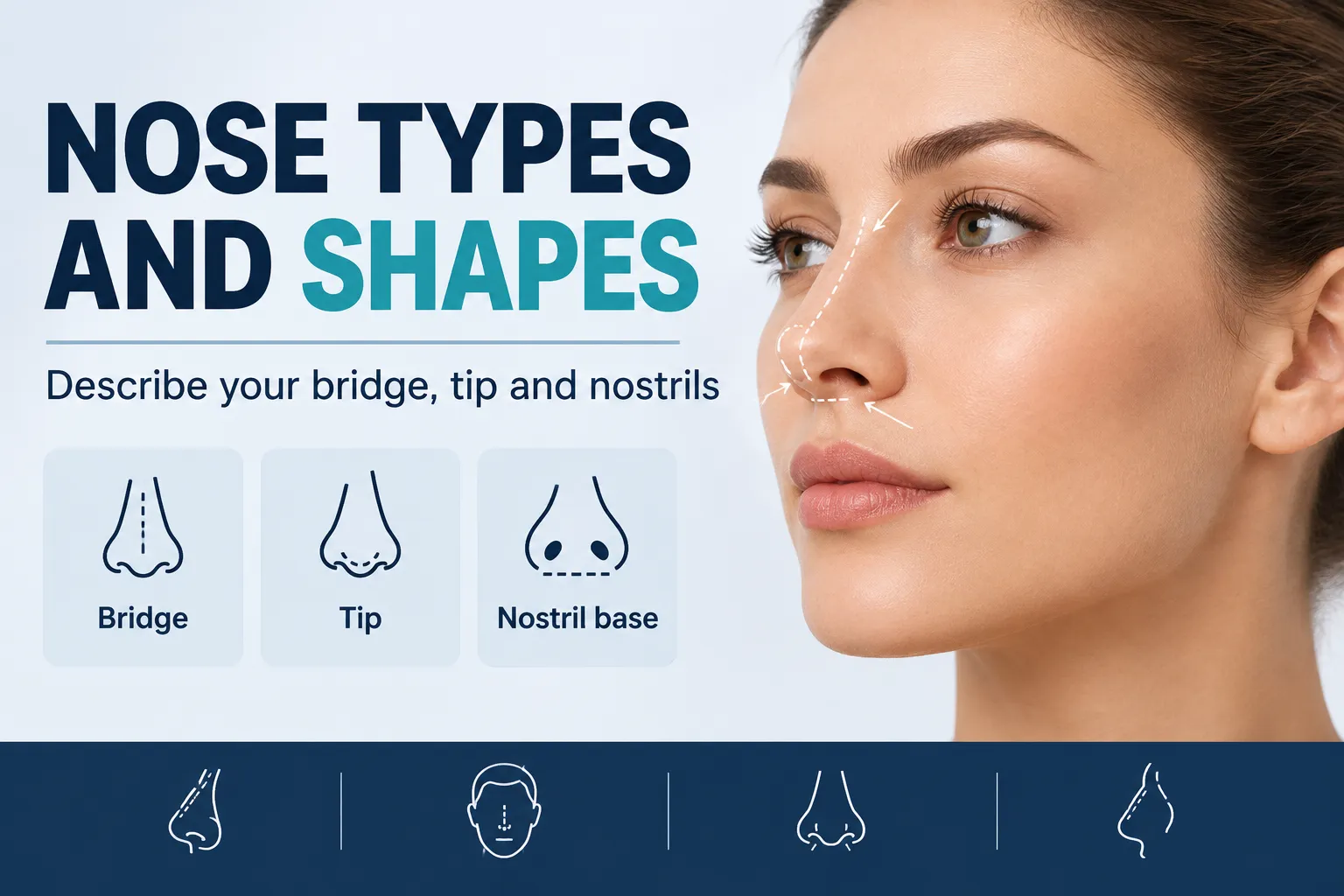
AI Summary
- Nose types: Labels such as Greek, Roman, button or bulbous describe visible features, and one nose often fits several of them.
- Self-assessment: Describe your bridge, tip, nostrils and symmetry from the front and side instead of forcing your nose into one category.
- Treatment limits: A rhinoplasty plan rests on your anatomy, breathing, health and goals, never on a preferred nose-type label.
- Decision-making: Ask what can realistically change, what should stay supported, and how complications and follow-up are handled.
Summary generated by AI, fact-checked by our medical experts
Nose types include straight or Greek, Roman or aquiline, button or upturned, and broad or rounded shapes. To identify yours, describe your bridge, tip, and nostril base from the front and side rather than choosing a single label. Labels can overlap. A shape description alone is not a reason for surgery.
Start with what you notice. You might see a bump in your profile, a rounded tip or a wide nasal base, and you might like other features exactly as they are. Writing that down gives a consultation a far clearer starting point than asking for a named nose type or someone else's profile.
Your preferences come first. You don't need to treat a family feature as a flaw, or change your nose to fit a gender template. If you want the procedure itself rather than shape identification, our rhinoplasty guide for patients considering surgery in Turkey covers it.
Everything You Need to Know About Rhinoplasty (Nose Job)
From surgery steps to aftercare, get all the details on how AKM Clinic performs world-class Rhinoplasty (Nose Job) in Istanbul.
Table of Contents
What are the different nose types?
The common nose types are straight or Greek, Roman or aquiline, button, upturned, broad, flat and bulbous. These labels describe what you can see. They are not diagnoses or grades of attractiveness. They also overlap, so your nose might have a straight bridge, a rounded tip and a broad base without fitting any single category.
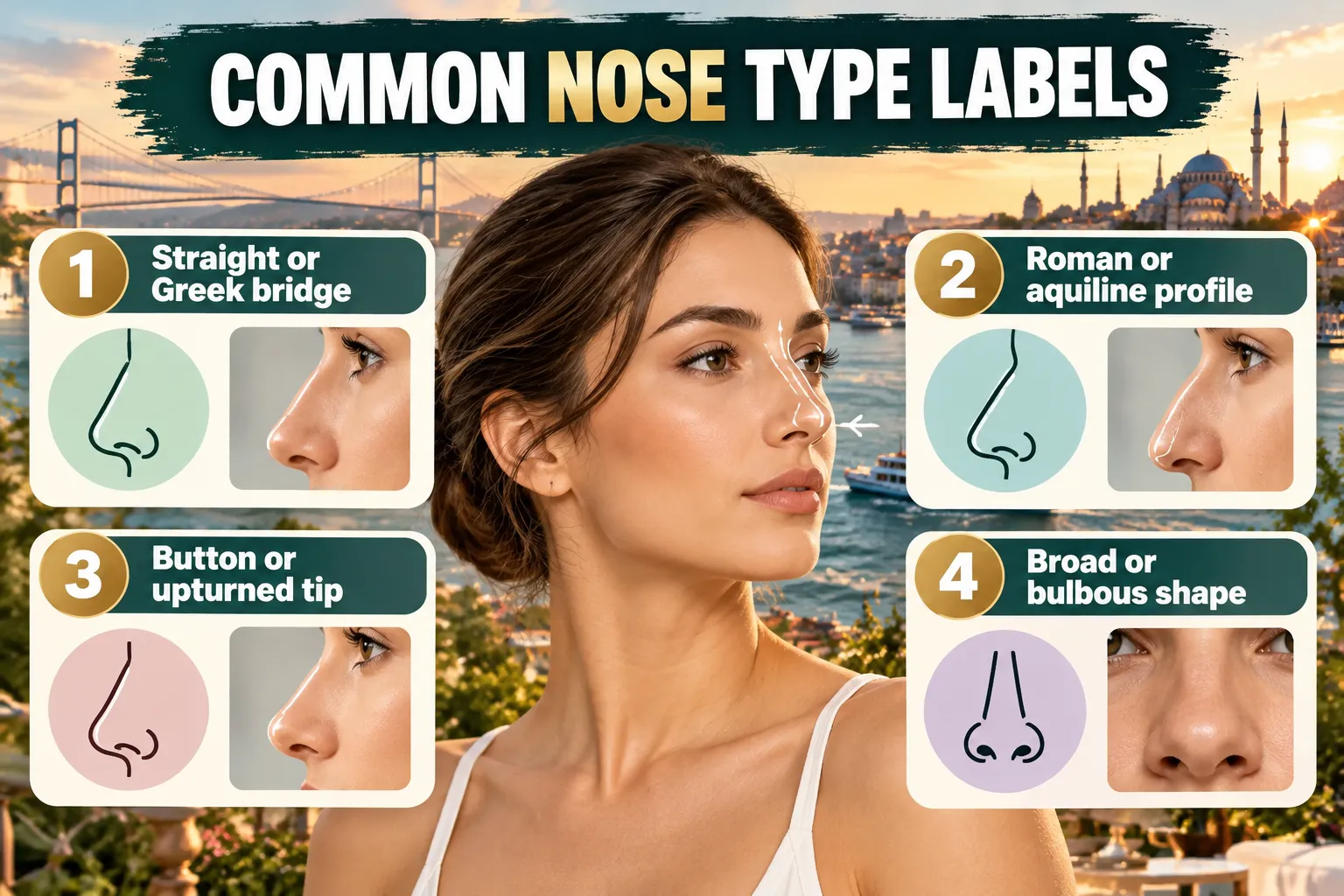
Straight or Greek nose: a relatively straight bridge
A straight nose has an even bridge in profile, without a pronounced bump or dip. Popular guides also call it a Greek nose. The label only concerns the bridge. It tells you nothing about whether the tip is rounded, pointed, upturned or angled down.
Straight does not mean symmetrical from every angle. Someone can call their profile straight and still describe their nose as broad from the front. Both descriptions can be true at once. Treat the label as shorthand, not a full description.
Roman, aquiline, and hooked nose: related but overlapping labels
These names blur together in everyday use. Roman usually means a prominent bridge with an outward curve or bump in profile. Aquiline describes a curved, prominent profile, sometimes with a tip that seems to point down. Hooked puts more weight on that downward curve near the tip.
The lines between them are loose. Different guides give different names to the same profile, so picking the right word matters less than naming the feature you mean. A bridge bump and a drooping tip are separate observations. One can exist without the other.
Button and upturned nose: tip shape and rotation
A button nose usually means a small-looking nose with a rounded tip, sometimes slightly upturned. Upturned refers specifically to the direction the tip points. The two aren't interchangeable. A rounded tip need not point up, and an upward tip need not look button-shaped.
Keep size and direction apart. If the term button nose appeals to you, ask yourself which part you like: the rounded outline, the compact size or the upward angle. That answer is more useful than the label. It also says little about bridge width or the shape of the nasal base.
Broad, flat, fleshy, and bulbous: different features, not interchangeable types
These words point to different things. Broad describes width, which may sit at the bridge, the tip or the nasal base, the lower area around the nostrils. Flat usually refers to a low-looking bridge. A broad nose isn't necessarily flat, and a low bridge doesn't automatically come with a wide base.
Fleshy is a loose everyday word for fullness. Bulbous more specifically describes a rounded, full-looking tip. Neither tells you what sits beneath the skin, where the nose is built from bone in its upper part and cartilage lower down, and that structure matters more in a consultation than any surface label.
This comparison keeps the labels apart.
| Label | Visible feature described | What it does not establish |
|---|---|---|
| Straight or Greek | Relatively straight bridge in profile | Symmetry or tip shape |
| Roman or aquiline | Prominent, outward-curving bridge or profile | A particular tip direction |
| Hooked | Downward-curving profile, especially near the tip | Bridge width |
| Button | Small-looking nose with a rounded tip | A specific bridge contour |
| Upturned | Upward-pointing tip | Overall size |
| Broad | Width at a named part of the nose | Bridge height |
| Flat | Low-looking bridge | Nostril or base width |
| Fleshy or bulbous | General fullness or a rounded, full-looking tip | What the skin and cartilage are like underneath |
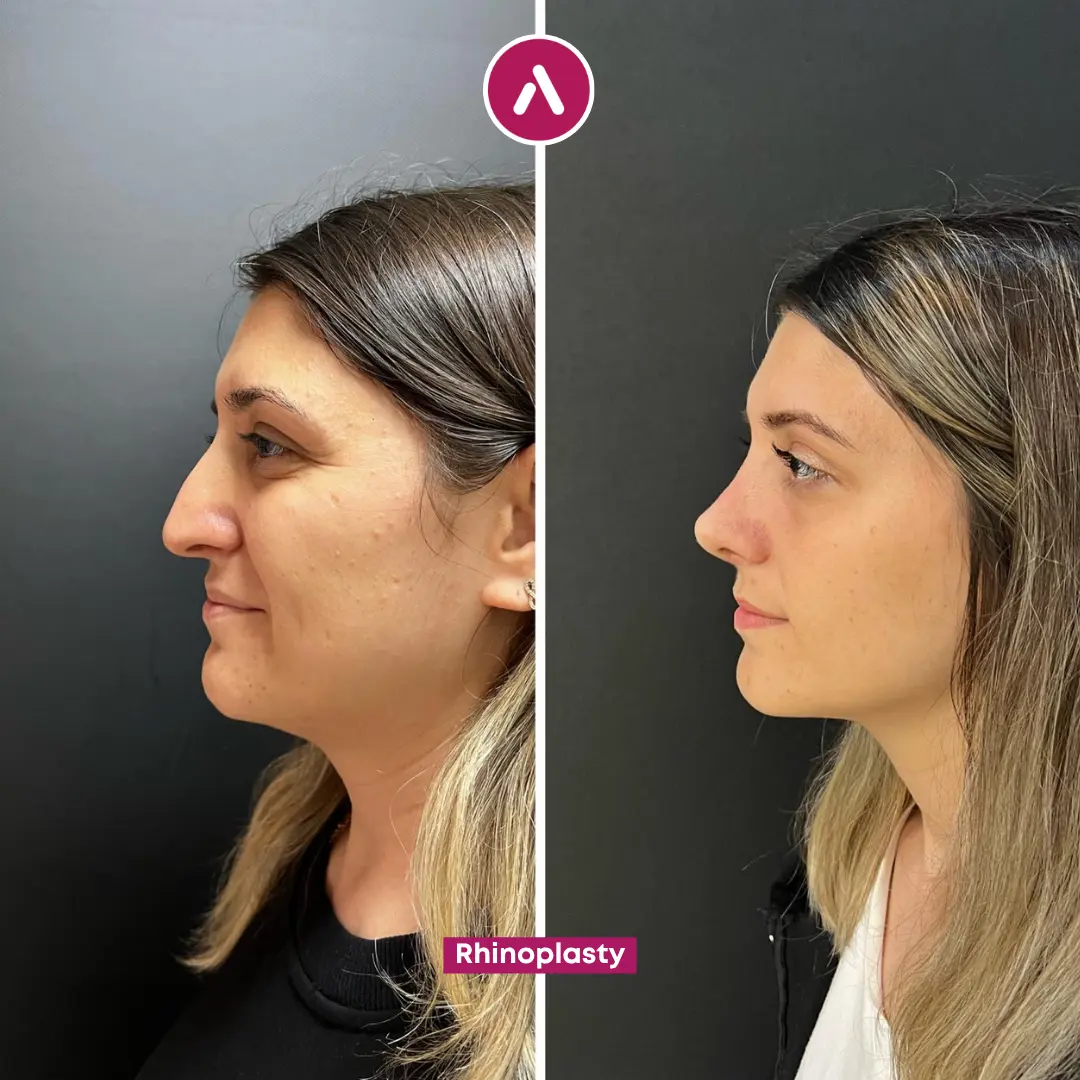
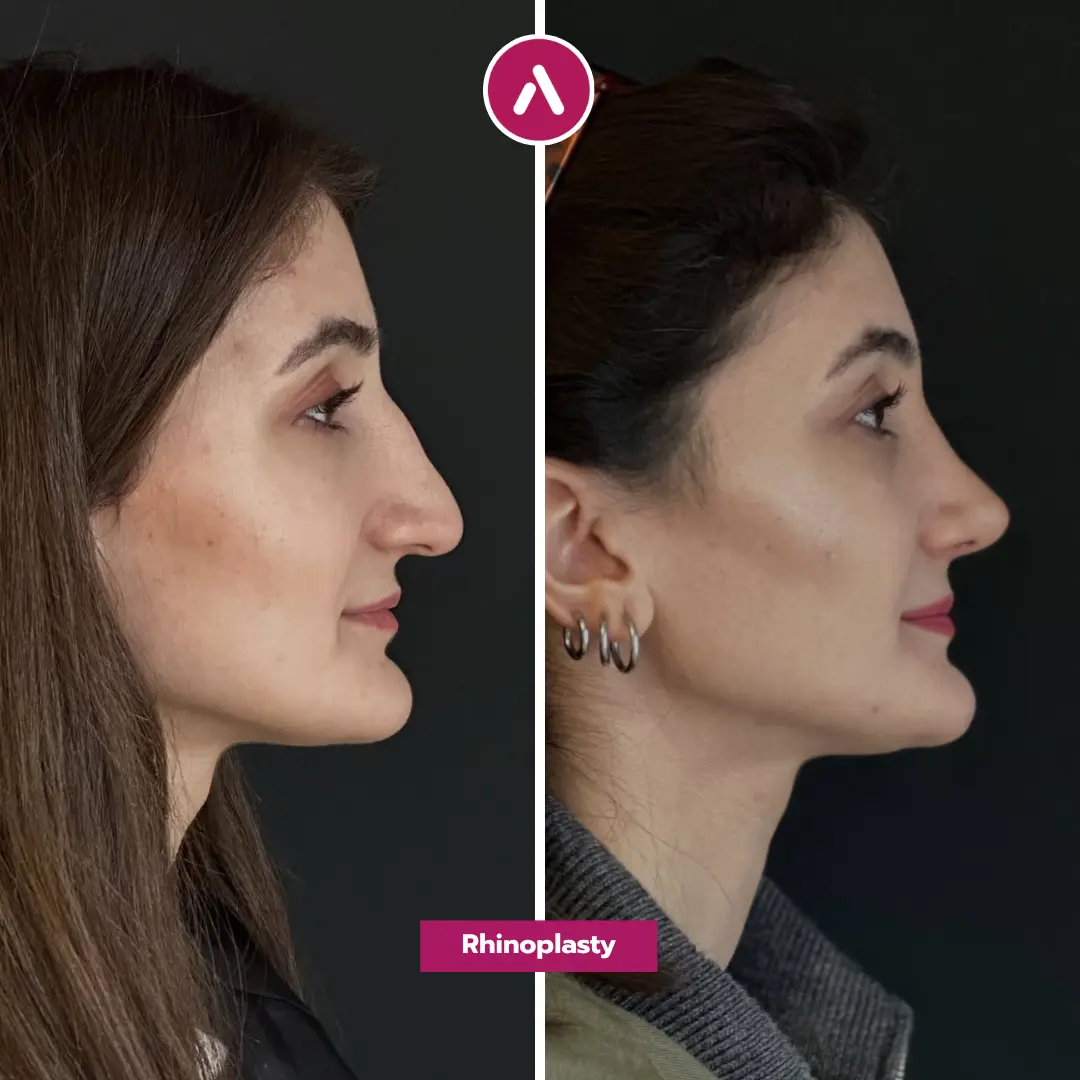
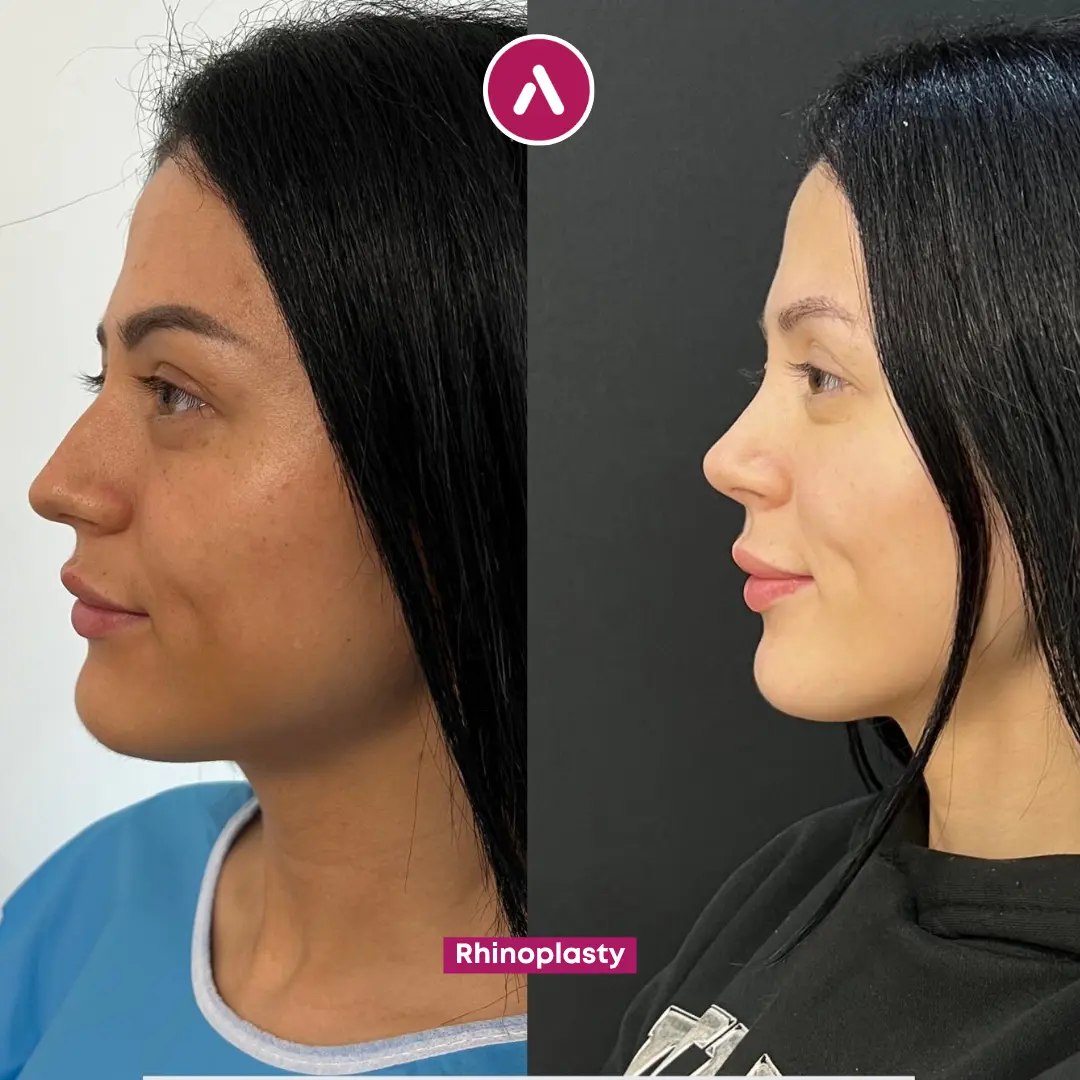
What nose type do I have?
Start with features, not a category. To work out what nose type you have, describe the front view and the side view separately. Use plain, unfiltered photos in even light as a discussion aid, not as a match for a social-media image. You don't need to end up with one label.
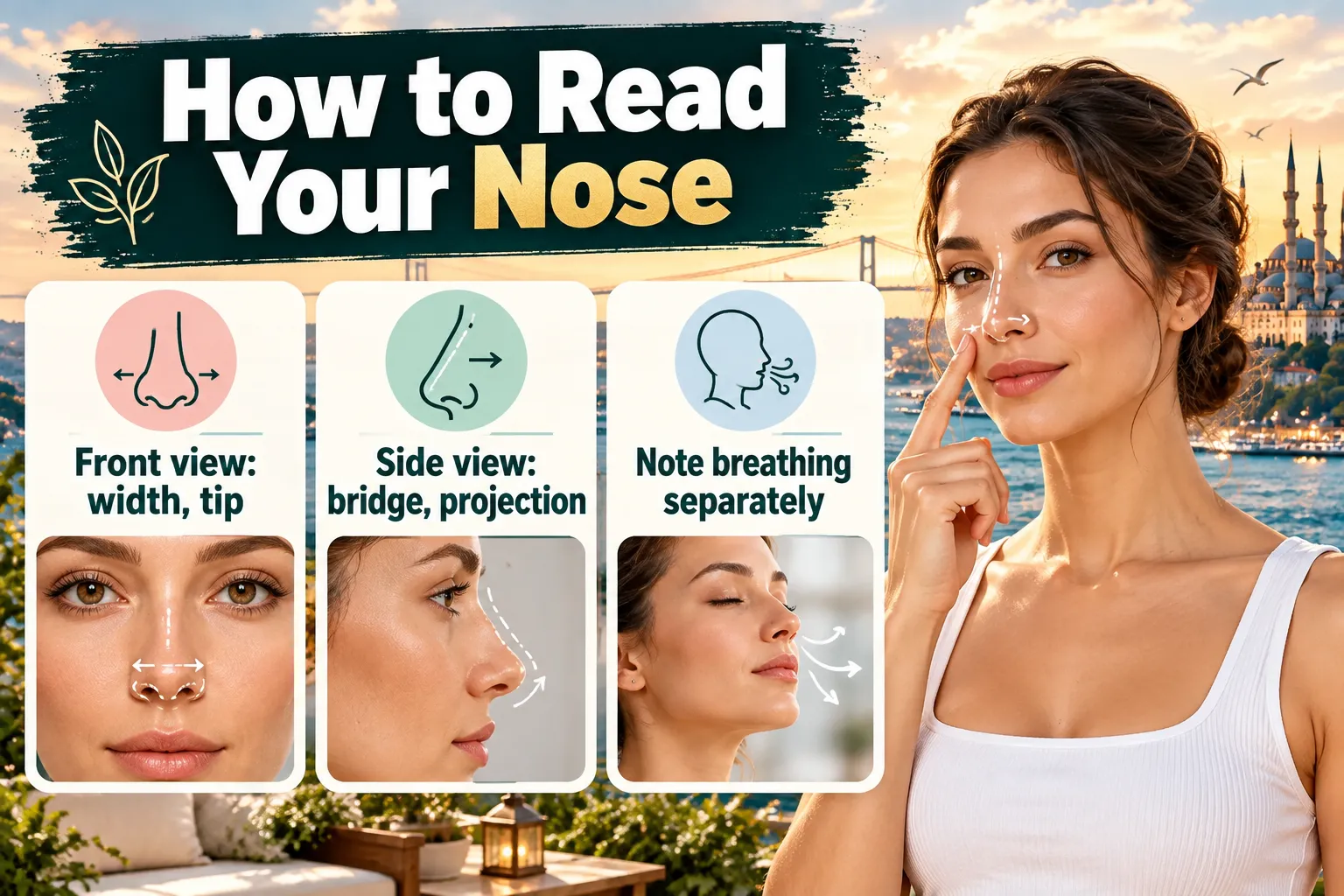
What can you describe from the front?
Keep it neutral. Take a front-facing photo with a relaxed expression, then note these features without scoring any of them:
- Bridge width: whether the upper part looks narrow, broad or somewhere in between.
- Tip outline: whether the tip looks rounded, defined or uneven.
- Nostril shape: the outline of each nostril and how alike they look, without assuming they should match exactly.
- Visible symmetry: which features look off-center, and whether that changes from one photo to the next.
Record what you're unsure about. If a feature looks different across photos, write that down instead of forcing an answer. Bring those images to your consultation.
What does your side profile show?
Look at the profile on its own. Focus on the bridge line, where the tip sits and how far the nose projects from your face. These three points add detail without needing another label.
- Does the bridge look straight, raised in one spot, or curved?
- Does the tip point up, forward or down?
- Is your concern the whole profile or one particular feature?
Separate what you see from what you want. You might note a visible bridge bump and a rounded tip, then say you'd like to discuss the bump but keep the tip. That is a much clearer brief than asking for a different nose type altogether.
Which concerns need an examination rather than a label?
Keep symptoms on their own list. Persistent trouble breathing through your nose, changes after an injury or previous nasal surgery all belong there, not inside a shape category.
Photos are only part of an assessment. They can't show why your breathing feels blocked. A surgeon also takes your medical history and examines both the inside and the outside of your nose before recommending anything.
Be specific. Write down what bothers you, when you notice it, and whether it's about appearance, breathing or both. Keep those notes with your photos so the consultation addresses your real concerns, not a label you found online.
Do nose types differ by gender or ethnicity?
Gender and heritage can shape how you describe your nose and what you want to keep. Your own priorities still lead. Treat searches like female, male or ethnic nose types as conversation prompts, never as templates for your face.
Female and male nose types: describe your own preferences
Name the feature behind the label. If you've been searching female or male nose types, say what those words mean to you: a stronger bridge, a softer tip outline, or a profile you'd rather leave alone.
Spell your preferences out. You might want to keep a prominent bridge and talk only about the tip, or keep your profile and ask about the front view. You don't have to request a smaller or more upturned nose because an image calls that shape feminine.
Ask for vague words to be explained. If a proposed change is described as masculine or feminine, ask which visible feature that refers to and whether it matches your goals.
What does the term Nubian nose actually describe?
The term Nubian nose appears in popular shape guides, usually as shorthand for a broader nasal base and a relatively low bridge. It's a description, nothing more. It is not proof of ancestry and no substitute for describing your own features.
You can drop the label entirely. If it feels inaccurate or uncomfortable, describe the bridge, tip and nostrils separately. Ask the team to use language you recognize rather than a category you wouldn't choose.
Family resemblance may matter more than terminology. Tell the team which features you value, including any you don't want touched.
Why nose types by ethnicity cannot define your treatment plan
Heritage belongs in the conversation on your terms. Instead of asking for a nose linked to another ethnic group, name the specific change you want assessed and the features you want kept. Don't let a racial or ethnic label stand in for that discussion.
Ask for an individual assessment. Skin thickness, cartilage support and surgical needs can't be read from ancestry, so ask the team to base its recommendations on your examination and your stated preferences.
AKM Clinic calls its philosophy Natural First: rejuvenation rather than alteration. That's a guiding approach, not a promised result. Make it personal by naming what should stay recognizably yours and asking how the proposed plan respects it.
Which nose features can rhinoplasty change?
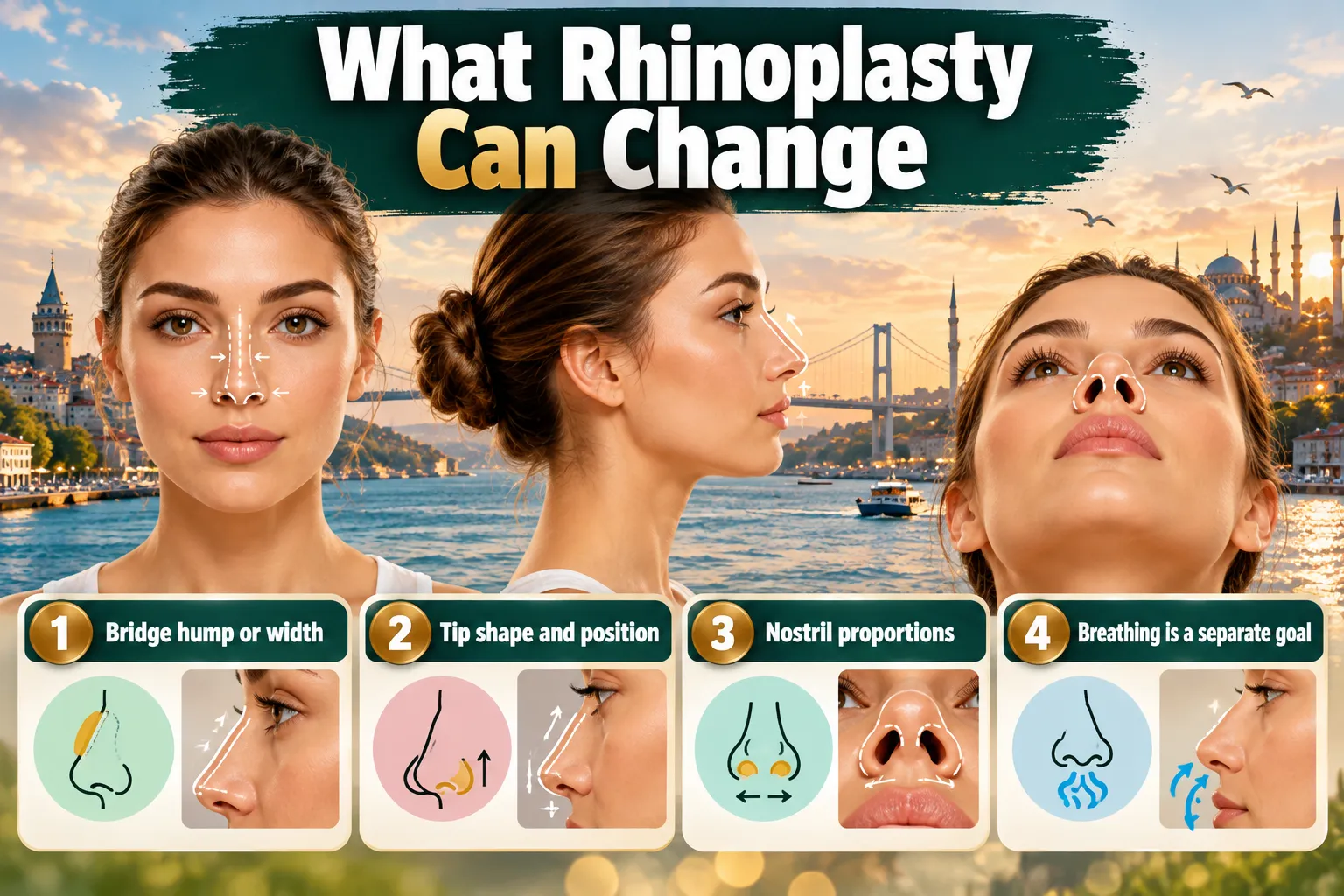
Rhinoplasty can change nasal size, bridge width and contour, tip shape and nostril proportions, according to the American Society of Plastic Surgeons overview of nose reshaping. A shape label is only the starting point. Every change you ask for should be tied to your anatomy, not to a named nose type treated as a prescription.
Can surgery change a prominent, low, or wide bridge?
The bridge deserves its own discussion. The same ASPS overview lists visible humps, depressions and width as features rhinoplasty may address. These are separate concerns, not different ways of saying a nose is large.
Be clear about which view bothers you. Smoothing a profile bump is a different request from wanting a narrower look from the front, so ask the surgeon to explain each change on its own.
- Which part of the bridge are we discussing?
- Would the plan reduce prominence, build up an area or change width?
- What would you leave unchanged, and why?
Reduction is one option among several. Surgery can work on bone, cartilage, skin or a mix of them, and a good plan weighs your other facial features and your nasal skin alongside the change you want. Ask the surgeon to walk you through that reasoning for your own face.
Entrust Your Rhinoplasty (Nose Job) to Board-Certified Experts
Perform your surgery with confidence. Meet our European Board Certified surgeons with over 2,000 successful facial surgeries.
Can a bulbous, drooping, or upturned tip be changed?
The tip can be part of the plan. ASPS names enlarged or bulbous tips, drooping tips and upturned tips among the features rhinoplasty can address when appropriate.
Say what you want to look different. You might want less fullness, a new tip position, or to keep the rounded outline that feels like you. Each of those deserves its own conversation.
Ask about support, not only reduction. During the examination, the surgeon looks at your skin thickness and cartilage strength, and those findings set the limits of what's possible.
A label doesn't choose an operation. Ask whether a tip-focused plan would address your concern, what would stay the same and why the proposed scope fits your goals. Our rhinoplasty before-and-after gallery can help that conversation, though it is not a forecast of your result.
Why changing appearance and improving breathing are separate goals
Keep these goals apart. Rhinoplasty can change how the nose looks, help breathing, or do both, and a proper preoperative examination checks your breathing as well as your shape.
Don't leave the functional goal unspoken. If you have breathing symptoms, ask what the examination found, whether the plan addresses it and what improvement the surgeon considers realistic.
Someone else's nose is not your endpoint. Results vary from person to person. Ask how your own skin, cartilage and healing could affect what is achievable.
When might changing your nose type be the wrong choice?
A nose-type label is not a reason for surgery. The decision should rest on your own concerns, realistic goals and your willingness to accept real trade-offs. Choosing no surgery is a valid outcome.
When health or expectations make surgery unsuitable
Readiness comes before reshaping. ASPS describes good rhinoplasty candidates as physically healthy nonsmokers with realistic goals whose facial growth is complete, as set out in its guidance on who is a rhinoplasty candidate.
Tell the surgical team about medical conditions, medications, supplements, smoking and any other nicotine use. Ask whether anything needs to be checked or adjusted first. Never stop a prescribed medication without guidance from the clinician who prescribed it.
Expectations matter just as much. If you want an exact celebrity nose, perfect symmetry or relief from pressure someone else is putting on you, pause before booking. Ask the surgeon which requests they would decline and why.
What trade-offs come with making a nose smaller?
Less tissue can mean less support. Ask how the plan would protect structure and breathing, and which features the surgeon would leave alone. Ask what reducing the bridge, tip or nostril width would mean for your particular anatomy.
Rhinoplasty risks include bleeding, infection, a reaction to anesthesia, numbness, an uneven-looking nose, difficulty breathing through the nose and the possibility of needing more surgery, as listed in Mayo Clinic's rhinoplasty overview.
Talk these through before you sign. Useful questions:
- Which of my requested changes would you advise against?
- Which limits should I accept rather than push for more reduction?
- What would a reasonable improvement look like, without promising a specific result?
What happens if breathing or appearance worsens after surgery?
Report worrying changes quickly. Contact the surgical team about worsening breathing, unexpected changes in shape or any symptom that concerns you, and ask whether you need an in-person examination.
Severe breathing difficulty or bleeding that won't stop needs local emergency care, not a wait for a virtual appointment. Tell the treating clinician you've had recent nasal surgery and share your surgical records.
An unexpected result needs an assessment, not just reassurance. Ask what the examination shows, what the options are and who coordinates any local care. Don't assume a revision, refund or correction is included; get responsibilities and any extra fees in writing before you agree to treatment.
Dreaming of a Natural-Looking Rhinoplasty (Nose Job)?
Our philosophy is “Rejuvenation, Not Alteration.” Discover how our surgeons achieve subtle, revitalized results that honor your unique beauty.
How does AKM Clinic assess your nose shape before travel?
Your shape label is only where the conversation begins. At AKM Clinic, a dedicated Patient Host arranges a free online consultation with photos. You then receive a personal treatment plan and quote, and only after that are your date, hotel and transfers organized.
What should you share during the online consultation?
Lead with your priorities. Explain which features you want assessed and which you want to keep, rather than asking for a particular nose type.
- Send the photos requested for your consultation.
- Describe your bridge, tip and nostril concerns separately.
- Mention breathing symptoms, previous nasal surgery and any injury.
- Share your medical history, current medications and relevant health details.
Photos open the discussion. They don't close it. The final surgical decision follows your medical history and an in-person examination of your nose.
Who evaluates rhinoplasty goals at AKM Clinic?
Dr. Göknil Gültekin is an otolaryngologist and facial plastic surgeon whose focus is primary, revision and preservation rhinoplasty. She holds the European Board of Otorhinolaryngology-Head and Neck Surgery qualification and is a Fellow of the European Academy of Facial Plastic Surgery.
Keep your goals in your own words. Ask which points need clarifying at the in-person examination and what the surgical team still needs from you before recommending a plan.
You can read about the clinic's team and its Natural First approach before your consultation.
Plan Your 4-5 Day Rhinoplasty (Nose Job) Stay in Istanbul
Get a clear, day-by-day itinerary covering arrival, surgery, recovery, and fit-to-fly clearance tailored to your schedule.
What should be settled before booking a flight to Istanbul?
Settle the sequence before a long-haul flight. Ask your Patient Host which arrangements are confirmed, which are still provisional and when your in-person assessment takes place.
For planning, the clinic's rhinoplasty page lists general anesthesia, a procedure time of 3 hours, 1 night in hospital, some time off before returning to work and a full recovery time of 3-6 months. Ask how that applies to your own plan.
Keep a written list of open questions. If the proposed plan doesn't reflect your priorities, raise it before booking, not on arrival.
A private driver meets patients at Istanbul Airport (IST) or Sabiha Gökçen (SAW), and recovery stays are at selected five-star hotels. The hotel and private transfer details explain how that works.
What should you confirm before agreeing to a nose-shape plan?
Get the essentials in writing. Before you agree, make sure you understand the proposed changes, the limits discussed and how to reach the team afterward.
- Your agreed goals and the features you want to keep.
- The changes the surgeon considers unrealistic or unsuitable.
- The surgical team responsible for your care.
- How to raise concerns during recovery and after you return home.
What can rhinoplasty reviews tell you about communication?
Read reviews for patterns. Patient reviews of AKM Clinic can show how people describe explanations, coordination and access to support. They can't predict your result.
Take open questions to your Patient Host. Ask who receives your messages, how questions reach the doctor, and what happens if you need an examination rather than a chat.
How will follow-up work after you return home?
Know the arrangements before you leave. After surgery, the medical team monitors patients closely. The Patient Host is reachable on WhatsApp around the clock.
You receive medication, compression garments and written care instructions, so check which of these apply to rhinoplasty. Every patient has a final in-person check-up with the doctor before flying home.
Support carries on at home. Your Patient Host schedules virtual follow-ups at 1, 3, 6 and 12 months so the doctor can check healing and answer questions, and the step-by-step patient journey shows how it fits together.
Line up local care as well. Know where you would get an in-person assessment in the United States, and use urgent local care for severe symptoms.
Are recovery technologies relevant to your individual plan?
Ask rather than assume. The clinic offers hyperbaric oxygen therapy (HBOT) and a low-level laser therapy (LLLT) system with 424 medical-grade laser diodes at 650 nm, both described on the technology and standards page. Ask whether either belongs in your plan, and why.
Prepare your photos and a short written description of the features you want assessed. Ask for a plan built around your face, not a copied nose or a label.
This guide is educational and does not replace an individual medical consultation.
Frequently Asked Questions: Nose Types
Which is the most common nose type?
No single label works as a benchmark. Straight, aquiline, button and bulbous describe different, often overlapping features, not exclusive categories. A claim about how common a type is only means something if it names the population and the method used. For yourself, describe your bridge, tip and nasal base instead of leaning on an online percentage.
What is the rarest type of nose?
A rarest-nose claim only holds up if the source explains who was studied and how each shape was classified. Popular labels can't establish rarity on their own. Treat rankings without that information with caution. You don't need an unusual label to explain what you like or want assessed.
What is the most desirable nose type?
There isn't one. Desirable is a personal judgment, not a diagnosis. If you're considering surgery, describe the features you want to keep as clearly as the ones you want changed. A careful surgeon plans around your face, skin and goals, not a trend.
Can your nose type reveal your personality?
No. A nose-shape label says nothing about personality, intelligence or character. Shape guides describe appearance only. Claims that link a prominent bridge or an upturned tip to certain traits are stereotypes, not information for a decision about surgery.
Can your nose type change as you get older?
Some people notice their nose looks different with age as the surrounding face changes. That doesn't mean it moves neatly from one named type to another. If you notice a change, bring older photos to your consultation and ask for an assessment.
Why does my nose look different when I smile?
Facial expressions can change how your nose looks, so it may appear different when you smile than when your face is at rest. Share relaxed photos and a short, unfiltered video of your smile. Ask what a plan could realistically change during expression, not just in a still profile.
Can nose clips or facial exercises permanently change nose shape?
Treat any claim that nose clips or facial exercises can permanently reshape the nose with caution. Before buying a device, ask what clinical evidence backs its specific claims. Product before-and-after images are not proof of a lasting change.
Will US health insurance cover surgery because of my nose type?
A shape label doesn't establish medical necessity. Insurance rarely covers cosmetic surgery, while surgery for a documented breathing problem may qualify under some policies. Ask your insurer about documentation, prior authorization and exclusions for treatment abroad before booking. Don't assume your plan will reimburse surgery in Istanbul.
Have Specific Questions About Rhinoplasty (Nose Job)?
Chat directly with our dedicated patient coordinators regarding Rhinoplasty (Nose Job). Get instant answers and personalized support.
Related Treatments
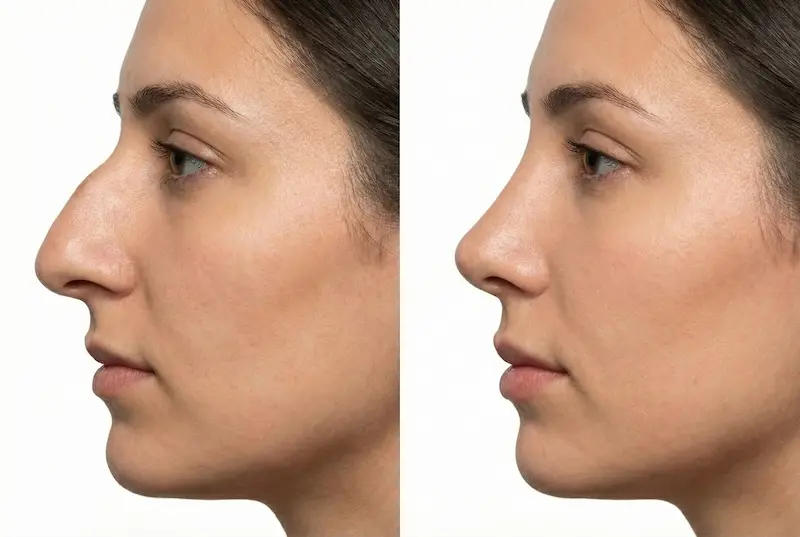
Rhinoplasty (Nose Job) in Turkey
Explore Rhinoplasty in Istanbul with European Board Certified Surgeons, 3D planning, and our Rapid Recovery & Safety Protocol (HBOT + LLLT).
SMAS Facelift in Turkey
Discover the SMAS facelift in Turkey. Achieve natural rejuvenation with European Board Certified surgeons. Compare US vs Turkey costs and recovery today.

Facelift in Turkey
Evidence-based facelift guide: deep plane vs SMAS, anesthesia options, day-by-day recovery, scars, risks, longevity, and US vs Turkey cost/value.
Revision Facelift in Turkey
Learn revision facelift (secondary facelift): who qualifies, when to revise, techniques, anesthesia, recovery timeline, risks, scars, and cost.
Ready to Start Your Own Transformation Journey?
Join the 2,000+ patients who trusted Dr. Akif Mehmetoğlu and the AKM Clinic team. Your journey to a more confident, revitalized you begins with a simple, no-obligation conversation. Contact us today from the USA for your free virtual consultation.
#1: Get Your Free Personalised Quote
Start with a free, no-obligation online consultation. Share your photos, and our surgical team will provide a fully personalised treatment plan and a transparent, all-inclusive price package. No hidden fees.
#2: Secure Your Date & VIP Booking
Once you're ready, our dedicated patient coordinators will help you secure your procedure date. We'll handle all your bookings, including your 5-star hotel and private VIP airport transfers.
#3: Arrive in Istanbul & Meet Your Surgeon
Arrive at Istanbul Airport (IST) and be greeted by your private driver. Settle into your hotel and prepare for your in-person consultation, where you'll meet your specialist surgeon to finalise the details for your "natural, subtle, and revitalized" new look.