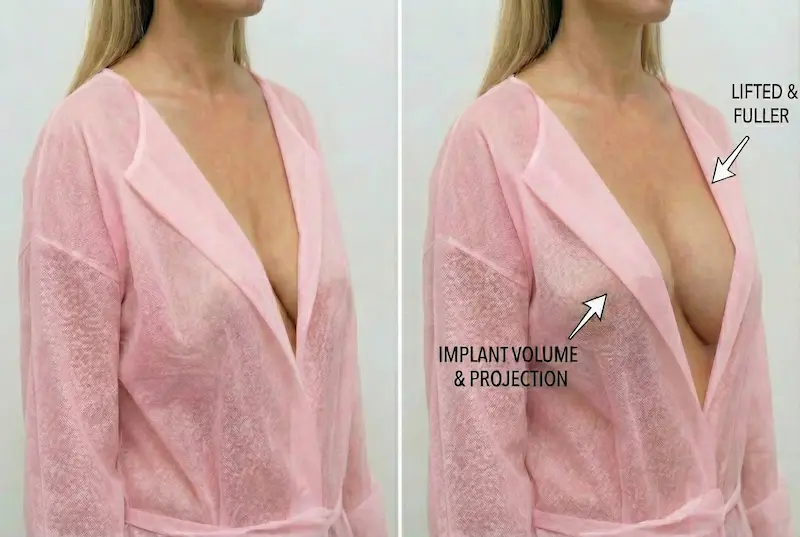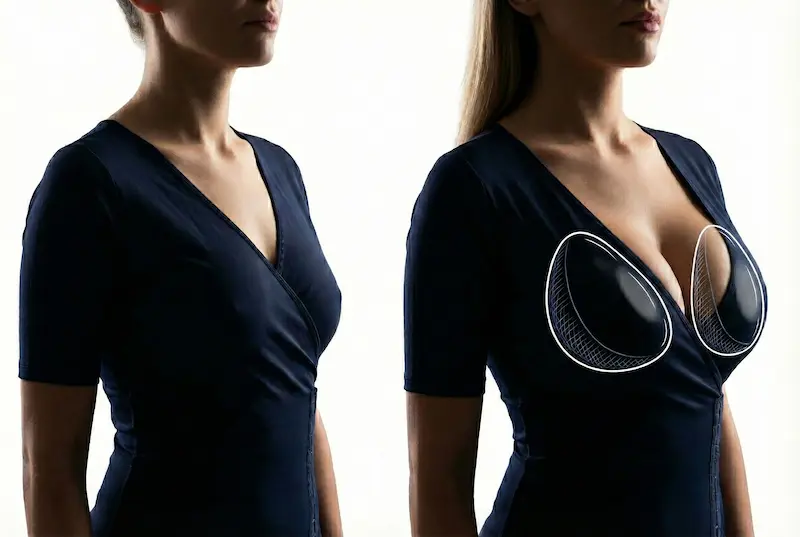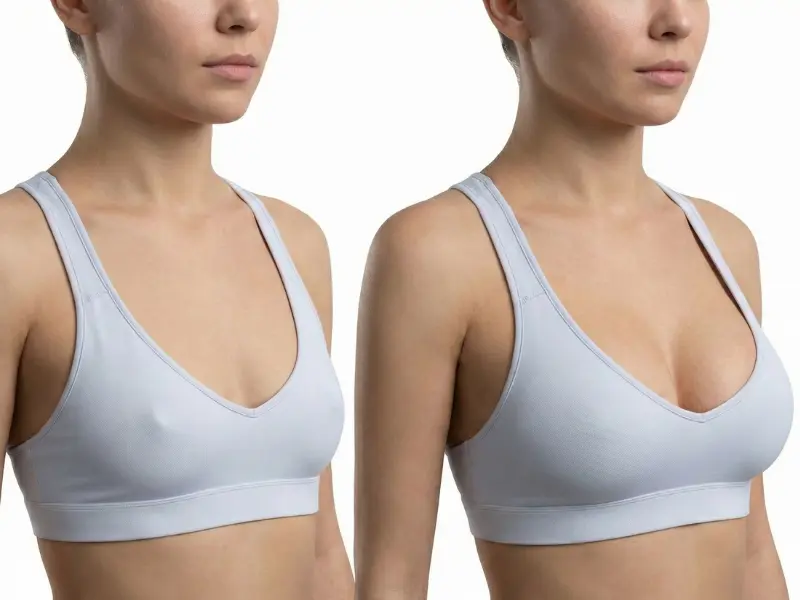
If you’re exploring lipofilling breast Turkey options, you’re likely looking for a result that feels truly yours: softer, more natural-looking volume without placing a foreign body (implant). Breast lipofilling—also called fat transfer breast augmentation—uses your own purified fat to subtly enhance breast shape, improve contour, and add modest volume. This approach has grown in popularity among “expert patients” because it aligns with modern medical science: precision technique, careful patient selection, and evidence-based safety protocols.
In this guide, we’ll break down what breast lipofilling Turkey involves, who it’s best for, what results are realistic, and how to evaluate safety—especially if you’re comparing fat transfer breast augmentation Turkey vs. implants. We’ll also address what matters most to detail-oriented patients: technique, risk reduction, recovery, and what scientific research suggests about fat survival and long-term outcomes.
Key idea: Breast fat transfer is designed for natural enhancement—not dramatic “implant-level” volume. The best outcomes come from precision harvesting, careful fat processing, and micro-layered injection performed by an experienced surgical team.
Table of Contents
What Is Breast Lipofilling (Fat Transfer Breast Augmentation)?
Breast fat transfer Turkey procedures are built on one concept: moving fat from areas where you have extra (donor sites) to the breast where you want refined volume. Because the material is your own tissue, it’s also referred to as autologous fat transfer breast Turkey. In practical terms, breast lipofilling is both a contouring procedure (where fat is removed) and a sculpting procedure (where fat is placed)—but the success depends on technique and biology.
The core concept: using your own fat (not a foreign body)
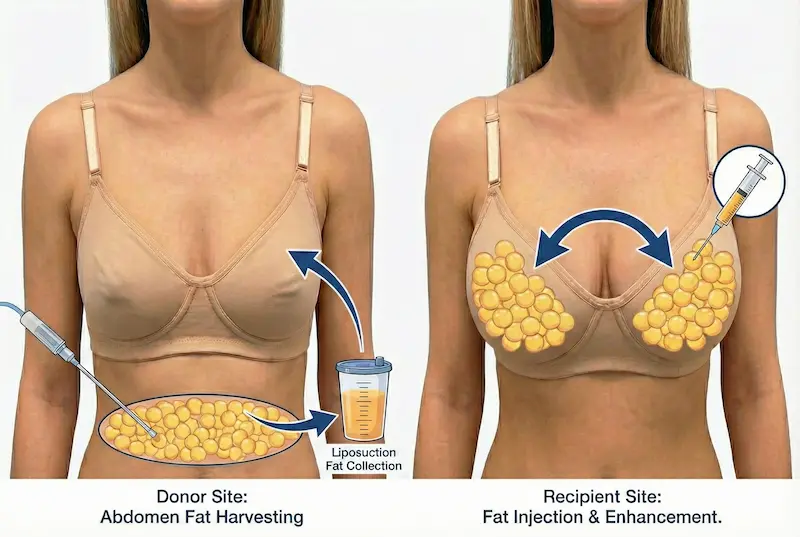
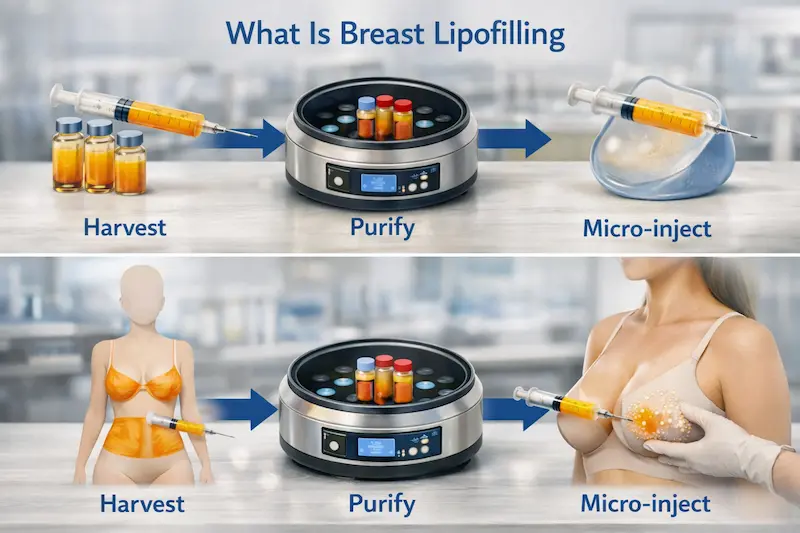
In lipofilling breast augmentation Turkey, fat is gently removed via liposuction, purified, and then reinjected into the breast using a controlled, micro-droplet technique. The goal is to place tiny parcels of fat into well-vascularized tissue so that the transferred cells can establish a blood supply. This is why reputable surgeons emphasize “fat handling” and “layering” rather than simply “adding volume.”
- Source: your own fat (commonly abdomen, flanks, thighs)
- Method: harvest → process/purify → micro-inject
- Outcome: subtle, natural-looking enhancement and contour refinement
How it differs from implants and from a breast lift
Fat transfer breast augmentation Turkey differs from implants in a fundamental way: implants deliver predictable, larger volume changes, while fat transfer typically creates a smaller, more natural increase with added benefits of body contouring. It also differs from a breast lift (mastopexy): a lift repositions and reshapes the breast envelope (skin and nipple position), while lipofilling primarily adds volume and improves contour. Some patients benefit from combining techniques, but the “right” plan depends on anatomy and goals.
| Option | Best for | Typical volume change | Key trade-offs |
|---|---|---|---|
| Breast lipofilling | Natural look/feel, subtle enhancement, contour refinement | Modest (often staged) | Fat retention varies; may need top-up |
| Implants | More dramatic size increase, highly predictable volume | Moderate to large | Foreign body; implant-related long-term considerations |
| Breast lift | Correcting droop, repositioning nipple/skin envelope | Not primarily a “volume” procedure | Scars; volume may still require fat or implant |
Typical “natural” goals: subtle size increase + shape refinement
Most patients choose breast fat transfer Turkey for “invisible improvement”—the breasts look fuller and more balanced, but not obviously “done.” Common goals include:
- Soft, natural volume enhancement (often modest per session)
- Improving upper-pole fullness (within safe anatomical limits)
- Smoothing mild contour irregularities
- Better symmetry when one side is slightly smaller
It’s important to align expectations with biology: scientific research and clinical experience both show that not all transferred fat survives long-term. This is not a “failure”—it’s a known variable that skilled technique and good aftercare aim to optimize.
Who Is a Good Candidate (and Who Isn’t)?
Candidate selection is one of the most important safety and outcome drivers in breast lipofilling Turkey. A trustworthy surgeon will evaluate your goals, your donor fat availability, breast anatomy, skin quality, and medical factors that influence healing and fat survival. If you want a dramatic cup-size jump, an implant-based plan may be more appropriate—or a staged strategy may be discussed depending on your anatomy.
Ideal candidates: realistic expectations + adequate donor fat
Generally, good candidates for lipofilling breast augmentation Turkey are those who want a natural enhancement and have enough donor fat to harvest without aggressive liposuction. Patients who value a softer look and feel—and accept that results may be subtle or staged—often do best.
When implants may be better: seeking a large cup-size jump
If your priority is a significant size increase in one step, implants tend to provide more predictable volume. Fat transfer can still play a role in refining implant edges or improving contour in some plans, but the decision should be made after a thorough surgical assessment.
Key medical factors: smoking, BMI extremes, breast health screening
To reduce risk and improve fat survival, reputable clinics will screen for factors that can compromise circulation and healing. Smoking (including nicotine) is a major concern, as it can impair microvascular blood flow—critical for graft “take.” Breast imaging and routine breast health screening may also be recommended depending on age and history.
Safety note: The best outcomes come from conservative planning, meticulous technique, and clear follow-up—especially when traveling for surgery.
Step-by-Step: How the Procedure Works (From Harvest to Injection)
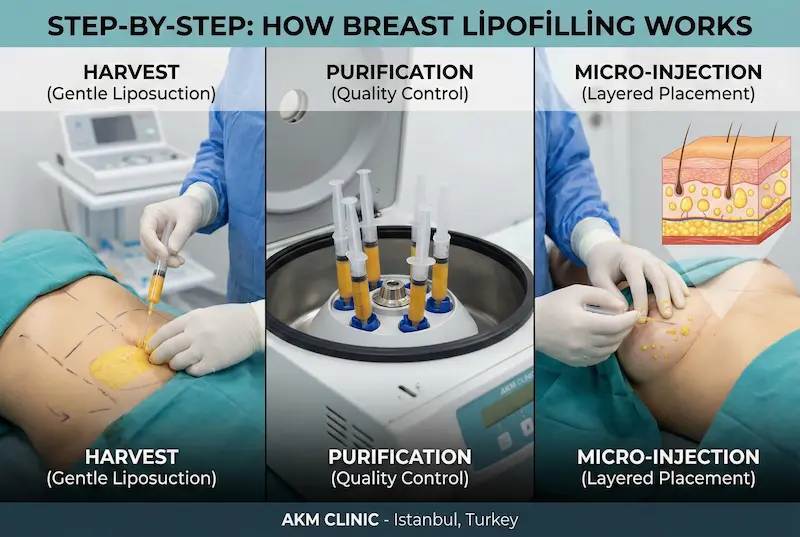
A successful fat transfer breast augmentation Turkey procedure is not “just moving fat.” It’s a multi-step process where small technical details can determine how smoothly the breasts heal and how much volume remains. In modern medical science, fat grafting outcomes are strongly linked to gentle harvesting, careful purification, and micro-layered placement that supports blood supply and long-term fat survival.
Donor areas: abdomen, flanks, thighs—how surgeons choose
For breast fat transfer Turkey, your surgical team typically selects donor areas where fat can be removed evenly while preserving natural contour. Common donor areas include the abdomen, waist/flanks, and thighs. The goal isn’t aggressive liposuction—it’s a smooth harvest that provides viable fat while keeping donor sites proportional.
At AKM Clinic, this body-contouring dimension is supported by surgeon expertise that includes awake liposuction and cosmetic dermatology, which matters because donor-site shaping affects your overall “before-and-after” satisfaction (breasts and silhouette).
Fat processing: purification and why it matters for survival
After harvesting, the fat must be processed to remove excess fluid and non-viable components. Think of this as “quality control.” Cleaner fat tends to integrate more predictably and may reduce the risk of inflammatory reactions that contribute to oil cysts or firm nodules.
Expert patient takeaway: Ask how the fat is purified and how the team preserves cell viability. This is one of the most important (and most under-discussed) variables in breast lipofilling Turkey.
Micro-injection technique: layering fat for a smooth, natural contour
In lipofilling breast augmentation Turkey, experienced surgeons typically place fat in tiny amounts across multiple tissue layers (micro-droplets). This approach helps each parcel of fat sit near a blood supply, improving the chance that it survives long-term. It also helps avoid lumps by preventing large fat “pockets” from forming.
Results You Can Expect: How Much Volume, How Natural, How Long?
The most common reason patients choose breast lipofilling Turkey is the quality of the result: soft, natural movement and a “this is my body” feel. The trade-off is that volume gains are usually modest and can be partly variable because not all transferred fat survives. This is why many reputable surgeons frame fat transfer as a natural enhancement that may be staged rather than a single-step “big change.”
Realistic volume gain per session and why “subtle” is the standard
Most patients should expect a modest enhancement rather than a dramatic cup-size jump. If your priority is a large, predictable increase, implants may be a better match—while autologous fat transfer breast Turkey is ideal for refinement, gentle fullness, and natural aesthetics.
Fat survival (retention) explained: what affects it most
Scientific research in fat grafting consistently emphasizes the same theme: graft survival depends on blood supply, gentle technique, and patient-specific factors. Variables that can influence retention include nicotine use, overly aggressive compression/pressure on the breasts early on, major weight fluctuations, and the surgeon’s injection strategy (micro-layering vs. bulk placement).
- Technique factor: micro-layered placement supports vascular integration
- Patient factor: nicotine impairs microcirculation
- Aftercare factor: protecting the graft during early healing
One session vs. staged sessions: when “top-ups” make sense
Some patients achieve their goal in one session; others prefer a planned second “top-up” to build volume gradually. This staged approach can be particularly helpful for patients who want a natural look but need a bit more fullness than a single session can reliably provide.
Safety & Risks (The “Expert Patient” Checklist)
When patients worry about “botched” outcomes abroad, the real risk is rarely the country—it’s the system: standards, sterility, regulation, and the surgeon-led accountability model. For breast lipofilling Turkey, safety is primarily about (1) proper patient selection, (2) meticulous technique, and (3) operating within a regulated, hospital-grade environment.
The non-negotiables: sterile technique, imaging, patient selection
AKM Clinic’s patient safety framework is presented as “zero-compromise” hygiene aligned with CDC and WHO-mandated standards, supported by multi-stage sterilization and modern autoclaves—exactly the kind of institutional backbone an expert patient should look for when traveling for surgery.
In addition, the clinic states it is licensed by the Turkish Ministry of Health, with operational practices externally validated through official credentials—another important trust layer for international patients.
Main risks: fat necrosis, oil cysts, calcifications, asymmetry
The most common issues discussed in clinical settings include firmness or small nodules (often related to fat necrosis), oil cysts, contour irregularity, and asymmetry. A transparent clinic will explain what’s “normal,” what needs monitoring, and how concerns are handled—especially after you return home.
Rare but serious concerns: fat embolism—how skilled technique reduces risk
Serious complications are rare, but expert patients should know what questions to ask. Technique matters: careful cannula use, micro-layering, anatomical awareness, and conservative planning are key risk-reduction principles. If a clinic rushes the explanation or avoids discussing complication protocols, that’s a red flag.
Ask this directly: “If I have a concern after I return home, what is your follow-up schedule and response pathway?”
AKM Clinic describes a long-term follow-up plan structured around virtual check-ins at 1 month, 3 months, 6 months, and 1 year—designed to reduce the fear of being “left alone” once you fly back.
Recovery Timeline (Day-by-Day Basics + Travel Planning)
Recovery after breast fat transfer Turkey has two “tracks”: the breasts (where fat needs to settle and integrate) and the donor areas (where liposuction creates soreness and swelling). A high-quality plan is not just about comfort; it’s about protecting the fat graft during the early healing window—something both clinical experience and broader fat-grafting science take seriously.
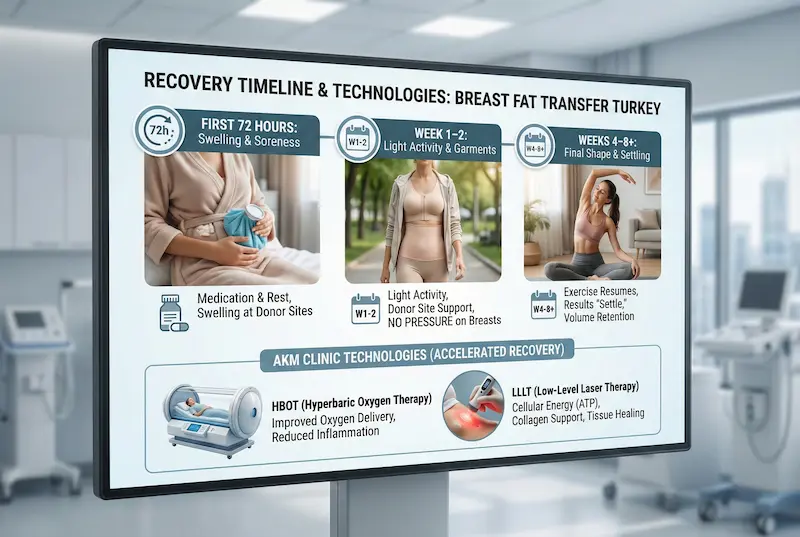
First 72 hours: swelling, soreness, what’s normal
In the first few days, swelling and soreness are expected—often more noticeable at donor sites than the breasts. Your team should provide clear guidance on medications, sleeping position, and what “normal” looks like versus what warrants an urgent check.
Week 1–2: returning to light activity, bras/garments guidance
Most patients transition to light activity relatively quickly, but the key is avoiding pressure that can compromise the graft. Garment strategy is usually more relevant to donor areas (to support contour and swelling control) while the breasts are protected from unnecessary compression early on.
Weeks 4–8+: exercise, final shape, when results “settle”
As swelling resolves, the breasts begin to look more “settled.” Final shape becomes clearer over time, and this is also when patients start to understand how much volume has retained. A structured follow-up plan is important here—especially for international patients.
AKM Clinic positions HBOT and LLLT as post-operative recovery technologies intended to reduce inflammation, support tissue healing, and accelerate recovery through mechanisms such as improving oxygen delivery (HBOT) and stimulating cellular energy (ATP) and collagen-related pathways (LLLT).
Lipofilling in Turkey: How to Choose a Safe Clinic (Avoiding “Botched” Outcomes)
For expert patients comparing breast lipofilling Turkey providers, the biggest differentiator is not marketing—it’s clinical governance: surgeon leadership, hospital-grade standards, transparent communication, and a realistic plan for follow-up once you return home. A safe, high-quality fat transfer breast augmentation Turkey experience should feel structured, not improvised.
Surgeon-led model vs. intermediaries: why accountability matters
Many international patients worry about being “sold” a package rather than being treated under a physician-led plan. The safest pathway is one where a qualified surgical team owns the pre-op assessment, the operative plan, and the post-op follow-up. In facial aesthetics, AKM Clinic emphasizes a surgeon-led approach including a dermatosurgeon’s expertise working alongside the plastic surgery team—this same surgeon-led accountability principle is what expert patients should look for in body procedures as well: a medical team that plans, performs, and follows your case end-to-end.
Expert patient filter: “Who is responsible for my plan, my surgery day decisions, and my follow-up at 1, 3, 6, and 12 months?”
Hospital standards, licensing, and transparency expectations
Safety is built on systems. AKM Clinic describes a framework aligned with CDC/WHO hygiene expectations, multi-stage sterilization, and modern autoclave use—these are the kinds of institutional standards you should expect for any breast fat transfer Turkey procedure.
They also state the clinic is licensed by the Turkish Ministry of Health, which is the type of credentialing an international patient should verify when evaluating a clinic’s legitimacy and oversight.
What to ask in a consult: technique, complication plan, follow-up schedule
Before committing to lipofilling breast augmentation Turkey, use a consult to validate clinical details, not just logistics. Here is a practical checklist:
- Technique: “Do you use micro-layered fat placement? How do you avoid bulk pockets?”
- Fat processing: “How is fat purified, and what steps protect viability?”
- Imaging & screening: “What breast imaging or screening do you recommend for my age/history?”
- Complication protocol: “If I develop a lump, asymmetry, or persistent pain—what is your protocol?”
- Follow-up: “What is your long-term plan after I fly home?”
AKM Clinic describes structured virtual follow-ups at 1, 3, 6, and 12 months—important because it reduces the common medical tourism fear of limited aftercare once you return to the US.
Breast Lipofilling Cost Turkey: What You’re Really Paying For
Patients searching breast lipofilling cost Turkey often want a single number—but responsible pricing depends on clinical variables: how much liposuction is required, how many areas are harvested, whether staging is planned, what level of anesthesia and facility standards are used, and what post-op recovery support is included. The safest way to evaluate cost is to understand what a quote covers and what it may exclude.
Key cost drivers: donor areas, volume goals, and staging
Autologous fat transfer breast Turkey can be a single session or staged. Staging may increase total cost over time, but it can also be the most science-aligned approach for patients who want to build volume gradually while prioritizing safety and graft survival.
- Number of donor areas: more areas can mean more operative time
- Volume target: subtle enhancement vs. fuller enhancement
- Staged plan: one session vs. planned “top-up”
What a trustworthy quote should include (and what to confirm)
When comparing quotes for breast lipofilling Turkey, confirm whether pricing includes:
- Surgeon fees + operating room/facility costs
- Anesthesia and anesthesia team fees (if applicable)
- Pre-op assessment and required labs/imaging guidance
- Compression garments for donor areas
- Post-op checks and a clear follow-up schedule
Red flags in “too cheap” offers
In cosmetic surgery, unusually low pricing can indicate compromised standards—shortened consults, unclear accountability, or limited post-op care. For procedures involving fat grafting, “cheap” can also mean corners cut in fat handling and sterile processing—two variables strongly emphasized by scientific research and clinical best practice.
Rule of thumb: In fat transfer, the “invisible work” (sterility, processing, technique, follow-up) is exactly what protects your outcome.
Frequently Asked Questions (FAQ): Lipofilling Breast Turkey
Below are concise answers to the most common questions expert patients ask when researching breast lipofilling Turkey and breast fat transfer Turkey.
How many cup sizes can fat transfer add?
Typically, fat transfer is best for a modest increase and shape refinement. If you want a large, predictable size jump, implants may be more suitable.
Will the fat transfer feel soft and natural?
Yes—when healing is uncomplicated, fat transfer is known for a soft, natural feel because it uses your own tissue rather than a foreign body.
What percentage of fat typically survives?
Some resorption is expected; retention varies by technique and individual factors. Micro-layered injection, good circulation, and avoiding nicotine can help optimize survival.
Can I combine breast fat transfer with liposuction in the same trip?
Yes—liposuction is part of the process because it provides donor fat. Your surgeon will determine how many donor areas are appropriate based on safety and your body goals.
Does fat transfer affect mammograms or breast cancer screening?
Fat transfer can create benign changes (like small calcifications or cysts). The key is transparent documentation and routine screening with experienced radiology interpretation.
What happens if I lose or gain weight after lipofilling?
Transferred fat behaves like fat elsewhere in your body—major weight changes can affect size and shape. Stable weight supports stable results.
How long do I need to stay in Istanbul for surgery and check-ups?
Plan enough time for immediate post-op checks before flying home. A reputable clinic will outline a clear schedule and remote follow-up plan for the months after surgery.
If you’d like, beyond the topic covered above, you can also explore related resources such as Breast Reduction Before and After Black Women for realistic outcome expectations, guidance on choosing the Best Plastic Surgery Clinic Turkey, and patient-first insights through AKM Clinic Reviews. For safety-focused planning, we also recommend reading Is It Safe to Have Plastic Surgery in Turkey, which explains what to verify (surgeon credentials, hospital standards, follow-up protocols) before booking your trip.