

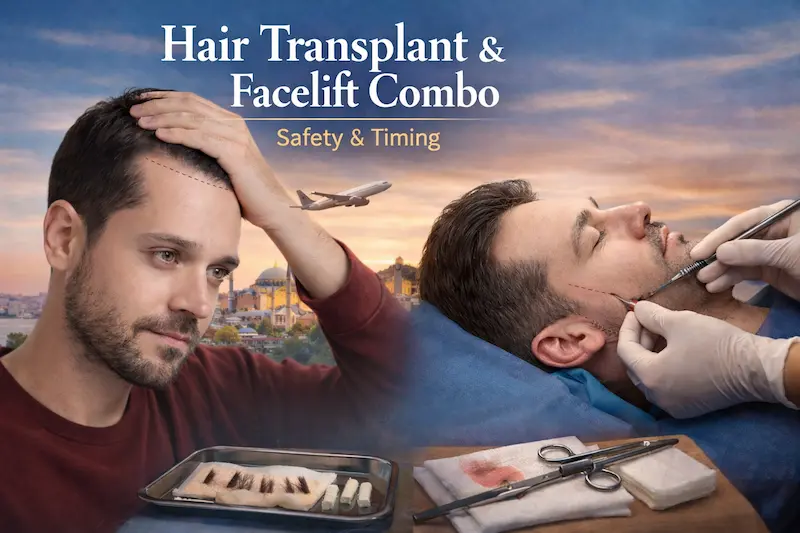
If you’re considering a hair transplant and facelift in one trip to Istanbul, your two biggest questions are usually the same: Is it safe? and what’s the smartest timing? This guide is written for the “expert patient” who wants a clear plan—not hype—covering safety of combined procedures, realistic recovery logistics, and when it’s truly reasonable to do a facelift and hair transplant same time (or when it’s better to stage them).
From a medical science perspective, combining procedures can be done safely in properly selected patients—but “safe” depends on variables like total procedure time, anesthesia strategy, tissue healing demands, and meticulous aftercare. In Turkey, you’ll also see the phrase combined plastic surgery Turkey used broadly; what matters is not the label, but the surgical plan and the recovery framework behind it.
Combining two procedures is one decision. Choosing which hair restoration approach actually fits a facelift recovery is a separate one. FUE, DHI, Sapphire FUE — each technique places different demands on healing, scalp pressure, and graft protection, which matters even more when facial incisions are healing in parallel. For the wider picture before drilling into combo logistics, our hair restoration approaches reference covers what each technique can and can't deliver.
The facelift side of the equation has its own technical layers that deserve a dedicated reference, not just a passing mention in a combo guide. SMAS versus deep plane, mini versus full, recovery patterns by technique — these decisions shape what's safely combinable with hair work and what isn't. Our facelift techniques master page lays out the technical options side by side.
Key takeaway: The safest “combo” is often not two major procedures on the same day, but a staged plan within the same trip—designed around swelling control, graft protection, and incision healing.
Table of Contents
Can You Safely Combine a Hair Transplant and a Facelift?
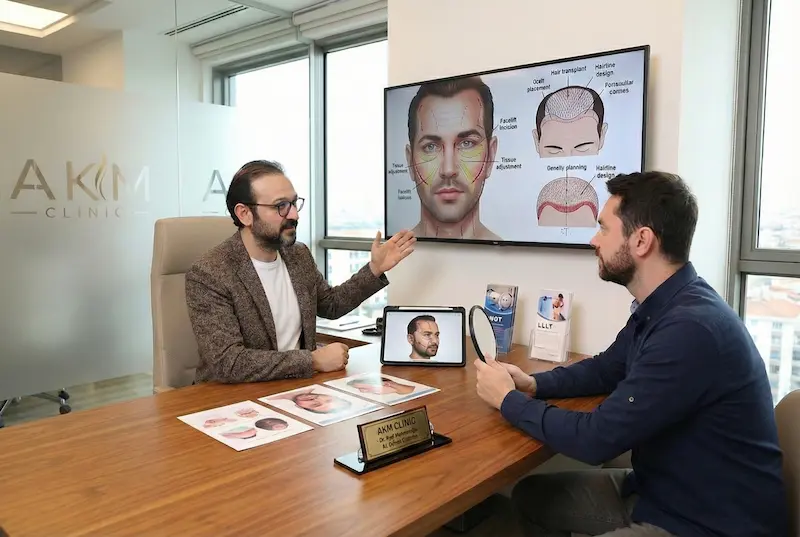
Yes—in the right candidate and with the right sequencing. A facelift is primarily about precise work in facial tissues, while a hair transplant is about protecting thousands of newly placed follicular grafts. When these are combined thoughtfully, the plan must prioritize: (1) tissue blood supply, (2) infection prevention, (3) swelling control, and (4) patient comfort. At AKM Clinic, post-operative recovery protocols may include HBOT (Hyperbaric Oxygen Therapy)—positioned by the clinic as a major safety promise—and LLLT (Low-Level Laser Therapy), used to support healing for both facial tissues and transplanted grafts.
When combining makes sense (who benefits most)
Combination planning can make sense when your goals are aligned and your travel window is limited—for example, patients seeking male facial rejuvenation (jawline/neck definition, midface support) while also addressing hairline restoration with facelift planning for a more balanced, youthful frame to the face.
- Good fit: Healthy non-smokers (or those who can stop), stable medical conditions, realistic expectations, and the ability to follow aftercare strictly.
- Often ideal: Patients who want one recovery period and one travel plan—but are open to doing procedures on different days.
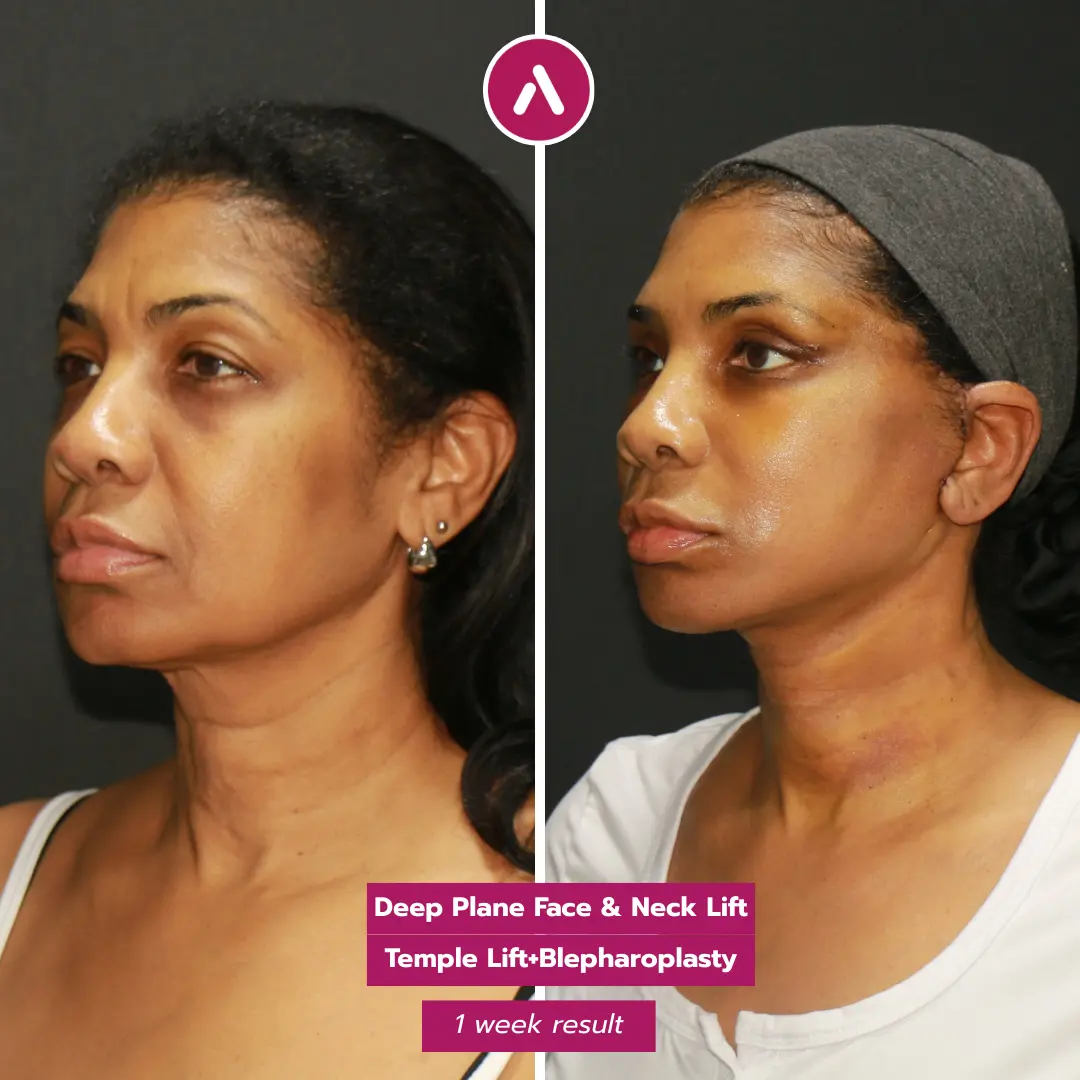
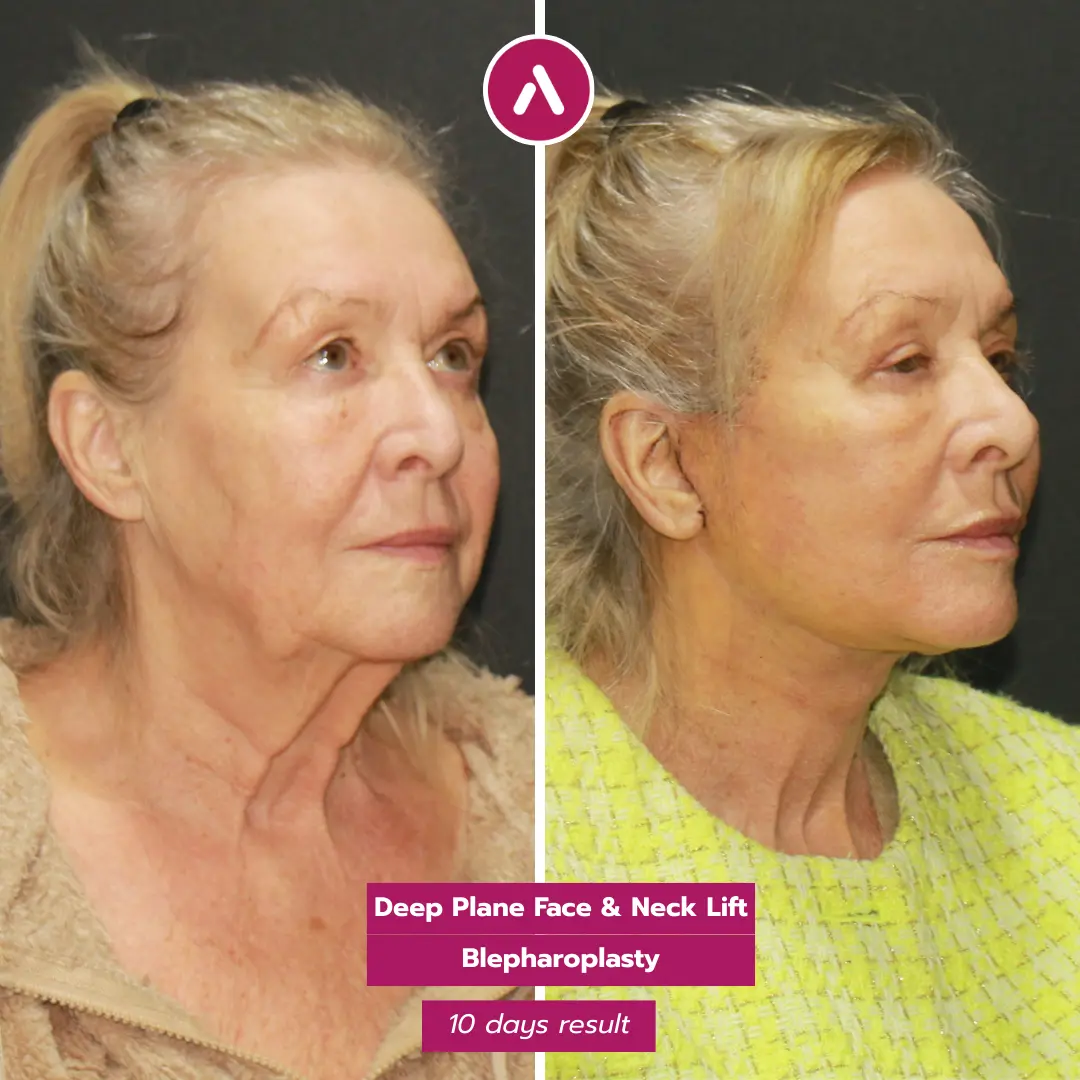
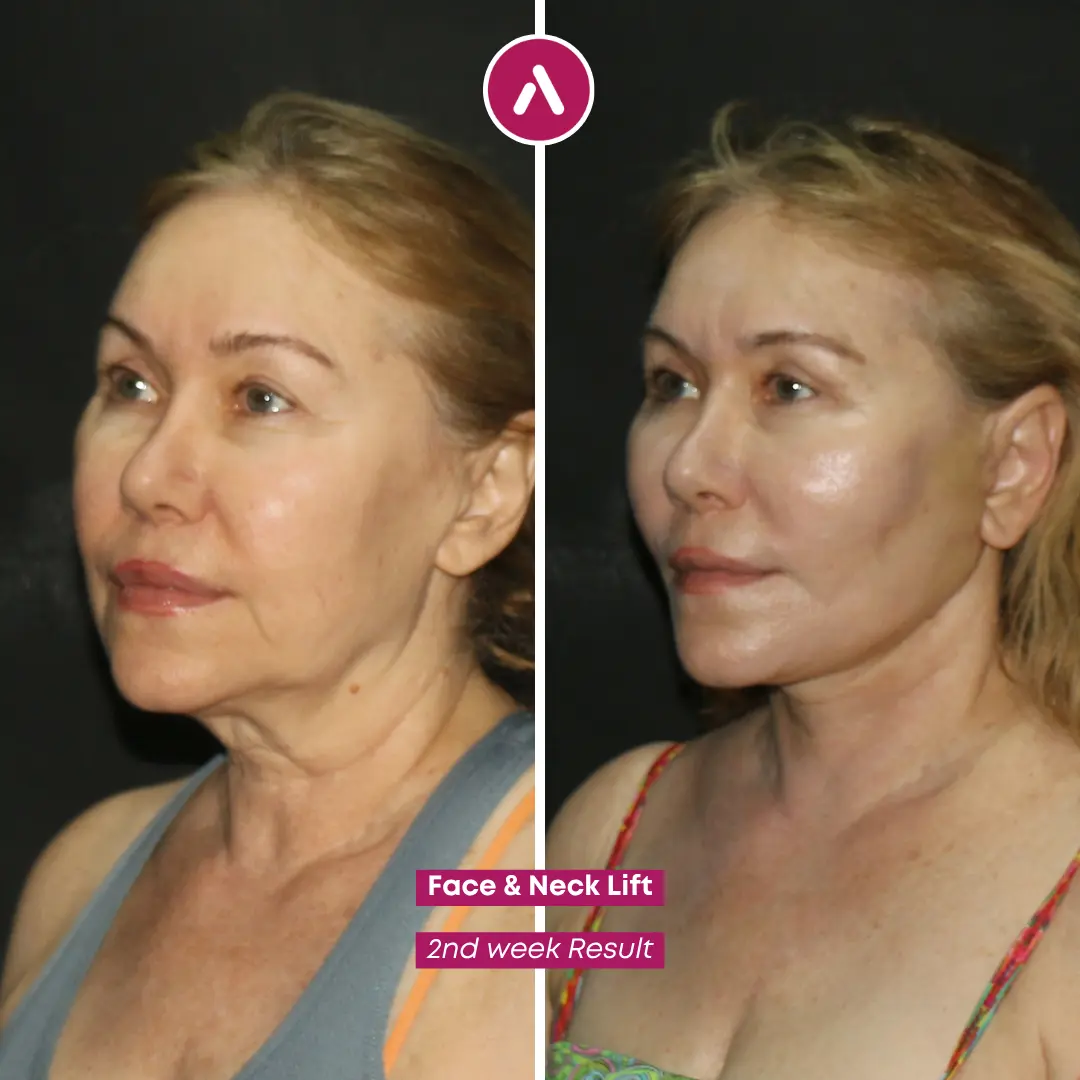
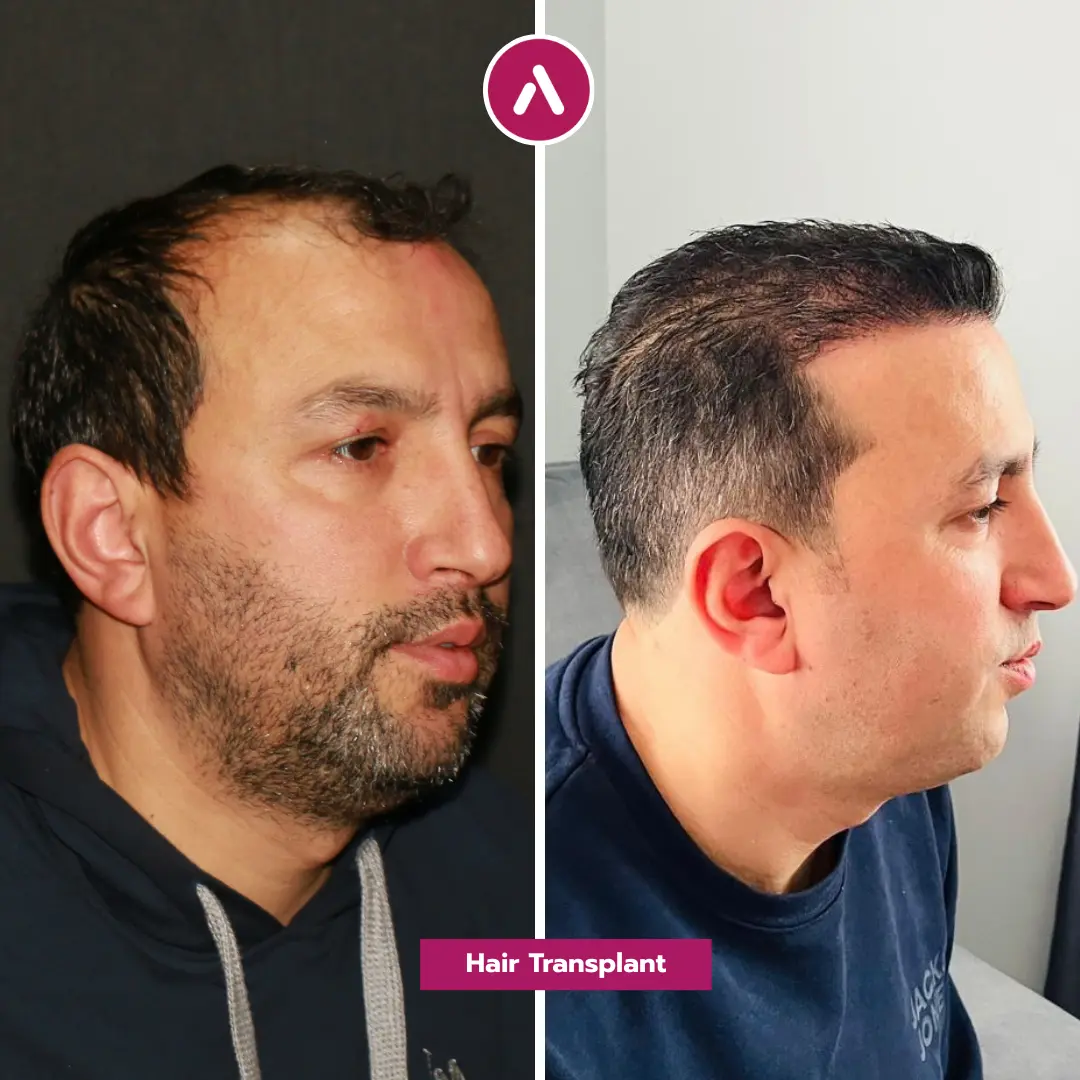
One important nuance: when before-and-after carousels show "facelift" results, what's often pictured is the deep plane variant — which has a different incision footprint and a different scalp-adjacent dissection than older SMAS techniques. For combo patients, that distinction matters because the scalp closure pattern interacts with how soon a hair transplant can sit on top without compromising blood supply.
The mechanics of how deep plane sits inside the broader facelift family are documented on the deep plane technique deep-dive.
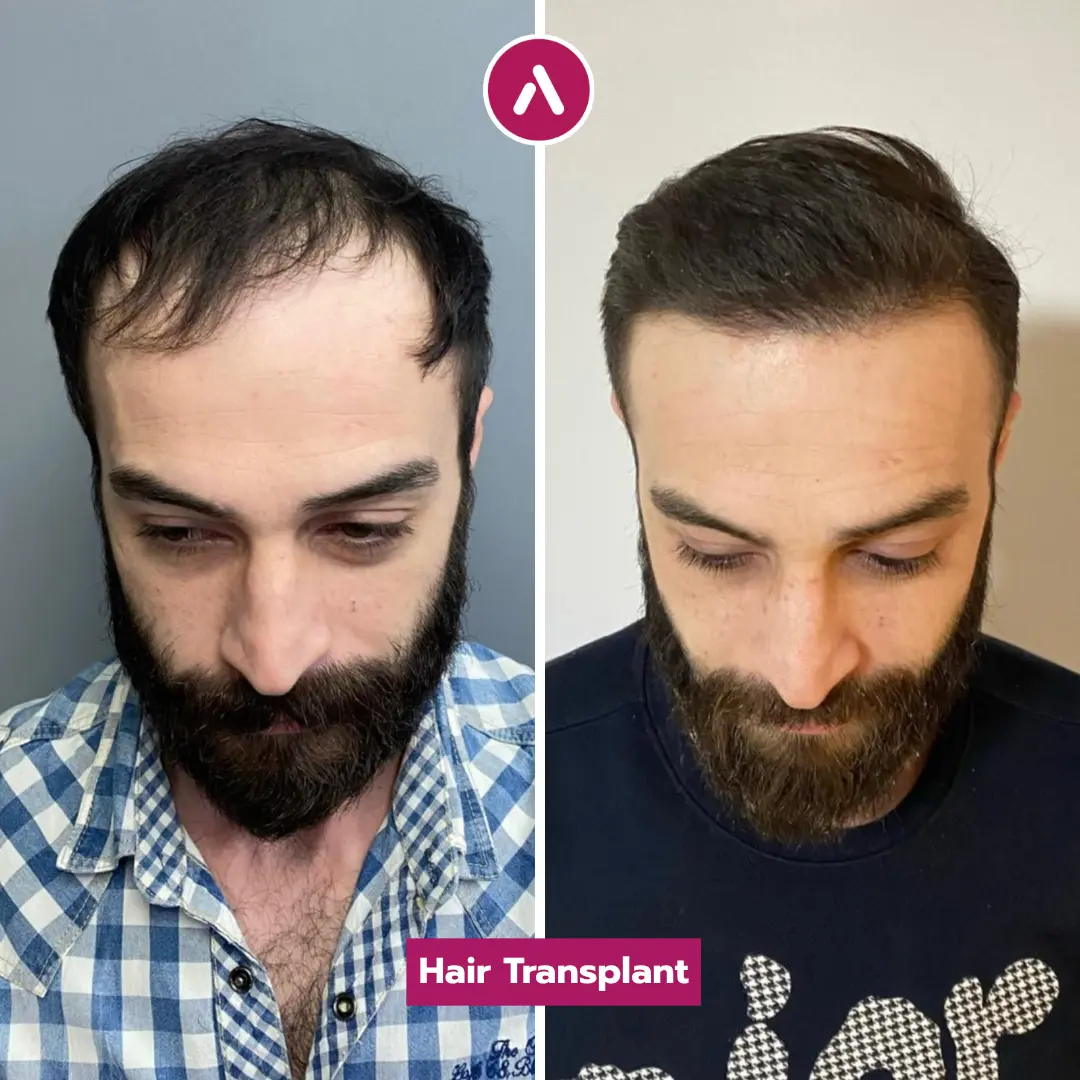
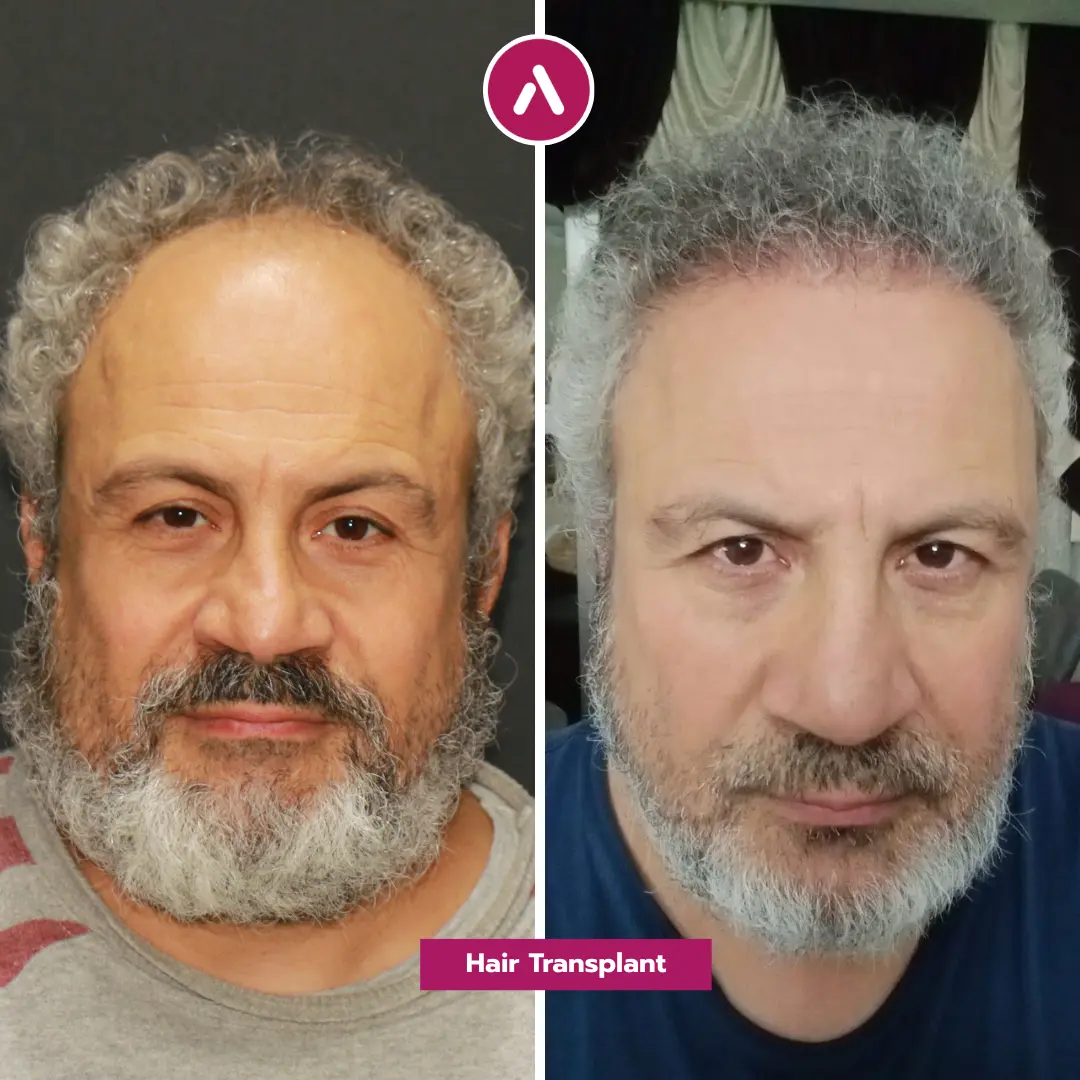
On the hair side, FUE is what most combo plans rely on — the dot-scar healing pattern integrates more cleanly with a facelift recovery than older strip techniques would. The actual mechanics matter: punch sizing, donor harvest density, recipient channel angles — all of these get adjusted when scalp tension from a facelift incision sits nearby.
For the standalone procedural breakdown rather than the combo angle, our FUE procedural reference covers it end-to-end.
The key safety variables: anesthesia, duration, and tissue stress
The biggest safety lever is total physiologic stress: longer procedures generally mean more swelling, more fatigue, and more recovery complexity. This is why many high-safety combo plans avoid stacking two long procedures back-to-back under heavy anesthesia. Instead, surgeons may recommend a sequence that keeps each session efficient and supports healing.
At AKM Clinic, two recovery-support technologies are commonly discussed in patient care standards:
- HBOT: Intended to increase oxygen delivery to healing tissues, support regeneration, reduce swelling/downtime, improve scar healing, and help mitigate infection risk. Watch for the recovery-adjunct conversation in any combo quote — it tells you more about the clinic than the surgical fee does. Hyperbaric oxygen therapy has the unusual property of helping both sides of a combo: facial flap circulation on one hand, follicular graft survival on the other, because it raises dissolved tissue oxygen rather than acting on either site specifically. How the protocol actually runs — chamber pressure, session count, when it starts post-op — is detailed in our HBOT protocol explainer.
- LLLT: Used for post-facelift skin healing (cellular repair support, collagen stimulation, inflammation reduction) and for hair restoration support (microcirculation, graft healing support, follicle stimulation). The second adjunct that earns its place in combo planning is low-level laser therapy. It works on the two recoveries differently: facial skin gets reduced erythema and accelerated collagen reorganization, while scalp grafts get microcirculation support during the fragile first weeks before vascularization is reliable. Both protocols are detailed in our LLLT dual-recovery protocol page.
The honest baseline on "is combo surgery actually safer in a properly run center" comes from data, not marketing. A retrospective review published in PRSGO in September 2025 tracked 2,324 international cosmetic surgery patients (7,141 procedures) at a single high-volume center in Cartagena from 2013 to 2024: international combo procedure outcomes review. Notably, 79% of patients underwent combination procedures with an average of 3.1 procedures per case, and the overall complication rate was 6.2% per patient — 2.2% per procedure — which the authors benchmark as comparable to US board-certified outpatient practice.
Worth flagging: this is Colombia data, not Turkey, and it isn't a head-to-head trial of staged versus same-day combos. But it's the largest international medical tourism combo dataset published to date, and the takeaway most relevant here is that the "high-volume well-regulated center" variable explains more of the safety variance than the country label.
When NOT to combine: red flags and contraindications
“Combo” is not a badge of toughness. It’s a medical decision. The following are common reasons to stage procedures instead of attempting a same-time plan:
- Smoking or nicotine use (including vaping): can compromise blood supply and healing—critical for both facelift tissues and graft survival.
- Uncontrolled medical issues (e.g., poorly controlled hypertension/diabetes) or history that increases anesthesia risk.
- High anxiety about aftercare or inability to follow instructions (sleep position, wound care, scalp protection).
- Expectation mismatch: wanting “zero bruising” or instant social readiness within days.
Best Timing Options: Same Trip vs. Staged Procedures
When patients ask for a facelift and hair transplant same time, they usually mean “one trip, one recovery.” In practice, the safest and most comfortable approach is often: one trip, staged procedure days. This reduces peak swelling overlap and makes it easier to protect both scalp grafts and facial incisions.
Option 1 — Same trip, different days: the “smart combo” approach
This is the most common high-safety structure for combined planning: you travel once, but the procedures are scheduled on separate days to keep each session efficient and recovery clearer. The benefits include:
- Lower cumulative stress than stacking everything into one extended operative day.
- Cleaner aftercare: you can prioritize incision care and swelling control without constantly risking the graft zone.
- Better sleep logistics: easier to plan positioning that protects both the face and the scalp.
Option 2 — Separate trips: when staging is the safer choice
Two separate trips can be safer when either procedure is expected to be extensive, or when your lifestyle factors make healing slower. This can also be a better fit if you want the facelift healing to settle before finalizing the most flattering, natural-looking hairline design.
Which comes first: facelift or hair transplant (and why it matters)
There isn’t a universal rule. The correct order depends on incision placement, hairline goals, and swelling patterns. In many plans, surgeons prefer to avoid scheduling both on the exact same day because:
- Facelift recovery benefits from swelling control and incision protection.
- Hair transplant recovery benefits from minimizing friction, pressure, and contamination around the grafts.
For patients specifically focused on hairline restoration with facelift, the plan should be created collaboratively so the hairline design supports long-term facial harmony. At AKM Clinic, this “harmony” concept is often emphasized through a surgeon-led approach that includes dermatosurgical facial expertise alongside facial plastic surgery perspective—aiming for natural results rather than an overdone look.
Patient perspective (travel-planning lens): One trip can work well—but only if you have a day-by-day aftercare plan that protects both your scalp grafts and your facelift incisions.
Anesthesia & Comfort Planning (Including “Awake/Twilight” Strategies)
In any combined plastic surgery Turkey plan, safety is inseparable from the anesthesia strategy. When patients ask about doing a facelift and hair transplant same time, what they’re really asking is: “Can my body handle the total duration and recovery load?” A surgeon-led plan typically aims to keep each procedure within a comfortable, controlled window—especially important when you’re balancing facial tissue healing with delicate graft survival.
Anesthesia is where combo planning gets genuinely interesting — and where the "awake" framing actually earns its weight rather than being marketing language. Twilight sedation with local infiltration lets the surgeon avoid the deeper general-anesthesia layer that drives much of the post-op grogginess and aspiration risk, and that becomes more relevant when two procedures sit in the same trip window.
The full anesthesia logic — what stays local, what's twilight, when general is still the right call — sits in our awake facelift sedation guide.
Local + sedation vs. general anesthesia: how the plan is decided
The safest approach depends on your medical history, procedure extent, and how long each component will take. In many cases:
- Hair transplant is commonly done under local anesthesia (with or without mild sedation), focusing on comfort while protecting graft handling.
- Facelift may be performed under general anesthesia or sedation (“twilight”), depending on the technique, patient preference, and surgeon assessment.
From a scientific research mindset, the goal is to reduce avoidable physiologic stress: minimizing unnecessary procedure time, managing blood pressure stability, and ensuring a smooth post-op transition (pain control, nausea control, hydration, and early mobilization as appropriate).
Why an awake/twilight facelift can change combo feasibility
When a facelift is planned with an “awake” or twilight approach, the overall plan may become more feasible for select patients because it can reduce some anesthesia-related burdens. This does not mean it’s automatically “better” for everyone—rather, it can be a useful tool in timing and safety planning, especially for patients who are cautious about long general anesthesia exposure.
For patients focused on male facial rejuvenation, the goal is typically subtle structure support (jawline/neck definition) while preserving masculine features. A dermatosurgeon-informed plan can also emphasize skin quality and scar behavior—details that matter when you want a natural, non-operated look.
Managing pain, anxiety, and nausea: what patients should expect
Comfort planning is part of safety. If you’re combining procedures (even staged within one trip), it’s normal to worry about sleep, swelling, and feeling “overwhelmed.” A realistic plan typically includes:
- Pain control strategy: predictable dosing schedule rather than chasing pain after it spikes.
- Nausea prevention: particularly important if you’re sensitive to medications or anesthesia.
- Swelling management: cold protocols (as appropriate), head elevation, and disciplined rest.
- Healing support: AKM Clinic’s postoperative care standards highlight HBOT and LLLT as supportive modalities intended to improve oxygenation, reduce swelling/downtime, and support tissue regeneration and scar quality.
Comfort = compliance: The easier your first 72 hours are, the more likely you are to follow instructions that protect both facelift incisions and hair grafts—an underrated part of the safety of combined procedures.
Recovery Timeline: A Realistic Day-by-Day Itinerary for Istanbul
If you’re a planning-oriented patient, you want a day-by-day map. The key point: facelift recovery and hair transplant recovery have different “rules,” and your itinerary must protect both. Below is a practical framework commonly used for staged combo planning (one trip, different days). Your exact timeline will vary by technique, graft count, and extent of facial work, but the logic stays the same: protect blood supply, avoid pressure/friction, and reduce swelling predictably.
The day-by-day reality of a combo trip is where most pre-op anxiety lives — and where most clinics under-communicate. What time grafts are washed, when the compression garment comes off, which day allows light walking versus which day still demands flat positioning, the exact swelling curve to expect — these aren't optional details, they shape whether the recovery feels manageable or chaotic.
The full structured itinerary we hand to every patient — from arrival to fit-to-fly clearance — sits in our step-by-step recovery pathway.
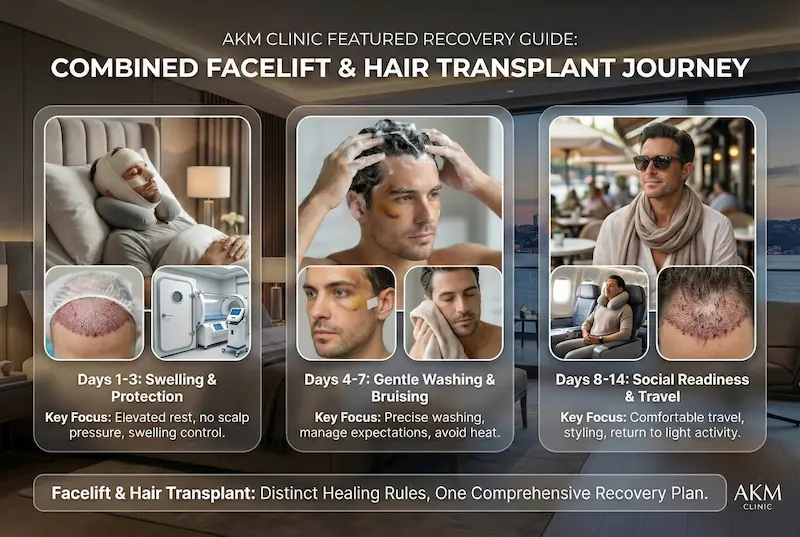
Days 1–3: swelling control, sleep positioning, and scalp protection
- Sleep: Head elevated. Avoid rolling or pressure on grafts. Use pillows/neck support that keeps you stable.
- Scalp protection: No rubbing, scratching, tight hats, or accidental contact. Treat the graft zone like “freshly planted seeds.”
- Facial care: Follow incision care rules exactly. Expect swelling and bruising to begin and evolve.
- Activity: Gentle walking as allowed; avoid bending/lifting that increases facial pressure or risks scalp contact.
During this early period, AKM Clinic often positions HBOT and LLLT as part of the recovery-support strategy—aimed at improving tissue oxygenation, reducing swelling, and supporting regeneration and scar healing.
Days 4–7: washing rules, graft safety, and facial bruising expectations
This is when many patients feel impatient—but discipline here matters most for outcomes. You’re balancing two healing zones:
- Hair washing: Follow the clinic’s protocol precisely (timing, pressure, shampoo type, tapping vs. rubbing). The goal is cleanliness without shear force on grafts.
- Facial bruising: Bruising often looks “worse before better.” This is normal. Plan indoor downtime and avoid “big social moments.”
- Incision safety: Avoid heat/steam exposure that may worsen swelling. Keep the area clean and follow dressing guidance.
For patients combining goals (especially hairline restoration with facelift), this week is also when you’ll appreciate why a staged schedule is often safer than forcing a single marathon day: your routine is simpler, and you’re less likely to accidentally compromise either area.
Days 8–14: social readiness, flights, and “what looks normal”
By week two, many patients can look “presentable” with good styling—but you should still assume you’ll have some residual swelling, tenderness, or visible healing signs.
- Scalp: Early shedding or “ugly duckling” stages can begin; this is expected in many hair transplant recoveries.
- Face/neck: Swelling usually improves but may fluctuate during the day. Avoid heavy exercise unless cleared.
- Travel readiness: Your flight plan should prioritize comfort and safety—hydration, movement, and protecting healing zones from accidental bumps.
| Timeframe | Face/Neck (Facelift) | Scalp (Hair Transplant) | What You Should Prioritize |
|---|---|---|---|
| Days 1–3 | Swelling begins, incision protection is critical | Grafts extremely fragile | Head elevation, strict protection, calm routine |
| Days 4–7 | Bruising peaks/changes, incision care continues | Washing protocol starts (gentle) | Hygiene without friction, predictable swelling control |
| Days 8–14 | Improving but still fluctuating swelling | Early shedding may begin; sensitivity continues | Conservative activity, travel-safe habits, follow-up plan |
Travel-planner note: Don’t schedule important meetings or high-stakes social events immediately after returning home. Build buffer time—this is part of safe, sane recovery planning.
The Biggest Risk Areas—and How to Reduce Them
Combining facial surgery with hair restoration isn’t risky because “two procedures” sounds dramatic—it’s risky when the plan ignores how blood supply, swelling, and aftercare rules overlap. If your clinic is marketing combined plastic surgery Turkey, you should look past the marketing and evaluate whether they can clearly explain risk control for both the face and the scalp. Below are the most important risk zones and the practical steps that reduce them.
Behind every "we offer HBOT and LLLT" line is a question patients rarely ask but really should: how is the equipment maintained, calibrated, and tracked between cases? A chamber that hasn't been pressure-tested on schedule, a laser device with drifted output power, sterilization cycles that aren't logged — these are invisible until they aren't.
The operational backbone behind our combo recovery setup is documented in the recovery equipment governance page.
Blood supply & healing: protecting the scalp and facelift tissues
A facelift relies on healthy tissue perfusion for clean healing. A hair transplant relies on newly placed grafts establishing blood supply. That’s why the safest combo planning focuses on not overloading the body on day one and avoiding anything that compromises circulation.
- No nicotine: This is non-negotiable if safety is your priority. Nicotine can impair microcirculation—bad for both incisions and graft take.
- Swelling control: Head elevation, disciplined rest, and avoiding heat/steam early on.
- Procedure timing: If you insist on a facelift and hair transplant same time approach, ask how the team limits total surgical stress and protects blood flow.
AKM Clinic’s care standards also emphasize supportive recovery modalities such as HBOT (to support oxygen delivery and healing quality) and LLLT (to support tissue repair, inflammation control, and graft healing support).
Infection prevention and aftercare compliance (what matters most)
Infections are uncommon in well-managed settings, but the risk rises when patients mix up instructions or touch healing zones. The combo challenge is that you’re caring for two sensitive areas with different rules.
- Hands-off discipline: No touching, picking, or “checking” grafts or incisions.
- Clean routine: Follow the clinic’s exact washing and wound-care protocol—timing and technique matter more than product brands.
- Medication adherence: Take prescribed antibiotics/anti-inflammatories exactly as directed (do not self-adjust).
- Environment control: Avoid smoky spaces, crowded indoor venues, and anything that increases contamination risk during early healing.
Reality check: The #1 driver of smooth outcomes is not “being tough”—it’s being consistent. The safety of combined procedures improves dramatically when the aftercare plan is simple, written, and followed.
Scar strategy: hairline planning + incision placement
For patients seeking hairline restoration with facelift, scar strategy is where good planning becomes visible. A facelift can involve incisions placed to be discreet around the ear/hairline, while hair restoration works with graft direction, density, and future hairline stability.
- Incision design matters: Ask how incisions are placed to reduce visibility and preserve natural contours.
- Hairline design matters: A conservative, age-appropriate hairline usually looks more natural long-term than an aggressively low hairline.
- Male facial rejuvenation nuance: Men often want improvement without feminization. That means respecting masculine hairline patterns and avoiding over-tightening the face.
At AKM Clinic, the “natural result” framework is often described as surgeon-led and skin-aware—where dermatosurgical expertise supports decisions about skin quality, scar behavior, and natural-looking healing.
| Risk Area | Why It Matters in a Combo | Best Prevention Habit |
|---|---|---|
| Blood supply / healing | Both facelift tissues and grafts rely on healthy perfusion | No nicotine + staged timing + swelling control |
| Infection | Two healing zones increase “oops” opportunities | Hands-off discipline + strict washing/wound protocol |
| Scarring | Hairline + incision placement must look natural together | Conservative design + surgeon-led scar planning |
| Swelling | Swelling can affect comfort, sleep, and compliance | Head elevation + predictable rest routine |
Travel Logistics for Medical Tourists (Flights, Hotel, Companion, Aftercare)
For “Travel Planner” patients, logistics are not a side topic—they’re the safety framework. A well-designed itinerary reduces stress, prevents accidental trauma to grafts/incisions, and makes your return flight more comfortable. If you’re exploring combined plastic surgery Turkey, insist on a travel and aftercare plan that is as detailed as the surgical plan.
Travel logistics for a combo case have one extra layer that single-procedure trips don't: the in-between days. Booking a hotel near the clinic (not just "in Istanbul"), arranging private transfers that avoid jolts on early-recovery days, having a companion option for the first 48 hours after each procedure — these aren't luxury upgrades, they're recovery infrastructure.
Our pre-arranged accommodation network and transfer flow is laid out in the accommodation and transfer setup.
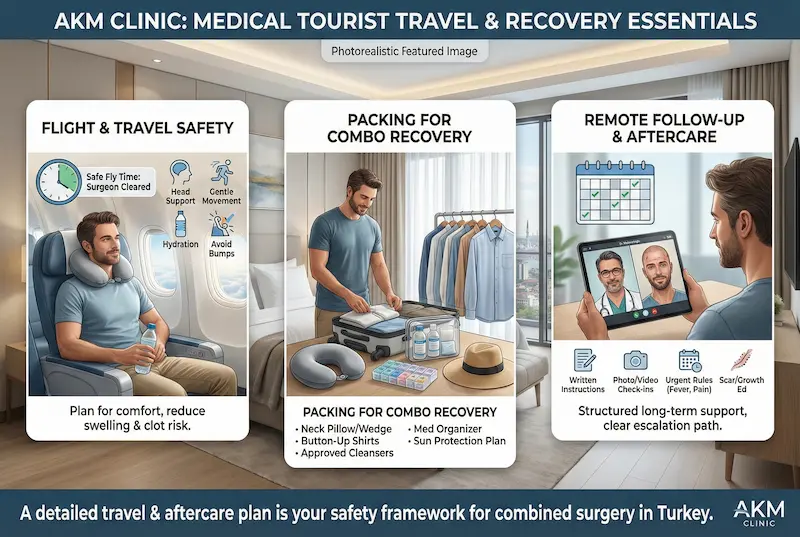
When it’s safe to fly: swelling, clots, and comfort planning
Flying too soon can be uncomfortable due to swelling and can increase stress on your body when you still need rest and careful positioning. Your surgeon should give you an individualized clearance based on what was done and how you’re healing.
- Comfort: Choose seating that allows head support and minimizes jostling.
- Movement: Gentle walking and calf movement during travel helps circulation (as medically appropriate).
- Hydration: Cabin air is dry; hydration supports comfort and recovery.
- Protection: You must avoid bump risk—crowded boarding lines and luggage handling are common “accident moments.”
What to pack: recovery essentials for face + scalp
Packing well reduces panic and prevents improvised mistakes. A combo recovery kit should protect both zones.
- Neck pillow / wedge support: Helps maintain head elevation and prevents rolling.
- Button-up shirts: Avoid pulling clothing over your head.
- Saline / approved cleansing supplies: Only what your clinic recommends.
- Medication organizer: Avoid missed or double doses.
- Sun protection plan: Hats are tricky early after transplant; follow clinic rules to avoid graft trauma.
Remote follow-up plan: how long support should last after you leave
The difference between a “cheap package” and a medically sound plan is what happens after you go home. You should have:
- Written aftercare instructions for both procedures (not verbal only).
- A check-in schedule (photos, video calls, or structured updates).
- Clear escalation rules: what counts as urgent (fever, increasing redness, sudden swelling, unusual drainage, severe pain).
- Scar and growth education: understanding normal phases prevents unnecessary panic.
Planning tip: If a clinic can’t outline a structured follow-up pathway, that’s a bigger red flag than the question of doing a facelift and hair transplant same time.
Cost & Value: What Patients Should Compare (Not Just the Price)
Patients researching combined plastic surgery Turkey often start with cost—but a combo plan is only “good value” if it’s medically coherent. When you’re comparing a package that includes both hair restoration and facial surgery, focus on what reduces risk and protects outcomes: surgeon-led planning, facility standards, anesthesia strategy, and structured aftercare. This matters even more if you’re hoping to do a facelift and hair transplant same time (or within the same trip).
Cost comparison on a combo plan gets tricky because two pricing structures sit on top of each other — the facelift fee, the hair transplant fee, the shared logistics (transfers, hotel, anesthesia time), and the procedure-specific recovery support. What patients rarely catch in low-cost quotes is the "shared" line getting absorbed into one side's invoice but not really being delivered — for example, two separate anesthesia setups when one combo session was sold.
The transparent line-item breakdown on the hair restoration side is in our hair restoration pricing breakdown.
What’s included in a true “combo plan” (and what’s not)
A medically sound combo plan typically includes more than procedures and a hotel. It should include the things that reduce complication risk and make recovery predictable.
- Surgeon-led evaluation: a plan that explains timing, sequencing, and candidacy clearly.
- Clear anesthesia pathway: what type, why it’s chosen, and how duration is controlled.
- Aftercare structure: written instructions + check-in schedule + “what is urgent” guidance.
- Recovery support: AKM Clinic’s standards highlight HBOT and LLLT as supportive modalities intended to help reduce swelling/downtime and support tissue regeneration and scar healing.
What’s often not included in low-quality “bundle” offers: long-term follow-up, transparent revision policy, and a realistic timeline for returning to normal life.
Hidden cost traps: revisions, extra nights, and medication planning
Most “budget surprises” happen when recovery is under-planned. The following are common cost traps in combo travel:
- Extra hotel nights: if swelling/bruising is worse than expected or you need more in-person check-ins.
- Medication changes: especially if nausea, sleep disturbance, or inflammation requires adjustments.
- Revision risk: not because Turkey is “unsafe,” but because poor planning or rushed scheduling can compromise outcomes.
If your main priority is the safety of combined procedures, build budget flexibility for recovery. That flexibility can be the difference between calm healing and pressured decisions.
Quality signals: surgeon-led planning, facility standards, and aftercare
Quality is visible in the planning conversation. Look for signals like:
- Specificity: they can explain why your plan is staged or combined, using clear medical logic.
- Skin-structure strategy: for male facial rejuvenation, subtlety matters. A plan that respects masculine anatomy and skin behavior tends to look more natural.
- Hairline harmony: for hairline restoration with facelift, you want a conservative, age-appropriate hairline and scar-aware incision decisions.
- Support tech with a protocol: HBOT/LLLT should be described as part of a structured recovery pathway, not a vague add-on.
| Comparison Point | Low-Quality “Bundle” | High-Quality Combo Plan |
|---|---|---|
| Timing strategy | “Same day for everyone” | Personalized sequencing based on safety + healing |
| Aftercare | Generic instructions | Written, procedure-specific, day-by-day guidance |
| Follow-up | Minimal once you fly home | Structured remote follow-up with escalation rules |
| Outcome focus | Fast turnaround promises | Natural results + risk control + long-term planning |
Science-minded rule: If a clinic can’t clearly explain the “why” behind your sequencing and aftercare, treat that as a bigger risk than the idea of combining procedures itself.
Frequently Asked Questions (FAQ): Hair Transplant and Facelift
These answers are intentionally concise. Your exact plan should always be individualized by your surgical team after a full assessment.
Can I do a hair transplant and facelift on the same day?
How long should I wait between procedures if I stage them?
Will facial swelling affect my grafts (or vice versa)?
When can I wash my hair if I also had a facelift?
When can I fly back to the US after the combo?
What’s the biggest safety risk in combining these procedures?
How do I know if I’m a good candidate for a combo plan?
Medical Disclaimer: This content is for educational purposes only and does not replace medical advice, diagnosis, or treatment. Surgical options, anesthesia choices, risks, costs, and recovery vary by individual. Always consult a qualified, board-certified clinician for personalized guidance. If you have urgent symptoms, seek emergency care.