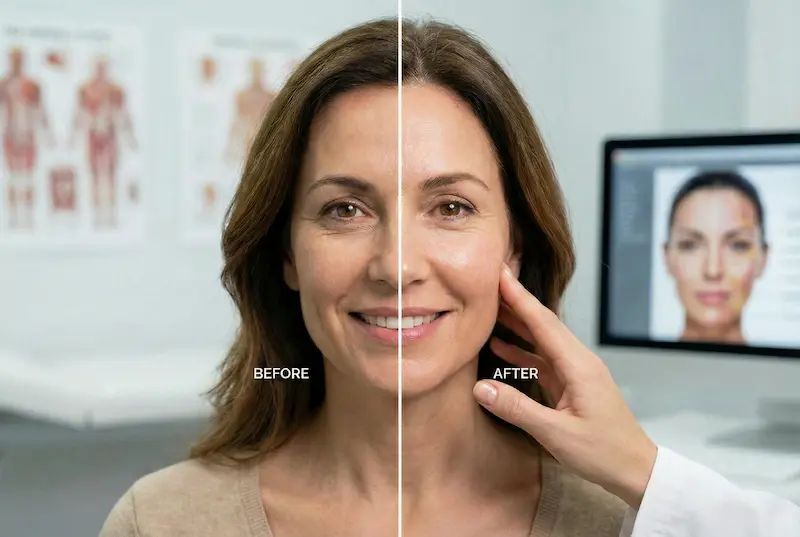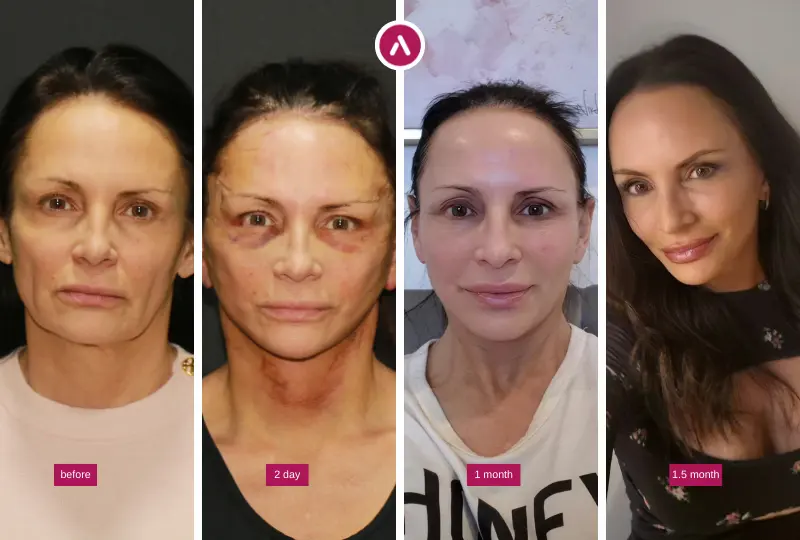
If you’re searching for deep plane facelift recovery day by day photos, you’re not looking for vague reassurance—you’re looking for a realistic, medically grounded timeline you can compare to your own healing. In this guide, we’ll walk through what most patients experience day by day, what your photos are likely to show at each stage, and what is considered normal versus what should trigger a call to your surgical team.
Because recovery is a biological process, your day-to-day changes are influenced by factors that are well understood in the wound-healing literature: hemostasis, inflammation, proliferation, and remodeling. The remodeling phase formally begins around Day 21 in standard wound healing biology — which is why “ugly duckling” weeks 2–4 photos can still be tracking on schedule even when the face doesn’t look “done” yet. Two people can have the same procedure and still look different on Day 3, yet both can be healing normally.
Throughout the article, you’ll also see the secondary phrasing patients commonly search: day by day recovery deep plane facelift, deep plane facelift day by day recovery, deep plane facelift recovery day by day, and deep plane face lift recovery day by day photos—used naturally where they fit your research intent.
Key idea: In the first week, “better” often looks like “more swollen.” Photos help you track trends—what matters most is the direction your healing is moving, not a single snapshot.
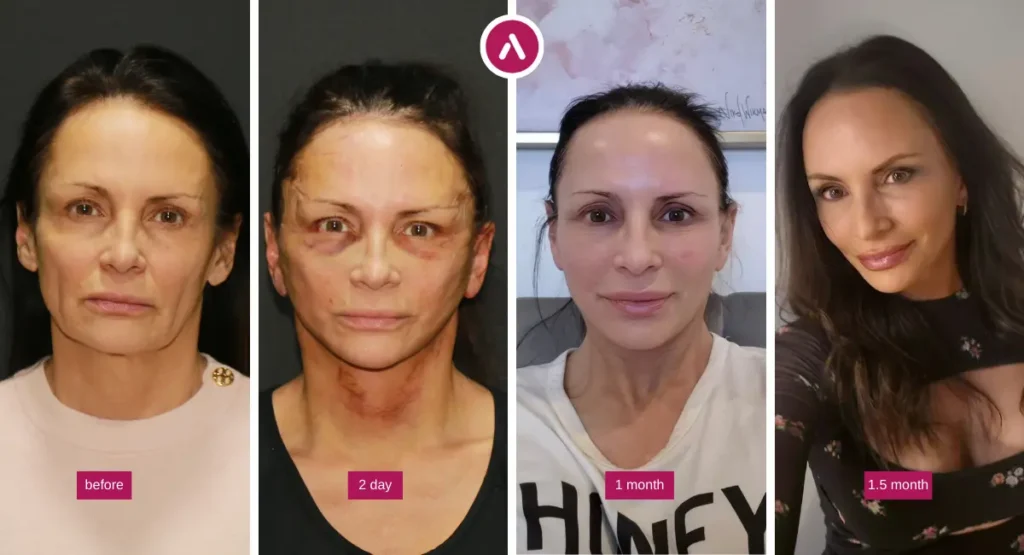
Table of Contents
What Happens Immediately After Surgery (Hours 0–24)
The first 24 hours are about safety, swelling control, and protecting delicate tissues while your body initiates the inflammatory phase of healing. If your facelift is performed with modern, tissue-respecting technique under local anesthesia with light sedation rather than general anesthesia, many patients report a clearer-headed first night, fewer anesthesia-related side effects, and earlier mobility — all of which can improve early Hours 0–24 photos. The candidacy criteria, comfort protocol, and recovery differences for the awake pathway are documented on our awake facelift page.

Managing drains and bandages
Many deep plane facelift patients leave the operating area with a supportive dressing (and sometimes drains). This is normal: bandages and/or drains can reduce fluid build-up and help your surgeon monitor early bleeding risk. In photos, you’ll mostly see the dressing rather than your contours—so don’t judge your “result” yet.
- What you may feel: pressure and tightness rather than sharp pain.
- What you may see: bulky dressing, mild oozing on gauze, and early swelling.
- Practical tip: keep your head elevated and avoid bending forward.
Pain management and first night sleep
Most patients describe the first night as uncomfortable mainly because of position restrictions and tightness—not because of severe pain. Your team will typically prescribe pain control and guide you on a safe sleeping setup. From a scientific research perspective, sleep quality matters because it supports immune regulation and tissue repair—so comfort strategies (pillows, elevation, hydration) are not “luxury,” they’re recovery tools.
- Sleep position: on your back with head elevation.
- What’s common: tightness, a pulling sensation, and mild throat dryness.
- Avoid: alcohol, smoking/vaping, and salty foods (all can worsen swelling).
What you’ll see in your first photos (what’s “normal” vs. alarming)
Your Hours 0–24 photos can be shocking: swelling starts early, and the face can look wider, rounder, or “overfilled.” That’s normal. The deep plane technique repositions deeper tissues; your skin and lymphatic system need time to adapt. Focus on symmetry and trends rather than perfection.
| In the first 24 hours | Usually normal | Call your surgeon promptly |
|---|---|---|
| Swelling | General puffiness, gradual increase | Sudden, rapidly expanding swelling (especially one-sided) |
| Bruising | Light bruising or minimal discoloration | New, expanding bruise with intense pressure or firmness |
| Pain | Tightness, soreness controlled with medication | Severe pain not improving with prescribed meds |
| Temperature | Mild warmth around dressings | Fever, chills, or worsening redness spreading beyond incision zones |
Eating, hydration, and nausea—what to expect the first day
Soft foods and hydration are typically best during Hours 0–24. Chewing can feel tiring, and opening your mouth wide may feel tight. If you’re sensitive to sedation, mild nausea can occur. Staying hydrated supports circulation and lymphatic movement—two pillars of early healing recognized in medical science.
- Choose: soups, yogurt, eggs, smoothies (not too salty).
- Skip: crunchy foods, spicy foods, and very hot drinks.
- Hydration goal: consistent sips rather than big gulps.
Red flags in the first 24 hours (hematoma signs, sudden one-sided swelling)
The most important early complication to watch for after a facelift is a hematoma (a collection of blood under the skin). While uncommon, it tends to declare itself early. The classic pattern is rapid swelling, pressure, and sometimes increased bruising—often more on one side. If you notice a dramatic change over minutes to hours, treat it as urgent and contact your surgical team immediately.
Photo tip (Hours 0–24): Take one front-facing photo and one profile photo in the same lighting. Don’t chase tiny hourly changes—compare morning vs. evening.
The “Swelling Peak”: Day 2 to Day 4
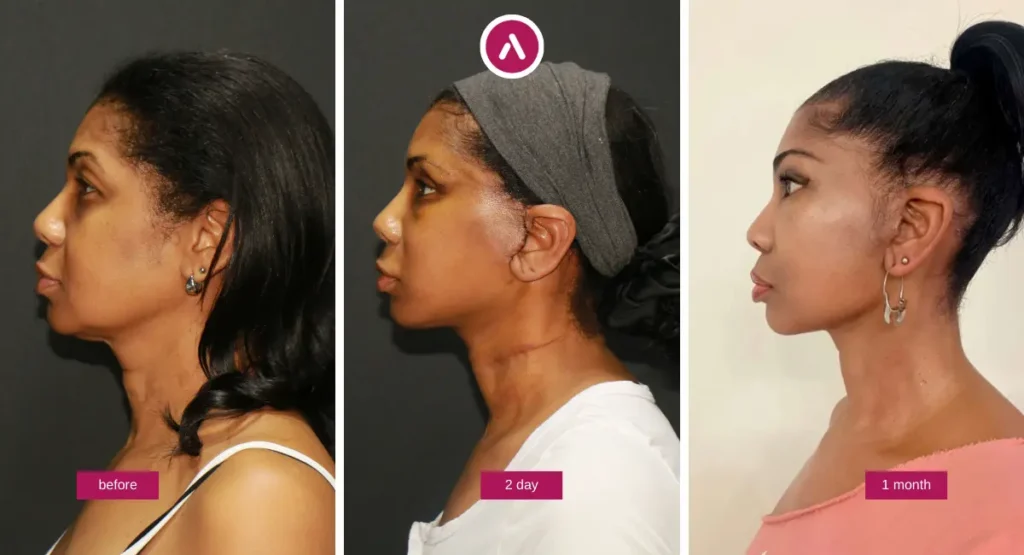
This is the phase that makes many “deep plane facelift day by day recovery” photo timelines feel dramatic: swelling often intensifies, bruising becomes more visible, and your face may look uneven from day to day. From a science standpoint, this is a predictable inflammatory peak—your body sends fluid and immune cells to the surgical field to start repair. In other words, if your Day 3 photo looks “worse” than Day 1, that can still be completely normal.
Why bruising gets worse before better
Bruising typically becomes more noticeable as blood pigments move closer to the skin surface and then gradually break down. Many patients see bruising “travel” downward (toward the neck or upper chest) due to gravity. Your deep plane facelift recovery day by day photos may show color changes from red/purple to green/yellow as healing progresses.
- Common bruise colors: purple/blue (early) → green (mid) → yellow/brown (late).
- Where it shows most: under the jawline, behind ears, and along the neck.
- What helps: head elevation, hydration, gentle walking, and avoiding blood-thinning supplements unless approved.
Emotional ups and downs (Post-op blues)
Day 2 to Day 4 is also when “post-op blues” can appear: you’re tired, swollen, restricted in activity, and your reflection doesn’t match your goal yet. This is common after aesthetic surgery and isn’t a sign that your outcome will be poor. In many “day by day recovery deep plane facelift” stories, the emotional dip peaks around the same time swelling peaks.
- Normal feelings: impatience, worry, irritability, temporary regret.
- What helps: predictable routines, short walks, protein-rich meals, sleep hygiene.
- Reframe: your “look” on Day 3 is a swelling snapshot, not your result.
Sleep position, swelling control, and “puffy face” expectations
Swelling is affected by gravity and pressure. Back-sleeping with elevation remains important. Some patients notice swelling shifts during the day—puffier in the morning, slightly better mid-day, then puffy again after activity. This daily fluctuation is common in deep plane face lift recovery day by day photos.
- Elevation: keep your head above heart level (pillows or wedge).
- Avoid: long hot showers/saunas, bending forward, heavy lifting.
- Activity: short, gentle walks help circulation and lymphatic flow.
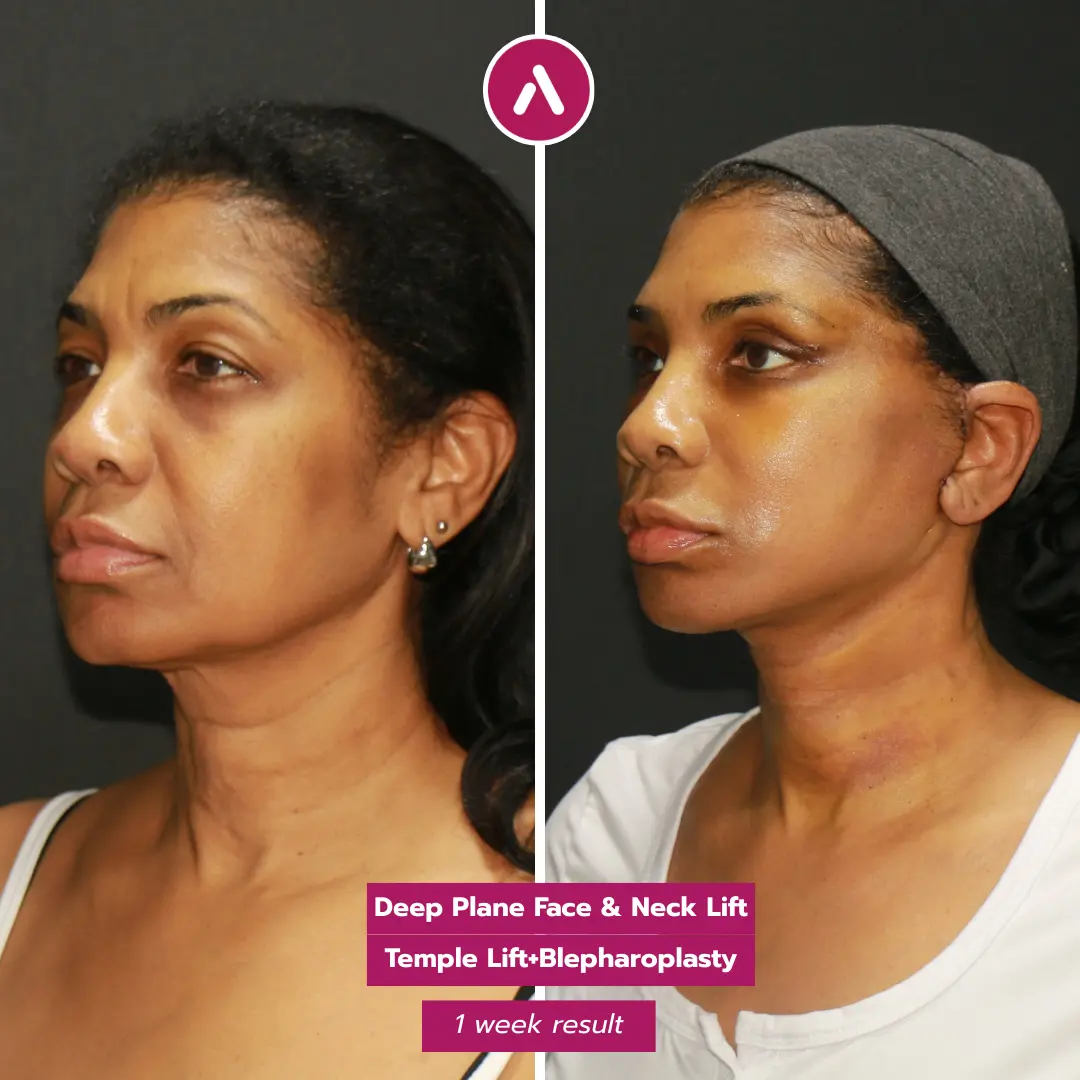
Photo checklist for Days 2–4 (lighting, angles, what changes matter)
To make your photos genuinely useful, keep them consistent. Differences in lighting and camera angle can create “false swelling.” If you’re documenting your recovery, use the same room, same time of day, and the same camera distance — the same discipline applied to clinical documentation. The full multi-procedure portfolio with consistent lighting and dated milestones serves as a useful template for what disciplined photography looks like — see our comprehensive results portfolio.
- Angles: front, 45-degree, and side profile on both sides.
- Lighting: soft, even lighting (avoid harsh bathroom overhead lights).
- Distance: mark a spot on the floor so you stand in the same place.
- What matters: trend over 48–72 hours, not hour-by-hour shifts.
What’s safe for swelling: cold/heat timing + gentle lymphatic guidance
Most teams recommend cold support early to reduce discomfort and swelling, then transition gradually as advised. Beyond temperature management, AKM Clinic’s recovery protocol layers two adjunct therapies — Hyperbaric Oxygen Therapy and Low-Level Laser Therapy — into specific post-op windows to support oxygenation, inflammation modulation, and scar quality. The session timing, target benefits, and how these technologies complement (not replace) disciplined aftercare are documented in our HBOT and LLLT recovery protocol.
Some surgeons also recommend gentle, surgeon-approved lymphatic techniques later in the first week—but only after you’re cleared, because deep pressure can irritate healing tissue planes. This is where “scientific research” meets real-world recovery: timing matters as much as the method.
- Cold support: often helpful early; never place ice directly on skin.
- Heat: only if and when your surgeon says it’s appropriate.
- Massage: avoid “DIY” deep massage; follow surgeon protocol.
Milestone mindset (Days 2–4): Your job is protection and rest. Your body is doing the active work—fluid shifts and bruising changes are part of the program.
Suture Removal and Feeling Normal: Day 5 to Day 7
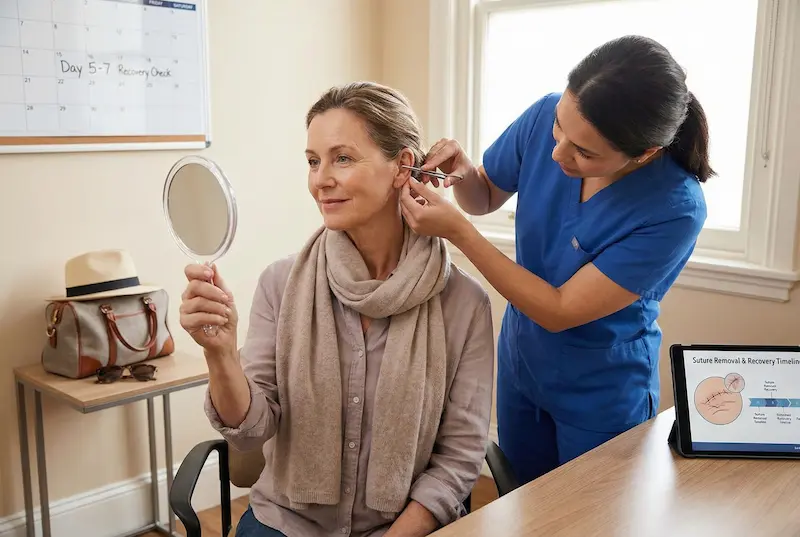
For many patients, Day 5 to Day 7 is the first “turning point” in deep plane facelift recovery day by day. Swelling may still be present, but it often becomes less aggressive, bruising may start to lighten, and you begin to look more recognizable in photos. For the underlying procedure mechanics — incision placement, ligament release sequence, and what determines whether your recovery will be more or less swelling-prone — see our deep plane facelift surgical page. The “biology” of your day-by-day timeline is downstream of the surgical plan.
The “restaurant ready” test
Patients often ask, “When will I look normal enough to go out?” A practical benchmark is what many call the “restaurant ready” test: could you sit in a restaurant without feeling like everyone is staring? By Day 7, some patients feel comfortable with a hat/scarf and minimal makeup (if cleared), while others prefer to wait until Week 2. Your deep plane facelift day by day recovery photos can help you decide—especially if you compare Day 3 vs. Day 7 under identical lighting.
- Most common Day 7 look: less puffiness, bruises lighter but still visible in some areas.
- What still feels odd: tightness, mild numbness, “stiff” smile.
- Confidence tip: choose low-light environments and keep plans short.
When can you fly back to the USA?
Flight timing depends on your surgeon’s protocol, your swelling pattern, and whether there were any additional procedures. Many medical teams prefer you remain locally for early follow-up because the first week is when issues—although uncommon—are most time-sensitive. Cabin pressure changes don’t usually “ruin” results, but prolonged sitting, dehydration, and limited movement can worsen swelling. The procedure-specific safe-fly intervals — facelift 7 days, BBL 10–14 days, liposuction 5–7 days — alongside DVT prevention and cabin comfort protocols are detailed in our post-surgery flight guide.
Showering, hair washing, and incision hygiene (what patients get wrong)
By this stage, many patients can shower more comfortably, but incision care remains precise. The most common mistake is being too aggressive—rubbing, scratching, or letting strong water pressure hit incision lines. Another frequent issue: using fragranced hair products or harsh cleansers too early. Your surgeon’s instructions should always override generic advice, because incision placement and closure technique vary.
- Keep it gentle: lukewarm water, soft pat-dry, no rubbing.
- Hair washing: often possible with care, but avoid pulling hair near incision areas.
- Do not improvise: no new “scar oils” or strong actives unless approved.
Makeup, skincare, and sun exposure rules in Week 1
This is where “deep plane face lift recovery day by day photos” can become misleading: makeup can hide bruising but also irritate healing skin if used too early. Many surgeons allow makeup only after incisions are sealed and you’re cleared—especially around the hairline and behind the ears. Sun exposure is a bigger deal than most people realize: UV can darken healing bruises and scars. In medical science, pigment changes during healing are well documented, so protection is part of aesthetic outcome management, not vanity.
- Sun rule: avoid direct sun; use hats and physical barriers.
- Skincare: keep it simple—gentle cleanser, surgeon-approved moisturizer.
- Avoid: retinoids, strong acids, and any “peel” products in early healing.
Light walking vs. exercise—what “too much, too soon” looks like
Light walking is usually encouraged because it supports circulation and reduces stiffness. But formal exercise can spike blood pressure and increase swelling or bruising. “Too much too soon” often shows up in your photos as a sudden swelling rebound after activity. If your day by day recovery deep plane facelift timeline looks stable, then suddenly looks worse after a workout attempt, that’s a clue to scale back.
- Good activity: short, easy walks several times a day.
- Pause signs: throbbing, heat, increased tightness, swelling rebound.
- General rule: intensity comes later; consistency comes first.
Week 1 summary: You’re not “behind” if you still look swollen on Day 7. Many people are only starting to exit the peak phase now.
The “Ugly Duckling” Phase vs. Final Result (Weeks 2–4)
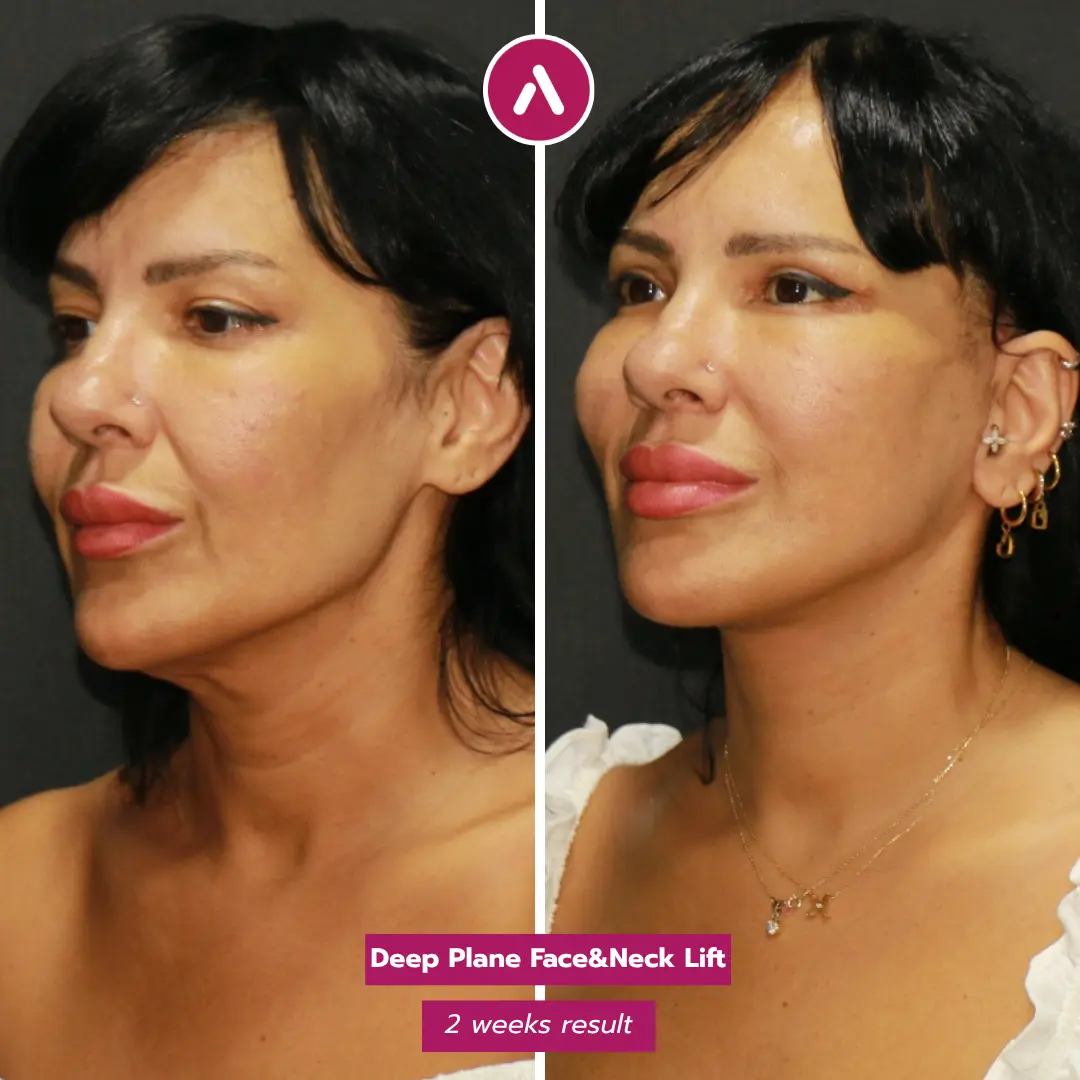
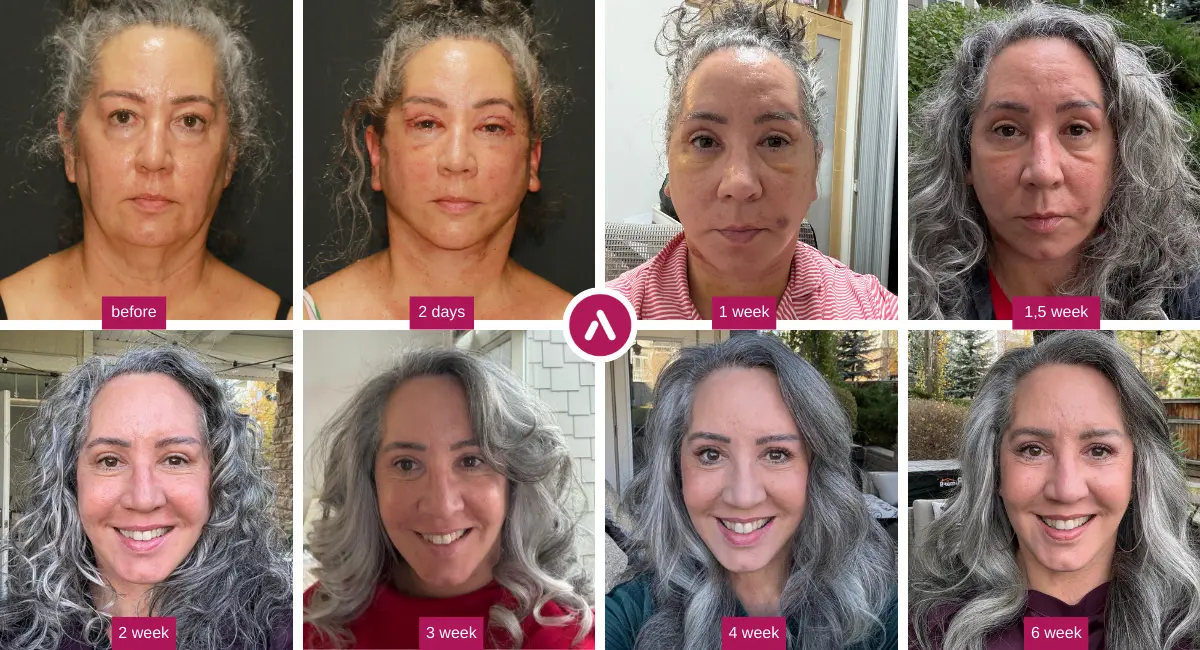
Weeks 2–4 are where many patients feel “almost normal” in daily life, yet still not fully satisfied when they scrutinize close-up photos. This is the classic “ugly duckling” stage in deep plane facelift recovery day by day: bruising may be mostly gone, but swelling can linger in subtle pockets (often along the jawline, under the chin, and near incision zones). In your deep plane facelift recovery day by day photos, the face may look better one day and slightly puffy the next—because fluid dynamics and tissue remodeling are still active.
Week 2: looking better but not “done” (common asymmetry + tightness)
By Week 2, many patients look “presentable” at conversational distance, especially on video calls. However, it’s common to see mild asymmetry in photos—one side may be slightly more swollen or bruised than the other. Tightness is also typical, particularly when smiling or turning the neck.
- Common Week 2 photo pattern: sharper jawline overall, but residual fullness under the jaw or near the cheeks.
- Common sensations: tightness, mild pulling near the ears, intermittent tingling.
- What’s normal: “I look great in some angles, weird in others.”
Week 3: when bruising fades but swelling lingers (where it hides most)
Week 3 is often deceptively tricky: bruising improves dramatically, so you expect swelling to be “gone,” but it can persist beneath the surface. This is especially true in areas with thicker soft tissue and where gravity encourages fluid to settle. Many “deep plane facelift day by day recovery” diaries show that the neck and submental area (under the chin) are the last to fully refine.
- Hidden swelling zones: under-chin, jawline borders, lower cheeks.
- What can make it look worse: salty meals, poor sleep, long travel days.
- What usually helps: steady hydration, gentle movement, consistent head elevation at night if advised.
Week 4: social confidence milestones (photos, meetings, events)
By Week 4, many patients feel comfortable attending events and being photographed, though ultra-close photos (flash, harsh overhead lighting) can still highlight minor swelling or texture changes. If your goal is to look “camera-ready,” Week 4 is often a realistic milestone for most people—while remembering that refinement continues for months.
- Typical Week 4 wins: improved jawline definition, softer swelling, more natural facial movement.
- Still possible: mild tightness, numb patches, and slight asymmetry.
- Photo tip: use natural window light; avoid flash for comparison shots.
Numbness, tingling, and “hard areas” under the skin—what they mean
In Weeks 2–4, many patients notice numbness around the ears, hairline, or along incision pathways. Tingling can be a sign that sensation is returning. The depth of dissection in deep plane technique — significantly different from SMAS plication — affects which sensory nerve branches are repositioned and therefore the recovery pattern of feeling. The technique-level differences and how they shape the recovery experience are compared in our technique comparison guide.
- Normal: patchy numbness, intermittent tingling, mild firmness.
- Usually improves: gradually over weeks to months.
- Ask your team if: firmness is worsening, painful, hot, or associated with spreading redness.
Scar care in Weeks 2–4 (silicone, massage timing, sun protection)
Scar care is often introduced or intensified during this phase, depending on incision healing. Silicone-based scar products are commonly recommended in aesthetic surgery because they support a stable healing environment. Massage timing varies—some surgeons prefer to wait, others introduce gentle techniques earlier. Sun protection remains critical: UV exposure can make scars darker and more noticeable.
- Silicone: use only after incisions are fully closed and you’re cleared.
- Massage: follow surgeon protocol; avoid aggressive pressure.
- Sun strategy: hats + physical barriers; sunscreen only when appropriate for healed areas.
Reality check (Weeks 2–4): If you’re comparing yourself to someone else’s “Day 21” photo, remember: camera lighting, swelling biology, and skin thickness can change the entire story.
Long-Term Healing: Month 3, Month 6, and Year 1
By Month 3 and beyond, most of the dramatic “day-by-day” changes have passed, but that does not mean healing is finished. Deep pFlane facelift recovery continues through tissue remodeling: collagen reorganizes, swelling resolves in slower layers, scars mature, and sensation gradually returns. In deep plane facelift recovery day by day photos, this stage can look subtle—but it’s often where your result becomes more natural, less “post-op,” and more consistently photogenic.
Incision scar fading timeline
Scar maturation is a long process. Even if your incisions look “fine” at Week 4, they can continue improving for many months. Early scars may appear pink or slightly raised; over time they typically soften, flatten, and fade. In the language of medical science, this is the remodeling phase—where collagen fibers align and the scar becomes less vascular.
| Timepoint | What scars may look like | What helps most |
|---|---|---|
| Month 1 | Pink/red, slightly firm; may feel tight | Gentle care, sun avoidance, surgeon-approved silicone |
| Month 3 | Less redness; texture starts to soften | Consistent scar care + strict UV protection |
| Month 6 | Noticeably lighter, flatter | Ongoing protection; avoid irritation |
| Year 1 | Often at its best: mature, quieter scar | Maintenance habits (sun protection remains key) |
Returning of full skin sensation
Numbness can last longer than patients expect, especially around the ears, along incision paths, or at the hairline. Tingling or “zaps” can be a sign of nerve recovery. Sensation often returns in a patchy pattern rather than all at once. This is one reason “deep plane facelift day by day recovery” searches often shift to “month by month” after the first few weeks—because the milestones become quieter but still meaningful.
- Typical pattern: numbness → tingling → partial return → gradual normalization.
- What’s common: some areas return quickly while others take months.
- Ask your surgeon if: you develop new weakness, a sudden new area of numbness, or worsening pain.
For patients exploring whether biologic adjuncts can support faster sensation recovery and a smoother remodeling phase, autologous stem cell augmentation is one option discussed alongside HBOT and LLLT. The mechanism, candidacy criteria, and how stem cell support fits into the post-op timeline are explained in our stem cell recovery overview.
When the “final” result is visible (what improves after Month 3)
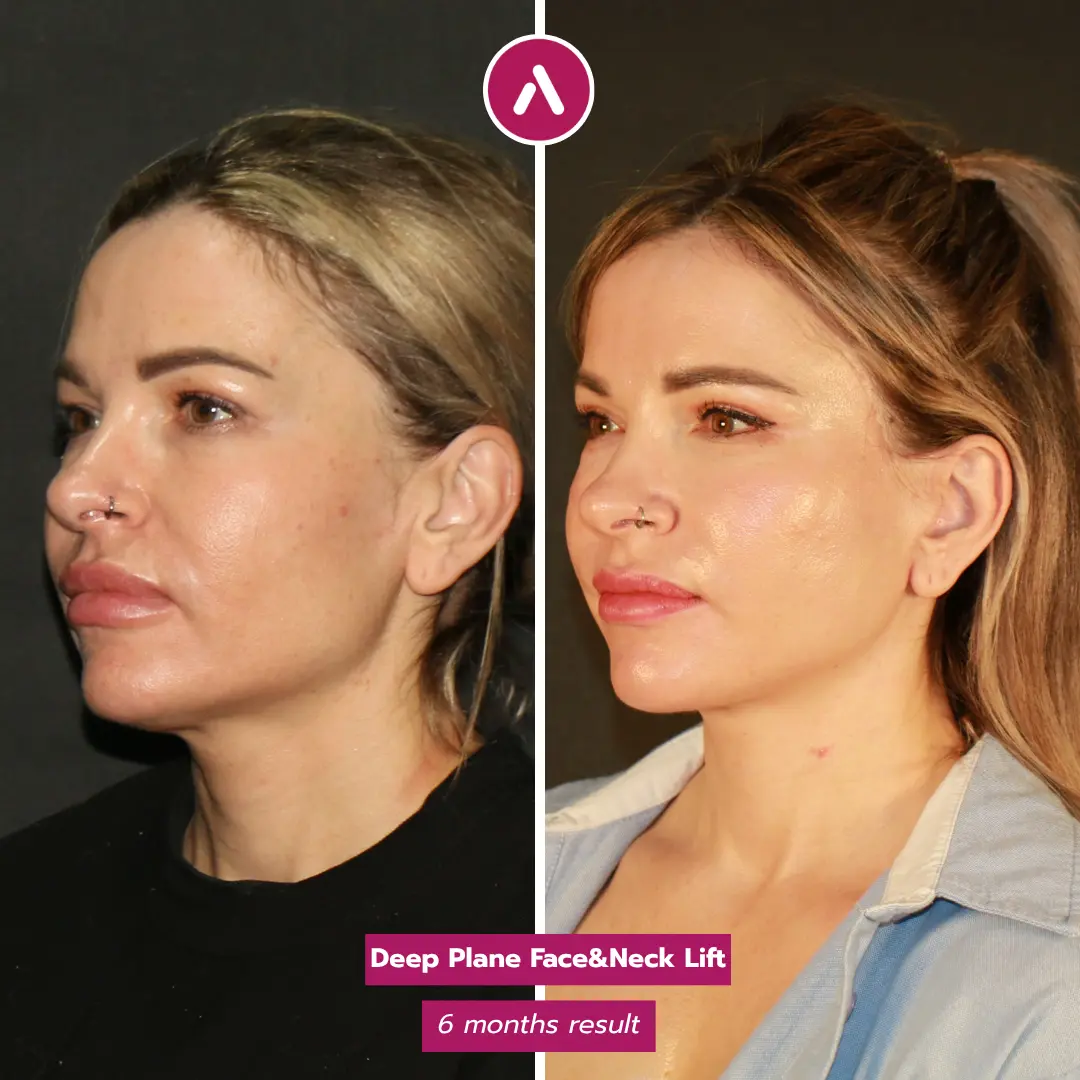
Many patients see an “early result” by Weeks 2–4, but the most natural refinement often appears after Month 3. This is when residual swelling in deeper layers continues to settle and facial movement looks more effortless. People researching deep plane facelift recovery day by day are often reassured to learn that improvement continues even when day-to-day changes become less obvious.
- After Month 3: jawline definition often refines further; the midface can look softer and more natural.
- After Month 6: scars typically improve further; the face looks less “tight” in certain expressions.
- By Year 1: most patients see their most mature, stable outcome.
Patients who want to reduce overall downtime often ask whether structured oxygen therapy can speed up the visible recovery curve — and how soon HBOT sessions should start to be most effective for facelift swelling specifically. The mechanism, ideal session window, and realistic timeline impact are explained in our accelerated recovery guide.
What your long-term photos should show (jawline, neck angle, midface)
At this stage, photos become less about bruises and more about structure. To evaluate long-term changes, use consistent angles and compare Month 1 vs. Month 3 vs. Month 6. Real surgical-result documentation — multi-angle photos taken at consistent timepoints across diverse facial anatomies — is hosted in our deep plane results gallery.
- Jawline: cleaner border and less heaviness along the mandibular edge.
- Neck: improved angle under the chin; less banding or laxity.
- Midface: smoother transition from lower eyelid to cheek; less sag.
- Tip: use the same hairstyle and minimal makeup for true comparisons.
What to do if you’re worried at Month 3/6/12 (normal vs. needs review)
It’s normal to have questions during long-term healing—especially if you notice asymmetry, firmness, or lingering swelling. Most concerns can be triaged with photos and a follow-up assessment. From a scientific research perspective, remodeling is not linear; some weeks look unchanged, then sudden improvement appears as tissue shifts and inflammation settles.
| Concern | Often normal | Needs medical review |
|---|---|---|
| Asymmetry | Mild, gradually improving | Worsening asymmetry or sudden new swelling |
| Firmness | Small firm areas softening over time | Hot, painful firmness with redness or drainage |
| Scars | Pinkness fading slowly | Spreading redness, persistent open areas, or infection signs |
| Sensation | Patchy numbness gradually resolving | New facial weakness or sudden neurologic changes |
Long-term recovery truth: Your best “after” photos often happen when you stop feeling like you’re recovering—because your face looks natural in motion, not just still images.
Deep Plane Facelift Recovery Day by Day Photos: Do’s, Don’ts, and “Travel-Ready” Milestones
Most patients use deep plane facelift recovery day by day photos to answer one question: “Is what I’m seeing normal for this stage?” A practical way to reduce anxiety (and improve decision-making) is to pair your photos with a simple routine that supports healing biology. In medical science, swelling fluctuates with sleep, salt, hydration, and activity—so your goal is consistency, not perfection, especially during the first week.
Do: Build a consistent photo log (so comparisons are meaningful)
Take photos at the same time daily for 10–14 days, then weekly. Use the same lighting, angles (front, 45°, both profiles), and camera distance. This makes your deep plane facelift recovery day by day timeline clinically useful: you’ll spot real trends (less swelling, improving symmetry) instead of “false changes” caused by shadows or makeup.
Don’t: Trigger rebound swelling (the most common timeline setback)
Rebound swelling often appears in photos as a sudden “puffy day” after salty meals, poor sleep, heat exposure, long travel days, or too much activity. Avoid alcohol early, keep your head elevated, take short walks, and follow your surgeon’s medication and incision-care protocol. If your day by day recovery deep plane facelift photos look worse after a new activity, that’s a signal to scale back.
Travel & return-to-life checklist (Day 4–5 and beyond)
The pre-flight, in-Istanbul, hotel coordination, and remote follow-up sequence — including specifically when the surgical team checks for “fit-to-fly” clearance signals before you board — is mapped step-by-step on our patient journey timeline.
- Prioritize follow-up checks and staged suture removal if advised.
- Hydrate and move regularly if flying; avoid lifting heavy luggage.
- Delay strenuous exercise until cleared to reduce swelling and bruising rebound.
For international patients planning their full Istanbul-to-home itinerary alongside the day-by-day recovery curve, the integrated 14-day arrival, surgery, recovery, and fit-to-fly clearance sequence is mapped in our 14-day journey roadmap. The photo timeline above and the journey timeline pair naturally — one tracks biology, the other tracks logistics.
Safety: know the “trend-breaker” warning signs
Contact your surgical team urgently if you see rapid one-sided swelling, escalating pressure/pain, spreading redness, fever/chills, or unusual drainage. Photos are powerful—but safety always comes first.
Frequently Asked Questions (FAQ): Deep Plane Facelift Recovery Day by Day Photos
This FAQ is designed to match how expert patients actually research: quick, specific answers that align with what you’ll see in deep plane facelift recovery day by day photos. While general timelines are helpful, your surgeon’s instructions always come first—because incision placement, tissue handling, and any additional procedures can shift the “normal” day-by-day pattern.
How long does swelling last after a deep plane facelift?
Most noticeable swelling improves significantly over the first 2–4 weeks, but subtle residual swelling can persist for several months. Many patients feel socially confident around Week 2–4, while refinement continues through Month 3–6 and can keep improving up to a year.
When can I safely fly after surgery?
Flight clearance is individualized. Many teams prefer you stay nearby for early follow-up in the first week. If cleared, minimize swelling risk by hydrating, moving regularly, and avoiding heavy lifting with luggage. Always follow your surgeon’s travel protocol.
What day is bruising usually the worst?
Bruising often becomes most visible around Day 2 to Day 4—when the inflammatory phase peaks. It can then “travel” downward and change colors (purple/blue to green/yellow) as it resolves.
When can I wash my hair and shower normally?
Many patients can shower relatively early with restrictions, but “normally” usually comes later as incisions seal and sensitivity decreases. The key is avoiding strong water pressure on incision zones and not rubbing. Follow the specific timing your surgical team provides.
When can I wear makeup again?
Makeup timing depends on incision healing and surgeon preference. Some patients are cleared after incisions are fully closed; others are asked to wait longer. Avoid applying makeup directly over healing incision lines unless explicitly approved.
Is numbness normal, and how long does it last?
Yes—patchy numbness around the ears/hairline or along incision paths is common. Sensation often returns gradually over weeks to months, sometimes with tingling. This aligns with what is widely recognized in medical science about nerve recovery after soft-tissue surgery.
What are the warning signs of a hematoma or infection?
Concerning signs include rapidly increasing swelling (especially one-sided), escalating pain/pressure, expanding bruising with firmness, fever/chills, spreading redness, foul drainage, or a sudden change that worsens over minutes to hours. If you suspect a hematoma, treat it as urgent and contact your surgical team immediately.
When can I return to work (video calls vs. in-person)?
Many patients can manage video calls earlier than in-person meetings, depending on swelling/bruising and comfort. In-person “social readiness” often improves around Week 2–4, though it varies. If your work is physically demanding, your return may be later.
When can I exercise, lift weights, and do yoga?
Light walking is often encouraged early, but strenuous exercise, heavy lifting, and inverted positions (common in yoga) generally wait longer because they can raise blood pressure and worsen swelling. Your surgeon will provide a staged return-to-activity plan.
How do I know if my scars are healing “normally”?
Early scars can look pink and feel firm; gradual softening and fading is typical over months. Red flags include spreading redness, persistent open areas, increasing pain, warmth, swelling that worsens rather than improves, or drainage that smells foul—those warrant medical review.
Can I drink coffee or alcohol during deep plane facelift recovery day by day?
In the first week, limit caffeine and avoid alcohol. Alcohol can worsen swelling and bruising, which may show clearly in deep plane facelift recovery day by day photos. Follow your surgeon’s guidance—especially if you’re taking pain medication or antibiotics.
When can I dye my hair or use heat styling tools after surgery?
Most patients should wait until incisions are fully healed and your surgeon approves—often several weeks. Heat, chemicals, and traction around the hairline can irritate healing areas and affect how scars look over time in your deep plane facelift recovery day by day photos.
What should I do if I see “cords” or tight bands in my neck during recovery?
Mild tightness or firm bands can be normal as swelling settles and tissues remodel. Track changes with consistent deep plane facelift recovery day by day photos. If bands are painful, worsening, or associated with redness, heat, or sudden swelling, contact your surgical team.
FAQ takeaway: Your “day by day recovery deep plane facelift” journey is best judged by trends over time—especially when you keep photos consistent in lighting and angles.
Medical Disclaimer: This content is for educational purposes only and does not replace medical advice. Deep Plane Facelift outcomes, risks, and recovery vary by individual. Always consult a qualified, board-certified surgeon for diagnosis and treatment decisions. If you have a medical emergency, seek immediate local care.